BANJO, MANDOLIN and...

LIBRI, METODI, SPARTITI, TABLATURE, PER BANJO, MANDOLINO, DULCIMER, UKULELE, FIDDLE, FRETTED, E ALTRI STRUMENTI.

TRISCHKA TONY MELODIC BANJO BOOK & CD TABLATURE SPARTITI LIBRO METODO TECNICA

TRISCHKA TONY, MELODIC BANJO. TAB.

Price: €29,99
€29,99

UP THE NECK BANJO JANET DAVIS BOOK & DVD TABLATURE LIBRO METODO SPARTITI LITTLE MAGGIE

UP THE NECK, BANJO. JANET DAVIS. 90 Minuti. DVD TABLATURE

Janet Davis has created a superb instructional video for five-string banjo dealing with the 5th through the 22nd fret. Roll Patterns, chords, songs, licks, chord progressions, improvising, melodic style, chromatic style, and back-up are some of the exciting techniques included in this educational video.

Product Number: 94820DVD

Format: DVD
ISBN: 0786671963
UPC: 796279096324
ISBN13: 9780786671960
Series: Non-Series
Publisher: Mel Bay Publications, Inc.
Date Published: 12/31/2003
 

"Up the neck" of the banjo involves playing between the 5th and the 22nd frets of the fingerboard. This book is intended to provide you with the basic principles and techniques for developing the ability to play any song in the three-finger style of playing in the up-the-neck area of the banjo. People often find it difficult to read the double-digit numbers involved in playing up the neck. However, just as it was difficult to read tablature for the first time, you will find that you will see the same numbers over and over, and you will begin to recognize the same patterns up the neck, just as you do when playing down the neck. Because these are related to chord positions, it will help to concentrate on°the numbers involved with playing each chord, particularly the G, C, and D chords from which the left hand will work. These will become familiar to you within a very short time, and will be easy to relate to the fingerboard. This book is divided into chapters, with each chapter building upon the information presented in the previous one. The songs presented in each section demonstrate the particular technique(s) discussed in that chapter. However, the songs are also intended as playable arrangements. The more you play up the neck using these techniques, the easier it will be to develop your own arrangements using these techniques. I have used these techniques for many years with my banjo students, and they seem to have worked well. I hope they will work well for you, also. Happy Pickin'! Janet Davis

The three-finger style of playing was popularized in the early 1940s primarily by Earl Scruggs and Don Reno, and has continued to be one of the foremost styles for playing the five-string banjo. In this style ofplaying, the melody notes for a song are surrounded by background notes, which are determined by the chords to the song. Patterns are involved in playing up the neck, just as they are involved with playing on the deeper tones of the banjo. Many of the same patterns (fo11sand licks) can be used in many different songs for the same chord. As you begin to work with these patterns in songs and learn how they are used, the fact that they are played in the up-the-neck area will begin to seem natura!. In fact, you should find it fairly easy to begin working out your own up-the-neck arrangements fairly early in the book. As this book progresses, you willlearn how to connect up-the-neck and down-the-neck licks smoothly, how to switch a lick for a lick for single chords, how to create variations, incorporate the melody, etc. The final sections of this book involve techniques developed by Bill Keith, Bela Fleck, Scott Vestal, and other influential banjo players of the 1990s. It is important to realize that the techniques which are used in the advanced sections are developed from the techniques covered in the earlier sections of the book. Therefore, it is important to understand the basics, first.

UP-THE-NECK ARRANGEMENTS
It will help to realize that up-the-neck arrangements are often played as second variations and, therefore, there is more freedom to deviate from the basic melody. (The first arrangement usually establishes the melody in the mind of the listener, so that he or she can appreciate the various techniques employed as the basic tune is expanded upon in subsequent variations.)
Up-the-neck arrangements are frequently of two basic types:
1. An arrangement with a strong sense of melody. This type of arrangement is generally based upon the standard roll patterns, where one finger of the right hand is used to pick the melody notes, while the other two right-hand fingers play background notes based upon the chords to the song. Licks are often used as fill, rather than as the basis for this type of arrangement. Songs which have words often fall within this category.
2. An arrangement which. deviates from the basic melody. This type of arrangement is comprised primarily of licks (patterns or motifs). Arrangements which are comprised primarily of licks can be absolutely void of the tune for the song and still work, as long as the licks are played for the correct chords to the song. Generally, these songs will have a specific motif which will serve as the identifying factor for a listener, such as the intro to "Bugle Call Rag." Breakdowns usually fall within this category.
The following chapters of this book will take you through the development of arrangements which fall within Type I and Type II, as well as arrangements which use a combination of these techniques.


Format: Book/2-CD Set

Contents:

Foreword
Introduction
Up-the-Neck Arrangements
The Y Position
Bluegrass Roll Patterns
The Standard Roll Patterns
"Bile 'Em Cabbage Down"
"Salty Dog Blues"
Summary: Roll Patterns
Chords: Introduction
Chords
The Standard Chord Patterns
"Cumberland Gap"
"Train 45"
"John Hardy"
"Little Maggie"
"Don't Let the Deal Go Down"
"Wildwood Flower"
"House of the Rising Sun"
Summary: Chords
Licks: Introduction
Basic Up-the-Neck Licks
"Train 45"
"Little Maggie"
"John Hardy"
"Mama Don't Allow"
"Crying Holy Unto the Lord"
The "Identity Factor"
Chord Progression #1
Chord Progression #2
Chord Progression #3
"Lonesome Road Blues"
"Roll in My Sweet Baby's Arms"
Additional Licks: Interchangeable Licks by Chord
Pick-Up Notes
G Licks
C Licks
D Licks
A Licks
F Licks
E Licks
B Licks
B-flat Licks
F-sharp Licks
Am Licks
Bm Licks
Cm Licks
Em Licks
Dm Licks
Chord Progression #1
Chord Progression #2
Chord Progression #3
"Lonesome Road Blues"
"Little Maggie"
"Salty Dog Blues"
"Roll in My Sweet Baby's Arms"
"Jesse James"
Summary: Licks
Incorporating the Melody
Harmony Notes
Accentuating the Melody
"Worried Man Blues"
"Red River Valley"
"Hand Me Down My Walking Cane"
"Wreck of the Old 97"
Improvising: Advanced Section
Advanced Expression: The X or the Y Position?
Connecting Links: Up and Down the Neck
"Lost Indian"
"Sitting on Top of the World"
Altered Roll Patterns
"Blackberry Blossom"
"Wildwood Flower"
"Sally Goodin"
Second Variations
"Sally Ann"
"Don't Let the Deal Go Down"
"Look Down, Look Down"
Melodic Licks
"Dixie"
"Cuckoo's Nest"
"Crazy Creek"
"Limerock"
"Gray Eagle"
Using Chromatic Licks
"Hamilton County Breakdown"
"Cumberland Gap"
"Lonesome Road Blues"
"Working on a Building"
"Salt River"
Single-String Licks
Moveable Licks: Fingerboard Patterns
"She'll Be Coming Around the Mountain"
"Dill Pickle Rag"
"Black and White Rag"
"Salty Dog Blues"
"Salt River"
Using Back-Up Licks for Up-the-Neck Lead Arrangements
"12-Bar Blues"
"Hear Jerusalem Moan"
"I Don't Love Nobody"
Summary: Improvising
Ending a Song
Chord Charts

Disc 1
Tuning
Bluegrass Roll Patterns
The Forward Roll Pattern
The Mixed Roll Pattern
The Forward-Reverse Pattern
The Backward Roll
"Bile 'Em Cabbage Down"
Forward Roll
Backward Roll
Forward-Reverse Roll
"Salty Dog Blues"
Backward/Alt. Forward Roll
The Standard Chord Patterns
F-Position Pattern
D-Position Pattern
Barre-Position Pattern
E-Minor Chord Pattern
"Cumberland Gap"
Alternate Part B
"Train 45"
"John Hardy"
Alternate Forward Roll
Variation
"Little Maggie"
Up-the-neck Arrangement
1st Arrangement
2nd Arrangement
3rd Arrangement
"Don't Let the Deal Go Down"
Variation #2
Variation #3
"Wildwood Flower"
"House of the Rising Sun"
Basic Up-the-Neck Licks
Lick #3, #4, #5, & #6
"Train 45"
"Little Maggie"
"John Hardy"
"Mama Don't Allow"
"Crying Holy Unto the Lord"
The "Identity Factor"
Chord Progression #1
Chord Progression #2
Chord Progression #3
"Lonesome Road Blues"
Substitute Licks
"Roll in My Sweet Baby's Arms"
Variation #2
Pick-Up Notes
G Licks
C Licks
D Licks - 1st-4th lines
D Licks - 5th-8th lines
A Licks
F Licks
E Licks
B Licks
B-flat Licks
F-sharp Licks
Am Licks
Bm Licks
Cm Licks
Em Licks
Dm Licks

Disc 2
Chord Progression #1
Alternate Licks
Chord Progression #2
Chord Progression #3
"Lonesome Road Blues"
Substitute (Alt.) Lick
Variation #2
"Little Maggie"
Substitute Licks
"Salty Dog Blues"
Variation #2
"Roll in My Sweet Baby's Arms"
Alternate Licks
"Jesse James"
Harmony Notes
"Worried Man Blues"
Forward Roll Pattern
Chord Positions
Other Roll Patterns
Substitute Licks
"Red River Valley"
Variation #1
Variation #2
"Hand Me Down My Walking Cane"
Forward Roll Pattern
Substitute Licks
"Wreck of the Old 97"
Alternate Forward Roll
Variation #2
Variation #3
The Ending
Connecting Links: Up and Down the Neck
"Lost Indian"
"Sitting on Top of the World"
Variation #2
Altered Roll Patterns & "Blackberry Blossom"
"Wildwood Flower"
Variation #2
"Sally Goodin"
Variation #2
Variation #3
"Sally Ann"
Variation #2
"Don't Let the Deal Go Down"
Variation #2
Variation #3
"Look Down, Look Down"
Variation #2
Melodic Licks
"Dixie"
"Cuckoo's Nest"
"Crazy Creek"
"Limerock"
"Gray Eagle"
Using Chromatic Licks
"Hamilton County Breakdown"
Variation #2
Variation #3
"Cumberland Gap"
Variation #2
"Lonesome Road Blues"
"Working on a Building"
Variation #2
"Salt River"
Moveable Licks
F-Position Licks
F-Position Licks Continued
Barre-Position Licks
"She'll Be Coming Around the Mountain"
"Dill Pickle Rag"
"Black and White Rag"
"Salty Dog Blues"
"Salt River"
Part B
Using Back-Up Licks for Up-the-Neck Lead Arrangements
"12-Bar Blues"
"Hear Jerusalem Moan"
"I Don't Love Nobody"
Endings-Group 1
Endings Continued
Group II

Price: €31,00
€31,00

TONE POEMS 1 DAVID GRISMAN & TONY RICE FOR MANDOLIN TABLATURE LIBRO SPARTITI MANDOLINO

TONE POEMS 1, FOR MANDOLIN. TAB.

Product Description:
The mandolin edition of Tone Poems presents notation and tablature for all 17 solos from the remarkable CD of the same name by David Grisman and Tony Rice.

Format: Book

Song Title: Composer/Source:
Banks Of The Ohio Arr.By David Grisman
Dawg After Dark David Grisman
Good Old Mountain Dew Arr. By David Grisman
Grandfather's Clock Arr. By David Grisman
I Am A Pilgrim Arr. By David Grisman
I Don't Want Your Mandolins Mister Arr. By David Grisman
Mill Valley Waltz David Grisman
Morning Sun David Grisman
O Solo Mio Arr. By David Grisman
Sam-Bino David Grisman
Song For Two Pamelas David Grisman
Swing '42 Django Reinhardt/ S. Grappelli
The Prisoner's Waltz David Grisman
Turn Of The Century David Grisman
Vintage Gintage Blues David Grisman
Watson Blues Bill Monroe
Wildwood Flower Arr. By David Grisman

Price: €21,99
€21,99

UP THE NECK BANJO JANET DAVIS 2 CD TABLATURE BOOK SPARTITI METODO

UP THE NECK, BANJO. J. Davis. 144 pagine. 2CD TAB.

Product Description:
A superb instructional text for five-string banjo dealing with the 5th through the 22nd fret. Included are chapters on roll patterns, chords, songs, licks, chord progressions, arranging songs, improvising, melodic style, chromatic style, chromatic style, back-up, and much more! Also included is an abundance of great Janet Davis solo tabs. Written in tablature.

The two CDs included in this package contain 144 tracks in stereo to accompany the book. Listen and play along with Janet Davis as she explains and plays each exercise.

Format: Book/2-CD Set

Contents:

Foreword
Introduction
Up-the-Neck Arrangements
The Y Position
Bluegrass Roll Patterns
The Standard Roll Patterns
"Bile 'Em Cabbage Down"
"Salty Dog Blues"
Summary: Roll Patterns
Chords: Introduction
Chords
The Standard Chord Patterns
"Cumberland Gap"
"Train 45"
"John Hardy"
"Little Maggie"
"Don't Let the Deal Go Down"
"Wildwood Flower"
"House of the Rising Sun"
Summary: Chords
Licks: Introduction
Basic Up-the-Neck Licks
"Train 45"
"Little Maggie"
"John Hardy"
"Mama Don't Allow"
"Crying Holy Unto the Lord"
The "Identity Factor"
Chord Progression #1
Chord Progression #2
Chord Progression #3
"Lonesome Road Blues"
"Roll in My Sweet Baby's Arms"
Additional Licks: Interchangeable Licks by Chord
Pick-Up Notes
G Licks
C Licks
D Licks
A Licks
F Licks
E Licks
B Licks
B-flat Licks
F-sharp Licks
Am Licks
Bm Licks
Cm Licks
Em Licks
Dm Licks
Chord Progression #1
Chord Progression #2
Chord Progression #3
"Lonesome Road Blues"
"Little Maggie"
"Salty Dog Blues"
"Roll in My Sweet Baby's Arms"
"Jesse James"
Summary: Licks
Incorporating the Melody
Harmony Notes
Accentuating the Melody
"Worried Man Blues"
"Red River Valley"
"Hand Me Down My Walking Cane"
"Wreck of the Old 97"
Improvising: Advanced Section
Advanced Expression: The X or the Y Position?
Connecting Links: Up and Down the Neck
"Lost Indian"
"Sitting on Top of the World"
Altered Roll Patterns
"Blackberry Blossom"
"Wildwood Flower"
"Sally Goodin"
Second Variations
"Sally Ann"
"Don't Let the Deal Go Down"
"Look Down, Look Down"
Melodic Licks
"Dixie"
"Cuckoo's Nest"
"Crazy Creek"
"Limerock"
"Gray Eagle"
Using Chromatic Licks
"Hamilton County Breakdown"
"Cumberland Gap"
"Lonesome Road Blues"
"Working on a Building"
"Salt River"
Single-String Licks
Moveable Licks: Fingerboard Patterns
"She'll Be Coming Around the Mountain"
"Dill Pickle Rag"
"Black and White Rag"
"Salty Dog Blues"
"Salt River"
Using Back-Up Licks for Up-the-Neck Lead Arrangements
"12-Bar Blues"
"Hear Jerusalem Moan"
"I Don't Love Nobody"
Summary: Improvising
Ending a Song
Chord Charts

Disc 1
Tuning
Bluegrass Roll Patterns
The Forward Roll Pattern
The Mixed Roll Pattern
The Forward-Reverse Pattern
The Backward Roll
"Bile 'Em Cabbage Down"
Forward Roll
Backward Roll
Forward-Reverse Roll
"Salty Dog Blues"
Backward/Alt. Forward Roll
The Standard Chord Patterns
F-Position Pattern
D-Position Pattern
Barre-Position Pattern
E-Minor Chord Pattern
"Cumberland Gap"
Alternate Part B
"Train 45"
"John Hardy"
Alternate Forward Roll
Variation
"Little Maggie"
Up-the-neck Arrangement
1st Arrangement
2nd Arrangement
3rd Arrangement
"Don't Let the Deal Go Down"
Variation #2
Variation #3
"Wildwood Flower"
"House of the Rising Sun"
Basic Up-the-Neck Licks
Lick #3, #4, #5, & #6
"Train 45"
"Little Maggie"
"John Hardy"
"Mama Don't Allow"
"Crying Holy Unto the Lord"
The "Identity Factor"
Chord Progression #1
Chord Progression #2
Chord Progression #3
"Lonesome Road Blues"
Substitute Licks
"Roll in My Sweet Baby's Arms"
Variation #2
Pick-Up Notes
G Licks
C Licks
D Licks - 1st-4th lines
D Licks - 5th-8th lines
A Licks
F Licks
E Licks
B Licks
B-flat Licks
F-sharp Licks
Am Licks
Bm Licks
Cm Licks
Em Licks
Dm Licks

Disc 2
Chord Progression #1
Alternate Licks
Chord Progression #2
Chord Progression #3
"Lonesome Road Blues"
Substitute (Alt.) Lick
Variation #2
"Little Maggie"
Substitute Licks
"Salty Dog Blues"
Variation #2
"Roll in My Sweet Baby's Arms"
Alternate Licks
"Jesse James"
Harmony Notes
"Worried Man Blues"
Forward Roll Pattern
Chord Positions
Other Roll Patterns
Substitute Licks
"Red River Valley"
Variation #1
Variation #2
"Hand Me Down My Walking Cane"
Forward Roll Pattern
Substitute Licks
"Wreck of the Old 97"
Alternate Forward Roll
Variation #2
Variation #3
The Ending
Connecting Links: Up and Down the Neck
"Lost Indian"
"Sitting on Top of the World"
Variation #2
Altered Roll Patterns & "Blackberry Blossom"
"Wildwood Flower"
Variation #2
"Sally Goodin"
Variation #2
Variation #3
"Sally Ann"
Variation #2
"Don't Let the Deal Go Down"
Variation #2
Variation #3
"Look Down, Look Down"
Variation #2
Melodic Licks
"Dixie"
"Cuckoo's Nest"
"Crazy Creek"
"Limerock"
"Gray Eagle"
Using Chromatic Licks
"Hamilton County Breakdown"
Variation #2
Variation #3
"Cumberland Gap"
Variation #2
"Lonesome Road Blues"
"Working on a Building"
Variation #2
"Salt River"
Moveable Licks
F-Position Licks
F-Position Licks Continued
Barre-Position Licks
"She'll Be Coming Around the Mountain"
"Dill Pickle Rag"
"Black and White Rag"
"Salty Dog Blues"
"Salt River"
Part B
Using Back-Up Licks for Up-the-Neck Lead Arrangements
"12-Bar Blues"
"Hear Jerusalem Moan"
"I Don't Love Nobody"
Endings-Group 1
Endings Continued
Group II

Price: €34,99
€34,99

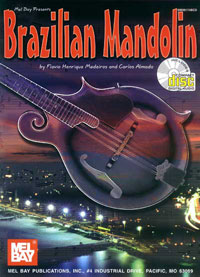
BRAZILIAN MANDOLIN Almada BOOK & CD TABLATURE MANDOLIN & GUITAR LIBRO SPARTITI

BRAZILIAN MANDOLIN, Almada. 18 pieces for guitar and mandolin, Tab. only for mandolin. CD TAB.

Product Description:
The mandolin was brought to Brazil by Portuguese colonists in the 15th and 16th centuries, and eventually worked its way into traditional Brazilian music. The principal aim of this book is to present an overview of the several faces of the mandolin in Brazil. In this book's eighteen progressively arranged character studies, the mandolin student will find, besides a great number of aspects of the idiomatic technique of the instrument (i.e., changes of fingering positions, double stops, tremolos, arpeggios, legatos, chords, etc.), no less than fourteen different styles. All of the pieces are presented first in notation only as mandolin/guitar duets, followed by the mandolin part repeated with tablature.

Format: Book/CD Set

Song Title: Composer/Source:

Afoxé Flavio Henrique Medeiros
Baião Flavio Henrique Medeiros
Choro Flavio Henrique Medeiros
Choro #2 Carlos Almada
Coco Carlos Almada
Coco #2 Flavio Henrique Medeiros
Frevo Carlos Almada
Frevo #2 Flavio Henrique Medeiros
Guarania Flavio Henrique Medeiros
Lundu Carlos Almada
Maracatu Flavio Henrique Medeiros
Marcha-rancho Carlos Amada
Maxixe Flavio Henrique Medeiros
Maxixe #2 Carlos Almada
Modinha Carlos Amada
Polca Carlos Almada
Samba Flavio Henrique Medeiros
Valsinha Carlos Almada

Price: €35,99
€35,99

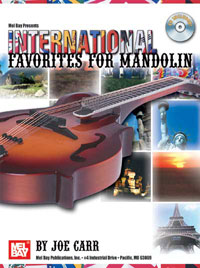
INTERNATIONAL FAVORITES FOR MANDOLIN, Carr. CD TABLATURE

INTERNATIONAL FAVORITES FOR MANDOLIN, Carr. CD TAB.

Product Description:
This new book and CD combination features 28 beloved melodies from around the world, especially arranged for the mandolin. Easy to play and beautiful to hear, many of the tunes are arranged for solo mandolin in a chord melody style. Over 20 different countries are represented here with dance tunes, lullabies, national favorites and even three national anthems! Popular favorites such as ‘Hava Nagila’, ‘Greensleeves’ and ‘Waltzing Matilda’ are mixed with lesser known, but equally beautiful gems. For mandolin players of all levels.

Format: Book/CD Set

Song Title: Composer/Source:
Ack Varmeland Du Skona
All Through the Night
Aloha Oe
America the Beautiful
Arirang
Battle Hymn of the Republic
Czardas
Du, Du liegst mir am Herzen
Feng Yang
Greensleeves
Hava Nagila
Herr Roloff's Farewell
Kum Ba Yah
La Marseillaise
Las Mananitas
My Old Kentucky Home
Naci En El Cumbre
O Canada
Planxty Irwin
Riu Chiu
Sakura
Sur le Pont d'Avignon
Ta Mo Chleamhnas A Dheanamh
Tarantella
The U.S. National Anthem
There's No PLace Like Home
Volga Boatman
Waltzing Matilda

Price: €15,00
€15,00

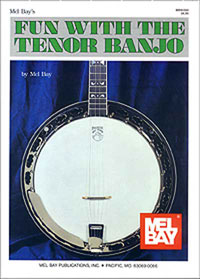
FUN WITH THE TENOR BANJO. DVD TABLATURE

FUN WITH THE TENOR BANJO. DVD TAB.

Product Description:
This beginner's text for the four-string tenor banjo shows tuning, basic chords, and songs to sing and strum. Written in standard tenor banjo tuning (CGDA) in standard notation only with chord symbols and lyrics. Includes DVD to go along with the book. Tuned for Mandola.

Song Title: Composer/Source:
Buffalo Gals
Darling Nellie Gray
Down In The Valley
Good Night Ladies
Hand Me Down My Walking Cane
Home On The Range
I've Been Working On The Railroad
In The Evening By The Moonlight
Little Annie Rooney
Long, Long Ago
My Bonnie
Oh! Susanna
Oh, My Darling Clementine
On Top Of Old Smoky
Our Boys Will Shine Tonight
Red River Valley
She'll Be Coming Round The Mountain
Skip To My Lou
The Blue Tail Fly
The Marines Hymn
The Old Grey Mare
There Is A Tavern In The Town

Price: €21,00
€21,00

NEW CELTIC MANDOLIN, Simon Mayor. TABLATURE DVD

NEW CELTIC MANDOLIN, Simon Mayor. TAB. DVD

New Celtic Mandolin (DVD)
For those who already know their way round the mandolin and want some expert advice and new ideas to spice up their playing of Celtic music. Simon Mayor takes a fresh and detailed look at five traditional and modern Celtic tunes, introducing original ideas and techniques that will benefit all aspects of mandolin playing.

Tunes:
The Dark and Slender Boy (Irish trad) Dance of the Waterboatmen (Mayor) Athol Highlanders (Scottish trad) The Butterfly (Irish trad) Waynesboro (New England trad)

Price: €40,00
€40,00

WITH MY BANJO ON MY KNEE, The Minstrel Songs of Stephen Foster. CD TABLATURE

WITH MY BANJO ON MY KNEE, The Minstrel Songs of Stephen Foster. CD TAB.

Series: Banjo
Publisher: Centerstream Publications
Medium: Softcover with CD

Arranger: Daniel Partner
Composer: Stephen Foster

Here are some of the first and most popular songs ever written for banjo. Fascinating historical notes accompany this collection, describing the meaning of the songs, their place in history, the significance of the musicians who first performed them, and Foster himself, America's first professional songwriter. The complete original lyrics of each song and an extensive bibliography are included. The CD contains recordings of each arrangement performed on solo minstrel banjo. 64 pages.

Price: €20,00
€20,00

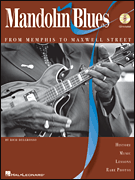
MANDOLIN BLUES From Memphis to Maxwell Street, Rich DelGrosso. CD TABLATURE

MANDOLIN BLUES From Memphis to Maxwell Street, Rich DelGrosso. CD TABLATURE


Mandolin Blues

From Memphis to Maxwell Street
Series: Mandolin
Format: Softcover with CD - TAB
Author: Rich DelGrosso

Travel back in time as acclaimed mandolinist Rich DelGrosso, author of the best-selling Hal Leonard Mandolin Method (00695102), traces the history and music of America's rich blues tradition through the eyes of the mandolinist. Follow the lives of players like Yank Rachell, Howard Armstrong and Charlie McCoy, and then learn their timeless music with standard notation, tablature, and an accompanying full-band CD of all the tunes in the book.

Inventory #HL 00695899
ISBN: 9780634072499
UPC: 073999178531
Width: 9.0"
Length: 12.0"
80 pages


Acknowledgments

Many thanks and hugs for my fiancee, Lisa Henry, for always standing by me, supportive and patient whenever I get into the "mando zone." Baby, you're the best!

It was my late wife Maureen who taught me to write music more than thirty years ago. She opened up my world of opportunity and I will always be grateful. Thank you, sweet Mo.

Thanks to James "Yank" Rachell and W Howard Armstrong for sharing their music and experience with me. Our times spent together changed my life as a musician. They were my teachers, my mentors. Howard inspired me both in my music and my art, and his gentle and warm spirit carried me through some tough times. I miss them both greatly.

This project could not have been completed without the help and support of my colleague and good friend Ernie Scarbrough. His skill as a musician and recording engineer pulled this work togetherl In addition to riding the console, he played bass and drums on the tracks. Ernie, 1 can't thank you enough! Thanks to Hal leonard for the opportunity to bring this great music to the world. After so many years and countless articles in magazines, it is great to now have it all in one volume. And this is only the tip of the iceberg. Thanks to my many students who work with me in chipping away at the ice. There is so much good music to discover as we study the past together. irresistible music, skilled players, and passionate artists, who can ask for more?


About the Author

Rich DelGrosso is the leading proponent and expert on mandolin blues. The Blues Foundation in Memphis, TN, nominated him for a 2006 Blues Music Award in the Best Instrumentalist category According to Mark Hoffman, co-author of Moanin' at Midnight, the Life and Times of Howlin' Wolf, Rich DelGrosso is "the greatest living blues mandoman, the best since Yank." He has performed at clubs and festi\'als for the past thirty years, mentored by and performing with blues and string-band legends James "Yank" Rachell and Howard "louie Bluie" Armstrong. A respected writer in the blues realm, Rich's work has appeared in Living Blues, Mandolin World News, Frets, Mandolin Magazine, and Footsteps. He has been a writer for Blues Revue magazine since 1991 and an associate editor since 1996. A renowned teacher, his latest workshops have included the Telluride Blues and Brews, the Centrum Blues Workshop in Port Townsend, WA, and Mandolin Camp North, in Boston, MA. He received the "Keeping the Blues Alive" award (KBA) in 1989 from the Blues Foundation for his work coordinating

the Augusta Heritage Arts: Bluesweek. Rich will return as coordinator of Bluesweek in 2007. As his fans will tell you, this is not the same old blues. DelGrosso has a sound all his o,vn. As Przemek Draheim of "The Voice of the Blues" (Radio Bravo, Torun, Poland) wrote, "The sound of your axe is one of the coolest things l've heard in blues' It is old-school, rooted in history, but forging new ground. Rich can stand with any guitar slinger, and he often does!"

Rich's new release, Get Your Nose Gutta My Bizness! featuring Pinetop Perkins, James Harman, and Doug Macleod, is available. Bizness was reported on the Living Blues Top 15 radio charts for

the first four months after its release in the fall of 20051

For more info on Rich DelGrosso


From Memphis to Maxwell Street

the intro to DelGrosso's book by Hal Leonard Pub.


“They were led by a long-legged chocolate boy and their band consisted of just three pieces, a battered guitar, a mandolin and a worn-out bass . . . thump. thump, thump went their feet on the floor. Their eyes rolled. Their shoulders swayed . . . it was not really annoying or unpleasant. Perhaps ‘haunting’ is a better word . . .”


The words of W.C. Handy, band-leader and composer in 1903, describing one of his first encounters with the “blues.” The story continues with the trio exciting the crowd and earning more tip money than Handy’s band. Handy decided to add the “blues” to his repetoire resulting in his claim to be the Father of the Blues.


This is the story of the black mandolinist in America. In the hands of the black string band performers, the mandolin was there to nurture the infancy of ragtime and blues. It’s crisp, tenor voice was a perfect complement to the guitar and piano and its soaring tremolos energized the jug and street bands of the Deep South. An inspiration to composers Scott Joplin and W.C. Handy, the mandolin helped to shape the music that would gradually evolve into rock and jazz and their descendants.


At this point in the American timeline, Memphis, Tennessee, was the center of African-American culture and the crossroads for touring musicians. Players like Vol Stevens, Will Weldon, Eddie Dimmitt and Charlie McCoy added their string band skills to some of the bands of the day, like the Memphis Jug Band and the Mississippi Sheiks. From these collaborations came some of the popular blues/folk/bluegrass chestnuts like “Sittin’ On Top Of The World” and “Stealin.” Most people know of the legendary Chicago bluesman Muddy Waters. But only his hard-core fans are aware that on his first recording on Stovall plantation in Mississippi, Burr Clover Blues, Waters was a member of a string band, the Son Simms Four, with Simms on fiddle and Louis Ford on mandolin.


In the surrounding countryside other musicians and bands flourished. W.Howard Armstrong and Carl Martin and their Tennessee Chocolate Drops performed for medicine shows, parties and fish fries. Yank Rachell traveled about, playing the deep blues with his guitar partner Sleepy John Estes. Young Bill Monroe played guitar with a black fiddler named Arnold Schultz. Monroe then took the fiddle music of his Uncle Penn and the blues from Schultz and blended them together on the mandolin, creating a new American genre that came to be known as bluegrass.


As blacks migrated north to escape the social oppression and poverty of the South, the musicians were among the throngs settling in Chicago, St. Louis, New York and Detroit. The players from Memphis and Mississippi traveled due north to Chicago, and Handy’s Park in Memphis was replaced by the Maxwell Street market as the street-scene-center for the blues folks. Carl Martin and Johnny Young were often seen playing the mandolin with the harmonica and guitar players of Chicago’s Southside. Young often played electric mandolin with Muddy Waters and piano great Otis Spann. Waters had relocated to Chicago, where he popularized the electrified blues combo sound, which was copied by embryonic rockers both in the States and the UK. Blues Rock fans are aware that the greatest rock and roll band, the Rolling Stones, started as a blues band playing “old school” blues covers. Brian Jones, Mick Jagger and Keith Richards were aware of their roots. They asked Ry Cooder to play Yank Rachell-style mandolin licks on their early cover of Robert Johnson’s “Love in Vain (Let It Bleed, London Records nps-4).”


As more players pick up the mandolin, interest in the work of these seminal artists is growing. In the hands of Ry Cooder, Steve James, Andra Fay, Billy Flynn and others mandolin blues lives today. Everywhere I go people comment on the sound of my playing or on my writing for Mandolin Magazine. They want to know where it comes from.

And so the story begins.


Hampton Institute Hampton, Va. (circa 1898)

Library of Congress, Prints & phographs


The Mandolin in America

The mandolin was in fashion. It was the "rage."

Italians who emigrated from Europe to the u.s. in the 1850s comprised the largest Italian population outside of Italy. They introduced the mandolin to North America. Its popularity as a parlor instrument blossomed quickly and strains of mandolin waltzes, light classical pieces, marches, rags, and cakewalks filled the air of the eastern cities. Women added decorated mandolin cases to their accessories instead of purses. It was "in."

Scott Joplin, one of Americas most prolific and famous ragtime piano composers, was inspired by the bowl-back, eight-stringed instrument when he penned "The Entertainer." As Peter Gammond described this piece in Scott Joplin and the Ragtime Era, he noted that "the first strain [contains] octave chords with an added interior third, although not easy to play, probably have the intended effect of imitating mandolin chording." Joplin dedicated "The Entertainer·' to "Mr. James Brown and his mandolin club." In 1890, American luthiers Lyon and Healy employed Italian and Spanish craftsmen, and by 1897, they were making 7000 mandolins per year! The inexpensive instrument spread across the country and Cleveland and Kansas City were considered mandolin "strongholds." Sears and Roebuck and Montgomery Ward added mandolins to their catalogues as the instruments spread in popularity. In 1914, James Reese Europes African- American Clef Club orchestra was the first to present "pop" music at Carnegie Hall in New York City. Backed by drums, basses, pianos, violins, woodwinds, and twenty-sewn harp Guitars were forty-seven mandolins


Blue Notes, Seventh Chords, Bars, and Back Beats

What is the blues' You would be amazed to hear that even blues fans don't agree on a definition. For some it is strictly racial in origin, music born out of slavery, oppression, and deep poverty. For others it is music that expresses "blue" emotions, or the poetry of the blues. The record industry focused on these criteria as they waxed the early performers, even though these same artists were professional, versatile, and open-minded, playing every type of music under the sun. Imagine Muddy Waters singing a show tune; he did, but it wasn't what the record company wanted. Record vendors likewise struggled with the genre, finding it often difficult to draw the lines between jazz and blues and blues and rock. The racists of the South recognized the sexual energy of Elvis' blues as they tried to ban his imitation of the blues singers he grew up with in Memphis. So the debate rages on, but not for us. We will operate with a working definition of the blues, or what it means when you take the bandstand and say "let's playa blues."

Analyzing the blues style from a music-theory perspective, it's all about:

• Blue notes

• Harmonies based primarily on seventh chords

• Specific predictable progressions (l2-bar, 8-bar, etc.)

• Rhythms driven by back beats

Armed with these simple tools, you can jam on a blues with anyone.


Blue Notes

Blue notes gave the style its name. These notes are the flatted third, fifth, and flatted seventh scale degrees. Today there is plenty of music that employs the flatted third, fifth, and flatted seventh, but in the blues, emphasis on these notes and how they sound dissonant against major scale tones creates the "blues mood." In any given blues, the blue notes are not used exclusively and are often replaced by their natural counterparts, but by giving them more force and duration at key points in a progression, the music is given more feeling and soul. Check out the following scales. The parent major scales are shown first and are followed by the parallel blues scales.


The term "blue note" is sometimes used to describe the tonal area that exists in between the flatted and natural notes. Blues players and singers often bend or slide between these tones-particularly between the natural and flatted third-which creates a major to minor shift. Or happy to sad. This is another distinct blues characteristic.


Maxwell Street

From the 1920s to the present, Maxwell Street in Chicago has served as LheBeale Street of the North. At the crossroads where the poor African-American community merged with the jewish, Maxwell Street was bustling with commerce and music. It was home for many of the people who migrated north and had enjoyed the open-air markets of their birthplaces in the South. It was where musicians met to play and form associations. This led to the great blues bands of Chicago's Golden Age. Muddy Waters lived on West 13th Street, just a few blocks from the market. He and jimmy Rogers could be heard on the street on Saturday and Sunday afternoons, competing with the squeals of children as they raced about in and out of the merchant stalls, surrounded by the smoke from the pork chop and sausage stands. Snooky Prior and Floyd jones bragged of collecting more money in their buckets than they could ever make in a night at a club.


Photo by Kenji Oda

Bernard Abrams grew up on Maxwell Street in the 1920s. In 1945, he converted his home into Maxwell Radio, TV, and Record Mart, where he sold electric appliances and recordings. Inspired by the music he heard on the street, in the back room of his workshop he created the Ora Nelle label, named after Little Walter jacobs' girlfriend. It was a good business move at the time. The singers, wanting to promote their records, set up in front of the store and drew crowds. Some performers not on the label were still drawn to the store, folks like Elmore james, Aretha Franklin, and B.B. King. At one point Abrams was so successful that his neighbors called him the "Mayor of Maxwell Street" because he owned one square block of it. johnny Young was one of the first to record for Ora Nelle, but it did little to help his career. Pete Welding of Testament Records recorded Young with Otis Spann, Big Walter Horton, Little Walter jacobs, and Robert Nighthawk Young also played with Muddy Waters. These recordings feature some of the best Chicago blues-raw spontaneous, and strong-what Howard Armstrong would call the "low-down, diny blues."

At one point, in the early '70s, Mick jagger was spotted playing on Maxwell Street. The Stones, on tour, stopped in Chicago to explore the roots of their music. They visited and recorded at Chess Records, where they were surprised by Muddy Waters, who was painting the walls. jagger was strolling in the market when he stopped behind Nate's Deli, the "soul food" restaurant of the market. Someone handed him a guitar and he played for the people. Most of the locals didn't have any idea who he was, but they were no doubt amused by his accent.

Today there is a community of blues fans who are trying to preserve a small segment of the street. A new blue record store has opened in what was Leed's Mensware, next to Original jim's Hot Dog Stand at Halsted. This store is also the site for the Maxwell Street Historic Preservation Coalition, who has established a small museum. Piano C. Red and his Flat-Foot Boogie Band still work the street every Sunday, usually in front of the johnnie Dollar Thrift shop, one of 400 vendors open for business.

Maxwell is still the place to go to try out your chops and make a few bucks .


Contents

Introduction

The Mandolin in America

Blue Notes, Seventh Chords, Bars, and Back Beats

Scales.

12-Bar Blues in C ("Quick to the IV")

8- Bar Blues in G ("Circle of Fifths")

Duet in G

Duet in G (Triplets)


Rags, Drags, and Stomps

Coley Jones and the Dallas String Band

Dallas Rag

Jackson Stomp

Knox County Stomp

State Street Rag.

Vine Street Drag


Vol Stevens

The Jug Band

Vol Stevens' Blues


Memphis and Beale Street.


Will Weldon

Will Weldon's Blues


Eddie Dimmitt

Eddie Dimmitt's Blues

The Spectrum of Mandolins


Charlie McCoy

Charlie McCoy's Blues .

A Gig Is a Gig


W Howard Armstrong

Strings and Things

Betty and Dupree.

Howard Armstrong's Blues

Pulling Doors .


Carl Martin


Yank Rachell

Yanks Style and Technique

Yank Rachell's Blues

Early This Morning

A Mandolin for a Pig


Maxwell Street.


Johnny Young

Johnny Young's Blues

Young's 8-Bar Blues ..

Taking the Bandstand


Rich DelGrosso..

DelGrosso's Blues (It's Funk). .

Selected Discography

Mandolin Notation Legend

Tuning Track .

Price: €20,99
€20,99
Syndicate content