Cherry Lane

OSBOURNE OZZY THE RANDY RHOADS YEARS Step-by-Step Guitar Styles Techniques 2 DVD CHITARRA

OSBOURNE OZZY, THE RANDY RHOADS YEARS, A Step-by-Step Breakdown of Randy Rhoads' Guitar Styles and Techniques. 2 DVD

Series: DVD
Author: Danny Gill
Artist: Ozzy Osbourne
Artist: Randy Rhoads

Learn the guitar styles and techniques Randy Rhoads made famous with Ozzy Osbourne. Each part is played up to speed, then broken down note-by-note in this 2-DVD set to provide and in-depth analysis of 8 songs.
Disc 1 - Crazy Train - Revelation (Mother Earth) -Mr. Cowley - I Don't Know.
Disc 2 - Diary of a Madman - You Can't Kill Rock and Roll - Flying High Again - Little Dolls. 4 hours, 48 minutes!

Crazy Train
Flying High Again
Mr. Cowley
I Don't Know
Little Dolls
Revelation (Mother Earth)
diary of a madman
You Can't Kill Rock And Roll

Price: €34,99
€34,99

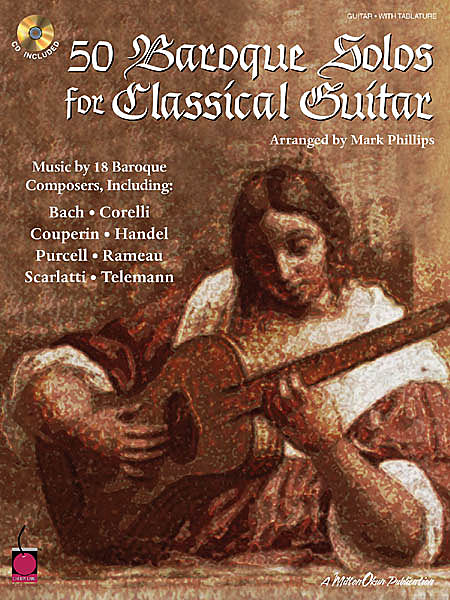
50 BAROQUE SOLOS FOR CLASSICAL GUITAR Mark Phillips LIBRO CD TABLATURE CHITARRA SPARTITI

50 BAROQUE SOLOS FOR CLASSICAL GUITAR, Mark Phillips. Bach, Corelli, Couperin, Handel, Purcell, Rameau, Scarlatti, Telemann e altri. CD TAB.

Series: Guitar
Publisher: Cherry Lane Music
Softcover with CD - TAB
Arranger: Mark Phillips

50 fantastic guitar solos in notes and tab from 18 Baroque composers, including Bach, Corelli, Couperin, Handel, Purcell, Rameau, Scarlatti, Telemann and others. 64 pages

Price: €24,99
€24,99

FLATPICKING SOLOS 12 Contest-Winning Arrangements BOOK & CD TABLATURE CHITARRA SPARTITI LIBRO


FLATPICKING SOLOS, 12 Contest-Winning Arrangements. CD TABLATURE

Flatpicking Solos
12 Contest-Winning Arrangements
Series: Guitar
Publisher: Cherry Lane Music
Format: Softcover with CD
Artist: Scott Fore
Author: Scott Fore

Here, for the first time in print, are the championship flatpicking arrangements that have won Scott Fore numerous national competitions. The accompanying CD contains full-length recordings of each of Scott's arrangements, played by Scott himself, and full rhythm tracks so you can play, too! Scott Fore's many contest victories include the South Carolina State Flatpicking Championships (2003), the National Flatpicking Championships (2002), the Doc Watson Guitar Championships (2002), the Galax Old Fiddler's Convention (2002), and the Wayne C. Henderson Championships (1999). He teaches flatpicking master classes throughout the United States and has recorded a self-titled solo CD. Songs include: Alabama Jubilee • Angeline the Baker • The Beaumont Rag • Bill Cheatham • Blackberry Blossom • Cluck Old Hen • Ragtime Annie • The Red Haired Boy • St. Anne's Reel • Whiskey Before Breakfast.

Inventory #HL 02500679
ISBN: 9781575607122
UPC: 073999912616
Width: 9.0"
Length: 12.0"
72 pages
 

INTRODUCTION

This book is the result of requests from guitarists who want to learn my contest arrangements. All these tunes and arrangements have been used by me to win various traditional music guitar competitions throughout the United States. Some of the contests I have won with these tunes are the 2003 South Carolina State Flatpicking Championships, the 2002 National Flatpicking Championships (Winfield, Kansas), the 2002 Doc Watson Guitar Championships at Merlefest, the 2002 Galax Old Fiddler's Convention, the 1999 Wayne C. Henderson Guitar Championships (Rugby, Virginia), and many other contests held in Virginia, North Carolina, Tennessee, and South Carolina. In arranging these tunes I tried to maintain the melody and preserve the flow, but at the same time I tried to use as many "guitar tricks" as possible. To this end, when I arrange a tune, I first learn the melody in as many locations on the neck of the guitar as possible. I also find as many versions of the tunes as I can. And I get ideas from other instruments; in fact, I strive to not listen to guitar versions so that I will not sound like any other guitarist. I also look for what I call the "skeleton" of the tune; in other words, how many of the notes in the melody can I leave out and still recognize it? Once I have found the basic skeleton of the melody and the location of those notes, I begin looking for places where I can insert guitar tricks: slides, hammer-ons, pull-offs, bends, open string/fretted note combinations, chromatic ideas, intervallic phrases, harmonics, etc. There is an endless catalog of musical ideas that are specific to the guitar, and you should be familiar with all of them. All these arrangements are within the reach of most intermediate and advanced players, but beginning students, too, should be able gain a lot of valuable experience by studying them. The difficult sections can be mastered if you take them one phrase-or even one note-at a time. The tempos indications are a guide, as these arrangements work well at both slow and fast tempos. The main thing to strive for is musicality. My general rule regarding pick direction is that I use downstrokes on the strong part of the beat and upstrokes on the weak part. With triplets, I sometimes break this rule by starting with an upstroke; in other words, when you have two eighth notes, the first gets the downstroke and the second the upstroke. In a 16th note grouping, the first note gets a downstroke, the second an upstroke, the third a downstroke, and the fourth an upstroke. By following this rule and observing the location of the note within the beat, your pick will always be moving in the correct direction. Syncopations, however, might have you picking consecutive upstrokes or downstrokes. Good luck, and I hope you enjoy learning these arrangemen ts. Scott Fore


ACKNOWLEDGMENTS

I'd like to thank: My sons, Carson, Austin, and Alex, for love and encouragement, and for being such great sons. I couldn't ask for finer sons and finer people to be around. My mom and dad for things too numerous to mention. My brother and sister for years of encouragement and for always telling me that I could do it. Cheryl Lunsford for love and support. Thanks also for helping me hone these arrangements and for encouraging me to push beyond normal limits. Carson Cooper for always pushing me to work harder on my right-hand technique and for inadvertently forcing me to keep striving to play with more authority. Rick Krajnyak at Real2Reel for helping me record the tunes on the CD in his incredible studio, and for friendship. Lou Roten, Ellen Tait, and Chris Middaugh at Schertler for the greatest pickup and peakers. They help me to alway sound good when "plugged in." Dana Bourgeois, Bonni Lloyd, John Thigpen. And all of the fine folks at Pantheon/Bourgeois guitars for building some of the best guitars found anywhere. Bourgeois guitars bring out the best in my playing and creativity. Steve McCreary at Collings for supporting the Walnut Valley Festival and for building fine instruments. Mike Lille and Elixer strings for the great Nanowebs. I exclusively use Elixer anow-ebs strings on all my guitars. Great tone and feel from the time they are put on the guitar. No waiting for the strings to break in. Wayne Henderson in Rugby, Virginia, for building some fme instruments, and for some fine guitar picking. I feel incredibly fortunate to have the opportunity to learn from great players and builders like Wayne. All the fine musicians from whom I've had the pleasure to "borrow" guitar techniques. The list is tremendously long. Wayne Dunford at FotoExpo in Christiansburg, Virginia. Wayne's a great friend, photographer, artist, and musician.


PERFORMANCE NOTES

ALABAMA JUBILEE

This tune, along with "Ragtime Annie," is one that I can always count on to place me in competitions. I use every technique except harmonics in this arrangement. I also normally play this tune at a tempo of 140+ when I compete. This is probably the most challenging arrangement in the book. It requires you to have a highly developed righthand technique, especially when playing at the faster tempos, but it also works well at slower tempos. The song kicks off with the turnaround and goes straight to the melody. The first section is straightforward, and it is not until you get to the second break that things get harder. The second break is crosspicked and there is a lot of string skippin-let the strings ring as long as possible to give a fuller sound. The lick at measure 28 is an intervallic type oflick. I borrowed the idea from jazz saxophonists. The main thing to remember, as for all these arrange4ments, is to play from chord positions. The third section begins at measure 38 and is straightforward. Pay attention to the recording to get the feel of the double stops at measures 42, 49, 50, 51, and 52. Listen to the recording to get the accents.

ANGELINE THE BAKER

The Intro is something I came up with while sitting at a friend's house-I thought it sounded like a fragment of the melody. It is also a way of starting the tune without resorting to the standard "breakdown" type of Intro. The arrangement is fairly straightforward. Try to maintain the flow of the melody since this is a solo. You will note that there is not a rhythm track for this tune. The first tricky licks come in measures 35 and 39. After the initial bend, rake your pick back across the strings fretted at the 7th fret. This lick is derived from piano players and guitarists like Jerry Reed and Jim Hurst, and I used it a lot when I played electric guitar in country bands in the '80s and '90s. The section beginning with measure 41 is reminiscent of Chuck Berry's licks or those of R&B guitarists of the '60s. Measure 49 makes me think of a loose Steven Stills-type groove. Play this section loosely and don't pay too much attention to the open strings; your focus should be on the fretted notes. Try to keep the dropped D ringing as much as possible to fill out the sound. There is a lot of crosspicking in this arrangement, and it will reveal any weaknesses in your right-hand technique. The song finishes the way it begins, with the opening chordal structure. You should try to imitate the sound of a slide guitar in the final chord of the song. As in all the songs, listen to the recording to get the accents. In all these transcriptions, the accents set the notes apart from just a steady string of 16th notes. Don't let the tab scare you, because this arrangement is really one of the easier ones. The secret to this tune is to keep the open D and A strings ringing in a "drone-like" fashion. This helps fill out the single-note melody line. As with all of the arrangements in this book, play out of the chord positions-this will make the arrangements finger more easily.

BEAUMONT RAG

This is another arrangement that is fairly simple to play. The thing to keep in mind is to keep the flow going. There is a lot of crosspicking in this arrangement. As with all crosspicking, you need to find the chord shape and hold down all the notes of the chord. In other words, don't read the tab one note at a time, but in groupings of notes. For example, in the G7 chord in measure 18, you hold down the F note at the 3rd fret for the full measure while the other notes move around it. Listen to the recording for the accents in the cross picked sections. Accents help bring out a melody when crosspicking. Be careful to let all the notes ring as long as possible for the "floating notes" section beginning at measure 34. "Floating notes" are combinations of open strings and fretted notes; the ringing open strings produce a harp-like sound. One of the toughest parts of the song is the diminished run in measure 38; you can look for other fingerings to make this run easier, but I've tabbed it the way I play it. Measures 50 through 53 should be crosspicked. Look at the finger groupings in each measure, and just slide them down the neck; then play measure 54 as a tremolo. It's fairly tough to go from the crosspicking in measure 53 to the tremolo in 54 and maintain timing. As with all the songs, work with a metronome set to a slow tempo, and work up to a fast tempo. The ending tag in the last three measures can be played without accompaniment. Again, as with all the songs, listen to the recording to get an idea of the accents.


BILL CHEATHAM
This arrangement is fairly straightforward and shouldn't pose many problems. It opens with a statement of the basic melody. In measure 19 I begin a break using "floating" notes-you should strive to keep the strings ringing as long as possible to achieve the "floating" sound. In measures 31, 63, and 65 the slashes indicate that that section is to be played using tremolo or very fast strumming. Giving the notes their full values will help with the flow of this and all arrangements in this book. The thing to keep in mind is that, in all the sections, you should maintain chord shapes wherever possible; doing so will help keep notes ringing and help fill out the song. The trickiest part of the song occurs in measures 51-58, where I play the tune using harmonics. Harmonics are represented by diamond-shaped notes and are played by lightly touching a string directly over top of the fret indicated in the tab. Trying to make these harmonics loud and clear is difficult at the faster tempos at which this piece is normally played. The song is fairly straightforward after this point. Again, listen to the recording to get an idea of the accents.

BLACKBERRY BLOSSOM
This arrangement begins with the basic melody, which is augmented only slightly in measures 6 and 7. Pay attention to the recording to get the feel of the "B" section beginning at measure 10. In measure 18, the open G string allows you to move up the neck without breaking the flow of the tune. This is a trick used by lots of guitarists. The open string rings while the hand is changing positions. The "floating" section, which begins at measure 34, is played by holding the chord shape and sliding it down the neck while allowing the open strings to ring. Measures 44 and 45 should be played as one long run to maintain the flow. Let the notes ring into each other to achieve that "floating" sound. The ending, which begins with the last measure of the "B" section, is played as one long grouping. This is one of the most often-played tunes in the fiddle tune repertoire, and the first tune I learned many years ago.

CLUCK OLD HEN
"Cluck Old Hen" is an old-time modal tune with both a major and minor feel. It's good for learning to use the pentatonic scale to improvise. It's similar to such tunes as "Big Mon," "Wheel Hoss," and others that use a flat-7th chord. The bends can be played, alternatively, using slides or "hammer-oDS." As in all the tunes in this book, let the notes ring for their full values. Listen to the recording to get an idea of the exact rhythms. Guitarists familiar with pentatonic and blues scales will find this arrangement very "finger friendly." Improvising over this progression is easy when using the G blues scale in its various positions.


RAGTIME ANNIE
Pay attention to the rhythmic groupings and listen to the recording to get the rhythmic nuances. This is a dance tune and, as such, should be played with dancers in mind. It needs a strong right-hand technique because of the crosspicking involved. As with all the tunes in this book, you should let the notes ring for their full values, if not longer, to give the song a full sound. This arrangement is a crosspicking tour de force and requires right-hand precision. The piece can be cross picked using strict alternate picking or the "DDU" pattern used by crosspicking legends George Shuffler and James Allen Shelton. This pattern creates a slightly different sound but also makes it more difficult to achieve the same speed that can be obtained with alternate picking. Depending on the sound I want to achieve, I use both picking patterns.

RED HAIRED BOY
This version is rather basic and should be accessible to all beginning and intermediate guitarists-there are no difficult techniques used. The last section is played mostly with hammer-oDS and pulloffs and serves as a good exercise for those techniques. The second break is played mainly around the 7th fret. For the Chorus in the second section, try to think like a mandolinist to get the feel of the chordal section and play it loosely. Listen to the recording to get the accents. The section beginning at measure 65 may be challenging for some guitarists, as it contains numerous hammer-oDS and pull-offs. The challenge is to maintain the volume of the slurred notes. With pull-offs this can be achieved only through proper technique; that is, pull and lift rather than simply lift.  

ST. ANNE'S REEL
This tune is very accessible to beginning students. The first section is played slowly. Listen to the recording to get an idea of the feel. Pay particular attention to pitch when bending the 1st string at measure 5. At measure 10, the song begins at the indicated tempo, and the rhythm track begins here. This arrangement is fairly basic until you get to the second section beginning at measure 43. The triplets are played using the hammer-on, pull-off technique. The triplet in measure 58 is played using pull-offs. The "B" section is played using the "floating" chord shapes approach. These chords move around a lot; practice slowly to get the notes to ring out clearly. For all crosspicked tunes, pay attention to the accents to bring out the melody. This tune is played out of chord shapes, some of which may be unfamiliar. The key to making this arrangement sound smooth is to find those shapes and hold them down. Listen to the recording to get an idea of where the accents fall.

WHISKEY BEFORE BREAKFAST
Your guitar should be in drop-D tuning for this arrangement. Normally this song begins with a pickup (one or more notes immediately before a bar line that begin a melody or phrase). But I have not used one here. The first two bars of the song and most of the melody are scalar in structure. The first break is played mainly from first position open chord scale forms. I've stayed with the melody, and any deviations are diatonic in nature (all the notes are contained within the key). The slide in measure 21 does not originate from any particular note, although I normally slide from the D at the 3rd fret. I've inserted two endings for the first break to demonstrate two possible ways to end one break and lead into another. The first takes you back to the first note of measure 1, while the second leads into the second break-you can use either ending, depending on the arrangement you want to use. The 32nd note figure at the end of ending 1 would be considered a pickup figure. Most fiddle tunes end on the first note of the final measure or the third note of the final measure of the break, which leaves one or two beats for the pickup. If you are in ajam situation and want to use one of these breaks, you can use a pickup or just begin on beat 1 of the break. The second break begins at measure 35. Its first section, which runs to measure 50, is played in 7th position. The econd section of this break, which tarts at measure 52. begins in 10th position. Measures 54 and 55 are played using harmonics. Measure 56 begins a sequence of descending 6th intervals-they move diatonically down the fretboard. The section then repeats. The third break begins at measure 68 and is based on the open string sound called "floating." I've indicated that you should let the strings ring into one another. This section is easier if you notice the note groupings and playas if you are holding chords or chord fragments. The "B" section of this break should be played in a similar fashion. Let all the notes ring for their full values. Note that measures 100-104 are a Tag to provide an ending for the song. I've stayed close to the melody in this arrangement and used predominately notes contained within the D major scale. I've done this to show the enormous possibilities that are contained within a scale. You can use rhythmic variety to add interest, as well as such guitar tricks as harmonics, "floating" notes, and slurs (hammer-ons, pull-offs, and slides), but there are many other possibilities as well. You can use pedal tones and play the melody against these. You can even play the melody using harmonic intervals such as 3rds, 4ths, 5ths, octaves, etc. An interesting and challenging exercise is to take every other note and raise or lower it an octave.


Alabama Jubilee
Angeline The Baker
The Beaumont Rag
Bill Cheatham
Blackberry Blossom
Cluck Old Hen
Ragtime Annie
The Red Haired Boy
St. Anne's Reel
Whiskey Before Breakfast


Alabama Jubilee
Full Performance
Play-Along Rhythm Guitar Track
Slowed-Down Play-Along

 
Angeline the Baker
Solo Performance
 
Beaumont Rag
Full Performance
Play-Along Rhythm Guitar Track
Slowed-Down Play-Along
 
Bill Cheatham
Full Performance
Play-Along Rhythm Guitar Track
Slowed-Down Play-Along
 
Blackberry Blossom
Full Performance
Play-Along Rhythm Guitar Track
Slowed-Down Play-Along
 
Cluck Old Hen
Full Performance
Play-Along Rhythm Guitar Track
Slowed-Down Play-Along
 
Ragtime Annie
Full Performance
Play-Along Rhythm Guitar Track
Slowed-Down Play-Along
 
Red Haired Boy
Full Performance
Play-Along Rhythm Guitar Track
Slowed-Down Play-Along
 
St. Anne's Reel
Full Performance
Play-Along Rhythm Guitar Track
Slowed-Down Play-Along
 
Whiskey Before Breakfast
Full Performance
Play-Along Rhythm Guitar Track
Slowed-Down Play-Along
Price: €20,99
€20,99

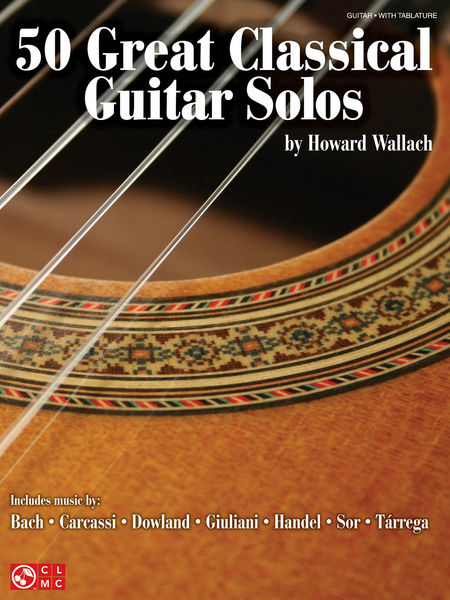
50 GREAT CLASSICAL GUITAR SOLOS Howard Wallach-Carcassi-Dowland-Giuliani-Handel-Sor-Tárrega

50 GREAT CLASSICAL GUITAR SOLOS, Howard Wallach. Bach, Carcassi, Dowland, Giuliani, Handel, Sor, Tárrega, e altri. 114 pagine. TABLATURE

Series: Guitar
Publisher: Cherry Lane Music
Softcover - TAB
Arranger: Howard Wallach

Covering music from the Renaissance, Baroque, Classic and Romantic eras, this fabulous collection includes 50 solos in notes and tab from Bach, Carcassi, Dowland, Giuliani, Handel, Sor, Tárrega and other acclaimed composers. 114 pages


Types of Dances and Pieces

Pavan = A dance of Italian origin popular in the 16 th and 17 th centuries. It was in simple duple time and of stately character.

Villanella = Street song popular in the 16 th Century, also a type of part-song less complex than the madrigal.

Finale = The last movement of a work in several movements.

Chaconna = Originally a dance of 3-in-a-measure rhythms, with the music built on (over) a ground bass. Sometimes there is no actual ground bass, but the music falls into a number of short sections similar to those written over a ground bass.

Bouree = A lively dance in quadruple time beginning with an up beat.

Allemanda = A dance usually in 4/4, but sometimes in duple meter. Often found as the
first dance of a suite. It is serious in character and of moderate speed.

Romanesca = 1) A kind of galliard from Romagna.
2) A certain melody popular in the 17 th Century as a ground bass.

Volta = A quick dance in triple meter; also known as "Lavolta" or ILaVolta,"
similar to the galliard.

Courante = A French dance popular in the 17 th and 18 th centuries and commonly found in the baroque suite. There are two types:
1) The Italian variety: rapid tempo in simple triple time.
2) The French variety: similar to the Italian, but with a different character and in quadruple meter.

Menuet = - A stately court dance of the 17 th and 18 th centuries in triple time. It was an optional movement of the suite and is found later in the classical symphonies of Haydn and Mozart.

Passepied = A lively dance in 3/8 or 6/8 time, which originated amongst French sailors, and later became popular at court.

Sarabande = A slow and stately dance form in triple time. It was a standard movement
of the baroque suite. There had existed an earlier, lively version.

Waltz = A dance in 3/4 time which came into prominence in the last quarter of the 18 th
Century. It rose to tremendous popularity in the 19 th Century, especially in Vienna.

Caprice = A light, quick composition with an improvisational feel, often including
striking or original effects.

Bagatelle = A short unpretentious instrumental composition; a trifle.

Landler = A type of slow waltz originating in northern Austria.

Prelude = A piece of music which precedes something else. In the 19 th and 20 th centuries, a self-contained short instrumental piece which sets a mood.

Mazurka = A traditional Polish country dance in triple time with an accentuation of the second beat of each measure and an ending of the phrases on that beat.


Table of Contents
Signs, Symbols, and Terms .
Found in this Book
Music of the Renaissance
Pavan V Milan .
Pavan VI Milan .
Polish Dance I Anonymous .
Polish Dance II Anonymous .
Villa nella Dlugoraj .
Finale Dlugoraj .
Pa van Byr d .
Mr. Dowland's Midnight Dowland .
My Lord Willoughby's Dowland .
Welcome Home
Music of the Baroque Era
La Chaconna Vallet .
B0urre e Va IIe t .
Allemanda Calvi .
Romanesca Calvi .
Volta Galilei .
Courante Sweelinck .
Menuet de Visee .
B0urre e de Vise e .
Passepied I Le Cocq .
Passepied II Le Cocq .
Menuet Handel '
Oh Sacred Head Now Wounded Bach .
Sarabande Bach .
Bourre e Bach .

Music of the Classic Era
Study in G Major Aguado '
Wa Itz Aguado ,
Andantino Carulli .
Waltz Caru Iii .
Andante Carulli .
Study in A Major Carcassi .
Study in E Minor Carcassi .
Ca price Carcassi .
Allegretto Giuliani .
Andantino Giuliani .
Study in A Minor Giuliani .
Andante Sor .
Study in A Major Sor .
Study in D Major Sor .
Minuet Sor .
Music of the Romantic Era
Bagatelle Schumann .
LandIer I Mertz .
Landler II Mertz .
Study in C Major Coste .
Study in A Minor Coste .
Prelude Coste .
Russian Song Tchaikovsky .
Prelude in D Major Tarrega .
Prelude (Endecha) Tarrega .
Prelude in D Minor Tarrega .
Prelude in E Major Tarrega .
Mazurka Tarrega.
 

Price: €19,99
€19,99

MATTHEWS DAVE BAND Guitar Legendary Licks 1994-2001 CD TABLATURE Ants Marching-The Best of What's Around-Crash into Me-Crush-Don't Drink the Water-I Did It-Satellite-So Much to Say-Stay (Wasting Time)-Too Much - What Would You Say.


MATTHEWS DAVE BAND Guitar Legendary Licks 1994-2001. CD TABLATURE

Dave Matthews Band Guitar Legendary Licks 1994-2001
Series: Guitar Educational
Publisher: Cherry Lane Music
Format: Softcover with CD - TAB
Artist: Dave Matthews Band
Author: Lois Dilivio

The Legendary Licks series presents the music of a band or artist in a comprehensive play-along package. Each book contains note-for-note transcriptions and detailed performance notes on how to play with a multitude of classic licks, fills, riffs, and solos – complete with recorded demonstrations on CD. Slowed-down versions are also onthe CD for the fast and tricky passages. This pack teaches 12 of DMB's best: Ants Marching - The Best of What's Around - Crash into Me - Crush - Don't Drink the Water - I Did It - Satellite - So Much to Say - Stay (Wasting Time) - Too Much - What Would You Say.

Inventory #HL 02500374
ISBN: 9781575604497
UPC: 073999185140
Width: 9.0"
Length: 12.0"
64 pages

gear setup

Ants Marching
The Best Of What's Around
Crash Into Me
Crush
Don't Drink The Water
I Did It
Satellite
So Much To Say
The Space Between
Stay (Wasting Time)
Too Much
What Would You Say

Introduction

The 12 singles represented here reveal the depth and breadth of the Dave Matthews Band's ideas and sounds from Under the Table and Dreaming to Everyday. From the philosophical "The Best of What' Around," to the pop perfection of "Too Much," to the soulful "Stay (Wasting Time)," straight on into the plugged-in and stripped-down "I Did It," the Dave Matthews Band has proved time and again the true nature and level of their artistty, as well as their personal drive to express themselves via whatever means necessary.
Dave Matthews Band has collectively walked a career path very different from many of its contemporaries.
Dave himself was born in South Africa in 1967 and grew up in not just that part of the world, but in England and Westchester, New York, as well. While the family was residing in Westchester, Dave's father John, a physicist, died; his mother Val moved the family back to South Africa not long after. Dave continued to reside there until he was called to serve in the army of the Apartheid government. Rather than join this army, he returned to the States, passing through New York before finally joining his family in Virginia.
After spending some time in a community college, Dave found himself working as a bartender at Miller's, a bar in Charlottesville. He had played some piano as a child, and had begun to play the guitar at about age nine. He was inspired by the musicians he heard and met in the community-Peter Griesar, Carter Beauford, Stefan Lessard, LeRoi Moore, and Boyd Tinsley. He also met guitar whiz Tim Reynolds, who would become a virtual "sixth" band member, contributing heavily to the first four albums as well as eventually touring with Dave as a duo. Dave wrote several songs, and with the encouragement and guidance of friends, he cut a demo with five of the local musical heavyweights. These musicians "clicked" from day one.
It soon became clear that the combination of Dave on vocals and guitar, Carter Beauford on drums, Stefan Lessard on bass, LeRoi Moore on sax, and Boyd Tinsley on violin was formidable-the Dave Matthews Band juggernaut had started to roll. The band made it dear that they allowed and even welcomed the bootlegging of their shows. In return, their fans rewarded them with devotion. At the time they were about to release their independently produced Remember Two Things in ovember of 1993, the band's reputation had grown so great that they essentially had their pick of major label deals. They signed with RCA.
The 1994 release Under the Table and Dreaming entered the Billboard charts at #34, went to #11 on the Billboard 200, and received a Grammy nomination for "What Would You Say." Two years later, Crash debuted atfr'2 and received Grammy nominations for the album itself and for the songs "So Much to ay."
"Crash into Me," and 'Too Much." Steve Lillywhite was the producer of these two releases plus the next- Before These Crowded Streets-which shipped at #1 on the Billboard charts.
In January of 2000, the band assembled to record. In June, three months behind schedule, the band and the record company listened to the material and agreed that they needed to rework their efforts. To paraphrase Dave, they were songs about dying, not songs about living. regardless of the fact that we're all going to die. Dave was subsequently introduced to Glen Ballard who had interned with Quincy Jone and produced for Alanis Morrissette, No Doubt, and Aerosmith, among many others. Dave and Glen holed themselves up for ten days and wrote the 12 new songs that became Everyday. It debuted at #1 on the Billboard charts, selling more than 700,000 copies in its first week of release.
Jot content to confine their activities to the musical area, the Dave Matthews Band established the Barna Works Foundation, an institution through which the band contributes to charities such as the American Diabetes Association, the Boys and Girls Clubs of America, the Southern Environmental Law Center. And various Charlottesville-area clinics and community centers.


Dave Matthews Band 1994-2001

The Legendary Licks series presents the music of a band or artist in a comprehensive play-along package. Each book contains note-for-note transcriptions and detailed performance notes on how- to playa multitude of classic licks. fills. riffs. And solos-complete with recorded demonstrations. Slowed-down versions are also on the CD for the fast and tricky passages.

- NOTE-FOR-NoTE TRANSCRIPTIONS
- CD WITH RECORDEDDEMONSTRATIONS
- PERFORMANCE NOTES
- GEAR SETUPS

CHERRY LANE MUSIC COMPANY
 

Price: €20,99
€20,99

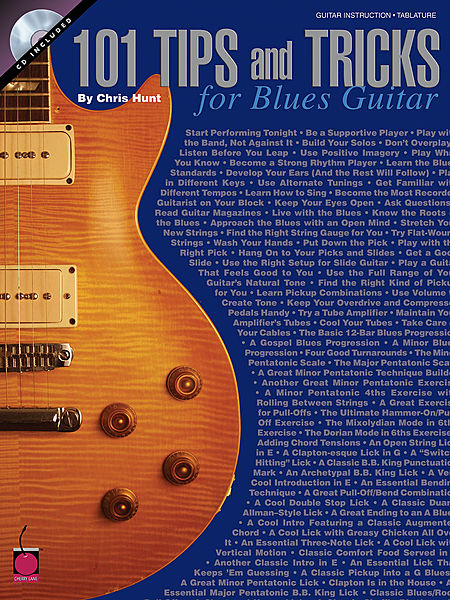
101 TIPS & TRICKS FOR BLUES GUITAR. Chris Hunt CD TABLATURE

101 TIPS & TRICKS FOR BLUES GUITAR. CD TAB.

Series: Guitar Educational
Publisher: Cherry Lane Music
Softcover with CD - TAB
Author: Chris Hunt

From tips on performing with a band to improving your tone to copping the essential techniques of the blues greats and beyond, this book is chock full of pointers to help everyone from the beginning student to the seasoned pro. Here, you'll learn how to: play with the band - become a strong rhythm player - use the full range of the guitar's natural tone - find the right kind of pickup - and much more. You'll also learn a multitude of techniques, licks and riffs. The CD includes demonstration tracks. 44 pages

Price: €13,50
€13,50

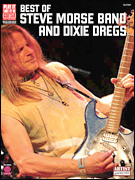
MORSE STEVE BEST OF BAND AND DIXIE DREGS Cherry Lane Music Play It Like It Is TABLATURE GUITAR

MORSE STEVE, BEST OF BAND AND DIXIE DREGS. TABLATURE

Series: Play It Like It Is
Publisher: Cherry Lane Music TAB
Artist: Dixie Dregs
Artist: Steve Morse Band


I always consider the beginning of a new year a good time to think about what has worked well and what could stand some improvement. Since I've spent most of the last year seeing the world with Deep Purple, my perspective is definitely different now. Let me tell you some of the things that stick out as great foundations for new motivation. I'll put them in two categories. Things To Improve. Practicing habits. While I generally can find enough time in noisy environments to do some technical warmup and things that don't require too much concentration, I have found that my only truly quiet time is late after the gig in my hotel room. I should find a way to set aside more quiet time during the day to be with my guitar. My theory is that two small but effective sessions a day can be more productive than one longer single session. Sometimes when I'm having a problem getting ready to start a run of dates, I find that practicing twice a day provides more benefit than the total number of minutes spent might suggest. A more balanced diet. I definitely ate too much pizza in too many countries. But, on the other hand, it was the only thing I could recognize in many places. I should be more amazed at life itself instead of having to experience a nearly perfect gig to feel uplifted on the road. Many people within the group had friends or family fall ill or even die during the course of the last year. Since it eventually happens to everyone, I guess all of us get somewhat dulled to the fact that just being alive is miraculous. And often, the more you see someone and the more time you spend with them, the more you take them for granted. Sleep. I really must figure out how to get sleep like a normal person. Changing time zones as often as tempos from song to song just flips out my internal clock. On the other hand, I should look at the positive side of being a very light sleeper-I could be a great guard dog. I must remember what a reasonably priced nation the U.S. is. Everywhere else I go constantly reminds me of that fact. I will try hard to remember that this year, as I quickly adjust back to normal outrage at the prices of things today. Amazingly, the things that are available in the U.S. that come from abroad are almost always less expensive here. Our social interaction. Many other countries seem to have safe streets, where residents enjoy community events with no fear of walking or riding bikes in any part of their cities. It's up to us to say enough is enough. Writing a sentence about it won't change much, but what if everyone just suddenly knew that it didn't have to keep on getting worse? Someone once told me that we get what we settle for. Hmmrn .... Things That Were Cool. Getting to talk to my five-year-old son every day. He is at an age where he can entertain me on the phone with his unique views on the way things are. My favorite time was when he asked me to hold on while he got something to eat. I thought he was just going to grab something and come right back to the phone. But since I was paying the Moscow rate of eight dollars a minute from the hotel because of some problem with my carrier, of course he just forgot to return to the phone. After holding for ten minutes then trying back until they hung up the phone, he then requested that I make up another story to tell him. Well, I never will get tired of doing that. I have been surrounded by great, supportive people in the group. I will never again underestimate the importance of good chemistry between people. Two nights ago I had a terribly frustrating technical problem all through the show and I was not handling it very well, especially at first. Everyone was surprisingly helpful in getting me past the point of ruining the show for myself. Instead of getting upset at me for showing some frustration, vocalist Ian Gillan came over and said that he's really glad that I have that much passion for what I am doing. That made all the difference in the world. One minute life sucks, the next I'm feeling thankful. Everyone knew exactly what I was going through and naturally chose to help up one of their wounded. That's good chemistry, and I still don't know if it's luck or destiny or effort that makes it happen, but I'm glad it does. There's also plenty of stories like that from every group I've worked with. When I was a kid wanting to start a band, that was the main reason I was drawn to it. You know, the total really is greater than the sum of its parts. Foreign exchange. If you ever went to a club gig of the Dregs or my band, you could almost always talk to me afterwards. It's kind of normal to be somewhat accessible when you're playing clubs, especially if you're in a band that's doing multiple sets. I got into the habit of greeting those who stuck around after the show because of a guitarist who spent some time talking to me when I was a kid at one of my first shows. In the process of this last year, I've met and learned about a lot of people from many places, backgrounds, and professions. It has been some of the most valuable education in my whole life. Good will. I've met busloads of Croatians traveling a long way to see the show, and other hard-working people in nearly every country who travel great distances to be a part of it. People everywhere have brought gifts, good wishes, enthusiasm, and energy to those large places that our fearless crew has seen every day at setup time. I've seen opening bands bust their butts to get on and off stage on time after driving all night. I've seen people plan their vacations around the tour because they love the energy of live music. Yeah, again and again, I always have to agree that music can strike pretty deep.

13 rockin' guitar transcriptions of Steve's playing in Dixie Dregs and the Steve Morse Band. Plus a bio and notes from Steve Morse. 112 pages

Country Colors
Cruise Control
Flat Baroque
General Lee
Highland Wedding
Ice Cakes
Point Counterpoint
Punk Sandwich
Refried Funky Chicken
Road Expense
Southern Steel
Take It Off The Top
Twiggs Approved

Price: €29,99
€29,99

ULTIMATE BENCH WARRIOR How to Design Build and Modify Custom Guitar & Bass ZAKK WYLDE Amplifiers LEE Jackson

ULTIMATE BENCH WARRIOR How to Design, Build and Modify Custom Guitar and Bass Amplifiers, L. Jackson. 180 Foto e immagini.

Series: Book
Publisher: Cherry Lane Music
Medium: Softcover
Author: Lee Jackson

Amp guru Lee Jackson covers: tools of the trade; the basics of soldering; different tube types, with specs and histories; electronic symbols; amplifier modifications from gain stages to adding reverbs; schematics of solidstate circuits and power supplies; lists of parts suppliers; and more. Features 180+ photos and illustrations. 152 pages

Price: €43,99
€43,99

WINTER JOHNNY Legendary Licks Slide Guitar DVD CHITARRA DELTA BLUES-AL ECK HAL LEONARD

WINTER JOHNNY, Legendary Licks Slide Guitar. DVD

Legendary Licks Slide Guitar
Series: Videos
Publisher: Cherry Lane Music
Medium: DVD
Artist: Johnny Winter

Watch and listen as Johnny Winter demonstrates his signature slide guitar style and techniques. Also includes Johnny playing National steel guitar. These guitar parts are then broken down and taught note-for-note by master blues teacher Al Eck. Johnny plays in the styles of Bob Dylan's Highway 61 Revisited, Elmore James, Delta Blues, Slow Blues, and Walking Blues. 121 minutes.

Price: €38,99
€38,99

WINTER JOHNNY, LEGENDARY LICKS GUITAR A STEP-BY-STEP BREAKDOWN OF HIS SIGNATURE STYLES AND TECHNIQUES. 2 DVD

WINTER JOHNNY, LEGENDARY LICKS GUITAR A STEP-BY-STEP BREAKDOWN OF HIS SIGNATURE STYLES AND TECHNIQUES. 2 DVD

SERIES: INSTRUCTIONAL/GUITAR/DVD
PUBLISHER: CHERRY LANE MUSIC
MEDIUM: DVD
AUTHOR: AL EK
ARTIST: JOHNNY WINTER

WATCH AND LEARN AS THIS BLUES FOUNDATION HALL OF FAMER DEMONSTRATES HIS SIGNATURE GUITAR STYLES AND TECHNIQUES. HE PLAYS IN THE STYLE OF CHUCK BERRY, MUDDY WATERS AND JIMMY REED, DEMONSTRATING TEXAS SHUFFLE AND SLOW BLUES. THE GUITAR PARTS ARE BROKEN DOWN AND TAUGHT NOTE FOR NOTE BY MASTER BLUES TEACHER AL EK. CLOCKING IN AT NEARLY FOUR HOURS, THIS DELUXE TWO-DVD SET IS A MUST-HAVE!
Running time: 3 HR. 57 MIN.

Price: €34,99
€34,99
Syndicate content