ACCORDI - PENTAGRAMMA

METHENY PAT GROUP THE WAY UP GUITAR Transcribed score LYLE MAYS CHITARRA TABALTURE LIBRO

METHENY PAT GROUP, THE WAY UP. Transcribed score.

Artist: Pat Metheny
This is the complete score for the four-part composition from this new release by the Pat Metheny Group. NPR says the album has an ambitious compositional style that amounts to an epic journey. 256 pages, NO TAB.

Songlist:
Opening
Part One
Part Three
Part Two

Price: €31,99
€31,99

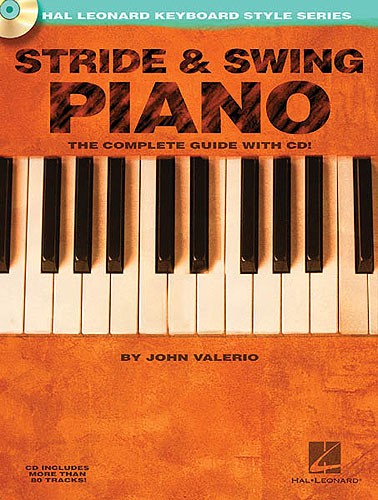
STRIDE & SWING PIANO John Valerio Hal Leonard Keyboard Style Series CD LIBRO PIANOFORTE BOOGIE WOOGIE

STRIDE & SWING PIANO. John Valerio. CD

Hal Leonard Keyboard Style Series
Series: keyboard instruction
Medium: Softcover with CD
Author: John Valerio

Focusing on styles such as classic ragtime, early blues & boogie woogie, New Orleans jazz, stride and swing, this new book/CD pack in the Hal Leonard Keyboard Style Series teaches left- and right-hand techniques including chords, bass runs, patterns and more. Key players of these styles Scott Joplin, Jimmy Yancey, Pete Johnson, Jelly Roll Morton, James P. Johnson, Fats Waller, Teddy Wilson and Art Tatum are prominently referenced. Includes 14 full songs to play, and an accompanying CD! 96 pages


INTRODUCTION
Welcome
to Stride and Swing Piano! This book is an in-depth look at early solo jazz
piano styles from the 1900s to the 1940s. Many pianists know the term stride as an accompaniment
technique in which the left hand alternates between a bass note and a
chord in an "oom-pah, oom-pah" manner. But stride was also the label given to a style of piano
music that emerged in the 1920s. This was an early form of jazz that evolved from predecessors like
ragtime, blues, and New Orleans style, and culminated in the swing style of the 1930s and' 40s.
Most of the early jazz piano styles up to and including swing piano feature this striding left-hand
motion.
This book traces the evolution of stride and swing piano styles-from their predecessors to their
fullest development; each chapter focuses on a particular style and player:
Classic Ragtime: Though not jazz per se, ragtime was an important forerunner, serving
as a model for styles like New Orleans and stride. Invented by Black Americans, ragtime
emerged during the 1890s and was a strictly written music with formal and rhythmic constraints.
Scott Joplin was its most famous composer.

Blues & Boogie Woogie: Also invented by Black Americans (in the 1800s), blues
was another important forerunner of stride and swing jazz styles. A looser music, blues had
its own melodic material, accompaniment style, and rhythmic feel. Jimmy Yancey was a premiere
blues pianist; Pete Johnson was a well-known player in the faster, boogie woogie style.

New Orleans Jazz: In the early 1900s, New Orleans pianists developed jazz, a style that
merged ragtime with blues, and added improvisation. Jelly Roll Morton was the most important
early jazz pianist. He loosened the "even subdivisions" of ragtime and made jazz swing.

Stride: Stride was a fast, virtuosic piano music born in Harlem during the 1920s and' 30s.
Early stride,
ala James P. Johnson, was more appropriately called "Eastern ragtime" than
later stride, which evolved into a lighter, smoother music, as played by Fats Waller.

Swing: Swing emerged during the mid '30s with jazz big bands. The driving accents of
stride were ironed out, and an even 4/4 pulse became the norm. Teddy Wilson best represented
the swing style; Art Tatum took it to its highest point.

The one element that all of these styles have in common is the almost continuous playing of the
pulse (on every beat) by the left hand. This was accomplished by: 1) bass note vs. chord alternation,
2) the playing of bass lines, or 3) the continuous playing of chords.
Modern jazz piano styles have done away with the left hand's time keeping role [or the most pat1,
and contemporary players are often at a loss when called upon to play the left hand in an older solo
style. Stride and Swing Piano offers an introduction to the usage of traditional left-hand devicesincluding
characteristic chord voicings and bass note intervals, such as octaves and tenths-as well
as right-hand techniques such as single-note lines, chord voicings, intervals, mns, and improvisation.
Each chapter culminates in one or more original tunes demonstrating the style and its techniques.
Practice suggestions are also included. The reader is encouraged to learn and study these
tunes, and to apply all of the techniques in the book to standard jazz and pop songs of the era.
About the CD
The accompanying CD features many of the examples in the book-including 14 original tunesperformed
on solo piano. Listen to the CD to better understand each style and to practice your
own solo playing.


Early jazz had always been evolving on two simultaneous fronts-as a small ensemble
music, and as a solo piano music. By the mid 1930s, ensembles were changing. Jazz
bands were growing larger, into "big bands"-essentially, hybrids of the jazz combos and
larger dance bands of the '20s. Along with the transition from smaller to larger groups, a
"smoothing out" process took place in the music, and a distinctly new piano style emerged.
One crucial defining characteristic of swing* music is the evenness of all four beats played by the
rhythm section. The rhythm sections of the big bands used a bassist who usually played on all
four beats of the measure, laying down an even 4/4. This was different from the tuba or bass
players of older New Orleans style, who usually played on beats I and 3, with occasional walking
fills. The epitome of a swing rhythm section was Count Basie's band; they played all four beats
of each measure with such evenness and precision they sound like one person.
Swing pianists were caught between two worlds. Still rooted in the stride/ragtime model, they
began exploring new ways to establish the 4/4 pulse while freeing up the left hand. Swing demanded
a lighter touch and a looser feel; the driving accents of stride piano were ironed out.
Although the left hand still relied on an oom-pah striding motion, dynamic levels became more
consistent for bass notes and after-chords. So-called "walking bass" lines became commonplace.
The consummate swing pianist was Teddy Wilson (1912-1986). His playing represents the highest
cultivation of the pure swing style. Balance and restraint characterize his approach. Classically
trained, Wilson had a refined sense of touch. His technique was supple, and his music, subtle.
One reason for the lighter touch of the swing pianists was the use of the microphone; the earlier
jazz pianists had to pound on the piano to be heard within a group setting. Wilson gained notoriety
when he teamed up with clarinetist Benny Goodman and drummer Gene Krupa to form the
Benny Goodman Trio. This group was historically important not only for the great music they
created but also for being the first publicized interracial jazz performing group. The fact that this
trio had no bass player is a testament to Wilson's astounding left-hand technique and conception.
Wilson played solo piano in much the same way as he approached playing with a group.
*The term swing as used here refers to the style of jazz that evolved from the mid 1930s to the mid' 40s. It should not be confused
with the more general use of the word denoting the rhythmic conception associated with most jazz.
Left-Hand Techniques
Most of the left-hand techniques used by swing pianists were already used by the late stride players.
As with earlier styles, the left hand mostly kept time by playing the quarter-note pulse.
Crucial differences were that now all of the beats were played with equal stress, the touch was
much lighter, and the feeling was more relaxed. The hard-driving left hand of the stride pianists
was replaced by a steady, relaxed groove. There was also a difference in when and how often the
swing pianists applied each left-hand technique. These newer approaches are described in the following
pages.


CONTENTS

1 CLASSIC RAGTIME .
Scott Joplin

2 BLUES & BOOGIE WOOGIE
Jimmy Yancey & Pete Johnson

3 NEW ORLEANS JAZZ .
Jelly Roll Morton

4 STRIDE PIANO I.
James P. Johnson

5 STRIDE PIANO II.
Fats Waller

6 SWING PIANO I .
Teddy Wilson

7 SWING PIANO II .
Art Tatum

Price: €18,99
€18,99

SMOOTH JAZZ PIANO CD HAL LEONARD KEYBOARD comping soloing scales chords harmony voicings

SMOOTH JAZZ PIANO. CD

Keyboard Style Series
Series: keyboard instruction
Medium: Softcover with CD
Author: Mark Harrison
Artist: Various

This comprehensive book and CD package will teach you the basic skills you need to play smooth jazz piano. From comping to soloing, you'll learn the theory, the tools, and the tricks used by the pros. The accompanying CD features many of the examples in the book performed either solo or with a full band. Specifically, you'll learn: scales and chords, harmony and voicings, progressions and comping, rhythmic concepts, melodies and soloing, characteristic stylings, the history of jazz, and more. THE HAL LEONARD KEYBOARD STYLE SERIES provides focused lessons that contain valuable how-to insight, essential playing tips, and beneficial information for all players. Comprehensive treatment is given to each subject, complete with a companion CD. 80 pages

Price: €19,99
€19,99

CARTER RON BUILDING JAZZ BASS LINES LIBRO CD CONTRABBASSO compendium techniques PLAY-ALONG

CARTER RON, BUILDING JAZZ BASS LINES. CD TAB.

Table of contents:

Eight
Little Waltz
Nearly

Series: Bass Builders
Medium: Softcover with CD

Artist: Ron Carter
In this book/CD pack, bass legend Ron Carter illustrates step by step the basic concepts of creating bass lines; constructing lines using non-harmonic tones and diverse rhythms; playing in fast tempos; and developing tone and pitch. Includes a play-along CD with an all-star rhythm section and isolated bass parts, so players can listen to Ron play the sample written lines, practice them with the CD, then create their own lines with the guitar, piano and drums backing them up. 48 pages.

Price: €23,99
€23,99

BLUES JAM 40 PROGRESSIONS GROOVES Solo with Professional Band Ed Friedland CD TABLATURE

BLUES JAM, 40 PROGRESSIONS AND GROOVES, Sit in and Solo with a Professional Blues Band! Ed Friedland. CD TAB.

Bring your local blues jam session home! These essential blues rhythm grooves feature a professional rhythm section and are perfect for guitar, harmonica, keyboard, saxophone and trumpet players to hone their soloing skills. The feels, tempos and keys have been varied to broaden your blues experience. Styles include: shuffle, funky, slow blues, jump blues, rhumba, swing, and more.

Price: €21,99
€21,99

McLAUGHLIN JOHN AND THE MAHAVISHNU ORCHESTRA GUITAR CHITARRA LIBRO PARTITURA

MCLAUGHLIN JOHN, AND THE MAHAVISHNU ORCHESTRA. NO TAB.

152 pages.
CATEGORY: Guitar Personality
FORMAT: FULL Score

John McLaughlin and the Mahavishnu Orchestra was the most influential band of the 1970s fusion jazz movement. Fresh from turning the jazz world upside down on Miles Davis' immortal In a Silent Way, John McLaughlin teamed with Jan Hammer, Rick Laird, Billy Cobham, and Jerry Goodman to form the Mahavishnu Orchestra, an amazing fusion of jazz, blues, rock and Indian music.

This book contains John's own "miniature scores" to 28 classic Mahavishnu songs. Titles:

Includes the Following Selection:
Title Composer

A LOTUS ON IRISH STREAMS

AWAKENING

BE HAPPY

BIRDS OF FIRE

CELESTIAL TERRESTIAL COMMUTERS

DAWN

DREAM

EARTH SHIP

ETERNITY'S BREATH

FAITH

HOPE

IF I COULD SEE

LILA'S DANCE

MEETING OF THE SPIRITS

MILES BEYOND

NOONWARD RACE

ON THE WAY HOME TO EARTH

ONE WORD

OPEN COUNTRY JOY

OPUS I

PASTORAL

RESOLUTION

SANCTUARY

SAPPHIRE BULLETS OF PURE LOVE

THE DANCE OF MAYA

THOUSAND ISLAND PARK

VITAL TRANSFORMATION

YOU KNOW, YOU KNOW

Price: €35,99
€35,99

A MODERN METHOD FOR GUITAR VOLUME 1 BOOK DVD-ROM LIBRO SPARTITI METODO CHITARRA JAZZ

A MODERN METHOD FOR GUITAR VOLUME 1. BOOK e DVD ROM

Series: Berklee DVD
Publisher: Berklee Press
Medium: BOOK & DVD ROM PKG
Guitar
Artist: Larry Baione
Author: William Leavitt

This money-saving value pack includes Volume 1 of this practical, comprehensive method book (the basic text for the guitar program at the world-famous Berklee College of Music) PLUS a matching DVD-ROM featuring 14 complete lessons with Larry Baione, chair of Berklee's guitar department. Owning this pack is like having access to a year's worth of private guitar lessons at Berklee ! 128 pages

A legendary method, now bundled in a book and DVD-ROM package...at one low price!
"...THE BEST METHOD EVER WRITTEN FOR GUITAR." - Mike Stern

For Use in Both Windows and MacIntosh Computers! For use in computers ONLY, this is not for use in a DVD player.

THE BOOK. A Modern Method for Guitar by William Leavitt, is one of the world's most popular guitar methods. It is the basic text for Berklee College of Music's guitar program. It has stood the test of time and earned a vast and loyal following of dedicated guitar students and instructors for over 40 years.

THE DVD-ROM. This DVD-ROM version of this proven method is the most comprehensive guitar method DVD-ROM on the market. The instruction on this DVD-ROM is equivalent to a year's worth of guitar lessons at Berklee College of Music! You will be guided through 14 complete lessons with Larry Baione, Chair of Berklee's Guitar Department.

14 Hours of instruction include on-screen demonstrations, with camera close-ups of both hands, as well as interactive duets and play-along segments so you can "sit in" with your instructor.
You will learn essential skills for playing lead and rhythm guitar, including:

scales
chord forms
accompaniment skills
guitar technique
voice-leading approaches
reading music notation

BIO
Larry Baione has been Chair of the Berklee College of Music Guitar Department since 1990 and a faculty member since 1974. He studied with William Leavitt while Leavitt was developing the Modern Method for Guitar, and also studied with Bucky Pizzarelli, Jim Hall, and other legendary players. Baione has taught students using this method for thirty years. He is the author of the Berklee Practice Method for Guitar. Baione continues to record, perform and give clinics throughout the world.

14 ORE DI LEZIONE

Price: €39,99
€39,99

GROOVE E RITMICHE FUNK ALLA CHITARRA, Pietro Stano. In italiano. TABLATURE DVD

GROOVE E RITMICHE FUNK ALLA CHITARRA Stano, Pietro. In italiano. TAB. DVD

Scoprirete in questo DVD tutte le tecniche, sia con la mano destra che con la sinistra, che vi permetteranno di eseguire e poi di creare dei groove e delle ritmiche nello stile Funk. Studierete all’inizio le diverse combinazioni ritmiche di base del Funk, e quindi l’indispensabile movimento continuo della mano destra. In un secondo tempo, lavorerete delle ritmiche complete, nello stile, con accompagnamento, in modo da suonare in un vero e proprio contesto musicale. Vedrete ugualmente gli accordi della musica Funk, i loro rivolti ed infine gli inevitabili "gimmick ritmici in single note"! DVD + Booklet

Price: €37,99
€37,99

GARRISON FEWELL-L'ARTE DELL'ARMONIA E DELL'IMPROVVISAZIONE JAZZ LIBRO CD METODO MUSICA

FEWELL GARRISON, L'ARTE DELL'ARMONIA E DELL'IMPROVVISAZIONE JAZZ. Per Tutti gli strumenti, in italiano CD

Il materiale presentato in questo libro contempla un certo numero di situazioni armoniche nel quale qualsiasi musicista potrebbe trovarsi a improvvisare. Questo volume contiene un CD con 56 tracce degli esempi musicali trascritti, e servirà come una costante fonte di ispirazione per lo sviluppo del vostro personale modo di suonare. Il libro si conclude con l'analisi armonica e scale per l'improvvisazione di 10 brani jazz standards. Include un "bonus track" dal titolo "Are You Afraid of the Dark?" tratto dal omonimo CD registrato a NYC di Garrison Fewell (chitarra) con Laszlo Gardony (pianoforte), Cecil McBee (contrabasso) e Matt Wilson (batteria). Questo brano è completato dalla partitura originale personalmente manoscritta dall'autore. Il libro si può adattare sia ad un uso autodidattico che sotto la guida di un maestro. Impara ad applicare le scale adatte ad ogni tipo di accordo; crea fraseggi più melodici nelle tue improvvisazioni; usa i toni guida per muoverti più sicuro sul cambio degli accordi; acquisisci le doti per gestire al meglio il materiale armonico; utilizza le sostituzioni diatoniche per improvvisare sulle progressioni II-V-I; usa la sostituzione di tritono; approfondisci la conoscenza dell'armonia derivata dalle dominanti secondarie; utilizza l'analisi armonica per l'improvvisazione di brani standards; usa la scala pentatonica e sua sonorità modale; applica in modo redditizio la scala e gli accordi di settima diminuita; suona il blues da jazzista; metti a profitto le scale minori melodiche nel jazz.

Price: €33,99
€33,99

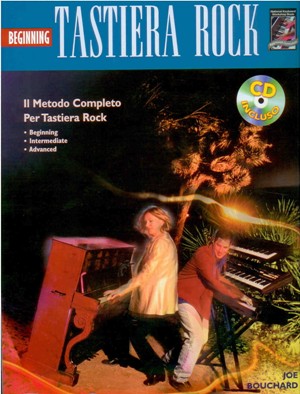
BEGINNING TASTIERA ROCK Joe Bouchard Metodo bassista Blue Oyster Cult In italiano LIBRO CD

BEGINNING TASTIERA ROCK, Joe Bouchard. Metodo completo per tastiera rock, del bassista dei Blue Oyster Cult. In italiano. CD

Benvenuti a Tastiera rock per principianti. Questo libro insegna tutto quello che avete bisogno di sapere per cominciare a fare del rock sulle tastiere. Mentre questo libro ripassa tutte le nozioni di base, sarebbe utile aver già cominciato a suonare e a leggere la musica, almeno a livello del metodo Alfred di base, lezione 02. Questo libro, come gli altri due libri della serie, Tastiera Rock Intermedia e Tastiera Rock Avanzata, è designato per aiutarvi a sviluppare la vostra conoscenza e creatività. Imparerete come si crea la musica rock sulla tastiera, esercitandovi con molte canzoni e riff, e consolidando una teoria d'insieme, per poter suonare con il vostro gruppo! Traduzione italiana a cura di Francesca Visentin e Marco Pontiroli.

Price: €19,99
€19,99
Syndicate content