PENTAGRAMMA E TABLATURE - STANDARD NOTATION and TABLATURE

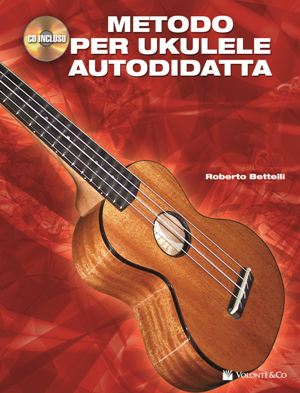
METODO PER UKULELE AUTODIDATTA LIBRO CD TABLATURE Georgia on my mind-La Bamba-Scarborough Fair

METODO PER UKULELE AUTODIDATTA. LIBRO IN ITALIANO CON CD. 

Autore Roberto Bettelli  

LIBRO METODO DI MUSICA CON CD.
SPARTITI PER UKULELE
ACCORDI, PENTAGRAMMA E TABLATURE
IN ITALIANO

Un Metodo per tutti, che insegna in modo semplice, chiaro ed esaustivo le nozioni teoriche musicali e le tecniche strumentali di base, e che mette in grado di suonare in breve tempo. All’interno del testo, come utile e importante strumento di esercitazione, sono incluse oltre 30 trascrizioni di brani famosi, tratti dal repertorio musicale classico, tradizionale e pop. Il Cd allegato è un ottimo strumento didattico, che contiene gli esercizi e tutti i brani presenti nel testo, in versione “base con melodia” e “base senza melodia”. Per imparare subito a suonare l’ukulele, divertendosi con alcune delle melodie più famose, come Georgia on my mind, La Bamba, Scarborough Fair, La Chucaracha, Yesterday, Guantanamera, Oh Happy Day, Stille Nachte e tante altre ancora.

Nel 1995, durante una manifestazione musicale, ebbi la fortuna di conoscere l’arte di uno
dei maggiori virtuosi dell’Ukulele, Tiny Tim. Da allora iniziai a suonare oltre che la
chitarra anche l’Ukulele, che mi ha sempre accompagnato nelle mie esibizioni
live. La natura dello strumento essenzialmente ritmica prevede lo studio degli
accordi e le varie tecniche di accompagnamento anche se, come vedremo,
sarà possibile suonare anche delle linee melodiche. Questo Metodo ha
come scopo quello di insegnare, in modo chiaro, esaustivo, e in
breve tempo, tutte le tecniche strumentali di base. Un consiglio per
un buon apprendimento è quello di una pratica giornaliera di pochi
minuti, ma costante nel tempo, da eseguire con l’ausilio del CD
allegato che, spero, vi sarà di ottimo aiuto.


Roberto Bettelli, diplomato in chitarra classica, ha inciso
tre CD di chitarra acustica Fingerpicking - Fingerstyle:
“POP SONG FOR GUITAR SOLO” (1998), GUITAR
EXPERIENCE (2001), GUITAR SOLO COLLECTION
(2006). Dimostratore delle chitarre Americane Ovation dal
1998 ha partecipato a varie manifestazioni internazionali
e collaborato con importanti musicisti di fama mondiale.
Grazie alla collaborazione con Kaman Music USA ha
approfondito lo studio dell’Ukulele nel genere Country Bluegrass.


Il CD allegato al seguente Metodo contiene le tracce audio di tutti gli esercizi e brani inseriti nelle varie
lezioni (escluso il numero 15). Ad ogni brano con il titolo corrisponde una base su cui suonare. La traccia
n.1 è molto importante perché contiene l’accordatura dell’Ukulele. Tutte le Tracce (Track) sono indicate
con il simbolo CD. È di fondamentale auspicio l’accordatura dello strumento ogni volta che si inizia una
nuova seduta di studio.

Lo Strumento
Breve Storia dell’Ukulele.
Le Parti dell’Ukulele.

2 La posizione dell’Ukulele
Posizione da seduti .
Posizione in piedi .
La Posizione della Mano Destra.
La Posizione della Mano Sinistra.

3 Accordare l’Ukulele
Accordare con il CD.
Accordare con la Tastiera.
Accordare con il Diapason .
Accordatore Elettronico.

4 Teoria Musicale
Alcune Nozioni di Teoria Musicale.
Il Tempo 
Figure e valori 
Le Battute o Misure.

5 Le Note sulla Terza e sulla Seconda Corda
Le Note sulla Terza Corda - Es. 1, 2 .
Le Note sulla Seconda Corda - Es. 3, 4, 5.
Es. 6 - Tutti gli Esercizi Riuniti.
“AU CLAIRE DE LA LUNE”.
“LA GIOSTRA”.
“INNO ALLA GIOIA”.
“MARY HAD A LITTLE LAMB”.
“MELODIA POPOLARE”.
“AH, VOUS DIRAI-JE, MAMAN”.

6 Le Note sulla Prima Corda
Le Note sulla Prima Corda - Es. 7, 8, 9.
“OH SUSANNA”.
La Scala di DO Maggiore - Es. 10.
Es. 11 - Esercizio Sulla Scala di Do Maggiore.
Le Note RE e MI sulla Prima Corda - Es. 12, 13, 14.
“AURA LEE”.
“WHEN THE SAINTS GO MARCHING IN”.
“LITTLE BROWN JUG”.

7 La Nota Si Bemolle
La Nota Si Bemolle sulla Prima Corda - Es. 15.
“YANKEE DOODLE”.
“JINGLE BELLS”.
La Scala di Fa Maggiore - Es. 16.
Es. 17 - Esercizio sulla Scala di Fa Maggiore.

8 Gli Accordi
Do Maggiore, Fa Maggiore, Sol7 - Es. 18, 19.
Sol minore, Do7, La Maggiore, Re minore - Es. 20, 21.
Mi minore, Si7, La minore - Es. 22, 23 .
Gli accordi con il Barrè - Re Maggiore, Mi Maggiore, Mi7, Si Maggiore - Es. 24.
“BLUES IN MI”.

9 Teoria Musicale 2
Il Punto di Valore .
I Tempi 4/4, 2/4, 3/4, 6/8.
Le Terzine.
Le Note Sopra e Sotto il Rigo.
Il Tono e il Semitono.
Le Alterazioni.

10 Antologia di Brani per Ukulele
Introduzione ai Brani .
“CIELITO LINDO”.
“RED RIVER VALLEY”.
“SAINT LOUIS BLUES”.
“WE WHISH YOU A MARRY CHRISTMAS”.
“STILLE NACHT”.
“OH HAPPY DAY”.
“JOSHUA FIT THE BATTLE OF GERICO”.
“GLORY, GLORY ALLELUJA”.
“GEORGIA ON MY MIND”.
“LOCH LOMOND”.
“GUANTANAMERA”.
“LA CHUCARACHA”
“LA BAMBA”.
“SCARBOROUGH FAIR CANTICLE”.
“GREENSLEEVES”.
“MELODIA SPAGNOLA (Giochi Proibiti)”.
“YESTERDAY”.
“THE BLARNEY PILGRIM”.
“JESUS JOY OF MAN’S DESIRING”.

Appendice
Stili di Accompagnamento.

Tavola degli Accordi .

Indice Tracce CD

Price: €18,99
€18,99

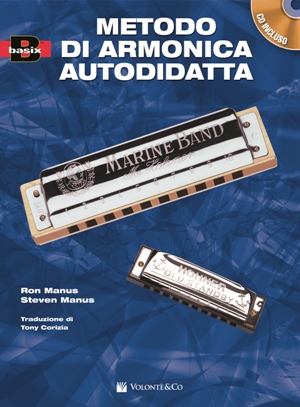
METODO DI ARMONICA PER AUTODIDATTA RON MANUS diatonica-cromatica Blues-Rock-Pop-Country-Folk

Metodo di Armonica per l'Autodidatta 
Autore Ron Manus, Steven Manus 

LIBRO METODO IN ITALIANO PER ARMONICA A BOCCA CON CD.

ACCORDI, PENTAGRAMMA, TABLATURE PER ARMONICA. 

TECNICA, 

Traduzione italiana di un metodo per armonica diatonica e cromatica, che adotta uno speciale sistema di lettura delle note, che facilita l’apprendimento e assicura risultati pressoché immediati. Il libro contempla fraseggi Blues, Rock, Pop, Country e Folk, espressi nello stile dei più grandi artisti dello strumento (Billy Joel, Stevie Wonder, Bob Dylan, The Beatles, Bruce Springsteen, Huey Lewis). A completamento, un CD allegato che contiene gli accompagnamenti per tutte le canzoni e gli esercizi inclusi nel testo.

Price: €16,99
€16,99

NINO RICARDO, ESTUDIO DE ESTILO José Fuente CD TABLATURE CHITARRA

NINO RICARDO, ESTUDIO DE ESTILO José Fuente CD TABLATURE CHITARRA

Fuente, José - NINO RICARDO

Nuestro libro les brinda diez composiciones más emblemáticas del genio de Niño Ricardo trascritas íntegramente. El CD presenta las grabaciones originales, desde su primer disco de 78 revoluciones («Espeleta» - 1943) hasta su última sesión de solista («Llora la Caña» - 1965).

10 PEZZI COMPLETI

Sumario:

Alegrías en La
Alegrías en Mi
Bulerías
Caña/Soleá
Fandangos
Granaína
Serrana
Soleá I Fandango por Bulería
Soleá por Bulería
Farruca I Colombiana I Alegrías I Colombiana


repetición de un acorde

ESTRUCTURA DE LOS PALOS

fin de compás
: división de un compás (en las Siguiriyas y en las Bulerías). En este caso, los guiones valen por barras de medida para los diesis,
bemoles y becuadros.
lIam: llamada
rem : remate

NIÑO RICARDO
Manuel Serrapí Sánchez "Niño Ricardo» (1904 - 1972) fue hasta los años 1970 para los guitarristas flamencos la mayor referencia.
Lo fue para Victor Monge "Serranito», Manolo Sanlúcar y Paco de Lucía pero también para Eduardo de la Malena, Felix de Utrera, Ramón de Algeciras, José María Pardo ... Puede por tanto considerarse como el gran impulsor de la guitarra flamenca moderna.
Dicho puesto privilegiado se lo debe a su genio de compositor, pero también a unas circunstancias históricas particulares: entre los años 1930 y 1950, algunos grandes artistas contemporáneos de Niño Ricardo habían emigrado a América (Estebán de Sanlúcar, Sabicas y Mario Escudero) o a Gran Bretaña (Pepe Martinez) y los que se quedaron en España eligieron en su mayor parte llevar una carrera "clandestina» en algunos calmaos o en reuniones privadas (Javier Malina, Manolo de Huelva, Perico el del Lunar, y, aunque en menor medida, Luis Maravilla y Manolo y Pepe de Badajoz). Cabe también recordar que las grabaciones de Ramón Montoya resultaron poco acequibles en España durante mucho tiempo.
Al contrario de ellos, Niño Ricardo, nunca se negó a tocar en unos espectáculos para el gran público. Participó en un sinfín de giras de "ópera flamenca» desde 1926 con la Niña de los Peines, Cojo de Málaga, Manuel Centeno ... hasta los años 1960 con Antonio Malina. Entre tanto había colaborado en los espectáculos de Lola Flores, Concha Piquer «Las calles de Cádiz»), con la "Compañía de canciones y bailes españoles» de Mari Paz. Y sobre todo con Juanito Valderrama. Niño Ricardo fue entonces un artista polifacético, capaz de componer unos temas exitosos para este tipo de espectáculos ("Mi primera comunión», "El lerele" ... y el famoso "El emigrante»), y de acompañar a los grandes cantaores más clásicos tales como la Niña de los Peines, Tomás Pavón,
Pepe Pinto, José Cepero, Manuel Vallejo, Manolo Caracol, Juan Talega, Roque Montoya "Jarrita», Antonio Mairena, Manuel Mairena, El Chocolate ...

Entonces, no es de extrañar que la discografía de Niño Ricardo como guitarrista acompañante sea una de las más copiosa en la historia del flamenco. Iniciada en 1927 con una serie de grabaciones con la Niña de los Peines (Regal) cubre casi medio siglo, con una última sesión con Manolo Caracol editada en 1972, el año en que falleció ("Manolo Caracol: cante grande» - LP RCA Victor LSP 10464). Además de los cantaores ya mencionados encontraremos también, entre otros, Niño de Gloria, Pepe Marchena, Manuel Vega "el Carbonerillo», Pena hijo, El Sevillano, José Palanca, Juan Varea, Pericón de Cádiz, Porrina de Badajoz, Curro de Utrera, Jesús el Chozas, Rerre de los Palacios, Pepe Gullena, Manolo Leiva ... Es de notar también que los jóvenes cantaores de los años 1960, solicitaron mucho a Niño Ricardo, quien representaba para ellos un sello indiscutible. Lo hicieron Juan Peña "el Lebrijano" (Columbia, 1965, 1966 Y 1968· este último disco titulado "De Sevilla a Cádiz», Lp C 7002, en duo con Paco de Lucía), Curro Malena (Lp Columbia C 7041 - 1969) Y Enrique Morente «<Cantes antiguos del flamenco», Lp Hispavox HH 10-355 – 1969). Con diez años Niño Ricardo trabajaba ya como carbonero (de ahí su primer apodo «Manolo el Carbonero») pero lo dejó para trabajar en un taller de ebanistería de barnizador. Aprendió al mismo tiempo a tocar la guitarra por sí mismo y consiguió muy pronto sus primeros contratos profesionales: a partir de 1917 según sus propias declaraciones, trabaja en el "Café Novedades" de Sevilla. Ahí aprendería el oficio "sobre la marcha» inspirándose en los grandes profesionales con los que se codeaba en Novedades y en otros cafés cantantes de Sevilla, en el ambiente de los calmaos de la Alameda de Hércules, punto de encuentro de los flamencos sevillanos: José Triano "el Ecijano», Javier Malina (1868 - 1956), Currito el de la Jeroma (1900 -1930) Y sobre todo, Antonio Moreno (1890 - 1937). Acompañando al baile en los cuadros flamencos, y (aunque menos) al cante, el joven Ricardo va adquiriendo experiencia.

De ahi su gusto por los toques acompasados y por las tecnicas esencialmente flamencas (rasgueados, tecnicas de pulgar o alternancia pulgar/indice (vease abajo). Solo mas tarde introducira en su toque, las tecnicas c1asicas desarrolladas por la "escuela de adrid» (Ramon Montoya, Miguel Borrull, Luis Molina) influenciado por la grabaciones de Molina y Montoya. Nino Ricardo sera entonces, uno de los fundadores de la escuela andaluza, mas centrada en el toque a com pas y "a cuerda pela» (toque monodico) al ue aportara su sello irrepetible. No nos extrana, por tanto, que Nino Ricardo haya sido el unico guitarrista famoso de la epoca en . teresarse en el toque de Diego del Gastor, con el cual establecio una "correspondencia» musical duradera : Paco del Gastor, sabri no de Diego haciendo de "cartero» entre Moron y Sevilla, aprendiendose una nueva falseta del uno, para tocarsela al otro ...
Y sin duda, por eso, Nino Ricardo puede considerarse, junto con Manolo de Huelva (1892 - 1976), como uno de los creadores de la uleria moderna. Dicha forma se estaba elaborando en aquella epoca, y se hallaba poco individualizada : Ramon Montoya solia 'ocarla como una suerte de Alegria 0 de Solea rapid a, y Luis Molina y Miguel Borrull solian conformar su acompanamiento a unas secuencias de medios compases binarios en seis tiempos. La tradicion (y sobre todo Pepe de la Matrona) suele atribuir la codificacion la forma Buleria, tal como la conocemos ahora, a Javier Molina. Esta afirmacion no se puede averiguar puesto que tenemos pocas aciones de Javier Molina (cuatro cantes con Manuel Torres: dos Soleares y dos Siguiriyas) aunque se puede considerar como osimil si consideramos el toque de sus alumnos y en particular el de los hermanos "Morao».

Ricardo y Manolo de Huelva trabajaron much os anos en Novedades con Javier Molina, y aunque Manolo de Huelva era mayor e Nino Ricardo, al empezar a actuar como concertista c1asico, 10 mas probable es que aprendio su oficio de tocaor flamenco al o tiempo que el en el Novedades. De hecho las primeras grabaciones por Buleria de ambos guitarristas son contemparaneas y comparables : principios de los anos 1930, para unos "cuples por Buleria» de Canalejas de Puerto Real y Manuel Vallejo 010 de Huelva) y de la Nina de los Peines y Manuel Vallejo (Nino Ricardo). En ambos casos tenemos la misma manera e lir» el cicio melrico, como empezando en el tiempo 12 (y no en el 1) de la Solea y la misma allernancia caracleris 'ca ariolbinario (6/8 I 3/4) a partir delliempo 12. Las falselas lambien son equiparables : por 10 esencial, conslan de unos rasgos e do. Senalaremos sin embargo, una diferencia de eslilo. Para Manolo de Huelva los rasgos en picado quedan en su mayoria unos de escalas conjunlas, mienlras que Nino Ricardo liene lendencia a parafrasear, en sus falsetas, unos exlraclos de melodias e «cuples» que se van a canlar (Ia melodia ante lodo para Nino Ricardo). Es de anadir que ambos artislas luvieron el mismo papel elaboracion de la otra forma que se eslaba desarrollando en la epoca, la de los Fandangos de Huelva.

ESTILO DE NINO RICARDO
grabaciones en solo de Nino Ricardo y Ramon Montoya tienen dos punlos en comun : ambos empezaron a grabar larde (ea . enla anos para Ricardo: la primera sesion con fecha probada es de 1943 para Columbia - las primeras versiones de la Zeria arabesca» y de las Alegrias "Espelela») ; ambos han grabado su obra maestra en Paris (en 1955 para Nino Ricardo e Chant du Monde).
embargo la comparacion de dichas discografias mueslra a las c1aras las diferencias de estilo entre las escuelas de Madrid y de andalucia a las que aludiamos, tanlo en las formas como en los modos privilegiados par ambos guitarrislas :
Las formas favoritas de Nino Ricardo son, sin lugar a dudas las que estriban en unos ciclos de doce tiempos, sobre todo Alegrias y Bulerias. Grabo nueve Alegrfas (en Sol, Mi y La) y seis Bulerias (dos en duo con Melchor de Marchena y una con Sabicas). La comparacion con Montoya es considerable: una Alegria (nos resulta dificil anadir las dos versiones de "La Rosa» ya que el compas de alegrias es demasiado fluctuanle : se trata, mas bien, de unos toques de concierto sin compas de referencia) y una Buleria (aunque la primera parte es, de hecho, una Solea por Buleria). Ricardo nos deja siete versiones de la Solea (contando "Lloora la cana»). Y si grabo solo dos veces la Siguiriya, sus falsetas han servido de ejemplo para todos los guitarristas posleriores.

Por outra parte, Nino Ricardo compuso unos toques de concierto que no corresponden a las formas del repertorio del cante como «gitaneria arabesca» (Ia primera Zambra para guilarra solisla), «Recuerdo a Sevilla» (subtitulado «Serenata», en el mismo compas de zambra) y "Temas farrucos» sublilulado de manera acertada «polpurri flamenco» (empieza con la Farruca luego sigue con su Creacion «Asturiana» para la Nina de los Peines, sigue con las Alegrias y concluye par Colombiana). Estos Ires toques de concierto se pueden vincular con las tres versiones de la Farruca "Almoradi» (subtitulada «Fantasia») y con una version de los Campanilleros.
No haòlamos nada parecido en la obra de Montoya, con la excepcion de una composicion litulada «Alborada» (y posiblemente, las dos «Rosas»).

Nino Ricardo es ante lodo un gran melodista. No ha sido novador, como 10fue Monloya, en 10modal y 10armonico. La mayor parte de sus composiciones eslriban en los modos tradicionales "por arriba», «por medio» y "por Granaina» (y claro eSla, en las tonalidades mayores y menares usuales para las Alegrias, las Bulerias, la Farruca. los Campanilleros y el Zapateado).

Price: €21,99
€21,99

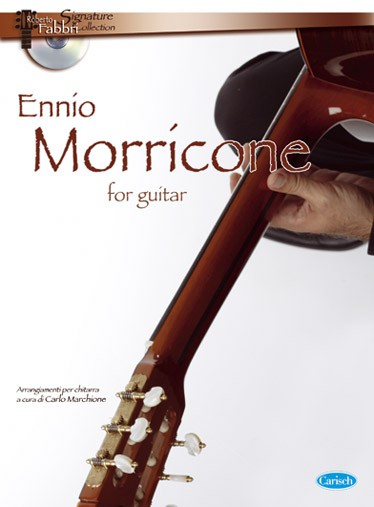
MORRICONE ENNIO FOR GUITAR Marchione LIBRO CD TABLATURE BUONO BRUTTO CATTIVO-Gabriel's oboe

MORRICONE ENNIO, FOR GUITAR. Carlo Marchione. CD TABLATURE

BOOK FOR GUITAR WITH CD AND TABLATURE

Arrangiamenti per chitarra a cura di Carlo Marchione
Il volume include i seguenti brani di Ennio Morricone trascritti per chitarra sia in notazione standard che in intavolatura.Gabriel's oboe - Il buono, il brutto e il cattivo - Nuovo cinema paradiso - Sean sean - Nostromo - A l'aube du 5° jour - Per

Brani:
Morricone, Ennio - A l'aube du 5° jour
Morricone, Ennio - Gabriel's oboe
Morricone, Ennio - Il buono, il brutto e il cattivo
Morricone, Ennio - Nostromo
Morricone, Ennio - Nuovo cinema paradiso
Morricone, Ennio - Per Elena
Morricone, Ennio - Sean sean

Price: €25,99
€25,99

GROOVY GUITAR 15 CLASSIC '60 SONGS Bill Piburn CD TABLATURE LIBRO (Sittin' On) The Dock Of The Bay


GROOVY GUITAR, 15 CLASSIC '60 SONGS. Bill Piburn. CD TABLATURE


Series: Guitar Solo

Format: Softcover with CD - TAB

Arranger: Bill Piburn

Artist: Various


From the editor of Fingerstyle Guitar magazine comes 15 custom arrangements of popular music classics, including: Daydream • Happy Together • A Hard Day's Night • Last Train to Clarksville • Scarborough Fair • (Sittin' On) The Dock of the Bay • Spooky • Walk On By • What Becomes of the Broken Hearted • and more. Songs are arranged for solo guitar in notes and tab.


Song List:

Daydream

Downtown

Happy Together

A Hard Day's Night

I'll Never Fall In Love Again

Last Train To Clarksville

Mellow Yellow

Scarborough Fair

(Sittin' On) The Dock Of The Bay

Spooky

Sunny

Up On The Roof

Walk On By

What Becomes Of The Broken Hearted

What The World Needs Now Is Love


56 pages

Price: €26,99
€26,99

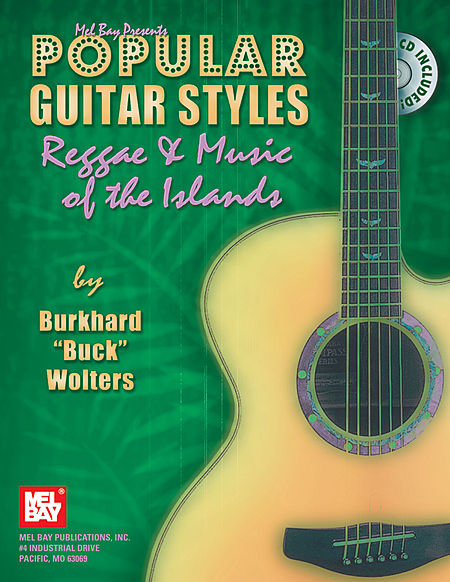
POPULAR GUITAR STYLES REGGAE & MUSIC OF THE ISLANDS Burkhard Buck Wolters CD TABLATURE


POPULAR GUITAR STYLES, REGGAE & MUSIC OF THE ISLANDS. Burkhard Buck Wolters. CD TABLATURE


Popular Guitar Styles: Reggae and Music of the Islands reflects recent popular styles and transfers them to classical or fingerstyle technique. Guitar players who want to add reggae or Island music to their solo-repertoire will find an original and unique collection of compositions which will give joy to both players and listeners. The playing-level is intermediate to advance. Left-hand difficulties like barres and stretches are minimized as much as possible to make it easy to make the music groove. Written in notation and TABLATURE.

Series: Popular Guitar Styles

Price: €29,99
€29,99

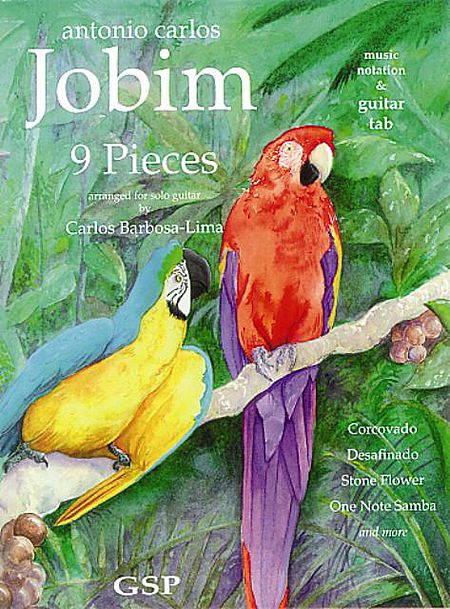
JOBIM ANTONIO CARLOS 9 PIECES Carlos Barbosa Lima-Samba De Uma Nota So' Guitar TABLATURE-SPARTITI

JOBIM ANTONIO CARLOS, 9 PIECES. Carlos Barbosa-Lima. TABLATURE


Nine Pieces. (Solo Guitar). By Antonio Carlos Jobim. For solo guitar (no lyrics). 


Latin and Jazz.

Difficulty: medium.

Guitar tablature songbook.

Guitar tablature, standard notation, guitar notation legend and performance notes.

80 pages. Music Sales 


With guitar tablature, standard notation, guitar notation legend and performance notes. Latin and Jazz. 9x12 inches.

"Corcovado," "Stone Flower," "One Note Samba," plus six more Jobim masterworks, arranged for solo guitar with music notation and guitar tablature.


Amparo

Caminho De Pedra (Rocky Road)

Canta Mais (Sing More)

Corcovado (Quiet Nights Of Quiet Stars)

Desafinado (Off-Key)

Estrada Branca (This Happy Madness)

Modinha

Quebra Pedra (Stone Flower)

Samba De Uma Nota So' (One Note Samba)

Price: €139,99
€139,99

CELTIC ENCYCLOPEDIA, FINGERSTYLE GUITAR. TABLATURE

CELTIC ENCYCLOPEDIA, FINGERSTYLE GUITAR. TAB.

Product Description:
This comprehensive book contains over 100 Celtic tunes arranged for solo fingerstyle guitar. This edition is derived from a collection of nearly 300 arrangements Glenn Weiser has created over the last twenty years. The book is divided into 4 sections: 1) airs, marches and waltzes 2) hornpipes, jigs and reels 3) tunes from the Bunting collection 4) harp tunes of Turlough O'Carolan. All are in either standard or dropped-D tuning, and can be played on either nylon or steel string guitars. All of these melodies are accompanied with brief historical notes. Written in standard notation and tablature. Intermediate in difficulty.

Format: Book
Series: Encyclopedia
192 PAGES

Contents:

Introduction
Airs, Marches and Waltzes:
All Through the Night
The Atholl Highlanders
The Banks of Inverness
The Battle of Waterloo
Believe Me if All these Endearing Young Charms
The Battle of Aughrim
The Boys of Wexford
Castles in the Air
Childgrove
Cock up your Beaver
Come Under My Plaidie
Dainty Davy
Down by the Sally Gardens
The Earl of Dalhousie's Happy Return
Eileen Aroon (first and second settings)
Flow Gently, Sweet Afton
For Ireland I'd Not Tell Her Name
Hugh O'Neill's Lament
King of the Fairies
The Lark in the Clear Air
The Lass of Patie's Mill
Londonderry Air
Macpherson's Lament
Niel Gow's Lament for His Second Wife
The Old Resting Chair
The Parting Glass
The Piper through the Meadow Straying
Old Ireland, a Long Farewell
Princess Augusta
The Rocks of the Brae
Scottish Farewell
The Shepherd's Wife
The Rose Tree

Hornpipes, Jigs, and Reels:
Hornpipes:
Alexander's Hornpipe
The Brown Coffin
Clark's Hornpipe
Delahanty's Hornpipe
The Fairies' Hornpipe
Molly Halfpenny
The Morpeth Rant
The Quindaro Hornpipe
Jigs:
The Burnt Old Man
Cherish the Ladies
The Connaughtman's Rambles
Father Tom's Wager
The Joy of my Life
The Lark in the Morning
Larry O'Gaff
The Muckin' o' Geordie's Byre
The Mooncoin Jig
Nell Flaherty's Drake
O'Keefe's Slide
Pipe on the Hob
The Rakes of Kildare
The Rock and the Wee Pickle Tow
Swallowtail Jig
The Trip to Sligo
Reels:
The Fairies' Reel
Angus Campell
Cooley's Reel
The Good-Natured Man
Lord Gordon's Reel
Miss Monahan's Reel
The Mullingar Races
Peter Street
Petronella
Pigeon on the Gate
The Pigtown Fling
Scollay's Reel
The Silver Spire
The Star of Munster
The Wise Maid
The Wind That Shakes the Barley

Tunes from the Bunting collection:
The Dawning of the Day
The Foggy Dew (major and minor key versions)
The Gentle Maiden
The Girl I Left Behind Me
Give Me Your Hand
The Joyce's Country Greeting
Saint Patrick's Day
A Soft Mild Morning
Summer is Coming
The Wild Geese
The Coolin

Harp tunes of Turlough O'Carolan:
Thomas Burke
Madam Cole
John Drury (First Air)
Anne MacDermott Roe
Miss MacDermott
Denis O'Conor (Second Air)
Maurice O'Connor (Second Air)
John Kelly
Mary O'Neill
John O'Reilly
Kean O'Hara (Third Air)
Planxty Scott
Captain Sudley
Colonel Palmer
All Alive
Carolan's Cottage
Carolan's Fancy
Planxty O'Carolan
The Two William Davises
The Lament for Terence MacDonough
Ode to Whiskey

Alphabetical Index
About Glenn Weiser

Price: €25,99
€25,99

CELTIC MUSIC FOR GUITAR VOLUME 1 CD TABLATURE LIBRO CHITARRA SPARTITI SCOZIA IRLANDA

CELTIC MUSIC FOR GUITAR VOLUME 1. CD TAB.

Celtic Music For Guitar by Allan Alexander contains 31 pieces transcribed for Guitar, most of them originating from Ireland and Scotland. The book also includes three charming original pieces written in the Celtic style by Allan Alexander. The music is presented in both music notation and guitar tablature for people who do not read music.

Play the beautiful haunting melodies of the Irish Harper O'Carolan, take a musical journey with dances that were written more than 400 years ago and experience Celtic traditional music that is the mainstay of modern players. If you are learning and looking for great music, this is one book that you will not be able to put down. If you are a performer looking for high quality material, these great pieces, expertly arranged, will become part of your permanent repertoire.

The CD, played by Allan Alexander, gives the musician the advantage of being able to hear how these pieces should be played by an expert in this genre of music and will make the learning process easier. Many of these pieces were written for the Lute; however Allan Alexander has found that they work very well on the guitar. Being an accomplished player of both lute and guitar, he has the knowledge to make accurate, musical transcriptions. Other pieces in this book are traditional tunes that have been arranged specifically for guitar. Many of the selections have variations on the original melodies. This adds another dimension to the music and enhances the performance.

Price: €34,00
€34,00

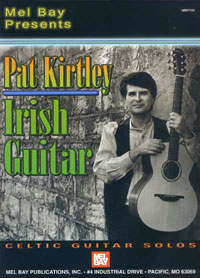
IRISH GUITAR Celtic Guitar Solos, Pat Kirtley LIBRO CD TABLATURE IRISH CHITARRA

IRISH GUITAR Celtic Guitar Solos, Pat Kirtley. CD TABLATURE

LIBRO PER CHITARRA CON TABLATURE E CD

transcribed by John Roberts & Mark Pritcher

Product Description:
World traveling fingerstyle guitarist Pat Kirtley presents 17 solo guitar arrangements of traditional Irish tunes including a few original compositions in the same vein by himself, Pierre Bensusan, and Duck Baker. As all of the tunes in this 1997 recording were arranged in altered tunings (DADGAD, EADEAE or DADEAD), each appears in both standard notation and tablature with insightful performance notes. In general, these transcriptions from Pat Kirtley’s 1997 album of the same title are extremely accurate; The Red-Haired Boy, however, played as a duet with Steve Rector on the album - appears as a solo arrangement in this book. Recommended for the intermediate to advanced player, the author provides insightful performance notes for each tune.

Format: Book/CD Set

Song Title: Composer/Source:
Blind Mary Turlough O'Carolan
Chase the Weasel Pat Kirtley
Fannie Power Turlough O'Carolan
Finn MacCool's Reel Pat Kirtley
Lord Mayo Arr. Davey Graham
Moran's Return Arr. Pat Kirtley
Morgan Magan Turlough O'Carolan
Planxty Irwin Turlough O'Carolan
Rodney's Glory Arr. Pat Kirtley
Sergeant Early's Dream Arr. Pat Kirtley
Shi Beg Shi Mhor Arr. Pat Kirtley
The Blarney Pilgrim Arr. Pat Kirtley
The Last Pint Pierre Bensusan
The Pretty Milkmaid Arr. Pat Kirtley
The Rakes of Waterloo Duck Baker
The Red-Haired Boy Arr. Pat Kirtley
The South Wind Arr. Pat Kirtley
Voyage for Ireland Pierre Bensusan


REVIEWS OF PAT KIRTLEY'S IRISH GUITAR
(from the Boston Irish Reporter / January 1998)
Irish Guitar Pat Kirtley / Mainstring Music
That O'Carolan's music continues to remain part of the tradition is evident in the fact that every Irish guitarist's repertoire includes O'Carolan pieces. Pat Kirtley's latest recording is a testament to that as it contains five of the itinerant harper's compositions. Kirtley, the 1995 National Fingerstyle Guitar Champion, has his roots in the music of his native Kentucky and his two previous CD's
highlighted the traditional American musical styles he grew up with.
This wonderful recording, his first foray into Irish music, is all solo acoustic guitar except when joined by Mark Cannon's flute on O'Carolan's Blind Mary and Steve Rector's guitar on the 'Kentuck-ification' of the well known Red-Haired Boy. New compositions like Kirtley's own Finn MacCool's Reel as well as two pieces by French guitarist Pierre Bensusan help to lend balance to the recording which relies heavily on the tried and true Irish guitar repertoire like Si Beag Si Mhor, The South Wind and Fannie Power. It is Kirtley's masterful playing though, which stands out and begs to be listened to. On his lovely first foray into the world of Irish music, Kirtley has produced a winner and a must-have for any fan of Celtic guitar.

(from Dirty Linen Magazine Nov '97 issue)
Pat Kirtley / Irish Guitar
Irish Guitar features 17 instrumentals, mostly traditional, by fingerstyle guitarist Pat Kirtley. Kirtley is firmly rooted in the Pierre Bensusan, John Renbourn, Duck Baker school of playing. The tunes are given an honest airing, never hurried, letting the melody lines develop fully. Even though most of the tunes have been done dozen's of times elsewhere, Kirtley's interpretations shine a fresh light
on them. A joy to listen to and one of the best albums of traditional guitar I've heard.

(from Acoustic Guitar Magazine April '98 issue)
Pat Kirtley / Irish Guitar
Kirtley's nimble and heartfelt renderings of 17 traditional and Irish and Irish-influenced tunes are a delight. The sway of John Renbourn, Duck Baker, and Pierre Bensusan is obvious, yet Kirtley articulates the emotional quality of each piece (the deep melancholy of "The Pretty Milkmaid", the agile gaiety of "Rodney's Glory") according to his own vision and sensitivity. The solo guitar format is nicely augmented on "Blind Mary" by by Mark Cannon on Irish wooden flute, and by guitarist Steve Rector on a spirited "Red Haired Boy". A generous portion of Turlough O'Carolan makes this a potent listening experience.
-Jim Ohlschmidt


(from Fingerstyle Guitar Magazine July/August '97 issue)
Irish Guitar
It's been a couple of years since Pat Kirtley's last CD. His current offering, Irish Guitar, is well worth the wait. This hefty collection of 17 tracks of mostly traditional tunes is ingeniously arranged and brilliantly played by one of the emerging stars of the fingerstyle world. -James Jensen


(from Guitar Magazine December '97 issue) "-Best of 1997-"
PAT KIRTLEY Irish Guitar (Mainstring Music)
Despite having won the National Fingerpicking Championship with his rip-snorting version of "Ghost Riders In The Sky:' Pat Kirtley's fingerpicking forte remains his delicate touch combined with subtle and craft-laden melodic invention. This is exhibited in abundance on his new recording, Irish Guitar, a collection of 17 drop-dead gorgeous arrangements of mostly solo, well-known airs.
dances, and songs from the Celtic side of acoustic guitar repertoire. Each piece is artfully rendered and beautifully recorded, and
Kirtley's arrangements are nonpareil. Witness his version of the chestnut "The Pretty Milkmaid," which, in Kirtley's hands, is transcendent.
-Jon Chappell. Guitar Magazine


PAT KIRTLEY AND IRISH GUITAR
Pat is a gifted performer who blends a rich Southern musical heritage with modern imagination and masterful contemporary technique. As a creator of new acoustic music, Pat has penned a virtual library of fresh, lyrical compositions for guitar. His talents won him the title of US National Fingerstyle Champion in 1995, and his playing has since garnered international praise. His CD Kentucky Guitar was named one of the "Top 59 Acoustic Albums of the Year" by Japan's Player Magazine, and he's been hailed as one of "The Next Generation: Hot New Acoustic Acts for the Millenium" by Acoustic Guitar Magazine. In 1999 Pat was selected as the cover feature of the German Akustik Gitarre magazine, Europe's largest acoustic guitar publication. A recent tour of Japan and China included an appearance as headliner of the Japan National Fingerpicking Day festival in Tokyo. Pat is also known and respected as a guitar educator, traveling thousands of miles each year in the USA and presenting musician workshops internationally for Taylor Guitars, conducting master classes, and producing acclaimed instructional videos.

The 1997 CD Irish Guitar represents Pat's favorite pieces from the world of Irish jigs, reels, airs, and dances. "I've collected these tunes in my head and on guitar for years." says Kirtley. "Traditional Irish music is important, and I wanted to create new arrangements that do justice to these beautiful melodies and rhythms."
Tunes in the collection include a lively, up-tempo Morgan Magan, one of four pieces here by 17th century composer O'Carolan, and a Kirtley composition, Finn MacCool's ReeL,which also appears on a Narada Recordscollection entitled "Dance of the Celts". Earle Hitchner, well-known Celtic music journalist, writing about Finn MacCool's ReeLfor Narada, said "Pat creates a remarkable effect through the largerthan- usual intervals he's written into the melody. These spacious, skillfully etched tones evoke the image of Finn MacCool, an Irish mythological giant whose American counterpart would be Paul Bunyan, stepping across Ireland. It's a quietly impassioned tour de force..." Also in the collection are evocative slow melodies, like Moran'5 Return, Blind Mary, and The Pretty Milkmaid. Kirtley: "These are unforgettable melodies with an indefinable aura of sadness. Much of the traditional Irish music, especially the dance music, has an exuberant, happy energy, but the slow airs move right to the heart with a strength that cannot be expressed in words. It's powerful music."
Irish Guitar is a solo guitar project, without overdubs, with the exception of two duos. Celtic multiinstrumentalist Mark Cannon and award-winning guitarist Steve Rector,join Kirtley for duets on Blind Mar, and a rousing bluegrass-crossover version of The Red-Haired Boy.


PERFORMANCE NOTES FOR IRISH GUITAR
I spent more than five years gathering, learning and arranging these tunes. During that time I listened
to groups like the Bothy Band, the Chieftains, DeDanaan, the Tannahill Weavers, and to individual
musicians like Alisdair Fraser, Tim Britton, Tommy Peoples, Sharon Shannon-fiddlers, pipers, whistle
players, and button accordianists. I paid attention to the elemental guitarists of the genre; Dave Evans,
Davey Graham, Duck Baker, John Renbourn, Pierre Bensusan, and Pat Kilbride. I began attending Irish
sessions" whenever possible, and learned how to join in with the guitar and become part of the sound. I
played gigs with pipers and fiddlers. These experiences became part of the preparation for recording Irish
Guitar.
Some of the arrangements are challenging, and some are relatively easy. They all demand attention to
detail, and a sense of the basic elements of Irish traditional music-melody, ornamentation, and rhythmic
'groove'.
Note: Many of the tunes featured here appear on the videos "Ramble to Cashel" and "The Blarney
Pilgrim" on DVD and VHS from Vestapol Videos (available through Mel Bay). The videos were filmed "for
guitarists" with good shots of the fretboard and hands, and watching them will help in learning these tunes
(as well as show you some other great players in action).

THE TUNES:
Morgan Magan
This is a challenging piece to learn. It should be played at a brisk tempo, which can only be built up
over time, so don't be impatient. The technique includes a few finger stretches (as in measure 4) and a
couple of potentially awkward passages in terms of left hand fingering (for instance, measures 25-27).


The Last Pint
This is a reel by Pierre Bensusan. When I first heard it played on his 1987 album "Spices", I wondered
how anyone could playa tune like that. At first hearing it seemed like a barrage of notes, but I liked it. I
didn't try to play it at first. When I heard Pierre do it in a concert later, he took off way too fast and did a
hyper-speed version of it. Afterward I thought, if he can do it 3x as fast as he originally recorded it, I should
be able to do it 1x as fast! This tune imitates the style of bagpipes, with large melodic leaps and
characteristic ornamentation. The ending run (measure 75) is a "cascading arpeggio" which is played with
the right hand pattern i-p-m (index-thumb-middle) in a repeating pattern.


Blind Mary
A slow, stately melody where every note counts!
Moran's Return
I recorded this tune at capo 3 so it would be in the key of F like the fiddle version I learned it from. It
works fine with no capo (key of D) too.
Finn MacCooI's Reel
The C part (beginning measure 24) was the most difficult for me to learn well, I think mostly because
I was impatient with it. Working on this tune slowly will prove worthwhile.


Lord Mayo
Beautifully arranged in EADEAE by Davey Graham, this is one of the first Irish tunes I ever learned. It
is easy to play, but demands attention to make it flow and to play it expressively.


Rodney's Glory
This one is a real challenge. I use my left hand thumb to fret many of the notes on the 6 th
string. At the beginning of the B part (measure 11), keep a barre across 3 strings at fret 7 with your index finger. Then in the middle of the next measure, you slide the barre down to the 5 th
fret. The rest of the B part is playable but tricky because the melody jumps all over the place and doesn't stick to a standard scale. Just work through it very slowly and don't give up!


Voyage for Ireland
Originally titled in French "Voyage pour L'lrlande", this a beautiful, atmospheric piece written by Pierre Bensusan. It's a good example of how the D minor tonality works in DADGAD. I always hold the F bass note (6 th string 3 rd fret) with my left hand thumb when the melody is on the top string.


The Blarney Pilgrim
The difficulty in playing this arrangement is in the right hand. It is necessary to use the thumb and all three fingers (i-m-a), and there's no repeating right hand pattern to simplify things. Try to work out the fingering so as to avoid getting your fingers in a knot. To memorize this piece and play it fluidly, you'll have to memorize the right hand fingering as well as the left, and work on keeping your thumb thumping away on a muted low D for rhythm.


Shi Beg Shi Mhor
I arranged this piece with the capo on the 4 th fret purely for the harplike tone it affords. The resulting key of F# isn't conducive to ensemble playing of the tune! If you play with others, the natural key is D (no capo).


The Red-Haired Boy
There must be an easier way to play this tune than the leaps and jumps required by the EADEAE
tuning, but it sounded so good that I decided to keep it there. It does offer a distinctive sound, and the melody is clear. I always hold the 6 th string G note (3 rd fret) with my left hand thumb. On the album, I am joined by Steve Rector in a duet, but the arrangement here works fine as a standalone fingerstyle piece.


Fannie Power
The arrangement of this O'Carolan tune is straightforward and uses the technique of playing alternate notes on fretted and open strings for maximum sustain, to get a harplike quality.


Planxty Irwin
This is one of O'Caroian's most beautiful melodies, arranged in the tuning DADEAD. Pay attention to the bass progression in measures 46-49.


The Rakes of Waterloo
Duck Baker originally composed this tune in Drop D tuning, but it also works in DADGAD. The intro is played freely and slowly, and then the tune itself is a jig with a strong rhythmic pulse. Much of the melody is played on the lower strings, and you have to be careful to make the melody come out clearly while thumping away on the bass string. I recorded this tune as a set with Chase the Weasel, and the interlude at the end (measure 42) is the segue between the two. You can also play either one as a standalone.


Chase The Weasel
There is a technique in this tune that is not obvious from the written score. It is a percussive right hand "smack" of the strings where you brush the string or strings with the top side of the fingernail in a downward motion. The first place it appears is halfway through measure 5, the 2 nd
"7" on the top string. If you listen to the recording, you will notice several places where this technique is used instead of the normal upward stroke of the right hand fingers.
 

Price: €32,99
€32,99
Syndicate content