TESTI DELLE CANZONI - ACCORDI - PENTAGRAMMA - TABLATURE

THE ROOTS OF SLIDE GUITAR Fred Sokolow CD TABLATURE Come On in My Kitchen Robert Johnson-SPARTITI LIBRO

THE ROOTS OF SLIDE GUITAR. Fred Sokolow. Metodo per suonare e cantare il blues con 3 titoli acustici e 2 elettrici.

THE SONGS AND LICKS THAT MADE IT HAPPEN
A SURVEY OF SLIDE GUITAR, ITS PIONEERS, AND HOW IT DEVELOPED

This book/CD pack is a complete survey of slide guitar, its pioneers, and how it developed. It includes: 6 note-for-note transcriptions of famous slide tunes :

-Come On in My Kitchen (Robert Johnson)

-Motherless Children (Mance Lipscomb)

-Roll and Tumble Blues ("Hambone" Willie Newbern)

-You Can't Lose What You Ain't Never Had (Muddy Waters)

-You Gotta Move ("Mississippi" Fred McDowell)

-You Shook Me (Earl Hooker with Muddy Waters);

instruction in the essential playing styles; the history and the development of slide guitar; biographies of its representative artists; and recordings on CD of the songs, exercises and licks.


You gotta move -come on in my kitchen -motherless children -roll and tumble blues -you can't lose what you ain't never had -you shook me. CD TABLATURE


HOW TO USE THIS BOOK AND RECORDING
It swoops, wails, whines, moans and growls: slide guitar sings. It's a crowd pleaser, and it reaches people because it conveys naked emotion-especially when playing the blues. And most slide guitar heard today, whether in a blues, rock or country song, is played in a style derived from early Mississippi Delta blues.
Modern blues and rock slide guitar evolved from traditional acoustic styles. This book is about the guitarists who made that evolution happen. It takes you to the roots of slide guitar. Each of the six classic blues tunes transcribed here demonstrates a particular style and tuning. Every song is preceded
by information, exercises, scales, licks and chords that are needed for that style.
Timing is such a major part of slide guitar that it's almost impossible to learn from the printed page alone. Listen to the recording that comes with this book before playing a note. Once you know how a tune sounds, then it's time to check out the tablature and/or music notation.
If you want to learn any style of music, it helps to imitate the masters. Whether you're a beginner or an experienced player who wants to get back to the roots, here is the essential guitar stuff. This is an introduction to and an appreciation of great vintage music, and it's a foundation on which you can build your own style.

." Fred Sokolow
All guitars and vocals on the recording that comes with this book are by Fred Sokolow. Bass, drums, piano and horns are by Dennis O'Hanlon, and it was recorded at O'Hanlon Recording.


MUSICAL INTRODUCTION

A LOOK AT THE ROOTS OF SLIDE GUITAR
Most musical historians trace slide guitar to Hawaii, but Johnny Shines, friend and accompanist of Robert Johnson, is one of many who claim that blues-style slide developed in Africa, along with open-chord tunings. The first literary mention of blues slide was W. C. Handy's famous 1903 sighting of a singer at a Mississippi train depot who used a knife to slide on his guitar strings. Like most Mississippi blues players, he made his guitar sing and mimic his voice.
Early players slid on the strings with pocket knives or beef bones, and some held the guitar on their lap, Hawaiian-style, but by the 1930s, most blues players held the guitar upright and used a brakenoff bottleneck or a sawed-off length of pipe for a slide. This was a major stylistic development, because if you hold a knife in your left hand, it's impossible to fret the strings with your fingers; fitting a slide on the ring finger or little finger frees up two or three fretting fingers. Most slide players tuned the guitar to a major chord, usually 0, E, G or A, and used the slide to play major chords, as well as individual notes.
There was a blues craze in the 1920s, and by the middle of that decade, major labels began recording blues guitarist/singers. The first crap of slide players who recorded included Sylvester Weaver, Barbecue Bob, Hambone Willie Newbern and Sam Butler. Following them were the Mississippi bluesmen Son House, Charlie Patton, Bukka White, Kokomo Arnold, Sam Collins and Robert Johnson. They played a raw, very rhythmic, emotional style of blues and sang and wailed with passionate intensity. Texans Blind Willie Johnson and B. K. Turner (the Black Ace) were influential early slide blues players, as were Tampa Red and Furry Lewis, who boasted a polished, gentler slide style.

THE COUNTRY CONNECTION
Hawaiian guitarists developed a lap style of playing: the guitar lies in your lap, strings facing up, and you hold a steel bar down on the fretboard. This technique migrated to the mainland and, in the 1920s, with the help of Cliff Carlisle, Jimmie Tarlton and slide players who accompanied Jimmie Rodgers, it became an essential part of country music. By the '30s, Hawaiian and country pickers began using electric, fretless "lap steels." These evolved over the years: they grew legs, more strings, twin and triple necks (in different tunings), and foot pedals and knee levers to bend notes while playing.
Thus was born the pedal steel guitar that is now a signature country sound. But country pedal steel and lap steel bear little stylistic resemblance to blues or rack slide playing.
In the early '50s, the acoustic lap style slide guitar (see Dobro picture, below) began appearing in bluegrass bands. The wooden, acoustic whine of the Dobra is also heard in contemporary country music. Usually played in a bluesy style in open tunings, country Dobra is more related to bottleneck guitar than is its cousin, the pedal steel.
All-metal Dobro
Wooden-bodied squaredneck Dobro


BLUES SLIDE PLAYERS PLUG IN
Before instruments were amplified, it was hard for a guitarist to be heard over a piano, horn or even a banjo. In the late '20s, the National Company answered this need by making all-metal guitars, fitted inside with convex aluminum resonators, like speaker cones. Sounds crazy, but it worked: the guitars were louder, with more sustain, and they rapidly became popular with jazz, country and blues players. Lap style players used the square-necked models with a nut that lifted the strings high off the fretboard (better for the metal slide), but bottleneckers favored the round-necked National that could be played like a normal guitar. To this day, the all-metal National and its cousin, the Dobro, are favored by many an acoustic slidester. The Dobro company also makes a wooden, square-neck guitar with a metal resonator fitted into its body (it looks like someone stuck a hub cap over a guitar's soundhole) that bluegrass players use.
However, even the National or Dobro could not cut through drums, saxophones and electric guitars. By the mid-'40s, many Mississippi players had relocated in Chicago, and a new kind of blues was brewing. Elmore James and Muddy Waters led full electric bands, playing screaming, amplified slide.
It was loud and distorted, and single-note solos became the norm-with a whole band for backup, a guitarist didn't need to fingerpick or play chords. You could wail with one note, like a sax or trumpet.
Waters' and James' styles were clearly rooted in the Delta, and so was the playing of electric slide pioneers J. B. Hutto and Hound Dog Taylor. But Robert Nighthawk and Earl Hooker began playing electric, single-note style in standard tuning, which was a new direction for bottleneckers.

THE '60S BLUES REVIVAL AND BEYOND
During the '60s, white blues fans, many of whom had learned to play by studying old blues records, sought out the first-generation blues artists. Legendary players whose careers had petered out were rediscovered and brought into the limelight, and many excellent artists who had never played outside their own county recorded and performed all over the world. Folk festivals, concerts and coffee houses featured acoustic and electric blues.
American and European audiences loved the aging but passionate blues legends, and by the mid· '60s a blues revival was in full swing on both continents. Besides giving players like Muddy Waters and Howlin' Wolf a bigger audience, the revival encouraged young players to form new blues bands, and to use blues techniques in rock and pop bands. After playing with John Mayall's blues band, enthusiastic blues disciple Eric Clapton brought blues guitar skills to his rock and pop bands (Cream, Derek and the Dominoes, Bonnie and Delaney). While still playing with the Butterfield Blues Band, guitarist Mike Bloomfield backed up Bob Dylan on one of his first electric albums. And slidemaster Duane Allman used his blues chops with the Allman Brothers Band and, as a studio player, infused all kinds of pop recordings with the blues.
In the '70s and '80s, pop audiences were introduced to slide sounds by Johnny Winter, George Thorogood, Eric Clapton, Duane Allman, George (post-Beatles) Harrison, Bonnie Raitt, Little Feat's Lowell George, Ry Cooder, David Lindley and the Rolling Stones. Many Southern rock bands had slide guitarists, and they influenced a new crop of country stars who, in the '90s, used slide on Nashville hits. Slide is heard more and more in movie and television soundtracks. Fortunately, as its audience grows, slide guitar has retained its down home character.


MUDDY WATERS
Often called the "father of electric blues," Muddy Waters was the leading force in the post-war
Chicago blues scene and an important figure in the development of rock and roll. The roster of players who learned their craft playing in his band reads like a "who's who" of blues legends: Little
Walter, Junior Wells, Otis Spann, James Cotton and Jimmy Rogers are just a few. While T-Bone
Walker and B.B. King, with their big-band sound, urbanized and streamlined the blues, Waters
brought it back to its funky Delta roots with a small but powerful band whose lineup (two guitars,
piano, harp, bass and drums) would evolve to become the typical rock band format.
Born McKinley Morganfield of sharecropper parents in Rolling Fork on the Mississippi Delta, April 4, 1915, Muddy Waters built his own guitar when he was seventeen. Robert Johnson and Son House
were his main influences; he watched Son House in action when House came to Clarksdale,
Mississippi. House taught him riffs, open tunings and songs, and showed him how to break off and
flame-smooth a bottleneck.
In '41, folklorists Alan Lomax and John Work came to Clarksdale and recorded Waters for the
Library of Congress. In '43, ready for bigger things, Waters moved to Chicago. Though his style of
choice was rough and old-fashioned compared to the reigning blues artists like Tampa Red and
Lonnie Johnson, (of whom he could do a simple imitation) Big Bill Broonzy helped Waters get his
start playing in clubs. In '44, his uncle gave him his first electric guitar, and by the following year he
had teamed up with guitarist Jimmy Rogers. In the next few years, he started to develop his electric
sound and began recording for the Chess brothers.
In 1950, with the release of "Rollin' Stone," (backed with a Robert Johnson-derived version of
'Walking Blues"*), Waters' career was in high gear. In the next several years he had a series of
regional and national R&B hits. He was Chicago's reigning king of the blues, working every night, his style imitated by other bands, and even some of his sidemen had hit records! He recorded blues
classics like "Hoochie Coochie Man," "Honey Bee" and "I Just Want To Make Love To You."
In the mid-'50s, when rock and roll came roaring onto the charts, Waters' record sales dwindled. Still, he held his Chicago fans and his legend grew. In '58 he played in England and then was a hit at
Carnegie Hall and the Newport Jazz Festival. The early '60s British invasion brought him wider
recognition, as the Rolling Stones (who took their name from the Waters tune), John Mayall, the
Beatles and others sang his praises ... and his songs! In the blues revival that ensued, Waters was
acknowledged as the founding father by the British and by American guitar heroes like Mike
Bloomfield, Steve Miller, Johnny Winter and Jimi Hendrix. He played festivals, college concerts and clubs, was filmed for television in England and the U.S., did world tours, starred at the Montreaux Festival, and played stadiums and arenas.
In the late '70s and early '80s, Waters won three Grammys, played for the White House Staff Party,
appeared in the movie The Last Waltz, and toured with Eric Clapton. On April 30, 1983, he died
peacefully in his sleep at his suburban Chicago home.
78 and 45 rpm singles had an "A side" (the featured tune) and, when you flipped them over, a "6 side," or backup song. 

Price: €39,99
€39,99

AC/DC BEST BAND SCORE GUITAR & BASS TABLATURE CHITARRA SPARTITI LIBRO CHITARRA BASSO

AC/DC, BEST. Let there be rock -whole lotta rosie -highway to hell -back in black -for those about to rock (we salute you) -thunderstruck. BAND TABLATURE

Price: €99,99
€99,99

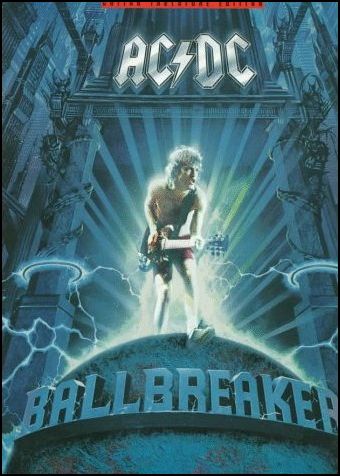
AC/DC BALLBREAKER GUITAR TABLATURE CHITARRA SPARTITI-Hard as a Rock-Boogie Man-Hail Caesar

AC/DC, BALLBREAKER. GUITAR TABLATURE EDITION

"Le canzoni non si raccolgono sugli alberi, le trovi nell'anima, nel cuore. Prevedono un lungo studio ma soprattutto deve esserci amore... ...mi sveglio ancora nel cuore della notte se mi viene in mente un buon riff, e allora non riesco più a dormire, devo alzarmi dal letto e suonarlo." 

Transcribed by:  Kenn Chipkin - Matt Scharfglass - Josh Workman - Alex Houton.

Album uscito nel 1995.
Hard as a Rock (Young, Young)
Cover You in Oil (Young, Young)
The Furor (Young, Young)
Boogie Man (Young, Young)
The Honey Roll (Young, Young)
Burnin' Alive (Young, Young)
Hail Caesar (Young, Young)
Love Bomb (Young, Young)
Caught with Your Pants Down (Young, Young)
Whiskey on the Rocks (Young, Young)
Ballbreaker (Young, Young)

Price: €65,99
€65,99

AC/DC ANTHOLOGY GUITAR TABLATURE LIBRO SPARTITI CHITARRA-SHOOT TO THRILL-RIDE ON

AC/DC, ANTHOLOGY. TABLATURE

Back In Black
For Those About To Rock (We Salute You)
Girls Got Rhythm
Highway To Hell
Let Me Put My Love Into You
Love At First Feel
Moneytalks
Night Prowler
The Razors Edge
Ride On
Shake Your Foundations
Shoot To Thrill
Shot Down In Flames
Squealer
Thunderstruck
You Shook Me All Night Long

Price: €29,99
€29,99

AC/DC BACK IN BLACK GUITAR TABLATURE-Hells Bells-Shoot To Thrill-You Shook Me All Night Long-LIBRO

AC/DC, BACK IN BLACK. TABLATURE

Back in Black is a hard rock album by Australian band AC/DC. It is the seventh Australian and sixth internationally released studio album by the band.

Released on 25 July 1980, Back in Black was the first AC/DC album recorded without former lead singer Bon Scott, who died on 19 February 1980 at the age of 33, and was dedicated to him. The band considered disbanding following Scott's death, but they ultimately decided to continue and shortly thereafter hired Brian Johnson as their new lead singer and lyricist. Producer Robert John "Mutt" Lange, who had previously worked with AC/DC on Highway to Hell, was again brought in to produce. The recordings were made at Compass Point Studios in Nassau, Bahamas, and Electric Lady Studios in New York, where the album was also mixed.
The album was remastered and re-released in 1994, then again in the Bonfire box set in 1997, and as part of the AC/DC remasters series in 2003 by George Marino. In addition, a Dualdisc version was released in 2004, featuring the album in enhanced LPCM Stereo format and the video documentary The Story of Back in Black.
The album has sold an estimated 49 million copies worldwide to date, making it the second highest selling album of all time, and the best selling hard rock or heavy metal album, as well as the best selling album ever released by a band. On 13 December 2007, the RIAA certified it 22× Multi Platinum, recognising sales of 22 million in the United States


TiTLES :
Back In Black
Given The Dog A Bone
Have A Drink On Me
Hells Bells
Let Me Put My Love Into You
Rock 'N' Roll Ain't Noise Pollution
Shake A Leg
Shoot To Thrill
What Do You Do For Money Honey
You Shook Me All Night Long

Price: €31,99
€31,99

AC/DC CLASSIC THE EARLY YEARS HIGH VOLTAGE-LET THERE BE ROCK TABLATURE SPARTITI LIBRO

AC/DC, CLASSIC THE EARLY YEARS. HIGH VOLTAGE, LET THERE BE ROCK. TABLATURE

Contents:
High Voltage- It's A Long Way To The Top (If You Wanna Rock And Roll)
High Voltage- Rock 'n' Roll Singer
High Voltage- The Jack
High Voltage- Live Wire
High Voltage- T.N.T.
High Voltage- Can I Sit Next To You Girl
High Voltage- Little Lover
High Voltage - The's Got Balls
High Voltage - High Voltage
Let There Be Rock - Bad Boy Boogie
Let There Be Rock - Dog Eat Dog
Let There Be Rock - Go Down
Let There Be Rock - Hell Ain't A Bad Place To Be
Let There Be Rock - Let There Be Rock
Let There Be Rock - Overdose
Let There Be Rock - Problem Child
Let There Be Rock - Whole Lotta Rosie

Price: €29,99
€29,99

AC/DC, PLAY GUITAR WITH... CD TABLATURE-back in black-for those about to rock-highway to hell-whole lotta rosie

AC/DC, PLAY GUITAR WITH. Basi per voce e per chitarra: back in black -for those about to rock -highway to hell -rock and roll ain't noise pollution -whole lotta rosie -you shook me all night long. CD TABLATURE

Play Guitar With Australian Rock gods AC/DC on six of their greatest hits with these specially recorded CD backing tracks! Learn the virtuosic fret magic of Angus Young with the matching music book which features both guitar tablature and standard notation for each song. Chord symbols and the complete lyrics are also included for rhythm guitarists and vocalists. Includes the famous favourites Back In Black, Highway To Hell and Whole Lotta Rosie.

When you know the music, the accurate backing tracks allow you to take the lead and play as though you are part of the band!

Back In Black
For Those About To Rock (We Salute You)
Highway To Hell
Rock 'N' Roll Ain't Noise Pollution
Whole Lotta Rosie
You Shook Me All Night Long

Price: €23,99
€23,99

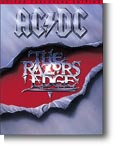
AC/DC THE RAZORS EDGE GUITAR TABLATURE EDITION CHITARRA SPARTITI LIBRO-Thunderstruck-Angus Young

AC/DC, THE RAZORS EDGE. GUITAR TABLATURE EDITION

BOOK WITH NOTES AND TABLATURE

MUSIC TRANSCRIPTIONS: RALPH AGRESTA, JEFF CIAMPA, CHRIS AMELAR

112 PAGES.

The Razors Edge è un album del 1990, pubblicato il 21 settembre, e registrato a Vancouver, Canada. Prodotto da Bruce Fairbairn. 

-Thunderstruck (A. Young, M. Young)
-Fire Your Guns (A. Young, M. Young)
-Moneytalks (A. Young, M. Young)
-The Razors Edge (A. Young, M. Young)
-Mistress for Christmas (A. Young, M. Young)
-Rock Your Heart Out (A. Young, M. Young)
-Are You Ready (A. Young, M. Young)
-Got You by the Balls (A. Young, M. Young)
-Shot of Love (A. Young, M. Young)
-Let's Make it (A. Young, M. Young)
-Goodbye & Good Riddance to Bad Luck (A. Young, M. Young)
-If You Dare (A. Young, M. Young)

Price: €139,99
€139,99

AC/DC JAM WITH TOTAL ACCURACY CD TABLATURE back in black-Hells bells-highway to hell-For those about to rock


AC/DC, JAM WITH. TOTAL ACCURACY. CD TABLATURE

Basi per voce e per chitarra, con la Tablature delle 2 tremende colonne portanti dell'hard rock. 

Basi con preascolto:
 

-For those about to rock

-let there be rock

-highway to hell

-hell ain't a bad place to be 

-sin city

-whole lotta Rosie

-back in black

-Hells bells


ANGUS YOUNG OF AC/DC
If It Ain't Broke, Don't Fix It!
Interview by Nick Bowcott

LAST MONTH, ANGUS STRESSED THE IMPORTANCE
of being able to play rhythm well and discussed the various aspects of tone. This month, the tone talk continues.

ANGUS YOUNG: The heavier your string gauges are, the bigger your sound is gonna be. Not just on rhythm, but on solos as well. With thick strings you can really get a nice, round, bluesy lead sound happening without having to use any pedals to help fatten things up. Because I've got such small hands, though, .010 to .048 [high to low] is about the heaviest set I can deal with. Malc's a different story altogether, though his gauges just keep getting heavier and heavier. He really likes those big, thick, "tram track" things and he's actually at the point where they don't make those gauges anymore. I couldn't tell you his exact gauges, but if you find out what the heaviest set of strings available is right now then that's what he's probably using. [Our most recent report indicates that Malcolm is using a Gibson 900M set, which is .012 to .056 with a wound .025 G string-GW Ed.]
A lot of idiots think, "thick strings are just a macho statement or something," but they're not. When we were growing up we couldn't get those "slinky" strings. We learned how to play on heavy gauge strings, almost bass strings! [laughs] When they started selling those Iighter strings, Mal tried a set and said, "Fuck, these things wobble too much. I've got no tone on my guitar!"

GUITAR WORLD: Talking about gear, your rig is quite simple and direct. 
YOUNG: Yeah, I've always kept it fairly simple right from the get-go. I just plug my guitar straight into a stack or .four [laughs] and start banging away; That's all you need, y'know-have fingers, will play! I've always felt that if you're on stage playing rock and roll and you've got too many toys hooked up, there are just too many things that can go wrong. My SG and Marshall combination has always worked well for me, so I stick with it. As the old saying goes, "if it ain't broke, don't fix it!"

GW: I take it you're not a big fan of effects devices.
YOUNG: Nah, I'm my own effect! [laughs] To be honest, I've always looked at effects as being a bit like a video remote control you' re always trying to work out what the hell they are! I grew up at a time when effects gadgets were being used a lot and pretty much every guitar player had a pile of 'em in front of him. Every time you walked into a guitar shop you'd see all these people stepping on pedals and going "wah-wahwah." That got so common, it cured me pretty quick. My whole approach is to get the amp happening and then just plug in and play. Then, if I want to hear something different, I try and get it with my guitar. The trouble with these effects units is sometimes you can walk awayfrom your gear for a few minutes and people who don't know any better start plugging stuff in for you. I remember once we were playing the Donnington Festival in Britain and I went down the day before the show and they had this gadgetry up there-it looked like Space Station #9! Anyway, I think Van Halen were on the bill too and Eddie Van Halen came up and said, "Jeez, what's all this?" One of the guys who'd built the thing explained it to him and when he was done I said to Eddie, "Do you like it?" Eddie went, "Yeah, it's nice," so I said, "Do me a favor mate, take the fuckin' thing with ya! I'm sticking with me Marshalls-simple is better."

GW: Marshalls have pretty much always been your amp of choice.
YOUNG: Yeah. I've experimented with different makes of amp, but I eventually came to the conclusion that the Marshall 100-watt stack was the best way to go. I love 'em because they're great rock and roll ampsthey' re road-worthy and they're noisy, too (in a good way)! I think if you're into rock music, that's the amp you should be using. Live I
normally use four stacks hooked up in a series via splitter boxes. [On the Ballbreaker tour Angus used four Marshall reissue 1959SLP Plexi heads driving eight Marshall straight-fronted 4x12 cabs loaded with 25W Celestion Greenback speakers: "the noisy ones! ']

GW: And is everything turned up to 11?
YOUNG: Nah! [laughs] A lot of people think that with Marshalls you've gotta run everything full up and drive the buggers to death. I don't do that; I pretty much have everything on around half. To my ears, if you go over half it starts to get a little bit mushy. I like to get a natural sustain that cuts; I don't like playing lead with that false, Tonebender
[fuzz] type sound. It's funny, people hear us and automatically think we play really loud. Well, we don't-mind you, we're not exactly quiet either!

GW: Although you use 100-watt stacks on stage, I believe you have an old Marshall JTM45 miked up under the stage and also use JTM45s in the studio.
YOUNG: You're right, my main amp for recording is an old JTM45 head and I also use it live-I have it underneath the stage with a single 4x12 cabinet and an isolation box. I use a 100-watt head in the studio every now and then, too. It just depends on what I'm after. The 100s are thicker-sounding, have more bottom end and are cleaner and louder. The JTM45 (a 45-watt amp) has a smoother sound and is much easier to overdrive.

GW: And your primary guitar has always been a Gibson SG, right?
YOUNG: Yeah. When I was in school in Sydney, Australia, a friend of mine had a Gibson guitar catalog, and as soon as I saw the SG I went, "Jeez, that looks great, I want one." I always liked the shape of it and the double cutaway is great because if I'm playing high up the neck I don't have to reach around anything like you have to do on aLes Paul. I also like the weight and the size because I'm a little guy, On most people an SG looks pretty small-like a violin. On me, though, it looks like a pretty big guitar and it balances well, too. Oh, Ilike the sound of 'em too!

GW: Have you ever played Strats or Les Pauls? .
YOUNG: I tried Fenders but they were too heavy and they just didn't have the ballsy sound I was looking for. I tried a Les Paul when I was younger and nearly dislocated my hip because the fucking thing was so heavy! You've gotta have muscles to playa Les Paul and if you've ever seen me with my shirt off you'd know that I'm not exactly Arnold Schwarzenegger! 

Price: €59,99
€59,99
Syndicate content