LIBRO - BOOK

LYNYRD SKYNYRD STREET SURVIVORS GUITAR RECORDED VERSIONS TABLATURE CHITARRA LIBRO

LYNYRD SKYNYRD, STREET SURVIVORS. TAB.

Series: Guitar Recorded Version
Artist: Lynyrd Skynyrd
Transcriptions in notes & tab for all 8 songs from Skynyrd's 1977 album, released just days before many members of the band were tragically killed in a plane crash. A rock classic, this album contains:

Ain't No Good Life
Honky Tonk Night Time Man
I Know A Little
I Never Dreamed
One More Time
That Smell
What's Your Name
You Got That Right

101 pages

Price: €129,99
€129,99

WHITE PAGES TAB OF VOLUME 3 Guitar Recorded Version TABLATURE-My Sharona-KNACK-Lithium-LIBRO

WHITE PAGES GUITAR TAB OF VOLUME 3. TAB.

series: Guitar Recorded Version TAB
Artist: Various
By popular demand, here's Volume 3 of our best-selling guitar tab songbook featuring 150 MORE, great note-for-note PAGES: 1152
transcriptions, including:

Contents:
Dreams performed by Fleetwood Mac
Heartbreaker performed by Pat Benetar
Catfish Blues performed by Jimi Hendrix
Cold Sweat, Pt. 1 performed by James Brown
Zombie performed by The Cranberries
Creep performed by Radiohead
Ain't Talkin' 'Bout Love performed by Van Halen
This Love performed by Maroon5
Rock'n Me performed by Steve Miller Band
Time performed by Hootie & The Blowfish
Buddy Holly performed by Weezer
Whip It performed by Devo
Burning For You performed by Blue Oyster Cult
Jane Says performed by Jane's Addiction
Hand In My Pocket performed by Alanis Morissette
Alive performed by Pearl Jam
No Rain performed by Blind Melon
Dream Police performed by Cheap Trick
All Along The Watchtower performed by Jimi Hendrix
Heaven performed by Los Lonely Boys
Lightning Crashes performed by Live
Wish You Were Here performed by Incubus
Stupid Girl performed by Garbage
Highway Star performed by Deep Purple
That Thing You Do! performed by The Wonders
Gone Away performed by The Offspring
Santeria performed by Sublime
Just A Girl performed by No Doubt
All For You performed by Sister Hazel
Shimmer performed by Fuel
Breakdown performed by Tom Petty & The Heartbreakers
Carry On performed by Crosby, Stills, & Nash
Heaven Tonight performed by Yngwie Malmsteen's Rising Force
Turn The Page performed by Metallica
Keep Away performed by Godsmack
What's My Age Again? performed by blink-182
American Pie performed by Don McLean
Lay It On The Line performed by Triumph
If You're Gone performed by Matchbox Twenty
Grace performed by Jeff Buckley
Fat Lip performed by Sum 41
Cuts Like A Knife performed by Bryan Adams
Aqualung performed by Jethro Tull
Photograph performed by Def Leppard
Oh Well Part 1 performed by Fleetwood Mac
Like The Way I Do performed by Melissa Etheridge
The Warrior performed by Scandal
Sharp Dressed Man performed by ZZ Top
Blue Sky performed by The Allman Brothers Band
Cherry Pie performed by Warrant
I Get Around performed by The Beach Boys
Babe, I'm Gonna Leave You performed by Led Zeppelin
I Am The Highway performed by Audioslave
Kryptonite performed by 3 Doors Down
Bang A Gong (Get It On) performed by T. Rex
Bark At The Moon performed by Ozzy Osbourne
Here I Go Again performed by Whitesnake
Are You Gonna Be My Girl performed by Jet
The House Of The Rising Sun performed by The Animals
Somebody Told Me performed by The Killers
Black Velvet performed by Alannah Myles
Blaze Of Glory performed by Jon Bon Jovi
Blue Collar Man (Long Nights) performed by Styx
Born To Be Wild performed by Steppenwolf
Brown Eyed Girl performed by Van Morrison
Carry On Wayward Son performed by Kansas
Cold Shot performed by Stevie Ray Vaughan
Damn Right, I've Got The Blues performed by Buddy Guy
Dear Mr. Fantasy performed by Traffic
Deuce performed by Kiss
Don't Stand So Close To Me performed by ThePolice
Don't Tell Me You Love Me performed by Night Ranger
Empire performed by Queensryche
Evil Woman performed by Electric Light Orchestra
Fight For Your Right (To Party) performed by Beastie Boys
Funk #49 performed by The James Gang
Gypsy Road performed by Cinderella
A Hard Day's Night performed by The Beatles
Hollywood Nights performed by Bob Seger & The Silver Bullet band
Hurts So Good performed by John "Cougar" Mellancamp
I Can't Explain performed by The Who
I Want To Hold Your Hand performed by The Beatles
Jessie's Girl performed by Rick Springfield
Killer Queen performed by Queen
Land Of Confusion performed by Genesis
Last Child performed by Aerosmith
Le Freak performed by Chic
Lithium performed by Nirvana
Long Cool Woman (In A Black Dress) performed by The Hollies
Magic Man performed by Heart
My Sharona performed by The Knack
Once Bitten Twice Shy performed by Great White
Peg performed by Steely Dan
Practice What You Preach performed by Testament
Pretending performed by Eric Clapton
Rock This Town performed by Stray Cats
Rocky Mountain Way performed by Joe Walsh
Saturday Night's Alright (For Fighting) performed by Elton John
Secret Agent Man performed by Johnny Rivers
Should I Stay Or Should I Go performed by The Clash
Sweet Home Alabama performed by Lynyrd Skynrd
Texas Flood performed by Stevie Ray Vaughan
(So) Tired Of Waiting For You performed by The Kinks
Turn Me Loose performed by Lover Boy
25 Or 6 To 4 performed by Chicago
Up All Night performed by Slaughter
Wanted Dead Or Alive performed by Bon Jovi
We Built This City performed by Starship
White Rabbit performed by Jefferson Airplane
Hard To Handle performed by The Black Crowes
Evil Ways performed by Santana
One Way Or Another performed by Blondie
We're Ready performed by Boston
I'd Love To Change The World performed by Ten Years After
Too Rolling Stoned performed by Robin Trower
Hold On Loosely performed by 38 Special
Yankee Rose performed by Dovid Lee Roth
Seven Bridges Road performed by Eagles
Ziggy Stardust performed by David Bowie
Panama performed by Van Halen
Big City Nights performed by Scorpions
Pornograffitti performed by Extreme
White Wedding performed by Billy Idol
Free performed by Phish
Fall To Pieces performed by Velvet Revolver
One Step Closer performed by Linkin Park
Get Ready performed by Rare Earth
Ain't Too Proud To Beg performed by The Temptations
I Wish performed by Stevie Wonder
Hot Legs performed by Rod Stewart
I Can't Help Myself (Sugar Pie, Honey Bunch) performed by The Four Tops
I Heard It Through The Grapevine performed by Marvin Gaye
It's Your Thing performed by The Isley Brothers
Cherub Rock performed by Smashing Pumpkins
No More Mr. Nice Guy performed by Alice Cooper
Fly performed by Sugar Ray
Space Lord performed by Monster Magnet
Midnight Train performed by Buddy Guy (with Johnny Lang)
Mas Tequila performed by Sammy Hagar
Everyday performed by Dave Matthews Band
Lovesong performed by The Cure
Nookie performed by Limp Bizkit
Lights Out performed by Michael Schenker
Jeremy performed by Pearl Jam
Talk Dirty To Me performed by Poison
The Trooper performed by Iron Maiden
Lost In Germany performed by King's X
Back In Black performed by AC/DC
The Boys Are Back In Town performed by Thin Lizzy

Price: €49,99
€49,99

SCHENKER MICHAEL VERY BEST OF Guitar Recorded Version TABLATURE SPARTITI CHITARRA LIBRO

SCHENKER MICHAEL, VERY BEST OF. TAB.

Series: Guitar Recorded Version TAB
Artist: Michael Schenker

13 of the best from this German rocker and former Scorpions guitarist. 171pages, Includes:

Are You Ready To Rock
Armed And Ready
Attack Of The Mad Axeman
Captain Nemo
Cry For The Nations
Doctor, Doctor
Gimme Your Love
Into The Arena
Lights Out
On And On
Rock Bottom
Rock My Nights Away
Save Yourself

Price: €27,99
€27,99

AVENGED SEVENFOLD Guitar Recorded Version TABLATURE BOOK CHITARRA LIBRO SPARTITI

AVENGED SEVENFOLD. TAB.

Series: Guitar Recorded Version
Softcover - TAB
Artist: Avenged Sevenfold

California metalcore quintet A7X scored big with their first three CDs, winning MTV's Best New Artist award in 2006. This folio matches their latest self-produced release, featuring note-for-note transcriptions with tab for all 10 songs, including the hit single Almost Easy. PARENTAL ADVISORY FOR EXPLICIT CONTENT. 120 pages.
Afterlife
Almost Easy
Brompton Cocktail
Critical Acclaim
Dear God
Gunslinger
A Little Piece Of Heaven
Lost
Scream
Unbound (The Wild Ride)

Price: €24,99
€24,99

KING B.B. ANTHOLOGY Guitar Recorded Version TABLATURE SPARTITI CHITARRA LIBRO BLUES

KING B.B., ANTHOLOGY. TAB.

Series: Guitar Recorded Version
Artist: B.B. King
The All Music Guide praises B.B. King in no uncertain terms as the single most important electric guitarist of the last half century. This outstanding new book in our Guitar Recorded Versions series provides note-for-note transcriptions with tablature for 35 hits from this living legend from 1950 to 2000, 216 PAGES, including:

Ask Me No Questions
B.B. Blues
Bad Luck Soul
B.B.'s Boogie
Beautician Blues
Chains And Things
Cryin' Won't Help You
Don't Answer The Door
Everything I Do Is Wrong
Five Long Years
Fools Get Wise
Get Off My Back Woman
I Want You So Bad
It's My Own Fault Darlin'
Just Like A Woman
King Of Guitar
King's Special
Lucille
Miss Martha King
A New Way Of Driving
Paying The Cost To Be The Boss
Please Accept My Love
Recession Blues
Riding With The King
Rock Me Baby
She's Dynamite
So Excited
Sweet Little Angel
Sweet Sixteen
Three O'Clock Blues
The Thrill Is Gone
Watch Yourself
When Your Baby Packs Up And Goes
You Done Lost Your Good Thing Now
You Upset Me Baby

Price: €36,99
€36,99

ROCKABILLY GUITAR BIBLE 31 Great Rockabilly Songs TABLATURE CHITARRA LIBRO SPARTITI ACCORDI

ROCKABILLY GUITAR BIBLE, 31 Great Rockabilly Songs. TAB.

Series: Guitar Recorded Version
Artist: Various

This collection of note-for-note guitar transcriptions with tab features over 30 rockabilly hits from artists such as Elvis, Carl Perkins, Gene Vincent, Buddy Holly, The Blasters, Stray Cats, the Brian Setzer Orchestra and more! 192 pages, Includes:

AMERICAN MUSIC
BABY, LET'S PLAY HOUSE
BE-BOP-A-LULA
BLUE SUEDE SHOES
BLUEJEAN BOP
BOPPIN' THE BLUES
DON'T BE CRUEL (TO A HEART THAT'S TRUE)
GET RHYTHM
GOOD ROCKIN' TONIGHT
HEARTBROKE
HELLO MARY LOU
HIPPY HIPPY SHAKE
HONEY DON'T
I'M STICKIN' WITH YOU
LITTLE SISTER
LOOK AT THAT CADILLAC
MATCHBOX
MYSTERY TRAIN
PARTY DOLL
PEGGY SUE
POOR LITTLE FOOL
ROCK AROUND THE CLOCK
ROCK THIS TOWN
(SHE'S) SEXY & 17
STRAY CAT STRUT
SUSIE-Q
THAT'LL BE THE DAY
THAT'S ALL RIGHT
TRAIN KEPT A-ROLLIN'
TRAVELIN' MAN
TWENTY FLIGHT ROCK

Price: €39,99
€39,99

FUNK BASS BIBLE HAL LEONARD Recorded Versions TABLATURE LIBRO SPARTITI BASSO BOOK

FUNK BASS BIBLE. TAB.

Series: Bass Recorded Versions TAB

BRICK HOUSE
CAN YOU HANDLE IT
CAR WASH
CISSY STRUT
COLD SWEAT, PT. 1
DAZZ
DO IT ('TIL YOU'RE SATISFIED)
DR. FUNKENSTEIN
FANTASTIC VOYAGE
FIGHT THE POWER 'PART 1'
FIRE
FUNK #49
GET OFF
GIVE IT AWAY
HIGHER GROUND
I WISH
LE FREAK
LET'S GROOVE
LOPSY LU
LOVE GAMES
LOVE ROLLERCOASTER
LOW RIDER
MR. BIG STUFF
PICK UP THE PIECES
POWER
RUN FOR COVER
SEX IN A PAN
STAY
STAY WITH ME TONIGHT
SUMTHIN', SUMTHIN'
SUPER FREAK
WORD UP

Artist: Various Artists
32 funk classics transcribed note-for-note with tablature for bass, 264 pages

Price: €26,99
€26,99

RICE DAMIEN O GUITAR TABLATURE LIBRO ACCORDI PENTAGRAMMA-The Blowers Daughter-Volcano

RICE DAMIEN, O. TAB.

Description
All the songs from Damien Rice's extraordinary debut album of heart-felt acousticfolk-pop. The most exciting album from an acoustic artist for a good while, Ireland's Damien Rice is a troubadour in the great tradition of Nick Drake, John Martyn and Neil Young. This album displays his singer-songwriting talents to the full, confirming his place with such exalted company.
This folio contains all the songs from the album, presented in notation and full tab with lyrics.

Amie

Cannonball

Cheers Darlin'

Cold Water

Delicate

Eskimo

I Remember

Older Chests

Prague

Silent Night

The Blowers Daughter

Volcano

Price: €29,99
€29,99

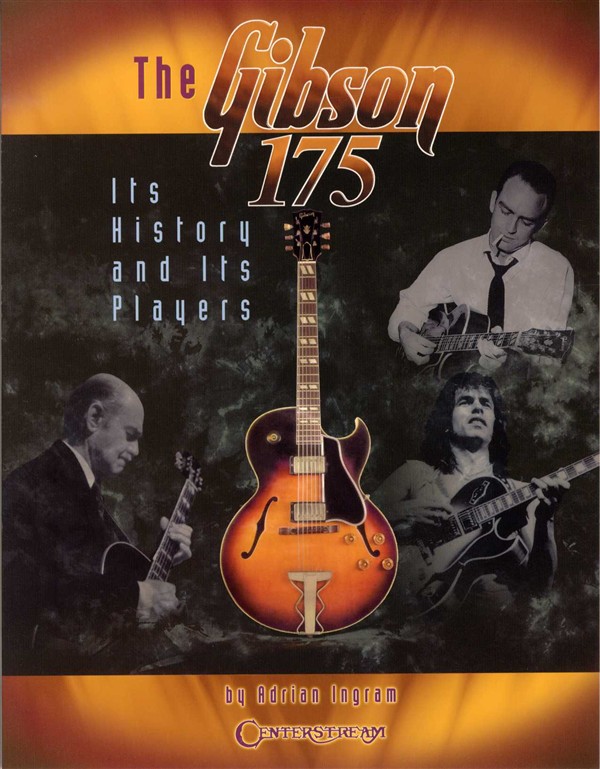
GIBSON 175 Its History and Its Players Adrian Ingram STEVE HOWE-JOE PASS-ELVIS-PAT MARTINO-U2-

THE GIBSON 175, Its History and Its Players, Adrian Ingram. 272 pages.

Series: Guitar
Publisher: Centerstream Publications
Medium: Softcover
Author: Adrian Ingram

Debuting in 1949 and in continuous production ever since, the ES-175 is one of the most versatile and famous guitars in music history. The first Gibson electric to feature a Florentine cutaway, the ES-175 was also one of the first Electric Spanish guitars to be fitted with P.A.F. humbuckers and is prized for its playability, craftsmanship, and full rich tone. The list of players who have utilized the ES-175's distinctive sound reads like a who's who of historic and contemporary jazz, rock, blues and fusion, players such as: Joe Pass, Kenny Burrell, Joe Diorio, Toots Thielmans, Wes Montgomery, Pat Martino, Herb Ellis, Howard Roberts, Jimmy Raney, blues great B.B. King, progressive rock musician Steve Howe and fusion pioneer Pat Metheny. Scotty Moore played an ES-295, essentially a dual P90 equipped, all gold ES-175 on the Sun Sessions with Elvis Presley. Written by noted author/guitarist Adrian Ingram, contents include: the complete history of the 175, The Players, a beautiful ES-175 Color Gallery, Chronology, Shipping Totals, and more. This book is a must for every guitar player and enthusiast or collector. 272 pages.

Price: €31,99
€31,99

GIBSON ELECTRICS THE CLASSIC YEARS A.R. Duchossoir AN ILLUSTRATED HISTORY FROM THE MID-'30s TO THE MID-'60s


GIBSON ELECTRICS, THE CLASSIC YEARS. A.R. Duchossoir.

AN ILLUSTRATED HISTORY FROM THE MID-'30s TO THE MID-'60s

Gibson Electrics - The Classic Years
Series: Book
Publisher: Hal Leonard
Format: Softcover
Author: A.R. Duchossoir

Since the inception of the first “electrical” guitars in the 1920s, no other manufacturer has produced a greater variety of professional quality models than Gibson. This book presents a documented account of the instruments released during a highly creative period from the 1930s up to the mid-60s, which saw the coming of age of the electric guitar. It describes all the models that have made history and contributed to establishing the reputation of Gibson. This edition features over 500 illustrations, including 100 in color, and previously unpublished material.

Inventory #HL 00330392
ISBN: 9780793592104
UPC: 073999647426
Width: 9.0"
Length: 12.0"
256 pages

FOREWORD
The original GIBSONEL ECTRICS, subtitled Volume 1, was first published in late 1981 and for the past 10 years or so I have often been asked when Volume 2 would be released. I effectively started writing it back in 1982, but Volume 2 never saw the light of day for reasons outside my control.
Subsequently, I penned other books and I probably managed to improve my primitive writing skills and also the way to look back at "old guitars". As time went by, it became more and more obvious to me that the original GE could be upgraded in several respects. Digging through my files, I realized that I had gathered a lot of material during my several trips to Kalamazoo which had not been fully exploited in what was the ex-Volume 1. Eventually, I ended up disliking this book profoundly, and last year I formed the project not only to rewrite it, but also to expand it.
At this juncture, I briefly pondered what period to cover? Should I attempt to consolidate vol. 1 & 2 in a single offering? With the benefit of hindsight - read the 10 years elapsed since the aborted publication of Volume 2 – it occurred to me that the truly meaningful electrics, the "classics", were those designed prior to 1965. This does not mean that nothing happened at Gibson afterwards, but the fact is that the pre-65 designs are still the most popular today, and the most influential. Admittedly, other cut-off points were a possibility. For instance: 1969, the year of Gibson's Diamond Jubilee, and also the year of the amicable take-over of Chicago Musical Instruments (Gibson's parent) by ECLwhich led to the formation of NORLIN.Or 1984, the year when the Kalamazoo factory was closed down and the production was definitively consolidated in Nashville. Even 1985, the year when NORLINended its involvement in the music business by selling Gibson after reporting losses of $158m over the previous 10 years!
Fortunately, Gibson did not go under and it was acquired by the able hands of Henry ]USZKIEWICZand a group of investors who managed to put it back on the right track. I took the view that the mid-60s were retrospectively a major turning point not just for Gibson, but for the guitar industry as a whole. Beyond designs, 1965 signalled the beginning of a new era for most US guitar makers. Equally, it is often overlooked that 1965 was the year when the production of Gibson instruments reached an all-time peak in the wake of the 1st "guitar boom". Last but not least, 1965 is the year when Ted McCARlY tendered his resignation as Gibson president after acquiring Paul BIGSBY'sbusiness.
The new GIBSON ELECTRICS,subtitled "THE CLASSICYEARS", consequently spans from the beginnings of the electric guitar until the mid-60s. For a better display of information, I reckoned it would be appropriate to split the historical recap from the specifications of production electrics - Spanish guitars and basses - cataloged during this period. This book is therefore divided in two main parts, with a third leg detailing what I call identification numbers.
The latter are quite useful for assessing the vintage of an instrument and Part Three features previously unpublished material. In other words, the new edition practically incorporates three books into one (for the same price!). Many people have contributed, yesterday and today, to the making of the new GE. Being domiciled in Paris, I wish to stress that this research has been greatly facilitated over the years by the kind cooperation of many friends and guitar aficionados in the USA.I hope the list of acknowledgements does justice to all of them, even though their input may date back many years.
A special mention goes to all the Gibson people, past and present, who always have been very receptive to my quest for information. Conversations with old-timers like Ted McCARlY,Walter FULLER,Seth LOVER,Wilbur MARKER, Julius BELLSON,or with early electric pioneer Alvino REYhave been invaluable to enlighten the chapters of Part One and give them a human dimension beyond facts and figures.
I am particularly appreciative of the active contribution of a few key individuals who have helped me to complete this project in a relatively short time. These are John SPRUNG(and his wife Jenny for tolerating a rather hectic family life over the past 6 months), Jim COLCLASURE, Walter CARTER,George GRUHNand my wife Susan. I also want to thank people like Gil SOUTHWORTHand Brian FISCHERfor giving me access to their impressive collection of Gibson electrics. Finally, my gratitude goes to HALLEONARDfor allowing me to turn an old book into a brand new one. At the time of closing this long foreword, I can't help but think of my father who passed away since I wrote the first GE, and without whom I might never have known Gibson guitars. This one's for you, dad. A.R. DUCHOSSOIR Ma 1993

THE DEVELOPMENT OF ELECTRICS UP TO THE MID-60s INTRODUCTION
Who invented the electric guitar? However straightforward this question may be, it does not usually suggest one instant answer as several pioneers -some known, some unknown- may claim an input into its development. Historically, the earliest attempts to electrify an instrument can be traced back to the 1890s, but they can hardly be construed as the first steps towards the electric guitar as we know it today. For instance, one W.H. GILMAN secured patent #488,520 on December 20, 1892 for an 'Electrically Operated Stringed Music Instrument' which actually encompassed an electrically-actuated automatic banjo. It was not until the 1920s that the electric guitar began to take shape in the light of scientific advances in sound amplification and amplifier circuitry.
Why the electric guitar came into being is an easier question to answer. Owing to its intrinsic lack of volume and carrying power, the traditional acoustic guitar was more often than not relegated to the rhythm section in most bands up to the 1930s. With the notable exceptions of classical pieces or purely stringed- instrument ensembles, the guitar did not become a recognized solo voice in its own right until it was amplified. The growing popularity of dance music thus led guitarists to seek ways to be heard over the sound of brass and reed instruments, let alone drums. The need for more power brought about developments such John DOPYERA'stesophonic guitar with its internal spunmetal resonator and triggered a significant enlargement of body dimensions. It also explains why the banjo, because of its bright and cutting sound, was often preferred to the guitar in early jazz oups. Besides this extra power to vie with other instruments in orchestras, providing a greater tone consistency is also cited a factor behind the early research carried out to electrify the guitar. By all accounts, this was part of the rationale followed by lloyd LOARin the early 1920s. lloyd A. WAR (1886-1943) was a multi-talented personality: musician, composer, teacher, mandolin performer, physics engineer and researcher. In June 1919 he came to work for the GffiSO MANDOLIN-GUITARMfg. Co., Ltd. where he took over e eral positions as acoustic engineer, factory production manager, manager of the stringed instrument repair department and purchasing agent. Today, Loar is best remembered for his role in the development of the Master series, ie the L-5 guitar, the F-5 mandolin, the H-5 mandola, the K-5 mando-cello and the Mastertone banjo construction. On top of his contribution to some of Gibson's finest stringed acoustic instruments ever made, Loar designed experimental electrics during his 5-year stint with the company. His meticulous approach to acoustic physics and instrument playability apparently led him to believe that the only way to produce instruments with tonal consistency was to electrify them. In the early 20s, his views were favourably considered by Lewis A. WILLIAMSwho was one of the founders and major stockholders of the Gibson company, and its secretary and general manager at the time. Williams was also a pioneer in the field of loudspeakers and sound reproduction. He is thus credited with several innovations in instrument design such as the elevated fretboard and pickguard, while being a central figure behind the Master series. This explains why Williams brought in Loar at Gibson and supported his efforts in the development of modern stringed instruments. But differences of opinion within the company as to Gibson's product focus and marketing strategy brought about a reshuffle at management level. It can be argued that electrical instruments were certainly part of the discussions which took place. Loar's (and Williams') conceptions were probably ahead of their time but deemed insufficiently marketable by the riskaverse board of directors chaired by the venerable John . ADAMS. They were consequently relegated to a back seat in favour of less adventurous designs. This boardroom row led 1. A. Williams and C. V. Buttelman, then sales and advertising manager, to resign at the end of 1923. Lewis Williams was briefly replaced by someone called FERRIS, before the position of general manager was entrusted to a newly hired accountant named Guy HART. Lloyd Loar soldiered on for about a year after Williams' departure, but he did not get along too well with his new general manager. Their lack of entente prompted the termination of Loar's contract at the end of 1924. Eventually, both Loar and Williams joined forces in their post-Gibson days and went on to form together the ACOUSTI-LECTRIC Company in January 1934 (later renamed the VIVI-TONECompany in February 1936). The earliest Gibson electric instruments were reportedly perfected by 1924 and then shown to some of the compan agents who at that time were mostly artists and teacher. However, these agents were not ready yet, musically and otherwise, to accept such a radically novel concept for which no music was specifically written. In the face of a negative reaction from its prime sales force, the new management of Gibson then resolved not to go ahead with the experimental electrics.

CONTENTS
FOREWORD .
ACKNOWLEDGEMENTS .

PART ONE: THE DEVELOPMENT OF ELECTRICS UP TO THE MID-60s .
INTRODUCTION: Who invented the electric guitar? .
CHAPTER 1: The first production electrics (1935-1939) .
CHAPTER 2: The second wave of pre-war electrics (1940-1942) .
CHAPTER 3: The early post-war era (1946-1948) .
CHAPTER 4: The apogee of the amplified guitar (1948-1951) .
CHAPTER 5: The first solid body electric (1951-1952) .
CHAPTER 6: The expansion of the electric line (1953-1955) .
CHAPTER 7: The first thinline electrics (1955-1957) .
CHAPTER 8: The advent of the humbucking pickup (1955-1957) .
CHAPTER 9: The Modernistic Guitars (1957-1959) .
CHAPTER 10: The double cutaway thinline electrics (1958-1960) .
CHAPTER 11: The inception of restyled solid bodies (1958-1963) .
CHAPTER 12: The hollow body Artist models (1960-1965) .
CHAPTER 13: The original Firebird series (1963-1965) .
EPILOGUE: The end of an era .
CHAPTER NOTES .
COLOUR SECTION: 30 YEARS OF GIBSON ELECTRICS .

PART TWO: THE PRODUCTION ELECTRICS UP TO THE MID-60s .
INTRODUCTION .
CHAPTER 1: The pre-war electrics (1936-1942) .
CHAPTER 2: The post-war full body electrics (1946-1965) .
CHAPTER 3: The solid body electrics (1952-1965) .
CHAPTER 4: The thinline electrics (1955-1965) .

PART THREE: THE IDENTIFICATION NUMBERS UP TO THE MID-60s .
INTRODUCTION .
CHAPTER 1: Factory-order numbers (1936-1961) .
CHAPTER 2: Serial numbers (1936-1961) .
CHAPTER 3: Serial numbers (1961-1965) .
INDEX . 

Price: €127,99
€127,99
Syndicate content