AMSCO Publications

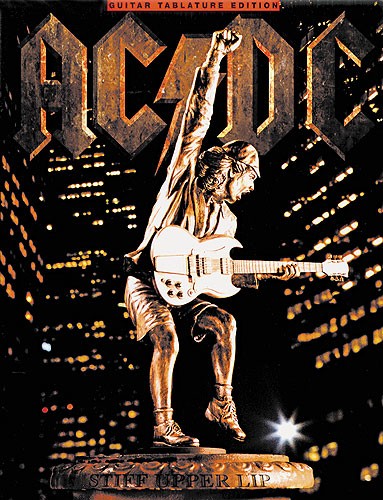
AC/DC STIFF UPPER LIP GUITAR TABLATURE SPARTITI-Meltdown-Hold Me Back-Satellite Blues-LIBRO

AC/DC, STIFF UPPER LIP. GUITAR TABLATURE EDITION. SHEET MUSIC BOOK with GUITAR TABLATURE. 

LIBRO DI MUSICA HARD-ROCK.
SPARTITI PER CHITARRA E VOCE.
TESTI DELLE CANZONI, ACCORDI, PENTAGRAMMA E TABLATURE . 

Every song from AC/DC's hit 2000 album, Stiff Upper Lip arranged in guitar TAB and standard notation. This accurate Guitar TAB Edition contains full lyrics and chord symbols.

Inventory: #HL 14001058
ISBN: 9780825617997
UPC: 752187965664
Publisher Code: AM965668
Width: 9.0"
Length: 12.0"
Page Count: 136 Pages

TRANSCRIPTION BY: BOB GRANT, HEMME B. LUTTJEBOER, ROBERT MANGANO, MATT SCHARFGLASS

Stiff Upper Lip
Meltdown
House Of Jazz
Hold Me Back
Safe In New York City
Can't Stand Still
Can't Stop Rock 'n' Roll
Satellite Blues
Damned
Come And Get It
All Screwed Up
Give It Up

Prezzo: €39,99
€39,99

AC/DC THE RAZORS EDGE GUITAR TABLATURE EDITION CHITARRA SPARTITI LIBRO-Thunderstruck-Angus Young

AC/DC, THE RAZORS EDGE. GUITAR TABLATURE EDITION . SHEET MUSIC BOOK WITH GUITAR TABLATURE . 

LIBRO DI MUSICA HARD ROCK.
SPARTITI PER CHITARRA E VOCE.
TESTI DELLE CANZONI, ACCORDI, PENTAGRAMMA E TABLATURE. 

BOOK WITH NOTES AND TABLATURE

MUSIC TRANSCRIPTIONS: RALPH AGRESTA, JEFF CIAMPA, CHRIS AMELAR. 

112 PAGES.

The Razors Edge è un album del 1990, pubblicato il 21 settembre, e registrato a Vancouver, Canada. Prodotto da Bruce Fairbairn. 112 PAGES.

Thunderstruck (A. Young, M. Young)
Fire Your Guns (A. Young, M. Young)
Moneytalks (A. Young, M. Young)
The Razors Edge (A. Young, M. Young)
Mistress for Christmas (A. Young, M. Young)
Rock Your Heart Out (A. Young, M. Young)
Are You Ready (A. Young, M. Young)
Got You by the Balls (A. Young, M. Young)
Shot of Love (A. Young, M. Young)
Let's Make it (A. Young, M. Young)
Goodbye & Good Riddance to Bad Luck (A. Young, M. Young)
If You Dare (A. Young, M. Young)

Nell'agosto 1991 in una condizione di confusione Politica e catastrofica situazione economica, i comunisti conservatori azzardarono l'estremo tentativo di un COLPO DI STATO, che fallì miseramente per la resistenza opposta a Mosca, guidata fermamente da El'cin, e per il rifiuto di Gorbačëv - tenuto prigioniero nella sua dacia - di aderire alle richieste dei golpisti. L'evento - che rafforzò l'immagine di El'cin a discapito di Gorbačëv, emarginato ed accusato d'aver avuto all'interno nel suo entourage i reazionari del golpe - è passato alla storia con due immagini fotografiche: El'cin che sale sul carro armato dal quale arringa la folla contro il golpisti, e, due giorni dopo, El'cin che punta il dito indice contro Gorbachev in una seduta del Congresso in cui dettò le sue condizioni di trionfatore politico della crisi. Il Partito Comunista venne messo al bando e i suoi beni confiscati.

L'Aeroporto Tušino è stato fondato nel 1935. Durante la guerra fredda, l'Aeroporto di Mosca-Tušino era la sede di parate militari che mostravano gli ultimi ritrovati dell'innovazione sovietica. Il 28 settembre del 1991 il Campo Volo di Tušino fu utilizzato per ospitare il concerto Monsters of Rock, con la partecipazione di AC/DC, Pantera e Metallica e un pubblico di 1,6 milioni di persone, il concerto più grande che sia mai stato, da tutti gli stati sovietici partirono ragazzi per raggiungere il luogo del concerto, Ukraina, Lituania, ecc.

L'Aeroporto di Mosca-Tušino (ICAO: UUUS) è un aeroporto situato nella parte nord-occidentale di Mosca, in Russia. L'Aeroporto di Mosca-Tušino è la base tecnica della compagnia aerea statale Club Aeronautico Nazionale Russo in nome di Čkalov ( in russo: Национальный аэроклуб России им. Чкалова).

Questo concerto fu organizzato allentare la tensione e dare sfogo alla rabbia della popolazione contro i militari, per le barricate, 3 vittime tra la gente, il tentativo dei colpo di stato dei giorni precedenti. 

Il tour dei MOSTERS OF ROCK, passò in Italia il 14 settembre 1991 a Modena alla festa dell'unità, alla quale c'eravamo anche noi. Quella di Mosca non era prevista, fu aggiunta questa per i gravi eventi socio-polici in Russia. Quando la musica Rock è usata dal potere per accontentare e distrarre la gente dai problemi politici.


1991 MOSTERS OF ROCK

28 Settembre 1991 Tushino Air Field, Moscow, Russia
24 Settembre 1991 Olympic Stadium, Barcelona, Spain
21 Settembre 1991 Hippodrome de Vincennes, Paris, France
18 Settembre 1991 Westfalenhalle, Dortmund, Germany
17 Settembre 1991 Westfalenhalle, Dortmund, Germany
14 Settembre 1991 Monsters Of Rock, Modena, Italy
13 Settembre 1991 Stadion Slaski, Chorzów, Poland
10 Settembre 1991 Gentofte Stadion, Gentofte, Denmark
11 Settembre 1991 Liebenau, Graz, Austria
7 Settembre 1991 Finthen Airfield, Mainz, Germany
1 Settembre 1991 Goffertstadion, Nijmegen, Netherlands
31 Agosto 1991 Niedersachsenstadion, Hanover, Germany
30 Agosto 1991 Kiewit, Hasselt, Belgium
28 Agosto 1991 Waldbühne, Berlin, Germany
27 Agosto 1991 Waldbühne, Berlin, Germany
25 Agosto 1991 St. Jakob's Stadion, Basel, Switzerland
24 Agosto 1991 Galopprennbahn Riem, Munich, Germany
22 Agosto 1991 Népstadion, Budapest, Hungary
17 Agosto 1991 Castle Donington, England


Il putsch di Mosca fu un colpo di stato che ebbe luogo nella capitale russa durante l'agosto del 1991, in cui alcuni membri del governo sovietico tentarono di deporre il presidente Mikhail Gorbačëv e prendere il controllo della nazione. Il suo fallimento, e i risvolti politici che ne seguirono, segnarono la dissoluzione dell'Unione Sovietica.

Nell'agosto 1991, dopo una trattativa di notevole complessità, il presidente sovietico Mikhail Sergeevič Gorbačëv si apprestava a siglare il nuovo patto federativo dell'Unione Sovietica che, di lì a poco, avrebbe mutato la propria denominazione ufficiale da Unione delle Repubbliche Socialiste Sovietiche in quella, presumibilmente, di Unione delle Repubbliche Sovietiche Sovrane.

Dodici dei paesi già facenti parte dell'URSS erano prossimi alla firma, la Federazione Russa, l'Ucraina, la Bielorussia, la Moldavia, la Georgia, l'Armenia, l'Azerbaijan, il Kazakistan, il Turkmenistan, il Kirghizistan, l'Uzbekistan ed il Tagikistan. Solo si esclusero le Repubbliche Baltiche, ovvero, Lituania, Lettonia ed Estonia, che finalmente, dopo più di cinquant'anni, ebbero l' attesa possibilità di liberarsi dall' occupazione sovietica e di riconquistare una totale indipendenza dall' Unione.

D'altronde, pochi mesi prima, oltre il 70% dei cittadini sovietici chiamati alle urne, aveva espresso il proprio sostegno ad una rinnovata Unione. Il Segretario del PCUS, nonché Presidente dell'Unione Sovietica, aveva deciso di prepararsi al gravoso impegno riposandosi nella dacia presidenziale in Crimea.

Era il 19 agosto quando, su ordine di alti gradi del Partito, timorosi delle incombenti novità, Gorbačëv veniva trattenuto contro la sua volontà in Crimea, non potendo quindi recarsi alla sigla del nuovo accordo federativo: era l'inizio del tentativo di colpo di stato che, a dispetto delle intenzioni tanto degli autori, quanto delle vittime, avrebbe condotto ad un risultato impensabile fino a poco tempo prima: la dissoluzione dell'Unione Sovietica.

I golpisti erano personaggi di spicco della politica sovietica: il capo del KGB Vladimir Krjučkov, il ministro degli Interni Boris Pugo, il ministro della Difesa Dmitry Yazov, il vice-presidente dell'Urss Gennadij Janaev, il primo ministro Valentin Pavlov, il capo della segreteria di Gorbačëv, Valerij Boldin. Il loro intento era chiaro: preservare l'Unione dall'insorgere delle nazionalità, impedire un alleggerimento del potere centrale, preservare il primato del PCUS.

Il vice presidente Gennadij Janaev prese potere della televisione e della radio immediatamente dopo l'annuncio con gli altri leader del colpo di stato e rilasciò una debole denuncia del regime precedente, portando immediatamente a credere che egli non fosse l'uomo adatto a portare l'ordine pubblico ricercato disperatamente dagli insorti. Grandi dimostrazioni pubbliche contro i leader del colpo di stato ebbero luogo a Mosca e a Leningrado e le lealtà divise degli organismi di difesa e sicurezza fecero sì che le forze armate non attaccassero i dimostranti.

Il presidente della RSSF russa Boris Eltsin guidò la resistenza dalla Casa Bianca, l'edificio del parlamento russo. Dopo l'annuncio di Janaev, Eltsin denunciò vigorosamente il colpo di stato. Ad un certo punto, durante la dimostrazione, salì su un carro armato e, con un megafono, condannò la "junta". La forte presa di posizione di Eltsin contrastava nettamente con il debole comunicato di Janaev. Questa immagine, trasmessa dai telegiornali di tutte le televisioni mondiali, divenne una delle più durevoli di tutto il colpo e rafforzò enormemente la posizione di Eltsin. Un assalto all'edificio del parlamento programmato dal Gruppo Alfa, le forze speciali del KGB, fu annullato quando le truppe si rifiutarono unanimemente di eseguire l'ordine. Un'unità di carri armati disertò dalle forze del governo e si pose in difesa del parlamento con le armi puntate verso l'esterno.

Ci furono confronti armati nelle strade vicine, incluso uno in cui tre dimostranti furono accidentalmente feriti a morte dai carri armati, ma comunque la violenza fu sorprendentemente limitata. Il 21 agosto la grande maggioranza delle truppe spedite a Mosca si schierò apertamente con la resistenza e tolse l'assedio. Il golpe rovinò su sé stesso e Gorbačëv ritornò a Mosca sotto la protezione delle forze di Eltsin.

Una volta tornato a Mosca, Gorbačëv agì come se avesse dimenticato i cambiamenti occorsi nei tre giorni precedenti. Tornato al potere Gorbačëv promise di espellere dal Partito Comunista dell'Unione Sovietica i rivoltosi.

Fine del PCUS

Il 24 agosto Mikhail Gorbachev si dimise da Segretario Generale del PCUS. Vladimir Ivashko divenne Segretario Generale del PCUS fino al 29 agosto, giorno in cui si dimetteva. Lo stesso giorno il Presidente Boris Yeltsin, con proprio decreto N.83 transferiva gli archivi del PCUS alle autorità dell'archivio di Stato. Il 25 agosto Boris Yeltsin con proprio Decreto N.90 nazionalizzava le proprietà del PCUS in Russia (che includeva non solo le sedi di comitati di partito ma anche istituzioni educative, hotel, etc.).

Il 6 novembre Boris Yeltsin con proprio Decreto n.169, metteva fine e proibiva l'attività del PCUS in Russia.

Prezzo: €139,99
€139,99

AC/DC BACK IN BLACK GUITAR TABLATURE-Hells Bells-Shoot To Thrill-You Shook Me All Night Long-LIBRO

AC/DC, BACK IN BLACK. SHEET MUSIC BOOK WITH GUITAR TABLATURE. 

LIBRO DI MUSICA HARD ROCK.
SPARTITI PER CHITARRA E VOCE.
TESTI DELLE CANZONI, ACCORDI, PENTAGRAMMA E TABLATURE. 

TRANSCRIBED BY RALPH AGRESTA. 

L'album Back in Black è uscito il 25 luglio del 1980. E' il primo disco con il cantante Brian Johnson. Dedicato, come si vede dal titolo e dalla copertina, al loro cantante Bon Scott morto a 33 anni, il 19 febbraio 1980 per avvelenamento da alcol. Il produttore è Robert John "Mutt" Lange lo stesso dell'album precedente "Higway to Hell". Registrato al Compass Point Studios di Nassau alle Bahamas, a all'Electric Lady Studios di New York dove l'album fu mixato. Ha venduto 50 milioni di copie; l'album più comprato della band e il più venduto dell'heavy metal, 22 millioni solo negli USA. La mamma di Brian Johnson è italiana, si chiama Esther De Luca è di Frascati e a conosciuto il sargente maggiore di fanteria Alan Johnson delle British Army Durham, durante la  seconda guerra mondiale.

Dunque, Malcolm adesso usa le corde veramente grosse e tu quelle sottili.

ANGUS YOUNG: allora, sembra che lui andasse verso le corde sempre più grosse. Ma oggi non fanno più quelle grosse perchè i giovani le vogliono sempre più sottili sottili. Loro vogliono correre lungo la tastiera da un'estremità all'altra. Vogliono esercitare le loro scale. Penso che tutto va bene fino che lo fanno nella loro casa.

Perchè dovremmo sentirli?

ANGUS YOUNG: Appunto!

Molti dei tuoi passaggi più famosi sono i riff su corde singole, dove alterni tra le note sul tasto e note a corda aperta come nell'intro di “Thunderstruck”.

ANGUS YOUNG: Si, Esercitavo la mia mano sinistra quando improvvisamente mi é venuto questo riff; l'ho trovato per caso. Ho pensato “non c'è male” e l'ho registrato. Questo è il modo che io e Malcolm abitualmente usiamo per lavorare. Prima registriamo i nostri pezzi, poi li suoniamo uno all'altro. Una volta, Malcolm è venuto da me alle tre di notte durante il nostro tour “Highway To Hell” dicendo: ”Ho questo riff che mi gira in testa!” “Sono le tre di notte e cerco di addormentarmi” e lui mi dice, “Che ne pensi del pezzo?” Io ho risposto “Per me suona bene.” Era “Back in Black ! ”

Tutti i titoli: ANGUS YOUNG, MALCOM YOUNG, BRIAN JOHNSON - 1980

Back In Black - 
Given The Dog A Bone
Have A Drink On Me
Hells Bells
Let Me Put My Love Into You
Rock 'N' Roll Ain't Noise Pollution
Shake A Leg
Shoot To Thrill
What Do You Do For Money Honey
You Shook Me All Night Long

Prezzo: €31,99
€31,99

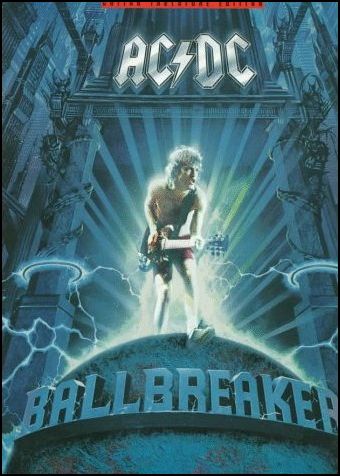
AC/DC BALLBREAKER GUITAR TABLATURE CHITARRA SPARTITI-Hard as a Rock-Boogie Man-Hail Caesar

AC/DC, BALLBREAKER. GUITAR TABLATURE EDITION


LIBRO DI MUSICA HARD-ROCK.
SPARTITI PER CHITARRA E VOCE.
TESTI DELLE CANZONI, ACCORDI, PENTAGRAMMA E TABLATURE. 

"Le canzoni non si raccolgono sugli alberi, le trovi nell'anima, nel cuore. Prevedono un lungo studio ma soprattutto deve esserci amore... ...mi sveglio ancora nel cuore della notte se mi viene in mente un buon riff, e allora non riesco più a dormire, devo alzarmi dal letto e suonarlo."

Transcribed by: Kenn Chipkin - Matt Scharfglass - Josh Workman - Alex Houton.

Album uscito nel 1995.
Hard as a Rock (Young, Young)
Cover You in Oil (Young, Young)
The Furor (Young, Young)
Boogie Man (Young, Young)
The Honey Roll (Young, Young)
Burnin' Alive (Young, Young)
Hail Caesar (Young, Young)
Love Bomb (Young, Young)
Caught with Your Pants Down (Young, Young)
Whiskey on the Rocks (Young, Young)
Ballbreaker (Young, Young) 

Prezzo: €65,99
€65,99

YOU CAN DO IT... PLAY GUITAR DAMMIT! Scharfglass 2CD TABLATURE LIBRO SPARTITI-CC Rider-

YOU CAN DO IT... PLAY GUITAR DAMMIT! Matt Scharfglass. 2CD TABLATURE


LIBRO DI MUSICA ROCK CON CD.

SPARTITI PER CHITARRA. ACCORDI, PENTAGRAMMA E TABLATURE.

CON BASI E ARRANGIAMENTI PER 2 CHITARRE DI ALCUNE CANZONI NOTE.

Description
This is the book for you if you always wanted to learn but somehow kept putting it off, if you’ve played guitar before and given up or if you’re determined to crack it this time.
The no-nonsense guide that will soon have you playing great chords, riffs and even solos with as little pain as possible!

Some basic musical knowledge is handy, but the 2 CDs included feature a demonstration and backing tracks for each exercise. Chord boxes and how-to-play photos make the tricky stuff easy.

Arranged by Matt Scharfglass who is a New York-based songwriter, bassist and multi-instrumentalist. He does session work, leads his own band and performs extensively in the New York City area.

CC Rider - PER 2 CHITARRE
I Ain't Got Nobody - PER 2 CHITARRE
St James Infirmary - PER 2 CHITARRE
The House Of The Rising Sun - PER 2 CHITARRE
This Train - PER 2 CHITARRE

Prezzo: €27,99
€27,99

CARLTON LARRY FINGERPRINTS GUITAR TABLATURE EDITION CHITARRA LIBRO BOOK-lazy susan-chicks with kickstands-gracias

CARLTON LARRY, FINGERPRINTS, GUITAR TABLATURE EDITION. SHEET MUSIC BOOK WITH GUITAR TABLATURE .

LIBRO DI MUSICA FUSION,

SPARTITI PER CHITARRA CON :

ACCORDI, PENTAGRAMMA, TABLATURE.

Ed Lozano

Description
All ten tracks from the album arranged for guitar in standard notation and tablature. Includes Silky Smooth, Til I Hurt You and Crying Hands. 120 Pages.

TiTOLi : 

Fingerprints -silky smooth -the storyteller -Ôtil i hurt you -slave song -all thru the night -lazy susan -chicks with kickstands -gracias -crying hands.
 

Prezzo: €139,99
€139,99

THE BAROQUE GUITAR by FREDERICK NOAD BOOK & CD

BAROQUE GUITAR, by FREDERICK NOAD. SHEET MUSIC BOOK with CD .

LIBRO DI MUSICA PER CHITARRA CON CD.

SPARTITI PER CHITARRA CON : PENTAGRAMMA.


Nella musica barocca sono importanti gli ornamenti musicali come l'appoggiatura, il Trillo, l'acciaccatura. In questo libro è spiegato come eseguirli correttamente. Con illustrazioni facsimile delle originali intavolature. 

The solos, duets and songs in this anthology are taken from the original sources and are graded and carefully fingered for the modern player. It is as faithful as possible to the originals while offering a practical performing score suitable for the concert stage. Includes pieces by de Visee, Sanz and other master composers for the lute, as well as introductory text sections and study notes.

The music selected for this collection was composed during the years from 1650 to 1750, representing the middle and late part of the period known as the Baroque. The term, derived probably from the Portugese barroco, an irregularly shaped pearl, was originally used in a depreciatory sense to imply an excess of ornament and elaboration in both music and architecture. This is in fact a heritage from the nineteenth century, whose critics and musical audiences had little appreciation for the Baroque style, and whose performers, when they did play the music, often altered the ornaments to avoid the dissonance that is so characteristic of it, and even changed chords and cadences to suit what was then considered good taste. While Dr. Bowdler was carefully eliminating from Shakespeare's works any words considered unsuitable for the young or the fair sex, so music editors were removing the essential spice and jangle from Baroque music. The result of this Victorian misinformation is that the present compiler must ignore the editorial work of the past century and much of the early part of this one, concentrating on the original manuscripts and publications, attempting to discover from the writings of the composers of the period their real spirit and intention. In the case of this book the search has involved a very extensive survey of the surviving literature for the guitar and lute, with particular attention to such comments as the composers of the period have made on how their music should be played. There is in fact an enormous resource of music surviving from the period, although inevitably much of it is trivial and pedestrian. In addition the composers, who waxed eloquent and expressive to a degree in their dedications to a noble patron, were surprisingly economic of words in their instructions to the player. 1650 found the guitar in a state of increasing popularity following the addition of a fifth pair of strings which considerably increased its range over the four-course Renaissance instrument. It was much easier to play than the lute, to which also at this time extra courses were added to increase the bass range and for which a new tuning became popular under the influence of the French lutenists. The new tuning favored the use of the lute for song accompaniment and the realization of figured basses, but appeared to make it overcomplex as an instrument for multi-part counterpoint. The essentially vocally conceived solo lute music of the late Renaissance gave place to simple stylized dances restricted mainly to a treble and bass line with the irregular addition of fuller chords. In Spain the six-course vihuela had now declined completely, its role in serious music having been superceded by the keyboard instruments. In both Italy and Spain the five-course guitar was popular as a folk instrument, and was employed in two distinctive styles-Rasgueado (strummed) for dance accompaniment, and Punteado (fingered) for the performance of simply conceived solos based mainly on the dance forms. Although both the guitar and lute were assigned roles of secondary importance in the Baroque period, it is during this same period that the first example of the phenomenon of "guitar mania" occurred, at the court of Charles II. The scene is graphically described in the Memoirs of the Count of Grammont, edited by Sir Walter Scott, from which the following is an extract. "There was a certain foreigner at court, famous for the guitar, he had a genius for music, and he was the only man who could make anything of the guitar; his style of playing was so full of grace and tenderness that he could have given harmony to the most discordant instruments. The truth is, nothing was too difficult for this foreigner. The King's relish for his compositions had brought the instrument so much into vogue that every person played upon it, well or ill; and you were as like to see a guitar on a lady's dressing table as rouge or patches. The Duke of York played upon it tolerably well, and the Earl of Arran like Francisco* himself. The Francisco had composed a Sarabande which either charmed or infatuated every person; for the whole guitarery at court were trying at it, and God knows what a universal strumming there was." A similar situation seems to have prevailed in the French court of Louis XIV, the king himself being a player of the instrument. Even Lully, the leading court composer and violinist, was more easily persuaded to perform on the guitar than the violin, a fact that the 18th Century historian Sir John Hawkins regarded with great scorn. "Francisco Corbena

Allegro (Domenico Scarlatti)

Allegro (Wolff Jacob Lauffensteiner)
Allemande
Andante (Wolff Jacob Lauffensteiner)
Aria (Johann Adolf Hasse)
Art Thou Troubled? (Dove Sei) (George Friedrich Handel)
Bourree
Bourree [Bach, Johann Sebastian]
Canarios [Sanz, Gaspar]
Cancion O Tocata (Santiago De Murcia)
Canon (Wenzel Von Redolt)
Courante
Delicate Beauty (Henry Lawes)
Double (Johan Sebastien Bach)
Fair Celia (Dr John Blow)
Gavotte [Turk, Daniel Gottlob]
Gigue
Gigue (Lodovico Roncalli)
Grave (Wolff Jacob Lauffensteiner)
I Attempt From Love's Sickness To Fly [Purcell, Henry]
I Prithee Send Me Back In My Heart (Henry Lawes)
Minuet I
Minuet II
Minuet In A Minor (Henry Purcell)
Minuet In Canon (Wenzel Von Redolt)
Minuet In E (Adam Falckenhagen)
Minuet In E (Anonymous)
Minuet In E Minor (Robert De Visee)
Minuet In G (Anonymous)
Old French Gavotte
Passacaglia (Lodovico Roncalli)
Passacaille [Visee, Robert De]
Passacaille [Weiss, Sylvius Leopold]
Prelude
Prelude (Johan Sebastien Bach)
Prelude Allemande
Sarabande
Sarabande [Bach, Johann Sebastian]
Sarabande And Variations (George Friedrich Handel)
Sarabande for a sandwich
Sarabande In E Minor (Lodovico Roncalli)
Sarabande In G (Lodovico Roncalli)
Sonata (Sylvius Leopold Weiss)
Tombeau Sur La Mort De M. Comte De Logy (Sylvius Leopold Weiss)
Trio (Anonymous)
Vivace (Adam Falckenhagen)

Prezzo: €35,99
€35,99

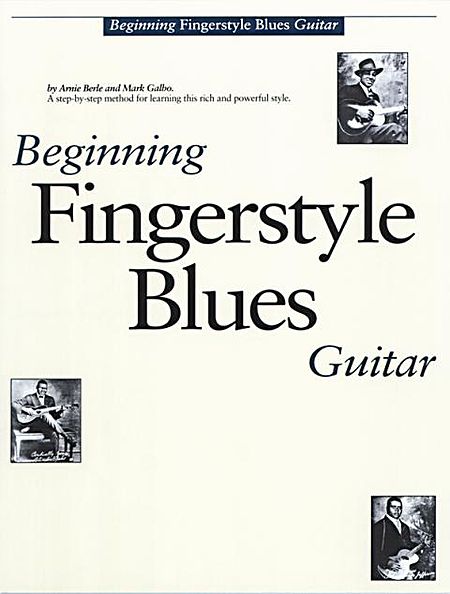
BEGINNING FINGERSTYLE BLUES GUITAR Arnie Berle Mark Galbo CD TABLATURE LIBRO CHITARRA SPARTITI

BEGINNING FINGERSTYLE BLUES GUITAR, Arnie Berle, Mark Galbo. SHEET MUSIC BOOK WITH CD & GUITAR TABLATURE .

LIBRO DI MUSICA BLUES CON CD . 

SPARTITI PER CHITARRA :

ACCORDI, PENTAGRAMMA, TABLATURE . 


About Beginning Fingerstyle Blues Guitar For guitar. Instructional and Blues. Beginner. Instructional book and examples CD. Guitar tablature, standard notation, chord names, guitar chord diagrams and instructional text. 96 pages. 
With guitar tablature, standard notation, chord names, guitar chord diagrams and instructional text. Instructional and Blues.
A step-by-step method for learning this rich and powerful style. Takes you from the fundamentals of fingerpicking to five authentic blues tunes.


BEGINNING FINGERSTYLE BLUES GUITAR
Series: Music Sales America
Publisher: Music Sales America
Format: Softcover with CD – TAB
Authors: Arnie Berle, Mark Galbo

A step-by-step method for learning this rich and powerful style. Takes you from the fundamentals of fingerpicking to five authentic blues tunes. Includes graded exercises, illustrated tips, plus standard notation and tablature.

Inventory #HL 14003799
ISBN: 9780825625565
UPC: 752187713906
Publisher Code: AM71390
Width: 9.0"
Length: 12.0"
98 pages


One day back in March of 1988 a oung man named Mark Galbo 

came to me to study jazz guitar. Over the next several weeks I
learned a lot about him. He was twenty-seven years old, he held a
degree in music, and he was an excellent blues guitarist. He taught
at his studio and as a guest clinician at blues festivals. He also
performed all over the country at these festivals and in clubs
throughout the New York area. He has played with some of the
leading blues guitarists of our time, including Etta Baker and John
Cephas. This was of great interest to me because although I have
been associated primarily with jazz through my hundreds of
columns for Guitar Player magazine and the many books I have
written, I greatly love fingerstyle blues guitar. For a long time I
had wanted to write a book on the subject. As time went by and I
saw Mark for his weekly lessons, I became more and more
impressed with his dedication to the blues, his conscientiousness
about everything he did, and his articulateness. I asked him if he
would like to collaborate with me on a book. This is the result of
that collaboration.
Since the blues falls into the category of folk or "unschooled"
music, there has always been a mystique as to how a student
might go about learning it. Legends abound about how Robert
Johnson learned his craft from the devil or a witch doctor. We
know that many bluesmen learned just by hanging around their
elders. But most of us don't have that opportunity and have to
turn to instructional books.
One type of book contains direct transcriptions of blues solos by
the masters. Unfortunately, many are dauntingly difficult and
require a rather advanced technique. The advantage to this book is
that we will start from the very beginning and gradually work
toward greater sophistication. Not only will you learn the
technique necessary to approach the works of the blues masters,
but you will acquire the tools to make up your own pieces. And if
you decide that you want to branch out into other styles of music,
the fingerpicking techniques you learn here will give you a good
basis for explorations into ragtime, country-and-western, folk, and
even classical music.


THE BLUES

Well before the beginning of the twentieth century there existed in America a large body of music performed by black people for black people. It included minstrel shows, work songs, field cries or hollers, and spirituals. However, at some time during the 1890s no one knows any exact dates-another kind of music could be heard in rural areas of the Deep South. This new music came to be called "the blues" sometime around 1900. Ma Rainey, quoted in Sandra R. Lieb's excellent biography Ma Rainey, Mother of the Blues, says that she first heard the word "blues" applied to a song she heard sung by a little girl on a street corner in 1902. Although the blues emerged from all over the South, many of the most important and influential blues musicians came from Mississippi. There, scores of impoverished, wandering performers accompanied themselves on the guitar at turpentine and lumber camps, roadside cafes, railroad stations, and street corners. Out of many a few were recorded and have become famous among aficionados of early blues. Bluesmen like Charlie Patton, Robert Johnson, Son House, and Bukka White helped develop a style known as country blues which has been copied over and over again throughout the world. Country blues were about unrequited love, loneliness, troubles at work, the desire to travel (I got to keep movin), or of specific events. "Backwater Blues" told of a flood on the Mississippi River. Other songs were about legendary personalities like C.C. Rider and Stagger Lee.

The early street musicians would sing their stories, adapting the musical form to their lyrics. It might have taken them nine, twelve, thirteen, or any number of measures to get through a verse. Their melodies were simple, direct, and elemental; their accompaniments often consisted of nothing more than a single chord or a repeated riff. However, the spread in popularity of the blues led inevitably to its modification and standardization. Ever larger numbers of phonograph owners picked up an interest in the blues and favored records that were to their own tastes. Bands began to play the blues not just as accompaniments but as instrumental pieces. W.C. Handy, who came to be known as "the Father of the Blues," wrote down songs so that they could be published and sold as sheet music. Handy himself receives credit ...


Contents
Origins Of The Blues
Preparing To Play Our First Blues
Preparing To Play A Blues In G
Preparing To Play A Blues In E
Melody Notes
Eighth Notes, Dotted Notes, And Syncopation
Blue Notes
Fretting-Hand Techniques
Picking-Hand Techniques
Playing Chords In The Higher Positions
Vamps
Singing The Blues
Five Blues Pieces


CONTENTS: 

Introduction 
The Origins of the Blues 
The Form 
The Beat 
Picking-Hand Technique for Fingerstyle Guitar 
Preparing to Play Our First Blues 
Building a Solid Technique 
The Alternating Bass 
Picking with the Fingers 
Combining the Thumb and Fingers 
Preparing to Playa Bluesin G 
Preparing to Playa Bluesin E 
Melody Notes 
Eighth Notes, Dotted Notes, and Syncopation 
Eighth Notes and the Alternating Bass 
Dotted Rhythms 
Syncopation 
Blue Notes 
Fretting-Hand Techniques 
Hamrnerons 
Pulloffs 
Slides 
Double Stops 
Bends 
Vibrato 
Picking-Hand Techniques 
The Brushstroke 
Heel Damping 
Walking Basslines 
Playing Chords in the Higher Positions 
Vamps 
Singing the Blues 
The Blues LyricForm 
Turnaround Fills 
FiveBlues Pieces 
Contents of Compact Disc 


A step-by-step method for learning this rich and powerful style.
Graded exercises take you from the fundamentals of fingerpicking to
five authentic blues tunes. Each technique is carefully explained and
illustrated in the book as well as on the accompanying compact disc.
All music is presented in both standard notation and tablature.
 
The origins of the blues
The 12-bar blues form
The importance of the beat in the blues
The roles of the thumb and of the fingers
Playing the alternating bass
Playing the melody
Putting the thumb and fingers together
Whole notes, half notes, and quarter notes
Fingerpicking patterns for various chords in various keys
Playing our first blues
The turnaround
Melody notes for each chord
Eighth notes and dotted quarter notes
Syncopation
Blue notes
Hammerons
Pulloffs
Slides
Double stops
Bends
Walking basslines
Brushstroking
Heel damping
Chord inversions
Vamps
Singing the blues
M&O Blues
Beekman Blues
Big Road Blues
32-20 Blues
Black Rat Swing
Prezzo: €29,99
€29,99
Condividi contenuti