Wolf Marshall

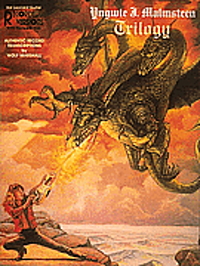
MALMSTEEN YNGWIE TRILOGY GUITAR TABLATURE CHITARRA LIBRO SPARTITI SUITE OP.5 BOOK

MALMSTEEN YNGWIE, TRILOGY. 128 pages. SHEET MUSIC BOOK WITH GUITAR TABLATURE. 

LIBRO DI MUSICA ROCK.
SPARTITI PER CHITARRA E VOCE CON:
TESTI DELLE CANZONI, ACCORDI, PENTAGRAMMA E TABLATURE. 


Series: Guitar Recorded Version TAB
Artist: Yngwie Malmsteen

Matching folio to the album includes nine songs in note-for-note guitar transcriptions. 128 pages

TiTLES:
Crying
Dark Ages
Fire
Fury
Liar
Magic Mirror
Queen In Love
Trilogy Suite Op. 5
You Don't Remember I'll Never Forget

Prezzo: €109,99
€109,99

MALMSTEEN YNGWIE MARCHING OUT GUITAR LIBRO TABLATURE-Overture 1383-I'll See The Light Tonight

MALMSTEEN YNGWIE, MARCHING OUT. sheet music book with GUITAR TABLATURE .

LIBRO DI MUSICA, SPARTITI PER CHITARRA CON : ACCORDI, PENTAGRAMMA, TABLATURE.


https://youtu.be/1pmc_ku69cs


Matching folio to the album, includings 10 songs, featuring: Don't Let It End * Disciples Of Hell * I Am A Viking * I'll See The Light.

TITOLI:

 I'll See The Light Tonight Yngwie Malmsteen  
 Don't Let It End Yngwie Malmsteen'S Rising Force  
 Disciples Of Hell Yngwie Malmsteen'S Rising Force  
 I Am A Viking Yngwie Malmsteen'S Rising Force  
 Overture 1383 Yngwie Malmsteen'S Rising Force  
 Anguish And Fear Yngwie Malmsteen'S Rising Force  
 On The Run Again Yngwie Malmsteen'S Rising Force  
 Soldier Without Faith Yngwie Malmsteen  
 Caught In The Middle Yngwie Malmsteen'S Rising Force 
 Marching Out Yngwie Malmsteen'S Rising Force 

Prezzo: €99,99
€99,99

CREAM THE BEST GUITAR SIGNATURE LICKS LIBRO CD TABLATURE-Sitting On Top Of The World-SWLABR

CREAM, THE BEST. GUITAR SIGNATURE LICKS. CD TABLATURE

LIBRO DI MUSICA CON CD, SPARTITI PER CHITARRA. ACCORDI, PENTAGRAMMA, TABLATURE. 

Series: Signature Licks Guitar
Medium: Softcover with CD
Artist: Cream

A thorough breakdown of the guitar styles and techniques of Eric Clapton during his Cream days, including lessons and transcriptions for 12 classic tracks, 56 pages

Badge
Cross Road Blues (Crossroads)
I Feel Free
Sitting On Top Of The World
Spoonful
Steppin' Out
Strange Brew
Sunshine Of Your Love
Swlabr
Tales Of Brave Ulysses
White Room
World Of Pain

Prezzo: €29,99
€29,99

AEROSMITH 1973-1979 GUITAR SIGNATURE LICKS CD Back in the Saddle-Dream On-Sweet Emotion-Walk This Way

AEROSMITH, 1973-1979. LICKS. CD TABLATURE

LIBRO DI MUSICA, SPARTITI PER CHITARRA CON CD E TABLATURE. 

Aerosmith 1973-1979
Series: Signature Licks Guitar
Format: Softcover with CD - TAB
Artist: Aerosmith

Inventory #HL 00695106
ISBN: 9780793569694
UPC: 073999951066
Width: 9.0"
Length: 12.0"
80 pages

One of the most prominent bands of the rock era, Aerosmith Signature Licks 1973-1979 is a step-by-step breakdown of the guitar styles and techniques of the songs that made them famous:

Back In The Saddle
Come Together
Draw The Line
Dream On
Kings & Queens
Last Child
Mama Kin
Same Old Song And Dance
Sweet Emotion
Toys In The Attic
Train Kept A-Rollin'
Walk This Way

80 pages

Prezzo: €29,99
€29,99

AEROSMITH 1979-1998 GUITAR SIGNATURE LICKS CD TABLATURE Dude (Looks Like a Lady)-Janie's Got a Gun

AEROSMITH, 1979-1998. SIGNATURE LICKS GUITAR. CD TABLATURE

LIBRO DI MUSICA, SPARTITI PER CHITARRA CON CD E TABLATURE. 


Aerosmith 1979-1998

Series: Signature Licks Guitar
Format: Softcover with CD
Artist: Aerosmith

Inventory #HL 00695219
ISBN: 9780793583324
UPC: 073999952193
Width: 9.0"
Length: 12.0"
80 pages

Explore the music of one of rock's greatest bands with this step-by-step breakdown of the guitar styles and techniques of Joe Perry and Brad Whitford. Teaches licks from:

Crazy
Cryin'
Dude (Looks Like A Lady)
Eat The Rich
Falling In Love (Is Hard On The Knees)
The Hop
Janie's Got A Gun
Livin' On The Edge
Love In An Elevator
Nine Lives
Rag Doll
Taste Of India
What It Takes

Prezzo: €29,99
€29,99

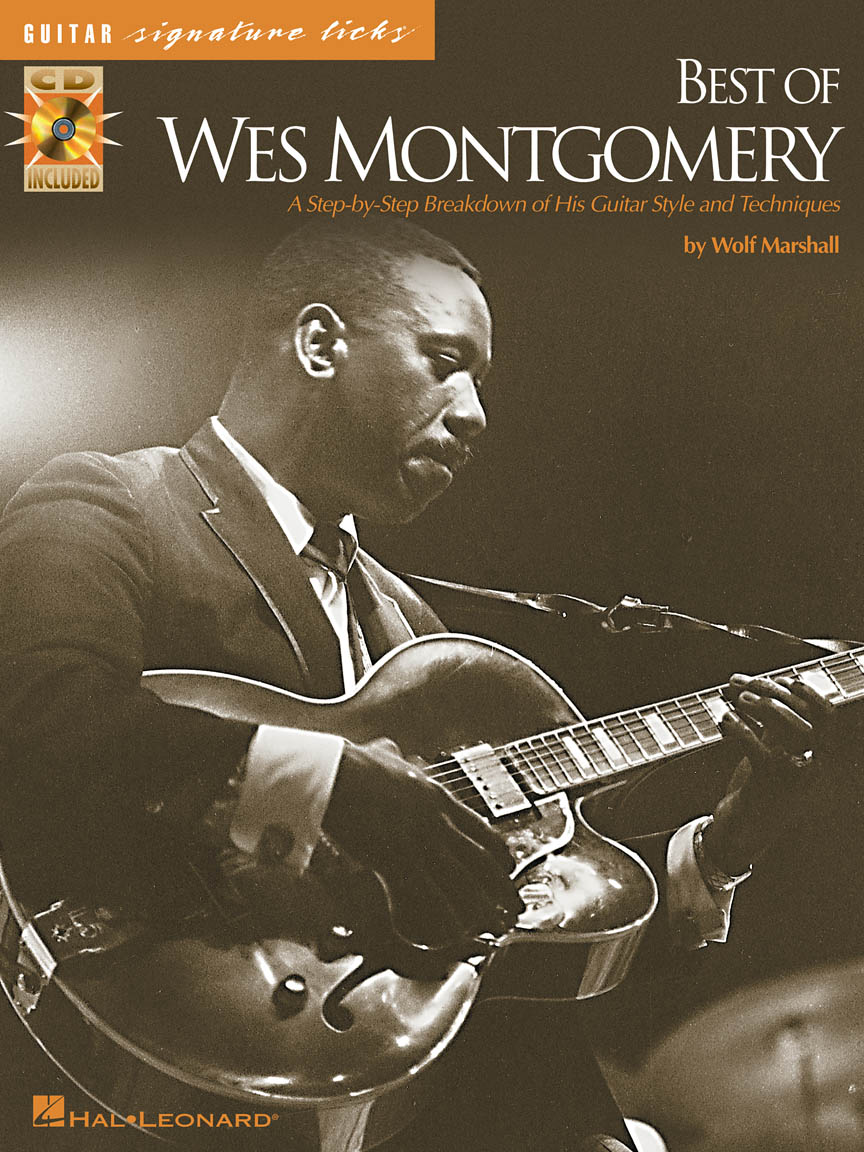
MONTGOMERY WES-BEST Signature Licks Guitar CD TABLATURE besame mucho-Missile blues-SPARTITI

MONTGOMERY WES, THE BEST. LIBRO CON CD E TABLATURE

LIBRO METODO DI MUSICA JAZZ, CON CD.

SPARTITI PER CHITARRA CON: 

ACCORDI, PENTAGRAMMA E TABLATURE. 

Performance notes, equipment, le tecnica del pollice, biografia. Invece di utilizzare il plettro, opta suonare con il polpastrello del pollice. Questa tecnica non ortodossa, affascina i chitarristi di oggi e stupisce per l'efficacia del suono caldo delle single-note. Missile blues -yesterdays -west coast blues -cariba -I¹ve grown accustomed to her face -bésame mucho (Kiss me much) -fried pies -mi cosa -four on six -misty -sundown -O.G.D. 

Guitar
Series: Signature Licks Guitar
Softcover with CD - TAB
Artist: Wes Montgomery
Author: Wolf Marshall

Explore the music of one of the greatest jazz guitarists of all time! This in-depth book/CD pack will guide you through 12 of the best-known tracks from the legendary Wes Montgomery, Features a foreword and introduction by Wolf Marshall, a discography and more.

Inventory # HAL LEONARD 00695387
ISBN: 0634009028
UPC: 73999953879
Width: 9
Length: 12
104 pages

Besame Mucho (Kiss Me Much)
Cariba
Four On Six
Fried Pies
I've Grown Accustomed To Her Face
Mi Cosa
Missile Blues
Misty
O.G.D.
Sundown
West Coast Blues
Yesterdays

Prezzo: €31,99
€31,99

GREEN GRANT BEST OF SIGNATURE LICKS CD TABLATURE GUITAR STYLES TECHNIQUES OF THE JAZZ GROOVE MASTER

GREEN GRANT, BEST OF. A step-by-step breakdown of the guitar styles and techniques of the jazz groove master. SHEET MUSIC BOOK with CD & GUITAR TABLATURE .

Series: Signature Licks Guitar
Softcover with CD - TAB
Artist: Grant Green
Author: Wolf Marshall

Explore the many stylistic turns of one of the most influential guitarists in jazz! Renowned guitar educator Wolf Marshall takes you inside 13 of Grant Green's most popular tunes to examine his unique lines and musicality. Includes: Airegin - Born to Be Blue - Cool Blues - If I Should Lose You - My Favorite Things - Oleo - Sookie Sookie - Stella by Starlight - This Could Be the Start of Something Big - Tune Up , and more. The CD includes full demos. 88 pages

TiTLES :
Ain't It Funky Now, Pt. 2
Airegin
Born To Be Blue
Cool Blues
If I Should Lose You
Little Girl Blue
My Favorite Things
Oleo
Sookie Sookie
Stella By Starlight
This Could Be The Start Of Something Big
Tune Up
Wives And Lovers (Hey, Little Girl)


INTRODUCTION
Grant Green personifies the appellation "soul jazz." He is one of the most colorful
and exciting guitarists to have emerged from the genre, and his work remains the yardstick
by which subsequent practitioners are measured to the present day. In the early and
mid 1960s, Grant Green was a leading exponent of the burgeoning hard bop movement
and a studio stalwart of countless recording sessions that chronicled the rise of the art
form. In these productive years Green lent his singular blue-tinged touch and talents to
groups led by luminaries like Jimmy Smith, Herbie Hancock, Lee Morgan, Larry Young,
Art Blakey, Lou Donaldson, Jack McDuff, Stanley Turrentine, Hank Mobley, Baby Face
Willette, Johnny Hodges, Ike Quebec, and many others. Green was one of the most prolific
recording artists in the prestigious Blue Note stable. He recorded an unheard-of seventeen
albums in 1961 alone, his first year with the company. Between 1961 and 1965,
his classic jazz years, Green made more records than any other artist at Blue Note.
During this time, in addition to his many sideman sessions, he established a formidable
legacy with a substantial catalog of his own albums as leader.
By decade's end, Green had expanded his artistic vision to include the new
rhythm and blues hybrid dubbed "funky jazz." As a result, in the late 1960s and 1970s he
enjoyed a second prominent and influential career as performer and innovator and was
hailed as the quintessential "groove master" of jazz. Green's contributions in the medium
affected countless players on both sides of the jazz-rock divide. You can put George
Benson, Pat Martino, Henry Johnson, Stevie Ray Vaughan, Carlos Santana, Mark
Whitfield, Eric Gale, John Scofield, Joshua Breakstone, Andy Summers, Melvin Sparks,
Dave Stryker, Kevin Eubanks, and Peter Bernstein on the top of the list.
This is the first Signature Licks book/CD to explore the music, style, and playing
techniques of Grant Green in depth. The note-for-note transcriptions will provide you with
countless hours of revelation, and the matching audio will invite you to step into his musical
world to put the theory into practice-the way Green himself did in his formative years.
The selections reflect the diversity of Green's approach and are drawn from his various
musical epochs. You will find material from the hard bop and soul jazz genres, straightahead
standards and blues, modal jazz outings, and funky rock-influenced sessions, all
attesting to the many shades of Green that have endured to become a vital piece of the
mosaic we know and love as the American musical experience.

Figure4-010
Green's two-chorus solo in "If I Should Lose You" is one of the finest of his early
years, a superb example of his hard-bop improvisation in a moderate swing tempo.
Throughout, he cultivates a relaxed soulful feeling distinguished by thoughtful melodic
invention and an ever-present rhythmic congruence.
Green plays unmistakable blues-based licks in Bb minor over the song's minormode
areas to begin each A section in measures 1-3, 17-19, 33-35, and 50-51.
Moreover, his cadential lines at the end of each sixteen-measure section, beginning with
the opening break, are harmonically active bop melodies that emphasize the movement
to and arrival in Bb minor. Green also imbues the crucial secondary dominant-seventh
sections of the song with related minor-mode sounds. In measures 13-14 and 45-46, he
applies characteristic Bb minor lines to Eb9, and approaches each phrase with an altered
dominant melody based on F, the V chord of Bb minor, in measures 12 and 44.
Green favors swing-oriented ideas and generally simpler, more diatonic bop lines
during the contrasting but tonally related major-mode portions (in Gb and Dbmajor) of the
tune. Check out measures 4-11,21-27,36-43, and 53-58. These measures contain a
mixture of scalar and arpeggiated patterns shaped into memorable solo phrases. A case
in point is the voice-leading figure in measures 8-10, a well-known and favorite Green
cliche. This trademark phrase implies an Ebm7-Ab7-Dbmaj7 progression with a descending
minor-seventh arpeggio (Db-Bb-Gb-Eb), disguised chromatic motion arranged in a
familiar zigzagging pattern of Eb-Bb-D-Bb-Db-Bb-C, a rising 9th chord arpeggio
(C-Eb-Gb-Bb), stepwise descent (Bb-Ab-Gb), and a resolving target figure (Gb-E-F).
Green pursues and develops a simple motive in measures 37-39 with an
inescapable logic. Note the melodic expansion and rotation in this three-part phrase.
Green was a master of this sort of melodic invention, and was able, on the fly, to harness
the same elements and procedures used by great classical composers to produce similar
thematically coherent results in improvisation.
Green plays signature raked arpeggio patterns in measures 20, 57, 60, and
62. These short, crammed figures are articulated with sweep picking in both ascending
and descending motion. Green applies side-slipping (in this instance "slipping" a half step
higher) in measures 46-47 to momentarily suggest the remote key center of A minor over
Eb7 and Ebm7. The phrase is made more striking with his barrage of crammed triplet
rhythms. Green's prevalent use of eighth-note triplet rhythm patterns in the solo further
energizes important phrases throughout, most notably in measures 27-28, 32, 43-44,
47-48, and 63-64. Another ear-catching highlight is the funky double-stop figure in measures
51-52. Here Green combines an anchoring pedal tone (Db)with a descending chromatic line.
 

Prezzo: €39,99
€39,99

CHRISTIAN CHARLIE THE BEST OF GUITAR SIGNATURE LICKS CD TABLATURE SPARTITI CHITARRA METODO

CHRISTIAN CHARLIE, THE BEST OF. LICKS. SHEET MUSIC BOOK WITH CD & GUITAR TABLATURE. 

A Step-by-Step Breakdown of the Styles and Techniques of the Father of Modern Jazz Guitar

 
LIBRO METODO DI MUSICA JAZZ CON CD. 
 
SPARTITI PER CHITARRA CON:
 
ACCORDI, PENTAGRAMMA, TABLATURE. 

TECNICA, 

Series: Signature Licks
Book & CD Package - TAB
Artist: Charlie Christian
Arranger: Wolf Marshall
Explore the riffs, solos and sounds of the original electric jazz guitar virtuoso with this comprehensive book/CD pack! Wolf Marshall uses excerpts from 15 of Christian's classics to demonstrate his groundbreaking techniques, including: Air Mail Special -Benny's Bugle -Good Enough to Keep (Air Mail Special) -Grand Slam -Honeysuckle Rose -I've Found a New Baby (I Found a New Baby) -Seven Come Eleven -Shivers - Solo Flight -Stardust -Wholly Cats, and more. Includes an introduction and foreword, and a Charlie Christian biography and axology. 64 pages.

LIBRO DI MUSICA JAZZ CON CD. 
 
SPARTITI PER CHITARRA CON:
 
ACCORDI, PENTAGRAMMA, TABLATURE. 


THE BENNY GOODMAN SEXTET, FEATURING CHARLIE CHRISTIAN (1939-1941)

(Columbia CK CK 45144) "Stardust," "A Smooth One”.


CHARLIE CHRISTlAN- THE GENIUS OF THE ELECTRIC GUITAR. (columbia CK 40846)

“Seven Come Eleven,” “Till Tom Special,” “Grand Slam,” “Six Appeal,” “Benny's Bugle,”

“I've Found a New Baby (I Found a New Baby),” ''Solo Flight,” “Air Mail Special.”


CHARLIE CHRISTIAN (The Best of Jazz 4032- The Swing Era). "Honeysuckle Rose,"

"Shivers," "Gone with 'What' Wind," "Wholly Cats."

Charles Henry (Charlie) Christian was born in Bonham, Texas on July 29, 1916, into a musical family. His father, Clarence James Christian, played trumpet in a silent movie theater, while his mother, Willie Mae, accompanied him on the piano. Christian had two older brothers-Edward and Clarence. Both were musically inclined, though to a lesser extent than Charlie. In 1918, the Christian family moved from the Dallas area to Oklahoma City, Oklahoma. There, during the early 1920s, he attended elementary grades in the Douglass School, which had an extensive music program. Interestingly, this coincided with the first known experiments of the amplified "electric" guitar. At this time, Christian took informal guitar lessons from his father, but dropped the instrument when his father died in 1926. A couple of years later, he briefly took up the trumpet to play in the school band. Christian's interest in the guitar was revived in 1928, and it is thought that his earliest jazz influence was instilled a year later when tenor saxophonist Lester Young arrived in Kansas City. Young's linear style had a strong effect on Christian, who remained a permanent "addict" to his music and was known to scat sing his solos throughout his life. Christian's first public performance as a guitarist was in 1930 at around age fourteen, when he sat in with the Don Redman Orchestra at Honey Murphy's Club in Oklahoma City. He took solos on "Sweet Georgia Brown," "Tea For Two," and "Rose Room"-most likely holding his guitar up to a microphone. In 1933, Christian began to study guitar with Ralph "Big-Foot Chuck" Hamilton. He learned to read music and some basic music theory. Christian introduced his friend T-Bone Walker to Hamilton, who taught them together. Hamilton played in the typical chordal style of the period, and it is doubtful that he had any influence on either Christian's or Walker's single-note solo approach. During this time, Walker and Christian, while learning together, played shows as a duo alternating on bass and guitar. In 1934, Christian secured his first professional music job with the Alphonso Trent band as a bassist. The group toured throughout the area, playing venues in Kansas City, Dallas, Fort Worth, Little Rock, and Tulsa. In the next three years, Christian also played with The Jolly Jugglers (with his brother Edward), toured the Southwest with the Anna Mae Winburn Orchestra, and worked with the Jeter-Pillars Orchestra in St. Louis. In his travels he probably encountered Delta blues players, as well as western swing bands, which were now regularly featuring amplified steel guitars and soloists who used a swingbased single-note styleA breakthrough occurred in 1937. Back in Oklahoma City, Christian was playing piano and met Count Basie's guitarist Eddie Durham, who is credited with having recorded one of the earliest amplified guitar solos. Christian was immediately enthralled with the electric guitar and sought Durham out for some basic pointers. Durham later remarked, "I never saw anyone learn so fast, nor have I seen anyone rise to the top so quickly." Soon after the meeting, Christian bought his first electric guitar and began to assemble the components of his horn-like approach. By 1938, he was touring as an electric guitarist with Alphonso Trent's Septet and worked at The Dome in Bismarck, North Dakota. There, he was heard by jazz guitarist Mary Osborne. She recalled that it was "the most startling thing" she ever heard, and that it sounded like a distorted saxophone. Osborne further recalled that Christian played Django Reinhardt's difficult "St. Louis Blues" note for note, and many of the figures he worked into his solos evolved later into Benny Goodman tunes like "Seven Come Eleven" and "Gone with 'What' Wind." At that time, a local music store displayed the Gibson ES- 150 with a sign reading "As featured by Charlie Christian." Christian was, by this point, a regional hero. In July 1939, jazz and blues impresario and producer John Hammond became aware of Charlie Christian. Acting on a tip from singer Mary Lou Williams, Hammond flew to Oklahoma to hear the guitarist. He then arranged an audition in Los Angeles for swing clarinetist Benny Goodman, who was becoming interested in the electric guitar as an ensemble instrument. Goodman was initially unimpressed when he heard Christian comp unamplified rhythm guitar behind "Tea For Two" and further dubbed him "an impossible rube." Later, Hammond sneaked Christian onto the bandstand for an impromptu jam session with the Benny Goodman Quintet at the Victor Hugo Restaurant. The group played an extended jam on "Rose Room," during which Christian matched Goodman riff for riff and improvised over twenty choruses. He was hired on the spot for $150 a week to play with the Benny Goodman Sextet and relocated to New York City. Christian's influential recordings began in late 1939. He recorded extensively with the Goodman Sextet, Septet, and Orchestra, as well as the Lionel Hampton Orchestra, and participated in the historic Carnegie Hall jazz concert Spirituals to Swing. These sessions marked the formal genesis of modern jazz guitar. Christian's stirring performances on pieces such as "Air Mail Special," "Seven Come Eleven," "Honeysuckle Rose," and the epic "Solo Flight" argue the case convincingly. During his association with Goodman, Christian became one of the biggest names of the swing era. Not content to rest on his laurels and enjoy the fruits of his newfound stardom and accolades, he pushed the envelope further. In 1940, Christian was part of the milieu at Minton's Playhouse in Harlem, and as such foreshadowed the arrival of the bebop idiom along with early luminaries of the genre Dizzy Gillespie, Thelonius Monk, and Kenny Clarke. Christian went so far as to purchase an amplifier to be kept on the premises for his regular after-hours jams. Plagued with respiratory problems his entire life and unwilling to scale down a demanding lifestyle, Christian succumbed to tuberculosis and died on March 2, 1942. In retrospect, his contributions are profound and inescapable. During a period of less than three years, Christian had emerged from total obscurity to produce a copious body of material that forever altered the course of music. Legendary jazz guitarist Barney Kessel is one of few guitarists to have actually played with Charlie Christian during his short career. On August 22,2001, I visited Barney at his home in San Diego, CA, and during our time together discussions naturally turned to Charlie. He graciously offered his memories...


Songlist:

Table of contents
A Smooth One
Air Mail Special
Benny's Bugle
Gone With 'What' Wind
Good Enough To Keep (Air Mail Special)
Grand Slam
Honeysuckle Rose
I've Found A New Baby (I Found A New Baby)
Seven Come Eleven
Shivers
Six Appeal
Solo Flight
Stardust
Till Tom Special
Wholly Cats

Prezzo: €29,99
€29,99

101 MUST KNOW JAZZ LICKS CD GUITAR TABLATURE SWING-PRE-BOP-BEBOP-HARD BOP-COOL JAZZ-CHORD

101 MUST KNOW JAZZ LICKS. BOOK WITH CD & TABLATURE

LIBRO MANUALE DI MUSICA JAZZ, CON CD. 

SPARTITI PER CHITARRA CON: 

ACCORDI, PENTAGRAMMA, TABLATURE.


A Quick, Easy Reference for All Guitarists

Series: Guitar Educational
Format: Softcover with CD - TAB
Author: Wolf Marshall

Now you can add authentic jazz feel and flavor to your playing! Here are 101 definitive licks, plus a demonstration CD, from every major jazz guitar style, neatly organized into easy-to-use categories. They're all here: swing and pre-bop, bebop, post-bop modern jazz, hard bop and cool jazz, modal jazz, soul jazz and postmodern jazz. Includes an introduction by Wolf Marshall, tips for using the book and CD, and a listing of suggested recordings.

Inventory #HL 00695433
ISBN: 9780634013713
UPC: 073999315271
Width: 9.0"
Length: 12.0"
48 pages


Jazz is a musical language with a variety of dialects. To speak jazz on the guitar with authenticity
and eloquence requires more than finger dexterity, a facile mind, or a creative impulse. It requires
a sense of tradition and a seemingly endless well of ideas. In non-literary cultures, the act of communication
and the art of conversation are learned through what is known linguistically as "oral
tradition"-a practice passed down from generation to generation by listening, imitating, mastering,
and ultimately reinterpreting with personal expression. So it is with jazz. The great jazz players
of history have, largely by ear, studied, absorbed, and reassembled the contributions of their
forebears. Picture George Benson repeating Charlie Parker licks until they were part of his vocabulary.
Or imagine Barney Kesselstruggling to get Charlie Christian's phrases under his fingers. Pat
Martino memorized and reinterpreted Johnny Smith's and Howard Roberts' signature licks to formulate
his own innovative style. Joe Passemulated and respun the stylings of great jazz wind and
piano players. And new voices like RussellMalone, Ron Affif, and Jimmy Bruno currently lead
today's straight-ahead movement with inspired reinventions of Wes Montgomery, John Coltrane,
and Hank Garland. The process largely entails the learning and mastery of specific phrases, or
licks, that are akin to sentences in a spoken language. This can be a daunting task considering the
vast number of musicians and styles in the genre.
Enter 101 Must-Know Jazz Licks. This book is a lexicon of essential phrases in a wide variety of
styles within the jazz genre. Each lick is a self-contained phrase with a central idea or focal point
and is an indispensable piece of the jazz vocabulary. The 101 licks are presented in rough chronological
order beginning with the late 1930sand continuing to the present. If you're already a jazz
guitar aficionado, this book may revive some delightful memories and inspire you to take your
current playing down some familiar old paths. If you're coming to this guide with an interest that
outweighs your knowledge of the jazz genre, expect to be taken on a trip through musical
Americana, with a soundtrack to match, from which you will emerge a more conversant and passionate
player.
-Wolf Marshall


Introduction
This volume is designed for all guitarists. Arranged for quick, easy reference, it contains 101 stylistic
phrases, commonly known as "Iicks"-those essential, self-contained instrumental figures utilized
by the great masters. Licks are part and parcel of the jazz tradition and the jazz experience.
Charlie Parker used 'em, so did John Coltrane and Wes Montgomery, and so does virtually every
player on the current scene. Licks are short, meaningful passagesskillfully tucked into tunes and
riffs, and laced through the improvised solos of the repertory. The audience may not hear them
or even be aware of them, but they can always be felt. A well-turned lick can make the difference
between a cold, mechanical statement and a communicative, engaging performance; and
the right lick driven by the energy and conviction of a seasoned player can bring the audience to
its feet.
Now you can add an authentic jazz feel and flavor to your playing. Here are 101 definitive licks
from every major jazz guitar style neatly organized into easy-to-use categories. They're all here:
swing jazz, pre-bop, bebop, hard bop, modal jazz, cool jazz, soul jazz, postmodern jazz, free jazz,
chord licks, and more. Browse to your heart's content, and feel free to tap into the feeling of
each lick that speaks to you. As you do, you'll be taking that vital first step of reinvention that
connects you to the spirit and the essenceof America's most emotional and transcendent
art music.


Tips for Using this Book and CD
1. Play these licks allover the fingerboard. If a lick is positioned at the eighth fret, move it down
to the third fret and play it in that area; you will notice that the string feel, tension, and fret
distances have a bearing on how the lick feels. Then move it up chromatically as a drill, playing
it in every position from the third to the seventeenth fret. This will depend on the range of
your guitar's fingerboard. Note the key changes as you move the licks to different positions.
2. Put several licks into the same key. For example, if a lick is presented in C and another is in G,
place them both into C, and then into G. This is the musical equivalent of using all your linguistic
phrases in one conversation.
3. Take that collection of phrases into various keys. Once you have grouped a number of licks into
the same key, move that grouping to new positions.
4. Make notes, mental or written, about the feel of each lick. Your visceral, emotional reaction to
a lick is part of the ad-lib selection processwhen improvising. This processcould involve forming
a visual image of the lick's physical shape-how it sits on the fingerboard.
5. Add at least one new lick per week to your vocabulary. Memorize and use it in your current
musical situation-playing with a band, adding it to an existing solo or song, or when jamming
with your friends.

About the Recording
Each lick is played twice on the accompanying audio: first at the normal tempo and then, after a
two-and-a-half-second pause, at a slower tempo.
Licks 1-98 are found at the corresponding CD counter numbers. Licks99, 100, and 101 are presented
as a single track on number 99. Within that counter number (99), use the following time codes
to find the three licks: Lick 99 occurs at 0:00, Lick 100 occurs at 0:45, and Lick 101 at 1:04.
These licks were played using authentic Gibson archtop electric guitars and miked amplifiers
including vintage Gibson and Fender tube amps and modern Polytone amps. The sounds, settings,
and particular instruments are cited in the accompanying performance notes.


TF=Target figure. This three-note melody pattern typically approaches a selected (tar-
get) tone by beginning on its upper neighbor, jumping to its lower neighbor, and then
moving to the target. See Lick 20.
VLF=Voice leading figure. A specific four-note pattern endemic to bebop and modern
jazz styles. The all-important figure involves approaching a particular note first from a
half step above and then from below (always by two half steps in succession).See
Lick 20.
SUB=Substitution. This refers to an alternate scale or melody substituted for a primary
relationship. It is followed by a scale or chord name, such as "SUB Abm" (AI, minor
instead of a more typical Bbl scale or harmony). See Lick 27.
Q: and A:=Question and answer phrases.The "call-and-response" procedure is an
important aspect of applying licks to form a larger melody structure.
Every lick is defined by an overall context; this can be a "basic scale" or "basic tonality." Most jazz
licks are defined by their harmonic setting and use a variety of scalesto convey melodic motion
through chord changes. In this case,a single basic scale would not be a sufficient label and could
present an incomplete and erroneous picture. Melodies such as these are labeled as having a
"basic tonality" though they are comprised of single notes as in Lick 10. Many jazz licks have a
plural harmonic application. For example, Lick 1 can be thought of as originating from either the
AI, major scale or the AI, Mixolydian mode (dominant seventh sound) as it does not contain the
crucial seventh in its melody. Similarly, Lick 5 has a plural application and could be used over an
FmGor Bb9chord background.
A suggested tempo is provided for each lick-Fast Swing, Moderately, Slowly (Rubato), etc.-to
further guide you in applying these phrases in your music. All licks marked with a swing feel
(Fast Swing, Moderate Swing, etc.) are to be perceived as occuring against a triplet feel background
and are generally to be played with swing eighth-note rhythm. This means that each twoeighth-
note rhythm unit is to be played as a quarter-eighth grouping of an eighth-note triplet

After getting these licks under your fingers, try taking them apart by playing them in pieces,
inside out and backwards. Each lick can be thought of as having several melodic or harmonic
"cells" of varied sizes in its structure. Eachcell is akin to a thought or group of words in a sentence.
These can be grafted to other cells from other licks to form new phrases.This processof
developing original music from fragments is a viable strategy for building a new musical statements
of your own.
Finally, once you have grasped the essentials of these licks, begin your own investigations. To this
end, a list of suggested recordings is offered in the back pages of this volume. Pick your favorite
jazz improvisations, and listen for these devices at work in the music of the great players. Be on
the lookout for imitative procedures and sequential activity in melodies and riffs, question-andanswer
phrases, harmonic extensions and alterations, unique turnarounds, and other thematic
development strategies. This sort of listening and thinking opens the door to a deeper understanding
and assimilation of the jazz language.


About the Author
Wolf Marshall is the pre-eminent guitar educator-performer of our time. The founder
and original editor-in-chief of GuitarOne magazine, he is a highly respected and prolific
author and columnist who has been an influential force in music education since the early
1980s.Wolf has worked closely with Hal Leonard Corporation for the past decade,
authoring such highly acclaimed multimedia books asThe Guitar Style of Stevie Ray
Vaughan, Stevie Ray Vaughan, Blues Guitar Classics, The Beatles Favorites, The Beatles Hits,
The Rolling Stones, The Best of Carlos Santana, Guitar Instrumental Hits, Steve Vai: Alien Love
Secrets, Eric Clapton Unplugged, Eric Johnson, The Guitars of Elvis, Aerosmith 1973-1979 and Aerosmith 1979-1998, Acoustic Guitar of the '60s and '70s, Acoustic Guitar of the '80s and '90s, Mark Knopfler, The Best of Queen, The Best of Cream, and many more. His eight-volume seriesThe Wolf Marshall Guitar Method and Power Studies established new standards for modern guitar pedagogy in the early 1990s,as did his Guitar Jammin' authentic song books.
In 101 Must-Know Jazz Licks, and its predecessor 101 Must-Know Blues Licks, Wolf directs his
encyclopedic knowledge of modern guitar music at a unique series designed to improve the
vocabulary of all guitarists. The list of his credits is immense and can be found at his web site:


Swing and Pre-Bop
This group comes from the swing era of the late 1930sand early 1940s.Jazz was at
the height of its popularity in this period. Swing was a dance-oriented jazz style played predominately
in ballrooms by big bands of fourteen or more musicians. The music's harmony centered
around mildly dissonant chords like major and minor triads with added sixths, dominant sevenths,
and dominant ninths. These harmonies supported largely diatonic melodies set in riff-dominated
jazz tunes, 12-bar blues structures, and 32-bar pop tunes.
Swing's leading guitarist was Charlie Christian, who combined elements of earlier classicjazz traditions
as well as blues licks from the southern states and horn licks borrowed from wind players
like Lester Young and Roy Eldridge. The practice of emulating and adapting "horn licks" (largely
from saxophone and trumpet) has been a mainstay of jazz guitar since Christian's time. Christian's
pioneering use of the newly-designed Gibson Electric-Spanish (ES)guitar established the role of
the electric guitarist in jazz. Prior to his appearance, jazz guitarists were mainly confined to
strumming in the rhythm section or forced to play in smaller all-string combos such as Django
Reinhardt's Hot Club quintet.
Christian's work with the Benny Goodman Sextet set the standard for early combos that included
electric guitar. Jazz, blues, and pop guitarists who followed in the 1940swere under the spell of
Charlie Christian and sought to emulate his sound and style. In swing and pre-bop, this included
Oscar Moore, Barney Kessel,AI Casey,Herb Ellis, and others. Sweepingly influential, Christian's
licks were also heard in the subsequent wave of jump blues guitarists and early rock 'n' roll players.
Identifiers of the swing style include an eighth-note-dominated horn-like phrasing, extensive
use of the sixth degree of the scale and chromatic passing tones, blues riffs, and a strong swing
rhythm feel.
To maintain sonic authenticity, I played these licks on my Gibson ES-175/CCwith heavy-gauge
strings. This instrument is equipped with the early Gibson bar pickup (dubbed the "Charlie
Christian pickup") in the neck position. The volume and tone controls were both set at 8. The guitar
was played through a vintage 1952 Gibson GA-75 amp with one 15-inch speaker. The tone of
the amp was set for a warm and moderately clean sound with a hint of tube overdrive; in this
case,treble and bassat the midway point and the volume at just below halfway. This sound is
generally the norm for early jazz guitar, circa 1940s-1950s.
+Basic Scale: Ab Major/Mixolydian
Fast Swing Ab(6)


Contents
Introduction
Tips for Using this Book and CD
About the Recording
Lick Analysis and the Lick Legend
SWING and PRE-BOP
BEBOP
Bird: Charlie Parker
Post-Parker Bop Guitar
POST-BOPMODERN JAZZ
Trane: John Coltrane
HARD BOP and COOL JAZZ
MODAL JAZZ
SOULJAZZ
POSTMODERN JAZZ
JAZZ CHORD LICKS
Suggested Recordings
About the Author
Guitar Notation Legend
 

Prezzo: €21,99
€21,99

GUITAR JAMMIN' HARD ROCK BOOK CD TABLATURE LIBRO BASI CHITARRA Iron man-sweet child o' mine

GUITAR JAMMIN'. HARD ROCK SONGS. SHEET MUSIC BOOK WITH CD & GUITAR TABLATURE.

LIBRO DI MUSICA METAL CON CD. 

CD DI BASI PER VOCE E CHITARRA.  

SPARTITI PER CHITARRA CON:

ACCORDI, PENTAGRAMMA, TABLATURE. 


Tracks senza preascolto, per voce e chitarra. Potrete ricreare la song originale o inventarvi un vostro fraseggio. Contiene:

- crazy train (Ozzy Osbourne)

- Detroit rock city (Kiss)

- iron man (Black Sabbath)

- sweet child o' mine (Guns n' Roses)

- you really got me (Van Halen)

- the unforgiven (Metallica)

- living after midnight (Judas Priest).

CD TAB.


Prezzo: €29,99
€29,99
Condividi contenuti