2010

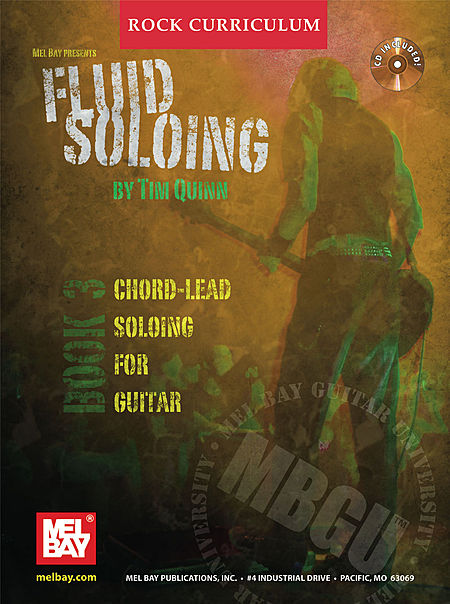
FLUID SOLOING BOOK 3 CHORD-LEAD SOLOING FOR GUITAR Tim Quinn CD TABLATURE LIBRO CHITARRA SPARTITI

FLUID SOLOING, BOOK 3, CHORD-LEAD SOLOING FOR GUITAR, Tim Quinn. CD TABLATURE

LIBRO METODO DI MUSICA ROCK, CON CD.

SPARTITI PER CHITARRA:

ACCORDI, PENTAGRAMMA E TABLATURE. 

Product Description:
Chord-Lead Soloing for Guitar is a complete method for developing fluid double-stop chord melody. This style of playing can be heard most notably in the playing of Jimi Hendrix (in songs such as The Wind Cries Mary, Little Wing, and Castles Made of Sand), as well in the music of the guitarists he influenced, including Steve Vai, Eric Johnson, and Stevie Ray Vaughan. Chord-lead style playing bridges the gap between straight lead and strictly rhythm, because it is simultaneously chordal (implying a specific major or minor chord) and melodic (carrying a distinct singable melody). This book shows the guitarist how to develop this technique and create continuous connections of moving voicings, merging lead and rhythm into one flowing melodic chordal texture. This is accomplished through a comprehensive collection of chord-lead phrases, each of which is presented in at least three different fingerings (important for whole-neck flow). These phrases are then assembled into soloing etudes that demonstrate practical application over different chord progressions

Chord-lead playing can be adapted to every style of music, including rock, jazz, blues, alternative, funk, R&B, country, and pop. Mastering chord-lead soloing also greatly increases a guitarist’s ability to "stand alone"; that is, to play by himself unaccompanied by other musicians, mixing and switching between chording and lead improvisation. This book is perhaps the most definitive guide ever written for mastering this highly sought after (yet elusive) style of playing. CD included. Standard notation and tablature.


Chord-Lead Soloing presents a complete method for developing whole-neck, fluid chord-melody motion using two-string "double-stops", such as in the recordings of guitar legends Curtis Mayfield, Steve Cropper, Jimi Hendrix, Stevie Ray Vaughan, Eric Johnson, and Steve Vai This style of guitar playing is simultaneously chordal (implying a specific major or minor chord), and at the same time melodic (carrying a distinct singable melody). This book shows the guitarist how to develop this technique and create continuous connections of moving voicings, merging lead and rhythm guitar into one flowing melodic chordal texture. Hendrix took double-stop chord-melody to an unprecedented level and prominence in the songs "Little Wing", "Castles Made of Sand", "The Wind Cries Mary", and "Electric Ladyland", although he was likely heavily influenced by Mayfield's work with the Impressions (and perhaps Cropper's work with Otis Redding) in developing this aspect of his playing. All three should be acknowledged historically as being among the originators of this style. However, for most of the guitarists who later developed this "chord-lead" style, including Stevie RayVaughan, Steve Vai, and Eric Johnson, the primary inspiration was Jimi Hendrix. Double-stop chord-melody playing can be adapted to every genre of music; whether it's jazz, hard rock, alternative, funk, R&B, country, pop, salsa, reggae, Irish folk, or whatever! Mastering chord-lead technique greatly increases a guitarist's ability to "stand alone"-that is, to play by himself, unaccompanied by any other musicians, mixing and switching between chording and lead improvisation. This is an important, highly sought after skill for the accomplished, professional guitarist. Chord-Lead Soloing presents a complete and thorough method for developing this crucial style of playing. This book is the third book in the 'Fluid Soloing Series', a unified set of books that develop different aspects of whole neck fluid motion on the guitar. The three "Comprehensive" soloing etudes at the very end of this book are included to demonstrate some of the techniques from the other three books in the series, as well as the techniques presented in this book, all used in combination. The varied combinations of soloing techniques in these etudes create an exciting whole-neck soloing style that is flowing and varied in its melodic content. If you like the content of this book, check out the other books in the series as well. May you absorb the riches in this book, and may you play beautiful guitar music! Peace and harmony, friends.

Contents:


Introduction

I Section One: Chord-Lead Basics

The Concept of Suspension

Major Triad Sets; Triads in 2-String Pairings

Demonstrations of Possible Moves on 2-String Pairings

Major Pentatonic Scale Played in Fourths

II Section Two: Chord-Lead Licks

Each lick is shown in at least THREE different fingerings

III Section Three: Soloing Etudes

Demonstrating practical application of the licks

Appendix: "Guide For Using This Book"

Tablature Symbols Key

Prezzo: €24,99
€24,99

MORE GUITAR SETUP & BASIC MODIFICATIONS, COVERING ELECTRIC & ACOUSTIC, Denny Rauen. DVD

MORE GUITAR SETUP & BASIC MODIFICATIONS, COVERING ELECTRIC & ACOUSTIC, Denny Rauen.

Liutaio personale di Keith Richards (ROLLING STONES), Buddy Guy, Leo Kottke, Roger Glover (DEEP PURPLE) e molti altri. DVD

Series: Instructional/Guitar/DVD
Format: DVD
Author : Denny Rauen

Denny Rauen is a nationally acclaimed master luthier whose clients include many top musicians and collectors from around the world - Keith Richards, Buddy Guy, Leo Kottke, Roger Glover and many others. Located in Milwaukee, Wisconsin, Rauen guitars specialized in the restoration, repair, and modification of new and vintage acoustic and electric guitars, basses, harp-guitars, mandolins and Banjos. In this must-have instructional DVD, Denny personally teaches: 

installing a pickup;

shielding a guitar (taming the single coil hum);

wiring modification (Telecaster);

adjusting the truss rod;

adjusting intonation;

tools of the trade;

tech secrets;

and more.

Includes printable wiring schematics! 1 hr. 57 min.

Prezzo: €31,99
€31,99

GUITAR SETUP & MAINTENANCE COVERING ELECTRIC & ACOUSTIC. Denny Rauen. DVD

GUITAR SETUP & MAINTENANCE COVERING ELECTRIC & ACOUSTIC. Denny Rauen. DVD

Series: Instructional/Guitar/DVD
Format: DVD
Author : Denny Rauen

Denny Rauen is a nationally acclaimed master luthier whose clientele includes many top musicians and collectors from around the world - including Keith Richards, Buddy Guy, Leo Kottke, Roger Glover and many more. In this must-have instructional DVD, Denny personally teaches: acoustic guitar setup; electric guitar setup; jazz guitar setup; slide guitar setup; Floyd Rose setup; adjusting the truss rod; adjusting intonation; and many trade secrets! 1 hr, 58 min.
Run Time: 1:58:00

Some of Clients of Rauen:

Rob Able - Bassist
David J. Aiello - Bassist
Janet Aiello -Guitarist
Al Anderson - Bassist
Martin Barre - Guitarist, Jethro Tull
Johanne Beauchamp - Guitarist, DJ Lite 97
Jerry Becker - Guitarist
Dan Beimborn - Mandolin
Jeff Benski - Guitarist
Cal Bergendahl - Bassist
DR Berkowitz - Bassist
Ron Berry - Guitarist
Mike Bieser - Bassist, Ale House
Pete Billman - Guitarist
Mai Bloomfield - Cello & Guitarist
Rob Blue - Guitarist
Ken Bohannon - Guitarist
LJ Booth - Guitarist
Henry Brengle - Mandolin
Bill Brenkle - Guitarist
Tom Bukovac - guitarist "the session man"
Larry Burrus - Guitarist
Glen Burtnic - Guitarist - Styx
Bill Camplin - Guitarist
Joey Carini - Guitarist
Paul Cebar - Guitarist - The Milwaukeans
Dylan Chernov - Guitarist
Ellen Clipsham - Celtic violin
Charlie Collins - Guitarist
Skip Collins - Guitarist
Brennan Cornwell - Guitarist
David Cox - Guitarist
Evan Cranley - Bassist - Stars
Anne Curtis - Violin
Steve Cushman - Guitarist
Jeff Dagenhardt - Guitarist
Malachi Delorenzo - Guitarist
Victor Delorenzo - Violent Femmes
Freddie Dobrinski - Guitarist - Heartsfield
Joey Drada - Guitarist
Dave Drake - Guitarist
Randy Dritz - Bassist
Scott Dubois - Guitarist
Al Eck - Guitarist
John England - Guitarist
Duke Erikson - Guitarist - Garbage
Ramie Espinoza- Recording studio, producer, engineer
Maureen & John Finagan - Guitarist
Bradley Fish - Guitarist
Pino Forastiere - Guitarist
Mel Ford - Guitarist
Ken Fought - Guitarist
Mike Fredrickson - Bassist - The Mosleys
Dylan Fuller - Guitarist
Jennifer Geigel - Guitarist
Rob Gjersoe - Jimmy Dale Gilmore, Robbie Fulks
Glen Geremia - Guitarist
Ron Gilbert - Bassist
Roger Glover - Bassist - Deep Purple
Tom Good - Bassist
Joe Goodfich - Bassist
Tim Goss - Bassist, producer
Jack Grassel - Guitarist
Charles Gray - Guitarist
Tom Green - Elvis impersonator
Don Griffen - Guitarist
Mike Gruber - Guitarist
Buddy Guy - Guitarist
Jeff Hale - Guitarist
Royce Hall - Guitarist - The Mosleys
Steve Hall (aka Dane DeForest) - Banjo & autoharp
Marc Halberg - Guitarist
Jeff Hamilton - Guitarist
Kris Hennum - Mandolin
Don Hensiak - Guitarist
Kent Herman - Guitarist
Sean Hulet - Guitarist
Rick Holmes - Bassist
Bruce Illig - Guitarist
Joe Italiano - Guitarist
Mark James - Guitarist
Jeff Jaskowviak - Guitarist
Susan Jeske-Dermody - Frogwater/fiddle
Jimmy Johnson - Blues
Ben Kammin - Guitarist
Lee Kelm - Guitarist
Raymond Kane - Slack key guitar
Kraig Kenning - National Champion Dobro
Bruce King - Mandolin
Jason Klagstad - Guitarist
Patricia King - Guitarist
Steve Kleiber - Bassist
Steve Klimczak - Acoustic instruments
Greg Koch - Guitarist
Brian Kopper - Guitarist
Ken Kottke - Bassist
Leo Kottke - Guitarist
Sarah Kozar - Riverwest Accordion Club
Paul Kucharski - Guitarist
Dejan Kralj - Bassist - The Gufs
Cheryl Kuharpt - Guitarist
Gene Liccardi - Guitarist
Don Linke - Guitarist
Ken Lonquest - Guitarist
Jim Lorino - Bassist
Pat Love - Bassist
Pat MacDonald - Bassist
Ken MacDonnell - Bassist
Janet Macklin - Guitarist
James Madsen -Guitarist
Phil Maggini - Shadowfax
Luis Maldonado - Guitarist
Pete Markowski - Mandolin, Western swing
Monica Marshall - Guitarist
Warren Mazza - Guitarist
Hans Mayer - Singer/songwriter
Jim McClellan - Rock 'n Roll hack
Andy McKee - Guitarist
melaniejane - Guitarist
Tony Menzer - Bassist, booking agent
Amy Millan - Guitarist - Stars
Bryan Mir - Bassist
John Moss - Guitarist
David Moynihan - Mandolin
Ryan Mueller - Guitarist
Don Mulder - Guitarist
Peter Mulvey - Singer/Songwriter
Kurt Neumann - Guitaris - The BoDeans
John Nicholson - Guitarist
Jonathan Noyce - Bassist - Jethro Tull
Colin O' Brien - Guitarist
Brian O'Conner - Guitarist
Bob Ockenden - Guitarist
Jim Olschmidt - Guitarist
Jon Olson - Guitarist
Thomas Pechota - Guitarist
Todd Petrowski - Bassist - Buzzhorns
Peter Pivonka - Guitarist
Robert Preston - Guitarist
Rob Poland - Candy Rat Records
Willy Porter - Singer/Songwriter
Chaska Potter - Guitarist
Keith Pulvermacher - Guitarist
Rodney Ramos - Bassist
Joe Rauen - Bass
Josh Rauen - Guitarist
Scott Reed - Guitarist
Lil Rev - Old time/Acoustic instruments/Frogwater
Keith Richards - Rolling Stones
John Richey - Fiddle Player
Kristian Riley - Guitarist - Citizen King
Brian Ritchie - Bassist - Violent Femmes
Tom Robinson - Guitarist
Peter Roller - Ethnomusicologist, Blues & Fingerstyle
Meredith Root - Banjo
Martin Jack Rosenblum - Harley poet, Guitarist
Don Ross - Guitarist
Amelia Royko - Guitarist
Julie Roys - Guitarist
Paul Ruppa - Milwaukee Mandolin Orchestra
David Rutherford - Guitarist
Greg Rzab - Bassist - Jimmy Page, Buddy Guy, Black Crows
Noel Sabine - Mandolin/guitar
Matt Schroeder - Guitarist
Tom Schwark - Mandolin
Dan Schwartz - Guitarist
Scott Sharrard - Guitarist
Tom Sharrard - Guitarist
Paul Silbergleit - Guitarist
Brett Simons - Bassist, Brian Wilson
Joe Sinopoli - Mandolin
Annalee Skully - Guitarist
Dan Small - Guitarist/Outdoor Wisconsin
John Smith - Guitarist
Ean Spanic - Guitarist - The Spanic Boys
Carl Staling - Guitarist
Michael Standal - Guitarist
Brook St. James - Guitarist
Bill Stone - Guitarist
Dave Stone - Guitarist
Mike Struck - Guitarist
Rick Stubbs - Composer
Bruce Springsteen and The E Street Band
John Stropes - American fingerstyle, instructor
Paul Tadder - Guitarist
Kirk Tatnall - Guitarist
Harvey Taylor - Singer/songwriter, poet
Paul Terrien - Guitarist
Frank Tisonis - Guitarist
Bret Teuvson - Bassist
John Tyler - Guitarist
Ken Vallow - Guitarist
Dave Vartanian - Engineer, recording studio
Terry Vitone - Guitarist, songwriter
John Waldron - Bassist - Spirit Creek
Keith Watling - Guitarist
Jim Waller - Banjo/guitar
Tony Walzak - Guitarist
Mark Watson - Singer/songwriter
Michael Wegner - Bassist
Sandy Weisto - Guitarist
Dean Werner - Guitarist
Brad Whitford - Aerosmith
Ben Woolman - Guitarist
Joe Wilke - Guitarist
Jim Williams - Bassist - Crossfire
Paul WIlliams - Guitarist
Jimmy Wybel - Guitarist - Bob Wills, Barney Kessel

Prezzo: €31,99
€31,99

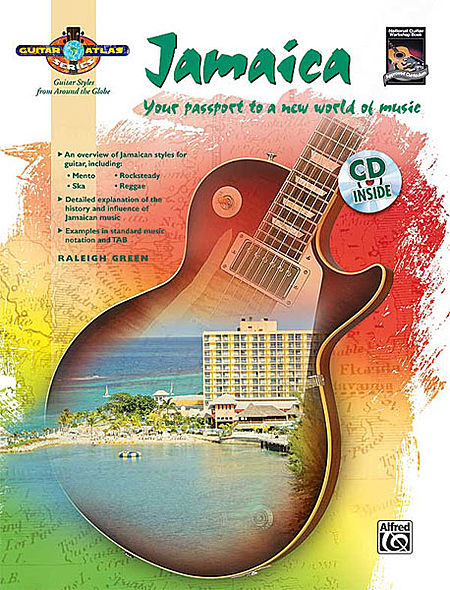
JAMAICA GUITAR ATLAS CD TABLATURE reggae-bob marley-ska-calypso-palm mute-libro chitarra

JAMAICA, GUITAR ATLAS. LIBRO CD E TABLATURE

LIBRO METODO DI MUSICA REGGAE, SKA, CON CD.

SPARTITI PER CHITARRA CON:

ACCORDI, PENTAGRAMMA E TABLATURE . 

Your passport to a new world of music
By Raleigh Green

SERIES: National Guitar Workshop
CATEGORY: Guitar Method or Supplement
FORMAT: Book & CD

Jamaican music is loved throughout the world for its laid-back feel as well as its intense, lively rhythms. Its influence is apparent across many musical styles, from reggae rhythms in the songs of popular bands like The Police, to ska beats in the music of groups such as The Mighty Mighty Bosstones and The Toasters. Even rap music evolved from the Jamaican vocal style called "toasting," and the influence of Bob Marley is evident throughout the world of music and pop culture.

Guitar Atlas: Jamaica teaches many of the styles that make Jamaican music so unique, from early movements like mento (the calypso-inspired style popular in the 1950s) to modern styles like dub (an electronic form of reggae). You’ll learn about the spiritual influence of the Rastafarian religion and explore the work of numerous Jamaican musicians, including Lord Flea, Count Lasher, The Maytals, The Skatalites, Lynn Taitt, Bob Marley, Black Uhuru, Ernest Ranglin, and many others. With a wealth of chordal and melodic ideas for the guitar, this book will improve your technique, increase your knowledge, and make you a more well-rounded musician.

The CD demonstrates all the examples and compositions featured in the book.

Guitar Atlas Jamaica. (Your passport to a new world of music). By Raleigh Green. For Guitar. Guitar Method or Supplement; Method/Instruction. National Guitar Workshop: Guitar Atlas. Multicultural; World. Book & CD. Published by Alfred Music Publishing (AP.33486). ISBN 0739062816. Multicultural; World.


Guitar Atlas:jamaica is an introduction to the rich musical tradition of
jamaica. From a guitarist's perspective, there is much to love in jamaican
music, especially the guitar-centric styles of mento, ska, rocksteady, and
reggae. In this book, the most important jamaican musicians, guitarists, styles,
and techniques are demonstrated through numerous musical examples. Most of these
examples are meant to be played with a pick, although there is some fingerpicking as
well. You will get the most from this book if you have experience reading standard
music notation and/or TAB, as well as some experience with common open chords,
barre chords, and basic guitar technique. The Notation Guide on page 3 should help
you with any unfamiliar notation. Welcome to Guitar Atlas: jamaica, and let's begin our journey!

Jamaican music is loved throughout the world for its laidback feel as well as its intense, lively rhythms. Its influence is apparent across many musical styles-from reggae rhythms in the songs of popular bands like The Police to ska beats in the music of groups like The Mighty Mighty Bosstones and The Toasters. Even rap music evolved from the Jamaican vocal style called "toasting," and the influence of Bob Marley is evident throughout the world of music and pop culture.

Guitar Atlas: Jamaica teaches many of the styles that make Jamaican music so unique, from early movements like mento (the calypso-like style popular in the 1950s) to modern styles like dub (an electronic form of reggae).You'll learn about the spiritual influence of the Rastafari religion and explore the work of numerous Jamaican musicians, including Lord Flea,Count Lasher,The Maytals,The Skatalites, Lynn Taitt, Bob Marley, Black Uhuru, Ernest Ranglin,and many others. With a wealth of chordal and melodic ideas for the guitar, this book will improve your technique, increase your knowledge, and make you a more well-rounded musician.
The CD demonstrates all the examples and compositions featured in the book.


JAMAICAN HISTORY
The island of jamaica is located in the Caribbean Sea. It is situated 90 miles south of
Cuba and is a part of the Greater Antilles, a group of islands that also incluJe~ Puerto
Rico and Hispaniola. With a tumultuous history of slavery, war, poverty, and natural
disasters, jamaica is a true melting pot of mixed ethnicities. jamaica is smaller than the
state of Connecticut, however, the global impact that this Caribbean island has had on
the rest of the world is enormous.
When Christopher Columbus first arrived to jamaica in 1494, the native Arawak people
(also known as Taino Indians) had already been there since 650 A.D. Sadly, soon after
Spain's occupation of the country began in 1509, the indigenous population was wiped
out by slavery, disease, and war. By 1655, Britain seized jamaica and soon, through
intense colonization and a booming slave trade, Jamaica became the largest producer
of sugar in the world. After many uprisings, slavery was abolished in 1838. In 1872,
Kingston became the capitol, and in 1962, jamaica became an independent nation.

JAMAICAN MUSIC OVERVIEW
In the early 19th century, when the percussive musical traditions brought over by West
Mrican slaves mixed with the music of the European quadrille (a precursor to the square
dance), the jamaican folk music style called mento was born. Mento was jamaica's most
popular music throughout the 1930s and 1940s; however, during this period, American
jazz also became immensely popular in jamaica. By the 1950s, mento was still alive,
but American R&B had largely taken hold of the jamaican popular music scene. In
the 1960s, all of these various influences came together to create a unique jamaican
musical style called ska.
The quick tempo of ska was a reflection of the upbeat mood in jamaica after gaining
independence in 1962. jamaicans soon observed, however, that serious social problems
remained, and in 1966, the music changed with the mood. A new style called rocksteady
emerged, replacing the upbeat pace of ska with a much slower feel. A short-lived
movement, rocksteady was only around for two years when jamaica's most famous
musical style, reggae,was born. From the late 1960s to the mid-1980s, reggae became
a worldwide sensation. During this time period, the Rastafari (those belonging to
the religious and cultural Rastafari movement covered on page 33) garnered a strong
association with reggae due to the international fame of Bob Marley and others. English
bands like The Clash and The Police started to incorporate reggae sounds into their own
music. By the latter half of the 20th century, a wide array of reggae subgenres developed,
including dancehall, toasting, dub, raggamuffin, reggaeton, 2-tone, and lovers rock, just to
name a few. Despite being a small island, jamaica and its varied musical traditions have
greatly inspired and influenced musicians and music lovers throughout the world.


A compact disc is included with this book. Using it with the book can make learning Track easier and more enjoyable. The symbol 1 shown at the left appears next to every example that is on the CD. Use the CD to help ensure that you're capturing the feel of the examples and interpreting the rhythms correctly. The track number below the symbol corresponds directly to the example you want to hear. Track 1 will help you tune to this CD. Enjoy!

Raleigh Green, based in the Boston area, is known for his versatility
as a guitarist and his expertise as a music educator. Proficient in
many styles of music, Raleigh is the author of The Versatile Guitarist
(Alfred/National Guitar Workshop #28243). He teaches guitar at
Phillips Academy in Andover, Massachusetts and is a long-time
instructor for the National Guitar Workshop and DayJams. Raleigh
teaches online guitar lessons at WorkshopLive.com and is endorsed
by D'Addario strings. After receiving a B.F.A. from the University
of Missouri with a concentration in art and computer-aided
multimedia, Raleigh attended the Berklee College of Music where
he graduated summa cum laude and was awarded both the Quincy
Jones Award and the Professional Music Achievement Award.
Raleigh lives in Medford, Massachusetts with his wife, Laura, their
son Cole, and an Australian cattle dog named Max.

ACKNOWLEDGEMENTS
Very special thanks to Laura and Cole, Ken and Linda Green, the Breretons, and all of my friends, students, and colleagues at Phillips Andover Academy; David, Barbara, and Jesse Smolover; Burgess Speed, and everyone else in the Workshop family. Also thanks to Kevin "K-Don" Michaels, Wayne Marshall, and Carl Johnson for research assistance; D'Addario & Co.; and Pete Sweeney and Matthew Liston for playing great music on the CD.
This book is dedicated to Cole Leven Brereton-Green.


NOTATION GUIDE
H = Hammer-on.
P = Pull-off.
SL = Ascending slide.
= Descending slide.
P.M. = Palm Mute.
= Fermata. Pause, or hold note longer than its indicated duration.
> = Accent. Emphasize the note or chord.

1,2,3,4,0 = The left-hand fingers starting with the index finger;
0= open string. Thelen-hand fingers are indicated under the TAB.
rit. = Abbreviation for ritardando. Become gradually slower.
Swing 8ths = Eighth notes written like straight eighth notes, but played with a long-short rhythm that produces the shuffie feel.When Swing Bths appears at the beginning of a piece, eighth notes are played like triplets with the first two eighth notes tieden =.en).
= 185 = Tempo marking. In this case, there are 185 quarter nores, or beats, per minute. (If you have a metronome, set it to 185.
4x = Play four times.
D.S. al Fine = Dal Segno al Fine. Go back to the symbol .. and play to the Fine, which is the end of the piece.

= Staccato. Make note shorter than its indicated duration.
= Chuck. Muted, percussive, unpitched nore.
p, i, m, a = The right-hand fingers starting with the thumb.

= Repeat signs. Repeat music between the two symbols When only the end repeat sign is present, repeat music from the beginning.

ABOUT THE AUTHOR
Acknowledgements
otation Guide

INTRODUCTI0N
Jamaican History
Jamaican Music Overview .

CHAPTER I-Mento
History of Mento
Mento Strumming
Lord of the Fleas
Mento Mama
Men to Lead Melodies
Facing Forward
Check YtJurPockets
Papaya Paradise
Mento-Calypso
Color Me Calypso

CHAPTER 2-Ska
The Beginnings of Ska
Jamaican Lady
The Skank
Straight Ahead
Fountain ofYtJuth
Ska Horn Lines
Strum It Up
Tie the Knot
The Skatalites
Skanks for the Memories

CHAPTER 3-Rocksteady
History of Rocksteady
Slow It Down
Rude Boyfriend
Slow Skank
Keep It Muted
Chill Out Rude Boy
Steady Sixteenths
Stay Steady
Alphabet Soup

CHAPTER 4-Reggae
Early Reggae
Jamaican Peach
Roll with the Punches
All Aboard
The Rastafari Movement and Roots Reggae
The "Bubble"
Never Forget
African Riddim
Reggae Rhythm Embellishment
Back Alley Dreadlock
Dub-Style Effects
The Question

CHAPTER 5-Bob Marley
In the Style of "Stir It Up"
Natty Dreadlock
In the Style of "Rasta Man Chant" .
Nyabinghi Beat
In the Style of "I Shot the Sheriff" .
Dread Man "Walking
In the Style of "Exodus"
On the Run
In the Style of "Redemption Song" .
Rasta Farewell

CHAPTER 6-Ernest Ranglin .
The Journey Begins .
Conclusion
 

Prezzo: €21,99
€21,99

HOOKER JOHN LEE Guitar Styles Techniques CD TABLATURE LIBRO SPARTITI CHITARRA ACCORDI

HOOKER JOHN LEE, A Step-by-Step Breakdown of His Guitar Styles and Techniques. CD TABLATURE

LIBRO DI MUSICA BLUES CON CD.
SPARTITI PER CHITARRA. ACCORDI, PENTAGRAMMA E TABLATURE.

Series: Signature Licks Guitar

Format: Softcover with CD - TAB
Author : Dave Rubin
Artist : John Lee Hooker

Explore the earthy blues of inimitable guitar legend John Lee Hooker with this book/CD pack! Dave Rubin explores licks from:

Blues Before Sunrise
Boogie Chillen No. 2
Boom Boom
Bottle Up And Go
Catfish Blues
Dimples
Hoogie Boogie
It Serves Me Right To Suffer
Mama, You Got A Daughter
Moaning Blues
One Bourbon, One Scotch, One Beer
This Is Hip (This Is It)
Tupelo (Tupelo Blues)
Wednesday Evening Blues

Prezzo: €26,99
€26,99

GREEN DAY, 21ST CENTURY BREAKDOWN. TABLATURE

GREEN DAY, 21ST CENTURY BREAKDOWN. TABLATURE

CATEGORY: Guitar Personality
VERSION: Authentic Guitar TAB
FORMAT: Book

The album-matching Authentic Guitar TAB songbook to 21st Century Breakdown, Green Day’s brilliant concept album; possibly the first true punk rock opera. Featuring larger-than-life storytelling, 21st Century Breakdown runs through the narrative of Christian and Gloria, a young couple working through the shattered promises of this century. The 18 compositions included in this album flow effortlessly, ranging from the power punk to sensitive ballads.

Titles: Song of the Century * 21st Century Breakdown * Know Your Enemy * Viva La Gloria! * Before the Lobotomy * Christians Inferno * Last Night on Earth * East Jesus Nowhere * Peacemaker * Last of the American Girls * Murder City * ¡Viva La Gloria! ¿Viva La Gloria? (Little Girl) * Restless Heart Syndrome * Horseshoes and Handgrenades * The Static Age * 21 Guns * American Eulogy (Mass Hysteria / Modern World) * See the Light.

Prezzo: €21,00
€21,00

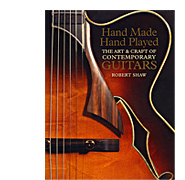
HAND MADE HAND PLAYED The art and craft of contemporary guitars By Robert Shaw 300 chitarre

HAND MADE HAND PLAYED, The art and craft of contemporary guitars, By Robert Shaw. 300 chitarre, 416 pagine.

You need look no further for convincing evidence that today truly is the golden age of guitarmaking. In over 400 pages, this grand tribute showcases over 300 guitar and bass masterpieces from contemporary artisans. Each instrument is beautifully photographed, and accompanied by a fascinating description with specifications list. These are today's finest guitars that reflect astonishing craftsmanship, from traditional styles to cutting-edge customs. 416 pages, softcover.

Introductory essay on modern guitar design and hand building
Historic reproductions
Classical and flamenco guitars
Flattop guitars
Harp guitars
Acoustic bass guitars
Archtop and gypsy jazz guitars
Resonator and Hawaiian guitars
Solidbody and hollowbody electric guitars
Electric basses
Luthier index and web directory

416 pages, softcover

Prezzo: €42,99
€42,99

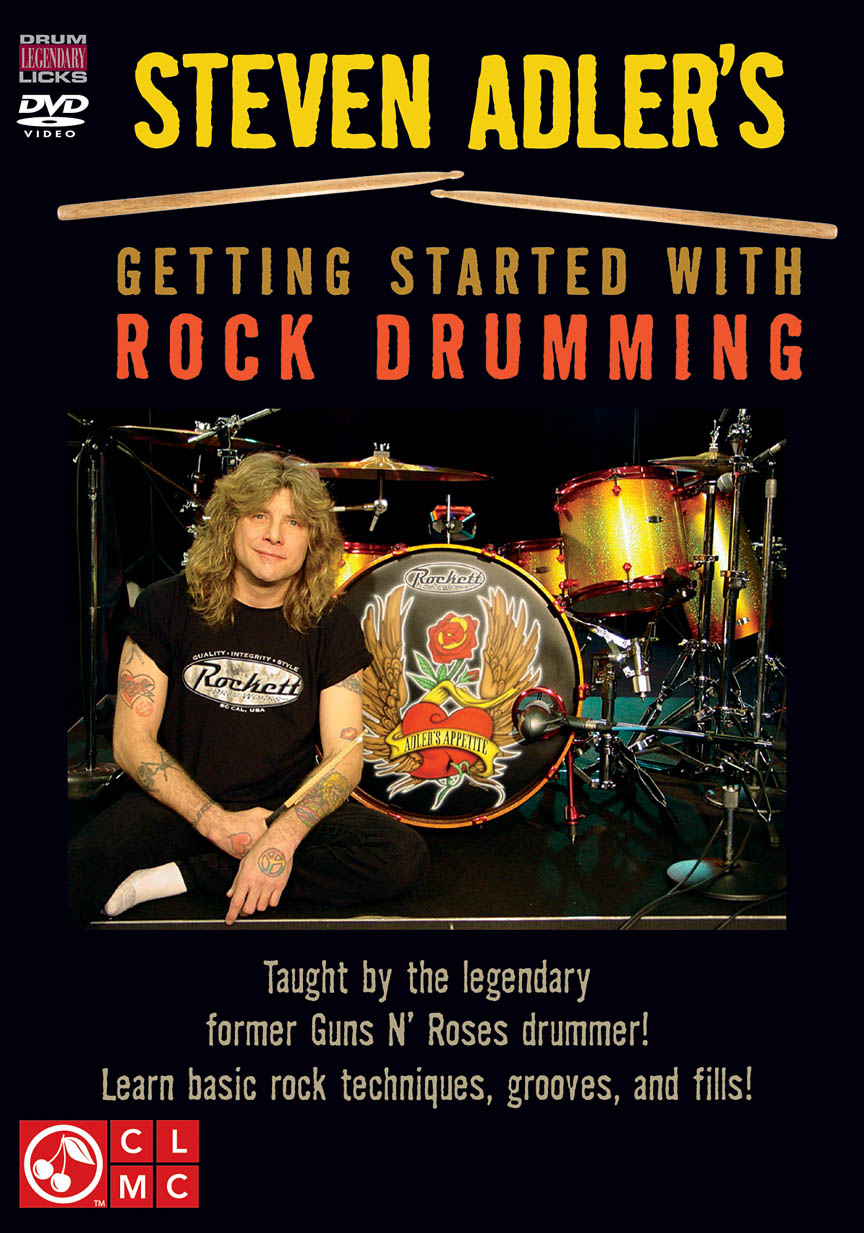
GUNS N' ROSES ADLER'S STEVE Getting Started with Rock Drumming LEGENDARY Guns N' Roses Drummer DVD

GUNS N' ROSES, ADLER'S STEVE. DVD

DVD DI MUSICA PER BATTERIA.

Steven Adler's Getting Started with Rock Drumming

Taught by the Legendary Former Guns N' Roses Drummer!
Series: DVD
Publisher: Cherry Lane Music
Format: DVD
Artist: Guns N' Roses
Artist: Steven Adler

Watch and listen as Steven Adler demonstrates techniques, grooves and fills designed for the beginning rock drummer. He teaches:

parts of the drums;

the pyramid of rhythms;

basic rock beats;

rock fills; dynamics and more, discussing his own influences and history with the drums. 43 minutes.

Prezzo: €34,99
€34,99

BOGDANOVICH JOHN-CLASSICAL GUITAR MAKING-A MODERN APPROACH TO TRADITIONAL DESIGN

JOHN BOGDANOVICH, CLASSICAL GUITAR MAKING: A MODERN APPROACH TO TRADITIONAL DESIGN.

LIBRO DI LIUTERIA PER COSTRUIRE UNA CHITARRA CLASSICA. 

GUITAR BUILDING USES a combination of many talents and skills, including an eye for aesthetics, an ear for musical tone, woodworking ability, and an organized and methodical approach to the work. With diligence and practice, many of these assets can be developed and honed. Each of us also brings to this endeavor our own set of skills and experience. My own experience prior to building guitars proved to be a valuable asset in the pursuit of building the ultimate guitar. Initially, it was not my intention to make guitar building a career. Having returned to playing after an extended break, I was in need of a guitar but could not afford to purchase one that suited me, so I decided to try to build one myself. That first guitar turned out well and attracted a couple of local musicians to contract instruments from me. Guitar making felt so right that I put aside all other pursuits and earnestly began to make guitars professionally. A quest for purpose had ended and a new journey had begun. Before making guitars, there were a number of things that I felt passionate enough about to pursue, yet there would always seem to come a point where I would hit a wall and could go no further. Music became a big part of my life at the age of ten, and at twelve I took up the guitar. After high school, I majored in music at what is now part of The College of Staten Island. During this time, I was introduced to classical guitar and studied with Julio Prol in New York City. My intent was to become a performer, though I had difficulty performing in front of an audience. After having a few terrible experiences on stage, I realized that I needed to find something else to do, so I decided to follow another passion of mine, woodworking. As an apprentice cabinetmaker in a New York cabinet shop, I received a great woodworking education at the hands of a small group of old-world European craftsmen. Once my apprenticeship was completed, I decided go back to college rather than continue as a journeyman. I enrolled in the electrical engineering program at Pratt Institute in Brooklyn, New York. AT &T Bell Laboratories recruited me off-campus in my senior year to work in their research and development facility in Holmdel, New Jersey, where I was employed as a hardware designer. Taking part in their one-year on-campus graduate school program, I was able to get my master's ...

Recently I was informed by the publisher that the book has gone into second print, and this is rare for a book of this type. So thank you all once again for helping to make this book a resounding success. It is truly gratifying that I continue to hear from readers all over the world with thank you notes, encouraging comments and questions regarding the book. And, as one reader suggested I have included a page on the site with a selection of questions that have been sent to me, along with my replies, which may help to clarify some things for others in their guitar building attempts.

Since the book has been out I have heard from many of you that have sited errors or needed clarification in the first edition. These errors have been noted along with some additional text here and there for clarification and sent to the publisher for correction in the second printing. a PDF document containing all known errors can be downloaded in the errata section.
 The book has been out for a couple of years now and it still amazes me how many of you out there are interested in building classical guitars, either for yourselves or in launching a guitar building career. The book has enabled me to launch a few new endeavors of my own such as holding classes in the shop, a line of guitar building products, and a DVD series due to be released in the fall. I am very fortunate that this has all come from my love of the classical guitar. The truth is, I never intended to write a book at all. The project just sort of fell into my lap.
 In December, in the midst of planning to move the shop to Asheville, I was approached by Sterling Publishing and asked if I would like to write a book on guitar making. As I thought about it the prospect of undertaking such a huge project the challenge of producing something that I would be proud of became the focus of my enthusiasm. I had been given a rare opportunity - a vehicle to share my techniques and thoughts about something I love.
For the next year, nearly every day was a combination of building guitars, writing, and photo shoots. The book chronicles the building of a classical guitar from a stack of boards to putting on the strings and tuning it up. WIth almost 600 photos and drawings and over 300 pages of detailed text I attempted to recreate as accurately as possible the building process.
 If you have never built a guitar and are planning your first attempt consider using this book as a guide. Only some basic woodworking skills and a minimally equipped shop are required. Due to the large amount of information necessary to cover the topic explanations of woodworking related techniques have been omitted and it is assumed the reader is already proficient in some basic woodworking techniques, or will consult the references listed in the bibliography of the book and in the reference section of the links page on this site. Alternative methods are presented to facilitate the availability of tools and equipment. The book was written with the first time builder in mind, but no doubt anyone with some building experience could benefit from some content, I know I am always looking for better ways to do things. Also, be sure to check out the guitar making classes being offered. Classes are being held in the shop that cover various aspects of the building process.
 The guitar I am building in my shop today is very loosely based on the Hauser/Torres guitar design. The design has evolved in search of improved sound and playability. The plantilla is all that remains of the original 1937 Hauser from which this design began.
 The sound of Segovia's 1937 Hauser always appealed to me, even with the less than ideal sound quality of the old recordings. Therefore, when I began making guitars I started trying to reproduce this sound with the Hauser/Torres design. The more conscious I became of the sound of the guitar in general, the more open I became to other influences and my concept for the ideal sound began to evolve and my design began to change. The design of my guitars has changed slowly over the years.
 It is difficult at best to describe sound with words due to the fact that sound, and language, are both so subjective. So I will limit my words to those I typically hear other people use to describe the sound of my instruments. The phrase I hear most often is that they have a traditionally Spanish sound. I would not disagree with this statement. Additionally, they have character, a full tonal palette, and power. Enough said, I invite you to come and listen to one yourself.

Life as A luthier has been made possible for me only with the help of many people. First and foremost, I would like to thank my parents, Marion and Stan, for always supporting me, even when they may not have agreed with me. Without their support, none of this would have been possible. When I was a small boy, I had asked for a carpentry tool set long before it would be appropriate or safe for a child to play with. I was so insistent that my parents finally caved in and bought me one. While I was playing with the tools, set up under a tree in my grandparents' backyard, my grandfather watched from a window. Impressed with how intently I was able to amuse myself for such a long period of time, he told my mother, "That boy is going to do something with his hands." The time I spent in the Fine Woodworking Program at the College of the Redwoods actually changed my life. I was fortunate to have made some lifelong friends while at the school and will be forever indebted to the outstanding faculty. I would like to thank James Krenov, Jim Budlong, Michael Burns, and David Welter for their guidance, skill, and friendship, and for putting up with me during my time there. I would like to especially acknowledge James Krenov, whose book A Cabinetmaker's Notebook inspired me long ago, only to be eclipsed by later studying with him at the school. As one of his students, I could not help but admire his aesthetic, his approach to the craft, his keen observation of nature around him, and how all of this is evident in his work. I can only hope to follow his example. And thank you,]im, for your friendship. There are a few guitar builders who have both inspired and helped me in my journey as a luthier. I would like to thank Jeff Elliott, Cindy Burton, Greg Byers, John Gilbert, and Charles Fox for their generosity in sharing their knowledge of guitar building, and for their friendship. I would also like to thank the many guitarists who have provided feedback, which is invaluable to making a better instrument. In putting together this book, I called upon a few people to assist in one way or another. I would like to thank Cindy Park for all her help and support. She has helped with this project in more ways than she is probably aware of. I would like to thank Mariah Grant for doing a great job on the bulk of the photography. I would also like to thank Larry White at the University of North Carolina at Asheville for recommending her. In addition, I would like to thank Lacey Haslam and Franzi Charen for their help with the photography. And I would like to thank all the folks at Iris Photo/Graphic for keeping everything straight.  

Contents

Acknowledgments

Foreword by James Krenov

Foreword by Jeffrey Van

Preface

Introduction

PART ONE—Preparation


CHAPTER 1. The Guitar

Anatomy of the Guitar

Sound

Choosing to Build or Buy


CHAPTER 2. The Wood

Types of Wood

Moisture Content

Cuts, Grain, and Selection


CHAPTER 3. The Shop

What You Need in Your Shop

Jigs You Will Need to Make

Hand Tools

Vises and Clamps

Bench Tools to Make

Specialty Items

Humidity Control


CHAPTER 4.

Templates and Molds

The Plantilla

A Transparent Template

Side Mold

Lining Mold

The Solera

Headpiece Template and Drilling Jig

Back Workboard


CHAPTER 5.

Layout and Planning

Choosing the Color and Design Scheme

Materials and Parts

Plans and Layout


PART TWO—Construction


CHAPTER 6. The Neck

The Neck Blank

The Headpiece

The Heel


CHAPTER 7. The Sides

Bending and Laminating the Sides

Linings

Assembling the Neck and Sides

CHAPTER 8. The Details

Bindings, Purflings, Back and Butt Strips

The Wheat Motif


CHAPTER 9. The Top

Selecting a Top 162

Jointing and Thicknessing

The Rosette

Bracing and Patches

CHAPTER 10. The Back

Jointing and Thicknessing

Bracing


CHAPTER 11.

Assembling the Body

Before Gluing on the Top

Gluing the Top

Preparing to Glue on the Back

Bindings and Purflings

Heel Cap and Butt Strip


CHAPTER 12.

The Fingerboard

Making and Installing the Fingerboard

Before Fretting

Fretting

Shaping the Neck


PART THREE—Final Touches


CHAPTER 13. Finishing

Understanding Finish

Final Touches and Prepping for

Finishing

French Polishing

Lacquering


CHAPTER 14. The Bridge

Bridge Design

Building the Bridge

Installing the Bridge


CHAPTER 15. The Setup

The Nut, Saddle, and Tuning Machines

Strings and Final Setup

Care of Your Guitar

The Gallery

Bibliography

Metric Equivalents

Index    

Prezzo: €99,99
€99,99

BONAMASSA JOE BLUES DELUXE-GUITAR-TABLATURE LIBRO SPARTITI CHITARRA ACCORDI MUSICA

BONAMASSA JOE, BLUES DELUXE. GUITAR TABLATURE

LIBRO DI MUSICA BLUES.

SPARTITI PER VOCE E CHITARRA CON : 

ACCORDI, PENTAGRAMMA, TABLATURE. 

Format: Softcover - TAB
Artist : Joe Bonamassa

13 note-for-note guitar transcriptions with tab from this high-powered guitar rocker. Features nine classic blues covers and three originals, including the bonus song -Pain and Sorrow. 136 pages.

Song List:

BLUES DELUXE
BURNING HELL
I DON'T LIVE ANYWHERE
LEFT OVERS
LONG DISTANCE BLUES
MAN OF MANY WORDS
MUMBLING WORD
PACK IT UP
PAIN AND SORROW
WALKIN' BLUES
WILD ABOUT YOU BABY
WOKE UP DREAMING
YOU UPSET ME BABY

Prezzo: €31,99
€31,99
Condividi contenuti