ALFRED PUBLISHING

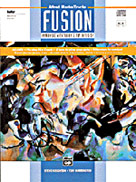
FUSION GUITAR, MASTERTRACKS. Steve Houghton and Tom Warrington CD

FUSION GUITAR, IMPROVISE MASTERTRACKS. CD

Alfred MasterTracks Fusion [Guitar]
Music by Steve Houghton and Tom Warrington

UPC: 038081084381

ISBN 10: N/A
ISBN 13: N/A
CATEGORY: Instrumental Series
FORMAT: Book & CD
INSTRUMENT: Guitar


The music selected for Alfred MasterTracks is intended to provide a broad range of improvisational material for soloists of all skill levels. An improviser needs to feel comfortable in a variety of musical settings, so we have designed a series that addresses a number of different styles, tempos, and keys. Therefore, this book will also serve as a very up-to-date listening reference for many popular Jazz, Latin, and Fusion grooves. In undertaking this project, we decided that we would try to appeal to a wide variety of musicians, from the most raw, beginning improviser all the way to the most advanced improviser. As a result, we have provided charts that indicate a basic structure of harmony and rhythm, plus some very basic melodies for beginning improvisers to play around with, since one good starting point for improvisation is the melody. (These melodies are not recorded on the tracks, however.) More advanced players may want to disregard these melodies completely and dig into blowing over the tracks, worki ng on whatever materials they are currently practicing. It is beyond the scope of this book to present a complete manual for improvisation. Rather, we chose to present some varied harmonic and rhythmic situations that would allow improvisers to practice their craft.


HOW TO USE MASTERTRACKS

After we recorded Essential Styles, Books 1 & 2 (a play-along series for bass and drums), many players said that they would've enjoyed a similar series for other instruments. With that idea in mind, Alfred MasterTracks was born, completely devoted to being a contemporary instrumental play-along for all instruments, not a bass/drum method. These tracks, rather than being designed as a cross section of styles, are more of a collection of varied harmonic and rhythmic situations that melodic improvisers will encounter. For example, in the jazz book, you will find three different versions of the blues. They are obviously the same form and general style, but in different keys and at various tempos in order to provide a more thorough blues "workout." All of the selections in the Alfred MasterTracks Series were professionally recorded and mixed at Chick Corea's Mad Hatter Studios and are of the highest quality. Piano and bass players will be interested to note that the recording is mixed with the piano on the right channel and the bass on the left, so that either of these two rhythm section players can dial out their respective instruments and play accompaniment parts along with the tracks, in addition to soloing with them. Although it is true that the term "improvisation" is foreboding for some young musicians, the selections in these texts have been structured with easy melodic lines which can be used as a point of departure for even the most inexperienced improvisers. The idea here is to have some good-sounding tracks to play along with, and to have some fun! So, without becoming completely encumbered with a lot of intellectual baggage regarding improvisation, young players might simply put on the CD or cassette and start trying to play along by ear. Or they might read the simple melodies that have been provided as a means of gaining some understanding of the form and harmonic content, and proceed from there. By playing portions of the melodies, and then embellishing them slightly, young players will soon find themselves creating their own melodies using the given material as the springboard. Some of the tracks are played in such a way that the harmonies are not extremely complex; altered chords and polyrhythms in the comping have been minimized. On other tracks, these elements are more fully utilized, creating a nice range of intensity levels. The idea is that, while there is an abundance of material here for beginning improvisers, there is also plenty to challenge advanced players. So, have fun with these tracks. We hope they will be a valuable tool in your quest for musical excellence.


FUSION


Foreword / How to Use the Alfred MasterTracks Series

The Soloist and the Rhythm Section .

Thoughts on Improvisation

Understanding Chord Symbols

Understanding Rhythm

Creating Your Own Style

Harmonic Overview - Fusion


Contemporary Fusion-iv- V-Isus (3 :07) 10

CD Track Concert Key

#1 A Major K.C. Blues-bright blues (2:53) .

#2 F Major Blues Shuffle-medium tempo (3:51)

#3 G Major Slow 12/8 Blues Shuffle (4:02)

#4 C Major Contemporary Fusion iv – V -Isus

#5 D Major Up-Tempo Rock & Roll Blues-straight 8ths (2:49)

#6 F Major Half-Time Rock Ballad (3:31)

#7 E minor Medium Funk-minor blues (3:41)

#8 B~minor ii-V Funk Shuffle (5:05)

#9 E minor Techno Funk-8-bar minor blues (3:09)

#10 D Major Early Funk (3:10)

#11 C minor Swing 16ths (2 :56)

#12 F minor Hip-Hop Funk with 16 bar section/solo with guitar & drums (2:53)


About the Authors


Note: All tracks were recorded and mastered at A440.

You may need to make tuning adjustments to match the playback speed of your audio equipment.


Bill Cunliffe, Keyboards

Paul Viapiano, Guitar

Tom Warrington, Bass

Steve Houghton, Drums

Brian Kilgore, Percussion

Recorded and mixed at Mad Hatter Studios, Los Angeles

Engineered and mastered by Talley Sherwood


Exciting play-along tracks for beginning or advanced improvisers!

Digitally recorded and mastered, these top-quality play-along tracks on CD or Cassette provide an invigorating way for you to broaden your improvisation skills while experiencing what it's like to play with a hot rhythm section. The recordings are highly effective as a listening guide to many of today's most popular grooves. Numerous styles are covered in the series, including blues, minor blues, ballads, modal tunes, bebop, rock & roll blues, blues shuffle, funk shuffle, fusion, techno funk, hip-hop, bossa nova, baion, samba, son go, Latinfusion and more.

Also Available for the following instruments:

C Treble Clef (Flute, Vibes, Oboe, Violin)

Bb (Clarinet, Trumpet, Soprano Saxophone,

Tenor Saxophone, Baritone T.c.)

Eb (Alto Saxophone, Baritone Saxophone)

C BassClef (Trombone, Baritone B.C., Bassoon, Tuba, Cello)

Guitar (Acoustic or Electric)

Keyboard (Electronic Keyboard, Synthesizer, Acoustic Piano)

Bass (Acoustic or Electric)

Book & CD

Alfred Publishing Co., Inc.

Prezzo: €21,00
€21,00

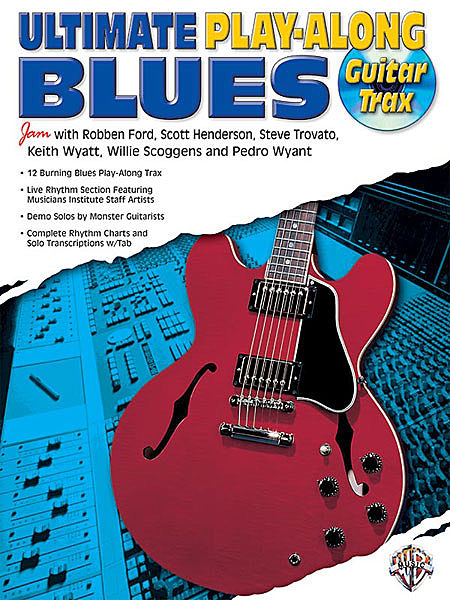
ULTIMATE PLAY-ALONG BLUES GUITAR TRAX Robben Ford-Scott Henderson-Steve Trovato CD TABLATURE

ULTIMATE PLAY-ALONG BLUES GUITAR TRAX. SHEET MUSIC BOOK WITH CD & GUITAR TABLATURE. 

LIBRO DI MUSICA BLUES CON CD. 

SPARTITI PER CHITARRA CON : 

ACCORDI, PENTAGRAMMA, TABLATURE.

JAM WITH Robben Ford, Scott Henderson, Steve Trovato, Keith Wyatt, Willie Scoggins, Pedro Wyatt.

Per ogni pezzo troverete nelle diverse tonalità, schemi della scala pentatonica maggiore, della scala pentatonica minore, della scala Blues, della variazione della scala pentatonica minore (Hybrid), con la tonica sulla sesta corda suonata con l'indice e suonata con il mignolo, sulla quinta corda, sulla quarta corda , sulla terza corda, sulla seconda corda. All'inizio di ogni titolo dopo la presentazione un Suggest Voicing con gli accordi da usare. Modelli dell'arpeggio di settima dominante. 


Ship, Captain, Crew - Ginger Pepper - Deja Blue - I Do What I Want - Funky Blues - 3's Wild - Never Ending Blues - Drop Dead Blues - Clear Road Blues - Vinda's Place - Bad Dog Blues - Sunset Saloon. 

12 Burning Blues play-along Trax
Live Rhythm section featuring Musicians Institute Staff Artists
Demo Solos by Monster Guitarists
Complete Rhythm charts and Solo Transcriptions with TABLATURE


The Musicians Institute, home of the Guitar Institute of Technology, is proud to introduce a new and different concept in "play-along" recordings. Drawing on over 15 years of experience as the leader in guitar education, MI has developed Master Trax, the most dynamic, educational and entertaining series of its kind. The complete tape/cd series was conceived to provide the aspiring guitarist with the opportunity to play-along with some of the finest musicians in the world. The combination of a live rhythm section made up of MI staff artists, and demo solos recorded by GIT specialists such as Steve Trovato. Keith Wyatt. Nick Nolan, and Paul Hanson plus guest artists like Paul Gilbert, Albert Lee. Jeny Donahue, Scott Henderson and Robben Ford make this the most exciting, authentic and useful play-along series ever created.

The accompanying books contain both an analyses of each progression and a transcription of each demonstration solo. Fingerings for some practical scales are diagramed and located nearby for easy access. To maximize your efforts we suggest that you spend some time practicing all of the scale patterns presented. We hope you enjoy this series and above fun !


The Authors

Steve Trovato is one of the premier educators at the Musicians Institute in Hollywood, CA. He has authored and produced several instructional books and videos. Steve performs regularly at night clubs, also doing clinics, seminars and TV dates. He is currently working on a solo album. Steve currently holds a position as lecturer at the University of Southern California.

Paul Famen has been on the BIT faculty since 1981 and has held the Department Chairman position since 1986. His album credits include both jazz and R & B and has written and performed on several documentary films (HBO) and commercials. He has also been involved in clinics in the U.S., Japan (Yamaha and T.C.A.) and Europe.


The Players

Robben Ford has played with everyone from Joni Mitchell to Miles Davis, with his new group The Blue Line, featuring Roscoe Beck and Tom Brechtlein, Robben has established himself as one of the premier blues guitarists of our era. Robben has several videos and books w/audio available from CPPlBelwin, Inc.


Keith Wyatt, the Department Chairman at GIT,is credited with three instructional videos, two book/cassette instructional collections, and is a bi-monthly columnist for "Guitar School Magazine." Keith has performed with Ginger Baker, Jack Bruce, Tim Bogert, Albert Collins, Harvey Mandel, Mick Taylor, and has toured extensively in Japan and Sweden.


Willie Scoggins, originally from Ft. Worth, Texas, has been playing blues for 2S years and has played numerous blues gigs in the Los Angeles area for the last 10 years. Willie says" ...go ahead and learn the licks on this tape because they're the only ones I know (well... sorta'). He now makes his home in Austin, Texas.


Scott Henderson has performed and recorded with Jean -Luc Panty, Chick Corea, Joe Zawinul, Players, and Jeff Berlin. He has recorded six albums with his own group Tribal Tech. Scott is the author of two instructional videos and one song book. He is a columnist for Guitar Player, Guitar World and Guitar For The Practicing Musician. Scott's latest album is "Blues for Dogs."


Pedro Wyant has recorded with Lou Rawls, The Beach Boys, David Axelrod, Joe Sample, Howard Roberts, Earl Palmer, and Carol Kaye. He has also performed with Albert Collins, Lonnie Brooks, Buddy Guy, Big Jay McNelly,Joe Houston, Joanie Sommers and Willie Dixon Blues Band.


Gary Hess, the drummer for this session, is a freelance musician. He has performed in clubs all over the U.S. and Canada, on television with John Davidson, and is also the author of PIT Sight Reading Curriculum.


Henry Brewer, the keyboardist for this session, is a working L.A. Professional. He has worked on mm soundtracks, recorded jingles, and can be seen on Earth, Wmd and Fire bassist Verdine White's instructional video. He teaches at KIT and authored KIT's Voicings curriculum. He is currently working with The Emotions.


Ship, Captain, Crew - STEVE TROVATO - SOLO BY ROBBEN FORD - 1994

Ginger Pepper - STEVE TROVATO - 1994

Deja Blue - STEVE TROVATO - SOLO BY ROBBEN FORD - 1994

I Do What I Want - STEVE TROVATO - SOLO BY KEITH WYATT - 1994

Funky Blues - STEVE TROVATO - SOLO BY KEITH WYATT - 1994

3's Wild - STEVE TROVATO - SOLO BY WILLIE SCOGGINS - 1994

Never Ending Blues - STEVE TROVATO - 1994

Drop Dead Blues - STEVE TROVATO - SOLO BY ROBBEN FORD - 1994

Clear Road Blues - STEVE TROVATO - SOLO BY KEITH WYATT - 1994

Vinda's Place  - STEVE TROVATO - SOLO BY SCOTT HENDERSON - 1994

Bad Dog Blues - STEVE TROVATO - 1994

Sunset Saloon - STEVE TROVATO - SOLO BY PEDRO WYATT - 1994

Prezzo: €29,99
€29,99

PUMPING NYLON INTERMEDIATE TO ADVANCED REPERTOIRE Scott Tennant CD GUITAR CHITARRA METODO LIBRO

PUMPING NYLON, INTERMEDIATE TO ADVANCED REPERTOIRE. SHEET MUSIC BOOK WITH CD. METHOD FOR GUITAR.  

LIBRO METODO DI MUSICA CLASSICA CON CD.

SPARTITI PER CHITARRA CON PENTAGRAMMA. 

Supplemental Repertoire for the Best-Selling Classical Guitarist's Technique Handbook

By Scott Tennant
Item: 00-18490
UPC: 038081174266
ISBN 10: 0739000748
ISBN 13: 9780739000748
Series: Pumping Nylon Series
Category: Classical Guitar Method or Supplement
Format: Book & CD
Instrument: Guitar
 
The pieces in this book are selected and designed around the various techniques addressed in the best-selling book Pumping Nylon. They are offered as an extension of the excercises presented in that book, and to provideconcert pieces in which to apply the various techniques discussed. The emphasis here is technique-building repertoire appropriate for study and concert performance.
 
Classic Works by Coste, Dowland, Narvaez, Giuliani, Luis Milan, eccetetera ... 
 
New compositions included are by Adam del Monte, Joe Diorio, Brian Head and Carlos Rivera.
 
Technique-building repertoire appropriate for study and concert performance.
 
Also included is the Cadenza from Rodrigo's Concierto de Aranjuez.
 
The CD is beautifully played by Scott Tennant and Adam del Monte.


“PRACTICE DOES NOT MAKE PERFECT.

PERFECT PRACTICE MAKES PERRFECT”

Welcome to the second installment of the repertoire supplements to Pumping Nylon. As the subtitle indicates, these pieces are more advanced than the repertoire in the previous installment. They are primarily concert pieces instead of the shorter, more pedagogical etudes presented in the wy to EarLy Intermediate book. Therefore, the pieces tend to be longer and much more substantial. Consider this book to be a brief representation of the types of pieces that contain specific technique-building elements (such as concentrated scales, left-hand slurs, arpeggios, tremolo and the like). When practiced correctly and with the proper intent, they will aid in developing your guitar-playing skills. In our continuing quest to serve you something new and tasty to consume, we have made an effort to put some newer pieces on your plate. We hope to not only help you enjoy significant progress, but to also open your eyes and ears to new, delightful concert pieces to perform for the enjoyment of others. A "checklist" of specific issues upon which to focus-such as technical and/or musical challenges, fingering and practicing tips-precedes each piece. If taken to heart, these pieces should be of great benefit to you. As always, it is a good idea to check your progress with a teacher when problems arise, as there is no ideal substitute for expert advice. As in Pumping Nylon, I encourage you to take the ideas presented in each piece and expand on them yourself. Find other pieces that will further help you overcome any obstacles. You have what it takes to play anything, and with some mindful practice, you will!

"Love overcomes fear. Fear cannot exist in the presence of love" Pepe Romero

About the Author

Scott Tennant's reputation as a performer and teacher is known worldwide. His accolades include becoming the first American ever to win the first prize in the Tokyo International Guitar Competition in 1989, and silver-medal performances in both the 1988 Concours International de Guitare of Radio France in Paris and the 1984 Toronto International Competition. He is recording the complete solo guitar works of Joaquin Rodrigo for GHA records, including the concertos with Leo Brouwer conducting the Cordoba Symphony Orchestra. His debut solo release for Delos, "Wild Mountain Thyme," is a recording of Celtic music for the classical guitar. Born in Detroit in 1962, Scott began playing the guitar at six years of age. During his junior high and high school years, he studied classical guitar with Lee Dyament and Joe Fava. Also while growing up in Detroit, he began taking flamenco lessons with Juan Serrano. When Maestro Serrano moved to California, Scott replaced him as the accompanist for the Maria del Carmen Dance Company. He also played the bass trombone in his high school concert band and the violin in the school orchestra. Scott moved to Los Angeles in 1980 to attend the University of Southern California, where he studied with Pepe Romero and James Smith. It was during this time that the Los Angeles Guitar Quartet was formed (then the U.S.C. Guitar Quartet), and he has been touring and recording with the group ever since. As a student there, he performed in the master classes of such luminaries as Joaquin Rodrigo and Andres Segovia. He now teaches as a member of the faculty at U.S.C. The Quartet can be heard on their recordings for GHA, Delos and Sony Classical.

There is a compact disc available for this book. It includes performances of all the pieces by Scott Tennant except Rasgueado Exercise in Solea and Alzapua and Thumb Study in Solea, which are performed by Adam del Monte. Use it to help insure that you are interpreting the rhythms correctly and capturing the style of each work. The symbol above will appear to the left of each piece. The track numbers below the symbols correspond to the piece you want to hear. Enjoy!


Preface

About the author

Glossary of Signs and terms

The Frog Galliard - John Dowland

Fantasia n.18 - Luis Milan - 1536

Fantasia n.16 - Luis Milan - 1536

Veintidos diferencias de Conde Claros - Luis de Narvaez

Variations sur les "Folies d'Espagne" Op. 45 - Mauro Giuliani

  Tema

  Variation I

  Variation II

  Variation III

  Variation IV

  Variation V

  Variation VI

Etude n.11 - Napoléon Coste

Fantasia Original, Capricho a imitation del Piano, tecnica del Tremolo - Jose Vinas

Rasgueado Exercise in Solea - Adam del Monte

Alzapua and Thumb Study in Solea - Adam del Monte

Ispired by Villa Lobos etude n.1 - Joe Diorio

Study n.1 - Carlos Rafael Rivera

Plainte - Brian Head

Concerto de Aranjuez, Cadenza from Adagio  2nd movement - Joaquin Rodrigo - 1939

Prezzo: €25,99
€25,99

MISSISSIPPI JOHN HURT STEFAN GROSSMAN'S EARLY MASTERS OF AMERICAN BLUES GUITAR 2CD TABLATURE

MISSISSIPPI JOHN HURT, STEFAN GROSSMAN'S EARLY MASTERS OF AMERICAN BLUES GUITAR. 2CD TABLATURE

26 titoli di blues acustico. 2CD TABLATURE, Curato e trascritto da Stefan Grossman. 

 I libri della serie "I primi maestri americani della chitarra Blues" offrono l'opportunità unica di studiare le vere radici del blues moderno. Stefan Grossman, noto chitarrista e musicologo, ha compilato questa affascinante collezione di 26 canzoni del leggendario chitarrista Blues Mississippi John Hurt. Oltre alle esperte trascrizioni di Stefan, il libro include un CD contenente le registrazioni originali di John Hurt, in modo da poter sentire la musica come era originariamente eseguita. Mississippi John Hurt ha avuto una carriera affascinante, in origine registrò una manciata di canzoni alla fine del 1920, e dopo essere stato dimenticato per quasi 30 anni, fu riscoperto da una nuova generazione di musicisti che comprendeva Bob Dylan, Joan Baez, e Stephen Sills. Ritrovato nel 1963, mentre viveva in una piccola città del Mississippi, da un ammiratore che lo ha rintracciato attraverso i testi del suo singolo "Avalon Blues" del 1928, Mississippi John Hurt è stato convinto ad andare a Washington, DC e iniziare una nuova carriera. E ha trascorso i successivi tre anni suonando e registrando. Oltre a trascrivere tutte le canzoni di questa raccolta, Stefan Grossman è stato anche allievo di John Hurt.

Contenuto:

Shake that Thing
Spike Driver's Blues
Casey Jones
Got the Blues, Can't Be Satisfied
Joe Turner Blues
Stocktime
Hey Baby, Right Away
Ain't Nobody But You babe
Make Me a Pallet on your Floor
Nobody's Dirty Business
Richlands Women Blues
Louis Collins
Blessed Be the Name
Praying On the Old Camp Grounds
Let the Mermaids Flirt With Me
Corrinna, Corrinna
Oh Mary Don't You Weep
Avalon Blues
Sliding Delta
Coffee Blues
Monday Morning Blues
Candyman
Trouble I've Had All My days
See See Rider
Stack O'Lee Blues
Big Leg Blues


Registrazioni originali VINTAGE, trasferite su CD dal 78 giri.

La musica di Mississippi John Hurt, trascritta da Stefan Grossman. Guitar Songbook tablature e CD esempi per chitarra acustica.

Serie: "i primi maestri di chitarra Blues americano" di Stefan Grossman. 96 pagine.

Con tablature per chitarra, notazione standard, la melodia vocale, i testi, i nomi degli accordi e diagrammi degli accordi di chitarra. Blues e Country Blues.


INTRODUCTION by Stefan Grossman
This collection has been a pleasure to put together. I first
heard the records of Mississippi John Hurt when I was
15years old. He had recorded 20 sides for the OKeh
record company in 1928of which 12 had been released.
During the folk revival ofthe 1960s,reissue albums began
to appear and many old blues recordings found their way
to the grooves of LPs. John Hurt's arrangements for "Spike
Driver Blues," "Frankie," "Stagolee," "Nobody's Dirty
Business," Candyman," "Louis Collins," and "Got the Blues
Can't Be Satisfied" became necessary ingredients to any
young fingerpicker's repertoire.
John Hurt's old recordings had a magnetic atmosphere
and a strong lyrical contents that made them attractive
to both players and listeners. His guitar style was easily
recognizable. The alternating bass pattern evoked the
piano sounds of turn-of-the-century America and against
this a melody line was interweaved. The same approach
was explored during the mid-1950s by White guitarists
such as Merle Travis and Chet Atkins. By the 1960s,this
guitar technique was completely embraced by folksingers
as far afield as Bob Dylan, Dave Van Ronk, and Stephen
Stills to Joan Baez.
Then in 1963,miracle of miracles occurred when Tom
Hoskin decided to try to locate the "legendary" Mississippi
John Hurt. John had recorded a song during his 1928
sessions titled "Avalon Blues." The current maps of
Mississippi did not show a town called Avalon, but in an
1878atlas, Avalon was shown as a small dot between
Greenwood and Grenada, Mississippi. Tom headed south
from Washington, D.C.and two days later pulled into
Stinson's store, an old combination gas station, general
store, and post office, which, with the owner's house,
comprised the entirety of Avalon. Tom asked several men
if they had ever heard or knew about a singer called
Mississippi John Hurt and was amazed when the pointed
down the dirt road and said, "'bout a mile down that road,
third mail box up the hill. Can't miss it."
Tom brought John up to Washington, D.C.to record and
perform and almost immediately Mississippi John Hurt was
a hit on the folk music scene. He performed at folk clubs,
The Newport Folk Festival, college campuses, and even the
Johnny Carson Tonight Show!
I met Mississippi John at his first concert in New York City.
Tom was a friend of mine and the chance to hear, as well
as meet, Mississippi John Hurt was almost too much for
me to imagine. The concert presented John and Doc Boggs
(another folk legend, but in this case in the story of white
five-string mountain banjo playing). After the concert, I
went backstage to say hellos and Tom insisted that I play
guitar for John and Doc. I picked a few of John's tunes that
I had transcribed from his 1928recordings. John started to
dance while Doc laughed and banged out time on his banjo
skin. This began my friendship with John Hurt that lasted
until his death.
Mississippi John Hurt was a wonderful teacher. He
patiently showed me his arrangements and licks as well
as giving me insight into life itself. John Hurt was a unique
man. He had a gentleness that could penetrate walls and
a voice that could relax your soul while your feet danced
to his guitar rhythms.
This collection brings together 26 great songs and
guitar arrangements. All the keys that John played in are
presented. On first listening, John Hurt's playing seems
deceptively easy, but to master his sound is quite a
challenge. He used three fingers to play. His ring and little
finger rested on the face of the guitar while he picked.
The source of John's unique sound can be found in his
thumb strokes. Basically, an alternating bass is used
throughout John's playing. The sound that is produced
can be described as "bum-chick." The first beat hits the
bass note with commitment but the second beat hits the
string hard enough to have the other strings vibrate. As a
result, a "chick" is created. This is fundamental to John's
style. The bass can stand by itself without any melody
lines and still sound musical. When the treble lines
are added, these act almost as embellishments. The
"John Hurt sound" is all in yourthumb.
Fortunately, there is some footage of John that comes
from Pete Seeger's Rainbow Quest. Seeing John play
will help you to better understand the power and
eloquence of his playing and singing. I have included
these performances in my video series Country Blues
Guitar Parts 1,2, & 3(Stefan Grossman's Guitar Workshop). I strongly recommend these.

MISSISSIPPI JOHN HURT by Jas Obrecht
Songster and bluesman, John Hurt had a beautifully
syncopated fingerpicking style and a gentle, guileless
voice. After making a handful of 78s, he faded from view
during the Depression and then arose phoenix-like during
the 1960s.Throughout his career, his music provided an
aural passport to a bygone age of cakewalks and rags,
parables and polite society.
Hurt was 35 years old when he journeyed alone from the
Mississippi hill country to Memphis for his first session.
It was Valentine's Day, 1928,and the experience was not
entirely pleasant: "A great big hall with only Mr. Rockwell,
one engineer, and myself," John remembered. "I sat on
a chair and they pushed the microphone right up close
to my mouth and told me not to move after they found the
right position. Oh, I was nervous, and my neck was sore for
days after." Eight songs were cut that day, but only a single
OKeh 78 was issued-"Nobody's Dirty Business" backed
by "Frankie," one of his few songs in open tuning. Hurt was
paid about $20 per song, a good fee for unproven talent.
The original note on Columbia's file cards for the matrixes"
old time music"-was later changed to "race."
Hurt headed home and worked another season; under his
sharecropping arrangement atthe time, half of the corn
and cotton he grew on 13 acres was turned over to the land
owner. In November, IJ. Rockwell wrote Hurt inviting him to
record again. John's December 21st session in New York City
produced usable version of "Ain't No Tellin'" (essentially new
words set to the "Make Me Pallet On the Floor" melody),
the murder ballad "Louis Collins," and "Avalon Blues." On
December 28, 1928,Hurt was back in the studio for his final
and most fruitful prewar session, cutting three spirituals
and five blues. Of all Hurt's prewar sides, the one he
composed his first day in New York, "Avalon Blues,"
proved to be the most important. Nearly four decades
after its release, it would lead to his rediscovery:
"Avalon my home town,
always on my mind,
Avalon my home town,
always on my mind,
Pretty mama's in Avalon,
want me there all the time"
During the 1920s,when its population was less than a
hundred, Avalon, Mississippi was little more than a
ramshackle rail settlement between Greenwood and
Grenada. Born in nearby Teoc on July 3, 1893,John Smith
Hurt spent most of his life living there in poverty. He had
seven older brothers and two sisters. He made it through
the fifth grade at St. James School, and around this time
began teaching himself guitar. "I always tried to make my
strings say just what I say," he'd explain. "I grab it and go
my way with it. Use my melody with it." By age 12,John
was singing "Good Mornin' Miss Carrie," "Satisfied,"
Frankie and Johnny," and other non-blues songs at house
parties, sometimes working with a fiddler. His gentle voice,
relaxed feel, and light, idiosyncratic fingerpicking made
his music far better suited for front-porch listening than
cornfield stomps. Some nights, he remembered, he and a
pal would awaken the neighbors with their playing. "We go
along to people's private homes, way in the night, midnight,
one o'clock. 'Serenadin" we call it. We knew you well, we
tip up on the porch and we'd wake you up with music. Well,
you might lay there and listen, you might not get up and ask
us in. Sometimes you'd get up and say come on in."
Once, when he was asked about the first blues he'd learned,
Hurt played "Lazy Blues," a simple, original arrangement
in E major that had more in common with Memphis players
than Delta musicians such as Robert Johnson:
"Wake up in the morning, a towel tied round her head,
When you speak to her, she swear she almost dead"
During "Talking Casey," Hurt used a slide to imitate bells
and quote familiar melodies-a technique similar to Blind
Willie McTell in Atlanta-while thumbing train rhythms on
his bass strings. He composed in many keys-E, A, 0, and
G,which was especially convenient for a strong alternating
bass-but unlike many Delta musicians seemed to prefer C.
Much of his music was probably a souvenir of his childhood.
Asked by a white landlord how he created melodies,
Hurt responded, "Well, sir, I just make it sound like I think it
ought to."
After his father passed away, John helped his mother
raise cotton, corn, and potatoes. To make ends meet, he
sometimes hired himself out to a neighboring farm, while
his mother washed clothes and cooked. During 1915,Hurt
worked for the Illinois Central jacking up and leveling...

EARLY MASTER'S of AMERICAN BLUES GUITAR Rev. Gary Davis
Book & CD (F3176GTA)

EDITED AND TRANSCRIBED BY STEFAN GROSSMAN
The Early Masters of American Blues Guitar series provides the unique opportunity to study the true roots of modern blues. Stefan Grossman, noted roots-blues guitarist and musicologist, has compiled this amazing collection of 26 songs, transcribed exactly as performed by blues great Mississippi John Hurt. In addition to Stefan's expert transcriptions, the book includes 2 CDs containing John Hurt's original recordings so you can experience the music as it was originally performed.

Each book in the Early Masters series contains the original artist's performances, transferred
from vintage 78s. These original recordings are apiece of musical history, and the only way to
hear and appreciate the powerful feel and impact of these pivotal, early music giants.

ALSO AVAILABLE IN THE EARLY MASTERS OF AMERICAN BLUES GUITAR SERIES 

Prezzo: €27,99
€27,99

DOWLING MIKE UPTOWN BLUES (American Roots Guitar) DVD CHITARRA LEZIONE METODO TECNICA

DOWLING MIKE, UPTOWN BLUES (American Roots Guitar). Running time: 3 Hours. DVD

VIDEO DVD DI MUSICA BLUES / TRADITIONAL.

DVD DIDATTICO PER CHITARRA. 


A unique mixture of blues, ragtime , swing and roots music in standard and open tunings. lesson tunes:

- Rosalie 

- Nitpickin,

- Minor Thing

- Johnson City Rag

- Fishin In the Wind

- Bottleneck March

  BONUS tunes:

- Bottomlands 

- String Crazy  

- World Of Hurt

SERIES: Acoustic Masterclass
CATEGORY: Guitar DVD
FORMAT: DVD

--------------------------------------------------------------------------------
Each DVD offers six songs performed and taught by a master of the acoustic style. In a special lesson section, key aspects and techniques required for each arrangement are presented. The viewer can select from multiple camera angles, including the full performance or just the left or right hand in close-up. In addition, an artist biography and discography plus several bonus song performances are included in each DVD.

Mike Dowling, a true master guitarist, performs a unique blend of blues, ragtime, swing, and roots music. Each of his arrangements is a virtual encyclopedia of must-know riffs that define the genre. Mike has performed and recorded with legendary artists such as jazz great Joe Venuti, mandolinist Jethro Burns, fiddler Vasser Clements, and guitarist Pat Donahue.


Detailed Description

Acoustic Masterclass. (Mike Dowling -- Uptown Blues (American Roots Guitar). For Guitar. Guitar DVD; Method/Instruction. Acoustic Masterclass. Acoustic; Blues. DVD. Published by Solid Air Records (AP.21-906841).

ISBN 0757917216. Acoustic; Blues.

Each DVD offers six songs performed and taught by a master of the acoustic style. In a special lesson section, key aspects and techniques required for each arrangement are presented. The viewer can select from multiple camera angles, including the full performance or just the left or right hand in close-up. In addition, an artist biography and discography plus several bonus song performances are included in each DVD. Mike Dowling, a true master guitarist, performs a unique blend of blues, ragtime, swing, and roots music. Each of his arrangements is a virtual encyclopedia of must-know riffs that define the genre. Mike has performed and recorded with legendary artists such as jazz great Joe Venuti, mandolinist Jethro Burns, fiddler Vasser Clements, and guitarist Pat Donahue.


Acoustic Masterclass Series: Mike Dowling Uptown Blues (American Roots Guitar)


Mike Dowling

Item: 21-906841

UPC: 654979068419

ISBN 10: 0757917216

ISBN 13: 9780757917219

Series: Acoustic Masterclass

Category: Guitar DVD

Format: DVD

Instrument: Guitar

Mike Dowling a true master guitarist, performs a unique blend of blues, ragtime, swing and roots music. Each of his arrangements is a virtual encyclopedia of essentials riffs that define the genre. Before embarking on a solo career, Mike performed with such legendary artists as jazz great Joe Venuti, mandolinist Jethro Burns and master fiddler Vassar Clements and has recently released a duo recording with Pat Donohue. On this DVD, Mike performs and explains six of his classical solo guitar pieces, in standard tuning and open tunings. In the special lesson sections, Mike carefully describes and explains the most important aspects and techniques required for each arrangement, and you can select from multiple camera angles: watch full performance or see a close-up of his right or left hand. In addition several bonus performances are included.

Each DVD offers

- 6 songs taught by Mike Dowling

- Individual performance and lesson segments

- additional bonus song performances

- Fingerstyle, plectrum, and slide guitar

- Standard and “Open” tunings


SPECIAL FEATURES:

- Multi-camera angles for close-up viewing of left and right hands

- Bonus performences

- Audiophile quality recording

- artist biography and discography

- Full motion menus


3 Hours

Prezzo: €39,99
€39,99

ACOUSTIC BLUES GUITAR KEITH WYATT CD TABLATURE LIBRO METODO CHITARRA SPARTITI

ACOUSTIC BLUES GUITAR, K. Wyatt. oltre 50 esempi di frasi e assoli, forma degli accordi, turnarounds, fingerstyle blues, lo stile di Lightnin' Hopkins, Muddy Waters, Lonnie Johnson, Robert Johnson. SHEET MUSIC BOOK WITH CD & GUITAR TABLATURE. 


LIBRO METODO DI MUSICA BLUES, CON CD. 

SPARTITI PER CHITARRA CON: 

ACCORDI, PENTGRAMMA, TABLATURE. 


By Keith Wyatt
SERIES: Beyond Basics
CATEGORY: Guitar Method or Supplement
FORMAT: Book & CD
Acoustic Blues Guitar teaches blues chord forms, stylistic licks and patterns, blues scales, turnarounds, solo country blues style guitar, independent bass line and melody ideas, and more. The book includes a full-color photo section showing all types of slides. Written in standard notation and tablature.

Prezzo: €26,99
€26,99

MASTERING BLUES GUITAR-Wayne Riker CD TABLATURE METODO CHITARRA SPARTITI TECNICA LIBRO

MASTERING BLUES GUITAR. the complete electric blues guitar method, beginning, intermediate, mastering, Wayne Riker. Il Blues in 12 battute, shuffle, intro, tournarounds, scale, tecnica blues, l'improvvisazione, modo misolidio, arpeggi di settima dominante, fraseggi, double-stop, blues in 8 battute, accordi diminuiti, la scala naturale minore blues, il ritmo del delta blues, la secondaria dominante, jazz blues. CD TABLATURE

LIBRO METODO DI MUSICA BLUES, CON CD. 

SPARTITI PER CHITARRA CON:

ACCORDI, PENTAGRAMMA, TABLATURE. 

TECNICA, ACCORDI, ARPEGGI, ASSOLI


Complete Blues Guitar Method: Mastering Blues Guitar

By Wayne Riker
FORMAT: Book & CD

This advanced volume in the comprehensive method for blues guitarists is also great for rock players who want to develop a blues edge. Covers theory from blues scales, composite scales, and the Mixolydian mode to arpeggio superimpositions and the 8-bar blues, with examples of gospel blues, minor blues and others. Also contains licks in the styles of blues masters such as Muddy Waters, Big Bill Broonzy, Freddie King, B. B. King, John Lee Hooker and many others. All music is shown in standard notation and TAB. 144 pages.


All three books are loaded with:
• Large, easy-to-read scale and chord diagrams
• Examples in standard music notation and TAB
• Tons of licks in the styles of the blues masters
• Blues techniques and theory used in lead and rhythm guitar playing
• Plenty of eight- and twelve-bar solo examples

BEGINNING BLUES GUITAR David Hamburger
Perfect for beginning blues and rock/blues guitarists. Included are tips in basic blues theory and left-hand techniques.You will also discover the rhythm styles of Texas Swing, slow and minor blues, and styles of blues greats such as MuddyWaters, Buddy Guy and many others. Call-and-response phrasing, intros, turnarounds, endings and improvisation are also covered. This is the best step-by-step blues method for guitar that teaches the substance and style of the blues.

INTERMEDIATE BLUES GUITAR Matt Smith
This book is great for the guitarist who knows the basics of blues guitar and is ready to take the next step. Topics include blues techniques and phrasing, R&B- and funk-blues fills, non-scale tones, chord extensions and substitutions, and more.You will start with a quick review of basic materials and finish with "Licks of the Masters."

MASTERING BLUES GUITAR Wayne Riker
This advanced method for blues guitarists is also a great method for rock players who want a blues edge.This book includes everything from blues to composite scales, the Mixolydian mode, arpeggio superimpositions, the eight-bar blues, gospel blues, minor blues and more. It also includes techniques and licks of the great players like Muddy Waters, Big Bill Broonzy, Freddie King, B.B. King, John Lee Hooker and many others.This is the most thorough method for electric blues guitar.

HOW TO USE THIS BOOK
Since this book explores a wide variety of blues styles and improvisational ideas, it is not absolutely necessary that you proceed chapter by chapter. However, the book has been organized in a way that progressively adds new terms and information in each chapter. Don't assume you know everything about a subject, even if it's one of your strengths. Everyone approaches the blues from a different perspective, so if one new concept that you learn from this book helps your playing, it's worth it. No book can make you a better player. You have to go out and play to improve. A book can provide new vocabulary that can be added to your musical repertoire. Whether you play informally or professionally, try immediately plugging examples you like into your playing. For the single-note examples, experiment with different phrasing, add your own notes to extend a lick or play the same lick on different string sets. The musical definition section at the beginning of this book should be used as a glossary. Look up any terms or concepts you don't understand. You should read the basic theory section to make sure you have no gaps in your understanding of keys, intervals, harmonized scales, etc. Taking a college level course or obtaining a couple books in theory is a good way of improving your theoretical knowledge. Becoming a good musician as well as a good guitarist is essential, particularly if you are going to play professionally.

DEDICATION
This book is dedicated to my parents, Virginia and Walter Riker, and to my two children, Tara and Trent, who have all stood by me in the best and worst of circumstances.

ACKNOWLEDGMENTS
I would like to recognize the people whose musical influence and inspiration have helped shape this book: Dion Grody, Walt Riker III, Craig Linenberger, Greg Gucker, John Varner, Dr. Unicio Violi, JohnAbercrombie, AIAlpert, Marc Sussman, Dave English, Kimbo Smith, Les Wise, Don Mock, Ron Eschete, Howard Roberts, and special thanks to Nat Gunod, David Smolover, and all my colleagues at the California campus of the National Guitar Summer Workshop.

TRACK
An audio recording is available for every book in this series. We hope it will make learning with these books easier and more enjoyable. This symbol will appear next to every example that is played on the audio recording. Use the recordingand your rewind button!- to help insure that you are capturing the feel ofeach example, interpreting the rhythms correctly, and so on. If you have the compact disc version of this book, you can use the Track numbers below the symbol to go directly to the examples for any page. Have fun! How to Use This Book


TABLE OF CONTENTS
ABOUT THE AUTHOR .
HOW TO USE THIS BOOK .
BASIC THEORY .
MUSICAL DEFINITIONS .

CHORDS FOR CHAPTER I .

CHAPTER 1-The Twelve-Bar Blues .
Shuffle BIues .
BIues-Rock Rhythms .
The Closed-Position Rhythm Patterns .
Funk Blues .

CHAPTER 2-lntros, Turnarounds, Vamps and Endings .
Intros .
Turnarounds .
Vamps .
Endings .

CHAPTER 3-The Blues Scale .
Closed Position Blues Scales .
Open Position Blues Scales .
Analyzing ScaleTones .

CHAPTER 4-Blues Techniques .
Left Hand Techniques .
Picking Techniques .

CHAPTE 5 - Improvisational Concepts .
Composite Blues Scales .
The Mixolydian Mode .
The Dominant 7th Arpeggio .
Arpeggio Superimposition .
The Major Triad .
The Minor Triad .
Targeting Chord Tones .

CHAPTER 6-Licks Over the I7-IV7-V7 Blues .
Licks Over the 17Chord .
Licks Over the IV7 Chord .
Licks Over the V7 Chord .
Double-Stop Licks .
Octaves .

CHORDS FOR CHAPTER 7 ,

CHAPTER 7-The Eight-Bar Blues .
The Diminished 7th Chord .
The Diminished 7th Arpeggio .
Eight-Bar Blues Solos .

CHORDS FOR CHAPTER 8 .

CHAPTER 8-Slow Blues .
Basic Slow BIues .
Stormy Monday Blues .
The Augmented Chord .

CHORDS FOR CHAPTER 9

CHAPTER 9-Minor Blues .
The Natural Minor Blues .
Altered Minor Blues .

CHORDS FOR CHAPTER 10

CHAPTER 10 - Blues Rhythms With Fills
The Delta Blues .
Bass Fills .
Horn Fills .

CHORDS FOR CHAPTER 11

CHAPTER 11 -Pop Blues .
Secondary Dam inants .
The Dorian Mode .

CHORDS FOR CHAPTER 12 .

CHAPTER 12-jazz Blues .
Alte rnate Changes .
Be-bop BIues .
Walking Bass Blues .
Every Beat Blues .
JazzWaltz BIues .

PRACTICE TIPS .
APPENDIX-Blues Guitarists You Should Hear  

Prezzo: €33,99
€33,99

BLUES LEAD GUITAR SOLOS. Wayne Riker CD TABLATURE

BLUES LEAD GUITAR SOLOS. CD TAB.

By Wayne Riker. For Guitar. Guitar Method or Supplement. Blues. Book & CD. 96 pages. This book teaches how to organize all your great ideas into power-packed leads by providing a complete analysis of 16 full-length solos. Each one is discussed in detail, covering everything from the particular blues form to the structure and techniques used. Styles include Chicago blues, Delta blues, rock blues, slow blues, "Stormy Monday" style and the minor blues. All 16 solos are performed on the accompanying CD.

Prezzo: €17,99
€17,99

BLUES CHOPS FOR GUITAR CD LIBRO TABLATURE bending Blues trills CHITARRA LIBRO METODO TECNICA

BLUES CHOPS FOR GUITAR. SHEET MUSIC BOOK WITH CD & GUITAR TABLATURE. 

LIBRO METODO DI MUSICA BLUES CON CD.

SPARTITI PER CHITARRA CON

ACCORDI, PENTAGRAMMA, TABLATURE. 

TECNICA 


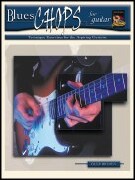
Blues Chops for Guitar

Technique Exercises for the Aspiring Guitarist
By Buck Brown
Item: 07-1042
UPC: 630746710422
ISBN 10: 1929395418
ISBN 13: 9781929395415

Category: Guitar Method or Supplement
Format: Book & CD
Instrument: Guitar
Great musical ideas need great chops to back them up. Build your finger strength, flexibility and independence with these exercise books from one of America's leading guitar schools. Blues Chops has exercises for developing bending, the different shuffle rhythm patterns, turnarounds, blues trills and more. Develop your chops practicing exercises in the style of music you enjoy! 


Introduction
About the Author

Chapter I-Blues Rhythm Guitar
Moveable Chords
The I-IV-V Progression-The Twelve Bar Blues
Open-Position Two-Note Shuffle Patterns
Closed-Position Two-Note Shuffle Patterns
Two-Note Shuffle Patterns with a b7
Closed-Position Two-Note Shuffle Patterns with a b7
Chord Shuffle Patterns .
New Blues 7 Chords
VOICING IN THE CYCLE OF 4THS
CHORD VOICING IN THE CYCLE OF 4THS - 3RD FINGER ANCHOR
7 CHORD VOICING IN THE CYCLE OF 4THS - 3RD FINGER ANCHOR
The 9 Chord
The 9-Chord Slide Blues
The 13 Chord
More Dominant 7 Chords
Turnarounds
More Shuffle Patterns

Chapter 2- Blues Lead Guitar
Alternate Picking
Finger Independence
Vibrato
The Minor Pentatonic Scale
Strengthening the 3rd and 4th Fingers
String Bending
The Major Pentatonic Scale
String Bending in the Major Pentatonic Scale
Pre- Bends
Pedal Steel-Style Bends
Step-and-a-Half Bends
Hammer-Ons
Pull-OFFs
Combinations with Hammer-ons, Pull-Offs and Bends
Double Stops

Chapter 3- Advanced Blues Techniques
Advanced Twelve-Bar Blues Harmony
Pick and Fingers Blues with a
Walking Bass Line
The Minor Blues
Sliding- The Ring-Finger Slide
More Sliding Exercises
Muted Sweeps
The Blues Trill
Harmonics
Downstroke Sweeps
Upstroke Sweeps
Cross Picking, String Skipping, Finger Rolls

Chapter 4-Slide Guitar
String Damping
Slide in Standard Tuning
Slide in G Tuning
Slide in D Tuning
Postscript


A compact disc is available with each book of this series. Using these discs will help make learning more enjoyable and the information more meaningful. The CD will help you to play the correct notes, rhythms and feel of each example. The track numbers below the symbols correspond directly to the example you want to hear. Track 1 will help you tune to this CD.

To become a better blues guitar player, you need to spend some serious time "learning the moves" -the techniques that blues guitarists employ and the little tricks of the trade that make them sound so good. This book is fJled with exercises that can help you with specific technical problems.
The exercises presented in this book cover all the important blues guitar techniques, such as string bending, pentatonic scales, hammer-ons and pull-offs, double stops, barre chords, advanced chords, pedal-steel tricks, blues changes, and there is even a chapter on slide guitar playing. There are also lots of exercises designed solely to train your fretting-hand fingers to act independently, which is not something they do naturally.
We also cover the picking hand in this book. Alternate picking exercises and pick-and-fingers techniques are examined in detail. Also, there is an extensive look at chords-the best ones to use, how to easily move from one to another, the most common sets of strings on which chords are played, how to recognize when to use anchor fingers and how to employ devices such as harmonics. Technical training is challenging, and may even seem somewhat daunting. But with application on your part, and a willingness to work at each exercise until it is mastered and understood, you will become a much better player. All the exercises follow the philosophical principle of "Occam's Razor," which says that the easiest, simplest way to do things is generally the best way. If you don't like the fingerings I've used, don't use them. But I think they are the easiest and if you give them a chance, you'll probably come to see why rchose them.
There may be some symbols you have not seen before:

I) = Extension 1. Extend (reach) your first finger out of position one fret, but do not move your hand out
of position.

4) = Extension 4. Same as extension 1, except with your 4th finger
I hope this book helps you play cleaner, faster and with better articulation. The goal, as always, is no mistakes. See you at the gig.


Buck Brown knows that guitar playing is the "real job" his mom always told him to get. In the past 35 years, he has been fortunate to play with such great artists as Nils Lofgren, Tony Trischka, Stacy Phillips, Dave Hamburger, Robert Lee Castleman, Mark Egan and all ot the incredible teachers at the National Guitar Workshop (where he taught from 1984 to 1991). Buck has written ten National Guitar Workshop publications (under the name Robert Brown) including Chord ConnectwrlJ, his masterwork on guitar harmony.
As a composer, he has written music for innumerable episodes ofAmerua J MOJt Wanted, has won an Emmy Award in Cleveland, a Bronze Medal at the New York Film Festival and has been nominated twice tor Helen Hayes Awards in Musical Theatre. When he is not on the road, Buck plays and teaches in Washington, D.C., is married to the fabulous chanteuse Rebecca Davis, uves with three dogs, bats right, throws right and plays loud.

Great musical ideas need great chops to back them up. Build your finger strength, flexibility and independence with these exercise books from one of America's leading guitar schools.
Each book addresses skills needed for a specific style. For example, Jazz Chops covers the finger independence needed for smooth, rapid changes between complex jazz chords in the context of important progressions, such as ii-V-I. Blues Chops has exercises for developing bending, the different shuffle rhythm patterns, turnarounds, blues trills and more.
Rock Chops deals with all the important soloing techniques, such as speed picking, sweeping, tapping, harmonics, scale sequencing and so on.
Develop your chops practicing exercises in the style of music you enjoy~or if you are a multi-style guitarist, go through all three!
 

Prezzo: €21,99
€21,99

THE EASY CHORD IDEA BOOK. Dan Donnelly. CD TABLATURE

THE EASY CHORD IDEA BOOK. Everybody knows a few guitar chords, and it's fun to use them to accompany your favorite songs. This book is just full of ideas to help you sound like a pro while playing even the simplest chords. Concentrating on the most commonly used chords in the most frequently used keys, Dan Donnelly teaches enjoyable ways to embellish chords in a friendly, step-by-step approach. Learn what chords are usually combined and many great-sounding ways to go between them. Discover how variety and color can be added to your songs just by picking up a finger or adding another. Get started in this book today and become everybody's favorite accompanist. CD TABLATURE


As a guitar teacher, I have noticed that many students, from the novice to the advanced, ask similar questions about chords. This book was written in response to those questions. I saw the need for a book that would dig into the "street knowledge" of simple guitar chords: easy chord theory, sweet chord substitution ideas, embellishments for accompaniments, picking and strumming patterns, alternate tunings and many other topics. This book assumes that you already play the guitar and have a basic knowledge of chords, hammer-ons, pull-offs and other basic techniques. There is a quick review of reading standard music notation and TAB, and other concepts are covered as the book continues. If you have gaps in your knowledge, these explanations will help you use the book. The information in this book was acquired by studying the techniques of many great players the world over, as well as by personal trial and error. In order for you to use this information most efficiently, I suggest that you work on a small amount of material at a time. Whether you're a performing songwriter, a band member, an accompanist, a campfire strummer or just a weekend picker, you should grab a few ideas at a time and experiment with them for awhile before you come back for more.
 

This book contains lessons on:

Easyways to play "hard" chords.

How to "spice up" open position chords you've played for years.

How to play those chord embellishments you've heard on recordings for years but never

knew how to play.

The basic theory of chord progressions.

An overview of chord families, or which chords go with which keys.

How best to use a capo.

Voice leading, or the movement of notes between chords.

Fingerpicking patterns that will work well in your accompaniments.

Strumming techniques and styles.

Chord cadences, or "endings for songs."

Hammer-on and pull-off licks within chords.

A quick and easy (but still inspiring) introduction to alternate tunings.

A guide for accompanists and songwriters.

An introduction to blues ideas and slide technique.

Several helpful tunes to play that put the techniques you learn to practical use.


CAGED

Make sure that you know the five chord forms* below before you get started. Together, the names of these chords form the word CAGED. These chord shapes will be fundamental to some ideas that will be covered in this book.


NOTE:

This book is full of great ideas for players of all levels. There are hundreds of examples for strumming and picking. Although some of the music notation and chord diagrams may look difficult, they aren't. Just be patient as you look at each diagram. They are very detailed and descriptive. You'll find the playing is fun and easy. Enjoy!


About the Author

Introduction

Review the Basics

Standard Music Notation

The Chord Diagrams

TAB 7

Roman Numerals

The Major Scale

Introducing Triads

Four-Note Chords

Major Chord Scales

Chord Progressions

Minor Chord Scales


Chapter l-Fingerpicks and Strums

Fingerpicking Patterns

Strummi ng Patterns

Four-Note Chords

7th-Chord Scales

Chord Progressions


Chapter 2-C Major Family Chord EmbeLLishments

C Ideas - The I chord

Dmin Ideas - The ii chord

Emin Ideas - The iii chord

F Ideas - The IV chord

G Ideas - The V chord

Amin Ideas - The vi chord

Bdimj Bmin7b5 Ideas - The viiO chord

Common Chord Progressions

Common "Ear Twisters"

An Etude for the C Family

By the Sea


Chapter 3-A Major Family Chord Embellishments

A Ideas - The I chord

Bmin Ideas - The ii chord

C#min Ideas - The iii chord

D Ideas - The IV chord

E Ideas - The V chord

f#min Ideas - The vi chord

G#dimjG#min7b5 Ideas - The viiO chord

Common Chord Progressions

Common "Ear Twisters"

Etude for the A Family


Chapter 4-G Major Family Chord Embellishments .

G Ideas - The I chord '

Amin Ideas - The ii chord '

Bmin Ideas - iii chord .

C Ideas - The IV chord .

D Ideas - The V chord .

Emin Ideas - The vi chord .

F1#dim/F1#min7b5Ideas - The viiO chord .

Common Chord Progressions .

Common "Ear Twisters" .

Little Etude in EMinor .

Etude for the GFamily .


Chapter 5-E Major Family Chord Embellishments .

E Ideas - The I chord .

F1!minIdeas - The ii chord .

G#min Ideas - The iii chord .

A Ideas - The IV chord .

B Ideas - The V chord .

C#min Ideas - The vi chord .

D#dim/D#min7b5 Ideas - The vii° chord .

A Common Chord Progression .

Eternal Highway (Strumming Etude for the E Family) .

More Common Progressions .

Common "Ear Twisters" .


Chapter 6-D Major Family Chord Embellishments .

D Ideas - The I chord .

Emin Ideas - The ii chord .

F1!minIdeas - The iii chord .

G Ideas - The IV chord .

A Ideas - The V chord .

Bmin Ideas - The vi chord .

C#dim/Cijmin7b5 Ideas - The vii° chord .

Common Chord Progressions .

Common "Ear Twisters" .

D'Nice (Etude for the D Family) '


Chapter 7-Capos are CooL! .

Reasons to Tra ns pose .

Capas inAction .

How to Use a Capo to Play in Difficult Keys .

CAGED Formula .

Different Types of Capos .

Waterfall (Etude for Partial Capo) .


Chapter 8-0dds and Ends .

Hammer-ons and Pull-offs .

Etude for Hammer-ons and Pull-offs .

Passing Tones and Chords .

Pivot Finger Chord Combinations .

Endi ngs a nd Cadences .

Pedal Tone Diatonic Chord Scales .


Chapter 9-Introduction to Alternate Tunings .

Open D Tuning .

Blues for Ry .

Open G Tuning .

Open C Tuning .

The Hope Song (Etude for Open C Tuning) .

D-A-D-G-A-D Tuning .

What's Next? .

Prezzo: €20,99
€20,99
Condividi contenuti