SPARTITI PER CHITARRA DI OPER TUNINGS, SLIDE, BOTTLENECK

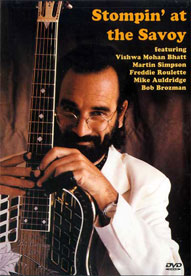
STOMPIN' AT THE SAVOY: THE WORLD OF SLIDE GUITAR VOL. 2. DVD

STOMPIN' AT THE SAVOY: THE WORLD OF SLIDE GUITAR VOL. 2 ON DVD

Product Description:
The world of slide guitar offers a vast myriad of styles, techniques and music. The music presented in this video ranges from jazz standards to Indian ragas; from mournful blues to rock standards; from bluegrass to Hawaiian slack key. Five master slide guitarists are presented in this second collection: Bod Brozman, Vishwa Mohan Bhatt, Martin Simpson, Mike Auldridge and Martin Simpson. All use the slide to explore new areas, textures and musical ideas.

Song Title: Composer/Source:
Blueberry Hill Freddie Roulette
Chopping Wood Blues Bob Brozman
E Mama Ea Medley Bob Brozman
End of the Blues Freddie Roulette
Hawaiian African Slack Delta Dream Bob Brozman
Medley: Killing Me Softly and This Ain't Grass Mike Auldridge
Medley: Sole and Sold from Africa & Wayfaring Stranger Martin Simpson
Mournful Moan Bob Brozman
Norwegian Wood Freddie Roulette
Raag Chandrakauns Vishwa Mohan Bhatt
Raag Misra Piloo Vishwa Mohan Bhatt
Spoonful Martin Simpson
Stompin' at the Savoy Mike Auldridge
Sweet Walk Freddie Roulette

Prezzo: €35,00
€35,00

MORE DOBRO, A Lesson in Lap-Style Dobro Playing. Doug Cox. TABLATURE DVD

MORE DOBRO, A Lesson in Lap-Style Dobro Playing. Doug Cox. TABLATURE DVD

Series: Fretted
Publisher: Centerstream Publications
Medium: DVD
Author: Doug Cox

Take a private lesson with Doug Cox! There's no better way to start from scratch on this expressive instrument than with this master instructor. Teaches notes and major chords; common I, IV, V chord progressions in all keys; chucking (back-up playing); tone and damping tips; and easy versions of the songs: The Water Is Wide -Worried Man Blues -St. Anne's Reel. Includes a transcription booklet. 60 min.

Name all the Notes and Major Chords on the Dobro


Play through the most used (I, IV, V) chord progession in different keys

Chucking (back-up playing)

Tone and Damping Tips

Learn lots of techniques while playing accessible versions of songs:

'The Water Is Wide'

'Worried Man Blues'

St Anne's Reel'

Prezzo: €23,00
€23,00

OPEN TUNINGS FOR BLUES GUITAR, INSIDE THE BLUES, DAVE RUBIN. CD TABLATURE

OPEN TUNINGS FOR BLUES GUITAR, INSIDE THE BLUES. CD TAB.

Series: Guitar Educational
Softcover with CD - TAB
Author: Dave Rubin

Open tunings have played an important role in the genesis of blues guitar since the early 1900s. This book/CD pack is solely devoted to providing you with a complete overview of the techniques and styles popularized by the greatest bluesmen of all time. Includes note-for-note transcriptions, performance notes, and full-band CD demonstration for 9 classic songs; Also includes historical analysis and rare photos. 80 pages.

Table of contents:
Boogie Chillen No. 2
Cherry Ball Blues
Doing My Thing
Drunken Hearted Man
I Can't Be Satisfied
It Hurts Me Too
Life Saver Blues
Phonograph Blues
Statesboro Blues

Prezzo: €19,00
€19,00

SLIDE GUITAR TRADITIONAL COUNTRY AND ELECTRIC Arlen Roth LIBRO CD TABLATURE Dust My Broom OPEN TUNINGS

SLIDE GUITAR TRADITIONAL, COUNTRY, AND ELECTRIC. A. ROTH. Esercizi, riff, e 16 canzoni di: Ry Cooder, Allman, Robert Johnson. CD TABLATURE

Foreword
Over the past few years, the bottleneck guitar has become an increasingly popular
means of expression among guitarists everywhere. In the rock and pop music fields
some of the bottleneck's exponents have included Johnny Winter, Mick Taylor, Keith
Richard, Duane Allman, George Harrison, Ry Cooder and many others. These people
have all broadened the scope of the bottleneck guitar, but they owe a great deal to
the true pioneers of this style of playing-Robert Johnson, Son House, Bukka White,
Tampa Red, Fred McDowell, J. B. Hutto, and Elmore James, to name a few.
Son House, Robert Johnson, and Bukka White, were all of the traditional Southern
folk-blues school of the slide guitar. This era reached its height during the 1920's
and the depression years. Later on, in the 40's and 50's, country people from the
rural south began to move to the northern cities. Guitarists with their roots in the
country blues soon discovered the electric guitar, and began to play with musical
back-up musicians like bass and drums for a bigger, more "urbanized" sound.
In this book, we will cover all aspects of the bottleneck guitar, past and present,
from the low-down bottleneck styles of the Mississippi Delta, to the present day lead
guitar sounds.
To enable you to better understand these sounds, I have included an instructional
compact disc. All the material on the recording is transcribed in the book to make it
easier for you to follow along with what is being played.
Though the bulk of the material in this book will make use of open tunings, we'll
get into some licks for playing slide in standard guitar tuning as well. There are
plenty of blues licks, country licks and songs to work with, and feel free to improvise
upon any of the musical ideas. After all, that's what this book, and music in general,
is about.
By the time you've covered all the material, and feel really comfortable playing
bottleneck, you should be well on your way towards developing your own approach
towards the art of slide guitar. I certainly hope that you get a lot of mileage out of
this book, but most of all, I hope you enjoy it, because it certainly was a pleasure for
me to write. Arlen Roth

Contents
Photo Credits,
Foreword,
Reading Tablature and Symbols,
Fundamentals of Slide Guitar Playing,
Open Tunings,
Traditional Slide Guitar,
Playing in Open E Tuning,
Licks and Exercises in Open E Tuning,
Playing in Open G Tuning,
Licks and Exercises in Open G Tuning,
Traditional Bottleneck Tunes In Open E Tuning,
Good Morning Blues,
Ramblin . On My Mind,
If I Had Possession Over Judgement Day,
Preachin' Blues,
Come On In My Kitchen,
Denver Blues,
Bumblebee Blues,
Country Slide Guitar,
Playing In Open E Tuning,
Licks and Exercises in Open E Tuning,
Country Bottleneck Tunes in Open E Tuning,
John Henry,
Bury Me Beneath The Willow,
Farther Along,
Will The Circle Be Unbroken?,
Playing in Open A (G) Tuning,
Licks and Exercises in Open A(G) Tuning,
Country Bottleneck Tunes in Open A(G) Tuning,
Brown's Ferry Blues,
Danville Gal,
How Can You Keep On Movin',
Lead Electric Slide Guitar,
Dust My Broom,
Licks and Exercises in Open E Tuning,
Love In Vain,
Slide Guitar In Standard Tuning,
Licks and Exercises in Standard Tuning,
In Conclusion,
Discography,


Arlen Roth was born in New York City In 1952. He started
to play guitar seriously at the age of eleven, beginning
with classical guitar and moving on to blues and rock
styles. His love for country and blues guitar and his
innovative experimentation within these styles led to the
writing of Slide Guitar.
Arlen has performed and recorded with many well-known
artists such as Simon and Garfunkel, Paul Simon (solo),
Art Garfunkel (solo), Phoebe Snow, Bob Dylan, Louden
Wainwright III, Janis lan, and Dan Hill, to name a few.
He has recorded four highly acclaimed solo albums,
Guitarist, Hot Pickups, Paint Job, and Lonely Street, and
writes a monthly column for Guitar Player magazine. He
is the founder and producer of the well-known Hot Licks
Video and Audio Instruction Tapes, and his other books
include Nashville Guitar, How To Play Blues Guitar,
Arlen Roth's Complete Electric Guitar, and Arlen Roth's
Complete Acoustic Guitar, Arlen played all the guitar
and was special coach and consultant to actor Ralph
Macchio in the film Crossroads. Arlen lives in upstate
New York with his wife Deborah, and their little girl, Gillian. 

Prezzo: €39,99
€39,99

SLIDE, GUITAR TECHNIQUE BUILDER SERIES. CD TABLATURE

SLIDE, GUITAR TECHNIQUE BUILDER SERIES. CD TAB.

Prezzo: €15,50
€15,50

THE ROOTS OF SLIDE GUITAR Fred Sokolow CD TABLATURE Come On in My Kitchen Robert Johnson-SPARTITI LIBRO

THE ROOTS OF SLIDE GUITAR. Fred Sokolow. Metodo per suonare e cantare il blues con 3 titoli acustici e 2 elettrici.

LIBRO DI MUSICA BLUES CON CD. 

SPARTITI PER VOCD E CHITARRA CON:

ACCORDI, PENTAGRAMMA, TABLATURE.


THE SONGS AND LICKS THAT MADE IT HAPPEN 
A SURVEY OF SLIDE GUITAR, ITS PIONEERS, AND HOW IT DEVELOPED


This book/CD pack is a complete survey of slide guitar, its pioneers, and how it developed. It includes: 6 note-for-note transcriptions of famous slide tunes :

-Come On in My Kitchen (Robert Johnson)

-Motherless Children (Mance Lipscomb)

-Roll and Tumble Blues ("Hambone" Willie Newbern)

-You Can't Lose What You Ain't Never Had (Muddy Waters)

-You Gotta Move ("Mississippi" Fred McDowell)

-You Shook Me (Earl Hooker with Muddy Waters);

instruction in the essential playing styles; the history and the development of slide guitar; biographies of its representative artists; and recordings on CD of the songs, exercises and licks.


You gotta move -come on in my kitchen -motherless children -roll and tumble blues -you can't lose what you ain't never had -you shook me. CD TABLATURE


HOW TO USE THIS BOOK AND RECORDING
It swoops, wails, whines, moans and growls: slide guitar sings. It's a crowd pleaser, and it reaches people because it conveys naked emotion-especially when playing the blues. And most slide guitar heard today, whether in a blues, rock or country song, is played in a style derived from early Mississippi Delta blues.
Modern blues and rock slide guitar evolved from traditional acoustic styles. This book is about the guitarists who made that evolution happen. It takes you to the roots of slide guitar. Each of the six classic blues tunes transcribed here demonstrates a particular style and tuning. Every song is preceded
by information, exercises, scales, licks and chords that are needed for that style.
Timing is such a major part of slide guitar that it's almost impossible to learn from the printed page alone. Listen to the recording that comes with this book before playing a note. Once you know how a tune sounds, then it's time to check out the tablature and/or music notation.
If you want to learn any style of music, it helps to imitate the masters. Whether you're a beginner or an experienced player who wants to get back to the roots, here is the essential guitar stuff. This is an introduction to and an appreciation of great vintage music, and it's a foundation on which you can build your own style.

." Fred Sokolow
All guitars and vocals on the recording that comes with this book are by Fred Sokolow. Bass, drums, piano and horns are by Dennis O'Hanlon, and it was recorded at O'Hanlon Recording.


MUSICAL INTRODUCTION

A LOOK AT THE ROOTS OF SLIDE GUITAR
Most musical historians trace slide guitar to Hawaii, but Johnny Shines, friend and accompanist of Robert Johnson, is one of many who claim that blues-style slide developed in Africa, along with open-chord tunings. The first literary mention of blues slide was W. C. Handy's famous 1903 sighting of a singer at a Mississippi train depot who used a knife to slide on his guitar strings. Like most Mississippi blues players, he made his guitar sing and mimic his voice.
Early players slid on the strings with pocket knives or beef bones, and some held the guitar on their lap, Hawaiian-style, but by the 1930s, most blues players held the guitar upright and used a brakenoff bottleneck or a sawed-off length of pipe for a slide. This was a major stylistic development, because if you hold a knife in your left hand, it's impossible to fret the strings with your fingers; fitting a slide on the ring finger or little finger frees up two or three fretting fingers. Most slide players tuned the guitar to a major chord, usually 0, E, G or A, and used the slide to play major chords, as well as individual notes.
There was a blues craze in the 1920s, and by the middle of that decade, major labels began recording blues guitarist/singers. The first crap of slide players who recorded included Sylvester Weaver, Barbecue Bob, Hambone Willie Newbern and Sam Butler. Following them were the Mississippi bluesmen Son House, Charlie Patton, Bukka White, Kokomo Arnold, Sam Collins and Robert Johnson. They played a raw, very rhythmic, emotional style of blues and sang and wailed with passionate intensity. Texans Blind Willie Johnson and B. K. Turner (the Black Ace) were influential early slide blues players, as were Tampa Red and Furry Lewis, who boasted a polished, gentler slide style.

THE COUNTRY CONNECTION
Hawaiian guitarists developed a lap style of playing: the guitar lies in your lap, strings facing up, and you hold a steel bar down on the fretboard. This technique migrated to the mainland and, in the 1920s, with the help of Cliff Carlisle, Jimmie Tarlton and slide players who accompanied Jimmie Rodgers, it became an essential part of country music. By the '30s, Hawaiian and country pickers began using electric, fretless "lap steels." These evolved over the years: they grew legs, more strings, twin and triple necks (in different tunings), and foot pedals and knee levers to bend notes while playing.
Thus was born the pedal steel guitar that is now a signature country sound. But country pedal steel and lap steel bear little stylistic resemblance to blues or rack slide playing.
In the early '50s, the acoustic lap style slide guitar (see Dobro picture, below) began appearing in bluegrass bands. The wooden, acoustic whine of the Dobra is also heard in contemporary country music. Usually played in a bluesy style in open tunings, country Dobra is more related to bottleneck guitar than is its cousin, the pedal steel.
All-metal Dobro
Wooden-bodied squaredneck Dobro


BLUES SLIDE PLAYERS PLUG IN
Before instruments were amplified, it was hard for a guitarist to be heard over a piano, horn or even a banjo. In the late '20s, the National Company answered this need by making all-metal guitars, fitted inside with convex aluminum resonators, like speaker cones. Sounds crazy, but it worked: the guitars were louder, with more sustain, and they rapidly became popular with jazz, country and blues players. Lap style players used the square-necked models with a nut that lifted the strings high off the fretboard (better for the metal slide), but bottleneckers favored the round-necked National that could be played like a normal guitar. To this day, the all-metal National and its cousin, the Dobro, are favored by many an acoustic slidester. The Dobro company also makes a wooden, square-neck guitar with a metal resonator fitted into its body (it looks like someone stuck a hub cap over a guitar's soundhole) that bluegrass players use.
However, even the National or Dobro could not cut through drums, saxophones and electric guitars. By the mid-'40s, many Mississippi players had relocated in Chicago, and a new kind of blues was brewing. Elmore James and Muddy Waters led full electric bands, playing screaming, amplified slide.
It was loud and distorted, and single-note solos became the norm-with a whole band for backup, a guitarist didn't need to fingerpick or play chords. You could wail with one note, like a sax or trumpet.
Waters' and James' styles were clearly rooted in the Delta, and so was the playing of electric slide pioneers J. B. Hutto and Hound Dog Taylor. But Robert Nighthawk and Earl Hooker began playing electric, single-note style in standard tuning, which was a new direction for bottleneckers.

THE '60S BLUES REVIVAL AND BEYOND
During the '60s, white blues fans, many of whom had learned to play by studying old blues records, sought out the first-generation blues artists. Legendary players whose careers had petered out were rediscovered and brought into the limelight, and many excellent artists who had never played outside their own county recorded and performed all over the world. Folk festivals, concerts and coffee houses featured acoustic and electric blues.
American and European audiences loved the aging but passionate blues legends, and by the mid· '60s a blues revival was in full swing on both continents. Besides giving players like Muddy Waters and Howlin' Wolf a bigger audience, the revival encouraged young players to form new blues bands, and to use blues techniques in rock and pop bands. After playing with John Mayall's blues band, enthusiastic blues disciple Eric Clapton brought blues guitar skills to his rock and pop bands (Cream, Derek and the Dominoes, Bonnie and Delaney). While still playing with the Butterfield Blues Band, guitarist Mike Bloomfield backed up Bob Dylan on one of his first electric albums. And slidemaster Duane Allman used his blues chops with the Allman Brothers Band and, as a studio player, infused all kinds of pop recordings with the blues.
In the '70s and '80s, pop audiences were introduced to slide sounds by Johnny Winter, George Thorogood, Eric Clapton, Duane Allman, George (post-Beatles) Harrison, Bonnie Raitt, Little Feat's Lowell George, Ry Cooder, David Lindley and the Rolling Stones. Many Southern rock bands had slide guitarists, and they influenced a new crop of country stars who, in the '90s, used slide on Nashville hits. Slide is heard more and more in movie and television soundtracks. Fortunately, as its audience grows, slide guitar has retained its down home character.


MUDDY WATERS
Often called the "father of electric blues," Muddy Waters was the leading force in the post-war
Chicago blues scene and an important figure in the development of rock and roll. The roster of players who learned their craft playing in his band reads like a "who's who" of blues legends: Little
Walter, Junior Wells, Otis Spann, James Cotton and Jimmy Rogers are just a few. While T-Bone
Walker and B.B. King, with their big-band sound, urbanized and streamlined the blues, Waters
brought it back to its funky Delta roots with a small but powerful band whose lineup (two guitars,
piano, harp, bass and drums) would evolve to become the typical rock band format.
Born McKinley Morganfield of sharecropper parents in Rolling Fork on the Mississippi Delta, April 4, 1915, Muddy Waters built his own guitar when he was seventeen. Robert Johnson and Son House
were his main influences; he watched Son House in action when House came to Clarksdale,
Mississippi. House taught him riffs, open tunings and songs, and showed him how to break off and
flame-smooth a bottleneck.
In '41, folklorists Alan Lomax and John Work came to Clarksdale and recorded Waters for the
Library of Congress. In '43, ready for bigger things, Waters moved to Chicago. Though his style of
choice was rough and old-fashioned compared to the reigning blues artists like Tampa Red and
Lonnie Johnson, (of whom he could do a simple imitation) Big Bill Broonzy helped Waters get his
start playing in clubs. In '44, his uncle gave him his first electric guitar, and by the following year he
had teamed up with guitarist Jimmy Rogers. In the next few years, he started to develop his electric
sound and began recording for the Chess brothers.
In 1950, with the release of "Rollin' Stone," (backed with a Robert Johnson-derived version of
'Walking Blues"*), Waters' career was in high gear. In the next several years he had a series of
regional and national R&B hits. He was Chicago's reigning king of the blues, working every night, his style imitated by other bands, and even some of his sidemen had hit records! He recorded blues
classics like "Hoochie Coochie Man," "Honey Bee" and "I Just Want To Make Love To You."
In the mid-'50s, when rock and roll came roaring onto the charts, Waters' record sales dwindled. Still, he held his Chicago fans and his legend grew. In '58 he played in England and then was a hit at
Carnegie Hall and the Newport Jazz Festival. The early '60s British invasion brought him wider
recognition, as the Rolling Stones (who took their name from the Waters tune), John Mayall, the
Beatles and others sang his praises ... and his songs! In the blues revival that ensued, Waters was
acknowledged as the founding father by the British and by American guitar heroes like Mike
Bloomfield, Steve Miller, Johnny Winter and Jimi Hendrix. He played festivals, college concerts and clubs, was filmed for television in England and the U.S., did world tours, starred at the Montreaux Festival, and played stadiums and arenas.
In the late '70s and early '80s, Waters won three Grammys, played for the White House Staff Party,
appeared in the movie The Last Waltz, and toured with Eric Clapton. On April 30, 1983, he died
peacefully in his sleep at his suburban Chicago home.
78 and 45 rpm singles had an "A side" (the featured tune) and, when you flipped them over, a "6 side," or backup song.
 

Prezzo: €39,99
€39,99

DOBRO WORKBOOK DAVID HAMBURGER techniques lap-style resophonic slide guitar CD TABLATURE

the DOBRO WORKBOOK, DAVID HAMBURGER. 98 Esempi per lap-style, slide, fotografie di tecnica. CD TABLATURE

Tutti gli esempi di questo libro sono suonati in accordatura SOL: SOL - SI - RE - SOL - SI - RE 

LIBRO METODO MUSICA CON CD. 


Teaches licks, techniques and improvisation for lap-style resophonic slide guitar. Covers: scales, licks, songs and examples; hammer-ons, pull-offs, slides, picking techniques; syncopations, rolls, double stops, playing in different keys; and more. The book is in standard notation and tab, and the CD features 98 full-demo tracks. 80 pages.  

The Technical Lowdown and a Note about the Recording All of the examples on the accompanying CD were played by the author using a 1996 Dobro Model 27DX strung with John Pearse phosphor bronze resophonic guitar strings (.016-.059) and played with National metal fingerpicks, a National metal thumbpick, and a Shubb bar. The short examples are played slowly, accompanied by a click track for reference. The longer examples are played up to tempo with a rhythm section. On the longer examples, you can use the balance control on your stereo to pan hard right, to hear just the example itself, or hard left, in order to play along with the rhythm track. +All of the examples in this book are to be played in the standard High G tuning, G-B-D-G-B-D, low to high. The first track on the CD provides a series of notes to which you can tune up.

Unless someone mistakenly gave you this book for your birthday instead of bringing a dozen roses or sending you to Nazareth, Pennsylvania on an all-expenses-paid tour of, oh, I don't know, some guitar factory, you're probably reading this right now because you want to improve your lap-style resophonic slide playing. Have you come to the right place? Well, let's start with what I can't show you. I can't teach you patience and determination, two relatively important ingredients in the sometimes difficult but generally enjoyable journey towards becoming a better musician. And inspiration-that impulse to take a weird left turn in your break, or to put two and two together and come up with thirtyseven- well, you're on your own in that regard, too. I can't even really show you some of the more tangible things like how to learn off of records or how to make discoveries by observing another musician perform or play at a jam. I might suggest ways to go about that, but I can't get inside your head to show you how that part of the learning process feels. Finally, I won't be showing you anyone's note-far-note solos, because I happen not to have the publishing rights to anything like that just lying around. But that's OK, because there are other places you can get that sort of thing. So what can I show you? Well, I can show you some notes. To be more specific, I can show you which notes you might play, how you might play them, and when you might play which ones. Put another way, I can show you various materials, techniques, and concepts. Materials are more or less the facts of music-the scales musicians choose from, the tunes they play on. From these bedrock materials come more subjective, creative things like phrases, licks, and breaks. Techniques are essentially the mechanics of playing a particular instrument. How to execute slides, rolls, hammer-ons and pull-offs, melodic style patterns, right-hand fingerings, and bar moves-these are all technical concerns. You, yourself, have to ultimately train your hands to respond the way you want them to, to create the sounds you seek, but I can give you particular things to practice that will help you focus your brain and your muscles on one thing at a time. Finally, concepts are just that-ideas about music. You need to know what you're trying to do in order to work on it and get better at it. A concept can be very specific, like using call-and-response phrasing to create a break, or using syncopation to create a new roll. Or it can be something more general, like an approach to practicing more effectively. The book is based on the demands of playing bluegrass-you can play any kind of music on the resophonic slide guitar, and I hope you take some of the ideas here and use them towards your own musical ends, bluegrass or otherwise, but bluegrass happens to be both technically demanding and possessed of a rich history of lap-style playing, which makes it a good point of departure for anyone interested in playing this instrument. I have tried to provide material that will work "in the real world," i.e., things that you could actually incorporate into your playing and really use. So while this is not a book of tunes per se, I have included arrangements of a handful of tunes from the the bluegrass repertoire, and many of the exercises are essentially sample breaks on those tunes. Some of the other exercises are really more like studies, designed to show you an idea, illuminate a concept, or give you a real workout executing a particular kind of move or pattern. These exercises are the musical equivalent of swinging two baseball bats while on deck before stepping up to the plate with just one-if you can get comfortable with a particularly difficult, demanding passage while practicing, the simpler things will come that much easier when you're on stage or in an impromptu jam. Each chapter builds upon what has come before, technically and conceptually, as it introduces the next round of material. While I have tried to keep the theory to the necessary minimum, it will help if you have a basic understanding of major, minor, and blues scales as well as of major and minor chords. 

Table of Contents :

Introduction .

A Word about "the Dobro" .

Some Essentials for Playing Lap-Style Resophonic Slide Guitar .

Holding the resophonic guitar

The bar

picks

capos

strings


Chapter 1 Basic Techniques in Open Position-Hammer-Ons, Pull-Offs, Slides, and Picking

The G Major Scale;

Hammer-Ons;

Pull-Offs;

Blues Notes in G;

Combining Major and Blues Sounds;

Combining Hammer-Ons and Pull-Offs;

Slides 


Chapter 2 Building Licks and Starting to Improvise

Creating Your Own Vocabulary;

Four-Note Units;

Combining Units to Create Licks;

Unison Slides;

Double Stops;

Call and Response;

"New River Train";

A la "Nine Pound Hammer" .


Chapter 3 Syncopations and Rolls

Syncopated Rolls in G;

Syncopated Rolls over C;

Syncopated Licks in the Closed Position;

"Gowanus Valley Blues #2";

Playing over C in Open Position;

"Bill Cheatham"


Chapter 4 The Melodic Style

G Scales, Melodic Style;

From Open Position to Melodic Style and Back;

Creating Licks in the Melodic Style;

"Sally Goodin"


Chapter 5 Playing over C and F

C Scales and Licks;

Applications;

"Bill Cheatham" Revisited;

F Scales and Licks;

Applications;

"Red-Haired Boy"


Chapter 6 Playing in the Key of D, Open Position

D Scales;

Four-Note Units;

Combining Units to Create Licks;

Applications;

"New River Train";

Syncopations in D;

Double Stops in D;

"Reuben"


Chapter 7 Playing in D, Melodic Style

D Scales and Licks;

"Reuben" Revisited;

"Little Maggie";

Playing over A (in D);

"Soldier's Joy";

"Whiskey Before Breakfast"


Chapter 8 A and E

A Minor Scales and Licks;

A Major Scales and Licks;

"Old Joe Clark";

E Minor Scales and Licks;

E Major Scales and Licks;

"Salty Dog" .

Appendix-Finding the Notes on the Fingerboard .


Afterword.

Prezzo: €22,99
€22,99

ELECTRIC SLIDE GUITAR KEITH WAYTT BOOK WITH CD TABLATURE SPARTITI METODO CHITARR

ELECTRIC SLIDE GUITAR, Keith Waytt. CD TABLATURE.

LIBRO METODO DI MUSICA BLUES ROCK, CON CD.

SPARTITI PER CHITARRA CON: 

ACCORDI, PENTAGRAMMA, TABLATURE. 

Beyond Basics: Electric Slide Guitar
By Keith Wyatt
SERIES: Beyond Basics
CATEGORY: Guitar Method or Supplement
FORMAT: Book & CD
Topics covered include choosing the right slide, open "blues" tunings, stylistic licks and patterns, standard tuning techniques and more. The book contains a full-color photo section showing all types of slides, and it includes 32 music examples in standard notation and tablature.

Prezzo: €16,99
€16,99

ELECTRIC SLIDE GUITAR David Hamburger LIBRO CD TABLATURE TUNINGS-Ry Cooder-MUDDY WATERS-ELMORE JAMES

ELECTRIC SLIDE GUITAR. Hamburger.

LIBRO DI MUSICA PER CHITARRA SLIDE CON CD E TABLATURE

This book/audio method explores the basic fundamentals of slide guitar: from selecting a slide and proper setup of the guitar, to open and standard tuning. Plenty of music examples are presented showing sample licks as well as backup/rhythm slide work. Each section also examines techniques and solos in the style of the best slide guitarists, including Duane Allman, Dave Hole, Ry Cooder, Bonnie Raitt, Muddy Waters, Johnny Winter and Elmore James. CD TABLATURE

Series: Guitar Educational
Softcover with CD - TAB
Author: David Hamburger

This book/audio method explores the basic fundamentals of slide guitar: from selecting a slide and proper setup of the guitar, to open and standard tuning. Plenty of music examples are presented showing sample licks as well as backup/rhythm slide work. Each section also examines techniques and solos in the style of the best slide guitarists, including Duane Allman, Dave Hole, Ry Cooder, Bonnie Raitt, Muddy Waters, Johnny Winter and Elmore James. 80 pages


INTRODUCTION
The aim of this book is to present you with the essential techniques required to play electric
slide guitar, while providing a hands-on understanding of the variety of slide styles that exist within
the blues idiom. The book begins with the open G tuning, proceeds to open E tuning, and concludes
with playing in standard tuning. While there is material at a variety of levels throughout the book,
important matters of technique are introduced chapter by chapter. E tuning is not "harder" than G tuning,
or vice versa, but as the chapters on open E tuning come later in the book, that is the point at
which more advanced techniques are discussed, whereas basics of right and left hand technique are
covered in the earlier chapters on G tuning.
A Note About the Tunings
There are four tunings that are considered standard for the electric slide guitar: open G, open
D, open A, and open E. Open G and open A offer essentially the same sound as one another, a whole
step apart (open G= D, G, D, G, B, D; open A= E, A, E, A, C#, E, low to high). Open D and open E
likewise offer essentially the same sound as one another, a whole step apart (open D= D, A, D, F#, A,
D, open E= E, B, E, G#, B, E, low to high). For this book, I have chosen to present all of the examples
(except for those in standard tuning) in either open G or open E tuning, rather than distinguish
between various artists' use of G or A tuning, and D or E tuning. I have done this for two reasons. The
first is to enable you to compare examples from different styles of playing within a given chapter
quickly and easily, without having to retune or capo by a whole step, or transpose in your head. The
second reason is that G and E tunings share some familiar fret positions and bar chord locations with
standard tuning. This makes orientation to each of these open tunings a little easier. More importantly,
it makes it much easier to translate what you have learned in open tunings back into standard tuning,
should you wish to play without t::hanging to an open tuning-for instance, if you use a slide for just
part of a song.
Electric slide guitar is at the heart of electric blues, from the pioneering postwar recordings of
Muddy Waters and Elmore James to the blues-rock of Duane Allman, Johnny Winter and Lowell
George, from timeless, genre-busting originals like Earl Hooker and Ry Cooder to contemporary
artists like Bonnie Raitt, Roy Rodgers and Dave Hole. The diversity among slide players is remarkable.
Far from being limited to the generic sound stereotyped in every bar band's version of "Dust My
Broom," the world of electric slide guitar is as broad, deep, and eclectic as the blues itself.


CONTENTS
Introduction

Chapter 1 Slide Essentials
Choosing a Slide .
Guitar Set-Up .
Left Hand Damping .
Left Hand Exercises .
Right Hand Muting .
Fingerstyle .
Right Hand Exercises .
More Right Hand Practice .
Playing with a Pick .
Vibrato .

Chapter 2 Open G TIming
Tuning Up .
The Fretboard in Open G Tuning .
Scales .
Damping/Muting Exercises on One String .
Major and Minor Pentatonic Licks .
Call and Response .
Combining Major and Minor Pentatonic Scales .
The Blues Form .

Chapter 3 Improvising in Closed Position
Closed Position Scales in G .
Precision Exercises .
Blues Vocabulary .
Transposing: Blues in G .
Combining Open and Closed Positions, ala Muddy Waters .
The Upper Extension: Adding Notes above the 12th Fret .
Transposing the Upper Extension: Blues in C .
The Dorian Mode

Chapter 4 Backup in Open G
The Style of Muddy Waters .
Changing Keys-Using a Capo .
The Style of Bonnie Raitt .
The Style of Ry Cooder .
The Style of Johnny Winter .
The Style of Dave Hole .

Chapter 5 Open E TIming
Tuning Up .
The Fretboard in Open E Tuning .
Scales .
Exercises .
The Style of Ry Cooder .
The Style of Johnny Winter .

Chapter 6 Broom Dusters, House Rockers, and the Closed Position
Scales .
The Style of Elmore James .
The Style of Hound Dog Taylor .
The Style of Duane Allman .
Pulldowns, Escape Notes, and Gradual Slides .
Duane's World .
High Energy Blues/Rock: the Styles of Johnny Winter and Dave Hole

Chapter 7 Backup in Open E
The Style of Elmore James-Elmore's Shuffle .
The Style of Hound Dog Taylor .
The Style of Ry Cooder .
Beyond the Key of E .
Stop Time Boogie .
Double Stops .

Chapter 8 Standard TIming
Translating Open G Tuning to Standard Tuning .
Translating Open E Tuning to Standard Tuning .
Standard Tuning .
Adapting Classic Open Tuning Licks to Standard Tuning .
Combining the Open and Closed Positions in Standard Tuning .
The Style of Robert Nighthawk .
The Style of Earl Hooker .
Standard Tuning Licks .

Chapter 9 What to Do Next .
A Selected Discography
About the Author .
Notation Legend .
 

Prezzo: €20,99
€20,99

FAST FORWARD SLIDE GUITAR LIBRO CD TABLATURE SPARTITI-Elmore James-Muddy Waters-Ry Cooder

FAST FORWARD, SLIDE GUITAR. LIBRO CON CD E TABLATURE

LIBRO METODO DI MUSICA ROCK BLUES CON CD.

SPARTITI PER CHITARRA.
ACCORDI, PENTAGRAMMA E TABLATURE. 

Fast Forward – Slide Guitar

Riffs & Tricks You Can Learn Today!
Series: Music Sales America
Publisher: Music Sales America
Format: Softcover with CD - TAB
Author: Rikky Rooksby

This exciting series of instrumental instruction books includes complete music plus easy-to-follow instructions, tips and advice. The accompanying CDs allow you to listen and play along to the matching audio tracks. These user-friendly book/CD packs provide riffs, licks, chords & tricks you can learn now, and easily incorporate into your own playing style!

A comprehensive guide to slide guitar playing – learn how to play slide guitar in the styles of Elmore James, Muddy Waters, Ry Cooder, Bonnie Raitt and other top musicians. Apply slide techniques to blues, rock and other playing styles. Learn how to use tunings, string damping and vibrato, and play single note melodies and chords.
64 pages

Prezzo: €21,99
€21,99
Condividi contenuti