SPARTITI PER CHITARRA DI ROCK 'N' ROLL

TABLATURE, LIBRI, METODI, SPARTITI, DVD, DI MUSICA ROCK 'N' ROLL,

ROCK AND ROLL CLASSICS TABLATURE Hound Dog-Louie Louie-Rock around the clock-Twist And Shout-Wooly Bully

ROCK AND ROLL CLASSICS. guitar TABLATURE

EASY GUITAR RECORDED VERSIONS

EASY GUITAR TRANSCRIPTIONS WITH LESSONS

Product Description

10 of the best rockin' hits from the early days of rock, including:

* All Shook Up
* Do Wah Diddy Diddy
* Good Lovin'
* Hang on Sloopy
* Hawaii Five-O
* Hound Dog
* Louie Louie
* Rock around the clock 
* Twist And Shout
* Wooly Bully
Prezzo: €13,99
€13,99

ROCKABILLY BEST. TABLATURE

ROCKABILLY BEST. Contiene: hound dog -heartbreak hotel -suspicious mind -that's all right mama -blue moon of Kentuckey -tomorrow night -twenty flight rock -summertime blues -c'mon everybody -Johnny B. goode -roll over, Beethoven -rock and roll music -sweet little sixteen -double talkin' baby -be-bop-a-lula -long tall Sally -tutti frutti -blue suede shoes -matchbox -(we're gonna) rock around the clock -great balls of fire -Luisiana mama -ooby dooby. TAB.

Prezzo: €65,00
€65,00

ROCKABILLY REBELS TABLATURE Elvis Presley Tryin' to get to you-Jerry Lee Lewis Carl Perkins guitar

ROCKABILLY REBELS. NOTE FOR NOTE GUITAR TABLATURE TRANSCRIPTIONS . SHEET MUSIC BOOK WITH GUITAR TABLATURE . 

LIBRO DI MUSICA ROCK ,

SPARIRI PER VOCE E CHITARRA :

ACCORDI, PENTAGRAMMA, TABLATURE. 


25 titoli, con una bella canzone di Elvis Presley, "Tryin' to get to you". Contiene: baby let's play house (Elvis Presley) -belive what you say (R. Nelson) -bird dog (E. Brothers) -cut across shorty (E. Cochran) -danny boy (Conway Twitty) -hambone (Carl Perkins) -here comes the weekend (Dave Edmunds) -Hey baby (B. Channel) -high school confidential (Jerry Lee Lewis) -hippy, hippy shake (Swinging blue jeans) -honey 'cause I love you (C. Perkins) -I got it (G. Vincent) -I'm gonna set down right down and cry over you (Elvis Presley) -It's late (R. Nelson) -Jennie, Jennie, Jennie (E. Cochran) -lotta lovin' (G. Vincent) -Mary you (R. Hawkins) -midnight specials (J. Rivers) -My Babe (R. Nelson) -poor little fool (R. Nelson) -queen of heart (J. Newton) -shake your hips (Rolling Stones) -six days on the road (D. Dudley) -Tryin' to get to you (Elvis Presley) -wake up little Susie (E. Brothers). 

Prezzo: €99,95
€99,95

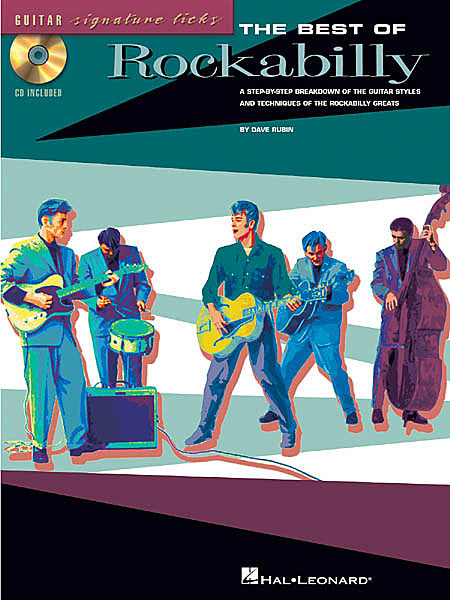
ROCKABILLY THE BEST OF GUITAR SIGNATURE LICKS CD TABLATURE CHITARRA LIBRO SPARTITI METODO

ROCKABILLY THE BEST OF, LICKS. 12 titoli. SHEET MUSIC BOOK WITH CD & GUITAR TABLATURE. 

LIBRO METODO DI MUSICA ROCKABILLY, CON CD. 

SPARTITI PER CHITARRA CON: 

ACCORDI, PENTAGRAMMA, TABLATURE. 


Carl Lee Perkins era nato il 9 Aprile 1932 a Jackson, Tennessee, non lontano dal confine con il Mississippi, è morto il 19 Gennaio 1998. E' cresciuto in povertà dell'era delle Grande Depressione che ha colpito sia i bianchi che la gente nera della campagna. Ha condiviso un'altra caratteristica con i vicini – le affinità per il blues. Sue frequenti visite al chitarrista contadino nero “Ancle John” Westbrook, gli hanno dato l'ispirazione e creato forti legami con la musica blues, che sfrutterà dopo a Memphis alla Sun Records. Nell'autunno del 1955 Johny Cash gli ha suggerito di scrivere una canzone basata su una frase sentita durante il suo servizio militare “Non pestare le mie scarpe di pelle scamosciata blu”. Durante uno dei concerti Perkins ha notato tra il pubblico un ragazzo che cercava di impedire alla sua ragazza di pestargli le scarpe di camoscio blu”. Quella notte lui si alzò alle 3 e scrisse le parole sul sacco di patate, pensando come fosse strano che una persona mentre balla con una bella ragazza può preoccuparsi così delle sue scarpe. I primi di dicembre “Blue suede shoes” era registrata con i fratelli di Perkins, Jay e Clayton. L'1 Gennaio del 1956 la canzone era tra i primi posti delle classifiche, e era la prima della Sun che ha venduto un millione di copie. In Marzo Perkins e suoi fratelli hanno avuto un serio incidente stradale a Delaware, mentre andavano a registrare lo show di Perry Como a New York. La sua cariera da quel momento non si è ripresa ma il tour d'Ingilterra del 1964 ha dimostrato la forza che sua musica ha esercitato sulla generazione dei musicisti rock, incluso i “Beatles” che hanno fatto alcune cover delle sue canzoni.


A Step-by-Step Breakdown of the Guitar Styles and Techniques of the Rockabilly Greats

Series: Signature Licks Guitar
Softcover with CD - TABLATURE
Author: Dave Rubin

Doug Boduch

Dave Rubin dissects the best licks from a dozen rockabilly bellringers:

Blue Suede Shoes, parole e musica di CARL Lee PERKINS 1956
Bluejean Bop, parole e musica di GENE VINCENT e Hal Levy, incisa da GENE VINCENT & HIS BLUE CAPS nel 1956
Hello Mary Lou, parole e musica di GENE PITNEY e C. MANGIARACINA, incisa da RICKY NELSON nel 1961
Hippy Hippy Shake, parole e musica di CHAD ROMERO, incisa da SWINGING BLUES JEANS nel 1964
Little Sister, parole e musica di DOC POMUS e MORT SHUMAN, incisa da ELVIS PRESLEY nel 1961
Matchbox, parole e musica di CARL Lee PERKINS 1957
Mystery Train, parole e musica di SAM C. PHILLIPS e HERMAN PARKER Jr., incisa da ELVIS PRESLEY
Poor Little Fool, parole e musica di SHARON SHEELEY, incisa da RICKY NELSON nel 1958
Rock This Town, parole e musica di BRIAN SETZER, incisa dagli STRAY CATS nel 1981
Stray Cat Strut, parole e musica di BRIAN SETZER, incisa dagli STRAY CATS nel 1981
That'll Be The Day, parole e musica di Jerry Allison, Norman Petty e BUDDY HOLLY, incisa dai CRICKETS 
Twenty Flight Rock, parole e musica di NED FAIRCHILD e EDDIE COCHRAN, incisa da EDDIE COCHRAN nel 1957

Prezzo: €24,99
€24,99

50'S ROCK BEST. GUITAR. TABLATURE

50'S ROCK BEST. GUITAR. 27 Titoli. TAB.

Prezzo: €76,00
€76,00

BEST OF ROCK'N'ROLL GUITAR-Signature Licks Dave Rubin CD TABLATURE LIBRO SPARTITI CHITARRA

BEST OF ROCK'N'ROLL GUITAR. Licks. Dave Rubin. Blue Suede Shoes -Bo Diddley -Guitar Boogie Shuffle -Hello Mary Lou -Hound Dog -Mystery Train -No Particular Place To Go -Not Fade Away -Oh, Pretty Woman -Race With The Devil -Rebel 'Rouser -Rock Around The Clock -Runaway -Susie-Q -That'll Be The Day -Train Kept A-Rollin' -Wake Up Little Susie. CD TABLATURE.

LIBRO METODO DI MUSICA ROCK N' ROLL CON CD. 

SPARTITI PER VOCE E CHITARRA CON: 

ACCORDI, PENTAGRAMMA, NOTE, TABLATURE. 

TECNICA, MANUALE, DIDATTICO, 

Serie: Signature Licks Guitar
Copertina morbida CD - TABLATURE
Autore: Dave Rubin

Il Meglio di Rock'n'Roll

Studia i riff e solo dei pionieri del rock'n'roll e della chitarra. Questo libro completo di CD fornisce una analisi passo per passo degli stili e tecniche chitarristiche di 17 brani dalla meta degli anni 50 agli anni 60, anni "pre-Beatles". IncludeBlues Suede Shoes • Bo Diddley • Hello Mary Lou • Hound Dog • Mystery Train • Not Fade Away • Oh, Pretty Woman • Rebel 'Rouser • Runaway • That'll Be the Day • Wake Up Little Susie •e altri.

64 pagine


INTRODUCTION
The "golden" era of rock 'n' roll-from the mid fifties to the early, pre-Beatles sixties-
contained a wonderfully diverse selection of music that gained its power from the
vitality of its sources. Naturally, the blues were at the core of much of the material, as it is
for virtually all great American popular music. Riding on the jitterbugging heels of first
swing and then R&B from the forties (both of which were built upon the blues), much rock
'n' roll appropriated I-IV-V chord changes, boogie shuffle rhythms, and the use of the
blues scale in its solos. Additionally, this new teen music often displayed the defiantly ebullient
attitude espoused in R&B at a time when de-facto segregation was finally being dismantled
in the schools with the Brown vs. Board of Ed decision handed down by the
Supreme Court in 1954. Black artists from the R&B and blues genres like Chuck Berry and
Bo Diddley started finding access to the commercial airwaves through the grace of people
like Cleveland DJ Alan Freed. His "Moondog Matinee" radio show served up this exciting
(and taboo!) music to the nascent, young white audience hungry for an alternative to
the pabulum served up by Perry Como, Teresa Brewer, and their ilk on the Hit Parade.
At the same time, the national optimism following the postwar years was counterbalanced
by the start of the Cold War between the U.S. and Russia. One result of this was
the "Commie" witch hunts spearheaded by Senator Joseph McCarthy of Wisconsin. The
other result was the advent of a youth culture with free time on its hands to spend on
Brylcreem, black leather jackets, cars, girls, and rebellious rock 'n' roll. This new culture,
with its growing sense of disenfranchisement, along with the move from a rural agrarian
society to an 'urban manufacturing one, was just the right environment in which a revolutionary
type of music could flourish.
Rockabilly, a subgenre that grew out of the natural synthesis of country (or
hillbilly music), Western Swing, and blues, showed the ease with which whites like Bill
Haley (and especially those from the South) would adapt black music forms to their indigenous
music. With Elvis Presley's unprecedented ascendance in 1954-56, other ducktailed
rockers like Dale Hawkins, Carl Perkins, Eddie Cochran, and the Rock and Roll Trio
with Johnny Burnette bopped their way into the Top 40. A more clean-cut image, with
music just as cool, came by way of Buddy Holly from Texas. Horn-rimmed glasses never
looked so hip. Even Nashville got into the act as the legendary Chet Atkins lent his
considerable talents to the proto-country rock of the Everly Brothers and their heavenly
vocal harmonies.
The late fifties into the early sixties also saw the emergence of instrumental music
onto the pop charts. Often based, though not always, on blues riffs and progressions, it
had tremendous across-the-board appeal. Duane Eddy, with his "twangy" Gretsch guitar,
was a top seller for years, while the lesser-known Virtues (whose Jimmy Bruno Sr. is the
father of contemporary jazz "virtuoso" Jimmy Bruno, Jr.) were one-hit wonders. Technology
certainly played a part during this time, as the electric guitar with advanced amplification
(featuring reverb and tremolo!) led to new sounds eagerly embraced by aspiring players
and fans alike. The rock 'n' roll era began with the tenor saxophone as the dominant instrumental
voice, but by the end of the fifties the guitar was reigning supreme.
As the fifties decade rolled over, a group of artists spanned the transition to the
British Invasion of 1964. Roy Orbison, with the magnificent voice that "scared" Elvis,
evolved out from his Sun Records rockabilly background to produce a unique catalog of
rocking tunes and epic melodramatic ballads in the early sixties. Ricky Nelson had also
dabbled in the rockabilly genre, with the help of ace guitarist James Burton, while still
appearing on the "Ozzie and Harriet Show" with his family in the late fifties. By 1960, he
too had progressed to a smoother style with a trace of C&W influence that hinted at the
direction his career would take later on. Meanwhile, Del Shannon, with his swooping
falsetto and heartbreaking tales of love lost, would be one of the last of the first generation
of American rock 'n' rollers to hit the charts in the early sixties. Ironically, some of his
vocal mannerisms and clever songwriting skills would influence the Beatles and other
British groups that would supplant him and his peers. Not until nostalgia bands like Sha
Na Na and the oldies revival in the late sixties would the original rock artists find a
deserved place back in the spotlight.
 

Blue Suede Shoes - Performed by: ELVIS PRESLEY - Words and Music: Carl Lee Perkins - 1955
Bo Diddley - BO DIDDLEY - Performed by: Words and Music: Ellas McDaniel - 1955
Guitar Boogie Shuffle - The VIRTUES - Words and Music: Arthur Smith - 1946
Hello Mary Lou - RICKY NELSON - Words and Music: Gene Pitney, C. Mangiaracina - 1960
Hound Dog - ELVIS PRESLEY - Words and Music: Jerry Leiber, Mike Stoller - 1956
Mystery Train - ELVIS PRESLEY - Words and Music: Sam C. Phillips, Herman Parker Jr. - 1955
No Particular Place To Go - CHUCK BERRY - Words and Music: Chuck Berry - 1964
Not Fade Away - BUDDY HOLLY - Words and Music: Charles Hardin, Norman Petty - 1957
Oh, Pretty Woman - ROY ORBISON - Words and Music: Roy Orbison, Bill Dees - 1964
Race With The Devil - GENE VINCENT - Words and Music: Gene Vincent - 1956
Rebel 'Rouser - DUANE EDDY - Words and Music: Duane Eddy, Lee Hazlewood - 1958
Rock Around The Clock - BILL HALEY AND HIS COMETS - Words and Music: Max C. Freedman, Jimmy Deknight - 1953
Runaway - DEL SHANNON - Words and Music: Del Shannon, Max Crook - 1961 
Susie-Q - DALE HAWKINS - Words and Music: Dale Hawkins, Stan Lewis, Eleanor Broadwater - 1957 
That'll Be The Day - BUDDY HOLLY - Words and Music: Jerry Allison, Norman Petty, Buddy Holly - 1957
Train Kept A-Rollin' - JOHNNY BURNETTE and the Rock 'n' Roll Trio - Words and Music: Tiny Bradshaw, Lois Mann, Howie Kay - 1951
Wake Up Little Susie - EVERLY BROTHERS - Words and Music: Boudleaux Bryant, Felice Bryant - 1957

Prezzo: €26,99
€26,99

CLASSIC ROCK INSTRUMENTALS Guitar Recorded Version TABLATURE LIBRO Sleepwalk-Santo Farina

CLASSIC ROCK INSTRUMENTALS 2ND EDITION. GUITAR RECORDED VERSION. TABLATURE

LIBRO

Format: Softcover - TAB
Artist: Various

This second edition features nearly 30 tunes that have become classics because of their searing guitar riffs. Includes: Eruption - Frankenstein - (Ghost) Riders in the Sky - Green Onions - Hawaii Five-O - Misirlou - Peter Gunn - Pipeline - Raunchy - Rawhide - Rebel 'Rouser - Rumble - Scuttle Buttin' - Sleepwalk - Tequila - Wipe Out - and more. Also includes an introduction and song notes by Fred Sokolow.

160 pages

Apache
Beck's Bolero
Dee
Eruption
Frankenstein
Green Onions
Guitar Boogie Shuffle
Hawaii Five-O Theme
Hide Away
Jessica
Just Like A Woman
Misirlou
Peter Gunn
Pipeline
Ramrod
Raunchy
Rawhide
Rebel 'Rouser
Red River Rock
(Ghost) Riders In The Sky (A Cowboy Legend)
Rumble
San-Ho-Zay
Scuttle Buttin'
Sleepwalk
Tequila
Walk Don't Run
Wham
Wipe Out


PRIMA EDIZIONE

CLASSIC ROCK INSTRUMENTALS. GUITAR TABLATURE

LIBRO DI MUSICA ROCK.
SPARTITI PER CHITARRA.
ACCORDI, PENTAGRAMMA E TABLATURE

30 Songs ove lei è tutto, solamente lei. E' lei che canta, che ritma, è lei che urla, ti parla con dolcezza senza dire verbo, è lei con le sue corde che ti rasserena, e da brio, gioia. Apache -Beck's bolero -Bo's guitar -Dee -(ghost) riders in the sky -guitar boogie shuffle -Hawaii five-0 -hideway -Jessica -misiriou -mumblin' guitar -pipeline -put it where you want it -ramrod -raunchy -rawhide -rebel 'rouser -red river rock -rumble -sabre dance -san-hu-zay -scuttle buttin' -slaughter on tenth Avenue -sleepwalk -tequila -walk don't run -wham -wheels -wipe out. 144 pagine. TABLATURE

IT's ONLY NATURAL THAT INSTRUMENTALS WERE HITS AT THE DAWN OF ROCK HISTORY. ROCK WAS ALWAYS DANCE MUSIC, AND THE MUSICAL STYLES IT DREW UPON - BLUES, R&B, COUNTRY AND SWING - HAD STRONG BEATS AND ENGENDERED DANCEABLE INSTRUMENTALS THEMSELVES. BECAUSE ROCK IS ECLECTIC, MANY INSTRUMENTS CAN TAKE THEIR PLACE IN THE SPOTLIGHT. SAXOPHONE PLAYERS - THOSE HEROES OF JAZZ AND SWING - WERE THE STARS OF MANY EARLY ROCK INSTRUMENTALS ("RAUNCHY" AND "TEQUILA," FOR EXAMPLE). ORGANISTS AND DRUMMERS WERE LEADERS OF SOME COMBOS (IN "RED RIVER ROCK" AND "TOPSY II"). HOWEVER, GUITAR PLAYERS WERE IMPORTANT SOLOISTS IN COUNTRY, BLUES AND R&B, SO IT DIDN'T TAKE LONG FOR ROCK TO CREATE A NEW POP HERO, THE ELECTRIC GUITAR PLAYER.

INTO ROCK CAME GUITAR HEROES FROM AN R&B BACKGROUND, LIKE CHUCK BERRY AND Bo DIDDLEY, COUNTRY-INFLUENCED STARS LIKE CARL PERKINS AND DUANE EDDY, AND MAVERICKS WHO BRIDGED THE GAPS BETWEEN STYLES, LIKE LONNIE MACK. THEN AT THE BEGINNING OF THE '60s THERE WAS THE VENTURES, A GUITAR INSTRUMENTAL BAND THAT SPAWNED COUNTLESS GUITAR/BAR BANDS ALL OVER THE COUNTRY. A FEW YEARS LATER, DICK DALE, THE BEACH BOYS AND OTHER SOUTHERN CALIFORNIA GROUPS TURNED THE WHOLE COUNTRY ON TO SURF MUSIC, WHICH, INSTRUMENTALLY, WAS JUST LIKE THE VENTURES: A COMBINATION OF POP INFLUENCES WITH GUITAR IN THE FOREFRONT AND POUNDING DRUMS BEHIND.

SOME OF THE EARLY ROCK INSTRUMENTALS WERE RECORDED BY GROUPS WHO WERE THROWN TOGETHER BY A STUDIO PRO OR PRODUCER ("TEQUILA" AND "RAUNCHY" WERE TWO EXAMPLES). OTHERS WERE THE PRODUCT OF TEEN HIGH SCHOOL BANDS LIKE THE CHANTAYS OR JOHNNY AND THE HURRICANES. OTHERS CAME FROM POWERHOUSE INNOVATORS LIKE DUANE EDDY AND LONNIE MACK WHOSE PLAYING WOULD INSPIRE FUTURE GENERATIONS OF GUITARISTS. TOGETHER, THEY ESTABLISHED A ROCK TRADITION, AND THEIR ROCK INSTRUMENTALS STILL APPEAR ON THE CHARTS OVER THREE DECADES LATER.

IT's INTERESTING THAT MANY OF THE CLASSIC INSTRUMENTALS IN THIS COLLECTION CAME NOT FROM HOLLYWOOD OR NEW YORK CITY, BUT FROM TOLEDO, CINCINNATI AND SEATILE ... AND ANYWHERE FOLKS DANCED TO ROCK AND ROLL IN BARS! MANY CLASSIC HITS ("TEQUILA," "WIPE OUT," "HIDEAWAY") WERE THROWAWAYS, B-SIDES RECORDED HASTILY IN ONE OR TWO TAKES, AS BIG A SURPRISE TO THE RECORDING ARTIST AS THEY WERE TO THE PUBLIC-WHICH ONLY PROVES THAT THE PUBLIC LIKES A SIMPLE, UNPRETENTIOUS GROOVE TUNE!

I HOPE YOU ENJOY THIS COLLECTION OF CLASSIC ROCK INSTRUMENTALS. THE TRADITION OF ROCK INSTRUMENTALS IS ALIVE AND WELL, AND INCLUDES A WIDE RANGE OF GUITAR STYLES, AS THIS BOOK PROVES. IT ALSO INCLUDES ESSENTIAL KNOWLEDGE FOR YOU ROCK GUITAR ADDICTS: YOUR MUSICAL EDUCATION IS FAR FROM COMPLETE IF YOU CAN'T PLAY "WIPE OUT," "REBEL 'ROUSER," "WALK DON'T RUN" OR "PIPELINE!"


Series: Guitar Recorded Version TAB
Artist: Various

A big collection of 29 songs that have become classics because of their guitar riffs, including:


1960 - Apache - Jerry Lordan
1967 - Beck's Bolero - Jimmy Page  
1959 - Bo's Guitar - Ellas McDaniel e Clifton James
1985 - Dee - Randy Rhoads
1946 - Guitar Boogie Shuffle - Arthur Smith
1968 - Hawaii Five-O Theme - Mort Stevens
1961 - Hide Away - Freddy King e Sonny Thompson
1973 - Jessica - Dickey Betts
1941 - Misirlou - N. Rubanis
1959 - Mumblin' Guitar - Ellas McDaniel
1962 - Pipeline - Bob Spickard e Brian Carman
1972 - Put It Where You Want It - Joe Sample
1957 - Ramrod - Al Casey
1957 - Raunchy - William Justis e Sidney Manker
1958 - Rawhide - Link Wray e Milt Grant
1956 - Rebel 'Rouser - Duane Eddy e Lee Hazlewood
1959 - Red River Rock - Tom King, Ira Mack e Fred Menfelsohn
1949 - (Ghost) Riders In The Sky (A Cowboy Legend) - Stan Jones
1958 - Rumble - Link Wray e Milt Grant
Sabre Dance - Aram Khatchaturian
1961 - San-Ho-Zay - Sonny Thompson
1984 - Scuttle Buttin' - Stevie Ray Vaughan
1936 - Slaughter On Tenth Avenue - Richard Rodgers
1959 - Sleepwalk - Santo Farina, John Farina, Ann Farina
1955 - Tequila - Chack Rio
1960 - Walk Don't Run - John Smith
1956 - Wham - Lonnie Mack
1960 - Wheels - Norman Petty
1963 - Wipe Out - The Surfaris

144 pages


Song List:
Apache
Beck's Bolero
Dee
Eruption
Frankenstein
Green Onions
Guitar Boogie Shuffle
Hawaii Five-O Theme
Hide Away
Jessica
Just Like A Woman
Misirlou
Peter Gunn
Pipeline
Ramrod
Raunchy
Rawhide
Rebel 'Rouser
Red River Rock
(Ghost) Riders In The Sky (A Cowboy Legend)
Rumble
San-Ho-Zay
Scuttle Buttin'
Sleepwalk
Tequila
Walk Don't Run
Wham
Wipe Out

Prezzo: €29,99
€29,99

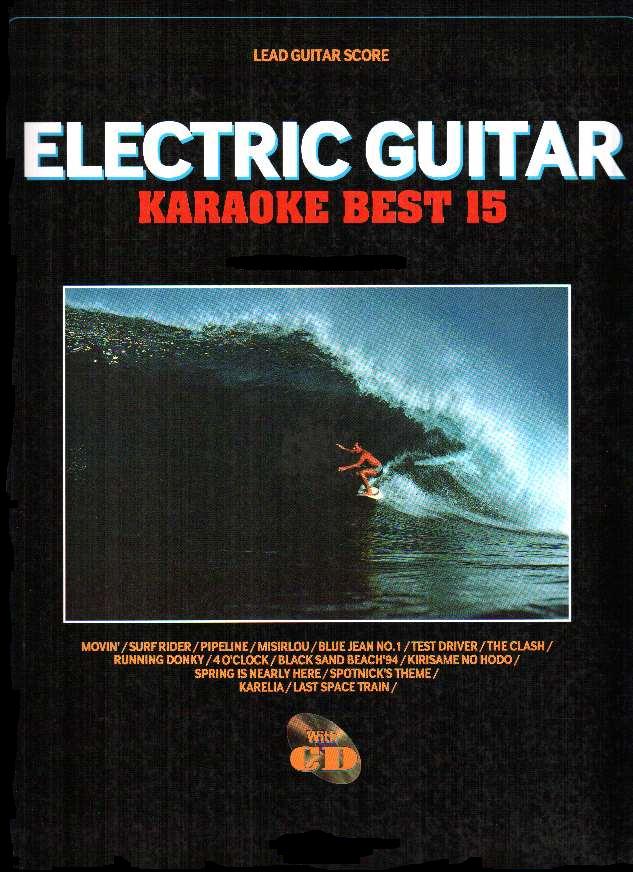
ELECTRIC GUITAR KARAOKE BEST CD TABLATURE pipeline-misirlou-spring is nearly here-movin'-surf

ELECTRIC GUITAR, KARAOKE BEST. SHEET MUSIC BOOK WITH CD & GUITAR TABLATURE .

LIBRO DI MUSICA SURF MUSIC, CON CD DI BASI. 

SPARTITI PER CHITARRA : 

ACCORDI, PENTAGRAMMA, NOTE, TABLATURE. 

Ottime basi di surf music strumentale. 


Contiene:

-movin' - THE ASTRONAUTS

-surf rider - THE LIVELY ONES

-pipeline - DICK DALE & HIS DEL-TONES

-misirlou - DICK DALE & HIS DEL-TONES

-blue jean No. 1 - 

-test driver - 

-the clash - THE SURF COASTERS

-running donky -

-4 o' clock - 

-black sand beach '94 -  

-kirisame no hodo - 

-spring is nearly here - THE SHADOWS 

-Spotnick's theme - THE SPOTNICKS

-Karelia - THE SPOTNICKS 

-last space train - THE SPOTNICKS

Prezzo: €99,99
€99,99

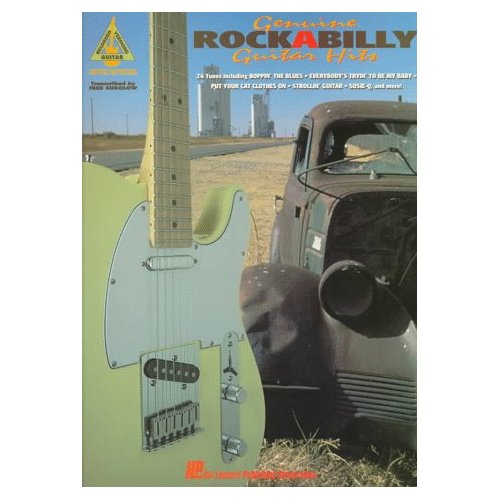
GENUINE ROCKABILLY GUITAR HITS Guitar Recorded Version TABLATURE Rock this town-rock around the clock CHITARRA

GENUINE ROCKABILLY GUITAR HITS. Contiene 24 canzoni:

LIBRO PER CHITARRA CON TABLATURE

Il mondo ha conosciuto la prima volta rock and roll nella seconda meta degli anni '50 quando sono arrivati i primi hits di Elvis Presley, Buddy Holly e Carl Perkins. I chitarristi rockabilly di quel periodo - Scotty Moore, Eddy Cochran, Cliff Gallup, Carl Perkins, Paul Burlison, James Burton, Buddy Holly e altri - sono diventati gli Idoli dei musicisti rock negli anni '60, '70 e '80, e la loro musica sarà sempre la pietra di paragone per la chitarra rock. Nelle pagine del libro troverete la trascrizione di tutte le parti di chitarra, l'accompagnamento, e i solo completi. Ci sarà anche qualche trascrizione musicale dei loro discepoli - musicisti contemporanei come Albert Lee, Dave e Phil Alvin dei Blasters e gli The Stray Cats.

Il Rockabilly ebbe inizio quando i musicisti bianchi del Sud iniziano a suonare il Rhythm and Blues eletrico. Hanno registrato  le "cover" hits di "Good rockin' tonight" (la versione di Wynonie Harris fu il più grande record di ascolto nel 1948). Hanno anche scritto le proprie melodie e riproposto le canzoni country e bluegrass in stile rockabilly. In ogni caso conservavano il sapore e lo stile degli artisti Afro-Americani la cui musica non arrivava all'audience bianca. Naturalmente, i musicisti rockabilly anno portato le proprie radici country, bluegrass e gospel music nel R&B. La musica nuova che è emersa era il ROCK AND ROLL. Per Alan Freed e altri disc jockey che la promuovevano, la formula era chiara: far suonare ai musicisti bianchi la musica popolare nera degli anni '50.

Una delle differenze tra il Rockabilly e il R&B era che la chitarra era molto prominente. Le prime rockabilly band erano composte dal basso verticale, la chitarra elettrica, il cantante e la batteria. La chitarra ritmica spesso acustica e il piano erano optional, gli ottoni erano rari; qualche gruppo composto da due chitarre non avevano la batteria. Quasi tutti i solos venivano suonati con la chitarra elettrica. La chitarra solista imitava molto lo stile delgli assoli a double-note di Chuck Berry e T-Bone Walker, il fingerpicking di Merle Travis, e il fingerpicking blues di Lightin' Hopkins e Big Bill Bronzy. E a tutto questo miscuglio un poco di aggiunta di stile Jazz di Les Paul.


GENUINE ROCKABILLY GUITAR HITS. Contiene 24 canzoni: -American music (the Blaster) -believe what you say (Rick Nelson) -bluejean bop (Gene Vincent) -boppin' the blues (Carl Perkins) -boppin' the blues (Rick Nelson) -everybody's tryin to be my baby (Carl Perkins) -good rockin' tonight (Elvis Presley, Scotty Moore) -holly hop (Buddy Holly) -Marie, Marie (The Blaster) -my baby thinks he's a train (Rosanne Cash) -Oh bay babe (Johnny Burnette) -put your cat closes on (Carl Perkins) -rock around the clock (Bill Haley and the comets) -rock billy boogie (Johnny Burnette) -Rock this town (Stray cats) -rockabilly music (Ray Campi) -skinny Jim (Eddie Cochran) -strollin guitar (Eddie Cochran) -summertime blues (Eddie Cochran) -Susie-Q (Dale Hawkins) -tear it up (Johnny Burnette) -train kept a rollin' (Johnny Burnette) -twenty flight rock (Eddie Cochran) -wake up little Susie (the Everly brothers). TABLTURE

Most of the world first learned about rock and roll in the second half of the '50s when Elvis Presley, Buddy Holly and Carl Perkins had their first hits. The rockabilly guitarists of this period - Scotty Moore, Eddie Cochran, Cliff Gallup, Carl Perkins, Paul Burlison, James Burton, Buddy Holly and the rest - became the idols of '60s, '70s and '80s rockers, and their music will always be the touchstone for rock guitar. You'll find their solos and backup playing transcribed and their style analyzed in the pages that follow. There are also some transcriptions of music from their disciples - contemporary players like Albert Lee, Dave and Phil Alvin of the Blasters, and The Stray Cats. Rockabilly started when white Southern performers began playing electric rhythm and blues. They recorded "covers" of R&B hits, like "Good Rockin' Tonight" (Wynonie Harris' version was the biggest R&B record of '48). They also wrote their own tunes and covered country and bluegrass songs. In all cases, they borrowed the flavor and styles of African-American artists, whose music was unlikely to reach white audiences. Naturally, the rockabilly players brought their country, bluegrass and gospel music roots to R&B. The new music that emerged was ROCK AND ROLL. To Alan Freed and other disc jockeys who promoted it, the formula was clear: get white musicians to play popular '50s race music.

One of the ways rockabilly differed from R&B was that the guitar was more prominent. The early rockabilly band consisted of an upright bass, electric guitar, a singer and a drummer. Rhythm guitar (often acoustic) and piano were optional, horns were rare; some two-guitar bands even lacked a drummer. Nearly all solos were played on electric guitar. The lead guitar borrowed heavily from the single and double-note styles of Chuck Berry and T-Bone Walker, the up-the-neck fingerpicking of Merle Travis, and the more basic fingerpicking blues styles of acoustic blues guitarists like Lightnin' Hopkins and Big Bill Broonzy. A little Les Paul-style jazz added to the brew.
THE TWELVE BAR BLUES. Most of the early rockabilly hits were twelve-bar blues tunes, or were based on that form. In this book, "American Music," "Boppin' The Blues," "Everybody's Tryin' To Be My Baby," "Holly Hop," "My Baby Thinks He's A Train," "Put Your Cat Clothes On," "Rock Around The Clock," "Oh Baby Babe," "Rock Billy Boogie," "Skinny Jim," "Tear It Up," "Train Kept A-Rollin" and "Twenty Flight Rock" are all twelve-bar blues tunes and five others are only slight variants of the blues format! Here's the twelve-bar form, expressed in terms of I, IV and V chords (tonic, subdominant and dominant) in the key of E. The final bar of this twelve-bar form is often called a "turnaround," because the V chord "turns the progression around" and leads the ear back to a repeat of the whole twelve bars or to an ending. 

IL BLUES A 12 BATTUTE.

La maggioranza dei primi Hits Rockabilly erano in 12 battute, o leggete variazioni della progressione armonica Blues.

L'ultima battuta è chiamata anche TURNAROUND, perchè riporta all'inizio del pezzo.


Boogie Woogie Bass Figures 

Per l'accompagnamento e in certi casi per i solo, i chitarristi rockabilly spesso eseguono i modelli boogie sulle corde basse. Hanno preso questa tecnica d'accompaniamento dai chitarristi blues come Big Bill Broozy, Lightnin' Hopkins e John Lee Hooker i quali, probabilmente imitavano la mano  sinistra dei pianisti boogie-woogie. Piu fhits  cile eseguire questi Modelli nella tonalità MI e LA perchè MI e LA sono le corde basse aperte.


Blues Fingerpicking

Lightnin' Hopkins e molti altri chitarristi del Texas blues hanno popolarizzato lo stile fingerpicking dove il pollice suona un'accompagnamento continuo di quattro accenti per battuta sulle note basse mentre medio e indice suonano la melodia sincopata sulle corde alte. Il fraseggio musicale della chitarra di James Burton in “Susie-Q” il suo ritmo e la melodia sono un tipico esempio di questo stile chitarristico del pollice.


ASSOLI AD ACCORDI

Spesso i chitarristi Rockabilly suonano gli assoli con gli accordi "CHORD SOLOS", usandoli in prima posizione o spostando una parte dell'accordo.


TITOLI:

-American music (The Blaster - Dave and Phil Alvin)

-believe what you say (Rick Nelson - James Burton)

-bluejean bop (Gene Vincent - Cliff Gallup)

-boppin' the blues (Carl Perkins)

-boppin' the blues (Rick Nelson - Joe Maphis)

-everybody's tryin to be my baby (Carl Perkins)

-good rockin' tonight (Elvis Presley - Scotty Moore)

-holly hop (Buddy Holly)

-Marie, Marie (The Blaster - Dave and Phil Alvin)

-my baby thinks he's a train (Rosanne Cash - Albert Lee)

-Oh bay babe (Johnny Burnette and Rock and Roll Trio -Paul Burlison)

-put your cat closes on (Carl Perkins)

-rock around the clock (Bill Haley and the comets - Danny Cedrone)

-rock billy boogie (Johnny Burnette and Rock and Roll Trio -Paul Burlison)

-Rock this town (Stray Cats -Brian Setzer)

-rockabilly music (Ray Campi - Richard Bennett)

-skinny Jim (Eddie Cochran)

-strollin guitar (Eddie Cochran)

-summertime blues (Eddie Cochran)

-Susie-Q (Dale Hawkins - James Burton)

-tear it up (Johnny Burnette and Rock and Roll Trio -Paul Burlison)

-train kept a rollin' (Johnny Burnette - and Rock and Roll Trio -Paul Burlison - Paul Burlison)

-twenty flight rock (Eddie Cochran)

-wake up little Susie (the Everly brothers - Chet Atkins).


151 pagine. TABLATURE

Serie: Guitar Recorded Version TABLATURE

Prezzo: €199,99
€199,99

GUITAR INSTRUMENTAL HITS SIGNATURE licks CD TABLATURE CHITARRA-Lenny-SRV-song of the wind-Santana-Clapton

GUITAR INSTRUMENTAL HITS. Passo per passo, 14 passeggiate soli con lei, la vostra chitarra.


GUITAR BOOGIE SHUFFLE
(As Performed by The Virtues featuring Jimmy Bruno Sr.) By Arthur Smith
Figure 4 - Intro, Head, and First Guitar Solo
Rewriting history can be a daunting and problematic business. Such is the case with "Guitar Boogie Shuffle." History incorrectly credits Frank Virtue as the guitarist on the track and further ascribes the tune to Arthur Smith. Its inclusion in this collection provides us with an ideal opportunity to set the record straight. Here is the real story as recounted and substantiated by his son, Jimmy Bruno Jr. (who incidentally is one of the most compelling jazz guitarists on the scene today-check him out). In the 1940s and 1950s, guitarist Jimmy Bruno Sr. played with a bassist named Frank Virtue. Virtue was not an accomplished musician but had an uncanny knack for obtaining work. As times were tough, Bruno stayed with this band. In the 1950s, Virtue built a small recording studio in his house and there they recorded "Guitar Boogie Shuffle" as the Virtues. The members on the date were Jimmy Bruno Sr. (guitar), Tom Friday (drums), Ralph Federico (piano) and Frank Virtue (bass). Contrary to popular belief, Bruno Sr. was the composer of the music but failed to copyright his work, thinking that the boogie-woogie riff was public domain and not realizing that his arrangement granted him ownership rights. A self-made millionaire, Arthur Smith, who had recorded a different version on acoustic earlier, wound up with the rights and the credit. Virtue's lawyers and the record company saw to it that Bruno received 10% of 1% for his efforts. Bruno discovered this while on tour and quit on the spot, vowing never to record again and further stating that Virtue would never have another hit song. "Guitar Boogie Shuffle" reached #5 on March 23, 1959 and remained in the Top 40 for twelve weeks. It was the Virtues' one and only hit.
"Guitar Boogie Shuffle" is a 12-bar blues in E (which sounds a half step lower in Eb)
founded on a swing-inspired triplet feel. In the intro, Bruno plays a ground-finding pattern
in eighth-note rhythm on the open low E string to get things rolling. His sound during the
head is treated with generous amounts of slap-back echo. The head [A] is based on a fournote
ascending-descending melody (E-G#-B-C#: root-third-fifth-sixth) which is the quintessential
boogie riff of the period-in essence, a left-hand boogie-woogie piano pattern
transferred to the bass register of the electric guitar. Variations of this figure are moved
through the I-IV-V changes of a simple 12-measure, three-chord blues progression. Note
the use of G (the seventh) over the A chord in measure 7, and the use of 0 (the sharp
ninth) over the B7 chord in measure 10.
The interlude [B] is based on a catchy ostinato riff made of a quarter note and an
eighth-note triplet. The triplet contains the ascending chromatic motion B-C-C#, which
strengthens the sixth (the goal of this motion) in the figure. This riff, like the main theme, is
taken through the 12-rneasure blues form with slight variations.
Bruno's improvised solo choruses in [C] and [0] reveal the close relationship of late
1940s swing jazz and early rock 'n' roll. You could describe these phrases as "Charlie
Christian licks in a jitterbug context." His lines are certainly jazz-oriented, based primarily
on the E Major scale (E-F#-G#-A-B-C#-D#), with characteristic passing-tone chromaticism
in measures 26, 28, 41-43, and 45-47, and arpeggios in measure 32-34. Specific
references to Charlie Christian's style are heard in the explicit use of the sixth tone (C#) in
measures 27-29 and measure 45, the inverted mordent embellishing figure in measure 31
(a Lester Young motive popularized by Christian on the guitar), the staccato rhythmic
motive in measures 34-35, and the dominant-ninth lick in measures 42-43. Unlike
Christian's style, Bruno's licks are devoid of string bends and contain no overt references
to Texas and Oklahoma blues guitar styles.
On the recording, Jimmy Bruno Sr. played a honey blonde Gretsch hollow body
(probably a 6120) with DeArmond pickups, and plugged into an Ampeg Gemini II amp.
[Before playing along with Figs. 4 and 5, tune down 1/2 step with track 7] ...


-Raunchy

-rumble

-Lenny (S.R.V.)

-guitar boogie shuffle

-walk don't run -pipeline

-just like a woman (B.B. King)

-rebel 'rouser

-sleepwalk (come suonata da Santo and Johnny) 

-sleepwalk (come suonata da Larry Carlton) 

-Jessica -frosty

-hide away (come suonata da Freddy King)

-hide away (come suonata da Eric Clapton) 

-steppin' out (Clapton)

-song of the wind (Santana).

Tutti gli esempi di assoli possono anche essere usati come per Jam. CD TABLATURE


Santo & Johnny era il nome di un duo di chitarristi formato dai fratelli newyorkesi Santo (24 ottobre 1937) e Johnny Farina (30 aprile 1941). Il loro primo singolo, Sleepwalk, pubblicato nel 1959, era un brano strumentale composto con l'aiuto della madre, che riscosse un notevole successo balzando al primo posto delle classifiche statunitensi. Ad esso fecero seguito altri singoli e numerosi album che raccoglievano soprattutto brani easy-listening e colonne sonore. Furono molto popolari durante gli anni sessanta e settanta, anche in Italia, dove registrarono molti dischi e guadagnarono il disco d'oro per la loro versione della colonna sonora de Il Padrino (1973) del compositore Nino Rota. Il duo si sciolse nel 1976, ma Johnny Farina ha continuato per moltissimi anni ancora a esibirsi come solista e a incidere dischi.

The Farina brothers, Santo & Johnny, were born in Brooklyn, New York. Santo, October 24, 1937 and Johnny, April 30, 1941. The boys were young when their Dad was drafted into the Army and stationed in Oklahoma. There on the radio he heard this beautiful music, it was the sound of the steel guitar. He wrote home to his wife and said "I'd like the boys to learn to play this instrument". When he returned from the war they searched out to a man who could get them started with the steel. Years later, they formed a band, playing at church dances, weddings and clubs. The Farina brothers began to gather fans from Brooklyn to Long Island.
As their popularity grew locally they recorded a couple of demo tapes. Johnny made the rounds of the New York record companies. One day Johnny decided to try a music publishing company and there is where the history of "Sleep Walk" started, they signed a song writer's contract which later on lead them to Canadian American Records. Their first release in 1959 was "Sleep Walk" which was written by Santo & Johnny. It was the last #1 instrumental of the 50's and earned them a Gold Record. With their unmistakable sound, they appeared on all the top music shows, "The Alan Freed Show", "Dick Clarks' American Bandstand", "The Perry Como Show" etc. etc

Prezzo: €34,99
€34,99
Condividi contenuti