HAL LEONARD

JOBIM ANTONIO CARLOS, FOR FINGERSTYLE GUITAR TABLATURE

JOBIM ANTONIO CARLOS, FOR FINGERSTYLE GUITAR. Agua De Beber (Water to Drink) -The Girl from Ipanema (Garota De Ipanema) -How Insensitive (Insensatez) -If You Never Come to Me -Meditation (Meditacao) -O Morro Nao Tem Vez (Favela) -One Note Samba (Samba De Uma Nota So) -Quiet Nights of Quiet Stars (Corcovado) -Slightly out of Tune (Desafinado) -Wave. TABLATURE

10 Superb arrangements in guitar Tablature & standard notation, including chord symbols, melody line & lyrics.
FOR GUITAR TAB

ANTONIO CARLOS JOBIM FOR FINGERSTYLE GUITAR
Series: Finger Style Guitar TABLATURE
Artist: Antonio Carlos Jobim
Fingerstyle arrangements of ten of his best:

Água De Beber (Water To Drink)
The Girl From Ipanema (Garota De Ipanema)
How Insensitive (Insensatez)
If You Never Come To Me (Inutil paisagem)
Meditation (Meditacao)
O Morro Nao Tem Vez (Favela) (Somewhere In The Hills)
One Note Samba (Samba De Uma Nota So)
Quiet Nights Of Quiet Stars (Corcovado)
Slightly Out Of Tune (Desafinado)
Wave


- Corcovado (Quiet Nights Of Quiet Stars) - MUSIC & LYRICS: Antonio Carlos Jobim - 1962

- How Insensitive (Insensatez) - MUSIC: Antonio Carlos Jobim - LYRICS: Vinicius De Moraes - 1963

- If You Never Come To Me (Inutil Paisagem) - MUSIC & LYRICS: Antonio Carlos Jobim - 1965

- Meditiation (Meditacao) - MUSIC: Antonio Carlos Jobim - LYRICS: Newton Mendonca - 1962

- One Note Samba (Samba De Uma Nota So) - MUSIC: Antonio Carlos Jobim - LYRICS: Newton Mendonca - 1961

- Somewhere In The Hills (O Morro Nao Tem Vez Favela) - MUSIC & LYRICS: Antonio Carlos Jobim, Vinicius De Moraes

- The Girl From Ipanema (Garota De Ipanema) - MUSIC: Antonio Carlos Jobim - LYRICS: Vinicius De Moraes - 1963

- Desafinado (Slightly Out Of Tune) - MUSIC: Antonio Carlos Jobim - English LYRICS: Jon Hendricks, Jessie Cavanaugh  - 1959

- Water To Drink (Agua De Beber) - MUSIC: Antonio Carlos Jobim - LYRICS: Norman Gimbel - 1961

- Wave (Vou Te Contar) - MUSIC & LYRICS: Antonio Carlos Jobim - 1967

72 pages

Prezzo: €18,99
€18,99

EXPLOSIÓN LATINA DE LA GUITARRA ROCK GUITAR LATIN LIBRO CHITARRA TABLATURE SMOOTH SANTANA

EXPLOSIÓN LATINA DE LA GUITARRA ROCK, LATIN ROCK GUITAR EXPLOSION. BOOK WITH GUITAR TABLATURE

LIBRO DI MUSICA LATINA MODERNA.

SPARTITI PER VOCE E CHITARRA CON:

ACCORDI, PENTAGRAMMA, NOTE, TABLATURE. 


96 Pagine. Como Dueles En Los Labios -Como Tú -Corazón Espinado -Detrás De Los Cerros -Dime Jaguar -El Secreto -El Último Planeta -Hechicera -Oasis -Ride -Sal Pa'fuera -Se Me Olvido Otra Vez -Smooth -Socialize. 

Series: Guitar Recorded Version TAB
Artist: Various

96 pages, This hot collection features note-for-note tab transcriptions for 14 of today's biggest Latin hits by bands such as Maná, Jaguares, Puya, Santana and others. Includes:

Como Dueles En Los Labios
Como Tu
Corazon Espinado
Detras De Los Cerros
Dime Jaguar
El Secreto
El Ultimo Planeta
Hechicera
Oasis
Ride
Sal Pa'Fuera
Se Me Olvido Otra Vez
Smooth
Socialize

Prezzo: €23,99
€23,99

REH-BEBOP LICKS FOR GUITAR-LES WISE CD LIBRO MUSICA SPARTITI CHITARRA METODO SOSTITUZIONI

REH, BEBOP LICKS FOR GUITAR, Les Wise. LIBRO CON CD & TABLATURE

LIBRO METODO DI MUSICA JAZZ, CON CD. 

SPARTITI PER CHITARRA CON: 

ACCORDI, PENTAGRAMMA E TABLATURE. 

TEORIA, ARMONIA, STUDIO


A Dictionary of Melodic Ideas for Improvisation
Series: REH Publications
Softcover with CD - TAB
Author: Les Wise

Written for the musician who is interested in acquiring a firm foundation for playing jazz, this unique book/CD pack examines the phrases of the masters! Over 800 licks are provided in the styles of Tal Farlow, Pat Martino, Wes Montgomery, Joe Pass, Johnny Smith, and other jazz guitar greats! The book includes standard notation and tablature, and the CD contains note-for-note demonstrations of every lick. 104 pages.

INDICE:

800 FRASI


Prezzo: €26,99
€26,99

STUDI MELODICO RITMICI PER CHITARRA William G. Leavitt Berklee libro Italiano studio sincopati

STUDI MELODICO RITMICI PER CHITARRA. W. G. Leavitt. Berklee. in Italiano

MELODIC RHYTHMS FOR GUITAR, W. G. Leavitt. Berklee.

LIBRO METODO DI MUSICA JAZZ.

SPARTITI PER CHITARRA

ACCORDI E PENTAGRAMMA. 

IN ITALIANO.

Traduzione in Italiano di un testo Berklee Press (linea editoriale legata al prestigioso Berklee College of Music), edito negli Stati Uniti da Hal Leonard e per la prima volta pubblicato in lingua italiana dalla Volontè & Co. Autore William Leavitt, che ha scritto anche A Modern Method for guitar, uno dei metodi di chitarra più venduti al mondo.Studi Melodico/Ritmici per Chitarra è un testo fondamentale per lo studio della chitarra, universalmente noto, tra i più utilizzati in assoluto nella didattica chitarristica. Vengono proposti più di 100 studi melodico/ritmici, tramite notazione in partitura accompagnata dai simboli degli accordi. Confrontandosi con il materiale presente e seguendo le indicazioni dell'autore, lo studente sviluppa o perfeziona le proprie capacità di lettura della partitura (in chiave di violino) e la conoscenza degli accordi, in entrambi i casi su tutto il manico. La ricchezza e la varietà degli studi garantiscono poi una preparazione solida sul fronte dei vari ritmi che è possibile incontrare nella musica moderna. Il testo è adeguato a praticanti di ogni livello.


specifico di pennate per misura, sono presentati con tutte le possibili combinazioni ritmiche. Nella parte superiore di ciascun rigo sono indicati due importanti simboli di pennata. Raccomando vivamente, quando si imparano a leggere i ritmi sincopati, di pennare la corda nella stessa direzione del movimento del piede, (giù sul battere e su sul levare).
Questo movimento coordinato tra mano e piede (che tiene il tempo) è un valido aiuto per imparare a leggere questi ritmi, ed eseguirli correttamente. È consigliabile continuare a esercitarsi nel tempo. Gli Studi (o brani) originali, che seguono la presentazione di ogni “gruppo ritmico”, sono stati espressamente composti per utilizzare quel determinato schema. È consigliabile contare ad alta voce tutte le frasi difficili, mentre si suonano, sino a che non “si percepisce” il tempo. Poiché tutti gli Studi hanno dei simboli di accordi, sarebbe utile eseguirli in duetto con un altro chitarrista o con se stessi, registrando le parti di chitarra ritmica. Quando si avrà la padronanza di questi ritmi, si potrà variare la pennata, al fine di rendere gli studi ancor più musicali, rimanendo accurati e precisi.


Series: Guitar Method
Publisher: Berklee Press Publications
Author: William Leavitt

A thorough presentation of rhythms commonly found in contemporary music, including 68 harmonized melodies and 42 rhythm exercises. This highly respected and popular book is also an excellent source for duets, sight-reading and chord studies. 72 pages

Prezzo: €16,99
€16,99

GARRISON FEWELL-JAZZ IMPROVISATION FOR GUITAR-A Melodic Approach-Berklee-CD TABLATURE-SPARTITI

JAZZ IMPROVISATION FOR GUITAR, A Melodic Approach. Garrison Fewell, Berklee. BOOK CD % GUITAR TABLATURE

LIBRO METODO DI MUSICA JAZZ, PER L'IMPROVVISAZIONE MELODICA.

SPARTITI PER CHITARRA CON: 

ACCORDI, PENTAGRAMMA E TABLATURE. 

Series: Berklee Labs
Publisher: Berklee Press
Medium: Softcover with CD

Melodies based on triads and melodic extensions sound more natural and musical than ones developed exclusively from scales. Triads - the fundamental building blocks of harmony - are a simple and effective remedy for scale dependency in improvisation. In Jazz Improvisation for Guitar: A Melodic Apprach, explore the potential of triads and their melodic extensions and learn to connect them using guide tones. You'll learn to create solo phrases in the style of some of the world's finest jazz guitarists like Wes Montgomery, George Benson, Grant Green, Kenny Burrell, and Pat Martino. 143 pages.


Improvise better solos by using triads and melodic extensions. Melodies based on triads and melodic extensions sound more natural and musical than ones developed exclusively from scales. Triads—the fundamental building blocks of harmony—are a simple and effective remedy for scale dependency in improvisation. Explore the potential of triads and their melodic extensions, and learn to connect them using guide tones. You'll learn to create solo phrases in the styles of some of the world's finest jazz guitarists—Wes Montgomery, George Benson, Grant Green, Kenny Burrell, and Pat Martino.

In Jazz Improvisation for Guitar: A Melodic Approach, world-renowned jazz guitarist Garrison Fewell offers an organized approach to creating expressive and melodic jazz solos and accompaniments. This book includes numerous triad and melodic extension examples and exercises to help you achieve the most expressive jazz feel and rhythm.

  • Broaden your melodic palette using triads, melodic extensions, guide tones, and altered notes.
  • Expand your agility on the fretboard, throughout the range of the guitar
  • Learn the intervals that make up melodies
  • Add articulation to your phrases by playing excerpts in the styles of the masters of jazz guitar
  • Use guide tones to connect your melodic lines and play the changes
  • Get the rhythmic skills essential to jazz phrasing
  • Use guide tones to build voicings for comping
  • Tablature included

Develop a more melodic way of thinking about harmony, and learn the improvisational tools that will help you create your own approach to soloing over chord changes.

The included play-along CD features outstanding musical examples and rhythm-section tracks performed by a top-flight triio: Garrison Fewell on guitar, Steve LaSpina on bass, and John Riley on drums. A special bonus track explores the techniques you've learned throughout the book

BUZZ

"Garrison Fewell has long been a hero to the jazz community. Read this book and you will find out why."

Jim Hall, Acclaimed Jazz Guitarist, Composer, Arranger

"Garrison Fewell presents and demystifies many of the essential elements and techniques of jazz guitar, with useful and easily applied examples. He gets the player's hands, ears, and mind all involved. I wish this book had been around thirty years ago!"

Howard Alden, Jazz Guitarist

"This book is a really well-thought-out guide to improvisation. I wish I'd had a book like this when I was a student."

George Cables, Pianist/Composer

"G.F.'s book is a profound learning tool! I refer to Garrison as 'G.F.' here because of this very clear, but so simple approach to using a 'G' minor triad with its natural connection to 'F' major in an earlier chapter. From this point in the book, you can build on this same approach by following this rule in all other keys and end up with 'great ears' and a wealth of knowledge."

Billy Harper, Jazz Saxophonist/Composer

"Garrison Fewell's concept of using guide tones and intervals in improvisation instead of 'running scales' is very important. Recommended for all who want to master 'inside' as well as 'outside' playing."

John Tchicai, Author of Advice to Improvisers, Ed. Wilhelm Hansen


The Author


Guitarist Garrison Fewell has been a Professor of Guitar and Ear Training at Berklee College of Music for more than twenty-five years. He has taught at most major European Conservatories including Rotterdam, Graz, Cologne, Leipzig, Warsaw, and the American School of Modern Music in Paris, and has conducted workshops throughout the United States and South America. With a mature, melodic sound and an elegant, lyrical style of writing and playing, Garrison has established himself as a distinctive voice throughout his thirty-year career. Critics have called him "one of today's most personal guitar players" (Boston Phoenix), "an assured stylist with a strong sense of tradition" (The New Yorker), "a player of virtuosity and swinging intensity" (UPI), and "refined, passionate, and inspiring" (Guitar Player). His diverse discography, beginning with 1993's Boston Music Award-winning A Blue Deeper than the Blue (Accurate), counts multiple titles ranked on best-of-the-year lists in publications such as Coda, Guitar Player, Musica Jazz, and his hometown Philadelphia Inquirer. Photo by: Elio Buonocore

Garrison has performed with his quartet at NYC's Blue Note and Birdland jazz clubs, and international festivals such as Montreux, North Sea, Umbria, Clusone, Veneto Jazz, Copenhagen, Krakow, Budapest, Cape Verde, Africa, and Asuncion, Paraguay. His performing experience includes appearances with Tal Farlow, Benny Golson, Fred Hersch, Herbie Hancock, Larry Coryell, Buster Williams, George Cables, Kenny Wheeler, Dusko Goykovich, Cecil Bridgewater, Billy Harper, John Tchicai, Norma Winstone, and Slide Hampton. Garrison is the author of Jazz Improvisation (1984) and a frequent contributor to Guitar Player, Guitar Club, and Axe magazines. He is the recipient of several major music grants: National Endowment for the Arts, Artslink, Arts International.


Growing up in Philadelphia, I listened to all types of music, from classical and folk to blues and jazz. My father had all of Benny Goodman's records, and that's how I first heard Charlie Christian. From the beginning, I was always attracted to players with a strong sense of melody, and although I studied jazz in school, it was only after years of record collecting and listening that I developed my own sound. My intention in writing this book is not to teach you everything about jazz guitar, but simply to share some insights and encourage you to express your own artistic personality. Among the many approaches to jazz improvisation, one of the most common methods is to practice scales and modes as the basis for improvising over standard chord progressions. This can sometimes lead to an ailment called "scale-itis." Symptoms of this affliction are heard from guitarists who overplay in an attempt to impress fellow fretmates with their rapid-fire agility, running scales up and down the neck faster than the speed of sound. (What was that loud boom I just heard?) Students often spend long hours mastering scale vocabulary and neglect to develop their melodic and rhythmic vocabulary. They miss the opportunity to hear the intervals from which melodies are composed, and lack the rhythmic skills that are essential to jazz phrasing. Triads-the fundamental building blocks of harmony-are a simple but effective remedy for scale dependency. Using them can contribute to a more melodic way of playing. In this book, you will explore the potential of major and minor triads and their melodic extensions, and learn to develop phrases as an approach to improvising. The triad and melodic extension exercises include fingering studies, which will expand your knowledge of the fretboard and increase your facility throughout the range of the guitar. You will also learn how to add articulation to your phrases by playing excerpts from the styles of the great masters of jazz guitar. The ability to hear chord changes and play melodic lines that outline the harmony of a song is important to an improviser. This book will teach you to use guide tones to connect melodic ideas and "play the changes." You will also learn to use guide tones to build voicings for accompaniment, or "comping." Knowledge of harmony and its application to the guitar is another part of creative improvising. The exercises in this book will help you develop a more melodic way of thinking about harmony and will teach you improvisational tools to create alternate approaches to playing over chord changes.

What You Need to Know

The principles of melodic development demonstrated in this book are suited to all levels of guitarists who are seeking to improve their improvisational skills and instincts. To get the most from this book, you should have a solid understanding of key signatures, the cycle of fifths, major and minor scales, intervals, triads, seventh chords, tensions, and chord progressions. A familiarity with basic jazz rhythms and phrasing will help you derive maximum benefit from the exercises in this book.

How this Book is Organizated. This book is divided into three parts.

In part I (chapters 1-4), you'll begin to approach improvisation by playing triads and melodic extensions. It will also introduce you to rhythmic phrasing and articulation, so that you will have the tools to build great solos. Chapter 1 reviews the basics of jazz theory, including scales, the cycle of fifths, triad construction, diatonic harmony, tensions, and chord progressions. Chapter 2 introduces the concept of triads and melodic extensions. Then, in chapter 3, you will learn how to expand them into well-articulated phrases as a basis for improvising over chord changes. In chapter 4, you apply your knowledge of melodic extensions to dominant 7 chords. In part II (chapters 5-10), you'll learn to use triads and melodic extensions to build musical solos. First, we look closely at the styles of some of the great masters of jazz guitar to hear how they use triads and melodic extensions in improvisation (chapter 5). Listening to these great players will reveal new melodic, harmonic, and rhythmic possibilities that you can use as you begin to build solos in chapter 6. To further develop your melodic instincts, you will learn about guide tones in chapter 7. Then, you will build voicings by adding tensions to guide tones, and play them over different chord progressions to improve your understanding of jazz harmony. In chapters 8 and 9, you will learn more about how to connect your melodic lines from chord to chord using guide tones. This will help you hear the chord changes and build creative phrases using guide-tone resolutions to outline the harmony. Chapter 10 demonstrates how to apply these concepts to soloing on standard tunes and gives you an opportunity to improvise with a rhythm section. By the end of part II, you will have played triads and melodic extensions on major and minor chords and diatonic II/V progressions. However, as a creative improviser, you will need to be able to add more color to your solos by using a nondiatonic approach to triads and melodic extensions. In part III (chapters 11-12), you will learn to play triads that accent the subtle variations of altered "color tones" on dominant chords. Because of its important harmonic role in chord progressions, a good improviser needs a number of skillful approaches to playing over the V7 chord. Chapter 11 introduces the V7 altered chord, and shows you how to use triad substitution to build melodic lines with tensions b9, #9, and b13. In chapter 12, you will learn how to play augmented triads on the V7 (#5) chord. Then, you'll get a chance to put everything you've learned into practice with one final tune.

The use of triads and melodic extensions as building blocks for jazz solos represents a common thread that runs through many players' styles. This book offers an organized approach to learning them so that you can become a more creative improviser.


Contents:

CD Track List

Acknowledgments

Introduction


PART I APPROACHING JAZZ IMPROVISATION THROUGH

TRIADS AND MELODIC EXTENSIONS

Chapter I Harmony Review

Scale Construction

Key Signatures and the Cycle of Fifths

Triad Construction

Diatonic Triads

Diatonic Seventh Chords

Chord Function

Diatonic Chord Progressions

Tensions


Chapter 2 Major and MinorTriads and Melodic Extensions

Dividing the Fretboard into Four Areas Using Alternating Minor and Major Triads

Melodic Extensions and Related Fingerings through Four Areas of the Fretboard


Chapter 3 PhrasingandArticulation

Articulation: The Rest Stroke

Melodic Extensions of G Minor: Eighth-Note Triplets and Rest Strokes


Chapter 4

PART II

Melodic Extensionsof Dominant Chords

BUILDING YOUR SOLOS USING TRIADS AND

MELODIC EXTENSIONS


Chapter 5 Stylistic Interpretation

Minor Lines over Dominant 7 Chords


Chapter 6 Buildinga Solo with Triads and Melodic Line Extensions


Chapter 7 Fretboard Harmony: GuideTones and 2- and

3-Note Voicings

Voice Leading

How to Play Guide Tones on the Guitar

3-Note Voicings: Adding a Chord Tone or Tension

Minor Key Guide-Tone Voice Leading for II/V7/I Progressions: 2- and

3-Note Voicings

Chord Substitutions


Chapter 8 Using Guide-Tone Lines in Soloing

Direct Approach

Indirect Approach

Chromatic Approach

Double-Indirect Approach

Solo Structure: The Shape of Things to Come


Chapter 9 Guide-Tone Lines for II-7 (b5) V7 (b9) I in Minor

More Guide-Tone Lines: b9 to 5


Chapter 10 Soloing Over Standard Tunes: II / V / I in Major and Minor Keys


PART III HARMONIC CONCEPTS FOR IMPROVISATION


Chapter 11 Altered Tensions

V7 Tensions b9 and #9

V7 Tensions b9 and b13

Tensions b9, #9, and b13


Chapter 12 V7 (+S)

The Augmented Triad

Wrap-Up

Coda

"Hearing Things" (Garrison Fewell, Steve LaSpina, and John Riley)


About the Author

Discography as Leader

Reviews


CD Track List:

1. Fig. 2.1. Extensions of G minor

2. Fig. 2.2. Melody based on G minor triad and melodic extensions

3. Exercise 2.3. "Elle," rhythm track

4. Fig. 3.1. Practice phrase using Bb major triad

5. Fig. 3.2. Practice phrase, with triplet added

6. Fig. 3.5. Sample solo, "Hot Saw"

7. Exercise 3.3. "Hot Saw," rhythm track

8. Fig. 3.6. Rest-stroke articulation in the style of Wes Montgomery

9. Fig. 3.7. Four triads with eighth-note triplets and rest-stroke articulation

10. Fig. 3.9. Combination, ascending and descending rest strokes

11. Fig. 3.10. Descending and ascending rest strokes in a II/V/I progression

12. Fig. 3.11. Triad over strings 1, 2, and 3, with rest-stroke articulation

13. Exercise 3.4.1.

14. Exercise 3.4.2.

15. Exercise 3.4.3.

16. Exercise 3.5. "Three Bee's," rhythm track

17. Fig. 4.3. Phrase in the style of Charlie Christian

18. Fig. 4.6. Christian-style phrase, using chromatic passing tones

19. Exercise 4.2. "Blues for Charlie," rhythm track

20. Fig. 5.1. G minor line over C7

21. Fig. 5.2. Phrase in the style ofWes Montgomery

22. Fig. 5.3. Minor lines played over descending chromatic progressions

23. Fig. 5.4. Phrase in the style of George Benson

24. Fig. 5.5. Phrase in the style of Pat Martino

25. Fig. 5.6. Martino-style minor line extension over dominant chord

26. Fig. 5.7. Phrase in the style of Grant Green

27. Fig. 5.8. Green-style phrase

28. Fig. 5.9. Phrase in the style of Kenny Burrell

29. Fig. 5.10. Phrase in the style of Jimmy Raney

30. Fig. 5.11. Phrase in the style ofJohnny Smith

31. Fig. 5.12. Phrase in the style of Tal Farlow

32. Fig. 5.13. Phrase in the style of Jim Hall

33. Fig. 5.14. Melodic grace and rhythmic precision, Montgomery style

34. Fig. 5.15. Montgomery-style phrase, moving from second to fourteenth fret

35. Exercise 5.2. "East Ghost Blues," rhythm track

36. Exercise 6.1. "Lovers No More," solo

37. Exercise 6.2. "Lovers No More," rhythm track

38. Fig. 7.1. Guide-tone voice leading using 3rds and 7ths

39. Fig. 7.2. 3-note guide-tone voice leading

40. Exercise 7.3. "Rhythm Changes," comping

41. Exercise 7.4. "Rhythm Changes," rhythm track

42. Exercise 7.6. 3-note voice leading with tensions for II-7 (%5) /V7/I- in D minor

43. Fig. 7.7. Chord substitutions

44. Fig. 7.8. Chord substitutions can add color and brightness

45. Exercise 7.7. "Love Is Beautiful," comping

46. Exercise 8.1. Guide-Tone lines/direct approach on II/V/I/V7 progression

47. Fig. 8.3. Guide-tone line with indirect approach

48. Fig. 8.4. Guide-tone line with indirect approach and melodic extensions

49. Fig. 8.5. Guide-tone line with chromatic approach

50. Fig. 8.7. Guide-tone lines with double-indirect approach over II/V/I

51. Exercise 8.5. Melodic contour with chord extensions and varied resolutions

52. Fig. 8.9. 3-note voice leading with guide tones over "Tune It Up!"

53. Exercise 8.7. "Tune It Up!," solo

54. Exercise 8.8. "Tune It Up!," rhythm track

55. Exercise 9.1. Guide-tone lines

56. Fig. 9.3. Example with b9 to 5 resolution

57. Fig. 9.4. Direct resolution, b9 to 5

58. Fig. 9.5. Indirect resolution, b9 to 5, with chromatic approach

59. Fig. 9.6. b9 to 5 with double-chromatic resolution

60. Fig. 9.8. Guide-tone resolutions with octave displacement

61. Exercise 9.5. Melodic lines over II/V7/I in minor

62. Exercise 9.6. "Love Is Beautiful," rhythm track

63. Fig. 10.2. "Bossa Azure," 3-note voice leading

64. Fig. 10A. Guide-tone line, embellished with Parker-esque melodic approaches

65. Fig. 10.5. Parker-esque approach using direct, indirect, and double-chromatic approaches

66. Exercise 10.1. "Bossa Azure," rhythm track

67. Exercise 10.3. "Falling Leaves," guide tones and melody

68. Exercise lOA. "Falling Leaves," solo

69. Exercise 10.5. "Falling Leaves," rhythm track

70. Fig. 11.1. Dominant 7 line with tensions b9 and #9

71. Fig. 11.2. Phrase in the style of Lee Morgan

72. Fig. 11.3. Phrase in the style of Charlie Parker

73. Exercise 11.1. Guide-tone line over V7 in major key

74. Exercise 11.2. Melodic lines using altered tensions

75. Fig. 11.6. G-(9) arpeggio over E-7(b5); Bb-(9) over A7

76. Fig. 11.7. V7alt with changed melody on II-7 chord

77. Fig. 11.8. Melodic motif, transposed in three keys

78. Fig. 12.2. Augmented triad over II/V/I in C major

79. Fig. 12.3. Augmented triads used in descending chromatic line over II/V/I

80. Fig. 12.4. Augmented triad played over F7 as approach to Bb-7

81. Fig. 12.5. Augmented triad over minor II/V/I in Ab

82. Exercise 12.2. "Bossa Lee," rhythm track

83. Bonus track, "Hearing Things" by Garrison Fewell

Prezzo: €31,99
€31,99

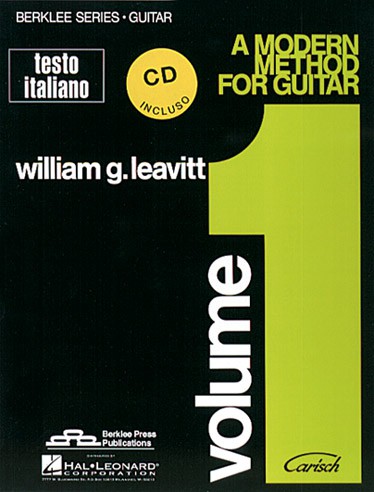
A MODERN METHOD FOR GUITAR VOLUME 1-William Leavitt-Berklee Press-LIBRO CON CD IN ITALIANO

A MODERN METHOD FOR GUITAR VOLUME 1. William Leavitt. In italiano. CD

LIBRO METODO DI MUSICA JAZZ.

SPARTITI PER CHITARRA CON:

ACCORDI E PENTAGRAMMA. 


Questo libro è nato per rispondere a due scopi precisi: 1° Per insegnare allo studente la lettura musicale; I "trucchi" per imparare a leggere e 2° Per il graduale sviluppo dell'abilità di entrambe le mani. È questa la parte fisica dello studio della chitarra. L'acquisizione di una tecnica strumentale è frutto di un processo di accomulazione per cui ad ogni ripasso del materiale già studiato si avrà chiara la sensazione di una maggiore facilità.

METODO MODERNO PER CHITARRA di WILLIAM LEAVITT Volume 1

Traduzione di Mauro Storti
E' importante che il seguente materiale di studio venga affrontato nell'ordine in cui è presentato. L'indice a pag. 126 ha una pura finalità di riferimento e sara utile per il ripasso e per lo studio mirato su tecniche specifiche.

Figure Accordali Mobili
(ACCOMPAGNAMENTO RITMICO, PARTE II)
L'aspetto pilù difficile nell'apprendimento degli accordi sulla chitarra, consiste nel far cadere istantaneamente, e senza uno sforzo cosciente, le dita sulla tastiera con una determinata disposizione o figura. Si tratta di un grande problema fisico la cui soluzione sembra consistere unicamente in un lungo ed adeguato esercizio.
Tuttavia, trovo che presentando allo studente nuove figure accordali con un certo ordine (una successione di diteggiature correlate) il tempo per il loro apprendimento si riduce.
Pertanto, le seguenti figure accordali vengono presentate con un ordine particolare. Useremo tre delle figure gia note, assumendole come figure-base, muovendo o togliendo uno più dita in modo che ogni nuova diteggiatura sia correlata a quella (o quelle) che la precedono. In tal modo, ciascuna figura-base e ciascuna delle figure derivate fungerà da preparazione per un'altra figura accordale.
Non viene data nessuna denominazione agli accordi, ma soltanto il modello accordale e la corda sulla Quale si trova la tonica.

Memorizzate la diteggiatura di tutte le forme accordali nell'ordine in cui compaiono. Non saltare dall'una all'altra. Non modificare la diteggiatura di una figura, anche se già la suonate in maniera diversa. Essa apparirà più avanti con la "vostra" diteggiatura, ma correlata con una nuova serie di figure. Praticare tutte le figure cromaticamente salendo e scendendo lungo la tastiera e le toniche (che danno il nome agli accordi).

FIGURA BASE N. 1
MAGGIORE
tonica 6a corda

FIGURA BASE N. 2
MAGGIORE DOMINANTE7a
(Tonica 2a o 5a corda)
Diteggiature, opzionali

FIGURA BASE N. 3
MAGGIORE
(Tonica 5a corda)

La parentesi significa che benchè la nota appartenga all'accordo, non va suonata obbligatoriamente anzi, in molti casi, l'accordo suona meglio senza di essa.

INDICE
(Parte I)
Informazioni preliminari
Scala di C Maggiore in Prima Posizione-Una Ottava (e Duetto)
Scala di C Maggiore in Prima Posizione-Registro superiore (e ripasso)
"One, Two, Three, Four" (Duetto)
Introduzione all'accompagnamento ritmico
Scala di C Maggiore in Prima Posizione-Registro basso (e ripasso completo)
"Imitation Duet"
Diesis e Bemolli
"Here We Go Again" (Duetto)
Accompagnamento ritmico-Bassi e accordi
Ottavi (con pennata alternata)
Studio n. 1 (Duetto)
Pause, Note legate, Note col punta
Studio n. 2 (Duetto) e "Primo assolo"
Accompagnamento ritmico - Spiegazione dei diagrammi accordali
"Secondo assolo" e Studio n. 3 (Duetto)
Studio di pennata n. 1 (Sviluppo della mana destra)
"Two, Two" (Duetto)
Scala di G Maggiore in Prima Posizione
Accompagnamento ritmico-Diagrammi accordali
Sedicesimi
Duetto in G e Studio di pennata n. 2
Altro Duetto in G
Scala di F Maggiore in Prima Posizione
Accompagnamento ritmico-Diagrammi accordali (compreso il "Gran Barre")
Duetto in F
La Terzina
Valzer in F (Assolo)
Scale in A Minore in Prima Posizione (3 tipi)
Accompagnamento ritmico-Diagrammi accordali
"Pretty Pickin'" (Duetto)
Ottavo puntato e Sedicesimo
Scale di E Minore in Prima Posizione (3 tipi)
Accompagnamento ritmico-Diagrammi accordali
"Take Your Pick" (Duetto)
Accompagnamento ritmico-Principio delle figure accordali mobili

1966, 1997 Berklee Press Publications, Boston, MA 02199

Scala Cromatica e Studi di velocità
Scale di D Minore in Prima Posizione (3 tipi)
Accompagnamento ritmico-Diagrammi accordali (mobili)
"Endurance Etude"-Studio di pennata n. 3 (Assolo)
Scala di Bb Maggiore in Prima Posizione
Accompagnamento ritmico- Diagrammi accordali
"Duetto in Bb" (con nuovi diagrammi accordali)
Studio della pennata alterna rovescia
Scala di D Maggiore in Prima Posizione e "Duetto in D"
"Dynamic Etude" (Duetto)
Scala di A Maggiore in Prima Posizione e "Duetto in A"
Accompagnamento ritmico-Diagrammi accordali
Scala di E b Maggiore in Prima Posizione e "Duetto in E "
Modelli accordali mobili (Riassunto degli Il modelli noti)
Accordi semplificati e Tabella delle sostituzioni
La Pennata-Una tecnica diversa


(Parte II)
Le Posizioni
Scala di C Maggiore in Posizione II-Diteggiatura tipo 1
Studi (Assolo e Duetto)
Studi di lettura (C Maggiore in Posizione II)
"Ballad" (Duetto)
Figure accordali mobili (3 forme-base e spiegazione)
Figure accordali (Spiegazione delle diteggiature derivate)
Accompagnamento ritmico-Tecnica della mano destra
Studio di pennata n. 4
Scala di F Maggiore in Posizione II-Diteggiatura tipo 1 A
Figure accordali
Assolo e Duetto
Studi di lettura (F Maggiore-Posizione II)
"Play It Pretty" (Duetto)
Figure accordali
Studi di velocità (Diteggiature tipo l-lA)
Scala di G Maggiore in Posizione II-Diteggiatura tipo 2
"Waltz For Two" (Duetto) con Armonici Naturali
Figure accordali
Studi di lettura (G Maggiore-Posizione II)
"Blues in G" (Duetto) con effetto Smorzato
"Chord Etude" (Assolo)
Accompagnamento ritmico-Tecnica della mano destra (Ritmo-base Latino)
Studio di pennata n. 5 e "Short and Sweet" (Duetto)
Scala di D Maggiore in Posizione II-Diteggiatura tipo
Figure accordali
Studio ritmo-melodico n. l (Sincope)
"Chord Etude" (Assolo)
Studi di lettura (D Maggiore in Posizione II)
"Dee Oo Ett" (Duetto)
Figure accordali
Studi di velocità (Diteggiature tipi 2-3)
Scala di A Maggiore in Posizione II-Diteggiatura tipo 4
"Chord Etude" (Assolo)
Studi di lettura (A Maggiore-Posizione II)
"Tres Sharp" (Duetto)
Figure accordali
Studio di velocità (Diteggiatura tipo 4)
Figure accordali
Ripasso della Posizione II
Figure accordali
Terzine di Quarti
Scale Maggiori in Posizione m-Bb, Eb, Ab, Db
Ripasso della Posizione III
Figure accordali
Scale Maggiori in Posizione I (Senza corde a vuoto) di Ab e Db
Ripasso della Prima Posizione
Scale Maggiori in Posizione IV-G, D, A, E
Figure accordali
Ripasso della Posizione IV
Figure accordali e Note dell'Autore


Indice tematico

STUDI DI ARPEGGIO
Tonalità di C maggiore
Tonalità di F maggiore
Tonalità di G maggiore
Tonalità di D maggiore
Tonalità di A maggiore

STUDI DI ACCORDI n.l, n.2, n.3, n.4, n.5
FIGURE ACCORDALI (ACCOMPAGNAMENTO RITMICO)
Introduzione
Bassi e Accordi
Diagrammi accordali (posizione aperta)
Principio degli accordi mobili
Accordi mobili
Accordi mobili (accomp. ritmico Parte II)
Diteggiature-base e derivate
Tecnica della mano destra per l'accompagnamento ritmico
Ritmo base Latino

NOZIONI DI TEORIA
Primi elementi
Diesis e bemolli
Ottavi
Pause, note legate, note puntate.
Sedicesimi .
La terzina
Ottavo puntato e Sedicesimo
Terzine di Quarti .
Armonici .
Effetto smorzato .
Staccato, legato.

STUDI DI LETTURA
Duetti con chitarra ritmica "ad libitum"
Studio melodico-ritmico n. l (sincope) .
Ripasso della 2a Posizione .
Ripasso della 3a Posizione .
Ripasso della la Posizione .
Ripasso della 4a Posizione .

ACCOMPAGNAMENTO RITMICO (V. FIGURE ACCORDALI)


SVILUPPO DELLA MANO DESTRA
Studi di pennata n. l, n. 2, n. 3, n. 4, n. 5
Studio sulla pennata alternata e rovescia
Studio di dinamica (duetto)
Una diversa tecnica di pennata
Studio in terzine .
Studio in Ottavi puntati e Sedicesimi ,
Ritmo-base latino
Studio melodico-ritmico n. 1.
Studio in Sedicesimi .
Vedere anche: (primi elementi) Ottavi, Sedicesimi, la terzina,
Ottavo puntato e Sedicesimo, terzine di Quarti; studi di velocità, arpeggi e assoli contrassegnati (*)

SCALE IN PRIMA POSIZIONE (APERTA)
C maggiore .
G maggiore
F maggiore .
Bb maggiore.
D maggiore .
A maggiore .
E b maggiore .
A minore (3 tipi) .
E minore (3 tipi) .
D minore (3 tipi) .
Scala cromatica .

SCALE - DITEGGIATURE MOBILI (POSIZIONI)
C maggiore - Diteggiatura tipo l (Posizione II)
F maggiore - Diteggiatura tipo lA (Posizione II)
G maggiore - Diteggiatura tipo 2 (Posizione II)
D maggiore - Diteggiatura tipo 3 (Posizione II)
A maggiore - Diteggiatura tipo 4 (Posizione II)
Bb magg. - tipo 4, Eb magg. - tipo 3, (Posizione III)
Ab magg .. tipo 2, Db magg. - tipo l, (Posizione III)
Ab magg. - tipo 4, Db magg. - tipo 3, (Pos. I, senza corde a vuoto)
G magg. - tipo lA, D magg. - tipo l, (Posizione IV)
A magg. - tipo 2, E magg. - tipo 3, (Posizione IV)

ASSOLI
"Primo assolo"
"Secondo assolo" .
(*) Studi di pennata n. l, n. 3, n. 4, n. 5
(*) Duetto in F (parte della 1a chitarra)
Valzer in F
(*) Pretty Pickin' (parte della 1a chitarra) .
(*) Take Your Pick (parte della la chitarra)
Studi di accordi n. l, n. 2, n. 3, n. 4, n. 5
"Ballad" (parte della Ia chitarra) .
STUDI DI VELOCITÀ


Figure Accordali
La tonica di questa figura si trova un tasto prima di ciascuna nota tastata. Essa ha 4 nomi possibili, come l'accordo di 7a diminuita.
DOM 7a ( b9)

11mX281"X
DOM 7a ( b5)
(Tonica 6)
m2X'''IX
DOM 7a
7 a ( +5) (Tonica 6)
tI!~mm
rlX2"'X
ESERCIZIO

Tutte le figure accordali presentate in questo libro che impiegano la 6a corda (e pertanto suonano in parte nel reale registro basso) hanno la tonica 1° grado o il 5° grado al basso. Questi sono i gradi "forti" degli accordi e SUONANO SEMPRE GIUSTI.

Avete probabilmente visto altrove alcune di queste figure chiamate in modo diverso. Teoricamente, anche tali altri nomi sono corretti, tuttavia, i bassi sono gradi accordali "deboli" che necessitano di un trattamento speciale. Di ciò si discuterà profondamente più oltre; fino ad allora state attenti a quelle figure che impiegano la 6 a corda ma non hanno la tonica o la quinta al basso, poiché NON suonano sempre bene. In una partitura ritmica orchestrale, i simboli accordali usati solitamente, indicano le totali o complete strutture armoniche, ma non è necessario (né possibile) suonare tutti i gradi tutte le volte. Naturalmente, dovrete cercare di suonare al meglio le sequenze scritte ma, di fatto, una semplificazione OMETTENDOalcuni gradi accordali, viene fatta di "norma". (È meglio, per ora, omettere i gradi più alti).

Esempi: per C7+5(b9)
per G7+(13 -9)
per F9(sus4)
si può suonare: C7(+5) (omettendo la b9a ) o C+
si può suonare: G7(-9) (omettendo la 13a ) o G7
si può suonare: F7(sus4) (omettendo la 9a )
State molto attenti alle sostituzioni, in quanto esse devono essere COMPLETAMENTE compatibili con l'accordo o gli accordi indicati. (Torneremo più oltre sull'argomento ... ).

A questo punto, oltre a conoscere cinque tonalità maggiori in seconda Posizione, vi dovrebbero essere famigliari le più usate scale maggiori nelle Posizioni I, II e IV. Dovrete tuttavia leggere molto in questi campi per conoscerli veramente bene. Non posso che sottolineare quanto sia importante imparare bene i quattro tipi di diteggiatura delle scale maggiori, poiché essi sono la base per altri tipi di scale. Verranno aggiunte gradualmente formule (maggiori) di diteggiature (fino ad averne dodici: una per ogni tonalità in ciascuna Posizione), mentre allo stesso tempo imparerete come UTILIZZAREle figure maggiori già praticate, nel Jazz Minore, Armonico Minore ecc ... Il nostro prossimo progetto (Metodo Moderno per Chitarra, Parte II) consisterà nell'imparare le note su tutta la tastiera usando tutti i modelli di diteggiatura NELLA STESSATONALITÀ.Ciò richiederà lo spostamento da una Posizione all'altra scorrendo fra le diverse formule. La sequenza delle formule (diteggiature-tipo) varierà a seconda delle alterazioni in chiave. Acquisire la conoscenza della tastiera in questo modo presenta un grande vantaggio in quanto le dita "conosceranno le formule" e voi potrete concentrarvi sulle note. Ricordate: per imparare a suonare la chitarra il miglior metodo è il processo di accumulazione. Pertanto, il ripasso regolare e completo è assolutamente necessario per un progresso regolare e il perfezionamento tecnico.
 

Prezzo: €27,99
€27,99

WHITFIELD MARK GUITAR COLLECTION TABLATURE CHITARRA LIBRO Blues for Davis Alexander-Brother Jack-HAL LEONARD

WHITFIELD MARK, GUITAR COLLECTION. TABLATURE

LIBRO PER CHITARRA CON TABLATURE. 

MARK WHITFIELD

Mark Whitfield
Series: Artist Transcriptions
Artist: Mark Whitfield

Right-from-the-record, note-for-note transcriptions for ten top tunes from four of Mark Whitfield's releases. Includes: Blues for Davis Alexander • Brother Jack • David's Theme • The Joy of Love & Peace • The Marksman • More Than You Know • Namu • Runnin' with the Ooze • Salvation of MRT • and The Very Thought of You, plus a biography, an intro by Mark, and a discography. Guitar Tab, with chord symbols TAB

Artist Transcriptions are authentic, note-for-note transcriptions by legendary artists including Miles Davis, Thelonious Monk, Stan Getz, Oscar Peterson, Jim Hall, and dozens more. These outstanding, accurate arrangements are in an easy-to-read format which includes all essential lines. Artist Transcriptions can be used for performance, sequencing, or for historical reference.

Inventory #HL 00672320
ISBN: 9780793544677
UPC: 073999723205
Width: 9.0"
Length: 12.0"
88 pages

Blues For Davis Alexander
Brother Jack
David's Theme
The Joy Of Love & Peace
The Marksman
More Than You Know
Namu
Runnin' With The Ooze
Salvation Of MRT
The Very Thought Of You

Prezzo: €24,49
€24,49

REINHARDT DJANGO THE BEST OF GUITAR STYLES AND TECHNIQUES OF A JAZZ GIANT SIGNATURE LICKS CD TABLATURE

REINHARDT DJANGO, THE BEST OF, STYLES AND TECHNIQUES OF A JAZZ GIANT. Ain't Misbehavin' -Belleville -Daphne -Dinah -Djangology -Honeysuckle Rose -Limehouse Blues -Marie -Minor Swing -Nuages -Old Folks At Home (Swanee River) -Rose Room -Stardust -Swing 42 -Swing Guitar -Tiger Rag (Hold That Tiger). CD TABLATURE

LIBRO DI MUSICA PER CHITARRA CON CD E TABLATURE.

The Best of Django Reinhardt A Step-by-Step Breakdown of the Guitar Styles and Techniques of a Jazz Giant
Series: Signature Licks Guitar
Format: Softcover with CD - TAB
Artist: Django Reinhardt
Author: Joe Charupakorn

Explore the groundbreaking style of one of the most unique and influential guitarists in jazz! This book/CD pack explores 16 of his signature tunes: Ain't Misbehavin' - Belleville - Daphne - Dinah - Djangology - Honeysuckle Rose - Limehouse Blues - Marie - Minor Swing - Nuages - Old Folks at Home (Swanee River) - Rose Room - Stardust - Swing 42 - Swing Guitar - Tiger Rag (Hold That Tiger). The CD includes full demos of each.
Inventory #HL 00695660
ISBN: 9780634034312
UPC: 073999549607
Width: 9.0"
Length: 12.0"
96 pages 
 

INTRODUCTION
Just about a half century after his death, Django Reinhardt still remains a towering
figure in the annals of jazz guitar. To this day, his incendiary playing stands up to that
of later virtuoso jazz guitarists such as Joe Pass, Pat Martino, and George Benson. Author
James Lincoln Collier, in his book The Making of Jazz, calls Django "the most important
guitarist in the history of jazz"; when you take into account the hordes of jazz guitarists he
has influenced, he may very well be. His groundbreaking style of playing-marrying
European-influenced scales and harmonies with jazz rhythms-was unheard of during his
time. He was among the first of the European jazz musicians who could cop the jazz feel
correctly, and he left an indelible stamp on the world of jazz guitar. His major influence was
session guitarist Eddie Lang (the first major jazz guitarist). He absorbed Lang's Europeanbased
harmonic concepts and took them one step beyond.
Born Jean Baptise Reinhardt to LaBelle Reinhardt and Jean Vees (his assumed
father) on January 23, 1910 in Liverchees, Belgium near the French border, Django was
raised in true gypsy fashion, travelling around in a caravan and living like a vagabond. He
spent much of his formative years travelling across Europe, eventually settling just outside of Paris.
Django did not attend school and was illiterate-he could neither read nor write.
He did, however, have a passion and a gift for music and eventually received a banjo from
a neighbor named Raclot when he was twelve. He never took formal lessons, but learned
from his father and other musicians in the area, and shortly thereafter began playing with
his father in cafes. By age fourteen he had become a fixture on the Parisian club scene,
and by age eighteen he recorded his first session as a sideman, accompanying an accordion on banjo.
On November 2, 1928, tragedy struck. Django heard some noise and thought it
was a rat scurrying around his wagon. He grabbed a candle, which unexpectedly fell out
of the candleholder and onto a pile of highly flammable artificial flowers that immediately
burst into flames, setting the wagon on fire. Django used a blanket to carry his wife out of
the burning caravan, but his exposed legs and left hand were severely burned. Because
of the severity of the burn, doctors suggested amputating Django's legs, but he vehemently
refused. He would later regain the use of both legs.
His left hand did not have the same good fortune, and his music career appeared
to be doomed. Django was resilient, however, and trudged along, trying to play guitar
again while in the hospital. He eventually regained the use of his thumb, index, and middle
fingers, but never the full use of the ring and pinky fingers. Over a year later, he was
able to play again using his functioning left-hand fingers.
In 1928 Django met Stephane Grapelli, a violinist with whom he would have a
career-long relationship. They were both struggling young musicians trying to make their
way in the jazz scene. In 1933, they finally had the chance to play together in the Quintet
of the Hot Club of France (which also featured Django's brother Joseph on rhythm guitar),
an incarnation of the Hotel Claridge Orchestra. The Ultraphone Record Company gave the
group a record deal in 1934, and their first recording sent shockwaves throughout the
European jazz scene. This spawned a series of group recordings that would elevate the
group's popularity and allow them to play concert halls.
When World War II started, the group was on tour in London. Django and company
retreated to Paris, but Grapelli chose to stay behind in London. As a result of the
German invasion of France, Django became a god in the eyes of the French. He was a national hero who represented a unique and free spirit that stood tall against the repressive, stifling nature of the German invaders.

AIN'T MISBEHAVIN' Words by Andy Razaf
Music by Thomas "Fats" Waller and Harry Brooks
Django Reinhardt's solo on "Ain't Misbehavin' ,"with its motivic and rhythmic development,
is an exemplary model of solo construction. After the opening quote of the theme,
Django weaves through the chord changes with primarily scalar runs based on the D
major scale (D-E-F#-G-A-B-C#). In measure 7 he introduces a triplet motive that is
repeated for three consecutive measures. The motive begins on the root and hammers
and pulls back and forth up a half step. This lick is transposed up a perfect 4th in measure
8 to correspond to the chord change (Bm-Em). In measure 9 the pattern begins on the
9th of the D chord and hammers onto the minor 3rd (Fq), creating a bluesy effect. Notice
how the pattern gets rhythmically displaced in the following measures, starting on beat 3
in measure 7, beat 2 in measure 8, and back to beat 3 in measure 10. This figure is recalled in
measures 39-40.
Another motive is introduced in measure 25, comprised of a note followed by a
higher note, which is bent up a half step. Django leaps from A to E and bends up to Fq,
the bluesy b3rd of the D chord. This is followed by a bend from G# to A, the 5th of the D
chord. Some arpeggiated lines follow in measures 30-32, and in measures 33-36 Django
continues to develop the bending motive, this time starting with a bend from E#to F#, the 3rd of the D chord.
Chromaticism is abundant throughout the solo and used primarily in one of two
ways: as neighbor tones and passing tones. For example, the triplet motive (mentioned
above) in measures 7-9 uses a chromatic upper neighbor trill. In measure 58, chromatic
passing tones fill the gap from A down to F#.Measure 59 has an A# passing tone between
A and B, measure 61 also has an A# passing tone between A and B (this time an octave
lower), and in measure 62 there are chromatic passing tones from A# to ct


Table of contents:

Ain't Misbehavin'
Belleville
Daphne
Dinah
Djangology
Honeysuckle Rose
Limehouse Blues
Marie
Minor Swing
Nuages
Old Folks At Home (Swanee River)
Rose Room
Stardust
Swing 42
Swing Guitar
Tiger Rag (Hold That Tiger)

96 pages

Ain't Misbehavin' - WORDS: RAFAZ - MUSIC: WALLER, BROOKS - 1929
Belleville - DJANGO REINHARTD - 1944
Daphne - DJANGO REINHARDT - 1938
Dinah - WORDS: LEWIS, YOUNG - MUSIC: HARRY AKST - 1925
Djangology - DJANGO REINHARDT, STEPHANE GRAPELLI - 1937
Honeysuckle Rose - WORDS: ANDY RAFAZ - MUSIC: FATS WALLER - 1929
Limehouse Blues - WORDS: FURBER - MUSIC: BRAHAM -
Marie - IRVING BERLIN - 1928
Minor Swing - DJANGO REINHARDT, STEPHANE GRAPELLI - 1938
Nuages – DJANGO REINHARDT, JACQUES LARUE -
Old Folks At Home (Swanee River) - STEPHEN C. FOSTER -
Rose Room – WORDS: HARRY WILLIAMS - MUSIC: ART HICKMAN -
Stardust – WORDS: PARISH – MUSIC: CARMICHAEL - 1928
Swing 42 – DJANGO REINHARDT - 1941
Swing Guitar - DJANGO REINHARDT, STEPHANE GRAPELLI - 1937
Tiger Rag (Hold That Tiger) - WORDS: HARRY DECOSTA - MUSIC: DIXIELAND BAND -

Violin arranged for guitar
 

Prezzo: €25,99
€25,99

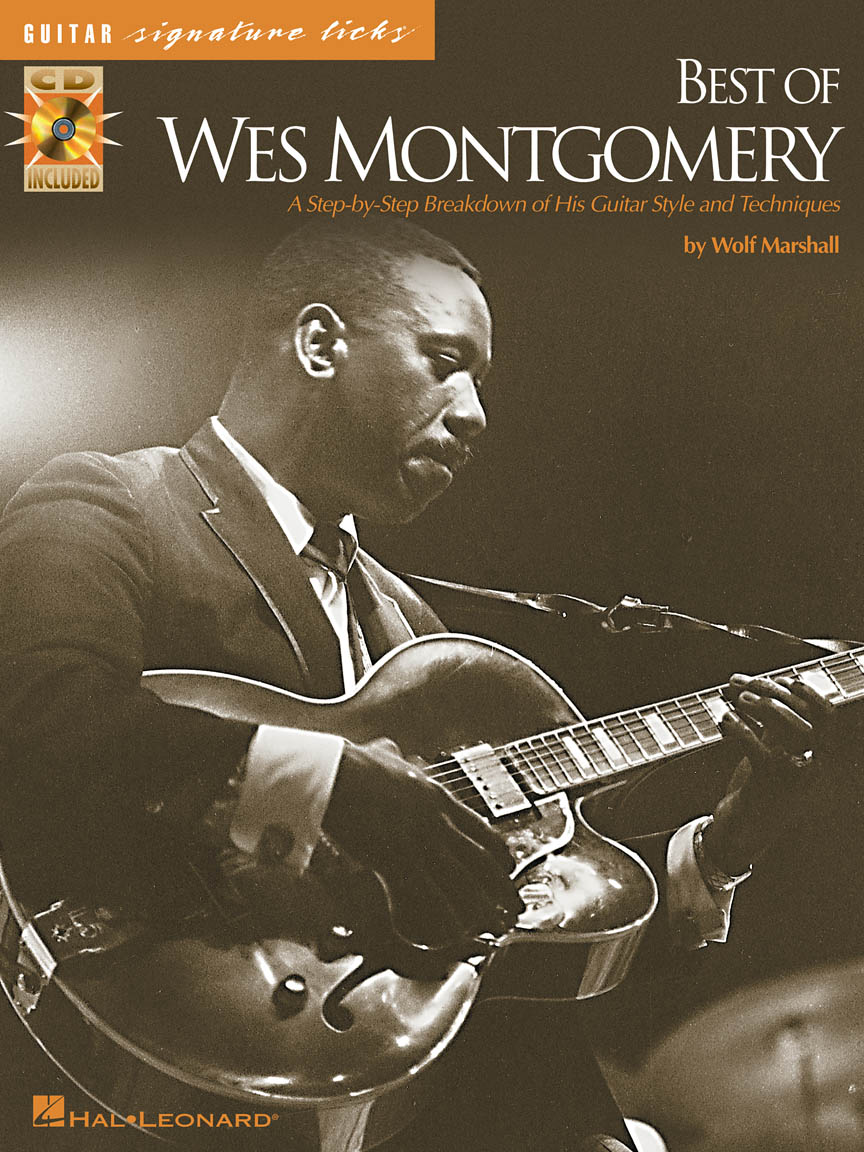
MONTGOMERY WES-BEST Signature Licks Guitar CD TABLATURE besame mucho-Missile blues-SPARTITI

MONTGOMERY WES, THE BEST. LIBRO CON CD E TABLATURE

LIBRO METODO DI MUSICA JAZZ, CON CD.

SPARTITI PER CHITARRA CON: 

ACCORDI, PENTAGRAMMA E TABLATURE. 

Performance notes, equipment, le tecnica del pollice, biografia. Invece di utilizzare il plettro, opta suonare con il polpastrello del pollice. Questa tecnica non ortodossa, affascina i chitarristi di oggi e stupisce per l'efficacia del suono caldo delle single-note. Missile blues -yesterdays -west coast blues -cariba -I¹ve grown accustomed to her face -bésame mucho (Kiss me much) -fried pies -mi cosa -four on six -misty -sundown -O.G.D. 

Guitar
Series: Signature Licks Guitar
Softcover with CD - TAB
Artist: Wes Montgomery
Author: Wolf Marshall

Explore the music of one of the greatest jazz guitarists of all time! This in-depth book/CD pack will guide you through 12 of the best-known tracks from the legendary Wes Montgomery, Features a foreword and introduction by Wolf Marshall, a discography and more.

Inventory # HAL LEONARD 00695387
ISBN: 0634009028
UPC: 73999953879
Width: 9
Length: 12
104 pages

Besame Mucho (Kiss Me Much)
Cariba
Four On Six
Fried Pies
I've Grown Accustomed To Her Face
Mi Cosa
Missile Blues
Misty
O.G.D.
Sundown
West Coast Blues
Yesterdays

Prezzo: €31,99
€31,99

METHENY PAT QUESTION AND ANSWER Guitar Recorded Version TABLATURE LIBRO CHITARRA

METHENY PAT, QUESTION AND ANSWER. TABLATURE

LIBRO DI MUSICA, SPERTITI PER CHITARRA CON TABLATURE. 


Series: Guitar Recorded Version TABLATURE
Note-for-note transcriptions with tab, in a handwritten jazz-style font and supervised by Metheny himself. Includes all the songs from this 1989 album that the All Music Guide describes as "nine tracks of sheer jazz joy," calling Pat's playing "modernistic, highly fluid, almost liquid lightning." 144 pages

Songlist:

All The Things You Are
Change Of Heart
H & H
Law Years
Never Too Far Away
Old Folks
Question & Answer
Solar
Three Flights Up

Prezzo: €27,99
€27,99
Condividi contenuti