MEL BAY

BACK-UP BANJO JANET DAVIS 2 CD BOOK TABLATURE LIBRO METODO

BACK-UP BANJO, Janet Davis. 240 Pagine. SHEET MUSIC BOOK WITH 2 CD & TABLATURE.

LIBRO METODO DI MUSICA. 

SPARTITI PER BANJO : 


Back-up Banjo è un libro completo per l'accompaniamento con banjo, grazie alla ricchezza dell'informazione su come applicare la tecnica con molto gusto. Sicome i musicisti che suonano il banjo nei gruppi dedicano almeno 75%  del suo tempo al accompaniamento, è estremamente importante di perfezionarsi. Janet Davis offre le speciali proposte per accompagnare i cantanti i vasta quantità di stili - e fornisce degli esempi musicali che illustrano le sue idee.  Janet divide i suoi concetti in componenti base faccendoli diventare cristalmente chiari. Vari tecniche del back-up sono suddivise in categorie determinate dal tempo della canzone, dallo strumento di accompaniamento, e dallo spazio sulla tastiera dove vengono suonati gli accordi. Con pentagramma e tablatura, 240 pagine


Contiene 2 CD con le dimostrazioni delle canzoni. 

Product Description:
With its wealth of information on how technique can be tastefully applied, Back-Up Banjo is the definitive book on the subject of banjo accompaniment. Since a banjo player in a band plays accompaniment at least 75% of the time, it is extremely important to master playing in this style. Janet Davis offers specific suggestions for accompanying a vocalist or instrumentalist in a variety of styles-- and then provides musical examples illustrating her points. Janet breaks her concepts down into their basic components, making them crystal clear in lay terms. The various back-up techniques are separated into categories determined by song tempo, by lead instrument being accompanied, and by the area of the fingerboard in which the chords are being played. In notation and tablature. 240 Pages.

This set includes a companion 2-CD set which demonstrates the examples in the book.

Song Title: Composer/Source:
John Hardy --
Battle Hymn Of The Republic --
New River Train --
Salt River --
Swing Low, Sweet Chariot --
Cumberland Gap --
Down In The Valley --
East Virginia --
May I Sleep In Your Barn Tonight, Mister? --
Wreck Of The Old 97 --
Gray Eagle --
Blackberry Blossom --
Reuben --
Soldier's Joy --
Cripple Creek --
Bury Me Beneath The Willow --
Jesse James --
Stone's Rag --
Tom Dooley --
When The Saints Go Marching In --
All The Good Times Are Past --
Banks Of The Ohio --
Cotton Patch Rag --
John Henry --
Sally Goodin' --
Wabash Cannonball --
Little Maggie --
Long Journey Home --
Red River Valley --
She'll Be Comin' Around The Mountain --
John Hardy --
Battle Hymn Of The Republic --
New River Train --
Salt River --
Swing Low, Sweet Chariot --
Cumberland Gap --
Down In The Valley --
East Virginia --
May I Sleep In Your Barn Tonight, Mister? --
Wreck Of The Old 97 --
Gray Eagle --
Blackberry Blossom --
Reuben --
Soldier's Joy --
Cripple Creek --
Bury Me Beneath The Willow --
Jesse James --
Stone's Rag --
Tom Dooley --
When The Saints Go Marching In --
All The Good Times Are Past --
Banks Of The Ohio --
Cotton Patch Rag --
John Henry --
Sally Goodin' --
Wabash Cannonball --
Little Maggie --
Long Journey Home --
Red River Valley --
She'll Be Comin' Around The Mountain


FOREWORD

The primary aim of this book is to present, explain, and exemplify the basic techniques commonly used on the five string banjo to accompany vocalists and/or instrumentalists. "BACK-UP" is simply another term for "ACCOMPANIMENT'.
This book is designed so that a beginning student of back-up can become accomplished at playing back-up for many different songs, using the techniques commonly used by many professional banjo players. The basic outline of the book separates the various back-up techniques into categories. These are determined by the tempo of the song being played, by the lead instrument being accompanied, and by the area of the fingerboard in which the chords are being played. The first section of the book deals with general back-up techniques, which can be used as back-up for songs played at ANY tempo (speed), and which can be used as back-up for ANY lead instrument playing the melody. As the book progresses, each style of back-up becomes more specialized Each section of the book is also designed so that it first discusses the basic techniques and uses for a particular style of back-up, and then goes into some of the means for adding polish to that style of back-up. Thc guidelines and the back-up patterns offered throughout this book are based upon common practice among professional banjo players, and will, hopefully, provide you with the tools for playing effective back-up for many different songs.
Happy Pickin' Janet Davis


INTRODUCTION
What Is Back-Up?
A banjo player normally plays accompaniment at least 75% of the time when he is playing with a band or with another musician, orwhen he is singing, while only about 25% of his effort involves playing the melody of the song. Therefore, an important aspect of playing the banjo is the art of playing back- up.
"BACK- UP" is simply another term for" ACCOMPANIMENT".
Back-up played on the banjo consists essentially of a combination of two elements: CHORDS & RHYTHM. For most styles of back-up, the left hand works from chord positions, while the right hand plays specific fingering patterns. The same patterns can be used as back-up for many different songs.
Which patterns are used for a specific song will be determined primarily by the tempo of the song, and by which instrument is playing the melody.
The art of playing back-up on the banjo can, in many respects, be compared to the art of building a structure with a set of blocks of various shapes and sizes. The same set of blocks can be used to build many different structures. All of the blocks might be used for one type of building, whereas only a few blocks of a specific shape might be required for another building. Certain blocks might be more useful for foundation purposes (i. e. for support), while other blocks might serve more ornamental functions. Each style of back-up contains a definite set of patterns which can be used over and over as back-up for many different songs. How the patterns are used. where they are placed in the context of the songs, when
embellishment techniques are used,--all of these things work together to determine the overall effectiveness of the back-up for a specific song.


VAMPING
VAMPING is a commonly used back-up technique which involves playing
rhythm and chords. This technique can be used as back-up for any song, to
accompany any lead instrument or vocalist. It can be used as the only backup
technique throughout an entire song, or it can be combined with other
styles of back-up. The vamping technique can be used with any chord, or
with every chord in a song. You can't go wrong using the vamping technique
as a style of back-up. Although vamping is often treated as a beginning back
-up technique, its' use is by no means limited to beginners. Many great
back-up artists use this technique frequently! The vamping style of backup
is particularly effective for breakdowns and for other fast instrumentals,
such as "Foggy Mountain Breakdown", "Earl's Breakdown", and "Flinthill
Special". It is also effective for up-tempo vocals such as "Footprints In
the Snow" and "Salty Dog", as well as for slower paced songs such as "I
Wonder Where You Are Tonight". Jazz tunes are frequently supported by
vamping. The vamping style of back-up is often used as the primary style
of accompaniment for guitar and dobro lead breaks.
"Vamping" is effective ONLY if it is played correctly. It is NOT simply
picking chords to the rhythm of a song. Vamping also involves
DAMPENING the strings with the left hand, after each chord is plucked
with the right fingers.
STE PI: Hold a chord position with the left hand.
(Hold the full position--all four strings. ) G

STEP 2: Pick the 1st, 2nd, & 3rd strings
with M, I, & T of the right hand
(simultaneously). * This should sound the chord.

STEP 3: Now, partially release the pressure on the strings with the left
hand. This should STOP the tones from sustaining. DON'T LET
THE CHORD RING AFTER THE RIGHT HAND PLAYS IT. Release
the pressure of the left fingers, but DO NOT lift the fingers from
the strings. The left fingers deaden the sound in this manner.
(The 5th string is not used with this technique.)
NOTE: When chording up-the-neck, on the higher pitched tones of the banjo,
the right hand should pick the strings in the area of the banjo where the
fingerboard joins the head, well away from the bridge, ("Y" position).
*The early style of vamping involved picking only the first two strings with
the right hand. The third string was added sometime later, giving the backup
a fuller sound, and providing stronger harmonic support for the lead
instrument.


TABLE OF CONTENTS
Foreword .
Introduction .
Definitions .
General Guidelines .
Explanation of Tablature & Rhythm .
Chords - Discussion of .
Moveable Chord Position Chart .
Exercises .
Locating Chords Without a Chart .
Basic Back-Up Techniques .
Vamping
Basic Vamping Patterns .
Vamping Pattern Variations
Embellishment
Two Positions of the Same Chord .
Using the Slide .
Passing Tones .
Fill-In Licks .
Examples .
Additional Functions .
Songs: lead plus back-up using basic techniques .
Wabash Cannonball .
John Hardy .
Cripple Creek .
Cumberland Gap .
Salt River. .
Scruggs-Style Back-Up - Discussion Of. .
Standard Roll Patterns .
Using the Deep Tones - Open through 5th Fret. .
Roll Patterns & Variations .
Commonly Used G, C, & D Chord Patterns .
Embellishment
Passing Tones .
Roll Patterns Using Passing Tones .
Licks Using Passing Tones .
Fill-In Licks .
Rhythmic Embellishment .
Songs: Back-Up .
Wabash Cannonball .
John Hardy .
East Virginia (lead plus back-up) .
New River Train (lead plus back-up) .
Long Journey Home (lead plus back-up) .
Wreck of the Old 97 (lead plus back-up) .
Up-The- Neck Back-Up - 5th through 22nd Frets .
Roll Patterns & Variations .
Fill-In Licks - Discussion Of .
Patterns .
Licks for Specific Chords .

Songs: Back-Up .
Wabash Cannonball .
John Hardy .
New River Train .
Wreck of the Old 97 .
Long Journey Home .
East Virginia .
Endings .
Guidelines For Using Back-Up Styles and Techniques .
Songs (Complete) .
Little Maggie .
Red River Valley .
Jesse James .
Bury Me Beneath The Willow .
Back-Up In Any Key- Discussion Of. .
Songs (Complete) .
Battle Hymn Of The Republic (key of C) .
Banks Of The Ohio (key of C) .
John Henry (key of D) .
She'll Be Coming Around The Mountain (key of D) .
May I Sleep Tn Your Barn Tonight, Mister? (key ofBb) .
When The Saints Go Marching In (key of F) .
Soldiers Joy (C Tuning) .
Reuben (D Tuning) .
Fiddle Tune Back-Up - Discussion Of. .
Songs: Lead plus Back-up
Sally Goodin' .
Gray Eagle .
Blackberry Blossom .
Cotton Patch Rag (key of C) .
Stones Rag (key of D) .
Slow Song Back-Up - Discussion Of .
Licks .
Songs:
Wabash Cannonball (Back-Up) .
Swing Low, Sweet Chariot (lead plus back-up) .
Tom Dooley (lead plus back-up) .
Waltz Time (~) Back-Up- Discussion Of .
Patterns .
Licks .
Songs: Lead plus Back-up
All The Good Times Are Past. .
Down In The Valley .
Current Trends In Back-Up - Discussion Of .
Chord Charts: include uses in Advanced Back-up
Major Chords .
Minor Chords .
Diminished Chords .
Augmented Chords .
Dominant Seventh Chords .

Prezzo: €44,99
€44,99

BANJO ENCYCLOPEDIA Bluegrass Banjo from A to Z Nickerson CD TABLATURE BOOK LIBRO SPARTITI

BANJO ENCYCLOPEDIA, Bluegrass Banjo from A to Z, Nickerson. CD TABLATURE.

SHEET MUSIC BOOK WITH CD & BANJO TABLATURE. 

LIBRO DI MUSICA BLUEGRASS CON CD.  

SPARTITI PER BANJO CON:

ACCORDI, PENTAGRAMMA-TABLATURE. 


The Banjo Encyclopedia è uno strumento completo, istruttivo e profondo che scopre le complessità della musica blugrass per banjo, completissimo i numerosi argomenti che a volte erroneamente potrebbero essere tralasciati nell'insegnamento del banjo di oggi. The Banjo Encyclopedia può far arrivare gli studenti dal livello principianti al livello intermedio e verso i più avanzati stili del banjo. Ross Nickerson usa la sua plurenale esperienza di insegnamento a centinaia di aspiranti musicisti offrendo l'opportunità di imparare in maniera pratica e diretta. Questo libro di insegnamento per banjo di largo raggio mette a fuoco molte tecniche che aumenteranno ogni aspetto della musicalità di chi suona il banjo, mentre semplificherà molti aspetti del processo educativo. Il CD con 99 tracce incluso permetterà agli studenti di imparare facilmente ascoltando l'autore Ross Nicherson che interpreta ogni canzone, e esegue molti frasi banjo e licks nella variante lenta e con la velocità normale. Nel CD è inclusa la sezione delle canzoni avanzate, dove Ross viene accompaniato da un gruppo bluegrass completo e delle canzoni di

livello intermedio per studenti. The Banjo Encyclopedia è indubbiamente una delle più complete raccolte per il banjo a 5 corde sul mercato di oggi e un must per la raccolta di libri di ogni musicista che suona il banjo.

The Banjo Encyclopedia is a comprehensive, in-depth banjo instructional tool that covers the any intricacies of bluegrass banjo playing, including numerous topics that may have been overlooked in banjo instruction to date. The Banjo Encyclopedia can take a student from the beginning, to intermediate, and right through to more advanced styles of banjo playing. Ross Nickerson uses his many years of experience helping hundreds of aspiring banjo pickers by offering the banjo student an opportunity to learn in a practical, straightforward manner. This wide-ranging banjo instructional book will focus on many techniques that will help every aspect of a banjo player's musicianship while simplifying many subjects in the learning process. The included 99-track CD recording will enable the student to learn easily by hearing author Ross Nickerson demonstrate each song, and perform many of the banjo licks and phrases included in the book slow, and up to tempo. The CD also includes an advanced song section with a full bluegrass band accompanying Ross along with additional intermediate songs for the student to learn. The Banjo Encyclopedia is undoubtedly one of the most complete five-string banjo books on the market today and a must for every banjo player's collection.


Product Number: 99443BCD
Formato: Book/CD Set
ISBN: 0786670746
UPC: 796279094214
ISBN13: 9780786670741
Serie: Encyclopedia
Editore: Mel Bay Publications, Inc.
Date Published: 9/24/2003

Contenuto:

About the Author
Foreword by Ross Nickerson
Tips On Learning The Most From The Book
Chapter 1: The Basics
Holding the Banjo, Using the Picks
How to Read Tablature
Parts on a Standard Five-String Banjo
Tuning Your Banjo
Right-Hand Postioning
Overcoming diffitculties
Final tips on right-hand positioning
Left-Hand Positioning
Do's and don'ts for common problems with left-hand technique
Photos of left-hand positions
Final Note
Chapter 2: The Right Hand
Rhythm & Timing
Rhythm and timing exercises
Learning the Basic Rolls
More tips on rolls
Earl Scruggs' contribution
Examples of basic rolls
Timing Review
Using a metronome
Some suggestions about using a metronome
Timing exercises using a metronome
Advanced Rolls
Working with and learning some advanced rolls
Working with the thumb
Working with the index and middle fingers
Middle finger exercises
Index finger exercises
Exercising the index and middle fingers together
Developing Tone and Dynamics
Angle of attack
Balance of tone
More about positioning
The effect of picks on tone
Dynamics in your banjo playing
Dynamic examples
Developing Speed
Technique factors in speed building
Psychology of speed
What if I make a mistake?
How hard should I pick?
Should I use a metronome?
Always use a metronome?
Speed-building metronome?
Tone Exercises
Advanced Rolls for Practice
Final Note
Chapter 3: The Left-Hand
Overview
Finger Exercises
Several reminders for practicing the exercises in this chapter
Memorize
A reminder before you start the exercises
Left-Hand Exercises
Left-hand exercises using thirds
Exercises for learning the notes on the fretboard in the G scale
Learning tips
Ways to Improve Slides, Hammer-ons, Pull-offs, and Chokes
Tips and reminders on slides, pull-offs, chokes and hammer-ons
Improving slides
Improving hammer-ons
Improving pull-offs
Improving chokes or bends
Adding and Improving Slides, Hammer-ons, Pull-offs, and Chokes in a Song
Banks of the Ohio - basic version
Banks of the Ohio - with slurs (slides, pull-offs, etc.)
Bury Me Beneath the Willow - basic version
Bury Me Beneath the Willow - with slurs (slides, pull-offs, etc.)
Final Note
Chapter 4: Practice Habits and Practicing Priorities
Overview
Practice builds confidence
Practice priorities and making the best use of practice time
How often should I practice and for how long?
Your practice area
Setting goals
Lesson Plans
Practice outline
Practice outline example
Splitting up practice time in the lesson plan
Working on Physical Challenges and Overcoming Obstacles
Isolating areas of practice
Tablature Discussion
Using CD, Video or DVD
Memorizing
Suggestions for memorizing
Working on the left and right hand separately while memorizing
A few more general suggestions on memorizing
Final Note

Chapter 5: Earl Scruggs' Style
Overview
Learning the Basics of Scrugg's Style Picking
Accenting Notes
Accenting Exercise
Bringing out the Melody
Sitting on Top of the World
Blues in the Scruggs' Style
Nine Pound Hammer
Learning a Breakdown in Scruggs' Style
Banjo Students' Breakdown
Final Note
Chapter 6: The Melodic Style
Overview
Melodic Style Exercises
Learning Songs in the Melodic Style
Sailor's Hornpipe
Turkey in the Straw
John Hardy
Playing in Harmony in the Melodic Style
Devil's Dream - Lead part
Devil's Dream - Harmony part
Playing the Blues in the Melodic Style
Blues Scale Melodic Exercise
Final Note
Chapter 7: The Single-String Style
Overview
Exercises Using the Single-String Style
Learning Some Scales in the Single-String Style
Chord shape single-string exercises
Don Reno Style Exercise
The Darktown Stutters' Ball
Learning Songs in the Single-String Style
Wildwood Flower - basic single-string version
Wildwood Flower - more complex single-string version
Arkansas Traveler
Whiskey Before Breakfast
Chapter 8: Mixing the Scruggs', Melodic and Single-String Technique, Learning to Play
Up the Neck, and Learning More About the Blues
Overview
Mixing the Scruggs', Melodic and Single-String Styles
Banjo licks that serve a similar purpose in each style
A Song Mixing the Three Styles With Some Blues
The Scruggs, Melodic, Single String Blues
Playing Up the Neck
Licks serving the same purpose, up and down the neck
Learning Both Down and Up the Neck Versions of a Song, for Comparison
She'll Be Coming Around the Mountain - lower neck version
She'll Be Coming Around the Mountain - up the neck version
Bonus Song, Mixing the Styles
Oh, Susanna
Learning More About the Blues
Blues Scales
Making Common Banjo Licks "Bluesy"
Blues comparison licks
Learning the blues scale exercise
The Blues Scales Blues
Another Song Mixing the Styles
Whiskey Before Breakfast
Final Note
Chapter 9: Rhythm, Chords and Playing Backup
Overview
Learning Chords and More About Them
F form chords
D form chords
Barre form chords
More about chords
Chromatic scale for finding any chord
Chord Inversions for G, G7 and G Minor
Chord Inversions for D, D7 and D Minor
Chord Exercises - Blackberry Blossom
Chord Progressions for Practice
Augmented, Diminished and More on Seventh Chords
Augmented chords
Diminished chords
Learning More About Scruggs' Style Backup
Scruggs' style backup lick examples
Passing Tones
An exercise using bass run passing tones
Bass Run Passing Tone Exercises With Chords
Four Examples of Playing Backup
Backup example for verse and chorus
Song Example for Verse and Chorus Backup
Playing backup on a slower tempo song
Slow Backup Song Example
Backing up a fiddle
Fiddle Backup Example
Waltz backup
Waltz Backup Example
Using Seventh Chords
Seventh chord form chart
Seventh Chord Exercise
Final Note
Chapter 10: Improvising and Learning to Play by Ear
Overview
Improvising
Taking what you know and turning it into ten things
Improvising in small steps
Thinking in terms of playing by the chords
Improvising practice assignments
Sample Chord Progression Using a Specific Roll
Reverse Roll Chord Breakdown
Building Up Your Chord Changing and Locating Ability
Sliding into the Chord Exercises
Tip on changing chords
Recovering from mistakes
Knowledge of the neck
Notes on the fretboard chart
More on Improvising
Plugging in licks that work with the chord changes in the song, and other
Options
Comments on improvising
Improvising using chords
Writing your own arrangements and playing songs that you have never
Heard before
Learning to play without tablature
Cautions when improvising
Importance and joy of not using tab
Final Note
Chapter 11: Beginnings, Turnarounds and Endings
Overview
Beginnings
Common bluegrass song beginnings or "kickoffs"
Bluegrass Song Kickoff Example
Pig in a Pen
"Bluesy" Kickoff Example
Kickin' Blues
Turnarounds
Basic turnarounds
Endings
Some common endings to bluegrass songs
Final Tips on Beginnings, Turnarounds and Endings
Final Note
Chapter 12: Jamming
Overview
Priorities in Preparation for Jamming
Preparation and practice
Practice timing
Know you chords and how to back others up
Learn songs that others should know and standard bluegrass
Arrangements
Taking the scare out of it
Learning How Standard Bluegrass Arrangements Work
Typical bluegrass vocal arrangement
Popular Vocal and Instrumental Songs at Jam Sessions
Other Tips and Suggestions for Learning How to Jam with Others
No One is Perfect and Everyone Makes mistakes
Final Note
Chapter 13: Adapting an Easy Melody to a Bluegrass Banjo Arrangement
Overview
Music Reading Basics Made Easy
Learning the notes
Counting time
Rests
Creating a Bluegrass Banjo Arrangement Using Quarter and Eighth Notes
When the Saints Go Marching In
Red River Valley
Final Note
Chapter 14: Playing in Different Keys, Tunings and Using a Capo
Overview
Using a Capo
Types of capos and tips on using them
Capoing the fifth string
Playing Chords in Different Keys
The I - VII chords in seven different keys - chart
Playing a song using roman numerals rather than chord names
Chord Progression Practice
Learning to Play the Same Song in Three Different Keys
Don't This Road Look Rough and Rocky - Key of G
Don't This Road Look Rough and Rocky - Key of C
Don't This Road Look Rough and Rocky - Key of D
C Tuning
Wildwood Flower
D Tuning
Home Sweet Home
Jesse James
G Minor Tuning
Pretty Polly
Chapter 15: Playing at Slower Tempos and ¾ Time
Overview
Different Techniques Used in Playing Slower Songs
Learning Some Songs in ¾ Time
Some suggestions for learning the songs
Silent Night
Amazing Grace
The Streets of Laredo
Chapter 16: Banjo Maintenance by Mike Munford
Introduction by Ross Nickerson
Preface by Mike Munford
Bridges
Bridges and tone
Tuning, intonation and setting the bridge
Changing the Strings
More on Strings
Tailpieces
The Nut
The 5th string nut
5th String Spikes
Actual spike location
The head
Action Adjustments
Neck and Resonator Woods
Good Tools
General Maintenance Tips
Cases
Final Note
Chapter 17: Advanced Song Section
Overview
John Henry
Train 45
Glossary of Common Banjo Terms
Acknowledgements
Closing Comments and Credits
CD Track Sheet

Prezzo: €36,99
€36,99

STOTZEM JACQUES, SELECTION FROM TWO BRIDGES, STRAIGHT ON AND CLEAR NIGHT BOOK WITH CD GUITAR TABLATURE

STOTZEM JACQUES, SEL. FROM TWO BRIDGES, STRAIGHT ON AND CLEAR NIGHT. CD TABLATURE

Prezzo: €149,99
€149,99

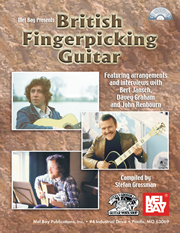
RENBOURN, GROSSMAN, JANSCH, GRAHAM, BRITISH FINGERPICKING GUITAR. CD TABLATURE

RENBOURN, GROSSMAN, JANSCH, GRAHAM, BRITISH FINGERPICKING GUITAR. CD TABLATURE

Interviews and guitar solos from the playing of John Renbourn, Bert Jansch and Davey Graham - the three guitarists who shaped the British school of fingerpicking. Music ranges from blues to medieval, Celtic to folk.

Titles Include: JOHN RENBOURN: Lady Nothynge Toye Puffe, The Moon Shines Bright, The Hermit, Faros Rag, Bransle Gay, The Lamentation Of Owen Roe ONeill, Lord Inchiquin, Carolans Concerto, Mrs. ORourke, Lament For Charles MacCabe BERT JANSCH: Black Waterside, Alices Wonderland, Veronica, The Wheel, St.Fiacres Revenge, The Bridge DAVEY GRAHAM: Forty Ton Parachute, Lashtals Room, Lord Inchiquin, Lord Mayo, Hardiman The Fiddler and Fairies Hornpipe.

The stereo CD features each solo as performed by the respective British composer/guitarist, and contains all but four of the songs in the book. The CD does not contain the following songs: Carolan's Concerto, Mrs. O'Rourke, Lord Inchiquin (arr. by John Renbourn) and Lament for Charles MacCabe. Book with CD

A tribute to the innovators and an analysis of the unique guitar fingerstyles and techniques developed in Great Britain. Presents guitar instrumentals by Davey Graham, Burt Jansch, and John Renbourn - over 20 solos in notation and tablature. The stereo CD features each solo as performed by the respective British composer/guitarist, and contains all but four of the songs in the book. The CD does not contain the following songs: Carolan's Concerto, Mrs. O'Rourke, Lord Inchiquin (arr. by John Renbourn) and Lament for Charles MacCabe.

Song Title: Composer/Source:
Forty-Ton Parachute -- Davey Graham
Lashtal's Room -- Davey Graham
Lord Inchiquin -- Arranged by Davey Graham
Lord Mayo -- Arranged by Davey Graham
Hardiman The Fiddler -- Arranged by Davey Graham
The Fairies' Hornpipe -- Arranged by Davey Graham
Black Waterside -- Arranged by Bert Jansch
Alice's Wonderland -- Bert Jansch
Veronica -- Bert Jansch
The Wheel -- Bert Jansch
St. Fiacre's Revenge -- Bert Jansch
Bridge -- Bert Jansch and Martin Jenkins
Lady Nothynge's Toye Puffe -- John Renbourn
The Moon Shines Bright -- Arranged by John Renbourn
The Hermit -- John Renbourn
Faro's Rag -- John Renbourn
Bransle Gay -- Gervais, arranged by John Renbourn
Carolan's Concerto -- Turlough Carolan, arranged by John Renbourn
Mrs. O'Rourke -- Turlough Carolan, arranged by John Renbourn
Lord Inchiquin -- Turlough Carolan, arranged by John Renbourn
Lament for Charles Maccabe -- Turlough Carolan, arranged by John Renbourn
The Lamentation of Owen Roe O'Neill -- Turlough Carolan, arranged by John Renbourn

Prezzo: €24,99
€24,99

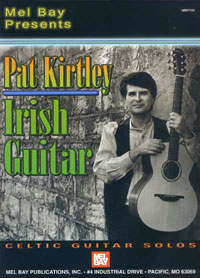
IRISH GUITAR Celtic Guitar Solos, Pat Kirtley LIBRO CD TABLATURE IRISH CHITARRA

IRISH GUITAR Celtic Guitar Solos, Pat Kirtley. CD TABLATURE

LIBRO PER CHITARRA CON TABLATURE E CD

transcribed by John Roberts & Mark Pritcher  

Product Description:
World traveling fingerstyle guitarist Pat Kirtley presents 17 solo guitar arrangements of traditional Irish tunes including a few original compositions in the same vein by himself, Pierre Bensusan, and Duck Baker. As all of the tunes in this 1997 recording were arranged in altered tunings (DADGAD, EADEAE or DADEAD), each appears in both standard notation and tablature with insightful performance notes. In general, these transcriptions from Pat Kirtley’s 1997 album of the same title are extremely accurate; The Red-Haired Boy, however, played as a duet with Steve Rector on the album - appears as a solo arrangement in this book. Recommended for the intermediate to advanced player, the author provides insightful performance notes for each tune.

Format: Book/CD Set

Song Title: Composer/Source:
Blind Mary Turlough O'Carolan
Chase the Weasel Pat Kirtley
Fannie Power Turlough O'Carolan
Finn MacCool's Reel Pat Kirtley
Lord Mayo Arr. Davey Graham
Moran's Return Arr. Pat Kirtley
Morgan Magan Turlough O'Carolan
Planxty Irwin Turlough O'Carolan
Rodney's Glory Arr. Pat Kirtley
Sergeant Early's Dream Arr. Pat Kirtley
Shi Beg Shi Mhor Arr. Pat Kirtley
The Blarney Pilgrim Arr. Pat Kirtley
The Last Pint Pierre Bensusan
The Pretty Milkmaid Arr. Pat Kirtley
The Rakes of Waterloo Duck Baker
The Red-Haired Boy Arr. Pat Kirtley
The South Wind Arr. Pat Kirtley
Voyage for Ireland Pierre Bensusan


REVIEWS OF PAT KIRTLEY'S IRISH GUITAR
(from the Boston Irish Reporter / January 1998)
Irish Guitar Pat Kirtley / Mainstring Music
That O'Carolan's music continues to remain part of the tradition is evident in the fact that every Irish guitarist's repertoire includes O'Carolan pieces. Pat Kirtley's latest recording is a testament to that as it contains five of the itinerant harper's compositions. Kirtley, the 1995 National Fingerstyle Guitar Champion, has his roots in the music of his native Kentucky and his two previous CD's
highlighted the traditional American musical styles he grew up with.
This wonderful recording, his first foray into Irish music, is all solo acoustic guitar except when joined by Mark Cannon's flute on O'Carolan's Blind Mary and Steve Rector's guitar on the 'Kentuck-ification' of the well known Red-Haired Boy. New compositions like Kirtley's own Finn MacCool's Reel as well as two pieces by French guitarist Pierre Bensusan help to lend balance to the recording which relies heavily on the tried and true Irish guitar repertoire like Si Beag Si Mhor, The South Wind and Fannie Power. It is Kirtley's masterful playing though, which stands out and begs to be listened to. On his lovely first foray into the world of Irish music, Kirtley has produced a winner and a must-have for any fan of Celtic guitar.

(from Dirty Linen Magazine Nov '97 issue)
Pat Kirtley / Irish Guitar
Irish Guitar features 17 instrumentals, mostly traditional, by fingerstyle guitarist Pat Kirtley. Kirtley is firmly rooted in the Pierre Bensusan, John Renbourn, Duck Baker school of playing. The tunes are given an honest airing, never hurried, letting the melody lines develop fully. Even though most of the tunes have been done dozen's of times elsewhere, Kirtley's interpretations shine a fresh light
on them. A joy to listen to and one of the best albums of traditional guitar I've heard.

(from Acoustic Guitar Magazine April '98 issue)
Pat Kirtley / Irish Guitar
Kirtley's nimble and heartfelt renderings of 17 traditional and Irish and Irish-influenced tunes are a delight. The sway of John Renbourn, Duck Baker, and Pierre Bensusan is obvious, yet Kirtley articulates the emotional quality of each piece (the deep melancholy of "The Pretty Milkmaid", the agile gaiety of "Rodney's Glory") according to his own vision and sensitivity. The solo guitar format is nicely augmented on "Blind Mary" by by Mark Cannon on Irish wooden flute, and by guitarist Steve Rector on a spirited "Red Haired Boy". A generous portion of Turlough O'Carolan makes this a potent listening experience.
-Jim Ohlschmidt


(from Fingerstyle Guitar Magazine July/August '97 issue)
Irish Guitar
It's been a couple of years since Pat Kirtley's last CD. His current offering, Irish Guitar, is well worth the wait. This hefty collection of 17 tracks of mostly traditional tunes is ingeniously arranged and brilliantly played by one of the emerging stars of the fingerstyle world. -James Jensen


(from Guitar Magazine December '97 issue) "-Best of 1997-"
PAT KIRTLEY Irish Guitar (Mainstring Music)
Despite having won the National Fingerpicking Championship with his rip-snorting version of "Ghost Riders In The Sky:' Pat Kirtley's fingerpicking forte remains his delicate touch combined with subtle and craft-laden melodic invention. This is exhibited in abundance on his new recording, Irish Guitar, a collection of 17 drop-dead gorgeous arrangements of mostly solo, well-known airs.
dances, and songs from the Celtic side of acoustic guitar repertoire. Each piece is artfully rendered and beautifully recorded, and
Kirtley's arrangements are nonpareil. Witness his version of the chestnut "The Pretty Milkmaid," which, in Kirtley's hands, is transcendent.
-Jon Chappell. Guitar Magazine


PAT KIRTLEY AND IRISH GUITAR
Pat is a gifted performer who blends a rich Southern musical heritage with modern imagination and masterful contemporary technique. As a creator of new acoustic music, Pat has penned a virtual library of fresh, lyrical compositions for guitar. His talents won him the title of US National Fingerstyle Champion in 1995, and his playing has since garnered international praise. His CD Kentucky Guitar was named one of the "Top 59 Acoustic Albums of the Year" by Japan's Player Magazine, and he's been hailed as one of "The Next Generation: Hot New Acoustic Acts for the Millenium" by Acoustic Guitar Magazine. In 1999 Pat was selected as the cover feature of the German Akustik Gitarre magazine, Europe's largest acoustic guitar publication. A recent tour of Japan and China included an appearance as headliner of the Japan National Fingerpicking Day festival in Tokyo. Pat is also known and respected as a guitar educator, traveling thousands of miles each year in the USA and presenting musician workshops internationally for Taylor Guitars, conducting master classes, and producing acclaimed instructional videos.

The 1997 CD Irish Guitar represents Pat's favorite pieces from the world of Irish jigs, reels, airs, and dances. "I've collected these tunes in my head and on guitar for years." says Kirtley. "Traditional Irish music is important, and I wanted to create new arrangements that do justice to these beautiful melodies and rhythms."
Tunes in the collection include a lively, up-tempo Morgan Magan, one of four pieces here by 17th century composer O'Carolan, and a Kirtley composition, Finn MacCool's ReeL,which also appears on a Narada Recordscollection entitled "Dance of the Celts". Earle Hitchner, well-known Celtic music journalist, writing about Finn MacCool's ReeLfor Narada, said "Pat creates a remarkable effect through the largerthan- usual intervals he's written into the melody. These spacious, skillfully etched tones evoke the image of Finn MacCool, an Irish mythological giant whose American counterpart would be Paul Bunyan, stepping across Ireland. It's a quietly impassioned tour de force..." Also in the collection are evocative slow melodies, like Moran'5 Return, Blind Mary, and The Pretty Milkmaid. Kirtley: "These are unforgettable melodies with an indefinable aura of sadness. Much of the traditional Irish music, especially the dance music, has an exuberant, happy energy, but the slow airs move right to the heart with a strength that cannot be expressed in words. It's powerful music."
Irish Guitar is a solo guitar project, without overdubs, with the exception of two duos. Celtic multiinstrumentalist Mark Cannon and award-winning guitarist Steve Rector,join Kirtley for duets on Blind Mar, and a rousing bluegrass-crossover version of The Red-Haired Boy.


PERFORMANCE NOTES FOR IRISH GUITAR
I spent more than five years gathering, learning and arranging these tunes. During that time I listened
to groups like the Bothy Band, the Chieftains, DeDanaan, the Tannahill Weavers, and to individual
musicians like Alisdair Fraser, Tim Britton, Tommy Peoples, Sharon Shannon-fiddlers, pipers, whistle
players, and button accordianists. I paid attention to the elemental guitarists of the genre; Dave Evans,
Davey Graham, Duck Baker, John Renbourn, Pierre Bensusan, and Pat Kilbride. I began attending Irish
sessions" whenever possible, and learned how to join in with the guitar and become part of the sound. I
played gigs with pipers and fiddlers. These experiences became part of the preparation for recording Irish
Guitar.
Some of the arrangements are challenging, and some are relatively easy. They all demand attention to
detail, and a sense of the basic elements of Irish traditional music-melody, ornamentation, and rhythmic
'groove'.
Note: Many of the tunes featured here appear on the videos "Ramble to Cashel" and "The Blarney
Pilgrim" on DVD and VHS from Vestapol Videos (available through Mel Bay). The videos were filmed "for
guitarists" with good shots of the fretboard and hands, and watching them will help in learning these tunes
(as well as show you some other great players in action).

THE TUNES:
Morgan Magan
This is a challenging piece to learn. It should be played at a brisk tempo, which can only be built up
over time, so don't be impatient. The technique includes a few finger stretches (as in measure 4) and a
couple of potentially awkward passages in terms of left hand fingering (for instance, measures 25-27).


The Last Pint
This is a reel by Pierre Bensusan. When I first heard it played on his 1987 album "Spices", I wondered
how anyone could playa tune like that. At first hearing it seemed like a barrage of notes, but I liked it. I
didn't try to play it at first. When I heard Pierre do it in a concert later, he took off way too fast and did a
hyper-speed version of it. Afterward I thought, if he can do it 3x as fast as he originally recorded it, I should
be able to do it 1x as fast! This tune imitates the style of bagpipes, with large melodic leaps and
characteristic ornamentation. The ending run (measure 75) is a "cascading arpeggio" which is played with
the right hand pattern i-p-m (index-thumb-middle) in a repeating pattern.


Blind Mary
A slow, stately melody where every note counts!
Moran's Return
I recorded this tune at capo 3 so it would be in the key of F like the fiddle version I learned it from. It
works fine with no capo (key of D) too.
Finn MacCooI's Reel
The C part (beginning measure 24) was the most difficult for me to learn well, I think mostly because
I was impatient with it. Working on this tune slowly will prove worthwhile.


Lord Mayo
Beautifully arranged in EADEAE by Davey Graham, this is one of the first Irish tunes I ever learned. It
is easy to play, but demands attention to make it flow and to play it expressively.


Rodney's Glory
This one is a real challenge. I use my left hand thumb to fret many of the notes on the 6 th
string. At the beginning of the B part (measure 11), keep a barre across 3 strings at fret 7 with your index finger. Then in the middle of the next measure, you slide the barre down to the 5 th
fret. The rest of the B part is playable but tricky because the melody jumps all over the place and doesn't stick to a standard scale. Just work through it very slowly and don't give up!


Voyage for Ireland
Originally titled in French "Voyage pour L'lrlande", this a beautiful, atmospheric piece written by Pierre Bensusan. It's a good example of how the D minor tonality works in DADGAD. I always hold the F bass note (6 th string 3 rd fret) with my left hand thumb when the melody is on the top string.


The Blarney Pilgrim
The difficulty in playing this arrangement is in the right hand. It is necessary to use the thumb and all three fingers (i-m-a), and there's no repeating right hand pattern to simplify things. Try to work out the fingering so as to avoid getting your fingers in a knot. To memorize this piece and play it fluidly, you'll have to memorize the right hand fingering as well as the left, and work on keeping your thumb thumping away on a muted low D for rhythm.


Shi Beg Shi Mhor
I arranged this piece with the capo on the 4 th fret purely for the harplike tone it affords. The resulting key of F# isn't conducive to ensemble playing of the tune! If you play with others, the natural key is D (no capo).


The Red-Haired Boy
There must be an easier way to play this tune than the leaps and jumps required by the EADEAE
tuning, but it sounded so good that I decided to keep it there. It does offer a distinctive sound, and the melody is clear. I always hold the 6 th string G note (3 rd fret) with my left hand thumb. On the album, I am joined by Steve Rector in a duet, but the arrangement here works fine as a standalone fingerstyle piece.


Fannie Power
The arrangement of this O'Carolan tune is straightforward and uses the technique of playing alternate notes on fretted and open strings for maximum sustain, to get a harplike quality.


Planxty Irwin
This is one of O'Caroian's most beautiful melodies, arranged in the tuning DADEAD. Pay attention to the bass progression in measures 46-49.


The Rakes of Waterloo
Duck Baker originally composed this tune in Drop D tuning, but it also works in DADGAD. The intro is played freely and slowly, and then the tune itself is a jig with a strong rhythmic pulse. Much of the melody is played on the lower strings, and you have to be careful to make the melody come out clearly while thumping away on the bass string. I recorded this tune as a set with Chase the Weasel, and the interlude at the end (measure 42) is the segue between the two. You can also play either one as a standalone.


Chase The Weasel
There is a technique in this tune that is not obvious from the written score. It is a percussive right hand "smack" of the strings where you brush the string or strings with the top side of the fingernail in a downward motion. The first place it appears is halfway through measure 5, the 2 nd
"7" on the top string. If you listen to the recording, you will notice several places where this technique is used instead of the normal upward stroke of the right hand fingers. 

Prezzo: €32,99
€32,99

IRISH & SCOTTISH AIRS & BALLADS FOR ACOUSTIC GUITAR BILL BRENNAN CD TABLATURE

IRISH & SCOTTISH, AIRS & BALLADS FOR ACOUSTIC GUITAR. Bill Brennan. CD TABLATURE

LIBRO DI MUSICA, SPARTITI PER CHITARRA CON CD E TABLATURE. 

Bean An Fhir Rua Arr. By Bill Brennan
Blak Velvet Band Arr. By Bill Brennan
Bonnie Dundee Arr. By Bill Brennan
Caitlin Trail Arr. By Bill Brennan
Carrigdhoun Arr. By Bill Brennan
Come Over The Stream Arr. By Bill Brennan
Curragh Of Kildare Arr. By Bill Brennan
Farewell To Tarwathie Arr. By Bill Brennan
Flowers Of The Forest Arr. By Bill Brennan
Galloway Hills Arr. By Bill Brennan
Jock O'hazeldean Arr. By Bill Brennan
Loch Lomond Arr. By Bill Brennan
Matt Hyland Arr. By Bill Brennan
Skye Boat Song Arr. By Bill Brennan
The Banks Of Claudy Arr. By Bill Brennan
The Cliffs Of Doneen Arr. By Bill Brennan
The Galway Shawl Arr. By Bill Brennan
The Garton Mother's Lullaby Arr. By Bill Brennan
The Road To Dundee Arr. By Bill Brennan
Tramps And Hawkers Arr. By Bill Brennan  

Prezzo: €33,99
€33,99

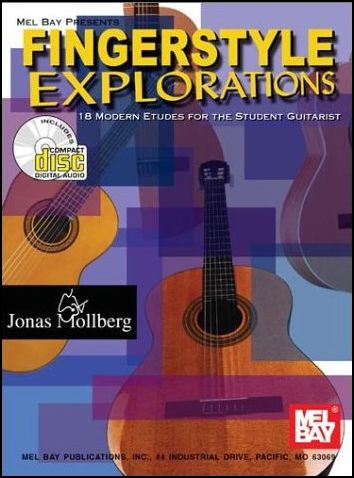
FINGERSTYLE EXPLORATIONS, JONAS MOLLBERG Book/CD GUITAR standard notation & TABLATURE mel bay

FINGERSTYLE EXPLORATIONS, JONAS MOLLBERG. CD TABLATURE

The purpose of this material is to create a bridge between pop and rock music and the traditional guitar repertoire. As a guitar instructor, the author has often wished there was material based on classical guitar technique but at the same time sounding more like modern, popular music. He also felt a need for a body of literature which is idiomatic and really makes use of the possibilities of the guitar, so he created these pieces. The pieces frequently use open strings as one way of releasing the magic of the guitar. Another prominent element is the use of arpeggio technique, which provides a continuous and natural flow of music. The book is aimed at guitar students as well as people who take delight in music that is melodious and easy to play but doesn't require too much technical skill to perform. The book is written in standard notation and tablature.

Prezzo: €76,00
€76,00

FAHEY JOHN AMERICAN PRIMITIVE GUITAR 3CD TABLATURE LIBRO Indian Pacific Railroad Blues

FAHEY JOHN, AMERICAN PRIMITIVE GUITAR. In Christ There Is No East Or West -Take A Look At That Baby -Some Summer Day -Indian Pacific Railroad Blues -The Last Steam Engine Train -When The Springtime Comes Again -The Approaching Of The Disco Void. SHEET MUSIC BOOK WITH 3CD & GUITAR TABLATURE. 

LIBRO DI MUSICA ACUSTICA, CON 3 CD. 

SPARTITI PER CHITARRA CON :

ACCORDI PENTAGRAMMA, TABLATURE. 

... in roots music as a living, breathing thing rather than a museum piece. Industrial guitar grind dominates City Of Refuge, bathyspherelike booms echo through Womblife. White gamelan sounds reverberate through The Epiphany Of Glenn Jones. Such experimentation might have isolated him from his peers through most of the last 30 years, but in the 90s he has discovered an affinity with the ever expanding global underground communitY. "I didn't know there was an alternative movement going," Fahey admits, "so I just kept trying to create similar things to the old. I was aware that there had been an experimental movement in the 60s with John Cage and his followers, but thought they had all gone. Then some friends introduced me to Sonic Youth. Until then I didn't know what was going on.
"As defined by Sonic Youth's Thurston Moore, this "alternative movement" was out of a desire for music resistant to "commodification", be it noise, lo-fi, 20th century experimental music and improv, or global and rediscovered American roots musics like bluegrass, folk and blues.
John Fahey's work feeds the new underground spirit on a number of counts, while Revenant - the label Fahey co-owns with his manager, the Nashville-based attorney Dean Blackwood - alerts new audiences to a hidden history of American music, retrieved from the tiny regional labels scattered across its rural hinterlands.
The surprising success of the six CD box set reissue of rogue archivist Harry Smith's Anthology Of American Folk Music (for which Fahey supplied award-winning sleevenotes) attests to a desire for music that emerges from and addresses real experiences rather than a marketing man's business plan. The Revenant archive releases, meanwhile, vividly recast the past not as nostalgia but as American Primitive or Raw Music. "It was Dean's idea to do that," Fahey modestly states, "but I provided most of the information, together with this collector called Gayle Dean Wardlow. Now that the American Primitive thing is catching on we'll do more. People love the title" The range of his enthusiasms combined with the breadth of his own music make Fahey a vital link connecting today's underground with a century of raw and experimental musics. For his part, he is only too pleased to be working within his newly adopted alternative music 'community'. His instant conversion has already produced one of its finest works in The Epiphany Of Glenn Jones, which teamed John with the Massachusetts post-rockers Cui De Sac, led by Glenn Jones. The title refers obliquely to the project's unpromising start as a "retro lounge music" session - quickly aborted - which Jones's sleeve notes describe as being akin to taking part In some "hellish sensory deprivation experiment". Was working with Fahey really that bad?
The guitarist chuckles mischievously: "Glenn told me after the Epiphany that he had got on a power trip. It had happened to him before, only he hadn't realized it. He did things like not letting me meet the other members of the band until the recording sessions, all kinds of tricks, so that he could remain ultimate dictator of Cui De Sac and the project. But that's an old battle, Glenn's a friend of mine and it came out OK."

AMERICAN PSYCHO
When Fahey was venting his disgust for his 60s recordings earlier on, he went at them with a ferocity out of all proportion to the quality of music. His negative attitude hinted that something deeper was going down than a mature reappraisal of his youthful endeavours. Eventually, his hostility relents, and the negativity lets up long enough to reveal the pain at its source.
"Mainly it's a parental situation:' Fahey explains, washing down more popcorn with gulps of sweet iced tea. "I was writing these things as an escape, as a possible way to make money. The sentiments expressed come out of a messed up situation. I was creating for myself an imaginary, beautiful world and pretending that I lived there, but I didn't feel beautiful. I was mad but I wasn't aware of it. I was also very sad, afraid and lonely. By presenting this so-called beautiful facade I looked good to myself and my audience.
"This went on for years," he continues. "I always tried to put a peaceful element into the music, but it was false because I was not at peace. I didn't know what 1was doing and felt pretty phony. I didn't understand any of this until I had psychoanalysis."
Entering psychoanalysis in the mid-80s helped him exorcise the past. "Before psychoanalysis:' Fahey recalls, "I used to accidentally get so high on prescription drugs and booze that, sometimes, I wouldn't show up for a show. Or I'd be there and not know it. For a while I thought 1was going insane. People would tell me I did these crazy things, but I didn't attribute it to the Quaaludes I was taking so that the memories of my father abusing me as a child wouldn't come back."
In taking Fahey back to the source of his traumas psychoanalysis invested the innocent symbols he had carried over from his childhood with sinister new meanings. Out of a boy's fascination with turtles and tortoises, he had elaborated a personal mythology based on the reptiles, using them as a repeat motif anchoring his art and discography in his childhood.
Under analysis he recalled how he burst out screaming when he first saw a turtle. "When I was about four or five years old I saw what I thought was a penis walking across the front lawn:' he shudders. "It was just a box turtle, but it kind of upset me ..."
Analysis related the encounter to the memory of being sexually molested by his father. "The obsession comes from the psychic meaning of turtles, reptiles and amphibians. In dreams they symbolize genitalia. That's why I went to a psychoanalyst because I had all these repressed memories." The unifying visual motif of his personal mythology and extensive discography turned out to be the corrupting agent of their potential destruction all alone. Remarkably, coming to terms with the full horror of such a revelation marked the beginning of Fahey's 90s regeneration.

AMERICAN PRIMITIVE
John Fahey was born on 28 February 1939 and spent most of his childhood in Takoma Park, Maryland, a small town on the outskirts of Washington DC. His early musical training was at once formal and frustrating. His parents occasionally took him to see 50s bluegrass stars like The Stanley Brothers, whose early recordings Fahey would later reissue on Revenant. But though he grew up with Country & Western and bluegrass, his first instrument was a clarinet. He abandoned it at 14 when he bought his first guitar, a $17 Sears And Roebuck special, with money earned from his newspaper round. After teaching himself to pick his way through the Eddy Arnold songbook, the young, lonely and slightly crazy guitar player decided it was time to start writing his own material. The year was 1954, and Elvis Presley was just beginning to make waves in America. If the young Fahey readily embraced the ...

Prezzo: €35,99
€35,99

CELTIC ENCYCLOPEDIA, FINGERSTYLE GUITAR. TABLATURE

CELTIC ENCYCLOPEDIA, FINGERSTYLE GUITAR. TABLATURE

Product Description:
This comprehensive book contains over 100 Celtic tunes arranged for solo fingerstyle guitar. This edition is derived from a collection of nearly 300 arrangements Glenn Weiser has created over the last twenty years. The book is divided into 4 sections: 1) airs, marches and waltzes 2) hornpipes, jigs and reels 3) tunes from the Bunting collection 4) harp tunes of Turlough O'Carolan. All are in either standard or dropped-D tuning, and can be played on either nylon or steel string guitars. All of these melodies are accompanied with brief historical notes. Written in standard notation and tablature. Intermediate in difficulty.

Format: Book
Series: Encyclopedia
192 PAGES


Celtic music is as beautiful as it is vast and varied. With their red-blooded pipe marches, tender harp airs, vivacious dance tunes, and lovely songs, few parts of the world can claim such musical wealth as Ireland and Scotland. This music seems endless - French-Canadian fiddler Jean Carignan, for example, is said to have known 7.000 tunes. But of course none of this music was composed for the guitar, and the instrument itself wasn't even played much in Ireland until the 1940's. With the folk boom of the sixties, fingerpickers started to work out arrangements of fiddle tunes. And even though a number of Celtic guitar books have since been published, they represent only a tiny fraction of the traditional repertory. This book contains over one hundred Celtic tunes for solo guitar. It is part of a collection of almost three hundred arrangements I have done over the last twenty years. Two volumes - Folk Songs for Solo Guitar and Celtic Harp Music of Carolan and Others for Solo Guitar - have already appeared; now I can offer guitarists even more. The book is divided into four sections. The first part consists of airs, marches and waltzes. Famous tunes like Londonderry Air, The Parting Glass, and All Through the Night are included, as well as those lesser known but equally worthy. Here you'll find marches where the guitar mimics the bagpipes, plaintive laments for fallen heroes, tunes that are sheer whimsy, and love songs of great beauty and passion. In the second section there are reels, jigs, and hornpipes. For almost two hundred years beginning around 1675, step dancing was the national pastime in Ireland. During this period the fiddle was the dominant instrument, and thousands of dance tunes were composed by anonymous musicians. Traveling dancing masters made their livings teaching new steps wherever they went, and it was not unheard of for a whole village to drop its labors to greet a teacher of the art when he showed up in town. Most of the tunes in this section date from this period. In 1792 it was realized that the Irish harp, which had been the nation's most loved instrument since ancient times, was fast dying out. To collect and preserve what was still left of this music, a gathering of harpers was organized in Belfast to compete for cash prizes. Ten harpers came to the festival, and a young church organist, Edward Bunting, was hired to write down the tunes. Although his work was flawed by his failure to notate the bass parts of the pieces, Bunting did preserve many of the oldest Irish airs. He arranged the material for piano (adding a few questionable accidentals along the way), and in the same year authored the first volume of The Ancient Music Ireland. He later toured Ireland, collecting more music from harpers, singers, and other musicians, and eventually produced two further volumes. Tunes from the Bunting Collection - harp pieces, songs, and a jig - make up the third part. Turlough A' Carolan (1670-1738)was the last of the great Irish harper-composers. Blinded by smallpox at eighteen, he had been given three years of harp lessons and then sent out on the road as an itinerant musician. He soon learned he had a creative gift and would compose tunes for the wealthy patrons who provided him with hospitality in exchange for music. In the mansions of the aristocracy he came to admire Italian Baroque music and attempted to incorporate elements of it into his often remarkable pieces. His music was later collected and his biography written by the Irish scholar Donal O'Sullivan. Over twenty of Carolan's tunes (214 have survived) conclude the book. These arrangements are all in standard tuning or dropped D, which makes them viable for both nylon and steel string guitars. They have also been worked out in the original keys whenever possible so that they may be performed with other instruments used in Celtic music. In writing the bass lines and inner voices I have followed the rules of four-part voice leading because I like the way the tunes sound with simple diatonic harmony. Indeed, I often think of arranging traditional music as being similar to jewelry making - the tune itself is the gem, and the harmonization and the fingering are the setting. Tobe displayed, the stone needs the setting, and the setting in tum must do justice to the stone. I'd like to thank Bill Bay of Mel Bay Publications for bringing out this book, and also John Roberts for engraving the music.  


Contents:

Introduction
Airs, Marches and Waltzes:
All Through the Night
The Atholl Highlanders
The Banks of Inverness
The Battle of Waterloo
Believe Me if All these Endearing Young Charms
The Battle of Aughrim
The Boys of Wexford
Castles in the Air
Childgrove
Cock up your Beaver
Come Under My Plaidie
Dainty Davy
Down by the Sally Gardens
The Earl of Dalhousie's Happy Return
Eileen Aroon (first and second settings)
Flow Gently, Sweet Afton
For Ireland I'd Not Tell Her Name
Hugh O'Neill's Lament
King of the Fairies
The Lark in the Clear Air
The Lass of Patie's Mill
Londonderry Air
Macpherson's Lament
Niel Gow's Lament for His Second Wife
The Old Resting Chair
The Parting Glass
The Piper through the Meadow Straying
Old Ireland, a Long Farewell
Princess Augusta
The Rocks of the Brae
Scottish Farewell
The Shepherd's Wife
The Rose Tree
Hornpipes, Jigs, and Reels:
Hornpipes:
Alexander's Hornpipe
The Brown Coffin
Clark's Hornpipe
Delahanty's Hornpipe
The Fairies' Hornpipe
Molly Halfpenny
The Morpeth Rant
The Quindaro Hornpipe
Jigs:
The Burnt Old Man
Cherish the Ladies
The Connaughtman's Rambles
Father Tom's Wager
The Joy of my Life
The Lark in the Morning
Larry O'Gaff
The Muckin' o' Geordie's Byre
The Mooncoin Jig
Nell Flaherty's Drake
O'Keefe's Slide
Pipe on the Hob
The Rakes of Kildare
The Rock and the Wee Pickle Tow
Swallowtail Jig
The Trip to Sligo
Reels:
The Fairies' Reel
Angus Campell
Cooley's Reel
The Good-Natured Man
Lord Gordon's Reel
Miss Monahan's Reel
The Mullingar Races
Peter Street
Petronella
Pigeon on the Gate
The Pigtown Fling
Scollay's Reel
The Silver Spire
The Star of Munster
The Wise Maid
The Wind That Shakes the Barley

Tunes from the Bunting collection:
The Dawning of the Day
The Foggy Dew (major and minor key versions)
The Gentle Maiden
The Girl I Left Behind Me
Give Me Your Hand
The Joyce's Country Greeting
Saint Patrick's Day
A Soft Mild Morning
Summer is Coming
The Wild Geese
The Coolin

Harp tunes of Turlough O'Carolan:
Thomas Burke
Madam Cole
John Drury (First Air)
Anne MacDermott Roe
Miss MacDermott
Denis O'Conor (Second Air)
Maurice O'Connor (Second Air)
John Kelly
Mary O'Neill
John O'Reilly
Kean O'Hara (Third Air)
Planxty Scott
Captain Sudley
Colonel Palmer
All Alive
Carolan's Cottage
Carolan's Fancy
Planxty O'Carolan
The Two William Davises
The Lament for Terence MacDonough
Ode to Whiskey

Alphabetical Index
About Glenn Weiser

Prezzo: €25,99
€25,99

FINGERPICKING 12-STRING GUITAR METHOD FLINT BOOK/CD TABLATURE

12-STRING FINGERPICKING GUITAR METHOD, FLINT. 27 Titoli.

BOOK AND CD.
IN STANDARD NOTATION AND TABLATURE.

Product Description:
This beginner's method for 12-string guitar by veteran guitarist Tommy Flint covers all of the basics for getting started. Topics include tuning and strings; reading chord diagrams, notation and tablature; blues; triplets; slurs; slides; melody playing on the 1st and 2nd strings; two and three part harmony; movable chords; and rolls. Numerous solos give the student a chance to practice the skills being taught. The companion CD is a helpful audio tool for attaining the correct sound.

Contents:

Going Down The Road Feeling Bad --
Shuffle Boogie --
Down And Out Blues --
Sweet Hour Of Prayer --
In The Pines --
Wildwood Flower --
Mean And Low-Down Blues --
Bully Of The Town --
Little Rosewood Casket --
Graceful Movements --
Letter Edged In Black --
A Boogie --
Dowtown Strut --
Little Brown Jug --
Under The Double Eagle --
Rena Lara --
Gee Haw Boogie --
Brushing The Blues --
Old 97 --
Frankie And Johnny --
The Old Spinning Wheel --
South Side Shuffle --

Prezzo: €20,99
€20,99
Condividi contenuti