JAZZ GUITAR

LIBRI DI TRASCRIZIONI DI MUSICA JAZZ, TABLATURE, SPARTITI,

PAT METHENY ORCHESTRION THE COMPLETE SCORE SPARTITI CHITARRA ACCORDI LIBRO MUSICA

PAT METHENY - ORCHESTRION, THE COMPLETE SCORE.

LIBRO DI MUSICA JAZZ
SPARTITI DI OGNI STRUMENTO

Series: Artist Books
Artist: Pat Metheny

Metheny says, “'Orchestrionics' is the term that I am using to describe a method of developing ensemble-oriented music using acoustic and acoustoelectric musical instruments that are mechanically controlled in a variety of ways ... with the pieces on this particular recording leaning toward the compositional side of the spectrum. On top of these layers of acoustic sound, I add my conventional electric guitar playing as an improvised component.” Here are the original scores for five pieces: Entry Point - Expansion - Orchestrion - Soul Search - Spirit of the Air.

Width: 9.0"
Length: 12.0"
280 pages 

Price: €26,99
€26,99

PAT METHENY CHRISTIAN MCBRIDE & ANTONION SANCHEZ-DAY TRIP-TOKYO LIVE TABLATURE CHITARRA

PAT METHENY WITH CHRISTIAN MCBRIDE & ANTONION SANCHEZ - DAY TRIP/TOKYO DAY TRIP LIVE.

SHEET MUSIC BOOK WITH GUITAR TABLATURE .


LIBRO DI MUSICA FUSION , 

SPARTITI PER CHITARRA :

ACCORDI, PENTAGRAMMA, TABLATURE .


Series: Guitar Recorded Version
Format: Softcover - TAB
Artist: Pat Metheny 

Inventory: #HL 00691073
ISBN: 9781617805424
UPC: 884088553746
Width: 9.0"
Length: 12.0"
Page Count: 224 Pages

Transcriptions to all the tracks from Metheny's 2008 one-day-long recording session with bassist Christian McBride and drummer Antonio Sanchez: At Last You're Here • Calvin's Keys • Day Trip • Dreaming Trees • Is This America? • Let's Move • The Red One • Snova • Son of Thirteen • When We Were Free. Also includes these songs from the live album Tokyo Day Trip: Back Arm & Blackcharge • Inori • The Night Becomes You • Traveling Fast • Tromso.


TiTLES : 
At Last You're Here
Back Arm & Blackcharge
Calvin's Keys
Day Trip
Dreaming Trees
Inori
Is This America?
Let's Move
The Night Becomes You
The Red One
Snova
Son Of Thirteen
Traveling Fast
Tromso
When We Were Free

Width: 9.0"
Length: 12.0"
224 pages 

Price: €39,99
€39,99

PAT METHENY GUITAR ETUDES WARM-UP EXERCISES FOR GUITAR TABLATURE SPARTITI METODO CHITARRA

PAT METHENY GUITAR ETUDES, WARM-UP EXERCISES FOR GUITAR. TABLATURE

LIBRO METODO DI MUSICA JAZZ.

SPARTITI PER CHITARRA:

PENTAGRAMMA E TABLATURE.  


''THESE STUDIES ARE MY TRANSCRIPTIONS FROM A WEEK IN ITALIA IN THE SUMMER 2010''. METHENY

PESCARA

VENEZIA

PERUGIA

BORGIA ??

Series: Guitar Book
Format: Softcover - TAB
Artist: Pat Metheny

One of the most common questions Pat is asked by students is, “What kinds of things do you do to warm up before a concert?” Over the years, in many master classes and workshops around the world, Pat has demonstrated the kind of daily workout he puts himself through. This book includes a collection of 14 guitar etudes he created to help you limber up, improve picking technique and build finger independence.

Width: 9.0"
Length: 12.0"
96 pages 

Price: €25,99
€25,99

STAN GETZ & JOAO GILBERTO FEATURING ANTONIO CARLOS JOBIM TRANSCRIBED SCORES GUITAR TABLATURE

GETZ / GILBERTO, STAN GETZ & JOAO GILBERTO, FEATURING ANTONIO CARLOS JOBIM. TRANSCRIBED SCORES. SHEET MUSIC BOOK WITH BASS & GUITAR WITH TABLATURE .

LIBRO DI MUSICA BRASILIANA. 

SPARTITI DI OGNI STRUMENTO : 

GETZ/GILBERTO, STAN GETZ & JOAO GILBERTO, FEATURING ANTONIO CARLOS JOBIM. TRANSCRIBED SCORE. TABLATURE

Getz/Gilberto. (Stan Getz & Joao Gilberto, featuring Antonio Carlos Jobim). By Joao Gilberto and Stan Getz. By Antonio Carlos Jobim.
For Guitar, Piano / Keyboard, Saxophone. Softcover. 160 pages.

This folio transcribes every note by every instrument on the ground-breaking 1965 bossa nova masterpiece that won the Grammy Award for Best Album of the Year and produced the classic standard “The Girl from Ipanema” which also won a Grammy for Record of the Year. It features Stan Getz on saxophone, Joao Gilberto on guitar, and Antonio Carlos Jobim on piano. 8 songs, including: Desafinado - Doralice - The Girl from Ipanema (Garôta De Ipanema) - O Grande Amor - Para Machuchar Meu Coracao - Quiet Nights of Quiet Stars (Corcovado) - Só Danço Samba (Jazz 'N' Samba) - Vivo Sonhando (Dreamer). 

Desafinado
Doralice
The Girl From Ipanema (Garôta De Ipanema)
O Grande Amor
Para Machuchar Meu Coracao
Quiet Nights Of Quiet Stars (Corcovado)
Só Danço Samba (Jazz 'N' Samba)
Vivo Sonhando (Dreamer) 

Price: €29,99
€29,99

GEORGE GERSHWIN, RHAPSODY IN BLUE FOR SOLO CLASSICAL GUITAR ANTHONY D'ADDONO. CD TABLATURE

GEORGE GERSHWIN, RHAPSODY IN BLUE FOR SOLO CLASSICAL GUITAR ANTHONY D'ADDONO. CD TABLATURE

LIBRO CON CD

Series: Guitar Solo
Format: Softcover with CD - TAB
Arranger: Anthony D'Addono
Composer: George Gershwin

Here is George Gershwin's classic composition professionally arranged for solo guitar in standard notation and tablature. The accompanying CD contains a complete performance of the piece. Perfect for advanced guitarists.

Width: 9.0"
Length: 12.0"
32 pages 

Price: €23,99
€23,99

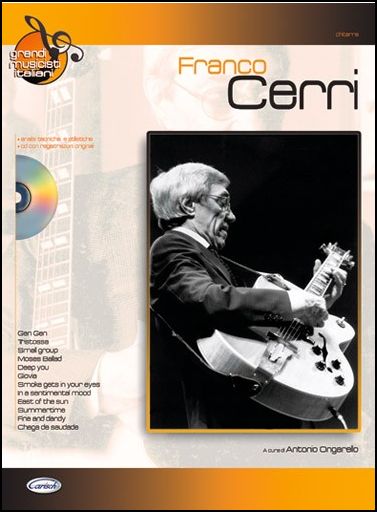
Cerri Franco GRANDI MUSICISTI ITALIANI LIBRO CD Chega de saudade-Gen Gen-Summertime-In a sentimental mood

CERRI FRANCO, GRANDI MUSICISTI ITALIANI LIBRO CD

LIBRO CON CD

GRANDI MUSICISTI ITALIANI: FRANCO CERRI:

a cura di Antonio Ongarello
Questo libro è il resoconto di un viaggio nel cuore forte, negli onesti pensierie nelle grandi mani di Franco Cerri. Non aspettatevi un altro Metodo per suonare la chitarra; in realtà lo potrebbe anche essere, ma ciò che vi troverete è soprattutto una ricerca delle radici che hanno dato vita ad una artisticità unica. Un modo di vivere per e con la musica che ha fatto scuola e lo ha portato a raggiungere l’obiettivo forse più desiderato da ogni Artista: esprimere se stesso in uno stile unico; lo stileto di Franco Cerri. (Antonio Ongarello)Il volume Include analisi tecniche e stilistiche sulle più celebri composizioni e interpretazioni. Gen Gen - Tristossa - Small group - Moses Ballad - Deep you - Giovia - Smoke gets in your eyes - In a sentimentd - East of the sun - Summertime - Fine and dandy - Chega de saudade

Song title:
Cerri, Franco - Chega de saudade
Cerri, Franco - Deep you
Cerri, Franco - East of the sun
Cerri, Franco - Fine and dandy
Cerri, Franco - Gen Gen
Cerri, Franco - Giovia
Cerri, Franco - In a sentimental mood
Cerri, Franco - Moses Ballad
Cerri, Franco - Small group
Cerri, Franco - Smoke gets in your eyes
Cerri, Franco - Summertime
Cerri, Franco - Tristossa
 

Price: €29,99
€29,99

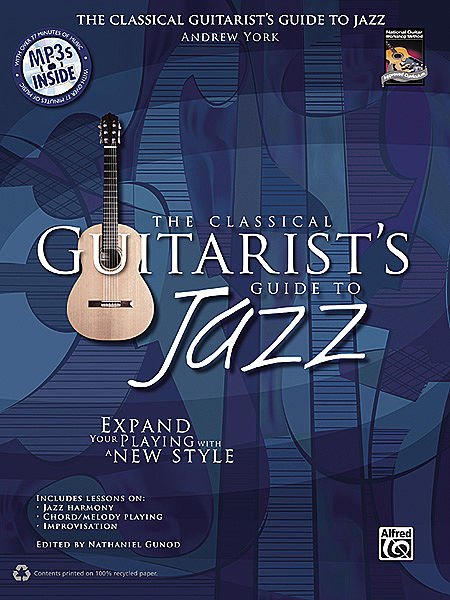
YORK ANDREW THE CLASSICAL GUITARIST'S GUIDE TO JAZZ Expand Your Playing with a New Style CD

YORK ANDREW, THE CLASSICAL GUITARIST'S GUIDE TO JAZZ, Expand Your Playing with a New Style.

The Classical Guitarist's Guide to Jazz
Expand Your Playing with a New Style
By Andrew York / ed. Nathaniel Gunod

Item: 00-35452
UPC: 038081396484
ISBN 10: 0739071599
ISBN 13: 9780739071595

Category: Guitar Method or Supplement
Format: Book & MP3 CD
Instrument: Guitar

Guitarist and composer Andrew York presents the ultimate guide to jazz for classical guitarists. The first two sections of this three-part book cover jazz harmony and chord/melody, focusing on comping, chord voicings, voice leading, and arranging for solo guitar. Part three looks at improvisation, which may be the most exciting—yet foreign—aspect of jazz for classical guitarists. York shows you that improvisation is a skill that can be learned and practiced just like any other. By practicing the ear training and visualization exercises in this book, you will learn how to turn the music you hear in your "mind's ear" into imaginative, great-sounding jazz solos. The CD contains the exercises and examples performed by the author. 

INTRODUCTION

There is a desire among many classical guitarists to learn how to play some jazz on the classical

guitar. But they often have expressed reservations or even fear when confronted with the idea

of playing jazz, reading jazz charts or improvising. I've designed the first section of this book to

help classical guitarists learn the necessary harmonic skills to play jazz with confidence and to

have some fun doing it.

Learning jazz harmony will be the focus of this first section; before chord/melody or improvising

with scalesor modes can be learned effectively, it's vital to have a solid grasp of jazz harmony.

Sothat is where I chose to begin.

There are some basic differences between the jazz and classical worlds. Compared to classical

music, jazz uses a different style of notation and has a different rhythmic sensibility. We'll

talk about this, since understanding these differences is important for gaining fluency and

authenticity in playing jazz.

You'll find the layout is not strictly linear; though I've tried to progress somewhat logically, I've

also digressed frequently and put in many things that will stretch you every step of the way. I

didn't want to spoon-feed you. Getting the most out of this book will require your participation and study.

Most of all, I hope you find some inspiring new directions for your music. Enjoy.


EDITOR'S PREFACE

At the National Guitar Workshop, the divisions between different styles of guitar playing have

never been drawn with a heavy line; we have always encouraged as much "cross-fertilization"

as students are comfortable receiving. So it was a no-brainer when Andrew first suggested a

course designed to teachjazz guitar to classical guitarists.

This book assumes you play classical or fingerstyle guitar on at least an intermediate level and

have a basic understanding of music theory. There is a quick review of the basics of theory on

page 64, but we make no pretenses about it being complete. If harmony is not a strong area for

you, you may want to brush up a bit.

Guitarists tend to be fun-loving, gregarious and curious, which is one very important reason

why the level of technical skill and musicianship among us continues to improve with each new

generation of players. We believe this book will appeal to that wide streak of curiosity and joy

in music making-music of all kinds-among our fellow guitarists.


HARMONY CONTENTS

About The Author
Introduction
Editor's Preface


CHAPTER ONE Chord Families
Major Family Chords
Major Muse (with Slashes)
Major Muse (Possible Comp)
Major Muse (Another Possible Camp)
Dominant Family Chords
Prominent Dominant.
Prominent Dominant (Another Possible Camp)
Minor Family Chords
Minor Line
Minor Line (Another Possible Camp)
Review


CHAPTER TWO - Five-Position Chords
Five-Position Chords
Five-Position Chords Along the Fingerboard
Five-Position Major 7 Chords
Five-Position Chords Across the Fingerboard
Five-Position Dominant Chords Along the Fingerboard
Five-Position Dominant Chords Across the Fingerboard
Five-Position Minor Chords Along the Fingerboard
Five-Position Minor Chords Across the Fingerboard


CHAPTER THREE - Reading Jazz Charts
Identify the Chord Family
Chart Reading Details
Chart Reading General Summary
Chart Examples
Inversions
Diminished Chords


CHAPTER FOUR - Dominant Chords
Altered Dominants
Playing Altered Dominants
Diminished 7th Chords
Altered Dominants and Minor Keys
Dominant Chord Chart


CHAPTER FlVE - ii-V Progressions
A ii-V Exercise
Carefree


CHAPTER SIX - Three-Note Voicings
Inversions of Three-Note Voicings
Inversion Study


CHAPTER SEVEN - RHYTHM
Swing
Comping Samba and Bossa Nova Rhythms
Comping in the Style of Freddie Green
Comping with a Two-Beat (Half Note) Feel
Anticipations
Metronome Practice


CHAPTER EIGHT - The Blues
Secondary Dominants
Turnarounds
Joroy


CHAPTER NINE - Songs
Day One
Analyzing Day One
Day One (with Camping Examples
A and B)
Day One (Final Camping Example)
Day Two
Day Two
A Note on Minor 9 Chords
Day Three
Seulb

Carry On
Discography
Chord Voicings for Page
Theory Summary


CHORD / MELODY PLAYING

INTRODUCTION
What is chord/melody? Basically, it is playing a melody and the chords at the same time. In
a way, playing a classical guitar piece is playing chord/melody, because everything is there,
melody and harmony-it is complete. But in jazz, chord/melody usually means a setting
of a standard, well-known song. These standards are learned by jazz players as part of the
traditional repertoire; at a gig anyone of these tunes can be called and everybody will know
it, both chords and melody. .
For guitar players, playing these standards with melody and harmony at the same time has
become known as chord/melody style. The aim of this section is to cover the skills needed to
play chord/melody. You'll find examples that are in the style of some of the jazz standards (the
standards themselves won't be used because of copyright restrictions), as well as exercises and
multiple harmonic settings of melodies.
This section presupposes that you have a functional grasp of harmony, and an understanding of
jazz harmony. You should also be able to read music, and have a functional right- and left-hand
fingerstyle technique. TAB is not used, though many of the notation examples also include chord
diagram boxes for help with visualization of chord shapes.
I hope you enjoy this book and learn a lot.


EDITOR'S PREFACE
he purpose of this section is to put the information from the first part of this book to work in a
chord/melody context; this, as the author points out, will be the most familiar jazz style to classical
and otherfingerstyle guitarists. An inquisitive, self-motivated classical or fingerstyle guitarist will
e able to use this section as ajumping-off point and enjoy a lifetime of music-making in this st'le.
s fun, and having this set of skills will help working guitarists fill out their sets on the gig.

An MP3 CD is included with this book to make learning easier and more enjoyable. The symbol shown
4 at bottom left appears next to every example in the book that features an MP3 track. Use the MP3s
to ensure you're capturing the feel of the examples and interpreting the rhythms correctly. The track
number below the symbol corresponds directly to the example you want to hear (example numbers
are above the icon). All the track numbers are unique to each "book" within this volume, meaning
every book has its own Track I, Track 2, and so on. (For example, The Classical Guitarist's Gutde to Jazz:
Harmony starts with Track I, as does Chord/Melody and Improvisation.) Track I for each book will help
you tune your guitar.
To access the MP3s on the CD, place the CD in your computer's CD-ROM drive. In Windows, doubleclick
on My Computer, then right-click on the CD icon labeled "MP3 Files" and select Explore to view
the files and copy them to your hard drive. For Mac, double-click on the CD icon on your desktop
labeled "MP3 Files" to view the files and copy them to your hard drive.


CHORD / MELODY CONTENTS
Introduction
Editor's Preface


CHAPTER ONE - Triads
First Word
MinorTriads in Closed Voicing
A Triad Tune
Chilean Tune with Closed Voicings;
MinorTriads in Open Voicing
Chilean Tune with Open Voicings
A Triad Tune


CHAPTER TWO - Harmonizing with Triads
Greensleeves
Greensleeves
Diatonic Harmony
Greensleeves Lead Sheet, A Section
Greensleeveswith Triads in Closed Voicing
Passing Tone Use in Chord/Melody
Greensleeves with Triads in Open Voicing
Greensleeves with Open and Closed Triads
Going up an Octave
Greensleeves Melody One Octave Higher
Greensleeveswith Open and Closed Triads


CHAPTER THREE – Greensleeves-Extending the Harmonies
Greensleeves with Extended Chords # 1 Greensleeves up an Octave
with Extensions 86


CHAPTER FOUR - Harmonizing Each Note of the Scale
Harmonizing the C Major Scale
with a C Major Chord
Harmonizing the C Major Scale with G7
A Sor Study Phrase
Harmonizing the C Major Scale with D Minor
Dominant Chord Chart.
Quartal Chords


CHAPTER FIVE - PassingTones and Deeper Harmony
Using Passing Tones
Using Passing Chords


CHAPTER SIX - Romanza
The Original
Romanza
Romanza Chord/Melody (
Romanza Duet
Tritone Substitutions
Romanza Chord/Melody solo


CHAPTER SEVEN - A Few of the Things You Might Be
A Few of the Things You Might Be-Lead Sheet
A Few of the Things You Might Be-Chord/Melody


CHAPTER EIGHT - Autumn Sleeves 
Autumn Sleeves-Lead Sheet 
Autumn Sleeves-Chord/Melody # 1
Autumn Sleeves-Chord/Melody #2


CHAPTER NINE - Lagrima de Nuevo
Lagrima.
Lagrima de Nuevo-Chord/Melody .


CHAPTER TEN - Ode to Joy
Ode to Joy.


CHAPTER ELEVEN – Blues for J.D.
Blues for J.D .
A Final Word .
Romanza with Chord Changes .


IMPROVISATION

INTRODUCTION
To pick up the guitar and play music without knowing what you will play-this is the thrill of
improvising, or creating music spontaneously, and ajoy to which many players feel drawn but at
the same time find intimidating. I wrote this book to help classical players (and players in other
styles too) begin to find their way toward improvising on the guitar. The approach I've taken
for this book is to explore the basics of single-line improvisation over jazz-style harmony. Right
from the beginning, we will work with "the color of sound" to help the ears identify each note
as it relates to a harmonic base.Then we will begin improvising in open position right from the
start. After we get a feel for approaching the guitar in this spontaneous way, we will begin to
work with scalesand chord forms to build the skills necessary for improvising single-line solos
over chord progressions.
hope this book helps to demystify the world of jazz improvisation and inspires you to greater
spontaneity and creativity on your guitar.

An MP3 CD is included with this book to make learning easier and more enjoyable. The symbol shown
at bottom left appears next to every example in the book that features an MP3 track. Use the MP3s
to ensure you're capturing the feel of the examples and interpreting the rhythms correctly. The track
number below the symbol corresponds directly to the example you want to hear (example numbers
are above the icon). All the track numbers are unique to each "book" within this volume, meaning
every book has its own Track I, Track 2, and so on. (For example, The Classical Guitarist's Guide to jazz:
Harmony starts with Track I, as does Chord/Melody and Improvisation.) Track I for each book will help
you tune your guitar.
To access the MP3s on the CD, place the CD in your computer's CD-ROM drive. In Windows, doubleclick
on My Computer, then right-click on the CD icon labeled "MP3 Files" and select Explore to view
the files and copy them to your hard drive. For.Mac, double-click on the CD icon on your desktop
labeled "MP3 Files" to view the files and copy them to your hard drive.


CONTENTS
Introduction
Editor's Preface


CHAPTER ONE - Colors of Scale Tones
Root Note (R),orTonic
Perfect 5th (P5)
Major 3rd (M3)
Perfect 4th (P4), or 11th
Major 2nd (M2), or 9th
Major 6th (M6), or 13th
Major 7th (M7)


CHAPTER TWO - Improvising with G Ionian, Lydian and Mixolydian in Open Position
G Ionian, or Major
G Lydian
G Mixolydian


CHAPTER THREE - Open Position Scale Work
Permutating the Major Scale
3rds
Sequence of Four Notes
6ths
Arpeggio Permutation
Chord Tones Within Scale Forms-ii, V and I


CHAPTER FOUR - ii-V-I in Open Position
Am7: Improvising in Two-Measure Phrases
D7: Improvising in Two-Measure Phrases
GMaj7: Improvising in Two-Measure Phrases
ii and V Chords Together
ii, V and I Chords Together
Adding an E7 Chord


CHAPTER FIVE - 2nd Position Chords and Scales in G Major


CHAPTER SIX - Fly Me Through the Tune If Changes
Fly Me Through the Tune (2nd Position Voicings)
The ii Chord in E Minor
The V Chord in E Minor
Beginning to Improvise Over the Progression
Fly Me Through the Tune (Improv to "Slow Changes" -2nd Position)


CHAPTER SEVEN - 7th Position Chords and Scales in G Major
Voicings for "Fly Me Through the Tune"


CHAPTER EIGHT Seeing How Changing Chord Tones Relate to Each Other
Fly Me Through the Tune (7th Position Improv)
Conclusion
Afterword
Developing Your Ear
Appendix
Modes of the G Major Scale
Seven Modes Beginning on G  


Price: €36,99
€36,99

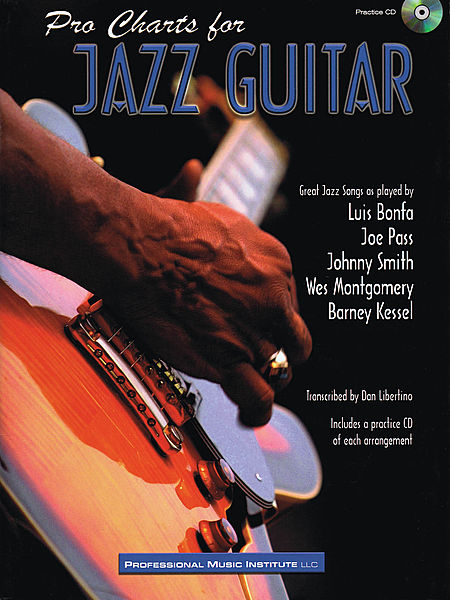
PRO CHARTS FOR JAZZ GUITAR. Luis Bonfa - Joe Pass - Barney Kessel - Dan Libertino. CD TABLATURE

PRO CHARTS FOR JAZZ GUITAR. Dan Libertino. CD TABLATURE


Pro Charts for Jazz Guitar
Series: Guitar Solo
Publisher: Professional Music Institute
Format: Softcover with CD - TAB
Editor: Dan Libertino

Eight jazz classics transcribed as they were played by legends Wes Montgomery, Joe Pass, Luis Bonfa, Barney Kessel, and Johnny Smith. This book also includes a CD with two tracks for each song: one at a practice tempo and one at performance speed. Songs include: Body and Soul • A Day in the Life of a Fool (Manha De Carnaval) • Do Nothin' Till You Hear from Me • Don't Get Around Much Anymore • Midnight Sun • Moonlight in Vermont • There Will Never Be Another You • Whisper Not.

Body And Soul
A Day In The Life Of A Fool (Manha De Carnaval)
Do Nothin' Till You Hear From Me
Don't Get Around Much Anymore
Midnight Sun
Moonlight In Vermont
There Will Never Be Another You
Whisper Not


Width: 9.0"
Length: 12.0"
32 pages

Price: €20,99
€20,99

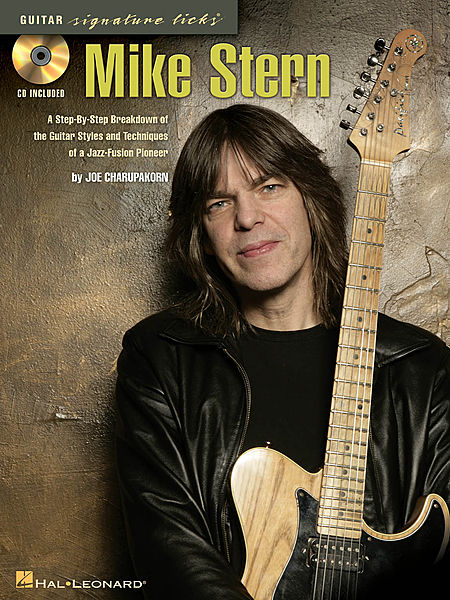
STERN MIKE Guitar Styles & Techniques of a Jazz-Fusion Signature Licks CD TABLATURE SPARTITI


Mike Stern, A Step-By-Step Breakdown of the Guitar Styles & Techniques of a Jazz-Fusion Pioneer

Serie: Signature Licks Guitar

Formato: Softcover with CD - TABLATURE
Autore: Joe Charupakorn
Artista: Mike Stern

Scopri la magia di un asso di chitarra Mike Stern con l'edizione speciale di Assoli d'Autore che includono le interviste e le lezioni con Stern, informazini esclusive sull'attrezzatura, l'analisi approfondita di 14 titoli e in più un CD audio con tutti  gli esempi musicali del libro. Le canzoni sono: After You • Jigsaw • Like Someone in Love • One Liners • Play •Sunnyside • Swunk • There Is No Greater Love • Tipatina's • Wing and a Prayer • e altre.

Larghezza: 9.0"
Lunghezza: 12.0"
128 pagine


After Blood, Sweat & Tears, Stern returned to Boston and played with saxophonist

Jerry Bergonzi (who he met through his teacher, the late Charlie Banacos). He also took

over Bill Frisell's spot in trumpeter Tiger Okoshi's Tiger's Baku, a band that Frisell helped

put together. In 1979, Stern landed his next big gig, with drummer Billy Cobham. During

a gig with Cobham at the now-defunct Bottom Line in New York City, Miles Davis (at the

suggestion of saxophonist Bill Evans) came to check out Stern. He liked what he heard

and Stern got the ultra high-profile gig for Davis's 1981 comeback tour. It was a major

milestone in Stern's career, and one that catapulted him into jazz stardom.

Stern played on three Miles Davis albums: The Man With the Horn, which featured a

burning solo on the first cut "Fat Time" (named in Stern's honor for both his great timefeel

and his at-the-time, corpulent physique); We Want Miles, a great live album; and Star

People, which also featured guitarist John Scofield, who was recruited as a second guitarist

because of Stern's then drug and alcohol problem. Having gradually become unreliable,

Davis ultimately let Stern go, to sober up.

During this time, Stern reconnected with Jaco Pastorius, playing in his Word of Mouth

band. They also played together nonstop when Stern lived above 55 Grand Street, a New

York City jazz club they played at since its inception (not to be confused with the 55 Bar

on Christopher Street, where Stern currently plays twice a week when he's in town). Jaco

wound up crashing at Stern's pad and the two were inseparable, playing at all hours of

the day and blowing lines over changes. Alas, they were also doing "white lines" to the

point of losing control. Stern checked into rehab, and in 1985, the cleaned-up guitarist

rejoined the Miles Davis band. Pastorius, however, never cleaned up. The drugs and alcohol

had severely impacted his mental state and behavior for the worse, and in 1987, during

an altercation with a bouncer outside a nightclub in Florida, he was tragically beaten

to death.

Since his tenure with Miles Davis, Stern has gone on to perform and record with

Michael Brecker, the Brecker Brothers, Bob Berg (with whom he co-led the Mike Stern/

Bob Berg band), Jaco Pastorius's Word of Mouth band, Steps Ahead, David Sanborn, Joe

Henderson, George Coleman, Ron Carter, Jim Hall, and Pat Martino, among others.

Stern has also recorded numerous solo albums-the first being Neesh, in 1983, which

was recorded for Trio (a Japanese label), right after Stern first left Miles Davis's band. It

was recently re-released, but only in Japan (on Absord Music Japan). In 1986, Stern

signed a deal with Atlantic Records and recorded Upside Downside. This marked the

beginning of a 15-year association with Atlantic Records that spawned ten albums and

three Grammy nominations. In 2004, with the demise of the jazz department at Atlantic

Records, Stern recorded his first album for ESC Records, These Times (now available on

BHM Records). In 2006 Stern moved to Heads Up International Records for his release

Who Let the Cats Out?, which garnered Stern a fourth Grammy nomination. A live DVD,

Live-New Morning The Paris Concert was also released in 2006, by independent

German label, lnakustik. This DVD featured Richard Bona, Dennis Chambers, and Bob

Franceschini. In 2009, a sequel to Live-New Morning The Paris Concert was released

and features Tom Kennedy, Dave Weckl, and Bob Franceschini. Big Neighborhood,

Stern's most explosive guitar album to date, was also released in 2009 and featured virtuoso

guitarists Steve Vai and Eric Johnson, among others. Stern's earlier Atlantic recordings,

with the exception of Play and Voices (which are still available through Warner

Music), are now distributed by Wounded Bird Records, a CD-only re-issue label.

Despite Stern's enormous status as a world-renowned jazz-fusion guitar virtuoso, his

prodigious technical abilities (which he seamlessly combines with a heartfelt lyricism),

and his impressive history onstage with countless jazz legends, Stern is a humble and

grounded musician whose sole mission is to constantly grow as a player. "The more I

know, the less I know" is one of Stern's favorite quotes, and it is indicative of his approach

to music, as a neverending quest.

For this Signature Licks edition we have enlisted Mike Stern as a consultant. He offers

not only unique analytical and historical insight for each selection but also a special private

lesson, to help you understand the theory behind his burnin' lines. And indirectly,

large portions of the information in this book have been gathered over the years, during

my studies with Stem and om itnessing countless live shows.


ONE ON ONE WITH MIKE STERN

What was the first jazz solo that had an impact on you?

Well that's a hard question because my mom used to playa lot of jazz records so I always

heard jazz around the house. I started playing when I was 12, but I was 17 when I started

getting more into jazz. I guess it was something off a Miles Davis record. One of the

first records I used to scope was Herbie Hancock's Maiden Voyage. That was one of the

first albums that I checked out and tried to play along with. At the time, I was listening to

more blues, rock, and Motown, and playing along by ear.

When you played along with Maiden Voyage, were you soloing over it or were you

trying to play the actual parts?

I was doing a little bit of both-the actual parts and the solos.

Do you remember the first solo you transcribed?

Yeah, it was a Joe Pass solo. I picked a blues because it's an easy form and Joe's solo

had a lot of inside bebop. It was a medium swing, not a real fast tempo.

Did he playa lot of sixteenth notes in the solo?

He was playing a lot of eighth notes, just a lot of really cool bebop lines. Joe was a very

clear, inside player in a lot of ways. He didn't go outside the key too much, and it was very

clear what he did when he did go out, the way he outlined it. He was amazing like that.

There was a lot of bebop vocabulary; he used to play with Oscar Peterson. It took me

about three weeks to transcribe the solo. I had to slow the record player down, which

almost ruined the record. Finally I taped it and finished the rest. Later on I showed it to

some people and they said most of it was wrong [laughs]. But doing it myself was amazingly

helpful.

After you learned the solo did you take licks from it and use them in your own playing?

A little bit, and some of the phrasing, too. It's like when you read a book or short storyyou

don't memorize every word; you just take certain things away from it and then enough

of the remaining information goes unconsciously into your brain, or in the case of music,

into your ear. Over time, if you take from enough different solos from different people, you

don't sound like just one guy.

For a long time now, I've been more into copping piano and saxophone solos. But

when I was first transcribing, it was guitar because it was my own instrument-and that

was hard enough. But like I said, transcribing lines for myself was really helpful; I got a lot

more out of it that way than from reading it from a book.

Were you writing out the solos?

Yeah, I wrote them down. Then I'd read through it, not so much to cop licks but more like

reading a magazine or a short book, where you might remember a couple of phrases and

quote from it-you don't memorize every word. Some people go too far and memorize the

whole solo, but the idea is to learn how to phrase unconsciously and then twist it around

your own way, as a kind of springboard for your own ideas. That way you get a vocabulary

in a certain style; for instance, if you want to work on your bebop vocabulary, you do

a lot of bebop players. I did a bunch of guitar players at first-Joe Pass, Jim Hall, Wes

Montgomery, George Benson-and then I got into horn players.

INTRODUCTION
DISCOGRAPHY
THE RECORDING
ABOUT THE AUTHOR
MIKE STERN'S GEAR
ONE ON ONE WITH MIKE STERN
BOP 'N ROLL: A LESSONS WITH MIKE STERN

After You - Mike Stern - 1986
Jigsaw - Mike Stern - 1989
Like Someone In Love - Words: Johnny Burke, Music: Jimmy Van Heusen - 1944
Odds Or Evens - Mike Stern - 1991
One Liners - Mike Stern - 1997
Play - Mike Stern - 1999
Showbiz - Mike Stern - 1996
Sunnyside - Mike Stern - 1996
Swunk - Mike Stern - 1994
That's What You Think - Mike Stern - 1997
There Is No Greater Love - Words: Marty Symes, Music: Isham Jones - 1936
Tipatina's - Mike Stern - 1999
Upside Downside - Mike Stern - 1986
Wing And A Prayer - Mike Stern - 1996

Price: €32,99
€32,99

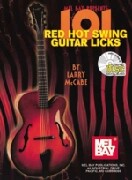
101 RED HOT SWING GUITAR LICKS. CD

101 RED HOT SWING GUITAR LICKS. CD TAB.

This book/CD offers 101 short swing guitar licks and phrases played over chords and chord progressions that are fundamental to the harmonic language of jazz. If you currently play blues, country, folk, classical, or rock and want to venture into jazz - this book is for you! Includes 2, 4, and 8-bar patterns in a variety of modes that are compatible with common jazz chord changes- all in the key of C major. As each pattern is played over a common chord progression, the application of these licks in jams and performance situations will be obvious. Intermediate in difficulty, each lick is written in standard notation and tablature. Informative appendices present an essay entitled "Basic Theory for the Jazz Musician" plus major, dorian and mixolydian scales. The attached companion CD recording features the author on guitar as well as a bass guitarist performing all 101 licks.

Format: Book/CD Set

Introduction
How to Use This Book
Projects for Students

Major Patterns (C)
Dorian Patterns (Dm7)
Mixolydian Patterns (G7)
iiim7-V7-I Patterns (Dm7-G7-C)
Modified iim7-V7-I Patterns
Four-Bar Patterns
Eight-Bar Patterns
Bridge Patterns
Turnarounds

Appendix 1. Basic Theory for the Jazz Musician
Appendix 2. Major Scales
Appendix 3. Dorian Scales
Appendix 4. Mixolydian Scales
Appendix 5. Moveable Scale Diagrams

Price: €26,00
€26,00
Syndicate content