ACCORDI - PENTAGRAMMA - TABLATURE / CHORDS - STANDARD NOTATION - TABLATURE

REINHARDT DJANGO COMPLETE BOOK TABLATURE CD LIBRO SPARTITI CHITARRA MANOUCHE Daphne

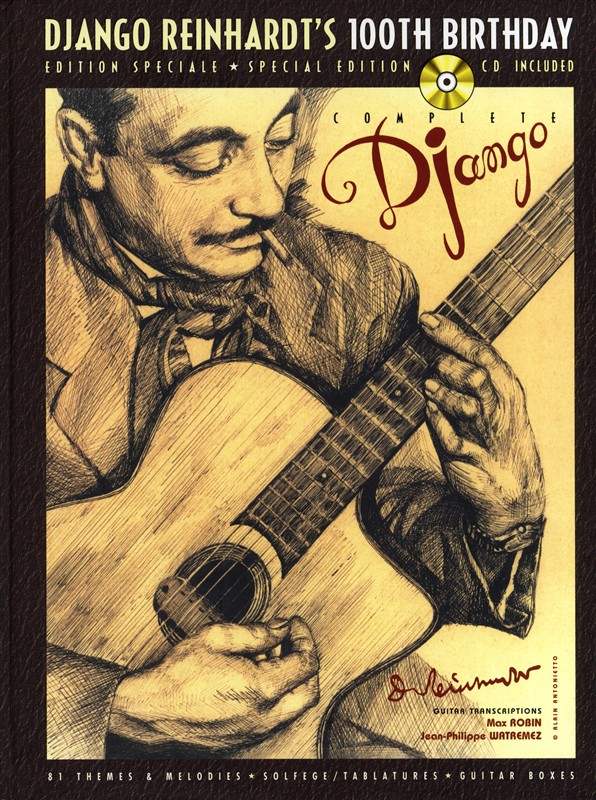
REINHARDT DJANGO, COMPLETE DJANGO. SHEET MUSIC BOOK AND CD WITH ORIGINAL RECORDINGS, 248 Pages GUITAR TABLATURE

SPECIAL EDITION - EDITION SPECIALE 

LIBRO DI MUSICA GYPSY JAZZ, MANOUCHE, CON CD.
CD CON LE REGISTRAZIONI ORIGINALI DI DJANGO REINHARDT CON STEPHANE GRAPPELLI. 

SPARTITI PER CHITARRA CON : ACCORDI PENTAGRAMMA E TABLATURE. 

GUITAR TRASCRIPTIONS : 
MAX ROBIN 
JEAN-PHILIPPE WATREMEZ
 
EDITED & PRODUCED BY PATRICK MOULOU .
 
weight: Kg.1,300

Description
For the first time, all of the 81 themes and melodies composed by legendary Jazz guitarist Django Reinhardt have been assembled in one sumptuous celebratory volume.

The Hot Club sounds of Reinhardt forged the very basics of modern Jazz guitar. Alongside Charlie Christian, Reinhardt has long been regarded as a key innovator and charismatic ambassador of the guitar, developing a vocabulary that remains strong and vibrant today.

This very special publication, compiled by two of the world's most revered Reinhardt specialists, boasts anecdotes, performance notes, biographical landmarks, previously unreleased photographs and much more. 248 pages.

TiToLi :

Anouman
Appel Indirect
Are You In The Mood
Artillerie Lourde
Babik (Bi-bop)
Belleville
Black And White
Blues Clair
Blues D'autrefois
Blues For Ike
Blues Primitif
Bolero
Bricktop
Cavalerie
Crepuscule
D.R. Blues
Danse Nuptiale
Daphne
Deccaphonie
Del Salle
Diminushing
Dinette
Djangology
Django's Tiger
Double Scotch
Douce Ambiance
Duke And Dukie
Feerie
Festival 48
Fleche D'or
Fleur D'ennui
Folie A Amphion
Gaiement
H.C.Q. Strut
Hungaria
Impromptu
Lentement Mademoiselle
Mabel
Manoir De Mes Reves
Melodie Au Crepuscule
Mike
Minor Blues
Minor Swing
My Serenade
Mystery Pacific
Nocturne
Nuages
Nuits De Saint-germain-des-près
Nympheas
Oiseaux Des Iles
Oriental Shuffle
Oubil
Paramount Stomp
Peche A La Mouche
Place De Brouckere
Porto Cabello (Il Mexicano)
Pour Que Ma Vie Demeure
R. Vingt-six
Rythme Futur
Souvenirs
Speevy
Stockholm
Stompin' At Decca
Stop
Sweet Chorus
Swing 39
Swing 41
Swing 42
Swing 48
Swing From Paris
Swing Guitars
Swingtime In Springtime
Tears
Troublant Bolero
Twelve Years
Ultrafox
Vamp
Vendredi 13
Vette
Webster
What Kind Of Friend


2010 est l'année du 100ème anniversaire de la naissance de Django Reinhardt. Retrouvez l'intégrale des 81 thèmes et mélodies composés par Django Reinhardt en édition spéciale, réunis dans un seul recueil et retranscrits en solfège et tablatures (avec les diagrammes d'accords exacts joués par le Maître), par deux des meilleurs spécialistes de Django: Jean-Philippe Watremez & Max Robin! Inclus une page avec tous les accords utilisés, des anecdotes, des repères biographiques, chronologiques, photos et illustrations inédites, et en plus un CD avec 22 chansons originales de Django Reinhardt (01 Djangology / 02 Sweet Chorus / 03 Minor swing / 04 My Serenade / 05 Black and White / 06 Nuages / 07 Rythme futur / 08 Swing 42 / 09 Belleville / 10 Douce ambiance / 11 Manoir de mes rêves / 12 Duke and Dukie / 13 Crépuscule / 14 Swing Guitars / 15Tears / 16 Swing 39 / 17 Webster / 18 Impromptu / 19 Vamp / 20 Troublant Boléro / 21 Flèche d’or / 22 Anouman). couverture rigide pelliculée et vernis.

Titres :

Anouman
Appel Indirect
Are You In The Mood
Artillerie Lourde
Babik (Bi-Bop)
Belleville
Black And White
Blues Clair
Blues D'Autrefois
Blues En Mineur (Minor Blues)
Blues For Ike
Blues Primitif
Boléro
Brick Top
Cavalerie
Crépuscule, Daphné
Del Salle
Deccaphonie
Diminushing (Black Night Or Diminushing Blackness)
Dinettte
Django's Tiger
Djangology
Double Scotch
Douce Ambiance
D.R. Blues
Duke And Dukie
Féérie
Festival 48
Flèche D'Or
Fleur D'Ennui
Folie A Amphion
Gaiement
H.C.Q Strut
Hungaria
Impromptu
Lentement Mademoiselle
Mabel
Manoir De Mes Rêves
Mélodie Au Crépuscule (Love's Melody)
Mike (Micro Or Swing Dynamique)
Minor Blues
Minor Swing
Mopp'in The Birde (Danse Nuptiale)
My Serenade
Mystery Pacific
New York City
Nocturne
Nuages
Nuits de Saint-Germain-des-Près
Nymphéas
Oiseau Des Iles
Oriental Shuffle
Oubli
Paramount Stomp
Pëche A La Mouche (Lancer Léger)
Place De Brouckère
Porto Cabello (Il Mexicano)
Quequefois (Pour Que Ma Vie Demeure)
Rythme Futur
R-26
Souvenirs
Speevy
Stockholm
Stompin' At Decca
Stop
Sweet Chorus
Swing From Paris
Swing Guitars
Swing 39
Swing 41
Swing 42
Swing 48
Tears
This Kind Of freind (What Kind Of Freind)
Troublant Boléro
Twelfth Year
Ultrafox
Vamp
Vendredi 13
Vette
Webster
What Kind Of Friend 

Prezzo: €99,99
€99,99

REINHARDT DJANGO IMPROVISATIONS 1935-1949 BOOK & CD GUITAR TABLATURE SPARTITI CHITARRA LIBRO

REINHARDT DJANGO, IMPROVISATIONS 1935-1949. Incisioni originali. SHEET MUSCI BOOK WITH CD & GUITAR TABLATURE. 

LIBRO METODO DI MANOUCHE CON CD .
SPARTITI PER CHITARRA CON:
ACCORDI, PENTAGRAMMA, TABLATURE.


TRANSCRIPTIONS pour GUITARE de ROMANE & DEREK SéBASTIAN

BLUE DRAG
Enregistrée en avril 1935
Sur ce 32 AABA, le thème mélodique est exposé par le violon, la guitare de Django intervenant
sous forme de contre-chant. Le maître produit ensuite un solo dynamique et virtuose
(cf. mesure 43) qui comprend nombre de torsions de cordes, manouches et bluesy, ainsi que
des octaves puissamment marquées. Notez aussi que l'introduction est utilisée comme coda
de fin, à l'issue d'un exposé final qui reprend la section A seulement.

IMPROVISATION 2
Enregistrée le 10 septembre 1938

A l'écoute, la première version d'Improvisation 2 ayant manifestement servi à Django de« mise en
doigts », nous avons choisi de transcrire la version B, identique, à cette différence que les thèmes y
sont développés, les idées abouties. Cette« pièce » se compose d'arpèges et de modulations qui
ne sont pas sans rappeler certaines oeuvres de Claude Debussy. On y trouve aussi, dans le pont et la
coda, d'étranges phrasés« shuffle ». A la toute fin, observez le désaccordage en ré grave de la sixième
corde ... désaccord age d'autant plus surprenant qu'on n'entend absolument pas Django l'opérer,
même en tendant l'oreille au maximum - un pur mystère !

IMPROVISATION 3
Enregistrées le 26 février 1943

Là, quoique l'une et l'autre reposent sur les mêmes ingrédients - tonalité mineure,
arpèges -, ces deux versions sont dignes d'intérêt. La première, au tempo assez rapide,
présente une structure AABACA, une coda qui reprend l'intro et une fort belle modulation
terminale. La seconde version, plus assise question tempo, est dépourvue
d'intro et de section C ; et l'on trouve dans la section B des passages mélodiques
virtuoses. L'accord final y est majeur.

IMPROVISATION 4
Enregistrée en février 1949
Courte et sur tempo lent, faisant peu appel à la technique et beaucoup aux cordes à vide, cette improvisation est plus facile à étudier. Elle est faite d'une abondante suite d'accords roulés, entrecoupés de quelques arpèges, tout ceci en forme métrique de type AABA.

IMPROVISATION 5
Enregistrée le 21novembre 1947
A l'inverse de la précédente, l'Improvisation 5 est ardue sur le plan technique. C'est une suite d'arpèges et d'accords, rehaussés de traits mélodiques virtuoses dont la couleur rappelle volontiers la musique flamenca (cf. partie terminale). Par ailleurs, il convient d'observer que cette improvisation a sans doute servi d'inspiration au pianiste John Lewis pour composer son thème Django .

Improvisation 6
Enregistrée le 1er décembre 1945
Difficile également sur le plan technique, reposant sur les mêmes ingrédients que la précédente - arpèges, accords roulés, traits mélodiques - l'Improvisation 6 n'offre cependant pas, à notre sens, de développements aussi maîtrisés. En cela, c'est une véritable improvisation au sens propre du terme. Elle contient cependant de remarquables passages en cadences d'accords et fait usage, elle aussi, de colorations mélodiques hispanisantes.

VALSE MANOUCHE
Enregistrée par la BBCen 1935
Enfin, voici une valse jouée en duo piano/guitare, dont le guitariste est très probablement Django, alors aux tout premiers moments de sa carrière. De forme métrique 112 AABA, cette valse séduisante présente une étrange cadence sur les sections A (mesures 13-16),dans lesquelles Django produit une montée chromatique très reconnaissable de son style. Est également reconnaissable le choix de certaines harmonies du pont, très hardies pour l'époque, à caractère hispanisant, des accords parfaits majeurs placés sur une note de pédale.

- Blue drag

- 6 improvvisazioni

- valse manouche. 

Prezzo: €30,99
€30,99

KING ALBERT THE VERY BEST OF GUITAR Recorded Version TABLATURE CHITARRA SPARTITI LIBRO

KING ALBERT, THE VERY BEST OF. SHEET MUSIC BOOK WITH GUITAR TABLATURE

LIBRO DI MUSICA BLUES. 

SPARTITI PER VOCE E CHITARRA CON: 

ACCORDI, PENTAGRAMMA, TABLATURE. 

Series: Guitar Recorded Version TAB
Artist: Albert King

Albert King was one of the greatest and most important guitarists of all time. He not only changed the blues world, but also influenced most modern guitar playing – whether today's players realize it or not! This collection assembles 15 of his finest pieces transcribed note-for-note with tab. Includes:

Angel Of Mercy
Answer To The Laundromat Blues
Blues Power
Born Under A Bad Sign
Crosscut Saw
Don't Throw Your Love On Me So Strong
Everybody Wants To Go To Heaven
The Hunter
I Wanna Get Funky
I'll Play The Blues For You
Killing Floor
Laundromat Blues
Oh Pretty Woman
Personal Manager
The Sky Is Crying

128 pages.

Prezzo: €27,99
€27,99

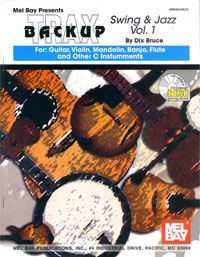
SWING & JAZZ VOL1 BACKUP TRAX GUITAR VIOLINO MANDOLINO BANJO FLAUTO CD TABLATURE SPARTITI

BACK-UP TRAX/ SWING & JAZZ FOR GUITAR, VIOLIN, MANDOLIN, BANJO, FLUTE, AND OTHER INSTRUMENTS IN C. CD TABLATURE


LIBRO DI MUSICA SWING - JAZZ CON CD.

SPARTITI PER CHITARRA, VIOLINO, MANDOLINO, BANJO, FLUTE, E ALTRI STRUMENTI MUSICALI IN DO.

ACCORDI, PENTAGRAMMA E TABLATURE.

by Dix Bruce. Product Description:
With this book/CD package you'll learn melodies and practice soloing on 12 of the most popular and important chord progressions in the swing and jazz repertoire - cycle of fifths; major and minor progressions with II-V-I, I-VI-II-V-I, I-III-VI-II-V chord changes; major, minor, and 6/8 blues; and much more-- all based on favorite swing and jazz hits. Play along with a hot string rhythm section: featuring guitar, mandolin and bass with lead melodies played on tenor sax. Each melody appears in standard notation for C instruments, guitar tablature, and mandolin tablature. The recording features all of the tunes at slow and regular speeds. Melodies to the tunes are recorded at about one-half speed with only guitar accompaniment before each track with the full band. Instruments are isolated for maximum flexibility. By adjusting the balance control on your stereo you can hear 1) the full band; 2) guitar and bass only (you play the lead melody from the book); or 3) mandolin, melody, and bass only (you play rhythm).

Format: Book/CD Set

Song Title: Composer/Source:
6/8 Blues
Blues In C Minor
Blues In G
Cycles
Fast Blues
Fast Rhythm
Gal Be Bad
Hollyhock Tulip
Michigan
Slow Rhythm
Solo The Sun
Yellowstone

Prezzo: €24,99
€24,99

Romane LA GUITARE MANOUCHE LES THÈMES ET PLAYBACKS LIBRO CD BASI TABLATURE SPARTITI

Romane, LA GUITARE MANOUCHE, LES THÈMES ET PLAYBACKS. CD TABLATURE

LIBRO DI MUSICA GYPSY JAZZ, CON CD DI BASI.

SPARTITI PER CHITARRA:

ACCORDI, PENTAGRAMMA E TABLATURE. 

Cet ouvrage regroupe, sous forme solfiée et tablatures, les transcriptions des neufs thèmes mélodiques de l'album Acoustic Quartet de Romane, agrémentés de commentaires et analyses techniques détaillant les divers aspects de la guitare manouche. Une large place est accordée également au phrasé mélodique improvisé ainsi qu'aux grilles harmoniques, accords et mises en place rythmiques. Le CD propose les playbacks originaux des morceaux pour vous permettre de vous essayer au style !

Bonjour à toutes et à tous!


Cet ouvrage regroupe les neuf compositions originales signées Romane, que vous pouvez d'aventure entendre sur
l'album « Acoustic Quartet ». Et nous vous proposons donc ici de découvrir, sous forme solfiée et tablatures, les transcriptions note-à-note de ces neuf thèmes mélodiques, à propos desquels vous trouverez des commentaires et analysesà vocation pédagogique et technique, détaillant divers aspects - volontiers captivants ! - du jeu guitaristique en matière de jazz « manouche ». Tout autant, ces analyses et commentaires portent aussi sur l'esthétique car, faisant une large place au phrasé mélodique improvisé et au placement rythmique, le présent style musical relève hautement de ce domaine. Bien entendu, ceux et celles d'entre vous qui éprouvent une joie égale à pratiquer tant l'accompagnement que le solo - et c'est avec raison ! - trouveront là tous éléments de satisfaction via les grilles harmoniques, diagrammes d'accords et, dans certains cas, indications de mise en place rythmique. Enfin, incontournable, le CDinclus à cet ouvrage vous permettra de jouer tous ces thèmes avec un confort optimal, ayant pour origine le soutien d'une rythmique professionnelle... puisque ce disque n'est autre que le « playback » de l'album « Acoustic Quartet » dans sa version originale. Ainsi donc bon travail, bonne musique et bon plaisir!
ROMANE& Derek SÉBASTIAN. 
Prezzo: €24,99
€24,99

Acoustic magazine SWING GUITAR ESSENTIALS CD TABLATURE LIBRO SPARTITI DJANGO REINHARDT

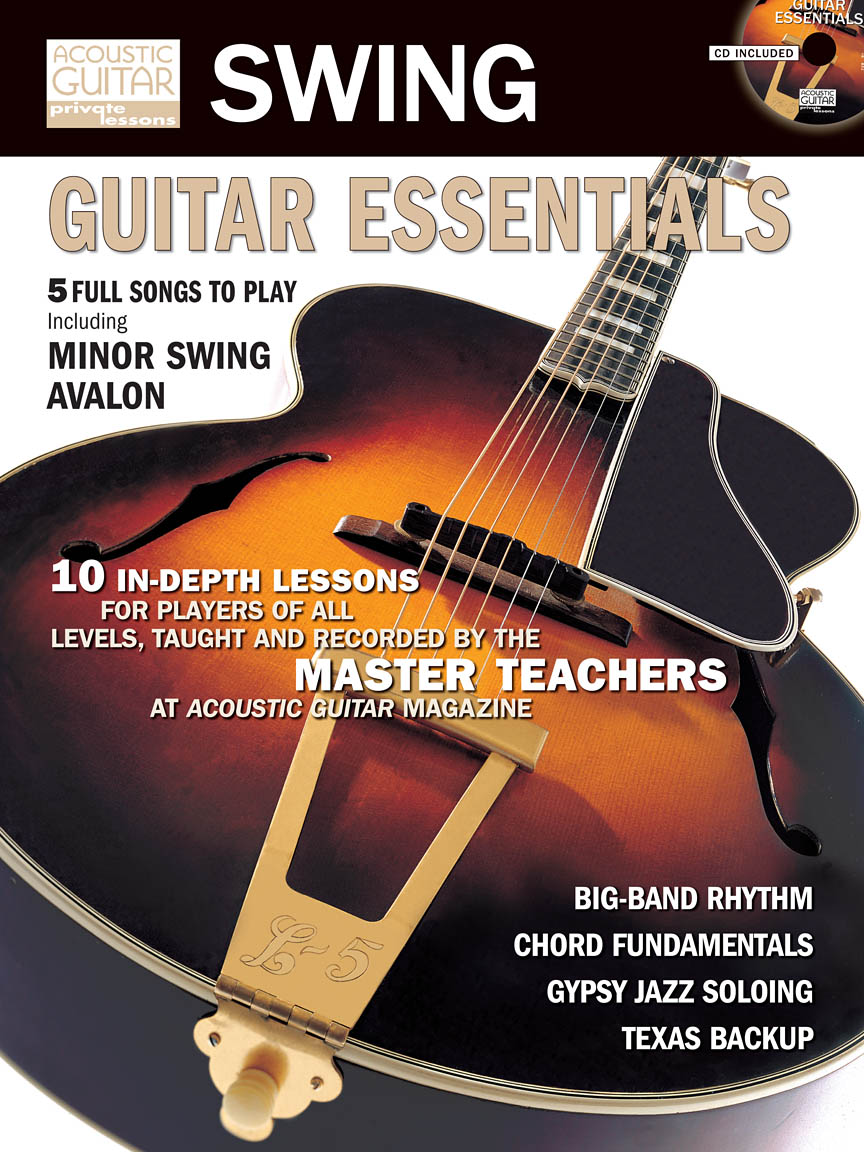
Acoustic guitar magazine, SWING GUITAR ESSENTIALS. 90 Fraseggi, accordi fondamentali, la melodia, lo stile ritmico di Freddie Green e la big-band, Texas swing, Minor swing di Reinhardt, Avalon e altri 3 titoli. CD TABLATURE

LIBRO METODO DI MUSICA SWING, CON CD. 

SPARTITI PER CHITARRA :

ACCORDI, PENTAGRAMMA E TABLATURE.  


Acoustic Guitar Private Lessons Series
Series: Guitar Educational
Publisher: String Letter Publishing
Softcover with CD - TAB
Author: Various Authors

This comprehensive book/CD pack includes 5 full songs (including Minor Swing and Avalon) and 10 in-depth lessons for players of all levels, taught and recorded (slowly and up to tempo) by the master teachers at Acoustic Guitar magazine. It introduces guitarists to swing's essential styles and pioneering players from Eddie Lang to Count Basie's rhythm master Freddie Green to Hot Club virtuoso Django Reinhardt, and covers topics such as jazz chord basics, movable chord forms, swing soloing, and more. Instructors include Dix Bruce, Hal Glatzer, David Hamburger, John Jorgenson, John Lehmann-Haupt, Tony Marcus, Scott Nygaard and Michael Simmons.

Avalon
Been There, Dunn That Blues
Dominant Seven Swing
Leather Britches
Minor Swing

80 pages

Prezzo: €58,99
€58,99

WESTERN SWING GUITAR STYLE by Joe Carr BOOK CD TABLATURE CHITARRA LIBRO SPARTITI

WESTERN SWING GUITAR STYLE. Joe Carr. La parola swing deriva dal verbo dondare, e in musica, è quel senso di oscillazione della parte ritmica, con accenti, anticipi, pause, ritardi, note staccate, e questo benchè il ritmo sia costante e uniforme. 40 accompagnamenti ritmici completi, con griglia degli accordi nello stile swing anni '30 '40 del musicista Bob Wills. SHEET MUSIC BOOK CD with GUITAR TABLATURE .

LIBRO DI MUSICA WESTERN SWING CON CD.

SPARTITI PER CHITARRA : 

ACCORDI, PENTAGRAMMA, TABLTURE. 

Product Description:
If you have ever heard the sound of rhythm guitar in a good western swing band, you may have wondered how the guitarist achieved that unique chordal sound. While the song might be a simple one--playable with only two or three chords--the western swing guitarist changes chords every two beats, providing a driving and harmonically interesting background for the singers and instrumentalists. This book is designed for intermediate players who have a basic understanding of open chords. It begins with study of the Texas fiddle back-up style and the chords used to enhance this music. The chords and progressions explained in this book can be used in many types of music in addition to western swing and would serve as an excellent transition from open-string folk chords to more of a jazz approach.

Format: Book/CD Set
Series: Texas Music and Video

If you have ever heard the sound of rhythm guitar in a good western swing band, you may have wondered what the guitarist was doing. While the song might be a simple one with only two or three chords, the guitarist changes chords every two beats, providing a driving and harmonically interesting background for the singers and instrumentalists. This book is designed for intermediate players who have a basic understanding of open chords. An accompanying video "Western Swing Guitar Styles, Volumes One and Two" which includes much of the material contained here, is available from Mel Bay Publications. The chords and progressions explained here can be used in many types of music in addition to western swing. The guitar style fits especially well with swing music of any type from the 1930's and 1940's. If you haven't heard this style before, check out recordings by Bob Wills, Asleep at the Wheel and Johnny Gimble. Many of these recordings feature the great Eldon Shamblin, Bob Wills' longtime guitarist and the undisputed master of this styIe. Wewill begin our study with what has been called the Texas fiddle backup style. The beginnings of this style are unclear, but it is my opinion that it was started by guitarists who heard and tried to copy the sound of Eldon Shamblin on the early Bob Wills records of the 1930's. Recordings of Texas fiddlers in the 1920's feature rhythm guitars played in the bass-strum pattern - the same pattern found on early recordings of southern Appalachian fiddlers. It is not until after Shamblin's first recording with Bob Wills in the mid 1930's that we hear the style on Texas fiddle records. Special thanks go to Slim Richey, Alan Munde, John Hartin, Buster Redwine and Kim Fagerstrom for their help in my understanding of swing rhythm and the development of this project. Western Swing guitar music was originally played on the large hollow body electric F-hole guitars of the 1930' sand 1940' s. The guitarists used medium or heavier gauge strings. In recent times, most players, including Eldon Shamblin, use solid body electrics which are easier to carry around, more versatile and are less prone to feedback. The neck position pickup is used to get a fatter, more mellow rhythm sound. If you play several styles, you can still get a good swing rhythm with light stings. Some players, including me, beef up the bass strings in a light set to help strengthen the rhythm sound. I use a set that is .10, .12, .16, .30, .40, .50. This allows me to bend strings on the lead pickup on twangy country music and still gets a good swing sound on the neck position. In the 1920's and 1930's, players like Eddie Lang, Django Reinhardt and Karl Farrrecorded swing music using acoustic guitars. Acoustic swing music is enjoying a surge of popularity today. Almost any type acoustic guitar will do and many players prefer medium strings for good tone and volume. Providing good swing rhythm on acoustic guitar is hard work and takes strong muscles and well-developed calluses on the fingertips. At Texas style fiddle contests across the nation, you will notice many guitarists with Gibson acoustic guitars. Their preference for this brand is similar to Bluegrass musicians' preference for Martins. Also unique to these musicians is their use of steel wrapped stings as opposed to the more common bronze wrapped strings used by most acoustic guitarists. Warning: DO NOT enter a jam session with a group of serious Texas Fiddlers with any of the following instruments: 12 string guitar, 5 string banjo, harmonica, autoharp. You may never be seen or heard of again!

Song Title: Composer/Source:

Ballad (:39) Arr. By: Joe Carr
Beaumont Rag (:37) Arr. By: Joe Carr
Blues (1:01) Arr. By: Joe Carr
Columbus Stockade Blues (1:07) Arr. By: Joe Carr
Corrina (:29) Arr. By: Joe Carr
Cowtown (:32) Arr. By: Joe Carr
Durang's Hornpipe (:26) Arr. By: Joe Carr
Dusty Miller (:29) Arr. By: Joe Carr
Ida Red (:26) Arr. By: Joe Carr
Kind Of Love (:38) Arr. By: Joe Carr
Leather Britches (:28) Arr. By: Joe Carr
Lily (1:09) Arr. By: Joe Carr
Pipeline (:38) Arr. By: Joe Carr
Sally Goodin 1,2,3 (:37) Arr. By: Joe Carr
Sally Goodin 4 (:28) Arr. By: Joe Carr
Sally Johnson (:28) Arr. By: Joe Carr
San Antonio Rag (:35) Arr. By: Joe Carr
South (1:06) Arr. By: Joe Carr
Sugar (1:03) Arr. By: Joe Carr
Time/Just A Closer (:36) Arr. By: Joe Carr
Wesphalia Waltz (:54) Arr. By: Joe Carr

Prezzo: €27,99
€27,99

GETTING INTO GYPSY JAZZ GUITAR Stephane Wrembel CD TABLATURE CHITARRA LIBRO METODO SPARTITI

GETTING INTO GYPSY JAZZ GUITAR. Stephane Wrembel. SHEET MUSIC BOOK WITH CD & GUITAR TABLATURE.

LIBRO DI MUSICA MANOUCHE, CON CD.

SPARTITI PER CHITARRA : 

ACCORDI, PENTAGRAMMA, TABLATURE . 


Product Description:

This book focuses on the key elements of the Django Reinhardt Gypsy jazz or jazz Manouche guitar style. The information revealed here was gleaned from years of experience jamming with French Gypsies and studying with masters of the style. A native of France, Stephane Wrembel acquired his skills entirely by ear and has taught scores of musicians worldwide using the method that appears here in text and notation for the first time. Written in English, German and French with all musical examples in standard notation and tablature, Wrembel conveys his knowledge in a logical step by step manner, exposing the reader to the authentic Manouche style as it continues to evolve in France and Holland. Medium to advanced in difficulty, this method is designed for the guitarist who is already familiar with jazz harmony and note locations on the fretboard.

Format: Book/CD Set
Series: Getting Into

Le but de ce livre est de donner les clefs du style de Django Reinhardt, appelé: maintenant « Jazz Manouche ». Les informations fournies dans ce livre ont ete Ie fruit de plusieurs annees de patience et de travail, passees à jouer aver les gitans en France (mon pays natal), à apprendre avec les plus grands maitres de ce style (Ie tout de facon orale), à faire des concerts avec eux, dans Ie but d' organiser ce savoir en differentes etapes, logiques les unes par rapport aux autres. Cette methode a fait ses preuves de puis plusieurs annees, avec des dizaines de musiciens, de facon internationale. La plus grande difficulte pour moi a ete de transcrire ce savoir oral en un savoir ecrit, car dans l' ecrit, il manque toujours l'aspect « personnel » de la musique. En effet, des explications qui vont sembler claires à une personne, vom etre totallement floues pour une autre. J' a essaye d' ecrire Ie texte de la facon la plus generale qui soit, mais si vous ne comprenez parfois pas òu je veux en venir, jouez I'exercice, et essayez de comprendre par vous-meme, vous comprendrez Ie texte apres. Enfin, un livre en soi n'est qu'une partie de I'apprentissage de la musique, un recueil du savoir qui n'attend que VOUS pour prendre vie, et vous devrez aussi chercher par vous-memes vos informations, chacun ayant une maniere personnelle et unique d'ecouter et comprendre la musique. Je vous conseille done, en plus de ce livre, d'avoir un professeur (ou plusieurs), de jouer avec d'autres musiciens, transcrire les discs, et aller dans Ie pays ou Ie style que vous voulez jouer est developpe (pour Ie jazz manouche, la France et la Hollande), afin d' en sentir la saveur. Afin de naviguer facilement,je vous conseille d'avoir des bases en harmonie Jazz, et de savoir au moins trouver les notes sur votre manche. J' ai ecrit les exemples en solfege et tablature, c'est toujours la tablature que vous devez suivre, afin d'avoir les bons doigtes. Ne prenez pas d'initiatives de ce cote la! Enfin, rappelez-vous toujours que l'important n'est pas combien vous savez, mais ce que vous pouvez reellement faire avec ce que vous connalssez.

The aim of this book is to unveil key elements of Django Reinhardt's style, now called "Jazz Manouche" [Gypsy Jazz]. The information given in this book is the fruit of many years of patience and work - playing with Gypsies in France (my native land), learning from the greatest masters of this style, everything always by ear, giving concerts with them - all with the goal of organizing this knowledge in several logically related steps. This method has shown its worth for many years, with scores of musicians around the world. The most difficult thing for me was to transcribe this oral tradition into written insight, for in the written version, the 'personal' side of the nlUsic is always lacking. Indeed, some explanations, which will seem clear to one person, will be completely vague to another. I have tried to write the text in the most accessible manner possible, but if YOLl sometimes do not understand where I ain headed, play the exercise and trust your own instincts - you will comprehend the text later. Finally, a book such as this is only a part of the music learning process, a gathering of knowledge, which merely awaits YOU to come to life; you will also have to seek insights by yourself, as each individual has a personal and unique way of listening to and understanding music. I recommend that, in addition to learning from this book, you study with a teacher (or several), play with other musicians, transcribe recordings, and visit the countries where the Manouche style is evolving (France and Holland) to experience its feel. To facilitate your journey, I recommend having some basic knowledge of jazz harmony, and that you at least know where to find the notes on the fret board. I have written the examples using chord symbols and tablature. Always follow the tablature for proper fingerings. Do not take liberties in that respect! Finally, alwa s remember that it's not how much 'ou know that matters but what you can really do with what you know ....

Es ist das Ziel dieses Buches, die Schllisselelemente von pjango Reinhardts Stil, dem heute so genannten 'Jazz Manouche" [Gypsy Jazz]' sichtbar zu machen. Die Informationen, die in diesem Buch weitergegeben werden, sind die Friichte jahrelanger Geduld und Arbeit. Ich habe in dieser Zeit mit Zigeunern in Frankreich (meinem Heimatland) gespielt, von den groBten Meistern dieses Stils gelernt (alles immer nach Gehor) und gememsam mit ihnen Konzerte gegeben - all dies mit dem Ziel, dieses Wissen in mehrere, logisch aufeinander aufbauende Einzelschritte zu gliedem. Diese Methode hat in vielen Jahren mit einer groBenAnzahl Musikern liberall auf der Welt ihren Wert bewiesen. Das Sch"vierigste clabeiwar fur mich, diese mlindliche Tradition in schriftliche Erkenntnisse zu fassen, denn in der niedergeschriebenen Version fehlt inllner die 'personliche' Seite der Musik. Tatsachlich mogen manche Erklanmgen, die der einen Person vollig einleuchtend erscheinen,fur eine andere "viedemm ganzlich verschwommcn sem. Ich habe mich bemliht, den Text so leicht zuganglich wie moglich zu machen,aberwenn du deillioch manchmal nicht verstehen sol1test, woraufich hinaus will,dann spiele einfach die Obungen und versuche, dich auf deinen Instinkt zu verlassen - den Text wirst du clann spater schon verstehen. Letztendlich ist em Buch "vie dieses nur em Teil des musikalischen Lernprozesses, eine Ansanmuung von Wissen, das allein clarauf wartet, classDU zum Leben erwachst. Auch musst du selbst danach streben, Einblicke zu gewinnen, denn jeder Einzelne hat eine ganz persOnliche und unverwechselbareArt,Musik wahrzunehmen und zu verstehen. Ich empfehle, classdu zusatzlich zu diesem Buch bei einem (oder mehreren) Lehrer(n) Unterricht nimmst, Musikaufnahmen transkribierst und die Under besuchst, wo sich der Manouche-Stil entwickelt (Frankreich und Holland),damit du Erfahrungen mit dem Feel dieser Musik sanmIeln kannst. Urn dir deme Reise zu erleichtern, empfehle ich em Gnmdwissen der Harmonielehre und classdu zumindest weillt,wo auf dem GrifIbrett die Tone liegen. FUr die Beispiele habe ich Akkordsymbole und Tabulatur verwendet. Halte dich fur die korrekten Fingersatze inmIer an die Tabulatur. Erlaube dir m dieser Hinsicht keme Freiheiten! Denke schlieBlichinmIer daran, classes nicht zahlt, wie viel du weillt, sondern was du am Ende tatsachlich mit demem Wissen anfangen kannst ....


Contents:
CD Contents

Acknowledgements
Introduction
About the Author
Part One: Technique and Rhythm

esercizi con: ottavi, tezine, sedicesimi, quintine, sestine, settine, trentaduesimi, nonine
Chapter 1: Right Hand Technique and Warm-Up
Chapter 2: Voicings
minore 7 5b, diminuite, 

Chapter 3: Accompaniment
 Swing 
 Waltz
 Bolero
 Bossa Manouche 

Part Two: Improvisation
6 pattern per improvvisare
6 Basic Shapes for Improvisation
Expanding on the Subject Matter: Complete Shapes
A Plan of Approach Essential to Gypsy Jazz

Arpeggio Extensions: Adding Color
in 3 zone e su tutta la tastiera

Diminished Arpeggio - 7th Chord Arpeggio Mix
4 Measures Examples, V7 1 Progression
"Gypsy Swing in Minor"
Harmonic Minor Scale
Melodic Minor Scale
Whole-Tone Scale
Concepts in One or Two Notes Per String Groupings
The Chromatic Scale
Chromatic Approach and Three Notes Per String Grouping Concept
Combining Fingerings for 2 and 3 Notes Per String
Substitutions
Transcribing

Prezzo: €27,99
€27,99

JORGENSON JOHN INTERMEDIATE GYPSY JAZZ GUITAR CD DVD TABLATURE CHITARRA METODO MANOUCHE

JORGENSON JOHN, INTERMEDIATE GYPSY JAZZ GUITAR. SHEET MUSIC BOOK WITH CD and DVD 2-hour with GUITAR TABLATURE. 

LIBRO DI MUSICA MANOUCHE GYPSY JAZZ, CON CD E DVD. 

SPARTITI PER CHITARRA CON: 

ACCORDI, PENTAGRAMMA, TABLATURE. 

Now that you have laid a foundation by completing the material in Intro to Gypsy Jazz Guitar, the second volume Intermediate Gypsy Jazz Guitar, also presented in the DVD/CD/Book format, continues by presenting you with characteristic Gypsy style licks and techniques that are based on the arpeggios and patterns taught in the first volume. Once again Jorgenson presents a very systematic learning method by first teaching simple licks and techniques and then gradually building to more complex material. In studying the left and right hand techniques and ornamentations presented in the second volume, the student will gain an understanding of how to play the guitar with the Gypsy "accent."

Jorgenson also begins the study of Django Reinhardt's playing here by teaching an improvised chorus that Django played on a recorded version of the song "Undecided." Two other songs, Raul Reynoso's "Waneta's Waltz" and Jorgenson's "Snowflake Waltz" are also studied.
Introduction/Acknowledgements
An Interview with John Jorgenson

Hello everyone, welcome to Volume 2 (Intermediate Gypsy Jazz Guitar)! Guitarists have been asking me
since Volume 1 (Intra to Gypsy Jazz Guitar) came out last year when the next one would be ready, and it
is finally here. Over the past year I have had the chance to get out around the country (and world!) and
meet so many others like me who love Gypsy jazz. I want to thank all of you for helping spread the word
about this cool music, and for all the encouragement I have gotten about this DVDseries. I am very happy
to share what I have learned over the years, and am excited to see where all the young guitarists will take
Gypsy jazz in the future.
Thanks go again to Brad Davis, who learned how to play this music so quickly that he toured with
me last year and did a great job. Brance Gillihan shot the instructional footage, and edited the opening
video clip of "]'Attendrai" as well as authoring and editing the whole DVD, and what a great job he did
too. Rusty Russell took the cover shot, and Dan Brick shot the footage from Paris when I still had dark hair
from playing Django in Head in the Clouds.
Major, major thanks go to Dan Miller for his tireless efforts, compiling, editing the text, layout
work, and gentle prodding for me to get my parts finished. This entire series would not happen without
Dan's hard work and dedication to the readers. Thanks is also due to Richard Hendlin, of Solana Beach,
California, for his proofreading work.
I would also like to thank Kristy Wiehe, Jim Cowan, Adrian Bagale and David Gartland from Saga,
Alain Cola from Dell'Arte, Rick Shubb, Nick Lehr, Chris Middaugh from Schertler, Trish Galfano, and my
excellent bandmates Charlie Chadwick, Stephan Dudash, Gonzalo Bergara, Brad Davis, Doug Mattocks,
Raul Reynoso, Dick Hardwick, Bryan Sutton, Andy MacKenzie, John Wheatcroft, Tania and Sandra
Differding, The Nashville Chamber Orchestra, Don Hart, Paul Gambill, and all the others who helped
make the last year one of the best. John Jorgenson June 2005 Nashville, Tennessee 

When did you first hear Gypsy jazz?
I got my first recording by Django and the Quintet of the Hot Club of France in about 1979, and just couldn't believe how amazing the sound of the group was, how much they swung, and what a tone Django got from his guitar-unlike any other I had heard!

What was it about the music that led you to dive into it with such enthusiasm?
I think what captured me most was that Django played the acoustic guitar in a way that made it seem limitless, and almost more like the electric guitar in terms of sustain and expression. Again the tone of his guitar was amazing, and the way that the whole Quintet sounded so fresh and alive, as if had been recorded last week instead of 50 or 60 years ago! As I had originally played the electric guitar, I wanted to learn how to play the acoustic guitar with the same sort of drive and virtuosity as Django, and I thought it would be an amazing vehicle to express myself through this high-energy acoustic chamber jazz. Plus it is always challenging, and constantly stretches my abilities and imagination.

What is it about Django's guitar playing that makes it stand out from all of the other guitar playing, guitar players, and guitar music that you have been exposed to?
Django's guitar playing always has so much personality in it, and seems to contain such joy and feeling that it is infectious. He also pushes himself to the edge nearly all the time, and rides a wave of inspiration that sometimes gets dangerous. Even the few times he does not quite make his ideas flow out flawlessly it is still so exciting and innovative sounding that mistakes don't matter! Django's seemingly never-ending bag of licks, tricks and colors always keep the song interesting, and his intensity level is rarely met by any guitarist. Django's technique was not only phenomenal, but it was personal and unique to him due to his handicap. It is very difficult to achieve the same tone, articulation, and clarity using all 5 left hand fingers. It is possible to get closer with only 2 fingers, but again is quite challenging. Probably the thing about this music that makes it always challenging and exciting to play is that Django raised the bar so high, that it is like chasing genius to get close to his level of playing.

In this DVD/book series you chose to start the first DVD without presenting songs. Instead, you started with the rudiments of Gypsy jazz rhythm and then, when moving on to lead playing, you focused on teaching arpeggios and patterns that would familiarize the viewer with various playing positions on the neck as they relate to different chords. Could you talk about this approach, why you chose to present your material this way, and what the advantages of learning this way would be as opposed to starting out by simply learning songs?
I chose to start out my instructional DVD by teaching the building blocks of the music; rhythmic feels, chord progressions, chord "additions" or substitutions, and arpeggios. These can be applied to any song, and are much more useful for the learning musician than simply learning a song. If a player understands how theory works, even at the most fundamental level, it will make learning other songs and licks much easier. To learn arpeggios all over the fingerboard will help get the player familiar with the possibilities that exist on the guitar, and with basic theory the player will find that all the licks that they have learned in one key can be easily transposed to be used in other keys, just by knowing what the "root" note is, or what scale degree a note is in one key, which then give a "target note" for the new key. Music notation and theory are so often mystifying to the learning player, and even often to the very skilled player. I aim to take away that mystery and show that theory and how it works is very logical, and can be utilized without having to sacrifice any spontaneity or soul. It is simply a tool to help to train the fingers and ears where to go to express the musician's ideas and feelings. Once these skills become second nature, there is little to impeded the flow of emotion-to idea-to phrase-to fingers- to sound-to audience; and that, of course is the final goal of any musician. 

In this Gypsy Jazz Guitar instructional series John Jorgenson has designed and presented one of the most complete acoustic guitar instructional methods available on the market today. Each volume of this three-part series include~ a 2-huur instructional DVD, an audio CD with practice audio tracks, and a full format book which presents all of the theoretical information, chord charts, fret board diagrams, music notation, and tablature for the material presented on the DVD. In the first volume Intra to Gypsy Jazz Guitar, Jorgenson provides the foundational information and practice material necessary for you to gain an understanding of the Gypsy jazz guitar style. The first half of this volume addresses the important element of Gypsy jazz rhythm. Aher discussing correct right hand rhythm technique, Jorgenson teaches the closed chord forms of a basic blues progression and then systematically introduces new chords into that progression to add "color" and "spice" while also introducing you to the characteristic "moving chord" style of Gypsy rhythm. Aher addressing the basic blues progression, Jorgenson then transitions into the more Gypsy sounding minor blues progression and introduces the "three-note" chords which are prominent in Gypsy style rhythm guitar. The second half of the first volume addresses soloing. Here Jorgenson not only lays the groundwork of Gypsy jazz soloing, but in the process also presents you with a method which serves to greatly enhance your understanding of the fingerboard and improvisational playing. Jorgenson teaches arpeggios, note maps, lead patterns, and Gypsy techniques in every area of the fingerboard and in various keys. Additionally, he masterfully shows how the arpeggios and patterns relate to one another. Once you have laid a foundation by completing the material in the first volume, the second volume Intermediate Gypsy Jazz Guitar, also presented in the DVD/CD/Book format, continues by presenting you with characteristic Gypsy style licks and techniques that are based on the arpeggios and patterns taught in the first volume. Once again Jorgenson presents a very systematic learning method by first teaching simple licks and techniques and then gradually building to more complex material. In studying the leh and right hand techniques and ornamentations presented in the second volume, the student will gain an understanding of how to play the guitar with the Gypsy "accent." Jorgenson also begins the study of Django Reinhardt's playing here by teaching an improvised chorus that Django played on a recorded version of the song "Undecided."
Once you have completed the foundation work in the first volume, and the study of Gypsy jazz guitar techniques and ornamentations presented in the second volume, you are now ready to dive into the intricacies of Django Reinhardt's solo guitar playing. In the third volume, Advanced Gypsy Jazz Guitar, Jorgenson teaches three complete Reinhardt solos. He presents the songs "Minor Swing", Limehouse Blues", and "Dinah", but does not simply layout the solo for you to memorize. Jorgenson presents a complete study of these solos by analyzing Django's phrasing and note choices. The goal here is to take you beyond solo memorization. In studying the choices that Django made in constructing his solos, you will learn how to best create your own arrangements and improvisations in this style. 

Licks 1 Amp; 2
Licks 3, 4 Amp; 5
Lick 6
Licks 7 Amp; 8
Lick 9
Licks 10 Amp; 11
Licks 12, 13 Amp; 14
Licks 15 Amp; 16
Licks 17 Amp; 18
Licks 19, 20 Amp; 21
Lick 22
Licks 23, 24 Amp; 25
Licks 26, 27 Amp; 28
Licks 29 Amp; 30
Lick 31
Licks 32 Amp; 33
Lick 34
Licks 35, 36 Amp; 37
Licks 38, 39 Amp; 40
Licks 41, 42 Amp; 43
Licks 44, 45 Amp; 46
Licks 47 Amp; 48
Undecided Melody
Undecided
Undecided (cont.)
Undecided Chord Forms
Licks 52 Amp; 53
Licks 54 Amp; 55
Licks 56 Amp; 57
Snowflake Waltz Introduction
Snowflake Waltz
Snowflake Waltz (cont.)
Snowflake Waltz Chord Shapes
Snowflake Waltz Chord Shapes (cont.)
D minor voicings Amp; Lick 58
Appendix

DVD Content
Jorgenson in Paris (J'Attendral)
Introduction
Welcome
Lick 1-Lick 48
Undecided
Lick 49-Lick 51
Waneta's Waltz
Lick 52-Lick 57
Snowflake Waltz
Lick 58
Closing

Audio CD Contents
1: G diminished rhythm
2: Am Rhythm
3: Am/Dm Rhythm
4: Am Blues Progression Rhythm
5: Straight Blues Rhythm
6: "Undecided" Rhythm
7: "Waneta's Waltz" Rhythm
8: Alternate C and G Chord Progression
9: "Snowflake Waltz" Rhythm

Prezzo: €139,99
€139,99

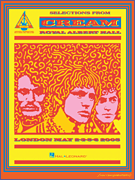
CREAM ROYAL ALBERT HALL LONDON MAY 2-3-5-6 2005 GUITAR TABLATURE CHITARRA SPARTITI LIBRO

CREAM, ROYAL ALBERT HALL: LONDON MAY 2-3-5-6 2005. SHEET MUSIC BOOK WITH GUITAR TABLATURE .

LIBRO DI MUSICA ROCK BLUES .

SPARTITI PER VOCE E PER CHITARRA .

NOTAZIONE : ACCORDI, PENTAGRAMMA, TABLATURE. 


Series: Guitar Recorded Version TAB
Artist: Cream

This folio provides guitar transcriptions of 16 selections from the double-CD set that documents Cream's reunion concerts in 2005. Songs include:

TITLES : 

Badge
Born Under A Bad Sign
Cross Road Blues (Crossroads)
Deserted Cities Of The Heart
N.S.U.
Outside Woman Blues
Politician
Rollin' And Tumblin'
Sleepy Time Time
Spoonful
(They Call It) Stormy Monday (Stormy Monday Blues)
Sunshine Of Your Love
Sweet Wine
Toad
We're Going Wrong
White Room

176 pages

Prezzo: €279,99
€279,99
Condividi contenuti