TRASCRIZIONE

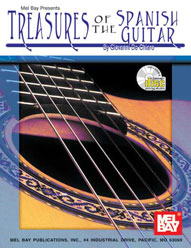
TREASURES OF THE SPANISH GUITAR LIBRO CD CHITARRA TABLATURE SPARTITI-TARREGA-SANZ-AGUADO

TREASURES OF THE SPANISH GUITAR. Capricho arabo, e altri 10 brani di Aguado, F. Tarrega, G. Sanz, L. Narvaez. CD TABLATURE

LIBRO DI MUSICA CON CD. SPARTITI PER CHITARRA. PENTAGRAMMA E TABLATURE. 

This fine solo guitar text, written in notation and tablature, offers a brilliant array of music from many centuries. Composers represented (Aguado, Tarrega, Sanz, Angurea, and others) present a colorful spectrum of the melodies, styles, moods, and temperaments that have characterized guitar music of Spain. The instrumentation on the recording is the solo classical guitar. It is a stereo recording, and it does contain every selection in the book. None of the repeats suggested in the printed scores have been taken off or put on the recording. It is up to the discretion of the individual performer to add or delete these as necessary.

Song Title: Composer/Source:
Canarios Gaspar Sanz
Capricho J. De Anguera
Capricho Arabe Francisco Tarrega
El Jaleo De Jeres Arr. George Henry Derwort
Espanoletas Gaspar Sanz
Fantasia Luys De Narvaez
Folias Gaspar Sanz
Marieta Francisco Tarrega
Rondo Brilliante Op 2 No 2 Dionisio Aguado
Rosita Francisco Tarrega
Spanish Fandango Arr. Justin Holland

Prezzo: €29,99
€29,99

TARREGA FRANCISCO TRANSCRIPTIONES II GUITAR BOOK CHITARRA LIBRO SPARTITI VERDI WAGNER

TARREGA F., TRANSCRIPTIONES II. SHEET MUSIC BOOK IN standard notation for GUITAR.

LIBRO DI MUSICA CLASSICA.

SPARTITI PER CHITARRA :

PENTAGRAMMA.


Contiene:

-prelude Op.28-6, Chopin

-prelude Op.28-7, Chopin

-mazurca Op.33-4, Chopin

-mazurca de los paraguas, Chueca

-la mort d'ase, Grieg

-romanza, Grieg

-minuetto, Haydn

-minuetto del buey, Haydn

-sicilianas, Mascagni -adieu, Schubert

-romanza, Schumann

-in der nacht, Schumann

-polka japonesa, Balverde y Torregrosa 

-fantasia soble motivos de la Traviata, Verdi

-Tannhauser, Wagner

-marcia dall'opera Tannhauser, Wagner.


https://youtu.be/wy2p8liw-2E?si=GgTi_Sea6q_DBgFW


http://<iframe width="560" height="315" src="https://www.youtube.com/embed/wy2p8liw-2E?si=2vgHMuMQIkzM9gmX" title="YouTube video player" frameborder="0" allow="accelerometer; autoplay; clipboard-write; encrypted-media; gyroscope; picture-in-picture; web-share" referrerpolicy="strict-origin-when-cross-origin" allowfullscreen></iframe>

Prezzo: €49,99
€49,99

SCHUMANN ROBERT album fur die Jugend OP.68 Transcribed for GUITAR CHITARRA LIBRO SPARTITI

SCHUMANN ROBERT, ALBUM PER LA GIOVENTU'. OP.68. SHEET MUSIC BOOK in standard notation FOR GUITAR . 

LIBRO DI MUSICA CLASSICA PER CHITARRA .

PENTAGRAMMA. 


SCHUMANN, Robert
Album für die Jugend Op.68
arranged by Tadashi Sasaki.

index: 
melodie / Melody,
Sordier's March,
Humming Song,
A Chorale,
A Little Piece,
Poor Orphan,
Hunter's Song,
The Wild Horseman,
A Little Folk Song,
The Merry Peasant,
Siciliano,
King Rupert,
May, dear May, you'll soon be here,
A Little Study,
Spring Song,
First Loss,
The Little Dawn-Wanderer,
Reaper's Song,
Rustic Song,
(no title),
Rondelay,
Harvest Song,
(no title),
A Stranger,
(no title),
Sheherazade,
Theme,
Nordic Song,
New Year's Eve Song,
A Short Piece by Mozart.
 
48 pages.
Prezzo: €65,99
€65,99

SEGOVIA ANDRES FINEST PIECES REPERTOIRE Frescobalda-Chaconne Bach-Burlesca Torroba LIBRO

SEGOVIA ANDRES, THE FINEST PIECES FROM HIS REPERTOIRE. Le famose trascrizioni di Segovia: La frescobalda -Bach, chaconne -Segovia, estudio -Chopin, mazurka, e molti altri pezzi.

LIBRO DI MUSICA CLASSICA,

SPARTITI PER CHITARRA CON PENTAGRAMMA.

ANDRÉS SEGOVIA The Finest Pieces from His Repertoire
Editor or Arranger: Andrés Segovia
Composer: Various Composers

Andrés Segovia (1893-1987) fu il più grande chitarrista del Novecento. Interprete, dunque, ma anche trascrittore e compositore. Il suo pezzo più bello e famoso è Estudio sin Luz, una malinconica canzone in Si minore.

Andreés Segovia (Linares, 1893 – Madrid, 1987)

Anche se il suo apporto come compositore fu modesto – e da lui stesso tenuto in scarsissima considerazione – Andrés Segovia, il più grande chitarrista del novecento, esercitò un possente influsso nella formazione di un nuovo repertorio di musiche originali per chitarra: una descrizione del lavoro che egli svolse in quest’area è premessa imprescindibile per la comprensione delle origini di quella che, non senza motivo, è stata chiamata la rinascita della chitarra. Andrés segovia nacque il 21 febbraio 1893 a Linares, cittadina della provincia andalusa di Jaén. in nessuno dei suoi scritti autobiografici si trova il minimo accenno alla figura paterna, completamente rimossa, mentre la madre è ricordata perché, quando il piccolo aveva cinque anni, lo affidò agli zii. Con questi, abitò dapprima a Villacarrillo e poi a Granada. nell’infanzia, imparò a suonare la chitarra flamenca. Ebbe la rivelazione della chitarra “classica” intorno ai dieci-dodici anni, ascoltando un dilettante granadino. Da quel momento, la sua vita fu segnata da un unico ideale e, non potendo contare su un’istruzione musicale regolare (allora la chitarra non era inclusa nei programmi delle scuole di musica) si formò come autodidatta. Com’egli amava ripetere negli anni della gloria: «Fui maestro e allievo di me stesso e, grazie agli sforzi di entrambi, nessuno dei due fu scontento dell’altro». Esordì con un concerto al Centro Artistico di granada nel 1909, lo stesso anno in cui Francisco Tárrega lasciava questo mondo. Cercò contatti con gli allievi del maestro valenciano, che però gli opposero i loro ottusi pregiudizi.

Fernando Sor

Essenzialmente nelle composizioni per chitarra sola e per due chitarre, il genere nel quale riuscì a esprimersi più congenialmente. La sua biografia – scritta dal musicologo britannico Brian Jeffery e validamente integrata dagli apporti di altri musicologi quali Josep María Mangado, Richard Long, Emili olcina, Matanya ophee – ci rivela un uomo dal carattere difficile e finanche conflittuale, affetto – almeno per quanto riguarda la sua presenza nel mondo della chitarra, allora fittamente popolato – dal complesso del primo della classe e acribiosamente impegnato nel dimostrare al mondo la propria superiorità. Questa era di per sé evidente nelle pagine per chitarra che egli andava scrivendo e non avrebbe avuto bisogno di alcun sostegno polemico: l’osservazione si rende necessaria di fronte al fatto che una considerevole parte della Méthode pour la Guitare, pubblicata a Parigi nel 1830, è spesa da sor nel difendersi dalle sciocche insinuazioni di chitarristi suoi coevi, dei quali non sapremmo nulla, se non fosse lui stesso a informarci della loro insignificante esistenza. sor era figlio di una famiglia della borghesia catalana ed era perciò destinato alla carriera nella pubblica amministrazione o nell’esercito. il padre, un impiegato, non incoraggiò, ma tollerò il suo spontaneo avvicinamento alla musica e, fin dall’infanzia, lo portò ad assistere alle rappresentazioni operistiche, quasi tutte di autori italiani. Alla prematura morte del genitore, il fanciullo, che cantava spontaneamente arie da opera, aveva ricevuto qualche lezione di violino e suonava la chitarra di suo, fu portato all’Abbazia di Montserrat, dove prosperava una famosa schola cantorum. L’istruzione musicale di sor ebbe quindi anche un’impronta polifonica, che più tardi si rivelerà chiaramente nella sua musica per chitarra.


Contents:

- Aria con Variazioni from La Frescobalda (Frescobaldi)

- Chaconne (Bach)

- Gavotte 1 e 2 dalla Suite per violoncello No. 6 in Re BWV 1012 (Bach) 

- Passacaglia (Couperin)

- Sonata from 8 Aylesforder Pieces (Händel)

- Sonata (D. Scarlatti)

- Sonatine (Benda)

- Cantabile (Vanhall)

- Minuetto (Vanhall)

- Variations on Das Klinget so herrlich from The Magic Flute (Sor)

- Bittendes Kind (Schumann)

- Fürchtenmachen from Kinderszene, Op. 15 (Schumann)

- Waltz, Op. 39, No. 8 (Brahms)

- Mazurka, Op. 63, No. 3 (Chopin)

- Tango, Op. 165, No. 2 (Albéniz)

- Sonata meridional (Ponce)

- Thème varié et Finale (Ponce)

- Tres Canciones Populares Mexicanas (Ponce)

- Hommaga à Tarrega (Turina)

- Fandanguillo (Turina)

- Serenata burlesca (Torroba)

- Suite castellana (Torroba)

- Mazurka (Tansman)

- Estudios (Segovia)

- Estudios sin luz (Segovia)

- Tonadilla auf den Namen Andrés Segovia, Op. 170, No. 5 (Castelnuovo-Tedesco).

94 pages

Prezzo: €29,99
€29,99

RIMSKY-KORSAKOV SHEHERAZADE FOR GUITAR LARRY CORYELL TABLATURE CHITARRA LIBRO SPARTITI

RIMSKY-KORSAKOV : SHEHERAZADE FOR GUITAR, ARRANGED BY Larry Coryell. SHEET MUSIC BOOK WITH STANDARD NOTATION AND GUITAR TABLATURE. 

LIBRO DI MUSICA CLASSICA.

SPARTITI PER CHITARRA CON :

PENTAGRAMMA E TABLATURE.


1ST MOV. - I THE SEA AND SINDBAD'S SHIP. 

2ND MOV. - II THE STORY OF THE CALENDER PRINCE. 

3RD MOV. - III THE YOUNGF PRINCE AND YOUNG PRINCESS

4TH MOV. - IV FESTIVAL AT BAGHDAD - THE SEA - THE SHIPWRECK

Prezzo: €199,99
€199,99

RODRIGO JOAQUIN CONCIERTO DE ARANJUEZ CHITARRA LIBRO JAM TRACK CD ALLEGRO-ADAGIO-ANGEL

RODRIGO JOAQUIN, CONCIERTO DE ARANJUEZ. DELUXE. MUSIC MINUS ONE GUITAR.
Base orchestrale completa, con preascolto, diteggiatura Angel Romero. JAM TRACK 2 CD .

LIBRO DI MUSICA CLASSICA CON 2 CD .

CD DI BASI ORCHESTRALI PER CHITARRA .

SPARTITO PER PIANOFORTE E CHITARRA CON PENTAGRAMMA . 


Performed by Christian Reichert, guitar
Accompaniment : Plovdiv Philharmonic Orchestra
Conductor : Nayden Todorov

What is undoubtedly the most famous and most acclaimed guitar concerto ever written is now a fabulous MMO release! The recently deceased Joaquin Rodrigo, foremost proponent of the classical guitar in the concert literature, wrote this masterpiece of 20th-century music in 1939. Gorgeous and eternally popular, it is an indispensable component of any guitarist’s library. This deluxe 2CD set includes a slow-tempo practice version to help you get up to speed.

Includes a high-quality printed solo part annotated with track-break indicators and informative liner notes; and a compact disc, voluminously indexed for ease of practice, with two performances in digital stereo: one complete with soloist, then a second minus you, the soloist.

- ALLEGRO CON SPIRITO

- ADAGIO

- ALLEGRO GENTILE

Prezzo: €139,99
€139,99

ERIK SATIE FOR GUITAR PETER CHARLES KRAUS CHITARRA SPARTITI LIBRO GYMNOPEDIES GNOSSIENNES

SATIE FOR GUITAR. Peter Charles Kraus. SHEET MUSIC BOOK FOR GUITAR. 

LIBRO DI MUSICA CLASSICA. 

SPARTITI PER CHITARRA CON: PENTAGRAMMA. 

Trascrizioni per chitarra classica di 3 Gymnopedies e 3 Gnossiennes, del compositore francese. Alfred Erik Leslie-Satie nacque a Honfleur nel 1866. Studiò in vari conservatori, ma il suo spirito ribelle non si adeguò alle regole tradizionali; (invece della frase che tempo fa' andava di moda alla televisione e tra la gente: "Non capisco ma mi adeguo"; Satie si sarebbe probabilmente espresso: "Capisco e non mi adeguo"). Le "3 Gymnopedie" sono del 1888, e il nome deriva da una danza dell'antica Grecia; mentre il termine delle "3 Gnossiennes" del 1890, è riferibile a Knossos, l'antica città dell'isola di Creta, ov'era situato il mitico labirinto del minotauro. Questi pezzi per piano fanno parte del primo periodo compositivo; senza divisioni di battute, basati su accordi complessi, di settime, none, undicesime. Terminata questa fase, il musicista oramai trentenne, si interessa alla musica dei café-concert; suona il piano nei cabarets, e diventa amico degli artisti bohemiens di Montmartre. In perenne contrasto con l'accademismo e l'impressionismo musicale di Debussy, Eric Satie combatterà la musica "dotta" a colpi di "musica da tappezzeria" e la sua trama musicale affine a un collage cubista, attirò l'attenzione di Picasso, Diaghilev, Cocteau, Picabia, diventando così il loro animatore. Con il gruppo dei 6, diede vita a rivoluzionari spettacoli e balletti. Liberatosi delle provocazioni e abbandonate le polemiche, l'opera nella quale Satie esprime la propria poetica è "Socrate" del 1918. Il neoclassicismo di Stravinsky risentirà poi delle sue sonorità. Satie morì a Parigi nel 1925 povero ma celebre.

Guitar Solo
Series: Guitar Collection
Publisher: G. Schirmer, Inc.
Editor: E Kraus
Composer: Erik Satie
Contains 3 Gymnopedies and 3 Gnossiennes. 24 pages

Prezzo: €13,99
€13,99

RIMSKY-KORSAKOV SCHEHERAZADE FOR 2 GUITARS KAZUHITO YAMASHITA CHITARRA SCORE BOOK

RIMSKY-KORSAKOV SCHEHERAZADE FOR 2 GUITARS, KAZUHITO YAMASHITA. SHEET MUSIC BOOK FOR 2 GUITARS.


LIBRO DI MUSICA CLASSICA.

SPARTITI PER DUO DI CHITARRA  .

PENTAGRAMMA. 


Movimenti
Shahrazād è composta da quattro movimenti:

I. Il mare e la nave di Sinbad
Largo e maestoso – Lento – Allegro non troppo – Tranquillo (mi minore – mi maggiore)

Il primo movimento è formato da diverse melodie e si presenta in forma A B C A1 B C1. Il truce motivo al basso che apre il primo movimento rappresenta il tema del Sultano, formato da quattro note in scala discendente; subito dopo si sente il tema di Shahrazād, una dolce e sensuale melodia per violino solo accompagnato dall'arpa.

II. Il racconto del principe Kalandar
Lento – Andantino – Allegro molto – Vivace scherzando – Moderato assai – Allegro molto ed animato (si minore)

Il secondo movimento si presenta come un tema con variazioni in tre sezioni. Le variazioni cambiano solo in base all'accompagnamento orchestrale. All'interno della linea melodica generale, una sezione veloce evidenzia i cambiamenti di tonalità e struttura.

III. Il giovane principe e la giovane principessa
Andantino quasi allegretto – Pochissimo più mosso – Come prima – Pochissimo più animato (sol maggiore)

Anche questo movimento è in forma ternaria ed è il più semplice per forma e contenuto melodico. La sezione intermedia sembra basata su un tema di Tamara, mentre le sezioni esterne hanno un contenuto melodico cantabile.

IV. Festa a Baghdad — Il mare – Naufragio della nave sulle rocce sormontate da un guerriero di bronzo
Allegro molto – Lento – Vivo – Allegro non troppo e maestoso – Tempo come I (mi minore – mi maggiore)

L'ultimo movimento è legato a tutti i movimenti precedenti ed aggiunge alcune nuove idee, tra cui un'introduzione sia dell'inizio del movimento che della sezione Vivace basata sul tema del Sultano, una ripetizione del tema di Shahrazād al violino e una ripetizione di motivo di fanfara per rappresentare il naufragio della nave. Un'ultima relazione conflittuale tra il tema del Sultano alla sottodominante minore rispetto alla cadenza alla tonica del tema di Shahrazād si risolve in una conclusione fantastica, lirica e finalmente pacifica.


https://youtu.be/ktphsuOPHuA?si=fSOoMM6p290jWgRp

Prezzo: €79,99
€79,99

MELODIES OF SPAIN ACOUSTIC GUITAR BOOK CD LIBRO TABLATURE CHITARRA Recuerdos De La Alhambra-

MELODIES OF SPAIN ACOUSTIC GUITAR. SHEET MUSIC BOOK WITH CD & GUITAR TABLATURE . 

LIBRO DI MUSICA CLASSICA CON CD,

SPARTITI PER CHITARRA: 

GRIGLIA DEGLI ACCORDI, PENTAGRAMMA E TABLATURE.

Raccolta di musica spagnola, classica e flamenco. Contiene: pavan, Milan -fantasia, Mudarra -studio in SI minore, RE maggiore, MI minore, Sor -giuochi proibiti -Recuerdos de la Alhambra, lagrima, Tarrega -soleares -spanish lullaby -god is merciful -San Miguel -where shadows fall. 


Song Title: Composer/Source:

Fantasia - Alonso de Mudarra 
God Is Merciful - E. James Kalal
Lagrima - Franciso Tarrega
Pavan - Louis Milan 
Recuerdos De La Alhambra - Franciso Tarrega
Romance De Amor
San Miguel - E. James Kalal
Soleares - E. James Kalal
Spanish Lullaby - E. James Kalal
Study in B Minor - Fernando Sor
Study in D Major - Fernando Sor
Study in E Minor - Fernando Sor
Where Shadows Fall - E. James Kalal, Sue Renner, Robert Fraser  

Prezzo: €27,99
€27,99

MUSSORGSKY PICTURES AT AN EXHIBITION GUITAR Kazuhito Yamashita-Promenade-Gnomes-Vecchio Castello

MUSSORGSKY, PICTURES AT AN EXHIBITION FOR GUITAR. GUITAR SCORE

LIBRO DI MUSICA CLASSICA.  

SPARTITO PER CHITARRA. 

PENTAGRAMMA CON DITEGGIATURA DI YAMASHITA.

Kazuhito Yamashita. Magistrale trascrizione per chitarra di una delle composizioni più note della musica classica. Come registrato nel disco dal fenomeno della chitarra, Kazuhito Yamashita. Grandioso! Promenade -gnomus -promenade -Il vecchio castello -the tuileries -bydlo -promenade -ballet of the little chickens -Samuel Goldenberg und Schmuyle -a market place in Limonges -catacombae -the hut of baba-yaga -the bohatyr gate of Kiev.

KAZUHITO YAMASHITA
guitar MUSSORGSKY / PICTURES AT AN EXHIBITION (Transcribed for classical guitar by Yamashita)

Artist: Kazuhito Yamashita
Title Of Album: Pictures at an Exhibition (Mussorgsky)
Year Of Release: 1981
Genre: Classical Guitar 


Just as Franz Liszt created new repertoire and technique for the piano by transcribing Symphonies 
and Operas and then developing new techniques with which to play them, Kazuhito Yamashita took a 
similar path in the early 1980's and so revolutionised the world of possibilities on the guitar. 

By transcribing well known pieces of orchestral music for solo guitar he has encouraged a trend 
which could make classical guitar much more appealing and accessible to concert programmers and 
the general concert going audience.

The guitar is a wonderful instrument. There are infinite possibilities in its expression. I am very lucky to have found such a rich instrument and put my heart into creating music with it. The excellence of the guitar has been mentioned since old times, but it was rapidly proven by great artists who appeared in this century such as maestro Andres Segovia. Moreover, its world is still expanding: the music played on the guitar extends from Renaissance to the present age, and the value of the guitar is recognized little by little in the fields of solos, concertos, chamber music, ensembles and accumpaniments. The problem of limited repertoire is gradually being solved by the works of modern composers and excellent arrangements. The art of performance also extends its possibilities. Furthermore, the works include not only small ones, but large pieces are appearing as well. And it seems that the guitar is going tn occupy an important place also in classical music. Under such circumstance, I have always sought, from childhood, possibilities of more large-scale expression than that which exists. I employed the manner of dynamic and symphonic expression, and tried many other ways in order to give a performance filled with a modern sense and to play longer pieces on the guitar, this most expressive solo instrument. Consequently, I strongly desire now to create the music more closely approaching the essence of art. From these thoughts, an idea was born: to play 'on the guitar, for the first time ever, the whole of "Pictures at an Exhibition", a representative piano work of M.P. Mussorgsky, a great Russian composer. This idea occured to me the spring before last. Then, I decided to challenge first by myself a real guitar arrangement of Mussorgsky's work, which took enormous effort. Through this very fascinating music, I wanted to realize my childhood wish. Certainly, I met with various problems beyond expression caused by my inexperience. Since the decision to publish was very difficult for me, 1 followed the precious advice of my father, my most familiar teacher, and Prof. Kajiro Kobune, composer and conductor. Afterwards, with the help of the persons concerned, many recitals were held, plus recordings and my first publication. I express here my gratitude for their kindness. 1981

Pictures at an Exhibition

I Promenade 
I Gnomes 
Promenade  
Il Vecchio Castello 
III The Tuileries 
IV Bydlo 
Promenade
V Ballet of the Little Chickens
VI Samuel Goldenberg und Schmuyle 
VII A Market Place in Limonges 
VIII Catacombae, Con mortuis in lingua mortua 
IX The Hut of Baba-Yaga 
X The Bahatyr Gate of Kiev 

Prezzo: €59,99
€59,99
Condividi contenuti