MONOGRAFIE, BIOGRAFIE DI CHITARRISTI

LIBRI, AUTOBIOGRAFIE, BIOGRAFIE DI CHITARRISTI,

FENDER BASS HANDBOOK THE, How to Buy, Maintain, Set Up, Troubleshoot and Modify Your Bass. Paul Balmer

FENDER BASS HANDBOOK THE, How to Buy, Maintain, Set Up, Troubleshoot and Modify Your Bass. Paul Balmer


Description

In 1950 Leo Fender took on the challenge of making a string bass audible in 'Western Swing'. He also wanted to design a bass playable by guitarists - with 'Precision' fretting and a workable 'scale'. His audacious solution caused a revolution and today no aspect of popular music is untouched by his genius.

This easy-to-use manual offers advice on how to get the best from your Fender Bass, be it a budget Chinese Squier or a Classic Jazz. With step-by-step guidance and clear colour photographs, subjects include changing pickups, adjusting a truss rod, active EQ and a DIY fretless conversion on a budget Squier.

Seventeen case studies examine in detail everything from an ex-John Entwistle 1952-53 USA-made '51-type precision to Indonesian, Japanese, Mexican and Chinese Fender Bass variants, including Jazz, Telecaster Bass, Bass VI, Bronco, Mustang and Jaguar. Legendary Californian session bassist Carol Kaye supplies a foreword and there are 'Tech Tip' contributions from world-renowned Bass experts John and Andy Diggins.

Buying a Fender Bass
Know your Fender Precision
Know your '60s Fender Jazz
Setting up and tuning
Repairs, maintenance and adjustments
Case studies
Key Fender players and their basses
Author Paul Balmer played his first Fender Bass in 1961 and has recorded hundreds of Fender Basses in the recording studio as engineer and producer. With invaluable guidance from professional luthier John Diggins, Paul has enjoyed restoring his '51- and '57-type Precisions and upgrading a fretless Jazz.


The Fender Bass Handbook

How to Buy, Maintain, Set Up, Troubleshoot and Modify Your Bass
Series: Book
Publisher: Voyageur Press
Format: Hardcover
Author: Paul Balmer

Here's the first hands-on how-to manual devoted to the legendary Fender electric bass guitar. This guidebook shows owners and dreamers the basics of selecting and buying basses; maintenance and repairs such as tuning, setting intonation, fret repairs, bridge and nut adjustments, and electrics troubleshooting; spur-of-the-moment stageside fixes; and some basic “performance” enhancements like adding “hot rod” aftermarket pickups, and more. In glorious full color throughout, this deluxe hardcover features 600+ photos, and expert advice on choosing a bass, with detailed model histories.

Width: 8.25"
Length: 10.75"
202 pages

Prezzo: €139,95
€139,95

FENDER TELECASTER HANDBOOK How to Buy-Maintain-Set Up-Troubleshoot-Modify Your Tele-Paul Balmer

FENDER TELECASTER THE HANDBOOK, How to Buy, Maintain, Set Up, Troubleshoot, and Modify Your Tele. Paul Balmer

LIBRO

The Fender Telecaster Handbook
How to Buy, Maintain, Set Up, Troubleshoot, and Modify Your Tele
Series: Book
Publisher: Voyageur Press
Format: Hardcover
Author: Paul Balmer

This is the first hands-on how-to manual devoted to the Telecaster. This guidebook shows owners and dreamers the basics of selecting and buying Telecasters. It covers maintenance and repairs such as tuning, setting intonation, tremolo alignment, fret repairs, bridge and nut adjustments, electrics troubleshooting; spur-of-the-moment stageside fixes; and some basic performance enhancements like adding “hot rod” aftermarket pickups.

Width: 8.25"
Length: 10.75"
198 pages


Description

In series with the best-selling manuals on the Fender Stratocaster and Gibson Les Paul Electric Guitars, this manual covers the Fender Telecaster in detail, explaining how to maintain it, set it up to get the best sound, and repair it when things go wrong or damage occurs.

Originally introduced in 1950 as the Broadcaster, the Telecaster was the first production Electric Guitar and remains one of the most popular. Superbly illustrated and designed, this manual includes case studies of key models - everything from a 1948 prototype to a 2008 'closet classic' - but also gives appropriate attention to today's affordable Squier versions.

Key content
Buying a Fender Telecaster, used and new options, pitfalls, authenticity issues, getting the right Guitar for the job.
Pre-gig checks, tuning, and stageside repairs.
Routine maintenance and servicing.
Set-ups and careful 'customising'.
Case studies of key Telecaster models, such as the '51 Nocaster, '52 Relic repro, '70s Thinline, Customer Elite, Jeff Beck Esquire reissue, Gerry Donahue model and Squier affordables.
'Under The Hood' with celebrity users - how the pros set up their Telecasters and related hardware, including Jeff Beck, Jerry Donahue, Keith Richards and Albert Lee.

Prezzo: €99,99
€99,99

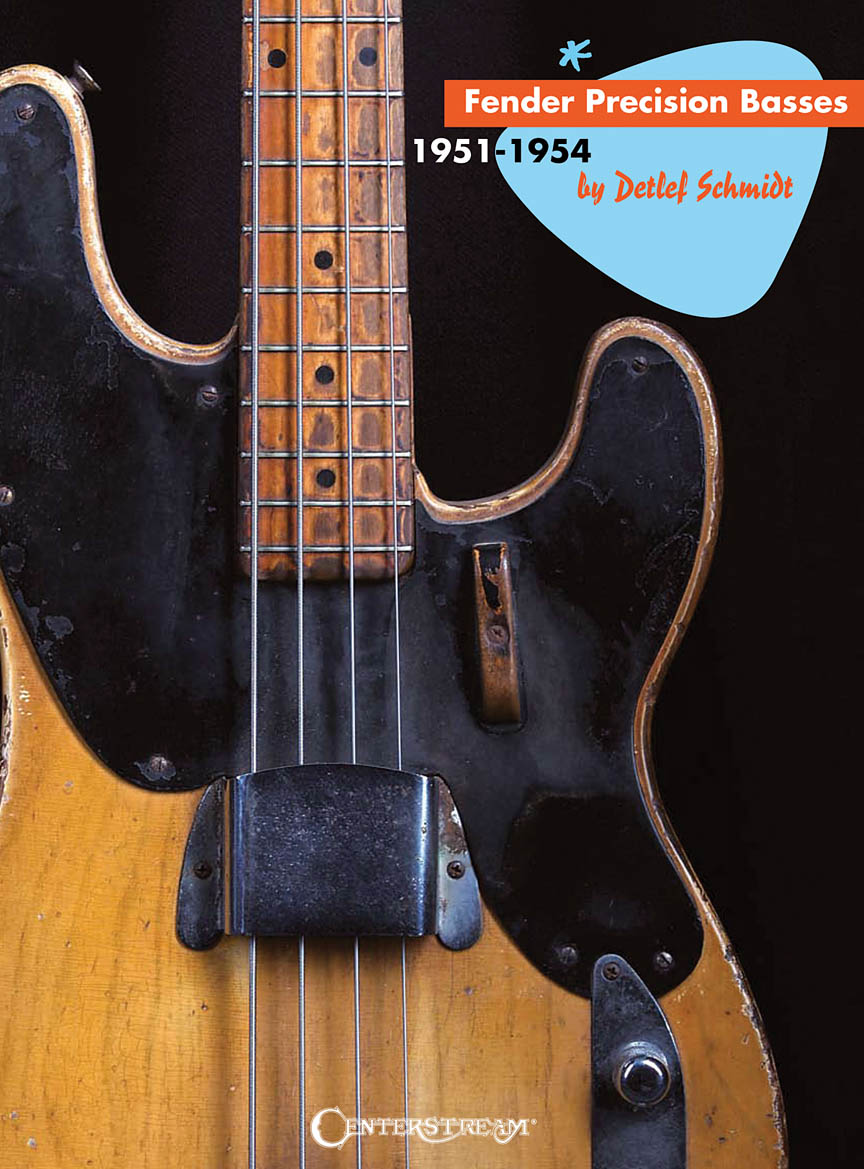
FENDER PRECISION BASSES 1951-1954 Detlef Schmidt LIBRO HAL LEONARD CENTERSTREAM-BASSO ELETTRICO

FENDER PRECISION BASSES 1951-1954. Detlef Schmidt

LIBRO ILLUSTRATO SUL FAMOSO MODELLO DI BASSO ELETTRICO FENDER . 

160 PAGINE, FOTOGRAFIE A COLORI

Series: Guitar

Publisher: Centerstream Publications
Format: Hardcover
Author: Detlef Schmidt

Introduced in 1951, the Fender Precision Bass is the precursor of all modern electric basses. This book takes a look at the history of the “slab body basses” and the most famous players. In addition to many historical photos, the full color book lists many basses with beautiful pictures, detail shots, and anecdotes. This book is a must-have for every bass player and enthusiast or collector.
162 pages

Prezzo: €35,99
€35,99

FENDER 60 YEARS OF SIX DECADES OF THE GREATEST ELECTRIC GUITARS Tony Bacon STRATOCASTER-TELECASTER

60 Years of Fender Six Decades of the Greatest Electric Guitars. Tony Bacon

Series: Book
Publisher: Backbeat Books
Format: Softcover
Author: Tony Bacon

The latest addition to Tony Bacon's acclaimed series of guitar books, 60 Years of Fender gives a year-by-year history of the most successful electric guitar maker. In 1950, Leo Fender introduced to the world the solidbody electric guitar – the instrument known as the Telecaster. He soon added two more classics: the Precision Bass (1951) and the Stratocaster (1954). Fender's sleek, adaptable guitars have since fueled modern music – from country to rock – and have been heard in the hands of virtually every guitarist of note, from Buddy Holly to Kurt Cobain, from Eric Clapton to John Mayer. Illustrated with an unrivaled gallery of color photographs of instruments, players, and memorabilia, this revised and updated edition expands upon 50 Years of Fender (published in 2000), covering nine more years of the Fender story.

“A must-have for any Fender fan. Highly entertaining.”

– Guitar Player

Inventory #HL 00332861
ISBN: 9780879309664
UPC: 884088401597
Width: 8.5"
Length: 11.0"
144 pages


Leo Fender listened hard to players' comments about the
Telecaster and Esquire models, and during the early 1950s he and
Freddie Tavares began to devise the guitar that would become the
Stratocaster (seen in stylized form on the 1954 catalog cover,
right). At first other makers had merely mocked Fender's new
solid body guitars, but soon Gibson had joined in with its Les
Paul, Gretsch with the Duo Jet, Kay with its K-125. Competition
was looming - and Fender needed to up the stakes. This they
most certainly did.

The Stratocaster was launched during 1954. Samples
around May and June were followed by the first proper
production run in October. The new Fender guitar was
the first solidbody electric with three pickups, meaning
a range of fresh tones, and featured a new-design
vibrato unit that provided pitch-bending and
shimmering chordal effects.
The new vibrato - often called a "tremolo" by
Fender and many others since - was troublesome in
development. But the result was the first self-contained
vibrato unit: an adjustable bridge, a tailpiece, and a
vibrato system, all in one. It wasn't a simple mechanism
for the time, but a reasonably effective one. It followed
the Fender principle of taking an existing product (in
this case, the Bigsby vibrato) and improving it.
Fender's new vibrato had six bridge-pieces, one for
each string, adjustable for height and length, which
meant that the feel of the strings could be personalized
and the guitar made more in tune with itself. The
complete unit was typical of Fender's constant
consideration of musicians' requirements and his
application of a mass-producer's solution.
The Strat came with a radically sleek, solid body,
based on the outl ine of the 1951 Fender Precision Bass.
Some musicians had complained to Fender that the
sharp edge on the Telecaster's body was uncomfortable
- the dissenters included musician/entertainer Rex
Gallion and Western Swing guitarist Bill Carson - and
so the Strat's body was contoured for the player's

comfort. Also, it was finished in a yellow-to-black
sunburst finish.
Even the output-jack mounting was new, recessed in
a stylish plate on the body face. And the headstock?
Side by side with Paul Bigsby's guitar made for Merle
Travis in 1948 there is clearly influence from the earlier
instrument. But as a whole the Fender Stratocaster
looked like no other guitar around, especially the
flowing, sensual curves of that beautifully
proportioned, timeless body.
The Stratocaster's new-style pickguard
complemented the Jines perfectly, and the
overall impression was of a guitar where
all the components ideally suited
one another. The Fender
Stratocaster has since become
the most popular, the most
copied, the most desired, and
very probably the most played :
solid electric guitar ever.
On its 40th anniversary in
1994 an official estimate put
Strat sales at over a million
guitars. At its launch it wasn't such
a world-beater; later in the 1950s,
the Fender Stratocaster began to hint
at future glories, especially in the hands
of players such as Buddy Guy, Carl Perkins,
and Buddy Holly.

The amp Custom Shop offered the high-end, vintage-flavored Vibro-King and Tone-Master as its first products, while the existing guitar Custom Shop reflected on a 90th Anniversary Harley-Davidson Strat. Comings and goings among Fender players included a debut from Liz Phair (opposite) and the death at 61 of the great Texas bluesman Albert Collins (memorial ad, right). G-Vox (above) was Fender's ill-fated computer guitar-teaching system.

With the continuing success of the guitar Custom
Shop, this year saw the start at Scottsdale, Arizona, of
an amp equivalent, with ex-Matchless electronics
expert Bmce Zinky in charge. The intention was to
make limited quantities of expensive, high-quality
products. The amp Shop would not build far-out
made-to-order items, but generally would follow the
guitar outfit's increasingly important business in
defining a catalog of regular items.
Artists could collaborate on individually crafted
items, but broadly speaking the hand-built
line would be drawn from reinterpretations ofFender's
classic tube amps of the 1940s, 50s and early 60s. The
first models to appear from the amp Custom Shop
were the Vibro-King 60-watt 3xlO combo and the
1one-Master 100-watt piggyback amp, with a choice of
2x 12 or 4x 12 cabinet, all finished in cream Tolex. In
the meantime at the guitar Custom Shop, over in
Corona, a link was being forged with motorcycle
manufacturer Harley-Davidson.
The result was the Fender Harley-Davidson 90th
Anniversary Commemorative Stratocaster in a very
limited mn of 109 pieces. The stunning handengraved
aluminum body summoned up the shiny
exterior of a Harley, while the bird's-eye maple neck
and ebony fingerboard would please anyone who
actually got to play one of these creations.
The signature-guitar list continued to grow, this year
with the addition of two new models, for Clarence
White and Richie Sambora. The Clarence White
Telecaster was named for the brilliant Byrds and
Kentucky Colonels guitarist, tragically killed by a
dmnk driver in 1973. The White Tele was fitted with
his favored Scmggs banjo-style detuners for first and
sixth strings, and the B-bender string-pull device that
he developed with Byrds dmmmer Gene Parsons.
Bon Jovi's Richie Sambora helped devise a Strat to
respond to his fiery playing, with Floyd Rose double-locking vibrato,
a DiMarzio bridge humbucker plus
Texas Special single-coils, and a flatter, wider
fingerboard. A personal touch came with
the inlaid stars for position markers.
On a cultural note, the Fullerton
Museum Center - not far from
the site of Leo Fender's
original workshops
exhibited Five Decades Of
Feruler, organized by guitar
historian Richard Smith.
Included were instmments
and an array of special
memorabilia fi"omFender as
well as Music Man and G&L.
Remarkably, this was the very
first exhibition to feature Fender's
achievements. "Leo forever changed
the course of popular music," is how
Smith admirably summed it up .


CONTENTS
the fifties page
the sixties page
the seventies page
the eighties page
the nineties page
the new millennium page
chronology of models page
index page
acknowledgements page

Prezzo: €27,99
€27,99

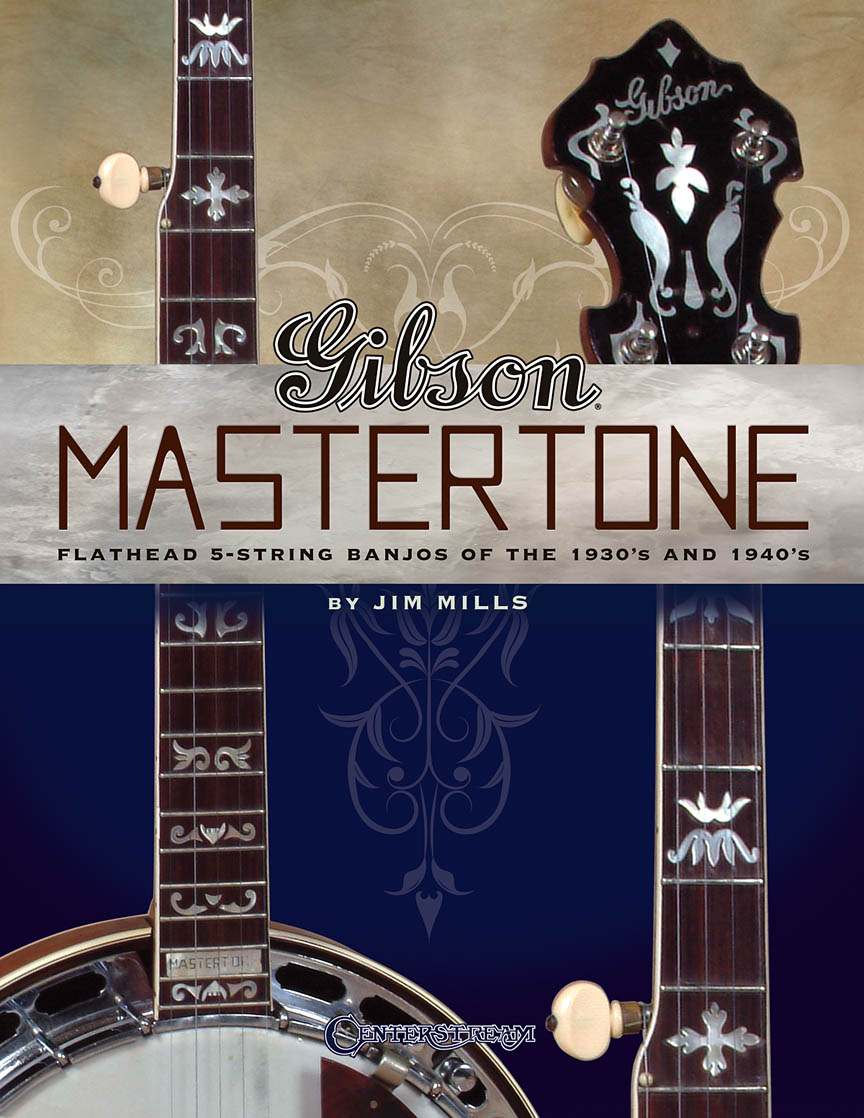
GIBSON MASTERTONE, FLATHEAD 5 STRING BANJOS OF THE 1930S AND 1940S, Jim Mills.


GIBSON MASTERTONE, FLATHEAD 5 STRING BANJOS OF THE 1930S AND 1940S, Jim Mills.

Gibson Mastertone

Flathead 5-String Banjos of the 1930s and 1940s
Series: Reference
Publisher: Centerstream Publications
Format: Softcover
Author: Jim Mills

While Gibson produced literally thousands of banjos prior to WWII, only a handful were made in the now most desirable configuration: the Original Flathead Five-String Mastertone. Since Earl Scruggs helped to make them the most sought-after banjos in the world over 60 years ago, these instruments have amassed a cult-like following.

These particular banjos featured a completely innovative design when the Gibson Company introduced them around 1930. They have since become the benchmark in design, sound quality, and just sheer power among banjo players. They have therefore also become the inspiration for nearly every successful 5-string banjo that has been manufactured for the past five decades.

Like Martin Dreadnaught and Fender Stratocaster guitars, the Gibson Mastertone Banjo has achieved an exalted status: It is appreciated far beyond its utilitarian purpose as a musical instrument, and considered a truly original American art form. The Mastertone design and style are instantly recognizable by musicians and music lovers around the world, even if imitated by other manufacturers.

Of the 130 or so Original Flathead Five-String Mastertones known to exist, 19 of the absolute best are featured here. The Scruggs, Reno, Jenkins, Crowe, Osborne, Huber and Mills banjos are shown in all of their glory, with details of their known histories and provenances, as well as never-before-seen photos, bills of sale, factory shipping ledgers, and other ephemera relating to these rare and highly desirable instruments.

Width: 8.5"
Length: 11.0"
168 pages

Prezzo: €44,95
€44,95

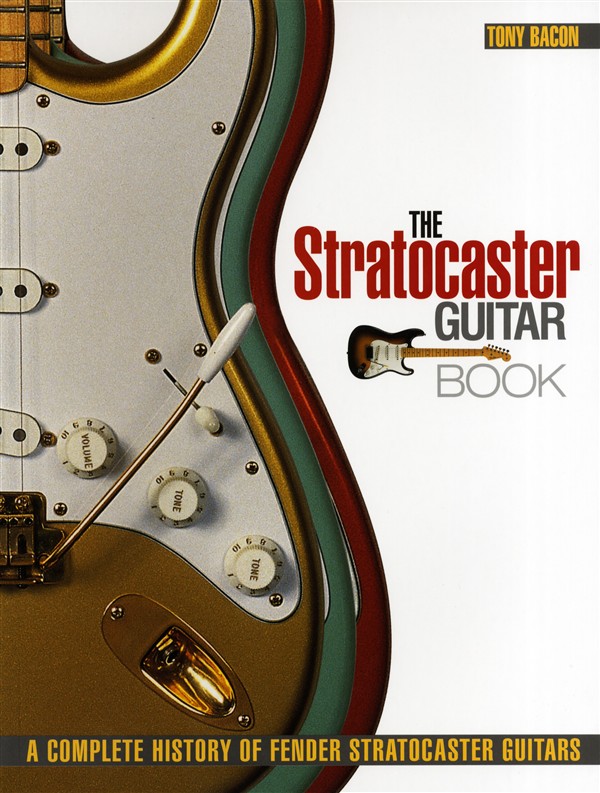
STRATOCASTER GUITAR BOOK A Complete History of Fender Stratocaster Guitars Tony Bacon

The Stratocaster Guitar Book

A Complete History of Fender Stratocaster Guitars


Libro 

volume totalmente dedicato alla chitarra elettrica Fender Stratocaster .  


Series: Guitar Reference
Publisher: Backbeat Books
Format: Softcover
Author: Tony Bacon

Leo Fender's company changed the course of popular music in 1954 when they introduced the Stratocaster. Since then, the Strat has been played by countless guitarists, from Jimi Hendrix to Buddy Guy and Jeff Beck. In this book, interviews with important Strat players from every decade illustrate the instrument's versatility, playability, and continuing importance. This is the complete story of the Stratocaster and the Fender company, from the struggles of the 1950s to the new models, retro reissues, and luscious collectibles of the 21st century. The Stratocaster Guitar Book is a glorious compendium of beautiful pictures, a gripping history, and a detailed guide to all Strat models. A must for all guitar lovers.

Width: 8.5"
Length: 11.0"
160 pages


CONTENTS:
THE STRATOCASTER STORY
THE PRE-STRAT ERA
THE FIFTIES
THE SIXTIES
THE SEVENTIES
THE EIGHTIES
THE NINETIES
RECENT YEARS
ENDNOTES
THE REFERENCE LISTING
US-MADE STRATOCASTERS
MEXICO-MADE STRATOCASTERS
JAPAN-MADE STRATOCASTERS
KOREA-MADE STRATOCASTERS
DATING & SERIAL NUMBERS
MODEL CHRONOLOGY
INDEX
ACKNOWLEDGEMENTS


Leo began work as an accountant, at first in the accounts section of the state highway department and then at a tyre distribution company, but his hobby was always electronics. In his twenties, he built amplifiers and PA systems for public events: sports gatherings, dances, and so on. He took a few piano lessons before trying the saxophone, but he was never serious, and he never learned to play the guitar.
When he lost his accounts job in the Depression, Leo took a bold step and opened his own radio and record store in Fullerton, around 1938. He called the new retail and repair shop Fender Radio Service, and it seemed a natural move for the ambitious and newlymarried 30-year-old. He advertised his wares and services on his business card: "Electrical appliances, phonograph records, musical instruments & repairs, public address systems, sheet music."
His new store on South Spadra meant that Leo met many local musicians and characters in the music and electronics businesses. During the first few years he hooked up with several people who would prove important to his future success. First among these was a professional violinist and lap-steel guitarist, Clayton Orr Kauffman, known to all simply as Doc.
The story goes that some time around 1940, Doc brought an amplifier into Leo's shop for repair and the two got chatting. Doc had amplified his own guitars and made designs for an electric guitar and a vibrato system. By this time, Leo had started looking into the potential for electric guitars and was playing around with pickup designs. A crude solidbody guitar that Fender and Kauffman built in 1943 purely to test these early pickups - one design for which was patented in '44 - is today in the Roy Acuff Museum at Opryland, ashville.
Doc went to work for an aircraft company during World War II, but the two incorrigible tinkerers still found time to get together and come up with a design for a record-changer good enough to net them $5,000. They used some of this money to bolster their shortlived company, K&F (for Kauffman & Fender), and began production of electric lap-steel guitars and small amplifiers in November 1945.
In the 20s, many people in America had taken up the little lap-steel guitar, often called the Hawaiian guitar, and the instrument was still tremendously popular. The steel had been the first type of guitar to go electric in the 30s. Several innovative companies, with Rickenbacker in the lead, experimented with electro-magnetic pickups, fixing them to guitars and feeding their signal out to small amplifiers. The attraction of the steel was that it was an easy-to-play instrument, and thus one suitable for beginners, but the electric version also proved appealing to professional musicians, especially in Hawaiian music and among country-and-western bands.
The musician would play the steel guitar on his lap or would step up to an instrument mounted on legs. The name came not from its construction - Fender's steels were all wooden - but from the metal bar that the player held in his left hand to stop the raised strings, which were generally tuned to an open chord. During the 30s and later the term the stratocaster guitar book...

... quantity, naturally, is limited," announced Fender, and during 1979 and 1980 the firm proceeded to make thousands of 25th Anniversary Stratocasters ($800 including case, virtually the same price as a standard model). "They went fast in '54. They'll go fast now," ran the insistent ad. An official estimate of production mentioned 10,000 units.
Most people tend to refer to a Stratocaster as a Strat, and in 1980 Fender finally used the abbreviation officially on a new model. It was designed by Gregg Wilson, who had come up with the budget-price Fender Lead models introduced the previous year. The new Strat combined regular Stratocaster looks with updated circuitry, a 'hot' bridge pickup, and fashionable heavy-duty brass hardware. Fender also offered the hardware separately as an after-market accessory line, called Original Brass Works, following the lead of various companies that popularised a craze for retrofit replacement parts. Larry DiMarzio was a leader in this new business, introducing his Super Distortion replacement pickup in 1975, with Mighty Mite, Seymour Duncan, and others soon following.
Fender intended with the Strat to re-introduce the old-style narrow headstock of the original Stratocasters. The broader type of the time had been in use since 1965. However, Fender used old worn-out tooling, and the result was not an entirely accurate re-creation. Smaller, certainly; accurate, no. A reversion to the four-bolt neck fixing and body-end truss-rod adjustment and the removal of the neck-tilt for the new Strat model implied that CBS were already aware of criticisms of 70s Stratocasters. A few brighter colours were offered for the Strat, too, reviving Lake Placid Blue, Candy Apple Red, and Olympic White.
The model was significant as the first attempt at a modernised Strat. It retailed at $995, compared to $745 for the regular Stratocaster.
One further attempt in 1980 to provide something different for Strat fans was the Hendrix Stratocaster. It was something like a 25th Anniversary Strat in overall spec, but it had an inverted headstock and additional body contouring, and was only offered in white.
It's another significant guitar, as it was the first Fender marketed to highlight an association with a musician, a sales technique that would become very important to the company from the late 80s. Only 25 or so were produced, and most if not all were marked as prototypes.
Colour schemes were brightened and expanded a little during the 80s, with the shortlived International Colors in 1981 and then the Custom Colors and Stratobursts of '82. Some of the new hues were distinctly lurid - such as Capri Orange, Aztec Gold, or Bronze Stratoburst - and they were not much liked at the time. In 1983, there was a short run of Marble or 'bowling ball' finishes, designed by Darren Johansen, in swirling Red, Blue, or Gold.
With generally trimmed model lines and a massive output from the factories at Fender, it was hard to resist the feeling as the 80s dawned that the newly-important calculations of the balance sheet were firmly established and took precedence over the company's former creativity. At the start of the decade, CBSmanagement decided that they needed some new blood to help reverse a decline in Fender's image and finances. Income had the stratocaster guitar book ...

Prezzo: €199,99
€199,99

GIBSON ELECTRIC STEEL GUITARS 1935-1967 A. R. Duchossoir LIBRO CHITARRE ELETTRICHE ILLUSTRATO

GIBSON ELECTRIC STEEL GUITARS 1935-1967. A. R. Duchossoir.

LIBRO ILLUSTRATO, CHITARRE ELETTRICHE GIBSON. 

Series: Book

Publisher: Hal Leonard
Format: Hardcover
Author: A. R. Duchossoir

This book recounts the story of all the electric steel guitars – or electric “Hawaiian” guitars, as they were called during most of their tenure – that were built by Gibson between 1935 and 1967. Hawaiian guitars were the most popular form of electric guitars until the 1950s, and they contributed to some crucial developments in pickups and amplification in addition to lending their voice to the earliest solid body electrics. Aesthetically, the early postwar instruments are also amongst the coolest designs ever produced by Gibson.

•Over 450 illustrations, including a wealth of color pictures, catalog reproductions, and patent drawings

• A comprehensive section on dating instruments as well as detailed shipping totals for the 1935-1967 period.
Width: 8.5"
Length: 11.0"
160 pages

Inventory #HL 00332738

ISBN: 9781423457022
UPC: 884088257392 

Prezzo: €59,99
€59,99

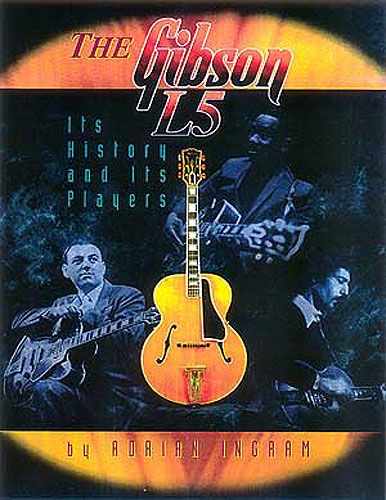
GIBSON L5 THE, Its History And Its Players. Adrian Ingram.


GIBSON L5 THE. Adrian Ingram


Series: Guitar

Publisher: Centerstream Publications

Format: Softcover

Artist: Adrian Ingram


Introduced in 1922, the Gibson L5 is the precursor of the modern archtop guitar. It was the first archtop to feature f-holes, which allowed it to project through the horn-dominated bands of the day. Its strong, full, warm sound was an immediate and overwhelming success that turned the heads of makers, players and listeners alike. This book takes a look at its history and most famous players, from its creation, through the Norlin years, to its standing today as the world's most popular jazz guitar. With its stunning 16-page full-color photo section, this book is a must for every guitar enthusiast's collection! 8-1/2″ x 11″.

Width: 8.5"

Length: 11.0"

112 pages

Prezzo: €29,95
€29,95

GIBSON GUITARS TED MCCARTY'S GOLDEN ERA: 1948-1966 Gil Hembree BOOK

GIBSON GUITARS TED MCCARTY'S GOLDEN ERA: 1948-1966. Gil Hembree.

LIBRO / BOOK 

Gibson Guitars

Ted McCarty's Golden Era: 1948-1966
Series: Book
Publisher: GH Books
Format: Softcover
Author: Gil Hembree

Gibson Guitars: Ted McCarty's Golden Era is a long overdue book that covers the world's greatest period of guitar manufacturing. As CEO of Gibson Guitars from 1948 to 1966, Ted McCarty presided over the production of nearly one million instruments and amplifiers. 1950s Gibson Les Paul Standards, Flying Vs, Explorers, and ES-335s are considered to be some of the most valuable fretted instruments in the world.

This book is Ted McCarty's first and only complete biography, and a book that gives us a glimpse into a golden era of his factory and his loyal employees who made some of the world's most desirable guitars. It features over 100 photographs, some from Ted's personal archives and never before published.

“Ted McCarty was the architect of a Golden period in Gibson's history. During his 18-year tenure, he helped to reestablish the company's historic leadership in the industry through a number of musical innovations that still resonate today.” Gibson Chairman and CEO Henry E. Juszkiewicz
Width: 8.12"
Length: 10.75"
352 pages

Prezzo: €109,99
€109,99

FLYING V EXPLORER FIREBIRD An Odd-Shaped History of Gibson's Weird Electric Guitars Tony Bacon

FLYING V, EXPLORER, FIREBIRD, An Odd-Shaped History of Gibson's Weird Electric Guitars. Tony Bacon

LIBRO ILLUSTRATO DI CHITARRE ELETTRICHE GIBSON. 


Flying V, Explorer, Firebird

An Odd-Shaped History of Gibson's Weird Electric Guitars
Series: Guitar Reference
Publisher: Backbeat Books
Format: Softcover
Author: Tony Bacon
160 pages
 

Prezzo: €34,99
€34,99
Condividi contenuti