SPARTITI PER CHITARRA DI MUSICA FLAMENCO

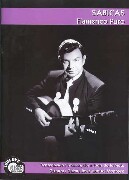
SABICAS, FLAMENCO PURO CD TABLATURE

SABICAS, FLAMENCO PURO CD TAB.
transcribed by Juan de la Mata ; guitar by Jose Manuel Montoya. Three themes are included: Por los olivares - Fandangos, Ecos jerezanos - Soleá por bulerías and Punta y tacón - Farruca. Also contains a companion CD, played by Jose Manuel Montoya, with the themes recorded at normal tempo and a tempo that is approximately 20% slower than that which is indicated on the score. This will help the student better appreciate the sonority of each piece. Introduction in Spanish, English and French. Offers both standard notation and tablature.

Prezzo: €42,00
€42,00

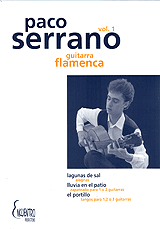
SERRANO PACO MUSICBOOKS 1 GUITAR TABLATURE CHITARRA LIBROS SPARTITI ALEGRIAS LAGUNAS DE SAL

SERRANO PACO, MUSICBOOKS 1.  SHEET MUSIC BOOK WITH GUITAR TABLATURE.

LIBRIO DI MUSICA FLAMENCO,

SPARTITI PER CHITARRA :

PENTAGRAMMA, TABLATURE.

TiTOLi :

3 pieces from the CD "Mi Camino".

- Lagunas de sal (Alegrías)

-Lluvia en el patio (Zapateado para 1 o 2 guitarras)

-El portillo (Tangos para 1,2 o 3 guitarras).

Prezzo: €45,99
€45,99

SERRANO PACO GUITARRA FLAMENCA FLAMENCO GUITAR MUSIC BOOKS 2 TABLATURE CHITARRA SPARTITI

SERRANO PACO, GUITARRA FLAMENCA / FLAMECO GUITAR, MUSICBOOKS 2.
SHEET MUSIC BOOK WITH GUITAR TABLATURE .


LIBRO DI MUSICA FLAMENCO : 

SPARTITI PER CHITARRA : 

PENTAGRAMMA, TABLATURE .


TITOLi :

3 pieces from the CD "Mi Camino" :

- Mi Camino (Soleá)

-Viento del norte (Farruca)

-Chiringo (Bulerías). 


Book (sheet music and tablature)
54 pages
German, English, French, Spanish

Prezzo: €49,99
€49,99

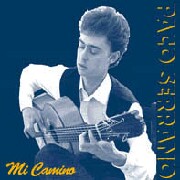
SERRANO PACO, "MI CAMINO". CD

SERRANO PACO, "MI CAMINO". CD
1. El portillo (Tangos) 5'10''
2. Mi camino (Soleá) 6'18''
3. Lagunas de sal (Alegrías) 5'36''
4. Amanecer en la vega (Granaínas) 6'10''
5. Taracea (Bulerías) 4'35''
6. Viento del norte (Farruca) 5'01''
7. Lluvia en el patio (Zapateado) 3'47''
8. Las campanas del cerro (Rondeñda) 5'58''
9. Buen son, buen corazón (Guajiras) 4'04''
....(a mi compadre Rafael Montilla)
10. A mi hermana Luisa (Taranta) 7'30''
11. Chiringo (Bulerías) 4'28'' All music composed and played by Paco Serrano. With the collaboration of Ricardo Espinosa (Percussion).

Prezzo: €18,00
€18,00

DE LUCIA PACO, FANTASIA FLAMENCA. TABLATURE

DE LUCIA PACO, FANTASIA FLAMENCA. Aires de Linares -Mi inspiración -Guajiras de Lucía -Mantilla de Feria -El tempul -Panaderos flamencos, Generalife bajo la luna -Fiesta en Moguer -Lamento Minero -Celosa. Testo en Español, inglés e francés. TABLATURE

Prezzo: €55,99
€55,99

DE LUCIA PACO LA FABULOSA GUITARRA DE-TABLATURE LIBRO SPARTITI CHITARRA FLAMENCO

DE LUCIA PACO, LA FABULOSA GUITARRA DE. TABLATURE

LIBRO DI MUSICA FLAMENCA.

SPARTITI PER CHITARRA: PENTAGRAMMA E TABLATURE. 

Paco de Lucía applied modern harmony to the flamenco guitar, exerting a huge influence on the flamenco world. He also advanced guitar technique and established the cajon, a boxlike Peruvian percussion instrument, as a mainstay in flamenco ensembles, further elaborating and solidifying the rhythmic foundation and influencing all facets of the flamenco art form, be it dance (baile), song (cante) or guitar performance (toque). This volume marks the first in a series of collections of chronologically transcribed recordings by this consummate guitarist; It presents works from his first recording, La fabulosa guitarra de Paco de Lucía including: Barrio la viña -De madruga -Farruca de Lucía -Ímpetu -Jerezana -Llanto a Cádiz -Punta del Faro -Punta Umbría. Every effort was made to accurately render this music in standard notation and tablature ultimately approved by the artist himself. A foreword, explanation of notation symbols, and generous performance notes are included in Spanish, English and French.


We recommend, even for a trained musical reader, to look both stave and tablature because one
is complementary to the other. Stave let us value the «tempo», measure and timing of each note.
and tablature tell us which part of the fingerboard the artist is playing on.
It is also very interesting to observe the fingering used in each piece. Two main reasons:
Right fingering is almost essential to achieve a good performance and to obtain the «flamenco
sound». The second reason is that the transcription becomes a «true» method of learning flamenco
guitar if fingering is performed as the stave says. We believe that anyone who learns to
play «Punta del faro» as it is shown in the book, is able to play the «bulerias» style, and the
same thing may be said about the other pieces.
In flamenco music, tremolos are played in groups of four notes in the same string preceeded
by a low note played with the thumb. That makes a sequence of five sounds in one beat
(p-i-a-m-i), so this technique is performed in quintuplets. (for the english readers, p=thumb,
i=index, m=middle finger, a=ring finger). These three fingers must not rest on the next string
after playing, (<<apoyando»technique). The thumb may do it to emphasize a note, but we do
not recommend it because you'll get a better sound and a more homogeneus playing with the
«tirando» technique. Arpeggios must be played in the same way, (<<tirando»),as in the classical guitar.
To get a good sound in the «rasgueos» (strums), it is important that our fingers strike the
strings individually. This means that a finger does not «attack» the strings until the one before
has not finished its stroke. Let us say two little «tricks» which will help us to get a better rasgueo
sound. On one side, it is preferable to play on the strings «striking», better than «rubbing
», so, the sound will be shorter and more percussive; on the other side, we must not try to
play ALL the strings of the chord, this is not so important, but we should have in mind that the
strums played with an indexstroke must have the same force and sound volume in both directions, up or down.
It's also important to practise the p. a. i. Rasgueo, (in Spanish, it is called abanico. =fan).
This type of rasgueo has three strokes: first, the thumb nail strikes from high to lower strings
J.., second, the ring finger strikes from low to high strings t, and third, the index strikes from
low to high strings too t. Our wrist must be very relaxed to get a «round» and homogeneus sound.
Percussive taps on the soundboard x are made with the ring finger in the pickguard, between
the rose and bridge. They can be studied in three main different ways: one is doing it simultaneously
with a index stroke rasgueo from low to high strings, another one is the same but
using a thumbstroke instead of the index, and finally we can practise it individually, without
other finger movement.
The Alzapua is a thumb technique with three movements: 1.- bass note thumbstroke, 2.-low
to high strings thumb stroke t, 3.- high to low strings thumb stroke J... Sometimes this technique
begins in the second movement. (this second one can be accompanied by a tap in the
soundboard). To obtain a «clean» sound with the alzapua, it is necessary to rest the thumb on
the next string under the played one on the first thumbstroke, (bass note). The thumb joints
should be blocked to let all the finger muscles work together against the strings (the force increases).
As we have said before, we should not attack all the strings, it is better to do it with
less of them, we will get a more percussive sound.
Prezzo: €59,99
€59,99

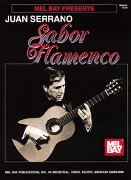
SERRANO JUAN, SABOR FLAMENCO. CD TABLATURE

SERRANO JUAN, SABOR FLAMENCO. CD TAB.

Brani di difficoltà intermedia, per lo studio della chitarra flamenco in notazione e tablature:

Entre olaz
Los panaderos
Cubanita
De totana
Patio gitano
Luna y clavel
Alcaiceria
Romance flamenco
Bailando

Prezzo: €31,00
€31,00

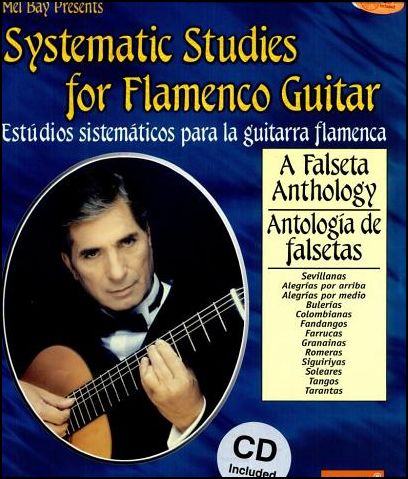
SYSTEMATIC STUDIES FOR FLAMENCO GUITAR Juan Serrano 2 CD TABLATURE A FALSETA ANTHOLOGY ALEGRIAS

SYSTEMATIC STUDIES FOR FLAMENCO GUITAR. Serrano. 447 Pagine, 10 sevillana, 10 alegrial por arriba, 10 alegrias por medios, 10 bulerias, 10 colombianas, 10 fandangos, 10 farrucas, 10 granainas, 10 romeras, 10 siguiriyas, 10 soleares, 10 tangos, 10 tarantas. SHEET MUSIC BOOK WITH 2 CD & GUITAR TABLATURE. 

447 PAGES !


LIBRO DI MUSICA FLAMENCO CON 2 CD.

SPARTITI PER CHITARRA : 

PENTAGRAMMA, TABLATURE. 

447 PAGINE .


A FALSETA ANTHOLOGY 

Product Description:
This masterful, comprehensive book presents ten Sevillanas plus ten falsetas of each of the following popular and traditional flamenco forms: Alegrias por Arriba, Alegrias por Medio, Bulerias, Columbianas, Fandangos, Farrucas, Granainas, Romeras, Siguiriyas, Soleares, Tangos, and Tarantas. This landmark text presents the systematic development of Flamenco tech- nique. Each of the dance forms contains performance notes & a brief history. In English & Spanish and written in standard notation and tablature. Includes companion 2-CD set.


INTRODUCTION

All of the flamenco forms are based on one traditional rhythmical phrase of 8 or 12 beats (musically 3/4,4/4, or 3/4 and 6/8). The rhythmical flamenco phrase is called compas. The melodic themes that are played between each compas are calledjalsetas. A falseta can be composed of several flamenco compases. The flamenco selections are composed of its traditional compas with some rhythmical variations and several falsetas. Between falseta and falseta the compas or one of its variations is played.
The falsetas melodically are all different and are composed of different techniques, tremolos, picados arpeggios, rasgueados and different chords.
Almost all of the flamenco aficionados know which is the compas of each form and how to play it. Many prefer not to play compositions of other guitarists, but they prefer to learn many new falsetas in order to make their own arrangements.
This book is composed of 10 Sevillanas and 10 falsetas of each one of the most popular and traditional of the flamenco forms: I
i Sevillanas, Alegrfas por Ar1iba, Alegr{as por Medio, Bulerfas, Colombianas, Fandangos, Farrucas.
Granainas, Romeras, Siguiryyas, Soleares, Tangos and Tarantas .
All of the falsetas can be used as technical studies. Each falseta is equivalent to one study. It is recommended that each of the falsetas be practiced very slowly, following the fingering marked in each, so that the fingers memorize the order that they must follow. Thus, the synchronization of the two hands can be perfected and the falsetas can be played with more ease.
There are many flamenco guitarists that play the notes very clearly with a good sound. These guitarists are called "clean guitarists" (clear) within the flamenco world. There are others that are good musicians and have a very good sense of rhythm, but do not have a good technique. The notes sound sloppy. These guitarists are called "dirty guitarists" (sloppy) in the flamenco world.
It doesn't matter what type of music is played, jazz, classical or flamenco. All of the notes should sound clear with each one having its musical value.
Note Falsetas are the melodic phrases that are played between compas and compas. Compas is the rhythmical phrase that is played between falseta and falseta.

SYMBOLS
• The numbers 1 - 2 - 3 - 4, signify the fingers of the left hand.
• The letters P - I - M - A - S signify the fingers of the right hand.
• The Roman numerals designate the position, I - II - III etc.
• A letter C preceding a Roman numeral signifies Barre: CI - CII - CIII etc.
• The numbers in circles designate the strings. For example, a three in a
circleG)
means the
note played on the third string, a four @) fourth string etc.
TRANSLATIONS FOR MUSIC AND TABLATURE
Freestroke ----Tirando
Reststroke ----Apoyando
Scale ------Picado
 

Format: Book/2-CD Set

Contents:
01) Introduction --
02) Sevillanas --
03) Alegrias Por Arriba --
04) Alegrias Por Medio --
05) Bulerias --
06) Colombianas --
07) Fandangos --
08) Farrucas --
09) Granainas --
10) Romeras --
11) Siguiriyas --
12) Soleares --
13) Tangos --
14) Tarantas


INTRODUCTION

All of the flamenco forms are based on one traditional rhythmical phrase of 8 or 12 beats (musically 3/4, 4/4, or 3/4 and 6/8). The rhythmical flamenco phrase is called compas. The melodic themes that are played between each compas are calledjalsetas. A falseta can be composed of several flamenco compases. The flamenco selections are composed of its traditional compus with some rhythmical variations and several falsetas. Between falseta and falseta the compas or one of its variations is played.

The falsetas melodically are all different and are composed of different techniques, tremolos, picados arpeggios, rasgueados and different chords.

Almost all of the flamenco aficionados know which is the compus of each form and how to play it. Many prefer not to play compositions of other guitarists, but they prefer to learn many new falsetas in order to make their own arrangements.

This book is composed of 10 Sevillanas and 10 falsetas of each one of the most popular and traditional of the flamenco forms:


Sevillanas, Alegrias por Arriba, Alegrias por Medio, Bulerias, Colombianas, Fandangos, Farrucas,

Granamas, Romeras, Siguiras, Soleares, Tangos and Tarantas


All of the falsetas can be used as technical studies. Each falseta is equivalent to one study. It is

recommended that each of the falsetas be practiced very slowly, following the fingering marked in each, so that the fingers memorize the order that they must follow. Thus, the synchronization of the two hands can be perfected and the falsetas can be played with more ease.

There are many flamenco guitarists that play the notes very clearly with a good sound. These guitarists are called "clean guitarists" (clear) within the flamenco world. There are others that are good musicians and have a very good sense of rhythm, but do not have a good technique. The notes sound sloppy. These guitarists are called "dirty guitarists" (sloppy) in the flamenco world.

It doesn't matter what type of music is played, jazz, classical or flamenco. All of the notes should sound clear with each one having its musical value.

Note Falsetas are the melodic phrases that are played between compas and compas. Compas is the rhythmical phrase that is played between falseta and falseta.

SYMBOLS

• The numbers 1 - 2 - 3 - 4, signify the fingers of the left hand.

• The letters P - I - M - A - S signify the fingers of the right hand.

• The Roman numerals designate the position, I - II - III etc.

• A letter C preceding a Roman numeral signifies Barre: CI - CII - CIII etc.

• The numbers in circles designate the strings. For example, a three in a

circle G) means the note played on the third string, a four 4 fourth string etc.

TRANSLATIONS FOR MUSIC AND TABLATURE

Freestroke ----Tirando

Reststroke ----Apoyando

Scale ------Picado


SEVILLANAS

Sevillanasare one of the most popular forms of the flamenco music. One complete Sevillana set is composed of four coplas; that is, four different Sevillanas-ealled 1st, 2nd, 3rd, and 4th. The reason is that the Sevillanas are danceable and each of them is adapted to the choreography of the dance. The complete dance is divided into four parts. The choreography of the dance is based on the rhythm, not the melody, therefore the order of the 4 Sevillanas that are in the composition can be interchanged.

This section is composed of 10 different Sevillanas in tone and melody. The order is in a progressive form in technical difficulty (advancement).

It is recommended learning all of the 10 Sevillanas; then playing the four that are liked best and interchanging them in any order. It is also recommended that the second not be attempted until the first is mastered and so on.

although the compas and the musical form of all of the Sevillanas are the same, the techniques and melodies are completely different in each one of them; therefore when the 10 Sevillanas are learned, it will be much easier to master the rest of the falsetas that make up this book.

The Sevillanas are measured in 3/4. A flamenco compas has 6 beats equivalent to 2 measures of 3/4.


SEVILLANAS

Las Sevillanas son unas de las formas mas populares entre la musica flamenca. Una composici6n completa de sevillanas consiste en cuatro copIas, 0sea, cuatro Sevillanas diferentes que se les llama primera, segunda, tercera y cuarta. La razon es porque las Sevillanas son bailables y cada una de elIas esta adaptada a la coreograffa del baile.

La danza completa esta dividida en cuatro partes. Las coreograffas del baile estan basadas en el ritmo y no en la melodia. Por 10 tanto, el orden de las cuatro Sevillanas que se esten usando en la composici6n puede ser cambiado a la conveniencia del guitarrista que las interprete.

Esta eccion de Sevillanas se compone de diez Sevillanas diferentes en tonos y melodfas. El orden esta en una forma progresiva en dificultad tecnica.

recomiendo que los estudiantes aprendan las diez Sevillanas y asf podran tocar las cuatro que mas les gusten y podran cambiar el orden a su conveniencia y gusto. Tambien recomiendo que hasta que no hayan aprendido bien la primera, no empiecen con la segunda y 10 mismo con todas las siguientes.

Aunque el compas y la forma musical de todas las Sevillanas es igual, las tecnicas y las melodfas son completamente diferentes en cada una de elIas. Por 10 tanto, cuando hayan aprendido estas diez Sevillanas les sera mucho mas facil el aprendizaje de todas las demas formas que componen este libro.

todas las Sevillanas se miden en tiempo de 3/4. El compas flamenco se compone de seis tiempos equivalente ados compases musicales de 3/4.

Prezzo: €69,99
€69,99

THE ART OF RASGUEADO TABLATURE LIBRO CHITARRA TECNICA FLAMENCO Ioannis Anastassakis

THE ART OF RASGUEADO. TABLATURE

LIBRO METODO DI MUSICA FLAMENCA

TECNICA DEL RASGUEADO

PENTAGRAMMA TABLATURE.

La tecnica del rasgueado è senza dubbio la più caratteristica della chitarra flamenco. Ioannis Anastassakis parlerà anche del golpe, in questo volume per flamenchisti e per chi vuole imparare tutto sul rasgueado e il suo ritmo. TABLATURE

Product Description:
The rasgeuado technique is without a doubt the most impressive and characteristic element of the flamenco guitar. Author Ioannis Anastassakis has studied and researched the rasgueado technique of every significant flamenco guitarist in the world, and has compiled his work in this book in an easy and understandable notation form, with excellent explanations of each rasgueado technique. From this book, every flamenco and non-flamenco guitarist, from aficionado to professional, can learn everything about the rasgueado technique and its interpretation. Rumba rhythms and the golpe technique are also discussed. Notation and tablature.

Contents:

THE ART OF RASGUEADO
Symbols used in this book

PREPARATORY RASGUEADOS

TRADITIONAL RASGUEADOS
Ornamental rasgueados
The eami rasgueado
16th-note traditional rasgueados
The ieami rasgueado
The amii rasgueado
Triplet & Sextuplet traditional rasgueados
The pai rasgueado
The pei rasgueado
The pmi rasgueado
The pmp rasgueado
Quintuplet traditional rasgueados
The eamii rasgueado
The peami rasgueado

CONTEMPORARY RASGUEADOS
Triplet rasgueados
The iai rasgueado
The iia rasgueado
The imi rasgueado
The iei rasqueado
The mmi rasgueado
The amamami rasgueado
The amamamamami rasgueado
The amamamamamamamami rasgueado
16th-note rasgueados
The pami rasgueado
The paip rasgueado

SPECIFIC PURPOSE RASGUEADOS
Triplet and sextuplet rasgueados
The pm rasgueado
The ieamie amieam i rasgueado
The iamiami rasgueado
Miscellaneous other rasgueados
The ami rasgueado
The amiami rasgueado
The amiamiami rasgueado
The imae rasgueado
The imaei rasgueado
The peamip rasgueado
The eami ieam i rasgueado
The ieamii rasgueado
The amiamiami rasgueado
The amiimami rasgueado
Final rasgueado exercise

ON PRACTICING THE RASGUEADO TECHNIQUE
Rasgueado Practice Outline

GOLPE TECHNIQUE
Golpes with the ring finger
Golpes with the Thumb

RUMBA PATTERNS
Introduction to the Rumba Flamenca
Basic Rumba patterns
Pattern no. 1
Pattern no. 2
Variations on the Rumba patterns
Variation no. 1
Variation no. 2
Variation no. 3
Variation no. 4

CONCLUSION
ACKNOWLEDGEMENTS
ABOUT THE AUTHOR

Prezzo: €23,99
€23,99

HERRERO OSCAR TORRENTE NINE CONCERT SOLOS FOR FLAMENCO GUITAR BOOK CD TABLATURE BOOK

HERRERO OSCAR, TORRENTE. NINE CONCERT SOLOS FOR FLAMENCO GUITAR. 9 pezzi di flamenco moderno. CD TABLATURE.


Torrente Score booklet
Reference: TORRENTE
 
Scores booklet partitures in notation and cifra from the CD Torrente.
Tablature and standard notation.
Transcriptions by Oscar Herrero and Claude Worms.
 
Themes:
Dos Hermanas (Colombiana)
Miragua (Alegrias)
Sombra y Candil (Taranta)
Carmen (Sevillanas)
Armonia para dos mundos (Trémolo)
Paisano (Fantasía)
Torrente (Bulerías)
Manantial (Soleá)
Tierra Mojada (Guajira)
 
Introduction in Spanish, English and French.
 
A4 format
136 Pages
Prezzo: €99,99
€99,99
Condividi contenuti