SPARTITI PER CHITARRA DI TECNICA TAPPING

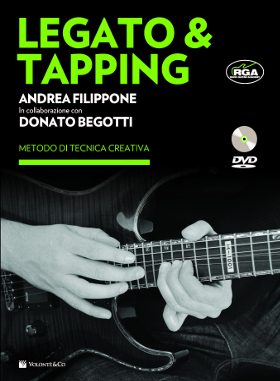
LEGATO & TAPPING FILIPPONE BEGOTTI LIBRO & DVD METODO SPARTITI TECNICA TABLATURE

LEGATO & TAPPING. BOOK & DVD. METHOD WITH GUITAR

TABLATURE

METODO DI TECNICA CREATIVA


LIBRO METODO DI MUSICA ROCK, CON DVD. 

SPARTITI PER CHITARRA CON: 

ACCORDI, PENTAGRAMMA, TABLATURE. 

TECNICA, 


Autore: Andrea Filippone / Donato Begotti
Editore: Volontè & Co.
Pagine: 72
Formato:libro + DVD 

Descrizione breve
Un metodo di tecnica creativa, un vero e proprio corso di tecnica del legato e del tapping, con dvd allegato con esecuzioni video di tutti gli esempi musicali a velocità originale e ridotta. In una cartella audio, tre tracce per ogni esercizio (esecuzione, base al 100% e base 80% della velocità originale). Concepito sia per il chitarrista che suona da qualche anno, che per quello in carriera. Per ottenere: tecnica, musicalità, impostazione e controllo dell’emotività. Divertente e vario (si suona in generi musicali dal progressive al pop rock, al metal, al fusion all’alternative).


Andrea Filippone
Chitarrista
Si avvicina alla musica all’età di otto anni grazie
al padre. Dopo un periodo da autodidatta, segue
le lezioni private con il Maestro Marco Roagna.
Successivamente, si iscrive al corso per la carriera
chitarristica “MCR
®” presso la Rock Guitar Academy.
Nel 2011, sotto la guida di Donato Begotti, si
diploma con votazione 9.75/10.
Insegnante
Insegna dal 2007. Ha collaborato in diverse strutture
in qualità di insegnante di chitarra elettrica e acustica. Dal 2011
è docente dei corsi CCR
® presso la Rock Guitar Academy.
Progetti e Live
Ha suonato con: • The Mirror (tribute band Dream Theater) • Subliminal Verses (tribute band Slipknot), con intensa
attività live in tutto il territorio nazionale su palchi di rilievo
tra cui Alcatraz (Milano), Live Club (Trezzo sull’Adda), Urban
(Perugia), Qube (Roma, in collaborazione con Radio Rock),
Puerto Baracoa (Grosseto), Rock’n Roll Arena (Novara)
• Twisted Transistor (tribute band Korn) • Psychical Contact (inediti Progressive Rock) • Ordem (inediti Pop Rock, con i quali si esibisce a Tavagnasco
Rock, in apertura ai Punkreas)
• Living Corpse (inediti Metal Core)
Attualmente è il chitarrista di:
DOGS (rivisitazioni in chiave Rock “tamarro” di brani EDM)
Discografia
Compone, arrangia ed incide le parti di chitarra nell’EP di
debutto di Giuseppe Torrente. Il primo singolo “There’s No
Time”, mixato all’Abbey Road Studios di Londra, è distribuito in
Italia, Svizzera, Slovenia, Polonia e Australia.

Il Collaboratore
Donato Begotti
Chitarrista
Votato tra i migliori chitarristi rock Italiani, dal 1987 svolge un’intensa attività live con artisti, cover
band, in televisione, in tournée, nei locali di musica dal vivo e come dimostratore di strumenti
musicali. Ha svolto più di 2.500 esibizioni live, 200 clinic in Italia e 27 fiere nel mondo.
Insegnante
Insegna dal 1993. È fondatore, titolare e docente della “Rock Guitar Academy”, la prima
scuola europea specializzata in Chitarra Rock. In passato ha collaborato con CPM. Ha ideato,
oltre che i corsi TAPI®, PGA®, PMT®, CCR® e RLS®, l’MCR®: il corso per la carriera al quale si
sono diplomati alcuni tra i più grandi chitarristi rock italiani.


Ciao e benvenuto in “Legato & Tapping”
 Che cos’è?
È un vero e proprio corso avanzato di tecnica del legato e del tapping, con DVD allegato. È concepito sia per il chitarrista
che suona da qualche anno, sia per quello in carriera.
 Obiettivi
Mediante lo studio di questi esercizi otterrai:
• Tecnica: velocità, tocco, precisione, dinamiche
• Musicalità: timing, conoscenza di lick in diversi generi musicali
• Impostazione: controllo degli arti e della postura
• Controllo dell’emotività: sicurezza nell’esecuzione
 È divertente e vario!
Grazie alle basi musicali, arrangiate come un vero e proprio disco, applicherai in maniera creativa e moderna queste due tecniche
suonando diversi generi musicali, quali: Alternative, Progressive, Swing, Pop Rock, Metal, Dubstep, Breakbeat, Fusion e altri!
 Com’è strutturato?
Il metodo si divide in otto lezioni di progressiva difficoltà. All’interno delle prime sei, alternando una di legato e una di
tapping, svilupperai la tua tecnica lavorando su:
1. Accelerazione. Durante l’esercizio il tempo aumenta di cinque BPM ad ogni giro. Sviluppa velocità
2. Scatto. Suonerai una frase musicale per tre volte ad una velocità confortevole e la quarta di scatto. Sviluppa velocità, controllo delle divisioni ritmiche, dei cambi di tempo e motivazione personale
3. Resistenza. Eseguirai un lick ininterrottamente per almeno 60 secondi. Sviluppa resistenza e rilassamento degli Arti
4. Arpeggio. Applicherai in ambito solistico gli accordi in forma di arpeggio. Sviluppa conoscenza verticale della tastiera e costruzione di fraseggi melodici efficaci
5. Assolo riassuntivo. Metterai in pratica le abilità ottenute ad ogni esercizio del capitolo riunendole in un assolo vero e proprio 

La settima e l’ottava lezione (denominate “Extreme Lesson”), tramite due assoli particolarmente virtuosi, ti permetteranno di portare ad un livello tecnico ancora più alto le abilità ottenute nelle sei lezioni precedenti.
 DVD
Video. Il DVD allegato contiene le esecuzioni in video di tutti gli esempi musicali sia a velocità originale sia ridotta, con inquadrature provenienti da diverse angolazioni e distanze. Ti saranno utili per vedere applicate, fin nei minimi dettagli, tutte le tecniche trattate nel libro.
Audio. In una cartella separata troverai, per ogni esercizio, tre tracce:
1. Esecuzione. Per ascoltare l’esercizio
2. Base al 100%. Per praticare l’esercizio a velocità originale
3. Base all’80%. Per agevolarti nello studio praticando all’80% della velocità originale
Come accedere ai file audio
Windows. Doppio click su cartella Computer, click con il tasto destro su Unità DVD - Apri in una nuova finestra. Doppio click su
cartella Audio Files.
Mac. Ctrl+click sull’icona DVD sul desktop, selezionare Apri (in alternativa doppio click sull’icona del DVD sul desktop). Cliccare
due volte su cartella Audio Files.
BUON DIVERTIMENTO!

VIDEO
7
Note riguardanti i video
Per permetterti di ottenere il miglior risultato nello studio, i video che hai a disposizione per ogni esercizio saranno sempre di due tipi:
Queste inquadrature sono “mixate” all’interno dello stesso video. Visionando da più angolazioni e distanze la stessa esecuzione sarai in grado di ottenere le migliori informazioni per svolgere i tuoi esericizi.
A velocità originale
Sono a tre inquadrature:
• Campo totale. Ti permette di vedere sia il musicista sia lo strumento. Utile per ottenere una visione globale dell’esercizio
• Vicino alla chitarra. Leggermente laterale, garantisce la visione contemporanea e ravvicinata di entrambe le mani. La migliore per comprendere “come è stato suonato”
• A pochi centimetri dalle mani. Garantisce una visione simile a quella che otterresti avvicinandoti di molto all’esecutore
(es. 50 cm) in modo da poterne osservare i “trucchi” da una posizione privilegiata e angolata (come utilizza il plettro,
quanta forza imprime sulle corde, come le stoppa per non farle risuonare, con che angolazione esegue il colpo di tapping,
ecc.). Utile per ottenere dettagli importanti, non ottenibili da inquadrature tradizionali
8
A bassa velocità
In un metodo come questo non potevano mancare esecuzioni video lente, dal 50 al 70% della velocità originale, sul click,
per ogni esercizio. Sono state realizzate per farti di osservare anche il minimo dettaglio esecutivo. Sono a camera fissa, con un’inquadratura concentrata sul corpo della chitarra, o stretta sulle mani.
Garantiscono una visione simile a quella che hai del tuo insegnante quando sei a lezione e lo osservi suonare: semplice, pulita
e fondamentale.
Note riguardanti i video
BUONA VISIONE!

Indice
Dediche ..............................................................................................
Credits.................................................................................................
Indice...................................................................................................
L’Autore...............................................................................................
Andrea Filippone........................................................................
Il Collaboratore .............................................................................
Donato Begotti............................................................................
Ciao e benvenuto in “Legato & Tapping”.......................
Che cos’è?....................................................................................
Obiettivi .........................................................................................
È divertente e vario!..................................................................
Com’è strutturato?.....................................................................
DVD.................................................................................................
Note riguardanti i video ..........................................................
Nozioni Fondamentali ..............................................................
Il legato ..........................................................................................
Il tapping.....................................................................................
La mano sinistra... ...................................................................
La mano destra........................................................................
Come stoppare le corde durante il tapping..................
Lezione 1
Legato........................................................................................
Accelerazione ...........................................................................
Scatto...........................................................................................
Resistenza..................................................................................
Arpeggio .....................................................................................
Assolo..........................................................................................
Lezione 2
Tapping.....................................................................................
Accelerazione ...........................................................................
Scatto...........................................................................................
Resistenza..................................................................................
Arpeggio .....................................................................................
Assolo..........................................................................................
Lezione 3
Legato........................................................................................
Accelerazione ...........................................................................
Scatto...........................................................................................
Resistenza..................................................................................
Arpeggio .....................................................................................
Assolo..........................................................................................
Lezione 4
Tapping.....................................................................................
Accelerazione ...........................................................................
Scatto...........................................................................................
Resistenza..................................................................................
Arpeggio .....................................................................................
Assolo..........................................................................................
Lezione 5
Legato........................................................................................
Accelerazione ...........................................................................
Scatto...........................................................................................
Resistenza..................................................................................
Arpeggio .....................................................................................
Assolo..........................................................................................
Lezione 6
Tapping.....................................................................................
Accelerazione ...........................................................................
Scatto...........................................................................................
Resistenza..................................................................................
Arpeggio .....................................................................................
Assolo..........................................................................................
Lezione 7
Extreme Legato....................................................................
Assolo..........................................................................................
Lezione 8
Extreme Tapping .................................................................
Assolo..........................................................................................
Saluti.................................................................................................
Strumentazione utilizzata....................................................
Ringraziamenti

Prezzo: €21,99
€21,99

TECHNIQUES DU TAPPING SHEET MUSIC BOOK CD GUITAR TABLATURE CHITARRA LIBRO METODO TECNICA

TECHNIQUES DU TAPPING. SHEET MUSIC BOOK WITH CD & GUITAR TABLATURE.

LIBRO METODO DI MUSICA ROCK CON CD. 

SPARTITI PER CHITARRA CON:

ACCORDI, PENTAGRAMMA, TABLATURE. 

TECNICA, STUDIO, MANUALE DIDATTICO. 


Techniques du Tapping

 Autore Sigwalt, Michel
 Strumento Chitarra, con tablature
 Editore Play Music Francia
 Prodotto Libro con CD
 Formato Metodi, Studi, Tecnica
 Lingua Francese
 

Prezzo: €23,99
€23,99

RIGHT HAND FINGER FRETTING ALAN WARNER VIDEO MULTI STRING TAPPING-ARPEGGIOS-SCALE-RIFFS-SOLOS

RIGHT HAND FINGER FRETTING. A. WARNER. VIDEO

Ace guitarist Alan Warner reveals the secrets of guitar technique in this new series of tuitional videos. Learn to play all the 'pro' techniques and effects to spice up your guitar playing. Duration: 46 minutes.

ONE STRING TAPPING

MULTI STRING TAPPING

GREAT SOLOS

SCALES

RIFFS

AUGMENTED CHORD RUNS

DIMINISHED CHORD RUNS

WALKING BASS

OCTAVE SLAMS

TAPPING ARPEGGIOS

RIGHT HAND CAPO TECHNIQUES

TRILLS, BENDS AND LOTS MORE.

Prezzo: €24,99
€24,99

TAPPING E SWEEPING ALLA CHITARRA TABLATURE DVD arpeggi settima scale tecnica velocità

TAPPING E SWEEPING ALLA CHITARRA, Michele Merico. In italiano. TABLATURE DVD

DVD IN ITALIANO, DI MUSICA PER CHITARRA CON LIBRETTO E TABLATURE.

TECNICA TAPPING

in francese; con sottotitoli in italiano

Questo DVD si sofferma per più di due ore sulle tecniche del tapping e dello sweeping alla chitarra, indissociabili dalle nozioni di velocità e di virtuosismo. Prima di tutto il tapping: tecniche di base, tapping su una corda e su più corde, scale ed arpeggi, cambi di posizione, movimenti trasversali, tecniche arricchite il tutto con l’aiuto di numerosi lick ed esercizi! In seguito lo sweeping: tecniche di base, nuove combinazioni di dita, lavoro degli arpeggi essenziali, lavoro della regolarità, diteggiature tipiche della scala maggiore ed altre scale utili, adattamento delle diteggiature, arpeggi di settima (triadi arricchite), sweeping realistico anche qui con numerosi lick ed esercizi. In breve di che arricchire notevolmente la vostra tecnica sulla chitarra. DVD + Booklet

Prezzo: €39,99
€39,99

ASAP TWO-HAND TAPPING Learn How to Tap the Celentano Way TABLATURE DVD Toccata Fugue D minor Bach

ASAP, As Soon As Possible, con il significato di: Imparare "il più presto possibile". TABLATURE

VIDEO DVD DIDATTICO, DI MUSICA ROCK.

TECNICA, METODO, CHITARRA. 

Con la celebre Toccata dalla Toccata e Fuga in Re minore di Bach.

ASAP Two-Hand Tapping
Learn How to Tap the Celentano Way
intermediate to advanced

Series: Guitar
Publisher: Centerstream Publications
Format: DVD - TAB
Author: Dave Celentano

Dave Celentano teaches many new and innovative ways to use tapping with pentatonic and diatonic scales, sequences, and arpeggios. Features great tips and pointers, lessons on soloing over chord changes, and an intense two-hand tapping arrangement of the “toccata” section from J.S. Bach's famous “Toccata and Fugue” in D minor. All examples are in standard notation and tablature on a printable PDF file on the DVD. 85 min.

Inventory #HL 00001292
ISBN: 9781574241822
UPC: 884088407926
Width: 5.25"
Length: 7.5"
Run Time: 1:25:00


Impress your guitar players friends !

Learn multi-finger two hand tapping with guitar instructor Dave Celentano as he shows many new and innovative ways to use tapping with pentatonic and diatonic scales, sequences, and arpeggios. Also included are several tips and pointers, how to solo over chord changes, and an intense two hand tapping arrangement of the 'Toccata' section from J.S. Bach's famous 'Toccata and Fugue' in D minor.

Prezzo: €29,99
€29,99

STICKOLOGY, A Guide to Playing the Chapman Stick

STICKOLOGY, A Guide to Playing the Chapman Stick by Steve Adelson. DVD TAB.

A comprehensive exploration of revolutionary Chapman Stick and it’s accompanying tap techniques. A primer on theory will explain all the musical logistics enabling the student to fully gasp the concepts in this book. Mr. Chapman’s unique approach to his 12 string invention will be explained in respect to chords, melody, improvisations, rhythmic capabilities, counterpoint and bass lines. Novel and standard techniques enabling the player maximum creativity will be outlined in detail with many examples in the text. All levels of playing will be considered and will be helpful for beginner, intermediate as well as advanced playing. This book will bring all these elements together, presenting a thorough study of this very new and exciting instrument. DVD included.

Prezzo: €31,00
€31,00

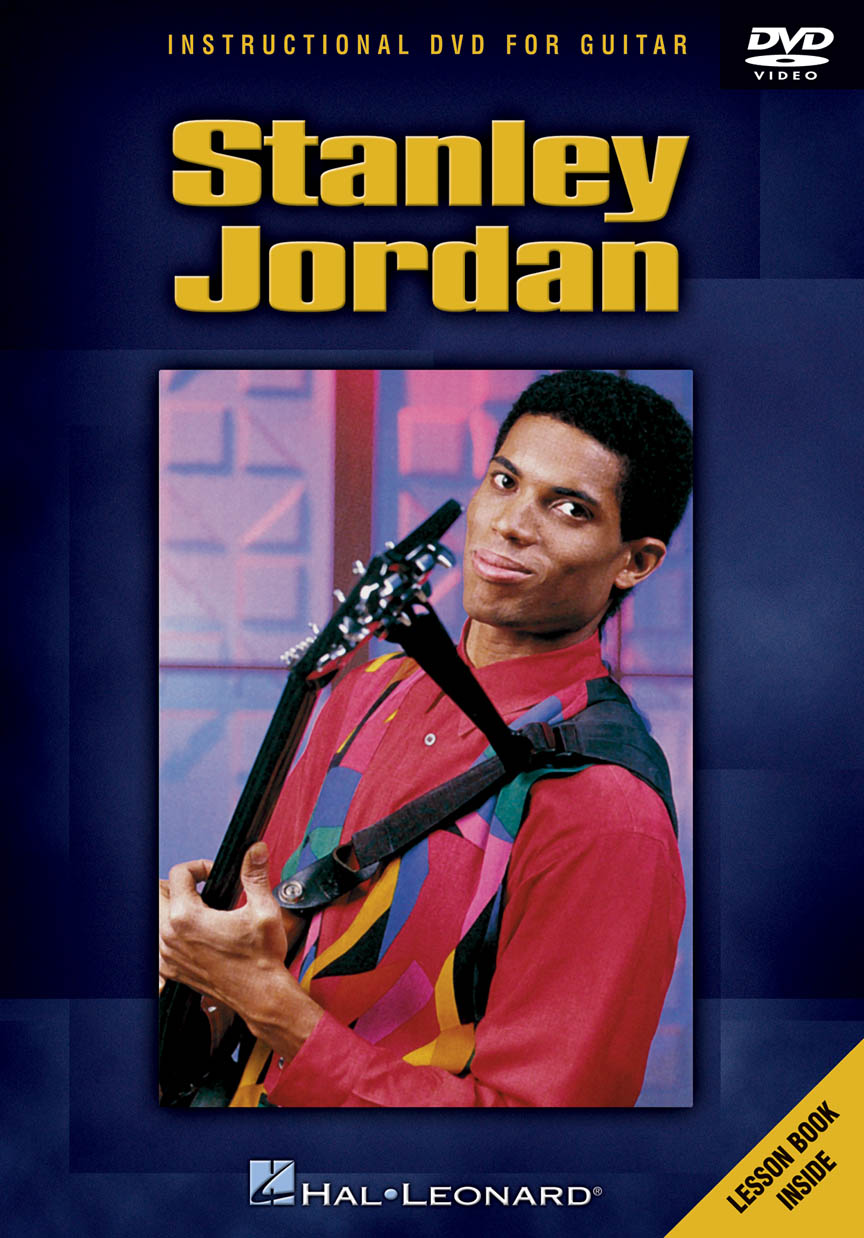
STANLEY JORDAN TABLATURE INSTRUCTIONAL DVD GUITAR TWO-HANDED TAPPING due-mani tecnica

JORDAN STANLEY, MASTER SESSION. Fenomeno del tapping a 8 dita! Suonare la chitarra come un pianoforte. Suonare 2 o 3 chitarre simultaneamente. 

VIDEO DVD METODO DI MUSICA FUSION. 

VIDEO DI TECNICA TAPPING PER CHITARRISTI.

LIBRETTO DI SPARTITI CON TABLATURE.


Stanley Jordan
Series: Instructional/Guitar/DVD
Format: DVD
Artist: Stanley Jordan

Discover the secret to Stanley's perfected two-hand tapping with this DVD. Learn how to: improvise melodies that will keep audiences on the edge of their seats o utilize a full range of dynamics to develop a rich, colorful sound o use electronics to create unique, alluring sounds o develop practice techniques to minimize mistakes and maximize your performance potential o increase your flexibility and dexterity for two-handed tapping. 79 minutes. Booklet 27 pages.

Inventory #HL 00320477
ISBN: 9780634093593
UPC: 073999204773
Width: 5.25"
Length: 7.5"
Run Time: 1:19:00


A special close-up examination of the unique virtuoso techniques of guitar maestro Stanley Jordan. Jordan's multi-layered guitar sounds have created albums that defy conventions and catagorisations. He has taken the technique of two-handed tapping and developed a method of playing that pushes the technique to the limit, creating the impression of two or three simultaneous guitars. This style of playing allows Jordan to perform otherwise impossible melodic lines. arrangements and chords that embrace the full range of the fretboard at once. The technique has given Jordan a unique Jazz voice and an unmistakable sound that is both captivating and thrilling to witness.


This DVD covers all aspects of his tapping technique and how to develop the idea into full improvisations and solos, including:

Aspects of melody and the extended range offered by this technique

Dynamics and creating rich, expressive guitar tones

Utilizing electronics to create alluring and unusual sounds

Practice methods to minimise mistakes and boost your dexterity

Discover a whole new world of possibilities with this indispensable DVD from a true virtuoso. Includes a 28-page booklet of examples and exercises.


by Stanley Jordan

THE TOUCH, OR TWO-HANDED TAPPING TECHNIQUE can provide limitless possibilities for exploration on the guitar. The earliest documented guitarist using this approach was Jimmy Webster in the 1950s. It has now begun to enjoy considerable use among guitarists. The essence of tapping is this: By hammering the string against the fretboard with your finger, you can produce a note with one hand. You don't need to pluck or strum, because the impact of the string hitting the fret causes the string to vibrate. Either hand works, and you can even use both hands tapping simultaneously on the fingerboard, performing independent parts.

Producing the sound in this way is easy. But mastering its awesome and unexpected possibilities is another matter! It gives you a level of musical and orchestral complexity previously possible only on keyboard instruments. You can create bass and chord accompaniment to your own leads as a self-contained soloist. You can also perform complex counterpoint, such as Bach two and three-part inventions. With a band, you can use your hands together to play leads with undreamed-of speed and agility.

Many of your first experiments are likely to be expansions of what you already do on the guitar, and adaptations of pianistic possibilities. But you'll soon learn that you hold in your hands a whole new instrument with its own unique and unlimited potentials.

Chances are, you can apply the touch technique to your own guitar with just a few minor adjustments. I have used it successfully on Fender Stratocasters, Gibson Les Pauls and ES-175s, Travis Beans, and others. I have even used it on various brands of acoustic steel-and nylon-string guitars. Ideally, an instrument used for touch playing should be an electric with an accurate neck, frets in good condition, strong pickups, and good sustain. Of all these characteristics, the neck and frets are the most critical.

The lack of proper adjustment is the main reason people say to me, "I tried it on my guitar, and it didn't work." The most important single factor is low action; the strings should practically touch the frets. This is absolutely crucial for ease of playing, clarity, and sustain. If you have tried tapping with normal action, you probably heard a weak, dull tone, because a large portion of the attack was the sound of the finger hitting the string. But with low action, a very light tap unites string and fret immediately, giving you a crisp tone.

How low must you set your action ? Extremely low! If the distance between a string and the 12th fret is greater than the thickness of a penny, it is probably too high. After you become more proficient with tapping, you may decide to bring your action back up a bit for a fuller sound. But for now, get it as low as possible.

The fingerboard and the height and contour of the frets must be accurate to get the required action without buzzing at certain points. If you have a problem, sight along the neck to check the straightness. The instrument may need a truss rod adjustment. [Ed. Note: If you aren't sure how to adjust a truss rod, take your instrument to a repair person. Incorrect adjustment can result in permanent damage to your guitar.] However, electric guitars have an advantage, because some buzzes aren't picked up and therefore don't reach the amp. Check the condition of your frets; if they are unevenly worn, you won't be able to get the required action. Consider getting a fret job. If the frets are worn, it may be a good idea anyway--regardless of how you play. It could make all the difference in the world for setting your guitar up for the touch technique. If you decide to get a fret job, ask around to find out who does the best work in your area. Then explain to the repair person about your special requirements, because this fret job must be more accurate than usual. Set the action where you want it, take your instrument to the shop, and say, "I'd like to be able to tap with my action this low without buzzing."

There is an advantage to having a bridge with individual height-adjustable saddles for all six strings: It allows you to set each string where you want it, to compensate for differences in string tension and volume. (There is also an advantage to the bridge with just two height adjustments, one at each end: It allows you to change your action quickly, facilitating a single guitar's use should you employ both conventional and touch techniques on the same gig.)

Intonation is also critical because your new freedom allows you to play at opposite ends of the neck simultaneously, thereby spotlighting any inaccuracies in the intonation. Your two-handed harmonies will sound much sweeter and the voices of your chords will sing more clearly if the intonation is properly adjusted.

As if there weren't enough to think about already, here is yet another problem to overcome. With "normal" techniques, you rely on the energy from right-hand plucking or strumming to sound the notes, while your left hand merely holds down strings. You probably employ left-hand fingers to mute strings not in use, preventing accidental extraneous sounds. But with the touch technique, that can be hard to do. Because of the low action, you can easily hit notes on strings you don't want to play: All it really takes is a touch. I recommend bringing the fingers straight down, trying to touch only the strings you want to play.

Even with clean, direct fingering, you will still get sympathetic vibrations in the strings you're not touching, so you will probably need some kind of damper near the nut to prevent vibrations in the untouched strings. On the stick, for example, this is accomplished by a strip of felt permanently attached to the fingerboard, lying under the strings at the 1st fret. You may want to experiment with a similar attachment, or if you want something quicker and less permanent, you can put a loose-fitting capo at the 1st fret to act as a damper. Not just any capo will work, though, because you must be able to put it on without pushing the strings all the way to the frets. I get good results with Jim Dunlop 14 FD and 14 CD capos, as well as the Golden Gate GC-8. Also, you might get good results with the George van Eps or Kleen-Axe String Dampers. When choosing a capo, it must match the contour of your fingerboard, so take note whether it's curved or flat. Incidentally, if you do happen to use an acoustic, the damper is essential to prevent string vibrations between your finger and the nut.

Before you try the touch technique, change your strings; old ones can be more debilitating with touch than with other techniques. Prepare to increase your budget for strings. They must always be clean and true to tuning. As far as their gauges are concerned, use some discretion. When I first started, I used .008 and .009 high E's. Now I use .010s on my Travis Bean and .009s on my Vigier. Sometimes I'll take a set of .009s but replace the .009 with a .010 for more punch and sustain in my leads. There is a tradeoff here, because lighter strings and lower action make the technique easier, but the sound is less full and the dynamic range is reduced.

It is also a good idea to wash your hands and trim your fingernails before playing. When your fingers come straight down onto the strings, fingernails really get in the way. I recommend warming up with conventional techniques before attempting touch, and if you happen to be a keyboardist, it may help to do a keyboard warmup. Naturally, the spacings are different, but the strength and agility you develop playing keyboards can be a big help. Since the touch system results in a certain amount of volume loss, electric guitars tend to be more suitable; strong pickups are also helpful. Turn up your volume, and learn to play sensitively in order to increase your range of dynamic control. If your pickups have pole pieces, screw them in, and/or move the pickups as close to the strings as possible for maximum sensitivity.

So, here you are with your guitar set up for the touch technique. Your strings are adjusted and your hands are clean. You're ready to get down. How should you hold the guitar? Start with whatever you're used to, whatever feels most comfortable. You can stand up, sit down with the guitar on your left or right leg, or you could even set the guitar on a stand. A very important thing to remember: Stay relaxed, especially in your hands. The key to relaxing your hands is keeping your thumbs loose. Both hands are stabilized on the neck by means of the thumbs. However, in time you will learn to not always stabilize your right hand in this way, depending on what you're playing.

Your fingers should come down between the frets in the same places they would using normal techniques. Your right hand is more nearly perpendicular to the neck, and therefore you may want to hold the guitar with the nut tipped up so that you don't have to bend your right wrist too much. Moving your right elbow forward a few inches can help straighten your right wrist. To avoid tendonitis and carpal tunnel syndrome, try not to bend your right wrist more than about 10 degrees. Make sure to keep your right shoulder down to minimize shoulder tension and to keep your overall posture in balance.

The basic finger action to sound a note is tap and hold. Your finger comes straight down and taps the string against the fret, holding it there for as long as you want the note to last. To cut off the note, lightly pull your finger straight off the string with as little side-to-side motion as possible. This movement must be very light. You barely even try to release your finger; mainly relax it, and let the string push it back up.

This hammering action should come primarily from your fingers--not your wrists. If you get into the habit of using your wrists too much, your fingers may get stiff and you will never develop much speed. You can use all four fingers on both hands. You can even use your right thumb, but I recommend starting with just the fingers.

And now for a big surprise: The words "tap" and "touch" are oversimplifications, because we're really talking about a whole cluster of related techniques. You'll need other techniques to make your articulation more interesting and to add some real expression to your music. One useful technique is the "slide," which is used to create glissandi (glides between notes on a single string; see bar 11 in the A section of "Touch Of Blue," which follows). Tap the string and slide your finger along it while holding it down. Make sure your finger comes straight down on the string, avoiding adjacent strings.

Slurs and legato lines (hammers and pulls) are easiest when all the notes are on the same string (example: the opening figure of two sixteenth-notes and a quarter-note in the first bar of the A section of "Touch Of Blue"). To play an ascending line, tap the first note normally, but after that, tap each note without releasing your finger from the previous note. Just hammer each note in turn, leaving all the fingers on the string.

To descend along a string, use pulloffs. Again, the first note is tapped normally, but before you release it, have the finger for the next note already down. Then pull the releasing finger off sideways, so that it plucks the string on its way off. Generally, right-hand fingers pull off toward the sixth string, and left hand fingers toward the first string. As always, be careful not to hit adjacent strings.

When crossing from one string to another, whether ascending or descending, release the first note late so that it overlaps the next one for an instant (see bar 3, first beat, part A). This eliminates gaps of silence between notes, and blurs differences in timbre and volume between strings. The overlapping technique takes practice. After all, it's hard to make perfectly seamless legato runs, because crossing strings is still different from playing along a single string. For a legato run to be as smooth as possible, all of the notes must be located on the same string.

The lower your action, the less you need the overlapping technique, because differences between strings are reduced and there is less time between hitting the string and hearing the sound. This reduces the likelihood of gaps between the notes, and single-string legato techniques become easier. When your strings are really down low, you can play runs with great speed and fluidity.

If a legato run involves more than four notes in either direction or contains wide interval skips, you can use both hands together, "handing off" the series from one hand to the other or back and forth, as necessary. This opens up a wealth of cool possibilities.

One more thing before we start playing: Although you can use the touch technique with any tuning you please, most guitarists will probably want to start with standard tuning. However, I usually tune in fourths: E A D G C F, low to high. The first and second strings are raised a half-step higher than standard tuning. Thus, any pair of adjacent strings is a perfect fourth apart. I find that this simplifies the fingerboard and makes it more logical--an advantage that can really be appreciated when you have two hands going all over the neck. The exercise and song that follow are written in standard tuning, but as you'll see, it is easy to convert to the fourths tuning if you are feeling adventurous.

There is a lot more to the touch technique, but now you know the basics. The exercise should get your hands working. Both hands play the same thing an octave apart. Practice the exercise until you feel comfortable with it and are producing clear tones with even dynamics.

A few words on notation: The exercise and song are written at actual pitch on double staves employing both the treble and bass clefs, in order to accommodate the extended range facilitated by the technique. (Most guitar music is written an octave higher than it sounds.) The top staff is for the right hand, while the lower staff is for the left hand. Numbers next to the notes indicate fingerings using standard Arabic numbering for both hands. The numbers in parentheses show the fingerings you would use in fourths tuning.

Under the double staves is a tablature staff written for standard tuning. If you want to try the fourths tuning, simply retune your first and second strings up a half-step and play one fret lower on those strings (subtract one from all the numbers on the top two tablature lines). The exercise demonstrates the advantage of the fourths tuning, since both hands play exactly the same patterns, merely transposed to a different part of the neck.

Prezzo: €23,99
€23,99

PROGRESSIVE TAPPING LICKS 75 EXTREME GUITAR TAPPING IDEAS Musicians Institute Belkadi LIBRO

PROGRESSIVE TAPPING LICKS, 75 EXTREME GUITAR TAPPING IDEAS, MUSICIANS INSTITUTE. PRIVATE LESSONS. Jean Marc Belkadi. BOOK WITH CD & GUITAR TABLATURE

LIBRO METODO DI MUSICA ROCK, CON CD.

SPARTITI PER CHITARRA CON: 

ACCORDI, PENTAGRAMMA, TABLATURE. 

TECNICA TAPPING, STUDIO, MANUALE, 


Lessons and Tab for 75 Extreme Guitar Tapping Ideas
Series: Musicians Institute Press
Publisher: Musicians Institute Press
Softcover with CD - TAB
Author: Jean Marc Belkadi

Tackle tapping one-on-one in this Private Lesson with MI instructor Jean Marc Belkadi! He covers: blues and classic tapping licks; scalar tapping licks; triads and arpeggios; advanced tapping licks; string skipping, multi-finger tapping, tapped bends, pedal points, open strings and other devices; and so much more. The book is in standard notation and tab, and the accompanying CD contains 75 demo tracks for listening. Each example is played at full tempo, and most are repeated at half speed. 40 pages.


Introduction

Though the birth of tapping is largely associated with the eighties decade, players had begun experimenting with it as early as the mid-to-Iate seventies. Namely among them are session whiz Larry Carlton and the inimitable Jeff Beck. It was only a matter of time before someone would truly exploit the technique and harness the potential it possessed. Eddie Van Halen almost singlehandedly
introduced the technique to the guitar world with the release of Van Hafen near the turn of the decade. Rock guitar players everywhere jumped on the bandwagon, and within a few years a new breed of tappers emerged with their own style. Players such as Greg Howe, Steve Lynch, Reb Beach, and Jennifer Batten twisted and reinvented the technique, achieving unprecedented results. More recently in the nineties, fusion and contemporary guitarists Stanley Jordan and T.J. Helmerich took it to the next level, in many instances getting rid of the pick all together.
The objective of this book is to provide some different ways of using the tapping technique. The licks presented here draw from the styles of all the above-mentioned masters. Therefore, a great variety of techniques will be covered. It is hoped that you'll find many ideas in this book that you'll be able to incorporate into your own playing. Good luck and enjoy.

About the Audio
Throughout this book, the numbers below the audio symbols ~ indicate the CD track number where
each example will be found on the accompanying CD.
Each example is played at full tempo, and most are repeated at half speed. In addition, short introductory phrases (which are not transcribed in the examples) are sometimes included to provide a better sense of context and to maintain an improvisational feel.

- Blues and Classic Tapping Licks
- Scalar Tapping Licks
- Triads and Arpeggios
- Advanced Tapping Licks
String Skipping, Multi-Finger Tapping, Tapped Bends, Pedal Points, Open Strings, and Other Devices

Standard Notation and Tablature

The accompanying CD contains 75 demonstration tracks for listening. Each example is played at full tempo, and most are repeated at half speed.


MUSICIANS INSTITUTE PRESS
is the official series of Southern California's
renowned music school, Musicians Institut
MI instructors, some of the finest musicians
in the world, share their vast knowledge an
experience with you no matter what your
current level.
Whether your instrument is guitar, bass,
drums, vocals, or keyboards, MI PRESS
offers the finest music curriculum for highe
learning through avariety of series:

Essential Concepts – designed from MI core curriculum programs

Master Class-designed from MI
elective courses

Private Lessons - tackle a variety of topics "one-on-one" with MI faculty instructors

Video-in-depth lessons with many of Ml's well-known instructors


Table Contents
Introduction .
About the Audio .

CHAPTER 1 - Blues and Classic Tapping Licks .
CHAPTER 2 - Scalar Tapping Licks
CHAPTER 3 -Triads and Arpeggios
CHAPTER 4 - Advanced Tapping Techniques
Acknowledgments
About the Author  

Prezzo: €21,99
€21,99

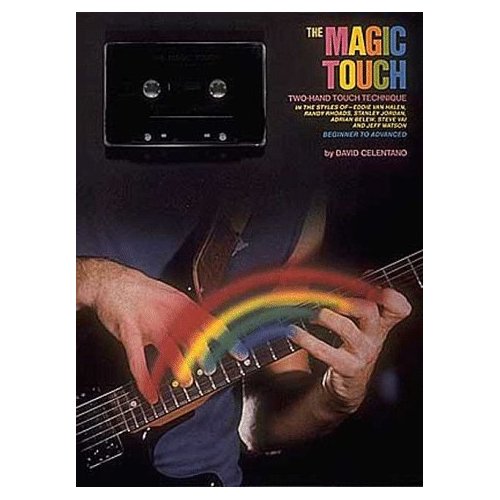
THE MAGIC TOUCH Dave Celentano CD TABLATURE SPARTITI CHITARRA TAPPING LIBRO METODO

THE MAGIC TOUCH, TWO-HAND TOUCH TECHNIQUE.

LIBRO METODO DI MUSICA ROCK, TECNICA TAPPING CON CD.

SPARTITI PER CHITARRA CON:

ACCORDI, PENTAGRAMMA, TABLATURE.

Edizione speciale per la tecnica del Tapping o tecnica a due mani, che ha caratterizzato lo stile di Van Halen, Stanley Jordan e altri. Ogni esercizio è suonato lentamente e rapidamente, d'effetto l'interpretazione del Canon in re di Pachelbel. CD TABLATURE

Prezzo: €19,95
€19,95

BATTEN JENNIFER TWO-HAND ROCK FOR GUITAR CD TABLATURE CHITARRA LIBRO SPARTITI TECNICA TAPPING

BATTEN JENNIFER, TWO-HAND ROCK FOR GUITAR. SHEET MUSIC BOOK WITH CD & GUITAR TABLATURE . 

Scritto e suonato dalla chitarrista di Michael Jackson.

LIBRO DI MUSICA ROCK, CON CD. 

SPARTITI PER CHITARRA : TABLATURE . 

TECNICA TAPPING, MANUALE


Music, Tablature and analysis

Bends, hammer-ons, pull-offs and slide

adjacent string phrases

String Skipping

Position Changing

Reverse Bends

Harmonic Taps


Cover Photo: Neil Zlozower

Executed all on the B string and involves bending the string up whole steps with the left hand while the right hand hammers a series of notes within the bends in the key of C. Each time the right hand is to hammer a note, release the bend a half step. When the right hand contacts the string re-bend the str ing back to a whole step. Whenever you hammer on a string which has been bent, you must account for the interval you have bent (ie. if you've bent the note G on the B string up a whole step, and then hammered on the 12th fret, the resulting note would be CII). If you hadn't bent the string, the 12th fret would be a B. If you had bent the string up only a half step, the resulting note would be a C. So make sure you anticipate the pitch change. after you've made the initial bend from 0 up to E, keep the string bent while hammering the right hand notes. Every time the Eb grace note comes up, drop the whole step bend a half step to attain the Eb note, then return the bend to E natural. The last 3 triplets are sounded by slowly dropping the left hand bend while hammering with the right hand.

Prezzo: €89,99
€89,99
Condividi contenuti