TABLATURE SPARTITI PER CHITARRA DI MUSICA BLUES

BLUES GUITAR EXPLORER CD-ROM. TABLATURE

BLUES GUITAR EXPLORER CD-ROM. TAB.

Prezzo: €51,00
€51,00

BLUES GUITAR FOR ADULTS RIKER CD BOOK TABLATURE CHITARRA LIBRO METODO SPARTITI BENDING

BLUES GUITAR FOR ADULTS, Riker. Blues a 12 battute, a 8 battute, tecnica hammer-on, pull-off, slide, trillo, bending, bend e vibrato, pre-bend, scale, arpeggi, improvvisazione e vari stili. SHEET MUSIC BOOK WITH CD & GUITAR TABLATURE.


LIBRO METODO DI MUSICA BLUES, CON CD. 

SPARTITI PER CHITARRA CON: 

ACCORDI, PENTAGRAMMA, TABLATURE. 

Prezzo: €26,99
€26,99

MAESTRI CHITARRA BLUES Peter Fischer LIBRO CD TABLATURE SPARTITI METODO ACCORDI PENTATONICA

I MAESTRI DELLA CHITARRA BLUES / BLUES GUITAR RULES. Peter Fischer. 167 Pagine, 125 esempi, 11 basi. LIBRO CD TABLATURE

LIBRO DI MUSICA BLUES, METODO PER CHITARRA CON CD.
SPARTITI PER CHITARRA CON ACCORDI, PENTAGRAMMA E TABLATURE. 

IN ITALIANO


INDICE DEI CONTENUTI
Prefazione .
Schema del piano di studi .
Playlist del Cd .
Sei consigli per esercitarsi .
La storia del Blues – Come ebbe origine il blues .

Fase 1 – Il Blues semplificato.
  Capitolo 1 - Le Basi del Blues, parte 1.
Capitolo 2 – Semplici pattern ritmici blues.
Capitolo 3 – Il Turnaround.
Capitolo 4 – Semplici soli blues.
Capitolo 5 – Semplici stili blues originari.

Fase 2 – Stili Blues e Rock Blues.

   Capitolo 6 – Le basi del Blues, parte 2.
Capitolo 7 – Blues Rock degli anni ‘60 e ‘70.
Capitolo 8 – Blues Texano.
Capitolo 9 – Blues Fusion.
Capitolo 10 – Blues Rock Moderno.

Fase 3 - Blues Jazz.

   Capitolo 11 – Jazz Blues Dominante.
Capitolo 12 – Jazz Blues Minore.
Capitolo 13 – Jazz Blues Maggiore.
Capitolo 14 – Accompagnamento Jazz Blues.
Capitolo 15 – Turnaround Jazz Blues.
Capitolo 16 - Lick e frasi Jazz Blues.
Capitolo 17 – Classici suoni blues.

Prefazione

Ciao e benvenuti a “I Maestri della Chitarra Blues”!
Mentre studiavo al GIT a Los Angeles nel 1989/1990 ogni giovedì c’erano concerti più o meno regolari con artisti ospiti.
Un giovedì, sul programma c’erano Albert Collins e la sua band.
Devo ammettere, molto onestamente, che avevo già sentito il nome, ma era tutto quello che sapevo di Albert Collins. Che questa serata sarebbe stata uno dei più importanti eventi del mio intero soggiorno al GIT era un pensiero che non mi sfiorò fino al primo bis. Il concerto era stato buono, ma lo stile di Mr. Collins non era esattamente l’apice di meraviglia tecnica, non mi aveva sconvolto.
Fino a quel momento avevo associato il termine blues più a gente come Robben Ford. Tutto cambiò, tuttavia, con l’ultima canzone della serata quando Albert Collins iniziò a passare tra il pubblico (come faceva ogni serata, per quel che ne so) con un cavo lungo circa 200 metri, “bluesificando” personalmente ogni singolo membro del pubblico presente in sala. E sebbene fossi dove speravo non sarebbe arrivato, mi trovai all’improvviso faccia a faccia con l’”Iceman”.

Essendo a non più di trenta centimetri da lui, ero praticamente in trappola: la fuga era impossibile. Così guardai 
il persuasivo bluesman nella sua faccia consumata, mentre suonando verso di me gridava “Forza bianco
mingherlino, prendi il maledetto blues!”. Fui folgorato, ma Collins si era già mosso per portare il blues all’anima
seguente.
Ora, quest’esperienza non mi ha impressionato come ha fatto la luce in chiesa col Blues Brother Jake, ma mi
diede una scossa che mi portò ad un contatto più “reale” con la musica e col significato del termine blues.
Ovviamente, questo sentimento era così forte ed importante per Mr. Collins che non esitava a predicare il blues,
persino ad un ignaro ragazzo bianco.
Una parte della mia ricerca sul blues e sull’influenza che esso ha avuto sulla chitarra rock si può trovare nel mio
primo libro “I Maestri della Chitarra Rock” (Volontè). Come anche nel libro seguente, “Segreti della
Chitarra Rock” (Volontè), vorrei andare a fondo nei concetti pratici e teorici della chitarra blues. 


Capitolo 1
Basi del Blues, parte 1
- Armonia, ritmo e forme del blues
- Costruzione del blues dominante e minore
- Ritmo shuffle, forme di 12, 8,
16 + 24 battute per blues
dominanti e minori

Capitolo 2
Semplici pattern ritmici blues
- Riff a note singole
- Accompagnamenti a power chord per il blues dominante e minore
- Riff
- Voicing di accordi
- Pattern ritmici
- Progetti

Capitolo 3
Turnaround
- La funzione e la struttura del turnaround nella forma blues
- Creare il collegamento: passare da chitarra ritmica a suonare assoli
- Riff a note singole
- Riff ad intervalli per i turnaround nel blues dominante e minore
- Progetti

Capitolo 4

Chitarra solista blues semplificata
A- Materiale musicale: pentatonica minore e maggiore, scale blues
B – Strutture improvvisative: forma AAB, domanda e risposta
C- Tecniche esecutive: legato ascendente e discendente, glissati, bending, vibrato
D- Chitarra slide: action delle corde, tipi di slide, tecniche esecutive, accordature aperte, fraseggio

E – Feeling blues: intonazione imperfetta
- Diteggiature
- Esercizi
- Esempi di soli
- Progetti

Capitolo 5
Semplici stili blues originari
- Introduzione degli stili di Robert Johnson, Muddy Waters, John Lee Hooker, B.B.King ed Albert King
- Esempi di soli
- Consigli su esecuzione e suono
- Discografia
Schema: Il Piano di Studi
Fase 1 Blues Semplice
Capitolo Teoria Applicazione Pratica7

Capitolo 6
Basi del Blues, parte 2
- I modi nel blues dominante e minore
- Combinazioni di scale, arpeggi, la scala minore armonica nel blues minore
- Shuffle a tempo raddoppiato
- Diteggiature
- Progetti
- Esempi di soli

Capitolo 7
Blues Rock degli anni ‘60 e ‘70
- Introduzione agli stili di Jimi Hendrix, Eric Clapton e Duane Allman
Esempi di soli
- Consigli su esecuzione e suono
- Discografia

Capitolo 8
Blues Texano
- Introduzione allo stile di Billy Gibbons
Esempi di soli
- Consigli su esecuzione e suono
- Discografia

Capitolo 9
Blues Fusion
- Introduzione allo stile di Larry Carlton e Robben Ford
- Accordi sospesi
- Tensione e risoluzione
- Sostituzione di arpeggi
Esempi di soli
- Consigli su esecuzione e suono
- Voicing di accordi
- Progressioni di accordi

Capitolo 10
Blues Rock Moderno
- Introduzione allo stile di Gary Moore e blues metal moderno
Esempi di soli
- Consigli su esecuzione e suono
- Progressioni di accordi
- String skipping
Schema: Il Piano di Studi
Fase 2 Stili Blues Rock
Capitolo Teoria Applicazione Pratica
Piano di studio
Schema: Il Piano di Studi
Fase 3 Blues Jazzato
Capitolo Teoria Applicazione Pratica

Capitolo 11
Il Jazz Blues Dominante
- Costruzione, materiale melodico e sostituzioni di accordi per il jazz blues dominante
- Accordi di settima diminuita
- Progressioni II-V-I in minore e maggiore
- Accordi di settima dominante alterati
- Sostituzione al tritono
- Interscambio modale
- Progressioni di accordi e voicing

Capitolo 12
Jazz Blues Minore
- Costruzione, materiale melodico e sostituzioni di accordi per il jazz blues minore
- Progressioni II-V-I in minore e maggiore
- Accordi di settima dominante
- Accordi di settima alterati
- Sostituzione al tritono
- Relative maggiori / minori
- Progressioni di accordi

Capitolo 13
Jazz Blues Maggiore
- Costruzione, materiale sulle note e sostituzioni di accordi per il blues maggiore
- Progressioni II-V-I in minore e maggiore
- Interscambio modale
- Sostituzione al tritono
- Progressioni di accordi

Capitolo 14
Accompagnamento Jazz Blues
- Voicing 1-3-7
- Frasi di walking bass
- Chord/scale
- Pattern II-V-I
- Voicing di accordi ed esempi di chorus

Capitolo 15
Turnaround Jazz Blues
- Progressioni turnaround per i jazz blues dominante, maggiore e minore
- Materiale melodico per i succitati turnaround
- Progressioni di accordi
- Sostituzione al tritono
- Frasi di walking bass
- Il principio della nota comune
- Accordi diminuiti
- Chord melody
- Turnaround
- Introduzioni

Capitolo 16
Lick e frasi Jazz Blues
- Lick per le progressioni II-VI in maggiore e minore
- Lick per i turnaround
- Lick
- Diteggiature
- Progetti


Playlist del cd Le Regole della Chitarra Blues
Numero Capitolo Titolo
   1 Semplici pattern ritmici Esempi 1 -18
   2 Turnaround Esempi 11 - 31
   3 Semplici soli blues Esempi 32 - 36
   4 Semplici stili blues originari Esempi 37 - 41
   5 Basi del blues parte 2 Esempi 42 + 43
   6 Blues rock degli anni 60 e 70 Esempi 44 - 46
   7 Blues Texano Esempi 47 + 48
   8 Blues fusion Esempi 49 + 50
   9 Rock blues moderno Esempi 51 + 52
   10 Jazz blues dominante Esempio 53
   11 Accompagnamento jazz blues Esempi 54 - 71
   12 Turnaround Jazz blues Esempi 86 - 103
   13 Frasi e lick Jazz blues Esempi 104 -125
   14 Forme di blues dominante Jamtrack 1
   15 Forme di blues minore Jamtrack 2
   16 Stile di B.B. King Jamtrack 3
   17 Stile di Albert King Jamtrack 4
   18 Stile di Larry Carlton Jamtrack 5
   19 Stile di Robben Ford Jamtrack 6
   20 Stile di Gary Moore Jamtrack 7
   21 Stile metal moderno Jamtrack 8
   22 Jazz blues dominante Jamtrack 9
   23 Jazz blues minore Jamtrack 10
   24 Jazz blues maggiore Jamtrack 11

Il Cd è stato registrato presso lo Studio Hit ‘n’ Run , Lüdenscheid, Germania.
Peter Fischer: Chitarra e basso
Olaf Krüger: Programmazione della batteria
Bodo Schulte: Tecnico del suono e tastiere


Product Description:

An in-depth look at the practical and theoretical concepts of traditional and modern blues guitar, covering all the important technical, rhythm and improvisational ideas. The book is divided into three stages: easy blues, blues & blues rock styles, and jazz blues. Stage 1 describes the development and basis of blues guitar, and is particularly appropriate for beginners. Stage 2 goes off more in the rock direction and gives the reader an insight into the concepts and licks of several influential guitarists including Clapton, Hendrix, Robben Ford, Stevie Ray Vaughan, Gary Moore, and others. Stage 3 features a number of concepts that come from jazz that can also be used in a blues context. A great number of examples and blues jam tracks appear on the accompanying CD. In notation and tablature.

Format: Book/CD Set

Contents:

Preface
Outline of the Study Plan
CD Playlist
Six Tips for Practicing
The Story of the Blues - How the Blues came to be

Stage 1 - The Blues made easy
Chapter 1 - Blues Basics, Part 1
Chapter 2 - Simple Blues Rhythm Patterns
Chapter 3 - The Turnaround
Chapter 4 - Easy Blues Lead Guitar
Chapter 5 - Easy and Early Blues Styles

Stage 2 -- Blues
Chapter 6 - Blues Basics, Part 2
Chapter 7 -- Blues Rock in the 60's and 70's
Chapter 8 -- Texas Blues
Chapter 9 -- Fusion Blues
Chapter 10 -- Modern Blues Rock

Stage 3 -- Jazz Blues
Chapter 11 -- Dominant Jazz Blues
Chapter 12 -- Minor Jazz Blues
Chapter 13 -- Major Jazz Blues
Chapter 14 -- Jazz Blues Comping
Chapter 15 -- Jazz Blues Turnarounds
Chapter 16 -- Jazz Blues Licks and Lines
Chapter 17 -- Classic Blues Sounds

Prezzo: €26,99
€26,99

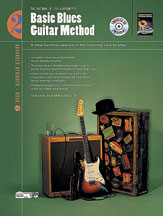
BASIC BLUES GUITAR METHOD, BOOK 3 & CD

BASIC BLUES GUITAR METHOD 3 INTERMEDIATE. Hamburger & Matt Smith. CD TAB.

Basic Blues Guitar Method, Book 3
By David Hamburger and Matt Smith

CATEGORY: Guitar Method or Supplement
FORMAT: Book & CD

This book is for intermediate players as well as those who have completed book two of the series. You will learn about minor blues, intros, turnarounds, endings, rhythm riffs and Texas swing. In addition to easy-to-understand lessons on improvisation and theory, how to use, mix and expand pentatonic scale patterns is explained. A CD is available which demonstrates each example.

Prezzo: €18,00
€18,00

BASIC BLUES GUITAR METHOD, BOOK 4 & CD

BASIC BLUES GUITAR METHOD 4 ADV INTERMEDIATE. Hamburger & Matt Smith. CD TAB.

Basic Blues Guitar Method, Book 4
By Matt Smith

CATEGORY: Guitar Method or Supplement
FORMAT: Book & CD

This book is for late-intermediate players as well as those who have completed book three of the series. You will learn rhythm & blues fills and advanced blues phrasing issues such as rhythmic variation, dynamics and using non-scale tones in a solo. There are also easy-to-understand lessons on breaking out of scale patterns and soloing techniques such as using tritone patterns and double stops. A CD is available which demonstrates each example.

Prezzo: €17,50
€17,50

BEGINNING BLUES GUITAR by ARLEN ROTH TABLATURE SHEET MUSIC BOOK CHITARRA LIBRO SPARTITII

BEGINNING BLUES GUITAR, BY ARLEN ROTH. Shuffle, assoli, tournaround, bending, fingerpicking, tutto il condimento necessario per i divoratori di primi piatti alla tavola calda di Robert Johnson. SHEET MUSIC BOOK with GUITAR TABLATURE.


LIBRO DI MUSICA BLUES.

SPARTITI PER CHITARRA : 

ACCORDI, PENTAGRAMMA, TABLATURE .


METODO 

CHITARRA RITMICA

CHITARRA SOLISTA


Prezzo: €23,25
€23,25

BIRTH OF THE GROOVE R&B SOUL FUNK GUITAR 1945-1965 DAVE RUBIN LIBRO CD TABLATURE Steve Cropper

BIRTH OF THE GROOVE, R&B SOUL AND FUNK GUITAR 1940-1965. DAVE RUBIN. LIBRO CON CD E TABLATURE

LIBRO METODO DI MUSICA R&B, SOUL, FUNK, CON CD

SPARTITI PER CHITARRA CON ACCORDI, PENTAGRAMMA E TABLATURE. 

La musica di Steve Cropper, Curtis Mayfield, Ike Turner, Mickey Baker, Billy Butler, Cornell Dupree, Tiny Grimes, Jerry Jemmott, Johnny Moore, Jimmy Nolen, Clif White, Robert Ward, e tanti altri. CD TABLATURE

Series: Guitar Educational
Softcover with CD - TAB
Arranger: Dave Rubin

The years 1945-1965 saw a radical and exciting shift in American popular music. Blues and swing jazz helped to produce a new musical form called rhythm and blues, which in turn set in motion the development of soul and funk, not to mention rock 'n' roll. What united these genres was an emphasis on the beat, or the groove, over the melody that would culminate in the syncopated monochord workouts of funk. Along the way, some of the greatest electric guitarists of the postwar years explored the boundaries of the new instrument with a rich array of hot licks. This book/CD pack explores everything from the swinging boogie of Tiny Grimes, to the sweaty primal funk of Jimmy Nolen, to the styles of Mickey Baker, Billy Butler, Steve Cropper, Cornell Dupree, Jerry Jemmott, Curtis Mayfield, Ike Turner and everyone in between. Includes in-depth lessons, historical analysis, rare photos, and a CD with 33 full-band tracks. 88 pages.


PREFACE
Thehistory of R&B, soul, and funk guitarists has been largely ignored when compared with that of blues guitarists. However, though they have tended to labor in obscurity in the shadow of vocalists, these unsung heroes have contributed significantly to the legacy of postwar electric guitar.
Inasmuch as the three genres have a far more varied selection of rhythmic and harmonic accompaniments than blues, the innovation and creativity has naturally occurred in the realm of backup, rather than soloing. Exceptions to this statement are to be found in the cerebral and emotional soloing of Billy Butler and Cornell Dupree, to name only the most obvious. It should be of interest to guitarists whose ears are mostly attuned to the sound of single-note lines, though, to understand the art form that Curtis Mayfield, Steve Cropper, and Robert Ward have made from the well-placed fill and chordal pattern.
The years 1945-1965 were chosen because it was the era where the most original advances were
made. That is not to say that great guitar music was not made after that date, only that the initial root source of the blues started to diminish in favor of more commercial influences. Perhaps a Volume II will be in order, particularly in the area of seventies funk.
I hope you will enjoy playing this remarkable music as much as I have, and that the history and biographies provide some sense of acknowledgement for the exceptional artists covered.
Dave Rubin New York City, 1999

DEDICATION
Iwould like to dedicate this book to my daughter, Michelle ("Cookie") and my wife, Cheryl.
Without their love and encouragement, I would "have the blues" more than playing and studying them.

ACKNOWLEDGMENTS
Iam indebted to, Edward Komara, Nick Koukotas, Darrell Bridges, Ira Bolterman, Steve Kirkman,
and all at Hal Leonard Corporation for their invaluable help and suggestions.


TABLE OF CONTENTS

Preface .
Dedication and Acknowledgments .
Introduction .
Scales and Chords for R&B, Soul, and Funk Guitar .
Tiny Grillles .
Johnny Moore .
Mickey Baker .
Ike Turner .
Billy Butler .
Clif White .
Curtis Mayfield .
Cornell Dupree .
Jerry Jemmott .
Steve Cropper .
Robert Ward .
Jimmy Nolen .
About the Author .
Guitar Notation Legend .

Prezzo: €34,99
€34,99

BLUES CHOPS FOR GUITAR CD LIBRO TABLATURE bending Blues trills CHITARRA LIBRO METODO TECNICA

BLUES CHOPS FOR GUITAR. SHEET MUSIC BOOK WITH CD & GUITAR TABLATURE. 

LIBRO METODO DI MUSICA BLUES CON CD.

SPARTITI PER CHITARRA CON

ACCORDI, PENTAGRAMMA, TABLATURE. 

TECNICA 


Blues Chops for Guitar

Technique Exercises for the Aspiring Guitarist
By Buck Brown
Item: 07-1042
UPC: 630746710422
ISBN 10: 1929395418
ISBN 13: 9781929395415

Category: Guitar Method or Supplement
Format: Book & CD
Instrument: Guitar
Great musical ideas need great chops to back them up. Build your finger strength, flexibility and independence with these exercise books from one of America's leading guitar schools. Blues Chops has exercises for developing bending, the different shuffle rhythm patterns, turnarounds, blues trills and more. Develop your chops practicing exercises in the style of music you enjoy! 


Introduction
About the Author

Chapter I-Blues Rhythm Guitar
Moveable Chords
The I-IV-V Progression-The Twelve Bar Blues
Open-Position Two-Note Shuffle Patterns
Closed-Position Two-Note Shuffle Patterns
Two-Note Shuffle Patterns with a b7
Closed-Position Two-Note Shuffle Patterns with a b7
Chord Shuffle Patterns .
New Blues 7 Chords
VOICING IN THE CYCLE OF 4THS
CHORD VOICING IN THE CYCLE OF 4THS - 3RD FINGER ANCHOR
7 CHORD VOICING IN THE CYCLE OF 4THS - 3RD FINGER ANCHOR
The 9 Chord
The 9-Chord Slide Blues
The 13 Chord
More Dominant 7 Chords
Turnarounds
More Shuffle Patterns

Chapter 2- Blues Lead Guitar
Alternate Picking
Finger Independence
Vibrato
The Minor Pentatonic Scale
Strengthening the 3rd and 4th Fingers
String Bending
The Major Pentatonic Scale
String Bending in the Major Pentatonic Scale
Pre- Bends
Pedal Steel-Style Bends
Step-and-a-Half Bends
Hammer-Ons
Pull-OFFs
Combinations with Hammer-ons, Pull-Offs and Bends
Double Stops

Chapter 3- Advanced Blues Techniques
Advanced Twelve-Bar Blues Harmony
Pick and Fingers Blues with a
Walking Bass Line
The Minor Blues
Sliding- The Ring-Finger Slide
More Sliding Exercises
Muted Sweeps
The Blues Trill
Harmonics
Downstroke Sweeps
Upstroke Sweeps
Cross Picking, String Skipping, Finger Rolls

Chapter 4-Slide Guitar
String Damping
Slide in Standard Tuning
Slide in G Tuning
Slide in D Tuning
Postscript


A compact disc is available with each book of this series. Using these discs will help make learning more enjoyable and the information more meaningful. The CD will help you to play the correct notes, rhythms and feel of each example. The track numbers below the symbols correspond directly to the example you want to hear. Track 1 will help you tune to this CD.

To become a better blues guitar player, you need to spend some serious time "learning the moves" -the techniques that blues guitarists employ and the little tricks of the trade that make them sound so good. This book is fJled with exercises that can help you with specific technical problems.
The exercises presented in this book cover all the important blues guitar techniques, such as string bending, pentatonic scales, hammer-ons and pull-offs, double stops, barre chords, advanced chords, pedal-steel tricks, blues changes, and there is even a chapter on slide guitar playing. There are also lots of exercises designed solely to train your fretting-hand fingers to act independently, which is not something they do naturally.
We also cover the picking hand in this book. Alternate picking exercises and pick-and-fingers techniques are examined in detail. Also, there is an extensive look at chords-the best ones to use, how to easily move from one to another, the most common sets of strings on which chords are played, how to recognize when to use anchor fingers and how to employ devices such as harmonics. Technical training is challenging, and may even seem somewhat daunting. But with application on your part, and a willingness to work at each exercise until it is mastered and understood, you will become a much better player. All the exercises follow the philosophical principle of "Occam's Razor," which says that the easiest, simplest way to do things is generally the best way. If you don't like the fingerings I've used, don't use them. But I think they are the easiest and if you give them a chance, you'll probably come to see why rchose them.
There may be some symbols you have not seen before:

I) = Extension 1. Extend (reach) your first finger out of position one fret, but do not move your hand out
of position.

4) = Extension 4. Same as extension 1, except with your 4th finger
I hope this book helps you play cleaner, faster and with better articulation. The goal, as always, is no mistakes. See you at the gig.


Buck Brown knows that guitar playing is the "real job" his mom always told him to get. In the past 35 years, he has been fortunate to play with such great artists as Nils Lofgren, Tony Trischka, Stacy Phillips, Dave Hamburger, Robert Lee Castleman, Mark Egan and all ot the incredible teachers at the National Guitar Workshop (where he taught from 1984 to 1991). Buck has written ten National Guitar Workshop publications (under the name Robert Brown) including Chord ConnectwrlJ, his masterwork on guitar harmony.
As a composer, he has written music for innumerable episodes ofAmerua J MOJt Wanted, has won an Emmy Award in Cleveland, a Bronze Medal at the New York Film Festival and has been nominated twice tor Helen Hayes Awards in Musical Theatre. When he is not on the road, Buck plays and teaches in Washington, D.C., is married to the fabulous chanteuse Rebecca Davis, uves with three dogs, bats right, throws right and plays loud.

Great musical ideas need great chops to back them up. Build your finger strength, flexibility and independence with these exercise books from one of America's leading guitar schools.
Each book addresses skills needed for a specific style. For example, Jazz Chops covers the finger independence needed for smooth, rapid changes between complex jazz chords in the context of important progressions, such as ii-V-I. Blues Chops has exercises for developing bending, the different shuffle rhythm patterns, turnarounds, blues trills and more.
Rock Chops deals with all the important soloing techniques, such as speed picking, sweeping, tapping, harmonics, scale sequencing and so on.
Develop your chops practicing exercises in the style of music you enjoy~or if you are a multi-style guitarist, go through all three!
 

Prezzo: €21,99
€21,99

101 MUST-KNOW BLUES LICKS MARSHALL CD guitar TABLATURE Delta-Memphis-Texas-Chicago-BRITISH

101 Must-Know Blues Licks. LIBRO CON CD E TABLATURE

LIBRO METODO DI MUSICA BLUES, CON CD.

SPARTITI PER CHITARRA.

ACCORDI, PENTAGRAMMA E TABLATURE.


Series: Guitar Educational

Publisher: Hal Leonard Corporation
Format: Softcover with CD - TAB
Arranger: Wolf Marshall

Now you can add authentic blues feel and flavor to your playing! Here are 101 definitive licks – plus a demonstration CD – from every major blues guitar style, neatly organized into easy-to-use categories. They're all here, including Delta blues, jump blues, country blues, Memphis blues, Texas blues, West Coast blues, Chicago blues, and British blues. 48 pages

Prezzo: €24,99
€24,99

12-BAR BLUES complete guide for guitar-Dave Rubin BOOK CD TABLATURE SPARTITI CHITARRA METODO

12-BAR BLUES. Inside the blues. The complete guide for guitar. La chitarra ritmica blues, all'interno delle 12 battute. Esempi di Boogie woogie, shuffle, swing, riff, jazzy blues, Chicago blues, bebop blues, turnarounds, intros, 1 soloing, tutto sotto una luce "blues". Con 24 jam pronte di D. Rubin. CD TABLATURE


LIBRO METODO DI MUSICA BLUES CON CD. 

SPARTITI PER CHITARRA CON: 

ACCORDI, PENTAGRAMMA, TABLATURE.


Series: Guitar Educational
Softcover with CD - TABLATURE
Author: Dave Rubin

The term "12-bar blues" has become synonymous with blues music and is the basis for an incredible body of jazz, rock 'n' roll, and other forms of popular music. This book/CD pack is solely devoted to providing guitarists with all the technical tools necessary for playing 12-bar blues with authority. The CD includes 24 full-band tracks. Covers: boogie, shuffle, swing, riff, and jazzy blues progressions; Chicago, minor, slow, bebop, and other blues styles; soloing, intros, turnarounds, accompanying keyboards and more. In standard notation and tablature. 64 pages.

nel CD comprese 24 basi complete

Slow 12/8, swinging shuffle, moderate boogie shuffle, chicago riffs blues, slow minor blues, jazzy minor blues, riff blues, boogie woogie blues, jazzy blues, jazzer blues, bebop blues, accompanying kayboards, Turnarounds, intros, soloing over a 12 bar blues. 


INTRODUCTION

The Origin of 12-Bar Blues By Dave Rubin and Edward Komara


The 12-bar blues is a musical building block that can be used to provide moving and exhaustive performances. With an elegant logic unique to the blues genre, the I, IV, and V changes guide the feet and arms from one dance step to another. When words are added and sung, they can acquire from these changes an ironic inflection that can be humorous or sarcastic. With a shuffle beat mimicking the beating of the human heart on adrenaline, the 12-bar progression can become the basis of a self-perpetuating cycle well-suited for vivid narratives or exuberant frolics. The I chord (meas. 1-4) presents the initial melody, and the IV chord (meas. 5-6) resets it with some degree of harmonic tension before the I chord reappears with sweet relief (meas. 7-8). The V chord (meas. 9) breathtakingly caps the momentum and then the turnaround (meas. 11-12) closes the chorus while at the same time preparing for the next installment of twelve bars.


The 12-bar blues as we know it, with three melodic phrases of four measures each and the second phrase starting on the IV chord, has its roots back in England during the time of Henry VIII. There, in the mid 1500s, twelve-measure modal folk tunes with three phrases were reported for the first time. It would be another 150 years or so before this "note per syllable" singing would give

way to figured bass and eventually tonality (chord changes) by way of opera. Example

1, "I Have Been a Foster," is a modal composition typical of the period. Note, however, that though it mostly centers on F, it ends (presciently?) on C, the V chord. If we strictly adhere to the notated key of C, it could also be seen as IV (F) resolving to I (C). Admittedly, this is looking at this example from modal antiquity through the high-resolution tonal lens of the late twentieth century, but the implied motion of either I-V or IV-I is there.

Just across the Irish Sea, from England, Irish fiddlers were developing twelve-measure ditties, also sans harmonic changes, as early as 1620

Prezzo: €26,99
€26,99
Condividi contenuti