CHITARRA - GUITAR

THE GUITAR PLAYER REPAIR GUIDE 3RD REVISED EDITION Dan Erlewine LIBRO DVD RIPARAZIONE


THE GUITAR PLAYER REPAIR GUIDE, 3RD REVISED EDITION. Dan Erlewine. DVD

Moltissimi suggerimenti, consigli, segreti per la regolazione e la cura del vostro strumento, come i famosi tubicini di plastica che Stevie Ray Vaughan usava al ponte per proteggere dalla rottura le corde; tutti i trucchi e le misure della Lucille. 


Series: Book
Publisher: Backbeat Books
Medium: Softcover with DVD
Author: Dan Erlewine
This expanded edition for beginners to experts is a step-by-step manual to maintaining and repairing electric and acoustic guitars and basses. Players learn how to set up a guitar and keep it in top form by mastering basic maintenance. Features an essential DVD that makes guitar maintenance easier than ever. New features include set-up specs of leading players; stronger coverage of guitar electronics, including pickups and wiring diagrams; and expanded coverage of acoustics. 322 pages

Book/DVD pack. Newly expanded edition of this indispensable step-by-step manual for maintaining and repairing electric and acoustic guitars and basses. Learn how to adjust your own truss rod, install tuners, close and glue cracks, replace a nut, make finish repairs, wind your own pickups, and much, much more. Content is now highlighted based on skill level: Basic, D.I.Y., and Deep. New features include stronger coverage of guitar electronics, including pickups and wiring diagrams and expanded coverage of acoustics. DVD features segments on: how to evaluate any guitar before buying, how to set your own intonation, how to install strings without damaging your guitar, more. 

In my boundless optimism, I expected clues to sonic miracles. I was talking to Bob Ezrin, who produced Alice Cooper, Lou Reed, Pink Floyd, Kiss, Peter Gabriel and many others, and, in the process, conjured some of the hippest guitar sounds ever blasted across the airwaves. Surely, there must have been some voodoo in his microphone selection, his mic placement and his choice and manipulation of preamps, compressors and other arcane signal processors. But Ezrin made it clear that everything started with the guitar itself. "An excellent setup is at the center of every good, complex guitar recording," he said. "The pickups must be in good shape, the electronics must be as clean as possible, and the fretboard must be buzz-free." At a time when the quality of inexpensive, off-the-rack guitars can be downright awesome, we tend to forget how a beautifully set up instrument-more specifically, one tailored to a player's every ergonomic desire and technical idiosyncrasy-can enhance a guitarist's tone and performance. Perhaps we also forget that some guitars have souls that influence our playing in mysterious ways. (Just ask Clapton about Blackie, or B.B. King about Lucille, or Brian May about his Red Special.) The lesson here is just because you can easily replace an instrument that's broken, cranky or sickly, it doesn't mean that you should. In some cases, a few simple repairs can bring a guitar back to life-or even make it better than ever. And don't forget the whole concept of hot-rod ding. With a little guidance and tech savvy, you can swap pickups, futz with wiring and enlist some other tricks to make a cheap guitar rage like a cornered panther, or turbocharge a fine guitar until it's something truly magical. As Ezrin revealed, it all comes down to the guitar and what you do with it. And that's where Dan Erlewine becomes your guru, mentor, coach, visionary, taskmaster, guide and, most likely, savior. Dan knows more about guitars and guitarcraftthan pretty much anyone left standing on this planet, and decades of his wisdom, tips, and techniques are encapsulated in this musthave book-which should now and forever be your guitar-repair bible. Dan has been a vital and much-respected member of the Guitar Player family for many years, writing the seminal "Repairs & Modifications" column, as well as the "Repairs" column and the innovative "Mod Squad" feature (which profiled Dan's youthful shop crew pimping out various guitars) during my tenure as editor. Dan has also produced several how-to DVDs, and is currently developing a series of video repair guides for Guitar Player's Web television station, GPTV. To quote a cliche, "Dan is the Man." But that's the whole truth. And after this book inspires you to transform your guitars into the easiest-playing, best-sounding machines you've ever plugged into an amp, you'll probably build a little shrine to Dan Erlewine in your music room, rehearsal space or home studio. Yeah, you'll be that thrilled with your instruments, and the man deserves it. Now, read on and start making your guitars play better and sound great. Guitar Player

... serious problem. Most acoustic guitars with problems suffer from sharpness and need to be compensated by adding to the string length. Occasionally, though, flat- ness caused by over-compensation isfound on acoustics on which the bridge has been installed out of position. Don't expect the guitar you buy to have perfect intonation. Tweaking the intonation needs to be done to suit the the individual player's needs, governed by the factors mentioned here. When setting intonation, we try to get a stri ng to play the same note when fretted at the 12th fret aswhen played open, only an octave higher. In theory, the distance from the nut to the 12th fret isthe same asfrom the 12th fret to the saddle. The 12th fret octave is the halfway point of the scale (scale length equals the measurement from the nutto the 12th fret, times two). In practice however, the string length must be increased to compensate for the sharpness that results when the string is pressed down during playing. The mathematical distance of the scale is based on a straight line from the nut to the saddle's center, but when you press the string down it becomes stretched, and goes sharp. This isa basic explanation of the need for compensation. Add in the factors below, and you'll see why the seemingly simple job of setting the intonation can cause you to tearyour hair out before you finally take the guitarto a repair shop, so they can teartheir hair out! The closer the strings are to the fingerboard, the less compensation is needed, since the strings go sharp lesswhen pressed. However, guitars with lighter strings generally need more compensation than heavier ones, since asstring tension decreases (going from heavier-gauge strings to lighter), the compensation need increases.Therefore, the lighter the strings and the lower the tension, the more need for compensation. So, perhaps one cancels out the other. Confusing, but you can prove it for yourselfby trying this test: Using an electronic tuner, check your guitar's intonation on the low Estring at concert pitch. Retune the string to D.lt will intonate sharper, which indicates the need for more compensation, or added string length. That's why the modern electric player, who uses .010 strings or lighter, often searches far and wide to find a repairman to set the intonation.
Wound strings need more compensation than plain ones. Because of their extra weight and slower, low-pitched vibrations, wound strings need more clearance from the fingerboard to avoid buzzing. The extra clearance isgained by raising the string height from the fingerboard for wound strings. This increase in heigh causes the strings to go sharp more than the unwounds when depressed. This iswhy bridge saddles slant toward the bassside on steel-string acoustics or electrics. I like the term "speaking length" of a string. Franz Jahnel's comprehensive Manual of Guitar Technology refers to the mathematical string length asthe "true" length (the measured distance from nut to bridge saddle), and the actual vibrating length asthe "playing” or speaking, length. A string, especially a wound one, doesn't actually start vibrating, or speaking, until it gets a certain distance from the nut orthe saddle. So, part of the string's length (in terms of sound) isalways lost-another reason for compensation. Notice that c1assicaI guita rs have sadd les with no slant. Why? The wound strings have a stranded core rather than a solid one, and sharp out at a rate similar to that of the solid nylon treble strings. Classical strings have a more even tension acrossthe fingerboard than steel strings. Therefore, they require close to the same amount of compensation per string, and in general are more uniformly spaced from the fingerboard in terms of height. You may find saddles that have been slightly filed off-center (compensated) under the Band G strings some classicals. Instruments with longer scales need less compensation than shorter-scaled ones, because the longer string must be tighterto reach the same pitch. Thus the longer string is lessapt to be sharp when fretted and needs lesscompensation (the higher the tension, the lessa string goes sharp).The two most common scales are long and short. Long scales are 25-112" or thereabouts (these include Strats, all their clones, and many Gibsons; Martin uses a 25.4" and guild a 25-518",but we lump them all together as long scale): short scales are 24-314" or thereabouts (Gibson Les Pauls, ES-335s,smaller Martins at 24.9",etc.).Classical guitars have long scales.There are many other scales, but only a few really common ones: a "medium" 25" scale is used ...


This Repair Guide is the leading step-by-step

maintenance manual for every guitar owner. New
in this edition: the content is highlighted for you based
on your skill level.
 
Basic: If you're not handy with tools, use the basic sections to keep your guitar out of the repair shop and playing its best.
d.i.y. If you're a do-it-yourselfer, th is book shows you how to do both simple and advanced repairs. 
deep If you want to go further into guitar repair, the 
deep sections are for you.
 
A few sample topics include:
Cleaning your guitar: what to use
How (and when) to adjust your own truss rod
Electric guitar adjustment, including Fender's own 10-step Strat setup"
 
Free DVD included. Dan shows you:
How to evaluate any guitar before buying
How to set your own intonation (It's simple!)
How to install strings without damaging your guitar
 
Computer files on the DVD:
Printable guitar assessment forms useful for repair work

Cleaning and care

basic basic

Supplies 1

Cleaning the finish

Cleaning the fingerboard

Avoiding cracks, dealing with humidity


Installing strings

basic

Installing strings on electrics

Installing strings on acoustics 1

Installing strings on c1a~sicals 1

Neck evaluation and truss rod adjustment

basic

Neck evalution

d.i.y.

Truss rod adjustment

Understanding relief

Pro-quality straightedges

Typical neck adjustment scenario

deep

Rescuing a broken truss rod

Setup and action

basic

What is a setup?

d.i.y.

The basics of setup

Setting up an electric guitar

Setting up a guitar with tremolo

Setting up an electric bass

Setting up a flattop acoustic

Setting up an archtop

Setting up a classical

deep

Low action and the blues

Setups for pro players: Stevie Ray Vaughan and Jeff Beck

John Mooney's slide

Albert Collins

BuddyGuy

B.B.King


Intonation and compensation

basic Understanding compensation

d.i.y. Setting intonation

Adjustable bridges (electrics)

Non-adjustable bridges (acoustics)

deep Buzz Feiten Tuning System


Tuning machines

Tuner basics

d.i.y. Installing tuners

Steinberger tuners

Tuner repairs, broken mounting screws

Damage from over-oiled tuners

deep

Rotted plastic knobs

Making new tuners look old

Reconstructing rotted knobs


Electric guitar bridges: non-tremolo

basic

The manyTune-O-Matics

TonePros and Pigtails

Steve Rowen on T-O-M hardware

d.i.y.

Slotting Gibson bridge saddles

Adjusting an ABR-1bridge radius

Bridge posts and tailpiece studs

De-rusting metal bridge saddles


Electric guitar bridges: tremolos

basic

Setting up your tremolo system

d.i.y.

Floyd Rose installation and setup

Kahler installation and setup

Fine-tuning a Strat tremolo

The Trem-Setter

Roller nuts

deep

String benders


9 Acoustic guitar bridges

basic

Fitting flattop bridge pins

Evaluating acoustic action

d.i.y.

Replacing a bridge saddle -

Archtop bridges

Fitting an archtop bridge


10 Acoustic body repairs

d.i.y.

Clamps and glues

Closing and gluing cracks

Gluing loose braces

deep

Reattaching loose bridges

Bridge pad problems

Neck resets


11 Necks


basic d.i.y.

Fender guitar neck shapes

Fender bass neck shapes

d.i.y.

Installing bolt-on necks

Fret buzz in the high registers

deep

Broken pegheads


12 Fretwork

basic

What to expect from afret job

d.i.y.

Loose frets

Fret files

Compound radius fingerboards

Fret dressing

Refretting:

Choosing yourfretwire

Hammer-in method

Compression fretting

Martin bar-style fretting

The glue-in method

Bound fingerboards

Vintage Fender fretting

Fret slots and tang size

deep

The neck jig

The Plek machine


13 Nut replacement

basic

About nut replacement

d.i.y.

steps for replacing a nut

Tools

Removing the old nut

Roughing in the blank

Cutting slots, finishing up

String spacing


14 Bindings and pickguards

d.i.y.

Loose bindings

Shrinking Strat pickguards

Regluing an acoustic pickguard


15 Guitar electronics

Tools and supplies for electronics

Soldering technique

Using a multi meter

Caps and pots

Switches

Shielding

Acoustic guitar amplification

Seml-hollowbody wiring

Pickup replacement

Pickup repair

Rewiring, modifications

Wiring diagrams

deep

Wind your own pickups


6 Finishing and finish repairs

d.i.y.

A basic finishing schedule

Spraying necks and bodies

Finish repairs

Supplies for finish repairs

Fixing chips

Fixing dents and scratches

Touching up color

deep

Faking an aged finish


17 Shipping a guitar or amp

How to pack a guitar

How to pack an amp


18 Tools

basic tool list

d.i.y. tool list

deep tool list

sharpening chisels and scrapers


19 Resources and schools

Training for a career in lutherie

Lists: schools, suppliers, organizations


Index

Price: €39,99
€39,99

DE GRASSI ALEX, THE SIX-STRING WORKSHOP. DVD

DE GRASSI ALEX, THE SIX-STRING WORKSHOP. DVD

Alex De Grassi - The Six-String Workshop
Series: Instructional/Guitar/DVD
Format: DVD
Artist: Alex De Grassi

Guitar players are always trying to figure out the trademark tricks of their heroes. Now, on of the most influential acoustic guitarists of all time lets viewers in on his secrets. This workshop DVD shows guitar fans valuable inside tips on playing techniques, tunings and other guitar secrets. Songs include: Short Order • Lay This Body Down • Single Girl • St. James Infirmary • Shortnin' Bread • The Last Steam Engine. 57 minutes.

Malone Media Group
Castle Rock. CO 80104
Running rme: 57 Minutes
Produced & Diected by: Brian Malone
All Arrangements by: Alex de Grassi
Audio Engineer: Bruce Marshall
Mastered by: David GIasser, Airshow Mastering, Boulder. Colorado
Sleeve Design: Trantow
Produced and Recorded at: Acoustic Music Revival, Englewood. Colorado
Alex de Grassi plays lowden and Jeff Traugott guitars and uses D'Addario strings
2004 Malone Media Group. UC and
Tropo Records. AI rights reserved

Music & Discussion:
Short Order
Lay This Body Down
Single Girl
St. James Infmlay
Shortnin' Bread
The Last Steam Engine

De Grassi shows guitar fans valuable inside tips on playing techniques, tunings and others guitar secrets.

Inventory #HL 00320532

ISBN: 9781423407782
UPC: 884088035761
Width: 5.25"
Length: 7.25"
Run Time: 0:57:00

Price: €23,99
€23,99

FRETBOARD MASTERY Troy Stetina BOOK & CD GUITAR TABLATURE SPARTITI METODO CHITARRA LIBRO

FRETBOARD MASTERY. Stetina, 168 pagine. CD TAB.

Series: Guitar Educational
Softcover with CD - TAB
Author: Troy Stetina

Untangle the mysterious regions of the guitar fretboard and unlock your potential. Fretboard Mastery familiarizes you with all the shapes you need to know by applying them in real musical examples, thereby reinforcing and reaffirming your newfound knowledge. The result is a much higher level of comprehension and retention. 168 pages.

Price: €23,99
€23,99

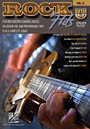
ROCK HITS Guitar Play-Along Volume 6 DVD TABLATURE BASI CHITARRA-Hey Joe-Smoke on the Water

ROCK HITS, Guitar Play-Along Volume 6. Fortunate Son (Creedence Clearwater Revival) -Free Ride (Edgar Winter Group) -Hey Joe (Jimi Hendrix) -I Can't Explain (The Who) -Message in a Bottle (The Police) -Reeling in the Years (Steely Dan) -Rock and Roll All Nite (Kiss) -Smoke on the Water (Deep Purple). 100 minutes. DVD TAB.

Hal Leonard Guitar Play-Along DVD Volume 6
Series: Guitar Play-Along DVD
DVD - TAB
Composer: Various Composers

The Guitar Play-Along DVD series lets you hear and see how to play songs like never before. Just watch, listen and learn! Each song starts with a lesson from a professional guitar teacher. Then, the teacher performs the complete song along with professionally recorded backing tracks. You can choose to turn the guitar off if you want to play along, or leave the guitar in the mix to hear how it should sound. You can also choose from three viewing options. Each DVD includes great songs that all guitarists will want to know!

Volume 6 includes: Fortunate Son (Creedence Clearwater Revival) - Free Ride (Edgar Winter Group) - Hey Joe (Jimi Hendrix) - I Can't Explain (The Who) - Message in a Bottle (The Police) - Reeling in the Years (Steely Dan) - Rock and Roll All Nite (Kiss) - Smoke on the Water (Deep Purple). 100 minutes.

Price: €29,99
€29,99

SANLUCAR MANOLO MUNDO Y FORMAS DE LA GUITARRA FLAMENCA VOL.3 BOOK CD TABLATURE

SANLUCAR MANOLO, MUNDO Y FORMAS DE LA GUITARRA FLAMENCA VOL.3. 112 Pagine. CD TAB.

Product Description:
The decision to publish the transcription of The World of the Flamenco Guitar and its Forms is the decision to disseminate a major work . Now, all those who wish to learn about and explore this gem of Spanish music that has laid unnoticed for too long are able to do so. Manolo Sanlúcar's album trilogy is not only apt for flamenco or Spanish musicians but for guitarists worldwide since it constitutes the greatest of the many master classes this maestro has given in his long career.

The original, authentic and unmistakably flamenco music in this work has stood the test of time , transcending fashion and trends. Immersing oneself in this magical document is to cross the erstwhile unreachable threshold of one of the most dazzling chapters in the history of the flamenco guitar.

Introduction in Spanish and English

A Don Ramon Montoya Manolo Sanlucar, Trans. by Claude Worms
Amanecer Malagueno Manolo Sanlucar, Trans. by Claude Worms
Barrenero Manolo Sanlucar, Trans. by Claude Worms
Garrotin Del Calzonzillo Manolo Sanlucar, Trans. by Claude Worms
Noches De La Ribera Manolo Sanlucar, Trans. by Claude Worms
Recreaicon Manolo Sanlucar, Trans. by Claude Worms
Romero Y Jara Manolo Sanlucar, Trans. by Claude Worms
Solea Pa Mi Pare Isidro Manolo Sanlucar, Trans. by Claude Worms

Content:

Introduction in English and Spanish
Music Score and Tablature.
Format A4
112 Pages

Transcription of the third and last volume of the "Mundo y Formas de la Guitarra Flamenca" trilogy, one of the most important works by the great guitar player Manolo Sanlúcar. A treasure of Spanish music made available to flamenco enthusiasts and guitar players a last after many years in obscurity.
CD
1 Amanecer malagueño Malagueña
2 Soleá pa mi padre Isidro Soleá
3 A Don Ramón Montoya Rondeña
4 Noches de la ribera Alegrías
5 Barrenero Minera
6 Garrotín del calzoncillo Garrotín
7 Romero y Jara Serrana
8 Recreación Tientos

Price: €64,99
€64,99

FUNK, Guitar Play-Along Volume 52. CD TABLATURE


FUNK, Guitar Play-Along Volume 52. CD TABLATURE

Funk

Guitar Play-Along Volume 52
Series: Guitar Play-Along
Format: Softcover with CD - TAB
Artist: Various

The Guitar Play-Along Series will help you play your favorite songs quickly and easily! Just follow the tab, listen to the CD to hear how the guitar should sound, and then play along using the separate backing tracks. The melody and lyrics are included in the book in case you want to sing, or to simply help you follow along. The CD is playable on any CD player, and also enhanced so PC & Mac users can adjust the recording to any tempo without changing pitch! 8 songs: Cissy Strut - Flashlight - Funk #49 - I Just Want to Celebrate - It's Your Thing - Le Freak - Papa's Got a Brand New Bag - Pick Up the Pieces.

Inventory #HL 00699728
ISBN: 9781423400554
UPC: 073999983531
Width: 9.0"
Length: 12.0"
48 pages
 

8 songs:

Cissy Strut - THE METERS - Arthur Neville, Leo Nocentelli, George Porter, Joseph Modeliste Jr. - 1969
Flashlight - PARLIAMENT - Words and Music: George Clinton Jr., William "Bootsy" Collins, Bernard G. Worrell - 1978  
Funk #49 - THE JAMES GANG - Joe Walsh, Dale Peters, James fox - 1970
I Just Want To Celebrate - RARE EARTH - Words and Music: Nick Zesses, Dino Fekaris - 1971
It's Your Thing - THE ISLEY BROTHERS - Words and Music: Rudolph Isley, Ronald Isley, O'Kelly Isley - 1969 
Le Freak - CHIC - Words and Music: Nile Rodgers, Bernard Edwards - 1978
Papa's Got A Brand New Bag - JAMES BROWN - Words and Music: James Brown - 1965
Pick Up The Pieces - AVERAGE WHITE BAND - Words and Music: James Hamish Stuart, Alan Gorrie, Roger Ball, Robbie McIntosh, Owen McIntyre, Malcom Duncan - 1974

TUNING NOTES
48 pages

Price: €15,99
€15,99

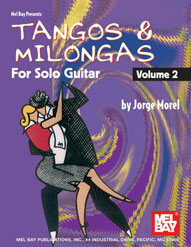
TANGOS & MILONGAS FOR SOLO GUITAR VOLUME 2 Jorge Morel. LIBRO CD TABLATURE SPARTITI

TANGOS & MILONGAS FOR SOLO GUITAR, VOLUME 2. by Jorge Morel. CD TAB.

Masterful Argentine arranger/composer/guitarist Jorge Morel presents three more solos and a duet arrangement in the tango and milonga forms for which he is famous. The three solo selections "Boedo", "Sur", and "Los mareados" and the duet -"Correlera" are presented in both standard notation and tab. All four arrangements appear on Mr. Morel's commercial CDs.

Song Title: Composer/Source:
Boedo Julio de Caro
Correlera Anselmo Aieta
Los mareados Juan Carlos Cobian
Sur A. Troilo - H. Manzi

Price: €22,99
€22,99

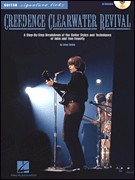
CREEDENCE CLEARWATER REVIVAL-Step-by-Step Guitar Styles Techniques John Fogerty-CD TABLATURE

CREEDENCE CLEARWATER REVIVAL, A Step-by-Step Breakdown of the Guitar Styles and Techniques of John and Tom Fogerty. CD TAB.

Series: Signature Licks Guitar
Softcover with CD - TAB
Artist: Creedence Clearwater Revival
Author: Dave Rubin

Dave Rubin teaches the trademark riffs and licks behind 12 of CCR's biggest hits, including:

Bad Moon Rising
Born On The Bayou
Down On The Corner
Fortunate Son
Green River
Keep On Chooglin'
Lodi
Lookin' Out My Back Door
Proud Mary
Run Through The Jungle
Travelin' Band
Who'll Stop The Rain

64 pages

Price: €29,99
€29,99

INTRODUCTION JAZZ GUITAR SOLOING Improvisation Method Joe Elliott CD TABLATURE LIBRO BOOK

INTRODUCTION TO JAZZ GUITAR SOLOING, A Comprehensive Improvisation Method. Musicians Institute Press. CD TABLATURE

Introduction to Jazz Guitar Soloing
A Comprehensive Improvisation Method

Series: Musicians Institute Press
Publisher: Musicians Institute Press
Format: Softcover with CD - TAB
Author: Joe Elliott

Perfect for seasoned rockers seeking new challenges and jazz newcomers looking for a good start, this book/CD pack covers scales, chords, licks, techniques and other vital jazz improv concepts step by step. The accompanying CD features 65 full-band demo and play-along tracks.

Inventory #HL 00695406
ISBN: 9780634009709
UPC: 073999998580
Width: 9.0"
Length: 12.0"
104 pages
 

A COMPREHENSIVE IMPROVISATION METHOD
• Key Center Soloing
• Chord Tone Soloing
• The Connecting Game
• Situation Playing
• Acquiring Vocabulary and Repertoire
• Scales
• Arpeggios
• Color Notes
• Chromatics
• Harmonization
• Solo Shaping
• Writing and Using Licks
• How to Practice
• Much More!

Whether you're a seasoned rocker seeking a new challenge or a jazz newcomer looking for a good start, this book and CD pack will provide the vital concepts you need to begin your journey into jazz improvisation. Includes loads of step-by-step information, scales, licks, and techniques, plus the accompanying audio CD features 65 full-band demo and play-along tracks!

Introduction
If you're like me, your first experience playing a guitar solo was in your friend's basement or garage. You probably learned the A minor pentatonic scale in fifth position, learned a few repetitive "didlee-diddies," a couple of bends, and had a great time jammin'. When I figured out what key a song was in, I would move my minor pentatonic shape, didlee-diddles, and bends to the place on the neck that seemed to fit and-jam. The soloist in me didn't really seem to care that I didn't know too much. Well, this was how I played for quite some time. I gradually expanded my knowledge by learning more patterns of minor and major pentatonic scales. I played with this amount of scale knowledge until I got into college and was introduced to some jazz guys. Playing tunes with them, I continued this basic approach but had to adapt to the songs changing keys more often. My solo approach, however, was still basically the same: figure out the key and wander around the pattern hoping I'd get lucky and play something good. This is called key center soloing, and there is nothing wrong with it. It's a wonderful way for us to break into the world of soloing early on in our musical development. It's great that we guitarists can learn to make good music with a small amount of information. But I knew there had to be more. Most guitarists live in this stage of development for a long time with a growing sense that they are missing some important element that would make them sound better. They're right. What's missing is the knowledge of how to make your solo fit the chords the band is playing. How do the great players pick those great notes in their solos? Some people might refer to these notes as "sweet notes," but they are really just chord tones. Chord tones are simply the notes of the chord that the band is playing. This very simple concept, which is called chord tone soloing, is the basis for the technical side of playing jazz. The vehicle for playing chord tones is the arpeggio. Understanding the concept is simple; implementing it requires some special and organized efforts. This book is designed to do just that: organize and gradually build your fretboard knowledge to a level where chord tone playing becomes as natural as wandering around the minor pentatonic scale. This book is based on the jazz improvisation method I've taught at G.I.T. since 1988. It works for the seasoned rocker who is ready for a new challenge or the jazz newcomer looking for a good start. The essence of the book can be summarized by the following statement.
As a developing player, you have two simple goals:
• To acquire a vocabulary (licks you know)
• To acquire a repertoire (songs you know)
(For a song to be "in your repertoire" you must be able to play the melody, improvise a solo, and comp for another soloist-all from memory.)
This book will cover the following general topics to help you develop vocabulary:
• key center soloing
• chord tone playing
• arpeggios
• organizing arpeggios
• situation playing-the concept of extracting common chord progression fragments from tunes and learning vocabulary to play over them
• colorful note options
• writing licks (developing vocabulary)
• inserting the licks into songs
• acquiring and developing repertoire
• other melodic devices
• solo shaping


A Comprehensive Improvisation Method by Joe Elliott

Contents
Introduction

Chapter 1: Getting Started
Chapter 2: Organizing Arpeggios in Major Scale Patterns
Chapter 3: Organizing Arpeggios in Minor Scale Patterns
Chapter 4: Situation Playing
Chapter 5: The Connecting Game
Chapter 6: The Connecting Game in More Patterns
Chapter 7: Expanding Note Options with Added Color Tones
Chapter 8: Introducing the Melodic Minor Scale
Chapter 9: Adding Altered Tones
Chapter 10: Referencing and Worksheets
Chapter 11: The Connecting Game with the Altered Scale
Chapter 12: The Locrian #2 Scale
Chapter 13: Writing Licks
Chapter 14: Inserting Licks
Chapter 15: Disguising Licks
Chapter 16: Harmonizing the Melodic Minor Scale for Altered Dominants
Chapter 17: Harmonizing the Melodic Minor Scale for Minor 7 (b5)Chords
Chapter 18: Turnaround Licks in Major (1I1-VI-II-V-I)
Chapter 19: Turnaround Licks in Minor (I-VI-II-V-I)
Chapter 20: The Lydian b7 Scale
Chapter 21: Harmonizing the Melodic Minor Scale for Non-Functioning Dominants
Chapter 22: Non-Resolving II-V Progressions
Chapter 23: The Bebop Bridge
Chapter 24: Chromatic Connections
Chapter 25: Other Melodic Devices
Chapter 26: Putting It Together
Chapter 27: Solo Shaping
Chapter 28: How to Budget Practice Time
Conclusion

ISBN 978-0-634-00970-9

HAL-LEONARD CORPORATION
 

Price: €26,99
€26,99

SERRANO JUAN THE ART OF ACCOMPANYING FLAMENCO DANCE DVD CHITARRA SEVILLANAS-TANGO-ALEGRIAS

SERRANO JUAN, THE ART OF ACCOMPANYING FLAMENCO DANCE. DVD

Product Description:
In this outstanding DVD Juan Serrano shares the spotlight with dancer Andrea Sanchez, and explains the interaction of the guitarist and dancer in the flamenco tradition. A sophisticated 3-camera filming technique, including split-screen and picture-in-picture format, reveals all aspects of this artistic relationship. Maestro Serrano applies his formidable knowledge of the flamenco guitar to the following rhythms in a perfectly synchronized display of technique and flamenco duende y gracia (fire and grace): Sevillanas, Farruca, Tangos, Romeras, Alegrias, Zapateado, and Bulerias. This video would be of interest to the aspiring flamenco dancer as well as the intermediate flamenco guitarist.

Price: €24,00
€24,00
Syndicate content