CHITARRA - GUITAR

MARVIN HANK GUITAR TUTOR CD TABLATURE SPARTITI METODO LIBRO SHADOWS CHITARRA TECNICA

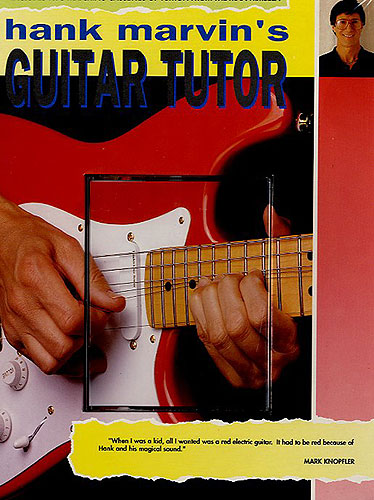
MARVIN HANK, GUITAR TUTOR. Il chitarrista degli Shadows in persona, ci svela i segreti del suo stile in un libro pieno di esempi e consigli. 2 cassette TAB.

Hank Marvin's Guitar Tutor is ideal for beginners, but also suitable for intermediate Guitarists who want to develop their cord and lead playing techniques and general musicianship.

Basic Music Theory
Important Pop, Rock And Blues Sequences
Left Hand Embellishments
Lower Fret Notes
Major & Minor Scales In Popular Guitar Keys
Moveable Chord Shapes
Playing On Higher Frets
Playing Simple Chords And Melodies
Scale Experiences For Left & Right Hand Agility
Your First Guitar Rag

Price: €29,99
€29,99

MARVIN HANK JAM WITH-TOTAL ACCURACY CD TABLATURE SPARTITI-APACHE-F.B.I.-GERONIMO-BASI

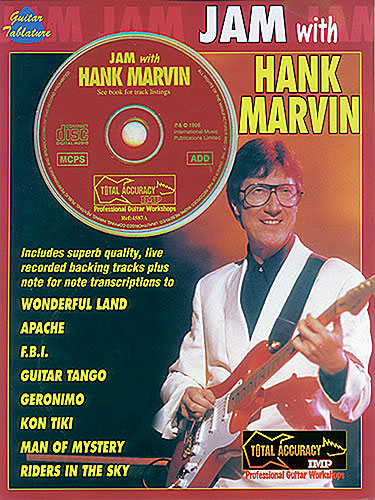
MARVIN HANK, JAM WITH. Basi per voce e per chitarra. Contiene: wonderful land -apache -F.B.I. -guitar tango -geronimo -kon tiki -man of mystery -rides in the sky. CD. TAB.

Description:
Learn to play eight classic Shadows guitar parts and jam along with a professional session band. The Jam With... guitar workshop is a powerful learning tool that will help you extend your stockpile of licks and fills and develop your improvisational skills!

Hank Marvin's unique guitar style has been an inspiration to several generations of guitarists worldwide, with instantly recognisable recordings such as Apache, F.B.I. and Wonderful Land. This guitar workshop is a powerful learning tool that will help you extend your stockpile of licks and fills and develop improvisational skills.

The combination of musical notation and guitar tablature in this book together with backing tracks on the CD gives you the opportunity to learn eight of Hank's tracks note-for-note and them jam with a professional session band. The track listing reflects some of The Shadows' most popular recordings, providing something for guitarists to have fun with and improvise with, as well as something to aspire to.

Apache
F. B. I.
Geronimo
Guitar Tango
Kon Tiki
Man Of Mystery
Riders In The Sky
Wonderful Land

Price: €39,99
€39,99

MEGADETH PRIME CUTS GUITAR SIGNATURE LICKS CD TABLATURE LIBRO SPARTITI-hangar 18-Lucretia

MEGADETH, PRIME CUTS. 12 Titoli, anche basi. 99 ways to die -wake up dead -peace sells -Mary Jane -hangar 18 -Lucretia -skin o' my teeth -foreclosure of a dream -high speed dirt -train of consequences -a tout le monde -youthanasia. CD TABLATURE

Price: €99,95
€99,95

METALLICA-GUITAR LEGENDARY LICKS 1983-1988 CD TABLATURE LIBRO SPARTITI CHITARRA TECNICA

METALLICA, GUITAR LEGENDARY LICKS 1983-1988. 16 canzoni dagli album Kill 'em all (1983), a ...and justice for all (1988), passando per Ride the lightining (1984) e Master of puppets (1985), con minuziosi particolari per replicare il suono di Hetfield e Hammett. CD TAB.

METALLICA - LEGENDARY LICKS 1983-1988
Series: Guitar Method
Publisher: Cherry Lane Music TAB
Composer: Nick Russo

This new book/CD pack in the Legendary Licks series features note-for-note transcriptions and detailed performance notes for 17 metal masterpieces from Metallica's early years. Guitarists will learn dozens of classic licks, riffs, fills and solos from songs such as: ...And Justice for All - Battery - Fade to Black - The Four Horsemen - Jump in the Fire - Seek & Destroy - Whiplash - and more. The split-channel CD includes recorded demonstrations, plus slowed-down versions of the tricky passages. Also features gear setups and an historical retrospective of the band. 88 pages
...And Justice For All
Battery
Blackened
Creeping Death
Damage, Inc.
Fade To Black
Fight Fire With Fire
For Whom The Bell Tolls
The Four Horsemen
Hit The Lights
Jump In The Fire
Leper Messiah
Master Of Puppets
Seek & Destroy
Welcome Home (Sanitarium)
Whiplash

Price: €31,99
€31,99

MORSE STEVE COAST TO COAST GUITAR TABLATURE BOOK LIBRO SPARTITI CHITARRA CHERRY LANE

MORSE STEVE, COAST TO COAST. TAB.

Price: €170,00
€170,00

MORSE STEVE SOUTHERN STEEL GUITAR TABLATURE BOOK SPARTITI LIBRO CHITARRA CHERRY LANE

MORSE STEVE, SOUTHERN STEEL. TAB.

Price: €127,99
€127,99

NIRVANA BEST OF GUITAR SIGNATURE LICKS CD TABLATURE LIBRO SPARTITI-Smells Like Teen Spirit


NIRVANA, THE BEST OF. CD TABLATURE
The Best of Nirvana

A Step-by-Step Breakdown of the Guitar Styles and Techniques of Kurt Cobain
Series: Signature Licks Guitar
Format: Softcover with CD - TAB
Author: Chad Johnson
Artist: Nirvana

As the heroes of a new musical generation, Nirvana's influence can't be overestimated. This book/CD pack lets you inside the playing of grunge god Kurt Cobain, teaching his riffs and licks that defined alternative music. Includes an introduction, detailed notes on Cobain's guitars, amps & effects, a discography, and these 12 Nirvana classics: About a Girl - All Apologies - Come as You Are - Dumb - Heart Shaped Box - Lithium - The Man Who Sold the World - On a Plain - Penny Royal Tea - (New Wave) Polly - Rape Me - Smells like Teen Spirit.

Inventory #HL 00695483
ISBN: 9780634014727
UPC: 073999112993
Width: 9.0"
Length: 12.0"
64 pages

About A Girl
All Apologies
Come As You Are
Dumb
Heart Shaped Box
Lithium
The Man Who Sold The World
On A Plain
Pennyroyal Tea
(New Wave) Polly
Rape Me
Smells Like Teen Spirit

Price: €29,99
€29,99

OSBOURNE OZZY, AN EXPLORATION OF HIS MUSIC. GUITAR SCHOOL. TABLATURE NO MORE TEARS-


OSBOURNE OZZY, AN EXPLORATION OF HIS MUSIC. GUITAR SCHOOL. TABLATURE

Including transcriptions and lessons featuring the guitar styles of RANDY RHOADS

BY CULPEPPER

INTRODUCTION
65 million albums sold. A career that has spanned some 28 years and many generations. A legend that continues to breed new fanatical followers to add to the countless fans worldwide. Never one to lean towards convention, yet with a genuine heart of gold, John Michael Osbourne was always destined to become one of the world's most enduring, and active, rock 'n' roll legends. Not that he'd have known it when, in 1969, he and his three friends Terry "Geezer" Butler, Bill Ward, and Tony Iommi in a small Birmingham band called Black Sabbath recorded an eight-track album of the same title in 24 hours and set off on a month-long tour of Germany.
On their return, Ozzy Osbourne was to find that Black Sabbath were at the center of a popularity storm, and that he was it's focal point. Their ascent to world stardom became greater through the seventies, and their music has since been recognized as revolutionary by experts and fans alike. When, in 1978, Sabbath and Ozzy could no longer work together, Osbourne set about developing further the sounds and ideas he had always brought to his previous band. Quickly forming a band (Bob Daisley on bass, Lee Kerslake on drums) Ozzy found himself jamming with a slight, quiet young guitarist called Randy Rhoads. The two communicated phenomenally well through their music, and before long had tapped a rich vein of songwriting. This legendary partnership wrote the first two Ozzy Osbourne solo albums, Blizzard of OZZand Diary of a Madman, each of which contained classic songs which to this day remain staples of Ozzy's live set.
Rhoads was recognized as one of the handful of guitarists this century to have taken rock guitar to another level, and his untimely death in a small plane crash on March 19th, 1982, was a genuine tragedy from every possible perspective. The loss of his talent was further emphasized by 1987's posthumous double-live LP Tribute which was recorded in 1981 during the Diary of a Madman tour.
As deep as the loss was (and will always be), Ozzy Osbourne is also a first-class survivor. He hurriedly released a double-live LP of Black Sabbath songs titled Speak of the Devil, furiously worked his way through the pain and went on to record a blistering reposte to all who said he couldn't survive with 1984's Bark at the Moon. Ozzy continued his stratospheric momentum with 1986's The Ultimate Sin, which was to smash the American market in two and further establish him as an iconic figure. 1988 saw No Rest For The Wicked maintain his international popularity, but 1991 was to illustrate the defining moment of Ozzy's ability to reinvent, revitalize, and renew his already gargantuan image.
Sporting a new, fitter frame and fresh, revitlized attitude towards his life and music, Ozzy Osbourne looked younger than ever, whilst the musical ingenuity of No More Tears saw him enjoy his greatest ever successes worldwide. The 18 month world-tour that followed further established Ozzy as one of the world's premier live performers, nightly two-hour sets proving once and for all his rejuvenation. From this, Ozzy released a double-live memoir titled Live & Loud in 1994. By the time 1995 came around, Ozzy had taken a well-deserved 15 month break from the road and had completed writing and recording on the Ozzmosis album. The material further emphasized the strides Ozzy had made with ...Tears and another world tour (15 months this time) saw Ozzy become one of the top 5 most popular performing artists of the year with a slew of sold-out shows. As the tour wound to an end, Ozzy Osbourne was already planting the seeds for a brand new beginning. Phoenix and Southern California were each to experience the "Ozz-Fest," an assembly of the premier talents in heavy metal on one all-day festival show under the legend himself. Each show was a sell-out, an unqualified success that made sure the rest of the world would get it's chance to see an "Ozz-Fest" in the future.
These are mere pen-notes on a career that is littered with successes, notoriety and events. It'd be too easy to think that after 28 years of riding high, Ozzy Osbourne might be considering slowing down a touch. If anything, the circumstantial evidence points to the opposite: he's revving up! Ozzy Osbourne doesn't know anything else but rock 'n' roll. He also doesn't want to know anything else. More to follow. Watch this space ...

FLYING HIGH AGAIN

Words and Music by Ozzy Osbourne, Randy Rhoads, Robert Daisley, and Lee Kerslake "Flying High Again," a powerful rock anthem much in the vein of "Crazy Train," first appeared on Ozzy's second solo LP, Diary of a Madman. However, the excerpts transcribed and studied here are from the electrifying live version found on the Randy Rhoads Tribute LP. Randy's bone-crushing rhythm guitar riff is the dominating factor in the introduction, as the aggressive groove comes to life with a pulsating undercurrent of drums and bass. This basic motif from the intro is used in the first half of the verse sections as well. The guitar figure from the second half of the verse can be thought of as a variation. Here chord accents placed squarely on the beat and steady, muted pedal tones take the place of the syncopated accents and pauses in the original motif.
Moving to the relative minor in the pre-chorus, Randy introduces new material. In this section, Randy's melodic double-stops provide a more fluid accompaniment to the vocal line before ripping back into the groove for the chorus. The first chorus is not a full chorus, but a single statement of the vocal hook over a reprise of the intro riff. The chorus sections that appear after the second and third verses (and solo) utilize a variation of the intro riff customized to support the repeating vocal hook.
Bearing the structure of an intense musical interlude, the solo from "Flying High Again" is quintessential Randy Rhoads. Relying on both familiar and new chord progressions, the solo adds interest to the song's arrangement. Randy's "high flying" guitar work supplies the listener with some serious ear candy.
After a reprise of the chorus and intro sections, the song makes a third rep of the main sections. It then ends with a restatement of the chorus riff sans vocal. Randy adds intensity to this instrumental chorus section with extra rhythm fills. The "theme and variation" approach to the arrangement gives "Flying High Again" a very cohesive structure. Figure 1 Study
The boisterous intro riff from "Flying High Again" is shown in Figure 1. Notice how the intermittent pauses in the riff supply space for interplay with the bass and drums (as well as vocal). Also notice Randy approaches some of the chord accents with a couple of scale steps. By walking into the chords, Randy adds a bit of melodic interest while tying the rhythm together.
As indicated by the key signature, "Flying High Again" is in the key of A. However, the note
choices here imply A Dorian mode (A-B-C-D-E-F#-G). The pivotal use of the bIll (C5) and bVII
(G5) helps to accentuate this modal impression. The scalar fill at the end of the section is also
derived from the A Dorian scale and helps set up the transition to the first verse.
Figure 1 Performance
Randy's tone for "Flying High Again" is massive with lots of gain. The slap-back echo is used to enhance the syncopated accents of the rhythm parts. The quick descending scale at the end of the section utilizes open-string pull-offs. Pick the first note of each pair with a fierce attack, then pull-off to the open note.


... memorized every detail of the solo, Randy's rendering from the live album (Tribute) shown here is practically identical to the studio version.
Randy utilizes a rapid fire arpeggio sequence to outline the F#m (F#-A-C#) and D (D-F#A)
chords implied by the accompaniment in the first two measures. In measure 3, a similar type of
phrasing is used as Randy executes a tremolo lick that leads down to the resolve in the fourth
measure. Here the bending lick targets the root note (F#) with the b3 (A) added as a subsidiary note
(extra harmony note).
At measure 5 Randy takes a different approach when the accompaniment repeats the fourmeasure
progression. This time, starting with a two-part melodic idea from F# Aeolian in measures
5 and 6, Randy saves the busier phrasing for the second half of the progression. Notice the
descending lick in measure 7 utilizes the same hybrid scale (F#-A-B-B#/C-C#-D-E) as the one in
Figure 3, only one octave higher. Randy tags the phrase in measure 8 with a similar bending lick to
that found in measure 4, this time targeting the fifth (C~) with the bend and the b7 (E) added as a
subsidiary note.
With a short ascent of the F# minor pentatonic scale (F#-A-B-C#-E) fragment at the end of
measure 8, Randy climbs into the tremolo phrasing lick that covers the first three bars of the next
repetition of the progression. Notice the slurred line starts out with notes from the F#m in the
accompaniment (Fil and A). The line takes on a life of its own in beat 3 as it makes use of notes from
outside the underlying chords, providing interesting embellishments in harmony. This four-bar
phrase is resolved (in measure 12) with a variation of the resolve found in bar 4 one octave higher.
Over the last time through the progression, Randy uses two phrases that utilize a "question and
answer" type of structure. The repetitive lick in measure 13 is derived from the F# minor pentatonic
scale. In measure 14, Randy applies the musical question mark with a melodic idea from the F#
Aeolian scale, ending on B. The question is answered in the last two bars as Randy races up the F#
minor pentatonic scale to end with a couple of high note bends. The actual resolve of the solo
occurs as the guitar returns to the single note riff from Figure 1 with its strong F# tonality.
Just as the arrangement of the song's sections is important to its overall effectiveness, so is the
structure of the solo. Notice both the accompaniment and Randy's solo are comprised of four 4-
measure phrases. The melodic contours and resolutions of these phrases really make this solo flow.
This kind of structure and symmetry make the solo from "Crazy Train" one of the most memorable
rock solos ever recorded.
Figure 4 Performance
The tapping arpeggios in the first two measures of the solo from "Crazy Train" use a variation
of the type of sequence used at the end of Van Halen's "Eruption" (from the LP, Van Halen). The
first note of each group is "tapped" with the right-hand finger and subsequently "pulled-off' with
the same type of technique as a standard left-hand pull-off-by "pulling" the finger off the string (to
either side) rather than lifting straight up. This will cause the string to snap back, sounding the next
note already fretted by the left hand. The following notes in each group are slurred with standard
left-hand hammer-on/pull-off technique.
Notice the strength and accuracy in Randy's bending and vibrato in bars 4-6. Many guitarists
pass over these important articulations in the pursuit of speed and flash, but they are abolutely
essential to the expression of a powerful solo such as this one.
Notice the similarities in the lick in bar 7 and the one in Figure 3. In addition to the similarities
in the phrasing, the scale shape from which they are derived is the same, although here it is played
twelve frets higher (one octave).
The fast F# minor pentatonic scale phrases in bars 13 and 15 exhibit a bit of Randy's excellent
picking technique. Good control of alternate picking (down, up, down, etc.) is required to execute
both licks. If your alternate picking is not quite up to this level, start slowly (with a down-stroke for
both licks), giving close scrutiny to steady down and upstrokes and synchronization between the
right and left hands. Gradually work up to speed, never playing faster than you can play cleanly.


MAMA, I'M COMING HOME
Words and Music by Ozzy Osbourne, Zakk Wylde and Lemmy Kilmister
Ozzy Osbourne and company collaborated with Motorhead's Lemmy Kilmister for several
songs on 1991's No More Tears LP. No one could have expected this unholy alliance to yield the
sensitive, yet powerful ballad, "Mama, I'm Coming Home," but there it was. From the mellifluous
acoustic guitar layers to the moving vocal hooks to the thematic guitar solo, this tune was no mere
pop ballad, but a song of substance born of a mature songwriting team.
Of particular interest in "Mama, I'm Coming Home" is the successful marriage of Zakk
Wylde's country-rock inspired acoustic guitars with Ozzy's metal mayhem. The delicate acoustic
guitars in the intro section establish the main guitar theme with minimal accompaniment. The sparse bass line and total absence of drums in the first few sections allow plenty of headroom for the arrangement to build as the song progresses. Notice even with the entrance of the distorted electric in the second verse and the drums in the second pre-chorus, the mix is balanced so as to never overshadow the melodic content.
Zakk brings it back down just a bit in the interlude following the chorus. The thick acoustic
guitar layers create a graceful transition to the solo. Relying on a thematic approach in the first half
of the solo, Zakk's playing is appropriately meaningful without being overbearing. The slight build
at the solo's end sends the song back into the pre-chorus. The brief breakdown between the prechorus and chorus helps build the extra bit of tension needed before the climactic rendering of the vocal hook.
Figure 1 Study
The intro to "Mama, I'm Coming Home" is shown in Figure 1. Zakk's country flavored lick at
the beginning of the figure is based on E major pentatonic (E-F#-G#-B-C#). The major pentatonic
scale (root-2-3-5-6), as opposed to the minor pentatonic scale (rootJ3-4-5- b7), is not quite as
commonly used in mainstream rock. This is due to the fact most rock tunes are centered around
minor keys or bluesy tonalities that utilize the b3 and b7. However, "Mama, I'm Coming Home" is
indeed in the key of E major, providing Zakk with the opportunity to call on this device more
common to country and southern rock music.
The line that follows is the signature lick to the song. Utilizing the E major scale
(E-F#-G#-A-B-C#D#) exclusively, the line pivots a descending scale off the open E and B notes.
Notice Zakk inserts a couple of E chords as harmony in the last measure in order to thicken the line
before the verse starts.
Figure 1 Performance
Although the entire intro section from Figure 1 can be played with either the pick or fingers,
Zakk uses both in a technique called "hybrid picking." Hybrid picking entails holding the pick
between the thumb and index finger and utilizing the remaining right hand fingers to pluck notes on
higher strings. This technique provides a variety of articulations as well as ease in execution of
arpeggiated figures like the one in Figure 1. I've added suggested picking instructions between the
tablature and the notation ( = downstroke with the pick, m= middle finger, a= ring finger).
 

Estratti da 10 canzoni:

BARK AT THE MOON - JAKE E. LEE  - Words and Music: Ozzy Osbourne - 1983
CRAZY BABIES  - Words and Music: Ozzy Osbourne, ZAKK WYLDE, Robert Daisley, Randy Castillo - 1981
CRAZY TRAIN - Words and Music: Ozzy Osbourne, RANDY RHOADS, Bob Daisley - 1981
FLYING HIGH AGAIN - Words and Music: Ozzy Osbourne, RANDY RHOADS, Robert Daisley, Lee Kerslake - 1981
GOODBYE TO ROMANCE - Words and Music: Ozzy Osbourne, RANDY RHOADS, Robert Daisley - 1981
I DON'T KNOW - Words and Music: Ozzy Osbourne, RANDY RHOADS, Robert Daisley - 1981
MAMA, I'M COMING HOME - Words and Music: Ozzy Osbourne, ZAKK WYLDE, Lemmy Kilmister - 1981
MR. COWLEY - Words and Music: Ozzy Osbourne, RANDY RHOADS, Robert Daisley - 1981
NO MORE TEARS  - Words and Music: Ozzy Osbourne, ZAKK WYLDE, Randy Castillo, Michael Inez, John Purdell - 1981
SUICIDE SOLUCTION - Words and Music: Ozzy Osbourne, RANDY RHOADS, Robert Daisley - 1981

Price: €23,00
€23,00

OSBOURNE OZZY RANDY RHOADS YEARS LIBRO CD CHITARRA TABLATURE S.A.T.O.-FLYING HIGH AGAIN-DEE

OSBOURNE OZZY, THE RANDY RHOADS YEARS. CD TABLATURE

Series: Guitar Educational
Softcover with CD - TAB
Composer: Aaron Rosenbaum
Artist: Ozzy Osbourne
Artist: Randy Rhoads

With note-for-note transcriptions of Randy Rhoads' searing guitar work, gear set-ups, performance notes, historical retrospective and a play-along CD, this info-packed book will teach you to play 72 licks from 11 of Ozzy's most recognizable


Few musicians in the history of rock have been as beloved — revered, really — as Ozzy Osbourne’s late guitarist and musical soul mate, Randy Rhoads.

Only 25 when he was killed in an airplane accident in 1982, Rhoads managed in a few short years to establish himself as one of the most innovative guitar players in the world. On landmark Ozzy songs like “Flying High Again,” “Crazy Train” and “Mr. Crowley,” the guitarist wowed the world with solos and rhythm playing that managed to be explosive and tasteful, and a classical sensibility that was his alone. His premature death only served to solidify his legend, and his many fans keep his memory and spirit alive.

Guitar World acquired a tape of a seminar given by Rhoads himself before an enthralled group of Randyphiles at Music City in Greensburg, PA, on Feb. 2, 1982, only six weeks before his death. Here is the transcription of the lesson presented that day, in which he reveals himself to be every ounce the dedicated — and utterly unassuming — guitar hero.

Whether fielding questions from the audience about the details of his rig or the complexities of his technique, Randy was the perfect gentleman. And as his opening statement to the audience reveals, he was modest and humble, qualities that, as much as his guitar playing, endeared him to his fans:

“This is only the second time I’ve ever done this, so please don’t expect me to just come out and handle things real well; I’m very nervous about speaking in front of people, so you’ll have to give me a hand by asking a lot of questions. I’ll do anything I can to help you out.”

What effects do you use when you play live?

I have a pedalboard that’s got an MXR Distortion +, an MXR 10-band equalizer, a chorus, an MXR stereo chorus, an MXR flanger, a Crybaby wah pedal and a Roland volume pedal. I used them much more in the past than I do nowadays, but now our sound man is starting to add a lot more up front. Sometimes I use them more for quiet rhythm parts, just to enhance the sound. I never use echoes or anything for leads.

Do you have a preamp built into your guitar?

No, I just have the Distortion + on the board, and I just keep that on all the time. My amps are Marshalls.

What speakers do you use in your cabinets?

I use Altecs. I prefer those to Celestions because they’re very bright, clean speakers. I found that Celestion speakers are pretty dirty, and if you add a fuzz box to them they’ll sound terrible.

Do you ever have trouble with feedback?

Yes, I have lots of problems there. For example, if you let go of the guitar for a second, it will feed back. You’ve got to play so that you’re covering your pickup. If I don’t want to do something quiet, I have to either use the volume pedal or click off the fuzz—otherwise my guitar will squeal. I’ve gotten used to playing that way.

Do you have a special tremolo unit on your Charvel Flying V?

Grover Jackson, who owns Charvel, builds the guitars himself for me, and I use his tremolo units. There’s no perfect tremolo, except for maybe a Floyd Rose, but Grover’s are very good. I have another Flying V, the polka-dotted one, but it isn’t a Charvel, and I do have tuning problems with it all the time.

What kind of music did you play when you first picked up the guitar?

I’m 25 now, so I don’t remember what I was playing when I was seven. I just played the guitar. One of the early things I remember was strumming [the flamenco guitar standard] “Malagueñia” on an old Spanish guitar. Later on I just started playing anything I heard on the radio: “Gloria” or “Louie Louie” or whatever.

What players did you admire growing up?

I get asked that all the time: “Who’s your favorite?” “What are your influences?” If you play long enough, your influences are bound to change. I never had a phonograph ’til I was, I think, 16, so I couldn’t just sit and copy my favorite players. I had to listen to the radio, and I liked whoever was good. One of my favorites was Mountain and Leslie West — those harmonics and that sustain. I just thought Leslie was the greatest. But now, I don’t have a favorite — I just like anybody who plays guitar.

Did you take lessons or were you self taught?

Mostly self taught. When I was young I took lessons—basic folk and classical training—then I started playing rock. I’m actually taking lessons now.

You’re taking lessons now?

I did when I was in England.

Who was your teacher?

Anybody. I just take lessons from anybody, like when I have a day off or something. I’ll find someone in town and just pick their brain.

Were you in other bands before you hooked up with Ozzy?

I was in a local band in L.A. called Quiet Riot for five years. I was still with them when I met Ozzy, so I had to leave. Other than that, I was just in some garage bands and other little things that didn’t work out.

Didn’t you put out a couple of records with Quiet Riot?

Yeah. We had a record deal, but we were very young and we lost the deal. It just fell apart. The records were later released in Japan. I was 17 years old and the producer wanted to make us sound very much like a pop band. I mean, if you hear it, there’s hardly any guitar on it.

What do you think of other guitarists, like Michael Schenker?
I think Michael Schenker is excellent, a great rock player. He’s very melodic and he plays with lots of feeling.

Are there any other players you’d put in that category?

Oh, I could name a hundred. I mean, everybody who’s out there is really good at what they do. Eddie Van Halen is fantastic, Ritchie Blackmore…

There are critics who accuse you of copying Eddie Van Halen. Are you influenced by him?

Well, we’re both from the same town and we were both in local bands. It seemed like everybody in L.A. was a lead guitar player, and we all played very similarly. Everybody used to say we all sounded very much the same.

What do you think of Angus?

Angus Young? I think what he does, he does great. He’s so into it.

Tony Iommi?

I didn’t know too much about Black Sabbath when I met Ozzy. That’s probably why I get along with Ozzy—we’re different and come from different musical backgrounds.

Does he ever talk to you about why he left Black Sabbath?

Oh yeah, all the time. I guess they just weren’t getting along. They had been together a long time—14 years or something like that.

When you write a lead, do you focus on the melody or go for more of a technical, dazzle-type thing?

It depends on what the progression is and what the mood of the song is. You have to put down something that suits the song well. I like to play melodically.

What would you say is important for having a good band?

Aside from being able to play well together, you all need to be on the same level mentally. If one guy wants to go out and earn money in a lounge and another wants to go out and do originals, then you’ve got a conflict. I think you should all want the same thing out of your band and like the same kinds of things. That’s a good start, I think.

Is it true that when you auditioned for Ozzy you didn’t even have to play? That you just plugged in your guitar and tuned up?

Yeah, it was even more embarrassing than this. [laughs] I thought I was gonna play with a band. All I brought was this little Fender warm-up amp. When I got there, everyone was behind the glass, and in the room was just me and my amp. And they said, “Okay, play.” And I thought, You’ve got to be joking. I mean, what could I play? I didn’t have any other musicians with me. So I just started warming up, then Ozzy said, “Yeah, you’re good.” I had only played for a few seconds. Then I got kinda mad and thought, Well, you haven’t even heard me yet.

Can you play some stuff for us now?

What would you like to hear?

How about the solo breaks in “Over the Mountain,” where you play the fast, unaccompanied licks?

The first lick in that section is played like this It’s in E minor. Then the next break is just a series of real quick pull-offs to open strings , with a tremolo bar dive added at the end. That’s all there is to it. There’s just one real lick in it; the rest is just, oh, noise.

Play the solo to “Revelation (Mother Earth).”

Okay. It’s in E minor and is very similar to a harmonic [minor] scale. It starts on E flat [D#] and goes up to E flat [D#] again at the very end. For the next lick, I use the edge of the pick to make the riff sound an octave higher. It sounds a lot different live, because I’m trying to slow it down so you can see what I’m playing. Then the next bit is played like this. The only weird notes in it are the E harmonic minor parts.

Could you play the fretboard-tapping riff from your “Flying High Again” solo?

Sure. You start with your left-hand index finger on C# [1st string/9th fret], and you tap with your right hand on a high A [1st string/17th fret]. When you move over to the B string, both hands move up one fret. You then repeat the process on the G and D strings, which finishes off the lick.
The next four bars of the solo are played exactly the same way, but begin down a fourth, in E. The same process is repeated, shifting up one fret as you move to each lower string.

What key is “Flying High Again” in?

It’s in A. When I play “Crazy Train” and then go to play “Flying High Again,” I’m a half-tone out.

Did you tune differently on Diary of a Madman as compared to Blizzard of Ozz?

Yes, we tuned down one half step when we recorded Diary.

Why?

When we were recording the second album, the tuner we had was miscalibrated, and I began to like the sound of being tuned down a half step for some of those songs. A lot of people tune down a half step, but I’d never done it before then. It gives a much heavier sound to the chords, and it just gives you a meaner sound, overall. When we play live, some of the songs are tuned down and some are not, so I use different guitars which are tuned accordingly.

Could you play the beginning of “Crazy Train”?

Yeah, sure.

Are you using a wah-wah on that part at the beginning?

No, just a distortion pedal.

How do you play the main rhythm part to “Crazy Train”?

Like this. The chord progression is A E/A D/A A; the open A string is played against all of the chord voicings. The fast lick at the end is played with pull-offs to open strings. At the end of the verse section, I use chordal inversions, like this. Each chord is played with the third in the bass [the major third appears as the lowest note in the chord voicing]. Here, the chord progression is A/C# E/G# D/F#, with the third of each chord played on the low E string.

How do you play the rhythm part to the section that leads into the chorus?

That part’s played like this. On the second verse, I add a riff when I get to the F#m chord at the end of the progression, like this.

How do you play that really fast, ascending lick during the second chorus?

That riff is sort of a “fake”; I don’t even do that lick live, because it sometimes sounds really sloppy. I used to play it live, though. It’s just an [arpeggiated] F# minor triad shape that slides up the neck chromatically [ascending one fret at a time], but I’m going to lie and say that it’s played perfectly. All it is is this, after which I hurry into a pick slide before the lick dies. When you play loud, you can get away with playing a lick like that without playing it perfectly.

Did you use tapping in the “Crazy Train” solo, too?

Yes, the solo begins with this tapped lick, after which I play a slow trill that slides down one whole step.

How do you play the last lick in the “Crazy Train” solo?

It’s in F# minor. I’m trying to remember it because I don’t do that run live anymore. To the best of my recollection, it’s played like this [FIGURE 4H]. The lick begins one and a half steps below F#, on D#. If you were to play the lick in A minor, it’d be done like this.

Is there a term that describes these kinds of riffs?

These riffs are all articulated with hammer-ons. I know of no other particular name to describe them.

Do you do any particular finger exercises before you go out on stage?

I have some exercises where I use the first, second and fourth fingers in order to warm up. Here’s one [FIGURE 5A] in which I’m just sort of “wandering around.”

It’s good to do exercises like this [FIGURE 5B] using “alternate picking” [down-up-down-up, etc.], and to keep speeding it up. I used to like practicing licks that contained a lot of hammer-ons, like these [FIGURES 5C and D], but I don’t do those things that much anymore. These licks are great, though, for warming up your fingers before a gig.

Could you show us those unusual chords in “Diary of a Madman”?

Sure. The song begins with an A [major triad], with the flatted fifth added to the chord. So, you’ve got the root note, A, the third, C#, then the flatted E, with the open high E on top. The sound of the Eb and the E together gives you that dissonant sound. As you can see, the notes on the D, G and B strings descend as the chords progress through the first five bars. This section ends with an arpeggiated Emaj9 [Eadd2] chord, with the seventh, D, dropped in at the end.

The verse section features virtually the same chords as those used for the first four bars of the intro, but played in a different time signature. This section ends with some different chords played in yet another time signature [6/8].

Then there’s the heavy, distorted riff which appears a few times during the song. Here’s how it’s played during the intro. Following the bridge and the interlude, I shift to this heavy rhythm guitar part. The last chord in bar 1 [the two-note Em] is very similar to C7, but I think of it as E diminished, as both chords are built from almost the same notes [both chords comprise the notes G, Bb and E].

Right before the interlude, I play a heavily distorted riff that is similar to the first heavy riff, which is in A minor, but is here transposed to E minor. This is followed by the interlude, which begins with an Em(add9) chord.

When you take your spotlight solo each night on stage, do you ever improvise or do you always play the same solo?

It’s basically the same. But it depends on the sound I have onstage: if it’s a bad sound, I just do a basic form of the solo. But if it sounds really good, I like to carry on with it.


SONG LIST:

CRAZY TRAIN
DEE
DIARY OF A MADMAN
FLYING HIGH AGAIN
GOODBYE TO ROMANCE
I DON'T KNOW
MR. COWLEY
OVER THE MOUNTAIN
REVELATION (MOTHER EARTH)
S.A.T.O.
SUICIDE SOLUTION

80 pages

Price: €59,99
€59,99

OSBOURNE OZZY THE VERY BEST OF techniques of Randy Rhoads-Jake E. Lee-Zakk Wylde CD SPARTITI

OSBOURNE OZZY, THE VERY BEST OF. A step-by-step breakdown of the styles and techniques of Randy Rhoads, Jake E. Lee, Zakk Wylde. CD TAB.

Description:
A step-by-step breakdown of the guitar styles and techniques of the late Randy Rhoads, Jake E. Lee and Zakk Wylde. Includes hits (with CD note for note performances) from the albums Blizzard of Oz and No More Tears. Great care has been taken to recreate the tones and mix of the original recordings, with one exception - the featured guitar part is isolated on the right channel, and the other instruments are isolated on the left channel. You may then listen to the guitar part for learning purposes, hear the entire band or play along with the backing tracks.

Rhoads:
-I don't know
-crazy train
-dee
-steal away (the night) live
-Iron man (live)
-Paranoid (live).

Jake E. Lee:
-bark at the moon
-killer of giants (Eb slack tuning)

Zakk:
-mama, I'm coming home
-no more tears (drop D tuning)

Arranged: Troy Stetina.
Explore the trademark riffs, solos and compositions of Ozzy Osbourne's famous sidemen: Randy Rhoads, Jake E. Lee and Zakk Wylde. This book/CD pack by Troy Stetina includes background notes, lessons and other helpful tips that will help you master 11 Ozzy favorites from his Black Sabbath and solo years. Features hands-on analysis of: Bark at the Moon -Crazy Train -Dee -I Don't Know -Iron Man (Live) -Mama, I'm Coming Home -No More Tears -Paranoid (Live) -Killer Of Giants -Steal Away (The Night). The CD includes full-band examples of each song. 64 pages.

Bark At The Moon
Crazy Train
Dee
I Don't Know
Iron Man
Killer Of Giants
Mama, I'm Coming Home
No More Tears
Paranoid
Steal Away (The Night)

Price: €29,99
€29,99
Syndicate content