LIBRI DI LIUTERIA

CONSTRUCTING A 5-STRING BANJO A Complete Technical Guide Roger H. Siminoff. Hal Leonard LIUTERIA

CONSTRUCTING A 5-STRING BANJO A Complete Technical Guide. H. Siminoff. 200 photos.

LIBRO DI LIUTERIA

CON PROGETTI COMPLETI . 


Siminoff vi insegnerà come fare il Rim la cassa armonica del Banjo, con il freno a tamburo di un camion.

Series: Reference
Publisher: Hal Leonard
Medium: Softcover
Composer: Roger H. Siminoff 


Just as in his other book, Constructing a Bluegrass Mandolin, Roger's simple and concise step-by-step instructions show you the how and the why of it all, leading you on a path that blends discovery with pure joy. Over 200 photos and illustrations provide the kind of valuable reference no other book in the field can offer. Roger has used his technical knowledge on design, sound, and all of the important stages of construction that go into the building of a musical instrument, and has incorporated these ideas into one text. The end result is this valuable book of information that will help you to learn more about the makeup of a 5-string banjo, and more importantly, will give you the satisfaction and pride in being able to accomplish the building of a banjo that you can play and enjoy for years to come. 64 pages.

+ 7 PAGINE APRIBILI DI PROGETTI

Roger H. Siminoff has been building and playing musical instruments for almost 30 years. During that time, he has had far more than a cursory interest in music, graphic arts, and industrial design - a combination that has made him one of America's foremost authorities on string instruments and their design, a leading music journalist, and a highly respected inventor. Born in 1940 in Newark, New Jersey, Siminoff showed an early interest in mechanical things. That laid an important foundation for his creative career. As a teenager Roger built his first instrument, a roughly crafted - but playable - 5-string banjo. The first led to a second, and that led to a whole series of instruments, and ultimately to a catalog full of Siminoff-crafted instrument parts. By the early 1960's, Roger was building custom banjo necks and parts for musicians in the New York metropolitan area. Before the end of the decade, his mail-order parts business, Siminoff Banjos, was providing special equipment and accessories to instrument makers in every part of the world. During that time, Roger was attending the Parsons School of Design in New York City. He majored in Industrial Design and then started a graphic arts company in New Jersey that specialized in photography, art services, and printing. Not limiting his mechanical interests to instrument construction, in 1963 he developed and built a prototype for a major East Coast printing equipment manufacturer, of an offset printing machine capable of printing the faces and flaps (at the same time) of envelopes at 18,000 impressions per hour - a rate unprecedented in the ihdustry. Having branched out into the building of guitars and mandolins in early 1970, Siminoff conceived and built special carving machines needed to do the exact shaping of instrument necks, and of mandolin top and back plates. By early 1973, he had developed a unique truss rod system to counteract the forces of string tension on musical instrument necks. For this design, he was awarded a U.S. patent in 1974. During the following year, that design was licensed to Gibson Incorporated, an internationally prominent musical instrument manufacturer now based in Nashville, Tennessee. With printing facilities readily available to him, Siminoff channeled his banjo expertise into the writing and preparation of an instruction book for bluegrass and banjo playing. The book established itself as a success in a matter of months. Then Roger embarked on an even more ambitious publishing project: the creation of a monthly music magazine that focused on bluegrass and old-time country music. In February 1974, PICKIN' MAGAZINE made its debut. Within two years, it was hailed as the most influential publication of its kind. By mid 1975, Roger had several other musical instrument and accessory designs in progress. These included the invention of a special fast-wind turning knob for string instruments (for which he was granted a U.S. And several foreign patents). The knob, dubbed the "CRANK," has been licensed to Gibson and to Schaller, (W. Germany) a world reknowned manufacturer of tuning machines. A unique nut, with adjustable slots for each string, also won Siminoff a U.S. patent and subsequently was Iicensed:to Dunlop Manufacturing. Then his frustrations at the inconvenience of changing strings won him a few more patents: he invented two methods to change instrument's strings without cutting, twisting, or knotting them. Both designs received U.S. Patents; and one, a string with a special pin_at its peg head end, was licensed to Gibson under the name "GRABBERS." In early 1984, Roger was granted another U.S. Patent for an unusual modular guitar, with interlocking parts that permit a musician to assemble an instrument to suit his or her tastes in much the same way a photographer might change camera bodies and lenses. Several other music-related designs are in progress on the Siminoff workbench, and simmmering with them on the burner are many projects not related to music, such as a radical design for a new valve system for the common gasoline engine. As a consultant to Gibson, Roger assisted in the reissuance of several instruments originally produced by Gibson in its earlier years. Among these were the Earl Scruggs model banjo (a replica of Scruggs' Granada model). Another was the reintroduction of the famed F-5 mandolin produced by Gibson in the 1920's. This instrument has been enthusiastically received since making its successful "comeback" in 1978. Doing consulting work for several other instrument manufacturers, Siminoff has been responsible for the development of special hand-finishing techniques, improved structural designs, and compatability "tuning" of the acoustic properties inherent in individual instrument parts. As an author, Siminoff's writings include literally hundreds of articles on instrument construction and repair, musical acoustics, and the history and craftsmanship of musical instruments. In 1978, Roger was invited to join GPI Publications in Cupertino, California, to head the staff of the newly founded magazine FRETS. As the magazine's editor, Roger helped build FRETS into a highly respected enterprise, boasting an international circulation, within a twoand- a-half-year period that saw FRETS purchase and absorb Roger's first magazine venture, PICKIN'. In the years that followed, Roger also became GPI's Production Director. In that capacity, he developed and installed a major computer system for all of the company's complicated subscription, advertising, and newsstand data processing. Now, in his capacity as GPI's Assistant Publisher, Roger Siminoff is helping to shape the music industry of tomorrow.

Constructing A Bluegrass Mandolin (Hal Leonard Publishing)


INTRODUCTION

FOREWORD

ABOUT THE AUTHOR

PREFACE


CHAPTER ONE

THE INSTRUMENT

TOOLS

HARDWARE


CHAPTER TWO

ACOUSTICS OF THE BANJO


CHAPTER THREE

WOOD

mahogany

walnut

ebony

rosewood

Availability Of Woods 


CHAPTER FOUR

GLOSSARY


CHAPTER FIVE

BUILDING THE NECK

The Truss Rod

Attaching The Ears

Locating The Fretboard Plane

Shaping The Neck

Attaching The Peghead Veneer

Finalizing The Peghead Thickness

Shaping The Peg head

Drilling The Peg head


CHAPTER SIX

THE FRETBOARD

Binding The Fretboard

Installing The Fretboard

Position Markers

Shaping The Neck To The Fretboard

Drilling The Fifth Peg Hole

DECORATION 22

Creating The Designs

Cutting The Pearl

Inlaying The Pieces

Cementing The Pieces In Place

Finishing The Inlaid Surface

INSTALLING THE FRETS

FINISHING TOUCHES TO THE NECK


CHAPTER SEVEN

CONSTRUCTING THE RIM

Types Of Rim Constructions

Three-Ply Rims

Pie-Shaped Laminated Rims

Flat-Board Laminated Rims

STEAMING AND BENDING MAPLE

Steam Bending, Step By Step

LAMINATING THE 1/4" STRIPS

CONSTRUCTING RIMS WITH PIE-SHAPED PIECES

CONSTRUCTING FLAT-BOARD LAMINATED RIMS

CONSTRUCTING VENEER LAMINATED RIMS

MACHINING THE RIMS

ADDING A LIP FOR TUBE-AND PLATE FLANGES


CHAPTER EIGHT

THE RESONATOR .

Constructing The Rim .

Constructing The "Dish" .

Assembling The Resonator .

Adding The Outer Side Veneer .

Machining The Resonator .

Installing The Binding .

Cutting The Neck Opening In The Resonator Rim .


CHAPTER NINE

PRE-FITIING ALL THE PARTS

Shaping The Neck Heel .

Fitting The Nut .


CHAPTER TEN

FINAL SANDING 

FILLING THE WOOD'S PORES 


CHAPTER ELEVEN

COLORING .

Curly Maple Grain Contrast .

Sunburst Shading .

Coloring The Rim .

CLEANING THE BINDING .


CHAPTER TWELVE

FINISHING .

Preparation For Spraying .

Wet Sanding .

Polishing .


CHAPTER THIRTEEN

ASSEMBLING THE INSTRUMENT .

Dressing The Fretboard .

Dressing The Frets .

Truss Rod Cover .

Installing The Geared Machines .

Installing The Fifth-String Peg .

Installing The Fifth-String Nut .

Attaching The Neck .

Attaching The Tailpiece .

Attaching The Armrest .

Resonator Hardware .

Filling The String Slots In The Nut .

MAINTENANCE AND MINOR ADJUSTMENTS .

PARTING THOUGHTS .


APPENDIX I

SUPPLIERS 


APPENDIX II

FRETIING SCALES 


APPENDIX III

HARDWARE 

DIAGRAMS 1-7 .

Prezzo: €99,99
€99,99

CONSTRUCTING A BLUEGRASS MANDOLIN Roger H Siminoff Hal Leonard liuteria LIBRO COSTRUZIONE LIUTERIA

Constructing a Bluegrass Mandolin

LIBRO DI LIUTERIA PER LA COSTRUZIONE DEL MANDOLINO.

CON PROGETTI COMPLETI. SCALA 1:1


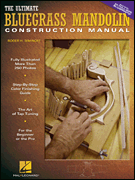
The Ultimate Bluegrass Mandolin Construction Manual
Series: Book
Publisher: Hal Leonard
Format: Softcover
Author: Roger H. Siminoff

The Ultimate Bluegrass Mandolin Construction Manual is the most complete step-by-step treatise ever written on building an acoustical string instrument. Siminoff, a renowned author and luthier, applies over four decades of experience to guide beginners to pros through detailed chapters on wood selection, cutting, carving, shaping, assembly, inlays, fretting, binding and assembly of an F-style mandolin. A special highlight is an in-depth chapter on the art of tap tuning. This fully-illustrated manual boasts more than 250 photos, a full-color section on the staining and finishing processes, numerous detailed illustrations, and a bonus set of 20 full-size blueprints. Spiral bound.
Inventory #HL 00331088
ISBN: 9780634062858
UPC: 073999323030
Width: 9.0"
Length: 12.0"
160 pages

Mandolin Reference
Series: Reference
Publisher: Hal Leonard Corporation
Format: Softcover
Composer: Roger H. Siminoff

This beautifully detailed manual gives clear, step-by-step directions from raw materials to a magnificently finished mandolin through the use of simply-stated texts, photos and templates. Written by one of America's foremost authorities on acoustic instruments. 56 pages, spiral bound, including 19 full-sized blueprints covering each phase of construction. Also features a glossary of terms which enable the reader to more easily follow the instructions.

145 pagine più 20 pagine di progetti a grandezza naturale.


A COMPLETE TECHNICAL GUIDE by ROGER H. SIMINOFF

Contents:

FOREWORD
ABOUT THE AUTHOR
INTRODUCTION
The Instrument
Woods
Wood Species
The Structure
Properties
Tools
Fixtures
Templates
Glossary

CHAPTER 1 - THE NECK
The Truss Rod
Squaring The Neck
Peg head Scroll Strengthener
Peghead Veneer
Squaring The Back Of The Peghead
Peghead Venner (Back)
Shaping The Peghead
Machine Holes

CHAPTER 2 - THE BODY
The Block Set
The Body Form (jig)
The Rim (sides)
Locking Up The Rim
The Top Plate
Gluing The Backs
Cutting The Proper Shape
Carving The Plates
Carving Concept
Carving The Scrolls
Preparing The F-holes
Tone Bars
The Lining
Attaching The Lining
Neck Location (top plate)
Attaching The Top Plate
Removing The Body From The Form
Tap Tuning

CHAPTER 3 - ATTACHING THE NECK
Cutting The Neck Joint
Gluing On The Bottom Lining
Gluing In The Neck
Locking In The Neck
The Dovetail Method
Attaching The Backboard

CHAPTER 4 - PREPARATION FOR BINDING
Remove Excess Wood
Sanding The Instrument
Preparation For Binding
Binding
Peg head Binding Notch
15th Fret Cross Piece
The Corner Protectors
Applying The Binding

CHAPTER 5 - INLAY DECORATION
Decorations
Cutting Pearl
Installation Of Pearl Inlay

CHAPTER 6 - THE FRETBOARD
Fretboard Preparation
Inlaying The Fretboard
Installing The Frets
Binding The Fretboard
Position Dots

CHAPTER 7 - ATTACHING THE FRETBOARD
Fretboard Extender
Corner Fillers
Attaching The Fretboard
Dressing Up The Frets

CHAPTER 8 - PRE·FINISH ADJUSTMENTS
Final Sanding
Final Tuning
CHAPTER 9 - COLORING
Staining Procedure
Curly Maple Grain Contrast
Sunburst Shading
Cleaning The Binding

CHAPTER 10 - FINISHING
Lacquer
Preparation For Spraying
Wet Sanding
Polishing

CHAPTER 11 - HARDWARE
Scraping The Fretboard
The Nut
String Notches
The Bridge
Fitting The Bridge
String Notches (bridge)
The Tailpiece
The Tuning Machines
The Pickguard
Adjustments

HAL LEONARD PUBLISHING CORPORATION
 

Prezzo: €37,99
€37,99

THE ULTIMATE BLUEGRASS MANDOLIN CONSTRUCTION MANUAL H. Siminoff BOOK 186 pagine LiBRO

THE ULTIMATE BLUEGRASS MANDOLIN CONSTRUCTION MANUAL. H. Siminoff. 186 pagine.

Series: Book
Publisher: Hal Leonard
Medium: Softcover
Author: Roger H. Siminoff

The Ultimate Bluegrass Mandolin Construction Manual is the most complete step-by-step treatise ever written on building an acoustical string instrument. Siminoff, a renowned author and luthier, applies over four decades of experience to guide beginners to pros through detailed chapters on wood selection, cutting, carving, shaping, assembly, inlays, fretting, binding and assembly of an F-style mandolin. A special highlight is an in-depth chapter on the art of tap tuning. This fully-illustrated manual boasts more than 250 photos, a full-color section on the staining and finishing processes, numerous detailed illustrations, and a bonus set of 20 full-size blueprints. Spiral bound. 186 pages.

Prezzo: €109,99
€109,99

THE ART OF TAP TUNING How to Build Great Sound into Instruments Roger H. Siminoff DVD e Libro

THE ART OF TAP TUNING How to Build Great Sound into Instruments. Roger H. Siminoff. DVD e Libro. 

LIBRO DI LIUTERIA CON DVD.


Series: Book
Medium: Softcover with DVD
Author: Roger H. Siminoff

This book explains the secret ingredients needed to obtain the very best tonal qualities when building acoustic string instruments. It includes an exploration of the tools and equipment needed, the methods to excite tones in the instrument, how to make the necessary changes, and how to achieve consistency and repeatability. The text focuses on tap tuning as it relates to mandolins, guitars, banjos, violins, ukuleles, dulcimers, pianos, and more. The DVD includes demonstrations of the acoustic phenomena described in the text. 48 pages.

Prezzo: €99,99
€99,99

BUILD YOUR OWN ACOUSTIC GUITAR Complete Instructions and Full-Size Plans Jonathan Kinkead

BUILD YOUR OWN ACOUSTIC GUITAR, Complete Instructions and Full-Size Plans, 

LIBRO MANUALE DI LIUTERIA. 

FASE PER FASE PER COSTRUIRE LA PROPRIA CHITARRA ACUSTICA. 

160 pagine.


BUILD YOUR OWN ACOUSTIC GUITAR
Complete Instructions and Full-Size Plans
Series: Book
Publisher: Hal Leonard
Format: Softcover
Author: Jonathan Kinkead
 
Every guitarist dreams of owning a handmade instrument, but for most, the cost is likely to be prohibitive. The alternative – building your own fine guitar – is not as difficult as you might imagine, given some skill, patience, and the expert guidance of a master luthier. Every step of construction is fully covered, from choice, selection, and preparation of woods, to consideration of size, bracing, and tonal qualities. Each step of the building sequence is clearly photographed in color, with variations to the standard design shown to enable you to personalize your instrument as you make it.
 
Briston, England-based Jonathan Kinkead has been building guitars for nearly 30 years. His craft is born out of experience and intuition rather than a strict following of technical detail. The resulting beauty of form and distinctive tone have earned him his reputation as one of the world's most respected independent luthiers.
 
Inventory #HL 00331037
ISBN: 9780634054631
UPC: 073999679328
Width: 8.5"
Length: 11.0"
160 pages
Prezzo: €54,99
€54,99

Garrone Mario LA COSTRUZIONE DELLA CHITARRA CLASSICA GOMMA LACCA PONTICELLO LIUTAIO VERNICI

Garrone Mario, LA COSTRUZIONE DELLA CHITARRA CLASSICA. 116 pagine, LIBRO in italiano.

Mario Carrone è pervenuto alla liuteria in età non più giovane, forte della sua preparazione tecnica e della grande esperienza acquisita nei processi industriali di progettazione e di lavorazione. Ha dunque portato nell'arte di costruire la chitarra, non soltanto il suo formidabile bagaglio tecnico- scientifico, ma anche una mentalità e uno stile di lavoro basati sulla volontà e sulla capacità di prospettare i problemi in sintesi essenziali e concrete, e di escogitare, per ciascuno di essi, soluzioni dimostrabili e quindi ripetibili. Libero da ogni remora psicologica, egli ha sempre operato mescolando una sbrigativa condotta da imprenditore con la salda convinzione che tutti i misteri che avvolgono la macchinachitarra sono dissipabili; e, in questa sua convinzione, ha saputo, quando occorreva, frenare la sbrigatività e addentrarsi umilmente nell'esercizio della pazienza. Era du nque natu rale che un Iiutaio come lui non trovasse nulla di straordinario nello scrivere un manuale per la costruzione della chitarra, e che lo facesse semplicemente ignorando le difficoltà che avrebbero fermato molti altri. Inoltre, e non secondariamente, Carrone aveva avuto da un editore l'incarico di scrivere il libro. AI di là della sua buona sorte, e da accreditargli come non piccolo merito, sta il fatto che, se egli non era, forse, l'unico liutaio capace di non scomporsi dinanzi a siffatta richiesta editoriale, era – al meglio delle nostre conoscenze – l'unico in grado di interpretare il lavoro che ne sarebbe seguìto come un divertimento (come, in fondo, egli interpreta tutta la sua attività di costruttore di chitarre). Analogamente ai liutai, anche gli allievi- liutai e i chitarristi si possono (almeno rispetto all'argomento qui trattato dividere in due categorie: quelli che leggono e quelli che non leggono, ciascuna specie potendo esibire, a sostegno del proprio atteggiamento, una serie di ragioni più o meno convincenti e onorevoli. È del tutto prevedibile che un manuale come questo non debba incontrare i propri, potenziali lettori, tra i liutaistregoni, tra i loro allievi apprendististregoni e tra i chitarristi che di Iiuteria non si interessano. Ma la quantità di liutai-non-stregoni e relativi alunni, e di chitarristi che hanno la pretesa di capire com'è fatto e come funziona l'arnese che essi tengono in grembo per l'intera vita, sembra in continua, inarrestabile crescita. Non sappiamo esimerci dall'esprimere la nostra calorosa approvazione per questa piega assunta dagli eventi: i liutai alla Mario Carrone dovrebbero avere un futuro (anche tra i chitarristi), e i loro manuali una vasta e attenta schiera di lettori, non soltanto e non necessariamente liutai. Se non credessimo che così potrebbe essere, o che così sia, perché mai avremmo dovuto esporci nello scrivere queste righe?


Ben poco è stato scritto fino ad oggi sulla costruzione della chitarra
classica e non molto sulla liuteria in genere.
Molti anni fa, quando iniziai ad occuparmi di liuteria, decisi subito di
non seguire la normale "routine" di apprendimento, che prevede tempi
più o meno lunghi passati nella bottega di un liutaio esperto, oppure la
frequenza di una scuola di liuteria.
Scelsi piuttosto di sviluppare un mio metodo di costruzione, partendo
dalle scarne notizie che riusciia raccogliere dalle riviste italiane ed estere
e da qualche libro specifico sulla costruzione della chitarra.
A volte si inizia una attività per gioco o per curiosità e soltanto dopo un
certo tempo ci si accorge di come essa diventi parte della nostra vita,
concedendoci soddisfazioni che non riceviamo invece dal lavoro di tutti i giorni.
Infatti, dopo un primo periodo passato a costruire vari strumenti in modo
tradizionale, mi accorsi che la chitarra classica mi permetteva di esprimere
meglio le idee che avevo in mente da tempo: continuai quindi a
lavorare con passione crescente a questo strumento, trasformando
quello che era iniziato come un gioco nello scopo principale della mia vita.
Ho poi perfezionato un mio metodo di costruzione volto più all'innovazione
continua che al risparmio di tempo, allargando i miei interessi alla
scoperta e al successivo studio dei fenomeni acustici che si verificano nello strumento.
Con questo manuale mi rivolgo a tutti gli appassionati di liuteria, ai
chitarristi desiderosi di conoscere a fondo il loro strumento, ed anche ai
liutai professionisti, i quali potranno trovare molte informazioni utili
sull'acustica degli strumenti musicali, sui sistemi di costruzione e
sull'incatenatura delle tavole armoniche.
Sarò infine ben lieto di esaminare ogni eventuale osservazione che
potrebbe essere formulata dai lettori, in vista di successive edizioni di questo volume.
Mario Garrone
 
AI MIEI CARI Gianarosa, Oscar ed Eugenia
RINGRAZIAMENTI
Esprimo la mia viva gratitudine a tutti gli amici che mi hanno aiutato e incoraggiato nella stesura di questo manuale:
 
- Innanzitutto, al chitarrista-compositore Angelo Gilardino, che mi gratifica della sua amicizia da molti anni e che mi ha seguìto con pazienza fin dall'inizio della mia attività.
 
- A Sandro Francese,amico di gioventù e tecnico elettronico abilissimo, che ha costruito gran parte delle apparecchiature necessarie ai controlli di qualità dei miei strumenti.
 
- AlI'ing. Bruno Pizzigoni, docente universitario di grande valore, che ha approfondito i problemi connessi con la tastiera della chitarra, risolvendol i brillantemente.
 
- AlI'ing. Claudio Francese,che ha realizzato integralmente il software e parte dell'hardware per la creazione e la visualizzazione dei grafici relativi alle curve di risposta ottenute con il computer.
 
- AI dotto Francesco Rossi,che con passione, abilità ed infinita pazienza, ha realizzato tutte le fotografie inserite in questo libro, seguendo la costruzione dello strumento durante i mesi occorsi per il suo completamento.
 
- AI tecnico Gino Repetto, che mi ha assistito nella soluzione dei problemi relativi all'impiego del legno con grande competenza e amichevole collaborazione.
 
- Infine a mia moglie Gianarosa, per le ore che le ho sottratto a causa di questo hobby, diventato ormai parte importante della mia vita.
Mario Garrone
 

Capitolo n. 1
NOTIZIE STORICHE - MORFOLOGIA E NOMENCLATURA DELLA CHITARRA.

Capitolo n. 2
NOZIONI DI ACUSTICA APPLICATE AGLI STRUMENTI MUSICALI

Capitolo n. 3
LA SCELTA DEI LEGNI

Capitolo n. 4
IL LABORATORIO DEL LIUTAIO

Capitolo n. 5
UTENSILI ED ATTREZZI
- Utensili elettrici
- Utensili a mano

Capitolo n. 6
COME COSTRUIRE LE FORME E GLI ATTREZZI SPECIFICI

Capitolo n. 7
IL MANICO pago 41

Capitolo n. 8
LE FASCE E LE CONTROFASCE.

Capitolo n. 9
IL FONDO

Capitolo n. 10
LA TAVOLA ARMONICA E L'INCATENATURA

Capitolo n. 11
L'ASSEMBLAGGIO

Capitolo n. 12
LA FILETTATURA

Capitolo n. 13
LA TASTIERA 

Capitolo n. 14
LA FINITURA DEL MANICO

Capitolo n. 15
L'APPLICAZIONE DEI TASTI 

Capitolo n. 16
LA LEVIGATURA

Capitolo n. 17
LA VERNICIATURA 
-IL TAMPONE
-LA GOMMA LACCA
-RACCOMANDAZIONI IMPORTANTI
-VERNICI ADDITIVE

Capitolo n. 18
IL PONTICELLO

Capitolo n. 19
MESSA A PUNTO E MONTAGGIO DELLE CORDE

Capitolo n. 20
I CONTROLLI DI QUALITA'
- ACCORDATURA DELLA CHITARRA

SULLA PROFILATURA DELLA TASTIERA DELLA CHITARRA, Bruno Pizzigoni.

Bibliografia

Prezzo: €28,99
€28,99

GUITAR QUESTIONS, The Novice's Guide to Guitar Repairs

GUITAR QUESTIONS, The Novice's Guide to Guitar Repairs

Series: Guitar One
Publisher: Cherry Lane Music
Medium: Softcover
Composer: Barry Lipman

This book is comprised of reprints of the Guitar Questions columns that ran in Guitar magazine for over a decade. Written by luthier Barry Lipman, it offers clear, precise and simple explanations on how to make minor repairs and adjustments to your instrument. The column was aimed at players who were neither guitar builders nor repairmen. Sample questions addressed include: What are the advantages of big frets? What is the best way to care for the fretboard? What is meant by intonation and what is involved in adjusting it? What does a truss rod do and how does it work? How tight should the bridge pins be on a steel-string acoustic? Find the answers to these and many more relevant inquiries in Guitar Questions. 6? x 9? 144 pages.

Prezzo: €13,00
€13,00

THE GUITAR PLAYER REPAIR GUIDE 3RD REVISED EDITION Dan Erlewine LIBRO DVD RIPARAZIONE

THE GUITAR PLAYER REPAIR GUIDE, 3RD REVISED EDITION. Dan Erlewine. DVD

LIBRO CON DVD.

Moltissimi suggerimenti, consigli, segreti per la regolazione e la cura del vostro strumento, come i famosi tubicini di plastica che Stevie Ray Vaughan usava al ponte per proteggere dalla rottura le corde; tutti i trucchi e le misure della Lucille. 


Series: Book
Publisher: Backbeat Books
Medium: Softcover with DVD
Author: Dan Erlewine
This expanded edition for beginners to experts is a step-by-step manual to maintaining and repairing electric and acoustic guitars and basses. Players learn how to set up a guitar and keep it in top form by mastering basic maintenance. Features an essential DVD that makes guitar maintenance easier than ever. New features include set-up specs of leading players; stronger coverage of guitar electronics, including pickups and wiring diagrams; and expanded coverage of acoustics. 322 pages

Book/DVD pack. Newly expanded edition of this indispensable step-by-step manual for maintaining and repairing electric and acoustic guitars and basses. Learn how to adjust your own truss rod, install tuners, close and glue cracks, replace a nut, make finish repairs, wind your own pickups, and much, much more. Content is now highlighted based on skill level: Basic, D.I.Y., and Deep. New features include stronger coverage of guitar electronics, including pickups and wiring diagrams and expanded coverage of acoustics. DVD features segments on: how to evaluate any guitar before buying, how to set your own intonation, how to install strings without damaging your guitar, more. 

In my boundless optimism, I expected clues to sonic miracles. I was talking to Bob Ezrin, who produced Alice Cooper, Lou Reed, Pink Floyd, Kiss, Peter Gabriel and many others, and, in the process, conjured some of the hippest guitar sounds ever blasted across the airwaves. Surely, there must have been some voodoo in his microphone selection, his mic placement and his choice and manipulation of preamps, compressors and other arcane signal processors. But Ezrin made it clear that everything started with the guitar itself. "An excellent setup is at the center of every good, complex guitar recording," he said. "The pickups must be in good shape, the electronics must be as clean as possible, and the fretboard must be buzz-free." At a time when the quality of inexpensive, off-the-rack guitars can be downright awesome, we tend to forget how a beautifully set up instrument-more specifically, one tailored to a player's every ergonomic desire and technical idiosyncrasy-can enhance a guitarist's tone and performance. Perhaps we also forget that some guitars have souls that influence our playing in mysterious ways. (Just ask Clapton about Blackie, or B.B. King about Lucille, or Brian May about his Red Special.) The lesson here is just because you can easily replace an instrument that's broken, cranky or sickly, it doesn't mean that you should. In some cases, a few simple repairs can bring a guitar back to life-or even make it better than ever. And don't forget the whole concept of hot-rod ding. With a little guidance and tech savvy, you can swap pickups, futz with wiring and enlist some other tricks to make a cheap guitar rage like a cornered panther, or turbocharge a fine guitar until it's something truly magical. As Ezrin revealed, it all comes down to the guitar and what you do with it. And that's where Dan Erlewine becomes your guru, mentor, coach, visionary, taskmaster, guide and, most likely, savior. Dan knows more about guitars and guitarcraftthan pretty much anyone left standing on this planet, and decades of his wisdom, tips, and techniques are encapsulated in this musthave book-which should now and forever be your guitar-repair bible. Dan has been a vital and much-respected member of the Guitar Player family for many years, writing the seminal "Repairs & Modifications" column, as well as the "Repairs" column and the innovative "Mod Squad" feature (which profiled Dan's youthful shop crew pimping out various guitars) during my tenure as editor. Dan has also produced several how-to DVDs, and is currently developing a series of video repair guides for Guitar Player's Web television station, GPTV. To quote a cliche, "Dan is the Man." But that's the whole truth. And after this book inspires you to transform your guitars into the easiest-playing, best-sounding machines you've ever plugged into an amp, you'll probably build a little shrine to Dan Erlewine in your music room, rehearsal space or home studio. Yeah, you'll be that thrilled with your instruments, and the man deserves it. Now, read on and start making your guitars play better and sound great. Guitar Player

... serious problem. Most acoustic guitars with problems suffer from sharpness and need to be compensated by adding to the string length. Occasionally, though, flat- ness caused by over-compensation isfound on acoustics on which the bridge has been installed out of position. Don't expect the guitar you buy to have perfect intonation. Tweaking the intonation needs to be done to suit the the individual player's needs, governed by the factors mentioned here. When setting intonation, we try to get a stri ng to play the same note when fretted at the 12th fret aswhen played open, only an octave higher. In theory, the distance from the nut to the 12th fret isthe same asfrom the 12th fret to the saddle. The 12th fret octave is the halfway point of the scale (scale length equals the measurement from the nutto the 12th fret, times two). In practice however, the string length must be increased to compensate for the sharpness that results when the string is pressed down during playing. The mathematical distance of the scale is based on a straight line from the nut to the saddle's center, but when you press the string down it becomes stretched, and goes sharp. This isa basic explanation of the need for compensation. Add in the factors below, and you'll see why the seemingly simple job of setting the intonation can cause you to tearyour hair out before you finally take the guitarto a repair shop, so they can teartheir hair out! The closer the strings are to the fingerboard, the less compensation is needed, since the strings go sharp less when pressed. However, guitars with lighter strings generally need more compensation than heavier ones, since asstring tension decreases (going from heavier-gauge strings to lighter), the compensation need increases.Therefore, the lighter the strings and the lower the tension, the more need for compensation. So, perhaps one cancels out the other. Confusing, but you can prove it for yourselfby trying this test: Using an electronic tuner, check your guitar's intonation on the low Estring at concert pitch. Retune the string to D.lt will intonate sharper, which indicates the need for more compensation, or added string length. That's why the modern electric player, who uses .010 strings or lighter, often searches far and wide to find a repairman to set the intonation.
Wound strings need more compensation than plain ones. Because of their extra weight and slower, low-pitched vibrations, wound strings need more clearance from the fingerboard to avoid buzzing. The extra clearance isgained by raising the string height from the fingerboard for wound strings. This increase in heigh causes the strings to go sharp more than the unwounds when depressed. This is why bridge saddles slant toward the bassside on steel-string acoustics or electrics. I like the term "speaking length" of a string. Franz Jahnel's comprehensive Manual of Guitar Technology refers to the mathematical string length asthe "true" length (the measured distance from nut to bridge saddle), and the actual vibrating length asthe "playing” or speaking, length. A string, especially a wound one, doesn't actually start vibrating, or speaking, until it gets a certain distance from the nut orthe saddle. So, part of the string's length (in terms of sound) isalways lost-another reason for compensation. Notice that c1assicaI guita rs have sadd les with no slant. Why? The wound strings have a stranded core rather than a solid one, and sharp out at a rate similar to that of the solid nylon treble strings. Classical strings have a more even tension acrossthe fingerboard than steel strings. Therefore, they require close to the same amount of compensation per string, and in general are more uniformly spaced from the fingerboard in terms of height. You may find saddles that have been slightly filed off-center (compensated) under the Band G strings some classicals. Instruments with longer scales need less compensation than shorter-scaled ones, because the longer string must be tighterto reach the same pitch. Thus the longer string is lessapt to be sharp when fretted and needs lesscompensation (the higher the tension, the lessa string goes sharp).The two most common scales are long and short. Long scales are 25-112" or thereabouts (these include Strats, all their clones, and many Gibsons; Martin uses a 25.4" and guild a 25-518",but we lump them all together as long scale): short scales are 24-314" or thereabouts (Gibson Les Pauls, ES-335s,smaller Martins at 24.9",etc.).Classical guitars have long scales.There are many other scales, but only a few really common ones: a "medium" 25" scale is used ...


This Repair Guide is the leading step-by-step

maintenance manual for every guitar owner. New
in this edition: the content is highlighted for you based
on your skill level.
 
Basic: If you're not handy with tools, use the basic sections to keep your guitar out of the repair shop and playing its best.
d.i.y. If you're a do-it-yourselfer, th is book shows you how to do both simple and advanced repairs. 
deep If you want to go further into guitar repair, the 
deep sections are for you.
 
A few sample topics include:
Cleaning your guitar: what to use
How (and when) to adjust your own truss rod
Electric guitar adjustment, including Fender's own 10-step Strat setup"
 
Free DVD included. Dan shows you:
How to evaluate any guitar before buying
How to set your own intonation (It's simple!)
How to install strings without damaging your guitar
 
Computer files on the DVD:
Printable guitar assessment forms useful for repair work

Cleaning and care

basic basic

Supplies 1

Cleaning the finish

Cleaning the fingerboard

Avoiding cracks, dealing with humidity


Installing strings

basic

Installing strings on electrics

Installing strings on acoustics 1

Installing strings on c1a~sicals 1

Neck evaluation and truss rod adjustment

basic

Neck evalution

d.i.y.

Truss rod adjustment

Understanding relief

Pro-quality straightedges

Typical neck adjustment scenario

deep

Rescuing a broken truss rod

Setup and action

basic

What is a setup?

d.i.y.

The basics of setup

Setting up an electric guitar

Setting up a guitar with tremolo

Setting up an electric bass

Setting up a flattop acoustic

Setting up an archtop

Setting up a classical

deep

Low action and the blues

Setups for pro players: Stevie Ray Vaughan and Jeff Beck

John Mooney's slide

Albert Collins

BuddyGuy

B.B.King


Intonation and compensation

basic Understanding compensation

d.i.y. Setting intonation

Adjustable bridges (electrics)

Non-adjustable bridges (acoustics)

deep Buzz Feiten Tuning System


Tuning machines

Tuner basics

d.i.y. Installing tuners

Steinberger tuners

Tuner repairs, broken mounting screws

Damage from over-oiled tuners

deep

Rotted plastic knobs

Making new tuners look old

Reconstructing rotted knobs


Electric guitar bridges: non-tremolo

basic

The manyTune-O-Matics

TonePros and Pigtails

Steve Rowen on T-O-M hardware

d.i.y.

Slotting Gibson bridge saddles

Adjusting an ABR-1bridge radius

Bridge posts and tailpiece studs

De-rusting metal bridge saddles


Electric guitar bridges: tremolos

basic

Setting up your tremolo system

d.i.y.

Floyd Rose installation and setup

Kahler installation and setup

Fine-tuning a Strat tremolo

The Trem-Setter

Roller nuts

deep

String benders


9 Acoustic guitar bridges

basic

Fitting flattop bridge pins

Evaluating acoustic action

d.i.y.

Replacing a bridge saddle -

Archtop bridges

Fitting an archtop bridge


10 Acoustic body repairs

d.i.y.

Clamps and glues

Closing and gluing cracks

Gluing loose braces

deep

Reattaching loose bridges

Bridge pad problems

Neck resets


11 Necks


basic d.i.y.

Fender guitar neck shapes

Fender bass neck shapes

d.i.y.

Installing bolt-on necks

Fret buzz in the high registers

deep

Broken pegheads


12 Fretwork

basic

What to expect from afret job

d.i.y.

Loose frets

Fret files

Compound radius fingerboards

Fret dressing

Refretting:

Choosing yourfretwire

Hammer-in method

Compression fretting

Martin bar-style fretting

The glue-in method

Bound fingerboards

Vintage Fender fretting

Fret slots and tang size

deep

The neck jig

The Plek machine


13 Nut replacement

basic

About nut replacement

d.i.y.

steps for replacing a nut

Tools

Removing the old nut

Roughing in the blank

Cutting slots, finishing up

String spacing


14 Bindings and pickguards

d.i.y.

Loose bindings

Shrinking Strat pickguards

Regluing an acoustic pickguard


15 Guitar electronics

Tools and supplies for electronics

Soldering technique

Using a multi meter

Caps and pots

Switches

Shielding

Acoustic guitar amplification

Seml-hollowbody wiring

Pickup replacement

Pickup repair

Rewiring, modifications

Wiring diagrams

deep

Wind your own pickups


6 Finishing and finish repairs

d.i.y.

A basic finishing schedule

Spraying necks and bodies

Finish repairs

Supplies for finish repairs

Fixing chips

Fixing dents and scratches

Touching up color

deep

Faking an aged finish


17 Shipping a guitar or amp

How to pack a guitar

How to pack an amp


18 Tools

basic tool list

d.i.y. tool list

deep tool list

sharpening chisels and scrapers


19 Resources and schools

Training for a career in lutherie

Lists: schools, suppliers, organizations


Index

Prezzo: €39,99
€39,99

ACOUSTIC GUITAR Composition, Construction Evolution One World's Most Beloved Instruments chitarra

ACOUSTIC GUITAR, The Composition, Construction, and Evolution of One of World's Most Beloved Instruments.

Series: Guitar Reference
Medium: Softcover
Author: Frank Ford
Author: Michael Simmons
Author: Richard Johnston
Author: Teja Gerken

Foreword by C.F. Martin IV. This comprehensive guide explains how to buy and maintain the guitar that matches your needs. From its beginning in European classical music, through American innovations like blues, jazz, country, and all the way to rock, pop and folk, the acoustic guitar's versatility is remarkable. This book covers all types of models with an emphasis placed on steel-string flattops, archtops and classical guitars. Topics covered include: How to tell the difference between a good sounding and bad sounding instrument; How much of the sound is determined by the wood; How to amplify and maintain its natural sound; How much money to spend in order to get an instrument that matches your level of playing; A color section illustrates historically significant instruments. 396 pages.

Prezzo: €28,99
€28,99

THE ART AND CRAFT OF MAKING CLASSICAL GUITARS Manuel Rodríguez FLAMENCO chitarra classica liutaio

THE ART AND CRAFT OF MAKING CLASSICAL GUITARS, Manuel Rodríguez.

LIBRO BIOGRAFIA DEL LIUTAIO DI CHITARRE CLASSICHE E FLAMENCO.

IN ITALIANO


DISPONIBILE ANCHE IN INGLESE. € 29.99

Rich in beauty, sound and history, Manuel Rodríguez and Sons' classical and flamenco guitars have been lovingly hand-crafted in Madrid since 1905. The company's remarkable creations are just as acclaimed today, capturing the 2000 Player's Choice Award from Acoustic Guitar magazine for its nylon-string model. New from Hal Leonard and for the first time available in English, The Art and Craft of Making Classical Guitars presents master luthier Manuel Rodríguez's thoughts on the history of the instrument he loves, and how the guitar attained its prominent position among musical instruments. Filled with fabulous historical photos, priceless memorabilia, abundant diagrams and more, the book covers topics such as the art and development of the guitar, materials used in construction, and much more. Essential for all admirers of the guitar. 168 pages.

Prezzo: €99,99
€99,99
Condividi contenuti