Italiano
 English
FINGERPICKING PATTERN ENCYCLOPEDIA. CD TABLATURE

FINGERPICKING PATTERN ENCYCLOPEDIA. CD TABLATURE
Music by Lou Manz
CATEGORY: Guitar Method or Supplement
FORMAT: Book & CD
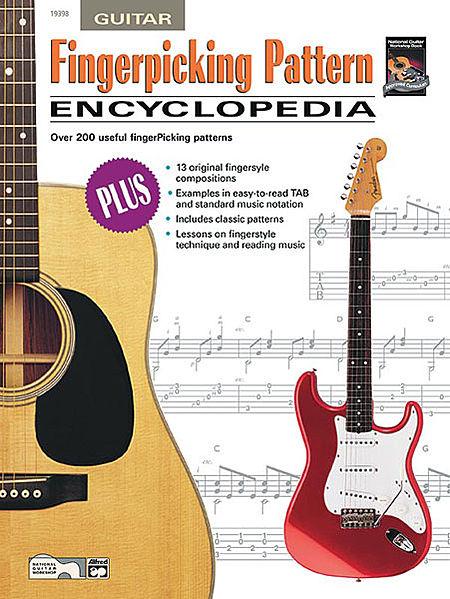
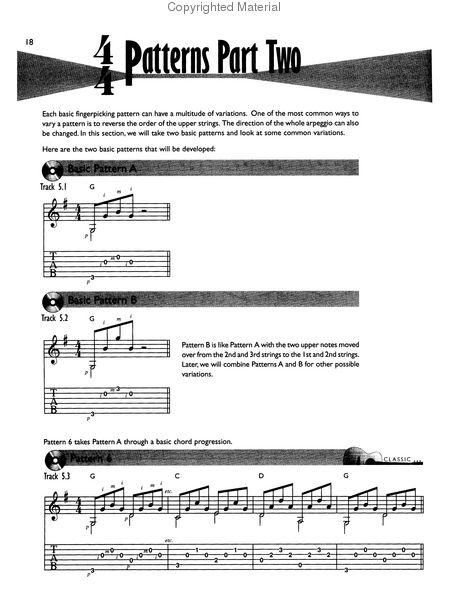
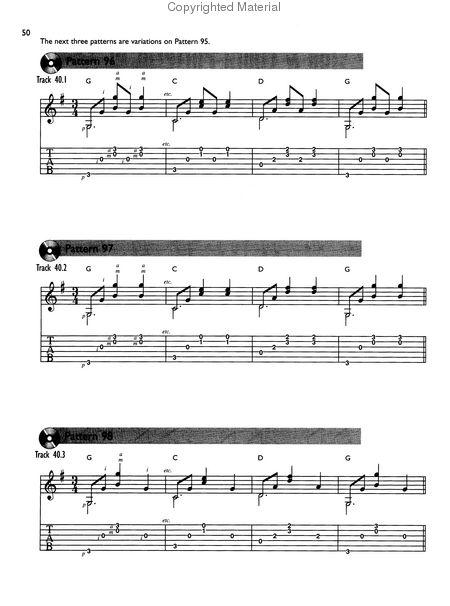
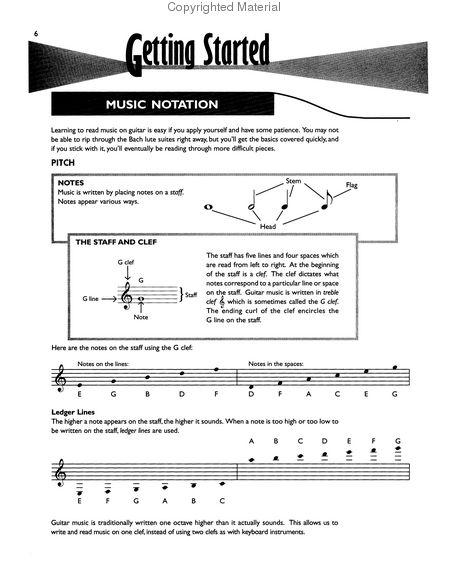
In addition to over 200 useful fingerstyle patterns, lessons on fingerstyle technique, reading music and 13 original fingerstyle compositions are included. Examples are shown in easy-to-read TAB and standard music notation. The CD includes performances of each pattern and the original compositions.
Introduction
This book is a collection of fingerpicking patterns that will hopefully be a resource, and a source of inspiration, for any guitarist, regardless of style. Since you have picked up this book, you probably already know how exciting and expressive fingerstyle guitar can be. Fingerstyle guitar is not really a style of music; rather it is an approach to guitar that transcends anyone particular style. Many acoustic singer/songwriters, and folk, blues and country players play fingerstyle guitar. Many jazz players also "comp" chords and improvise picking with their fingers, rather than a pick. Of course, fingerstyle technique is also the basis of most contemporary acoustic instrumental playing. Diverse guitarists from leadbelly to Eric C1apton, Merle Travis to Mark Knopfler and Elizabeth Cotton to Joe Pass have used fingerstyle techniques to create their original music.
One of the most definitive aspects of fingerstyle guitar is the use of picking patterns. This is especially true for singer/songwriters and folk/country players. Also, many of our leading acoustic instrumentalists, such as leo Kottke and Adrian legg, have used picking patterns as starting points for their innovative and melodic pieces. In fact, it would be difficult to think of an acoustic singer/guitarist or instrumentalist in folk, blues or country style who does not incorporate picking patterns into their music. This book is appropriate for guitarists of any style or level. Beginners should start with the classic patterns from each chapter and move on to other examples as they progress. Intermediate players will add interesting variations and entirely new patterns to their fingerstyle vocabulary. Even advanced players will find sequences that are new to them in this collection.
WHY FINGERSTYLE PATTERNS ARE USEFUL
They will give you a multitude of options for accompanying songs. You may want to learn a song by one of your favorite artists. Perhaps you have been able to "figure out" the chords by listening to the recording or you may learn the chords from a songbook. If the song was originally recorded using a fingerpicking pattern, you will probably find that pattern or something very close to it, in this book. Even when a song is not originally played fingerstyle, you can be creative and find a pattern that may match the style and rhythmic feel of the recording. Even piano-based pieces, such as Simon and Garfunkel's Bridge Over Troubled Water or Sarah Maclachlan's Angel can work in a fingerstyle setting. They are useful as technique exercises for fingerstyle players. Jazz guitarists practice a multitude of scales, modes and chord voicings. Since fingerstyle players use many picking patterns, it is valuable to practice both common and new patterns as exercises.They will help you develop strength, flexibility, speed and independence in the picking fingers. They can help you create original songs and instrumental pieces. Even well-worn chord progressions sound fresh with new and interesting patterns. Improvise with your favorite fingerpicking patterns and see what develops. The patterns in this encyclopedia are grouped according to type, time signature and special characteristics, such as the inclusion of an alternating bass, syncopation or double stops. A sample piece is provided at the end of each section to suggest some ideas for practical application, and to provide further inspiration. Use the book in any order and in any way that you like.
Contents:
ABOUT THE AUTHOR
INTRODUCTION
HOW TO USETHIS BOOK
GETTING STARTED
Music Notation
Technique
The Left Hand
The Right Hand
4/4 PATTERNS PART ONE
Easy Going
4/4 PATTERNS PART TWO
Suspended Animation
THREE-NOTE CHORDS
The Blues In E
TRAVIS PICKING
Travis Time
4/4 PATTERNS PARTTHREE 35
Seaside Sounds
SINGLE-NOTE PATTERNS IN 3/4
Etude in 3/4
DOUBLE STOP & CHORD PATTERNS IN 3/4
Etude in G
4/4 PATTERNS PART FOUR
Pedal Power
SINGLE-NOTE ALTERNATING PATTERNS
Rainy Day Blues
MULTIPLE·NOTE ALTERNATING BASS PATTERNS
Etude in A Mixolydian
DOUBLE STOPS ON UPPER STRINGS
Minor Memories
SYNCOPATION
E For Elvis
PATTERNS IN 6/8 AND 12/8
Study in 6/8
The CD that accompanies this book can make learning with the book easier and more enjoyable. The symbol shown above will appear next to every example that is on the CD. Use the CD to help insure that you are capturing the feel of the examples, interpreting the rhythms correctly, and so on. The track numbers below the symbols correspond directly to the examples on that page. Track 1 will help you tune your guitar to this CD.