CHITARRA - GUITAR

THE BRAZILIAN MASTERS 2ND EDITION Jobim-Bonfá for Solo Guitar-sheet music-SPARITI LIBRO

THE BRAZILIAN MASTERS 2ND EDITION, The Music of Jobim, Bonfá and More for Solo Guitar.

LIBRO DI MUSICA BRASILIANA. 

SPARTITI PER CHITARRA CON: PENTAGRAMMA.

Serie: Guitar Solo
Formatto: Copertina morbida
Compositore: Vari

16 samba e bossa nova dei grandissimi compositori di questo genere. Canzoni ordinate in base alla difficoltà, permetendo di migliorare la technica, l'espressività musicale e la comprensione di questa meravigliosa musica. Include le canzoni:

16 sambas and bossa novas by the genre's greatest composers. Songs appear in order of difficulty, allowing the player to improve their technique, musical expression, and understanding of this wonderful music. Songs include: Desafinado • Ebony Samba • Samba Triste • Little Boat • Sambalamento • So Nice • Solidao • and more. Also includes playing tips.

INTRODUCTION
 

There is no music more naturally suited to the guitar than Brazilian popular songs. The universal appeal of the music itself and the popularity of the guitar as an instrument join to make the bossa nova a favorite guitar style throughout the world. It is not surprising that Brazilian music is so natural to the guitar when one discovers just how important the instrument is in Brazil and to her bes t composers. Antonio Carlos Jobim, one of the world's most popular songwriters, composes on both guitar and piano. Luiz Bonféi and Baden Powell, authors of many international hits, are both virtuoso soloists on the guitar. And there is something in the intimate sound of the instrument itself that lends perfectly to the subtle syncopations of samba and bossa nova.

This book has been designed not only to give pleasure to guitarists from average to expert playing ability, but also to serve as a method through which a player can learn the Brazilian style and gain enough understanding of it to arrange, compose, and improvise his or her own musical ideas within il. Going through the book will improve your reading as well as your techniques and musical expression. Perhaps the greatest difficulty for players not famjliar with the style is to get the "Brazilian swing." The following rhythm patterns contain most of the elements upon which this feeling is based. You can observe from the examples that the more complicated patterns are merely

combinations of the basic ones. Play the basic examples until they feel natural and then go to the more difficult ones. Then as you go through the songs you will find it much easier to understand how they are to be played.


Another important thing to remember is that the basic beat is almost always a "two feel". (Note that most of the 4/4 pieces are marked in cut time ¢ and have two half notes per measure in the bass making for a 2/2 feel.) The bass is usually on the beat, but the melody is often on the off beats. If some of these more syncopated passages give you problems, try playing the melody and the chord part un-syncopated first and then anticipate the melody part until it makes sense musically as it is written. That plus listening to the original recordings should help you acquire a natural feel for the music. As with any music you wish to learn correctly, study the difficult passages slowly and thoroughly until they are "under your hands." Feel free to change the fingerings if you find a better way. Those given here follow the patterns typical of Brazilian players and can be useful for your own arranging, composing, or improvising. In this collection there is a lot of variety of mood and feeling. So in each piece you learn, try to understand its mood and emphasize it as you play. By paying attention to the feeling and technical aspects of each piece you will grow both as a musician and guitarist.  

Song List:

DESAFINADO (ANTONIO CARLOS JOBIM)  -  1959
EBONY SAMBA (LUIZ BONFA / MARIA TOLEDO)  -  1963
ENGANO (ANTONIO CARLOS JOBIM / LUIZ BONFA)  -  1954
ESPERANCA PERDIDA (ANTONIO CARLOS JOBIM / BILLY BLANCO)  -  1965
ILHA DE CORAL (CORAL ISLAND) (LUIZ BONFA)  -  1963
INCERTEZA (ANTONIO CARLOS JOBIM / NEWTON MENDONCA)  -  1966

LITTLE BOAT  -  ROBERTO MENESCAL  -  1963
MANHA DE CARNAVAL (A DAY IN THE LIFE OF A FOOL) (LUIZ BONFA)  -  1966
SAMBA DE DUAS NOTAS (LUIZ BONFA)  -  1963
SAMBA DO AVIAO (ANTONIO JOBIM)  -  1962
SAMBA TRISTE (B POWELL / BILL BLANCO)  -  1958
SAMBALAMENTO (LUIZ BONFA)  -  1963
SE TODOS FASSEM IGUAIS A VOCE (ANTONIO JOBIM)  -  1958
SILENCIO DO AMOR (LUIZ BONFA / MARIA TOLEDO)  -  1963
SO NICE (SUMMER SAMBA)  -  MARCOS VALLE PAULO, SERGIO VALLE  -  1965
SOLIDAO (ANTONIO CARLOS JOBIM / A FERNANDES)  -  1954


40 pagine

Prezzo: €15,99
€15,99

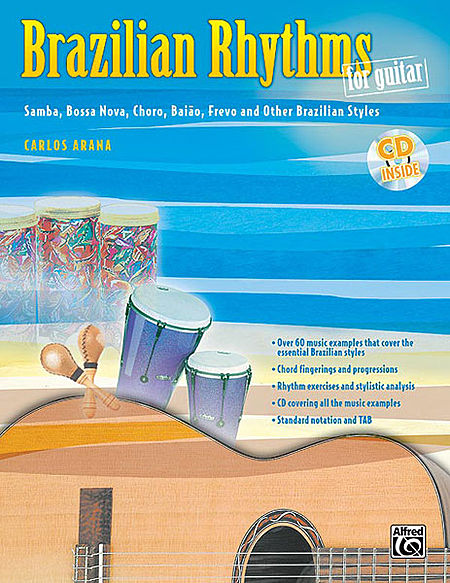
BRAZILIAN RHYTHMS FOR GUITAR, Samba, Bossa Nova, Choro, Baião, Frevo, Other Styles. Arana. CD TABLATURE


Brazilian Rhythms for Guitar, Samba, Bossa Nova, Choro, Baião, Frevo, and Other Brazilian Styles
By Carlos Arana
Series: Guitar Masters Series
Category: Guitar Method or Supplement
Format: Book & CD
Instrument: Guitar

Here we will look at a few additional characteristics of each of the styles, a bit of their history, and their typical formations. SAMBA is the style generally considered most characteristic and representative of Brazilian music. Since the end of the 1870s, samba parties were frequent events in the houses of the "Bahian Aunts," women that had moved from Bahia in the north to Rio de Janeiro, which at that time was the national capital.The actual samba style originated in 1917 at the house of "Tia Ciata" ("Aunt Ciata"), a candy vendor who was one of the famous "Bah fan Aunts." The first samba recorded was "Pelo Telefone" ("By Phone"), by Donga e Mauro de Almeida, also in 1917. Samba had several influences including lundu, la habanera, the max;xe, and even tango, bits of which remain in its unique sound. The first major proponents of the style, Donga and Ismael Silva from the group Estacio (which is also the first samba school in Rio de Janeiro), were largely responsible for defining its sound. By the 1930s, the middle class had caught on to the new music, and it transformed from music played by the poor people for Carnaval into a more popular style. The major figures in this second era were Enrique Forreis (0 Almirante), Joao de Barro, and Noel Rosa the last of whom was responsible for the development of the new style called urban samba. The duo of Ismael Silva oel Rosa defined the format that samba still uses today. Others who followed these original masters include Ataulfo Alves, Wilson Batista, and Geraldo Pereira. Each gave his own particular vision of what the style was to sound like and left a body of work that has been played countless times. During the 1930s, samba. influenced by the growth of radio as a medium of communication, enjoyed a surge of growth in terms of both popularity and variety of interpretation, many of which came to have distinctive characteristics and actually evolved into new styles in their own right such as samba cancao and samba de breque. In the 1950s, samba came into contact with the new style of music called bossa nova developed by Antonio Carlos Jobim and Joao Gilberto, two young men from middle-class upbringings who lived in the southern section of Rio De Janeiro. In order to survive, samba evolved once again, this time at the hand of Cartola, an excellent composer who had written a few songs for Noel Rosa. Beginning from the time that Cartola arrived on the scene, musicians such as Paulinho da Viola and Martinho da Vila began careers that continue on to this very day.These musicians began incorporating harmonies and sounds that were closer to bossa nova (it is interesting to note the cross pollination that occurred between these styles) in their use of alterations and chord extensions in composing, which was markedly different from that which was used in the classic compositions. From that moment on, many new artists began to appear, some banding together and forming different styles, while others worked to maintain the more traditional sound. From that point on, the progression was practically non-stop with new groups of artists appearing all the time. Some artists returned to the original format while others moved on to the urban sound of Noel Rosa and his followers (passing through the style of Antonio Carlos Jobim and Chico Buarque). Some of the more notable names include Beth Carvalho, Alcione, Zeca Pagodinho, Claudio Jorge, and Aragao.

Educator and performer Carlos Arana captures Brazil's rich musical heritage with impeccable stylistic, historic, and technical analyses. The first section of this book covers the fundamental rhythmic and harmonic characteristics of samba, bossa nova, and choro styles followed by practical applications on the guitar. The practical applications break each of the styles down to their historic and regional roots combined with examples that capture the essence of each style. The next section takes you to the northeast of Brazil with the rhythm figures of baião, toada, xote, afoxé, frevo, Marcha, and Marcha Rancho. Over 60 examples, written in standard notation and tablature, are demonstrated on the included CD. TABLATURE


I would like to begin this book by explaining a few basic facts that played a major role in shaping Brazilian music. Brazilian society is extremely easygoing and carefree, and musicians tend to place a great deal of emphasis upon artistic expression rather than on technical expertise and precision. The same holds true for other art forms, thus it is not surprising that Brazil is the home of the world's biggest party: Carnival in Rio! It is there, during Carnival, where you can experience some of the best examples of spontaneous artistic expression such as samba. The main influences on Brazilian music are the traditional Portuguese music brought by the Conquistadors, the exotic rhythms of the African slaves, and the native music of the indigenous inhabitants. Other influences such as American jazz also played a role in the way the music evolved. This can be seen, for example, in composer Antonio Carlos Jobim's use of harmonic structure. He often borrowed certain aspects of Claude Debussy's vertical harmony dating back to the late 19th century. Jobim's characteristic use of alterations and extensions created a kind of tonal complexity which, when combined with certain rhythmic patterns, defined the style of music that has come to be known as bossa nova. It is this fusion of styles which created the definitive sound of Brazilian music, and consequently left its mark on a variety of other musical genres which developed later. For a musician attempting to understand and assimilate the sound of Brazilian music, it is important to understand how all of these complex forces, so deeply rooted in Brazil's popular culture, worked together to form the music. This book uses a thoroughly tested method for providing the reader with a practical understanding of how to play Brazilian rhythms, so that over time the execution can become second nature and playful in terms of the general feel. The first portion of this book provides an in-depth look at the most common rhythmic patterns and syncopations used in samba and the other styles we will study. Following this, we will begin to look at the harmonic structure, including the typical chords and the characteristic chord progressions used by Brazilian guitarists that are unique to this kind of music. In Chapter 3, we will begin to look at practical applications of the chords and rhythms, in most cases using progressions from well-known songs which form the basis of the classic samba and its derivative repertoire. In Chapters 4 and 5, we will study baiao, frevo and other styles originating from the northeast of Brazil.l have recorded all of these examples on the CD so that you will be able to hear first-hand how the music should sound. As always, when learning to playa new style of music, it is highly recommended that you listen to as many different examples as possible in order to really begin to get a feel for the sound. Words and music notation are not always sufficient for describing music and there are many aspects that can only be understood by hearing them played. My goal in writing this book was to help guitarists understand and playa wonderful style of music that has not received the widespread popularity that it deserves. I sincerely hope it proves to be useful for you.


Contents

INTRODUCTION . 

Chord Symbol Notation 


SECTION 1: SAMBA, BOSSA NOVA AND CHORO 


CHAPTER 1: RHYTHM 

Example 1   

Example 2   

Rhythmic Independence Exercises   

Example 3   

Part I: Examples 4–5 .

Part 2: Examples 6–7

Part 3: Examples 8–9

Part 4: All Combinations 

Playing the Groove Components on the Guitar

Examples 10–11

Syncopating the Chord Changes   

Examples 12–13

Rhythmic Independence Exercises -Application 

Examples 14–15

Syncopating the Bass Line

Example 16 


CHAPTER 2:HARMONY 

Characteristic Chord Progressions of Samba, Bossa Nova, and Choro

Inverted Chords

Four-Voice Chords with Extensions andAlterations 

Open Chords

Characteristic Chord Progressions  

Major and MinorVamps with Line Clichés

IV – ivTurnaround to I 


CHAPTER 3: PRACTICALAPPLICATION OF RHYTHMIC PATTERNS

Examples 17–28: Samba Patterns 1–12 

Variations of the Samba Style 

Example 29: Samba Canção

Examples 30–31: Partido Alto Patterns 1–2

Examples 32–33: Samba-Rock/Funk Patterns 1–2

Example 34: Samba-Reggae   

Example 35: Samba Exercise 1 

Example 36: Samba Exercise 2

Page    CD Track

Bossa Nova  .

Examples 37–44: Bossa Nova Patterns 1–8 

Examples 45–46: Bossa Nova Exercises 1–2   

Chord Melody

Example 47: Chord Melody/“Gentle Rain”

Choro 

Basic Choro Pattern  

Choro Variations 1–5   

Examples 48–52: Choro Patterns 1–5

Example 53: Choro Exercise 

Final Considerations for Section I   


SECTION 2: RHYTHMS FROMTHE NORTHEAST OF BRAZIL   


CHAPTER 4: BAIÃO   

Basic Rhythm Patterns

Exercises 1–10                            

Application on the Guitar  

Example 54: Baião Pattern

BaiãoVariations:Toada,Xote andAfoxé   

Example 55: Baião Pattern 1 

Example 56: Baião Pattern 2 

Example 57: Xote Pattern 2

Example 58: Afoxé Pattern 


CHAPTER 5: FREVO

Basic Rhythmic Patterns

Exercises 1–7

Application on the Guitar

Example 59: Frevo Exercise  

    Example 60: Frevo Pattern 

    Example 61: Marcha Rancho Pattern 1

Example 62: Marcha Rancho Pattern 2


APPENDIX:Additional Style Considerations

Samba   

Bossa Nova 

Choro 

Baião

Frevo

Discography   

Bibliography

Prezzo: €22,99
€22,99

GILBERT PAUL PRESENTS SHRED ALERT!!! Your Lead Playing ! Guitar World DVD TABLATURE CHITARRA

GILBERT PAUL PRESENTS SHRED ALERT!!!

How to Take Your Lead Guitar Playing to the Next Level! Guitar World. TABLATURE DVD  


DVD DIDATTICO PER CHITARRA


Paul Gilbert

Series: Guitar World

Category: Guitar DVD

Format: DVD

Instrument: Guitar

Instrumentation: Guitar

Level: Intermediate


Guitar World: Paul Gilbert Presents Shred Alert!!! is the only DVD to feature all the columns and video tutorials from the magazine's acclaimed columnist. You'll learn how to take your lead guitar playing to the next level with position shifting, alternate picking, sixteenth-note runs, muting techniques, and much more! With more than two hours of lessons, this DVD is the ultimate shredding lesson from one of the world’s most influential guitarists.

Detailed Description

Guitar World -- Paul Gilbert Presents Shred Alert!!!. (How to Take Your Lead Guitar Playing to the Next Level!). By Paul Gilbert. For Guitar. Artist/Personality; DVD; Guitar DVD; Method/Instruction. Guitar World. Rock. Intermediate. Published by Alfred Music Publishing (AP.56-36267).
ISBN 0739073095. Rock.

Your instructor: Paul Gilbert
Paul Gilbert is celebrated as on of the fastest, and greatest, guitar shredders of all time. During a career that spans more than 25 years, he has astonished and inspired guitarists with his blazing mix of heavy metal, hard rock, neoclassical and progressive metal guitar virtuosity.

A graduate of the Guitar Institute of Technology, Gilbert gained fame in the mid Eighties as the founding guitarist for Racer X, where he developed his own brand of neoclassical shred. He went on to form Mr. Big in 1998, where he earned his greatest success and established his reputation as one of metal and hard rock's most accomplished guitarists. Gilbert has authored numerous best-selling guitar instruction DVDs, including Intense Rock, Volumes 1 and 2, and in recent years he enlightened Guitar World magazine readers with his monthly Shred Alert column.  

Paul Gilbert Presents Shred Alert DVD contains these lessons:

Alternate Universe: Using alternate picking and note skipping to play interesting arpeggio patterns
Ready to Rumble: Quick, effective pick-hand warm-up exercises
Ready to Rumble, Part 2: A More pick-hand warm-up exercises
Assume the Position: Using position shifts to your advantage when soloing
Accentuate the Positive: Alternate picking with accent patterns
Fast and Clean: Alternate-picked 16th notes--the business card of shred guitar
Stick Yer Neck Out: Using neck diagrams to your advantage
Shape Shifting: How to organize patterns on the fretboard
Snake-Charmer Licks: The fifth mode of harmonic minor
United Mutations: Mastering muting techniques
Breakin' Out: The blessing and benefits of live performance

THE ULTIMATE DVD GUIDE!

POSITION SHIFTING

ALTERNATE PICKING

16th- NOTE RUNS

ORGANIZING FRETBOARD PATTERNS

MASTERING MUTING TECHNIQUES

SNAKE-CHARMING LICKS

LIVE PERFORMANCE & MUCH MORE !

INSTRUCTION BOOK WITH TABLATURE ON DISC !

Prezzo: €127,99
€127,99

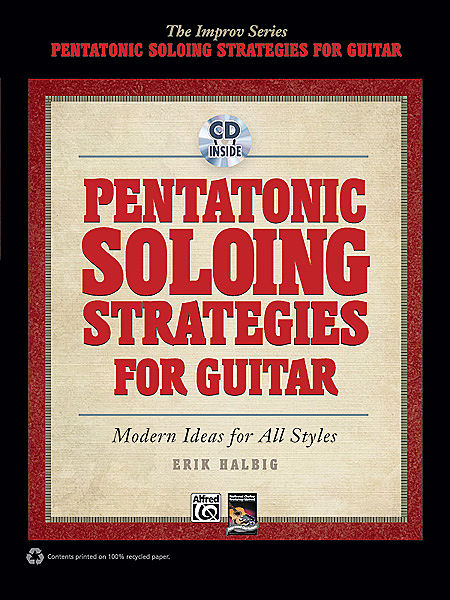
PENTATONIC SOLOING STRATEGIES FOR GUITAR, Modern Ideas for All Styles. Erik Halbig. CD TABLATURE


PENTATONIC SOLOING STRATEGIES FOR GUITAR, Modern Ideas for All Styles. Erik Halbig. CD TABLATURE

Pentatonic Soloing Strategies per la chitarra prende i più comuni strumenti di improvvisazione, le scale pentatoniche, e vi  fa vedere le sue praticamente illimitate possibilità.  Inizia con scale pentatoniche standard magiori e minori nelle 5 posizioni base e continua con la sfida delle variazioni pentatoniche per string skipping e sweep picking. Il libro culmina con le serie delle scale ?, compreso la 9-a tonica, diminuita, e la scala pentatonica a tono pieno aumentata. CD con la dimostrazione di tutti gli esempi inclusi nel libro.

Pentatonic Soloing Strategies for Guitar Modern Ideas for All Styles
By Erik Halbig
Item: 00-35302
UPC: 038081396064
ISBN 10: 0739070967
ISBN 13: 9780739070963

Series: The Improv Series
Category: Guitar Method or Supplement
Format: Book & CD
Instrument: Guitar

Pentatonic Soloing Strategies for Guitar takes the most common improvisational tool, the pentatonic scale, and shows you its almost limitless possibilities. It begins with standard major and minor pentatonic scales in the five basic positions and quickly moves into challenging pentatonic variations for string skipping and sweep picking. The book culminates with a series of substitution scales, including the rootless 9th, the half-diminished, and the whole-tone augmented pentatonic scales. A CD demonstrating all the examples in the book is included:

FEATURES

THEORY, FORMS AND VARIATIONS FOR MAJOR AND MINOR PENTATONIC SCALES.

PENTATONIC SCALE PATTERNS THAT INCORPORATE SWEEP PICKING AND STRING SKIPPING.

EXTENDED INTERVAL FINGERINGS

12 SUBSTITUION SCALES TO EXPAND YOUR TONAL VOCABULARY AND ADD COLOR TO YOUR PLAYING.

EXAMPLES IN TAB AND STANDARD MUSIC NOTATION.


INTRODUCTION
The pentatonic scale is a scale consisting of five notes. It can be found in almost every style of music, from early African-American spirituals such as "Swing Low, Sweet Chariot" to the classical compositions of Claude Debussy and Maurice Ravel to the bluesy rock guitar sounds of Jimi Hendrix, Jimmy Page, and Eric Clapton.
Players sometimes fall into the rut of playing the "same old pentatonic licks." This book-which will change how you think about the pentatonic scale-is the remedy for this situation.
This is not a beginner's book. To use it effectively, you should already have a working knowledge of music, music theory, and the minor and major pentatonic scales. However, a quick review of the basics is included on page 5. A review of the minor and major pentatonic scales follows (starting on page 11), after which you will learn many new and exciting ways to manipulate and rework these basic scales. Most importantly, practical applications are provided.
There are lots of new ideas in this book to stimulate your own creativity. You can write
down ideas that come to you on the blank page (page 95) at the end of this book. Good luck!

A compact disc is included with this book. Use the CD to help ensure you're capturing the
feel of the examples and interpreting the rhythms correctly. The symbol shown at the left
appears next to every example that is on the CD. Example numbers are above the symbol,
while the track number below the symbol corresponds directly to the example you want to
hear. If there's a decimal (1.1,1.2, etc.), it means that there's more than one example on the
track. Track I provides tuning notes for your guitar.

ABOUT THE AUTHOR
Erik Halbig holds a degree in studio/jazz guitar performance from the University of
Southern California School of Music. He has presented numerous clinics and special
seminars at the California and Nashville campuses of the National Guitar Workshop.
He is also the author of two other Alfred/National Guitar Workshop titles: Mastering
Rock Guitar (#14096) and Stand Alone Tracks: Country (#17805). Currently living
in Nashville, Tennessee, Erik is busy doing session work and touring. He has toured
and recorded with Sugarland, Sara Evans, Blackhawk, Tanya Tucker, Wynonna,
and many others.

Acknowledgements
Thanks to Bruce Bolen, Jr. at Fender Guitars, Myles Rose at Groove Tubes, Ryan
and Chris at Gadow Guitars, Derek Brooks at Ernie Ball, Danica Levy at Levy's
Leathers, James Heidrich at Bad Cat Amplifiers, Steve Blucher at DiMarzio,
Michael Tuttle, Don Grosh, and Ampeg Amplifiers.


CONTENTS
About the Author .
Introduction .
Getting Started .
Whole Steps, Half Steps, and Scales .
Standard Music Notation .
Tablature (TAB) .
Sliding .
The Guitar Fretboard .
Pentatonic Theory , .
The Major Scale .
The Minor Pentatonic Scale .
The Major Pentatonic Scale ; .
The Minor Pentatonic Scale .
Five Minor Pentatonic Scale Forms in A .
The Major Pentatonic Scale .
Five Major Pentatonic Scale Forms in A .
Variations .
Variation I-Sliding Combinations .
Variation 2- Weaving Combinations .
Variation 3-Extended Weaving Combinations .
Variation 4-Extended Weaving and Sliding Combinations .
Variation 5-Skipping and Weaving .
Variation 6-Sequenee Weaving .
Variation 7-Weaving and Sliding .
Extended Interval Fingerings .
Extended 4th Intervals .
Extended 5th Intervals ,. .
Extended 7th Intervals .
Penta-Scales .
Pentatonic Motives .
Four-Note Motives .
Five-Note Motives .
String-Skipping Pentatonics .
One-Note-Per-String Pentatonics-Sweep Picking .
One-Note-Per-String Pentatonic Combinations .
Substitutions .
Rootless 9th Pentatonic Scale .
Dominant 7th/9th Pentatonic Scale .
Minor 6th Pentatonic Scale .
Minor 6th Blues Pentatonic Scale .
Lydian Dominant Pentatonic Scale .
Half-Diminished Pentatonic Scale .
Lydian Pentatonic Scale .
Dominant Pentatonic Scale .
Altered Dominant Pentatonic Scale .
Whole Tone Augmented Pentatonic Scale .
Dominant 7b9 Pentatonic Scale .
Diminished Pentatonic Scale .
Conclusion .
 

Prezzo: €21,99
€21,99

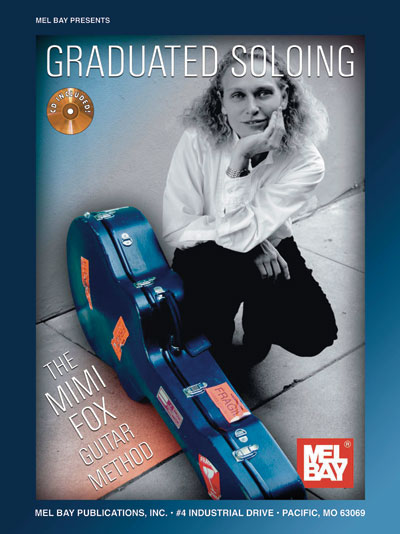
Fox MIMI Guitar Method Graduated Soloing LIBRO CD TABLATURE SOLO SCALE ARPEGGI PATTERN JAZZ

Mimi Fox Guitar Method The, Graduated Soloing. CD TABLATURE

LIBRO DI MUSICA, METODO, SPARTITI PER CHITARRA CON CD E TABLATURE. 

This method book by renowned jazz artist Mimi Fox utilizes a unique approach to helping guitarists develop strong solos. Scales, arpeggios, patterns, and syncopated rhythms are introduced in a logical clear fashion. All of this is then applied to the "graduated" studies that follow.

Starting with simple melodies, and then progressively adding more complex figures based on arpeggios, scales, passing tones, and syncopated rhythms the "graduated" solos will teach students how to develop their own great solos by using the techniques contained herein. "Graduated Soloing" is stuffed full of great ideas/patterns/licks drawn from Mimi's many years of playing with the top musicians in Jazz/Pop music.

The book concludes with an explosive solo of Mimi's over a 12 bar blues and includes tab as well as musical notation with a detailed analysis by the author. CD contains all examples and solos.

Format: Book/CD Set
ISBN: 0786681381
UPC: 796279110525
ISBN13: 9780786681389
Series: Non-Series


Introduction
Acknowledgements
Preface
Arpeggio Studies through a Piece of Music
Chords and Arpeggios
Jazz Night
Scales
Scale Syllabus
G Major Scale in Five Shapes
G Melodic Minor in Five Shapes
G Harmonic Minor in Five Shapes
G Minor Pentatonic in Five Shapes
Scale Patterns
Whole Tone and Diminished Scales
Whole Tone and Diminished Patterns
Rhythm/Comping
Rhythmic Studies
Rhythmic Comping Ideas
More Comping Rhythms
Graduated Solo Studies
Duke’s Train 1
Duke’s Train 2
Bossa Blues 1
Bossa Blues 2
12 Bar Blues 1
12 Bar Blues 2
Standard in C 1
Standard in C 2
Buddy’s Blues
Mimi Fox

Prezzo: €24,99
€24,99

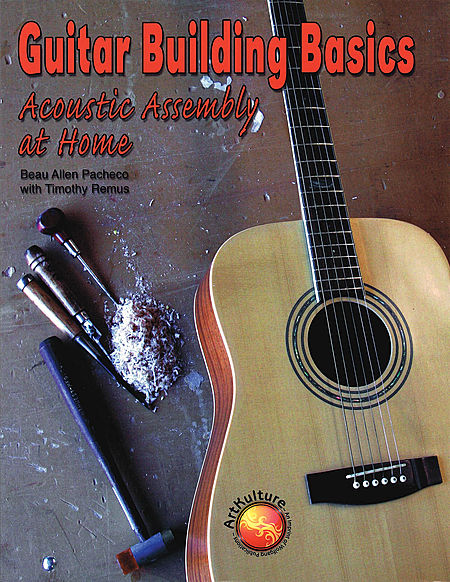
GUITAR BUILDING BASICS ACOUSTIC ASSEMBLY AT HOME-Beau Allen Pacheco-Timothy Remus LIUTERIA

GUITAR BUILDING BASICS ACOUSTIC ASSEMBLY AT HOME. Beau Allen Pacheco, Timothy Remus

LIBRO DI LIUTERIA ACUSTICA PER CHITARRA.

Guitar Building Basics

Acoustic Assembly at Home
Series: Book
Editore: Wolfgang Publications
Formatto: Softcover
Autore: Beau Allen Pacheco
Autore: Timothy Remus

Per un musicista professionista o semplicemente per chi è interessato ai lavori sonori con il legno, costruire una chitarra da zero è un progetto molto soddisfacente. "Basi per la costruzione della chitarra" è presentano 5 fasi "dall'inizio fine alla fine". Varia difficoltà di assemblaggio: dalle chitarre rinascimentali piuttosto semplici, alla complessa chitarra professionale da concerto costruia nei laboratori. L'autore documenta tutti i passi e la tecnica necessaria per fare un lavoro di qualità. Realizzato con belle immagini a colori, questo libro vi aiuterà a trovare i pezzi migliori e ad assemblare una chitarra della quale sarete fieri per il resto della vostra vita. 144 pagine

Acoustic guitars make the perfect woodworking project. Whether you're a professional musician or simply an interested wood worker, building a guitar is a very satisfying project. Guitar Building Basics presents three, start-to-finish assembly sequences. Each sequence uses high quality color photography to illustrate every step of the process; from gluing on the top and bottom of the guitar, to installing the strings, and sanding the frets for a perfect set up.

A talented musician with a guitar collection of his own, Beau Allen Pacheco is the perfect author for this book. Beau documents all the steps and skills needed to do a quality job, then moves on to discuss the different types of wood, the tools you need, and how to set up the neck.

The assemblies include everything from a fairly simple renaissance guitar kit, to a full, dreadnought guitar assembled in a professional shop. With the help of this new Guitar- Building book, nearly any amateur woodworker can buy a guitar kit and assemble the whole thing at home using basic woodworking tools. The key is patience and a good set of instructions - provided by this new book with over 500 color images spread across 144 pages.

Whether you're a guitar player looking to buy a quality instrument for a bargain price, or a craftsman looking for that next project, Guitar Building Basics will help you find the best kit and assemble it into a finished guitar you'll be proud of for the rest of your life.         

Chapter one
RENNAISSANCE GUITAR

Chapter 2
FINISHES

Chapter 3
ASSEMBLY, Scott Dixon

Chapter 4
PROFESSIONAL PERSPACTIVE

Chapter 5
FACTORY TOUR

Chapter 6
GUITAR KIT ASSEMBLY, Stewart McDonald

Chapter 7
HEADSTOCK

Chapter 8
SCHOOL TOUR

Chapter 9
TOOLS

SOURCES

Prezzo: €39,99
€39,99

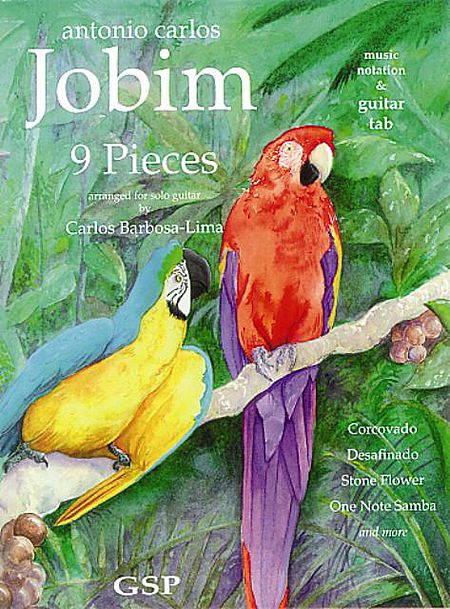
JOBIM ANTONIO CARLOS 9 PIECES Carlos Barbosa Lima-Samba De Uma Nota So' Guitar TABLATURE-SPARTITI

JOBIM ANTONIO CARLOS, 9 PIECES. Carlos Barbosa Lima. SHEET MUSIC BOOK FOR GUITAR WITH TABLATURE. 

LIBRO DI MUSICA BOSSA NOVA.

SPARTITI PER CHITARRA : 

PENTAGRAMMA E TABLATURE. 


Nine Pieces. (Solo Guitar). By Antonio Carlos Jobim. For solo guitar (no lyrics). 

Latin and Jazz.

Difficulty: medium.

Guitar tablature songbook.

Guitar tablature, standard notation, guitar notation legend and performance notes.

80 pages. Music Sales 


With guitar tablature, standard notation, guitar notation legend and performance notes. Latin and Jazz. 9x12 inches.

"Corcovado," "Stone Flower," "One Note Samba," plus six more Jobim masterworks, arranged for solo guitar with music notation and guitar tablature.


Amparo

Originally known as Ohla, Maria (Look, Mary), it was later used in the film The Adventurers. I created this

guitar arrangement based on a solo piano version by Jobim. Again, the exquisite result of a polyphonic

structure is successfully projected on the solo guitar. Like in many of Jobim's works, influences from

Chopin and Debussy are notable here.


Caminho de Pedra (Rocky Road)

Written in the 1950s,this song is in the style of "toada," echoing the peaceful and primitive quality of the

rural backlands. The introduction sets up that quality which is kept with a steady movement in the middle

voice throughout the piece.

In the second section, the beautiful harmonic changes portray nature's exuberance in those regions of the

country. The piece concludes with the theme played in harmonics, like a beautiful image getting distant and

disappearing from one's mind.


Canta Mais (Sing More)

Also from the late 1950s,this is a small masterpiece in which Jobim shows his affection and admiration for

the music of Villa-Lobos. The contrapuntal accompaniment style is somehow reminiscent of Villa-Lobos'

famous Bachianas Brasileiras NO.5. By its title, the extremely lyrical Canta Mais suggests the love of the

Brazilian people to always sing and sing more.


Corcovado (Quiet Nights of Quiet Stars)

When the "bossa nova" exploded into world-wide popularity in the early 1960s, Corcovado became a

favorite, inspired by the magnificent view of Christ's statue on top of the Corcovado mountain in Rio de

Janeiro.

The introduction creates an intimate feeling which leads into the main theme. In this solo arrangement, a

balanced polyphonic texture with frequent contrapuntal movement produces an orchestral flavor. The

song ends with delicate harmonics enhancing its sensuality and intimacy.


Desafinado (Off-key)

One ofJobim' s most famous songs, Desafinado was composed in the late 1950s.Along with Chega de Saudade

it launched the "bossa-nova" movement in Brazil in 1958with the recordings of Joao Gilberto singing and

accompanying himself on guitar.

In this solo arrangement, the theme is presented with a delicate flavor using harmonics followed by an

introduction arranged by the composer from an earlier orchestral version-then going into the main

section with the bass line keeping a strong rhythmic pulse and the melody swinging with a samba

inflection. Counterlines are constantly weaving and the polyrhythmic texture becomes intense at the climax with an

illusion of more instruments participating in "tutti," including an occasional use of silence with the rhythm

being obvious.


Amparo

Caminho De Pedra (Rocky Road)

Canta Mais (Sing More)

Corcovado (Quiet Nights Of Quiet Stars)

Desafinado (Off-Key)

Estrada Branca (This Happy Madness)

Modinha

Quebra Pedra (Stone Flower)

Samba De Uma Nota So' (One Note Samba)

Prezzo: €139,99
€139,99

YOUNG NEIL HARVEST Guitar Recorded Version TABLATURE LIBRO Alabama-Are You Ready For The Country

YOUNG NEIL, HARVEST. Guitar Recorded Version. SHEET MUCIC BOOK WITH GUITAR TABLATURE .

LIBRO DI MUSICA COUNTRY ROCK .
SPARTITI PER CHITARRA E VOCE .
TESTI DELLE CANZONI, ACCORDI, PENTAGRAMMA E TABLATURE . 

Neil Young - Harvest
Series: Guitar Recorded Version
Format: Softcover - TABLATURE
Artist : Neil Young

Matching note-for-note transcriptions to the 1972 release, one of Young's most popular and enduring recordings. Includes the classics: Harvest • Heart of Gold • A Man Needs a Maid • Needle & the Damage Done • Old Man • and more.

Song List :
Harvest
Alabama
Are You Ready For The Country
Heart Of Gold
A Man Needs A Maid
The Needle And The Damage Done
Old Man
Out On The Weekend
There's A World
Words (Between The Lines Of Age)

64 pages


YOUNG NEIL, HARVEST. TABLATURE

SERIES: Classic Album Editions
CATEGORY: Guitar Personality
FORMAT: Book

Selected by Rolling Stone as one of the greatest albums of all time, Harvest is a quintessential album of the 1970s. The music is acoustic Neil Young at his best stripped down and simple, vulnerable and very raw. Titles are:

Prezzo: €36,99
€36,99

SCHENKER MICHAEL THE LEGENDARY GUITAR OF TABLATURE DVD CHITARRA LIBRO SPARTITI

SCHENKER MICHAEL, THE LEGENDARY GUITAR OF. WITH GUITAR TABLATURE & DVD .

VIDEO DVD WITH SHEET MUSIC BOOKLET 48 PAGES. 


VIDEO METODO DVD DI MUSICA METAL. 

SPARTITI PER CHITARRA CON: 

ACCORDI, PENTAGRAMMA, TABLATURE. 

LESSON, LEZIONE VIDEO DIDATTICO. 


The Legendary Guitar of Michael Schenker

Serie: Music Sales America
Editore: Hot Licks
Formatto: DVD - TAB
Autore: Dave Celentano
Artista: Michael Schenker

Questo eccezionale e istruttivo DVD svela sei dei più grandi hit di Michael, tra queste "Doctor Doctor" e "Rock Bottom", realizzati esclusivamente per la Hot Licks. Il DVD studia molto da vicino lo stile e la tecnica di questo realmente leggendario chitarrista. Brillante istruttore di chitarra, Dave Celentano scompone e analizza in ogni dettaglio la tecnica dei solo della fenomenale leggenda della chitarra. In un intervista bonus Michael racconta la sua educazione musicale e che cosa lo ha influenzato nelle scelte, la sua attuale atrezzatura musicale, l'importanza della individualità e della creativià. Include un libretto di 48 pagine con notazione standard e Tablature. Durata 2 ore 22 minuti.

Larghezza: 5.5"

Lunghezza: 7.5"

Tempo: 2:22:00

Prezzo: €34,99
€34,99

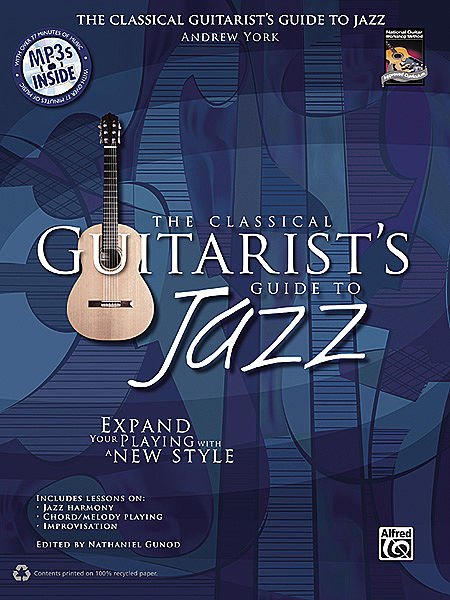
YORK ANDREW THE CLASSICAL GUITARIST'S GUIDE TO JAZZ Expand Your Playing with a New Style CD

YORK ANDREW, THE CLASSICAL GUITARIST'S GUIDE TO JAZZ, Expand Your Playing with a New Style. CD 

LIBRO METODO DI MUSICA, SPARTITI PER CHITARRA CON CD E MP3. 

ACCORDI, PENTAGRAMMA, GRAFICO DELLA TASTIERA. 

The Classical Guitarist's Guide to Jazz

Expand Your Playing with a New Style

By Andrew York / ed. Nathaniel Gunod

Categoria: Guitar Method or Supplement

Formato: Libro & CD

Istrumento: Chitarra


Chitarrista e compositore Andrew York presenta la sua ultima guida jazz per la chitarra classica. Le prime due sezioni delle tre del libro riguardano l'armonia e gli accordi/melodie jazz, focalizzandosi sul comping, chord voicing, voice leading e arrangiamenti per la chitarra solo. La terza parte è dedicata all'improvisazione che potrebbe essere l'aspetto più emozionante del jazz per chitarristi classici. York dimostra che l'improvvisazione è un'abilità che può essere imparata e praticata come altre. Eseguendo gli esercizi del libro per l'allenamento dell'orecchio e gli esercizi  di visualisazzione imparerai come trasformare la musica che senti nel tuo "orecchio mentale” nei più fantasiosi e buoni jazz solo. Il CD contiene gli esercizi e esempi eseguite dall'autore.

Guitarist and composer Andrew York presents the ultimate guide to jazz for classical guitarists. The first two sections of this three-part book cover jazz harmony and chord/melody, focusing on comping, chord voicings, voice leading, and arranging for solo guitar. Part three looks at improvisation, which may be the most exciting—yet foreign—aspect of jazz for classical guitarists. York shows you that improvisation is a skill that can be learned and practiced just like any other. By practicing the ear training and visualization exercises in this book, you will learn how to turn the music you hear in your "mind's ear" into imaginative, great-sounding jazz solos. The CD contains the exercises and examples performed by the author.

Prezzo: €36,99
€36,99
Condividi contenuti