CHITARRA - GUITAR

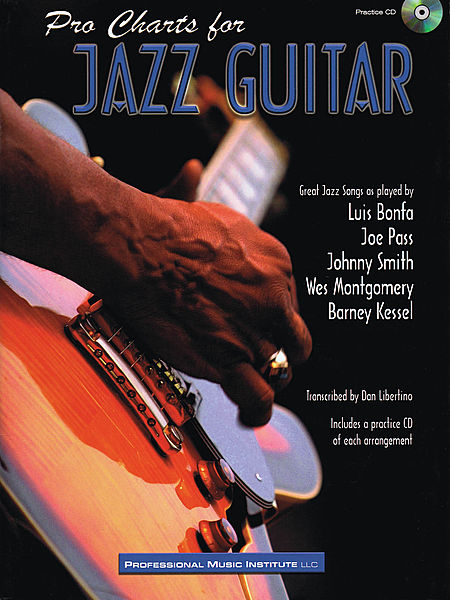
PRO CHARTS FOR JAZZ GUITAR. Luis Bonfa - Joe Pass - Barney Kessel - Dan Libertino. CD TABLATURE

PRO CHARTS FOR JAZZ GUITAR. Dan Libertino. CD TABLATURE

Pro Charts for Jazz Guitar

Serie: Guitar Solo
Publisher: Professional Music Institute
Formato: Softcover with CD - TAB
Editore: Dan Libertino
Otto brani classici del jazz trascritti come erano eseguiti dai legendari Wes Montgomery, Joe Pass, Luis Bonfa, Barney Kessel e Johnny Smith. Libro include anche un CD con due tracce per ogni canzone: una alla velocità per esercitazioni e una con la velocita originale dell'esecuzione del brano. 

Eight jazz classics transcribed as they were played by legends Wes Montgomery, Joe Pass, Luis Bonfa, Barney Kessel, and Johnny Smith. This book also includes a CD with two tracks for each song: one at a practice tempo and one at performance speed. Songs include: Body and Soul • A Day in the Life of a Fool (Manha De Carnaval) • Do Nothin' Till You Hear from Me • Don't Get Around Much Anymore • Midnight Sun • Moonlight in Vermont • There Will Never Be Another You • Whisper Not.

This book of solo guitar arrangements/transcriptions is based on recordings of some the great jazz players of our time such as Joe Pass,Wes Montgomery, Luis Bonfa, Johnny Smith, and Barney Kessel. In all these scores, the melody, chords and solos were transcribed as closely to the recordings as possible. Notes were added to the performances, mostly in the bass line, when the need was there to make the chart playable as a solo guitar performance. The forms of the tunes were limited to 4 pages. The playing level of the charts should be challenging for the beginning and intermediate player but playable and even creative enough for the most advanced players. It is encouraged that you listen to the original recordings, but a midi file practice CD is provided with two versions of each chart on the CD, one slow and one at 'full speed', to help the student interpret the charts.
 

Manha de Carnival ( A day in the life of a fool) as recorded by Luis Bonfa on Smithsonian Folkways Recordings SOLO IN RIO 1959. This chart is an exact transcription of the nylon string guitar recording of this classic tune.

Do Nothin' Till You Here From Me as recorded by Joe Pass on Pablo Records, 1975
PORTRAITS OF DUKE ELLINGTON
The melody and chords are taken adapted from this recording along with one verse of solo and an ending that Joe plays in his own particular way. Joe plays solo lines and melody mostly but the chart written here adds chord voicings to make the solo fuller for a solo guitar interpretation.
 

Don't Get Around Much Anymore as recorded by Joe Pass on Pablo Records, 1975

PORTRAITS OF DUKE ELLINGTON
This chart was written with the same approach that was used to write the previous chart adapted from Joe Pass.

Moonlight In Vermont as recorded by Johnny Smith on Roulette Jazz, 1952

Moonlight in Vermont A beautiful ballad played by Johnny Smith, this chart is the full form of the song with adaptations from the guitar solo including all the harmonies and nuances of his ballad style. This is great chart that really elevates this tune beyond the real book versions.
 

Body and Soul as recorded by Wes Montgomery on JazzBank, 1964 Navy Swing

The piano harmonies are combined with the melody interpretation by Wes to create this chart for solo guitar. A solo is added, filled out to make a solo guitar performance. The outro that Wes plays is also written in the chart.


There Will Never Be Another You as recorded by Wes Montgomery on JazzBank, 1964 Navy Swing

This chart was written with the same approach that was used to write the previous chart adapted from Wes.


Whisper Not as recorded by Wes Montgomery on Riverside, 1959 The Wes MontgomeryTrio

This cool swing tune is charted here by combining the melody with the harmonies of the organ. One solo verse taken from Wes's solo is added to the chart to provide creative options on how to play over these changes.


Midnight Sun as recorded by Barney Kessel on Contemporary, 155 "to swing or not to swing"

This ballad chart is an adaption of the melody played as a single line and the harmony of the piano part along with one verse of solo adapted in a similar fashion.

The Transcriber DAN LIBERTINO
Guitarist, arranger, engraver and transcriber Dan Libertino, has been writing books for the guitar since the mid-1990's. He has a Masters in Music having studied classical guitar exclusively with the world re-known family of the spanish guitar, the Romero's. His study of the jazz guitar includes includes time with Link Chamberlain, Peter Sprague, Joe Diorio and ted Greene. Dan's musc business includes performing solo guitar, private teaching and at local colleges in the southern California area as well as transcribing, arranging and engraving music books. Some of his text's include the self published Beginning Music Theory Through the Guitar, several Harp publications and guitar transcriptions. 


1964 - Body And Soul - Parole di Edward Heyman, Robert Sour e Frank Eyton. Musica di John Green
come registrata da Wes Montgomery nel 1964

1959 - A Day In The Life Of A Fool (Manha De Carnaval) - Parole originali di DeMoraes. Musica di Luiz Bonfa
come registrata da Luis Bonfa nel 1959

1975 - Do Nothin' Till You Hear From Me - Parore di Bob Russell. Musica di Duke Ellington
come registrata da Joe Pass nel 1975

1942 - Don't Get Around Much Anymore - Parole di Bob Russell. Musica di Duke Ellington
come registrata da Joe Pass nel 1975

1947 - Midnight Sun - Lirica e Musica di Lionel Hampton, Sonny Burke e Johny Mercer
come registrata da Barney Kessel nel 1955

1945 - Moonlight In Vermont -  Parole di John Blackburn. Musica di Karl Suessdorf
come registrata da Johnny Smith nel 1952

1942 - There Will Never Be Another You - Parole di Mack Gordon. Musica di Harry Warren
come registrata da Wes Montgomery nel 1964

1956 - Whisper Not - Parole di Leonard Feather. Musica di Benny Golson
come registrata da Wes Montgomery nel 1959

Larghezza: 9.0"

Lunghezza: 12.0"
32 pagine

Prezzo: €20,99
€20,99

B.B. KING-BLUES LEGEND A Step-by-Step Guitar Styles and Techniques CD TABLATURE CHITARRA SPARTITI

B.B. KING, BLUES LEGEND. A Step-by-Step Breakdown of His Guitar Styles and Techniques. CD TABLATURE

LIBRO DI MUSICA BLUES CON CD.

SPARTITI PER VOCE E CHITARRA CON :

ACCORDI, PENTAGRAMMA, TABLATURE.  

TECNICA, 


B.B.'s Boogie
Blue Shadows
Everyday I Have The Blues
Help The Poor
How Blue Can You Get
It's My Own Fault Darlin'
Just Like A Woman
Lucille
Please Accept My Love
Shake It Up And Go
So Excited
Woke Up This Morning


B.B. King - Legenda del Blues

L'analisi passo per passo del suo stile e della sua tecnica chitarristica.

Serie: Signature Licks Guitar
Formato: Softcover with CD - TAB
Artista: B.B. King
Autore: Dave Rubin

Impara i guitar licks che hanno fatto di B.B. il Re indiscutibile del Blues! David Rubin ti insegna 12 assoli autentici di B.B King: Boogie • Blue Shadows • Everyday I Have the Blues • Help the Poor • How Blue Can You Get • It's My Own Fault Darlin' • Just like a Woman • Lucille • Please Accept My Love • Shake It Up and Go • So Excited • Woke Up This Morning.

Largezza: 9.0"
Lunghezza: 12.0"
48 pagine
 

Prezzo: €29,99
€29,99

STERN MIKE Guitar Styles & Techniques of a Jazz-Fusion Signature Licks CD TABLATURE SPARTITI

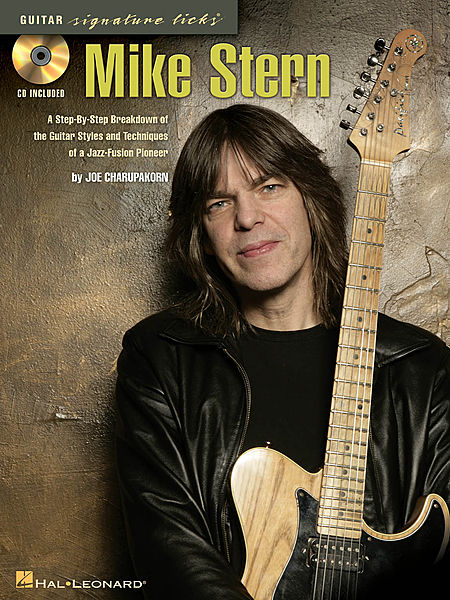
Mike Stern, A Step-By-Step Breakdown of the Guitar Styles & Techniques of a Jazz-Fusion Pioneer. SHEET MUSIC BOOK WITH CD & GUITAR TABLATURE .

LIBRO METODO DI MUSICA FUSION CON CD. 

SPARTITI PER CHITARRA CON: 

ACCORDI, PENTAGRAMMA, TABLATURE. 


MIKE STERN
A Step-By-Step Breakdown of the Guitar Styles & Techniques of a Jazz-Fusion Pioneer
Series: Signature Licks GUITAR
Format: Softcover Audio Online – TAB
Serie: Signature Licks Guitar
Autore: Joe Charupakorn
Artista: Mike Stern

Scopri la magia di un asso di chitarra Mike Stern con l'edizione speciale di Assoli d'Autore che includono le interviste e le lezioni con Stern, informazini esclusive sull'attrezzatura, l'analisi approfondita di 14 titoli e in più un CD audio con tutti  gli esempi musicali del libro. Le canzoni sono: After You • Jigsaw • Like Someone in Love • One Liners • Play •Sunnyside • Swunk • There Is No Greater Love • Tipatina's • Wing and a Prayer • e altre.

Inventory #HL 00695800
ISBN: 9780634068010
UPC: 073999813074
Larghezza: 9.0"
Lunghezza: 12.0"
128 pagine


Discover the magic of guitar wizard Mike Stern with this special edition of Signature Licks that includes an interview and lesson with Stern, exclusive gear info, in-depth analysis of 14 songs, plus recordings of demos for all the music examples in the book! Songs include: After You • Jigsaw • Like Someone in Love • One Liners • Play • Sunnyside • Swunk • There Is No Greater Love • Tipatina's • Wing and a Prayer • and more. The audio is accessed online using the unique code inside each book and can be streamed or downloaded. The audio files include PLAYBACK+, a multi-functional audio player that allows you to slow down audio without changing pitch, set loop points, change keys, and pan left or right. 


After Blood, Sweat & Tears, Stern returned to Boston and played with saxophonist

Jerry Bergonzi (who he met through his teacher, the late Charlie Banacos). He also took

over Bill Frisell's spot in trumpeter Tiger Okoshi's Tiger's Baku, a band that Frisell helped

put together. In 1979, Stern landed his next big gig, with drummer Billy Cobham. During

a gig with Cobham at the now-defunct Bottom Line in New York City, Miles Davis (at the

suggestion of saxophonist Bill Evans) came to check out Stern. He liked what he heard

and Stern got the ultra high-profile gig for Davis's 1981 comeback tour. It was a major

milestone in Stern's career, and one that catapulted him into jazz stardom.

Stern played on three Miles Davis albums: The Man With the Horn, which featured a

burning solo on the first cut "Fat Time" (named in Stern's honor for both his great timefeel

and his at-the-time, corpulent physique); We Want Miles, a great live album; and Star

People, which also featured guitarist John Scofield, who was recruited as a second guitarist

because of Stern's then drug and alcohol problem. Having gradually become unreliable,

Davis ultimately let Stern go, to sober up.

During this time, Stern reconnected with Jaco Pastorius, playing in his Word of Mouth

band. They also played together nonstop when Stern lived above 55 Grand Street, a New

York City jazz club they played at since its inception (not to be confused with the 55 Bar

on Christopher Street, where Stern currently plays twice a week when he's in town). Jaco

wound up crashing at Stern's pad and the two were inseparable, playing at all hours of

the day and blowing lines over changes. Alas, they were also doing "white lines" to the

point of losing control. Stern checked into rehab, and in 1985, the cleaned-up guitarist

rejoined the Miles Davis band. Pastorius, however, never cleaned up. The drugs and alcohol

had severely impacted his mental state and behavior for the worse, and in 1987, during

an altercation with a bouncer outside a nightclub in Florida, he was tragically beaten

to death.

Since his tenure with Miles Davis, Stern has gone on to perform and record with

Michael Brecker, the Brecker Brothers, Bob Berg (with whom he co-led the Mike Stern/

Bob Berg band), Jaco Pastorius's Word of Mouth band, Steps Ahead, David Sanborn, Joe

Henderson, George Coleman, Ron Carter, Jim Hall, and Pat Martino, among others.

Stern has also recorded numerous solo albums-the first being Neesh, in 1983, which

was recorded for Trio (a Japanese label), right after Stern first left Miles Davis's band. It

was recently re-released, but only in Japan (on Absord Music Japan). In 1986, Stern

signed a deal with Atlantic Records and recorded Upside Downside. This marked the

beginning of a 15-year association with Atlantic Records that spawned ten albums and

three Grammy nominations. In 2004, with the demise of the jazz department at Atlantic

Records, Stern recorded his first album for ESC Records, These Times (now available on

BHM Records). In 2006 Stern moved to Heads Up International Records for his release

Who Let the Cats Out?, which garnered Stern a fourth Grammy nomination. A live DVD,

Live-New Morning The Paris Concert was also released in 2006, by independent

German label, lnakustik. This DVD featured Richard Bona, Dennis Chambers, and Bob

Franceschini. In 2009, a sequel to Live-New Morning The Paris Concert was released

and features Tom Kennedy, Dave Weckl, and Bob Franceschini. Big Neighborhood,

Stern's most explosive guitar album to date, was also released in 2009 and featured virtuoso

guitarists Steve Vai and Eric Johnson, among others. Stern's earlier Atlantic recordings,

with the exception of Play and Voices (which are still available through Warner

Music), are now distributed by Wounded Bird Records, a CD-only re-issue label.

Despite Stern's enormous status as a world-renowned jazz-fusion guitar virtuoso, his

prodigious technical abilities (which he seamlessly combines with a heartfelt lyricism),

and his impressive history onstage with countless jazz legends, Stern is a humble and

grounded musician whose sole mission is to constantly grow as a player. "The more I

know, the less I know" is one of Stern's favorite quotes, and it is indicative of his approach

to music, as a neverending quest.

For this Signature Licks edition we have enlisted Mike Stern as a consultant. He offers

not only unique analytical and historical insight for each selection but also a special private

lesson, to help you understand the theory behind his burnin' lines. And indirectly,

large portions of the information in this book have been gathered over the years, during

my studies with Stem and om itnessing countless live shows.


ONE ON ONE WITH MIKE STERN

What was the first jazz solo that had an impact on you?

Well that's a hard question because my mom used to playa lot of jazz records so I always

heard jazz around the house. I started playing when I was 12, but I was 17 when I started

getting more into jazz. I guess it was something off a Miles Davis record. One of the

first records I used to scope was Herbie Hancock's Maiden Voyage. That was one of the

first albums that I checked out and tried to play along with. At the time, I was listening to

more blues, rock, and Motown, and playing along by ear.

When you played along with Maiden Voyage, were you soloing over it or were you

trying to play the actual parts?

I was doing a little bit of both-the actual parts and the solos.

Do you remember the first solo you transcribed?

Yeah, it was a Joe Pass solo. I picked a blues because it's an easy form and Joe's solo

had a lot of inside bebop. It was a medium swing, not a real fast tempo.

Did he playa lot of sixteenth notes in the solo?

He was playing a lot of eighth notes, just a lot of really cool bebop lines. Joe was a very

clear, inside player in a lot of ways. He didn't go outside the key too much, and it was very

clear what he did when he did go out, the way he outlined it. He was amazing like that.

There was a lot of bebop vocabulary; he used to play with Oscar Peterson. It took me

about three weeks to transcribe the solo. I had to slow the record player down, which

almost ruined the record. Finally I taped it and finished the rest. Later on I showed it to

some people and they said most of it was wrong [laughs]. But doing it myself was amazingly

helpful.

After you learned the solo did you take licks from it and use them in your own playing?

A little bit, and some of the phrasing, too. It's like when you read a book or short storyyou

don't memorize every word; you just take certain things away from it and then enough

of the remaining information goes unconsciously into your brain, or in the case of music,

into your ear. Over time, if you take from enough different solos from different people, you

don't sound like just one guy.

For a long time now, I've been more into copping piano and saxophone solos. But

when I was first transcribing, it was guitar because it was my own instrument-and that

was hard enough. But like I said, transcribing lines for myself was really helpful; I got a lot

more out of it that way than from reading it from a book.

Were you writing out the solos?

Yeah, I wrote them down. Then I'd read through it, not so much to cop licks but more like

reading a magazine or a short book, where you might remember a couple of phrases and

quote from it-you don't memorize every word. Some people go too far and memorize the

whole solo, but the idea is to learn how to phrase unconsciously and then twist it around

your own way, as a kind of springboard for your own ideas. That way you get a vocabulary

in a certain style; for instance, if you want to work on your bebop vocabulary, you do

a lot of bebop players. I did a bunch of guitar players at first-Joe Pass, Jim Hall, Wes

Montgomery, George Benson-and then I got into horn players.

INTRODUCTION
DISCOGRAPHY
THE RECORDING
ABOUT THE AUTHOR
MIKE STERN'S GEAR
ONE ON ONE WITH MIKE STERN
BOP 'N ROLL: A LESSONS WITH MIKE STERN

After You - Mike Stern - 1986
Jigsaw - Mike Stern - 1989
Like Someone In Love - Words: Johnny Burke, Music: Jimmy Van Heusen - 1944
Odds Or Evens - Mike Stern - 1991
One Liners - Mike Stern - 1997
Play - Mike Stern - 1999
Showbiz - Mike Stern - 1996
Sunnyside - Mike Stern - 1996
Swunk - Mike Stern - 1994
That's What You Think - Mike Stern - 1997
There Is No Greater Love - Words: Marty Symes, Music: Isham Jones - 1936
Tipatina's - Mike Stern - 1999
Upside Downside - Mike Stern - 1986
Wing And A Prayer - Mike Stern - 1996

Prezzo: €32,99
€32,99

GUITAR WORKOUT, SPEED PICKING, SWEEPS, ARPEGGIOS HARMONY, John Heussenstam. CD TABLATURE

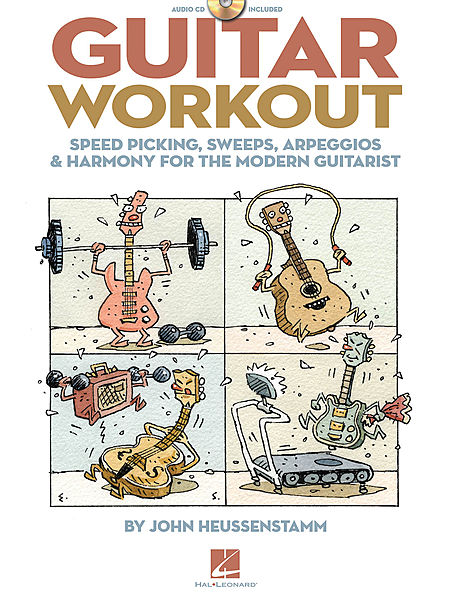
GUITAR WORKOUT, SPEED PICKING, SWEEPS, ARPEGGIOS AND HARMONY For The Modern Guitarist, John Heussenstam. CD TABLATURE

Guitar Workout

Speed Picking, Sweeps, Arpeggios & Harmony for the Modern Guitarist
Serie: Guitar Educational
Formato: Softcover with CD - TAB
Autore: John Heussenstamm

Guitar Workout è un programma intensivo e completo che aumenterà la tua velocità, agilità e creatività. Questo è  un libro di esercizi fondamentali per i chitarristi che vogliono accellerare e articolare lo speed picking. Preparazione professionale insieme alla migliore comprensione delle scale maggiori diatoniche, armonia delle scale, la tecnica del picking che richiede unione di riff e assoli superveloci con l'intelligenza e creatività melodica. Il chitarrista di fama internazionale John Heussenstamm vi dimostrerà gli esercizi di riscaldamento a note singole, esercizi per aumentare la velocità, schemi di ditteggiatura, sweeps, arpeggi, costruzione melodica.

Larghezza: 9.0"
Altezza: 12.0"
154 pagine


ABOUT THE AUTHOR

I come from a musical family.My great grandfather and grandmother Erica had a music conservatorium in Germany. Mygrandmother fled Germany soon after World WarIand settled in Hollywood, California, where she raised four children and taught classical piano and voice lessons. My uncle George taught advanced music theory at the college level and beyond. I started learning piano at the age of four, but that didn't last long! Like most kids, I found playing football on the street with my brothers much more to my liking. I fought with my grandmother about practicing the piano. She claimed that I did all my exercises correctly and had my parents excited about my potential as a pianist. Not long after that, I heard my uncle Peter practicing Flamenco guitar, and that was the sound that inspired me to learn. It was Peter that gave me my first guitar lesson when I was eight years old. In elementary school, they didn't offer guitar, so I was given a cornet from my uncle Sonny on my mother's side of the family. I played that horn for four years in the school band but eventually traded it for a Gibson EBOelectric bass. Around that time, my aunt Barbara, who was married to famous saxophonist George Weidler of the Stan Kenton Band, gave me an old Fender Precision bass and a Standel amp. I used to load that gear on my red wagon, haul it around the neighborhood, and jam for hours with kids in local surf bands. Back in the early sixties, there weren't many bassists, so I was in demand and constantly working in groups until I left high school. After graduating, I traveled to Mexico in a VWcamper on a three-month surfing trip with my brother Paul. I brought along an old Gibson L12 archtop jazz guitar and constantly practiced the entire tripwhenever my brother was driving, I would sit in the back of the vehicle and practice. By the end of the journey, I was ready to start playing in bands. When I turned 21, I hit the road and started touring. Through a friend, I got an audition with a group out of New Orleans called Lovera. That job introduced me to rhythm and blues, and that influence has remained with me. I try to instill in all my students the feeling of that music-a music that we should be proud of.My first jazz teacher, Tito at WestLAMusic, used to say to me, "You should be proud of the great jazz and blues that comes out of America." I also had private lessons with some great guitarists: Joe Pass, Ted Greene, and Bob Conti. I auditioned for a gig with the great soul singer Deniece Williams and got the job playing funky soul music. I was the only white guy in the band. Because of my experience with Lovera, I was familiar with that style. Deniece later went on to win two Grammy Awards, and I am proud to have been a small part of her career. While visiting my brother, Mark, in West Australia, I met my future wife, Julie. After returning to California, I briefly studied Indian music with Ali Akbar in San Rafael, California. We eventually returned to Australia and settled in Perth. From 1980 to 1990, I taught guitar and toured around Australia in my own bands. I've always had a burning desire to play music, and that has led me back to America where it all started. John Heussenstamm John is currently living in Laguna Beach, California, and teaches at The Guitar Shoppe in Laguna.  


CONTENTS:

TITLE

Foreword

Introduction

Section I: The Major Scale

Chapter 1 - Basic Major-Scale Theory

Chapter 2 - Picking

Chapter 3 - Positions and Fingerings

Chapter 4 - The Three-Octave System

Chapter 5 - Three-Note Exercises

Chapter 6 - Two-String Fingering Patterns

Chapter 7 - Concept Review

Section II: Arpeggios

Chapter 8 - Three-Note Arpeggios

Chapter 9 - Four-Note Arpeggios

Chapter 10 - Transferring Melodies

Chapter 11- Modern Inventions

Chapter 12 - Advanced Arpeggios

Chapter 13 - A Note on Musicianship

Chapter 14- Melodic Invention

Section III: Modes and Other Scales

Chapter 15- Modes

Chapter 16- Scale Treatment

Chapter 17 - The Harmonic Minor Scale

Chapter 18 - The Melodic Minor Scale

Chapter 19- The Diminished Scale

Chapter 20 - The Whole Tone Scale

Section IV: Pentatonic Scales

Chapter 21 - The Minor Pentatonic Scale

Chapter 22 - The Major Pentatonic Scale

Chapter 23 - The Minor Pentatonic 6th Scale

Chapter 24 - The Eastern Pentatonic Scale

Section V: Special Guitar Techniques

Chapter 25 - The Ornaments (Colorations)

Chapter 26 - Tapping

Chapter 27 - Monster Licks

Appendix

Harmonic Description (in the key of C)

Changing Keys

Understanding Keys

About the Author

Guitar Notation Legend

Prezzo: €25,99
€25,99

TOTAL SHRED GUITARIST THE Guitar Playing German Schauss CD DVD TABLATURE LIBRO SPARTITI

TOTAL SHRED GUITARIST THE, A Fun and Comprehensive Overview of Shred Guitar Playing. German Schauss. 

SHEET MUSIC BOOK WITH CD & DVD & GUITAR TABLATURE. 


LIBRO CON CD, DVD, E TABLATURE

LIBRO METODO DI MUSICA METAL, CON CD E DVD.

SPARTITI PER CHITARRA :

ACCORDI, PENTAGRAMMA E TABLATURE. 

The Total Shred Guitarist
A Fun and Comprehensive Overview of Shred Guitar Playing
By German Schauss

Series: The Total Guitarist
Category: Guitar Method or Supplement
Format: Book, CD & DVD
Instrument: Guitar

The Total Shred Guitarist is an exciting journey through the world of heavy metal guitar playing. Author and master shredder German Schauss provides a step-by-step approach to shred guitar that makes it easy to understand, proving that it's not rocket science. You just need some basic tools, some basic theory, and a lot of practice! Through simple chromatic patterns and warm-up exercises, you'll develop finger independence, conditioning, and speed. Learn patterns and sequences in a variety of scales, while developing technical fluency in alternate picking, tapping, multi-finger tapping, sweep picking, string skipping, and more. This book is for guitarists of all genres who are ready to break through the limitations of their technique and start shredding like they have always imagined. The included CD features backing tracks so you can hone your soloing skills and develop your own unique sound and style. The DVD brings the book alive and features German Schauss demonstrating lessons and techniques. 


Contents
About the Author ........................................................ 
Introduction .................................................................. 
Chapter 1: Notation and
Basic Technique Review .......................................... 
Reading Tablature (TAB) .................................... 
Scale Diagrams ...................................................... 
Notation Legend ................................................... 
Chapter 2: Warming Up and Body Awareness .....
Practice Routines and Habits ..............................
Chapter 3: Basic Warm-Up Exercises .....................
Finger Independence and Conditioning ..........
Chapter 4: Diatonic Theory .....................................
The Major Scale ...................................................
Intervals .................................................................
Triads .....................................................................
7th Chords ............................................................
Diatonic Harmony ...............................................
Natural Minor Scale ............................................
More on Intervals ................................................
Interval Inversions ...............................................
Extended Intervals and Chords ........................
Circle of 5ths ........................................................
Chapter 5: Minor Pentatonic Scale .........................
Exercising with Sequences .................................
Up Close ................................................................
Licks and Backing Tracks ...................................
Chapter 6: Patterns for Alternate Picking .............
Fretboard Efficiency and Knowledge ..............
Etudes and Backing Tracks ................................
Chapter 7: Three-Note-Per-String Scales .............
Modes of the Major Scale ..................................
Intervals .................................................................
Hexatonic Scales ..................................................
Music’s Phone Number ......................................
Licks ........................................................................


Fretboard Efficiency and Knowledge
The next step, after learning all the short musical phrases
and being able to play them in a relaxed manner, is to move
them across the strings and eventually cover the entire
fretboard. This can be done in two ways: chromatically
or diatonically.
When you play the patterns chromatically, you simply take
the pattern and move it up or down one fret at a time,
maintaining the same shape. In order to practice all possible
shapes chromatically, you should consider practicing the
different variations of interval structure using the same
pattern. This means if you have an ascending three-note
phrase, the intervals could be:
Whole step–whole step
Whole step–half step
Half step–whole step
The example below illustrates the chromatic three-note
ascending pattern played on the G string. Make sure to
move it to the other strings and apply the other interval
patterns mentioned above. 


Hexatonic Scales
The hexatonic scale is a great tool for getting around the fretboard. You are probably wondering what hexatonic
scales are and how you can use them. Hexatonics are sixnote scales. The common major scale (a seven-note scale) is called a heptatonic scale. These names are derived from the Greek words for six (hexa) and seven (septa). We have already looked at another Greek-named scale: the pentatonic scale (penta means five). In the next section, we will transform the major scale modes into hexatonics.

Hexatonic Modes
If you use only the first six notes of each of your seven scale positions, or modes, you can easily create a hexatonic mode. Just repeat those six notes one octave higher on the D and G strings, and then one octave higher again on the B and E strings. The result is a hexatonic mode spanning three octaves. These modes are great for playing fast ascending or descending runs. The following diagrams show the seven hexatonic modes of C Major.

Prezzo: €199,99
€199,99

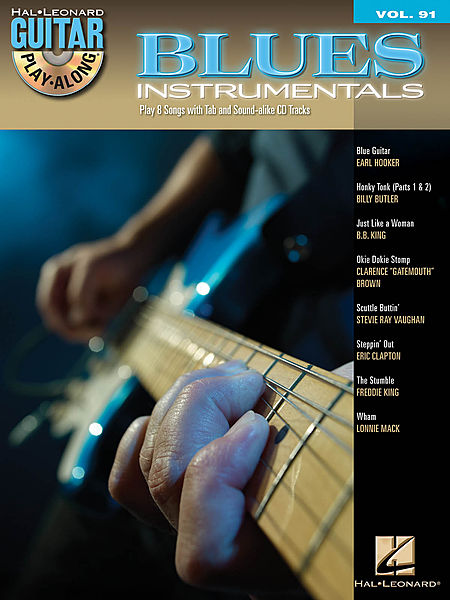
BLUES INSTRUMENTALS Guitar Play-Along Volume 91 CD TABLATURE The Stumble SPARTITI CHITARRA

BLUES INSTRUMENTALS, Guitar Play-Along Volume 91. Sheet Music Book with CD & GUITAR TABLATURE. 

LIBRO DI MUSICA BLUES CON CD. 

CD DI BASI .

SPARTITI PER CHITARRA CON :

ACCORDI, PENTAGRAMMA, TABLATURE. 


Guitar Play-Along Volume 91

Series: Guitar Play-Along
Format: Softcover with CD - TAB
Artist: Various

The Guitar Play-Along Series will help you play your favorite songs quickly and easily! Just follow the tab, listen to the CD to hear how the guitar should sound, and then play along using the separate backing tracks. The melody and lyrics are also included in the book in case you want to sing, or to simply help you follow along. The audio CD is playable on any CD player. For PC and Mac computer users, the CD is enhanced so you can adjust the recording to any tempo without changing pitch!

8 songs: Blue Guitar • Honky Tonk (Parts 1 & 2) • Just like a Woman • Okie Dokie Stomp • Scuttle Buttin' • Steppin' Out • The Stumble • Wham.

Blue Guitar
Honky Tonk (Parts 1 & 2)
Just Like A Woman
Okie Dokie Stomp
Scuttle Buttin'
Steppin' Out
The Stumble
Wham

56 pages

Prezzo: €20,99
€20,99

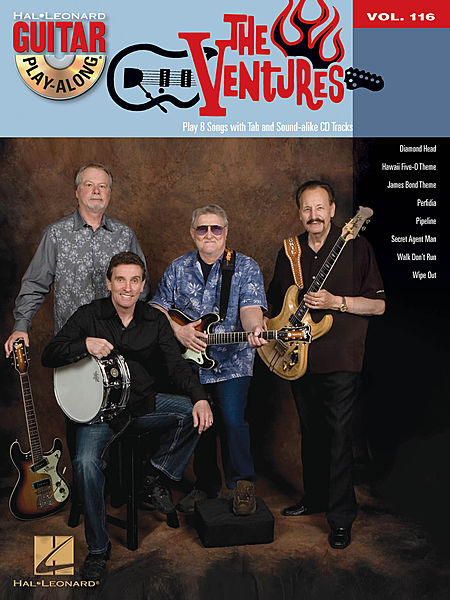
VENTURES Guitar Play-Along Volume 116 CD TABLATURE SPARTITI CHITARRA LIBRO BASI PIPELINE

VENTURES the, Guitar Play-Along Volume 116. SHEET MUSIC BOOK WITH CD & GUITAR TABLATURE

LIBRO DI MUSICA POP, CON CD DI BASI. 

SPARTITI PER CHITARRA CON:

ACCORDI, PENTAGRAMMA, TABLATURE.  


The Ventures

Guitar Play-Along Volume 116
Series: Guitar Play-Along
Format: Softcover with CD - TAB
Artist: The Ventures

The Guitar Play-Along Series will help you play your favorite songs quickly and easily! Just follow the tab, listen to the CD to hear how the guitar should sound, and then play along using the separate backing tracks. The melody and lyrics are also included in the book in case you want to sing, or to simply help you follow along. The audio CD is playable on any CD player, and also enhanced so PC & Mac users can adjust the recording to any tempo without changing pitch!

8 songs: Diamond Head • Hawaii Five-O Theme • James Bond Theme • Perfidia • Pipeline • Secret Agent Man • Walk Don't Run • Wipe Out.

Diamond Head

Hawaii Five-O Theme

James Bond Theme

Perfidia

Pipeline

Secret Agent Man

Walk Don't Run

Wipe Out

Width: 9.0"
Length: 12.0"
32 pages

Prezzo: €21,99
€21,99

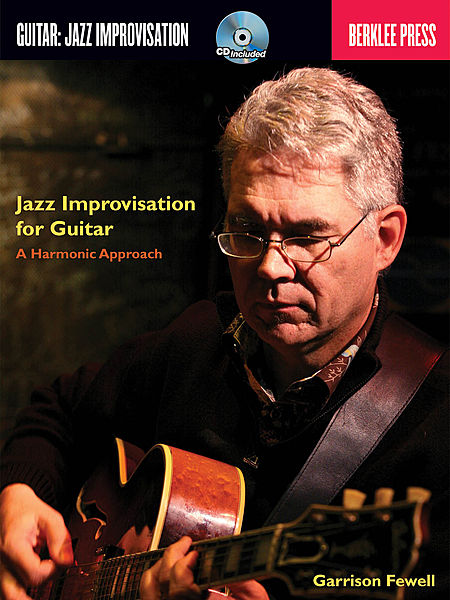
GARRISON FEWELL-JAZZ IMPROVISATION FOR GUITAR A Harmonic Approach CD TABLATURE LIBRO

GARRISON FEWELL, JAZZ IMPROVISATION FOR GUITAR A Harmonic Approach. CD TABLATURE

LIBRO METODO DI MUSICA JAZZ, PER L'IMPROVVISAZIONE.

SPARTITI PER CHITARRA CON:

ACCORDI, PENTAGRAMMA  E TABLATURE. 

Jazz Improvisation for Guitar
A Harmonic Approach
Series: Berklee Guide
Publisher: Berklee Press
Format: Softcover with CD
Author: Garrison Fewell

The purpose of this book is to explore the relationship between jazz harmony and improvisation by studying the vertical structures of chords and their function in a progression, and the horizontal or linear application of harmony to melodic improvisation. Each topic is accompanied by musical examples that are designed to help you hear the connection between harmony and melody and to develop a more melodic and creative way of thinking about improvising over chord progressions.
Width: 9.0"
Length: 12.0"
110 pages


Use jazz harmony to play more intelligent, imaginative, and creative solos. Recognize appropriate note choices and alternatives, whether improvising over easy or complex harmonic progressions. See analysis and melodies created using each concept, "bringing the blackboard to the fretboard." Traditional notation and tab included.

You will learn to:

  • Improvise using a rich harmonic palette, over many types of chord changes
  • Enrich your harmonic context for improvisation using characteristic diatonic substitutions and upper-structure triads
  • Reharmonize melodies using diatonic, hybrid, and polychord voicings
  • Use other non-diatonic chords, such as altered, bII7, and diminished chords
  • Use parallel modes and dominant substitution as sources for new harmonic colors
  • Explore a variety of scale types, including minor scales, symmetrical-diminished scales, and ways of finding new harmonies, such as four-tonic systems
  • Create expressive solos with all these tools, applying these rich harmonic contexts within a framework of traditional counterpoint and compositional practice

Garrison Fewell has taught thousands of guitarists since the 1970s at Berklee College of Music and around the world. He has played on dozens of recordings, both as a leader and with artists such as Herbie Hancock, Slide Hampton, Tal Farlow, Benny Golson, and many others. This book is a companion to his first book, Jazz Improvisation for Guitar: A Melodic Approach (Berklee Press).

"Garrison Fewell has long been a hero to the jazz guitar community. Read this book and you will find out why."

—Jim Hall, Acclaimed Jazz Guitarist, Composer, Arranger

"This book contains the answers to many of the questions I have been getting from my students throughout my 35 years of private teaching. The chapter on Melodic Counterpoint is wonderful and probably the only guitar book I know of that explains counterpoint so concisely."

—Vic Juris, Author, Composer, Guitarist with Dave Liebman, Lee Konitz, Mel Tormé, Gary Peacock

"Jazz Improvisation for Guitar is a must for any jazz guitarist who wants to know the secrets of advanced improvising. Professor Fewell uses his many years of teaching experience (he taught my son Julian when he was at Berklee) plus his prodigious musical talent, to lay out the exact tools for cracking the advanced harmony in modern jazz. I learned some ideas I hadn't thought of from this book, and anyone who takes Garrison's rich and comprehensive journey into the non-diatonic aspect of playing will be well rewarded."

—Larry Coryell, Pioneer Fusion Guitarist, Recorded with Charles Mingus, Gary Burton, Chick Corea, and John McLaughlin

"Very ambitious endeavor by guitarist/author Garrison Fewell. Many topics are included with much care and organized beautifully. This could almost be a dictionary or a thesaurus of musical study. Lots of great examples, and nicely engraved as well. Should be in every musician's library. I for one will do some study here!"

—Jack Wilkins, Author and Guitarist with Chet Baker, Sarah Vaughan, Bob Brookmeyer, Buddy Rich

"For the musician wanting a better understanding of improvisation, this book is a must have. While the main focus of the book is for guitar, it really works for anyone wanting to know more about improvising. Garrison has put together information explaining the harmonic variables that help create interesting improvised solos. The written examples are easy to understand and even have fingering charts to show the best way to execute them. Improvisation is a never-ending study to develop a musical vocabulary to implement your ideas. With the help of this book, you can begin this journey."

—Steve LaSpina, SteepleChase Recording Artist, Composer, Educator, Recorded with Jim Hall, Pat Martino, Stan Getz, Randy Brecker

"This book is a treasure chest of advanced concepts presented in a very accessible and enjoyable way. The "tip" boxes alone could be a go-to for countless hours of repeat practice sessions for players of any level."

—Liberty Ellman, Guitarist, Composer, Pi Recording Artist, Member of Henry Threadgill's ZOOID

Prezzo: €31,99
€31,99

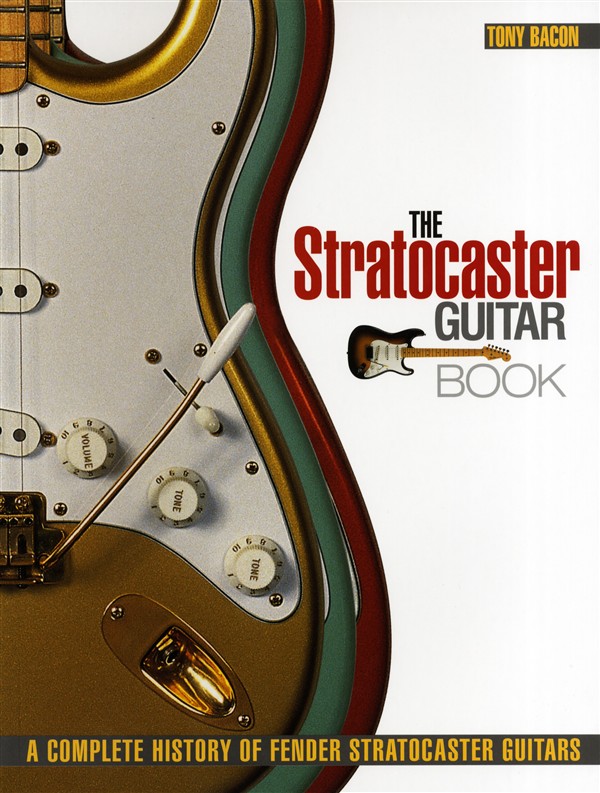
STRATOCASTER GUITAR BOOK A Complete History of Fender Stratocaster Guitars Tony Bacon

The Stratocaster Guitar Book

A Complete History of Fender Stratocaster Guitars


Libro 

volume totalmente dedicato alla chitarra elettrica Fender Stratocaster .  


Series: Guitar Reference
Publisher: Backbeat Books
Format: Softcover
Author: Tony Bacon

Leo Fender's company changed the course of popular music in 1954 when they introduced the Stratocaster. Since then, the Strat has been played by countless guitarists, from Jimi Hendrix to Buddy Guy and Jeff Beck. In this book, interviews with important Strat players from every decade illustrate the instrument's versatility, playability, and continuing importance. This is the complete story of the Stratocaster and the Fender company, from the struggles of the 1950s to the new models, retro reissues, and luscious collectibles of the 21st century. The Stratocaster Guitar Book is a glorious compendium of beautiful pictures, a gripping history, and a detailed guide to all Strat models. A must for all guitar lovers.

Width: 8.5"
Length: 11.0"
160 pages


CONTENTS:
THE STRATOCASTER STORY
THE PRE-STRAT ERA
THE FIFTIES
THE SIXTIES
THE SEVENTIES
THE EIGHTIES
THE NINETIES
RECENT YEARS
ENDNOTES
THE REFERENCE LISTING
US-MADE STRATOCASTERS
MEXICO-MADE STRATOCASTERS
JAPAN-MADE STRATOCASTERS
KOREA-MADE STRATOCASTERS
DATING & SERIAL NUMBERS
MODEL CHRONOLOGY
INDEX
ACKNOWLEDGEMENTS


Leo began work as an accountant, at first in the accounts section of the state highway department and then at a tyre distribution company, but his hobby was always electronics. In his twenties, he built amplifiers and PA systems for public events: sports gatherings, dances, and so on. He took a few piano lessons before trying the saxophone, but he was never serious, and he never learned to play the guitar.
When he lost his accounts job in the Depression, Leo took a bold step and opened his own radio and record store in Fullerton, around 1938. He called the new retail and repair shop Fender Radio Service, and it seemed a natural move for the ambitious and newlymarried 30-year-old. He advertised his wares and services on his business card: "Electrical appliances, phonograph records, musical instruments & repairs, public address systems, sheet music."
His new store on South Spadra meant that Leo met many local musicians and characters in the music and electronics businesses. During the first few years he hooked up with several people who would prove important to his future success. First among these was a professional violinist and lap-steel guitarist, Clayton Orr Kauffman, known to all simply as Doc.
The story goes that some time around 1940, Doc brought an amplifier into Leo's shop for repair and the two got chatting. Doc had amplified his own guitars and made designs for an electric guitar and a vibrato system. By this time, Leo had started looking into the potential for electric guitars and was playing around with pickup designs. A crude solidbody guitar that Fender and Kauffman built in 1943 purely to test these early pickups - one design for which was patented in '44 - is today in the Roy Acuff Museum at Opryland, ashville.
Doc went to work for an aircraft company during World War II, but the two incorrigible tinkerers still found time to get together and come up with a design for a record-changer good enough to net them $5,000. They used some of this money to bolster their shortlived company, K&F (for Kauffman & Fender), and began production of electric lap-steel guitars and small amplifiers in November 1945.
In the 20s, many people in America had taken up the little lap-steel guitar, often called the Hawaiian guitar, and the instrument was still tremendously popular. The steel had been the first type of guitar to go electric in the 30s. Several innovative companies, with Rickenbacker in the lead, experimented with electro-magnetic pickups, fixing them to guitars and feeding their signal out to small amplifiers. The attraction of the steel was that it was an easy-to-play instrument, and thus one suitable for beginners, but the electric version also proved appealing to professional musicians, especially in Hawaiian music and among country-and-western bands.
The musician would play the steel guitar on his lap or would step up to an instrument mounted on legs. The name came not from its construction - Fender's steels were all wooden - but from the metal bar that the player held in his left hand to stop the raised strings, which were generally tuned to an open chord. During the 30s and later the term the stratocaster guitar book...

... quantity, naturally, is limited," announced Fender, and during 1979 and 1980 the firm proceeded to make thousands of 25th Anniversary Stratocasters ($800 including case, virtually the same price as a standard model). "They went fast in '54. They'll go fast now," ran the insistent ad. An official estimate of production mentioned 10,000 units.
Most people tend to refer to a Stratocaster as a Strat, and in 1980 Fender finally used the abbreviation officially on a new model. It was designed by Gregg Wilson, who had come up with the budget-price Fender Lead models introduced the previous year. The new Strat combined regular Stratocaster looks with updated circuitry, a 'hot' bridge pickup, and fashionable heavy-duty brass hardware. Fender also offered the hardware separately as an after-market accessory line, called Original Brass Works, following the lead of various companies that popularised a craze for retrofit replacement parts. Larry DiMarzio was a leader in this new business, introducing his Super Distortion replacement pickup in 1975, with Mighty Mite, Seymour Duncan, and others soon following.
Fender intended with the Strat to re-introduce the old-style narrow headstock of the original Stratocasters. The broader type of the time had been in use since 1965. However, Fender used old worn-out tooling, and the result was not an entirely accurate re-creation. Smaller, certainly; accurate, no. A reversion to the four-bolt neck fixing and body-end truss-rod adjustment and the removal of the neck-tilt for the new Strat model implied that CBS were already aware of criticisms of 70s Stratocasters. A few brighter colours were offered for the Strat, too, reviving Lake Placid Blue, Candy Apple Red, and Olympic White.
The model was significant as the first attempt at a modernised Strat. It retailed at $995, compared to $745 for the regular Stratocaster.
One further attempt in 1980 to provide something different for Strat fans was the Hendrix Stratocaster. It was something like a 25th Anniversary Strat in overall spec, but it had an inverted headstock and additional body contouring, and was only offered in white.
It's another significant guitar, as it was the first Fender marketed to highlight an association with a musician, a sales technique that would become very important to the company from the late 80s. Only 25 or so were produced, and most if not all were marked as prototypes.
Colour schemes were brightened and expanded a little during the 80s, with the shortlived International Colors in 1981 and then the Custom Colors and Stratobursts of '82. Some of the new hues were distinctly lurid - such as Capri Orange, Aztec Gold, or Bronze Stratoburst - and they were not much liked at the time. In 1983, there was a short run of Marble or 'bowling ball' finishes, designed by Darren Johansen, in swirling Red, Blue, or Gold.
With generally trimmed model lines and a massive output from the factories at Fender, it was hard to resist the feeling as the 80s dawned that the newly-important calculations of the balance sheet were firmly established and took precedence over the company's former creativity. At the start of the decade, CBSmanagement decided that they needed some new blood to help reverse a decline in Fender's image and finances. Income had the stratocaster guitar book ...

Prezzo: €199,99
€199,99

LES PAUL LEGACY 1968-2009 THE MODERN ERA OF THE-Robb Lawrence LIBRO ILLUSTRATO CHITARRA

LES PAUL LEGACY 1968-2009 THE MODERN ERA OF THE. Robb Lawrence.

LIBRO ILLUSTRATO CON FOTOGRAFIE A COLORI.


The Modern Era of the Les Paul Legacy 1968-2009
Series: Book
Publisher: Hal Leonard
Format: Hardcover
Author: Robb Lawrence

Following the release of The Early Years..., which Vintage Guitar magazine called “carefully crafted ... lavishly illustrated,” this full-color book continues the amazing journey of an American icon's recording career and the coveted instruments that bear his name. Beginning with the collectible late '60s models, The Modern Les Paul Legacy moves on to the '70s and '80s special-themed instruments – showing all popular artist models, like Jimmy Page, Joe Perry, and Slash, in living color. And the “holy grail” '59 Sunburst and the jaw-dropping Custom Shop creations of the '90s receive their due as achievements that have never, to this day, been surpassed. The book also covers Les Paul's resurgence – the comeback Grammy Award-winning album with Chet Atkins, the start of a weekly gig in a New York City jazz club, and the reconnection with the Gibson family. Since Les Paul's death in August 2009, this will be the first book that covers his entire life, including his last performances at the Rock and Roll Hall of Fame, the memorials in New York, and the burial in his hometown in Wisconsin.
Width: 8.5"
Length: 11.25"
362 pages
 

Prezzo: €159,99
€159,99
Condividi contenuti