ACCORDI - PENTAGRAMMA

REINHARDT DJANGO-COMBOCOM BAND BOOK LIBRO SPARTITI CHITARRA VIOLINO BASSO MANOUCHE

REINHARDT DJANGO, COMBOCOM, BAND. MUSIC SHEET BOOK

LIBRO DI MUSICA GYPSY JAZZ, MANOUCHE, 

SPARTITI DI OGNI STRUMENTO: CHITARRA 1, CHITARRA 2, VIOLINO, CONTRABBASSO.

ACCORDI  E PENTAGRAMMA.

Django (ComboCom) (11 Gypsy Swing Arrangements). By Django Reinhardt. Arranged by Konig, Thomas. For Violin, Guitar 1, Guitar 2, Contrabass. Combo Com. Score; Set of Parts.

Il legendario chitarrista Django Reainhardt insieme con il famoso violinista jazz Stéphane Grappelli  e il "Hot Club de France” hanno creato conosciuto in tutto il mondo lo stile musicale “Gypsy Swing” che non ha perso fino ad oggi il suo magnetismo.

Nel presente volume ci sono raccolte i brani dal repertorio di Django, ai brani standard di Jazz Americano e hits di  csardas Ungherese. Presuppone che viene suonato da Gypsy String ensemble: violino, chitarra solo, chitarra ritmica, e due bassi. Permesso anche l'uso di tre chitarre o, se è necessario, anche di una. Questi undici arrangiamenti sono scritte per le combinazioni variabili che consistono nelle parti melodiche, parti di accompagnamento, una o due parti con modelli per la chitarra e bass.

L'editore, violinista Thomas König, è il membro del popolare in Germania trio di Gypsy Swing.

The legendary guitarist Django Reinhardt, aided by the famous jazz violinist Stéphane Grappelli

and the “Hot Club de France”, created a world-famous style of music that has lost none of its 
magnetism down to the present day: “Gypsy Swing”.

In this volume the pieces range from Django’s repertory to American jazz standards and 
Hungarian csardas hits. The use of a classical Gypsy String ensemble is presupposed: 
violin, solo guitar, rhythm guitar, and double bass. The use of three guitars is equally 
permissible, or, if necessary, only one.

These eleven arrangements are written for variable combinations consisting of melody part, 

accompaniment part, one or two parts with guitar patterns, and bass.


The editor, 
violinist Thomas König, is a member of a popular German gypsy swing trio.


Contenuti:

Zigani

All Of Me

I´ve Found A New Baby

Lulu Swing

Fuli Tschai

Honeysuckle Rose

Ziganotschka

Fis Torza

Romano

Sweet Georgia Brown

Black Eyes

Prezzo: €29,99
€29,99

RENAISSANCE MUSIC FOR GUITAR VOL.2 Ancient Music Ireland Scotland Allan Alexander CD TABLATURE

RENAISSANCE MUSIC FOR GUITAR VOL.II, Including Ancient Music from Ireland and Scotland. Allan Alexander. SHEET MUSIC BOOK WITH CD & GUITAR TABLATURE.

LIBRO DI MUSICA RINASCIMENTALE CON CD. 

SPARTITI PER CHITARRA CON: 

PENTAGRAMMA E TABLATURE. 


Renaissance Music for Guitar Vol II
contains 32 pieces
Cantiga - Anon/Allan There are over 400 of these songs written in praise of Mary in a book put together by king Alphonso X of Castile. This is a perfect example of a tune that sounds more complex than it is. The open basses make it easier.

Almain - Richard Allison/Allan The music notes from this piece are straight from the tablature. I have not changed a thing. Even though the lute is tuned slightly differently, this piece translates very well. Of course the lute is tuned a minor third higher than the guitar, so if you really want to hear this piece, or any in the book, at the right pitch, simply put a capo on the third fret of the guitar.

Come With Me My Giselle - Adam de la Halle/Allan I love this little troubadour song so much that I wrote a variation for it. This piece was written back in the 13th century. It's really wonderful to bring music like this alive again. Just think, people seven hundred years ago heard this melody.

Douce Dame Jolie - Guillaume de Machaut/Allan The syncopation will be the first thing you will notice in this dance. It may take a little time to get the feel of it, but then it's a lot of fun to play. The variations that I wrote for it maintain the syncopation and make the piece a better length for performance.

Benjamin's Song - Allan I am amazed at this little tune; I keep expecting to get tired of it, but I keep having fun with it. It's not too hard to play, and it also gives a nice introduction into playing in higher positions if you are learning them now. If you are an intermediate player, this tune should be easy.

The Gypsy's Lilt - Anon/Allan Music from the Renaissance can be quite surprising. This tune is note for note from a Scottish lute book. The dissonance in the piece is slightly disturbing at first, but then, once it becomes familiar, it's very appealing. There is no doubt of the notes, as there are two versions in the book, and they both have the dissonance. It's a beautiful and melancholy piece.

Cast a Bell - Playford/Allan This piece is from "The Dancing Master" by John Playford - at least the first eight measures are. The rest of the measures are filled with variations that I wrote for the tune. It's an appealing melody. The Playford books were published slightly later than the Renaissance, but many of the pieces in them are melodies that date back to the 16th century and earlier.

Blind Mary - Turlough Carolan/Allan Turlough Carolan also lived in the Baroque period (when the Playford books were published), and perhaps he heard many of the dances in that book. Many of his tunes sound like they were written in the Renaissance, and I thought it would be fun to include this moving piece.

Indescribable Beauty - Anon/Allan This is a very beautiful piece from an Italian manuscript. The actual manuscript was lost, but Oscar Chilesotti transcribed the tablature into notation and put the pieces into a collection, which saved them. Other versions of this particular piece do exist for the lute.

Lady Cassille's Lilt - Skene/Allan The Skene Manuscript is a huge source of early music from Scotland. It contains music for both lute and mandora. This is a lovely, haunting piece. I wrote the variation for the second half. It should be accessible to beginners.

The English Hunts Up - Thomas Whitfield/Allan This lively little tune is a great addition to any repertoire. It has some nice syncopations. I don't remember hearing any other piece from the Renaissance that sounds quite like this one.

Ich Klag den Tag - Hans Neusidler/Allan This is a fairly easy, but powerful tune. It has a simplicity that can be found in many Renaissance tunes, and at the same time, it has some very nice surprises in the phrasing. This piece stands up very well in a concert or a recording.

Italiana - Anon/Allan This is another tune found in the Chilesotti book. It's easy in the sense that most of the basses are open, but it goes rather quickly, so it does take some time to learn. Because the basses repeat all through the piece, you want to make sure not to play them too loudly. If you do, they could become annoying to a listener.

Kalenda Maya - Raimbaut de Vaqueiras/Allan The "Calends of May" is the first of May, or May Day. In Medieval times it was a favorite holiday, filled with flowers, ribbons, and dancing. In Raimbaut's poem "Kalenda Maya" he tells us that none of the beauty of May Day can move him until the lady he loves looks on him also with love. - This description thanks to Jessica

The Maid's in Constrite - Anon/Allan It was a common practice to do variations on melodies in the Renaissance, but in many of the lute pieces, the variations no longer exist. In this case, someone wrote some of them down. The first eight measures are the piece, and the rest of them are the variations.

Out in the Meadowe - Anon/Allan I love this tune and have done a few different versions of it. I like this one the best; it's haunting, and the variation gives another dimension to it. It really has an aura all its own. This music has a very ancient feeling.

Guardame las Vacas - Luys de Naravaez/Allan I tend to look for material that has not been published to use for my books, but sometimes there are tunes that are just so good that I want to include them. I used a well-known Mudarra Fantasia with some reluctance in the first Renaissance book, and did get some feedback on it which really made me glad that I did. The person had heard it before, and may have had the music, but he was used to hearing it played quickly. He found the slower version that I play to be much more to his liking, and the tune then also became playable for him. Guardame las Vacas is just a great tune. There is nothing else quite like it in the Renaissance. The title means "Guard My Cows."

Medieval Dance - Thomas Arbeau/Allan This piece works well when coupled with the Medieval Dance in the first "Renaissance Music for Guitar" book available from ADG. It can stand on its own though, and the variations are fun and a good way to get used to playing some of the notes in higher positions.

Medieval Song No. 1 - Colin Muset/Allan This song has a very nice feel to it. The melody is so simple that it is easy to overlook how wonderful this piece is. To think that the melody is from the 13th century and has lasted this long makes me dizzy.

Villancico - Luys Milan/Allan Many people know the pavans or perhaps the fantasias that Milan wrote. This piece is less familiar, and I have not seen it in a book for guitar. It's short but has a sound all its own.

Tarleton's Resurrection - John Dowland/Allan Dowland was probably the most prolific composer for the lute in the Renaissance. In addition to all of his solos, he wrote many collections of songs for lute and voice. Much of his music was published in the Renaissance. He traveled extensively and was well known as both a composer and performer.

Medieval Song No. 2 - Edi beo Thu Hevene Quene - Anon/Allan The gentle rocking of this melody reminds me of night. The title means, "Blessed be You, Queen of Heaven," and the rest of the words are dreamy. My favorite line is, "My Lady, bring us to your bower". - This description thanks to Jessica

Allemande - Hermann Schein/Allan I love the music of Hermann Schein. The things I have seen have been for an ensemble of five melody instruments. I found this tune so attractive that I had to make arrangements of it for both guitar and lute. The second section is a variation that I wrote for it. When you have a chance, go to the early music section of a large record store and see if you can find some recordings with his music. You won't be disappointed.

Medieval Song No. 3 - Allan Often I will write something because there is a particular type of piece that I really like the sound of, and I can't find another. The other two Medieval Songs on this CD were very appealing to me, and that was the inspiration for writing this piece. I wrote it for my lovely wife. Again, I was looking for the Magic. Because I wrote this tune on the lute, it is much easier to play with the third string of the guitar tuned down to the F#. If it's difficult to read the notation, please just make the adjustment in tuning and read the tablature.

Untitled - Anon/Allan Only the first twelve measures in this tune are the original; the rest are filled with variations that I wrote. I hear this as a melancholy tune, and I find the entire piece and the variations very dreamy. Of course there are no tempo markings on any of the old lute pieces, and the way they are played is entirely up to the performer.

My Heart is Entrusted to You - Orlando de Lasso/Allan It is surprising to me that a tune with a sound like this is from the Renaissance, but then that is what I like about that period. It continually surprises me. This is a very sweet piece and not too difficult to play for an intermediate player.

Song of the Ass - Anon/Allan/Jessica This tune has changed a bit since Medieval times. It is now usually played in a 3/4 meter. I am playing the old version, in 4/4, but the notes are the same. You may know it as "The Friendly Beasts". I prefer it this way - This description thanks to Jessica

A Winter's Ronde - Allan Many of these pieces started out as lute solos, and this one is no different. I did write it, but it was written on the lute. It is special to me, because it's the first piece with this particular sound that I created. This was the piece that gave birth to other pieces, such as "The Ronde for Spring" and "The Child's Ronde."

Passo Mezzo di Diomedes - Diomedes/Allan This literally means Passo Mezzo by Diomedes. He wrote many pieces for the lute. Often, there will be several versions of a piece that have survived. This one was from a collection by Chilesotti.

Pavane - Allan The rhythm is the trickiest part of this because it's quite syncopated. But other than that, it should be playable by a beginner. It doesn't go too quickly, and I find it enjoyable to play.

Alman - Robert Johnson/Allan Robert Johnson was a well-known lutenist in the Renaissance. He was not nearly as prolific as John Dowland, but he did write some beautiful pieces. This is not too hard to play, and with it you can make sweet music.

The Wildflower - Allan This is the last piece that I wrote in 1999, and I wrote it for my musical partner and friend Jessica Walsh. She liked it right from the beginning and encouraged me to complete it. This is one of those magical pieces for me that I just can't stop playing. I don't know where it came from. I just know that I waited and waited, and then the piece mostly just wrote itself, nudging me where it wanted to go.

Presented in both Tablature and Music Notation
The music is presented in both music notation and guitar TAB (for people that do not read music). The music notation is clear and crisp. It contains complete clear fingerings for the guitar. These will help you to learn the tunes quickly whether you depend on the tablature or the music.

Comes With a Compact Disc of the Pieces Performed by Allan Alexander
The CD, played by Allan Alexander, gives the musician the advantage of being able to hear how these songs can be played and will make the learning process easier. This is a high quality Digital recording (DDD). In addition to helping the player become familiar with the music, it will also be a source of listening pleasure. The CD is almost 70 minutes in length.

A High Quality Collection of Music The Renaissance and Medieval Times including Ancient Music from Ireland and Scotland.
It took me a long time to figure it out... exactly what it was in music that attracted me. It appeared to have nothing to do with the complexity, the tempo, the period or the country of origin. There was an indefinable essence that made me want to come back and play it or hear it again. These were the tunes that I would play until my hand was sore, these were the tracks on an album that I would play over and over again and then go searching for the music so I could play it too. There were certain periods that attracted me more than others, and I found the music of some countries very appealing... but then something would come out of the blue and blow me away. The piece was simple and fit none of my accumulated criteria, but it was great. And that is when I figured it out. It was magic. That's what was in the music that I loved. I started to look for it. It didn't matter if the music was easy or difficult, complex or simple, as long as it had the magic. The Renaissance was a very good source. I remember seeing Julian Bream in concert and hearing his recordings. I was stunned to find how simple some of the beautiful lute pieces were.

In Renaissance music I found many dances, fantasias, and songs that had the magic. The majority of them were easier than most of the guitar pieces I was familiar with. Maybe that is because, in the Renaissance, the people who played the instruments wrote the tunes for them... or maybe it was because they were just looking for the magic too. In any event, it's interesting that you rarely find a lute piece that was not written by a lutenist.

Sometimes I would have periods when I couldn't find a tune... then I would try and write one. Every once in a while, I felt I nailed it. Then I suddenly would have another piece that I could play over and over again. It never occurred to me that others would like my pieces too, but I discovered that they did... and eventually I figured out a simple but telling "Magic Test" for a tune. If I have to ask myself if the magic is there... it's not.

The last tune in this book is a free bonus; it's not "Renaissance", but it's loaded with magic. It's one of mine, and I really love it. It's a little more difficult than most of the tunes in this book, but it lays well on the fingerboard.

There are 65 minutes of music on the CD and 32 pieces in the book. This book is perfect to take on gigs or just to play for yourself. The music is great. The CD will give you insights into the music, and it will be enjoyable to listen to on its own merit.

Prezzo: €40,95
€40,95

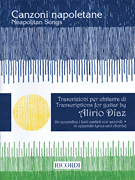
CANZONI NAPOLETANE ALIRIO DIAZ SPARTITI CHITARRA CLASSICA LIBRO SANTA LUCIA NEAPOLITAN SONGS

CANZONI NAPOLETANE, NEAPOLITAN SONGS. TRANSCRIPTIONS FOR GUITAR  BY ALIRIO DIAZ . 

SHEET MUSIC BOOK FOR GUITAR IN STANDARD NOTATION . in appendix lyrics and CHORDS.


LIBRO DI MUSICA DI CANZONI NAPOLITANE TRASCRITTE PER CHITARRA CLASSICA da ALIRIO DIAZ.

SPARTITI CON : ACCORDI E PENTAGRAMMA. 

in appendice i testi cantati con ACCORDI. 

Neapolitan Songs
Series: Guitar
Format: Softcover
Arranger : Alirio Díaz
Composer : Various

Includes:

- 'A vucchella - ARIETTA DI POLISSIPO - Music by Francesco Paolo Tosti - words by GABRIELE D'ANNUNZIO .

- L'aniello - CANZONE POPOLARE NAPOLETANA - ANONYMOUS .

- Fenesta vascia - CALASCIONATA NAPOLITANA - TEODORO COTTRAU su melodia di anonimo napolitano del '500. 

- Funiculì funiculà - canto popolare per Pierdigrotta - MUSIC by Luigi Denza - words by Peppino Turco - 

- La Luisella - "Luisella la giardenera " o "Le bellezze di Luisella " - by Guglielmo Cottrau . 

- Raziella / Graziella - canzone popolare - anonymous .

- Michelemmà - antica canzone marinara - anonimous del '600 ascribed to Salvator Rosa . 

- Santa Lucia - il barcajuolo de Santa Lucia - music by Teodoro Cottrau - words by Enrico Cossovich .

- Tu ca nun chiagne - Music by Ernesto De Curtis - words by Libero Bovio . 

- Il saltimbanco - motivo popolare - anonymous - and harmonized by Alirio Diaz .

34 pages.

Prezzo: €38,99
€38,99

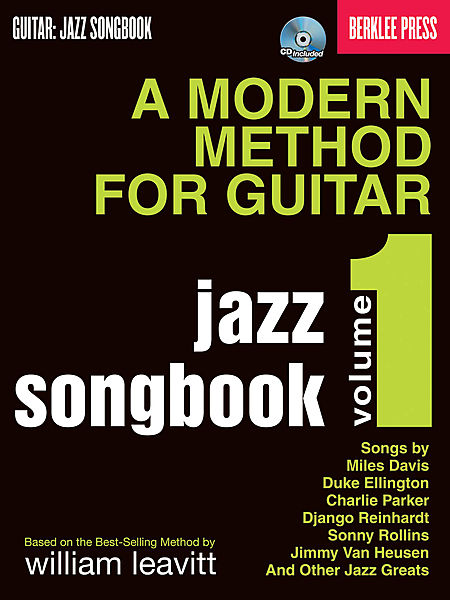
A MODERN METHOD FOR GUITAR JAZZ SONGBOOK, VOLUME 1. CD

A MODERN METHOD FOR GUITAR JAZZ SONGBOOK, VOLUME 1. CD

Based on the best-selling method by William Leavitt

SERIE: GUITAR METHOD
EDITORE: BERKLEE PRESS
SUPPORTO: LIBRO CON CD


Play great jazz while you learn from the most revered guitar method of all time. These solos and duets map directly to the lessons of William Leavitt's Modern Method for Guitar Vol. 1, the basic guitar text at Berklee College of Music. Since the 1960s, the Modern Method for Guitar series has been one of world's most popular guitar methods, translated into Spanish, French, and Japanese, and selling over half a million copies.


Carefully overseen and recorded by Larry Baione, chair of Berklee's Guitar Department (and a former student of William Leavitt), these arrangements are crafted to Leavitt's time-proven approach, giving you the chance to apply what you learn to music by Miles Davis, Duke Ellington, Sonny Rollins, Django Reinhardt, and other jazz greats. The accompanying CD demonstrates all tunes and offers play-along tracks for practicing the duets.

At Berklee, we constantly encourage our students to apply what they are learning to real music. Over the years, we have found that certain tunes map well to the curriculum in terms of the techniques required to perform them. Bill Leavitt was among the greatest guitar teachers in the history of Berklee College of Music, and his Modern Method/or Guitar books have been central to Berklee's guitar curriculum for many decades. This songbook includes some of my favorite jazz standards to give to students working through the Modern Method/or Guitar Volume 1. In addition to reading these tunes from the jazz repertoire, I encourage you to spend some time with classic recordings and practice transcribing them by ear. Some of these arrangements are for solo guitar, and some are duets. This is similar to the method itself, and it underscores Bill's insistence that guitarists learn to be well-rounded and explore a variety of playing situations. The accompanying recording will let you practice all parts. The solos and duets are of varying levels. Practice them slowly at first, always working on playing them as legato as possible. If the solo pieces are too difficult, start by practicing just the melodies (the single notes and the top notes of the chords). I hope you enjoy this music, and that it inspires you towards further explorations. Larry Baione, Guitar Department Chair, Berklee College of Music


TITOLI INCLUSE:
 

AFTERNOON IN PARIS - John Lewis - 1955 - Per due chitarre
BASIN STREET BLUES - Spencer Williams - 1928 - Per due chitarre
A CHILD IS BORN - Thad Jones - 1969
DAPHNE - Django Reinhardt - 1938
HERE'S THAT RAINY DAY - Parole di Burke. Musica di Jimmi Van Heusen - 1949
IN A SENTIMENTAL MOOD - Duke Ellington - 1935
MY LITTLE SUEDE SHOES - Charlie Parker - 1956
ST. THOMAS - Sonny Rollins - 1963 - Per due chitarre
SAMBA DE ORFEU - Luis Bonfa - 1959
SO WHAT - Miles Davis - 1959
SWING 42 - Django Reinhardt - 1941
VALSE HOT - Sonny Rollins - 1965 - Per due chitarre
THE VERY THOUGHT OF YOU - Ray Noble - 1934
WHEN I FALL IN LOVE - Musica di Victor Young. Parole di Edward Heyman - 1952
WILLOW WEEP FOR ME - Ann Ronell - 1932 - Per due chitarre

Prezzo: €15,99
€15,99

SPYRO GYRA THE BEST OF SCORE LIBRO SPARTITI CHITARRA BASSO PARTITURA FUSION

SPYRO GYRA, THE BEST OF. TRANSCRIBED SCORE . SHEET MUSIC BOOK . 

LIBRO DI MUSICA JAZZ FUSION. 

SPARTITI DI OGNI STRUMENTO: 

ACCORDI, PENTAGRAMMA. 

Series: Transcribed Score
Artist: Spyro Gyra

A chronology of the favorite tunes from this award-winning jazz group. Note-for-note scores for sax, keyboards, mallets, guitar, bass, percussion / drums. 8 tunes including: Shaker Song - Morning Dance - Catching The Sun - Joy Ride. 144 pages . 

TITOLI: 

Catching The Sun
City Kids
Freetime
Heliopolis
Incognito
Joy Ride
Morning Dance
Shaker Song

Prezzo: €49,99
€49,99

THE DIATONIC CYCLE-Exercises All Jazz-Traditional-Contemporary Musicians-Laura De Cosmo 343 esercizi

THE DIATONIC CYCLE, Essential Exercises for All Jazz, Traditional and Contemporary Musicians, Emile, Laura De Cosmo. 343 esercizi, 184 pagine.

LIBRO DI MUSICA. ARMONIA. 

SPARTITI IN CHIAVE DI VIOLINO CON :

ACCORDI E PENTAGRAMMA, NOTE.  

Series: Jazz Instruction

Author: Emile De Cosmo
Author: Laura De Cosmo

Renowned jazz educators Emile and Laura De Cosmo provide more than 300 exercises to help improvisors tackle one of music's most common progressions: the diatonic cycle. This book is guaranteed to refine technique, enhance improvisational fluency, and improve sight-reading! 344 pages

Prezzo: €23,99
€23,99

TANGO FOR GUITAR Jorge Polanuer Brian Chambouleyron Centerstream Publications Hal Leonard CD LIBRO

TANGO FOR GUITAR, Jorge Polanuer e Brian Chambouleyron. 13 titoli con base. CD

LIBRO E CD

Tango for Guitar
Series: Guitar
Publisher: Centerstream Publications
Format: Softcover with CD
Author: Brian Chambouleyron
Composer: Jorge Polanuer

At the beginning of the 20th Century, the tango was born in Buenos Aires, and it was a style that spread dramatically all over the world. Tango is a dance, a rhythm and a characteristic musical color. The 13 solos in this book were written especially for guitar by award-winning composers Jorge Polanuer and Brian Chambouleyron, and each tune is performed on the CD by Brian, one of the most popular guitarists in Buenos Aires. The solos are presented in different degrees of complexity – tune up with the tuning notes on the CD and play along with the tangos, milangos, waltzes and even a guitar duet. The songs are also repeated on the CD without the lead for you to play the solo part.

Inventory #HL 00000379
ISBN: 9781574241464
UPC: 073999329162
Width: 9.0"
Length: 12.0"
32 pages

The guitar is a charasteristic musical instrument in Argentine culture. Since the arrival of Spaniards to South America, it has had a key role in our folk music. Its sound has been the composers and interpreters' favorite. At present there is a broad and comprehensive catalog of songs and instrumental pieces, which encompasses early genres of the 19th century as well as the latest pop creations. At the beginning of the 20th century (around the time of the blues), the tango was born in Buenos Aires: a style arising from immigration and the melting pot which was going to spread dramatically all over the world. Tango is a dance, a rhythm and a charasteristic musical color. It is in tango where the guitar reaches a remarkable level of technical and expressive development. Today I propose an approach in the 'tanguero' style of playing the guitar, with some pieces specially composed by Jorge Polanuer, a composer and a friend, and myself. The tangos in this book are accompained by valses-tango and milonga-tango, similar and complementary genres also played in ballrooms. For each piece I suggest fingering based on the criterion of economy of movements. The numbers on the notes indicate the finger with which that note must be played, and the encircled number refers to the string. There can be other ways of fingering which might be more practical for you; that being the case, feel free to modify it accordingly. There's a way to play for every instrumentalist! The pieces present different degrees of complexity; therefore, they could also make an excellent complement in learning how to play the instrument. I hope you find this approach useful and you feel like filling yourselves with tango.

Brian Chambouleyron became a musician studying several disciplines (guitar, singing, composition, musical analysis, arrangements and orchestration). Always fascinated with popular music, he traveled to different Latin American countries to learn their traditions. He began his professional activity as a music teacher in 1990.Teaching led to the creation of children's shows. As a composer of popular songs, he participated in the Buenos Aires' Young Artists biennial exhibition. In 1993he went on his first professional tour to Europe, going all over France and Switzerland for two months and performing as both soloist and together with other musical bands. He also gave courses on Argentine popular music. From then on, his activities in European countries became regular. In 1996 he was in charge of the musical direction of the successful show Recuerdos son recuerdos (which received 5 ACE awards nominations). Brian Chambouleyron was nominated for 'male revelation'. (CD Recuerdos son recuerdos - La Trastienda Records). In 1998 he participated in the show Glorias Portenas (1998ACE award) together with Soledad Villamil, which was given an excellent reception by the critics and the public. The show toured continuously throughout Argentina, Latin America and Europe for two years, and participated in prestigious international festivals (CD Glorias Portenas vol. I and II - Epsa Music). Brian Chambouleyron was given the 1999Trinidad Guevara award for 'male revelation of the year' by the Department of Culture of Buenos Aires City. In 2000 he created the show Patio de Tango with Esteban Morgado, which also had a wonderful reception at a national level, and he started a long international tour (Paris, Rome, Madrid, Barcelona, etc). (CD Patio de Tango - BAM records, Department of Culture). With his last show, Tangos, valses and Milongas, he has performed in several cultural events and toured abroad, being highly acclaimed by audiences and critics. Brian has also composed the music for several theatre plays: "La firecilla domada" , 2004; "Pequena historia del tango", 2002; "Granadina", 2003; ect. In 2004 recorded the CD "Chambouleyron sings GardeI", a selection of the finest compositions by Gardel, arranged by B. Ch. (Random records, Buenos Aires). In 2005 recorded the CD "Voiceand Guitar", Twenty tradicional tango and argentinian popular music pieces, arranged by Chambouleyron. (Random records, Buenos Aires) on Ie canta a Gardel (Chambouleyron sings Gardel). This work is a selection of the finest compositions by Gardel-plus a few jewels from his songbook - recreated in an intimate and romantic atmosphere.

Blanca

Childhood Memories

Don't Kill Me Or I'll Die

If Mamma Says So

It's Raining

My Friend

Nobody Left In Town

Nothing To Lose

Pretty Buenos Aires

Rainy Day Waltz

Strolling

The Farewell Waltz

Without Realizing It

Prezzo: €26,99
€26,99

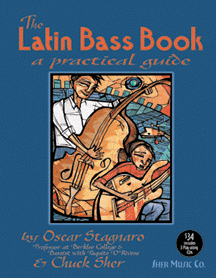
THE LATIN BASS BOOK A Practical Guide by Oscar Stagnaro 3 CD LIBRO METODO BASSO LATINO

THE LATIN BASS BOOK: A Practical Guide, by Oscar Stagnaro. SHEET MUSIC BOOK WITH 3 CD

LIBRO METODO DI MUSICA LATINA, CON 3 CD.

SPARTITI PER BASSO CON : 

ACCORDI E PENTAGRAMMA. 

267 PAGINE IN ITALIANO 


by Oscar Stagnaro (Bassist with Paquito D'Rivera, Professor at Berklee College) and
Chuck Sher (author of "The Improviser's Bass Method")

The only comprehensive book ever published on how to play bass in authentic Afro-Cuban, Brazilian, Caribbean, Latin Jazz & South American styles.
Over 250 pages of transcriptions of Oscar Stagnaro playing each exercise. Learn from the best!

Includes: 3 Play-Along CDs to accompany each exercise, featuring world-class rhythm sections:

Oscar Stagnaro - bass
Rebeca Mauleón - piano
Orestes Vilató - percussion
Dario Eskenazi - piano
Mark Walker - drums and others

Notes About the Enclosed Play-Along CDs
The accompanying CDs to "The Latin Bass Book" were designed to provide:
a) audio illustrations of how each exercise should be played, and also
b) years of professional~level play~along accompaniment.

How To Best Utilize These CDs ..Please read!
1) Go through each exercise and listen to how the bass part fits in with the rest of the rhythm section
while you watch the transcription go by.
2) Then try playing what is written yourself until you sound pretty much like the bass on the CD.
3) You can then turn off the bass channel and play along with the rhythm track yourself, improvising
your own lines based on the material presented in that exercise-especially any rhythms written out at the
end of the transcription of Oscar's bass line.
4) After you1ve gone through the whole book in this way, you can then use the CDs to practice
anything you want, not just the initial rhythms suggested for that track.
We hope you will find these CDs invaluable in giving you professional Latin rhythm sections to play
along with. Enjoy!

PERSONNEL:
Afro,Cuban Exercises
CD One, All tracks; CD Two, Tracks 1,15; CD Three' Tracks 8 & 18
Oscar Stagnaro ~bass
Rebeca Maule6n ~keyboards, vocals
Orestes Vilat6 ~percussion, vocals
Edgardo Camb6n ~percussion, vocals
Carlos Caro ~percussion, vocals
Recorded and mixed by Oscar Autie at 0 Studios, El Cerrito, CA
Brazilian and Caribbean Exercises
CD Two, Tracks 16,23; CD Three, Tracks 1,7
Oscar Stagnaro ~bass
Dario Eskenazi ~keyboards
Attila Nagy' keyboards (Track 7 only)
Mark Walker ~drums
Pernell Sarturnino ' percussion
Recorded at Alleycat Studio by John Lee, South Orange, NJ.
Mixed at Art Drums Studio by Alberto Netto, Arlington, MA
South American Exercises
CD Three' Tracks 9,17
Oscar Stagnaro ~bass
Aquiles Baez ~Venezuelan cuatro (Tracks 9~13) and guitar (Tracks 16~17)
Omar Ledezma ~congas and percussion (Tracks 9~13)
Franco Pinna - drums (Tracks 14,15)
Julio Santillan ~guitar (Tracks 14~15)
Martin Zarzar ~cajon (Tracks 16,17)
Jorge Perez Albela ~hand claps (Tracks 6-17)
DPelot - quijada, guiro & bells (Tracks 16-17)
Recorded and Mixed at ArtDrums Studio by Alberto Netto, Arlington, MA
All CDs mastered by "The Master", Fred Catero, at Catero Productions, San Carlos, CA 

Editor's Foreword
The role of the bass in Latin music is primarily to hold down the rhythmic and harmonic foundation of the tune. To the casual listener there is certainly a lot of repetition in most Latin bass lines. But if you listen closel you'll usually find a myriad of subtle variations that give the music an extra kick without destroying the underling groove. This book will show you how that is done. “The Latin Bass Book" contains the most comprehensive study ever published of the main Afro-Cuban and Brazilian styles of bass playing, as well as shorter sections on other Caribbean and Latin American styles and al 0 Latin jazz bass playing. If you go through the book and faithfully follow the written instructions, you will be in possession of all the information you need to fulfill your function in a Latin or Latin jazz rhythm section. This is a practical guide for the motivated student to learn how to play in various Latin idioms, not an historical accounting of how these idioms developed. For that, please see Sher Music CO.IS "The True Cuban Bass" by Carlos Del Puerto and Silvio Vergara, an invaluable document. Much thanks goes to Attila Nagy for designing the cover, as well as his informative contribution to the reggae section of the book; Michelle White for the beautiful cover art work; Larry Dunlap and Rebeca Mauleon for their world-class transcriptions; all the wonderful rhythm section players on the CDs; Dave Belove for contributing Chapter Four, on the bassi relation to clave; Chuck Gee for the easy-to-read music manuscript; Fred Catero for a masterful mastering job; the talented photographers who contributed to this book; Andy Gonzalez and Pedro Perez who allowed us to include transcriptions of some of their recorded bass lines; and lastly Oscar Stagnaro, who makes this book come alive with such grace and soul. As the world gets closer together, having a working knowledge of Latin bass playing will increasingly be a prerequisite for any professional, improvising bassist. This book is designed to help you learn to play this passionate and beautiful music. Enjoy the ride! - Chuck Sher

About Oscar Stagnaro
Bassist Oscar Stagnaro, originally from Peru, studied at the Conservatory of Music in Lima, Peru and worked extensively doing studio work and live performances with many international artists and local bands before moving to the USA in 1979. Since then he has been a very active performer and one of the most yersatile bass players on the East Coast. His mastery of different styles including jazz, fusion, Latin jazz, Brazilian jazz and South American music has helped him to travel the world performing with the very best Latin jazz artits. Mr. Stagnaro has been an Associate Professor at Berklee College of Music since 1988, where he teaches private lessons, workshops and ensembles, and has represented Berklee at the IAJE Conventions since 1997. He i an active clinician and has given clinics on bass playing in Peru, Puerto Rico, Cos a Rica, Venezuela, Germany, Spain and the USA. Mr. Stagnaro has recorded with Paquito URivera, the United Nations Orchestra, Dave Valentin, Charlie Sepulveda, The Caribbean Jazz Project and many others (see Discography on page 262.) He has also played with Chucho Valdes, Michel Camilo, Dave Liebman, Ray Barretto, Mark Murphy, Tom Harrell, Leny Andrade, Claudio Roditi, Danilo Perez, Tiger Okashi, Bob Moses, Bob Mintzer, Steve Kuhn, Nestor Torres and many others. His first CD under his own name, "Mariellals Dream", is on the Songosaurus label and features Paquito D'Rivera, Dave Samuels, Ed Simon, Alex Acuna and Ramon Stagnaro. Mr. Stagnaro endorses Etifani speakers, Fender strings and Guild and Warwick basses.

A Note From Oscar
This work is dedicated to my Father, Rogelio, for his love and dedication; my wife Teresa for her love, comprehension, inspiration and huge patience; my children Paulo and Mariella who help me to find the meaning of life; to my brother Ramon, my first bass teacher; and to my best friend Pocho Purizaga. Thanks also to Paquito D'Rivera, Danilo Perez, the Pelots, my Boss at Berklee, Rich Appleman, Pedro Aiscorbe, Carlos Hayre, Aquiles Baez, Los Changos, Sal Cuevas, Alon Yavnai, Dave Valentin, Brenda Feliciano, Alberto Netto, Alain Malett, Lincoln Goines, Milton Cardona, Andy Narell, Dave Samuels, Victor Mendoza, Coc Salazar, Pancho aenz and all my friends and collegues whom I have learned from and share the universal language of music.

SECTION ONE
Chapter 1
Chapter 2
Chapter 3
Chapter 4
Chapter 5

SECTION TWO
Chapter 6
Chapter 7
Chapter 8

SECTION THREE
Chapter 9
Chapter 10

SECTION FOUR
Chapter 11
Chapter 12

SECTION FIVE
Chapter 13
APPENDIX I
APPENDIX II
Table of Contents
The Thmbao Bass Line
The Basic Tumbao and its Main Variations .
Combinations .
Other Simple Tumbao Variations .
The Bass In Relation To Clave .
Advanced Tumbao Variations .
Other Afro-Cuban Styles
Cha-Cha-Cha and its Variations .
Afro Lines in Six .
Contemporary Cuban-Style Bass Lines .
Brazilian Bass Lines
Samba Bass Lines .
Partido Alto, BaHio and Other Brazilian Styles .
Caribbean & South American Styles
Merengue, Reggae and Other Caribbean Styles .
South American Styles .
Latin Jazz Bass Lines
Latin Jazz Bass Lines .
Transcriptions of Recorded Bass Lines ,
Pedro Perez' bass line on "La Rumba Esta Buena"
Andy Gonzalez' bass line on "Little Sunflower"
Oscar Stagnaro's bass line on "Sin Saber Porque"
Andy Gonzalez' bass line on "Rainsville"
Andy Gonzalez' bass line on "Water Babies"
Oscar Stagnaro Discography .

Prezzo: €36,99
€36,99

JETHRO TULL FLUTE SOLOS As Performed by Ian Anderson Transcribed Jeff Rona SPARTITI FLAUTO

JETHRO TULL, FLUTE SOLOS.

LIBRO DI MUSICA ROCK.

SPARTITI PER FLAUTO.

ACCORDI, PENTAGRAMMA.

As Performed by Ian Anderson
Series: Artist Books
Artist: Ian Anderson
Artist: Jethro Tull

Flute solos from 18 Jethro Tull songs have been transcribed for this collection. Songs include:


These solos are transcribed from the albums on which the songs may be found and, as such, are difficult to play (in true Ian Anderson intense, dynamic fashion). As the solos are excerpts from the complete pieces, they are often improvisational passages, containing different melodic ideas and voicings, and may not always include the original melody.


EXPLANATION OF THE FLUTE SYMBOLS

To achieve some of the techniques Ian Anderson employs on his flute

we've added the following notations to the arrangements:


01 = first harmonic

02 = second harmonic

sing = sing into the flute

ord. = stop sing

fl. = flutter tongue

sing S = sing in the shape of the line

0/ = increasing harmonics


The harmonics are achieved merely by overblowing until the next higher note (overtone) sounds. For the second harmonic, blow until the second higher note sounds. The increasing harmonics are achieved by gradually blowing harder and harder to get as many harmonics as possible.

Singing into the flute may be awkward at first. It is recommended that you learn the pieces first without the singing, then add the effect later. Sing the written note in the octave most comfortable for your voice. It is important to keep the airstream moving fast so there will be a good balance between flute and voice. Ian Anderson has a distinct "dark" sound. In playing these pieces you may wish to play with the blow hole of your flute a little more covered than normal, and blow down into it more. The "dirty" passages should be played with a heavy tongue and almost overblown. You should, however, be careful not to let these techniques become habit.


Baker St. Muse

Big Dipper

Bouree
Bungle In The Jungle
Chequered Flag (Dead Or Alive)
Cross-Eyed Mary
Cup Of Wonder
Fire At Midnight
From Later
Living In The Past
Look Into The Sun
My God
Nothing Is Easy
Passion Play Edit #8
Thick As A Brick
Third Hurrah
The Whistler
The Witch's Promise

48 pages

Prezzo: €19,99
€19,99

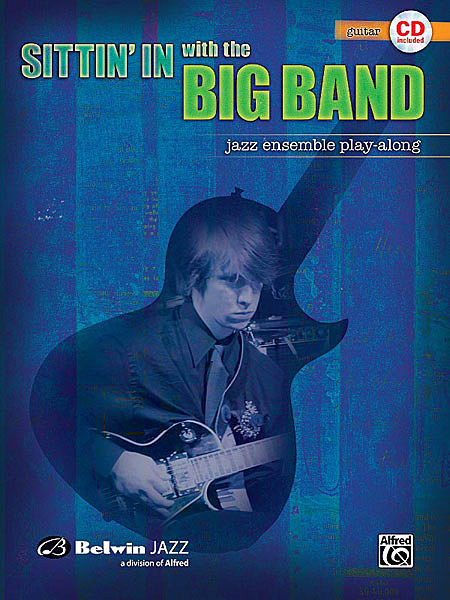
SITTIN' IN WITH THE BIG BAND [GUITAR] JAZZ ENSEMBLE PLAY-ALONG CD LIBRO BASI SPARTITI CHITARRA

SITTIN' IN WITH THE BIG BAND [GUITAR], JAZZ ENSEMBLE PLAY-ALONG. CD

LIBRO DI MUSICA JAZZ, CON CD DI BASI. 

SPARTITI PER CHITARRA.

ACCORDI E PENTAGRAMMA. 

Sittin' In with the Big Band, Volume I 
Jazz Ensemble Play-Along
Item: 00-27545
UPC: 038081293158
ISBN 10: 0739045199
ISBN 13: 9780739045190
Category: Instrumental Series
Format: Book & CD
Instrument: Guitar
Instrumentation: Guitar
Level: 2 (Easy to Medium Easy)

Performance Notes
How to Use This Book

Each arrangement has two CD tracks:

1) Demonstration track. The guitar part is in the mix. Listen to how your part is played by professional musicians to copy the comping style, rhythm, attack, phrasing, articulation, feel, style, and rhythm section blend.

2) Play-Along track. Your part has been taken out of the mix. You playalong with the big band.

3) See page 24 for Performance Notes.

4) There is a two-measure count-off click at the beginning of each playalong track.

Alfred Publishing Co. Inc. thanks the students of Mary Ward Catholic Secondary School Jazz Ensemble, Toronto, Canada, John Volpe, director, Vince Gassi, assistant director, and photographers Jackie Fong and Jermaine Ong.

Alfred Publishing Co., Inc. 16320 Roscoe Blvd., Suite 100 

Sittin’ In with the Big Band, Vol. I is written at the easy to intermediate-easy level. It provides an opportunity to play along with a professional jazz ensemble to improve your playing, whenever you want. As you play with and listen to the outstanding players in the band, you’ll learn about blend, style, phrasing, tone, dynamics, technique, articulation, and playing in time, as well as a variety of Latin, swing, ballad and rock styles. Performance tips and suggestions are included in each book. Books are available for alto saxophone, tenor saxophone, trumpet, trombone, piano, bass, guitar, and drums. Features include 11 big-band charts arranged by a variety of top writers, solo improvisation opportunities, and a play-along CD with demo tracks.

Titles: Vehicle * Sax to the Max * Nutcracker Rock * Fiesta Latina * Now What * Goodbye My Heart * Two and a Half Men * Burritos to Go * Drummin’ Man * Swingin’ Shanty * and Play That Funky Music.

TITLE COMPOSER
Burritos to Go - Victor Lopez (composer)
Drummin' Man - Gene Krupa (composer); Tiny Parham (composer)
Fiesta Latina - Victor Lopez (composer)
Goodbye My Heart - Mike Smukal (composer)
Now What - Mike Kamuf (composer)
Nutcracker Rock - Peter Illyich Tchaikovsky (composer); Mike Smukal (arranger)
Play That Funky Music - Robert Parissi (composer) arranged: Victor Lopez
Sax to the Max - Mike Lewis (composer)
Swingin' Shanty - Ralph Ford (arranger)
Two and a Half Men (Main Theme) - Grant Geissman (composer); Lee Aronsohn (composer); Chuck Lorre 
Vehicle - James Peterik (composer)


SERIES: Sittin' In with the Big Band
CATEGORY: Instrumental Series
FORMAT: Book & CD
INSTRUMENT: Guitar
LEVEL: 2 (Easy to Medium Easy)

Sittin’ In with the Big Band: Jazz Ensemble Play-Along is written at the easy to medium-easy level. It provides an opportunity to play along with a professional jazz ensemble to improve your playing 24/7. As you play along and listen to the outstanding players in the band, you’ll learn about blend, style, phrasing, tone, dynamics, technique, articulation, and playing in time, as well as a variety of Latin, swing, ballad and rock styles. Performance tips and suggestions are included in each book. Books are available for alto saxophone, tenor saxophone, trumpet, trombone, piano, bass, guitar and drums.
 

SITTIN' IN with the BIG BAND jazz ensemble play-along

features:
• Eleven big-band charts arranged by a variety of top writers
• Play-along CD with demo track
• Solo improvisation opportunities
• Performance tips/suggestions

Sittin 'In with the Big Band:
Jazz Ensemble Play-Along is written at the easy to mediumeasy level. It provides an opportunity to play along with a professional jazz ensemble to improve your playing 24/7. As you play along and listen to the outstanding players in the band, you'llieam about blend, style, phrasing, tone, dynamics, technique, articulation and playing in time, as well as a variety of Latin, swing, ballad and rock styles. Performance tips and suggestions are included in each book. Books are available for alto saxophone, tenor saxophone, trumpet, trombone, piano, bass, guitar and drums.

available books: 

Alto Saxophone (27527)
Tenor Saxophone (27530)
Trumpet (27533)
Trombone (27536)
Piano (27539)
Bass (27542)
Guitar (27545)
Drums (27548)

27545 Book & CD
ISBN-10: 0-739 519-9
ISBN-13: 978-0-739G-45 9-0 

Features:
Eleven big-band charts arranged by a variety of top writers
Play-along CD with demo track
Solo improvisation opportunities
Performance tips/suggestions

PERFORMANCE NOTES FOR GUITAR
Playing guitar in a big band is challenging but very rewarding. Here are a few specific tips for playing
guitar in a big band:
• Within the typical rhythm section, the guitar and piano must work especially close. Share the
camping duties. Always be sensitive to blend with the rhythm section and the ensemble.
• "Comping" means to accompany or compliment. Always keep it simple, tasteful and supportive.
Lessis more.
• Various responsibilities for the guitarist are: com ping, supporting the ensemble harmony and
rhythms, playing individual lines with wind players, soloing, and supporting various soloists.
• Slash marks indicate to camp using three or four note chords usually in a quarter note rhythm
pattern. Typically, the third and seventh are the most important notes in a seventh chord.
• Become skilled at reading both chord changes, written notes and creating chord voicings.
• Always be sensitive to your volume and sound. Begin by setting the tone controls on the
amplifier to the mid-point and then adjust as needed. For a rock tune, the goal is to approximate
an electric guitar sound, but for a jazz swing tune, strive for a hollow body jazz guitar
sound with dark overtones. Listen to examples of these different types of instruments for reference.
• The guitar part is a guide and suggestion of what to play. Depending on your ability and
experience, you can play the part as written or embellish but with good taste and musicality. Always listen!
• Generally, in a big band chart, when there is a written out part with no chord symbols, the arranger
wishes the part played as written. When there are only chord changes and/or slashes,
then comp in the style of the chart.
• For a sound that blends, consider using medium thickness picks which will give the sound a
bright, acoustic quality and hold the pick loosely between the thumb and index finger.
• For a swing style comp of quarter notes, strum straight quarter notes trying to cut off (mute)
the sound of the chord right after striking the strings. Strum from the elbow; giving a bright,
swinging sound that propels the rhythm section forward.
• The guitarist's quarter note comping style should perfectly mesh so that the guitar and bass merge into one big sound.
• If the chord has extensions you don't recognize, play the third and seventh (sixth) of the chord.
There is a two-measure count-off click at the beginning of each play-along track

Vehicle:
1) A rock style chart, dig in and play more aggressivelythan usual and strive for a brighter sound, but
don't overdo the volume.
2) The written camping rhythms are also played by the piano, so listen, blend and lock in the feel.
3) Measure 65 isa rubato trombone solo. In 66, the drumset playsa fill in-tempo to bring you in for the last two measures.

Sax to the Max:
1) In the introduction, play the written notes with the saxesand brass.Listenand blend.
2) This chart callsfor basiccamping in the jazz swing style. Playquarter notes with a muted sound.
3) If the chord hasextensionsyou don't recognize, focus on the third and seventh of the chord.

Nutcracker Rock:
1) Playmeasures 5-8 with a bell-like sound-play it clear and let it ring.
2) Although this isa rock style chart, avoid a radical rock tone-blend.
3) At measure 37, listen and match the articulation and phrasing with the horn players ...

Prezzo: €21,99
€21,99
Condividi contenuti