SPARTITI PER CHITARRA DI MUSICA JAZZ

LIBRI DI TRASCRIZIONI DI MUSICA JAZZ, TABLATURE, SPARTITI,

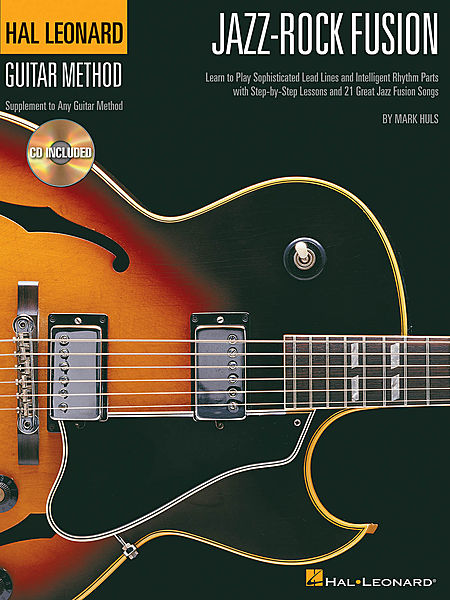
JAZZ-ROCK FUSION Hal Leonard Guitar method Mark Huls CD TABLATURE LIBRO SPARTITI METODO

JAZZ-ROCK FUSION, Hal Leonard Guitar method, Mark Huls. CD TABLATURE

LIBRO METODO DI MUSICA, CON CD.

SPARTITI PER CHITARRA.

ACCORDI, PENTAGRAMMA, TABLATURE. 

Series: Guitar Method
Format: Softcover with CD - TAB
Author : Mark Huls

Learn to play sophisticated lead lines and intelligent rhythm parts with step-by-step lessons and 21 great jazz fusion songs. Hal Leonard Jazz-Rock Fusion is your complete guide to mastering fusion guitar. You'll learn the many elements of this exciting music through real song examples by masters such as John McLaughlin, Mike Stern, Allan Holdsworth, Scott Henderson, John Scofield, Pat Metheny, and many more. Songs include: Birdland • Blue in Green • Freddie Freeloader • My Favorite Things • Nardis • Oye Como Va • She's a Woman • Spanish Key • and more.


INTRODUCTION: GETTING FUSED

When you listen to the pioneering sounds of Miles Davis's Bitches Brew (1969) and ask yourself, "What is fusion?", only one thing can come to mind: a total exploration of the sonic experience. This is true for most jazz-rock fusion efforts of the late sixties and early seventies, the era in which it emerged as a recognized independent form of music. The era produced many architects of the fusion sound, including Tony Williams, Herbie Hancock, Chick Corea, Joe Zawinul, and guitar greats such as John McLaughlin and Larry Coryell. This period also saw the influence of jazz in rock, with groups such as the Byrds, Hendrix, Cream, the Greatful Dead, Frank Zappa, Blood Sweat and Tears, and Chicago experimenting in free-form improvisations and jazz tonalities. Regarding fusion, rock's contributions can be heard in its straight-eighth or sixteenth-note repetitive patterns and grooves. This is in contrast to traditional jazz-swing rhythms. Rock attributes also include certain tonal characteristics, such as power chords, classic rock/blues/funk phrasing, and a greater use of "guitar" techniques such as bending. The fusion sound was also heavily influenced by the use of electronic instruments and effects in sixties rock, such as distortion, delay, wah, and phasing. With expansive, and at times haunting, plays of harmony borrowed from the wider harmonic field of jazz, the improvisational character of jazz, and the drive and emotion of rock, fusion captured the emotional expression and conscious expansion sought by its early creators. Their music traveled from dreamy soundscapes to bursts of explosive energy with the ability to find a solid foundation in the consistent drive of an underlying rock or funk groove. This formula of early fusion reflected the explorative spirit of the sixties and remains a part of fusion today. However, it has also expanded into many facets, with artists gravitating towards greater or lesser sides of jazz or rock and their counterparts of funk, fusion, blues, and pop. Modern fusion guitarists include such players as Scott Henderson, John Scofield, Pat Metheny, and Allan Holdsworth, all of which lean to the more "hard-core" end of the experimental and exploratory side of fusion. Meanwhile, players such as Larry Carlton, Earl Klugh, and Lee Ritenour have found success in the pop culture of fusion music-what is known as the "smooth-jazz" sound. The influence of jazz-rock fusion does not end solely with those artists considered to be "fusion" artists. Mainstream rock and pop guitarists and musicians of every facet have found inspiration from the jazz and jazz-rock fusion sound. Consider the works of Sting, Carlos Santana, Dave Matthews, Nora Jones, and Joni Mitchell, to name only a few. Many fusion artists, especially those of the early sixties and seventies, drew artistic and personal inspiration from a desire for music to serve as a channel to greater mental and or spiritual consciousness. This concept can also be found in Eastern philosophies in which certain sounds and or rhythms open "spiritual" centers. Such influences are evident in the group names and album titles of the early fusion era as well. These concepts, and the inherent artistic drive of the jazz-rock fusion artist to branch out into a greater musical experience, have also introduced world and ethnic music forms into the fusion sound, including Latin, African, and Eastern music influences. As a melting pot of style and artistic personality, a mere attempt to define jazz-rock fusion might sound like: a spirit of limitless harmonic and melodic potential alive with the heart of groove.  


THE TONE AND SOUND OF FUSION GUITAR

Technique

Voice Leading

scales

Arpeggios

Modes

Patterns

Superimposition

Re-harmonization

Amplification & Effects

Phrasing

Chords

Evolving the Vamp

Improvisation

Harmonization

Expanding the blues

Conclusion


Song List:
All The Things You Are
Birdfingers
Birdland
Blue In Green
Chromozone
500 Miles High
Follow Your Heart
Freddie Freeloader
Freedom Jazz Dance
Freeway Jam
Hymn Of The Seventh Galaxy
Kid Charlemagne
Low-Lee-Tah
My Favorite Things
Nardis
Oleo
Oye Como Va
The Red One
Samba Pa Ti
She's A Woman
Spanish Key

Inventory #HL 00697387
EAN: 9781423431978
UPC: 884088167004
Width: 9.0"
Length: 12.0"
112 pages

Prezzo: €26,99
€26,99

BURRELL KENNY Step-By-Step Guitar Styles Techniques Jazz Legend LIBRO CD TABLATURE CHITARRA

BURRELL KENNY, A Step-By-Step Breakdown of the Guitar Styles and Techniques of a Jazz Legend.

LIBRO DI MUSICA JAZZ,

SPARTITI PER CHITARRA CON CD : 

ACCORDI, PENTAGRAMMA, TABLATURE . 

All Night Long -All Of You -Autumn Leaves -Do What You Gotta Do -Groovin' High -In A Sentimental Mood -K.B. Blues -Lyresto -Moment's Notice -My Favorite Things -Since I Fell For You -Soulful Brothers -This Time The Dream's On Me -Wholly Cats. CD TABLATURE


Techniques of a Jazz Legend
Series: Signature Licks Guitar
Format: Softcover with CD - TAB
Artist : Kenny Burrell
Author : Wolf Marshall

Inventory #HL 00695830
ISBN: 9780634074431
UPC: 073999567892
Width: 9.0"
Length: 12.0"
128 pages

It is hard to think of a jazz artist-make that any artist·with as much breadth depth, and sheer longevity as Kenny Burrell. His career, now over a half long has spanned all the major epochs of the art form and continues to flourish. Him gegan his professional life in the mid forties as swing music made its inexorable trans to bebop and modern jazz. He was one of the earliest guitarists in the medio to assimilate the novel innovations of Charlie Parker, Dizzy Gillespie, Clifford Brown, O. Peterson and mix them with his seminal swing and blues influences. Burrell early mosaic, already a diverse mix of swing, blues, and modern jazz, included Christian, Django Reinhardt, and Oscar Moore as well as T-Bone Walker, John L. Hooker, Waters, Floyd Smith, Johnny Moore, and the full gamut of jazz and keyboard players. The results were heard in strong relief with his output of the mid '50 on the Blue Note and Prestige labels. From there, Burrell assumed the role of trendsetter and has si ce been viewed as one of the genre's major innovators and leaders. By decade's end he as redefining the sonic possibilities of jazz guitar on his groundbreaking guitar-bass-drums recordings and set new standards in the organ-trio medium through his inventive and sympathetic work with Jimmy Smith. A Night at the Vanguard (1959) demonstrated wha a gui ar could do as the sole melodic/harmonic instrument in a combo setting. And Jimmy Smith recordings like The Sermon (1958), Home Gookin' (1959), Back at the Ghicken Shack (1960), and Midnight Special (1960) produced a template which is followed assiduously to this day. Never content to rest on his laurels, Burrell continued with a number of ambitious and successful experiments mating the jazz guitar to a wider variety of combo and orchestral applications. Moreover, Burrell's landmark efforts in the burgeoning soul-jazz style influenced legions of guitar players and other instrumentalists across various stylistic divides and indeed presaged the funk styles percolating and emerging in the late sixties. Since then, Burrell has touched virtually every form in the genre from the grittiest, folksy blues, funky soul-jazz, and traditional gospel hymns to esoteric modal jazz and the loftiest post-bop modern styles-always delivered with taste, musical sensitivity, and his personal, highly identifiable stamp. His appropriately titled opus Guitar Forms (1965), presented another side of his artistry and showcased many of his diverse tangents in microcosm, from the acoustic classical guitar/amplified jazz guitar and orchestral combinations in "Greensleeves" and his solo nylon-string adaptation of George Gershwin's "Prelude #2" to his Spanish/Mexican-influenced original "Loie," the down-home blues bent of "Downstairs," and the straight-ahead jazz rendition of "Breadwinner." Kenny Burrell continues to lead and inspire guitarists to the present day. His legacy is assured and implicit in his overriding credo: "Let your spirit come through and you will always touch others. Give the music your personal best. Be yourself-it works.". Truer words were never spoken. Kenny Burrell personifies and epitomizes the word and mood "blue." An attribute that permeates the heart of jazz, blue is a universal feeling, a resonance extending to all forms of music. Kenny said as much, in words and sounds, in his aptly titled work Blues: the Gommon Ground. And he has done much to show us the many hues of blue in his copious repertory. Over the years, Kenny has gained considerable cachet with evocative titles like K.B. Blues, Blue Moods, Blue Lights, Bluesin' Around, Midnight Blue, Blue Bash, Blues: the Gommon Ground, and his recent Blue Muse. Each underscores the fact that shades of indigo are primary colors in his artistic palette and convey the essence of his musical persona.

Take an in-depth look at Kenny Burrell's jazz guitar mastery with Wolf Marshall, who will teach you how to play some of his hottest licks. Wolf covers 14 tunes. The CD features a demo of each. 128 pages

Preface
Introduction
The Kenny burrell sound
Discography
The Recording
History and Highlights
Tuning
Guitar Notation legend

1959 - All Night Long - All night long, 1959
1954 - All Of You - COLE PORTER - Burrell, 1957
1947 - Autumn Leaves - JOSEPH KOSMA, parole: JACQUES PREVERT - sunup to sundown, 1991
1971 - Do What You Gotta Do - God bless the child, 1971
1944 - Groovin' High - John "Dizzy" Gillespie - Groovin' high, 1981
1935 - In A Sentimental Mood - DUKE ELLINGTON - Lucky so and so, 2001
1957 - K.B. Blues 
1958 - Lyresto - Kenny Burrell - BURRELL with JOHN COLTRANE 1958 - 
1957 - Moment's Notice - JOHN COLTRANE - Guilding spirit, 1989
1959 - My Favourite Things - RICHARD RODGERS - the sound of music, 1966
1948 - Since I Fell For You ('Round midnight) - Buddy Johnson - 'ROUND MIDNIGHT, 1972
1968 - Soulful Brothers - BURRELL, WARREN STEVENS - Blues the common ground, 1968
1941 - This Time The Dream's On Me - Music: HAROLD ARLEN - Parole: Johnny Mercer - Burrell, 1956
1941 - Wholly Cats - BENNY GOODMAN - a genaration ago today, 1966

Prezzo: €32,99
€32,99

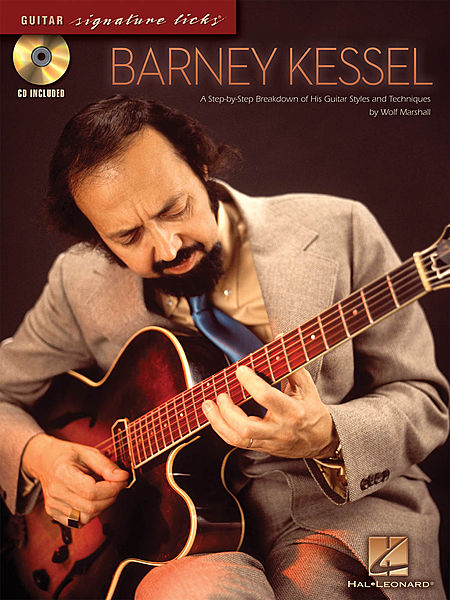
KESSEL BARNEY Step-by-Step Guitar Styles Techniques CD TABLATURE LIBRO SPARTITI CHITARRA

KESSEL BARNEY, passo per passo il suo stile tecnico e chitarristico. BOOK CD TABLATURE

LIBRO DI MUSICA JAZZ.

SPARTITI PER CHITARRA.

ACCORDI, PENTAGRAMMA E TABLATURE.

This entry in the Guitar Signature Licks series is dedicated to the sounds and techniques of Barney Kessel. Barney is a guitarist who is acclaimed as an important transitional figure, one who was pivotal-essential-in the jazz genre as the music evolved past its swing roots into bebop, hard bop, and modern jazz. The selections in this volume are gathered from, arguably, his most significant and influential period: the 1950s, when jazz guitar was still in its infancy. Several pieces are presented in their entirety: "Tenderly," "Salute to Charlie Christian," "Speak Low," and three Poll Winners trio tunes, "Minor Mood," "Foreign Intrigue," and "I'm Afraid the Masquerade Is Over." These are guitar intensive arrangements that showcase Barney's guitar role prominently and must be studied as complete works. Listen to the whole track and follow along with the detailed analysis of the distinct sections. Others, like "Barney's Blues," "Indiana," and "64 Bars on Wilshire," are offered in specific sections, where the guitar is stating the theme, interacting with the ensemble, or featured as the solo instrument. The time codes displayed in the selections refer to the original recordings.

Barney Kessel is one of the most famed and beloved jazz guitarists in music history. To many aficionados, his name is synonymous with jazz guitar. Bred on swing music of the 1940s, Kessel was one of the earliest players to absorb the language of modern jazz and bebop, mixing the new and old sounds with a swinging delivery, rhythmic vitality, and musical imagination all his own. His work remains towering and influential to the present, and he is widely acknowledged as one the leading voices of jazz guitar. Born in Muskogee, Oklahoma, on October 17, 1923, Barney Kessel decided on a career in music at an early age. He bought his first guitar at age twelve with money saved from selling newspapers. Essentially self-taught, Kessel received a few rudimentary essons in a Federal Music Program of the WPA in the summer of 1935. His earliest influences included swing musicians Charlie Christian (guitar) and Lester Young (tenor sax). Over the next four years, Kessel progressed quickly and established a strong regional following, enhanced by performances with the Varsitonians, a twelve-piece college band, while still a young teenager. By 1939, Kessel's reputation had grown to the point that his mentor Charlie Christian sought him out during a visit back home (Oklahoma was also Christian's home state). At age sixteen, Kessel met, hung out, and jammed with his idol, a duly impressed Christian, in early October of 1940. This experience inspired him to pursue a full-time professional career in music. In 1942, Kessel moved to Los Angeles and worked as a dishwasher while he made the musical rounds, sought auditions, and developed contacts. He was soon hired to play in comedian Chico Marx's band, led by drummer Ben Pollock. Kessel rapidly became a major player in the burgeoning West Coast jazz scene, performing and recording with Charlie Parker, Howard McGhee, Wardell Gray, Sonny Criss, and many others. Like many jazz musicians of the era, he also began accepting studio work on radio networks and Hollywood film scores and joined Frank De Vol's commercial orchestra. In 1944, Kessel appeared in Norman Granz's award-winning jazz documentary Jammin'the Blues. He was the only white musician in the film. Kessel also played in numerous big bands between 1945 and 1947, including the ensembles of Charlie Barnet and Artie Shaw. Kessel performed on record dates with Shorty Rogers and Benny Goodman, toured with the Oscar Peterson Trio in 1951-1952, and participated in Norman Granz's prestigious Jazz at the Philharmonic concert series. His contributions to Charlie Parker's legacy, contained in important tracks from 1947 like "Carvin' the Bird" and "Relaxin at Camarillo," brought further acclaim and broadened is jazz credentials. These and other high profile concerts and recordings led 0 e's greater exposure and recognition in America and Europe.


Titoli:

(I'm Afraid) The Masquerade Is Over [Magidson, Herb] [Wrube, Allie]

64 Bars On Wilshire

Barney's Blues

Begin The Blues

Contemporary Blues

Easy Like

Foreign Intrigue

Indiana (Back Home Again In Indiana) [Macdonald, Ballad] [Hanley, James]

Minor Mood

On A Slow Boat To China [Loesser, Frank]

Salute To Charlie Christian

Speak Low (One Touch Of Venus) [Weill, Kurt] [Nash, Ogden]

Tenderly [Gross, Walter] [Lawrence, Jack]

Vicky's Dream


CD TABLATURE


Wolf Marshall insegna lo stile e la tecnica di una leggenda del jazz, esaminando attentamente 14 titoli. 96 pagine.

Prezzo: €33,99
€33,99

BRUNO JIMMY INSIDE OUTSIDE JAZZ GUITAR TABLATURE DVD VIDEO CHITARRA

BRUNO JIMMY, INSIDE OUTSIDE JAZZ GUITAR. SHEET MUSIC BOOKLET GUITAR TABLATURE & VIDEO DVD

VIDEO DVD DI MUSICA JAZZ.

LIBRETTO DI SPARTITI : 

ACCORDI, PENTAGRAMMA, TABLATURE. 

A classic Hot Licks title available once again! Jimmy focuses on deepening your understanding of "outside" playing, encouraging you to take chances, showing you where these ideas come from and where they are going! He teaches melodies over chords, improvisation of the highest order, listening vs. thinking, playing the "outside" notes, circle of pitches, arpeggios and triads, the 5 regions of the guitar, transposing, Charlie Parker lines, pitch collections instead of scales, working in various keys, creating your own melodies, and much more. This new DVD transfer includes slow-motion segments in standard pitch, all right and left hand techniqes shown in split-screen, a new introduction by Arlen Roth, more! Includes 74 page note / Tab booklet. 124 min.

Prezzo: €33,99
€33,99

DAVIS MILES, SIGNATURE LICKS. Per tromba. CD

DAVIS MILES, SIGNATURE LICKS. Per tromba. CD

A Step-by-Step Breakdown of the Trumpet Styles and Techniques of a Jazz Innovator
Series: Signature Licks Trumpet
Medium: Softcover with CD
Trumpet
Artist: Miles Davis

Learn the trademark riffs and licks from the legendary Miles Davis through this book/CD pack featuring commentary, instruction, and audio examples. Featuring 12 of his most popular works: Autumn Leaves - Billie's Bounce (Bill's Bounce) - Bitches Brew - Boplicity (Be Bop Lives) - Bye Bye Blackbird - E.S.P. - Freddie Freeloader - Jeru - Milestones - My Funny Valentine - So What - Stella by Starlight.

Autumn Leaves
Billie's Bounce (Bill's Bounce)
Bitches Brew
Boplicity (Be Bop Lives)
Bye Bye Blackbird
E.S.P.
Freddie Freeloader
Jeru
Milestones
My Funny Valentine
So What
Stella By Starlight

40 pages

Prezzo: €20,00
€20,00

DAVIS MILES FOR SOLO GUITAR BOOK & CD TABLATURE SPARTITI CHITARRA LIBRO Blue In Green

DAVIS MILES, FOR SOLO GUITAR. Jamie Findlay. SHEET MUSIC BOOK WITH CD & GUITAR TABLATURE.

LIBRO DI MUSICA JAZZ CON CD.

SPARTITI PER CHITARRA CON: 

ACCORDI, PENTAGRAMMA, TABLATURE. 

FINGERSTYLE, FINGERPICKING, 


Series: Guitar Solo
Format: Softcover Audio Online – TAB
Artist: Miles Davis

15 jazzy solo guitar arrangements of Davis classics, including: All Blues • All of You • Blue in Green • Bye Bye Blackbird • Four • Freddie Freeloader • I Could Write a Book • Milestones • Nardis • Nefertiti • Seven Steps to Heaven • So What • Solar • There Is No Greater Love • When I Fall in Love. Included audio offers full demos of each piece by Jamie Findlay. The audio is accessed online using the unique code inside each book and can be streamed or downloaded. The audio files include PLAYBACK+, a multi-functional audio player that allows you to slow down audio without changing pitch, set loop points, change keys, and pan left or right.

Song List :
All Blues
All Of You
Blue In Green
Bye Bye Blackbird
Four
Freddie Freeloader
I Could Write A Book
Milestones
Nardis
Nefertiti
Seven Steps To Heaven
So What
Solar
(There Is) No Greater Love
When I Fall In Love

Inventory: #HL 00699264
ISBN: 9780634023026
UPC: 073999992649
Width: 9.0"
Length: 12.0"
Page Count: 96 Pages 

Prezzo: €32,99
€32,99

ESSENTIAL JAZZ GUITAR. CD TABLATURE

ESSENTIAL JAZZ GUITAR. CD TAB.

A Step-By-Step Breakdown of Famous Jazz Guitar Styles and Techniques
Series: Signature Licks Guitar
Softcover with CD - TAB
Author: Joe Charupakorn

Explore the classic songs and improvisations of jazz's greatest guitarists! This book/CD pack covers 10 songs, including: Flying Home (Charlie Christian) - Impressions (Pat Martino) - In a Mellow Tone (Joe Pass) - Lover Man (Oh, Where Can You Be?) (Django Reinhardt) - Speak Low (Grant Green) - The Way You Look Tonight (Wes Montgomery) , and more.

Table of contents
Flying Home
Impressions
In A Mellow Tone
Lover Man (Oh, Where Can You Be?)
Moonlight In Vermont
On A Slow Boat To China
Speak Low
Stompin' At The Savoy
There Is No Greater Love
The Way You Look Tonight

Inventory HL 00695875
72 pages

Prezzo: €19,99
€19,99

TOWNER RALPH SOLO GUITAR WORKS VOLUME 2 LIBRO SPARTITI CHITARRA ACCORDI OREGON

RALPH TOWNER, SOLO GUITAR WORKS VOLUME 2. SHEET MUSIC BOOK FOR SOLO GUITAR. 

LIBRO DI MUSICA.

SPARTITI PER CHITARRA.

ACCORDI, PENTAGRAMMA. 

About Ralph Towner - Guitar Works, Volume 2
By Ralph Towner. For Guitar. Folk Rock. Level: Intermediate-Advanced. Instrumental Album. 52 pages.
Known as the founding member of the group Oregon, and the composer of Icarus, he is also regarded for his solo guitar compositions. The second volume of Towner's guitar works contains nine songs including Always By Your Side, The Hollows, Toledo, and more.

2005 - If - Album: TIME LINE
2005 - Toledo - Album: A CLOSER VIEW
2005 - Toledo (improvising chord changes) - Album: A CLOSER VIEW
2005 - Anniversary Song - Album: TIME LINE
2005 - Always By Your Side - Album: TIME LINE
2005 - The Hollows - Album: TIME LINE
2005 - Turning Of The Leaves - Album: TIME LINE
2005 - The Pendant - Album: TIME LINE
2005 - The Lizards of Eraclea - Album: TIME LINE
2005 - Mingusiana - Album: A CLOSER VIEW
2005 - Mingusiana (improvising chord changes) - Album: A CLOSER VIEW


Ralph Towner was born in Washington state in 1940, moved to Oregon state at age of five and grew up there. He began to improvise at piano at age of 4, imitating recordings from the WW II era. His mother was a piano teacher and church organist, and each member of the family played one or several musical instruments well.

He studied classical composition at theUniversity of Oregon, graduated in 1963 and went toVienna, Austria to study classical guitar, an instrument he discovered in his fourth year of university. He studied one year under the renowned Professor Karl Scheit, returned to the University of Oregon for graduate studies in composition with Professor Homer Keller, then returned for a second year of study in Vienna with Professor Scheit. He then moved to New York City in 1968 to continue his career as guitarist-pianist-composer in earnest.

Since 1970 he has recorded over forty albums under his own name and has collaborated in'concert and/or recording with Oregon, Keith Jarrett, Weather Report (Joe Zawinul and Wayne Shorter), Egberto Gismonti, Gary Burton, John Abercrombie, Gary Peacock, Jack Dejohnette, Jan Hammer, Eddie Gomez, Elvin Jones, Freddie Hubbard, Michel Portal, Dave Holland, Paul Winter consort, and many others. He has won numerous awards, including: two German 'Grammies' (Deutsche Shallplatten Preis) for the best jazz recording of 1976 world-wide, (Solstice, with Jan Garbarek, Eberhard Weber and Jon Christenson), and again in 1988 for Ecotopia with his group Oregon (Paul McCandless, Glen Moore, Trilok Gurtu); the Downbeat magazine poll for acoustic guitar: The New York jazz Award as best New York City acoustic guitarist; and a Grammy nomination in 2000 as best composer for Oregon in Moscow: He has performed in concert world-wide in Asia, Africa, South America, Eastern and Western Europe, Australia and New Zealand, Japan, Korea, Mexico, and North America; in jazz clubs and major concert halls such as Carnegie Hall, Lincoln Center, Berlin Philharmonic Hall, and Vienna's Mozartsaal.

Towner has recorded over two-hundred of his instrumental compositions. His works for orchestra

have been performed by the Philadelphia Orchestra, the Stuttgart Opera Orchestra, the St. Paul
Chamber Orchestra, the Indianapolis Symphony, the Freiburg Festival Orchestra and the Stavanger
Chamber Orchestra of Norway. He has been commissioned to compose large orchestra works
by the Cabrillo Festival Orchestra, where he was composer-in-residence, and by the AT&T-Rockefeller foundation. He received a WYNC/Aaron Copland commission to compose the piano
sonata Simulacrum in 1999; His film scores include Un' Altra Vita by Carlo Mazzacurati as well as
numerous documentary films. He has composed music for L'lsola Incandescente, a play adapted
from the writings of Vincenzo Consolo, and incidental music for Shakespeare's Midsummer Night's
Dream. His compositions have been used by numerous dance choreographers, including Alvin
Ailey, Pilobolus, and Murray Louis. He was honored by Apollo astronauts, who carried his music on cassette to the moon and officially named two moon craters after two of his compositions.
Towner is one of the most diversely talented musicians of the past half-century, having made notable recordings of classical, jazz, folk and world music. Following a classical-conservatory education, studying classical composition and guitar, Towner then joined world music pioneer Paul Winter's Consort ensemble in the late 1960s. Along with band members Paul McCandless, Glen Moore, and Collin Walcott, Towner left the Winter Consort in 1970 to form the group Oregon, which over the course of the 1970s issued a number of highly influential records mixing folk music, Indian classical forms, and avant-garde jazz-influenced free improvisation.

As well as collaborating in concert and/or recording with many artists, Towner has recorded over two-hundred of his instrumental compositions, with works being commissioned and performed by some of the world’s leading orchestras. Available here is the second volume of solo works for guitar, including Always By Your SideThe HollowsToledo and more. 

PHOTOS: Paolo Soriani
Prezzo: €59,99
€59,99

STAND ALONE TRACKS FUSION MARK Dziuba LIBRO SPARTITO CD TABLATURE CHITARRA BASI

STAND ALONE TRACKS: FUSION. Mark Dziuba. CD TABLATURE

Stand Alone Tracks: Fusion
By Mark Dziuba

ITEM: 00-14179
UPC: 038081133942
ISBN 10: 0882847325
ISBN 13: 9780882847320
CATEGORY: Guitar Method or Supplement
FORMAT: Book & CD

--------------------------------------------------------------------------------
This is the most effective practice tool you will ever use! With Stand Alone Tracks, your CD player becomes your own personal back-up band. This Book and CD set will help you make the most of your practice time and polish your improvisational skills. Examples range from simple to complex in a variety of possibilities within the style. Examples are long enough to let you really "stretch out" and experiment as your chops develop.

Prezzo: €16,99
€16,99

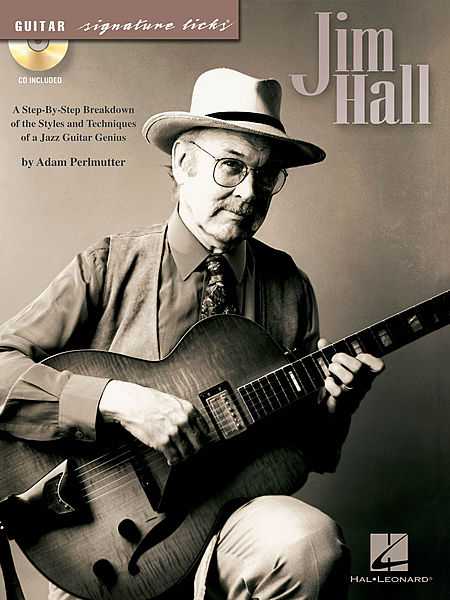
HALL JIM A Step-by-Step the Styles and Techniques of a Jazz Guitar Genius Signature Licks CD TABLATURE

HALL JIM, A Step-by-Step Breakdown of the Styles and Techniques of a Jazz Guitar Genius, Signature Licks.

SHEET MUSIC BOOK WITH CD & GUITAR TABLATURE.

LIBRO DI MUSICA JAZZ CON CD.

SPARTITI PER CHITARRA : 

ACCORDI, PENTAGRAMMA, TABLATURE. 


Series: Signature Licks Guitar
Softcover with CD - TAB
Author: Adam Perlmutter
Artist: Jim Hall

Discover the quiet elegance of one of jazz guitar's most renowned players with this Signature Licks book/CD pack. Each song chapter contains in-depth analysis and audio with slow demos. 80 pages


INTRODUCTION

Jim Hall (1930-) was steeped in classical music before he came to jazz. Hall attended the Cleveland Institute of Music, then moved to Los Angeles, California, where he studied nylon-string guitar with Vincente Gomez. While on the West Coast, he began to make a name for himself as a jazz guitarist, playing in the quintet of drummer Chico Hamilton, from 1955 to 1956, and in the trio of reed player Jimmy Giuffre, from 1956-1959. He also worked with modern improvisers such as pianist John Lewis and alto saxophonist Lee Konitz, and in 1960 toured South America (where he was exposed to bossa nova) with singer Ella Fitzgerald.

Around the same time, Hall moved to New York City, where through several intense collaborations, he was established as one of the world's most sophisticated jazz guitarists. From 1961 to 1962, he was a member of the tenor saxophonist Sonny Rollins's great quartet, with which he recorded the seminal album The Bridge. In the '60s Hall coled a quartet with trumpeter Art Farmer; he also recorded with the quartet of alto saxophonist Paul Desmond and found ideal duet partners in pianist Bill Evans and bassist Ron Carter. With Evans, Hall recorded two albums, Undercurrent (1962) and Intermodulation (1966), two of the most intimate and beautiful recordings in all of jazz. (From Intermodulation, see the transcription of "My Man's Gone Now," on page 34.) It was while performing in these fertile contexts that Hall found his own voice, an understated modern style characterized by melodic finesse, harmonic sophistication, and structural awareness-a logical extension of the language developed by such jazz-guitar pioneers as Charlie Christian, Wes Montgomery, and Django Reinhardt. This approach has been of profound influence to countless modern guitarists, including Hall's student Bill Frisell, who sounds radically different than Hall, but has a strikingly similar guitar conception. Hall's approach is best witnessed on the excellent albums he has recorded under his own name, including Concierto (1975), Jim Hall Live! (1976), and All Across the City (1989), transcriptions from all of which can be found on the following pages.

Besides being one of jazz's premier guitarists, Hall is a celebrated arranger and composer. In 1997, he won the New York Jazz Critics Circle Award for Best Jazz Composer/Arranger; his composition for jazz quartet and string quartet, "Quartet Plus Four," earned the Jazzpar Prize in Denmark, and his works for string, brass, and vocal ensembles can be heard on the albums Textures (1997) and By Arrangement (1998). In 2004, the Baltimore Symphony Orchestra debuted Hall's Peace Movement, a concerto for guitar and orchestra, dedicated to the cause of international harmony. That same year, for all his accomplishments as a composer, arranger, and performer, Hall was named a Jazz Master by the National Endowment for the Arts.

One of Hall's most recent projects, Hemispheres, was recorded with Bill Frisell and features one disc of duets and a second disc that adds the rhythm section of bassist Scott Colley and drummer Joey Baron. The album is available at Hall's Web site where a fan can catch of glimpse of what goes into the creation of the guitarist's recent projects. Meanwhile, when not composing or working with his own trio, Hall-ever the adventurous artist-has been playing with various modern improvisers, including saxophonists Joe Lovano and Greg Osby, and guitarist Pat Metheny. For now in the sixth decade of his career, Hall remains as vital a musician as ever.

DISCOGRAPHY

The selections on the accompanying CD are based on the following recordings:

ALL ACROSS THE CITY-Concord Jazz: "Big Blues"

ALONE TOGETHER-Milestone: "Autumn Leaves," "St. Thomas-

BALLAD ESSENTlAL-Concord Jazz: "Prelude to a Kiss"

CONCIERTO-CTI: "You'd Be So Nice to Come Home To"
(continua)


(All Of A Sudden) My Heart Sings - HAROLD ROME - 1941
Angel Eyes - MATT DENNIS - 1946
Autumn Leaves - JOSEPH KOSMA - 1947
Big Blues - JAMES S. HALL - 1978
My Man's Gone Now - GEORGE GERSHWIN - 1935
Prelude To A Kiss - DUKE ELLINGTON - 1938
St. Thomas - SONNY ROLLINS - 1963
Scrapple From The Apple - CHARLIE PARKER - 1957
Tangerine - VICTOR SCHERTZINGER - 1942
Things Ain't What They Used To Be - MERCER ELLINGTON - 1942 
Without A Song - VINCENT YOUMANS - 1929
You'd Be So Nice To Come Home To - COLE PORTER - 1942


ANGEL EYES
(Jim Hall Live!, 1976)
Words by Earl Brent
Music by Matt Dennis
Figure 3-lntro, Head, and Solo (Chorus 1)
While many of Jim Hall's studio recordings show the guitarist to be thoughtful and
well-mannered, in concert he has been known to play with abandon. This side of Hall can
be heard on Jim Hall Live!, one of his finest live recordings, taken from a series of dates
in 1975 at Toronto's Bourbon Street. The recording finds Hall in top form, paired with
bassist Don Thompson and drummer Terry Clarke.
One of the highlights of the album is a Latin-tinged take of the jazz standard "Angel
Eyes," which was originally a 32-bar AABA song. Hall & Co. double the tune's harmonic
rhythm, so that the form is now 64 bars in length. (A chord that originally occupied two
beats now gets four beats, an entire bar.) Hall starts things off by moving a barred Am7
shape in parallel fashion against the open A string, resulting in some interesting polychordal
harmony, such as the m/A chord (voiced A-A~-m-F, low to high) on beat 1 of bar
2 and the B/A (A-F~-B-m) on beat 1 of bar 4. He also throws various dominant and
diminished chord voicings into the mix, including the partial E7#9 (A~/m-D-G) in the last
part of bar 2 and mo (A~-D-F) on beat 1 of bar 6.
After closing out the intro with the same Am7 chord with which he started, Hall
takes the head (beginning at bar 17). He sticks pretty close to the original melody, adding
his own idiosyncratic touches here and there. One such Hall-ism involves placing an
octave-based idea at the end of a phrase-a striking, broken-octave fill appears in bars
23-24; a variation of this, in bar 39; and, in bar 72, a semi-chromatic descending line
played in fully voiced octaves. Throughout, there's a strong blues feel, especially in bar
32's fill, which comes from the A minor pentatonic scale (A-C-D-E-G), albeit unpredictably
ordered. A subtler touch involves ending certain phrases with a 12th-fret harmonic
on string 5 (see bars 30, 46, and 78), which lends a nice timbral contrast to the fretted
notes.
Beginning in bar 49, Hall uses a neat trick that effectively separates the bridge
from the A-section: while holding selected melody notes (upstemmed), he adds chord
stabs (downstemmed), not unlike a pianist would do with two hands. Also, Hall ventures
a little farther from the melody in this section-in bar 53, check out the improvised, angular
line that begins with a major 7th (B~to A) leap. These unique details give the listener
a taste of what's to come in Hall's excellent solo.
In the first A-section of his first chorus, Hall introduces an A minor pentatonic idea,
and then sees it through various permutations. He keeps it simple here; the only noticeable
jazzy melodic content is the Am11 arpeggio (A-C-E-G-B-D) in bars 108-109.
Throughout, Hall interjects some of the same chord voicings as found in the intro, most
often the E7=9chord. At the same time, he uses space wisely; for example, see the rests
in bars 107-108 and 116-117.
Hall steps out melodically in the bridge of the first chorus. In bars 122-123, he
plays a 6th-based motif that reappears later in the solo, and in bars 125-127, he smoothly
hits a variety of interesting note choices: the 7 (F#) on the Gm7 chord (the absence of
a pianist gives Hall harmonic leeway), the #9 (E~/m) on C7, and the #11 (B) on Fmaj7.
Beginning in bar 128, Hall plays a fleetingly-fingered line involving chromatic lower-neighbor
tones. This leads directly into a witty reference to Duke Ellington's "Raincheck" in bars
129-131. Quotation is an indispensable improvisational tool, and Hall masterfully adjusts
the melodic contour of "Raincheck" to suit the changes at hand, sailing with ease into the
b7 (A) of the B7 chord and the 3rd (G#) of the Emaj7 chord.


THINGS AIN'T WHAT THEY USED TO BE (Jazz Guitar: Jim Hall Trio, 1957)
By Mercer Ellington
Figure 15-Head and Solo
While Jim Hall's style is strikingly modern, it is deeply rooted in the traditional
sound of the blues. This is especially apparent in Hall's interpretation of the Mercer
Ellington classic "Things Ain't What They Used to Be," from his 1957 debut album, Jazz
Guitar: Jim Hall Trio, on which "Tangerine" (see page 56) also appears.
"Things Ain't What They Used to Be" is based on a 12-bar blues in m major,
played here with a neat, overlapping pair of ii-Vs in bars 8-11 (F7-m7-Bm7-Ab7-m7).
Hall kicks things off by playing the head twice, the first time accompanied by bassist Red
Mitchell. The guitarist basically plays the melody as it was originally written but adds some
bluesy, grace-note flourishes: in the m7 bars, a whole-step slide, from B to the melody
note F; and on the double stops, a half-step approach tone to each lower note.
As Hall restates the head, beginning in bar 13, pianist Carl Perkins joins in on the
proceedings; notice the chromatically ascending 7~9 chords that Perkins substitutes in
bars 21 and 22. Hall starts his reiteration of the head the same way he originally played
it, but at the end of bar 20, he raises the intensity by playing the melody up an octave.
Then, beginning in bar 23, he sets up his three-chorus solo with a triplet-based line that
comes mainly from the m minor pentatonic scale (m-Fb-Gb-Ab-Cb).
In the first chorus, Hall improvises variations on the original melody. In bars 29
and 30, he plays major 3rd-based double stops from the m blues scale (m-Fb-Gb-Abb-
Ab-Cb), then, in bar 31, toys with both the b3rd(HIE) and 3rd (F) of the m7 chord using
single notes. In bar 35, over the m7-Bb7 change, Hall plays a series of dyads that actually
imply the progression m7-GI>-Gbm, with the 3rd (m and Bbbin the bass on the latter
two). Note the contrary motion between the lower and higher voices of the first two
chords.
Beginning at the end of his first chorus and extending through the first several
bars of his second, Hall has a conversation with himself, playing phrases that start and
stop on the first string's fourth-fret Ab, and are answered by phrases that start and stop a
perfect 5th lower, on the third string's sixth-fret m. In bars 40-43, Hall plays the note Eb
at two different positions-string 2, fret 4 and string 3, fret 8-requiring a large fret-hand
stretch, but the nice contrast in timbre is worth the effort. Hall begins to conclude his second
chorus in bar 44 with a predominantly pentatonic phrase.
In his third and final chorus, Hall makes the most out of a few simple phrases, the
first of which is stated in the first half of bar 49. Similar to one found in his first chorus, this
bluesy, ascending phrase contains both the b3 and 3, and is carried throughout the first
several bars. Bar 52 contains an interesting move: Hall slides, via a half step, into a dyad
(Cb-Eb)that implies a m9 chord (m-F-Ab-Cb-Eb), then plays a descending chromatic line
(Ab-Abb-Gb-F) that sets up a m9 chord partial (F-Cb-Eb). First appearing on beat 2 of bar
53, an eighth-note triplet line (Fb-m-B) is played (except for a break in bar 54) until the
beginning of bar 56, and answered in bar 57 by a time-honored, jazz-blues phrase.
Hall thinks more harmonically as he ends his solo, arpeggiating m (m-F-Ab) and
Gb (Gb-Bb-m) triads in bar 59, approaching each 3rd with a half-step grace note. Then,
on beats 1 and 2 of the final bar, Hall plays double stops, Ab-m and G-m, that imply mm7
(Bb-m-F-Ab) and Eb7 (Eb-G-Bb-m) chords, respectively, delaying the final ii-V
(Ebm7-Ab7) change by two beats.

Prezzo: €34,99
€34,99
Condividi contenuti