SPARTITI PER CHITARRA SOLISTA, SCALE MODI, ARPEGGI, SOLOING

LIBRI, METODI, MANUALI, SPARTITI, TABLATURE, SCALE, SOLOING, SCALE MODALI, ARPEGGI, PENTATONICHE,

KILLER PENTATONICS FOR GUITAR. Dave Celentano. playing scales blues, rock heavy metal. CD TABLATURE

KILLER PENTATONICS FOR GUITAR, Dave Celentano.

Innovative and diverse ways of playing pentatonic scales in blues, rock and heavy metal. 

Teoria delle pentatoniche, pentatoniche maggiori, pentatoniche minori. La pentatonica e le altre scale, relative minori e maggiori, double stops pentatonico, connessione di schemi pentatonici, blues con le pentatoniche (con due basi per gli assoli), estensione degli modelli pentatonici, Arpeggi pentatonici, tapping pentatonico ... non so' se avete capito di cosa stiamo parlando.

CD TABLATURE

Series: Guitar
Publisher: Centerstream Publications
Softcover with CD - TABLATURE
Composer: Dave Celentano
37-minuti audio

Prezzo: €19,99
€19,99

MASTERING MODES ED LOZANO AND JOE DINEEN LIBRO CD TABLATURE METODO CHITARRA SPARTITI

MASTERING MODES, ED LOZANO AND JOE DINEEN. SHEET MUSIC BOOK WITH CD & GUITAR TABLATURE .

LIBRO METODO DI MUSICA CON CD .

SPARTITI PER CHITARRA CON : 

ACCORDI, PENTAGRAMMA, TABLATURE. 

TEORIA , 

SCALE ,

60 SCALE MODALI , 

WORLD SCALES , 

ACCORDI , 


This practical guide unlocks the mystery behind the construction and application of over 60 modes. It includes special sections on advanced and world scales. All of the examples are demonstrated on the accompanying CD with a professional backup band.


Mastering Modes for Guitar
Series: Music Sales America
Publisher: Music Sales America
Format: Softcover with CD
Authors: Ed Lozano, Joe Dineen
 
This practical guide unlocks the mystery behind the construction and application of over 60 modes. It includes special sections on advanced and world scales. All of the examples are demonstrated on the accompanying CD with a professional backup band.
 
 
Inventory #HL 14020885
ISBN: 9780825619038
UPC: 752187971450
Publisher Code: AM971454
Width: 9.0"
Length: 12.0"
102 pages
Prezzo: €19,99
€19,99

MELODIC ARPEGGIOS FOR LEAD GUITAR MARK GALBO LIBRO CD TABLATURE SPARTITI SOSTITUZIONI ACCORDI

MELODIC ARPEGGIOS FOR LEAD GUITAR, MARK GALBO. LIBRO CD TABLATURE

LIBRO DI MUSICA CON CD, SPARTITI PER CHITARRA. ACCORDI, DISEGNO DELLA TASTIERA CON GLI INTERVALLI, PENTAGRAMMA, TABLATURE. 

An arpeggio is simply playing the notes of a chord, one after another, in a melodic fashion. Piano, bass, string, and horn players routinely find the study of arpeggios a staple of their learning process. But, somehow, guitarists often manage to skip over this essential musical building block.
This book is designed to demystify arpeggios and demonstrate their application in a musical and easy-to-understand format. All of the material is presented within the context of various 'Jam Tracks' which allow students to immediately apply new knowledge and hear for themselves why arpeggios are essential to their playing.

All of the music examples are presented in standard notation and tablature so there is no need to read music. Also includes a special demonstration and playalong CD.

CHORD SUBSTITUTION - SUPER IMPOSITION

Prezzo: €26,99
€26,99

MODAL JAMS & THEORY USING MODES FOR SOLO GUITAR by Dave Celentano BOOK CD TABLATURE

MODAL JAMS & THEORY, USING MODES FOR SOLO GUITAR. Tutto quello che desiderate sapere sui modi. 42 minuti con basi. SHEET MUSIC BOOK with CD & GUITAR TABLATURE .


LIBRO DI TEORIA MUSICALE CON CD .

SPARTITI PER CHITARRA CON : 

ACCORDI, PENTAGRAMMA, TABLATURE. 

ARMONIA APPLICATA ALLA CHITARRA .


Series: Guitar
Publisher: Centerstream Publications
Medium: Softcover with CD
Artist: Dave Celentano

Not only will this book show you how to play the modes, it will also show you the theory behind mode construction, how to play any mode in any key, how to play the proper mode over a given chord progression, and how to write chord progressions for each of the seven modes. The accompanying CD includes two rhythm tracks (drums, bass, keyboard and rhythm guitar) and a short solo for each mode so guitarists can practice their solos with a "real" band! 40 pages.

Prezzo: €25,99
€25,99

GUITAR MODE ENCYCLOPEDIA 21 Modes of the LIBRO TABLATURE Major Melodic Minor Harmonic Minor Scales Jody Fisher

GUITAR MODE ENCYCLOPEDIA. 21 Modi nella scala maggiore, melodica minore, armonica minore. Dal modo Ionico al Super Locrian, esempi di assolo. 223 Pagine. TABLATURE

Libro per chitarra con Tablature


Guitar Mode Encyclopedia

21 Modes of the Major, Melodic Minor, and Harmonic Minor Scales
Music by Jody Fisher
SERIES: The Ultimate Guitarist's Reference Series
CATEGORY: Guitar Method or Supplement
FORMAT: Book

This remarkably thorough text covers all the modes of the major, melodic minor and harmonic minor scales. Twenty-one different modes are explained in detail and examined from five different perspectives. In addition, open position fingerings, closed position fingerings, harmonies, chord voicings, tips for improvisation, practice progressions, melodic patterns and sample solos are provided.


INTRODUCTION
This could be the last book about the modes you will ever need. The modes have been in existence for centuries as compositional tools for classical, folk and ethnic musicians, as improvisational devices for jazz musicians and a source of "new" sounds for rock, pop and country artists. But unfortunately, the subject has been shrouded in mystery, causing many guitar students a lot of confusion. I think the confusion is due to an incomplete overview of the subject. There are many ways of looking at the modes and each one has an important place in understanding and applying the modes to improvising, composition, or both. In this book, a chapter is devoted to each mode of the major, melodic minor and harmonic minor scales. Each chapter will include:

• A notated list of the mode in twelve keys
• Perspective #1: The modal formula, a look at where the half steps occur in the scale and how it relates horizontally to the fretboard.
• Perspective #2: The mode's relationship to the diatonic chord
• Perspective #3: The mode created by altering another scale
Perspective #4: The mode's intervallic distance from the "parent" key, measuring from the root of a chord
• Perspective #5: Deducing a mode's key signature
• Six closed position fingerings
• Open position fingerings in every key
• The harmonized mode, with sample chord voicings
• Mode usage
• Practice progressions
• Melodic patterns

Also, sample solos utilizing most of the modes in various combinations have been included at the end of the book.

One way this book is different from many others is that three fingering options are covered. The first is the horizontal approach or along the single string. The second is the use of "locked" fingerings or scales that are played in a fixed position. The third fingering option is the "open" position. When any musical concept is explored on the guitar, a more complete understanding is accomplished by examining all three fingering options.
It should be noted here that, while a clear understanding of the modes is important, it represents only a part of what is needed to become an accomplished improvisor. Modes, in conjunction with other scales, arpeggios, and licks are only part of the picture. Improvisation is a lifetime study. Try to keep this in mind.
This book can be used as a reference or method book for those studying with a teacher or the self taught student.
Each chapter is complete so it's all right to skip around. You can also move straight through from beginning to end for a very comprehensive study. If the modes of the major scale are new for you, Isuggest you don't skip anything in that section of the book. I should also mention that to get the most out of this book, you need to transpose all exercises and fingering to all twelve keys. At first this may seem like a hassle, but in time it will get easier and pay-off in the form of greater fluency.
One does not survive in the music business without help and support from a large network of family and friends.
I would like to thank my wife, Juliei my son, Joshi Shauna PerrYi and my parents, Howard and Eidth Fisher. Also, thanks to my brother, Richi my uncle, Sidi David Smolover, Nat Gunod, Ted Greene, Joe Diorio, George Stanley, Bob Scarano and the entire gang at Caleb's Guitar.

Prezzo: €21,00
€21,00

GUITAR MAGAZINE, CD.

GUITAR ROCK TECH. Veloce e preciso. CD TAB.

Prezzo: €81,00
€81,00

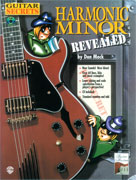
GUITAR SECRETS HARMONIC MINOR REVEALED DON MOCK CD TABLATURE CHITARRA LIBRO METODO

GUITAR SECRETS: HARMONIC MINOR REVEALED. by Don Mock. SHEET MUSIC BOOK WITH CD & GUITAR TABLATURE. 

LIBRO METODO DI MUSICA CON CD. 

SPARTITI PER CHITARRA CON : 

ACCORDI, PENTAGRAMMA, TABLATURE. 

Guitar Secrets: Harmonic Minor Revealed

By Don Mock
Item: 00-0055B
UPC: 029156658286
ISBN 10: 076920029X
ISBN 13: 9780769200293

Category: Guitar Method or Supplement
Format: Book & CD
Instrument: Guitar

Legendary guitarist and educator Don Mock exposes the closely-guarded "secret" soloing techniques of jazz and rock giants, revealing easy ways to create ultra-cool sounding lines and patterns by substituting simple harmonic minor patterns over dominant 7th chords. These book/CD packages each contain over 60 music examples, lines, licks and patterns. All music is written in standard notation and tablature. 


MOCK REVEALS


SECRETS OF THE THE MASTERS !

FAMED GIT INSTRUCTOR EXPOSES TRICKS OF THE TRADE


Legendary guitarist and educator Don Mock exposesthe closely guarded "secret" soloing techniques of jazz and rock giants, revealing easy ways to create ultra-cool sounding lines and patterns by substituting simple harmonic minor patterns over dominant 7th chords.

Containing over 60 music examples, lines, licks and patterns, this book/CD package approaches the potentially complex topics of soloing and scale substitution from a player's perspective; immediately presenting useful lines and patterns that you can use now. All music is written in standard notation and tablature and all the music examples are contained on the included CD.

• New Sounds! New Ideas!

• Over 60 lines, licks and music examples!

• Learn soloing and scale, substitution from a player's perspedive!

• CD included!

• Standard notation and tablayure!

"I DID IT FOR THEMONEY" MOCK ADMITS


ISBN 0-7692-0029-X

9 780769 200293

WARNER BROS. PUBLICATIOS

15800 Avenue Miami

Coming Soon by Don Mock: Guitar Secrets/ Melodic Minor Revealed


Foreword

Learning how to play and use scales has always been a large part of every guitar player's practice schedule. Players have spent countless hours practicing scales up and down all over the guitar, sometimes with great success and sometimes with frustration as the end result.

Those of you that know me from my books and videos, or years at the Guitar Institute of Technology (GIT), know I've been involved in guitar education for a long time. I've seen hundreds of students struggle with the same problems that I faced when going through the process of learning how to play and use scales. After many years of experience, both playing and teaching, I've become a big believer in cutting through the B.S.in learning, and getting to the point of it all, which is playing music.

The presentation and ideas in this book are definitely from a "player's" perspective. We're not going to get too in-depth into the history and "classical theory" of the harmonic minor scale. We'll focus more on its uses in contemporary styles like rock, jazz and fusion. Don't get me wrong; there will be no shortcuts here when it comes to modern music theory. As far as I'm concerned, all guitar players must have a good working knowledge of harmony and theory and the ability to read music, even if it's only simple chord charts.

Three Steps to Success Learning to improvise can be thought of as a three step process. The first step istypically the learning of scales. Using either the "key center" approach or the "modal" approach, students should learn at least a few useful fingerings of the major scale and be able to play them in all keys. Also, in this first step, players need to learn about harmony and theory to help them understand which scale fits over which chord. Armed with some theory knowledge, students can immediately begin playing over even difficult chord changes by simply switching to the "correct" scale or key center for the given chord.

Most players, after a period of time, will begin to find this first step limiting. They may say that they can't seem to make their solos sound like the chords, that they sound too "scaler." Moving on to step two, we introduce arpeggios as a tool to create chord sounds. Mixing arpeggios with our scales starts making our solos more harmonically intelligent.

Step three isthe "final frontier" of improvising, as we now start really learning music. So far, we've been using scales and arpeggios, but may not have been able to make our solos sound melodic. Now it's time to learn melodies. Most of us need to learn a repertoire of melodic lines to use when we improvise. Almost every one of our favorite players have, at one time or another, learned lines by copying recordings or transcriptions. I've met many student who tell me they don't want to sound like anyone else and feel they shouldn't copy other players.

They soon realize that the road to "originality" goes through the land of copying licks, phrasing and concepts used by favorite players. Eventually, these "influences" merge together into your own original style.

One last thing. A common misconception about improvising isthe phrase: "Playing what you hear." Many players say they do this, leading students to think that they simply make music up on the spot. What they are really saying they are doing is "playing what they know."

Improvising isthe spontaneous performance of ideas that come to you in the midst of soloing. You may not know ahead of time what you are going to play, but armed with scales, arpeggios, melodic ideas and theoretical concepts, you can playa creative and spontaneous improvised solo.


Unit 7: Using Harmonic Minor Arpeggios

How to use arpeggios when improvising can be a pretty big subject. Generally speaking, arpeggios are used to create chordal sounds (one note at a time) and add more melodic variety to musical lines. They're great for breaking up scales and for moving from one register to another. There are basically two approaches to choosing which arpeggio to use at a given time. The first isto use the arpeggio of the chord. For example, if the chord is C7, you simply playa C7 arpeggio; or if the chord isCm 11, use a Cm 11 arpeggio, etc. Thisapproach requires that you know an arpeggio for every chord. Think about how much work that could be. Not a very practical way to go. The other approach only requires that you know triad and seventh chord arpeggios.

The trade off isyou need to became a wizard at chord substitution. By superimposing various arpeggios over the basic chord you can create just about every chord sound imaginable. A quick example, that you may already know, is playing a Cmaj7 arpeggio over an Am7 chord. By doing this, you end up creating the sound of Am9 without actually playing an Am9 arpeggio. Thisconcept can be taken a long way allowing you some very sophisticated harmonic possibilities.

There are many ways to use the arpeggios of the harmonic minor scale. One approach isto think of all seven of the arpeggios as four-note "clusters of sound" that can be used anytime the scale can be used. For example, if you are playing over an E7, resolving to Am, experiment with superimposing all the arpeggios from A harmonic minor over the E7.The trick to this isyou need to be able to phrase the arpeggios in a way that still communicates to your listener the "sound" of E7. With practice, this can be a powerful way to create layers of harmonic minor sounds.

But, before we go crazy, randomly playing a bunch of arpeggios, let's first take a look at the chord sounds that are the result of playing the seven arpeggios over a dominant chord.

An important thing to remember isthat not all dominant 7th chords that we come across in tunes are V7 chords in a minor key. In fact, most dominant 7th chords we deal with are actually in major keys. The harmonic minor scale may not be the best choice in these situations (but feel free to experiment). Harmonic minor sounds best when played over a 7th chord resolving to a minor. The scale has a tendency to "lead" your listener signaling that a minor chord isto follow.

The following list shows the result of superimposing each of the seven arpeggios derived from the harmonic minor scale over a dominant chord. You will find that some sound stronger than others, but by connecting them together and mixing them with the scale, you'll eventually be able to use all seven easily.


Arpeggio Resulting Sound

Am(maj7) E7(#5,11)

Bm7 (b5) E7(b9,11)

Cmaj7(#5) E7(#5)

Dm7 E7(#5, b9, 11)

E7 E7

Fmaj7 E7(#5, b9,11)

G#dim7 E7(b9)


Here are a few useful arpeggio sequences that will help reinforce the two master arpeggio positions. Although I've indicated the name of each arpeggio, these lines are meant to be "thought of" as dominant (all A7).


Guitar Secrets - Harmonic Minor Revealed

Contents:


Unit 1: Harmonic Minor Scale History

Examples 1A - D

Examples 2 - 3


Unit 2: Fingerings of the Harmonic Minor Scale.

Example 4


Unit 3: How to learn and Practice the Scale

Examples 5A - D


Unit 4: Transposing the Scale to Other Keys.

Examples 6A - C .

Example 7 .


Unit 5: The Harmonic Minor Scale Harmony .

Examples 8A - B


Unit 6: Arpeggios From Harmonic Minor .

Examples 9A - G

Examples 10A - G .


Unit 7: Using Harmonic Minor Arpeggios.

Examples 11A - C ".


Unit 8: The Minor II - V - I ,

Examples 12A - F ,


Unit 9: Harmonic Minor in a Blues?

Example 13 .


Unit 10: The IV and VI Chords in Harmonic Minor

Example 14 .


Unit 11: The Diminished 7th Chord in Harmonic Minor .

Example 15


Unit 12: Static and Functioning Dominant 7ths .

Examples 16 - 17 .

Example 18


Unit 13:The Classic Use of the I Chord in Harmonic Minor,

Example 19


Unit 14: Some Special "Thinking" Tricks.

Examples 20A - D .

Examples 21A - B


Unit 15: Horizontal Harmonic Minor Scale Fingerings

Examples 22A - B

Examples 23A - D

Examples 24A - B


Unit 16: The licks .

Examples 25 - 26

Examples 27 - 29

Examples 30 - 31

Examples 32 - 33  

Prezzo: €29,99
€29,99

GUITAR SECRETS MELODIC MINOR REVEALED DON MOCK CD TABLATURE LIBRO SPARTITI METODO

GUITAR SECRETS: MELODIC MINOR REVEALED. Don Mock CD TABLATURE


LIBRO DI MUSICA CON CD, SPARTITI PER CHITARRA. ACCORDI, PENTAGRAMMA E TABLATURE. 

CATEGORY: Guitar Method or Supplement
FORMAT: Book & CD

Legendary guitarist and educator Don Mock exposes the closely-guarded "secret" soloing techniques of jazz and rock giants, revealing easy ways to create ultra-cool sounding lines and patterns by substituting simple harmonic minor patterns over dominant 7th chords. These book/CD packages each contain over 60 music examples, lines, licks and patterns. All music is written in standard notation and tablature.

Prezzo: €27,99
€27,99

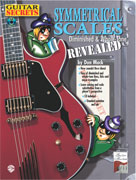
GUITAR SECRETS SYMMETRICAL SCALES REVEALED Diminished Scale DON MOCK CD LIBRO TABLATURE SPARTITI

GUITAR SECRETS: SYMMETRICAL SCALES REVEALED, (Diminished and Whole Tone Scales). Don Mock. CD TABLATURE

LIBRO DI MUSICA CON CD, SPARTITI PER CHITARRA. ACCORDI, PENTAGRAMMA E TABLATURE. 


CATEGORY: Guitar Method or Supplement

FORMAT: Book & CD
Learning how to play and use scales has always been a large part of every guitar player's practice schedule. Written from a player's perspective, this book doesn't get too in-depth into the history and classical theory of the scales, but focuses on their uses in contemporary styles such as blues, rock, fusion, and jazz. Includes tons of diminished and whole-tone lines, licks, and music examples; soloing and scale substitution from a player's perspective; and new sounds and ideas. Written in standard notation and Tablature.

Foreword
Welcome to Symmetrical Scales Revealed. Learning how to play and use scales has always been a large
part of every guitar player's practice schedule. Playershave spent countless hours practicing scales up
and down all over the guitar, sometimes with great success and sometimes with frustration as the end
result.
Thoseof you who know me from my books and videos or years at the Guitar Institute of Technology (Gin
know I've been involved in guitar education for a long time. I've seen hundreds of students struggle with
the same problems that I faced when going through the process of learning how to play and use scales.
After many years of experience, both playing and teaching, I've become a big believer in cutting through
the nonsense and getting to the point of it all, which is playing music.
The presentation and ideas in this book are definitely from a player's perspective. We're not going to get
too in-depth into the history and classical theory of the diminished and whole-tone scales. We'll focus more
on their usesin contemporary styleslike blues, rock, fusion, and jazz. Don't get me wrong: there will be no
shortcuts here when it comes to modern music theory. As far as I'm concerned, all guitar players must
have a good working knowledge of harmony and theory and the ability to read music, even if it's only simple
chord charts.
Three Steps to Success
Learning to improvise can be thought of as a three-step process. The first step istypically the learning of
scales. Usingeither the key center approach or the modal approach, students should learn at least a few
useful fingerings of the major scale and be able to play them in all keys.Also, in this first step, players need
to learn about harmony and theory to help understand which scale fits over which chord. Armed with
some theory knowledge, students can immediately begin playing over even difficult chord changes by
simply switching to the correct scale or key center for the given chord.
Most players after a period of time will begin to find this first step limiting. They may say that they can't
seem to make their solossound like the chords, that they sound too scalar. Moving on to step two, we
introduce arpeggios as a tool to create chord sounds. Mixing arpeggios with our scales starts making our
solos more harmonically intelligent.
Step three isthe final frontier of improvising, as we now start really learning music. So far we've been using
scales and arpeggios but may not been able to make our solossound melodic. Now it's time to learn
melodies. Most of us need to learn a repertoire of melodic lines to use when we improvise. Almost every
one of our favorite players has, at one time or another, learned linesby copying recordings or transcriptions.
I've met many students who tell me they don't want to sound like anyone else and feel they shouldn't
copy other players. They soon realize that the road to originality goes through the land of copying licks,
phrasing, and concepts used by favorite players. Eventually, these influences merge together into your
own original style.
One last thing: A common misconception about improvising isthe phrase "playing what you hear." Many
players say they do this, leading students to think that they simply make up music on the spot. What they
are really saying isthat they are playing what they know.
Improvising isthe spontaneous performance of ideas that come to you in the midst of soloing. You may
not know ahead of time what you are going to play, but armed with scales, arpeggios, melodic ideas,
and theoretical concepts, you can playa creative and spontaneous improvised solo.


Introduction
This book deals with the two most used symmetrical scales-the diminished and whole-tone. Symmetrical scales are best defined as having repetitive or equal-note spacing that repeats throughout the octave. For example, the whole-tone scale is exactly what the name indicates; it's a scale built entirely of whole tones The symmetry of a diminished scale is a pattern of alternating whole steps and half steps, four times per octave.
One great thing about symmetrical scales is that they are very guitar-friendly and easy to memorize. The fingerboard is a visual, graphic instrument similar to a slide-rule. In most cases, you can get by with just one fingering for each of these scales and then repeat the same fingering every two frets (whole-tone) or three frets (diminished) up or down the fingerboard, Guitar players can easily discover hundreds of unique melodic and harmonic ideas that are not as obvious on other instruments like keyboards, reeds, or brass.
Both of these scales are very useful and creative tools used by improvisers. Their simplicity can be deceptive; it's almost surprising how these simple scales can provide such a complex sound. In traditional jazz, they provide a contrasting flavor against functional dominant chords, Modern players exploit these scales to add an outside sound to contemporary jazz, rock, and even blues. In Symmetrical Scales Revealed you'll learn the most useful scale patterns and explore sequences and arpeggios within the scales. Next we'll learn the secrets of how to best use the scales, followed by several of my favorite melodic lines.
We'll begin each of the two sections by first learning some good fingerings for each scale. If you already know a fingering or two, stick with them or feel free to modify any of the fingerings here to suit your technique and style. The ultimate goal isto be able to play the particular scale anywhere on the guitar in any key.
One more thing about the fingerings: You are limited only by the lowest and highest notes on the guitar. Think of scales as having no beginning and no end. Don't be too concerned with the bottom or top notes of each individual pattern, You'll find that each has a different starting and ending note because of the natural range of the strings.
SCales are simply a row of notes, and you should learn to control the scale by being able to start and end on any note. Eventually, individual scale fingerings will begin to blend together into larger patterns until finally the whole fingerboard is under your control!
How to Get the Most Out of This Book
The best way to get the most out of this book is to scan through each chapter first. Get a feel about where and what the various topics are and if they contain information you already know. You should read every page carefully, but it's okay to start with any section in the book that interests you


Guitar Secrets - Symmetrical Scales Reveale
Contents:

SECTION I: INTRODUCTION
Tuning Notes

Unit 1: Modes of the Diminished and Whole-Tone Scales
Examples 

Unit 2: Static and Functioning Dominant 7ths 
Examples 

SECTION II: THE DIMINISHED SCALE
Unit 3: Fingerings of the Diminished Scale 
Examples 

Unit 4: How to Learn and Practice the Diminished Scale
C7 Practice Track

Unit 5: Diminished Scale Sequences 
Examples 

Unit 6: Diminished Arpeggios,
Examples 

Unit 7: Using the Diminished Scale,
Examples 

Unit 8: Six-Note Diminished Shapes 
Examples 

Unit 9: Major Triads in the Diminished Scale 
Examples 

Unit 10: Using the Diminished Scale Over Static Chords ..
Examples 

SECTION III: THE WHOLE-TONE SCALE

Unit 11: Fingerings of the Whole-Tone Scaie,
Examples 

Unit 12: Whole-Tone Scale Sequences
Examples 

Unit 13: Whole-Tone Arpeggios
Examples 

Unit 14: Using the Whole-Tone Scale
Examples 

Unit 15: Modern Uses of the Whole-Tone - Static Chords 
Examples 

Unit 16: The Fingerboard - Symmetrical Scales Geometric Playground ,
Examples 

Unit 17: Diminished and Whole-Tone Lines 
Examples 

Prezzo: €26,99
€26,99

GUITAR SOLO & PHRAISING HYPER REFERENCE. CD

GUITAR SOLO & PHRAISING HYPER REFERENCE. Basic phrase training, pentatonic scale, chromatic approach, technical training, finger works picking, arming, tapping, harmonics, mode, scale exercise. CD TAB.

Prezzo: €70,00
€70,00
Condividi contenuti