SPARTITI PER CHITARRA SOLISTA, SCALE MODI, ARPEGGI, SOLOING

LIBRI, METODI, MANUALI, SPARTITI, TABLATURE, SCALE, SOLOING, SCALE MODALI, ARPEGGI, PENTATONICHE,

HOW TO... PLAY ROCK LEAD GUITAR BOOK & VIDEO CHITARRA TABLATURE METODO LIBRO SPARTITI

How to Play Rock Lead Guitar. SHEET MUSIC BOOK WITH VIDEO & GUITAR TABLATURE.  

Learn to Play like George Lynch, Gary Moore, Jimmy Page, Eddie Van Halen, Bill Gibbons & Many Others


LIBRO METODO DI MUSICA ROCK CON VIDEO.

SPARTITI PER CHITARRA CON: 

ACCORDI, PENTA-TABLATURE.

TABLATURE CON DURATA DELLE NOTE. 


Series: How to Series
Format: Softcover Video Online - TAB
Author: Brooke St. James

Providing the screaming solos and melodies for countless songs, the lead guitarist plays a crucial role in rock music. In How to Play Rock Lead Guitar, Brooke St. James guides you through the essential basics that every lead guitarist should know. Featuring full-length video lessons, Brooke demonstrates every playing example in the book, covering a wide range of topics including pentatonic scales, bending, vibrato, harmonics, repeating licks, tapping, gear, and much more! This title also includes online video lessons with demonstrations of all the playing examples in the book. The video is accessed online for download or streaming using the unique code inside each book.

Inventory #HL 00146260
ISBN: 9781495023255
UPC: 888680069957
Width: 9.0"
Length: 12.0"
56 pages


https://s3.amazonaws.com/halleonard-closerlook/00146260/Bending.mp4

Prezzo: €21,99
€21,99

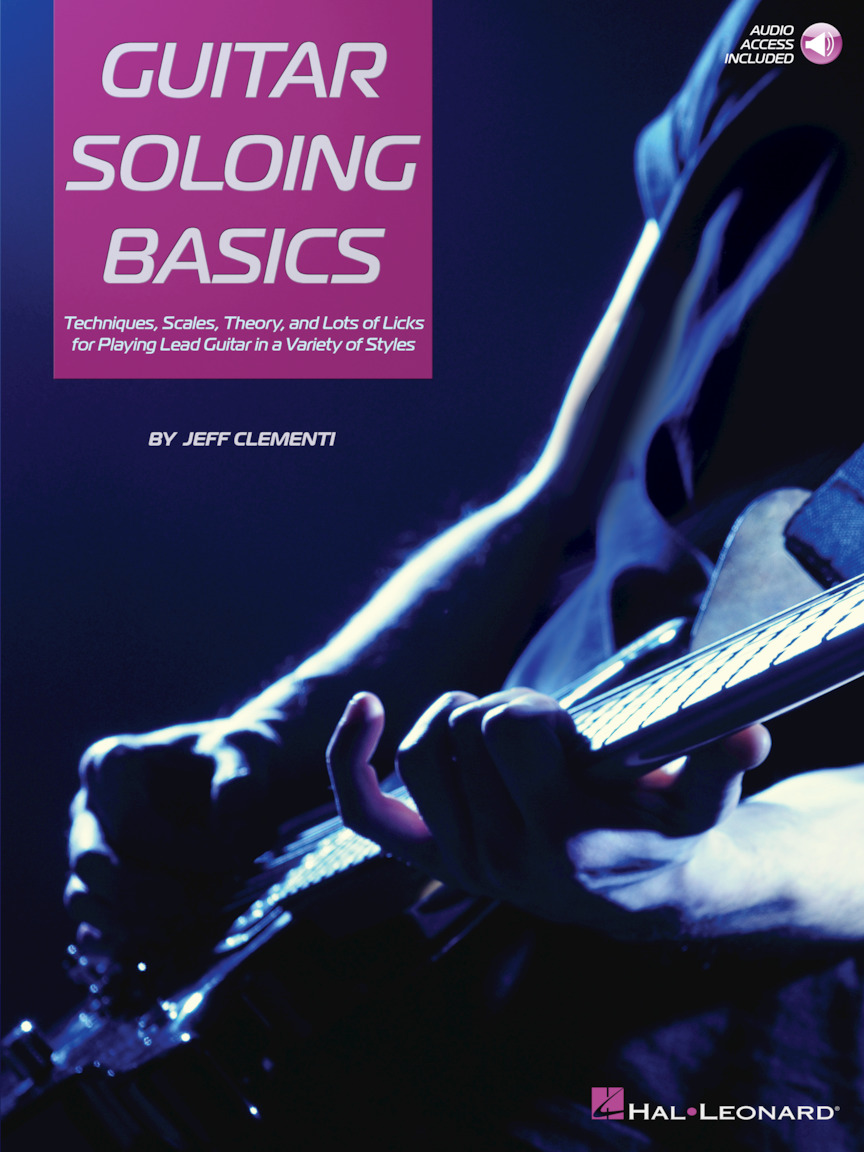
GUITAR SOLOING BASICS TABLATURE CHITARRA LIBRO TECNICA TEORIA SCALE ACCORDI SPARTITI

Guitar Soloing Basics

Techniques, Scales, Theory and Lots of Licks for Playing Lead Guitar in a Variety of Styles

SHEET MUSIC BOOK WITH CD & GUITAR TABLATURE. 

EASY TO READ RHYTHM TABLATURE NOTATION .


LIBRO DI MUSICA ROCK CON CD .

SPARTITI PER CHITARRA CON : 

GRAFICO DELLA TASTIERA DELLA CHITARRA .

NOTAZIONE DELLA DURATA DELLE NOTE INSIEME ALLA TABLATURE .

PENTA-TABLATURE .  


TECNICA SOLISTA ,

SCALE, 

TEORIA,  


Series: Guitar Educational

Format: Softcover Audio Online - TAB

Author: Jeff Clementi


This detailed book and audio guide uses an easy-to-understand, systematic teaching approach. With loads of scales, licks, solos and essential lead techniques, you will build your improvisation skills and knowledge, and with the hundreds of audio demonstration tracks, play-along backing tracks for jamming, and easy-to-read rhythm tab notation provided, you'll be burning up the fretboard in no time! Includes: many scales and modes; bending techniques; hammer-ons, pull-offs, and slides; double stops; vibrato; hundreds of licks; modal soloing; chordal soloing; and more. The audio is accessed online using the unique code inside each book and can be streamed or downloaded. The audio files include PLAYBACK+, a multi-functional audio player that allows you to slow down audio without changing pitch, set loop points, change keys, and pan left or right.


Inventory #HL 00201956

ISBN: 9781495080609

UPC: 888680655624

Width: 9.0"

Length: 12.0"

98 pages

Prezzo: €19,99
€19,99

SOLOING OVER CHANGES BOOK WITH CD GUITAR TABLATURE CHITARRA LIBRO METODO IMPROVVISAZIONE

Soloing over Changes. The Ultimate Guide to Improvising with Scales over Chords on the Guitar. 
SHEET MUSIC BOOK WITH CD.

LIBRO METODO PER CHITARRA SOLISTA, IMPROVVISAZIONE.
SPARTITI PER CHITARRA CON:
ACCORDI, PENTAGRAMMA, TABLATURE.


By Jody Fisher

Item: 00-44739
UPC: 038081508511
ISBN 10: 1470627647
ISBN 13: 9781470627645

Category: Guitar Method or Supplement
Format: Book & Online Audio
Instrument: Guitar

If you want to be able to play a great guitar solo over any chord progression, you have come to the right place. Master guitarist, teacher, and best-selling author Jody Fisher unlocks the secrets to how scales work with chords in this comprehensive book.

Conveniently organized into two sections, the first part of the book breaks down scale and chord theory in a simple, step-by-step manner that is easy to understand. The second part is a handy, comprehensive chord and scale finder that allows you to cross-reference scales with chords and vice versa. Access to accompanying online demonstration and play-along tracks is also included. A must-have for any guitarist, Soloing over Changes is the ultimate scale and chord resource.

"A great resource for every aspiring guitar improvisor"---George Benson

"Jodi Fisher has somehow covered it all . . . for any guitarist desiring to take their improvising to the next level."---Carl Verheyen


CONTENTS
About the Author................................................................................................................... 3
Introduction .............................................................................................................................. 3
Book Organization ................................................................................................................. 3
How to Use This Book.......................................................................................................... 4
PART 1: Learning and Using Scales ..................................................................... 5
Chapter 1 .................................................................................................................................... 5
What Is a Scale? ................................................................................................................... 5
The Chromatic Scale............................................................................................................. 8
Major-Scale Fundamentals................................................................................................... 9
Major-Scale Fingerings.......................................................................................................11
Chapter 2 ..................................................................................................................................15
How to Learn Scales...........................................................................................................15
Practicing Scales ................................................................................................................17
Chapter 3 ..................................................................................................................................22
How to Use Scales for Improvisation...............................................................................22
Chapter 4 ..................................................................................................................................25
Targeting Chord Tones in Scales.....................................................................................25
Chapter 5 ..................................................................................................................................34
Developing Melodic Ideas from Scales ...........................................................................34
Chromaticism........................................................................................................................37
Chapter 6 ..................................................................................................................................41
Now What?...........................................................................................................................41
The Natural Minor Scale.....................................................................................................41
The Harmonic Minor Scale ................................................................................................43
The Melodic Minor Scale....................................................................................................44
Other Important Scales for Altered Chords ...................................................................46
Very Important Information .................................................................................................48
Content Details for Part 2...............................................................................................49
PART 2: Scales Over Chords......................................................................................50
Major Chords (Unaltered)......................................................................................................50
Major Chords (Altered)............................................................................................................53
Dominant Chords (Unaltered).............................................................................................55
Dominant Chords (Altered)...................................................................................................59
Augmented Triads......................................................................................................................73
Minor Chords ................................................................................................................................74
Diminished Chords ....................................................................................................................91
Quartal-3 Chords ...

Targeting Chord Tones in Scales
If you have been working with the previous chord progressions and improvising using
the correct major scale, you are probably starting to notice that your solos are sounding
pretty good most of the time. But, you might also notice that it is possible to play a note
from the scale that doesn’t sound so great over a particular chord. This is because the
best-sounding notes to use over a chord are the notes in the chord itself. This does not
mean you should avoid using other notes in the scale.
Generally, you want to start your melodic line on a chord tone and use the non-chord
notes to travel from chord tone to chord tone. This is known as spelling out the chord
changes. While this can take a bit of time to perfect, the following method should help
you accelerate the process.
Arpeggios are the notes in a chord played consecutively rather than simultaneously. In
the approach shown here, you will learn all the arpeggios for the seven diatonic chords
within a particular major-scale fingering.
Here is the major-scale fingering that the arpeggio fingerings will be based on (2-E in C):....

Here are the diatonic arpeggios and their corresponding chord shapes within this scale. Once you have learned the arpeggio shapes, practice them by playing the chord, followed by the arpeggio, and then the chord again. In time, you will learn to associate the arpeggio with the chord itself. .....

With the same chord progressions you’ve been using for the previous exercises, you’re
going to apply both upper and lower neighbor tones in Exercise 5. Once again, you want
the chord tone to land on beat 1 of the measure. This means one of the neighbor tones
must be played on beat 4 while the other neighbor tone must be on the & of beat 4 of
the previous measure. You’ll do this every time the chord changes in the progression.
Again, be sure to record at slow tempos to start. Both neighbor tones are circled ....

CONTENT DETAILS FOR PART 2

SCALES
Aeolian (Natural Minor).........................74, 82, 84, 87
Blues Scale .....................................57, 61, 67, 70, 72
Diminished, Whole-Half ....... 60, 64, 65, 68, 69, 92
Dorian ..................58, 67, 76, 79, 81, 84, 86, 89, 96
Dorian b2...........................................76, 79, 80, 86, 89
Harmonic Minor ...................................................75, 90
Harmonic Minor, 7th Mode.......................................93
Ionian #5........................................................................53
Locrian..........................................................................93
Locrian #2.....................................................................94
Locrian #6.....................................................................93
Lydian.....................................................................52, 54
Lydian #2.......................................................................52
Lydian Augmented ..............................................53, 54
Lydian b3b7............................... 77, 79, 82, 84, 87, 89
Lydian b7.........................................................57, 61, 72
Major.............................................................................51
Major Pentatonic....................................51, 52, 56, 70
Major Pentatonic (from the 9th)...............................54
Melodic Minor ...............................................75, 78, 90
Minor Pentatonic ............ 56, 66, 75, 78, 80, 83, 85,
88, 95, 96
Mixolydian ....................................................................57
Mixolydian b6.........................................................57, 63
Natural Minor (Aeolian).........................74, 82, 84, 87
Phrygian..........................................................76, 81, 86
Phrygian Dominant................................58, 63, 66, 71
Super Locrian.......................... 61, 63, 66, 69, 71, 94
Whole Tone ...................................................59, 62, 73

CHORDS
Major Chords (Unaltered)......................................50
Major, 6, Maj7, Maj9, and Maj13 Chords...............50
Major Chords (Altered)............................................53
Maj7#5 Chords ............................................................53
Maj7b5, Maj7#11, and Maj9#11 Chords..................53
Maj7#5#11 Chords ......................................................54
Dominant Chords (Unaltered).............................55
7, 9, 11, 13, and 7sus4 Chords ..............................55
Dominant Chords (Altered)...................................59
7b5 Chords ...................................................................59
7#5 and 9#5 Chords....................................................62
7b9, 13b9, and 7#9 Chords........................................64
7b5b9, 7b5#9, 13#9#11, and 7#5#9 Chords..............68
7#5b9 Chords ...............................................................71
9#11 and 13#11 Chords ............................................72
Augmented Triads......................................................73
Minor Chords ................................................................74
Minor Triads .................................................................74
min6 Chords ................................................................78
min7 Chords ................................................................80
min9 Chords ................................................................83
min11 Chords..............................................................85
min13 Chords..............................................................88
min(Maj7) Chords .......................................................90
Diminished Chords ....................................................91
dim, dim7, and min7b5 (half-diminished) Chords....91
Quartal-3 Chords.........................................................95
1. In the left column, look up the chord type you would like to solo over and
learn which scales it works with. On those pages, you’ll also find two to four
voicings for the chord, and two fingerings for the scale.
2. In the right column, look up the scale you’re interested in learning and
discover which chord types it works with in a solo. Again, on those pages, you’ll
also find two fingerings for the scale, and two to four voicings for the chord.
Part 2: Scales over Chords.......................

Chord and Scale Chart
Function Major or Minor Key Scale or Mode Starting on…
ii, iii, or vi......Major ...........................Minor Pentatonic..................The root of the chord
ii......................Minor
ii......................Minor..............................Dorian b2................................The root of the chord
ii......................Major..............................Dorian .....................................The root of the chord
iii.....................Major..............................Phrygian .................................The root of the chord
iv .....................Minor..............................Lydian b3b7 ............................The root of the chord
vi.....................Minor..............................Natural Minor (Aeolian).......The root of the chord

Minor Pentatonic
Use a minor pentatonic scale starting on the root of a min7 chord when it functions as ii in a minor key, or when it functions as ii, iii, or vi in major key.

Dorian b 2 Use the Dorian b2 mode starting on the root of a minor triad when it functions as ii in a minor key ....

Prezzo: €22,99
€22,99

Effortless Mastery Edizione Italiana Kenny Werner LIBRO & CD CREATIVITà MUSICA DIDATTICO

Effortless Mastery Edizione Italiana


Autore: Kenny Werner
Formato: Libro CON CD. 
Pagine: 204

IN ITALIANO

NON CONTIENE PAGINE DI MUSICA. 


Descrizione


LIBERA IL MUSICISTA CHE E' IN TE è una guida intuitiva per tutti coloro che desiderano eliminare le barriere alla propria creatività, nella vita e nell'arte.


I concetti presentati nel volume sono applicabili a ogni professione, aspirazione o stile di vita in cui vi è la necessità di un pensiero che fluisca liberamente e senza sforzo. L'autore, Kenny Werner, è spesso presente in Italia con i suoi seminari didattici. Allegato al libro un CD che contiene la registrazione di 4 meditazioni, recitate dall'autore stesso, in inglese. All'interno del libro, è presente la trascrizione delle stesse, in lingua inglese e nella relativa traduzione italiana.


A mio padre, che diceva di amare dare consigli e aveva
sempre voluto scrivere un libro intitolato Se fossi in te!
A mia madre, donna sempre a servizio degli altri e che non
mi ha offerto altro se non incoraggiamento.
  Alla mia bellissima figlia Katheryn, che nulla possa mai
offuscare la tua esuberanza.
A mia moglie Lorraine, che mi ha insegnato il significato
del Dharma o azione virtuosa. Una delle persone più profonde
e generose che abbia mai incontrato. Siamo tutti fortunati ad
averla con noi!


Dedica
Il CD contiene la registrazione, in lingua originale con la voce
dell’autore, dei 4 esercizi di meditazioni presenti nel libro. Il
testo di queste meditazioni si trova sia in traduzione italiana
nei rispettivi capitoli, che in lingua originale, in appendice.


Vorrei ringraziare le seguenti persone e istituzioni che mi
hanno aiutato a trasformare questo libro in realtà:
Robin Brisker, per avermi aiutato ad immaginare la prima
versione della copertina; Scott Reeves per aver curato il primo
editing del testo; e Tony Morero per avermi fornito molto del
materiale che ho largamente usato - il tutto frutto di un lavoro
per passione.
  La Danish Musician’s Union e Jens Sondergaard, per
avermi invitato a tenere un seminario veramente speciale in
un “giorno di sole” a Copenhagen. Il testo originale è stata una
trascrizione inedita di quei due giorni trascorsi lì.
  Winnie e Eigil Mollsgaard, per averci permesso di usare la
loro bellissima casa per il seminario.
Alle associazioni musicali e alle università che mi hanno
invitato a tenere conferenze permettendomi di migliorare il mio
“numero”.
  A Jamey Aebersold, per aver immediatamente condiviso il
mio entusiasmo in questo progetto e per la sua dedizione allo
spirito.
  Al mio caro maestro Gurumayi Chidvilasananda, per
avermi guidato continuamente sulla strada verso il cuore,
ricordandomi sempre la “Musica interiore”.


Gli esercizi presenti sul CD sono fondamentalmente
del tipo meditazioni/visualizzazione. Il loro scopo è quello di
aiutarvi a sperimentare il vostro “spazio interiore”, uno stato
descritto dettagliatamente nel libro. Le meditazioni figurano
nel libro come capitoli. Quando arriverete a tali capitoli, vi
verrà spiegato di ascoltare l’esercizio corrispondente sul CD.
Parte del loro effetto è quello di guidarvi al rilassamento e alla
concentrazione dopo che gran parte delle informazioni saranno
state assimilate e di offrirvi quel senso di consapevolezza che
viene descritto nelle pagine di questo libro. Se ascolterete le
meditazioni di seguito, esse potranno sembrare ripetitive, in
quanto contengono concetti ribaditi più volte. Se usate come
indicato, comunque, esse possono migliorare notevolmente
l’esperienza della lettura di questo libro.
Io consiglio di leggere attentamente le meditazioni presentate
nei relativi capitoli e di ascoltarle sul CD. A volte nei capitoli
vengono menzionati concetti che non sono presenti sul CD.
Dopo aver praticato gli esercizi per la prima volta come
indicato, sentitevi liberi di usarne alcuni o tutti, nell’ambito della
pratica per mettervi in contatto con lo “spazio interiore”, lavorare
e creare da esso.
Una parte del materiale presente in questo libro è
specificamente destinato ai musicisti e può sembrare altamente
tecnico, soprattutto alcuni esempi del capito “Fase 4”. Sentitevi
liberi di tralasciare questi passaggi. La maggior parte del testo
riguarda chiunque miri a raggiungere padronanza in qualsiasi
campo della propria vita.


Prefazione ................................................................................... 7

1 Introduzione........................................................................ 12

2 La mia storia....................................................................... 14

3 Perché suoniamo? ............................................................... 28

4 Puntare a più alti obiettivi................................................. 38

5 Il suonare basato sulla paura ............................................ 52

6 La pratica basata sulla paura............................................ 59

7 Disfunzioni dell’insegnamento:

l’insegnamento basato sulla paura.................................... 64

8 Disfunzioni dell’ascolto:

l’ascolto basato sulla paura................................................ 67

9 Il comporre basato sulla paura .......................................... 71

10 “Lo spazio”........................................................................... 74

11 “Non esistono note sbagliate”............................................. 84

12 Meditazione n.1 .................................................................. 90

13 Effortless Mastery (Maestria senza sforzo) ...................... 95

14 Meditazione n.2 ................................................................ 116

15 Affermazioni ..................................................................... 121

16 Le fasi del cambiamento................................................... 127

17 Fase 1 ................................................................................ 131

18 Fase 2 ................................................................................ 140

19 Fase 3 ................................................................................ 146

20 Fase 4 ................................................................................ 153

21 Una aggiunta .................................................................... 167

22 Meditazione n.3 -

Io sono grande, io sono un maestro ................................. 173

23 Sviluppare la forma.......................................................... 178

24 Ripetizione spirituale ....................................................... 182

Meditazione n.4 - Meditazione finale..................................... 187

Appendice - Meditazioni in lingua originale.......................... 189


La verità: l’innovazione è Jazz

Louis Armstrong, Duke Ellington, Bix Biederbecke, Fats

Waller, James P. Johnson, Jelly Roll Morton, Scott Joplin,

Charlie Parker, Dizzy Gillespie, Miles Davis, Bud Powell, Bill

Evans, Ornette Coleman, Thelonious Monk, John Coltrane.

Siamo d’accordo sul fatto che questa sia una buona

rappresentativa della tradizione jazz? Cosa hanno in comune

tutte queste persone?

Sono stati tutti innovatori!

L’innovazione è la tradizione


Si è sempre pensato che coloro che sono dotati di talento,

fanno parte di un club esclusivo. La convinzione comune è che

“alcuni di noi hanno quel dono, altri no”. In questa affermazione

è implicita la supposizione che “la maggior parte di noi non ce

l’ha”. La musica (e sospetto sia così anche per altre materie)

viene tradizionalmente insegnata come una disciplina adatta

a coloro che “ce l’hanno”. Solo studenti particolarmente pieni di

talento o di livello avanzato assimilano il linguaggio musicale

nel modo in cui esso viene solitamente insegnato e forse appena

il due per cento di tutti gli studenti di musica ottiene qualche

risultato. Molti altri finiscono per lottare con i vari elementi

legati all’esecuzione o all’improvvisazione, senza mai diventare

bravi musicisti.

Moltissime persone, ad un certo punto, decidono di

rinunciare. Tendiamo a non dare abbastanza importanza a

questa discrepanza, semplicemente accettando il vecchio adagio

“alcuni ce l’hanno e altri no”. Nelle culture meno civilizzate

“chiunque è un musicista”. Ciò dipende principalmente dal modo

in cui la musica viene introdotta nelle nostre vite. Questo libro

si occuperà di questo argomento, offrirà speranza ed esercizi

a quanti sono convinti di “non averlo”. Questi esercizi inoltre

miglioreranno le capacità per quelli che credono di “averlo”.

Io credo che, se sei in grado di parlare, sei in grado anche di

suonare. Vi sono numerose ragioni per cui i cosiddetti individui

meno dotati non ci riescono. Tuttavia, esistono anche metodi

per raggiungere lo scopo, che verranno trattati in questo libro.

Molte persone possono soffrire di quella che io chiamo

musicofobia cioè la paura di suonare musica. Per le persone

affette da tale fobia, toccare uno strumento equivale a toccare 


una stufa incandescente. Tutto ciò risulta una idea irrazionale,

dal momento che nessuno di noi può scottarsi toccando uno

strumento, eppure è un problema piuttosto diffuso. Sebbene

non esistano conseguenze negative, la maggior parte di noi ha

paura. Non è colpa nostra. Siamo stati programmati ad aver

paura di suonare. Anche troppo spesso, la nostra relazione con

la musica è destinata a fallire.

A volte, una persona potrebbe smettere di suonare

pensando di non possedere il sufficiente talento ma, se andiamo

ad investigare più da vicino, appare chiaro che il problema

risiede nel metodo di studio, o nella sua mancanza.

Molte persone vengono ostacolate dall’incapacità di

concentrarsi e dal senso di venire sopraffatti da qualcosa di

più grande di loro. Tali reazioni vengono spesso scambiate

per pigrizia o apatia. Vi è un grande paradosso sul perché non

riusciamo a concentrarci e di esso e numerosi altri ci occuperemo

a fondo in queste pagine.

Gli esercizi servono ad aiutare le persone su livelli differenti

in modi differenti. Ad esempio, ci sono bravi musicisti che, per

alcune ragioni, hanno uno scarso impatto quando suonano.

Tutto funziona alla grande. Il ritmo è quello giusto e così via,

eppure non riescono ad arrivare ai cuori del loro pubblico.

Essi sono intrappolati nelle loro menti. Non c’è brio poiché si

limitano a seguire uno stile jazz che sia accettabile, che sia

“valido”. Altrettanto accade ai musicisti classici, dato che essi

ignorano il concetto di “canalizzazione della creatività” essendo

anch’essi dominati dalla loro mente conscia. Si deve esercitare

un controllo maggiore su una forza più ampia o più elevata.

All’inizio può spaventare, ma alla fine si rivelerà liberatorio. In

Sanscrito, la parola relativa per questo concetto è moksha, che

appunto intende la liberazione raggiungibile abbandonando il

piccolo io in favore del “Sé” superiore. Andando avanti nel libro,

presenterò degli esercizi atti al raggiungimento di questo scopo

in ambito musicale. Dopo aver assaporato il concetto di moksha

attraverso la musica, non desidererai più ritornare a “pensare

musica”. Quando si oltrepassa l’accettabile per raggiungere 


Prezzo: €21,99
€21,99

GAMMES GUITARE L'INTEGRALE 3CD TABLATURE CHITARRA SPARTITI LIBRO SCALE ARPEGGI

GAMMES GUITARE L'INTEGRALE. 3CD. TABLATURE

LIBRO METODO DI MUSICA CON 3 CD.
SPARTITI PER CHITARRA CON:
ACCORDI, PENTAGRAMMA, TABLATURE.
SCALE, ARPEGGI
287 PAGINE

Référence : 

Date de Création : 2010-08-27 |

Catégorie : Méthode en français

Instrument : Guitare
Media : Livre + CD
Auteur/Interprète : PHILIPPE GANTER 

Editeur : ID MUSIC

Dans cette méthode en trois parties, Philippe Ganter présente, de manière claire et précise, les outils nécessaires aux guitaristes de tous styles dans leur approche des techniques de guitare et d’improvisation.

Cette méthode comprend trois CD audio. À chaque chapitre, lorsque vous avez appris les exemples et les exercices grâce aux tablatures, aux dessins et aux indications précises de doigtés, le CD vous fournit un guide pour votre travail sur l’instrument..

De plus, une section rythmique complète vous accompagne pour vous permettre de jouer et de mettre en application chacune de ces gammes dans le cadre des 14 exercices d’improvisation..

Un programme de travail détaillé en 12 pages fournit une feuille de route pédagogique pour les professeurs et les guitaristes autodidactes.

Titres :

Gamme pentatonique majeure
Gamme pentatonique mineure
Gamme diatonique majeure
Mode dorien
Gamme dominante (mode mixolydien)
Techniques de travail
Arpège majeur
Arpège mineur
Arpège dominant (7)
Arpèges majeur 7 et mineur 7
Arpèges diminué et °7
Arpèges augmenté et 7(#5)
Gamme blues
Gamme harmonique mineure
Gamme mineure mélodique
Gamme de bartok (mode lydien dominant)
Gamme altérée (mode superlocrien)
Gamme chromatique
Gamme unitonique
Gammes diminuées
Exercices d'indépendance
Superpositions & Substitutions
Programme de travail (12 pages)
Tableau récapitulatif (22 gammes)
Lexique 

Prezzo: €69,99
€69,99

IMPROVVISA DA ZERO! ANTONIO CORDARO, IN COLLABORAZIONE CON DONATO BEGOTTI. DVD TAB.

IMPROVVISA DA ZERO! ANTONIO CORDARO, IN COLLABORAZIONE CON DONATO BEGOTTI. DVD TAB.

LIBRO METODO DI MUSICA ROCK CON CD.
SPARTITI PER CHITARRA CON:
ACCORDI, PENTAGRAMMA, TABLATURE.

Autore: Antonio Cordaro, in collaborazione con Donato Begotti
Editore: Volontè & Co.
Pagine: 72
Formato:libro + DVD

Descrizione breve

Una nuova pubblicazione della collana curata dal grande Donato Begotti, un corso d'improvvisazione per principianti, con Dvd in alta definizione, divertente ed efficace, per imparare a improvvisare partendo dai concetti più semplici e immediati. Per improvvisare su progressioni minori, maggiori, rock/blues, utilizzare varie scale pentatoniche, migliorare il fraseggio, stimolare la creatività, migliorare teoria e orecchio relativo, sviluppare tecnica esecutiva e feeling… Nel dvd le esecuzioni video di tutti gli esempi musicali e le relative spiegazioni parlate. In una cartella separata 76 file audio (più di due ore e mezza di musica) con le esecuzioni e relative basi.
 

Prezzo: €22,99
€22,99

CONNECTING PENTATONIC PATTERNS GUIDE FOR ALL GUITARISTS Tom Kolb CD TABLATURE CHITARRA METODO

CONNECTING PENTATONIC PATTERNS, THE ESSENTIAL GUIDE FOR ALL GUITARISTS. Tom Kolb. CD TABLATURE

LIBRO METODO DI MUSICA CON CD.
SPARTITI PER CHITARRA CON :
ACCORDI, PENTAGRAMMA, TABLATURE.


Series: Guitar Educational
Format: Softcover with CD - TAB
Author: Tom Kolb

If you've been finding yourself trapped in the pentatonic box, then Connecting Pentatonic Patterns is for you! This hands-on instructional book/CD pack offers examples for guitar players of all levels, from beginner to advanced. The only prerequisites are a basic understanding of the minor pentatonic scale and a desire to expand your fretboard horizons. Study this book faithfully, and soon you'll be soloing all over the neck with the greatest of ease. Includes an audio CD with demonstrations of every example in the book, plus jam tracks for practicing! 144 pages 

Prezzo: €24,99
€24,99

GUITAR FRETBOARD ATLAS-GET A BETTER GRIP ON NECK NAVIGATION BOOK LIBRO CHITARRA

GUITAR FRETBOARD ATLAS, GET A BETTER GRIP ON NECK NAVIGATION. SHEET MUSIC BOOK. 

LIBRO METODO PER CHITARRA .

SCALE, ARPEGGI, ACCORDI, ARMONIA, SOLOING. 

NEL PIANOFORTE POSSIAMO VEDERE LE NOTE, ESSENDO RICONOSCIBILI ALLA VISTA, E DIVISE IN TASTI BIANCHI E NERI.

QUESTO NELLA CHITARRA NON è POSSIBILE, ESSENDO LA CHITARRA UNO STRUMENTO ''DEMOCRATICO'', NON HA SEPARATO LE NOTE DELLA SUA TASTIERA IN NOTE BIANCHE E NERE.

QUESTO PERò NON è DI AIUTO QUANDO SI IMPROVVISA UN ASSOLO O UNA MELODIA.

QUESTO LIBRO INSEGNA A VISUALIZZARE AL 100% LE CONNESSIONI TRA LE NOTE, CHE FORMANO SCALE, ARPEGGI, ACCORDI, SULLA TASTIERA DELLA CHITARRA.

Series: Guitar Educational
Format: Softcover
Author: Joe Charupakorn

Mastering the guitar neck has always been a challenge, even for very experienced players. The full-color diagrams in Guitar Fretboard Atlas will help you quickly memorize scales and chords that may have previously seemed impossible to grasp. You'll be able to easily see and understand how scale and chord shapes are laid out and how they connect and overlap across the neck. This is a collection of roadmaps for the most important scales and chords. The material is presented in all 12 keys, using complete 24-fret neck diagrams with color-coded displays of the most common fingerings. 194 pages 

Inventory #HL 00124164
ISBN: 9781480367043
UPC: 884088964108
Width: 9.0"
Length: 12.0"
192 pages
 

HOW TO USE THIS BOOK 

A great strategy for getting the most out of Guitar Fretboard Atlas is to take one shape and work with it for a while in one key until it feels comfortable. For memorizing scales, first take into account how many notes are on each string and how far apart the notes are in the shape—the distance from one note to the next will, in most cases, be only a fret or two away. (In the case of pentatonic scales, sometimes they are three frets apart.) As you become familiar with a scale shape, add in an adja-cent shape in the same key. Once you can see both shapes independently and also as pieces of a bigger puzzle, then practice going back and forth between the two. There are countless ways to put the scale shapes to use. For example, you can run the scales straight up and down, improvise with them, or sight read, using the shapes as a reference. Do this in all 12 keys. For internalizing chords shapes, first take some time to get a mental picture of the chord's shape. After committing it to memory, practice getting to the shape quickly without referring to the book and also make sure all the notes are ringing clearly. Add another voicing of the same chord and then practice moving back-and-forth between the two voicings. Once you are comfortable with this, do it in the remaining keys. To gain flexibility with the new chords, practice a short progression of two or three chords in different keys, at first using two voicings for each chord. Then add more voicings as it becomes second nature. 

Beyond the Fingering For each chord diagram, every tone of the specific chord is circled, but only the most common moveable chord shapes are displayed with color codes. This is just a starting point—you shouldn't feel locked in" to any of the shapes presented. If you want to reach for some inversions and/or smaller chord fragments that might be more suitable for specific applications, use the circled chord tones as a guide and go for it! Because all the notes interconnect, the idea is that, ultimately, you'll see the guitar neck as one unit. 


TABLE OF CONTENTS
Introduction 

About the Author  

How to Use This Book 

Notation Conventions in This Book 


SCALES

The Major Scale and Its Modes 

Ionian (Major)

Dorian Phrygian

Lydian

Mixolydian

Aeolian (Natural Minor)

Locrian


Pentatonic and Blues Scales 

Major Pentatonic

Minor Pentatonic Blues


The Melodic Minor Scale and Its Modes 

Melodic Minor

Dorian b2

Lydian Augmented

Lydian Dominant

Mixolydian b6

Locrian 2

Super Locrian


The Harmonic Minor Scale and Its Modes 

Harmonic Minor

Locrian 6

Ionian #5

Dorian #4

Phrygian Dominant

Lydian #2

Super Locrian .bb7


CHORDS

Power Chords 


Triads 

Major

Suspended 4th: sus4

Minor: m

Augmented: +

Diminished: °


Triads with Added Notes 

Add Nine: add9

Minor Add Nine: m(add9)

Six: 6

Minor Six: m6

Six-Nine:  §

Minor Six-Nine: m§


Seventh Chords 

Major Seventh: maj7

Dominant Seventh: 7

Dominant Seventh Suspended 4th: 7sus4

Minor Seventh: m7

Minor-Major Seventh: m(maj7)

Minor Seventh Flat Five: m765

Diminished Seventh: .7°
 

Prezzo: €26,99
€26,99

THESAURUS OF SCALES AND MELODIC PATTERNS FOR GUITAR SLOMINSKY CD TABLATURE LIBRO SPARTITI

THESAURUS OF SCALES AND MELODIC PATTERNS FOR GUITAR. CD TABLATURE

Format: Softcover with CD
Editor: Various

This book is a condensed, made-for-guitar version of Nicolas Slonimsky's publication Thesaurus of Scales and Melodic Patterns – the book that musicians as diverse as John Coltrane and Frank Zappa used for ideas and inspiration. Musicians familiar with the original Thesaurus know that it contains a daunting amount of information crammed in its over 230 pages. But there is a definite symmetry and logic in these Slonimsky examples. What appear to be random patterns are actually mathematical combinations of some or all of the twelve notes in music. As the musician/student plays through the examples, the patterns will unfold and become more obvious. 
128 pages

Prezzo: €31,99
€31,99

CHORD ORBITS, EXPLORING THE SOUND AND SHAPE OF A CHORD'S PROGRESSION UP AND DOWN THE FINGERBOARD, BY DON LATARSKI

CHORD ORBITS, EXPLORING THE SOUND AND SHAPE OF A CHORD'S PROGRESSION UP AND DOWN THE FINGERBOARD, BY DON LATARSKI


Series: The Progressive Guitarist Series
Category: Guitar Method or Supplement
Format: Book
Instrument: Guitar
Explores the sound and shape of a chord's progression up and down the fingerboard. Each chord type is presented in eight fingerings using a cyclic diagram that shows that after the eighth fingering you will have arrived back at the starting point -- one octave higher.

Prezzo: €19,99
€19,99
Condividi contenuti