PENTAGRAMMA E TABLATURE - STANDARD NOTATION and TABLATURE

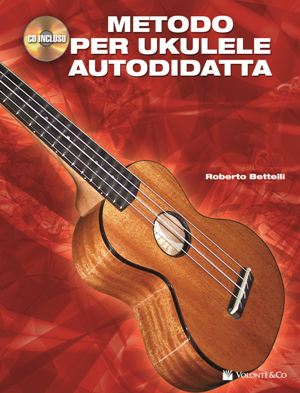
METODO PER UKULELE AUTODIDATTA LIBRO CD TABLATURE Georgia on my mind-La Bamba-Scarborough Fair

METODO PER UKULELE AUTODIDATTA. LIBRO IN ITALIANO CON CD. 

Autore Roberto Bettelli  

LIBRO METODO DI MUSICA CON CD.
SPARTITI PER UKULELE
ACCORDI, PENTAGRAMMA E TABLATURE
IN ITALIANO

Un Metodo per tutti, che insegna in modo semplice, chiaro ed esaustivo le nozioni teoriche musicali e le tecniche strumentali di base, e che mette in grado di suonare in breve tempo. All’interno del testo, come utile e importante strumento di esercitazione, sono incluse oltre 30 trascrizioni di brani famosi, tratti dal repertorio musicale classico, tradizionale e pop. Il Cd allegato è un ottimo strumento didattico, che contiene gli esercizi e tutti i brani presenti nel testo, in versione “base con melodia” e “base senza melodia”. Per imparare subito a suonare l’ukulele, divertendosi con alcune delle melodie più famose, come Georgia on my mind, La Bamba, Scarborough Fair, La Chucaracha, Yesterday, Guantanamera, Oh Happy Day, Stille Nachte e tante altre ancora.

Nel 1995, durante una manifestazione musicale, ebbi la fortuna di conoscere l’arte di uno
dei maggiori virtuosi dell’Ukulele, Tiny Tim. Da allora iniziai a suonare oltre che la
chitarra anche l’Ukulele, che mi ha sempre accompagnato nelle mie esibizioni
live. La natura dello strumento essenzialmente ritmica prevede lo studio degli
accordi e le varie tecniche di accompagnamento anche se, come vedremo,
sarà possibile suonare anche delle linee melodiche. Questo Metodo ha
come scopo quello di insegnare, in modo chiaro, esaustivo, e in
breve tempo, tutte le tecniche strumentali di base. Un consiglio per
un buon apprendimento è quello di una pratica giornaliera di pochi
minuti, ma costante nel tempo, da eseguire con l’ausilio del CD
allegato che, spero, vi sarà di ottimo aiuto.


Roberto Bettelli, diplomato in chitarra classica, ha inciso
tre CD di chitarra acustica Fingerpicking - Fingerstyle:
“POP SONG FOR GUITAR SOLO” (1998), GUITAR
EXPERIENCE (2001), GUITAR SOLO COLLECTION
(2006). Dimostratore delle chitarre Americane Ovation dal
1998 ha partecipato a varie manifestazioni internazionali
e collaborato con importanti musicisti di fama mondiale.
Grazie alla collaborazione con Kaman Music USA ha
approfondito lo studio dell’Ukulele nel genere Country Bluegrass.


Il CD allegato al seguente Metodo contiene le tracce audio di tutti gli esercizi e brani inseriti nelle varie
lezioni (escluso il numero 15). Ad ogni brano con il titolo corrisponde una base su cui suonare. La traccia
n.1 è molto importante perché contiene l’accordatura dell’Ukulele. Tutte le Tracce (Track) sono indicate
con il simbolo CD. È di fondamentale auspicio l’accordatura dello strumento ogni volta che si inizia una
nuova seduta di studio.

Lo Strumento
Breve Storia dell’Ukulele.
Le Parti dell’Ukulele.

2 La posizione dell’Ukulele
Posizione da seduti .
Posizione in piedi .
La Posizione della Mano Destra.
La Posizione della Mano Sinistra.

3 Accordare l’Ukulele
Accordare con il CD.
Accordare con la Tastiera.
Accordare con il Diapason .
Accordatore Elettronico.

4 Teoria Musicale
Alcune Nozioni di Teoria Musicale.
Il Tempo 
Figure e valori 
Le Battute o Misure.

5 Le Note sulla Terza e sulla Seconda Corda
Le Note sulla Terza Corda - Es. 1, 2 .
Le Note sulla Seconda Corda - Es. 3, 4, 5.
Es. 6 - Tutti gli Esercizi Riuniti.
“AU CLAIRE DE LA LUNE”.
“LA GIOSTRA”.
“INNO ALLA GIOIA”.
“MARY HAD A LITTLE LAMB”.
“MELODIA POPOLARE”.
“AH, VOUS DIRAI-JE, MAMAN”.

6 Le Note sulla Prima Corda
Le Note sulla Prima Corda - Es. 7, 8, 9.
“OH SUSANNA”.
La Scala di DO Maggiore - Es. 10.
Es. 11 - Esercizio Sulla Scala di Do Maggiore.
Le Note RE e MI sulla Prima Corda - Es. 12, 13, 14.
“AURA LEE”.
“WHEN THE SAINTS GO MARCHING IN”.
“LITTLE BROWN JUG”.

7 La Nota Si Bemolle
La Nota Si Bemolle sulla Prima Corda - Es. 15.
“YANKEE DOODLE”.
“JINGLE BELLS”.
La Scala di Fa Maggiore - Es. 16.
Es. 17 - Esercizio sulla Scala di Fa Maggiore.

8 Gli Accordi
Do Maggiore, Fa Maggiore, Sol7 - Es. 18, 19.
Sol minore, Do7, La Maggiore, Re minore - Es. 20, 21.
Mi minore, Si7, La minore - Es. 22, 23 .
Gli accordi con il Barrè - Re Maggiore, Mi Maggiore, Mi7, Si Maggiore - Es. 24.
“BLUES IN MI”.

9 Teoria Musicale 2
Il Punto di Valore .
I Tempi 4/4, 2/4, 3/4, 6/8.
Le Terzine.
Le Note Sopra e Sotto il Rigo.
Il Tono e il Semitono.
Le Alterazioni.

10 Antologia di Brani per Ukulele
Introduzione ai Brani .
“CIELITO LINDO”.
“RED RIVER VALLEY”.
“SAINT LOUIS BLUES”.
“WE WHISH YOU A MARRY CHRISTMAS”.
“STILLE NACHT”.
“OH HAPPY DAY”.
“JOSHUA FIT THE BATTLE OF GERICO”.
“GLORY, GLORY ALLELUJA”.
“GEORGIA ON MY MIND”.
“LOCH LOMOND”.
“GUANTANAMERA”.
“LA CHUCARACHA”
“LA BAMBA”.
“SCARBOROUGH FAIR CANTICLE”.
“GREENSLEEVES”.
“MELODIA SPAGNOLA (Giochi Proibiti)”.
“YESTERDAY”.
“THE BLARNEY PILGRIM”.
“JESUS JOY OF MAN’S DESIRING”.

Appendice
Stili di Accompagnamento.

Tavola degli Accordi .

Indice Tracce CD

Prezzo: €18,99
€18,99

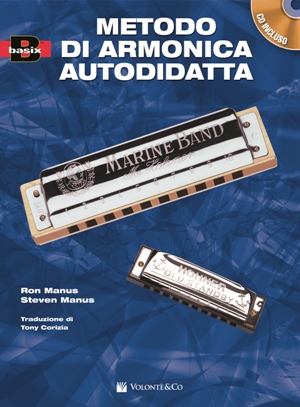
METODO DI ARMONICA PER AUTODIDATTA RON MANUS diatonica-cromatica Blues-Rock-Pop-Country-Folk

Metodo di Armonica per l'Autodidatta 
Autore Ron Manus, Steven Manus 

LIBRO METODO IN ITALIANO PER ARMONICA A BOCCA CON CD.

ACCORDI, PENTAGRAMMA, TABLATURE PER ARMONICA. 

TECNICA, 

Traduzione italiana di un metodo per armonica diatonica e cromatica, che adotta uno speciale sistema di lettura delle note, che facilita l’apprendimento e assicura risultati pressoché immediati. Il libro contempla fraseggi Blues, Rock, Pop, Country e Folk, espressi nello stile dei più grandi artisti dello strumento (Billy Joel, Stevie Wonder, Bob Dylan, The Beatles, Bruce Springsteen, Huey Lewis). A completamento, un CD allegato che contiene gli accompagnamenti per tutte le canzoni e gli esercizi inclusi nel testo.

Prezzo: €16,99
€16,99

NINO RICARDO, ESTUDIO DE ESTILO José Fuente CD TABLATURE CHITARRA

NINO RICARDO, ESTUDIO DE ESTILO José Fuente CD TABLATURE CHITARRA

Fuente, José - NINO RICARDO

Nuestro libro les brinda diez composiciones más emblemáticas del genio de Niño Ricardo trascritas íntegramente. El CD presenta las grabaciones originales, desde su primer disco de 78 revoluciones («Espeleta» - 1943) hasta su última sesión de solista («Llora la Caña» - 1965).

10 PEZZI COMPLETI

Sumario:

Alegrías en La
Alegrías en Mi
Bulerías
Caña/Soleá
Fandangos
Granaína
Serrana
Soleá I Fandango por Bulería
Soleá por Bulería
Farruca I Colombiana I Alegrías I Colombiana


repetición de un acorde

ESTRUCTURA DE LOS PALOS

fin de compás
: división de un compás (en las Siguiriyas y en las Bulerías). En este caso, los guiones valen por barras de medida para los diesis,
bemoles y becuadros.
lIam: llamada
rem : remate

NIÑO RICARDO
Manuel Serrapí Sánchez "Niño Ricardo» (1904 - 1972) fue hasta los años 1970 para los guitarristas flamencos la mayor referencia.
Lo fue para Victor Monge "Serranito», Manolo Sanlúcar y Paco de Lucía pero también para Eduardo de la Malena, Felix de Utrera, Ramón de Algeciras, José María Pardo ... Puede por tanto considerarse como el gran impulsor de la guitarra flamenca moderna.
Dicho puesto privilegiado se lo debe a su genio de compositor, pero también a unas circunstancias históricas particulares: entre los años 1930 y 1950, algunos grandes artistas contemporáneos de Niño Ricardo habían emigrado a América (Estebán de Sanlúcar, Sabicas y Mario Escudero) o a Gran Bretaña (Pepe Martinez) y los que se quedaron en España eligieron en su mayor parte llevar una carrera "clandestina» en algunos calmaos o en reuniones privadas (Javier Malina, Manolo de Huelva, Perico el del Lunar, y, aunque en menor medida, Luis Maravilla y Manolo y Pepe de Badajoz). Cabe también recordar que las grabaciones de Ramón Montoya resultaron poco acequibles en España durante mucho tiempo.
Al contrario de ellos, Niño Ricardo, nunca se negó a tocar en unos espectáculos para el gran público. Participó en un sinfín de giras de "ópera flamenca» desde 1926 con la Niña de los Peines, Cojo de Málaga, Manuel Centeno ... hasta los años 1960 con Antonio Malina. Entre tanto había colaborado en los espectáculos de Lola Flores, Concha Piquer «Las calles de Cádiz»), con la "Compañía de canciones y bailes españoles» de Mari Paz. Y sobre todo con Juanito Valderrama. Niño Ricardo fue entonces un artista polifacético, capaz de componer unos temas exitosos para este tipo de espectáculos ("Mi primera comunión», "El lerele" ... y el famoso "El emigrante»), y de acompañar a los grandes cantaores más clásicos tales como la Niña de los Peines, Tomás Pavón,
Pepe Pinto, José Cepero, Manuel Vallejo, Manolo Caracol, Juan Talega, Roque Montoya "Jarrita», Antonio Mairena, Manuel Mairena, El Chocolate ...

Entonces, no es de extrañar que la discografía de Niño Ricardo como guitarrista acompañante sea una de las más copiosa en la historia del flamenco. Iniciada en 1927 con una serie de grabaciones con la Niña de los Peines (Regal) cubre casi medio siglo, con una última sesión con Manolo Caracol editada en 1972, el año en que falleció ("Manolo Caracol: cante grande» - LP RCA Victor LSP 10464). Además de los cantaores ya mencionados encontraremos también, entre otros, Niño de Gloria, Pepe Marchena, Manuel Vega "el Carbonerillo», Pena hijo, El Sevillano, José Palanca, Juan Varea, Pericón de Cádiz, Porrina de Badajoz, Curro de Utrera, Jesús el Chozas, Rerre de los Palacios, Pepe Gullena, Manolo Leiva ... Es de notar también que los jóvenes cantaores de los años 1960, solicitaron mucho a Niño Ricardo, quien representaba para ellos un sello indiscutible. Lo hicieron Juan Peña "el Lebrijano" (Columbia, 1965, 1966 Y 1968· este último disco titulado "De Sevilla a Cádiz», Lp C 7002, en duo con Paco de Lucía), Curro Malena (Lp Columbia C 7041 - 1969) Y Enrique Morente «<Cantes antiguos del flamenco», Lp Hispavox HH 10-355 – 1969). Con diez años Niño Ricardo trabajaba ya como carbonero (de ahí su primer apodo «Manolo el Carbonero») pero lo dejó para trabajar en un taller de ebanistería de barnizador. Aprendió al mismo tiempo a tocar la guitarra por sí mismo y consiguió muy pronto sus primeros contratos profesionales: a partir de 1917 según sus propias declaraciones, trabaja en el "Café Novedades" de Sevilla. Ahí aprendería el oficio "sobre la marcha» inspirándose en los grandes profesionales con los que se codeaba en Novedades y en otros cafés cantantes de Sevilla, en el ambiente de los calmaos de la Alameda de Hércules, punto de encuentro de los flamencos sevillanos: José Triano "el Ecijano», Javier Malina (1868 - 1956), Currito el de la Jeroma (1900 -1930) Y sobre todo, Antonio Moreno (1890 - 1937). Acompañando al baile en los cuadros flamencos, y (aunque menos) al cante, el joven Ricardo va adquiriendo experiencia.

De ahi su gusto por los toques acompasados y por las tecnicas esencialmente flamencas (rasgueados, tecnicas de pulgar o alternancia pulgar/indice (vease abajo). Solo mas tarde introducira en su toque, las tecnicas c1asicas desarrolladas por la "escuela de adrid» (Ramon Montoya, Miguel Borrull, Luis Molina) influenciado por la grabaciones de Molina y Montoya. Nino Ricardo sera entonces, uno de los fundadores de la escuela andaluza, mas centrada en el toque a com pas y "a cuerda pela» (toque monodico) al ue aportara su sello irrepetible. No nos extrana, por tanto, que Nino Ricardo haya sido el unico guitarrista famoso de la epoca en . teresarse en el toque de Diego del Gastor, con el cual establecio una "correspondencia» musical duradera : Paco del Gastor, sabri no de Diego haciendo de "cartero» entre Moron y Sevilla, aprendiendose una nueva falseta del uno, para tocarsela al otro ...
Y sin duda, por eso, Nino Ricardo puede considerarse, junto con Manolo de Huelva (1892 - 1976), como uno de los creadores de la uleria moderna. Dicha forma se estaba elaborando en aquella epoca, y se hallaba poco individualizada : Ramon Montoya solia 'ocarla como una suerte de Alegria 0 de Solea rapid a, y Luis Molina y Miguel Borrull solian conformar su acompanamiento a unas secuencias de medios compases binarios en seis tiempos. La tradicion (y sobre todo Pepe de la Matrona) suele atribuir la codificacion la forma Buleria, tal como la conocemos ahora, a Javier Molina. Esta afirmacion no se puede averiguar puesto que tenemos pocas aciones de Javier Molina (cuatro cantes con Manuel Torres: dos Soleares y dos Siguiriyas) aunque se puede considerar como osimil si consideramos el toque de sus alumnos y en particular el de los hermanos "Morao».

Ricardo y Manolo de Huelva trabajaron much os anos en Novedades con Javier Molina, y aunque Manolo de Huelva era mayor e Nino Ricardo, al empezar a actuar como concertista c1asico, 10 mas probable es que aprendio su oficio de tocaor flamenco al o tiempo que el en el Novedades. De hecho las primeras grabaciones por Buleria de ambos guitarristas son contemparaneas y comparables : principios de los anos 1930, para unos "cuples por Buleria» de Canalejas de Puerto Real y Manuel Vallejo 010 de Huelva) y de la Nina de los Peines y Manuel Vallejo (Nino Ricardo). En ambos casos tenemos la misma manera e lir» el cicio melrico, como empezando en el tiempo 12 (y no en el 1) de la Solea y la misma allernancia caracleris 'ca ariolbinario (6/8 I 3/4) a partir delliempo 12. Las falselas lambien son equiparables : por 10 esencial, conslan de unos rasgos e do. Senalaremos sin embargo, una diferencia de eslilo. Para Manolo de Huelva los rasgos en picado quedan en su mayoria unos de escalas conjunlas, mienlras que Nino Ricardo liene lendencia a parafrasear, en sus falsetas, unos exlraclos de melodias e «cuples» que se van a canlar (Ia melodia ante lodo para Nino Ricardo). Es de anadir que ambos artislas luvieron el mismo papel elaboracion de la otra forma que se eslaba desarrollando en la epoca, la de los Fandangos de Huelva.

ESTILO DE NINO RICARDO
grabaciones en solo de Nino Ricardo y Ramon Montoya tienen dos punlos en comun : ambos empezaron a grabar larde (ea . enla anos para Ricardo: la primera sesion con fecha probada es de 1943 para Columbia - las primeras versiones de la Zeria arabesca» y de las Alegrias "Espelela») ; ambos han grabado su obra maestra en Paris (en 1955 para Nino Ricardo e Chant du Monde).
embargo la comparacion de dichas discografias mueslra a las c1aras las diferencias de estilo entre las escuelas de Madrid y de andalucia a las que aludiamos, tanlo en las formas como en los modos privilegiados par ambos guitarrislas :
Las formas favoritas de Nino Ricardo son, sin lugar a dudas las que estriban en unos ciclos de doce tiempos, sobre todo Alegrias y Bulerias. Grabo nueve Alegrfas (en Sol, Mi y La) y seis Bulerias (dos en duo con Melchor de Marchena y una con Sabicas). La comparacion con Montoya es considerable: una Alegria (nos resulta dificil anadir las dos versiones de "La Rosa» ya que el compas de alegrias es demasiado fluctuanle : se trata, mas bien, de unos toques de concierto sin compas de referencia) y una Buleria (aunque la primera parte es, de hecho, una Solea por Buleria). Ricardo nos deja siete versiones de la Solea (contando "Lloora la cana»). Y si grabo solo dos veces la Siguiriya, sus falsetas han servido de ejemplo para todos los guitarristas posleriores.

Por outra parte, Nino Ricardo compuso unos toques de concierto que no corresponden a las formas del repertorio del cante como «gitaneria arabesca» (Ia primera Zambra para guilarra solisla), «Recuerdo a Sevilla» (subtitulado «Serenata», en el mismo compas de zambra) y "Temas farrucos» sublilulado de manera acertada «polpurri flamenco» (empieza con la Farruca luego sigue con su Creacion «Asturiana» para la Nina de los Peines, sigue con las Alegrias y concluye par Colombiana). Estos Ires toques de concierto se pueden vincular con las tres versiones de la Farruca "Almoradi» (subtitulada «Fantasia») y con una version de los Campanilleros.
No haòlamos nada parecido en la obra de Montoya, con la excepcion de una composicion litulada «Alborada» (y posiblemente, las dos «Rosas»).

Nino Ricardo es ante lodo un gran melodista. No ha sido novador, como 10fue Monloya, en 10modal y 10armonico. La mayor parte de sus composiciones eslriban en los modos tradicionales "por arriba», «por medio» y "por Granaina» (y claro eSla, en las tonalidades mayores y menares usuales para las Alegrias, las Bulerias, la Farruca. los Campanilleros y el Zapateado).
 

Prezzo: €21,99
€21,99

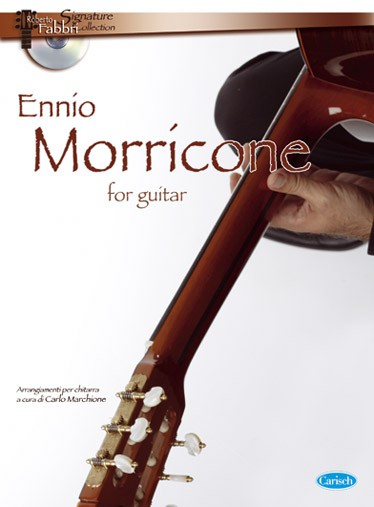
MORRICONE ENNIO FOR GUITAR Marchione LIBRO CD TABLATURE BUONO BRUTTO CATTIVO-Gabriel's oboe

MORRICONE ENNIO, FOR GUITAR. Carlo Marchione. CD TABLATURE

LIBRO DI MUSICA CON CD.

SPARTITI PER CHITARRA CON PENTAGRAMMA E TABLATURE.

Arrangiamenti per chitarra a cura di Carlo Marchione
Il volume include i seguenti brani di Ennio Morricone trascritti per chitarra sia in notazione standard che in intavolatura. Gabriel's oboe - Il buono, il brutto e il cattivo - Nuovo cinema paradiso - Sean sean - Nostromo - A l'aube du 5° jour - Per Elena

Prefazione dell'autore
Il 14 Febbraio di quest'anno (2009) ho potuto coronare un sogno: aprire nell'Arena di Belgrado (in presenza di 12.000 ascoltatori) un fantastico concerto del Maestro Morricone, eseguendo i suoi 4 pezzi originali per chitarra composti nel lontano 1957 e dedicati al Maestro Mario Gangi (che é anche stato il mio indimenticabile Professore al Conservatorio di Santa Cecilia negli anni '80). Quel giorno ho potuto chiudere un cerchio che avevo cominciato a disegnare nel 1999, anno in cui una nota casa editrice mi aveva richiesto di arrangiare in forma di concerto 12 temi del Maestro Morricone. Gli ultimi 10 anni ho quindi vissuto un intenso rapporto con la musica di questo grande compositore (come avrete letto all'inizio, non solo con quella conosciutissima scritta per il cinema). E se é senz'altro vero che nei miei concerti i bellissimi temi del Maestro hanno lasciato un ricordo indelebile sugli ascoltatori di tutte le fasce di età e cultura, é anche vero che negli ultimi 10 anni mi sono dovuto difendere da migliaia di mails di colleghi e di gente che aveva ascoltato un mio concerto (o registrazioni Internet) in cui mi veniva chiesto dove si potevano ottenere gli arrangiamenti di 'Cinema Paradiso', 'II Buono, il Brutto e il Cattivo' e di altri temi indimenticabili. Ebbene la Carisch, grazie al disinteressato aiuto di intermediazione del Maestro Roberto Fabbri, ha messo la parola fine a questo stato di cose. Con un coraggio non indifferente e con amore grande almeno quanto il mio per questa musica ha deciso di pubblicare 7 dei 12 brani che originalmente avevo arrangiato (cosa che la casa editrice citata all'inizio non era più stata in grado di fare). A loro va il mio grazie più sentito e sincero. Anche ai miei due studenti Boris e Ozan vorrei far arrivare un grazie di cuore per avere tradotto in PDF i miei manoscritti illeggibili. Ogni errore che troverete nella pubblicazione é solo da ascrivere alla mia calligrafia! A Enea Leone, (quando dici il nome ...), un Oscar alla pazienza per aver prima decifrato e poi messo in musica i miei arrangiamenti, realizzando un disco bellissimo, e per molti aspetti commovente, che troverete allegato allo spartito. E per finire un grazie sentitissimo anche a chi sta leggendo queste due righe, per aver comprato questo spartito e che sia di auspicio per una futura pubblicazione di altra bellissima musica.
Carlo Marchione

ENEA LEONE

Nato a Milano nel 1978, si avvicina allo strumento giovanissimo seguito dal padre. Prosegue

gli studi sotto la guida di Lena Kokkaliari sino al suo ingresso al Conservatorio "G. Verdi" di

Milano con Ruggero Chiesa e Paolo Cherici, diplomandosi nel 1998 con il massimo dei voti.

Qui frequenta inoltre due anni di tirocinio e due anni di corso post-diploma riportando sempre

la massima valutazione.

Si è perfezionato con Emanuele Segre, Alirio Diaz e con Oscar Ghiglia, ottenendo da quest'ultimo

le borse di studio ed i diplomi di merito presso l'Accademia Musicale Chigiana di

Siena (2002- 2003). Nel 2005 ha conseguito il "Solistendiplom" presso la Musik-Akademie

di Basilea sempre con Oscar Ghiglia. Fin dal 1990 ha partecipato a numerosi Concorsi

Nazionali e Internazionali, tra i quali Stresa, Franz Schubert, e nel 2002 il Torneo

Internazionale di Musica TIM, qualificandosi sempre al primo posto. Ha al suo attivo numerosi

concerti in Italia e all'estero (Germania, Francia, Svizzera, Romania) sia come solista che

in formazioni cameristiche (Trio Solista) e orchestra, anche per importanti associazioni musicali

quali i "Pomeriggi Musicali", "Associazione Amici del Conservatorio G. Verdi" e "Amici

del Loggione del Teatro alla Scala". Ha proposto in prima esecuzione assoluta alcune opere,

a lui dedicate, dei compositori Giovanni Allevi e Sergio Luigi Mauri. Dal 2000 è titolare della

Scuola Civica di Musica a Gessate, e dal 2006 ne è anche direttore artistico. Dal 2006 tiene la

Masterclass di chitarra all'interno della manifestazione "La magia del borgo, chitarra e altro .."

a Brisighella (Imola).

Nel 2003 ha inciso un CD per la M.A.P. interamente dedicato ad Astor Piazzolla alternando

brani solistici a brani cameristici. È di recente pubblicazione il nuovo disco "Eleven", distribuito

dalla Nicolosi Production, etichetta che annovera frai suoi artisti Sting, F. Gambale e

Billy Cobham. L'incisione contiene musiche di Morricone trascritte per chitarra sola da C.

Marchione. Enea Leone suona su chitarre Gioachino Giussani.


CARLO MARCHIONE

Carlo Marchione è considerato dagli addetti ai lavori e dalla stampa specializzata come uno

dei migliori chitarristi della giovane generazione. La sua formazione professionale, che spazia

dalla musica classica al flamenco, al jazz, gli permette di trovarsi a suo agio tra i più svariati

stili musicali. Vincitore di numerosi Primi Premi in concorsi nazionali ed internazionali

(Ancona 1979/80, Parma 1981, "Mauro Giuliani" 1982, "Ville de Sabié" 1985, Gargnano

1989, "N.Paganini" 1991, "Città di Latina" 1992) nel corso della sua carriera si è esibito (da

solista, con orchestra e in svariate formazioni da camera) per numerosissimi Festival in tutta

Europa (Italia, Spagna, Francia, Olanda, Inghilterra, Repubblica Ceca, Germania, Austria,

Russia, Ucraina, Polonia, Romania, Svezia, Croazia). Nel 1997, in occasione di una tournée

in Russia, è stato invitato ad esibirsi nella prestigiosa Sala Grande dei Conservatorio "P. I.

Ciaikovskij" di Mosca, nonché nella "Sala Glinka" della Filarmonica di San Pietroburgo. Nel

1998 ha tenuto il suo debutto alla Filarmonica di Berlino. Richiestissinio docente, tiene regolarmente

masterclasses presso i più prestigiosi istituti musicali europei e presso i più importanti

Festival europei. Nel 1997, in occasione del 200 anniversario della nascita di Franz

Schubert, ha trascritto e inciso, insieme con il tenore C. RoseI, l'intero ciclo "Die sch6ne

Mullerin". Del suo primo CD da solista (Teleman: 12 Fantasie per violino, Kreuzberg

Records) la stampa specializzata ha scritto semplicemente "This is a disc in an hundred"

(Classical Guitar). Le Fantasie sono pubblicate dalla casa editrice Suvini Zerboni. Nel prossimo

mese è prevista la pubblicazione del sccondo CD solistico (D. Aguado: Tre Rondò

Brillanti e musiche di F. de Fossa). Carlo Marchione insegna attualmente presso la scuola di

Alto Perfezionamento "F. Mendelssohn Bartoldy" in Leipzig (Germania). Carlo Marchione è

professore al Conservatorio Maastricht in Olanda.


Ho ascoltato per la prima volta le trascrizioni delle musiche di Ennio Morricone, elaborate da Carlo Marchione, già una decina di anni fa e ne rimasi subito profondamente colpito. Poi, per una serie di motivi, questo lavoro ha potuto vedere la luce solamente dieci anni dopo la sua realizzazione e, particolare insolito, subito dopo che sia il sottoscritto che Carlo abbiamo aperto come solisti il concerto di Ennio Morricone e la Roma Sinfonietta all'Arena di Belgrado il14 Febbraio 2009, tutto ciò ad ulteriore conferma di come il destino segua strade a noi incomprensibili! Come dicevo, la prima volta che ascoltai queste musiche, avevamo organizzato un pranzo "chitarristico" insieme anche ai componenti del quartetto Nexus, noi tutti ex-compagni del Conservatorio di Santa Cecilia di Roma. Come avviene in questo genere di riunioni, alla fine del pasto, presa una chitarra, ognuno faceva sentire cosa stava studiando in quel momento. Carlo aveva da poco fatto ascoltare queste trascrizioni, per una supervisione, anche ad Ennio Morricone, che ne era rimasto favorevolmente colpito. Tutto faceva così auspicare una prossima pubblicazione del lavoro con una nota casa editrice. Poi, come purtroppo a volte accade nel nostro lavoro, le cose non si sono concretizzate e la casa editrice ha ritirato la proposta. Carlo però, ha cominciato ad inserire nei suoi concerti sempre una o due di queste trascrizioni, che immancabilmente incontravano il piacere del pubblico e alimentavano, da parte dei chitarristi presenti in sala, la richiesta degli spartiti per poterle suonare. Marchione, sempre generoso, non ha mai negato a nessuno i suoi manoscritti, così piano piano altri chitarristi hanno cominciato a suonarle. Fra questi anche il bravo chitarrista Enea Leone che ha realizzato nel 2007 per la Nicolosi Production il cd: Eleven - Enea Leone plays Ennio Morricone, contenente appunto 11 trascrizioni realizzate da Carlo Marchione. Ora a più di dieci anni dalla nascita di questo splendido progetto che però non ha mai visto la luce, ho chiesto alla casa editrice Carisch di inserire nella collana da me diretta una selezione di quegli undici brani. Ritengo infatti che il lavoro realizzate da Carlo sia di alto spessore musicale, oltre che estremamente chitarristico, le trascrizioni in questione non sono però facilissime. D'altro canto, anche la precedente pubblicazione della stessa collana da me curata, contenente le trascrizioni delle musiche di Giovanni Allevi, non era un libro "entry-Ievel". Il mio intento con questa collana è infatti quello di rivolgermi ad un target chitarristico di livello medio alto. Rivolgendoci con questa pubblicazione così anche ai concertisti, siamo consapevoli di offrire loro un prodotto musicale anche impegnativo, ma di sicura qualità musicale e assoluta riuscita chitarristica, che può essere però una valida alternativa o integrazione dei loro usuali programmi da concerto. L'intavolatura presente ha una funzione più esplicativa che semplificativa, infatti molte volte Marchione ha utilizzato addirittura il doppio pentagramma laddove usarne uno solo avrebbe creato dei problemi di comprensibilità del testo musicale, l'intavolatura viene così in aiuto anche del più smaliziato professionista. Accompagna il libro, come consuetudine della collana, il cd con l'esecuzione di Enea Leone dei sette brani scelti. L'incisione è stata tratta, per gentile concessione della Nicolosi Production, dal cd da loro realizzato nel 2007. Roma 19/02/2009


Il volume include i seguenti brani di Ennio Morricone trascritti per chitarra sia in notazione standard che in intavolatura:


1986 - GABRlEL'S OBOE - musica: Ennio Morricone

1966 - IL BUONO, IL BRUTTO E IL CATTIVO - musica: Ennio Morricone

1988 - NUOVO CINEMA PARADISO - musica: Ennio Morricone, A. Morricone

1971 - SEAN SEAN - musica: Ennio Morricone

1996 - NOSTROMO - musica: Ennio Morricone

1970 - A L'AUBE DU 5° JOUR - musica: Ennio Morricone

1988 - PER ELENA - musica: Ennio Morricone, A. Morricone

Prezzo: €24,99
€24,99

GROOVY GUITAR 15 CLASSIC '60 SONGS Bill Piburn CD TABLATURE LIBRO (Sittin' On) The Dock Of The Bay

GROOVY GUITAR, 15 CLASSIC '60 SONGS ARRANGED FOR SOLO GUITAR. Bill Piburn. BOOK WITH CD & TABLATURE

LIBRO DI MUSICA POP ROCK, CON CD.

SPARTITI PER CHITARRA FINGERSTYLE, CHITARRA SOLA, FINGERPICKING, CON: 

PENTAGRAMMA E TABLATURE. 


Series: Guitar Solo

Format: Softcover with CD - TAB

Arranger: Bill Piburn

Artist: Various

Recording Engineer: Jack Pearson


From the editor of Fingerstyle Guitar magazine comes 15 custom arrangements of popular music classics, including: Daydream • Happy Together • A Hard Day's Night • Last Train to Clarksville • Scarborough Fair • (Sittin' On) The Dock of the Bay • Spooky • Walk On By • What Becomes of the Broken Hearted • and more. Songs are arranged for solo guitar in notes and tab.


Bill Piburn has lived in Nashville since 1987. Growing up in Kansas City, Missouri, he began his guitar studies with his father Russell at the age of ten. He went on to study with Douglas Niedt at sixteen and Christopher Parkening at age nineteen. He also studied harmony with jazz pianist John Elliot. His playing has won him high praise from legendary players such as Martin Taylor, Chet Atkins, Johnny Smith, Tommy Emmanuel, and Earl Klugh.

"Bill Piburn's arrangements are creative and very musical. He draws on a wide range of musical styles and influences to keep the player and listener surprised and engaged. The music is personal, whimsical, and colorful with lots of interesting counterpoint and unique harmonies. It is immediately apparent when you meet him that the guitar is his passion. We've had great conversations about the guitar and life, and I am proud to have him as a friend." - Earl Klugh


Song List:

Daydream  -  John Sebastian

Downtown  -  Tony Hatch

Happy Together  -  Garry Bonner and Alan Gordon

A Hard Day's Night  -  John Lennon and Paul McCartney

I'll Never Fall In Love Again  -  Burt Bacharach

Last Train To Clarksville  -  Bobby Hart and Tommy Boyce

Mellow Yellow  -  Donovan Leitch

Scarborough Fair  -  Simon & Garfunkel

(Sittin' On) The Dock Of The Bay  -  Steve Cropper and Otis Redding

Spooky  -  Cobb, Buddy Buie, Middlebrooks, Mike Shapiro

Sunny  -  Bobby Hebb

Up On The Roof  -  Gerry Goffin and Carole King

Walk On By  -  Burt Bacharach

What Becomes Of The Broken Hearted  -  J. Dean, Paul Riser, William Henry Weatherspoon

What The World Needs Now Is Love  -  Lyric: Hal David, Music: Burt Bacharach


56 pages

Prezzo: €26,99
€26,99

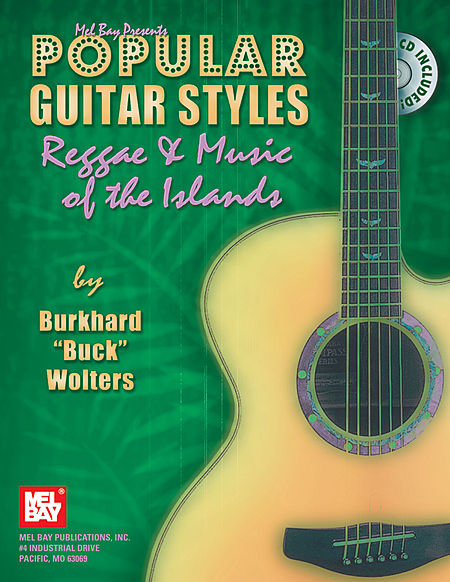
POPULAR GUITAR STYLES REGGAE & MUSIC OF THE ISLANDS Burkhard Buck Wolters CD TABLATURE

POPULAR GUITAR STYLES, REGGAE & MUSIC OF THE ISLANDS. Burkhard Buck Wolters. SHEET MUSIC BOOK WITH CD AND GUITAR TABLATURE .

LIBRO DI MUSICA REGGAE , LATINA, CON CD. 

SPARTITI PER SOLA CHITARRA CON : 

PENTAGRAMMA E TABLATURE. 

Popular Guitar Styles: Reggae and Music of the Islands reflects recent popular styles and transfers them to classical or fingerstyle technique. Guitar players who want to add reggae or Island music to their solo-repertoire will find an original and unique collection of compositions which will give joy to both players and listeners. The playing-level is intermediate to advance. Left-hand difficulties like barres and stretches are minimized as much as possible to make it easy to make the music groove. Written in notation and TABLATURE.

Series: Popular Guitar Styles

Buck Wolters belongs to the very small company of guitar players and composers who are familar with nearly every style. His authentic mix of jazz, world and latin music, combined with a mastery of classical guitar technique is very unique and outstanding. Born in 1961 in Dortmund, Germany, he began to play the guitar as an autodidact at the age of five. After hearing a recording of Big Bill Broonzy he took his first guitar lessons at the age of thirteen, digging into the blues for several years. At the age of sixteen he went to the conservatory in his hometown where he studied classical guitar. The music of Agustin Barrios, Heitor Villa-Lobos and David Qualey were his main influences. After leading the life of a busker in his twenties, he went to the School of Arts in Amsterdam to study jazz guitar and composition and spent most of his time then copying jazz solos from musicians like John Coltrane, Keith Jarrett, Pat Metheny and Wes Montgomery. He completed his studies as a bachelor with distinction. Today Buck Wolters is very busy performing, composing, recording and teaching throughout Europe. His greatest success belongs to his composition "Dshamilja" ordered in commission by the Opera of Frankfurt.

In the following I will give some brief explanations on the pieces that appear in this book and the popular Caribbean styles that they represent. Moreover some techinical and musical insight on how to produce special sounds on the guitar are given. Keep up the sunny Caribbean mood and have fun with it! Buck Wolters


Kingston Feet (Reggae)

The word "Reggae" was coined around 1960 in Jamaica to identify a "ragged" style of dance music, that melted New Orleans rhythm'n'blues and Caribbean music together. Later African elements were also included. The legendary Bob Marley (1944 -1981) made Reggae popular all over the world, and he is still one of the most active influences in recent popular music. Kingston Feet is to be played in even eights (straight, no shuffle). On the recording you will hear some percussion elements, which have been left out of the score for reading matters. Anyway, you should learn the piece first without percussion. If you want to add them later, here is an explanation: There are two sounds: a "bass drum" on count three, and a "rimshot" on count one (imitating the drumset). The "bassdrum" is produced by dropping the right-hand palm on the bridge. (It takes a little practice to drop the palm and hit strings at the same time.) The rimshot is produced by tapping a finger (preferably the little one) on the top. The "muffle" or "etouffe" is produced by holding the notes with the left-hand fingers without pressing them down to the fret.


Pan-Man-Limbo (Limbo)

The Limbo is also known as the "Under Stick Dance," a dance competition which was very popular at beach parties in Trinidad and Tobago, and is still alive today in Caribbean stage shows. The dancer moves under a stick, trying not to touch it, while being accompanied with Caribbean music, often played on the steeldrum ("Pan"). The harmonics in the beginning of the piece imitate the sound of the "Pan" and they are written as notes that would sound if you fingered them regularly.


Friendly Fritz (Reggae)

This Shuffle-Reggae is dedicated to Frit: Rossel, a very good friend of mine and a genius of a special kind. He is an excelent guitar builder, photographer, writer, salesman and last but not least an extraordinary musician. He plays keyboards, bass and guitar like no one I know. The highlight is when he starts to sing: he can imitate any singer from Harry Bellafonte to Mick Jagger, from Stevie Wonder to Bob Marley, that it makes you laugh until you cry. Again you will hear some percussion elements on the recording, which are produced in the same way on the guitar as in Kingston Feet.


Mentomania (Mento)

Mento is a style from Jamaican heritage, which had its beginnings in the 19th century and can be seen as the "grandfather" of Reggae. Mento had its golden age in the 1950s. Some of the famous mento musicians of that time were: Harold Richardson, Hubert Potter, and Monty Reynolds. Although Mentomania is notated in even eighths, it has a slight feeling of swing or shuffle. As in many Caribbean rhythms the 3/2 clave is featured. (see Popular Guitar Styles Vol. 1 - Latin & Salsa). To give the piece a light, typical Caribbean mood, I suggest you play it with the capo on the 3rd fret. Near the end of the piece (measures 103 through 124) you will hear the ...


Song Title: Composer/Source:

Children of St. Vincent - Buck Wolters
Friendly Fritz - Buck Wolters
Kingston Feet - Buck Wolters
Les Jardins d'Andre - Buck Wolters
Mentomania - Buck Wolters
Pan-Man-Limbo - Buck Wolters

Prezzo: €29,99
€29,99

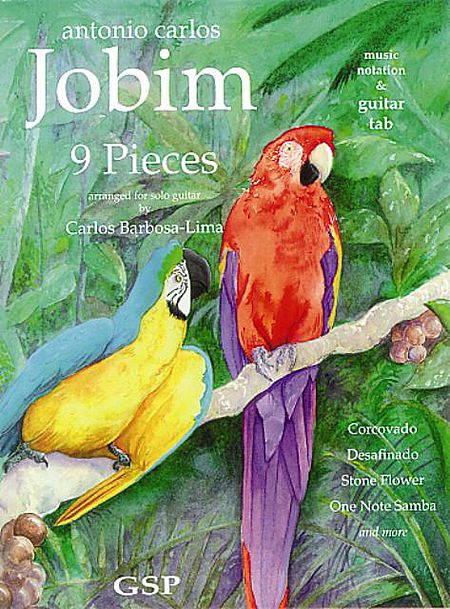
JOBIM ANTONIO CARLOS 9 PIECES Carlos Barbosa Lima-Samba De Uma Nota So' Guitar TABLATURE-SPARTITI

JOBIM ANTONIO CARLOS, 9 PIECES. Carlos Barbosa Lima. SHEET MUSIC BOOK FOR GUITAR WITH TABLATURE. 

LIBRO DI MUSICA BOSSA NOVA.

SPARTITI PER CHITARRA : 

PENTAGRAMMA E TABLATURE. 


Nine Pieces. (Solo Guitar). By Antonio Carlos Jobim. For solo guitar (no lyrics). 

Latin and Jazz.

Difficulty: medium.

Guitar tablature songbook.

Guitar tablature, standard notation, guitar notation legend and performance notes.

80 pages. Music Sales 


With guitar tablature, standard notation, guitar notation legend and performance notes. Latin and Jazz. 9x12 inches.

"Corcovado," "Stone Flower," "One Note Samba," plus six more Jobim masterworks, arranged for solo guitar with music notation and guitar tablature.


Amparo

Originally known as Ohla, Maria (Look, Mary), it was later used in the film The Adventurers. I created this

guitar arrangement based on a solo piano version by Jobim. Again, the exquisite result of a polyphonic

structure is successfully projected on the solo guitar. Like in many of Jobim's works, influences from

Chopin and Debussy are notable here.


Caminho de Pedra (Rocky Road)

Written in the 1950s,this song is in the style of "toada," echoing the peaceful and primitive quality of the

rural backlands. The introduction sets up that quality which is kept with a steady movement in the middle

voice throughout the piece.

In the second section, the beautiful harmonic changes portray nature's exuberance in those regions of the

country. The piece concludes with the theme played in harmonics, like a beautiful image getting distant and

disappearing from one's mind.


Canta Mais (Sing More)

Also from the late 1950s,this is a small masterpiece in which Jobim shows his affection and admiration for

the music of Villa-Lobos. The contrapuntal accompaniment style is somehow reminiscent of Villa-Lobos'

famous Bachianas Brasileiras NO.5. By its title, the extremely lyrical Canta Mais suggests the love of the

Brazilian people to always sing and sing more.


Corcovado (Quiet Nights of Quiet Stars)

When the "bossa nova" exploded into world-wide popularity in the early 1960s, Corcovado became a

favorite, inspired by the magnificent view of Christ's statue on top of the Corcovado mountain in Rio de

Janeiro.

The introduction creates an intimate feeling which leads into the main theme. In this solo arrangement, a

balanced polyphonic texture with frequent contrapuntal movement produces an orchestral flavor. The

song ends with delicate harmonics enhancing its sensuality and intimacy.


Desafinado (Off-key)

One ofJobim' s most famous songs, Desafinado was composed in the late 1950s.Along with Chega de Saudade

it launched the "bossa-nova" movement in Brazil in 1958with the recordings of Joao Gilberto singing and

accompanying himself on guitar.

In this solo arrangement, the theme is presented with a delicate flavor using harmonics followed by an

introduction arranged by the composer from an earlier orchestral version-then going into the main

section with the bass line keeping a strong rhythmic pulse and the melody swinging with a samba

inflection. Counterlines are constantly weaving and the polyrhythmic texture becomes intense at the climax with an

illusion of more instruments participating in "tutti," including an occasional use of silence with the rhythm

being obvious.


Amparo

Caminho De Pedra (Rocky Road)

Canta Mais (Sing More)

Corcovado (Quiet Nights Of Quiet Stars)

Desafinado (Off-Key)

Estrada Branca (This Happy Madness)

Modinha

Quebra Pedra (Stone Flower)

Samba De Uma Nota So' (One Note Samba)

Prezzo: €139,99
€139,99

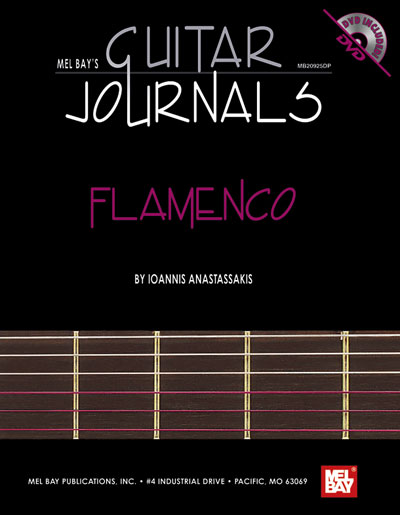
GUITAR JOURNALS FLAMENCO Ioannis Anastassakis DVD TABLATURE MEL BAY CHITARRA SPARTITI TABLATURE

GUITAR JOURNALS... FLAMENCO. SHEET MUSIC BOOK WITH DVD & GUITRAR TABLATURE. 

LIBRO DI MUSICA FLAMENCA CON DVD.

SPARTITI PER CHITARRA CON:

PENTAGRAMMA E TABLATURE.  

6 PEZZI COMPLETI.


Product Description:
This 176-page book/DVD package includes six full-length contemporary Flamenco guitar compositions by Ioannis Anastassakis, MA, best-selling Mel Bay author of the Art of Rasgueado and one of the few people to have obtained a Graduate Degree in Flamenco Guitar. Selections include Veridiana (Rumba Flamenca), Angelika (Granadinas), Maestro Serrano (Tangos), as well as 3 more solos based on the Flamenco forms of the Farucca, the Soleares and the Malaguena. Presented in standard notation and tablature, with extensive performance notes for each selection. DVD duration 64 min.

Format: Book+DVD
Series: Guitar Journals

It is no secret that interest in the flamenco guitar has grown very rapidly during the last 50 years. Flamenco guitar technique has evolved to extremely high standards, the compositions have matured beyond even the most optimistic expectations and the number of artists performing solo flamenco guitar music has risen to unprecedented heights; even the number of new flamenco guitar recordings has quadrupled in the last 5 years alone! There is, however, still one problem plaguing this continuous and multi-faceted progress: lack of performance repertoire. When compared to its classical guitar counterpart, flamenco guitar repertoire is found lacking indeed. Very few editions of performance pieces exist, most of them decades-old compositions that do not take into account the progress that has taken place in both the performance techniques and the compositional forms of flamenco guitar.

My intention with this collection of pieces is to tread the fme line between traditional flamenco guitar, firmly rooted in the inherited musical elements and the contemporary influences that have brought new levels of excitement to the music. All the compositions presented in this collection are based on traditional flamenco guitar forms. All of them, however, include additional elements from other musical cultures and styles. These compositions are meant to be performed live. I have performed most of them at least 200 times during the course of my flamenco guitar recitals and in just about every performance scenario from impromptu guitar gatherings to heavily publicized recitals, when teaching flamenco masterclasses or just playing for friends. The level of difficulty is usually upper intermediate with some parts drifting purposefully into advanced territory. Do not let that discourage you! I hope you have as much fun working with the compositions in this book as I had composing and recording them. Moreover, if you do enjoy them, do not hesitate and let me know. And while you are at it, check out. Finally, if you are interested in the subjects of flamenco and classical guitar, check out my Art of Rasgueado book, as well as my upcoming Art of Tremolo, Treasures of Flamenco Guitar and Flamenco Guitar Studies books, all published by Mel Bay Publications.


Companion CD Recording: All of the compositions in the book are recorded on the companion CD at performance speed. In addition, several of the key parts in each composition are recorded again at slow speed, in order to offer a more complete understanding of each phrase. Finally, I have included video files on the companion DVD that demonstrate the most difficult parts, as well as flamenco-specific techniques within these compositions. Fingering Notes: In order to simplify the visual complexity of the music, I have opted to avoid repeating obvious left-hand fingerings, especially in the case of basic major and minor chords played in open position and/or phrases repeated many times throughout the composition (eg. The basic rasgueado pattern in Soleares). This was done intentionally in an effort to give the music an uncluttered look, since there is a fair amount of rhythmic complexity as well as a large assortment of right hand techniques that need to be meticulously transcribed in the notation and tablature. As a personal fingering choice, I tend to use my left hand 4th finger (little finger) for a lot of phrases where most guitarists would use their 3rd (ring) fmger instead. I have found that with proper training, the little finger becomes even stronger than the ring finger, so I tend to use it a lot, sometimes to the point of favoring it. Still, this is a personal fingering choice. Feel free to substitute the 3rd finger in these instances. Keep in mind that a lot of flamenco falsetas (music phrases) are based on chord shapes that are held for either the complete duration or a significant segment of the phrase. This is especially prevalent in tremolo-based and arpeggio-based phrases. Try to identify these phrase segments and keep the maximum number of chord notes ringing while performing them. Depending on their specific context, trills are sometimes notated as appogiaturas and are sometimes given appropriate rhythmic value. The most basic, as well as the most usual, golpe is played with the ring finger hitting the golpeador of the flamenco guitar, right below the 1st string close to the bridge. However, there are two other special golpes used in the following compositions, which are explained in each piece's performance notes. The most distinctive techniques of the flamenco guitar are the various Rasgueados. These characteristic strumming techniques playa key part in creating the unique sound of the flamenco guitar. I have intentionally decided to use a very large variety of rasgueados, more than you would probably find in the actual playing of even an advanced flamenco guitar performer, in order to demonstrate a representative sample of the variety of flamenco rasgueado technique. If you are interested in learning more about the various rasgueado techniques used in flamenco, their history proper performance and context, I suggest you check out my instructional book The Art of Rasgueado, published by Mel Bay Publications.


Born on the Greek island of Crete, Ioannis Anastassakis studied at the Greek National
Conservatory and the Nakas Conservatory in Athens. He completed his bachelor's degree at the
American College of Greece, and subsequently studied at the distinguished Musicians Institute
in Las Angeles (GIT), where he was hired as an instructor after graduating in the top 1% of his
class. He continued his studies, specializing in solo flamenco guitar under the tutelage of Juan
Serrano at California State University, completing an MA in Guitar Performance and graduating
Magna cum Laude. Currently (2005), he is working towards a Doctorate in Education, with an
emphasis in Music in the UK.
Ioannis studied for several years with Juan Serrano. In addition, he has studied with Flamenco
guitar legends Manolo Sanlucar, Juan Martin, Paco Serrano, Jose Antonio Rodriguez and Manolo Franco.
Ioannis' list of teachers of electric guitar are no less impressive; the list reads like a "Who's
Who" of contemporary electric guitar legends including: Steve Vai (Whitesnake), Vinnie Moore (UFO), Marty Friedman (Megadeth), John Petrucci (Dream Theater), Frank Gambale (Chick Corea), Paul Gilbert (Mr. Big), Brett Garsed, Joey Tafolla, Scott Henderson, Mike Stern, Jean Marc Belkadi, Darren Householder, Tommy Tedesco, Ted Greene, Ron Echete, Sid Jacobs and Joe Diorio.
Ioannis has also performed and/or recorded in various settings with band members from
Whitesnake, Dio, Deep Purple, Ozzy Osbourne Band, Elton John Band, Santana, Celine Dion, Sara Vaughan, Tito Puente, Julio Iglesias, Tower of Power, Chick Corea Electric Band, Jeff Beck, Steve Vai Band, Badlands, Tribal Tech, Natalie Cole, Joe Cocker, Cher, Blood Sweat & Tears, Nina Hagen and others.
Ioannis has presented over 300 solo recitals in Europe and the United States and has been a
guest lecturer at several American colleges and universities including: The University of Southern
California, California State University Northridge, California State University Fresno, California
State University Fullerton, Musicians Institute, Fresno City College, and the American College of
Greece. In addition, he has won classical and flamenco guitar competitions and has been featured
a dozen times on American television programs.
In December 2000, he was the first guitarist ever to present a solo guitar recital at the Greek
National Opera House.
Ioannis' first solo flamenco guitar CD, Flamenco Live at Ioannina, was released by MP3.com
in August 2000 and immediately entered the company's flamenco category Top 10 chart, eventually
reaching the #1 spot worldwide in October 2002. The CD was re-mastered and re-released by
Wild Rose Angel Productions in 2003.
Ioannis' second and third solo flamenco guitar CDs, Traditional Flamenco Guitar Selections,
Vol.J & Vol.2 are scheduled for release by Wild Rose Angel Productions in 2006 and 2007
respectively.
Ioannis' instructional materials are published and distributed worldwide by Mel Bay
Publications. His first instructional book The Art of Rasgueado, achieved best-seller status within
months of its initial publication date. He is also a regular columnist in Mel Bay's Guitar
Sessions® magazine.

TABLE OF CONTENTS
Introduction
Acknowledgements
General Performance Notes
Notation Legend
A mi madre (Soleares) - About the Composition
A mi madre (Soleares) - Performance Notes
A mi madre (Soleares)
Recuerdos de Cordoba (Farruca) - About the Composition
Recuerdos de Cordoba (Farruca) - Performance Notes
Recuerdos de Cordoba (Farruca)
Angelika (Granadinas) - About the Composition
Angelika (Granadinas) - Performance Notes
Angelika (Granadinas)
Veridiana (Rumba) - About the Composition
Veridiana (Rumba) - Performance Notes
Veridian (Rumba)
Maestro Serrano (Tangos) - About the Composition
Maestro Serrano (Tangos) - Performance Notes
Maestro Serrano (Tangos)
Variations on Malaguefia (Malaguena) - About the Composition
Variations on Malaguefia (Malaguena) - Performance Notes
Variations on Malaguefia (Malaguena)
About the Author

DVD CONTENTS
This DVD contains specific sections from the songs chosen by the author to teach in greater detail. Each section is played at speed and then played again at a slower pace to offer greater instruction and insight into each piece. The audio tracks are located on the DVD. You can access them by selecting "Audio Only selections" from the main menu of the DVD. 

Song Title: Composer/Source:

Introduction
Acknowledgements
Performance notes
Notation legend

A Mi Madre - Ioannis Anastassakis
Angelika - Ioannis Anastassakis
Flamenco Variations on Malaguena - Ioannis Anastassakis
Maestro Serrano - Ioannis Anastassakis
Recuerdos De Cordoba - Ioannis Anastassakis
Veridiana - Ioannis Anastassakis

Prezzo: €32,99
€32,99

CHINA GUITAR ATLAS LIBRO CD TABLATURE

CHINA, GUITAR ATLAS. CD TABLATURE

Your passport to a new world of music
By Jeff Roberts

Series: National Guitar Workshop: Guitar Atlas
Category: Guitar Method or Supplement
Format: Book & CD
This book introduces the rich cultural and musical heritage of China. You'll learn innovative techniques and tunings designed for adapting the music of traditional instruments (guzheng, pipa, and dizi) to the guitar. You'll also gain knowledge about the different instrument classifications (metal, stone, clay, silk, bamboo, wood, gourd, and skin). Guitar Atlas: China features traditional pieces like "Wan Nian Huan" ("Ten Thousand Years of Happiness") and "Chu Shui Lian" ("Lotus in Water"), and also includes excerpts from various Chinese operas.

Prezzo: €15,99
€15,99

PARKENING CHRISTOPHER SOLO PIECES Guitar Recorded Version TABLATURE CHITARRA ISAAC ALBENIZ

PARKENING CHRISTOPHER, SOLO PIECES. TABLATURE

LIBRO DI MUSICA, SPARTITI PER CHITARRA CON TABLATURE.

Series: Guitar Recorded Version
Format: Softcover - TAB
Artist : Christopher Parkening

Loaded with virtuoso music, this collection contains transcriptions of 21 solo pieces for classical guitar, edited and fingered by Parkening. Includes: Allegro - Allemande - Danza - Fugue - Galliard - I Stand at the Threshold - Prelude - Sevilla - Sonata in D - Suite in D Minor - Villanesca, and more.

Song List:
Allegro
Allemande
Danza
A Fancy
Fantasia #40
Fantasia #7
Fantasia #10
Fantasia #28
Fantasia (Ricercar) #28
Fugue
Galliard
I Stand At The Threshold
La Maja de Goya
Prelude
Sevilla
Sonata In D
Suite Espanola
Suite In D
Suite In D Minor
Suite No. 9 In D Minor
Torre Bermeja
Villanesca

144 pages

Prezzo: €25,99
€25,99
Condividi contenuti