PENTAGRAMMA E TABLATURE - STANDARD NOTATION and TABLATURE

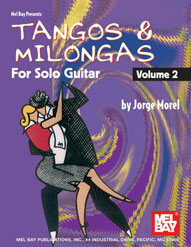
TANGOS & MILONGAS FOR SOLO GUITAR VOLUME 2 Jorge Morel. LIBRO CD TABLATURE SPARTITI

TANGOS & MILONGAS FOR SOLO GUITAR, VOLUME 2. by Jorge Morel. CD TABLATURE


LIBRO DI MUSICA CON CD, SPARTITI PER CHITARRA. PENTAGRAMMA E TABLATURE.

Masterful Argentine arranger/composer/guitarist Jorge Morel presents three more solos and a duet arrangement in the tango and milonga forms for which he is famous. The three solo selections "Boedo", "Sur", and "Los mareados" and the duet -"Correlera" are presented in both standard notation and tab. All four arrangements appear on Mr. Morel's commercial CDs.

Song Title: Composer/Source:
Boedo Julio de Caro
Correlera Anselmo Aieta
Los mareados Juan Carlos Cobian
Sur A. Troilo - H. Manzi

Prezzo: €22,99
€22,99

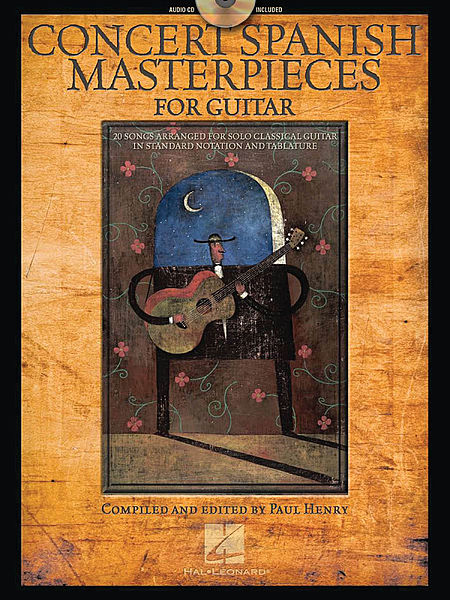
CONCERT SPANISH MASTERPIECES FOR GUITAR Paul Henry CD TABLATURE LIBRO CHITARRA TARREGA ADELITA

CONCERT SPANISH MASTERPIECES FOR GUITAR. Paul Henry. SHEET MUSIC BOOK WITH CD & GUITAR TABLATURE. 

LIBRO DI MUSICA CLASSICA CON CD.

SPARTITI PER CHITARRA :

PENTAGRAMMA E TABLATURE .


20 Spanish standards arranged in notes and TAB. for the advanced classical guitarist. 88 pages.


REPERTOIRE NOTES


Preludio-Asturias
"Preludio-Asturias" (also known as "Leyenda") originally was written for piano as part of a collection called Chants d' Espagne, Gp. 23. It was later published in a collection titled Suite Espanola, op. 47. While its title refers to the northern region of Spain, the music reflects the flamenco flavor of the Andalusia region. Of all the piano works by Albeniz, "Asturias" is the most idiomatic to the guitar.

Mallorca (barcarolla) Op. 202
"Mallorca (barcarolla), Gp. 202" is from a collection of works called Sereneta Espanola. The title is in reference to the enchanting island off the east coast of Spain. The first and last sections of "Mallorca" are written in the manner of an expressive lament, with the rocking barcarolle motion always underneath the melody. This is contrasted by a lively, rhythmic middle section.

Sevilla
"Sevilla" from Suite Espanola is a Sevillanas, which is believed to be an old Castilian folk dance. This triple-meter dance can be heard in southern Spain, mainly in fairs and festivals, including the famous Seville fair, La Feria de Sevilla. It was first transcribed from the piano to the guitar by Francisco Tarrega and Miguel Llobet. While a challenging piece, its original character translates nicely to the guitar. Guitarists can maintain the original key of G major by tuning the lower two strings to D and G.

El Noi de la Mare
"El Noi de la Mare" (The Mother's Son) is an old Catalan folk song. This popular and haunting melody from northeastern Spain has been arranged for a wealth of musical settings, most notably by Frederico Mompou and Miguel Llobett.

The Dance of the Miller
Manuel de Falla is a major composer in the Spanish nationalistic movement. "The Dance of the Miller" is from his ballet The Three Cornered Hat. Rich with guitaristic gypsy rhythms and color from the south of Spain, it is a natural addition to the guitarists' repertoire.

The Dance of the Sorcerer
"The Dance of the Sorcerer" is a wild, colorful dance from Manuel de Falla's ballet El amor brujo (Love, the Magician), which depicts a gypsy possessed by the ghost of her faithless former lover. The piece has become an orchestral favorite.

Danza Espanola #5
"Danza Espanola #5" is from a group of 12 Spanish dances originally for piano. Enrique Granados, along with Isaac Albeniz and Manuel de Falla, was prominent in the Spanish nationalistic style that used Spanish themes and rhythms and often imitated the color and style of the guitar.


 - ADELITA - TARREGA, FRANCISCO
 - CANARIOS - SANZ, GASPER
 - CANCION DEL EMPERADOR - NARVAEZ, LUYS DE
 - CAPRICHO ARABE - TARREGA, FRANCISCO
 - DANZA ESPANOLA #5 - GRANADOS, ENRIQUE
 - DEDICATORIA  - GRANADOS, ENRIQUE
 - EL NOI DE LA MARE - ANONIMOUS
 - FANTASIA - MUDARRA, ALONSO
 - FOLIAS - SANZ, GASPER
 - LA ALBORADA - TARREGA, FRANCISCO
 - LA MAJA DE GOYA - GRANADOS, ENRIQUE
 - LA MINONA DE CATALUNA - SANZ, GASPER
 - LAGRIMA - TARREGA, FRANCISCO
 - MALAGUENA - TARREGA, FRANCISCO
 - MALLORCA OP.202 - ALBENIZ, ISAAC
 - NIGHT IN SPAIN - MASSENET, JULES
 - PRELUDIO-ASTURIAS - ALBENIZ, ISAAC
 - SEVILLA  - ALBENIZ, ISAAC
 - THE DANCE OF THE MILLER - DE FALLA, MANUEL
 - THE DANCE OF THE SORCERER - DE FALLA, MANUEL

Prezzo: €27,99
€27,99

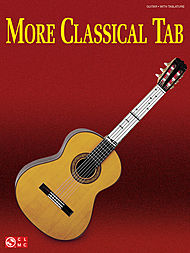
MORE CLASSICAL TAB LIBRO CHITARRA TABLATURE Panis Angelicus-BACH-Schiaccianoci-Ciaikowsky

MORE CLASSICAL TAB. 31 Pezzi:

LIBRO DI MUSICA CLASSICA .

SPARTITI PER CHITARRA.

PENTAGRAMMA E TABLATURE.

Solo Guitar with Tablature
Series: Guitar
Softcover - TAB
Composer: Various Composers

More Classical Tab
Solo Guitar with Tablature
Series: Guitar
Publisher: Cherry Lane Music
Format: Softcover - TAB
Composer: Various

31 more classical masterpieces arranged for guitar with tablature, including: Andante (Carulli) • Bist du bei mir (Bach) • Caro mio ben (Giordani) • Espanoleta (Sanz) • Evening Prayer (from Hansel and Gretel) (Humperdinck) • Lagrima (Tarrega) • Pie Jesu (Fauré) • Sonata in A (Scarlatti) • Symphony No. 9, Second Movement (Dvorák) • and more.

Inventory #HL 02500960
ISBN: 9781575609270
UPC: 884088111564
Width: 9.0"
Length: 12.0"
72 pages
 

31 more classical masterpieces arranged for guitar with tablature, including:

Allegretto - CARULLI
Allegretto (from northern dances) - GIULIANI
Andante - CARULLI
Andante Cantabile - TCHAIKOVSKY
Arabian Dance ('Coffee') (dallo Schiaccianoci) - TCHAIKOVSKY
Ase's Death (da Peer Gynt) - Grieg
Ave Verum (Jesu, Word of God Incarnate) - MOZART
Bist du bei mir (You Are With Me) - BACH
Bourree - BACH
Cancion O Tocata - DE MURCIA
Caro mio ben - GIORDANI
Dedicatoria - GRANADOS
Eine Kleine Nachtmusik ('Romance'), Second Movement - MOZART
Españoleta - SANZ
Evening Prayer (from Hansen and Gretel) - HUMPERDINCK
Gerbe des Fleurs - FERRER
Intermezzo (dalla cavalleria Rusticana) - MASCAGNI
Lagrima - TARREGA
Minuet In G - BACH
Panis Angelicus - MOZART
Pie Jesu - FAURE'
Rondeau - MOURET
Sinfonia - BACH
Sleepers, Awake (Wachet Auf) - BACH
Sonata In A - SCARLATTI
Study In D - GIULIANI
Study In D - SOR
Study In D Minor - SOR
Symphony No. 3, Third Movement Theme - BRAHMS
Symphony No. 5 - SCHUBERT
Symphony No. 9 in E Minor ('From The New World'), Second Movement Excerpt - DVORAK

Prezzo: €16,99
€16,99

BEATLES FOR CLASSICAL GUITAR TABLATURE LIBRO MUSICA SPARTITI CHITARRA PENTAGRAMMA

BEATLES, FOR CLASSICAL GUITAR. SHEET MUSIC BOOK with GUITAR TABLATURE .

LIBRO DI MUSICA ROCK.

SPARTITI PER CHITARRA CON : PENTAGRAMMA E TABLATURE


ARRANGED BY JOHN HILL
Series: Guitar Solo
softcover
31 of the Beatles' best arranged for solo classical guitar in standard notation and tablature. Includes:

TITLES:
Across The Universe
And I Love Her
Blackbird
Eight Days A Week
Eleanor Rigby
The Fool On The Hill
Free As A Bird
Good Night
A Hard Day's Night
Here, There And Everywhere
Hey Jude
I Will
In My Life
Julia
Let It Be
The Long And Winding Road
Lucy In The Sky With Diamonds
Michelle
Mother Nature's Son

Norwegian Wood (This Bird Has Flown)
Nowhere Man

Something
Strawberry Fields Forever

While My Guitar Gently Weeps
Yellow Submarine
Yesterday

LOVE ME DO

P.S. I LOVE YOU

TICKET TO RIDE

WHEN I'M SIXTY-FOUR

YOU'VE GOT TO HIDE YOUR LOVE AWAY


80 pages

Prezzo: €32,99
€32,99

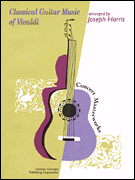
VIVALDI CLASSICAL GUITAR MUSIC OF Joseph Harris TABLATURE GARDELLINO CHITARRA LIBRO SPARTITI

VIVALDI, CLASSICAL GUITAR MUSIC OF.  SHEET MUSIC BOOK WITH GUITAR TABLATURE. 

LIBRO DI MUSICA CLASSICA. 
SPARTITI  PER CHITARRA :
PENTAGRAMMA E TABLATURE.


CONCERT MASTERWORKS

Classical Guitar Music of Vivaldi
Series: Creative Concepts Publishing
Publisher: Creative Concepts TAB
Artist: Antonio Vivaldi
Arranger: Joseph Harris

Features 31 pieces by Antonio Vivaldi arranged for solo guitar with tablature. Includes historical notes, performance suggestions, explanation of ornaments, and more.

Inventory #HL 00315187
ISBN: 9781569221945
UPC: 073999158755
Publisher Code: 074090
Width: 9.0"
Length: 12.0"
80 pages

About Classical Guitar Music Of Vivaldi - Guitar Solo
By Antonio Vivaldi (1678-1741), arranged by Joseph Harris. Guitar tablature songbook for guitar. 80 pages.
With standard guitar notation, guitar tablature, introductory text and instructional text. Baroque. 9x12 inches.

Features 31 pieces by Antonio Vivaldi arranged for solo guitar with tablature. Includes historical notes, performance suggestions, explanation of ornaments, and more.

For many years remembered only for his contribution of hundreds of violin concertos, Antonio Vivaldi is regarded today as a key musical figure of the Italian Baroque. Although his most visible and enduring influence was indeed in the development of the solo concerto, Vivaldi was also admired in his day as a composer of excellent chamber music, a stunning violinist and a popular composer of Italian opera. This composer of "The Four Seasons" was a bold and impetuous individual who managed to focus his musical impulses in a unique voice that was consistent yet expressive. Vivaldi was born in Venice in 1678 and trained for the priesthood, but ended up practicing this vocation for only a brief time. Vivaldi served for nearly forty years (from 1703 until just before his death in 1741) as musical director of the Conservatorio dell'Ospedale della Pieta, one of four girls' orphanages in Venice. The Ospedale provided outstanding musical instruction and under Vivaldi's direction created quite a musical sensation. Vivaldi's tasks at the Ospedale included teaching private lessons, composing music for both concerts and church services, repairing musical instruments and commissioning works from other composers for concerts at the Ospedale. Vivaldi was extremely prolific, composing over 50 operas, 90 sonatas and 450 concertos. Despite the apparent ease with which he could produce a composition (he once boasted he could compose a piece faster than it could be copied), Vivaldi is criticized sometimes for being too predictable. The twentieth century Italian composer Luigi Dallapiccola once asserted that Vivaldi did not compose 450 separate concertos, but wrote the same concerto 450 times. Whereas during the Baroque many musicians believed that the particular intent of a composition (church, chamber or theatre) should dictate its musical language, Vivaldi's style varied little between genres and even between mediums. His vocal music and instrumental music share similar musical characteristics, as do his sacred and secular works. Furthermore, Vivaldi's compositional style remained remarkably consistent throughout his career and evolved very little. The only major variances one finds are in surface details, such as melodic contour, which tended to reflect public tastes. However, it is a tribute to Vivaldi's skill as a composer that within such a limited musical vocabulary he exhibited a virtually inexhaustible variety of invention.

Sonatas for Violin, Op. 2
The 12 Sonatas for Violin, Op. 2 were Vivaldi's first solo sonatas. The Sonatas were published in Italy in 1709 and dedicated to Frederick IV of Denmark on the occasion of his visit to Venice. For the Sonatas, Vivaldi drew upon models of Arcangelo Corelli, a conservative Italian composer whose works are tidily constructed, yet highly expressive. Vivaldi's Sonatas are a composite of church and chamber styles, demonstrating his tendency to blur boundaries between genres. In the Sonatas, dance movements intermingle with abstract movements (those with only tempo designations). Baroque dances of the Italian variety differ considerably from their French or German equivalents. The slight differences in the names of dances (for example, compare the Italian giga to the French gigue) do not signify nationality only, but salient musical traits. Whereas the French gigue is a lively, bouncy dance in an imitative texture, the Italian giga has a more restrained sense of pulse, a less rhythmically active bass line and little or no imitation between voices. The Italian gavotta lacks the characteristic two upbeats and musette-like middle section of the French gavotte. The Italian corrente is faster and more "running" in character than the French courante. Also, the French courante may emphasize dotted rhythms and an alternation between duple and triple meter, while the corrente is more rhythmically consistent and metrically stable.

Sonata No.3
In the Adagio (found on page 7), the bass line should be played with a warm tone, especially in areas where it is exposed (as in the opening and in measure 9). To achieve a warm tone on the guitar, play with the right hand close to the fretboard and strike the string with the side of the thumb, using as much flesh as possible. The Giga (found on page 8) should be played dynamically strong throughout and in a lightning fast tempo.

Sonata No.6
The Preludio (found on page 12) should sound very elegant and graceful. Exaggerate the dotted rhythms by playing the long notes longer and the short notes shorter. The Giga (found on page 16) should be played in a moderately fast tempo. Count two beats per measure, not four, to give the piece a stronger and more stable sense of forward motion

Sonata No.7
The tempo of the Corrente (found on page 19) should be very fast. However, in areas where the bass line becomes more active (especially in mm. 17-21), make sure that neither voice breaks down.

Sonata No.9
The Preludio (found on page 23) is an energetic and dramatic piece. The movement contains elements of a "learned" style, which show off a composer's contrapuntal skills. Be sure to emphasize the points of imitation (as in the first few measures).

Sonata No. 11
The abundance of syncopated rhythms presents an interesting technical problem for the solo performer in the Gavotta (found on page 28). In order toconvey the meter clearly, keep the tempo steady and count two beats per measure. Hold on to notes with the left hand for as long as possible before fingering new notes.

Sonatas for One or Two Violins, Ope 5
The Six Sonatas, Op. 5 were first published in 1716. By this time, Vivaldi had chosen a new publisher, Etienne Roger in Amsterdam. There were at least two significant reasons for the switch: superior printing methods and an increased demand for the music of Vivaldi and other Italians in northern Europe. The Sonatas, Op. 5 were actually engraved and published at Roger's own expense. Such a practice was quite rare in Vivaldi's time and testifies to his immense popularity.

Sonata No. 13
The Sarabanda (found on page 30) lacks the lasciviously strong accent on the second beat characteristic of the Spanish sarabande. Keep the tempo slow, the meter even and play with as much vibrato as possible. Sonata No. 14

For the Gavotta (found on page 32), the left-hand slurs (as in mm. 7-9 and 39-41) may require some extra attention during practice. Isolate each slur and treat it as a trilling exercise. Devote a few minutes each day to these passages until they sound crisp and clear.

Sonata No. 16
In the Preludio (found on page 35), exaggerate the dotted rhythms and apply vibrato liberally. Because of the slow tempo, it will be necessary to think ahead and be aware of the melody's direction and shape. At some point, you may want to do a simple phrase analysis of the Preludio. Break the piece into small phrases, study how they relate to one another and then group them into longer phrases. The longer the phrases you envision, the better the sense of forward motion you will convey.

Sonata No. 18
The Air-Minuet (found on page 38) demonstrates an ambiguity in Vivaldi's choice of titles for movements. The designation "Air" suggests the vocal-like quality of the melody. The piece is also an instrumental dance movement, containing the clear four-bar phrasing and clear cadences typical of a minuet. Overall, the piece should sound stately, yet singing.

II cimento dell'armonia e dell'inventione, Op. 8
The Concertos, Op. 8 were first published in 1725 and dedicated to the Bohemian Count Wenzeslaus von Morzin. The first four concertos are collectively known as "The Four Seasons." A significant feature in each of these concertos is the inclusion of an explanatory sonnet, each line of poetry corresponding to a particular passage in the music.

Il cimento dell'armonia e dell'invenzione, Op. 8
Pubblicati per la prima volta nel 1725, i primi 4 concerti sono conosciuti come "Le quattro stagioni".

TABLE OF CONTENTS: 
Historical Notes & Performance Suggestions
Explanation of Ornaments
Adagio Sonata for Violin, Op. 2, No.3
Giga from Sonata for Violin, Ope 2, No. 3
Preludio from Sonata for Violin, Ope 2, No. 6
Giga from Sonata for Violin, Ope 2, No. 6
Corrente from Sonata for Violin, Ope 2, No. 7
Largo from Concerto for Flute, Op. 10, NO.3 (''il Gardellino") ,
Preludio from Sonata for Violin, Op. 2, No. 9 ,
Gavotta from Sonata for Violin, Ope 2, No. 11
Sarabanda from Sonata for Violin, Ope 5, No. 13
Gavotta from Sonata for Violin, Ope 5, No. 14 .
Preludio from Sonata for Violin, Ope 5, No. 16 .
Air-Menuet from Sonata for Two Violins, Op. 5, No. 18 .
Allegro non molto From the Four Seasons, Op. 8, NO.2 (Summer) .
Largo From The Four Seasons, Op. 8, NO.4 (Winter) .
Affettuoso From Sonata for Flute, RV 48 .
Allegro assai From Sonata for Flute, RV 48 .
Allegro Sonata for Flute, RV48 .
Preludio from Sonata for Flute, RV 49 .
Sarabanda from Sonata for Flute, RV 49 .
Siciliana from Sonata for Flute, RV 49 .
Preludio from Sonata for Recorder, RV 52 .
Allemanda from Sonata for Recorder, RV 52 .
Aria di Giga from Sonata for Recorder, RV 52 .
Largo from Concerto for Lute and Two Violins, RV93 .
Largo from Concerto for Flute and Oboe, RV95 ("La Pastorella") .
Andante from Concerto for Flute, RV429 .
Grave from Concerto for Violin and Organ, RV541 .
Allegro alla Francese Violin and Oboe, RV 543
Largo from Concerto for Oboe and Violin, RV 548 .
Largo from Concerto for Flute, Op. 10, No.4 .
Largo from Sonata for Musette, Vielle, Flute, Oboe or Violin, Op. 13, No.6

Catalog #07- 4090
ISBN# 1-56922-194-4
CREATIVE CONCEPTS PUBLISHING CORPORATION
Creative Concepts Publishing Corp.

Prezzo: €20,99
€20,99

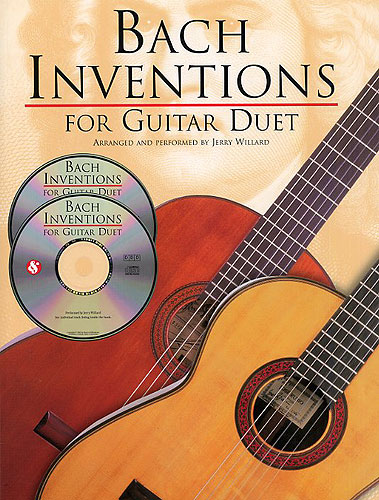
BACH INVENTIONS FOR GUITAR DUET JERRY WILLARD 2CD TABLATURE DUO CHITARRA LIBRO SPARTITI

BACH, INVENTIONS FOR GUITAR. Willard. Per duo. SHEET MUSIC BOOK WITH 2CD & GUITAR TABLATURE. 

LIBRO DI MUSICA CLASSICA CON 2 CD.

SPARTITI PER CHITARRA :

PENTAGRAMMA, TABLATURE. 

BACH INVENTIONS
for Guitar Duet
Series: Music Sales America
Publisher: Music Sales America
Format: Softcover with CD – TAB
Composer: Johann Sebastian Bach
Arranger: Jerry Willard


Since their introduction, Bach's Two-Part Inventions have been an essential resource for developing hand independence and ornamentation technique. Keyboard players have enjoyed these etudes for centuries and now this body of work is available to guitarists in this collection of fifteen pieces. They have been transcribed and arranged for the classical guitar duet by Jerry Willard, and are presented in notation and tab. The title is accompanied by two CDs, the first of which features demonstration recordings of all inventions. The second CD offers single guitar recordings so you can play along.

Inventory #HL 14002913
ISBN: 9780825628290
UPC: 752187978459
Publisher Code: AM978450
Width: 9.0"
Length: 12.0"
64 pages

This collection contains fifteen of Bach's 2-part inventions. These fifteen inventions have been transcribed and arranged for the classical guitar duet by Jerry Willard, and are presented in notation and Tab. The title is accompanied by two CDs, the first of which features demonstration recordings of all inventions. The second CD offers single guitar recordings with which you may play along by means of solo rehearsal.

Johann Sebastian Bach (1685-1750) penned his inventions as a formal method of study, originally for his eldest son Wilhelm Friedemann, and subsequently, refined the collection for his young pupils. These musical gems are the finest examples of music ever written for the sole purpose of instruction, and also serve as preparation for his larger works.

This folio contains all 15 Two Part Inventions arranged for guitar duet by Jerry Willard. Each invention is presented in standard notation and tablature with suggested fingerings and ornamentation. In addition, the accompanying CDs provide the opportunity to study each invention, as well as each part, separately or together. Disc 1 presents each invention played by both guitars while Disc 2 demonstrates each part individually. Disc 2 additionally provides a count-in click giving the student the opportunity to perform the invention with the CD or simply to follow along and study each part individually.

The Editors

Bach Inventions for Guitar Duet is a collection of short pieces penned by Johann
Sebastian Bach for his young pupils. These musical gems are the finest examples of
music ever written for the sole purpose of instruction, and also serve as preparation
for his larger works.
This folio contains all fifteen Two-Part Inventions arranged for guitar duet. It is
believed that Bach's intention was to bring them together as a single work along with
his three-part pieces known as the Sinfonias, confirmed by the way that they are presented
in a manuscript penned in his own hand in 1723.These inventions demonstrate
contrapuntal technique and explore musical expressions while developing motifs in a
logical fashion.
Bach uses the term invention as a play on words. In today's musical parlance, invention
pertains directly to this body of work; however, Bach uses it to describe an idea
that could be used as a compositional theme with the intention that this type of technical
exercise could inspire those who studied these pieces to develop a more musical
approach.
Mr. Willard has arranged these pieces for study and performance as guitar duets.
Each invention is presented in standard notation and tablature with suggested fingerings
and ornamentation. In addition, the accompanying CDs provide the opportunity
to study each invention, as well as each part, separately or together. Disc 1 presents
each invention played by both guitars while Disc 2 has each part performed individually.
Disc 2 additionally provides a count-in click giving the student the opportunity to
perform the invention with the CD or simply to follow along and study each part individually.
Please note that these pieces were performed with minimal ornamentation in order to
provide the student with an accurate representation of the themes. The choices of
embellishments are quite simply too vast to incorporate in this folio and are of a personal
preference left up to the performer.
The following description of Bach's infamous Two-Part Inventions is taken from the
autograph fair copy in the Staatsbibliothek zu Berlin:
Straightforward instruction, in which amateurs of the keyboard, and especially the eager ones, are
shown a clear way not only:
1. of learning to play cleanly in two voices, but also, after further progress,
2. of dealing correctly and satisfactorily with three obbligato parts;
at the same time not only getting good inventions, but developing the same satisfactorily, and above
all arriving at a cantabile manner in playing, all the while acquiring a strong foretaste of composition.
Provided Anno Christi 1723.
By Johann Sebastian Bach:
Capellmeister to his Serene Highness the Prince of Anhalt-Cothen.
 
Jerry Willard was born in Cleveland, Ohio and began studying the guitar with his father Jeff Willard who was a guitarist. The guitar pedagogue Sophocles Papas recognized his talent and invited Mr. Willard to study with him in Washington, D.C. Subsequently Mr. Willard studied with guitarists Richard Lurie and Alirio Diaz. Mr. Willard's performances on guitar and lute range from performances of 16th-century work from the original tabulature to his own transcriptions of music from the 18th, 19th, and 20th centuries. He has appeared in Alice Tully Hall and Carnegie Hall in New York City, and he has concertized extensively throughout Europe and The United States. Well known as an ensemble player, he has performed with the Cleveland Orchestra, The New York Opera Company, The New York Consort of Viols, and The Long Island Baroque Ensemble. He has published many transcriptions for guitar including "The Complete Lute Music of J.S. Bach" available through Music Sales Corp.
 
Invention 1
Invention 2
Invention 3
Invention 4
Invention 5
Invention 6
Invention 7
Invention 8
Invention 9
Invention 10
Invention 11
Invention 12
Invention 13
Invention 14
Invention 15
Prezzo: €29,95
€29,95

GUITAR ATLAS: MIDDLE EAST Jeff Peretz CD TABLATURE MAROCCO ALGERIA EGITTO SUDAN TURCHIA ISRAELE KUWAIT

GUITAR ATLAS: MIDDLE EAST. Jeff Peretz. CD TABLATURE

LIBRO PER CHITARRA CON CD, IN NOTAZIONE E TABLATURE

Guitar Atlas: Middle East
By Jeff Peretz

SERIES: National Guitar Workshop
CATEGORY: Guitar Method or Supplement
FORMAT: Book & CD

The Guitar Atlas series is your passport to a new world of music. Learn the characteristic rhythms and techniques of some of the world's most remarkable guitar music, discovering the history, origins, and pioneering artists of distinctive styles from around the globe.

This introduction to the exotic music of Algeria, Egypt, Israel, Kuwait, Morocco, Nubia, and neighboring regions includes insights into cultural and religious influences and the major musicians of each locality. Discover unique plucked instruments, the Arabic tone system and exotic scales, and open your mind to new forms of improvisation that will forever alter your approach to soloing. The examples and compositions throughout all 48 pages are presented in standard notation and TAB and demonstrated on an enclosed CD.


An introduction to the exotic and exciting music of:
Algeria
Morocco
The Bedouins
Nubia
Egypt
Sudan
Israel
Turkey
Kuwait
and more
Examples in standard music notation and TABLATURE
JEFF PERETZ


Jeff Peretz, author of Zen and the Art of Guitar, takes you on a whirlwind tour of the exotic and diverse music of the regions of "The Dry World": Mashrig ("where the sun rises" in the Eastern Mediterranean), Mahgrib ("where the sun sets" in North Africa), the Arabic peninsula, and Asia Minor. The roots of the wonderful musical traditions from the Middle East are taught in a way the contemporary guitarist can understand, including cultural and religious infiuences, unique plucked instruments (predecessors of the guitar), the major musicians of the region, the Arabic tone system,and exotic scalesand forms. Discover the basicsofTaqsim, an improvisatory form that will open your mind to a new dimension in music,forever altering your approach to guitar soloing.
The CD demonstrates all the examples and compositions featured in the book.


INTRODUCTION
This book assumes that you are an intermediate guitarist with the ability to read guitar tablature and/or standard music notation. You should have a good grasp of basic music theory, including scales and chords. You should also have some experience using scales to improvise, although the style you prefer to play is not important.
With this book, you'll be learning to create new sounds that will stretch your imagination, and the imaginations of your listeners.
About the Written Music in This Book The written examples printed in this book are doorways into the performance of this music. The key that unlocks them, however, is the CD. The musics of the Middle East are aural traditions, and capturing them in writing is only partially possible. While the written music examples are not literal transcriptions of the performances on the CD, they will serve as maps to what you are hearing.


HISTORY
Music has been on the planet longer than humans have been recording them history.
Archeologists have discovered musical instruments dating back almost 30,000 years; many
believe that music may even predate human speech. Ancient Mesopotamia (modern day
Iraq) is believed to be where it all started.
The Middle East is the birthplace of many things in this world, from civilization and
religions to paper, our alphabet and recorded history (not to mention calendars and
time keeping). It should come as no surprise that the Middle East is also a birthplace of
improvised music. The music of the region that we call the Middle East is a tradition
that has been cultivated for thousands of years. It is mentioned in the Bible and has been
academically documented since the late 6th century. Many styles which are still played
today date back as far as the Sassanid Dynasty (Persia, 224-651 A.D.), the Byzantine
Empire (4th-5th century) and earlier. The concept of using a stringed instrument as a
vehicle for melodic improvisation comes from these ancient stYles.
To truly understand how the music of the region evolved, we must paint a picture of
what life was like during pre-Islamic Arabia. The era that predated Mohammed and the
birth of Islam was a time of tribal unions, trade routes and gypsies. From North Africa
through the Eastern Mediterranean coast up to the Caspian and Aegean seas, and as
far east as the Zagros mountains and the Iranian Highlands, life was defined by tribal
association. Its story was told through the sung poetry known as Laya/i. The sung poetry
was often accompanied by an ud (also spelled oud) or other string instruments that were
light and portable and could be carried easily in a trade caravan.
There were three ways in which people lived in the early days of the Middle East. One
either lived in an urban center such as Baghdad or Damascus, a rural region as a farmer
or a shepherd, or you were a nomad (Bedouin/Gypsy) and traveled the land according
to the seasons and trade. While each way of life had its own unique contribution to the
musical development of the region, the concept of using a group of notes (scale) as a basis
for free expression (solo) is a common theme in the ancient music of the Middle East.
The ud, along with the tanbar, saz, bazooki, tar and setar, all precursors to the guitar, are
the key instruments in the development of melodic plucked string improvisation. The
approach to playing these instruments is the genesis of the way we play the guitar today.
In other words, this is where the pre-historic Hendrixs and Wes Montgomerys came
from. It is the birthplace of the guitar solo.


ABOUT THE AUTHOR
PRONUNCIATION GUIDE/GLOSSARY

CHAPTER I-Introduction
History
Geography: Four Regions
Musical Diversity of the Four Regions
Religious/Cultural Influence
The Guitar/Instruments
The Arabic Tone Systems

CHAPTER 2-The Maqam Phenomena
How the Maqam Are Created (Tetrachords)
Maqam Playable by the Guitar
Taqsim
Temple of Dum 15
Harmonic Major/Harmonic Minor Modulation
People of the Dark (Modulation)
Daftze's Dilemma

CHAPTER 3-Wasn Rhythm .
Basic Belly Dance Rhythms .
Belly Dance Excerpt .
Maqsum Belly Dance .
Morrocan 6 .
Cafl Shohor 9 .
CHAPTER 4-Musical Forms and Styles .
Sung Poetry .
Oriental Art Styles .
Sama-I. .

CHAPTER 5-Modern Middle Eastern Styles .
Rai .
2:30 A.M .
Other Styles and Artists .
Rosh Shel Lee (My Head) .

APPENDIX: Middle Eastern Tonal Systems .
The Persian Dhagsta System .

The author wishes to thank his wife, Neta, and his children Maya and Zohar, for their
patience and support.

A compact disc is included with this book. This disc can make learning with
the book easier and more enjoyable. The symbol shown at the left appears
next to every example that is on the CD. Use the CD to help ensure that
you're capturing the feel of the examples, interpreting the rhythms correctly,
and so on. The track number below the symbol corresponds directly to the
example you want to hear. Track 1 will help you tune your guitar to this CD. Have fun!
 

Prezzo: €16,00
€16,00

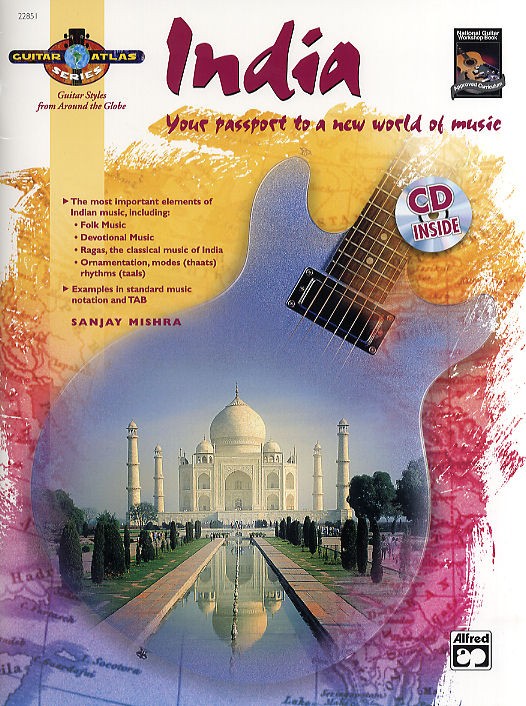
GUITAR ATLAS: INDIA Sanjay Mishra LIBRO CD TABLATURE devotional north

GUITAR ATLAS: INDIA. Sanjay Mishra. CD TABLATURE

LIBRO CON CD, IN NOTAZIONE E TABLATURE

By Sanjay Mishra
SERIES: National Guitar Workshop
CATEGORY: Guitar Method or Supplement
FORMAT: Book & CD

The Guitar Atlas series is your passport to a new world of music. Learn the characteristic rhythms and techniques of some of the world's most remarkable guitar music, discovering the history, origins, and pioneering artists of distinctive styles from around the globe.

Whether you play jazz, rock, blues, or any other style, the beautiful musical language of India will infuse your playing with a new, unique flavor. Explore ornamentation, modes, and rhythms of folk music from Darjeeling, Assam, Bengal and other regions. Learn how ragas are structured, and discover the subtle, graceful improvisational art form of Hindustani music. The examples and compositions throughout all 48 pages are presented in standard notation and TAB and demonstrated on an enclosed CD.

In November 2006, Guitar Atlas: India and its author Sanjay Mishra were featured on NPR radio's "Sanjay Mishra: A Cross-Cultural Exploration in Music."


SANJAY MISHRA
 The most important elements of Indian music, including:
- Folk Music
- Devotional Music
- Ragas, the classical music of India
- Ornamentation, modes (thaats) rhythms (taals)

 Examples in standard music notation and TABLATURE


Visit the exotic land of India through its exciting and beautiful

musical language.Sanjay Mishra. who first came to public acclaim

for his album "Blue Incantation" with guitarist Jerry Garcia of

The Grateful Dead, makes this mysterious body of music easy

to understand and play for contemporary guitarists. Learn folk

music from places like Darjeeling, Assam, Bengal,and Rajasthan;

devotional music of Rishikesh,and the Sufis;and even one of

Mahatma Gandhi's favorite songs.

You'll be introduced to Hindustani music,the classicalmusic

of North India,and learn how ragas are structured. A true

improvisor's art form, the subtlety and grace of Indian music

will infuse your playing- whether you play jazz, rock, blues or

any other style -with a new, unique flavor. Discover why some

of the greatest guitarists of our time have been drawn to this

unusual music.This thorough yet concise introduction will make

it fun and easy to get started playing music influenced by the

rich musical traditions of India.

The CD demonstrates all the examples and compositions featured in the book.


The lines between East and West are increasingly crossed and occasionally obliterated.

In this spirit, we will explore the modalities of the East on an instrument generally

thought of as Western. Not that it matters; music is an international language-like

mathematics, but with much more heart.

Before we can appreciate the emotional component of any style of music, we must learn

the rational aspects. This is the point of this book. It is a point of departure from which

you can take this music and give it life and meaning through your performance.

The musical examples presented in this book are arrangements. It assumes you:

- Read standard music notation and/or tablature.

- Have the ability to fingerpick simple arpeggios and chord/melody.

- Have a basic knowledge of music theory (scales and intervals).

This book is divided into three parts, each of which focuses on a different aspect of

Indian music: folk, devotional and classical. The first two parts, concerning folk and

devotional music, focus on songs with chordal accompaniment or repeating bass lines

and do not require extensive knowledge of the Indian system of music. The guitar is

very popular as an accompanying instrument in many forms of music in India.

The third part deals with the raga system of classical music-the "art music" of India.

To learn raga thoroughly, one must find a teacher. The nuances of this music cannot be

written down. Thus, the purpose of the raga chapter in this book is not to enable one

to perform a raga in the traditional sense, but to provide an insight into various modes

and their usage in a non-Western context. You can then use them as new colors in your

improvisation. Some Indian theory and historical background is provided, as well, to

help you understand some Eastern musical concepts. This chapter can only serve as an

introduction to this large body of music.

These three broad divisions of the book are almost independent of each other. Use them

in any order you like. The first two parts are more suited to a fingerstyle technique, the

third part can also be played with a pick.

A CD provides performances of all the examples in the book. The songs are played as

notated to help you get a feel for the sound and style. The performances of the ragas

on the CD will be very close to what is written in the book, but may not be exact. The

notation is just a skeleton, in keeping with the spirit of the music. Also, keep in mind

that real performances of ragas are quite extended, and these brief examples are just little

windows into the style. The CD also provides drones and backing percussion tracks for

the reader to improvise over. Feel free to try your own ideas!


ABOUT THE AUTHOR

INTRODUCTION


CHAPTER I-Getting Started

Tunings

Ornaments

Notation

Guitar Fingering

About the Drone

Indian Music Appreciation 101


CHAPTER 2-Folk Music of India

Chol Mini Assam Jabo

(Come Let Us Go to Assam)

Sohag Chand Baddni Nacho to Dekhi

(Let Me See you Dance in the Moonlight)

Folksongfrom Rajasthan


CHAPTER 3-Devotional Music in India

Om Jai Jagdish Hare

(Praise be The Almighty)

Raghupati Raghav Raja Ram

(Glory to Lord Ram, the Most Glorious

One of Ragu's Race)

Qawwali Tune

Dadra


CHAPTER 4-Hindustani Music-

The Classical Music of North India .

A Brief History .

Raga .

Some Important Aspects of Raga .

Form of a Raga .

Performing a Raga .

Classification of Ragas .

Permutations .

Rhythm in Indian Music .

Sample Ragas .

Raga Bageshri (Thaat Kafi) .

Raga Khamaj (Thaat Khamaj) .

Raga Scales .

Final Word .

References for Further Study .

Pronunciation Guide .


A compact disc is included with this book. This disc can make learning with

the book easier and more enjoyable. The symbol shown at the left appears

next to every example that is on the CD. Use the CD to help ensure that

you're capturing the feel of the examples, interpreting the rhythms correaly,

and so on. The track number below the symbol corresponds direcdy to the

example you want to hear. Track 1 will help you rune your guitar to this CD. Have fun!


Born in India and residing in the United States, guitarist-composer Sanjay Mishra

plays with an eclecticism well suited to his multicultural background. After completing

his studies at The Peabody Conservatory of Music, he began composing music

that combined Eastern and Western influences. In an interview with The Washington

Post, he explains "I come from a tradition that has a lot of improvisation. Sometimes

Western classical music can seem a little rigid, I had to find some middle ground."

Sanjay came to public acclaim with his highly-praised recording "Blue Incantation"

with Grateful Dead guitarist Jerry Garcia. His music has been released on Ryko,

PolyGram-Philips, Melodia (France), Putumayo World and others, as well as his own label, Akar.


ACKNOWLEDGEMENTS

My thanks to Nat Gunod, Samir Chatterjee, Barun Pal, Gus Wanner, Dr. Mark

Whitmire and Chris Hagan for their advice.

Prezzo: €15,99
€15,99

DE LUCIA PACO, FANTASIA FLAMENCA. TABLATURE

DE LUCIA PACO, FANTASIA FLAMENCA. Aires de Linares -Mi inspiración -Guajiras de Lucía -Mantilla de Feria -El tempul -Panaderos flamencos, Generalife bajo la luna -Fiesta en Moguer -Lamento Minero -Celosa. Testo en Español, inglés e francés. TABLATURE

Prezzo: €55,99
€55,99

DE LUCIA PACO LA FABULOSA GUITARRA DE-TABLATURE LIBRO SPARTITI CHITARRA FLAMENCO

DE LUCIA PACO, LA FABULOSA GUITARRA DE. TABLATURE

LIBRO DI MUSICA FLAMENCA.

SPARTITI PER CHITARRA: PENTAGRAMMA E TABLATURE. 

Paco de Lucía applied modern harmony to the flamenco guitar, exerting a huge influence on the flamenco world. He also advanced guitar technique and established the cajon, a boxlike Peruvian percussion instrument, as a mainstay in flamenco ensembles, further elaborating and solidifying the rhythmic foundation and influencing all facets of the flamenco art form, be it dance (baile), song (cante) or guitar performance (toque). This volume marks the first in a series of collections of chronologically transcribed recordings by this consummate guitarist; It presents works from his first recording, La fabulosa guitarra de Paco de Lucía including: Barrio la viña -De madruga -Farruca de Lucía -Ímpetu -Jerezana -Llanto a Cádiz -Punta del Faro -Punta Umbría. Every effort was made to accurately render this music in standard notation and tablature ultimately approved by the artist himself. A foreword, explanation of notation symbols, and generous performance notes are included in Spanish, English and French.


We recommend, even for a trained musical reader, to look both stave and tablature because one
is complementary to the other. Stave let us value the «tempo», measure and timing of each note.
and tablature tell us which part of the fingerboard the artist is playing on.
It is also very interesting to observe the fingering used in each piece. Two main reasons:
Right fingering is almost essential to achieve a good performance and to obtain the «flamenco
sound». The second reason is that the transcription becomes a «true» method of learning flamenco
guitar if fingering is performed as the stave says. We believe that anyone who learns to
play «Punta del faro» as it is shown in the book, is able to play the «bulerias» style, and the
same thing may be said about the other pieces.
In flamenco music, tremolos are played in groups of four notes in the same string preceeded
by a low note played with the thumb. That makes a sequence of five sounds in one beat
(p-i-a-m-i), so this technique is performed in quintuplets. (for the english readers, p=thumb,
i=index, m=middle finger, a=ring finger). These three fingers must not rest on the next string
after playing, (<<apoyando»technique). The thumb may do it to emphasize a note, but we do
not recommend it because you'll get a better sound and a more homogeneus playing with the
«tirando» technique. Arpeggios must be played in the same way, (<<tirando»),as in the classical guitar.
To get a good sound in the «rasgueos» (strums), it is important that our fingers strike the
strings individually. This means that a finger does not «attack» the strings until the one before
has not finished its stroke. Let us say two little «tricks» which will help us to get a better rasgueo
sound. On one side, it is preferable to play on the strings «striking», better than «rubbing
», so, the sound will be shorter and more percussive; on the other side, we must not try to
play ALL the strings of the chord, this is not so important, but we should have in mind that the
strums played with an indexstroke must have the same force and sound volume in both directions, up or down.
It's also important to practise the p. a. i. Rasgueo, (in Spanish, it is called abanico. =fan).
This type of rasgueo has three strokes: first, the thumb nail strikes from high to lower strings
J.., second, the ring finger strikes from low to high strings t, and third, the index strikes from
low to high strings too t. Our wrist must be very relaxed to get a «round» and homogeneus sound.
Percussive taps on the soundboard x are made with the ring finger in the pickguard, between
the rose and bridge. They can be studied in three main different ways: one is doing it simultaneously
with a index stroke rasgueo from low to high strings, another one is the same but
using a thumbstroke instead of the index, and finally we can practise it individually, without
other finger movement.
The Alzapua is a thumb technique with three movements: 1.- bass note thumbstroke, 2.-low
to high strings thumb stroke t, 3.- high to low strings thumb stroke J... Sometimes this technique
begins in the second movement. (this second one can be accompanied by a tap in the
soundboard). To obtain a «clean» sound with the alzapua, it is necessary to rest the thumb on
the next string under the played one on the first thumbstroke, (bass note). The thumb joints
should be blocked to let all the finger muscles work together against the strings (the force increases).
As we have said before, we should not attack all the strings, it is better to do it with
less of them, we will get a more percussive sound.
Prezzo: €59,99
€59,99
Condividi contenuti