HAL LEONARD

WINTER JOHNNY, Guitar Styles Techniques of a Blues Legend, Signature Licks CD TABLATURE Rock Me Baby

WINTER JOHNNY, Guitar Styles and Techniques of a Blues Legend, Signature Licks. CD TABLATURE

Johnny Winter 
A Step-By-Step Breakdown of the Guitar Styles and Techniques of a Blues Legend
Series: Signature Licks Guitar
Format: Softcover with CD - TAB
Author: Dave Rubin
Artist: Johnny Winter

Take an in-depth look at the fiery blues stylings of Johnny Winter with this instructional book/CD pack. You'll learn the main licks from 12 songs, including: Bad Luck Situation - Be Careful with a Fool - Bladie Mae - Highway 61 Revisited - It Was Raining - Leland Mississippi - Mean Town Blues - Rock and Roll Hoochie Koo - Rock Me Baby - Still Alive and Well - Sweet Love & Evil Women - TV Mama. 96 pages

Inventory #HL 00695951
ISBN: 9781423416418
UPC: 884088096311
Width: 9.0"
Length: 12.0"
96 pages

JOHNNY WINTER: WHITE LIGHT

As if to mock the very notion of whether or not a "white man can play the blues,"
Johnny Winter, with his nearly translucent albino skin and blindingly white hair, blasted
down the doors starting in the late 1960s for everyone who loved the music. He once said,
perhaps ironically, "In my own mind, I was the best white blues player around," but clearly
that qualification no longer applies. The legendary Lonnie Mack and the British contingent
of Eric Clapton, Peter Green, Mick Taylor, and Jimmy Page before him had shown
the possibilities of rocking the blues, but no one was adequately prepared for Winter.
Notes flew from his fingers like blazing blue diamonds, creating shock and awe for everyone
within sight and earshot. It was the perfect culmination to the blues revival with Winter
carrying the torch while throwing gasoline on the fire. He would go on to not only influence
fellow Texans like Billy Gibbons and Stevie Ray Vaughan, but also the stone
Chicago blues cat Bernard Allison. Most significantly, for more than forty years he has
played and contributed to the musical language of the blues in ways that were only
strengthened by his numerous forays into rock.
John Dawson Winter III was born in Leland, Mississippi on February 23, 1944 to John
and Edwina, but was raised in Beaumont, Texas. The senior Winter, a career Army officer
who sang, played saxophone and banjo, and was a fan of the big bands, encouraged
Johnny and his younger brother Edgar to pursue music. John's father had been a cotton
broker in Leland and after WWII attempted to take over the business, becoming the boss
at the storied Stovall Plantation, an important figure in early blues history.
Johnny was singing and playing the clarinet by five, but eventually quit clarinet when
an orthodontist advised against it due to his overbite. Three years later he added the
ukulele to his repertoire and then was given the baritone variety by his grandfather. By
1954 he and Edgar were appearing as a duo, singing barbershop quartet songs like "Ain't
She Sweet" and "Bye Bye Blackbird," and even auditioning for the nationally broadcasted
Ted Mack's Original Amateur Hour. It was about this time that Winter's father offered
the opinion that there were only two people, Ukulele Ike and Arthur Godfrey, who had ever
amounted to anything on the diminutive stringed instrument, and that the guitar might
prove to be a better choice. The advice was heeded, especially after Winter realized that
the emerging rock 'n' roll music at the time was played on the guitar. Within the year, he
was learning note-for-note guitar solos off the records he bought by mowing lawns, hauling
garbage, and saving his lunch money. T-Bone Walker, Howlin' Wolf, Muddy Waters,
Chuck Berry, and Carl Perkins were favorites with The Best of Muddy Waters being an
early purchase and the records of Robert Johnson inspiring him to play slide guitar. He
recalls shopping regularly at a record shop owned by Keith Ferguson's father years
before Ferguson became the bassist for the Fabulous Thunderbirds. Winter's first guitar
was his great-grandmother's "hundred-year old classical guitar." Later, his great-grandfather
bought him his first electric guitar, a Gibson ES-125, non-cutaway, with a single P-90 pickup.
There were not many white people in Beaumont in the 1950s as seriously into playing
and listening to the blues as Winter. One of the few was Joey Long (nee Longoria)
who was a little older, and the first white man Winter heard play the music. Like almost
all electric blues guitarists from Texas, he was profoundly influenced by T-Bone Walker.
Winter, on the other hand, while acknowledging his debt to the legendary electric blues
pioneer, also had a strong love for Chicago blues not always shared by his fellow musicians.
When Winter would hear blues guitar idols like Otis Rush push and vibrato their
strings, he would marvel at how it was done, not realizing at the time that it was as much
an expression of their inner soulfulness as the lighter gauge strings they were using. For
a while he accomplished the technique with a whammy bar. Ever open to whatever blues
caught his fancy, it was the expert string articulation of Clapton that would eventually
convince Winter around 1967 to become an acknowledged master of finger vibrato and bending.
In 1959, with Johnny on guitar and Edgar accompanying on piano, Johnny & The
Jammers promptly won a local talent contest sponsored by radio station KTRM. Their
prize consisted of a recording session, and they cut the single "School Day Blues" b/w
"You Know I Love You," ultimately released by Dart Records. It became a regional hit,
resulting in Winter being called to provide guitar on record dates supervised by local promoters
and producers. As was the custom in those days, the music he was playing was
what people wanted to hear-rock 'n' roll, R&B, and then soul music-not blues. All the
while he was compulsively woodshedding his chops and voraciously listening to all the
blues recordings he could find. A treasure trove resided at radio station KJET where DJ
and bluesman Clarence Garlow of the Bon Ton show befriended him, took his requests
on air, and let him hang at the station while also showing him guitar techniques. "I first
saw him at Jefferson Music Company where I worked as a guitar teacher," Winter
explains. "He walked in and I recognized his voice. His style was similar to T-Bone Walker.
On his show he also played a lot of his own records" laughs Winter. "I was about twelve
years old, and he was one of the first guitar players to use light gauge strings, and he
taught me how to use an unwound third. We jammed together a few times, too, including
once at my house that was great."
Winter cites Chet Atkins and Merle Travis as guitarists who really made him want to
play (and his impetus for using a thumbpick). He learned the rudiments of country fingerstyle
from Jefferson Music coworker Luther Naley and some jazz from Seymour Drugan,
the father of Dennis Drugan (the bass player for the Jammers). He briefly attended Lamar
University in Beaumont after high school, sneaking down to Louisiana on the weekends
to jam in the blues clubs. There and in Texas he was often the only white person in the
club, but felt welcome for the most part due to his obvious and sincere love for the music.
His perseverance and total immersion in the blues gained him access to the local
scene by 1963 where he got to jam with B.B. King in a momentous occasion. The following
year he took a pilgrimage to Chicago to join Dennis Drugan in the Gents where he
hoped to play blues, but instead ended up once again performing the popular music of
the day. While in the Windy City he met Michael Bloomfield at his club, the Fickle Pickle,
for what would become a solid friendship based on mutual admiration. Winter was back
in Texas a year later, however, and cut "Eternally" for the KRCO label, which leased it to
Atlantic Records, scoring a regional hit that allowed him to advance to the next leveltouring
and opening for rock acts like Jerry Lee Lewis and the Everly Brothers. In 1967
he made a fortuitous move to Houston, a hot bed for blues in the Lone Star State, and
convened a trio with bassist Tommy Shannon and drummer Uncle John "Red" Turner,
who in turn encouraged Winter to concentrate on performing the blues, knowing he was
mastering the style at a rapid pace. The band became a fixture at the Vulcan Gas
Company ballroom, later dubbed Armadillo World Headquarters, and Winter's reputation
soared on the wings of his impossibly fast, furious, and fluid solos. While in residency he
got to play with Freddie King and met Muddy Waters for the first time, with whom he would
form a lifelong friendship. In addition, responding to the creative rock experimentation
going on in the late 1960s, he also tried his hand at the psychedelic experience musically
and sartorially.

Take an in-depth look at the fiery blues stylings of Johnny Winter with this instructional book/CD pack. You'll learn the main licks from 12 songs, including:

TITLE - AUTHOR - ALBUM - YEAR

Bad Luck Situation - Johnny Winter - SAINTS & SINNERS - 1974
Be Careful With A Fool - Words & Music: B.B. King, Joe Bihari - 1957 - JOHNNY WINTER - 1969 
Bladie Mae - Johnny Winter - NOTHIN' BUT THE BLUES - 1977
Highway 61 Revisited - Words and Music: Bob Dylan - 1965 - SECOND WINTER - 1969
It Was Raining - Johnny Winter - NOTHIN' BUT THE BLUES - 1977
Leland Mississippi  - Johnny Winter - NOTHIN' BUT THE BLUES - 1977
Mean Town Blues - Words and Music: Johnny Winter - THE PROGRESSIVE BLUES EXPERIMENT - 1969
Rock And Roll Hoochie Koo - Words and Music: Rick Derringer - JOHNNY WINTER AND - 1970
Rock Me Baby - Words and Music: B.B. King, Joe Bihan - 1964 - STILL ALIVE AND WELL - 1973
Still Alive And Well - Words and Music: Rick Derringer - JOHNNY WINTER AND - 1970
Sweet Love & Evil Women - Johnny Winter - NOTHIN' BUT THE BLUES - 1977
TV Mama -  Johnny Winter - NOTHIN' BUT THE BLUES - 1977

Prezzo: €23,99
€23,99

WINTER JOHNNY Legendary Licks Slide Guitar DVD CHITARRA DELTA BLUES-AL ECK HAL LEONARD

WINTER JOHNNY, Legendary Licks Slide Guitar. DVD

DVD DI MUSICA, LEZIONE PER CHITARRA SLIDE.

Legendary Licks Slide Guitar
Series: Videos
Publisher: Cherry Lane Music
Medium: DVD
Artist: Johnny Winter

Watch and listen as Johnny Winter demonstrates his signature slide guitar style and techniques. Also includes Johnny playing National steel guitar. These guitar parts are then broken down and taught note-for-note by master blues teacher Al Eck. Johnny plays in the styles of Bob Dylan's Highway 61 Revisited, Elmore James, Delta Blues, Slow Blues, and Walking Blues. 121 minutes.

Prezzo: €38,99
€38,99

25 GREAT COUNTRY GUITAR SOLOS Dave Rubin-Hal Leonard CD TABLATURE SPARTITI LIBRO

25 GREAT COUNTRY GUITAR SOLOS. CD TABLATURE

LIBRO DI MUSICA COUNTRY CON CD.

SPARTITI PER CHITARRA.

ACCORDI, PENTAGRAMMA E TABLATURE.

Transcriptions · Lessons · Bios · Photos
Series: Guitar Book
Softcover with CD - TAB
Author: Dave Rubin

From Merle Travis and Chet Atkins to Vince Gill and Brad Paisley, this book/CD pack offers an inside look at the genesis of country guitar. Provides solo transcriptions in notes & tab, lessons on how to play them, guitarist bios, equipment notes, photos, history, and much more. The CD contains full-band demos of every solo in the book, and features Amazing Slow Downer software so Mac and PC users can adjust the recordings to any tempo without changing pitch!

Country music has come a long way since Ernest Tubb's "Walking the Floor Over You," featuring Fay "Smitty" Smith (staff guitarist at Dallas radio station KGKO) on electric guitar, became a hit in 1941. At that time, amplified guitars were not allowed at the famed Grand Ole Opry, but Nashville's conservative powers that be recognized commercial potential when they heard it, and so lifted that antiquated ban in 1943. And when the Francis Craig Orchestra likewise passed that magic million mark with "Near You," in 1947, Nashville's modem era commenced.

The guitar has always the backbone of country music, even when it was used mainly to provide rhythm for fiddlers. But with the emergence in the late 1940s of Merle Travis and Chet Atkins-electric country guitar's foremost pioneers-the instrument was suddenly elevated to a new iconic status. In the early 1950s, pickers such as Jimmy Bryant, Joe Maphis, James Burton, and Hank Garland, all of who were blessed with amazing chops, far outpaced blues and many jazz musicians. And while that esteemed group was clean and fast, each successive generation of players, from Jerry Reed and Albert Lee to Jerry Donahue, Danny Gatton, and Brent Mason, among others, were often even cleaner and faster.

Concomitantly, rock 'n' roll and rockabilly gained footing, and over time infiltrated the somewhat staid Nashville culture. This cultural phenomenon most significantly expanded country music's instrumental parameters, manifesting itself not only in longer and more aggressive distorted guitar solos, but also in more powerful chord progressions extending beyond the genre's typical I-IV-V changes and 2/4 time signatures. By the 1980s, country music made the leap from honky tonks and the Opry to arenas and stadiums, starring blackhatted "cowboys" with sharp-shooting lead guitarists. Purists may have been given pause, but the effect has been one to give country music heretofore undreamed of popularity among a younger demographic while providing a smooth test track for Nashville cats to bum the windings off their strings.

About the CD

This book's accompanying audio CD includes all twenty-five solos performed note for note with a full band and is playable on any CD player. For PC and MAC computer users, the CD is enhanced with Amazing Slow Downer software so you can adjust the recording to any tempo without changing pitch!

The time code shown at the start of each solo transcription indicates the point at which the solo begins in the original recording.

All music on the CD performed by:

Guitar: Doug Boduch

Bass: Tom McGirr and Eric Hervey

Keyboards: Warren Wiegratz

Drums: Scott Schroedl

Recorded, mixed. and mastered by Jim Reith and Jake Johnson.


Inventory # HL 00699926
ISBN: 1423426401
UPC: 884088145125
Width: 9
Length: 12
104 pages


Contents:
 

SONG - GUITARIST - YEAR

Smoke, Smoke, Smoke (That Cigarette) - Merle Travis - 1947
Sugarfoot Rag - Hank Garland - 1949
Golden Rocket - Hank Snow - 1950
Chinatown, My Chinatown - Chet Atkins - 1953
Foggy Mountain Special - Lester Flatt - 1954
Stratosphere Boogie - Jimmy Bryant - 1954
Flying Fingers - Joe Maphis - 1957
Folsom Prison Blues - Luther Perkins - 1957
Hello Mary Lou - James Burton - 1961
I've Got a Tiger by the Tail - Don Rich - 1965
The Only Daddy That Will Walk the Line - Wayne Moss - 1968
Honky Tonk Night Time Man - Roy Nichols - 1974
East Bound and Down - Jerry Reed - 1977
Country Boy - Albert Lee - 1979
Highway 40 Blues - Ray Flacke - 1982
Mountain Music - Jeff Cook - 1982
That's the Way Love Goes - Reggie Young - 1983
Please, Please Baby - Pete Anderson - 1987
Elmira St. Boogie - Danny Gatton - 1991
Here's a Quarter (Call Someone Who Cares) - Wendell Cox, Richard Bennett - 1991
Mercury Blues - Brent Mason - 1992
One More Last Chance - Vince Gill - 1992
Hellecaster Theme - Will Ray - 1993
The Claw - Jerry Donahue - 1998
The World - Brad Paisley - 2005

Conclusion
About the Author

Guitar notation Legend

Prezzo: €26,99
€26,99

OSBOURNE OZZY-Guitar Play-Along 64 CD TABLATURE-Bark At The Moon-Flying High Again SPARTITI LIBRO

OSBOURNE OZZY, Guitar Play-Along Volume 64. SHEET MUSIC BOOK with CD & GUITAR TABLATURE .


LIBRO DI MUSICA HEAVY METAL, CON CD. 

CD DI BASI PER VOCE E VOCE E CHITARRA.

CD CON SOFTWARE PER RALLENTARE LE TRACCE AUDIO, E ALTRO. 

LIBRO DI SPARTITI PER VOCE E CHITARRA CON: 

ACCORDI, PENTAGRAMMA E TABLATURE. 

Basi per voce e chitarra: Bark At The Moon -Crazy Train -Flying High Again -Miracle Man -Mr. Clowley -No More Tears -Rock 'N Roll Rebel -Shot In The Dark. 

Guitar Play-Along Volume 64
Series: Guitar Play-Along
Format: Softcover with CD - TAB
Artist: Ozzy Osbourne

The Guitar Play-Along Series will help you play your favorite songs quickly and easily! Just follow the tab, listen to the CD to hear how the guitar should sound, and then play along using the separate backing tracks. The melody and lyrics are also included in the book in case you want to sing, or to simply help you follow along. The audio CD is playable on any CD player. For PC and Mac computer users, the CD is enhanced so you can adjust the recording to any tempo without changing pitch! 8 songs, including: Bark at the Moon - Crazy Train - Flying High Again - Miracle Man - Mr. Cowley - No More Tears - Rock 'N Roll Rebel - Shot in the Dark.

Inventory #HL 00699803
ISBN: 9781423413844
UPC: 884088089405
Width: 9.0"
Length: 12.0"
80 pages

Bark At The Moon - JAKE E. LEE, dal disco BARK AT THE MOON, 1983
Crazy Train - RANDY RHOADS, dal disco BLIZZARD OF OZ, 1980
Flying High Again - RANDY RHOADS, dal disco DIARY OF A MADMAN, 1980
Miracle Man - ZAKK WYLDE, dal disco NO REST FOR THE WICKED, 1988
Mr. Clowley - RANDY RHOADS, dal disco BLIZZARD OF OZ, 1980
No More Tears - ZAKK WYLDE, dal disco NO MORE TEARS, 1981
Rock 'N Roll Rebel - JAKE E. LEE, dal disco BARK AT THE MOON, 1983
Shot In The Dark - JAKE E. LEE, dal disco ULTIMATE SIN, 1986

Prezzo: €29,99
€29,99

IRON MAIDEN BASS ANTHOLOGY Bass Recorded Versions TABLATURE LIBRO SPARTITI BASSO

IRON MAIDEN, BASS ANTHOLOGY. SHEET MUSIC BOOK with BASS TABLATURE .

LIBRO DI MUSICA METAL .

SPARTITI PER VOCE e BASSO :

ACCORDI, PENTAGRAMMA, TABLATURE. 


Series: Bass Recorded Versions
Medium: Softcover
Artist: Iron Maiden
Bass Transcriptions : Steve Gorenberg, Chris Kringer, Andy Schanz, David Stocker.
Cover Photo: Ilpo Musto

This book of note-for-note Steve Harris bass transcriptions is a must-have for any rock bassist. 20 classics
200 pages

Aces High - Parole e Musica di: Steven Harris - Album: POWERSLAVE - 1984

Blood Brothers - Parole e Musica di: Steven Harris - Album: BRAVE NEW WORLD - 2000

Brighter Than A Thousand Suns - Parole e Musica di: Adrian Smith, Steven Harris, Bruce Dickinson - Album: A MATTER OF LIFE AND DEATH - 2006

Can I Play With Madness - Parole e Musica di: Bruce Dickinson, Steven Harris, Adrian Smith - Album: SEVENTH SON OF A SEVENTH SON - 1988

The Clansman - Parole e Musica di: Steven Harris - Album: VIRTUAL XI - 1998

Evil That Men Do - Parole e Musica di: Bruce Dickinson, Steven Harris, Adrian Smith - Album: SEVENTH SON OF A SEVENTH SON - 1988

Fear Of The Dark - Parole e Musica di: Steven Harris - Album: FEAR OF THE DARK - 1992

For The Greater Good Of God - Parole e Musica di: Steven Harris - Album: A MATTER OF LIFE AND DEATH - 2006

Innocent Exile - Parole e Musica di: Steven Harris - Album: KILLERS - 1981

Iron Maiden - Parole e Musica di: Steven Harris - Album: IRON MAIDEN - 1980

Killers - Parole e Musica di: Steven Harris - Album: KILLERS - 1981

No More Lies - Parole e Musica di: Steven Harris - Album: DANCE OF DEATH - 2003

No Prayer For The Dying - Parole e Musica di: Steven Harris - Album: NO PRAYER FOR THE DYING - 1990

The Number Of The Beast - Parole e Musica di: Steven Harris - Album: the number of the beast - 1982

The Phantom Of The Opera - Parole e Musica di: Steven Harris - Album: IRON MAIDEN - 1980

Run To The Hills - Parole e Musica di: Steven Harris - Album: the number of the beast - 1982

Running Free - Parole e Musica di: Steven Harris, Paul Andrews - Album: IRON MAIDEN - 1980

The Trooper - Parole e Musica di: Steven Harris - Album: PIECE OF MIND - 1983

Wicker Man - Parole e Musica di: Adrian Smith, Steven Harris, Bruce Dickinson - Album: BRAVE NEW WORLD - 2000

Wrathchild - Parole e Musica di: Steven Harris - Album: KILLERS - 1981

Prezzo: €39,99
€39,99

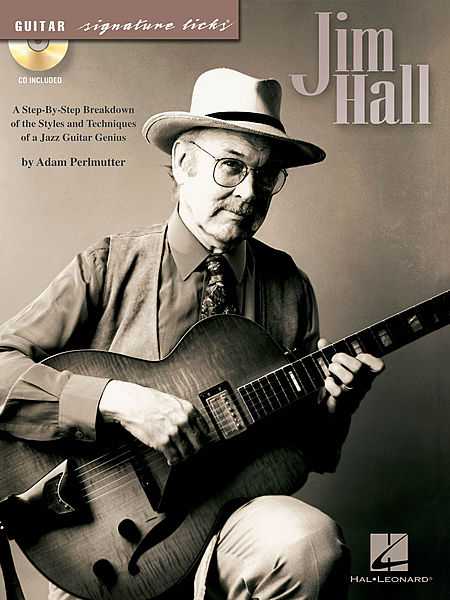
HALL JIM A Step-by-Step the Styles and Techniques of a Jazz Guitar Genius Signature Licks CD TABLATURE

HALL JIM, A Step-by-Step Breakdown of the Styles and Techniques of a Jazz Guitar Genius, Signature Licks.

SHEET MUSIC BOOK WITH CD & GUITAR TABLATURE.

LIBRO DI MUSICA JAZZ CON CD.

SPARTITI PER CHITARRA : 

ACCORDI, PENTAGRAMMA, TABLATURE. 


Series: Signature Licks Guitar
Softcover with CD - TAB
Author: Adam Perlmutter
Artist: Jim Hall

Discover the quiet elegance of one of jazz guitar's most renowned players with this Signature Licks book/CD pack. Each song chapter contains in-depth analysis and audio with slow demos. 80 pages


INTRODUCTION

Jim Hall (1930-) was steeped in classical music before he came to jazz. Hall attended the Cleveland Institute of Music, then moved to Los Angeles, California, where he studied nylon-string guitar with Vincente Gomez. While on the West Coast, he began to make a name for himself as a jazz guitarist, playing in the quintet of drummer Chico Hamilton, from 1955 to 1956, and in the trio of reed player Jimmy Giuffre, from 1956-1959. He also worked with modern improvisers such as pianist John Lewis and alto saxophonist Lee Konitz, and in 1960 toured South America (where he was exposed to bossa nova) with singer Ella Fitzgerald.

Around the same time, Hall moved to New York City, where through several intense collaborations, he was established as one of the world's most sophisticated jazz guitarists. From 1961 to 1962, he was a member of the tenor saxophonist Sonny Rollins's great quartet, with which he recorded the seminal album The Bridge. In the '60s Hall coled a quartet with trumpeter Art Farmer; he also recorded with the quartet of alto saxophonist Paul Desmond and found ideal duet partners in pianist Bill Evans and bassist Ron Carter. With Evans, Hall recorded two albums, Undercurrent (1962) and Intermodulation (1966), two of the most intimate and beautiful recordings in all of jazz. (From Intermodulation, see the transcription of "My Man's Gone Now," on page 34.) It was while performing in these fertile contexts that Hall found his own voice, an understated modern style characterized by melodic finesse, harmonic sophistication, and structural awareness-a logical extension of the language developed by such jazz-guitar pioneers as Charlie Christian, Wes Montgomery, and Django Reinhardt. This approach has been of profound influence to countless modern guitarists, including Hall's student Bill Frisell, who sounds radically different than Hall, but has a strikingly similar guitar conception. Hall's approach is best witnessed on the excellent albums he has recorded under his own name, including Concierto (1975), Jim Hall Live! (1976), and All Across the City (1989), transcriptions from all of which can be found on the following pages.

Besides being one of jazz's premier guitarists, Hall is a celebrated arranger and composer. In 1997, he won the New York Jazz Critics Circle Award for Best Jazz Composer/Arranger; his composition for jazz quartet and string quartet, "Quartet Plus Four," earned the Jazzpar Prize in Denmark, and his works for string, brass, and vocal ensembles can be heard on the albums Textures (1997) and By Arrangement (1998). In 2004, the Baltimore Symphony Orchestra debuted Hall's Peace Movement, a concerto for guitar and orchestra, dedicated to the cause of international harmony. That same year, for all his accomplishments as a composer, arranger, and performer, Hall was named a Jazz Master by the National Endowment for the Arts.

One of Hall's most recent projects, Hemispheres, was recorded with Bill Frisell and features one disc of duets and a second disc that adds the rhythm section of bassist Scott Colley and drummer Joey Baron. The album is available at Hall's Web site where a fan can catch of glimpse of what goes into the creation of the guitarist's recent projects. Meanwhile, when not composing or working with his own trio, Hall-ever the adventurous artist-has been playing with various modern improvisers, including saxophonists Joe Lovano and Greg Osby, and guitarist Pat Metheny. For now in the sixth decade of his career, Hall remains as vital a musician as ever.

DISCOGRAPHY

The selections on the accompanying CD are based on the following recordings:

ALL ACROSS THE CITY-Concord Jazz: "Big Blues"

ALONE TOGETHER-Milestone: "Autumn Leaves," "St. Thomas-

BALLAD ESSENTlAL-Concord Jazz: "Prelude to a Kiss"

CONCIERTO-CTI: "You'd Be So Nice to Come Home To"
(continua)


(All Of A Sudden) My Heart Sings - HAROLD ROME - 1941
Angel Eyes - MATT DENNIS - 1946
Autumn Leaves - JOSEPH KOSMA - 1947
Big Blues - JAMES S. HALL - 1978
My Man's Gone Now - GEORGE GERSHWIN - 1935
Prelude To A Kiss - DUKE ELLINGTON - 1938
St. Thomas - SONNY ROLLINS - 1963
Scrapple From The Apple - CHARLIE PARKER - 1957
Tangerine - VICTOR SCHERTZINGER - 1942
Things Ain't What They Used To Be - MERCER ELLINGTON - 1942 
Without A Song - VINCENT YOUMANS - 1929
You'd Be So Nice To Come Home To - COLE PORTER - 1942


ANGEL EYES
(Jim Hall Live!, 1976)
Words by Earl Brent
Music by Matt Dennis
Figure 3-lntro, Head, and Solo (Chorus 1)
While many of Jim Hall's studio recordings show the guitarist to be thoughtful and
well-mannered, in concert he has been known to play with abandon. This side of Hall can
be heard on Jim Hall Live!, one of his finest live recordings, taken from a series of dates
in 1975 at Toronto's Bourbon Street. The recording finds Hall in top form, paired with
bassist Don Thompson and drummer Terry Clarke.
One of the highlights of the album is a Latin-tinged take of the jazz standard "Angel
Eyes," which was originally a 32-bar AABA song. Hall & Co. double the tune's harmonic
rhythm, so that the form is now 64 bars in length. (A chord that originally occupied two
beats now gets four beats, an entire bar.) Hall starts things off by moving a barred Am7
shape in parallel fashion against the open A string, resulting in some interesting polychordal
harmony, such as the m/A chord (voiced A-A~-m-F, low to high) on beat 1 of bar
2 and the B/A (A-F~-B-m) on beat 1 of bar 4. He also throws various dominant and
diminished chord voicings into the mix, including the partial E7#9 (A~/m-D-G) in the last
part of bar 2 and mo (A~-D-F) on beat 1 of bar 6.
After closing out the intro with the same Am7 chord with which he started, Hall
takes the head (beginning at bar 17). He sticks pretty close to the original melody, adding
his own idiosyncratic touches here and there. One such Hall-ism involves placing an
octave-based idea at the end of a phrase-a striking, broken-octave fill appears in bars
23-24; a variation of this, in bar 39; and, in bar 72, a semi-chromatic descending line
played in fully voiced octaves. Throughout, there's a strong blues feel, especially in bar
32's fill, which comes from the A minor pentatonic scale (A-C-D-E-G), albeit unpredictably
ordered. A subtler touch involves ending certain phrases with a 12th-fret harmonic
on string 5 (see bars 30, 46, and 78), which lends a nice timbral contrast to the fretted
notes.
Beginning in bar 49, Hall uses a neat trick that effectively separates the bridge
from the A-section: while holding selected melody notes (upstemmed), he adds chord
stabs (downstemmed), not unlike a pianist would do with two hands. Also, Hall ventures
a little farther from the melody in this section-in bar 53, check out the improvised, angular
line that begins with a major 7th (B~to A) leap. These unique details give the listener
a taste of what's to come in Hall's excellent solo.
In the first A-section of his first chorus, Hall introduces an A minor pentatonic idea,
and then sees it through various permutations. He keeps it simple here; the only noticeable
jazzy melodic content is the Am11 arpeggio (A-C-E-G-B-D) in bars 108-109.
Throughout, Hall interjects some of the same chord voicings as found in the intro, most
often the E7=9chord. At the same time, he uses space wisely; for example, see the rests
in bars 107-108 and 116-117.
Hall steps out melodically in the bridge of the first chorus. In bars 122-123, he
plays a 6th-based motif that reappears later in the solo, and in bars 125-127, he smoothly
hits a variety of interesting note choices: the 7 (F#) on the Gm7 chord (the absence of
a pianist gives Hall harmonic leeway), the #9 (E~/m) on C7, and the #11 (B) on Fmaj7.
Beginning in bar 128, Hall plays a fleetingly-fingered line involving chromatic lower-neighbor
tones. This leads directly into a witty reference to Duke Ellington's "Raincheck" in bars
129-131. Quotation is an indispensable improvisational tool, and Hall masterfully adjusts
the melodic contour of "Raincheck" to suit the changes at hand, sailing with ease into the
b7 (A) of the B7 chord and the 3rd (G#) of the Emaj7 chord.


THINGS AIN'T WHAT THEY USED TO BE (Jazz Guitar: Jim Hall Trio, 1957)
By Mercer Ellington
Figure 15-Head and Solo
While Jim Hall's style is strikingly modern, it is deeply rooted in the traditional
sound of the blues. This is especially apparent in Hall's interpretation of the Mercer
Ellington classic "Things Ain't What They Used to Be," from his 1957 debut album, Jazz
Guitar: Jim Hall Trio, on which "Tangerine" (see page 56) also appears.
"Things Ain't What They Used to Be" is based on a 12-bar blues in m major,
played here with a neat, overlapping pair of ii-Vs in bars 8-11 (F7-m7-Bm7-Ab7-m7).
Hall kicks things off by playing the head twice, the first time accompanied by bassist Red
Mitchell. The guitarist basically plays the melody as it was originally written but adds some
bluesy, grace-note flourishes: in the m7 bars, a whole-step slide, from B to the melody
note F; and on the double stops, a half-step approach tone to each lower note.
As Hall restates the head, beginning in bar 13, pianist Carl Perkins joins in on the
proceedings; notice the chromatically ascending 7~9 chords that Perkins substitutes in
bars 21 and 22. Hall starts his reiteration of the head the same way he originally played
it, but at the end of bar 20, he raises the intensity by playing the melody up an octave.
Then, beginning in bar 23, he sets up his three-chorus solo with a triplet-based line that
comes mainly from the m minor pentatonic scale (m-Fb-Gb-Ab-Cb).
In the first chorus, Hall improvises variations on the original melody. In bars 29
and 30, he plays major 3rd-based double stops from the m blues scale (m-Fb-Gb-Abb-
Ab-Cb), then, in bar 31, toys with both the b3rd(HIE) and 3rd (F) of the m7 chord using
single notes. In bar 35, over the m7-Bb7 change, Hall plays a series of dyads that actually
imply the progression m7-GI>-Gbm, with the 3rd (m and Bbbin the bass on the latter
two). Note the contrary motion between the lower and higher voices of the first two
chords.
Beginning at the end of his first chorus and extending through the first several
bars of his second, Hall has a conversation with himself, playing phrases that start and
stop on the first string's fourth-fret Ab, and are answered by phrases that start and stop a
perfect 5th lower, on the third string's sixth-fret m. In bars 40-43, Hall plays the note Eb
at two different positions-string 2, fret 4 and string 3, fret 8-requiring a large fret-hand
stretch, but the nice contrast in timbre is worth the effort. Hall begins to conclude his second
chorus in bar 44 with a predominantly pentatonic phrase.
In his third and final chorus, Hall makes the most out of a few simple phrases, the
first of which is stated in the first half of bar 49. Similar to one found in his first chorus, this
bluesy, ascending phrase contains both the b3 and 3, and is carried throughout the first
several bars. Bar 52 contains an interesting move: Hall slides, via a half step, into a dyad
(Cb-Eb)that implies a m9 chord (m-F-Ab-Cb-Eb), then plays a descending chromatic line
(Ab-Abb-Gb-F) that sets up a m9 chord partial (F-Cb-Eb). First appearing on beat 2 of bar
53, an eighth-note triplet line (Fb-m-B) is played (except for a break in bar 54) until the
beginning of bar 56, and answered in bar 57 by a time-honored, jazz-blues phrase.
Hall thinks more harmonically as he ends his solo, arpeggiating m (m-F-Ab) and
Gb (Gb-Bb-m) triads in bar 59, approaching each 3rd with a half-step grace note. Then,
on beats 1 and 2 of the final bar, Hall plays double stops, Ab-m and G-m, that imply mm7
(Bb-m-F-Ab) and Eb7 (Eb-G-Bb-m) chords, respectively, delaying the final ii-V
(Ebm7-Ab7) change by two beats.

Prezzo: €34,99
€34,99

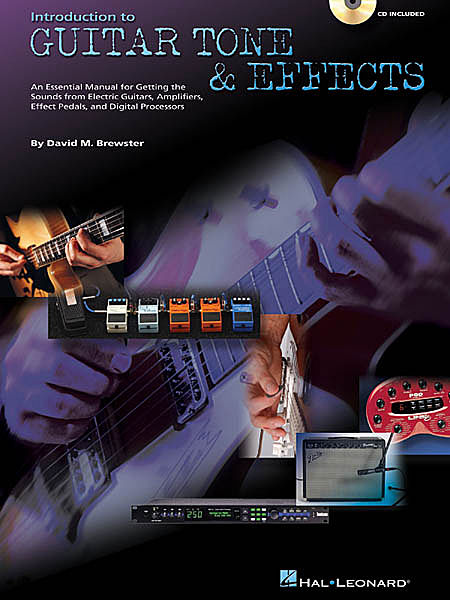
INTRODUCTION TO GUITAR TONE & EFFECTS. David M. Brewster. A Manual for Getting the Sounds from Electric Guitars, Amplifiers, Effects Pedals & Processors. CD

INTRODUCTION TO GUITAR TONE & EFFECTS. CD

A Manual for Getting the Sounds from Electric Guitars, Amplifiers, Effects Pedals & Processors


Series: Guitar Educational
Publisher: Hal Leonard
Medium: Softcover with CD
Author: David M. Brewster

An essential manual for getting the best sounds from electric guitars, amplifiers, effect pedals and digital processors! This book/CD pack features easy-to-follow instructions, with more than 75 photos, to teach the basics of guitar tones and effects. The accompanying CD provides audio examples. Readers will learn: anatomy of the electric guitar; controlling the electric guitar; getting a good clean tone; overdrive, distortion and fuzz; using equalizers; compressors and limiters; noise reduction; modulation effects; reverb and delay; special effects; multi-effect processors; getting a good tone through your PC; famous effected guitarists; and much more! 64 pages

Prezzo: €16,00
€16,00

BLUES GUITAR SONGS Hal Leonard Guitar Method CD TABLATURE-Pride and Joy-Sweet Home Chicago

BLUES GUITAR SONGS. CD TABLATURE

LIBRO DI MUSICA BLUES, CON CD DI BASI.

CD DI BASI PER VOCE E VOCE E CHITARRA.

SPARTITI PER VOCE E CHITARRA.

ACCORDI, PENTAGRAMMA E TABLATURE. 

10 titoli completi base per suonare insieme a un gruppo di professionisti.

Blues Guitar Songs
Series: Guitar Method
Format: Softcover with CD - TAB
Artist: Various

Standard notation and tablature for 10 complete songs by artists including Eric Clapton, B.B. King and Stevie Ray Vaughan. Titles include: Boom Boom • Born Under a Bad Sign • I'm Your Hoochie Coochie Man • Killing Floor • Pride and Joy • Sweet Home Chicago • The Thrill Is Gone • and more.

Inventory #HL 00697385
ISBN: 9781423417767
UPC: 884088102234
Width: 9.0"
Length: 12.0"
64 pages

Boom Boom
Born Under A Bad Sign
Hide Away
I'm Tore Down
I'm Your Hoochie Coochie Man
Killing Floor
Pride And Joy
Sweet Home Chicago
Texas Flood
The Thrill Is Gone

Boom Boom - JOHN LEE HOOKER - Words and Music: JOHN LEE HOOKER - 1962
Born Under a Bad Sign - ALBERT KING - Words and Music: Booker T. Jones, William Bell - 1967
Hide Away - FREDDIE KING - Words and Music: Freddie King, Sonny Thompson - 1961
I'm Tore Down - ERIC CLAPTON - Words and Music: Sonny Thompson - 1962
I'm Your Hoochie Coochie Man - MUDDY WATERS - Words and Music: Willie Dixon - 1957
Killing Floor - HOWLIN' WOLF - Words and Music: Chester Burnett - 1965
Pride and Joy - STEVIE RAY VAUGHAN - Words and Music: STEVIE RAY VAUGHAN - 1985
Sweet Home Chicago - VARIOUS ARTISTS - Words and Music: Robert Johnson
Texas Flood - LARRY DAVIS - Words and Music: Larry Davis, Joseph W. Scott - 1958
The Thrill Is Gone - B.B. KING - Words and Music: Roy Hawkins, Rick Darnell - 1951
Guitar Notation Legend
TUNING NOTES 

Prezzo: €21,99
€21,99

EMMANUEL TOMMY BEST OF Guitar Recorded Version TABLATURE LIBRO BLUE MOON-Boogie Shuffle

EMMANUEL TOMMY, BEST OF. SHEET MUSIC BOOK with GUITAR TABLATURE . 


LIBRO DI MUSICA per CHITARRA acustica,

SPARTITI PER CHITARRA con :

ACCORDI, PENTAGRAMMA e TABLATURE. 


Series: Guitar Recorded Version TAB
Artist: Tommy Emmanuel
Product Details
Inventory: #HL 00690909
ISBN: 9781423431756
UPC: 884088166359
Width: 9.0"
Length: 12.0"
Page Count: 144 Pages


12 transcriptions from the versatile, award-winning Aussie guitarist, including, 141 pages

Blue Moon
Can't Get Enough
Classical Gas
Countrywide
Determination
Guitar Boogie Shuffle
Hearts Grow Fonder
The Hunt
Initiation
The Journey
Stevie's Blues
Up From Down Under

Prezzo: €39,99
€39,99

CHICAGO BLUES HARMONICA, Billy Boy Arnold. John Lee W., Little Walker, Sonny Boy Williamson DVD

CHICAGO BLUES HARMONICA, Billy Boy Arnold. DVD

Featuring Billy Boy Arnold
Series: DVD
Author: Billy Boy Arnold

A guide to the classic amplified harp sounds of John Lee Williamson, Little Walker, Sonny Boy Williamson, and Billy Boy himself.

Billy is an unparalleled source of historical information about the development of the harmonica in this century. After delivering an informative and entertaining introduction about the instrument he loves, Billy walks and talks you through the important aspects of the styles of both Sonny Boys and the two Walters. Each artist's work is demonstrated by a performance with rhythm section backing and then a clear, concise explanation. Topics covered include playing in first, second and third positions, note bending, trills, back up accompaniment and playing minor blues. Billy shows it all with diatonic and chromatic harmonicas, spicing his musical analysis with anecdotes and gentle humor. A booklet with the main musical examples transcribed combines with the DVD in the definitive method for learning classic Chicago blues harmonica. 

Running time: 57:30

LESSON BOOK INSIDE

Prezzo: €18,99
€18,99
Condividi contenuti