HAL LEONARD

THE ROOTS OF JAZZ GUITAR songs and licks Fred Sokolow CD TABLATURE CHITARRA LIBRO SPARTITI

THE ROOTS OF JAZZ GUITAR. SHEET MUSIC BOOK WITH CD & GUITAR TABLATURE .

LIBRO DI MUSICA JAZZ SWING, CON CD .

SPARTITI PER CHITARRA : 

ACCORDI, PENTAGRAMMA, TABLATURE. 


HAL LEONARD 

THE SONGS AND LICKS THAT MADE IT HAPPEN. 


TITOLI : 
Dinah
East Of The Sun (And West Of The Moon)
Honeysuckle Rose
I'll Remember April
Rose Room
Yesterdays

Series: Guitar Collection
Softcover with CD - TAB
Composer: Fred Sokolow

A complete survey of jazz guitar, its pioneers and how it developed. Includes: six note-for-note transcriptions of famous standards pivotal to the genre; instruction in the essential playing styles; the history and development of jazz guitar; biographies of the pioneering artists; a recording of the songs, exercises, and licks; and more. Songs include: Dinah (Eddie Lang) - East of the Sun (And West of the Moon) (Barney Kessel) - Honeysuckle Rose (Charlie Christian) - I'll Remember April (George Van Eps) - Rose Room (Django Reinhardt) - Yesterdays (Wes Montgomery). 64 pages.

Prezzo: €29,99
€29,99

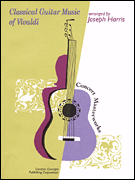
VIVALDI CLASSICAL GUITAR MUSIC OF Joseph Harris TABLATURE GARDELLINO CHITARRA LIBRO SPARTITI

VIVALDI, CLASSICAL GUITAR MUSIC OF.  SHEET MUSIC BOOK WITH GUITAR TABLATURE. 

LIBRO DI MUSICA CLASSICA. 
SPARTITI  PER CHITARRA :
PENTAGRAMMA E TABLATURE.


CONCERT MASTERWORKS

Classical Guitar Music of Vivaldi
Series: Creative Concepts Publishing
Publisher: Creative Concepts TAB
Artist: Antonio Vivaldi
Arranger: Joseph Harris

Features 31 pieces by Antonio Vivaldi arranged for solo guitar with tablature. Includes historical notes, performance suggestions, explanation of ornaments, and more.

Inventory #HL 00315187
ISBN: 9781569221945
UPC: 073999158755
Publisher Code: 074090
Width: 9.0"
Length: 12.0"
80 pages

About Classical Guitar Music Of Vivaldi - Guitar Solo
By Antonio Vivaldi (1678-1741), arranged by Joseph Harris. Guitar tablature songbook for guitar. 80 pages.
With standard guitar notation, guitar tablature, introductory text and instructional text. Baroque. 9x12 inches.

Features 31 pieces by Antonio Vivaldi arranged for solo guitar with tablature. Includes historical notes, performance suggestions, explanation of ornaments, and more.

For many years remembered only for his contribution of hundreds of violin concertos, Antonio Vivaldi is regarded today as a key musical figure of the Italian Baroque. Although his most visible and enduring influence was indeed in the development of the solo concerto, Vivaldi was also admired in his day as a composer of excellent chamber music, a stunning violinist and a popular composer of Italian opera. This composer of "The Four Seasons" was a bold and impetuous individual who managed to focus his musical impulses in a unique voice that was consistent yet expressive. Vivaldi was born in Venice in 1678 and trained for the priesthood, but ended up practicing this vocation for only a brief time. Vivaldi served for nearly forty years (from 1703 until just before his death in 1741) as musical director of the Conservatorio dell'Ospedale della Pieta, one of four girls' orphanages in Venice. The Ospedale provided outstanding musical instruction and under Vivaldi's direction created quite a musical sensation. Vivaldi's tasks at the Ospedale included teaching private lessons, composing music for both concerts and church services, repairing musical instruments and commissioning works from other composers for concerts at the Ospedale. Vivaldi was extremely prolific, composing over 50 operas, 90 sonatas and 450 concertos. Despite the apparent ease with which he could produce a composition (he once boasted he could compose a piece faster than it could be copied), Vivaldi is criticized sometimes for being too predictable. The twentieth century Italian composer Luigi Dallapiccola once asserted that Vivaldi did not compose 450 separate concertos, but wrote the same concerto 450 times. Whereas during the Baroque many musicians believed that the particular intent of a composition (church, chamber or theatre) should dictate its musical language, Vivaldi's style varied little between genres and even between mediums. His vocal music and instrumental music share similar musical characteristics, as do his sacred and secular works. Furthermore, Vivaldi's compositional style remained remarkably consistent throughout his career and evolved very little. The only major variances one finds are in surface details, such as melodic contour, which tended to reflect public tastes. However, it is a tribute to Vivaldi's skill as a composer that within such a limited musical vocabulary he exhibited a virtually inexhaustible variety of invention.

Sonatas for Violin, Op. 2
The 12 Sonatas for Violin, Op. 2 were Vivaldi's first solo sonatas. The Sonatas were published in Italy in 1709 and dedicated to Frederick IV of Denmark on the occasion of his visit to Venice. For the Sonatas, Vivaldi drew upon models of Arcangelo Corelli, a conservative Italian composer whose works are tidily constructed, yet highly expressive. Vivaldi's Sonatas are a composite of church and chamber styles, demonstrating his tendency to blur boundaries between genres. In the Sonatas, dance movements intermingle with abstract movements (those with only tempo designations). Baroque dances of the Italian variety differ considerably from their French or German equivalents. The slight differences in the names of dances (for example, compare the Italian giga to the French gigue) do not signify nationality only, but salient musical traits. Whereas the French gigue is a lively, bouncy dance in an imitative texture, the Italian giga has a more restrained sense of pulse, a less rhythmically active bass line and little or no imitation between voices. The Italian gavotta lacks the characteristic two upbeats and musette-like middle section of the French gavotte. The Italian corrente is faster and more "running" in character than the French courante. Also, the French courante may emphasize dotted rhythms and an alternation between duple and triple meter, while the corrente is more rhythmically consistent and metrically stable.

Sonata No.3
In the Adagio (found on page 7), the bass line should be played with a warm tone, especially in areas where it is exposed (as in the opening and in measure 9). To achieve a warm tone on the guitar, play with the right hand close to the fretboard and strike the string with the side of the thumb, using as much flesh as possible. The Giga (found on page 8) should be played dynamically strong throughout and in a lightning fast tempo.

Sonata No.6
The Preludio (found on page 12) should sound very elegant and graceful. Exaggerate the dotted rhythms by playing the long notes longer and the short notes shorter. The Giga (found on page 16) should be played in a moderately fast tempo. Count two beats per measure, not four, to give the piece a stronger and more stable sense of forward motion

Sonata No.7
The tempo of the Corrente (found on page 19) should be very fast. However, in areas where the bass line becomes more active (especially in mm. 17-21), make sure that neither voice breaks down.

Sonata No.9
The Preludio (found on page 23) is an energetic and dramatic piece. The movement contains elements of a "learned" style, which show off a composer's contrapuntal skills. Be sure to emphasize the points of imitation (as in the first few measures).

Sonata No. 11
The abundance of syncopated rhythms presents an interesting technical problem for the solo performer in the Gavotta (found on page 28). In order toconvey the meter clearly, keep the tempo steady and count two beats per measure. Hold on to notes with the left hand for as long as possible before fingering new notes.

Sonatas for One or Two Violins, Ope 5
The Six Sonatas, Op. 5 were first published in 1716. By this time, Vivaldi had chosen a new publisher, Etienne Roger in Amsterdam. There were at least two significant reasons for the switch: superior printing methods and an increased demand for the music of Vivaldi and other Italians in northern Europe. The Sonatas, Op. 5 were actually engraved and published at Roger's own expense. Such a practice was quite rare in Vivaldi's time and testifies to his immense popularity.

Sonata No. 13
The Sarabanda (found on page 30) lacks the lasciviously strong accent on the second beat characteristic of the Spanish sarabande. Keep the tempo slow, the meter even and play with as much vibrato as possible. Sonata No. 14

For the Gavotta (found on page 32), the left-hand slurs (as in mm. 7-9 and 39-41) may require some extra attention during practice. Isolate each slur and treat it as a trilling exercise. Devote a few minutes each day to these passages until they sound crisp and clear.

Sonata No. 16
In the Preludio (found on page 35), exaggerate the dotted rhythms and apply vibrato liberally. Because of the slow tempo, it will be necessary to think ahead and be aware of the melody's direction and shape. At some point, you may want to do a simple phrase analysis of the Preludio. Break the piece into small phrases, study how they relate to one another and then group them into longer phrases. The longer the phrases you envision, the better the sense of forward motion you will convey.

Sonata No. 18
The Air-Minuet (found on page 38) demonstrates an ambiguity in Vivaldi's choice of titles for movements. The designation "Air" suggests the vocal-like quality of the melody. The piece is also an instrumental dance movement, containing the clear four-bar phrasing and clear cadences typical of a minuet. Overall, the piece should sound stately, yet singing.

II cimento dell'armonia e dell'inventione, Op. 8
The Concertos, Op. 8 were first published in 1725 and dedicated to the Bohemian Count Wenzeslaus von Morzin. The first four concertos are collectively known as "The Four Seasons." A significant feature in each of these concertos is the inclusion of an explanatory sonnet, each line of poetry corresponding to a particular passage in the music.

Il cimento dell'armonia e dell'invenzione, Op. 8
Pubblicati per la prima volta nel 1725, i primi 4 concerti sono conosciuti come "Le quattro stagioni".

TABLE OF CONTENTS: 
Historical Notes & Performance Suggestions
Explanation of Ornaments
Adagio Sonata for Violin, Op. 2, No.3
Giga from Sonata for Violin, Ope 2, No. 3
Preludio from Sonata for Violin, Ope 2, No. 6
Giga from Sonata for Violin, Ope 2, No. 6
Corrente from Sonata for Violin, Ope 2, No. 7
Largo from Concerto for Flute, Op. 10, NO.3 (''il Gardellino") ,
Preludio from Sonata for Violin, Op. 2, No. 9 ,
Gavotta from Sonata for Violin, Ope 2, No. 11
Sarabanda from Sonata for Violin, Ope 5, No. 13
Gavotta from Sonata for Violin, Ope 5, No. 14 .
Preludio from Sonata for Violin, Ope 5, No. 16 .
Air-Menuet from Sonata for Two Violins, Op. 5, No. 18 .
Allegro non molto From the Four Seasons, Op. 8, NO.2 (Summer) .
Largo From The Four Seasons, Op. 8, NO.4 (Winter) .
Affettuoso From Sonata for Flute, RV 48 .
Allegro assai From Sonata for Flute, RV 48 .
Allegro Sonata for Flute, RV48 .
Preludio from Sonata for Flute, RV 49 .
Sarabanda from Sonata for Flute, RV 49 .
Siciliana from Sonata for Flute, RV 49 .
Preludio from Sonata for Recorder, RV 52 .
Allemanda from Sonata for Recorder, RV 52 .
Aria di Giga from Sonata for Recorder, RV 52 .
Largo from Concerto for Lute and Two Violins, RV93 .
Largo from Concerto for Flute and Oboe, RV95 ("La Pastorella") .
Andante from Concerto for Flute, RV429 .
Grave from Concerto for Violin and Organ, RV541 .
Allegro alla Francese Violin and Oboe, RV 543
Largo from Concerto for Oboe and Violin, RV 548 .
Largo from Concerto for Flute, Op. 10, No.4 .
Largo from Sonata for Musette, Vielle, Flute, Oboe or Violin, Op. 13, No.6

Catalog #07- 4090
ISBN# 1-56922-194-4
CREATIVE CONCEPTS PUBLISHING CORPORATION
Creative Concepts Publishing Corp.

Prezzo: €20,99
€20,99

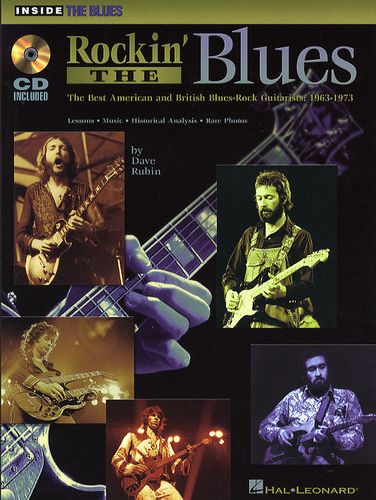
ROCKIN' THE BLUES-The Best American and British Blues-Rock Guitarists: 1963-1973 CD TABLATURE SPARTITI

ROCKIN' THE BLUES, The Best American and British Blues-Rock Guitarists: 1963-1973. BOOK WITH CD & GUITAR TABLATURE

LIBRO METODO DI MUSICA BLUES, CON CD. 

SPARTITI PER CHITARRA CON: 

ACCORDI, PENTAGRAMMA, NOTE, TABLATURE. 

METODO, MANUALE, STUDIO, TECNICA. 


Lessons - Music - Historical analysis - rare Photos
Series: Guitar Educational
Softcover with CD - TABLATURE
Author: Dave Rubin

Take a journey inside the blues with Dave Rubin's latest book, Rockin' the Blues: 1963-1973. This seminal 10 years produced some of the most influential blues-rock guitarists of all time. Learn about the lives of these trail-blazing guitarists, their individual styles, accomplishments, and techniques, then play along with the accompanying CD and taste the magic yourself. Each chapter delves into the world of a key blues-rock guitarist from this period, with rare photos, historic insights, interviews, and guitar solos written in standard notation and tablature and performed by a full band on the included audio CD. Explore this exciting time in music history with a book that covers it like no other. Artists covered include: Duane Allman, Jeff Beck, Roy Buchanan, Eric Clapton, Alvin Lee, Keith Richards, Robbie Robertson, and others. 104 pages

ROCKIN' THE BLUES: From the U.S. to the U.K.

The history of the blues is laced with irony. The national tragedy of the transatlantic slave trade begun in the 1600s sought to deprive Africans of their culture, but inadvertently exposed them to European musical traditions and instruments that led to the birth of the blues in the American south circa 1890. Some in the Anglo population had their ears open early on as evidenced by a white man, Arthur Seals, beating W.e. Handy to the distinction by just two months with the first published blues, "Baby Seals' Blues" in 1912. After "Crazy Blues" by Mamie Smith was recorded in 1920 there began a lengthy period of the blues as an integral component in the African-American community until it was superseded by soul music in the early 1960s. Throughout this entire period of time most, though certainly not rdl, white listeners in America applied basically benign neglect to the blues. By the early 1950s, however, white country musicians in the South began incorporating blues licks and phrasing into a new, embryonic form of music as yet unnamed. Often they learned directly from their black neighbors or family employees out in the sticks. Merle Travis, Chet Atkins, and Scotty Moore were some of the earliest and most prominent, with Moore applying his seamless blending of country and blues licks to the music of an ambitious young man in the summer of 1954. The greasy, astoundingly charismatic singer Elvis Presley was joined by Moore and upright, "doghouse" bassist Bill Black at Sun Studios in Memphis, and their revolutionary hybrid of hillbilly boogie and blue would eventually come to be called rockabilly a few years later. In fact, it was the official, if not absolute, beginning of rock 'n' roll as a style of music and as an unprecedented youth movement. Other white cats like Carl Perkins, Jerry Lee Lewis, Dale Hawkins (whose 1957 recording of "Suzie-Q" featured James Burton's seminal blues-rock licks), Roy Orbison, and even Johnny Cash would build on Presley's success. Meanwhile, Chuck Berry was concurrently combining blues with country and western music and swing jazz (by way of jive-talking shuffler Louis Jordan) to create a distinct style that rocked and swung, and his influence on rock is inestimable. In addition, the chugging boogie blues of Jimmy Reed would also exert a considerable effect on both future American and English blues-rockers. It took some time for the I-IV-V progressions of 1950s rock 'n' roll to give way to a new form of rocked up blues in the early 1960s. Roy Buchanan in the Washington, D.e. area, Robbie Robertson in Toronto, and Lonnie Mack in Cincinnati, to name three of the most prominent, began bringing an edge and energy to their version of the blues rarely found outside of black blues guitarists like Lafayette "Thing" Thomas and Auburn "Pat" Hare. Keenly aware of the potential contained in the right combination of axe and amp, they were the sonic pioneers who would fry their vacuum tubes in order to achieve the thick, overloaded sound that would thrill fans and fellow musicians alike. The blues-based San Francisco bands like Big Brother and the Holding Company, Creedence Clearwater Revival, Quicksilver Messenger Service, the Steve Miller Band, and the early Santana band that arose in the mid-1960s (and contributed so much to the music of the counterculture movement in the latter part of the decade) also understood that the "medium (loud, distorted guitars) was the message." Technology played a significant part because as the amps got bigger, so did the sound, and savvy guitarists got hip to the fact that they could riff and solo with the expressiveness and power that had previously been the domain of honking tenor saxophonists. Perhaps no one delivered this powerful, earth-shaking message better than Jimi Hendrix, at once a true hluesman and blues-rock icon. The Allman Brothers Band with dual axemen Duane Allman and Dicky Betts were arguably the most important American group to bring all the elements together in an accessible style also steeped in authentic blues roots. Still at it after thirty-five years, they spawned a new genre known as Southern Rock that was in fact, blues-rock with a Dixie accent. Lynyrd Skynyrd, the Marshall Tucker Band, 38 special


TABLE OF CONTENTS


Introduction

John McVie Interview 

Scales for Blues-Rock Guitar 

Duane Allman

Jeff Beck

Roy Buchanan

Eric Clapton

Rory Gallagher

Billy Gibbons

Peter Green

Bugs Henderson

Alvin Lee

Steve Miller

Jimmy Page

Keith Richards

Robbie Robertson

Mick Taylor

Mick Taylor Interview

Leslie West

Guitar Notation Legend 

Prezzo: €31,99
€31,99

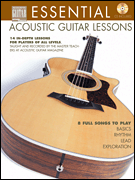
Magazine, ESSENTIAL ACOUSTIC GUITAR LESSONS CD TABLATURE CELTIC- RHYTHM-BASICS-LEAD-HAWAIIAN

acoustic guitar magazine, ESSENTIAL ACOUSTIC GUITAR LESSONS. CD TABLATURE

LIBRO CON CD, IN NOTAZIONE E TABLATURE

8 FULL SONGS TO PLAY

BASICS

RHYTHM

LEAD

EXPLORATION

Essential Acoustic Guitar Lessons
14 In-Depth Lessons for Players of All Levels
Series: String Letter Publishing
Publisher: String Letter Publishing
Format: Softcover with CD - TAB
Author: Various Authors

Inventory #HL 00695802
ISBN: 9780634068355
UPC: 073999958027
Width: 9.0"
Length: 12.0"
66 pages

This book/CD pack offers a superb selection of lessons and songs for the acoustic guitar, expertly played by teachers on the accompanying CD. It includes exercises, licks and 8 full songs to play, in standard notation and tablature with chord diagrams. The CD includes two versions of each song: one played slowly and the other, up to tempo. The book is divided into four main sections: Basics - covering the fretboard, barre chords and flatpicking; Rhythm - bluegrass in dropped D, bass lines, classic pop changes; Lead - Celtic jigs, melodic improvisation, soloing with arpeggios; and Exploration - capo use, Hawaiian slack key, classical etude variations; and modal harmony. Players of all levels will find lessons to benefit them. 66 pages


Introduction

There
has never been a better time to play the guitar! Guitar makers call this the Golden Age of Lutherie for good reason; it's a time where players of all levels can find high-quality guitars in an price range. But this era could just as easily be called the Golden Age of Guitar Instruction. Never before have we had so many high-quality instructional materials and accurate song transcriptions for virtually any style of music. In Essential Acoustic Guitar Lessons, the experienced teachers at Acoustic Guitar offer up something for everyone. The Basics section will help you learn the notes on the guitar's fret board and get started with barre chords and flatpicking. More advanced lessons include styles as diverse as jazz improvisation, Celtic jigs, slack-key guitar, alternate tunings, and more. You'll even learn how to play your guitar like a bass, if the need arises! If one style particularly grabs you, log on to where you'll find a multitude of books delving into specific styles and techniques. So pick up your guitar, and let's get started!
Andrew DuBrock Music Editor


DAVID HAMBURGER
David Hamburger is a performer and writer who lives in Austin, Texas. He has been playing
folk and blues music since first picking up the guitar at the age of 12 and has been on the
faculty of the National Guitar Workshop since 1988. Hamburger's guitar, slide guitar, and
Dobro playing can be heard on his solo albums King of the Brooklyn Delta (Chester, 1994)
and Indigo Rose (Chester, 1999), as well as on numerous other independent recordings.
Hamburger is the author of many books, including The Acoustic Guitar Method, and has
contributed dozens of lessons and articles to Guitar Player and Acoustic Guitar magazines.
For a discography, performance schedule, and other information, visit his website at

KAREN HOGG
Karen Hogg is a multi-instrumentalist, music teacher, yoga teacher, and freelance writer living
in New York City. She has written two instructional books for Workshop Arts/Alfred
Publishing: Women in Rock and Guitar Made Easy. Hogg has been teaching for ten years and
is an instructor at the National Guitar Summer Workshop and the American Institute of
Guitar. She performs regularly on guitar and mandolin in various country and rock bands
around New York.

PAUL KOTAPISH
Paul Kotapish started playing guitar in bands shortly after he first heard the Beatles on his
transistor radio. He has toured the globe and recorded numerous albums with Irish fiddler
Kevin Burke, the Hillbillies from Mars, and Wake the Dead an acoustic ensemble that meshes Grateful Dead songs with traditional Irish music. During the day he messes around on computers doing forensic multimedia work for an Oakland,
California law firm.

TONY MARCUS
Tony Marcus plays lead guitar and violin in the '30s and '40s swing band Cats and Jammers,
which records for the Tuxedo label (2557 Wakefield Ave., Oakland, CA 94606). He's also
played with the Arkansas Sheiks, the Cheap Suit Serenaders (featuring counter-culture cartoonist
Robert Crumb), and the Royal Society Jazz Orchestra.

PETER MULVEY
Peter Mulvey began his musical career playing guitar in the subways of Boston and on the
streets of Dublin. Since those early busking days, he has recorded four critically acclaimed
albums (his latest, Ten Thosand Mornings, was released in 2002) and has captivated audiences
across the U.S. and Ireland with his intelligent lyrics and percussive, inventive guitar
work. You can find him.


CONTENTS

CD Track List
Introduction
Music Notation Key
About the Teachers

BASICS

Unlocking the Fretboard - KAREN HOGG

Barre Chords - DAVID HAMBURGER

Flatpicking 101 - DAVID HAMBURGER
Blackberry Blossom

RHYTHM
Bluegrass in Dropped D - HAPPY TRAUM
Angel Band

Bass Lines for Guitarists - PAUL KOTAPISH
Levis Beaulieu

Classic Pop Changes - ANDREW DUBROCK

Swing Voice Leading - TONY MARCUS

LEAD

Celtic Jigs - DAVID SURETTE
Coleraine/Monferrine

Melodic Improvisation - CHRIS GRAMPP

Soloing with Arpeggios - JAMIE FINDLAY

EXPLORATIONS

Getting Low Lows with a Partial Capo - PETER MULVEY

Hawaiian Slack Key - KEOLA BEAMER
A Grandmother's Wish
Wa'apa

Classical Etude Variations - MARK SMALL
Prelude

Modal Harmony - SCOTT NYGAARD
Winter Waltz 

Prezzo: €20,99
€20,99

ROLLING STONES GUITAR ANTHOLOGY TABLATURE Angie It's Only Rock 'N' Roll-Start Me Up-HAPPY-LIBRO

ROLLING STONES, GUITAR ANTHOLOGY. SHEET MUSIC BOOK WITH GUITAR TABLATURE .

LIBRO DI MUSICA ROCK,

SPARTITI PER VOCE E CHITARRA CON:  

ACCORDI, CHORDS, PENTAGRAMMA E TABLATURE. 


The Rolling Stones Guitar Anthology
Series: Guitar Recorded Version TAB
Artist: Rolling Stones

Note-for-note transcriptions with tab for more than two dozen hits from the Stones, who had the audacity to deem themselves The World's Greatest Rock & Roll Band – and the raw, intense talent to back up the claim. Includes: Angie - Beast of Burden - Emotional Rescue - Hang Fire - Happy - The Harlem Shuffle - It's Only Rock 'N' Roll - Miss You - Rocks Off - Shattered - She Was Hot - Start Me Up - Time Is on My Side - Tumbling Dice - Waiting on a Friend - and more, plus a special 8-page color photo section!
Inventory #HL 00690631
ISBN: 9780634062865
UPC: 073999906318
Width: 9.0"
Length: 12.0"
304 pages


TiTOLi :

All The Way Down
Angie
Beast Of Burden
Black Limousine
Doo Doo Doo Doo Doo (Heartbreaker)
Emotional Rescue
Fool To Cry
Hang Fire
Happy
It's Only Rock 'N' Roll (But I Like It)
Miss You
Not Fade Away
Respectable
Rocks Off
Shattered
She Was Hot
She's So Cold
Start Me Up
The Harlem Shuffle
Time Is On My Side
Tumbling Dice
Undercover (Of The Night)
Waiting On A Friend
When The Whip Comes Down
Worried About You

Prezzo: €48,99
€48,99

KING ALBERT-THE ESSENTIAL-A Step-by-Step the Styles and Techniques of a Blues and Soul Legend CD TABLATURE

KING ALBERT, THE ESSENTIAL. A Step-by-Step Breakdown of the Styles and Techniques of a Blues and Soul Legend. BOOK WITH CD & GUITAR TABLATURE

LIBRO METODO DI MUSICA BLUES, CON CD.

SPARTITI PER CHITARRA CON:

ACCORDI, PENTAGRAMMA E TABLATURE.


Series: Signature Licks Guitar
Softcover with CD - TAB
Artist: Albert King
Author: Wolf Marshall

Learn the trademark riffs and solos of this blues King! Provides in-depth analysis of 12 songs, CD features full demonstrations. 88 pages.

Songlist:

Angel Of Mercy -Answer To The Laundromat Blues -Blues Power -Born Under A Bad Sign -Crosscut Saw -Don't Throw Your Love On Me So Strong -I Wanna Get Funky -I'll Play The Blues For You -Laundromat Blues -Oh Pretty Woman -Personal Manager -The Hunter.

Prezzo: €29,99
€29,99

CROCE JIM, THE VERY BEST OF. Guitar Recorded Version TABLATURE

CROCE JIM, THE VERY BEST OF. TABLATURE

1972 - Bad, Bad Leroy Brown - Words and Music Jim Croce
1972 - Careful Man - Words and Music Jim Croce
1973 - I Got A Name - Words by Norman Gimbel - Music: Charles Fox
1973 - I'll Have To Say I Love You In A Song - Words and Music Jim Croce
1972 - It Doesn't Have To Be That Way - Words and Music Jim Croce
1972 - One Less Set Of Footsteps - Words and Music Jim Croce
1971 - Operator (That's Not The Way It Feels) - Words and Music Jim Croce
1971 - Photographs And Memories - Words and Music Jim Croce
1972 - These Dreams - Words and Music Jim Croce
1971 - Time In A Bottle - Words and Music Jim Croce
1973 - Workin' At The Car Wash Blues - Words and Music Jim Croce
1971 - You Don't Mess Around With Jim - Words and Music Jim Croce


Series: Guitar Recorded Version
Softcover - TAB
Artist: Jim Croce
Music Transcriptions: Pete Billmann, Paul Pappas, David Stocker, Jeff Story

12 timeless classics from the late Jim Croce: 104 pages

Prezzo: €19,95
€19,95

CROSBY, STILLS & NASH, BEST OF Guitar Recorded Version Hal Leonard LIBRO TABLATURE CHITARRA

CROSBY, STILLS & NASH, BEST OF. GUITAR TABLATURE

LIBRO DI MUSICA ROCK.

SPARTITI PER VOCE E CHITARRA.

ACCORDI, PENTAGRAMMA, TABLATURE.

Carry Me -Carry On -Change Partners -Chicago -Dark Star -Deja Vu -Got It Made -Guinnevere -Helplessly Hoping -Just A Song Before I Go -Long Time Gone -Love The One You're With -Marrakesh Express -Our House -Shadow Captain -Southern Cross -Suite: Judy Blue Eyes -Teach Your Children -Wasted On The Way. 160 pages. TABLATURE


Best of Crosby, Stills & Nash

Series: Guitar Recorded Version TAB
Artist: Crosby, Stills & Nash

19 of CSN's best in note-for-note guitar notation with tablature. Includes: Carry Me • Carry On • Chicago • Got It Made • Long Time Gone • Love the One You're With • Our House • Suite: Judy Blue Eyes • Teach Your Children • and more.
157 pages

Carry Me - words and music: David Crosby - from CSN (box set) - 1975
Carry On - words and music: Stephen Stills - from Déjà Vu - 1971
Change Partners - words and music: Stephen Stills - from Carry on - 1971
Chicago - words and music: Graham Nash - from Carry on - 1971
Dark Star - words and music: Stephen Stills - from CSN - 1977
Deja Vu - words and music: David Crosby - from Déjà Vu - 1970
Got It Made - words and music: Stephen Stills and Neil Young - from American Dream - 1988
Guinnevere- words and music: David Crosby - from Crosby, Stills & Nash - 1973
Helplessly Hoping - words and music: Stephen Stills - from Crosby, Stills & Nash - 1969
Just A Song Before I Go - words and music: Graham Nash - CSN - 1976
Long Time Gone - words and music: David Crosby - from Crosby, Stills & Nash - 1968
Love The One You're With - words and music: Stephen Stills - from Carry on - 1970
Marrakesh Express - words and music: Graham Nash - from Crosby, Stills & Nash - 1969
Our House - words and music: Graham Nash - from  Déjà Vu - 1970
Shadow Captain - words and music: David Crosby, Craig Doerge - from CSN - 1987
Southern Cross - words and music: Stephen Stills, Richard Curtis, Michael Curtis - from Carry on - 1974
Suite: Judy Blue Eyes - words and music: David Crosby - from Crosby Stills & Nash - 1970
Teach Your Children - words and music: Graham Nash - from  Déjà Vu - 1970 
Wasted On The Way - words and music: Graham Nash - Daylight again - 1982

Prezzo: €29,99
€29,99

METHENY PAT GROUP THE WAY UP GUITAR Transcribed score LYLE MAYS CHITARRA TABALTURE LIBRO

METHENY PAT GROUP, THE WAY UP. Transcribed score.

THE COMPLETE SCORE COMPOSED BY: PAT METHENY, LYLE MAYS
EDITED BY: STEVE RODBY FOR ALL INSTRUMENTS


Artist: Pat Metheny
This is the complete score for the four-part composition from this new release by the Pat Metheny Group. NPR says the album has an ambitious compositional style that amounts to an epic journey. 256 pages, NO TABLATURE

Songlist:
Opening - PAT METHENY, LYLE MAYS - 2005
Part One - PAT METHENY, LYLE MAYS - 2005
Part Three - PAT METHENY, LYLE MAYS - 2005
Part Two - PAT METHENY, LYLE MAYS - 2005

Prezzo: €31,99
€31,99

VAI STEVE DAVID LEE ROTH EAT 'EM AND SMILE Guitar Recorded Version TABLATURE LIBRO SPARTITI

VAI STEVE, DAVID LEE ROTH, EAT 'EM AND SMILE. SHEET MUSIC BOOK WITH GUITAR TABLATURE .

Guitar Recorded Version

LIBRO DI MUSICA HEAVY METAL.

SPARTITI PER VOCE E CHITARRA. 

ACCORDI, PENTAGRAMMA, TABLATURE. 


This songbook matches Diamond Dave's first full-length album featuring Steve Vai, Billy Sheehan, and Gregg Bissonette as his back-up band. 10 songs. 104 pages.

Big Trouble
Bump And Grind
Elephant Gun
Goin' Crazy
I'm Easy
Ladies' Nite In Buffalo?
Shy Boy
That's Life
Tobacco Road
Yankee Rose

Prezzo: €29,99
€29,99
Condividi contenuti