HAL LEONARD

FENDER TELECASTER SIX DECADES OF THE The Story of the World's First Solidbody Electric Guitar Tony Bacon

SIX DECADES OF THE FENDER® TELECASTER, The Story of the World's First Solidbody Electric Guitar. Tony Bacon.

LIBRO ILLUSTRATO 

Series: Book
Publisher: Backbeat Books
Medium: Softcover
Author: Tony Bacon

Launched by the fledgling Fender company in 1950, the Telecaster has become the longest-lived solidbody electric guitar, played by everyone from Muddy Waters to Chrissie Hynde. All who play know that the key to the Telecaster's importance and versatility is its sheer simplicity. Packed with high-quality photographs of the great Telecasters, collectable catalogs, period press ads, and memorabilia, this tribute tells the story of the Telecaster and the Fender Company through exclusive interviews with Fender figures who were there when this musical star was born. 144 pages

Prezzo: €34,99
€34,99

BLUES/ROCK, Harmonica Play-Along Volume 3. CD TABLATURE

BLUES/ROCK, Harmonica Play-Along Volume 3. CD

TABLATURE per armonica
Series: Harmonica Play-Along
Medium: Softcover with CD
Artist: Various

The Harmonica Play-Along Series will help you play your favorite songs quickly and easily. Just follow the notation, listen to the CD to hear how the harmonica should sound, and then play along using the separate backing tracks. The melody and lyrics are also included in the book in case you want to sing, or to simply help you follow along. The audio CD is playable on any CD player. For PC and MAC computer users, the CD is enhanced so you can adjust the recording to any tempo without changing pitch! Volume 3 includes:

Big Ten Inch Record - AEROSMITH
On The Road Again - CANNED HEAT
Roadhouse Blues - THE DOORS
Rollin' And Tumblin' - ERIC CLAPTON
Train Kept A-Rollin' - YARDBIRDS
Train, Train - BLACKFOOT
Waitin' For The Bus - ZZ TOP
You Shook Me - LED ZEPPELIN

Prezzo: €14,99
€14,99

Acoustic guitar MAGAZINE, FLATPICKING GUITAR ESSENTIALS. CD TABLATURE

Acoustic guitar magazine, FLATPICKING GUITAR ESSENTIALS. 12 lessons, 16 songs. CD TABLATURE

Series: Guitar Collection
Publisher: String Letter Publishing
Medium: Softcover with CD
Author: Various Authors

Learn bluegrass and folk with this book/CD pack featuring lessons by Acoustic Guitar assistant editor Scott Nygaard, award-winning guitarist Dix Bruce, legendary guitarist Happy Traum, and many others. Includes 16 complete songs to play, 96 pages.

Banish Misfortune
Bury Me Beneath The Willow
Carroll Country Blues
Foggy Mountain Special
Humphrey's Hornpipe
Jesse James
Kentucky Waltz
Mama Don't 'Low
Morrison's Jig
Pretty Peggy
Roll In My Sweet Baby's Arms
Sally Goodin
Sandy River Belle
Soldier's Joy
Star Of Munster (Irish)
Will The Circle Be Unbroken

While guitarists in such diverse genres of music as jazz, rock 'n' roll, blues, new age, pop, world, and folk have been known to wield a flatpick, the word flatpicking is most often used to describe a style of guitar playing that evolved from early country music and bluegrass. Musicians such as Riley Puckett, Mother Maybelle Carter, Doc Watson, George Shuffler, Jimmy Martin, Tony Rice, Clarence White, and hundreds more have contributed to a style that allows its practitioners to produce a driving or subtle rhythm and clear, fluid, virtuosic solos. Flatpicking is the ideal style for acoustic guitarists in bands that include instruments with more natural volume than the acoustic guitar. It's also a great technique for solo singers who want a powerful rhythmic accompaniment. In this book, we bring you 12 lessons that explore the roots and branches of flatpicking, taught by Acoustic Guitar magazine's master teachers. Each lesson introduces an essential technique and illustrates it with musical examples from folk, bluegrass, old-time, and Celtic music that you can use immediately. The book is divided into two sections, "Backup Styles" and "Playing Melodies and Leads," each of which begins with basic techniques before delving into flatpicking's more refined subtleties. If you're unfamiliar with any terms or techniques used, check the music notation key. Whether you're new to the flatpick or guitar and want to get started on the right track, or an old hand who's either in search of new ideas or a review of fundamentals, you're sure to find inspiration and fuel for perspiration here.
Scott Nygaard, Assistant Editor, Acoustic Guitar

Exercises, licks, and full songs to play

Standard notation, Tablature, and chord diagrams

CD with music played by the teachers slowly and up to tempo


contents

CD Track List

Introduction

Music Notation Key

About the Teachers


BACKUP STYLES

Strum and Bass Note Patterns LARRY SANDBERG

Jesse James

Will the Circle Be Unbroken


Bluegrass Rhythm Guitar SCOTT NYGAARD

The standard bluegrass strum
Chord Variations
Joining the band
Bluegrass Bass Runs
Playing a Range of Tunes
Rhythm is a group effort
 

The Lester Flatt G Run HAPPY TRAUM

Roll in My Sweet Baby's Arms

Mama Don't 'Low

G-RUN BOOGIE

Rhythm Essentials JOHN McGANN
using a metronome
driving rhythm guitar
cross-picking
Celtic accompaniment


Fiddle Contest Accompaniment JIM WOOD

Sally Goodin, Completo di accompagnamento 

Kentucky Waltz - 1942- Bill Monroe

Simple Irish Backup PAUL KOTAPISH

Strumming Reels, Alternate chords, accompanying Jigs

The Star of Munster

Morrison's Jig


PLAYING MELODIES AND LEADS

Flatpicking Fiddle Tunes SCOTT NYGAARD

Fiddle tune basics, Pull-offs and Slide, 

soldier's Joy

Sandy River Belle


Bluesy Bluegrass STEVE POTTIER

Adding the Blues Notes, The Flatted Seventh chord, usings slurs, seventh chord, using Blues Shuffle

Cross·Picking SCOTT NYGAARD

Bury Me beneath the Willow


Variations on a Theme SCOTT NYGAARD

Carroll County Blues


Transcribing Solos DIX BRUCE

Foggy Mountain Special

Banjo and bass solos, 

Celtic Flatpicking DYLAN SCHORER

The Reel, The Jig, The Air, The Strathspey, Ornaments

Pretty Peggy

Banish Misfortune

Humphrey's Hornpipe

Prezzo: €20,99
€20,99

MANDOLIN BLUES From Memphis to Maxwell Street, Rich DelGrosso. CD TABLATURE

MANDOLIN BLUES From Memphis to Maxwell Street. CD TABLATURE

Mandolin Blues

From Memphis to Maxwell Street
Series: Mandolin
Format: Softcover with CD - TAB
Author: Rich DelGrosso

Travel back in time as acclaimed mandolinist Rich DelGrosso, author of the best-selling Hal Leonard Mandolin Method (00695102), traces the history and music of America's rich blues tradition through the eyes of the mandolinist. Follow the lives of players like Yank Rachell, Howard Armstrong and Charlie McCoy, and then learn their timeless music with standard notation, tablature, and an accompanying full-band CD of all the tunes in the book.

Inventory #HL 00695899
ISBN: 9780634072499
UPC: 073999178531
Width: 9.0"
Length: 12.0"
80 pages


Acknowledgments

Many thanks and hugs for my fiancee, Lisa Henry, for always standing by me, supportive and patient whenever I get into the "mando zone." Baby, you're the best!

It was my late wife Maureen who taught me to write music more than thirty years ago. She opened up my world of opportunity and I will always be grateful. Thank you, sweet Mo.

Thanks to James "Yank" Rachell and W Howard Armstrong for sharing their music and experience with me. Our times spent together changed my life as a musician. They were my teachers, my mentors. Howard inspired me both in my music and my art, and his gentle and warm spirit carried me through some tough times. I miss them both greatly.

This project could not have been completed without the help and support of my colleague and good friend Ernie Scarbrough. His skill as a musician and recording engineer pulled this work togetherl In addition to riding the console, he played bass and drums on the tracks. Ernie, 1 can't thank you enough! Thanks to Hal leonard for the opportunity to bring this great music to the world. After so many years and countless articles in magazines, it is great to now have it all in one volume. And this is only the tip of the iceberg. Thanks to my many students who work with me in chipping away at the ice. There is so much good music to discover as we study the past together. irresistible music, skilled players, and passionate artists, who can ask for more?


About the Author

Rich DelGrosso is the leading proponent and expert on mandolin blues. The Blues Foundation in Memphis, TN, nominated him for a 2006 Blues Music Award in the Best Instrumentalist category According to Mark Hoffman, co-author of Moanin' at Midnight, the Life and Times of Howlin' Wolf, Rich DelGrosso is "the greatest living blues mandoman, the best since Yank." He has performed at clubs and festi\'als for the past thirty years, mentored by and performing with blues and string-band legends James "Yank" Rachell and Howard "louie Bluie" Armstrong. A respected writer in the blues realm, Rich's work has appeared in Living Blues, Mandolin World News, Frets, Mandolin Magazine, and Footsteps. He has been a writer for Blues Revue magazine since 1991 and an associate editor since 1996. A renowned teacher, his latest workshops have included the Telluride Blues and Brews, the Centrum Blues Workshop in Port Townsend, WA, and Mandolin Camp North, in Boston, MA. He received the "Keeping the Blues Alive" award (KBA) in 1989 from the Blues Foundation for his work coordinating

the Augusta Heritage Arts: Bluesweek. Rich will return as coordinator of Bluesweek in 2007. As his fans will tell you, this is not the same old blues. DelGrosso has a sound all his o,vn. As Przemek Draheim of "The Voice of the Blues" (Radio Bravo, Torun, Poland) wrote, "The sound of your axe is one of the coolest things l've heard in blues' It is old-school, rooted in history, but forging new ground. Rich can stand with any guitar slinger, and he often does!"

Rich's new release, Get Your Nose Gutta My Bizness! featuring Pinetop Perkins, James Harman, and Doug Macleod, is available. Bizness was reported on the Living Blues Top 15 radio charts for

the first four months after its release in the fall of 20051

For more info on Rich DelGrosso


From Memphis to Maxwell Street

the intro to DelGrosso's book by Hal Leonard Pub.


“They were led by a long-legged chocolate boy and their band consisted of just three pieces, a battered guitar, a mandolin and a worn-out bass . . . thump. thump, thump went their feet on the floor. Their eyes rolled. Their shoulders swayed . . . it was not really annoying or unpleasant. Perhaps ‘haunting’ is a better word . . .”


The words of W.C. Handy, band-leader and composer in 1903, describing one of his first encounters with the “blues.” The story continues with the trio exciting the crowd and earning more tip money than Handy’s band. Handy decided to add the “blues” to his repetoire resulting in his claim to be the Father of the Blues.


This is the story of the black mandolinist in America. In the hands of the black string band performers, the mandolin was there to nurture the infancy of ragtime and blues. It’s crisp, tenor voice was a perfect complement to the guitar and piano and its soaring tremolos energized the jug and street bands of the Deep South. An inspiration to composers Scott Joplin and W.C. Handy, the mandolin helped to shape the music that would gradually evolve into rock and jazz and their descendants.


At this point in the American timeline, Memphis, Tennessee, was the center of African-American culture and the crossroads for touring musicians. Players like Vol Stevens, Will Weldon, Eddie Dimmitt and Charlie McCoy added their string band skills to some of the bands of the day, like the Memphis Jug Band and the Mississippi Sheiks. From these collaborations came some of the popular blues/folk/bluegrass chestnuts like “Sittin’ On Top Of The World” and “Stealin.” Most people know of the legendary Chicago bluesman Muddy Waters. But only his hard-core fans are aware that on his first recording on Stovall plantation in Mississippi, Burr Clover Blues, Waters was a member of a string band, the Son Simms Four, with Simms on fiddle and Louis Ford on mandolin.


In the surrounding countryside other musicians and bands flourished. W.Howard Armstrong and Carl Martin and their Tennessee Chocolate Drops performed for medicine shows, parties and fish fries. Yank Rachell traveled about, playing the deep blues with his guitar partner Sleepy John Estes. Young Bill Monroe played guitar with a black fiddler named Arnold Schultz. Monroe then took the fiddle music of his Uncle Penn and the blues from Schultz and blended them together on the mandolin, creating a new American genre that came to be known as bluegrass.


As blacks migrated north to escape the social oppression and poverty of the South, the musicians were among the throngs settling in Chicago, St. Louis, New York and Detroit. The players from Memphis and Mississippi traveled due north to Chicago, and Handy’s Park in Memphis was replaced by the Maxwell Street market as the street-scene-center for the blues folks. Carl Martin and Johnny Young were often seen playing the mandolin with the harmonica and guitar players of Chicago’s Southside. Young often played electric mandolin with Muddy Waters and piano great Otis Spann. Waters had relocated to Chicago, where he popularized the electrified blues combo sound, which was copied by embryonic rockers both in the States and the UK. Blues Rock fans are aware that the greatest rock and roll band, the Rolling Stones, started as a blues band playing “old school” blues covers. Brian Jones, Mick Jagger and Keith Richards were aware of their roots. They asked Ry Cooder to play Yank Rachell-style mandolin licks on their early cover of Robert Johnson’s “Love in Vain (Let It Bleed, London Records nps-4).”


As more players pick up the mandolin, interest in the work of these seminal artists is growing. In the hands of Ry Cooder, Steve James, Andra Fay, Billy Flynn and others mandolin blues lives today. Everywhere I go people comment on the sound of my playing or on my writing for Mandolin Magazine. They want to know where it comes from.

And so the story begins.


Hampton Institute Hampton, Va. (circa 1898)

Library of Congress, Prints & phographs


The Mandolin in America

The mandolin was in fashion. It was the "rage."

Italians who emigrated from Europe to the u.s. in the 1850s comprised the largest Italian population outside of Italy. They introduced the mandolin to North America. Its popularity as a parlor instrument blossomed quickly and strains of mandolin waltzes, light classical pieces, marches, rags, and cakewalks filled the air of the eastern cities. Women added decorated mandolin cases to their accessories instead of purses. It was "in."

Scott Joplin, one of Americas most prolific and famous ragtime piano composers, was inspired by the bowl-back, eight-stringed instrument when he penned "The Entertainer." As Peter Gammond described this piece in Scott Joplin and the Ragtime Era, he noted that "the first strain [contains] octave chords with an added interior third, although not easy to play, probably have the intended effect of imitating mandolin chording." Joplin dedicated "The Entertainer·' to "Mr. James Brown and his mandolin club." In 1890, American luthiers Lyon and Healy employed Italian and Spanish craftsmen, and by 1897, they were making 7000 mandolins per year! The inexpensive instrument spread across the country and Cleveland and Kansas City were considered mandolin "strongholds." Sears and Roebuck and Montgomery Ward added mandolins to their catalogues as the instruments spread in popularity. In 1914, James Reese Europes African- American Clef Club orchestra was the first to present "pop" music at Carnegie Hall in New York City. Backed by drums, basses, pianos, violins, woodwinds, and twenty-sewn harp Guitars were forty-seven mandolins


Blue Notes, Seventh Chords, Bars, and Back Beats

What is the blues' You would be amazed to hear that even blues fans don't agree on a definition. For some it is strictly racial in origin, music born out of slavery, oppression, and deep poverty. For others it is music that expresses "blue" emotions, or the poetry of the blues. The record industry focused on these criteria as they waxed the early performers, even though these same artists were professional, versatile, and open-minded, playing every type of music under the sun. Imagine Muddy Waters singing a show tune; he did, but it wasn't what the record company wanted. Record vendors likewise struggled with the genre, finding it often difficult to draw the lines between jazz and blues and blues and rock. The racists of the South recognized the sexual energy of Elvis' blues as they tried to ban his imitation of the blues singers he grew up with in Memphis. So the debate rages on, but not for us. We will operate with a working definition of the blues, or what it means when you take the bandstand and say "let's playa blues."

Analyzing the blues style from a music-theory perspective, it's all about:

• Blue notes

• Harmonies based primarily on seventh chords

• Specific predictable progressions (l2-bar, 8-bar, etc.)

• Rhythms driven by back beats

Armed with these simple tools, you can jam on a blues with anyone.


Blue Notes

Blue notes gave the style its name. These notes are the flatted third, fifth, and flatted seventh scale degrees. Today there is plenty of music that employs the flatted third, fifth, and flatted seventh, but in the blues, emphasis on these notes and how they sound dissonant against major scale tones creates the "blues mood." In any given blues, the blue notes are not used exclusively and are often replaced by their natural counterparts, but by giving them more force and duration at key points in a progression, the music is given more feeling and soul. Check out the following scales. The parent major scales are shown first and are followed by the parallel blues scales.


The term "blue note" is sometimes used to describe the tonal area that exists in between the flatted and natural notes. Blues players and singers often bend or slide between these tones-particularly between the natural and flatted third-which creates a major to minor shift. Or happy to sad. This is another distinct blues characteristic.


Maxwell Street

From the 1920s to the present, Maxwell Street in Chicago has served as LheBeale Street of the North. At the crossroads where the poor African-American community merged with the jewish, Maxwell Street was bustling with commerce and music. It was home for many of the people who migrated north and had enjoyed the open-air markets of their birthplaces in the South. It was where musicians met to play and form associations. This led to the great blues bands of Chicago's Golden Age. Muddy Waters lived on West 13th Street, just a few blocks from the market. He and jimmy Rogers could be heard on the street on Saturday and Sunday afternoons, competing with the squeals of children as they raced about in and out of the merchant stalls, surrounded by the smoke from the pork chop and sausage stands. Snooky Prior and Floyd jones bragged of collecting more money in their buckets than they could ever make in a night at a club.


Photo by Kenji Oda

Bernard Abrams grew up on Maxwell Street in the 1920s. In 1945, he converted his home into Maxwell Radio, TV, and Record Mart, where he sold electric appliances and recordings. Inspired by the music he heard on the street, in the back room of his workshop he created the Ora Nelle label, named after Little Walter jacobs' girlfriend. It was a good business move at the time. The singers, wanting to promote their records, set up in front of the store and drew crowds. Some performers not on the label were still drawn to the store, folks like Elmore james, Aretha Franklin, and B.B. King. At one point Abrams was so successful that his neighbors called him the "Mayor of Maxwell Street" because he owned one square block of it. johnny Young was one of the first to record for Ora Nelle, but it did little to help his career. Pete Welding of Testament Records recorded Young with Otis Spann, Big Walter Horton, Little Walter jacobs, and Robert Nighthawk Young also played with Muddy Waters. These recordings feature some of the best Chicago blues-raw spontaneous, and strong-what Howard Armstrong would call the "low-down, diny blues."

At one point, in the early '70s, Mick jagger was spotted playing on Maxwell Street. The Stones, on tour, stopped in Chicago to explore the roots of their music. They visited and recorded at Chess Records, where they were surprised by Muddy Waters, who was painting the walls. jagger was strolling in the market when he stopped behind Nate's Deli, the "soul food" restaurant of the market. Someone handed him a guitar and he played for the people. Most of the locals didn't have any idea who he was, but they were no doubt amused by his accent.

Today there is a community of blues fans who are trying to preserve a small segment of the street. A new blue record store has opened in what was Leed's Mensware, next to Original jim's Hot Dog Stand at Halsted. This store is also the site for the Maxwell Street Historic Preservation Coalition, who has established a small museum. Piano C. Red and his Flat-Foot Boogie Band still work the street every Sunday, usually in front of the johnnie Dollar Thrift shop, one of 400 vendors open for business.

Maxwell is still the place to go to try out your chops and make a few bucks .


Contents

Introduction

The Mandolin in America

Blue Notes, Seventh Chords, Bars, and Back Beats

Scales.

12-Bar Blues in C ("Quick to the IV")

8- Bar Blues in G ("Circle of Fifths")

Duet in G

Duet in G (Triplets)


Rags, Drags, and Stomps

Coley Jones and the Dallas String Band

Dallas Rag

Jackson Stomp

Knox County Stomp

State Street Rag.

Vine Street Drag


Vol Stevens

The Jug Band

Vol Stevens' Blues


Memphis and Beale Street.


Will Weldon

Will Weldon's Blues


Eddie Dimmitt

Eddie Dimmitt's Blues

The Spectrum of Mandolins


Charlie McCoy

Charlie McCoy's Blues .

A Gig Is a Gig


W Howard Armstrong

Strings and Things

Betty and Dupree.

Howard Armstrong's Blues

Pulling Doors .


Carl Martin


Yank Rachell

Yanks Style and Technique

Yank Rachell's Blues

Early This Morning

A Mandolin for a Pig


Maxwell Street.


Johnny Young

Johnny Young's Blues

Young's 8-Bar Blues ..

Taking the Bandstand


Rich DelGrosso..

DelGrosso's Blues (It's Funk). .

Selected Discography

Mandolin Notation Legend

Tuning Track .

Prezzo: €20,99
€20,99

CHRISTIAN CHARLIE GUITAR SIGNATURE LICKS Andy Aledort DVD-Benny's Bugle-Gone with "What" Wind -Grand Slam

CHRISTIAN CHARLIE, SIGNATURE LICKS. DVD

Author: Andy Aledort
Artist: Charlie Christian
Explore the riffs, solos and sounds of the original electric jazz guitar virtuoso with this in-depth analysis of 8 songs: Air Mail Special -Benny's Bugle -Gone with "What" Wind -Grand Slam -Seven Come Eleven -Shivers -Solo Flight -Till Tom Special.

Songlist:
Table of contents:
Air Mail Special
Benny's Bugle
Gone With 'What' Wind
Grand Slam
Seven Come Eleven
Shivers
Solo Flight
Till Tom Special
Running time: 1hr. 23 min.

Prezzo: €22,99
€22,99

JETHRO TULL GUITAR ANTHOLOGY Recorded Versions TABLATURE Locomotive Breath-Thick As A Brick

JETHRO TULL GUITAR ANTHOLOGY. SHEET MUSIC BOOK WITH GUITAR TABLATURE. 

LIBRO DI MUSICA ROCK / PROGRESSIVE. 

SPARTITI PER VOCE E CHITARRA CON:

ACCORDI, PENTAGRAMMA, TABLATURE. 


MUSIC TRANSCRIPTIONS BY: Addi Booth - BILL LaFLEUR - RYAN MAZIARZ - ANDREW MOORE

Series: Recorded Version (Guitar)

Softcover - TAB

Ian Anderson and crew have sold more than 60 million albums. Here are transcriptions of 19 of the finest from these British rock legends:

Aqualung
Bungle In The Jungle
Cross-Eyed Mary
Life Is A Long Song
Living In The Past
Locomotive Breath
Minstrel In The Gallery
New Day Yesterday
Nothing Is Easy
Passion Play Edit #8
Skating Away (On The Thin Ice Of A New Day)
Sossity, You're A Woman
Sweet Dream
Teacher
Thick As A Brick
To Cry You A Song
Too Old To Rock 'N Roll (Too Young To Die)
The Whistler
The Witch's Promise

176 pages

Prezzo: €29,99
€29,99

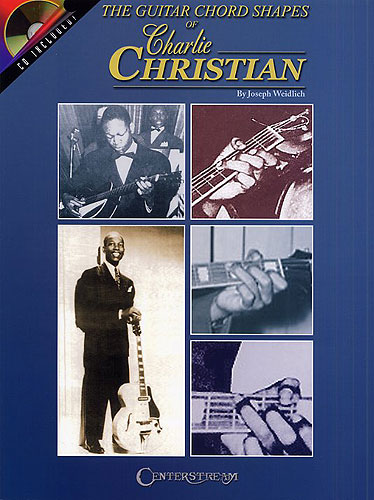
CHRISTIAN CHARLIE, THE GUITAR CHORD SHAPES OF. Joseph Weidlich CD TABLATURE

THE GUITAR CHORD SHAPES OF CHARLIE CHRISTIAN. CD TABLATURE

Series: Guitar
Publisher: Centerstream Publications
Medium: Softcover with CD
Artist: Charlie Christian
Author: Joseph Weidlich

The concepts and fingerings in this book have been developed by analyzing the licks used by Charlie Christian. Chord shapes are moveable; thus one can play the riffs in virtually any key without difficulty by simply moving the shape, and fingerings used to play them, up or down the fingerboard. The author shows how the chord shapes - F, D and A - are formed, then can easily be modified to major, minor, dominant seventh and diminished seventh chord voicings. Analyzing licks frequently used by Charlie Christian, Joe has identified a series of what he calls tetrafragments, i.e., the core element of a lick. The identifiable "sound" of a particular lick is preserved regardless of how many notes are added on either side of it, e.g., pickup notes or tag endings. Many examples are shown and played on the CD of how this basic concept was used by Charlie Christian to keep his solo lines moving forward. Weidlich also makes observations on the physical manner Charlie Christian used in playing jazz guitar and how that approach contributed to his smooth, mostly down stroke, pick technique.


TABLE OF CONTENTS


1. Introduction 

2. Scale Forms

3. Idiomatic Techniques 

Glissando 

Cadential Endings 

Single Note/Chord Usage for Rhythmic Emphasis 

Mordent 

Bent Notes 

4. Chord Shapes 

F chord shape 

Triads 

Licks 

Augmented Second-Third Scale Note Sequence

TetraFragments 

E chord shape [subset of the F chord shape] 

D chord shape 

Regular A chord shape 

Long A chord shape 

5. Dominant Seventh Chord Shapes 

F7 chord shape 

D7 chord shape 

Open A7 chord shape 

V9/13 Dominant Seventh Chord Shapes 

6. Minor Chord Shapes 

F minor chord shape 

D minor chord shape 

A minor chord shape 

7. Diminished Seventh [°7] Chord Shape 

8. Vertical Fingerings 

9. The iv minor Chord 

10. Root Movement Chord Shape Choice 

11. Charlie Christian's Playing Style 

12. Final Thoughts 

Author's Biography 

Prezzo: €19,99
€19,99

HITS OF THE '60S, Strum & Sing Series Easy Guitar.

HITS OF THE '60S, Strum & Sing Series Easy Guitar.

Publisher: Cherry Lane Music
Artist: Various

An unplugged and pared-down approach to your favorite songs from the Beatles, Johnny Cash, the Band, the Byrds, Dylan, the Who, and many others! Includes just the chords and lyrics to 43 hits, 104 pages.

BLOWIN' IN THE WIND
A BOY NAMED SUE
CALIFORNIA DREAMIN'
DO YOU BELIEVE IN MAGIC
EIGHT MILES HIGH
FEEL A WHOLE LOT BETTER
FOR WHAT IT'S WORTH
FROM ME TO YOU
HANG ON SLOOPY
HAPPY TOGETHER
HEY JOE
I CAN SEE FOR MILES
I GOT YOU BABE
I SAW HER STANDING THERE
I WALK THE LINE
IF I HAD A HAMMER (THE HAMMER SONG)
LEAVING ON A JET PLANE
THE LETTER
THE MARVELOUS TOY
MONSTER MASH
MR. SPACEMAN
MRS. ROBINSON
MY GENERATION
NIGHTS IN WHITE SATIN
ODE TO BILLY JOE
PIECE OF MY HEART
PROUD MARY
PUFF THE MAGIC DRAGON
RING OF FIRE
RUNAWAY
THE SEVENTH SON
SHE LOVES YOU
SO YOU WANT TO BE A ROCK AND ROLL STAR
SUBSTITUTE
SWEET CAROLINE
TELL HER (TELL HIM)
THESE EYES
THOSE WERE THE DAYS
TUESDAY AFTERNOON (FOREVER AFTERNOON)
TURN! TURN! TURN! (TO EVERYTHING THERE IS A SEASON)
TWIST AND SHOUT
THE WEIGHT
YESTERDAY

Prezzo: €11,99
€11,99

SECRETS OF SHRED GUITAR Dave Celentano TABLATURE DVD-string skipping-multi-finger tapping-

SECRETS OF SHRED GUITAR, Dave Celentano. TABLATURE DVD

DVD DI MUSICA, LEZIONE DI TECNICA PER CHITARRA.

Series: Guitar
Publisher: Centerstream Publications
DVD - TAB
Author: Dave Celentano

Beginning to advanced guitarists can learn all the secrets of shred, including sweep picking, alternate picking, string skipping, multi-finger tapping, legato, trills, tremolo picking and more! The techniques are broken down, and helpful exercises and melodic etudes are arranged from easiest to most challenging. Booklet included.

Prezzo: €24,99
€24,99

BOSSA NOVA GUITAR, Essential Chord Progressions, Rhythms Techniques, Carlos Arana. CD TABLATURE

BOSSA NOVA GUITAR, Essential Chord Progressions, Patterns, Rhythms and Techniques, Carlos Arana. CD TABLATURE

Series: Guitar Educational
Medium: Softcover with CD
Author: Carlos Arana

Bossa Nova Guitar is intended for a wide range of guitarists, from those with little experience in complex musical styles like jazz, Samba, or Bolero, to highly trained professional guitarists looking to expand their musical palettes. From Joao Gilberto to Antonio Carlos Jobim, the Bossa Nova guitar style has become firmly entrenched in the jazz culture. In this book, you'll gain a strong command of the style, concentrating on these core elements: harmony, rhythms, right-hand technique, chord progressions, essential patterns, and more. Includes a CD.


INTRODUCTION

Bossa nova, an internationally popular style of Brazilian music, was originally developed in Rio de Janeiro, in the late fifties. Precise definition of its origins is uncertain given that there were a number of contributing factors and influences, many of which took place simultaneously and all of which can be considered legitimate precursors. Most musical historians agree, however, that the official "birth" of bossa nova occurred with the 1958 release of Elizeth Cardoso's Can980 de Amor Demais, on which a young guitarist named Joao Gilberto played a song called "Chega de Saudade" written by Antonio Carlos Jobim and Vinicius de Moreas. The second defining moment, and the one that truly established the classic sound of bossa nova guitar, was the release of Gilberto's first album as a solo artist, also titled Chega de Saudade, later that same year. It was on this album that Gilberto beautifully demonstrated for the first time all of the principal rhythmic, harmonic, and melodic characteristics that have come to define bossa nova.

Gilberto's work on that record, as well as on his two subsequent albums, was musical genesi. It influenced not only the entire bossa nova movement but also subsequent generations of Brazilian pop musicians. It also established a strong connection with American jazz musicians, many who began to include elements of bossa nova in their own compositions and repertoires. This, in turn, led to a number of albums that had an unprecedented impact around the world. Many of these recordings are still popular today, including such classics as Antonio Carlos Jobim's Garota de Ipanema (Girl from Ipanema), the title track of which is arguably the most popular bossa nova song ever written. Bossa Nova Guitar is intended for a wide range of guitarists, from those with little experience in complex musical styles like jazz, Samba, or Bolero to highly trained professional guitarists looking to expand their musical palettes. To meet the needs of such diverse groups, the first chapter provides a background in bossa nova-related theory so that the reader can better understand the basic concepts that will then be applied in the examples and exercises found in the later chapters.


CONTENTS:


Introduction

Chapter 1: BASIC CONCEPTS

Harmony

Rhythm


Chapter 2: STYLES THAT INFLUENCED BOSSA NOVA

Samba

Origins of the Samba Rhythm, Habanera, Polca, Maxixé

Samba Cancao

Jazz


Chapter 3: RHYTHM

Right Hand Technique

Graphic Representation of the Rhythmic Patterns

Brasileirinho, Maxixé

Adding the Bass

Anticipating Chord Changes

Bass Notes in Bossa Nova

Muting

Bossa Nova Rhythm Patterns


Chapter 4: HARMONY

Preliminary Concepts

Bossa Nova Chords

Bossa Nova Chord Progressions


Chapter 5: PRACTICAL EXAMPLES

Pattern 1

Pattern 2

Compound Pattern: 1 + 2

Pattern 3

Pattern 4

Pattern 5

Pattern 6

Pattern 7

Pattern 8

Miscellaneous Patterns


Chapter 6: COMPLETE SONGS

Song 1

Song 2


Guitar Notation Legend

Prezzo: €20,99
€20,99
Condividi contenuti