HAL LEONARD

THE CLASSICAL GUITAR BOOK A Complete History by John Morrish LIBRO CHITARRE HAUSER FLETA

THE CLASSICAL GUITAR BOOK, A Complete History. John Morrish.

Serie: Book

Editore: Backbeat Books

Copertina morbida

Autore: John Morrish

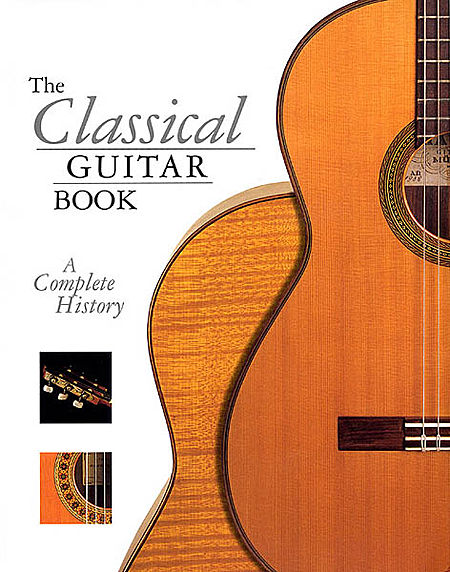
The Classical Guitar Book
A Complete History
Series: Book
Publisher: Backbeat Books
Format: Softcover
Author: John Morrish

Inventory #HL 00330989
ISBN: 9780879307257
UPC: 073999309898
Publisher Code: 0879307250
Width: 10.0"
Length: 12.5"
126 pages

Hermann Hauser è considerato il più famoso produttore di chitarre classiche fuori Spagna che ha sviluppato le regole fondamentali della costruzione e design impostate da Torres, applicando a esse “i suoi principi teutonici di ingeneria” come li ha descritto Julian Bream. Ecertamente il fatto che le sue chitarre erano usate da Andres Segovìa più che favorito la reputazione di lutaio tedesco.

Hermann era il figlio di Josef Hauser, un musicista che suonava e faceva le cetre e altri strumenti musicali dall all'età di 18 anni: dal 1905 ha iniziato a produrre le chitarre i liuti. (Herman Hauser è chiamato come Herman I per distinguerlo dal figlio e nipote che anche portano il nome Hermann, anche loro fabricatori di chitarre.) Tutto questo tempo Hauser suonava in un quartetto è oltre a questa attivita, sperimentava nella costruzione delle chitarre alto e chitarre basso. Comunque lui attende il concerto di Miguel Liobet, uno dei più prominenti allievi di Francisco Tárrega, durante il tour del 1913-14. Llobet suonva la chitarra di Torres del 1859 e Hauser ha capito le potenzialità delle chitarre tradizionali di Torres. Così è iniziato il processo della costante ricerca. Secondo la ricerca di Franz Jahnel, pubblicato nel suo “Manuale delle Tecnologie Chitarristiche” del 1981, nel 1920 Hauser ha fatto una serie di conclusioni dopo lo studio degli effetti causate dal posizionamento assimetrico dei listelli. Nello stesso anno Hauser ha brevettato il progetto per il nuovo tipo di cassa armonica. Il top della sua chitarra veniva sostenuto con un listello trasversale e due listelli longitudinali, il listello trasversale sotto il top della corda MI con l'intenzione di rafforzare le note alte. Houser ha incontrato Andrés Segovia nel 1924 durante suo primo tournè in Germania e questo incontro ha aperto le future possibilità per il progresso. Per esempio, Segovia ha invitato il lutaio a esaminare e misurare la sua famosa chitarra di Manuel Ramírez/Santos Hernádez quale il chitarrista ha acuistato nel negozio di Ramírez a Madrid nel 1912 prima del suo debutto. A sua volta Segovia ha seguito il concerto di chitarristi che suonavano le migliori chitarre di Hauser come lui ha ricordato nelle memorie dedicate a Hauser e pubblicate nel 1954 nella revista “Guitar Review”.

Le chitarre erano costruite dal Hauser”, scrive Segovia del concerto. “Le ho esaminato tutte e ho subito capito il potenziale di questo superbo artigiano, se la sua maestria potess essere applicata alla costruzione delle chitarre sui modelli spagnoli immutabilmente impostati da Torres e Ramírez come per il violino erano stabiliti da Stradivarius e Guarnerius.” Da quel momento Hauser ha iniziato a lavorare per crearequello, che Segovia avrebbe chiamato ”la più grandiosa chitarra dell'epoca”. Questo lavoro ha occupato alcuni anni, ma nel 1937 Hauser ha prodotto uno strumento che Segovia ha accettato con grande piacere. Josè Romanillos ha commentato tutta la complessita dello svilupo di Hauser I durante questi anni e l'influenza dei concetti spagnoli dopo il 1924. “Le chitare di Hauser subendo l'influenza spagnola sono divise in due categorie: una che segue il modello di Ramírez e altra che con un tocco ingenioso e innovativo ritorna al modello basilare di Torres. Nelle sue chitarre basate sul modello di Ramírez, si vede la sua influenza nella scelta del design della testa, largo posizionamento dei listelli e nelle dimensioni,” scrive Romanillos nel suo libro dedicato a Torres. “Houser ha provato diversi combinazioni e forme per i suoi strumenti anche dopo che ha prodotto per la Segovia la chitarra 1937. In alcune di queste chitarre intodotto un'amalgama di due maestri: forma arrotondata e e più armoniosa degli strumenti di Manuel Ramírez e alcune detagli che ricordano le forme delle chitarre di Torres come la testa, la lunghezza della scala e le decorazioni.”

Romanillos prosegue dicendo che prima del 1940 le chitarre di Hauser dimostravano ancor più forte affinità con le chitarre di Torres forse anche perchè proprio in questo periodo Hauser aquistò uno suo strumento creato nel 1960. Romanillos conclude che mentre non c'è alcun dubbio che la chitarra di Ramírez apartenente a Segovia ha avuto il ruolo principale nella crescita di questo grande produttore di chitarre....ma il sistema ortodossale di Torres che ha finalmente dato le basi per la costruzione delle chitarre di Segovia”. In questo modo Hauser ha incorporato i migliori elementi del design delle chitarre sviluppato in Spagna durante il dicianovesimo e al inizio del ventesimo secolo.


Libro di alta qualità da mettere in mostra, che propone testi dei più noti esperti del mondo ; il primo lavoro che racconta la storia completa della chitarra classica e del suo repertorio, degli artisti e  produttori  - dalle radici europei del 19 secolo alla moderna interpretazione internazionale. Questo bel libro con la copertina morbida è illustrata con le fotografie grandi delle chitarre classiche prodotte dai migliori lutai del mondo. Un'edizione addizionale parla del uso di chitarra classica nella musica pop, delle tecniche diverse di apprendimento e insegnamento; del mercato di collezionisti e la scienza della chitarra. Fa conoscere i profili di artisti famosi come Andrès Segovia, Julian Bream e John Williams; e in più, la, completa discografia, il glossario, l'indice, la biografia, tabella delle misure . 


Offering essays by the world's top experts in a full-color, coffee-table quality book, this is the first work to tell the complete story of the classical guitar and its repertoire, players and makers - from its 19th century European roots to modern international interpretations. This handsome softcover volume features lavish photography of classical guitars made by the best luthiers in the world. Additional essays cover use of the classical guitar in pop music, different playing and teaching techniques, the collectors' market, and the science of the guitar. It also features profiles of legendary artists such as Andrés Segovia, Julian Bream and John Williams, plus a full discography, a glossary, an index, a bibliography, and a guitar measurement chart. 126 pages.

A more attractively presented pictorial book on the classical guitar I cannot imagine. It measures 32cm by 25cm, has 126 pages and is packed with beautiful colour pictures, with a small number in black and white; the main photographs being the work of Miki Slingsby. Selected guitars are presented on foldout pages, which display them to great effect. Unfortunately, it is a rather fiddly job to release the folded leaf out of the spine of the book as it is a close fit, trimming the page back a centimetre would have been most beneficial.

Based on the Russell Cleveland Collection, the book includes a brief history of the guitar starting with references as far back as Ancient Greece, through to the Renaissance, the Baroque and up to the small-bodied guitars as played by Fernando Sor (1778-1839) and Dionisio Aguado (1784-1849). It was these small-bodied guitars that were the predecessors of the modern guitar, upon which this book is mainly focused. There are also sections devoted to the anatomy of the modern guitar, with examples of various strutting, and a guitar, which is broken down into its constituent parts by the English luthier Paul Fischer, who is also an acting consultant on the book. The volume also covers woods favoured by the different makers, the science involved in construction, the future of the instrument - in fact all the aspects connected to the guitar in this form, are dealt with in a logical and informative way. There are biographies of the principal players and their association with certain makers. It is in this area that we are treated to Graham Wade’s insights into John Williams, and in particular Andrès Segovia, on whom Wade must rank as one of the foremost authorities. There is also a discography of recordings by a wide range of players.

One can tell from the foreword to the book, written by Russell Cleveland himself, that he is engaged in something of a love affair with the guitars in his collection. He describes their individual sounds and characters - the obvious joy of his life. This devotion is maintained throughout the book through the writings of the formidable array of scholars. These include Colin Cooper, editor of the Classic Guitar magazine, Brian Jeffery, author of probably the definitive book on Fernando Sor and Dr Bernard Richardson whose work in the field of the acoustics of stringed instruments is highly regarded, as well as the aforementioned Graham Wade. I name but a few, who have collaborated to impart their knowledge and, in many cases, their findings from lifelong study of the subject.

The core of the book concentrates on what is regarded today as the modern instrument as envisaged by the maker Antonio Torres (1817-1892), a guitar of greater power and projection. In doing this he more or less standardised, for subsequent luthiers, the body’s dimensions and string length. For the most part experimentation by the following generations of makers focused on the strutting of the top of the guitar, some improving on Torres’ original concepts, some not.

Starting with Torres, this book maps the progress of the luthier’s craft through its most significant makers from all over the world, including the family dynasty of Ramírez. It was Manuel Ramírez who in 1912 supplied the great Andrès Segovia with his first proper concert guitar. Also featured are the Hauser family, now into their third generation, as are the Fleta family. Both of these makers also produced guitars played not only by Segovia, but also by many of the other finest guitarists in the world.

The roll-call of great guitars and their makers continues down through the years, Simlicio 1925, Santos Hernánez 1933, Bouchet 1955, Rubio 1966, to mention only five of the thirty-four featured, up to a 1996 José Romanillos guitar. Romanillos made the guitar that Julian Bream used on many of his famous recordings and concerts. Each maker’s work is accompanied by a text outlining his life. Additional photos highlight the details of headstocks, labels, machine heads and rosettes. Also listed are the specifications (dimensions, weight and string lengths, etc) of many guitars.
 

To make a trumpet. said Mahler, you take a hole and you wrap a piece of tin around it. The guitar's construction is scarcely less simple: you take a hole and you build a wooden box around it. Across that box you stretch some strings. under which you attach a strip of wood so that you can press your fingers against the strings and so alter their pitch. Of course the process does not end there. Two highly skilled people are needed before your simple box can give out music. One is the player, who must devote years of study to finding out exactly how to activate those strings so that the sounds the box makes are musical sounds. The other is the builder, the luthier without whose expertise the full potential of the box cannot be realised by the player. The enthusiasm with which the guitar was taken up in the 1960s and 1970s has resulted in a proliferation of mature talent, both in building and playing. Possibly at no time in history have there been so many excellent instruments in existence, with equally excellent musicians to play them. The only drawback- and it is a serious one in economic terms - is that the guitar's audience has largely deserted it. A concert hall that was full for an inelifferent guitarist in 1967 may be. in 1997, only half full to hear a guitarist of acknowledged brilliance. It is possible that this decline in audience numbel's is linked with the gradual trivialisation of music. Music all too easily becomes muzak. a background noise ever present in supermarkets. restaurants and even five-star hotels. We cannot switch it off. but we can at least make no conscious effort to listen to it. That Quickly becomes a habit. and a bad one. so that when occasionally a piece by, say. Mozart comes out of the speakers. it merges almost imperceptibly into the mush that precedes and follows it. If someone should happen to notice the good Stuff among the trivia. the next step could lI'ell be to buy some Mozart and play it at home. But the quantum leap from the hi-fi to the concert hall is something that, given present levels of inertia, seems less and less likely to happen as electronic technology improves. It is ironic tllat the very technology that makes it so easy to listen to music at home should be the same as that which, by making it fully audible in a large hall, could in different circumstances be the guitar'S economic salvation. Without such amplification, the guitar is best suited to the intimate solo recital in a room containing no more listeners than can hear every nuance and every pianissimo, free from the constant fear of losing the musical narrative through a single inconsiderate cough. We call that a small audience. but the uncomfortable truth is that all audiences for classical music are small. When a John WiIIiams plays to 3000 Londoners. where are the other ten million or so? Eren if a Pavarotti sings to 20.000. that is still fewer than two persons in every thousand of the city's population. PR people. alll'ays imaginative. call this a 'mass audience'. All that can be accurately said is that Pararotti's minority audience is bigger than the minority audience of your are rage rirtuoso guitarist. Some have called for a new Segovia, a new Julian Bream, a new figure with the charisma to attract the general musical public. But behind this lie considerations that are more economic than musical. We are given to undrstand that the profile of the guitar will be changed, that people will begin to flock to the concert halls once more, and that all will be well with the guitar for another generation or two. Did not Segovia say: "It is the artist thal the people follow, not the instrument"? There is a lot of truth in that statement. Britten did not compose the Nocturnal for the guitar: he composecl it for Julian Bream. People, by and large, do not go to a guitar recital- if they go at all Jilin order to heal' Britten's Nocturnal: they go to hear Julian Bream play the Nocturnal. Nevertheless. a comparative lack of charismatic figures and the audiences to hear them are not in themselves indicators of terminal decline. The circle of guitar enthusiasts – and it is a very large circle - who keep the guitar going would in any case contradict you with considerable heat over the Question of charisma, pointing to David Russell. Manuel Barrueco, Eliot Fisk. Roberto Aussel and half a dozen other guitarists all capable of holding an informed audience spellbound for a couple of hours. What the critics are perhaps seeking is a guitarist who can hold an uniformed audience spellbound. That, though it would help the guitar's public image, can be termed an accident. Accidents do happen, but they cannot be relied upon. The absence of public charisma is certainly no way to judge the overall health of a musical instrument. Measured by the number of people who buy it and who play it, one would be justified in concluding that the guitar is in a state of mde health. Hundreds of thousands of classical guitars are made and sold erery year: where do they all go? A guitar is not a disposable object: it is not something that you renew every year: The only explanation is that large numbers of people are buying classical guitars - and. though the drop-out rate may be considerable. they surely do not buy them just to hang on the wall. An estimated two to three million people in Japan alone are believeed to play the guitar. They support a monthly magazine of 180 pages.The number of guitarists in China cannot eren be guessed at. The Shanghai guitar society alone is reported to have around 2000 members. In Beijing there is outstaneling guitar talent, with an enviable record of success in international competitions at the very highest level. Russia has a vast reservoir of guitar talent that neeeds only better teaching and better materials. The piano and the violin. with their long traditions. survived the decades of cultural isolation: the modern guitar depended too much on tile visit of Andrés Segovia in 1926. since when the message has become somewhat distorted. As in a game of Chinese whispers. That situation is being remedied. though slowly. In all the Scandinalian countries the guitar enjoys wide popularity. Even Iceland. with a population smaller than that of most cities, has mounted a guitar festival, Central European countries such as Poland, Hungary and the Czech Republic are rich in annual guitar festivals and competitions. Spain and Italy bothhave a number of important international competitions. Germany is particularly well endowed with guitar activity, and so is France. Some brilliant players from the Low Countrie. There is a new moviment to widen the guitar' scope in Turkey, which Venezueta and recently held ...


... dances, and for this they used a "Tist-based motion that involved the entire right hand. rather than a knuckle-based movement of the individual fingers. This simple and robust guitar technique is seldom encountered in the more refined repertoires of either the lute or the vihuela. In Spain, the status of the four-course guitar remained humble (its dubious associations with taverns and barbers' shops were already developing), but it soon began to acquire a serious repertoire in other countries, first in Italy, then more notably in France. The French king Henry II (who was held hostage in Spain from 1526 to 1530) developed a fondness for the instrument, and later employed several guitarists at his court. From 1550 onwards, books of music for the four-course guitar were regularly published in France,most of them by specialist guitar composers such as Guillaume Morlaye and Adrien Le Roy,but some by celebrated lutenists such as Alberto da Rippa,which suggeststhat the four-course guitar had come to be regarded in that country as a serious musical instrument. Several volumes of guitar music also appeared in London in the years around 1570, though these were mostly pirated from French publications. The heyday of the four-course guitar was undoubtedly the 16th century, but the instrument continued to be played throughout the 17th and 18th centuries. In Italy, it was mainly used to provide a strummed chordal accompaniment to popular songs and dances (often notated by means of chord charts similar to those used by today's pop and folk guitarists). and four-course guitars were manufactured in that country until at least the mid-seventeenth century. Indeed, small, strummed, four-course guitars persist to the present day as folk instruments in Spanish and PortugueseculLures (especially in South America). And, if the bordon is removed from the temple nuevos tuning suggested above by Bermudo, we are left with the standard pitches of the modern ukulele. Although the five-course guitar did not supersede the foure course version until well into the 17th century, depictions of fivee course instruments can be found in Italy from c.1500 onwards, while the earliest published music appeared in Spain in 1554, in the Libro se musica para I'ihuela by Miguel de Fuenllana. Many splendid fivee course instruments from the 16th and 17th centuries have survived, giving us a good idea of the typical design and dimensions: a flat peg box with ten tuning pegs inserted from the rear; elaborate inlaid designs on the neck, back. and table, often in ebony and ivory; an ornate rose; a string length of about 650-700 mm; and an overall length of about 900-950 mm. It is interesting to note that, although the guitar has generally been regarded as a quintessentially Spanish instrument, most of the finest extant five-course examples come from Italy, including several by Matteo Sellas of Veniceand two by the great violin-maker Antonio Stradivari of Cremona. The most remarkable feature of the five-course guitar was its 're-entrant' tuning, in which the sequence of open-string pitches does not follow a low-to-high pattern across the neck. To modern guitarists this can seem strange and even confusing. According to 16th century sources, a bordon should be used on each of the two lowest courses,giving a tuning recognisablysimilar to the top five strings of today's instruments (A/a - d/d' - g/g - b/b - e'). However, many 17th century guitarists chose instead to double the octave string and dispense with the bordon altogether, which meant that all five courses were devoted to the treble, and none to the bass (A/a - d'/d' - g/g - b/b - e'). So, where today's guitarists use their right thumb to play bass notes on the lmvest strings. many 17th century performers used their thumb and fingers to play interlocking notes of a scaleon the lower and upper courses (somewhatsimilar to the techniqueof a modern finger-style banjoist). The advantage of this was that players could create a striking bell-like effect (campanella) by letting several melody notes ring out simultaneously on different courses. so long as the music was composed with this technique specifically in mind. The use of tablature ensured that players would understand the composer's intentions, but it also explains why music written for the five-course guitar often sounds unconvincing and incoherent when performed on a modern classical instrument. The instrument was played in Italy at every level of society, and dozens of books containing simple strummed accompaniments to well-known songs and dance tunes were published throughout the 17th century. Many used a system known as alfabeto, in which letters of the alphabet were used to represent strummed chord sequences, encouraging players to think of the music solely as a succession of vertical harmonic progressions. But solo pieces by Italian guitar virtuosos like Francesco Corbetta and Lodovico Roncalli were generally performed using a more varied mixture of plucking and strumming, techniques often referred to as punteado and rasgueado respectively.Theinstrument was also widely played in Spain. perhaps the greatest 17th-century exponent being Gaspar Sanz, many of whose pieces (suitably modified) remain firmly in the repertoire of the modern guitar. Musicians in England and France were, however, initially even more sceptical about the artistic merit of the five-course guitar than they had been about the four-course. The lack of a true bass line offended many aesthetic sensibilities, and even Robert de Visee (the greatest French guitarist of the 17th century) lamented the inevitable deficiencies in the part-writing of his guitar music, weaknesses he never permitted in his more sophisticated lute compositions. He confessed that "the instrument itself is the reason".Nevertheless,it becamea favourite instrument of Louis XIV, who employed Corbetta as his court guitarist (and later de Visee). Charles II of England also became a keen player and patron. Although it was most successful playing solo music, or accompanyingsimple songs. the penetrating sound of the strummed guitar led to its widespread use as a continuo instrument. The popularity of the strummed style of alfabeto accompaniment led to the development of an instrument specifically intended for loud and simple rhythmic music: the chitarra battente. This instrument's origins remain somewhat uncertain (indeed, the name seemsnot to havebeen used until the 19th century), but it is thought to have been developed in Naples during the 1740s, at about the same time as the Neapolitan mandolin, with which it shares many characteristics. There are surviving 17th century chitarre battenti, but they seem to have started life as normal five-course guitars and been modified at a later date. The typical chitarra battente had a slightly rounded back, and five pairs of brass or steel strings, which were played with a plectrum. Metal strings had two principal advantages: they were louder than gut, and they held theil' pitch better when played outdoors in hot sun. But the greater strain that they imposed on the instrument demanded important modifications to the traditional guitar design. Bone or metal frets were used (tied gut frets being easily cut by the wire), and the table of the instrument was bent near ... 


FOREWORD - RUSSEL CLEVELAND
INTRODUCTION - COLIN COOPER
ANATOMY OF MODERN GUITAR - JOHN MORRISH
THE GUITAR BEFORE TORRES - PAUL SPARKS
GUITAR METHODS - BRIAN JEFFERY
TORRES: LIVE & WORK - JOHN MORRISH
"TORRES" GUITAR
JOSÉ RAMIREZ I GUITAR 1897
ARIAS GUITAR 1906
MANUEL RAMIREZ GUITAR 1912
ANDRÉS SEGOVIAS - GRAHAM WADE
THE RAMIREZ BROTIIERS 1912
GARCIA GUITAR 1912
SIMIPLICIO GUITAR 1925
ESTESO GUITAR 1929
SANTOS HERNANDEZ GUITAR 1933
HAUSER I GUITAR 1935 - GRAHAM WADE
THE TRIUMPH OF THE SEGOVIA TECHNIQUE - GRAHAM WADE
GOMEZ RAMIREZ GUITAR 1936
VELAZQUEZ GUITAR – 1955
JOSE' RAMEREZ II GUITAR 1956
BOUCHET GUITAR 1961
ORIBE GUITAR 1965
RUBIO GUITAR 1966 - GRAHAM WADE
JULIAN BREAM
JOSE' RAMIREZ III GUITAR 1967 & 1969
SEGOVIA AND THE GUITAR MAKERS
WOOD AND THE GUITAR MAKER
HAUSER II GUITAR 1971
PENA FERNANDEZ GUITAR 1973
KOHNO GUITAR 1974
FLETA GUITAR 1975
THE FLETA FRATERNITY
RODRIGUEZ GUITAR 1976
RUCK GUITAR 1978
FRIEDERICH GUITAR 1981
CONTRERAS GUITAR 1983
UNCONVENTIONAL GUITARS
HAUSER III GUITAR 1988
BERNABE' GUITAR 1992
THE FUTURE OF THE INSTRUMENT
FLAMENCO: SETTING THE SCENE - BROOK ZERN
FLAMENCO: EVOLUTION OF AN ART FORM - BROOK ZERN
SMALLMAN GUITAR 1992 - TONY BACON
JOHN WILLIAMS
SCIECE AND THE GUITAR MAKER - BERNARD RICHARDSON
HUMPHREY GUITAR 1993
GILBERT GUITAR 1994 - RICHARD JOHNSTON
ROMANILLOS GUITAR 1996
THE MARKET: VISITING SPAIN
THE MARKET: A DEALER'S VIEW
THE MARKET: AUCTION HOUSES
THE MUSIC: COMPOSERS
THE MUSIC: ON THE RECORD - COLIN COOPER
THE MUSIC: IN THE STUDIO - COLIN COOPER
THE MUSIC: CLASSICAL CROSSOVER - PAUL FOWLES
GLOSSARY / INDEX / BIBLlOGRAPHY / ACKNOWLEDGEMENTS .
MEASUREMENTS / SPECIFICATIONS / CONVERSATIOS  

Prezzo: €199,99
€199,99

CHORD FACTORY-Build Your Own Guitar Dictionary-Berklee pagine-TABLATURE-LIBRO-ARMONIA

THE CHORD FACTORY, Build Your Own Guitar Chord Dictionary. Berklee guide 238 pagine. TABLATURE

LIBRO METODO DI MUSICA, STUDIO SUGLI ACCORDI.

SPARTITI PER CHITARRA CON:

GRIGLIA DEGLI ACCORDI, PENTAGRAMMA E TABLATURE.  

Series: Berklee Guide
Publisher: Berklee Press
Medium: Softcover
Author: Jon Damian

The Chord Factory is for all levels and styles of chord explorers, from professional-level guitarists in need of harmonic stimulation and to fill in some "gray areas," to the early-level guitarist just embarking on that fascinating and fun aspect of exploring chords and harmony. This added chord vocabulary and understanding will strengthen all areas of your musical world as a performer and composer. 238 pages


The Chord Factory is for all levels and styles of chord explorers, from professional-level guitarists in need of harmonic stimulation and to fill in some "gray areas," to the early guitarist just embarking on that fascinating and fun aspect of exploring chords and harmony. This added chord vocabulary and understanding will strengthen all areas of your musical world as a performer and composer.

  • Learn thousands of chords
  • Build your own creative harmonic toolbox
  • Use harmony more effectively
  • Expand your fingerboard facility
  • Play more creative comping parts

Author Jon Damian is an active international performer, composer, arranger, lecturer, clinician, and author. His varied career has included performances with performers ranging from Howard McGhee to Bill Frisell, Linda Ronstadt to Johnny Cash, Luciano Pavarotti to Leonard Bernstein and the Boston Symphony Orchestra, and many others. He is considered among the world's foremost thinkers about guitar theory and pedagogy, and is author of The Guitarist's Guide to Composing and Improvising (Berklee Press: 2000). Many of his students have become guitar luminaries, such as Bill Frisell, Wayne Krantz, Kurt Rosenwinkel, Leni Stern, James Valentine, and Mark Whitfield.

"What an amazing book! Incredibly detailed and thorough. presenting everything in a clear, sometimes humorous way. Jon Damian has done all of us guitar players a huge favor: He's taken us by the hand to some brand new, exotic places musically. Thanks Jon! I'm happy to work at The Chord Factory."

—Jim Hall, Legendary Guitarist and NEA Jazz Masters Fellow

"Jon Damian blows my mind! In The Chord Factory, he goes deeper and deeper, daring to go where few, if any, have traveled, He looks around every corner, leaving no stone unturned, and continues to unlock the mystery, wonder, magic, and FUN in music. Jon gives us the keys. I look forward to this next adventure."

—Bill Frisell, Grammy-Winning Guitarist

"This fresh look at chords and their construction inspired new ideas for me right away. Jon's unique perspective reveals the rich language inherent in great chord progressions. He never loses sight of the fact that it's not how many chords you know, but how well you use them. Try taking a look at the unique ways that Jon and his imaginary friend Chester see chords. It will open up an expansive new world of expression for you."

—James Valentine, Grammy-Winning Guitarist (Maroon 5)

"Jon Damian always manages to relate in an emotional, visceral way to the study of music, making even the most theoretical aspects of that study easier to connect with, artistically, for anybody who's lucky enough to be studying with him. Plus, as this new book clearly illustrates, he knows some really good grips."

—Wayne Krantz, Guitarist (Steely Dan, Michael Brecker, Billy Cobham)

"The Chord Factory shows why Jon Damian is such a popular and influential teacher. The book is systematic and thorough, yet at the same time it is creative and open-ended, giving the reader tools and concepts for a lifetime of exploration and learning. Everything is explained clearly—from single-note "harmony" to altered 13th chords and beyond. The focus is always on sound, music, and creativity, and it's fun to read. I plan to recommend this book to all our guitarists and also to non-guitarists, who can apply its principles to improvisation and arranging."

—Allan Chase, Chair of Contemporary Improvisation at New England Conservatory

"Author Jon Damian has created a masterful work in his latest book, The Chord Factory. ... Damian has created a book that not only shows various chord shapes, but also teaches the guitarist the theory behind each voicing. Guitarists of all levels can benefit from reading through this book.... The book is very easy to read and has a lot of humor throughout.... a book that would benefit every guitarist. Highly recommended!"

—Brandon Bernstein, for Just Jazz Guitar magazine

Prezzo: €31,99
€31,99

CHORD-MELODY GUITAR A Guide to Chords and Melody to Create Solo Arrangements LIBRO CD TABLATURE MI

CHORD-MELODY GUITAR, A Guide to Combining Chords and Melody to Create Solo Arrangements in Jazz and Pop Styles. Musicians Institute Bruce Buckingham. SHEET MUSIC BOOK WITH CD 6 GUITAR TABLATURE. 

LIBRO METODO PER CHITARRA CON CD.

SPARTITI PER CHITARRA CON:

ACCORDI, PENTAGRAMMA, TABLATURE. 

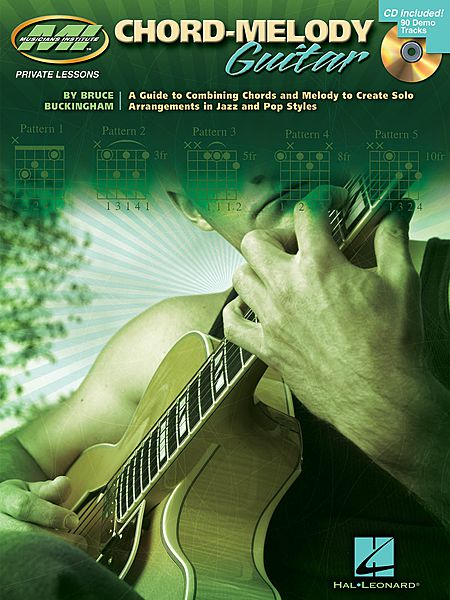
Chord-Melody Guitar
A Guide to Combining Chords and Melody to Create Solo Arrangements in Jazz and Pop Styles

Series: Musicians Institute Press
Publisher: Musicians Institute Press
Format: Softcover with CD - TAB
Author: Bruce Buckingham

Master the art of blending melody and harmony on the guitar with this book/CD pack. It includes in-depth studies of chords and chord melodies as well as a CD containing 90 demonstration tracks. Lessons include:
the five patterns;
chord shells;
inversions;
voice leading;
cadences;
diminished chords;
and more.


Inventory #HL 00695646
ISBN: 9780634032110
UPC: 073999956467
Width: 9.0"
Length: 12.0"
64 pages
 

Introduction

The subject of chord melody studies the relationship between a melody and its accompaniment. This can be a difficult thing if the student doesn't have a thorough understanding of the harmonic ideas presented in the tune. The intent of this book is to give the guitarist the tools to understand the interaction between the melody and the chords that support it, by both hearing these relationships and seeing them on the instrument.

When you play the melody to a song, there are certain parts that require some support from the harmony in order to create a complete and effective arrangement. It is up to the performer to realize where these points are and supply the chordal accompaniment. Most of this has to do with realizing how the melody relates to the key and thereby understanding which would be the proper chord for this point in the tune. Of course the composer has supplied that chord, but we may have different ideas from the composer. We also might encounter some melody notes that need special treatment, because they are passing notes that don't work well with the given chord for that measure; these require passing chords or no chord at all. Further complicating things is the idea of style, which can dictate a complete change of accompaniment patterns. We should be aware of stylistic demands and try to adhere to their ideals. Chet Atkins, a great country guitarist, might have a different (yet equally valid) approach from that of Joe Pass, a great jazz guitarist. In either style, an arrangement will be an exercise in resolving problems related to the interaction of harmony and melody. Therefore, students of chord melody should strive to understand harmony as well as looking for arrangements and studying the guitar and various musical styles. Classical guitar study addresses the harmonic issue from the very beginning, but popular styles (jazz, pop, country, etc.) usually don't. It is only the advanced players in those styles that create something for the rest to emulate, when in fact this can be done at any level of complexity. We should try to accomplish "musical" ideas at all costs! One way to open up your sense of melody is to play many different voicings of chords. A voicing of a chord is how the notes are ordered from the bass note up. An example would be a major seventh chord with its notes in this order: C-G-8-E, or possibly C-8-E-G. Notice that by re-ordering the chord tones we get a different note on the top; therefore a melody evolves on the top note of the chord when we move from one voicing to the next. Even if we just change the voicing of the chord once, it sounds as though some movement has occurred. Your daily practice should include technique and rhythm/time, the musical element of arranging (harmonic moves and/or songs), and memorization of repertoire. If you are serious about the harmonic possibilities of the guitar, the study of chord melody can continue for the rest of your life.


Contents

Introduction 

1. An Overall Fretboard View .

The Five Patterns 

Relationship of Chord Tones to Scale Tones .

Common Guitar Voicings .


2. Shells .

II-V-I Moves with Shells .

Blues with Shells .


3. Inversions .

Triads 

Seventh Chords 


4. Harmonized Scales 


5. Chord Scales 


6. Slash Chords 

Upper Structure Triads 


7. Harmonic Moves 

Triadic Harmony 

Seventh Chord Harmony 


8. Voice Leading .


9. Cadences .


10. Moving Lines .


11. Substitution .

Diatonic Substitution .

Flat-Five Substitution .

II for V7sus Substitution .

Melodic Minor Substitution .


12. Diminished Chords .

Dominant-Diminished Substitution .

Diminished Passing Chords .


13. Chordal Interpretation .


14. More Chord Voicings .


About the Author .

Prezzo: €27,99
€27,99

BUILDING A JAZZ CHORD SOLO Chord Melody Fred Sokolow CD GUITAR TABLATURE CHITARRA SPARTITI

BUILDING A JAZZ CHORD SOLO, A Guitarist's Guide to the Art of Chord Melody Playing. Fred Sokolow. SHEET MUSIC BOOK WITH CD & GUITAR TABLATURE .

LIBRO DI MUSICA JAZZ CON CD.

SPARTITI PER CHITARRA : 

ACCORDI, PENTAGRAMMA, TABLATURE . 


Serie: Guitar Educational
Medium: Softcover with CD

Che tu sei un principiante o no, questo libro e CD ti aiuterà a capire e imparare l'arte dei assoli con accordi jazz.. Sono presentati quattro standard jazz, ogniuno con quattro arrangiamenti di diversi livelli di difficoltà:

- un arrangiamento per i principianti usando accordi in prima posizione

- un arrangiamento di livello intermedio, usando accordi mobili e presentando un vocabolario più sviluppato di accordi

-  un arrangiamento avanzato, che include ampi sostituzioni e rearmonizazioni dei accordi

- un solo degli accordi di improvvisazione che lasciano la melodia dietro.

Questo libro ti insegna come improvvisare solo ad accordi con un determinato set di cambiamenti. Una vasta informazione presente lungo il percorso ti insegnerà come creare i tuoi "chord solo" e a come capire e suonare le progressioni jazz.


 55 pagine


BUILDING A JAZZ CHORD SOLO
A Guitarist's Guide to the Art of Chord Melody Playing
 
Series: Guitar Educational
Format: Softcover with CD
Author: Fred Sokolow
 
Whether you're a beginner or an intermediate guitarist, this book/CD pack will help you to understand and learn the art of jazz chord soloing in four stages. Four jazz standards are presented, each with four arrangements at varying levels of difficulty: a beginner's arrangement, using mostly first-position chords • an intermediate arrangement, using moveable chords and featuring a more developed chord vocabulary • an advanced arrangement, including ample chord substitutions and reharmonization • an improvisational chord solo that leaves the melody behind. This teaches how to improvise a chord solo over a given set of changes. Plenty of information is presented along the way that will teach you how to build your own chord solos as well as understand and play jazz progressions.
 
Inventory #HL 00695868
ISBN: 9780634088216
UPC: 073999958683
Width: 9.0"
Length: 12.0"
56 pages
Prezzo: €24,99
€24,99

BLUES BASS, A GUIDE TO THE ESSENTIAL STYLES AND TECHNIQUES, Ed Friedland. CD TABLATURE

BLUES BASS, A GUIDE TO THE ESSENTIAL STYLES AND TECHNIQUES, Including 20 great songs, Ed Friedland. B.B. King, Stevie Ray Vaughan (Tommy Lee Shannon), Muddy Waters, Freddie King, Albert King, The Allman Brothers, Otis Rush, T-Bone Walker, Louis Jordan, e molti altri: Born Under a Bad Sign - Hideaway - Hoochie Coochie Man - Killing Floor - Pride and Joy - Sweet Home Chicago - The Thrill Is Gone e molte altre. CD TABLATURE

LIBRO METODO DI MUSICA BLUES PER BASSO, CON CD

SPARTITI PER BASSO CON : ACCORDI, PENTAGRAMMA E TABLATURE. 


Hal Leonard Bass Method Stylistic Supplement
Series: Bass Method
Softcover with CD - TAB
Author: Ed Friedland

The Hal Leonard Blues Bass Method is your complete guide to learning blues bass. This book and CD package uses classic blues songs and standards to teach you how to lay down your own solid blues bass lines. Learn to play by studying the songs of famous bluesmen such as B.B. King, Stevie Ray Vaughan (Tommy Lee Shannon), Muddy Waters, Freddie King, Albert King, The Allman Brothers, Otis Rush, T-Bone Walker, Louis Jordan, and many more. Learn actual riffs from blues classics including: Born Under a Bad Sign - Hideaway - Hoochie Coochie Man - Killing Floor - Pride and Joy - Sweet Home Chicago - The Thrill Is Gone , and more. 80 pages

Buon metodo per Basso di musica Blues, per imparare e migliorare senza annoiarsi.

It's important to remember the role of the bass in blues. You are the foundation, the pulse, and the glue that holds it together. The lines and information in this book are what you need to know to do the job the way people expect it to be done, but it's still up to you to approach this style with an effective attitude. The blues is not about the bass player being the center of attention (unless you're Singing too). The singer and soloists are the main focus, and it's best for you to leave the glory to them. Where we derive our greatest thrill in blues is the feeling we create when we lock in with the drums and make everyone play better than they ever imagined they could. It's the feeling of the energy coming back to you from the other band members and the audience. It's the satisfaction you get from knowing you played the style authentically and with feeling. Notice the word "feeling" comes up a lot. Well, the blues ain't nothin' but a feelin'-that's right! Ed Friedland has written many well-received instructional books for bass, including the Hal Leonard Electric Bass Method, Second Edition. He wrote for Bass Player Magazine from 1992 to 2005. He is currently Senior Editor of Guitar World's Bass Guitar Magazine. He has taught at Berklee College of Music, Arizona State University, and Boston College, as well as privately since 19S0. He has played with many great artists in jazz, rock, blues, theater, classical, Latin, country, and just about every style. His blues credentials include performances with Robert Junior Lockwood, Mighty Sam McClain, Robben Ford, Linda Hopkins, Johnny Adams, Paul Rishell, Annie Raines, Bruce Katz, Jim Kelly, David Maxwell, and Mike Williams, among others, as well as leading his own group, Lazy Ed & The Stratoloungers.

BASS METHOD

INTRODUCTION

About the CD

Equipment

THE BLUES SCALE

THE 12-BAR BLUES FORM

THE SHUFFLE RHYTHM

TURNAROUNDS

LAYING DOWN THE ROOT

BOX-SHAPE PATIERNS

Dyna Flow

Messin' with the Kid

BOOGIE LINES ..

Big Boss Man – Jimmy Reed

Kidney Stew – Big Joe Turner

SLOW BLUES

Stormy Monday – T-Bone Walker

RHUMBA BLUES

Mardis Gras in New Orleans

Crosscut Saw

INTROS

ENDINGS

STOPS, HITS, AND KICKS

ALTERNATE FORMS

My Babe – Willie Dixon

Key to the Highway – Big Bill Bronzy, Eric Clapton

I Hear You Knockin' – Lazy Lester

BLUES STANDARDS

Hideaway – Freddie King

I'm Tore Down – Freddie King

Born Under a Bad Sign – Albert King

Killing Floor – Howlin Wolf

Pride and Joy – Tommy Lee Shannon bassista di Stevie Ray Vaughan

Hoochie Coochie Man – Muddy Waters

The Thrill Is Gone - B.B. King

All Your love (I Miss loving) -Otis Rush

Farther up the Road

Sweet Home Chicago

THOUGHTS ON BLUES BASS PLAYING

ABOUT THE AUTHOR

Prezzo: €21,99
€21,99

LES PAUL THE BEAUTY OF THE 'BURST Iwanade Gibson's magnificent Sunburst Les Pauls made between 1958 and 1960.

THE BEAUTY OF THE 'BURST, Iwanade Gibson's magnificent Sunburst Les Pauls made between 1958 and 1960.

LIBRO, BOOK. 

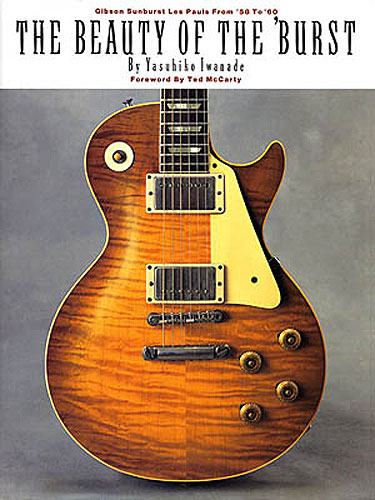
THE BEAUTY OF THE 'BURST

Series: Book
Publisher: Hal Leonard
Medium: Softcover
Author: Yasuhiko Iwanade
Inventory #HL 00330265
ISBN: 9780793573745
UPC: 073999327182
Width: 8.5"
Length: 11.


Finally, the long-awaited English edition of this historic Japanese book is here! The Beauty of the 'Burst pays tribute to Gibson's magnificent Sunburst Les Pauls made between 1958 and 1960, the most highly prized solidbody electric guitars ever. The magnitude of their value is directly related to their look (outrageous wood patterns, or "figured" timber), since non-players are paying top dollar for them. The book features lavish full-color photos of these beautiful instruments throughout; the guitars of famous players; a foreword by Ted McCarty; a bio of the author, world renowned collector Yasuhiko Iwanade; and the "Science of the Burst" section with over 30 pages of detailed reference facts on every facet of the guitar, including colors, wood figure, pick-ups, hardware and qualities of "voice." This may be the closest guitarists will ever be able to get to these incredibly collectible beauties! 216 pages, softcover. 224 pages.

The Color yellow layer on top of the maple plays a very very important role in the background of the sunburst. Without this layer the radiant effect of the finish could not be obtained. As such, this layer acts as reflective lighting. On the vintage Sunburst Les Pauls, special pigment was chosen for this purpose. Contrary to belief, Gibson did not use dye to color the wood itself. The dye stain is not as reflective as pigment stain. The pigment chosen for this purpose was special. It remained vivid without hiding the grain. Combining this color layer along with the highly reflective qualities of maple created the beautiful sunburst finish of the Les Paul Sunburst. Interestingly enough, this yellow color layer never fades. Sunburst layer. The term sunburst is derived from the beautiful multi color spectrum of colors that occurs during a sunset on the horizon. With respect to guitars, the term sunburst refers to the actual spraying of red paint over the edge of a guitar on top of the yellow base coat. This produces a "sunset" effect. This procedure was done by hand; the painters use of the spray gun, the paint viscosity, the weather, and the humidity all contributed to the final outcome of this arrangement. The role of the sunburst layer differs considerably from the yellow layer. The sunburst layer does not actually shine. Rather the layer should be looked at as a passive color filter from the light coming through from the yellow base coat. For that reason, contrary to the yellow layer the sunburst layer employed a dye colorant. This dye colorant has an ideal characteristic for the sunburst layer because it is translucent. However, it has the disadvantage of being difficult to apply evenly. Also, as widely known, it is prone to fading. The common belief is that the appearance of this burst layer is due to uneven fading. This is partly true. However, it is also the case that some of this unevenness was caused by production procedure. While not so noticeable when it was new, over time it became obvious that the multiple layers of dye had been unevenly applied - only to be revealed later after the top layers had faded. This can be observed at the edge of the top, close to the end pin. On Sunburst Les Pauls, the sunburst layer gets most of the aging affect, resulting in fading or discoloration. This is most common on 1958 models through mid 1960. By late 1960 the paint formula changed, and the finish became more resistant to fading. This section primarily applies to the 1959 models. Henceforth, we have used the term fading to describe a loss of color. Actually, this is a very vague and incorrect expression. Fading does not occur simply to the red color of the sunburst layer. Cherry red is not one color - it is a mixture.

Original 1959 Cherry-Red

It is commonly known that the dye colorant red is most prone to fading. Undoubtedly that is the primary reason that the Sunburst Les Paul finish "ill fade. However, that does not explain everything about that subtle hue of the finish. The mixture of colors goes a long way toward understanding the aging and fading processes. A 1959 cherry-red color was comprised primarily of dye colorant red. To add depth to the color, a small amount of blue was added. Since 1959 cherry-red is in actuality a slightly blueish deep red, sunburst is created as the light bounces back from the yellow base coat through the cherry-red layer. So what happens then when this mixture of colors fade? As already mentioned, red fades fastest. The real issue is the ratio that each of the two colors that comprise the sunburst fade at. When the finish is new, the gloving yellow light from the base coat comes up through sunburst shading. The small amount of blue in cherry-red, together with this yellow creates green, which is a complementary color to red. In the beginning stage of fading, this green is such a low ratio that it is suppressed by red. However, as time goes by, red begins to fade more. Yellow stays unchanged. Blue fades but far slower than red. So the ratio of green against red becomes higher and higher. At a certain point of this red versus green sequence, the top starts to take a hue of brown. And this reddishbrown color is the most often seen teaburst. From there it could become green burst but usually by this time blue also starts to fade, so usually it turns into honeyburst. When all red and blue are gone from cherry-red shading, then there is no shading. It becomes a 'Lemon drop.' To further understand the topic, let us look at the process of fading in sequence and consider it with other factors. As stated, the speed of fading differs from color to color. In other words each color has its own pace of fading. If only one color is concerned, the pattern of fading remains constant. However, when fading of certain mixtures of colors are observed, each color needs to be examined independently. The way each color fades will impact the total look of the finish. So as far as Sunburst Les Pauls are concerned, fading does not mean just a loss of color. In actuality, of all the colors involved, the yellow from the base coat does not fade. Red, which is the main ingredient of cherry-red, is added with blue to make cherry-red. Both the red and the blue fade independently of each other. The change of balance among these three colors at a given time is fading. To understand the "fading sunburst" phenomenon, it is important to know the cause of it. The primary cause of fading is widely known. It is an exposure to ultraviolet light from various light sources. This makes a dramatic difference between a guitar kept and stored away for years and the one always out of the case being played. The second cause would be a chemical reaction. We often see a discoloration of the top where the elbow hits during playing. Since the film of clear lacquer has microscopic holes, acid and ammonia ridden sweat from the guitar players arm can reach through the clear lacquer, penetrating the color layer and affecting it. Also, moisture in the air can have a similar effect on the entire surface of the finish. Since the ultraviolet fading and the chemical reaction fading are mutually exclusive they may not happen simultaneously. [n different ways, both of these processes are affected by the climate, temperature and other factors. Hence, the many variations of the Sunburst's color are a result of multiple factors, influences ranging from the slight variations in the painting on each individual instrument, to the chemical and the ultraviolet fading that we have just discussed. 3. Clear Coat We have learned that the lighl which bounces back from the wood's surface through the yellow base coat goes through sunburst shading to create the glowing sunburst finish effect. However, there is one more layer the light needs to go through before it reaches our eves. That layer is a clear lacquer top coat. The film of clear lacquer is there to protect the color layer from being rubbed off and also to protect the wood from moisture and contaminants. This film of clear coat is usuallv comprised of several layers of lacquer applied successively. As we know, lacquer ages or 'burns' to a pleasant hue of amber. This means there is one more film of color laid on lap of the sunburst. The aging or anlbering effect of this film is a primal)' concern here but first 11'1' must understand amber as a color. How does it affect the way a finish looks' Examined carefully, amber is a mixture of black and orange. The black comes from the decomposition of lacquer through its deterioration. This black pigment acts as a subtle obstruction to the light bouncing back from the wood's surface. The color saturation and luminosity is suppressed by this black pigment. On Sunbursl Les Pauls, the subtle balance of bright yellow and this obstructive black pigment create a distinctive "vintage" look. The orange element of the amber, on lhe other hand, gives warmth and depth 10 the color. This is also a part of the “vintage" look. There is one more character to tllis film. It is 11rtually a frosted glass. When new, tllis film of clear lacquer is buffed and polished to a high gloss. The more flat the surface, the more radiant it becomes. However, as lacquer ages, losing small amounts of leftover solvents and plasticizers, it shrinks and becomes brittle. The film may hal'e numerous small cracks and checks. Decreased finish would expose the wood texture underneatll. All of these factors together, the surface of the clear film is given the slight satin look which complements the soft defused light effect of the overall look of the guitar. in antique jargon, this is called patina. As a conclusion, let us layout the sequence of this phenomenon of the 11ntage Les Paul Sunburst effect we just learned about. Light first reaches the top of the guitar going through the amberI'd top clear lal'er, then the cherry-red shading, the yellow base coat and finally the reflective surface of maple. Then, it bounces back OUI going through the yellow base coat again, cherry-red shading and amberI'd clear coat. It finally reaches our eyes after being mixed together Wilh the small amount of defused light that was reflecled by the surface of the top coat film of clear lacquer. Again, tllis is the oplical process which makes the Sunburst Les Paul guitar so attractive. 


CONTENTS

FOREWORD by TED McCARTY

ULTIMATE SUNBURST FILE

1958 SUNBURST LES PAUL

1959 SUNBURST LES PAUL

1960 SUNBURST LES PAUL

RARE BEAUTY ·

LABYRINTH OF THE 'BURST

THE 'BURST SLiNGERS

SCIENCE OF THE 'BURST - LAYERS OF COLORS

STUDY OF THE FIGURE - 3 DIMENSIONAL PHENOMENON

PAF, THE HEART OF THE 'BURST .. ·

HARDWARE

FROM GOLD TOP TO SUNBURST ... ·

STRUCTURE OF THE 'BURST .. ·

VOICE OF THE 'BURST

FACTS OF THE 'BURST ·

'BURST TALK - INTERVIEW WITH THE OWNERS

BILLY GIBBONS (ZZ TOP) 

JOHN CLARDY .

VIC DA PRA .

PERRY MARGOULEFF

ICHIRO KATO

ALBERT MOLINARO

RONNY PROLER

TOM WITIROCK

SERIAL NUMBER LIST ·

SUNBURST LES PAUL PHRASEOLOGY 

Prezzo: €235,99
€235,99

BEST LATIN SONGS FingerStyle Guitar Hal Leonard TABLATURE LIBRO SPARTITI CHITARRA TICO TICO

BEST LATIN SONGS, Finger Style Guitar. TABLATURE

LIBRO DI MUSICA LATINA.

SPARTITI PER VOCE E CHITARRA FINGERSTYLE.

ACCORDI, PENTAGRAMMA, TABLATURE.

Composer: Various Composers

17 great songs arranged for fingerstyle guitar: Bésame Mucho - Frenesí - The Girl from Ipanema - Granada - How Insensitive - Inolvidable - Malagueña - Perfidia - Summer Samba (So Nice) - Tico Tico - What a Diff'rence a Day Made - You Belong to My Heart - more.

64 pages

Inolvidable - composed by Julio Gutierrez - 1944
Always In My Heart (Siempre En Mi Corazon) - composed by Ernesto Lecuona - 1942
Besame Mucho (Kiss Me Much) - composed by Consuelo Velazquez - 1941
A Day In The Life Of A Fool (Manha De Carnaval) - composed by Luiz Bonfa - 1966
El Cumbanchero - composed by Raphael Hernandez - 1943
Frenesi  - composed by Alberto Dominguez  - 1939
The Girl From Ipanema (Garota De Ipanema) - composed by Antonio Carlos Jobim - 1963
Granada - composed by Agustin Lara - 1932
How Insensitive (Insensatez) - composed by Antonio Carlos Jobim - 1963
It's Impossible (Somos Novios) - composed (English lyric) by Sid Wayne, Armando Manzanero - 1968
Malaguena - from the Spanish Suite "Andalucia" - composed by Ernesto Lecuona - 1928
Perfidia - composed by Alberto Dominguez - 1939
The Gift! (Recado Bossa Nova) - composed by Djalma Ferreira - 1959
So Nice (Summer Samba) - composed by Marcos Valle and Paulo Sergio Valle - 1965
You Belong To My Heart (Solamente Una Vez) - composed by Agustin Lara - 1941
Tico Tico (Tico No Fuba) - composed by: Zequinha Abreu, Aloysio Oliveira, Ervin Drake - 1943
What A Diff'rence A Day Made - composed by Maria Grever - 1934

Prezzo: €49,99
€49,99

MASTERING ALTERNATE TUNINGS Fingerstyle Guitarists Danny Heines LIBRO CD TABLATURE TAPPING

MASTERING ALTERNATE TUNINGS, A Revolutionary System of Fretboard Navigation for Fingerstyle Guitarists. D. Heines. 96 Pages. CD TABLATURE

LIBRO METODO DI MUSICA ACUSTICA, CON CD.

SPARTITI PER CHITARRA .

ACCORDI, PENTAGRAMMA E TABLATURE. 

Series: Guitar Educational
Softcover with CD - TAB
Author: Danny Heines

Open the door to a whole new guitar universe with this one-of-a-kind book/CD pack. You'll discover how to navigate the fretboard in all tunings, how to cultivate new composing and improvising concepts, and how to broaden your fingerstyle skills and techniques. The CD includes 40 tracks for demo and play-along, and the book is fully integrated with an interactive online fretboard. 96 pages.


While there are many books on the market on the subject of alternate tunings, I have yet to find a universal method for mapping a new tuning and navigating its harmony. Without a logical method of navigation, we can only follow our ear, often relying heavily upon trial and error. While this approach can lead to interesting discoveries, it generally gives us only a limited set of options with which to explore a tuning. The ability to see the harmonic architecture of a tuning, along with using your ears, is the key to unlocking its potential. Coming to the world of alternate tunings many years ago as a jazz guitarist well versed in theory, I was able to easily map out the notes of a key or keys that reflected the tonality of a new tuning. This led to establishing and expanding a vocabulary of chords and scales with which to improvise and compose in a solo guitar context. This method, which has now evolved over many years, is clearly demonstrated in this book using a hands-on approach. We'll also be covering many other aspects of playing in modern modal tunings, including right-hand technique, slapping, tapping, and much more. Whether you're new to alternate tunings or have been using them for years and just want to deepen your understanding, I believe you'll find this book extremely useful. As the book develops, we'll be covering some fairly advanced concepts, but I have provided a step-by-step approach that will allow even those who are new to alternate tunings or music theory to learn and integrate the material. If you're an experienced player and have a thorough understanding of diatonic and pentatonic harmony, you may find that you can go very quickly through, or skip altogether, Section One: "Theory Essentials." Feel free to work at a pace that is right for you. If you find something confusing, make sure you have read and fully understand the preceding sections. Most of the chapters proceed with the assumption that all previous chapters are fully understood. If you run across a musical term with which you're unfamiliar, use the Glossary in the Reference Section to learn its meaning before going on. Lastly, keep in mind that music theory should never replace using your ears or intuition in a creative way. Theory should function rather like a roadmap. You look at it before you begin a journey, or when you get lost. If you kept your eyes glued to the map, you'd miss the scenery and probably drive into a tree. If you already know the way, you don't even need to look at the map. In other words, the better your understanding of theory, the less you have to think about it. Ultimately, let your ears and artistic sense he the final judge and he sure to renew your artistic license regularly.


Introduction to Alternate Tunings

Why Use Alternate Tunings?

Let me start by saying that alternate tunings are by no means meant to be a substitute for standard tuning. They are apples and oranges, and useful for very different things. There is a lot of music for which standard tuning is the best possible choice. Gaining mastery over standard tuning can be a lifelong and ever-evolving quest and I'd encourage all serious players to continue to deepen their knowledge of it. That said, alternate tunings open a whole new world of possibilities and allow us to play things that would be impossible in standard tuning. They allow for a resonance and richness in timbre that can only be achieved by making generous use of open strings. Generally, the longer the string length, the richer the sound and certainly the longer the sustain. Try playing the open high E string, then play E on the 2nd string, 5th fret, then play it on the 3rd string (9th fret), then the 4th (14th fret). With each successive E you get less and less sustain. Also, chord voicings that would be impossible in standard tuning become possible and sometimes even easy in another tuning. These voicings may contain tight intervals that spawn melodies out of picking patterns. There are also many tunings that can greatly enhance the technique of tapping, by facilitating chord shapes that allow the necessary velocity of attack to be executed.


Preface

Acknowledgments

Introduction to Alternate Tunings

sing the Online Mapping Software

Tuning


SECTION ONE:THEORY ESSENTIALS

The Diatonic Chords

The Diatonic Modes

Pentatonic Scales


SECTION TWO: DADGAD

Tuning to DADGAD

Fretboard avigation in DADGAD

Thirds Expanded in DADGAD

DADGAD Bass Triads

The Half-Barre Bass

Finding Modes and Chords in DADGAD .


SECTION THREE: BEYOND DADGAD .

Mapping the D7sus4 Tuning

Shifting the Tonic

E-Based Tunings


SECTION FOUR: BEYOND DIATONIC

Creating Modulation

Non-Diatonic Scales. Chords, and Modes


SECTION FIVE:TECHNIQUES

Right-Hand Fingerstyle Technique

Picking Patterns and Excerpts

Creating Melody for Solo Guitar

Tapping Technique

Slap Technique

Essential Tips


REFERENCE SECTION

Chord Construction

Major Scale Formula

Diatonic Triads in All Keys

Diatonic Seventh Chords in All Keys

Extended Diatonic Chord Functions

Diatonic Bass Triads for 1-5-1 Tunings

Extended Bass Chords for 1-5-1 Tunings

Danny Heines Tunings List

Speed Training Log

Glossary

Prezzo: €29,99
€29,99

THE BASS HANDBOOK, A Complete Guide for Mastering the Bass Guitar. Adrian Ashton. CD TABLATURE

THE BASS HANDBOOK, A Complete Guide for Mastering the Bass Guitar. Adrian Ashton. CD TABLATURE

The Bass Handbook A Complete Guide for Mastering the Bass Guitar
Series: Book
Publisher: Backbeat Books
Format: Softcover with CD
Author: Adrian Ashton

EVERYTHING YOU NEED TO KNOW ABOUT THE ELECTRIC BASS

LEARN TO PLAY - FROM THE BASICS TO ADVANCED MUSICIANSHIP

GET TO KNOW THE HISTORY OF THE BASS AND ITS GREATEST PLAYERS

UNDERSTAND AMPS, SPEAKERS, STRINGS, PICKUPS, AND CABLES

DISCOVER HOW TO BUY A GOOD BASS AND MAINTAIN IT PROPERLY

ACCOMPANYING CD INCLUDES 80 TRACKS OF EXERCISES AND EXAMPLES

BOOK DESIGNED TO OPEN FLAT FOR EASE OF USE

This indispensable handbook helps players of all levels produce better, more creative, and more varied bass lines. Divided into two sections – Playing Your Bass and Knowing Your Bass – it covers everything from tuning, reading music, scales and chords, and advanced techniques to tips on buying and upgrading a budget bass and troubleshooting. Along with a list of suggested listening and a reference guide, this book provides an unrivaled digest of bass information that might otherwise take an entire career to amass.

Inventory #HL 00331295
ISBN: 9780879308728
UPC: 073999936247
Publisher Code: 0879308729
Width: 9.0"
Length: 11.0"
256 pages

The world of the electric bass guitar; what a wonderful place to be. It means so many things to so many people, myself included. Firstly,it is,as Jethro Tull bassist Jonathan Noyce put it,"our secret weapon". Why secret? Many people forget that the bass can carry the rhythm and the melody, something rare amongst musical instruments. Furthermore it can influence the harmony, whether the other harmonious voices like it or not. So, like all weapons, it needs to be handled with care. Then there's the image; electric bass is so adaptable. Bassists can be shy and retiring. using their skill and musical delicacy to drive a band forward with purpose. With a wry smile and a deep inward glow you can be crucial to the success of a musical act, and noone else need know. Bassists like Led Zeppelin's John Paul Jones or The Who's John Entwistle spring to mind; magicians of the electric bass, they conjured up electrifying basslines but with very few stage moves. Entwistle decided to sport all-white suits just so someone would notice him on the stage alongside Pete Townshend's windmill guitar strums and Roger Daltrey's flying microphones. Bassists can be shrinking violets, whereas singers and lead guitarists can not. But bass players can also take centre stage. Flea, for instance, is equal in stage presence to any of his fellow Chili Peppers. Virtuoso bassist Victor Wooten has been known to throw in a back-flip during breathtaking live-performance displays of fluid bass soloing. Or you can command the arena by adding some vocals to your bass work: Sting, Jack Bruce, Paul McCartney anyone? Then there's the gear. Let's get the downside out of the way To go really deep on the bass we need strings, instruments and amplification that tend to be a little more expensive and bulky than the gear of most other instrumentalists. This is an acceptable situation, given the advantages, and even this downside has created interesting bass-related adventures. For a start, bass players tend to have bigger ears and wider eyes when it comes to new ideas and creations. Graphite basses, neodymium speakers and extended range instruments have all been widely accepted by bassists over the years, in contrast to the "let's stick with what we know approach" adopted by others. The result is a colourful, diverse and stimulating equipment industry that caters for the wide-ranging characters in the bass community. That's the best reason to embrace the bass guitar the people. Many players talk about the brotherhood of bass, the sense of community and camaraderie amongst bassists. I feel it too, although we should remember that we are almost always part of a group of musicians, a larger unit with messages to deliver to our complex world. Every player I've known has taught me something, from the professionals I've learned from or interviewed to my own students. I hope, in return, that The Boss Handbook reflects the mutual respect amongst bass players and helps to maintain the great bass tradition.

HISTORY - Leo Fender's masterpieces: a 1957 Precision Bass (left) and a Jazz Bass from 1960.


ABOUT THIS BOOK

The Boss Handbook has something to offer bass players at all levels, but it is specifically aimed at new arrivals and intermediate players. The advanced player will be able to explore the history of the bass, amplification and effects while also dipping into new areas of study. such as sight reading. The new or intermediate bassist will find this book a pleasure to use, with its spiral-bound pages and a chapter by chapter analysis of the most important questions that are asked about the bass. As a tutor and author on the bass, I know that there are key questions students need to ask their studies. You'll find all the answers in The Boss Handbook. Finally, The Boss Handbook makes the perfect companion for the many bass teachers out there. Students have a study method, with backing tracks, in a layout that doesn't falloff a music stand. And you can refresh your memory (secretly of course) of how to work out Ohm's Law for cabinets of unequal impedance when your student asks, "Can I connect my 4 x 10" cab to my 2 x 10"? " Just in time for next week's lesson. 


BASS HISTORY

Leo Fender produced the first widely available bass guitar in 1951 - and got much of the design right first time. Fender, a radio repairman in California who had turned to making guitars and amps, developed the bass guitar at a time when the bassist in a band would be stuck with a large and often barely audible instrument, the double bass - what Leo called "the doghouse". He realised that bass players would welcome a louder, more portable instrument that offered precise pitching of notes. Precision Bass In 1951 Leo provided bassists with the aptly named Fender Precision Bass, for $195.50/00, a sum that equates to something like $1,400/£800 now. Many of its features were based on his already successful and equally astounding solid six-string electric guitar, the Telecaster. (The Stratocaster would arrive three years later.)  Paul McCartney and his Hofner 500/I 'violin' bass

The electric bass guitar is central to modern music, playing a key role in melody, harmony, and rhythm. This book and CD package will help you master the instrument and make it your own. It includes:

- a step-by-step guide to playing, from tuning-up to advanced harmony

- practical guidance on reading both tab and standard notation

- instruction in modern techniques including slapping and harmonics

- advice on playing a range of genres and styles, from rock blues through to jazz, funk, and metal

- a CD of the books's key musical exercises and examples

- a history of the instrument and its makers

- a guide to the great bassists, plus recommendations for listening, reading, and viewing

- help with buying and maintaining your bass

- advice on amps, speakers, strings, pickups, and cables

Author Adrian Ashton has 20 years of exeperience as a player, teacher, and writter. A graduate of the Bass Institute of Technology in Los Angeles, he was the founding editor of the UK's Bass Guitar Magazine.

This Book is essential equipment for any bassist, whether you are just starting out or hoping to take your skills to a higher level.


FOREWORD by JOHN PAUL JONES

INTRODUCTION

BASS HISTORY (with TONY BACON)


HARDWARE

INSIDE THE BASS

FRETLESS BASSSTRINGS & MAINTENANCE

BUYING A BASS

AMPS, SPEAKERS, EFFECTS, & CABLES


TECHNIQUE

THE PLAYERS (with TIM TUCKER)

TUTORIAL


REFERENCE

RECOMMENDED LISTENING

RECOMMENDED BOOKS & VIDEO

ACKNOWLEDGEMENTS

INDEX

Prezzo: €29,00
€29,00

OSBOURNE OZZY THE RANDY RHOADS YEARS Step-by-Step Guitar Styles Techniques 2 DVD CHITARRA

OSBOURNE OZZY, THE RANDY RHOADS YEARS, A Step-by-Step Breakdown of Randy Rhoads' Guitar Styles and Techniques. 2 DVD

VIDEO METODO DI MUSICA METAL. 

METODO, TECNICA, TRASCRIZIONI, LEZIONE, DIDATTICO. 

RUNNING TIME, DURATA: 4HR. 48 min.

TECNICA, DVD DIDATTICO, 

Series: DVD
Author: Danny Gill
Artist: Ozzy Osbourne
Artist: Randy Rhoads

Learn the guitar styles and techniques Randy Rhoads made famous with Ozzy Osbourne. Each part is played up to speed, then broken down note-by-note in this 2-DVD set to provide and in-depth analysis of 8 songs.
Disc 1 - Crazy Train - Revelation (Mother Earth) -Mr. Cowley - I Don't Know.
Disc 2 - Diary of a Madman - You Can't Kill Rock and Roll - Flying High Again - Little Dolls. 4 hours, 48 minutes!

Crazy Train
Flying High Again
Mr. Cowley
I Don't Know
Little Dolls
Revelation (Mother Earth)
diary of a madman
You Can't Kill Rock And Roll

Prezzo: €34,99
€34,99
Condividi contenuti