SPARTITI PER CHITARRA DI MUSICA CLASSICA

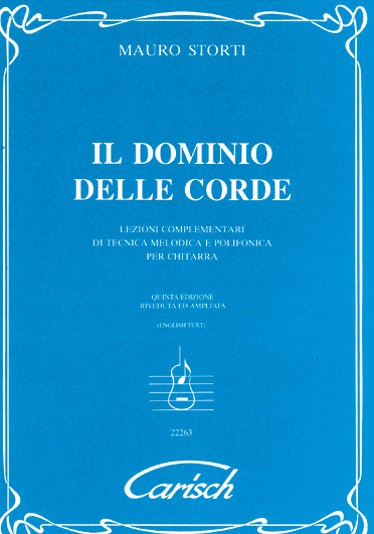
Storti Mauro-IL DOMINIO DELLE CORDE-Lezioni di tecnica melodica e polifonica per chitarra-

Storti, Mauro, IL DOMINIO DELLE CORDE. LIBRO

LIBRO METODO DI MUSICA CLASSICA.

SPARTITI PER CHITARRA CON: PENTAGRAMMA.

STUDIO, TECNICA, 


Lezioni complementari di tecnica melodica e polifonica per chitarra. Quinta edizione riveduta ed ampliata. Possedere a fondo una tecnica significa possedere a fondo i mezzi per manifestarsi pienamente nell'arte. Tecnica, infatti, non è solamente eseguire la nota giusta al tempo giusto: tecnica è esprimere le più sottili sfumature del sentimento con un vibrato, un crescendo, un ritardo, una nota tenuta, un suono metallico, o dolce, o sfumato.

A partire dalla fine del secolo scorso, l'arte chitarristica è stata soggetta a due svolte decisive: la prima è il sorgere della Scuola di Tarrega consistente, dal punto di vista musicale ma con le conseguenze tecniche derivanti, nell'abbandono del sistema delle posizioni similari a quelle del violino, reso necessario dall'esigenza di una più precisa configurazione timbrica delle parti nello spirito della musica romantica; la seconda, già iniziata da tempo e ancora in atto, è l'arricchimento della letteratura chitarristica con l'abbondante produzione di musica contemporanea ispirata all'arte di Andrés Segovia e dei suoi più valenti discepoli. A questi due fenomeni, la cui portata enorme sta alla base dell'attuale rinascita della chitarra, fa riscontro una paradossale stasi della didattica che ancora oggi si basa quasi esclusivamente sulle opere dei grandi esecutori dell'Ottocento. Lungi dal volere in alcun modo sminuire il valore storico-artistico dei metodi di Carulli, Carcassi, Giuliani, Aguado e Sor, è incontestabile che essi, esaminati alla luce dell'attuale situazione tecnico-musicale, presentano gravi insufficienze. Concepiti entro i ben precisi limiti dello stile classico, essi hanno via via perso della loro attualità ed efficaCia, rispondendo sempre meno alle necessità sorte nelle successive fasi dell'evoluzione musicale, mentre poco o nulla veniva ad aggiungersi a questo fondamentale gruppo di opere. Il grande apporto di Tarrega alla scuola della chitarra si è tradotto solo raramente in una chiara enunciazione scolastica, preferendo egli, nella sua eletta natura di artista, dare una forma alle sue intuizioni traducendole in studi e preludi, sull'esempio dei suoi contemporanei. È purtroppo doloroso constatare che laddove il genio artistico è più grande, il senso didattico fa spesso difetto: troppo intento a vivere la propria arte, il grande artista non ha il tempo di soffermarsi a farne l'analisi. Che pensare oggi di un Carcassi o di un Carulli che impostano il loro metodo sulla successione delle tonalità passando con disinvoltura da un quanto mai succinto esercizio melodico ad uno studio a più voci, ignorando quasi totalmente la mano destra? Che pensare del metodo di Giuliani che, pubblicato sotto il mistificante numero di Op. 1, rivela un ben scarso senso didattico, chè se il povero principiante sopravviverà alla noia dei suoi 120 arpeggi, difficilmente non soccomberà di fronte alle difficoltà delle pagine seguenti! Che pensare infine di Aguado e di Sor che, saltando a piè pari tutta la fase preparatoria, propongono allo studente, fin dalle prime pagine, quei deliziosi ma non facili brani degni di un ben più felice destino che quello di essere maltrattati da mani inesperte? Ancora oggi lo studente di chitarra cercherebbe invano un «filo d'Arianna» che possa guidarlo infallibilmente «dai primi timorosi passi fino alle altezze della perfezione» (Segovia). I due punti deboli dell'incoerente filone didattico cui attingono oggigiorno per la maggior parte insegnanti ed allievi sono l'avviamento allo studio ed il passaggio dalla tecnica classica a quella contemporanea. L'esigenza di un nuovo e più razionale metodo di iniziazione è tanto più sentita oggi in quanto l'età media degli studenti si è notevolmente abbassata. Fino a non molti anni fa si riteneva che lo studio della chitarra potesse essere intrapreso con profitto non prima degli 11-12 anni d'età, ma era in realtà la mancanza di testi e di strumenti adeguati a rendere quasi sempre infruttuoso un accostamento più precoce. Quanto al passaggio dalla scuola classica a quella moderna e contemporanea, che di solito si verifica intorno al IV-Vanno, esso può essere fonte di considerevoli difficoltà e talvolta di amare delusioni specie per quegli allievi che, per essere più diligenti, hanno meglio assimilato impostazioni e formule tecniche inadeguate o sorpassate. È bene ricordare, a tal proposito, che gran parte degli studi classici, soprattutto della scuola italiana, come pure arpeggi e scale in prima posizione, si prestano ad essere eseguiti agevolmente (forse più agevolmente!) con una errata impostazione della mano sinistra. L'uso del pollice sulla sesta corda, che lo stesso Carulli praticava, era allo stesso tempo causa e conseguenza della posizione obliqua della mano sinistra. Sui larghi manici delle moderne chitarre, tale posizione, che impedisce l'importante azione a largo raggio del mignolo, si rivela un serio impedimento, capace di rimettere in discussione tutto il lavoro svolto in anni di studio. La mano destra, dal canto suo, irrigidita da un lavoro quasi esclusivamente di arpeggio, manca di leggerezza, di mobilità, di agilità e di precisione negli attacchi. L'unico modo di aggirare questi gravi ostacoli consiste nell'affiancare agli studi tradizionali, che pur conservano, se intelligentemente selezionati e riveduti, una insostituibile funzione formativa, adeguati esercizi di tecnica capaci di prevenire l'uso errato delle mani e di familiarizzare l'allievo, fin dal primo anno, con le formule ed i procedimenti propri dell'esecuzione moderna.

L'odierna produzione chitarristica, opera di compositori in gran parte non chitarristi e quindi libera da ogni condizionamento strumentale, richiede da parte dell'esecutore un possesso totale dello strumento che può realizzarsi, a mio avviso, solo al di là del sistema tonale in quanto, proprio perché sistema, esso esclude infinite altre possibilità musicali e quindi tecnico-strumentali. Solo la pratica di esercizi atonali può consentire l'approfondimento di certi aspetti nuovi della tecnica che, apparentemente marginali, si rivelano a posteriori come fondamentali per l'esecuzione di alto livello.

Le lezioni che presento in questo volume, sono ispirate a questi concetti e mirano a sviluppare, in maniera armonica e interdipendente, tanto le facoltà fisiche (elasticità, velocità, forza ugualmente ripartita fra le varie dita, sicurezza negli attacchi e nei cambi di posizione) quanto le facoltà mentali (esatta percezione delle distanze, visione interiOre della tastiera, sensibilizzazione ai rapporti fra lo spazio della tastiera e lo spazio musicale, memoria e potere di concentrazione). Solo l'assimilazione di questi elementi può far compiere il miracolo di trasformare quell'oggetto inerte che è lo strumento musicale in una parte viva e animata dell'esecutore.

Prezzo: €19,99
€19,99

SCARLATTI DOMENICO-MUSIC OF FOR TWO GUITARS-VOLUME 1-Julian Gray & Ronald Pearl SPARTITI

SCARLATTI DOMENICO, MUSIC OF FOR TWO GUITARS, VOLUME 1. by Julian Gray & Ronald Pearl.

LIBRO DI MUSICA CLASSICA.

SPARTITI PER DUE CHITARRE CON PENTAGRAMMA. 

LIBRO CON 2 PENTAGRAMMI E CON LE PARTI STACCATE DI OGNI CHITARRA. 


Product Description:
Domenico Scarlatti's wealth of invention and the immediacy of his emotional appeal - from darkest tragedy to bold farce - have long attracted guitarists to make his music their own. This collection of nine sonatas arranged by the Gray/Pearl Duo gathers music displaying both Scarlatti's virtuosic dash and lyrical poignancy. The volume contains an un-edited score as well as performance-ready parts with suggested fingerings, technical solutions and interpretive articulations. This is the first book in an exciting new series from the eminent American guitar duo of Julian Gray and Ronald Pearl.

Song Title: Composer/Source:
K. 115 Domenico Scarlatti
K. 119 Domenico Scarlatti
K. 147 Domenico Scarlatti
K. 175 Domenico Scarlatti
K. 213 Domenico Scarlatti
K. 227 Domenico Scarlatti
K. 234 Domenico Scarlatti
K. 33 Domenico Scarlatti
K. 531 Domenico Scarlatti

Prezzo: €24,99
€24,99

TCHAIKOVSKY NUTCRACKER FOR GUITAR IN TAB Arr. Ken Hummer TABLATURE SPARTITI CHITARRA LIBRO

TCHAIKOVSKY, NUTCRACKER FOR GUITAR: IN TAB. Arr. Ken Hummer.
SHEET MUSIC BOOK WITH GUITAR TABLATURE.

LIBRO DI MUSICA CLASSICA. 

SPARTITI PER CHITARRA CON : 

PENTAGRAMMA E TABLATURE. 

Intermediate Solo Arrangements of the Complete Suite. 


About Nutcracker for Guitar: In TAB
Arranged by Ken Hummer. For Guitar. Classical Guitar Folio. Book. 48 pages. Every piece from Tchaikovsky's Nutcracker ballet is expertly arranged for guitar, including the holiday favorites "Waltz of the Flowers" and "Dance of the Sugar Plum Fairy." This collection is a must for guitarists planning a holiday recital and all who enjoy playing for friends and family. Each piece is clearly written in standard music notation and TAB for easy reading.

TITOLI: 

MINIATURE OVERTURE

MARCH

DANCE OF THE SUGAR PLUM FAIRY

RUSSIAN DANCE

ARABIAN DANCE

CHINESE DANCE

DANCE OF THE FLUTES

WALTZ OF THE FLOWERS


ENGLISH

DEUTSCH

ESPAGNOL

FRANCAIS


Prezzo: €14,99
€14,99

TCHAIKOVSKY PETER ILICH Nutcracker Suite TIM Sparks CD TABLATURE GUITAR CHITARRA LIBRO

TCHAIKOVSKY PETER ILICH, Nutcracker Suite. Sparks. SHEET MUSIC BOOK WITH CD & GUITAR TABLATURE.

LIBRO DI MUSICA CLASSICA. 

SPARTITI PER CHITARRA.

PENTAGRAMMA, TABLATURE. 

Ciaikovskij (Tchaikovsky)

guitar transcriptions
46 pages · music / tablatures

Nutcracker Suite (Sparks)
Overture, March of The Toy Soldiers, Dance of the Sugar Plum Fairy, Trepak, Arab Dance, Chinese Dance, Dance of the Reed Pipes, Waltz of the Flowers
(arranged for solo guitar and recorded by Timothy Sparks)

this is a full-scale concert version and it works very well indeed, combining so much colour, life, energy& Neil Smith, Classical Guitar Magazine

Sparks won the 1993 National Fingerstyle Guitar Championship playing his solo guitar arrangement of Tchaikovskys Nutcracker Suite a fine voicing with wondrous lines Chris Lunn, Victory Review

a good transcription, well-balanced, &recreates this music in miniature. Les Cahiers de la Guitare

After listening to the CD, I must admit that Sparks catches the essence of the music in a wonderful way. For the advanced player, this is an excellent edition to reap the rewards of the Nutcrcker Suite. Richard Matteson, Classical Guitar Magazine.

Titles include:

1. Overture
2. March of the Toy Soldiers
3. Dance of the Sugar Plum Fairies
4. Trepack - Cossack Dance
5. Arabian Dance
6. Chinese Dance
7. Dance of the Reed Pipes
8. Waltz of the Flowers

Prezzo: €41,99
€41,99

ART OF TREMOLO by Ioannis Anastassakis GUITAR TABLATURE BOOK TECNICA CHITARRA LIBRO

ART OF TREMOLO, by Ioannis Anastassakis. SHEET MUSIC BOOK WITH GUITAR TABLATURE.

LIBRO DI MUSICA CLASSICA / FLAMENCO . 

SPARTITI PER CHITARRA : 

PENTAGRAMMA, TABLATURE. 

TECNICA, 


Format:Book
Skill Level:Intermediate-Advanced
Notation Type:Standard Notation and Tab
Pages:150


Product Description:
Here’s yet another book that should be in every serious classical and flamenco guitarist’s library; this time, Ioannis Anastassakis (The Art of Rasguedo) eliminates the guesswork on how to practice and perform the tremolo technique. The book addresses over 70 different approaches and methods to practice the tremolo with unprecedented advice from some of the greatest classical and flamenco guitarists including: Andrés Segovia, John Williams, Sharon Isbin, Christopher Parkening, Pepe Romero, Scott Tennant, David Russell, Narciso Yepes, Stanley Yates, Stepan Rak, Juan Serrano, Manolo Sanlucar, Manolo Franco, José Antonio Rodriguez, Paco Serrano, and many more.

Characteristically, Anastassakis presents an exhaustive analysis of the different tremolo patterns: 4-note, 5-note, 5-note extended melody tremolo, 6-note tremolo, 8-note tremolo, and continuous extended tremolo. A comprehensive bibliography of classical and flamenco guitar pieces that utilize traditional and/or extended tremolo techniques is also included. Written in standard notation and tablature.

Format: Book
Contents:

Introduction

Chapter 1: Tremolo Practice Techniques
Building a Technical Foundation
Rest Strokes
Thumb - Ring Finger Scales
Scales with Middle-Ring Finger Alternation
Variable Accents
Scales Using a-m-i Alternation
Using All the Bass Strings
Single-String Tremolo
"p" and "a" Playing Simultaneously
Tremolo on the Inside Strings
Quasi-Chromatic Scales
Speed Bursts
Rhythmical Tricks
More Rhythm Tricks
Even More Rhythm Tricks
Final Rhythm Trick: Triplets
Advanced Right Hand Finger Independence
Rasgueados
Continuous ami Rasgueados
Continuous Rasgueado with a-m
Continuous Rasgueado with a-i
More Single String Scales
Middle Finger Rest Stroke
Tremolo Arpeggios!
Chapter 2: Variations on Traditional Tremolo
Variation #1 - The p-i-m-i Tremolo
Variation #2 - The p-i-a-i Tremolo
Variation #3 - The p-i-m-a Tremolo
Variation #4 - The p-m-i-a Tremolo
Variation #5 - The p-a-i-m Tremolo
Chapter 3: Extended Tremolo Techniques
Flamenco Tremolo - Traditional
Flamenco Tremolo - Advanced
"Angelika" - Easy Version
"Angelika" - Regular Version
"Angelika" - Advanced Version
Six-Note Flamenco Tremolo
Eight-Note Flamenco Tremolo
Continuous Tremolo
Index Tremolo
Thumb Tremolo
Contemporary Tremolo Innovators
Chapter 4: Repertoire
Tremolo Repertoire
Flamenco Tremolo Repertoire
Segovia and the Tremolo
Nail Talk
Nail Length
Chapter 5: Conclusion
Bibliography
Acknowledgements
Conclusion
Appendix
Soleares
Farruca1
Malagueña1
Granadinas
About the Author

Prezzo: €32,95
€32,95

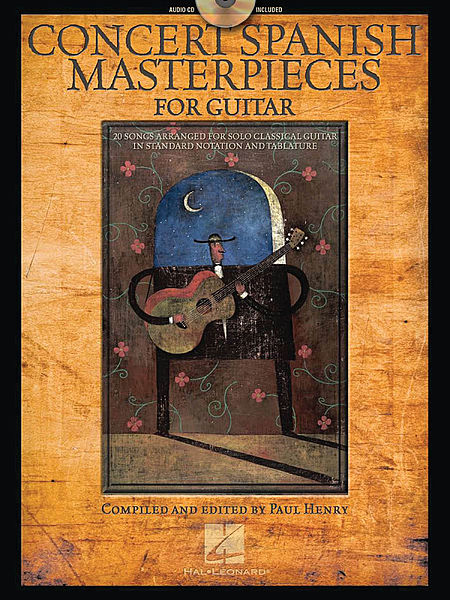
CONCERT SPANISH MASTERPIECES FOR GUITAR Paul Henry CD TABLATURE LIBRO CHITARRA TARREGA ADELITA

CONCERT SPANISH MASTERPIECES FOR GUITAR. Paul Henry. SHEET MUSIC BOOK WITH CD & GUITAR TABLATURE. 

LIBRO DI MUSICA CLASSICA CON CD.

SPARTITI PER CHITARRA :

PENTAGRAMMA E TABLATURE .


20 Spanish standards arranged in notes and TAB. for the advanced classical guitarist. 88 pages.


REPERTOIRE NOTES


Preludio-Asturias
"Preludio-Asturias" (also known as "Leyenda") originally was written for piano as part of a collection called Chants d' Espagne, Gp. 23. It was later published in a collection titled Suite Espanola, op. 47. While its title refers to the northern region of Spain, the music reflects the flamenco flavor of the Andalusia region. Of all the piano works by Albeniz, "Asturias" is the most idiomatic to the guitar.

Mallorca (barcarolla) Op. 202
"Mallorca (barcarolla), Gp. 202" is from a collection of works called Sereneta Espanola. The title is in reference to the enchanting island off the east coast of Spain. The first and last sections of "Mallorca" are written in the manner of an expressive lament, with the rocking barcarolle motion always underneath the melody. This is contrasted by a lively, rhythmic middle section.

Sevilla
"Sevilla" from Suite Espanola is a Sevillanas, which is believed to be an old Castilian folk dance. This triple-meter dance can be heard in southern Spain, mainly in fairs and festivals, including the famous Seville fair, La Feria de Sevilla. It was first transcribed from the piano to the guitar by Francisco Tarrega and Miguel Llobet. While a challenging piece, its original character translates nicely to the guitar. Guitarists can maintain the original key of G major by tuning the lower two strings to D and G.

El Noi de la Mare
"El Noi de la Mare" (The Mother's Son) is an old Catalan folk song. This popular and haunting melody from northeastern Spain has been arranged for a wealth of musical settings, most notably by Frederico Mompou and Miguel Llobett.

The Dance of the Miller
Manuel de Falla is a major composer in the Spanish nationalistic movement. "The Dance of the Miller" is from his ballet The Three Cornered Hat. Rich with guitaristic gypsy rhythms and color from the south of Spain, it is a natural addition to the guitarists' repertoire.

The Dance of the Sorcerer
"The Dance of the Sorcerer" is a wild, colorful dance from Manuel de Falla's ballet El amor brujo (Love, the Magician), which depicts a gypsy possessed by the ghost of her faithless former lover. The piece has become an orchestral favorite.

Danza Espanola #5
"Danza Espanola #5" is from a group of 12 Spanish dances originally for piano. Enrique Granados, along with Isaac Albeniz and Manuel de Falla, was prominent in the Spanish nationalistic style that used Spanish themes and rhythms and often imitated the color and style of the guitar.


 - ADELITA - TARREGA, FRANCISCO
 - CANARIOS - SANZ, GASPER
 - CANCION DEL EMPERADOR - NARVAEZ, LUYS DE
 - CAPRICHO ARABE - TARREGA, FRANCISCO
 - DANZA ESPANOLA #5 - GRANADOS, ENRIQUE
 - DEDICATORIA  - GRANADOS, ENRIQUE
 - EL NOI DE LA MARE - ANONIMOUS
 - FANTASIA - MUDARRA, ALONSO
 - FOLIAS - SANZ, GASPER
 - LA ALBORADA - TARREGA, FRANCISCO
 - LA MAJA DE GOYA - GRANADOS, ENRIQUE
 - LA MINONA DE CATALUNA - SANZ, GASPER
 - LAGRIMA - TARREGA, FRANCISCO
 - MALAGUENA - TARREGA, FRANCISCO
 - MALLORCA OP.202 - ALBENIZ, ISAAC
 - NIGHT IN SPAIN - MASSENET, JULES
 - PRELUDIO-ASTURIAS - ALBENIZ, ISAAC
 - SEVILLA  - ALBENIZ, ISAAC
 - THE DANCE OF THE MILLER - DE FALLA, MANUEL
 - THE DANCE OF THE SORCERER - DE FALLA, MANUEL

Prezzo: €27,99
€27,99

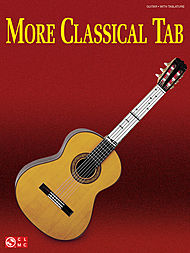
MORE CLASSICAL TAB LIBRO CHITARRA TABLATURE Panis Angelicus-BACH-Schiaccianoci-Ciaikowsky

MORE CLASSICAL TAB. 31 Pezzi:

LIBRO DI MUSICA CLASSICA .

SPARTITI PER CHITARRA.

PENTAGRAMMA E TABLATURE.

Solo Guitar with Tablature
Series: Guitar
Softcover - TAB
Composer: Various Composers

More Classical Tab
Solo Guitar with Tablature
Series: Guitar
Publisher: Cherry Lane Music
Format: Softcover - TAB
Composer: Various

31 more classical masterpieces arranged for guitar with tablature, including: Andante (Carulli) • Bist du bei mir (Bach) • Caro mio ben (Giordani) • Espanoleta (Sanz) • Evening Prayer (from Hansel and Gretel) (Humperdinck) • Lagrima (Tarrega) • Pie Jesu (Fauré) • Sonata in A (Scarlatti) • Symphony No. 9, Second Movement (Dvorák) • and more.

Inventory #HL 02500960
ISBN: 9781575609270
UPC: 884088111564
Width: 9.0"
Length: 12.0"
72 pages
 

31 more classical masterpieces arranged for guitar with tablature, including:

Allegretto - CARULLI
Allegretto (from northern dances) - GIULIANI
Andante - CARULLI
Andante Cantabile - TCHAIKOVSKY
Arabian Dance ('Coffee') (dallo Schiaccianoci) - TCHAIKOVSKY
Ase's Death (da Peer Gynt) - Grieg
Ave Verum (Jesu, Word of God Incarnate) - MOZART
Bist du bei mir (You Are With Me) - BACH
Bourree - BACH
Cancion O Tocata - DE MURCIA
Caro mio ben - GIORDANI
Dedicatoria - GRANADOS
Eine Kleine Nachtmusik ('Romance'), Second Movement - MOZART
Españoleta - SANZ
Evening Prayer (from Hansen and Gretel) - HUMPERDINCK
Gerbe des Fleurs - FERRER
Intermezzo (dalla cavalleria Rusticana) - MASCAGNI
Lagrima - TARREGA
Minuet In G - BACH
Panis Angelicus - MOZART
Pie Jesu - FAURE'
Rondeau - MOURET
Sinfonia - BACH
Sleepers, Awake (Wachet Auf) - BACH
Sonata In A - SCARLATTI
Study In D - GIULIANI
Study In D - SOR
Study In D Minor - SOR
Symphony No. 3, Third Movement Theme - BRAHMS
Symphony No. 5 - SCHUBERT
Symphony No. 9 in E Minor ('From The New World'), Second Movement Excerpt - DVORAK

Prezzo: €16,99
€16,99

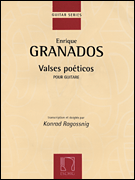
GRANADOS ENRIQUE, VALSES POÉTICOS, Classical guitar

GRANADOS ENRIQUE, VALSES POÉTICOS, Classical guitar

Editor: Konrad Ragossnig

Introduction, Vals melodico, Vals apasionado, Vals lento, Vals humoristico, Vals brillante, Vals sentimental, Vals mariposa, and Vals ideal. Notation only. 24 pages

Prezzo: €14,00
€14,00

ACOUSTIC GUITAR MAGAZINE. 24 pezzi di musica classica. CD TABLATURE

ACOUSTIC GUITAR MAGAZINE. 24 pezzi di musica classica. CD TAB.

Prezzo: €69,00
€69,00

ACOUSTIC GUITAR MAGAZINE. 32 pezzi di musica classica. CD TABLATURE

ACOUSTIC GUITAR MAGAZINE. 32 pezzi di musica classica. CD TAB.

Prezzo: €69,00
€69,00
Condividi contenuti