SPARTITI PER CHITARRA DI MUSICA CLASSICA

PUMPING NYLON-SCOTT TENNANT-BOOK DVD-LIBRO METODO CHITARRA CLASSICA GIULIANI ARPEGGI

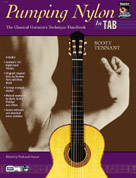
PUMPING NYLON, THE CLASSICAL GUITARIST'S TECHNIQUE HANDBOOK, Scott Tennant.

LIBRO METODO DI MUSICA CLASSICA CON VIDEO DVD. 

SPARTITI PER CHITARRA CON:

PENTAGRAMMA. 

MANUALE, METODO STUDIO, DIDATTICO, 

Metodo tecnologico recente con esercizi per di controllo della velocità, le scale, esercizi giornalieri di riscaldamento, il tremolo, la tecnica del flamenco, il suono, la forma delle unghie della mano sulla buca, i 120 studi per arpeggio di Giuliani, con esempi da J.S. Bach. 1 ora e 57 minuti, Libro e DVD

Prezzo: €35,99
€35,99

PUMPING NYLON GUITAR TABLATURE 120 STUDI GIULIANI FLAMENCO BACH DOUBLE TENNANT TREMOLO TAB

PUMPING NYLON, IN TAB. THE CLASSICAL GUITARIST'S TECHNIQUE HANDBOOK.

LIBRO DI MUSICA CLASSICA, 

SPARTITI PER CHITARRA CON:

PENTAGRAMMA, TABLATURE.

TECNICA, METODO, CLASSICA FLAMENCO

Manuale completo che comprende: i 120 studi per arpeggio di Giuliani, esercizi per di controllo della velocità, le scale, il tremolo, la tecnica del flamenco, il suono, le unghie della mano destra, con esempi da J.S. Bach. TABLATURE

Scott Tennant, world-class classical guitarist and well-respected guitar eduactor, has brought together the most comprehensive technique handbook for the classical guitarist. It is presented here in both standard music notation and TAB. In addition to technical information not available elsewhere, he has compiled selections from Giuliani's 120 Right-Hand Studies; musical examples by Bach, Turina, Rodrigo and others; Tarrega arpeggio studies; and original compositions by Andrew York and Brian Head. Essential information and a great sense of humor are effectively combined in this best-selling book.


Author Preface

Welcome! This is my little book about guitar technique. I want to make it clear from the start that the material in this book is meant to reflect my own way of doing things on the instrument. The exercises are those that have helped me, some of which I still practice every day.

The goal of Pumping Nylon is to offer ideas that will help solve various technical problems. The idea was to steer clear of assembling anything that resembled a method book. Rather, my intent was to focus only on specific technical issues which I felt had not been clearly explained elsewhere. Generally, the issues dealt with in this book are those that have been brought up time and time again by students in master classes and lessons over the past ten years or so.
The exercises and musical examples have been chosen because of their unique technical challenges. For instance, the Bach DOUBLE was taken from a solo guitar arrangement, stripped of all its bass notes and more comfortable fingerings, and transformed into a very effective string-crossing and scale study.
I don't pretend to have addressed every issue. (There are too many out there for one book!) The reader, however, is strongly encouraged to invent hislher own exercises whenever necessary, since all of our technical needs are so very different.
I hope you find a few answers to some of your questions. Go get 'em!

I would like to thank ...
Nat Gunod, for coaching me through this process for the last two years; Brian Head and Andy York for composing their wonderful "made-to-order" etudes; Billy Arcila for posing for the photos that were used to create the illustrations; Durmel DeLeon for the photography; John Dearman and Matt Greif for their technical assistance; an endless list of friends for their constant encouragement; and the students at the ational Guitar Summer Workshop, San Francisco Conservatory and the University of Southern California for being (not always voluntary) "guinea pigs" for much of the [I1aterial contained herein.
And special thanks to Ron Krown at Alfred Publishing for encouraging us to do this new edition.

Glossary of Signs
This list will help you to interpret the various markings in the music.
1, 2, 3, 4 Left hand fingers, numbered from index (1) to pinky (4).
p, i; m, a, Right hand fIngers: p = thumb, i = index, m = middle, a= ring finger.
The six strings of the guitar, numbered from low E 6 to high E 0.
IV, V, VII etc Roman numerals. Here is a quick review of these symbols: 1=1, 11=2, III=3, IV =4,
V=5, V1=6, VII=7, VIII=8, IX=9, X=IO, XI=11 and XII=12.
BII4 The B indicates a barre. The Roman numeral indicates the fret to be barred, and
the small subscript arabic numeral indicates the number of strings to be barred.
So, this symbol would indicate to barre four strings at the second fret.

-1, -2, -3, -4 A dash in front of a fingering indicates a guide finger shif . A shift is a movement
from one position to another. is a finger that can be used just before
and just after a shift. For instance, if the 4th finger has been used to play G on the
J st string. 3rd fret, and then moves to play A on the 1st string, 5th fret, it will be
marked -4.


Editor Preface
I hope you will enjoy this new edition of Scott's gratifyingly popular book. As a response to public
demand, we are happy to provide a version of the book that includes tablature. Hopefully, this will make the book useful to more guitarists. After all, everyone who plays the guitar has something to gain from learning some c1assical guitar technique, and something to learn from a great teacher.
This book evolved from a warm-up routine and technical regimen that Scott Tennant began teaching and writing about several years ago. It is this daily warm-up that has inspired the whimsical title.
Pumping nylon. But in the following pages Scott has done far more than merely map out an exercise routine.
He has provided a wealth of technical information not readily available elsewhere. He has also compiled a variety of both well- and lesser-known technical exercises such as the 120 Right Hand Studie" of Mauro Giuliani and some arpeggio studies by Francesco Tarrega, and has offered some exercises of his own as well. It is also through Scott Tennant that four great new studies. two by Brian Head and two by Andrew York, have been written and published.

But I think he has done a lot more than even those things.
What students and teachers alike will find inPumping Nylon is a joyful attitude toward problem-solving on the classical guitar. There is an underlying message that says if you are willing and able to look at an issue from a different perspective, and if you can bring the same creative powers that you bring to your music-making to your technical work, you can overcome obstacles. Furthermore. there's no law that says it can't be fun.
Anyone who has studied classical guitar is going to hnd ,lOl/lethùl.9 in this book that directly contradicts what you have been taught-or what you teach-about ,1olllethùl.q. This is inevitable. But ifyou dismiss this work for that reason. you will be missing much. I encourage you to read ono Take a look at ali the ideas presented here by this great player and teacher. You will come away better for it.
I expect that for years to come it will be commonplace to hnd well-worn copies of this book in students' hands. I am sure that for Scott Tennant, as for myself, that will be the biggest reward for this efrort.
Many thanks to the wonderful people at Alfred Publishing-especially the M.I. team-for helping to
make this and many other National Guitar Workshop books a reality.
Nathaniel Gunod Litchheld, Connecticut
July, 1997
How to Read Tablature
4th string,5th fret
An open C chord
T
A
B
An H over a slur - indicates a hammer-on.
A P over a slur - indicates a pull-off.
1st stringo 10th Fret ] __Played together
2nd string, l0th fret

Nathaniel Gunod has edited many guitar books including
Benjamin Verdery's by Howard \Vallach, and Play AIM. co-authored Benjamin Verdery's
instructional directed the video, is the author of Cla. Guitar. A recital·ist on Baroque. Classical period and modern c1assical guitars, he has taught students from ali over the world at the Peabody Conservatory of Music and the National Guitar Workshop. where he is Associate Director.
He is the founder of the NGSW Classical Guitar Seminar and the D'Addario Guitar Concerto Competition. Preface


Inspiration
Inspiration only lasts a relatively brief time. We alI eventually fìnd ourselves experiencing a "dry spell."
We get stuck on something in our practicing and can't seem to improve, and sometimes it may seem that we're getting worse. At times we may even think of just quitting. Have you ever felt that the joy you once had for playing is gone forever?
These are not emotions you're experiencing alone. They visit everyone now and then. OccasionalIy we need to give ourselves a break and put down the guitar for a day, a few days, or however long it takes to feel refreshed again. For those who play for a living and don't always have that luxury, some digging back into one's past might be the key. Why did you want to play the guitar in the fìrst piace? Try to recall the feelings you experienced when you fìrst decided that you really wanted to play. Perhaps recall the joy you felt when you heard that fìrst recording or concert that thrilled you. What qualities about the instrument first drew you to it?
As I have done for several circumstances in my life, it may make you feel better to jot down a few of these positive thoughts on a piece of papero Then, when you hit another rough period, you can read through them.

In Conclusion
Music is the most powerful of ali the arts. It instantly stirs up emotions, conjures visions, and offers
glimpses of other, higher dimensions. It arouses men to battle; kindles amorous passions in lovers; soothes a baby to sleep; comforts us when we grieve. It engages our hearts and our minds, and can bring out the best that we are. One can safely presume that not a single emotion, nor any human or natural event, has been left undocumented by music.
As musicians, our objective is to command the elements of music as best we can in order to tap into that other dimensiono It is our access into heaven, if only for a while. But while we are there we can take aH who are listening ith uso If just one person is uplifted by our playing and walks away feeling better than before he carne, we have made a difference. A healing has taken piace.
I very much hope that you have found at least one thing in this book that has helped you. I also hope that, as you work to improve your technique, you do not lose sight of the larger goals: to be able to express yourself freely on your instrument and to turn every note you play into great music. When you can do those things, you cease to be just a guitar player and become a healer and magician.


Table of Contents

Author' s Preface 
Glossary of Signs 
Editor' s Preface 
How to Read Tablature 
Some Do's and Don'ts 
About the Hands 
About the Body 
About Holding the Guitar- The Triangle 

The Left Hand 

Finger Placement and Accuracy 
Pressure and Release 
Pressure/Release Exercise 
Finger Exchange 
Ascending Slurs (Hammer-ons) 
Descending Slurs (Pull-offs) 
Finger lndependence 
 #3 - Opposing Motion 
#4 - Horizontal Character Builders 
#5 - Odair's Favorite Drill 
#6 - "The Spider" 

The Barre 
Weight vs. Pressure 
Being Selective 
Summing It AlI Up 
Quadrivial quadrary by Andrew York - 

A Four-Voice Study for the Left Hand : 
Fanfare by Brian Head-A Slur Study 

The Right Hand 
Tone Production 
Nail Length and Shape : 
Nail Length 
Nail rypes 
Shaping the Nails 
Angle and Placement 

Rest Stroke (Apoyando) 
Position 
The Movement 
Planting 
Press ure 
Release

Free Stroke (Tirando) 
Right-Hand Finger lndependence 
Walking 
Arpeggios from Tarrega's The Complete TechnicaL Studies 

The Thumb 
Shaping the Nail 
Develop That Thumb! 

Flamenco Techniques .
What Else Can the Thumb Do? .
Sofeare. Falseta ,
Alzapua .
Alzapua Falseta ,
Rasgueados .
Some Practical Applications .
from Turina's Sevillana .
from Turina's Rafaga .
from Rodrigo's Conciato de Aranjuez, 2nd Movement .

Daily Warm-Up Routine .
Left-Hand Walking-#l, #2 & #3 .
Ascending Slurs - #4 .
Descending Slurs - #5 .
Triplets - #6 .
Fixed-Finger Exercises-#7 & #8 .
Right-Hand Walking - #9 .
Two-Finger Rasgueados-#10 .

Tremolo .
Psychological Outlook 
Exercises .
Lopsided Tremolos .
Chant by Brian Head: A Tremolo Study .

Scales: Control and Velocity .
Misconceptions about speed .
Right-Hand Velocity .
Synchronization .
String Crossing .
Piecing Things Together .
Some Other Speed Aids .
Rhythmic Variations .
Speed Bursts .
Problem Solving in Scales .
Marking String Crossings .
Evolution of a Scale .
Scale Study - Double from the Courante, Partita No.1, BWV 1002, Johann Sebastian Bach .

Arpeggios .
Full Planting and Sequential Planting .
Giuliani's 120 Right-Hand Studies .
Practicing Tips .
Didactic Doodle by Andrew York .

Afterword .
Performance Anxiety .
Practice
Inspiration
In Conclusion 

Scott Tennant .
 

Prezzo: €24,99
€24,99

RAK STEPAN, THE GUITAR MUSIC OF VOLUME 1.

RAK STEPAN, THE GUITAR MUSIC OF VOLUME 1.

Prezzo: €14,00
€14,00

RAMEAU. J.-PH.,TROIS MENUETS, DEUX SARABANDES.

RAMEAU. J.-PH.,TROIS MENUETS, DEUX SARABANDES. Con notazione tradizionale.

Prezzo: €10,00
€10,00

RAVEL MAURICE BOLERO GUITAR SOLO SPARTITO CHITARRA CLASSICA TABLATURE LIBRO FINGERSTYLE

RAVEL MAURICE, BOLERO, GUITAR SOLO. SHEET MUSIC FOR GUITARIST . 

LIBRO DI MUSICA CLASSICA. 

TRASCRIZIONE PER CHITARRA SOLA DEL FAMOSO BOLERO DI RAVEL. 

SPARTITO CON PENTAGRAMMA E TABLATURE. 


Maurice Ravel: Bolero For Classical And Fingerstyle Guitar

Ravel's Bolero for Classical Guitar by Maurice Ravel (1875-1937). Arranged by Jerry George. For guitar solo. Solo. Classical. Sheet Music. Text Language: English; Standard notation and tablature. 4 pages. 
With Text Language: English; Standard notation and tablature. Classical.

Though he was accused of imitating his predecessor Debussy, Maurice Ravel (1875-1937) is seen today as a successor. One critic compared the two saying that where Debussy shimmers, Ravel glitters. This is true. Ravel's clear-cut lines are quite spectacular and set apart from Debussy's hazy contours. Bolero is the perfect example of his uniqueness. As with many masterpiece themes, Ravel's Bolero was brought to life in modern day film as the musical backdrop to the comedic classic "Ten". This award winning film featured the most glamorous model of its day, Bo Derek and co-star Dudley Moore. Guitar players can experience this French composer's brilliant use of percussive Latin nuances by learning this famous piece. This fingerstyle classic published by Santorella Publications transcribed by Jerry George, includes standard notation, tablature and suggested fingerings.

Prezzo: €29,99
€29,99

RENAISSANCE MUSIC FOR FLUTE & GUITAR Allan Alexander Jessica Walsh CD TABLATURE LIBRO CHITARRA FLAUTO

RENAISSANCE MUSIC FOR FLUTE & GUITAR. SHEET MUSIC BOOK with CD & GUITAR TABLATURE .

LIBRO DI MUSICA RINASCIMENTALE PER FLAUTO E CHITARRA CON CD .

SPARTITI PER CHITARRA E FLAUTO : 
PENTAGRAMMA, TABLATURE .


INCLUDING ANCIENT MUSIC FROM IRALAND AND SCOTLAND

Dance of the washerwoman -I serve a worthie ladie -saltarello -a fancy -a merry ronde -a child's ronde -a winter's ronde -ronde -medieval song no.3 -the troubadour song -italiana -medieval song no.1 -the gypsy's lilt -volta no.1 -angelus ad virginem -canaries -blind mary -two medieval dances -adew dundie -the english hunts up -sumer is icumen in -kemp's jig -Out in the meadows -song of the ass, -medieval song no.2, e altre. CD TABLATURE


The Gypsy's Lilt - Anon/Jessica/Allan. This piece is a great example of why you never know what sounds you will find in Renaissance music. The dissonance that the guitar plays over and over is very modem sounding. There is no doubt that this is the chord that was intended, as there are two versions of this piece in the same lute book, and the chord comes up often. It's always written the same way. I love the melody that Jessica wrote for the second section. - Allan

Volta #1- Allan/Jessica. Volta means "turning" in Italian, and this piece reminds me of dancers whirling around. The Volta was actually a very complicated dance which involved a lot of leaping and turning. This tune has the same pedal as the Italiana. - Jessica

Kalenda Maya - Raimbaut de Vaqueiras/Allan • The "Calends of May" is the first of May, or May Day. In Medieval times it was a favorite holiday, filled with flowers, ribbons, and dancing. In Raimbaut's poem "Kalenda Maya" he tells us that none of the beauty of May Day can move him until the lady he loves looks on him also with love. - Jessica

Angelus ad Virginem - Anon/Allan. When I hear this tune I think of the very strident sounds of some of the Medieval wind instruments. The meter changes are especially fun to play and fall very naturally in the piece. - Jessica

Canaries - Skene/Allan. The Skene manuscript is a tremendous source for music of Scottish origin. There are pieces in it for the lute, but the majority of the material is for a smaller, more limited instrument called a mandora. Many of the melodies are delightful though, so I tune one of my instruments as the mandora is tuned, and play through a copy of the manuscript until I find the pieces I want to work with. - Allan

Blind Mary - Carolan/Allan/Jessica. Turlough Carolan lived in Ireland. He, like the girl he wrote about in this tune, was blind. This is a lovely melody - sad and gentle. I think that it is better to let it sing for itself than to say too much about it. - Jessica

Two Medieval Dances - Arbeau/ Allan. I find some of these Renaissance and Medieval melodies very addictive. Because they exist as just one-line melodies, we often have to add many notes to fillthem out, so it can be a surprise to play them for the first time. Often, they sound better when we come back to them, and sometimes we donlt even know how much we will end up liking them. We just have to wait and see. - Allan

Adew Dundie - Skene/Jessica. Dundee (the modem spelling) is a Scottish town that was rarely at peace throughout the Renaissance. It may be that the mandora player who wrote this melody left Dundee becuuse of the beating that his town was taking at the hands of the English. I wonder if he ever saw his home again. - Jessica

Kemp's Jig on lute and Renaissance flute. If you have the CD, you will hear this piece twice. This last time it is played on Renaissance instruments. - Allan & Jessica

Allan Alexander is a guitarist / Lutenist whose love is arranging and composing for both instruments. Allan is continuing to add to the repertoire of both guitar and lute, but is focusing on the flute and guitar repertoire with his performing partner Jessica. He lives in Troy, NY, with his lovely wife, an artist and sculptor. Jessica Walsh is composing, performing, and working on both books and recordings with Allan. She lives in Troy with her husband and their three exuberant children.

"Renaissance Music for Flute & Guitar" by Allan Alexander and Jessica Walsh. There is great music to be found in all times and from all countries. This is what we are always looking for... pieces that surprise us (pleasantly of course), tunes that make us say, "I want to hear that again," and music that we can't stop playing. Allan & Jessica have compiled a tremendous collection of Renaissance and Medieval duos for flute and guitar. If you love playing independent, interesting parts and if you like communicating with your musical partner, this is the book for you.This music captures the feeling of the Medieval and Renaissance times. It comes alive when you play it. During the Renaissance, it was the performers who wrote the music. Often they added variations; they were excited about the melodies. Allan & Jessica bring some of this approach to the music in this book. Good music need not be difficult to play. When doing arrangements, they make sure that the pieces lay well on the instruments. A few of the pieces in this book are composed by Allan & Jessica, because they also love to write. Nothing is more satisfying, nothing gives us greater pleasure than creating a tune that they want to come back to over and over again... and this is truly in the spirit of the Renaissance.

There are almost seventy minutes of music on the CD, and 29 pieces in the book. This book is perfect to take on gigs, or just to play with a friend. The point is, the music is great. You have to play the tunes in this book to appreciate what Allan & Jessica are talking about. The CD will give you insights into the music, and it will be enjoyable to listen to on its own merit.

Songs include Dance of the Washerwoman, I Serve a Worthie Ladie, Saltarello, A Fancy, A Merry Ronde, A Child's Ronde, A Winter's Ronde, Ronde, Medieval Song No. 3, The Troubadour Song, Italiana, Medieval Song No. 1, The English Hunts Up, Sumer is Icumen in, Kemp's Jig, Out in the Meadowe, Song of the Ass, Medieval Song No. 2, Bransle Charlotte, Cantiga de Santa María, Untitled from Rowallan, The Gypsy's Lilt, Volta No. 1, Kalenda Maya, Angelus ad Virginem, Canaries, Blind Mary, Two Medieval Dances, Adew Dundie.

Customer Comment About This Book:
just bought your music issue "Renaissance Music for Flute & Guitar" today. I am a kind of guy that is constantly search for beautiful music, especially guitar, flute, and piano. I have two kids. The older plays guitar and the younger plays flute. They are 14 and 11 but quite good in the instrument. It have been very few times that I bought a tape or book that I felt worth it. Sometimes I even felt waste the money. But this book of yours including the CD is really worth it. I chose 11 songs out of that I like most: Volta No.1, Bransle Charlotte, A Fancy, A Child's Ronde, A Winter's Ronde, Italiana, I serve a Wothie Ladie, Blind Mary, Adew Dundie, Dance of the Washerwoman, and Kemp's Jig. I am training my kids so that someday they will be able to play like you and Jessica. My kid's guitar teacher said guitar & flute make a very good duet. I agree with that. It is beautiful, especially when I listen to your CD. You guys are doing very good.


Author: Allan Alexander and Jessica Walsh

Category: Instrumental Collections

Renaissance Music for Flute and Guitar 


1. Dance of the Washerwoman .
2. I Serve a Worthie Ladie .
3. Saltarello .
4. A Fancy .
5. A Merry Ronde .
6. A Child's Ronde .
7. A Winter's Ronde .
8. Ronde :
9. Medieval Song NO.3 :
10. The Troubadour Song :
11. Italiana 
12. Medieval Song NO.1 
13. The English Hunts Up 
14. Sumer is Icumen in 
15. Kemp's Jig 
16. Out in the Meadowe 
17. Song of the Ass 
18. Medieval Song NO.2 
19. Bransle Charlotte 
20. Cantiga de Santa Maria 
21. Untitled from Rowallan 
22. The Gypsy's Lilt 
23. Volta NO.1 
24. Kalenda Maya 
25. Angelus ad Virginem 
26. Canaries 
27. Blind Mary 
28. Two Medieval Dances
29. Adew Dundie 
Prezzo: €99,99
€99,99

RIMSKY-KORSAKOV SCHEHERAZADE FOR 2 GUITARS KAZUHITO YAMASHITA CHITARRA SCORE BOOK

RIMSKY-KORSAKOV SCHEHERAZADE FOR 2 GUITARS, KAZUHITO YAMASHITA. SHEET MUSIC BOOK FOR 2 GUITARS.


LIBRO DI MUSICA CLASSICA.

SPARTITI PER DUO DI CHITARRA  .

PENTAGRAMMA. 


Movimenti
Shahrazād è composta da quattro movimenti:

I. Il mare e la nave di Sinbad
Largo e maestoso – Lento – Allegro non troppo – Tranquillo (mi minore – mi maggiore)

Il primo movimento è formato da diverse melodie e si presenta in forma A B C A1 B C1. Il truce motivo al basso che apre il primo movimento rappresenta il tema del Sultano, formato da quattro note in scala discendente; subito dopo si sente il tema di Shahrazād, una dolce e sensuale melodia per violino solo accompagnato dall'arpa.

II. Il racconto del principe Kalandar
Lento – Andantino – Allegro molto – Vivace scherzando – Moderato assai – Allegro molto ed animato (si minore)

Il secondo movimento si presenta come un tema con variazioni in tre sezioni. Le variazioni cambiano solo in base all'accompagnamento orchestrale. All'interno della linea melodica generale, una sezione veloce evidenzia i cambiamenti di tonalità e struttura.

III. Il giovane principe e la giovane principessa
Andantino quasi allegretto – Pochissimo più mosso – Come prima – Pochissimo più animato (sol maggiore)

Anche questo movimento è in forma ternaria ed è il più semplice per forma e contenuto melodico. La sezione intermedia sembra basata su un tema di Tamara, mentre le sezioni esterne hanno un contenuto melodico cantabile.

IV. Festa a Baghdad — Il mare – Naufragio della nave sulle rocce sormontate da un guerriero di bronzo
Allegro molto – Lento – Vivo – Allegro non troppo e maestoso – Tempo come I (mi minore – mi maggiore)

L'ultimo movimento è legato a tutti i movimenti precedenti ed aggiunge alcune nuove idee, tra cui un'introduzione sia dell'inizio del movimento che della sezione Vivace basata sul tema del Sultano, una ripetizione del tema di Shahrazād al violino e una ripetizione di motivo di fanfara per rappresentare il naufragio della nave. Un'ultima relazione conflittuale tra il tema del Sultano alla sottodominante minore rispetto alla cadenza alla tonica del tema di Shahrazād si risolve in una conclusione fantastica, lirica e finalmente pacifica.


https://youtu.be/ktphsuOPHuA?si=fSOoMM6p290jWgRp

Prezzo: €79,99
€79,99

PUMPING NYLON INTERMEDIATE TO ADVANCED REPERTOIRE Scott Tennant CD GUITAR CHITARRA METODO LIBRO

PUMPING NYLON, INTERMEDIATE TO ADVANCED REPERTOIRE. SHEET MUSIC BOOK WITH CD. METHOD FOR GUITAR.  

LIBRO METODO DI MUSICA CLASSICA CON CD.

SPARTITI PER CHITARRA CON PENTAGRAMMA. 

Supplemental Repertoire for the Best-Selling Classical Guitarist's Technique Handbook

By Scott Tennant
Item: 00-18490
UPC: 038081174266
ISBN 10: 0739000748
ISBN 13: 9780739000748
Series: Pumping Nylon Series
Category: Classical Guitar Method or Supplement
Format: Book & CD
Instrument: Guitar
 
The pieces in this book are selected and designed around the various techniques addressed in the best-selling book Pumping Nylon. They are offered as an extension of the excercises presented in that book, and to provideconcert pieces in which to apply the various techniques discussed. The emphasis here is technique-building repertoire appropriate for study and concert performance.
 
Classic Works by Coste, Dowland, Narvaez, Giuliani, Luis Milan, eccetetera ... 
 
New compositions included are by Adam del Monte, Joe Diorio, Brian Head and Carlos Rivera.
 
Technique-building repertoire appropriate for study and concert performance.
 
Also included is the Cadenza from Rodrigo's Concierto de Aranjuez.
 
The CD is beautifully played by Scott Tennant and Adam del Monte.


“PRACTICE DOES NOT MAKE PERFECT.

PERFECT PRACTICE MAKES PERRFECT”

Welcome to the second installment of the repertoire supplements to Pumping Nylon. As the subtitle indicates, these pieces are more advanced than the repertoire in the previous installment. They are primarily concert pieces instead of the shorter, more pedagogical etudes presented in the wy to EarLy Intermediate book. Therefore, the pieces tend to be longer and much more substantial. Consider this book to be a brief representation of the types of pieces that contain specific technique-building elements (such as concentrated scales, left-hand slurs, arpeggios, tremolo and the like). When practiced correctly and with the proper intent, they will aid in developing your guitar-playing skills. In our continuing quest to serve you something new and tasty to consume, we have made an effort to put some newer pieces on your plate. We hope to not only help you enjoy significant progress, but to also open your eyes and ears to new, delightful concert pieces to perform for the enjoyment of others. A "checklist" of specific issues upon which to focus-such as technical and/or musical challenges, fingering and practicing tips-precedes each piece. If taken to heart, these pieces should be of great benefit to you. As always, it is a good idea to check your progress with a teacher when problems arise, as there is no ideal substitute for expert advice. As in Pumping Nylon, I encourage you to take the ideas presented in each piece and expand on them yourself. Find other pieces that will further help you overcome any obstacles. You have what it takes to play anything, and with some mindful practice, you will!

"Love overcomes fear. Fear cannot exist in the presence of love" Pepe Romero

About the Author

Scott Tennant's reputation as a performer and teacher is known worldwide. His accolades include becoming the first American ever to win the first prize in the Tokyo International Guitar Competition in 1989, and silver-medal performances in both the 1988 Concours International de Guitare of Radio France in Paris and the 1984 Toronto International Competition. He is recording the complete solo guitar works of Joaquin Rodrigo for GHA records, including the concertos with Leo Brouwer conducting the Cordoba Symphony Orchestra. His debut solo release for Delos, "Wild Mountain Thyme," is a recording of Celtic music for the classical guitar. Born in Detroit in 1962, Scott began playing the guitar at six years of age. During his junior high and high school years, he studied classical guitar with Lee Dyament and Joe Fava. Also while growing up in Detroit, he began taking flamenco lessons with Juan Serrano. When Maestro Serrano moved to California, Scott replaced him as the accompanist for the Maria del Carmen Dance Company. He also played the bass trombone in his high school concert band and the violin in the school orchestra. Scott moved to Los Angeles in 1980 to attend the University of Southern California, where he studied with Pepe Romero and James Smith. It was during this time that the Los Angeles Guitar Quartet was formed (then the U.S.C. Guitar Quartet), and he has been touring and recording with the group ever since. As a student there, he performed in the master classes of such luminaries as Joaquin Rodrigo and Andres Segovia. He now teaches as a member of the faculty at U.S.C. The Quartet can be heard on their recordings for GHA, Delos and Sony Classical.

There is a compact disc available for this book. It includes performances of all the pieces by Scott Tennant except Rasgueado Exercise in Solea and Alzapua and Thumb Study in Solea, which are performed by Adam del Monte. Use it to help insure that you are interpreting the rhythms correctly and capturing the style of each work. The symbol above will appear to the left of each piece. The track numbers below the symbols correspond to the piece you want to hear. Enjoy!


Preface

About the author

Glossary of Signs and terms

The Frog Galliard - John Dowland

Fantasia n.18 - Luis Milan - 1536

Fantasia n.16 - Luis Milan - 1536

Veintidos diferencias de Conde Claros - Luis de Narvaez

Variations sur les "Folies d'Espagne" Op. 45 - Mauro Giuliani

  Tema

  Variation I

  Variation II

  Variation III

  Variation IV

  Variation V

  Variation VI

Etude n.11 - Napoléon Coste

Fantasia Original, Capricho a imitation del Piano, tecnica del Tremolo - Jose Vinas

Rasgueado Exercise in Solea - Adam del Monte

Alzapua and Thumb Study in Solea - Adam del Monte

Ispired by Villa Lobos etude n.1 - Joe Diorio

Study n.1 - Carlos Rafael Rivera

Plainte - Brian Head

Concerto de Aranjuez, Cadenza from Adagio  2nd movement - Joaquin Rodrigo - 1939

Prezzo: €25,99
€25,99

POPULAR CLASSICS OF THE GREAT COMPOSERS VOLUME 5 Jason Waldron CD SPARTITI CHITARRA

POPULAR CLASSICS OF THE GREAT COMPOSERS VOLUME 5. Jason Waldron. SHEET MUSIC BOOK FOR GUITAR WITH CD .

LIBRO DI MUSICA CLASSICA.

SPARTITI PER CHITARRA CON:

PENTAGRAMMA.

Contiene: -long, long ago (T. Bayly) -tema del concerto per violino (Beethoven) -to a wild rose (E. MacDowell) -carnevale di Venezia (Paganini) -tema della marcia slava (Tchaikovsky) -marcia turca (Beethoven) -la grande porta di Kiev (Mussorgsky) -Aria dal "Le nozze di Figaro" (Mozart) -overture da "Poeta e contadino" (F.von Suppe) -variazioni su un tema di Haydn (Brahms) -beatiful dreamer (S. Foster) -mighty lak' a rose (E. Nevin) -coro di pellegrini dal "Tannhauser" (R. Wagner) -entrata dei gladiatori (celebre tema del circo di J. Fucik) -fingal's cave (F. Mendelssohn) -sinfonia nuovo mondo, tema n.1 (Dvorak) -sinfonia nuovo mondo, tema n.2 (Dvorak) -danza ungherese n.6 (Brahms) -vesti la giubba da "I pagliacci" (R. Leoncavallo) -slavonic danca (Dvorak) -serenade for strings (Tchaikovsky) -e lucean le stelle, da "Tosca" (Puccini) -wedding day (E. Grieg) -laughing song, da "Fledermaus" (J. Stauss) -Polonaise (F. Chopin) -tema dal "Guglielmo Tell" (G. Rossini) -mattinata (R. Leoncavallo) -Barcarolle, da "I racconti di Hoffmann" (Hoffenbach) -marcia nuziale (F. Mendelssohn) -overture dal "Barbiere di Sivilia" (Gioacchino Rossini) -Danubio blu walzer n.1 -Danubio blu walzer n.2 -Danubio blu walzer n.3 -Danubio blu n.4 -Danubio blu n.5 (J. Strauss). CD
 

Popular Classics of the Great Composers

Arranged by Jason Waldron

There has always existed a need for a series of books to provide the classical guitarist with a repertoire, long been available to the pianist, of the music inost loved by both player and listener alike. The "Progressive Popular Classics" series fills this gap by presenting the music in a clear, concise form. Teachers will benefit greatly by virtue of being able to substitute teaching pieces written by CamHi, Sor, Giuliani, Carcassi etc. by the well known music of Chopin, Strauss, Tchaikovsky etc. This will allow the student to develop quicker and happier, because each piece .would be well known and therefore easier to grasp. Another important benefit of this series is that the student will acquire an excellent general knowledge of music outside the normal guitar repertoire which will stand him/her in good stead for later study.

TECHNICAL NOTE

1. Fingering is included for all pieces only once and not again for repeated passages.

2. Dynamics and tempo markings have been omitted to allow the player to use his/her own ideas based on the general "feel" of the music.


  Contents:  
  Popular Classics Volume 5   
Song Composer
No.1 Long, Long Ago T. Bayly
No.2 Violin Concerto Theme L. van Beethoven
No.3 To a Wild Rose E. MacDowell
No.4 Carnival of Venice N. Paganini
No.5 Theme from March Slav P. Tchaikovsky
No.6 Turkish March L. van Beethoven
No.7 The Great Gate of Kiev M. Mussorgsky
No.8 Aria from the Marriage of Figaro W. Mozart
No.9 Overture to "Poet and Peasant" F. von Suppe
No.10 Variations on a Theme by Haydn J. Brahms
No.11 Beautiful Dreamer S. Foster
No.12 Mighty Lak' a Rose E. Nevin
No.13 Pilgrims Chorus (from Tannhauser) R. Wagner
No.14 Entry of the Gladiators J. Fucik
No.15 Fingal's Cave F. Mendelssohn
No.16 New world Symphony (Theme No. 1) A. Dvorak
No.17 New world Symphony (Theme No. 2) A. Dvorak
No.18 Hungarian Dance No. 6 J. Brahms
No.19 Vesti la Giubba R. Leoncavallo
No.20 Slavonic Dance No. 2 A. Dvorak
No.21 Serenade for Strings P. Tchaikovsky
No.22 When the stars Were Brightly Shining G. Puccini
No.23 Wedding Day E. Grieg
No.24 Laughing Song (from Fledermaus) J. Strauss
No.25 Polonaise F. Chopin
No.26 Theme from William Tell G. Rossini
No.27 Mattinata R. Leoncavallo
No.28 Barcarolle (from Tales of Hoffman) J. Offenbach
No.29 Wedding March F. Mendelssohn
No.30 Overture to "The Barber of Seville" G. Rossini
No.31 Blue Danube Waltz No. 1 J. Straus
No.32 Blue Danube Waltz No. 2 J. Straus
No.33 Blue Danube Waltz No. 3 J. Straus
No.34 Blue Danube Waltz No. 4 J. Straus
No.35 Blue Danube Waltz No. 5 J. Straus
Prezzo: €29,99
€29,99

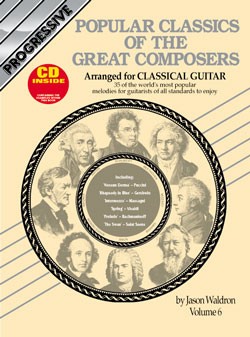
POPULAR CLASSICS OF THE GREAT COMPOSERS VOLUME 6 Jason Waldron CD arranged for classical guitar VERDI

POPULAR CLASSICS OF THE GREAT COMPOSERS VOLUME 6. Jason Waldron. SHEET MUSIC BOOK for GUITAR with CD .

LIBRO DI MUSICA CLASSICA CON CD.

SPARTITI PER CHITARRA CON PENTAGRAMMA. 


ARRANGED FOR CLASSICAL GUITAR

35 OF THE WORLD'S MOST POPULAR MELODIES FOR GUITARISTS OF ALL STANDARDS TO ENJOY

Nessun dorma, Rhapsody in blu, ecc. 

FOREWORD
There has always existed a need for a series of books to provide the classical guitarist with a repertoire, long been available to the pianist, of the music most loved by both player and listener alike. The "Progressi e Popular Classics" series fills this gap by presenting the music in a clear, concise form. Teachers will benefit greatly by virtue of being able to substitute teaching pieces written by Carulli, Sor Giuliani, Carcassi etc. by the well known music of Chopin, Strauss, Tchaikovsky etc. This will allow the student to develop quicker and happier, because each piece would be well known and therefore easier to grasp.
Another important benefit of this series is that the student will acquire an excellent general know ledge of music outside the normal guitar repertoire which will stand him/her in good stead for later study.
TECHNICAL NOTE
1. Fingering is included for all pieces only once and not again for repeated passages.
2. Dynamics and tempo markings have been omitted to allow the player to use his/her own ideas based on the general "feel" of the music. 


  Contents:  
  Popular Classics Volume 6  
Song Composer
No.1 No.1 Romance (from "Eine Kleine Nachtmusik") W. Mozart
No.2 Trumpet Voluntary H. Purcell
No.3 Violin Concerto Theme L. van Beethoven
No.4 Soldier's Chorus (from "Faust") C. Gounod
No.5 Air (from "Water Music") G. Handel
No.6 Sextet (from "Lucia di Lammermoor") G. Donizett
No.7 Ballet C. Gluck
No.8 Chorus of Hebrew Slaves (from "Nabucco") G. Verdi
No.9 When I was a Lad (from "H.M.S. Pinafore") A. Sullivan
No.10 Sleepers, Awake (from "Cantata No. 140") J.S. Bach
No.11 Piano Trio No. 2 F. Schubert
No.12 Harmonious Blacksmith G. Handel
No.13 Sheep May Safely Graze J.S. Bach
No.14 Pavane for a Dead Princess M. Ravel
No.15 Your Tiny Hand is Frozen Theme No. 1 (from "La Boheme") G. Puccini
No.16 Your Tiny Hand is Frozen Theme No. 2 (from "La Boheme") G. Puccini
No.17 Prelude S. Rachmaninoff
No.18 The Flowers That Bloom in the Spring (from "The Mikado") A. Sullivan
No.19 Theme from 4th Symphony J. Brahms
No.20 Theme from Piano Concerto No. 2 S. Rachmaninoff
No.21 My Heart at Thy Sweet Voice (from "Sampson and Delilah") C. Saint-Saens
No.22 Theme from Carmen G. Bizet
No.23 Recuerdos de la Alhambra F. Tarrega
No.24 Promenade (from "Pictures at an Exhibition") M. Mussorgsky
No.25 Theme from Pastoral Symphony L. van Beethoven
No.26 Barcarolle P. Tchaikovsky
No.27 Slavonic Dance No. 10 A. Dvorak
No.28 Allegro (from "Eine Kleine Nachtmusik") W. Mozart
No.29 A Furtive Tear (from "L'elisir d'amore") G. Donizetti
No.30 Rhapsody in Blue G. Gershwin
No.31 The Swan (from "Carnival of the Animals") C. Saint-Saens
No.32 Spring (from "Four Seasons") A. Vivaldi
No.33 Meditation (from "Thais") J. Massenet
No.34 Intermezzo (from "Cavalleria Rusticana") P. Mascagni
No.35 Nessun Dorma (from "Turandot") Giacomo Puccini
Prezzo: €29,99
€29,99
Condividi contenuti