SPARTITI PER CHITARRA DI MUSICA CLASSICA

SUZUKI GUITAR SCHOOL VOL.2 METODO CHITARRA SPARTITI LIBRO CARULLI Paganini CARCASSI GIULIANI

SUZUKI GUITAR SCHOOL VOL.2. SHEET MUSIC BOOK, METHOD. 

LIBRO METODO DI MUSICA

SPARTITI PER CHITARRA CLASSICA.

PENTAGRAMMA. 


CATEGORY: Guitar (Suzuki)
FORMAT: Book

Contents are: Long, Long, Ago (T.H. Bayly) * Allegro (S. Suzuki) * A Toye (Anon.) * Andante (M. Carcassi) * Andante, from Sonata No. 17 Perligordino (N. Paganini) * Allegretto (in Double Stops) (M. Giuliani) * Corrente (J. Kuffner) * Andantino (M. Carcassi) * Allegretto (F. Carulli) * Preparation for Waltz * Waltz, No. 1 (B. Calatayud) * Waltz, Accomp. (B. Calatayud).

Prezzo: €17,99
€17,99

SCARLATTI DOMENICO-30 SONATAS FOR GUITAR TRASCRIZIONE CHITARRA LIBRO SPARTITI K491

SCARLATTI DOMENICO, 30 SONATAS FOR GUITAR. SHEET MUSIC BOOK .

LIBRO DI MUSICA CLASSICA, 

SPARTITI PER CHITARRA CON PENTAGRAMMA.

TRASCRIZIONI DI JAMEY BELLIZZI

112 PAGINE

4 PAGINE IN FACSIMILE MANOSCRITTO DA SCARLATTI ( NAPOLI 1685 - MADRID 1757 )

Prezzo: €31,99
€31,99

SCHUMANN ROBERT album fur die Jugend OP.68 Transcribed for GUITAR CHITARRA LIBRO SPARTITI

SCHUMANN ROBERT, ALBUM PER LA GIOVENTU'. OP.68. SHEET MUSIC BOOK in standard notation FOR GUITAR . 

LIBRO DI MUSICA CLASSICA PER CHITARRA .

PENTAGRAMMA. 


SCHUMANN, Robert
Album für die Jugend Op.68
arranged by Tadashi Sasaki.

index: 
melodie / Melody,
Sordier's March,
Humming Song,
A Chorale,
A Little Piece,
Poor Orphan,
Hunter's Song,
The Wild Horseman,
A Little Folk Song,
The Merry Peasant,
Siciliano,
King Rupert,
May, dear May, you'll soon be here,
A Little Study,
Spring Song,
First Loss,
The Little Dawn-Wanderer,
Reaper's Song,
Rustic Song,
(no title),
Rondelay,
Harvest Song,
(no title),
A Stranger,
(no title),
Sheherazade,
Theme,
Nordic Song,
New Year's Eve Song,
A Short Piece by Mozart.
 
48 pages.
Prezzo: €65,99
€65,99

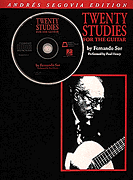
SEGOVIA ANDRES 20 STUDIES GUITAR FERNANDO SOR BOOK & CD SPARTITI CHITARRA LIBRO

SEGOVIA ANDRES EDITION, TWENTY STUDIES FOR THE GUITAR, FERNANDO SOR. 20 studi del più importante chitarrista spagnolo dell'inizio ottocento, il fantasioso musicista Fernando Sor (1778-1839), come interpretati da Segovia. CD

Book/CD Pack
Series: Guitar
Medium: Softcover with CD
Artist: Andrés Segovia
Arranger: Fernando Sor

20 studies for the classical guitar written by Beethoven's contemporary, Fernando Sor, revised, edited and fingered by the great classical guitarist Andres Segovia. These essential repertoire pieces continue to be used by teachers and students to build solid classical technique. Features a 50-minute demonstration CD. 32 pages.

Prezzo: €26,99
€26,99

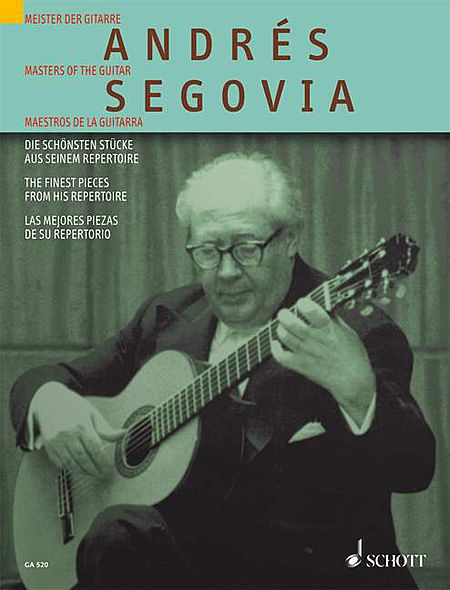
SEGOVIA ANDRES FINEST PIECES REPERTOIRE Frescobalda-Chaconne Bach-Burlesca Torroba LIBRO

SEGOVIA ANDRES, THE FINEST PIECES FROM HIS REPERTOIRE. Le famose trascrizioni di Segovia: La frescobalda -Bach, chaconne -Segovia, estudio -Chopin, mazurka, e molti altri pezzi.

LIBRO DI MUSICA CLASSICA,

SPARTITI PER CHITARRA CON PENTAGRAMMA.

ANDRÉS SEGOVIA The Finest Pieces from His Repertoire
Editor or Arranger: Andrés Segovia
Composer: Various Composers

Andrés Segovia (1893-1987) fu il più grande chitarrista del Novecento. Interprete, dunque, ma anche trascrittore e compositore. Il suo pezzo più bello e famoso è Estudio sin Luz, una malinconica canzone in Si minore.

Andreés Segovia (Linares, 1893 – Madrid, 1987)

Anche se il suo apporto come compositore fu modesto – e da lui stesso tenuto in scarsissima considerazione – Andrés Segovia, il più grande chitarrista del novecento, esercitò un possente influsso nella formazione di un nuovo repertorio di musiche originali per chitarra: una descrizione del lavoro che egli svolse in quest’area è premessa imprescindibile per la comprensione delle origini di quella che, non senza motivo, è stata chiamata la rinascita della chitarra. Andrés segovia nacque il 21 febbraio 1893 a Linares, cittadina della provincia andalusa di Jaén. in nessuno dei suoi scritti autobiografici si trova il minimo accenno alla figura paterna, completamente rimossa, mentre la madre è ricordata perché, quando il piccolo aveva cinque anni, lo affidò agli zii. Con questi, abitò dapprima a Villacarrillo e poi a Granada. nell’infanzia, imparò a suonare la chitarra flamenca. Ebbe la rivelazione della chitarra “classica” intorno ai dieci-dodici anni, ascoltando un dilettante granadino. Da quel momento, la sua vita fu segnata da un unico ideale e, non potendo contare su un’istruzione musicale regolare (allora la chitarra non era inclusa nei programmi delle scuole di musica) si formò come autodidatta. Com’egli amava ripetere negli anni della gloria: «Fui maestro e allievo di me stesso e, grazie agli sforzi di entrambi, nessuno dei due fu scontento dell’altro». Esordì con un concerto al Centro Artistico di granada nel 1909, lo stesso anno in cui Francisco Tárrega lasciava questo mondo. Cercò contatti con gli allievi del maestro valenciano, che però gli opposero i loro ottusi pregiudizi.

Fernando Sor

Essenzialmente nelle composizioni per chitarra sola e per due chitarre, il genere nel quale riuscì a esprimersi più congenialmente. La sua biografia – scritta dal musicologo britannico Brian Jeffery e validamente integrata dagli apporti di altri musicologi quali Josep María Mangado, Richard Long, Emili olcina, Matanya ophee – ci rivela un uomo dal carattere difficile e finanche conflittuale, affetto – almeno per quanto riguarda la sua presenza nel mondo della chitarra, allora fittamente popolato – dal complesso del primo della classe e acribiosamente impegnato nel dimostrare al mondo la propria superiorità. Questa era di per sé evidente nelle pagine per chitarra che egli andava scrivendo e non avrebbe avuto bisogno di alcun sostegno polemico: l’osservazione si rende necessaria di fronte al fatto che una considerevole parte della Méthode pour la Guitare, pubblicata a Parigi nel 1830, è spesa da sor nel difendersi dalle sciocche insinuazioni di chitarristi suoi coevi, dei quali non sapremmo nulla, se non fosse lui stesso a informarci della loro insignificante esistenza. sor era figlio di una famiglia della borghesia catalana ed era perciò destinato alla carriera nella pubblica amministrazione o nell’esercito. il padre, un impiegato, non incoraggiò, ma tollerò il suo spontaneo avvicinamento alla musica e, fin dall’infanzia, lo portò ad assistere alle rappresentazioni operistiche, quasi tutte di autori italiani. Alla prematura morte del genitore, il fanciullo, che cantava spontaneamente arie da opera, aveva ricevuto qualche lezione di violino e suonava la chitarra di suo, fu portato all’Abbazia di Montserrat, dove prosperava una famosa schola cantorum. L’istruzione musicale di sor ebbe quindi anche un’impronta polifonica, che più tardi si rivelerà chiaramente nella sua musica per chitarra.


Contents:

- Aria con Variazioni from La Frescobalda (Frescobaldi)

- Chaconne (Bach)

- Gavotte 1 e 2 dalla Suite per violoncello No. 6 in Re BWV 1012 (Bach) 

- Passacaglia (Couperin)

- Sonata from 8 Aylesforder Pieces (Händel)

- Sonata (D. Scarlatti)

- Sonatine (Benda)

- Cantabile (Vanhall)

- Minuetto (Vanhall)

- Variations on Das Klinget so herrlich from The Magic Flute (Sor)

- Bittendes Kind (Schumann)

- Fürchtenmachen from Kinderszene, Op. 15 (Schumann)

- Waltz, Op. 39, No. 8 (Brahms)

- Mazurka, Op. 63, No. 3 (Chopin)

- Tango, Op. 165, No. 2 (Albéniz)

- Sonata meridional (Ponce)

- Thème varié et Finale (Ponce)

- Tres Canciones Populares Mexicanas (Ponce)

- Hommaga à Tarrega (Turina)

- Fandanguillo (Turina)

- Serenata burlesca (Torroba)

- Suite castellana (Torroba)

- Mazurka (Tansman)

- Estudios (Segovia)

- Estudios sin luz (Segovia)

- Tonadilla auf den Namen Andrés Segovia, Op. 170, No. 5 (Castelnuovo-Tedesco).

94 pages

Prezzo: €29,99
€29,99

RIMSKY-KORSAKOV SHEHERAZADE FOR GUITAR LARRY CORYELL TABLATURE CHITARRA LIBRO SPARTITI

RIMSKY-KORSAKOV : SHEHERAZADE FOR GUITAR, ARRANGED BY Larry Coryell. SHEET MUSIC BOOK WITH STANDARD NOTATION AND GUITAR TABLATURE. 

LIBRO DI MUSICA CLASSICA.

SPARTITI PER CHITARRA CON :

PENTAGRAMMA E TABLATURE.


1ST MOV. - I THE SEA AND SINDBAD'S SHIP. 

2ND MOV. - II THE STORY OF THE CALENDER PRINCE. 

3RD MOV. - III THE YOUNGF PRINCE AND YOUNG PRINCESS

4TH MOV. - IV FESTIVAL AT BAGHDAD - THE SEA - THE SHIPWRECK

Prezzo: €199,99
€199,99

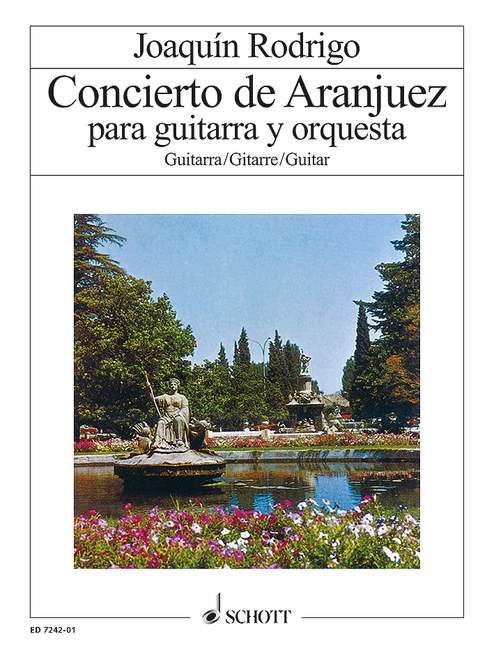
RODRIGO JOAQUIN CONCERTO CONCERTO DE ARANJUEZ ROMERO EDITION CHITARRA SPARTITI

RODRIGO JOAQUIN, CONCERTO DE ARANJUEZ. Ed. Romero, solo la parte della chitarra.

SHEET MUSIC BOOK FOR CLASSICAL GUITAR. 

LIBRO DI MUSICA CLASSICA .

SPARTITI PER CHITARRA CON PENTAGRAMMA. 

DITEGGIATURA ROMERO.

Rodrigo composed the Concerto de Aranjuez in 1940 on his return to Spain after the Civil War and debut performance of the work in Barcelona founded his international reputation. Concerto de Aranjuez is a musical reverie on the gardens of the Baroque summer palace of Aranjuez that only a blind composer, like Rodrigo, could have produced. This work immediately became the most recognisably Spanish work of the twentieth century.

This is the solo Guitar part, which has been edited by Angel Romero.


Content :

- I Allegro con spirito

- II Adagio

- III Allegro gentile

ISMN: 979-0-001-07585-5
Performance duration: 20'0"
9 November 1940 Palau de la Música Catalana, Barcelona · Dirigent: César Mendoza Lassalle · Regino Sainz de la Maza, Gitarre · Orquesta Filamónica de Barcelona
Year of composition: 1939
page number: 28

Prezzo: €19,99
€19,99

RODRIGO JOAQUIN CONCIERTO DE ARANJUEZ CHITARRA LIBRO JAM TRACK CD ALLEGRO-ADAGIO-ANGEL

RODRIGO JOAQUIN, CONCIERTO DE ARANJUEZ. DELUXE. MUSIC MINUS ONE GUITAR.
Base orchestrale completa, con preascolto, diteggiatura Angel Romero. JAM TRACK 2 CD .

LIBRO DI MUSICA CLASSICA CON 2 CD .

CD DI BASI ORCHESTRALI PER CHITARRA .

SPARTITO PER PIANOFORTE E CHITARRA CON PENTAGRAMMA . 


Performed by Christian Reichert, guitar
Accompaniment : Plovdiv Philharmonic Orchestra
Conductor : Nayden Todorov

What is undoubtedly the most famous and most acclaimed guitar concerto ever written is now a fabulous MMO release! The recently deceased Joaquin Rodrigo, foremost proponent of the classical guitar in the concert literature, wrote this masterpiece of 20th-century music in 1939. Gorgeous and eternally popular, it is an indispensable component of any guitarist’s library. This deluxe 2CD set includes a slow-tempo practice version to help you get up to speed.

Includes a high-quality printed solo part annotated with track-break indicators and informative liner notes; and a compact disc, voluminously indexed for ease of practice, with two performances in digital stereo: one complete with soloist, then a second minus you, the soloist.

- ALLEGRO CON SPIRITO

- ADAGIO

- ALLEGRO GENTILE

Prezzo: €139,99
€139,99

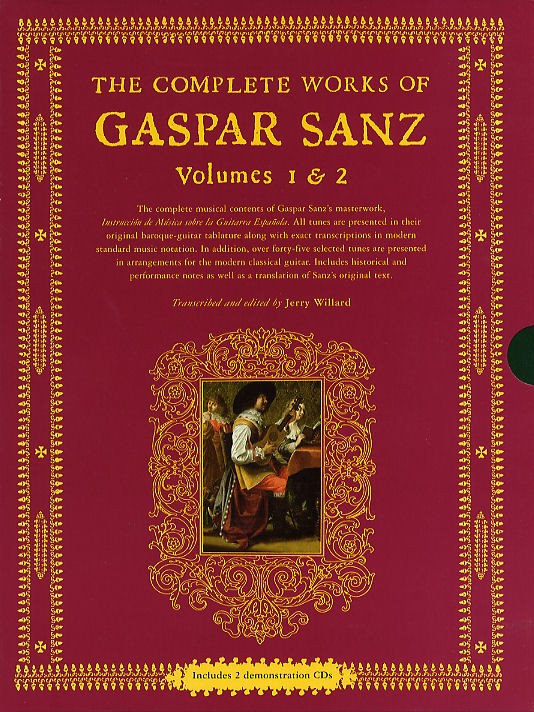
SANZ GASPAR THE COMPLETE WORKS OF Jerry Willard 2 CD TABLATURE LIBRI CHITARRA BAROCCA

SANZ GASPAR, THE COMPLETE WORKS OF. Jerry WILLARD. SHEET MUSIC BOOKS WITH 2CD & GUITAR TABLATURE . 

LIBRI DI MUSICA CLASSICA CON 2 CD.

SPARTITI PER CHITARRA CON : PENTAGRAMMA E TABLATURE.  

Available here is the complete manuscript of Sanz's legacy, which has been translated into English and the tablature arrangements now include standard music notation. Jerry Willard has also included arrangements for the modern guitar and performs selections from this body of work on both the baroque and modern guitar which can be found on the accompanying CDs. 280 pages.

By Gaspar Sanz. Arranged by Jerry Willard. For Guitar TAB. Renaissance, Medieval. Level: Intermediate-Advanced. Sheet Music and Audio CDs. 280 pages.

Gaspar Sanz was one of the most celebrated guitarists and composers of his time. In 1674 he published a method for the baroque guitar. This method has been lauded by guitar aficinados and serves as a significant historic work. Written in Old Spanish with the tablature system of its day, this method has only been available to the few who would meticulously research and decipher its hidden meanings. Available here is the complete manuscript of Sanz's legacy, which has been translated into English and the tablature arrangements now include standard music notation. Jerry Willard has also included arrangements for the modern guitar and performs selections from this body of work on both the baroque and modern guitar which can be found on the accompanying CDs.

Introduction
Biography
On April 4, 1640, Francisco Bartolome Sanz y Celma
was born in the tiny town of Calanda, near Saragossa,
Spain, into an old and well-to-do family. It was later
that he took the name Gaspar. He was educated at the
University of Salamanca, where he studied literature
and music and received a degree in theology. Sanz was
well traveled and spent much time in Italy, where he
studied guitar with Cristoforo Carisani and Lelio
Colista. He also studied the guitar works of Foscarini
and Corbetta. After returning to Spain, Sanz had
acquired such a great reputation as a guitarist and
composer that he was appointed guitar teacher to Don
Juan of Austria.

Baroque Guitar
The baroque guitar was popular primarily in Spain,
France, and Italy, and has a distinguished history
spanning 150 years, with only minor changes in tuning
and technique. Corbetta, Foscarini, and Montesardo in
Italy, de Visee in France, and Gaspar Sanz and Santiago
de Murcia in Spain championed the baroque guitar.

The baroque guitar was smaller than the modern
classical guitar, with more of an oblong shape, and had
wooden tuning pegs and tied-on gut frets. The
movable frets gave the baroque guitarist more
flexibility in tuning and pitch control.
There were many different tunings in vogue during
Sanz's time, the most popular of which is used and
explained in his method. The first string was single,
the second course (a set of multiple strings played as
one) was doubled unisons, the third course wa
doubled unisons, the fourth course was doubled in
octaves with the high octave on the thumb or bass
side, and the fifth course was doubled unisons an
octave higher than standard (modern) tuning. This
type of tuning, with the high octave on the thumb
or what would be the bass side of the strings,
enabled the guitarist to use the thumb as a melodic
finger, often playing high melody notes with the
thumb and achieving bell-like cross-string passage
called eampanellas.

Tablature
Tablature is a schematic that represents the five strings
of the guitar, with the bottom line representing the
highest string.
The frets are then represented by the numbers 1-9,
with 0 being an open string, and X indicating the
tenth fret. (Ed Note-Although indicated as a fret
marking in the original manuscript, an "X" in
conventional notation represents a muted string. This
edition will conform to conventional notation.) The
dots next to the numbers indicate the left-hand
fingering: one dot=index, two dots=middle, three
dots=ring, four dots=the little finger. Juan Carlo
Amat wrote the earliest publication for baroque guitar
and devised the alphabeto, a series of letters indicating
predetermined chords to be strummed during the
composition or dance. In the tablature, only the fretted
notes were indicated-the open strings were assumed.
(Ed Note- The diagram below illustrates the open
strings in this manner. However, conventional openstring
indications will be observed throughout the
remainder of this edition.) 


Contents:
Allemande La Serenissima
Another Ducal
Another French Saraband
Another Granduque
Another Passacaglia
Another Villano
Ballet
Batalla (Battle)
Bugle From the French King's Musketeers
Canarios (Sanz)
Chaconne
Dance of Mantua
Dance of the Axes
Dance of the Torches
Espa–oleta
Folias
Four Voices and Chromatics
French Ballet
French Saraband
Fugue I
Fugue II
Gallarda
Gallardas
Gigue
Gigue in the English Style
Granduque (Great Duke)
Great Duke of Florence
Jacara From The Coast
Jacaras
Labyrinth
Lantururu (Sanz)
Maricapolos
Mariona (Sanz)
Paradetas (Sanz)
Passacaglia
Passacaglia In A Minor
Passacaglia in E Minor
Passacaglia in F
Passacaglia In G Minor
Passacaglias
Passacaglias in B Flat
Passacaglias in D
Passacaglias in D Minor
Passacaglias in E Minor and B Flat Minor
Passage
Pavane
Pavane In A Minor
Prelude and Fantasy
Promenades in C
Rujero Gaspar Sanz
Saltaren
Tarantela
The Catalonian Mi-ena
The Enfachata of Naples
The French Shellfish
The Garzona
The Knights of Naples With Bugles
The Portuguese Minima
The Return
Torneo
Two Passacaglias
Two Trumpets of the Swedish Queen
Villano

Prezzo: €49,99
€49,99

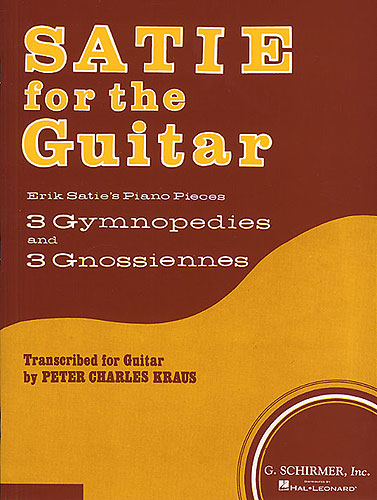
ERIK SATIE FOR GUITAR PETER CHARLES KRAUS CHITARRA SPARTITI LIBRO GYMNOPEDIES GNOSSIENNES

SATIE FOR GUITAR. Peter Charles Kraus. SHEET MUSIC BOOK FOR GUITAR. 

LIBRO DI MUSICA CLASSICA. 

SPARTITI PER CHITARRA CON: PENTAGRAMMA. 

Trascrizioni per chitarra classica di 3 Gymnopedies e 3 Gnossiennes, del compositore francese. Alfred Erik Leslie-Satie nacque a Honfleur nel 1866. Studiò in vari conservatori, ma il suo spirito ribelle non si adeguò alle regole tradizionali; (invece della frase che tempo fa' andava di moda alla televisione e tra la gente: "Non capisco ma mi adeguo"; Satie si sarebbe probabilmente espresso: "Capisco e non mi adeguo"). Le "3 Gymnopedie" sono del 1888, e il nome deriva da una danza dell'antica Grecia; mentre il termine delle "3 Gnossiennes" del 1890, è riferibile a Knossos, l'antica città dell'isola di Creta, ov'era situato il mitico labirinto del minotauro. Questi pezzi per piano fanno parte del primo periodo compositivo; senza divisioni di battute, basati su accordi complessi, di settime, none, undicesime. Terminata questa fase, il musicista oramai trentenne, si interessa alla musica dei café-concert; suona il piano nei cabarets, e diventa amico degli artisti bohemiens di Montmartre. In perenne contrasto con l'accademismo e l'impressionismo musicale di Debussy, Eric Satie combatterà la musica "dotta" a colpi di "musica da tappezzeria" e la sua trama musicale affine a un collage cubista, attirò l'attenzione di Picasso, Diaghilev, Cocteau, Picabia, diventando così il loro animatore. Con il gruppo dei 6, diede vita a rivoluzionari spettacoli e balletti. Liberatosi delle provocazioni e abbandonate le polemiche, l'opera nella quale Satie esprime la propria poetica è "Socrate" del 1918. Il neoclassicismo di Stravinsky risentirà poi delle sue sonorità. Satie morì a Parigi nel 1925 povero ma celebre.

Guitar Solo
Series: Guitar Collection
Publisher: G. Schirmer, Inc.
Editor: E Kraus
Composer: Erik Satie
Contains 3 Gymnopedies and 3 Gnossiennes. 24 pages

Prezzo: €13,99
€13,99
Condividi contenuti