SPARTITI PER CHITARRA DI MUSICA CLASSICA

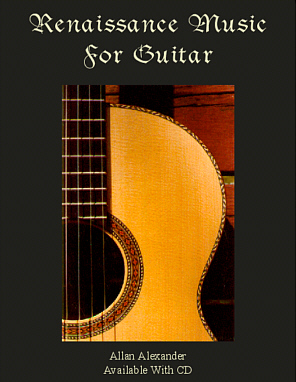
RENAISSANCE MUSIC FOR GUITAR, Ancient Music from Ireland and Scotland. By Allan Alexander. CD TABLATURE

RENAISSANCE MUSIC FOR GUITAR, Including Ancient Music from Ireland and Scotland. By Allan Alexander. CD TAB.

Renaissance Music for Guitar" contains 34 pieces
Dance of the Washerwoman - Hans Neusidler - This is the tune that started me playing the lute. I heard a recording of Julian Bream performing this, and I never forgot it. I remember the day I found the sheet music. I played it over, and over, and over. It's one of the reasons I bought a lute. In addition to the first cut on the CD, I have also included an example of me playing this tune on the lute at cut 35.

I Lie Alone - Anonymous - This is a beautiful lute piece from Scotland. It's extraordinary, and fairly easy to play.

Ballet - Michael Praetorius - This Ballet is from a book published in the renaissance titled "Terpsichore". The dances were collected by Michael Praetorius. This is an arrangement, as the original was set for five voices. It's often played by recorders

Robinson's May - Thomas Robinson - Thomas Robinson was a lutenist/composer in the renaissance. He published a book titled "Schoole of Musick" which contains many lute pieces and also instructions for singing.

Packington's Pound - Anonymous - This is actually two versions combined into one. The first version has an unknown composer. The second is attributed to Thomas Cutting. Many versions exist and it is said to be one of the most popular pieces of the renaissance.

Canaries - Anonymous - One of the interesting things about renaissance lute music is the number of countries in which it was popular. This piece is another from Scotland. It's really lovely, though quite short, so I wrote two variations for it.

Medieval Dance - Anonymous - This selection is earlier than most pieces in this book. The harmonies are simple and the piece is haunting.

Kemp's Jig - Anonymous - Will Kemp was bet a hundred pounds that he couldn't jig a hundred miles. As the story goes, he won the bet and this tune was written to celebrate the event. Kemp's Jig is a well known piece from the renaissance originally written for lute.

Kathrine Bardi - Anonymous - I just love the music from Scotland for the lute. The harmonies are charming and the melodies addictive.

Greensleeves I - Anonymous - It is amazing that a piece could survive all this time and still retain its popularity. I added a variation to make it a little longer.

Greensleeves II - Anonymous - There were a few popular versions of Greensleeves during the renaissance. This one in 4/4 was actually more popular than the previous one that we are more familiar with.

La Volta - Michael Praetorius - A "Volta" or "Volte" is really more a type of piece than a specific piece. This one is another that is from the Praetorius "Terpsichore" collection. It's one of my favorites.

Duo - Miguel de Fuenllana - This music has just two voices. It's quite syncopated and you can hear the imitation of the bass in the treble. I find it to be very interesting and fun to play.

Courante - Michael Praetorius - This is the last of the Praetorius pieces included in this book. I felt this was another tune that needed a variation to fill it out. I love this little dance.

Christ Has Risen - Hans Judenkunig - Sometimes I will come across a piece of music that is relatively easy but powerful. This is one of those pieces.

Bransle charlotte - Thomas Arbeau - Thomas Arbeau published a book during the renaissance title "Orchesography." In that book is a splendid collection of melodies, plus instructions for the dances that accompany them. This piece had to be harmonized as the original was just a single melody line. Since it was short, I added two variations. Writing variations for melodies was quite popular during the renaissance.

Bransle - Anonymous - A Bransle (pronounced brawl) is a French dance. This one in particular is simple but haunting. I wrote a variation since the tune is short..

O Venus Bant - Alexander Agricola - This is another medieval melody. I harmonized it and then wrote a variation. I find it quite a bit of fun to play.

Daphne - Anonymous - Daphne is from an early collection of recorder music. I harmonized the melody and since I liked it so much, again wrote a variation. I see some similarity between this and Greensleeves.

Canaries II - Anonymous - In this piece we had to tune the 6th string down to D because it's a lute piece and many renaissance lutes had at least 7 courses (pairs of strings). This note could then be played as an open string. It's nice to have the lower range in this tune.

Fayne Would I wed - Richard Farnaby - The Fitzwilliam Virginal Book is a huge collection of music written for (not surprisingly) the Virginal. This instrument was a precursor to the harpsichord, but smaller and without as much volume. I loved this piece by Richard Farnaby, and it went quite naturally on the guitar.

Haulberrys - Pierre Attaingnant - The majority of the pieces in this book are arranged with a normal guitar tuning, or with a low D, which is a common change of tuning for the guitar. Many of these tunes are original lute music and it often makes the pieces much easier to play if we retune the guitar so the intervals of the strings are like that of the lute. If you have trouble with the fact that the third string is now an F#, then you can read the tablature and the pieces should be fairly easy to learn. This tune is pleasantly syncopated and an interesting example of renaissance music written specifically for the lute.

Fantasia - Anonymous - The renaissance Fantasia was a precursor to the fugue, which was a popular form later in the baroque period. I remember learning this tune years ago. It took at least a week for me to make any sense of this music. It will be easier for you now because of the enclosed CD. This is really a phenomenal piece. I love the imitation between the voices.

Mr. Dowland's Midnight - John Dowland - Often there are several sources for a piece of lute music. Mr. Dowland's Midnight had only one, a book titled "Margaret Board's Lute Book," which was only discovered in the last 30 years. Think of what it would have been like to open this book and play a piece of John Dowland's that had not been heard for more than 400 years.

Alman - Robert Johnson - Robert Johnson wrote music for Shakespeare's plays and held down several jobs at once during the renaissance. He was well paid and must have been quite the musician. This is a lovely, sweet piece that shows off his use of multiple voices.

Der Judentanz - Hans Judenkunig - This piece is lively and exciting and not too hard to play. Near the end of the CD there is also an example of me playing this tune on the lute.

Ronde Tielman Susato - This tune has always fascinated me. I just love it. I first heard it by a renaissance ensemble and just had to play it. There is a simple version by Hans Neusidler which I have included, but it wasn't enough. So I made an arrangement of Susato's version of the piece. The latter is from a collection called "Danserye."

Ronde II - Tielman Susato - Here is another example of a short Ronde by Susato. It can withstand many repeats.

Lute dance - Allan Alexander - Eventually I am looking for some sounds that I can't find the music for. The only alternative is to write a piece, and this is an example of the sort of piece that I really like. It's syncopated and a pleasure to play.

Ricercare - Francesco da Milano - Francesco da Milano was one of the most significant composers of the renaissance. He wrote many Ricercare in which the melodies are imitated. This is one of my favorites. He was quite adept at utilizing syncopation.

Merry Ronde - Allan Alexander - This was another piece that I wrote when I was seeking something that I just couldn't quite find elsewhere.

Fantasia - Alonso Mudarra • If it's possible for me to have a favorite piece from the renaissance, this is it. Alonso Mudarra never wrote anything else that resembles this tune, and it really remains a "one of a kind" piece from the early fifteen hundreds.

Two Bransles - Jean Baptiste Besard • These are two dances that are from a large volume of lute music titled "Thesaurus Harmonicus." You may have heard them before as Resphigi used them as a source on which he based a part of the three suites titled "Ancient Airs and Dances."

Lady Gay's Alman - Allan Alexander • This is really a sweet syncopated piece. Since it was written by me for the lute, the lute tuning makes it much easier to play. I perform this one on the lute on the CD. It has such a pleasant sound on the lute... and who knows, maybe someday you too will play both the lute and the guitar.

Finale - Albert Dlugoraj • This is a piece from Poland, and like the Mudarra Fantasia, it stands alone. It uses only the first three frets, and the first five strings. It is really an amazing composition. I love the way it sounds on the lute and the guitar, but I choose to include the lute version on this recording.

The music is presented in both music notation and guitar TAB (for people that do not read music). The music notation is clear and crisp. It contains complete clear fingerings for the guitar. These will help you to learn the tunes quickly whether you depend on the tablature or the music.

Prezzo: €23,94
€23,94

RENAISSANCE MUSIC FOR GUITAR VOL.2 Ancient Music Ireland Scotland Allan Alexander CD TABLATURE

RENAISSANCE MUSIC FOR GUITAR VOL.II, Including Ancient Music from Ireland and Scotland. Allan Alexander. SHEET MUSIC BOOK WITH CD & GUITAR TABLATURE.

LIBRO DI MUSICA RINASCIMENTALE CON CD. 

SPARTITI PER CHITARRA CON: 

PENTAGRAMMA E TABLATURE. 


Renaissance Music for Guitar Vol II
contains 32 pieces
Cantiga - Anon/Allan There are over 400 of these songs written in praise of Mary in a book put together by king Alphonso X of Castile. This is a perfect example of a tune that sounds more complex than it is. The open basses make it easier.

Almain - Richard Allison/Allan The music notes from this piece are straight from the tablature. I have not changed a thing. Even though the lute is tuned slightly differently, this piece translates very well. Of course the lute is tuned a minor third higher than the guitar, so if you really want to hear this piece, or any in the book, at the right pitch, simply put a capo on the third fret of the guitar.

Come With Me My Giselle - Adam de la Halle/Allan I love this little troubadour song so much that I wrote a variation for it. This piece was written back in the 13th century. It's really wonderful to bring music like this alive again. Just think, people seven hundred years ago heard this melody.

Douce Dame Jolie - Guillaume de Machaut/Allan The syncopation will be the first thing you will notice in this dance. It may take a little time to get the feel of it, but then it's a lot of fun to play. The variations that I wrote for it maintain the syncopation and make the piece a better length for performance.

Benjamin's Song - Allan I am amazed at this little tune; I keep expecting to get tired of it, but I keep having fun with it. It's not too hard to play, and it also gives a nice introduction into playing in higher positions if you are learning them now. If you are an intermediate player, this tune should be easy.

The Gypsy's Lilt - Anon/Allan Music from the Renaissance can be quite surprising. This tune is note for note from a Scottish lute book. The dissonance in the piece is slightly disturbing at first, but then, once it becomes familiar, it's very appealing. There is no doubt of the notes, as there are two versions in the book, and they both have the dissonance. It's a beautiful and melancholy piece.

Cast a Bell - Playford/Allan This piece is from "The Dancing Master" by John Playford - at least the first eight measures are. The rest of the measures are filled with variations that I wrote for the tune. It's an appealing melody. The Playford books were published slightly later than the Renaissance, but many of the pieces in them are melodies that date back to the 16th century and earlier.

Blind Mary - Turlough Carolan/Allan Turlough Carolan also lived in the Baroque period (when the Playford books were published), and perhaps he heard many of the dances in that book. Many of his tunes sound like they were written in the Renaissance, and I thought it would be fun to include this moving piece.

Indescribable Beauty - Anon/Allan This is a very beautiful piece from an Italian manuscript. The actual manuscript was lost, but Oscar Chilesotti transcribed the tablature into notation and put the pieces into a collection, which saved them. Other versions of this particular piece do exist for the lute.

Lady Cassille's Lilt - Skene/Allan The Skene Manuscript is a huge source of early music from Scotland. It contains music for both lute and mandora. This is a lovely, haunting piece. I wrote the variation for the second half. It should be accessible to beginners.

The English Hunts Up - Thomas Whitfield/Allan This lively little tune is a great addition to any repertoire. It has some nice syncopations. I don't remember hearing any other piece from the Renaissance that sounds quite like this one.

Ich Klag den Tag - Hans Neusidler/Allan This is a fairly easy, but powerful tune. It has a simplicity that can be found in many Renaissance tunes, and at the same time, it has some very nice surprises in the phrasing. This piece stands up very well in a concert or a recording.

Italiana - Anon/Allan This is another tune found in the Chilesotti book. It's easy in the sense that most of the basses are open, but it goes rather quickly, so it does take some time to learn. Because the basses repeat all through the piece, you want to make sure not to play them too loudly. If you do, they could become annoying to a listener.

Kalenda Maya - Raimbaut de Vaqueiras/Allan The "Calends of May" is the first of May, or May Day. In Medieval times it was a favorite holiday, filled with flowers, ribbons, and dancing. In Raimbaut's poem "Kalenda Maya" he tells us that none of the beauty of May Day can move him until the lady he loves looks on him also with love. - This description thanks to Jessica

The Maid's in Constrite - Anon/Allan It was a common practice to do variations on melodies in the Renaissance, but in many of the lute pieces, the variations no longer exist. In this case, someone wrote some of them down. The first eight measures are the piece, and the rest of them are the variations.

Out in the Meadowe - Anon/Allan I love this tune and have done a few different versions of it. I like this one the best; it's haunting, and the variation gives another dimension to it. It really has an aura all its own. This music has a very ancient feeling.

Guardame las Vacas - Luys de Naravaez/Allan I tend to look for material that has not been published to use for my books, but sometimes there are tunes that are just so good that I want to include them. I used a well-known Mudarra Fantasia with some reluctance in the first Renaissance book, and did get some feedback on it which really made me glad that I did. The person had heard it before, and may have had the music, but he was used to hearing it played quickly. He found the slower version that I play to be much more to his liking, and the tune then also became playable for him. Guardame las Vacas is just a great tune. There is nothing else quite like it in the Renaissance. The title means "Guard My Cows."

Medieval Dance - Thomas Arbeau/Allan This piece works well when coupled with the Medieval Dance in the first "Renaissance Music for Guitar" book available from ADG. It can stand on its own though, and the variations are fun and a good way to get used to playing some of the notes in higher positions.

Medieval Song No. 1 - Colin Muset/Allan This song has a very nice feel to it. The melody is so simple that it is easy to overlook how wonderful this piece is. To think that the melody is from the 13th century and has lasted this long makes me dizzy.

Villancico - Luys Milan/Allan Many people know the pavans or perhaps the fantasias that Milan wrote. This piece is less familiar, and I have not seen it in a book for guitar. It's short but has a sound all its own.

Tarleton's Resurrection - John Dowland/Allan Dowland was probably the most prolific composer for the lute in the Renaissance. In addition to all of his solos, he wrote many collections of songs for lute and voice. Much of his music was published in the Renaissance. He traveled extensively and was well known as both a composer and performer.

Medieval Song No. 2 - Edi beo Thu Hevene Quene - Anon/Allan The gentle rocking of this melody reminds me of night. The title means, "Blessed be You, Queen of Heaven," and the rest of the words are dreamy. My favorite line is, "My Lady, bring us to your bower". - This description thanks to Jessica

Allemande - Hermann Schein/Allan I love the music of Hermann Schein. The things I have seen have been for an ensemble of five melody instruments. I found this tune so attractive that I had to make arrangements of it for both guitar and lute. The second section is a variation that I wrote for it. When you have a chance, go to the early music section of a large record store and see if you can find some recordings with his music. You won't be disappointed.

Medieval Song No. 3 - Allan Often I will write something because there is a particular type of piece that I really like the sound of, and I can't find another. The other two Medieval Songs on this CD were very appealing to me, and that was the inspiration for writing this piece. I wrote it for my lovely wife. Again, I was looking for the Magic. Because I wrote this tune on the lute, it is much easier to play with the third string of the guitar tuned down to the F#. If it's difficult to read the notation, please just make the adjustment in tuning and read the tablature.

Untitled - Anon/Allan Only the first twelve measures in this tune are the original; the rest are filled with variations that I wrote. I hear this as a melancholy tune, and I find the entire piece and the variations very dreamy. Of course there are no tempo markings on any of the old lute pieces, and the way they are played is entirely up to the performer.

My Heart is Entrusted to You - Orlando de Lasso/Allan It is surprising to me that a tune with a sound like this is from the Renaissance, but then that is what I like about that period. It continually surprises me. This is a very sweet piece and not too difficult to play for an intermediate player.

Song of the Ass - Anon/Allan/Jessica This tune has changed a bit since Medieval times. It is now usually played in a 3/4 meter. I am playing the old version, in 4/4, but the notes are the same. You may know it as "The Friendly Beasts". I prefer it this way - This description thanks to Jessica

A Winter's Ronde - Allan Many of these pieces started out as lute solos, and this one is no different. I did write it, but it was written on the lute. It is special to me, because it's the first piece with this particular sound that I created. This was the piece that gave birth to other pieces, such as "The Ronde for Spring" and "The Child's Ronde."

Passo Mezzo di Diomedes - Diomedes/Allan This literally means Passo Mezzo by Diomedes. He wrote many pieces for the lute. Often, there will be several versions of a piece that have survived. This one was from a collection by Chilesotti.

Pavane - Allan The rhythm is the trickiest part of this because it's quite syncopated. But other than that, it should be playable by a beginner. It doesn't go too quickly, and I find it enjoyable to play.

Alman - Robert Johnson/Allan Robert Johnson was a well-known lutenist in the Renaissance. He was not nearly as prolific as John Dowland, but he did write some beautiful pieces. This is not too hard to play, and with it you can make sweet music.

The Wildflower - Allan This is the last piece that I wrote in 1999, and I wrote it for my musical partner and friend Jessica Walsh. She liked it right from the beginning and encouraged me to complete it. This is one of those magical pieces for me that I just can't stop playing. I don't know where it came from. I just know that I waited and waited, and then the piece mostly just wrote itself, nudging me where it wanted to go.

Presented in both Tablature and Music Notation
The music is presented in both music notation and guitar TAB (for people that do not read music). The music notation is clear and crisp. It contains complete clear fingerings for the guitar. These will help you to learn the tunes quickly whether you depend on the tablature or the music.

Comes With a Compact Disc of the Pieces Performed by Allan Alexander
The CD, played by Allan Alexander, gives the musician the advantage of being able to hear how these songs can be played and will make the learning process easier. This is a high quality Digital recording (DDD). In addition to helping the player become familiar with the music, it will also be a source of listening pleasure. The CD is almost 70 minutes in length.

A High Quality Collection of Music The Renaissance and Medieval Times including Ancient Music from Ireland and Scotland.
It took me a long time to figure it out... exactly what it was in music that attracted me. It appeared to have nothing to do with the complexity, the tempo, the period or the country of origin. There was an indefinable essence that made me want to come back and play it or hear it again. These were the tunes that I would play until my hand was sore, these were the tracks on an album that I would play over and over again and then go searching for the music so I could play it too. There were certain periods that attracted me more than others, and I found the music of some countries very appealing... but then something would come out of the blue and blow me away. The piece was simple and fit none of my accumulated criteria, but it was great. And that is when I figured it out. It was magic. That's what was in the music that I loved. I started to look for it. It didn't matter if the music was easy or difficult, complex or simple, as long as it had the magic. The Renaissance was a very good source. I remember seeing Julian Bream in concert and hearing his recordings. I was stunned to find how simple some of the beautiful lute pieces were.

In Renaissance music I found many dances, fantasias, and songs that had the magic. The majority of them were easier than most of the guitar pieces I was familiar with. Maybe that is because, in the Renaissance, the people who played the instruments wrote the tunes for them... or maybe it was because they were just looking for the magic too. In any event, it's interesting that you rarely find a lute piece that was not written by a lutenist.

Sometimes I would have periods when I couldn't find a tune... then I would try and write one. Every once in a while, I felt I nailed it. Then I suddenly would have another piece that I could play over and over again. It never occurred to me that others would like my pieces too, but I discovered that they did... and eventually I figured out a simple but telling "Magic Test" for a tune. If I have to ask myself if the magic is there... it's not.

The last tune in this book is a free bonus; it's not "Renaissance", but it's loaded with magic. It's one of mine, and I really love it. It's a little more difficult than most of the tunes in this book, but it lays well on the fingerboard.

There are 65 minutes of music on the CD and 32 pieces in the book. This book is perfect to take on gigs or just to play for yourself. The music is great. The CD will give you insights into the music, and it will be enjoyable to listen to on its own merit.

Prezzo: €40,95
€40,95

PARKENING CHRISTOPHER SOLO PIECES Guitar Recorded Version TABLATURE CHITARRA ISAAC ALBENIZ

PARKENING CHRISTOPHER, SOLO PIECES. TABLATURE

LIBRO DI MUSICA, SPARTITI PER CHITARRA CON TABLATURE.

Series: Guitar Recorded Version
Format: Softcover - TAB
Artist : Christopher Parkening

Loaded with virtuoso music, this collection contains transcriptions of 21 solo pieces for classical guitar, edited and fingered by Parkening. Includes: Allegro - Allemande - Danza - Fugue - Galliard - I Stand at the Threshold - Prelude - Sevilla - Sonata in D - Suite in D Minor - Villanesca, and more.

Song List:
Allegro
Allemande
Danza
A Fancy
Fantasia #40
Fantasia #7
Fantasia #10
Fantasia #28
Fantasia (Ricercar) #28
Fugue
Galliard
I Stand At The Threshold
La Maja de Goya
Prelude
Sevilla
Sonata In D
Suite Espanola
Suite In D
Suite In D Minor
Suite No. 9 In D Minor
Torre Bermeja
Villanesca

144 pages

Prezzo: €25,99
€25,99

CANZONI NAPOLETANE ALIRIO DIAZ SPARTITI CHITARRA CLASSICA LIBRO SANTA LUCIA NEAPOLITAN SONGS

CANZONI NAPOLETANE, NEAPOLITAN SONGS. TRANSCRIPTIONS FOR GUITAR  BY ALIRIO DIAZ . 

SHEET MUSIC BOOK FOR GUITAR IN STANDARD NOTATION . in appendix lyrics and CHORDS.


LIBRO DI MUSICA DI CANZONI NAPOLITANE TRASCRITTE PER CHITARRA CLASSICA da ALIRIO DIAZ.

SPARTITI CON : ACCORDI E PENTAGRAMMA. 

in appendice i testi cantati con ACCORDI. 

Neapolitan Songs
Series: Guitar
Format: Softcover
Arranger : Alirio Díaz
Composer : Various

Includes:

- 'A vucchella - ARIETTA DI POLISSIPO - Music by Francesco Paolo Tosti - words by GABRIELE D'ANNUNZIO .

- L'aniello - CANZONE POPOLARE NAPOLETANA - ANONYMOUS .

- Fenesta vascia - CALASCIONATA NAPOLITANA - TEODORO COTTRAU su melodia di anonimo napolitano del '500. 

- Funiculì funiculà - canto popolare per Pierdigrotta - MUSIC by Luigi Denza - words by Peppino Turco - 

- La Luisella - "Luisella la giardenera " o "Le bellezze di Luisella " - by Guglielmo Cottrau . 

- Raziella / Graziella - canzone popolare - anonymous .

- Michelemmà - antica canzone marinara - anonimous del '600 ascribed to Salvator Rosa . 

- Santa Lucia - il barcajuolo de Santa Lucia - music by Teodoro Cottrau - words by Enrico Cossovich .

- Tu ca nun chiagne - Music by Ernesto De Curtis - words by Libero Bovio . 

- Il saltimbanco - motivo popolare - anonymous - and harmonized by Alirio Diaz .

34 pages.

Prezzo: €38,99
€38,99

ASAP CLASSICAL GUITAR Learn How to Play the Classical Way James Douglas Esmond LIBRO CD TABLATURE gymnopedie

ASAP CLASSICAL GUITAR, Learn How to Play the Classical Way, James Douglas Esmond. CD TABLATURE.

LIBRO PER CHITARRA CON CD E TABLATURE


Per chi incomincia a suonare la chitarra classica, ASAP, As Soon As Possible, con il significato di: "al più presto possibile".

Serie: Guitar
Editore: Centerstream Publications
Copertina morbida con CD - TAB
Autore: James Douglas Esmond

Manuale facile anche per studiare da soli. Questo libro e CD per i principianti e chitarristi di livello intermedio propone pezzi classici ed esercizi presentati progressivamente nelle note e tablature, con le spiegazioni precise e brani eseguiti sul CD. Un perfetto metodo per imparare a suonare Più veloce possibile! 36 pagine.

Teacher-friendly or for self-study, this book/CD pack for beginning to intermediate guitarists features classical pieces and exercises presented progressively in notes and tab, with each explained thoroughly and performed on the accompanying CD. A great way to learn to play ASAP! 36 pages.


List of piece playing tips and explanations of exercises

R.H.Exercise Group #1
An easy introduction to the most basic finger patterns used in these pieces as well as good reading for the open strings.

R.H.Exercise Group #2
Moreindex and middle combinations. Start slowly and work for balance in the hand and an even tone.

L.H.Exercise #1
Stay on one string for as long as necessary to get perfect. Moving each finger deliberately and independent of others.

L.H.Exercise #2
Work to keep fingers down until they absolutely need to move.

Spanish Theme
Use this as a reinforcing piece for first position reading by saying notes out loud while playing. Index and Middle throughout for the top line. Work this line separately for awhile before adding the Bassline.

Ode to Joy
This piece, like the last is introduced in two parts and the Bassline will require a bit more attention.

Minuet in C
This piece should be approached like the last two but the parts require even more attention. Follow the left hand fingerings very closely. Get the left hand and the Bassline very good before adding together.

R.H.Exercise Group #3
These arpeggiations will be useful and comprehensive in regards to learning the next pieces in the book. Take one at at a time and practice very slowly.

L.H.Exercise #3
The L.H. and RH. should be practiced equally in this exercise. Practice the right hand alone and don't go too fast.

Pastoral Theme
Feel the left hand being free even thought the 3rd finger is rooted to the low G. Practice the top line by itself as well.

Gymnopedie #1
This is the first Chordal piece and therefore working on it by "Blocking" the left hand and just practicing the motions that the left hand uses from ms. to ms. will be beneficial. Also practice the Bassline and right hand motions alone.

New World Theme
Approach this piece the same way as the first three "Break-Down" pieces.

Etude in C
For this piece just looking at the tablature and practicing the arpeggio patterns by themselves with no left hand is a good way to start. Then incorporate blocking the left hand motions as well before putting together slowly.

Etude in A minor
Approach this piece the same way as the Etude in C.

Musette
Approach this piece by breaking up the two lines, but pay very close attention to the top line. De-emphasize the
Bass notes as much as possible. A light touch when holding down the repeated C and G is good for the other fingers.

Academic Festival Overture
Practice the chords that happen on every other beat to start. Try to de-emphasize the middle voices as well.

A Dance
Get familiar with the repeating Bassline in this piece so it can be put into the background while the top voice and middle voices can focused on more. Follow the fingering strictly.

Simple Lamentation
Practice the Bassline a lot by itself, being careful to shape it and work on having a good volume and even tone.

Soldier's March
Practice the chords without worrying about the rhythm at first and then after working the RH. motions, combine.

Sunrise
Approach this piece in the same way as Musette, being careful to have a light left hand, especially when moving up
the neck.

Reflections
Practice the RH. arpeggio pattern by itself before learning the L.H. Focus on some of the harder chord changes.

Adagio
Practice the melody by itself a lot to get a very good, even sound. Make sure to de-emphasize the middle voices.

Musetta's Waltz
Use the same approach as with Adagio, take your time to plant the L.H./ RH. fingers on the ending 8th note run

Cannon
Practice the repeating Bassline first to get it very solid, then work on each 4 measure piece before connecting them.

Eine Kleine Nachtmusic
Special care on the opening octaves should be taken. Be careful not to tense up the right hand on repeated fingerings throughout.


Foreword - How to use the Book
This book, while organized progressively, is constituted of all pieces that are developmental in nature for a beginner's technique. It is therefore recommended but not necessary to go through the book in a stepwise fashion. In addition the pieces can be broken in to several technique categories( i,m studies, arpeggio studies, chordal, etc.) and some pieces fall in to several of these categories. To ease the student into reading on the guitar the pieces have been arrange in very manageable keys, no more than 1# used.
I strongly suggest following all the fingerings that are suggested, however, if there are places in the book where a teacher or student wishes to change a fingering then that should be fine as long as the student adheres to it. There are many options for fingerings on the guitar and the important thing to remember is that the student is building what I like to call a "Technique Memory" and that each piece, or section of a piece can be seen as a set of directions that will, if practiced carefully, be absorbed and adhered readily to the next similar piece. As Guitarists, we are always building towards more difficult pieces but in a way always dealing with some of the same as well so it makes sense to stick closely to fingerings for some time.
Write in even more if necessary.
The exercises and 1st section of Broken-Down pieces are meant to really help the student ease into the book. The exercises do not have to be mastered before studying the pieces, especially due to the reading aspect, but should be incorporated into a daily practice routine.
I hope you enjoy the pieces and find this to be fun and helpful on your journey as a Classical guitarist.


Biography
James Douglas Esmond started playing the guitar
seriously in his teens. He received his Bachelor's
of Music Theory and Classical Guitar performance
from Ithaca College, Ithaca, N.Y.Upon graduating
he became involved in church music. He has held
positions in various churches, as a guitarist, organist,
singer and conductor. In addition to his church
work, he also teaches Guitar and Piano at Blue Sky
Studios in Delmar, N.Y., and writes and arranges
compositions in various genres and styles. He currently
serves as the Organist/Music Coordinator at
Newtonville Methodist Church in Loudonville, N.Y.
He resides in Albany N.Y.with his wife Meighan.


Table of Contents and C.D. Track List

Exercises and Pieces in graded order, with playing Tips

Foreword and Biography

Track 1. -R.H.Exercise Group #1
Track 2. - R.H.Exercise Group #2 .
Track 3. -L.H.Exercise #1 .
Track 4. -L.H.Exercise #2 .
Track 5. -Spanish Theme (Melody and Bassline) .
Track 6. -Spanish Theme .
Track 7. - Ode to Joy (Melody and Bassline) .
Track 8. - Ode to Joy .
Track 9. - Minuet in C (Melody and Bassline) .
Track 10. - Minuet in C .
Track 11. -R.H.Exercise Group #3 .
Track 12. -L.H.Exercise #3 .
Track 13. - Pastoral Theme .
Track 14. - Gymnopedie #1 .
Track 15. - New World Theme .
Track 16. -Etude in C .
Track 17. -Etude in A minor .
Track 18. -Musette .
Track 19. - Academic Festival Overture .
Track 20. - A Dance .
Track 21. - Simple Lamentation .
Track 22. - Soldier's March .
Track 23. - Sunrise .
Track 24. - Reflections .
Track 25. - Adagio .
Track 26. - Musetta's Waltz .
Track 27. - Cannon .
Track 28. - Eine Kleine Nachtmusic .

Prezzo: €16,99
€16,99

ROMERO CELINO THE ART OF SPANISH GUITAR METHOD DVD CHITARRA CLASSICA FLAMENCO METODO

ROMERO CELINO, THE ART OF SPANISH GUITAR, A METHOD. DVD

VIDEO DVD DI MUSICA PER CHITARRA CLASSICA E FLAMENCO .

TECNICA, METRODO, VIDEO DIDATTICO .  

Celino Romero's The Art Of Spanish Guitar embodies more than two hundred years of Guitar playing experience accumulated by three generations of Romeros. Celino embraces the variety of styles and innovations that the Romeros have brought to this art form individually and through the many years of playing together.

This DVD explores the complexity and subtlety of Spanish Guitar while explaining it in a way that makes learning both accessible and highly enjoyable. See and hear how to apply the immaculate Romero technique to your playing. Right- and left- hand techniques are shown in close-up and split-screen to make learning easy. Includes an 8-page booklet of examples and exercises.

Apoyando and Enganchando Rasgueado Arpeggios Synchronization Daily Warmups Technical Exercises The a!!Romero Toucha!! Celino Romeroa!!s The Art of Spanish Guitar embodies more than two hundred years of guitar playing experience accumulated by three generations of Romeros. Celino embraces the variety of styles and innovations that the Romeros have brought to this art form individually and through the many years of playing together. This DVD explores the complexity and subtlety of Spanish guitar while explaining it in a way that makes learning both accessible and highly enjoyable. See and hear the how to apply the immaculate Romero technique to your playing. Right- and left-hand techniques are shown in close-up and split-screen to make learning easy. Includes 8-page booklet of examples and exercises. You will learn: How to hold the guitar correctly Proper placement of right and left hands Apoyando and Enganchando (rest and free strokes) Full and Sequential Planting for Arpeggios Rasgueado and Flamenco Daily exercises Shaping of the fingernails How to adopt the unique a!!Romero Toucha!!

Prezzo: €39,99
€39,99

CAPRICCIO DIABOLICO TARANTELLA FOR GUITAR NEW EDITION.

CAPRICCIO DIABOLICO TARANTELLA FOR GUITAR NEW EDITION.

Series: Guitar
Composer: Mario Castelnuovo-Tedesco
36 pages

Prezzo: €12,00
€12,00

PONCE MANUEL MARIA GUITAR WORKS Pagine SPARTITI CHITARRA CLASSICA Tilman Hoppstock LIBRO

PONCE MANUEL MARIA, GUITAR WORKS. SHEET MUSIC BOOK

LIBRO DI MUSICA CLASSICA. 

SPARTITI PER CHITARRA CON PENTAGRAMMA. 
 64 pagine.
Urtext Edition
Series: Guitar
Composer: Manuel Maria Ponce
Editor or Arranger: Tilman Hoppstock

A new edition of four pieces for guitar by Mexican composer Manuel Ponce (1882-1948): Thème varié et Finale; Sonata clásica; Sonate Romantique; Sonatina. With an introduction and critical notes in English. 64 pages

Finally, an urtext edition of these 20th century standards which have only been available in the Segovia editon up to now.

Contiene

  - Thème varié et Finale
  - Sonata clásica
  - Sonate Romantique
  - Sonatina

Prezzo: €25,99
€25,99

DE FALLA MANUEL SIETE CANCIONES POPULARES ESPAÑOLAS / SEVEN SPANISH FOLKSONGS spartiti

DE FALLA MANUEL, SIETE CANCIONES POPULARES ESPAÑOLAS/SEVEN SPANISH FOLKSONGS. Voice and Guitar, trascrizione Miguel Llobet. Asturiana (de Falla) -Cancion (DE FALLA) -El pano moruno (de Falla) -Jota (DE FALLA) -Nana (DE FALLA) -Polo (DE FALLA) -Seguidilla murciana (DE FALLA).

Medium Voice and Guitar
Series: Editions Durand
Publisher: Max Eschig
Medium: Softcover
Editor: Emilio Pujol
Composer: Manuel de Falla
Editor: : Miguel Llobet

This voice/guitar transcription of this set (originally for voice and piano) had been out of print for decades. A new introduction addresses this 1914 set. Spanish text only. 36 pages

Miguel Llobet, Emilio Pujol . 

Asturiana (de Falla)
Cancion (DE FALLA)
El pano moruno (de Falla)
Jota (DE FALLA)
Nana (DE FALLA)
Polo (DE FALLA)
Seguidilla murciana (DE FALLA)

Prezzo: €22,99
€22,99

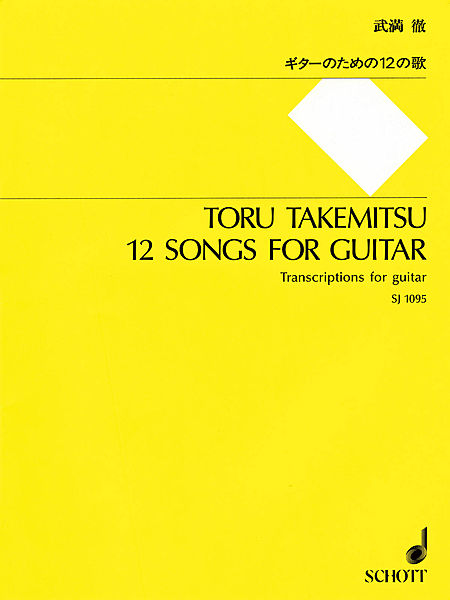
TAKEMITSU TORU 12 SONGS For GUITAR TRANSCRIPTIONS LIBRO SPARTITI SUMMERTIME BEATLES

TAKEMITSU TORU, 12 SONGS FOR GUITAR. SHEET MUSIC BOOK FOR GUITAR IN STABDARD NOTATION .

LIBRO DI MUSICA PER CHITARRA .
SPARTITI IN PENTAGRAMMA

A Song of Early Spring Akira Nakada -Amours Perdues Joseph Kosma -Here, There and Everywhere Lennon & McCartney -Hey Jude Lennon & McCartney -Londonderry Air Irish Folk Song -Michelle Lennon & McCartney -Over the Rainbow Harold Arlen -Secret Love Sammy Fain -Summertime George Gershwin -The International Pierre Degeyter -What a Friend Charles C. Converse -Yesterday Lennon & McCartney.

TORU TAKEMITSU: 12 SONGS FOR GUITAR
Transcriptions for guitar
Series: Guitar
Medium: Book
Guitar

Arranger: Toru Takemitsu
Composer: Various Composers

These are concert arrangements, sometimes free composition, based on famous popular and folk songs: Londonderry Air, Over the Rainbow, Summertime, A Song of Early Spring, Amours Perdues, What a Friend, Secret Love, The International, and four Lennon & McCartney tunes: Here, There and Everywhere; Michelle; Hey Jude; Yesterday.

A Song of Early Spring - Akira Nakada
Amours Perdues - Joseph Kosma
Here, There and Everywhere - Lennon & McCartney - 1966
Hey Jude - Lennon & McCartney - 1968
Londonderry Air - Irish Folk Song
Michelle - Lennon & McCartney - 1965
Over the Rainbow - Harold Arlen - 1938
Secret Love - Sammy Fain - 1953
Summertime - George Gershwin
The International - Pierre Degeyter - 
What a Friend - Charles C. Converse
Yesterday - Lennon & McCartney - 1965

30 pages

Prezzo: €37,99
€37,99
Condividi contenuti