CHITARRA - GUITAR

GREEN GRANT BEST OF SIGNATURE LICKS CD TABLATURE GUITAR STYLES TECHNIQUES OF THE JAZZ GROOVE MASTER

GREEN GRANT, BEST OF. A step-by-step breakdown of the guitar styles and techniques of the jazz groove master. SHEET MUSIC BOOK with CD & GUITAR TABLATURE .

Series: Signature Licks Guitar
Softcover with CD - TAB
Artist: Grant Green
Author: Wolf Marshall

Explore the many stylistic turns of one of the most influential guitarists in jazz! Renowned guitar educator Wolf Marshall takes you inside 13 of Grant Green's most popular tunes to examine his unique lines and musicality. Includes: Airegin - Born to Be Blue - Cool Blues - If I Should Lose You - My Favorite Things - Oleo - Sookie Sookie - Stella by Starlight - This Could Be the Start of Something Big - Tune Up , and more. The CD includes full demos. 88 pages

TiTLES :
Ain't It Funky Now, Pt. 2
Airegin
Born To Be Blue
Cool Blues
If I Should Lose You
Little Girl Blue
My Favorite Things
Oleo
Sookie Sookie
Stella By Starlight
This Could Be The Start Of Something Big
Tune Up
Wives And Lovers (Hey, Little Girl)


INTRODUCTION
Grant Green personifies the appellation "soul jazz." He is one of the most colorful
and exciting guitarists to have emerged from the genre, and his work remains the yardstick
by which subsequent practitioners are measured to the present day. In the early and
mid 1960s, Grant Green was a leading exponent of the burgeoning hard bop movement
and a studio stalwart of countless recording sessions that chronicled the rise of the art
form. In these productive years Green lent his singular blue-tinged touch and talents to
groups led by luminaries like Jimmy Smith, Herbie Hancock, Lee Morgan, Larry Young,
Art Blakey, Lou Donaldson, Jack McDuff, Stanley Turrentine, Hank Mobley, Baby Face
Willette, Johnny Hodges, Ike Quebec, and many others. Green was one of the most prolific
recording artists in the prestigious Blue Note stable. He recorded an unheard-of seventeen
albums in 1961 alone, his first year with the company. Between 1961 and 1965,
his classic jazz years, Green made more records than any other artist at Blue Note.
During this time, in addition to his many sideman sessions, he established a formidable
legacy with a substantial catalog of his own albums as leader.
By decade's end, Green had expanded his artistic vision to include the new
rhythm and blues hybrid dubbed "funky jazz." As a result, in the late 1960s and 1970s he
enjoyed a second prominent and influential career as performer and innovator and was
hailed as the quintessential "groove master" of jazz. Green's contributions in the medium
affected countless players on both sides of the jazz-rock divide. You can put George
Benson, Pat Martino, Henry Johnson, Stevie Ray Vaughan, Carlos Santana, Mark
Whitfield, Eric Gale, John Scofield, Joshua Breakstone, Andy Summers, Melvin Sparks,
Dave Stryker, Kevin Eubanks, and Peter Bernstein on the top of the list.
This is the first Signature Licks book/CD to explore the music, style, and playing
techniques of Grant Green in depth. The note-for-note transcriptions will provide you with
countless hours of revelation, and the matching audio will invite you to step into his musical
world to put the theory into practice-the way Green himself did in his formative years.
The selections reflect the diversity of Green's approach and are drawn from his various
musical epochs. You will find material from the hard bop and soul jazz genres, straightahead
standards and blues, modal jazz outings, and funky rock-influenced sessions, all
attesting to the many shades of Green that have endured to become a vital piece of the
mosaic we know and love as the American musical experience.

Figure4-010
Green's two-chorus solo in "If I Should Lose You" is one of the finest of his early
years, a superb example of his hard-bop improvisation in a moderate swing tempo.
Throughout, he cultivates a relaxed soulful feeling distinguished by thoughtful melodic
invention and an ever-present rhythmic congruence.
Green plays unmistakable blues-based licks in Bb minor over the song's minormode
areas to begin each A section in measures 1-3, 17-19, 33-35, and 50-51.
Moreover, his cadential lines at the end of each sixteen-measure section, beginning with
the opening break, are harmonically active bop melodies that emphasize the movement
to and arrival in Bb minor. Green also imbues the crucial secondary dominant-seventh
sections of the song with related minor-mode sounds. In measures 13-14 and 45-46, he
applies characteristic Bb minor lines to Eb9, and approaches each phrase with an altered
dominant melody based on F, the V chord of Bb minor, in measures 12 and 44.
Green favors swing-oriented ideas and generally simpler, more diatonic bop lines
during the contrasting but tonally related major-mode portions (in Gb and Dbmajor) of the
tune. Check out measures 4-11,21-27,36-43, and 53-58. These measures contain a
mixture of scalar and arpeggiated patterns shaped into memorable solo phrases. A case
in point is the voice-leading figure in measures 8-10, a well-known and favorite Green
cliche. This trademark phrase implies an Ebm7-Ab7-Dbmaj7 progression with a descending
minor-seventh arpeggio (Db-Bb-Gb-Eb), disguised chromatic motion arranged in a
familiar zigzagging pattern of Eb-Bb-D-Bb-Db-Bb-C, a rising 9th chord arpeggio
(C-Eb-Gb-Bb), stepwise descent (Bb-Ab-Gb), and a resolving target figure (Gb-E-F).
Green pursues and develops a simple motive in measures 37-39 with an
inescapable logic. Note the melodic expansion and rotation in this three-part phrase.
Green was a master of this sort of melodic invention, and was able, on the fly, to harness
the same elements and procedures used by great classical composers to produce similar
thematically coherent results in improvisation.
Green plays signature raked arpeggio patterns in measures 20, 57, 60, and
62. These short, crammed figures are articulated with sweep picking in both ascending
and descending motion. Green applies side-slipping (in this instance "slipping" a half step
higher) in measures 46-47 to momentarily suggest the remote key center of A minor over
Eb7 and Ebm7. The phrase is made more striking with his barrage of crammed triplet
rhythms. Green's prevalent use of eighth-note triplet rhythm patterns in the solo further
energizes important phrases throughout, most notably in measures 27-28, 32, 43-44,
47-48, and 63-64. Another ear-catching highlight is the funky double-stop figure in measures
51-52. Here Green combines an anchoring pedal tone (Db)with a descending chromatic line.
 

Prezzo: €39,99
€39,99

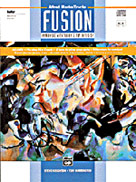
FUSION GUITAR, MASTERTRACKS. Steve Houghton and Tom Warrington CD

FUSION GUITAR, IMPROVISE MASTERTRACKS. CD

Alfred MasterTracks Fusion [Guitar]
Music by Steve Houghton and Tom Warrington

UPC: 038081084381

ISBN 10: N/A
ISBN 13: N/A
CATEGORY: Instrumental Series
FORMAT: Book & CD
INSTRUMENT: Guitar


The music selected for Alfred MasterTracks is intended to provide a broad range of improvisational material for soloists of all skill levels. An improviser needs to feel comfortable in a variety of musical settings, so we have designed a series that addresses a number of different styles, tempos, and keys. Therefore, this book will also serve as a very up-to-date listening reference for many popular Jazz, Latin, and Fusion grooves. In undertaking this project, we decided that we would try to appeal to a wide variety of musicians, from the most raw, beginning improviser all the way to the most advanced improviser. As a result, we have provided charts that indicate a basic structure of harmony and rhythm, plus some very basic melodies for beginning improvisers to play around with, since one good starting point for improvisation is the melody. (These melodies are not recorded on the tracks, however.) More advanced players may want to disregard these melodies completely and dig into blowing over the tracks, worki ng on whatever materials they are currently practicing. It is beyond the scope of this book to present a complete manual for improvisation. Rather, we chose to present some varied harmonic and rhythmic situations that would allow improvisers to practice their craft.


HOW TO USE MASTERTRACKS

After we recorded Essential Styles, Books 1 & 2 (a play-along series for bass and drums), many players said that they would've enjoyed a similar series for other instruments. With that idea in mind, Alfred MasterTracks was born, completely devoted to being a contemporary instrumental play-along for all instruments, not a bass/drum method. These tracks, rather than being designed as a cross section of styles, are more of a collection of varied harmonic and rhythmic situations that melodic improvisers will encounter. For example, in the jazz book, you will find three different versions of the blues. They are obviously the same form and general style, but in different keys and at various tempos in order to provide a more thorough blues "workout." All of the selections in the Alfred MasterTracks Series were professionally recorded and mixed at Chick Corea's Mad Hatter Studios and are of the highest quality. Piano and bass players will be interested to note that the recording is mixed with the piano on the right channel and the bass on the left, so that either of these two rhythm section players can dial out their respective instruments and play accompaniment parts along with the tracks, in addition to soloing with them. Although it is true that the term "improvisation" is foreboding for some young musicians, the selections in these texts have been structured with easy melodic lines which can be used as a point of departure for even the most inexperienced improvisers. The idea here is to have some good-sounding tracks to play along with, and to have some fun! So, without becoming completely encumbered with a lot of intellectual baggage regarding improvisation, young players might simply put on the CD or cassette and start trying to play along by ear. Or they might read the simple melodies that have been provided as a means of gaining some understanding of the form and harmonic content, and proceed from there. By playing portions of the melodies, and then embellishing them slightly, young players will soon find themselves creating their own melodies using the given material as the springboard. Some of the tracks are played in such a way that the harmonies are not extremely complex; altered chords and polyrhythms in the comping have been minimized. On other tracks, these elements are more fully utilized, creating a nice range of intensity levels. The idea is that, while there is an abundance of material here for beginning improvisers, there is also plenty to challenge advanced players. So, have fun with these tracks. We hope they will be a valuable tool in your quest for musical excellence.


FUSION


Foreword / How to Use the Alfred MasterTracks Series

The Soloist and the Rhythm Section .

Thoughts on Improvisation

Understanding Chord Symbols

Understanding Rhythm

Creating Your Own Style

Harmonic Overview - Fusion


Contemporary Fusion-iv- V-Isus (3 :07) 10

CD Track Concert Key

#1 A Major K.C. Blues-bright blues (2:53) .

#2 F Major Blues Shuffle-medium tempo (3:51)

#3 G Major Slow 12/8 Blues Shuffle (4:02)

#4 C Major Contemporary Fusion iv – V -Isus

#5 D Major Up-Tempo Rock & Roll Blues-straight 8ths (2:49)

#6 F Major Half-Time Rock Ballad (3:31)

#7 E minor Medium Funk-minor blues (3:41)

#8 B~minor ii-V Funk Shuffle (5:05)

#9 E minor Techno Funk-8-bar minor blues (3:09)

#10 D Major Early Funk (3:10)

#11 C minor Swing 16ths (2 :56)

#12 F minor Hip-Hop Funk with 16 bar section/solo with guitar & drums (2:53)


About the Authors


Note: All tracks were recorded and mastered at A440.

You may need to make tuning adjustments to match the playback speed of your audio equipment.


Bill Cunliffe, Keyboards

Paul Viapiano, Guitar

Tom Warrington, Bass

Steve Houghton, Drums

Brian Kilgore, Percussion

Recorded and mixed at Mad Hatter Studios, Los Angeles

Engineered and mastered by Talley Sherwood


Exciting play-along tracks for beginning or advanced improvisers!

Digitally recorded and mastered, these top-quality play-along tracks on CD or Cassette provide an invigorating way for you to broaden your improvisation skills while experiencing what it's like to play with a hot rhythm section. The recordings are highly effective as a listening guide to many of today's most popular grooves. Numerous styles are covered in the series, including blues, minor blues, ballads, modal tunes, bebop, rock & roll blues, blues shuffle, funk shuffle, fusion, techno funk, hip-hop, bossa nova, baion, samba, son go, Latinfusion and more.

Also Available for the following instruments:

C Treble Clef (Flute, Vibes, Oboe, Violin)

Bb (Clarinet, Trumpet, Soprano Saxophone,

Tenor Saxophone, Baritone T.c.)

Eb (Alto Saxophone, Baritone Saxophone)

C BassClef (Trombone, Baritone B.C., Bassoon, Tuba, Cello)

Guitar (Acoustic or Electric)

Keyboard (Electronic Keyboard, Synthesizer, Acoustic Piano)

Bass (Acoustic or Electric)

Book & CD

Alfred Publishing Co., Inc.

Prezzo: €21,00
€21,00

GERSHWIN GEORGE-THE COLLECTION FOR SOLO GUITAR-Howard Morgen-CD TABLATURE LIBRO SPARTITI

GERSHWIN, THE COLLECTION FOR SOLO GUITAR, Howard Morgen. Contiene 16 arrangiamenti per chitarra, fra le quali Summertime, e I got rhythm. CD TABLATURE

LIBRO DI MUSICA., CON CD

SPARTITI PER CHITARRA CON:

ACCORDI, PENTAGRAMMA E TABLATURE. 


George Gershwin / arr. Howard Morgen

SERIES: Jazz Masters Series
CATEGORY: Guitar Personality
FORMAT: Book & CD

Sixteen classic Gershwin standards in sophisticated solo guitar arrangements exactly as recorded by Howard Morgen. Titles
Includes the Following Selections:

Title Composer

A FOGGY DAY (IN LONDON TOWN)
GERSHWIN, GEORGE/L: GERSHWIN, IRA

BESS YOU IS MY WOMAN NOW (from "Porgy and Bess")
GERSHWIN, GEORGE/L: GERSHWIN, IRA/L: HEYWARD, DUBOSE/L: HEYWARD, DOROTHY

BUT NOT FOR ME (FROM "GIRL CRAZY")
GERSHWIN, GEORGE/L: GERSHWIN, IRA

FASCINATING RHYTHM
GERSHWIN, GEORGE (CA)/ GERSHWIN, IRA (CA)

HE LOVES AND SHE LOVES
GERSHWIN, GEORGE (CA)/ GERSHWIN, IRA (CA)

HOW LONG HAS THIS BEEN GOING ON?
GERSHWIN, GEORGE/L: GERSHWIN, IRA

I GOT RHYTHM
GERSHWIN, GEORGE/L: GERSHWIN, IRA

IT AIN'T NECESSARILY SO (FROM "PORGY & BESS")
GERSHWIN, GEORGE/L: GERSHWIN, IRA/HEYWARD, DUBOSE/HEYWARD, DOROTHY

LOVE IS HERE TO STAY
GERSHWIN, GEORGE/L: GERSHWIN, IRA

LOVE WALKED IN
GERSHWIN, GEORGE/L: GERSHWIN, IRA

MY MAN'S GONE NOW (REMAKE TAKE)
GEORGE GERSHWIN, IRA GERSHWIN, DU BOSE HEYWARD

NICE WORK IF YOU CAN GET IT (FROM "DAMSEL IN DISTRESS")
GERSHWIN, GEORGE/L: GERSHWIN, IRA

OH, LADY, BE GOOD!
GERSHWIN, GEORGE/L: GERSHWIN, IRA

SOMEONE TO WATCH OVER ME (FROM "OH, KAY!")
GERSHWIN, GEORGE/L: GERSHWIN, IRA

SUMMERTIME (FROM "PORGY AND BESS")
GERSHWIN, GEORGE/L: GERSHWIN, IRA/HEYWARD, DUBOSE/HEYWARD, DOROTHY

THEY CAN'T TAKE THAT AWAY FROM ME (FROM "SHALL WE DANCE")
GERSHWIN, GEORGE/L: GERSHWIN, IRA

Prezzo: €33,99
€33,99

GETTING INTO JAZZ FUSION GUITAR CD TABLATURE Diminished Scale Harmony-Seventh Chords-MEL BAY

GETTING INTO JAZZ FUSION GUITAR. LIBRO CD E TABLATURE

LIBRO METODO DI MUSICA JAZZ FUSION CON CD
SPARTITI PER CHITARRA.
GRAFICO DELLA TASTIERA, ACCORDI, PENTAGRAMMA E TABLATURE.

Product Description:

In Getting Into Jazz Fusion Guitar, author Scott Miller presents the most common scales used in Jazz Fusion and other modern music styles. Scott discusses each mode of the Major, Melodic Minor, Harmonic Minor, Diminished, and Whole Tone scales and provides the student with conventional as well as three-note-per-string scale patterns. Scott shows many chord fingerings for each scale in standard notation and guitar tablature. Also included is a play-along CD containing one or two-chord progressions for each scale, helping guitarists solo or improvise over chords. Because Scott presents the material in Getting Into Jazz Fusion Guitar in a logical, "easy-to-understand" fashion, all guitarists are sure to benefit from this book. This book and CD set is sure to please!

Product Number: 99925BCD
Format: Book/CD Set
ISBN: 0786662484
UPC: 796279080729
ISBN13: 9780786662487
Series: Getting Into
Publisher: Mel Bay Publications, Inc.
Date Published: 4/2/2002

Contents:

Chapter 1: Music Theory Fundamentals
Intervals
Major Scale Construction
Accidentals
Major Scales
Interval Classification
Interval Quality
Perfect Intervals
Major Intervals
Augmented Intervals
Minor Intervals
Diminished Intervals
Enharmonic Intervals
Simple and Compound Intervals
Interval Inversion
Triads
Triadic Inversion
Harmonized Scales
Minor Keys
Seventh Chords
Chord Function

Chapter 2: Scales and Modes
Major Harmony
Modes of the Major Scale
Melodic Minor Harmony
Modes of the Melodic Minor Scale
Harmonic Minor Harmony
Modes of the Harmonic Minor Scale
Diminished Scale Harmony
Whole-Half Diminished Scale
Half-Whole Diminished Scale
Whole-Tone Scale Harmony
The Whole-Tone Scale

Chapter 3: Progressions for Practice

Prezzo: €27,99
€27,99

BILL EVANS THE GUITAR BOOK Sid Jacobs CD TABLATURE CHITARRA SPARTITI LIBRO Funkallero

BILL EVANS, THE GUITAR BOOK. di Sid Jacobs. Funkallero -Laurie -Letter to Evan -My Bells -Orbit -Peace Piece -Peri's Scope -Remembering the Rain -A Simple Matter of Conviction -Time Remembered -Turn Out the Stars -The Two Lonely People -Very Early -Waltz for Debby. SHEET MUSIC BOOK WITH CD & GUITAR TABLATURE. 

LIBRO DI MUSICA JAZZ CON CD. 

SPARTITI PER CHITARRA CON:

ACCORDI, PENTAGRAMMA, TABLATURE. 

by Sid Jacobs
Series: Guitar Solo
Softcover with CD - TAB
Artist: Bill Evans
Composer: Sid Jacobs

In this book/CD pack, Musicians Institute instructor Sid Jacobs, who organized the school's Jazz Guitar elective, translates the playing of quintessential jazz pianist Bill Evans for guitarists to enjoy. Includes music, instruction and analysis of 14 Evans' pieces, all in their original keys and with full demonstration tracks on the accompaniment CD.
"Sid's marvelous transcriptions of Bill Evans' tunes for solo guitar have just raised the guitar to a new level. This is contemporary guitar at its harmonic best." Diorio

48 pages

Prezzo: €24,99
€24,99

FITE BUDDY FINGESTYLE JAZZ GUITAR SOLOS CD TABLATURE BOOK CHITARRA SWING LIBRO MEL BAY

FITE BUDDY, FINGESTYLE JAZZ GUITAR SOLOS. Comprende anche pezzi per 2 chitarre. SHEET MUSIC BOOK with CD & GUITAR TABLATURE. 


LIBRO DI MUSICA JAZZ SWING, CON CD. 

SPARTITI PER CHITARRA CON : 

ACCORDI, PENTAGRAMMA, TABLATURE.


https://youtu.be/rmpDn4c0FZs


https://youtu.be/sa2pCp8BEi0


https://youtu.be/2tkO1bIgz38


https://youtu.be/_lnlZMAlt8c


https://youtu.be/63SNjHdJS3Q

Prezzo: €99,95
€99,95

ELLIS HERB BLUES SHAPES FOR GUITAR IN TAB BOOK & CD TABLATURE CHITARRA LIBRO METODO

ELLIS HERB, BLUES SHAPES FOR GUITAR IN TAB. SHEET MUSIC BOOK WITH CD & GUITAR TABLATURE.


LIBRO METODO DI MUSICA JAZZ, CON CD.

SPARTITI PER CHITARRA : 

ACCORDI, DIAGRAMMA DELLA TASTIERA, PENTAGRAMMA, TABLATURE . 

Prezzo: €59,99
€59,99

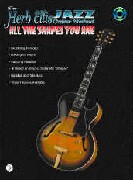
ELLIS HERB JAZZ GUITAR METHOD: ALL THE SHAPES YOU ARE book CD TABLATURE GRIGLIA DEGLI ACCORDI

ELLIS HERB, JAZZ GUITAR METHOD: ALL THE SHAPES YOU ARE. SHEET MUSIC BOOK with CD & GUITAR TABLATURE.


LIBRO METODO DI MUSICA JAZZ, CON CD.

SPARTITI PER CHITARRA CON :

ACCORDI, PENTAGRAMMA, TABLATURE. 


GRIGLIA DEGLI ACCORDI


The Herb Ellis Jazz Guitar Method: All the Shapes You Are
By Herb Ellis and Terry Holmes
Guitar Book & CD
Item: 00-EL9531CD
Artist: Herb Ellis
Author: Terry Holmes
Instrument: Guitar
Format: Book & CD
Page Count: 48
Item Number: 00-EL9531CD
ISBN 10: 1-57623-342-1
ISBN 13: 978-1-57623-342-9
UPC: 029156204544
Prezzo: €36,99
€36,99

AL DI MEOLA MUSIC WORD PICTURES Artist Transcriptions LIBRO Guitar TABLATURE CHITARRA PACO

DI MEOLA AL, MUSIC, WORD, PICTURES. SHEET MUSIC BOOK wirh GUITAR TABLATURE .

LIBRO DI MUSICA LATIN JAZZ FUSION .

SPARTITI PER BASSO E CHITARRA .

ACCORDI E PENTAGRAMMA.


Series: Transcribed
Artist: Al Di Meola

A collection of Al's greatest, complete with biography, discography, and complete description of Al's special techniques. 144 pages.


AL DI MEOLA

EDITORIAL NOTES
The music in this book contains transcriptions taken directly from scores and recordings of Al Di Meola. The transcriptions include the guitar lines, bass lines, and chord progressions. The tunes were chosen by Al himself, and although he would have wished to have included more music, this was impossible due to space limitation. Unfortunately, it does not contain all of AI's lengthly solo breaks written out again due to space limitation. Each tune consists of the main thematic sections fully written out, with the solo break sections being indicated by showing the basic background" riff," with repeats included.
The order of the music, as it appears in this book, has nothing to do with the level of difficulty of the music, but rather the ordet shows the chronological progression of AI's music from his first solo album to his most recent one.

Al plays most of his music very up tempo, and it sounds incredibly hard to play. But one very important discovery I made while we worked on transcribing the music to print was that once you see the music written out, it is not very hard to read. Just work on the following practice suggestions, as well as those Al gives in the section of this book entitled "Technical Talk". An added help would be to use "AI Di Meola's Picking Techniques" book available.

As everyone knows, the main elements in AI's guitar playing are speed and accuracy. Al suggests that anyone attempting to play his music practice it slowly with accuracy in both the left and right hands, and you will in time be able to play his music. In addition, the main musical element in AI's writing is the use of scales in both his thematic and solo break structures. AI's suggestion is to study the scales in all positions as an aid. Addressing yourself to these above mentioned elements of AI's playing and writing styles will help you tremendously not only in playing AI's music, but also in the writing and playing of your own music, as the elements of speed, accuracy, and scale work will broaden your musical creativity.
It is important to note that the playing positions and fingerings contained in these transcriptions are the choosing of the editor, and are not necessarily those that Al uses himself. They are those that seem most comfortable to me.
You should feel free to play the music in any position you feel comfortable with. As Al has stated many times, you should know your fretboard so well that you can play the given music in any position feasible. But for those of you who don't know your fretboard well, I felt it necessary to include one way you could play these tunes.
You should also note that the bass lines contain no fingerings or position markings, since I felt it better to leave it up to the player. Of course, keyboard players can use both lines, or play the chord changes along with the guitar line.
I do hope that you get many things from this book, but most of all I hope you have fun and enjoy it.
Music Editor


... Do you have any suggestions for how to learn these things?
I would recommend books that show the positions and ways to play them. Check out Berklee's books (Berklee Press Publications), because I know their advanced stuff to be very good; it's probably the same with their beginning books, too. I would suggest starting your scale education with the major and minor scales, and,after that, diminished, augmented, and whole-tone. Then, depending on what kind of music you ant to play, the modes should be learned. My theory about this kind of thing is that you should never stop learning.
Once you've got it you can play whatever you want, and your playing will sound more advanced, thus achieving a better understanding of the instrument.

How does this apply to the way you play now?
ell, now I know where to play on the instrument and what to do to get the sound I want. And because it comes o easily, I can play more in terms of feelings. You can spend a lifetime playing with the "thinking" process of hat scale to put against what chord. If you were to analyze my playing, you would find elements of the phrygian, dorian, mixolydian, and locrian modes etc.


Would you describe your left-hand technique?
My left.hand position is one from which all four fingers have easy access to the fingerboard. It doesn't vary much from that, because it is natural for me to use all four fingers to play my ideas. I really find it frustrating to see so man rock players using just the first and third fingers. It isn't necessarily wrong, but it is impossible for almost an one to play any kind of scale with and fluidity.


What about your picking style?
It is just normal alternating picking. Because I was taught that way from the beginning, it is very natural for me, and I really don't think about it. Sometimes I have my wrist on the bridge, and sometimes it is free-floating. And although my pick hits the string flat most of the time, it will change, depending on what sound I want.


How do you come up with the rhythms in your playing?
I guess they come from a love of drumming and Latin music. My involvement with Return To Forever also helped. Unlike a lot of electric guitarists, who play mostly lagato, I tend toward playing rhythms like a drummer or percussionist would. I try to incorporate both rhythmic, percussive lines with the more legato phrasings. A lot of the trickiness of many of my scale runs is involved with the rhythms and where the accents fall.


How do you work on these tricky runs?
It depends, because sometimes one apparently tricky passage will flow really easily, while another passage will be alot more difficult. I'll then have to sit down and work out the fingering. I usually find it best to work on passages at a slow tempo with correct rhythm.


Is there a good way to work on alternate picking?
I would suggest picking three or four notes, and working on those. Too often, players who are trying to improve their right-hand dexterity get hung up by trying to play too many notes in the left hand. I hear a lot of players running whole scales from the sixth string to the first and playing them really sloppy. So, I say to make it very basic, ing only a few notes and play slowly with perfect rhythm in time. That, in itself, is a task.


Do you work on your own picking very much now?
ell, I want to get even better. There are a lot of lines in my music that are tricky for the right hand, and I only know that I've really got it when I don't have to think about it at all. I find that going over these runs before a performance serves as a good warm-up also. I practice tricky things with skips and jumps in them, but it's always omething that I am going to be playing in the music. One thing that makes some lines tricky is their rhythm. When I'm playing something very rhythmic, I use my left and right hands to enhance different parts of the passage. For example, I mute strings a lot.


How did muting become a part of your playing technique?
It was actually very natural. When I first started taking guitar lessons, I was very self-conscious in just playing around other people. I never really wanted anyone to hear what I was doing, because I was very conscious of their pace, too. I never wanted to have people say, "What's that noise?" In those days, electric guitar was not accepted like it is today. I was very shy, so I started muting the strings with my hand to cover up the volume. Years later, I ould mute the strings as a musical effect, but only then did I realize that it had become a part of my style. ...


TITOLI:
Al Di's Dream Theme FOR GUITAR AND BASS - SOLO IN PENTAGRAMMA, SENZA TABLATURE
Casino FOR GUITAR AND BASS - SOLO IN PENTAGRAMMA, SENZA TABLATURE
Dinner Music Of The Gods FOR GUITAR AND BASS - SOLO IN PENTAGRAMMA, SENZA TABLATURE
Egyptian Danza FOR GUITAR AND BASS - SOLO IN PENTAGRAMMA, SENZA TABLATURE
Electric Rendezvous FOR 2 GUITARS AND BASS - SOLO IN PENTAGRAMMA, SENZA TABLATURE
Elegant Gypsy Suite FOR GUITAR AND BASS - SOLO IN PENTAGRAMMA, SENZA TABLATURE
Lady Of Rome, Sister Of Brazil FOR 2 GUITARS  - SOLO IN PENTAGRAMMA, SENZA TABLATURE
Land Of The Midnight Sun FOR GUITAR AND BASS - SOLO IN PENTAGRAMMA, SENZA TABLATURE
Midnight Tango FOR GUITAR AND BASS - SOLO IN PENTAGRAMMA, SENZA TABLATURE
Morning Fire FOR GUITAR AND BASS - SOLO IN PENTAGRAMMA, SENZA TABLATURE
Race W/Devil On Spanish Highway FOR GUITAR AND BASS - SOLO IN PENTAGRAMMA, SENZA TABLATURE
Ritmo De La Noche FOR GUITAR AND BASS - SOLO IN PENTAGRAMMA, SENZA TABLATURE

Passion, Grace & Fire, con 2 TABLATURE, della chitarra di PACO de LUCIA e di AL DI MEOLA

Prezzo: €29,99
€29,99

DI MEOLA AL SOLOS Mediterranean Sundance GUITAR TABLATURE SPARTITI CHITARRA LIBRO TECNICA

DI MEOLA AL, SOLOS. SHEET MUSIC BOOK WITH GUITAR TABLATURE .

LIBRO DI MUSICA JAZZ FUSION .

SPARTITI PER CHITARRA :

ACCORDI, PENTAGRAMMA, TABLATURE . 

Contiene esempi da: Andonea -the embrace -global safari -indigo -kiss my axe -last tango for Astor -Mediterranean sundance -Morocco -one night last June -parrada -passion, grace & fire -ritmo de la noche -scenario -sequencer -song with a view -traces of tear -vistaero. 

This exploration of DiMeola's music includes transcribed solos and lessons and 17 songs:

AL DI MEOLA SOLOS
Series: Guitar School
Publisher: 21st Century Publications
Artist: Al Di Meola

Inventory #HL 00660336
ISBN: 9780793536719
UPC: 073999603361
Width: 9.0

TITLES : 

Andonea
The Embrace
Global Safari
Indigo
Kiss My Axe
Last Tango For Astor
Mediterranean Sundance
Morocco
One Night Last June
Parranda
Passion, Grace & Fire
Ritmo De La Noche
Scenario
Sequencer
Song With A View
Traces Of A Tear (Di Meola)
Vistaero

96 pages

Prezzo: €29,99
€29,99
Condividi contenuti