CHITARRA - GUITAR

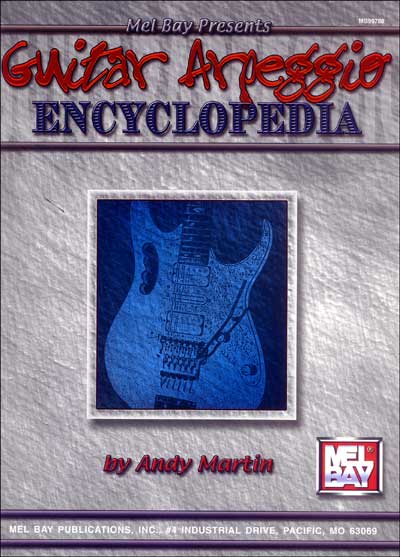
GUITAR ARPEGGIO ENCYCLOPEDIA ANDY MARTIN TABLATURE LIBRO SPARTITI CHITARRA PENTAGRAMMA

GUITAR ARPEGGIO ENCYCLOPEDIA, Andy Martin. TABLATURE

Product Description:
Throughout this book you will be exposed to many different types of arpeggios, their families, a horde of fingerings, how to use them and much more. With practice and patience you will be able to have total control on the fingerboard and you will be able to execute arpeggios with fire and finesse like the best players do. By understanding arpeggios it will immensely improve your improvising for song writing and soloing as well as creating majestic melodies and hooks. All of the material is presented in notation and tablature. Throughout my book you will be exposed to many different types of arpeggios, their families, a horde of fingerings, how to use them and much more. First, I would like to define what an arpeggio is in the simplest form. An arpeggio is simply chord tones played seoarately. For instance, if you played an A minor barre chord at the 5th fret with the root note on the sixth string and instead of strumming the chord, try muting the string slightly with your picking hand (rest your picking hand slightly on the bridge of the guitar). Then, pick each note separately and use all down strokes as you ascend and all up strokes as you descend. This is one of the simplest ways to play an arpeggio. You can do this to all the chords you know and you also can experiment with muting the strings or letting the strings ring out as you play them. Arpeggios are also considered as tonal centers. A tonal center tells you what family you belong to and is the center of tonality. For exempIe:

If you take a major scale 1-2-3-4-5-6-7 the tonal center is the 1-3-5-7 and it is colored with 2-4-6.

If you look at a G major scale the notes diatonically are G-A-B-C-D-E-F#. G is the first degree, A is the second degree, B is the third degree, C is the forth degree, D is the fifth degree and so on.

The tonal center in a G major seventh arpeggio is G B D F#. You can play these notes in any order but traditionally they are played in succession with each other 1-3-5-7.

You should also look at arpeggios as the outline of a scale or chord and you can add your colors to enhance them with flavor. The best analogy I can provide you with is to think of an artist with his pallet. He starts his painting or drawing with an outline, our arpeggio and then he puts a splash of red, green, blue, etc, to make his painting more vibrant. We take our outline, the arpeggio and enhance it with our colors, modal degrees, the 2, 4, 6, 9, 11, 13 or altered colors, sharps or flats. This way we can paint a picture with audibles instead of visuals, then we compose a picture, a story with harmonic content. In my book you will learn how to learn and obtain total control of executing arpeggios and why it is important to have a strong bakground in them. By understanding arpeggios it will immensely improve your improvising for song writing and soloing as well as creating majestic melodies and hooks. Arpeggios are very vocal and lyrical so you can create melodic melody lines or use arpeggios with blistering sweeping speed, incorporating them into you solos, compositions or even as pick up lines. A pick up line is a part of a composition that is played in the present and targets the future. For example, if the solo was about to be approached in your composition, you can playa lick, run, or an arpeggio in the measure before the solo starts to enhance or build up to the solo . Many great guitarists use arpeggios in their compositions and in their soloing. With a lot of practice and patience you will be able to have total control on the fingerboard and you will be able to executed arpeggios with fire and finesse like the best players do. You should also listen to all styles of music even if some styles don't appeal to your ears. Just because you don't like a style of music, it does not mean that you won't learn something from just listening to it. Being musicians and learning our language is what makes a difference in players. We must educate our minds and ears to their fullest extremes. Here are some of my favorite guitarists and composers and their works that exhibit their Arpeggio playing techniques.
Steve Vai: Flexible, Eat Em and Smile, Skyscraper, Passion and Warfare, Alien Love Secrets, Fire Garden, Ultra Zone
Frank Gambale Thunder From Down Under, Passages, Noteworker
Shawn Lane Power of Ten, Tritone Fascination (I love this record)
Yngwie Malmsteen Trilogy, Marching Out, Fire and Ice, Facing the Animal. (When I first started to play, I was studying classical guitar and I heard some of Yngwie's work. I was attracted to the way Yngwie exhibited total control of his exotic 
arpeggios and was a major influence in my passion.)
Paul Gilbert Street Lethal, King of Clubs (Paul has an amazing picking technique that was showcased with Racer X)
Johann Sebastian Bach Goldberg Variations, Trio Sonatas, Piano Sonatas, Toccata and Fugue in D minor, Partita NO.2 in D 
minor, Suite for Lute in E Major, (too many to list!)
Ludwig Van Beethoven Fur Elise, Piano Sonatas Nos. I, 2 & 3, Piano Concertos Nos. 2 & 5 "Emperor"


Contents:
1) Acknowledgements
2) Introduction
3) How to Approach This Book
4) Arpeggios Fingerings
5) Arpeggios Families & Interval Formulas
Major Arpeggios
Minor Arpeggios
Diminished
Major 7th
Dominant 7th
Minor 7th
Minor 7th 5
Diminished 7th
Augmented
Major add 9
Minor add 9
Major 6th
Minor 6th
Major sus 4
Minor sus 4
Major 9th
Dominant 9th
Minor 9th
Dominant #9th
Major 7th add #11
Dominant 11th
Minor 11th
Major 13th
Dominant 13th
Minor 13th
Minor/Major 7th
Minor/Major 9th

6) Picking Techniques
7) Superimposing Arpeggios
8) Harmonizing Arpeggios
9) Parallel Harmonies
10) Modal/Diatonic Harmonies
11) Very Violent Riffs and Licks!

Prezzo: €31,99
€31,99

GUITAR COMPENDIUM 1 Technique / improviasion / musicianship / theory Howard Roberts & Garry Hagberg

GUITAR COMPENDIUM 1, technique/improviasion/musicianship/theory. Howard Roberts & Garry Hagberg. Picking e tecnica della mano destra, string skipping, arpeggi, connessione vocale, accordi, scale e la loro armonizzazione, il principio di economia, problemi chitarristici e la loro risoluzione, il voicing.


Detailed Description

Guitar Compendium, Volume 1. (The Praxis System). By Howard Roberts, Garry Hagberg. For Guitar. Method Book. Published by Advance Music.

Style & Craft - Troubleshooting 1 - The Fingerboard Map: Chords The Guide To Twentieth-Century Guitar: Praxis is the first instructional book of its kind. It takes a strikingly new and refreshing approach to learning guitar, and it is carefully designed to guarantee efficient practice with rewarding results. Establish Your Own Musical Direction: Whether your playing falls under one of the more traditional conventional styles, or whether you're a composer and arranger or exploring new musical regions and establishing your own musical direction or personal fusion of musical ideas and influences, Praxis has what you need. 162 pages.


I: Style and Craft

II: Troubleshooting 1

III: Fingerboard Map - Chords


Preface: What Is Praxis?

Praxis: The Guide To Twentieth-Century Guitar:

EfficientPractice And Results Now

Chart Your Own Course

A Comprehensive View Of Guitar

Praxis is the firstinstructional book ofits kind. Ittakes a strikingly new and refreshing approach to learning guitar, and it is carefully designed to guarantee efficient practice with rewarding results. The Praxis program makes available to all guitarists a comprehensive and unified body of instructional material, and within Praxis, students and teachers are given the freedom to chart their own courses according to their own musical interests and needs.


Who Needs Praxis?

The Music Is Already Inside You

Musical Tools For All Styles

Make The Music You Want To Make

Whether your playing falls under one of the more traditional conventional styles, or whether you're a composer and arranger or exploring new musical zones and establishing your own musical direction or personal fusion of musical ideas and influences, Praxis has what you need. Unlike traditional guitar books, Praxis realizes that music is already inside you and that itonly needs an avenue to get out. Through the development ofmusical skills,Praxis provides such avenues.


The Musician Within:

Theory Can Paralyze

Learn Through The Instrument, Not On It

Get The Sound Out Now

Use Fingerboard Visualization

Hear It In Your Head, Then Play It

Too often in learning to perform music, an initial overabundance of theoretical information precedes the mastery of specific skills. As a result, learning toplay appears tobe overwhelmingly complex: theory paralyzes practice. In these volumes this order is reversed. The material is presented, not first in the abstract and only later placed on the Instrument, but rather through the instrument. Thus, the name of the collection ("Praxis" comes from the Greek word meaning "practice" and "to do") accurately reflects its general orientation. Play it first,getting sound and satisfaction out of the guitar immediately, and musical understanding will naturally follow. Praxis lets you choose the precise subject you want and immediately provides relevant musical examples. And these examples are presented in such a way that the principle behind the example is always clear, thus allowing you to apply it directly to your music. Also, although musical fashions come and go, style endures. Praxis provides the player with all the building blocks ofa style which is individual, masterful and lasting.


One Step Beyond:

Originators Vs. Imitators

Musicianship Skills

Encourages Musical Innovation

Traditional guitar books try to teach you to play someone else's music. That approach tends to produce imitators rather than originators, and real musicianship skills are picked up slowly and almost by accident. Praxis takes you directly to being able to play anything that you want ...someone else's music, your own music, and everything in between. Praxis takes you one step beyond.


Over a large number of years we have enjoyed the great benefit of advice, encouragement, and assistance from a large number of people. These include the many guitarists who have studied with us at one time or another at guitar seminars throughout the United States, England, and western Europe, at the Musicians' Institute in Los Angeles, at the School of Music of the University of Oregon, at Lane Community College, and at numerous :-..mher colleges and universities. We have also had the benefit of many conversations, both verbally and musically, on many topics covered in these volumes with guitar teachers of many styles, and we hope one expression of thanks will extend to all. Professional musicians, music educators, educational psychologists, musicologists, philosophers, and many others have been generous with their thought on the topics covered in these volumes; we have found such people throughout North America and Europe, and we are fortunate to have had their help. Some whose support has been particularly valuable over the long course of this project are Horstmann, Jay Roberts, Ed Wight, and Catherine Wilson. We owe a very distinctive debt of gratitude to Evelyn Palmer, who has given us detailed suggestions on earlier versions yielding many improvements, and, more recently, a fully comprehending and close reading of the proofs that saved us from the inaccuracies that managed to survive her earlier scrutiny. Sympathetic understanding and constructive criticism are great luxuries for a work in progress, and we are grateful to all these friends for having afforded them. Lastly, for well over a decade we have worked on manuscripts at many places and at all hours, and Patty Roberts has been unfailingly cheerful in the production of typescripts at many stages of development and unfailingly willing to enter the seemingly endless revisions and additions, which, to her understandable disbelief, have finally come to an end. Authors cannot really repay such support, but as a gesture of thanks for those indispensable long-term labors this book is dedicated - from both of us - to her.


Table of Contents

Preface: What Is Praxis?

A Praxis Prologue


Section I

Style & Craft:

The Alchemy of Unique Style

Introduction to Section I: The Style-Craft Connection


Part 1:Inventory of the Basic Moves

Chords

Scales

Arpeggios

Intervals

Synthesis of Moves


Part 2: Inventory of the Basic Moves - continued

Hammer-Ons

Pull-Offs

Legato

Staccato

Glissando

Synthesis of Moves 2


Part 3: Inventory of the Basic Moves - continued

Bends

Vibrato

Dynamics

Picking and Right-Hand Techniques

Finger Independence, Stretching, Endurance, and Stamina

Synthesis of Moves 3

Note on the Inventory of Basic Moves, the Process of Improvisation, and Learning a Musical Language


Section II

Troubleshooting:

The Guitarists' Guide to Problem-Solving

Introduction to Section II: Ailments and Remedies


Part 4: Preliminary Questions

Making Practice Time More Efficient

Preventing Tired-Lick Syndrome

What Else to Do with the Em7 Arpeggio

My Solo: The Em7 Arpeggio and a Major Scale

The Weak Link of Technique: the Little Finger


Part 5: Further Questions

Not Quite Ready to Perform, but Next Week

Getting and Staying in Tune

Getting a Musical Statement Out of Scales, Arpeggios, Harmony

Smooth Notes Beyond the Four Fret Position

Putting Chords Together Into Progressions That Make Sense


Secnon III:

The Fingerboard Map: Chords

Introduction to Section III .


Part 6: The Linear Conception of Harmony

The Idea of Linear Movement .

Chords as Linear Consequences .

Internal Voice Movement .

Chord Explosion and Tension Resolution .

Recognizing Chordal Shapes .


Part 7: Chord Construction and Control

The Idea of Chord Construction .

Chord Constructions .

Further Constructions .

Further Constructions .

Further Constructions .

Further Constructions .


Part 8: Chord Transformation

The Idea of Chord Transformation .

Further Transformations .

Further Transformations .

Further Transformations .

Further Transformations .


Part 9: The Harmonized Scale

Major Diatonic Harmony .

Quartal Harmony .

Passing Diminished Chords .


Part 10: Chord Progressions Through the Individual Voice

Voicings On All Sets of All Strings .

Chord Transformations - continued .

II-V-I Progressions .


Part 11: Creative Directions

Upper Register Voicings .

Inner Voice Movement .

Further Into Voice Leading .

Close Voicings .

Fifth In The Bass .

Power Chords .


Part 12: Further Creative Directions

Harmonizing Any Note .

Common Tones .

Contrary Motion .

Pedal Points .

Bi-Tonal Harmony .

The Authors .

Prezzo: €99,99
€99,99

CREATIVE CHORD SHAPES guitarist's guide chord forms CD JAMIE Findlay CHITARRA METODO LIBRO

CREATIVE CHORD SHAPES, guitarist's guide to open string chord forms) MUSICIANS ISTITUTE. By JAMIE Findlay.

LIBRO METODO CON CD. 

SPARTITI PER CHITARRA CON: 

ACCORDI, PENTAGRAMMA, TABLATURE. 

Jamie Findlay
Publisher: Musicians Institute Press

This book/CD pack lets guitarists explore lush sounds of open-string chords. The CD includes 19 full-demo examples covering: arpeggiated progressions, apreggiated chords and scalar lines, adding open string to diatonic chords, and more.

Prezzo: €15,99
€15,99

ESSENTIAL RHYTHM GUITAR Steve Trovato CD TABLATURE LIBRO CHITARRA RITMICA ACCORDI METODO

ESSENTIAL RHYTHM GUITAR, Musicians Institute. Steve Trovato. CD TABLATURE

LIBRO DI MUSICA CON CD, SPARTITI PER CHITARRA CON ACCORDI, PENTAGRAMMA E TABLATURE. 


Publisher: Musicians Institute Press
This book/CD pack is based on the concept that, for most popular music styles, there exist a few basic, fundamental rhythm guitar techniques and a set of appropriate chords and chord voicings that determine the sound of each style. This one-on-one lesson with MI instructor Steve Trovato teaches the rhythm guitar essentials for 7 styles: blues, rock, country, fingerstyle acoustic, Latin/Brazilian, jazz and swing, and funk. The CD features 65 full-band tracks. Includes standard notation & TABLATURE. 


Description
Extend your guitar playing repertoire and develop essential Rhythm Guitar skills! This Musicians Institute Private Lessons edition is based on the concept that, for most popular music styles, there are a few basic progressions and techniques that determine the character and sounds we recognise.

Steve Trovato’s comprehensive book contains seven popular music guitar styles: country, fingerstyle acoustic, blues, rock, Latin and Brazilian, swing, jazz, and funk. For each one, there are written progressions typical of that style. Included in each section are stylistically typical chord voicings, progressions, rhythms and basic strum or accompaniment patterns to bring you closer to mastering the style.

CD contains full demo tracks and demonstrations of all examples. 

Prezzo: €18,99
€18,99

PROGRESSIONI ACCORDI PER CHITARRA-101 SCHEMI PER TUTTI GLI STILI DAL FOLK AL FUNK! Tom Kolb LIBRO CD TABLATURE

CHORD PROGRESSIONS FOR GUITAR, 101 Patterns for All Styles from Folk to Funk! Tom Kolb. CD TABLATURE

PROGRESSIONI DI ACCORDI PER CHITARRA, Tom Kolb.

101 SCHEMI PER TUTTI GLI STILI DAL FOLK AL FUNK! 

LIBRO METODO DI MUSICA.

SPARTITI PER CHITARRA, ACCORDI PENTAGRAMMA E TABLATURE. 

IN ITALIANO.

Una guida indispensabile, facile da utilizzare per imparare i principali accordi, ritmi, e schemi ritmici di pennata.

Ciascun esempio musicale di questo metodo viene eseguito, nel CD allegato, con una sezione ritmica completa.

E’ la traduzione in Italiano di un’importante pubblicazione della celebre scuola di musica californiana, Musicians Institute. Autore Tom Kolb, insegnante della scuola e affermato musicista, con oltre 6000 esibizioni dal vivo e registrazioni audio.

Il libro è una guida indispensabile e facile da utilizzare, che insegna i principali accordi, ritmi e schemi ritmici di pennata per tutti i generi musicali (Rock, Blues, Jazz, Reggae, R&B, Ska, ecc. ). Un metodo per tutti, diviso in nove capitoli che includono 101 progressioni per chitarra e contemplano non solo gli stili più popolari come Rock, Blues, Jazz, Country, Folk, R&B, Funk, ma anche approfondimenti su Soul, Latin-jazz, Fusion, Ska, Reggae e Gospel. Ogni capitolo ha un livello di difficoltà che varia dal principiante al chitarrista intermedio/esperto, con ampia libertà di scelta. Per ogni progressione c’è una breve sinossi sulla teoria musicale, con suggerimenti per la performance e applicazioni pratiche, e un diagramma di accordi, che comprende i voicing (scritti in diagrammi di accordo sopra il rigo) e gli schemi ritmici utilizzati nel CD allegato. Con gli accordi sono indicate le diteggiature consigliate, ma l’autore invoglia a sperimentare diteggiature alternative, voicing e ritmi diversi, così come a trasportare le progressioni in altre tonalità, miscelare esempi presi da capitoli diversi, al fine di creare una composizione intera. Il CD allegato a questo metodo, nel quale ogni esempio musicale viene eseguito, può essere utilizzato come guida per imparare gli accordi e i ritmi, per suonare insieme la sezione ritmica, oppure semplicemente per sentire come la progressione si adatta al genere entro cui viene eseguita.


L’Autore
Musicista affermato con al le spalle oltre 6000 esibizioni dal vivo e registrazioni in studio, Tom Kolb ha provato qualsiasi situazione musicale immaginabile. Al momento è occupato con performance dal vivo e sessioni in studio con diversi artisti (tra cui il suo gruppo, “The Gurus”) nell’area di Los Angeles e all’estero. È anche insegnante al rinomato Musician Institute (G.I.T.) dal 1989, oltre ad essere l’autore di diversi metodi didattici come “Modes for Guitar”, “The Classic Rock: Workshop Series” (Musician Institute Press), e “Amazing Phrasing” (Hal Leonard).
Ha inoltre scritto innumerevoli articoli su riviste specializzate, è stato editore associato e ha curato una rubrica didattica sul mensile “Guitar One”. Oltre alle sue esecuzioni musicali e alla sua carriera come scrittore, Tom è apparso in diversi Video e DVD didattici della Star Licks e della Hal Leonard come: “Fender Stratocaster Greats”; “Advanced Chords and Rhythms”; “Modes for Lead Guitar”; “The Starter Series-Beginning Guitar Vol. 1 & 2”; “ʻ60s Psychedelic Guitar”; “50 Licks-Rock Style”; “Best of Lennon and Mc Cartney for Electric Guitar”; “Famous Rock Guitar Riffs and Solos”; “The Hal Leonard Guitar Method”.
 
Ringraziamenti
Voglio ringraziare mia moglie Hedy e mia figlia Flynnie per il loro amore incondizionato e supporto morale; i miei meravigliosi genitori; tutti a Guitar One; la Hal Leonard Corporation; lo staff e gli studenti al Musician Institute, Hollywood; e tutti i musicisti con i quali ho avuto il privilegio di suonare in tutti questi anni.
 
Questo libro parla delle progressioni di accordi per chitarra, include un CD di tracce su cui esercitarsi, ed e un metodo per tutti. Diviso in nove capitoli, Ie 101 progressioni includono gli stili piu popolari del Rock, Blues, Jazz, Country, Folk, R&B, Funk, oltre a comprendere alcuni approfondimenti sui Soul, il Latin-Jazz, la Fusion, 10 Ska, il Reggae e il Gospel. II livelio di difficolta in ogni capitolo varia dal principiante al chitarrista esperto/intermedio, garantendo un'ampia Iiberta di scelta. Ogni progressione e accompagnata da una breve sinossi (riguardante la teo ria musicale, suggerimenti per la performance, applicazioni pratiche ecc.) e un diagramma di accordi che comprende i voicing (scritti in diagrammi di accordo sopra il riga) e gli schemi ritmici utilizzati nel CD. Insieme con gli accordi sono incluse anche Ie diteggiature consigliate, ma ci si può sentire Iiberi di sperimentare con diteggiature alternative, con dei voicing e con ritmi diversi. Le progressioni si possono anche trasportare in altre tonalita, oppure si possono miscelare esempi presi da capitoli differenti, per creare una canzone intera. II CD play-along e importante: si pub utilizzare come guida per imparare gli accordi e i ritmi, per suonare insieme con la sezione ritmica, o semplicemente per sentire come la progressione si adatta al genere entro cui viene eseguita. Buon divertimento, e spero che queste progressioni siano un motivo di ispirazione per comporre.
-Tom Kolb
 
P.S.: nel libro è presente il Sistema dei Numeri Romani applicato alle progressioni di accordi. Per esempio, Imaj-IVmaj-V7 in tonalita di Do si riferisce agli accordi costruiti rispettivamente sui 1°, 4° e 5° grado della scala maggiore di Do: Do-Fa-SoI7. Allo stesso modo, Imin-bVllmaj-b Vlmaj in tonalità di Re minore si riferiscono agli accordi costruiti sul 1°, b7° e b6° grado della scala minore di Re: Remin-Do-Sib.
Se questo sistema risulta essere una novita, e consigliabile leggere Ie descrizioni di ogni progressione per imparare. Questo sistema permette la trasposizione istantanea di qualsiasi progressione in qualsiasi
tonalita.
 
A proposito del CD
Ciascun esempio musicale del libro viene dimostrato sui CD allegato con una sezione ritmica completa. La chitarra e mixata a destra, cos] e possibile isolare la parte, oppure si pub suonare insieme a tutti gli strumenti, oppure, bilanciando a sinistra, e possibile suonare solo con la sezione ritmica. Utilizzare la traccia 99 sui Cd per accordare la chitarra. Crediti per la Produzione del CD:
Chitarre, Basso, Banjo, Tastiere e programmazione sulla batteria: Tom Kolb.
Tutti gli esempi composti e arrangiati da Tom Kolb.
 
Indice
Pagina Traccia CD
Introduzione . . . . . . . . . . . . . . . . . . . . . . . . . . . . . . . . . . . . . . . . . . . . . . . . . . . 4
A propostito del CD . . . . . . . . . . . . . . . . . . . . . . . . . . . . . . . . . . . . . . . . . . . . . 4
Capitolo 1 Progressioni Folk . . . . . . . . . . . . . . . . . . . . . . . . . . . . . . . . . . . . 5 1–9
2 Progressioni Country . . . . . . . . . . . . . . . . . . . . . . . . . . . . . . . . .10 10–19
3 Progressioni R&B . . . . . . . . . . . . . . . . . . . . . . . . . . . . . . . . . . . .15 20–30
4 Progressioni Rock . . . . . . . . . . . . . . . . . . . . . . . . . . . . . . . . . . .19 31–46
5 Progressioni Stile “Ballad” . . . . . . . . . . . . . . . . . . . . . . . . . . . . . 27 47–58
6 Progressioni Blues . . . . . . . . . . . . . . . . . . . . . . . . . . . . . . . . . . 32 59–66
7 Progressioni Jazz, Fusion e “Latin” . . . . . . . . . . . . . . . . . . . . . . 37 67–84
8 Progressioni Funk . . . . . . . . . . . . . . . . . . . . . . . . . . . . . . . . . . . 45 85–94
9 Progressioni Miste . . . . . . . . . . . . . . . . . . . . . . . . . . . . . . . . . . 50 95–98
Note per lʼAccordatura . . . . . . . . . . . . . . . . . . . . . . . . . . . . . . . . . . . . . . . . . . . . . 99
Legenda e Guida alla Notazione per Chitarra . . . . . . . . . . . . . . . . . . . . . . . . .56


Series: Musicians Institute Press
Publisher: Musicians Institute Press
Medium: Softcover with CD
Composer: Tom Kolb

This "private lesson" with MI instructor Tom Kolb is an easy-to-use guide to the most essential chords, rhythms and strumming patterns for a huge variety of musical styles: rock, blues, jazz, country, folk, R&B, funk, soul, Latin jazz, fusion, ska, reggae and gospel! Each musical example in the book is demonstrated on the accompanying CD, backed by a full rhythm section. 56 pages.

Prezzo: €17,99
€17,99

CHORDS AND PROGRESSIONS FOR ROCK GUITAR. Ralph Agresta CD TABLATURE

Di Ralph Agresta. 160 riff elettrizzanti. Un libro completo per la chitarra ritmica e accompagnamento della musica Rock. Tutte le scale maggiori e minori ad accordi, le armoniche minori, mixolidyan, mixolydian armonizzato, le inversioni, la modulazione. Le progressioni armoniche delle canzoni degli Who, Rolling Stones, Led Zeppelin, Bob Dylan, Queen, Grand Funk Railroad, Chuck Berry, AC/DC, Jimi Hendrix, Nirvana, Green day, C.S.N. & Y, Clapton, The Beatles, R.H.C.P., Guns n' Roses, e moltissimi altri. CD TABLATURE

Prezzo: €34,99
€34,99

CHORDS AND SCALES FOR GUITARISTS David Mead CD TABLATURE LIBRO SCALE ACCORDI CHITARRA

CHORDS AND SCALES FOR GUITARISTS, David Mead. CD TABLATURE


LIBRO DI MUSICA ROCK CON CD, METODO, SPARTITI PER CHITARRA. ACCORDI E TABLATURE.

By David Mead. 192 pages.
Here at last is a book that tackles these two vital areas in simple, no-nonsense terms. With over 400 diagrams and a comprehensive audio CD, bestselling guitar author David Mead teaches you how to construct chords and scales from the ground up, how to recognize important chord and scale families and how to organize your fretboard using the CAGED concept. With a chapter on improvization providing vital tips on soloing over chord changes, Chords and Scales For Guitarists is all you need to make your guitar solos sound more musical and develop all the instincts of a fully rounded musician. 

Prezzo: €34,99
€34,99

CHORD CHEMISTRY, CD

CHORD CHEMISTRY. CD

Description:
Spice up songs and learn more chord variations with this detailed guide. CD includes professionally recorded backing tracks. Features plenty of chord progressions and tunes to learn.

Altering Minor Shapes
Basic Minor Shapes
Let It Ring!
Moveable Chords
Moveable Minor Chords
Partial Chords
Putting It Into Practice
Slash Chords
So Far, So Good
Spicing Up The Open Chord
The Basics
The Chemist's Conclusion,
The Dominant 7th

Prezzo: €22,99
€22,99

BEYOND POWER CHORDS Leo Cavanagh CD TABLATURE LIBRO SPARTITI ACCORDI ACCOMPAGNAMENTO

BEYOND POWER CHORDS, Leo Cavanagh. 252 pagine. SHEET MUSIC BOOK with CD and GUITAR TABLATURE. 


LIBRO DI MUSICA POP - ROCK - JAZZ - BLUES, CON CD .

SPARTITI PER CHITARRA :

ACCORDI, PENTAGRAMMA E TABLATURE.

Take Your Guitar Playing to the Next Level!
Series: Book
Publisher: ArtistPro
Medium: BOOK W/CD
Author: Leo Cavanagh

Many guitar players are limited in their knowledge of chords. Once you get comfortable with bar chords and the concepts taught in this book, however, the number of chords you can play will increase dramatically. Connecting chords in a variety of common progressions, Beyond Power Chords will give you the means to play all types of chords – major, minor, seventh and more – in all keys, as well as build chords on your own. Features an audio CD with 85 tracks of examples that will clarify every lesson, including 18 ways to play chords to the blues. 252 pages .

Prezzo: €39,99
€39,99

BASIC GUITAR ADJUSTMENTS & SETUPS AN ESSENTIAL GUIDE TO GUITAR MAINTENANCE

BASIC GUITAR ADJUSTMENTS & SETUPS.

Manule per la regolazione dell'action, dell'intonazione, dei pickup, il montaggio delle corde, il settaggio della chitarra.

Series: Pocket Guide
Author: Various Authors

An essential, easy-to-use guide containing basic set-up and maintenance information for guitar and bass guitar players. Designed to help keep your axe in peak performance condition with tips about tools, cleaning, restringing and adjustments. Along with a good chord book, a must-have! 32 pages.

The purpose of this book is to provide guitar and bass players basic guidelines for setting up and adjusting their own instruments. The text covers general procedures for setting action, pickups, intonation, necks, etc. In addition, long- and short-term maintenance also is discussed. The book is not intended as a reference source for extensive repairs, modifications, construction, design, or instrument building. Rather it serves as a "how to" guide for the do-ityourselfer. When I was a guitar student at Musicians Institute in Hollywood, California, I started a small business in my apartment called Wild Dutch's Guitar Hospital. I would do minor repairs, adjustments, and set-ups for students, teachers, and some of the local bands. Generally the work was run of the mill, no frills, and uncomplicated. Players would pay me good money to make their gear "right." I always thought if these players had a simple and straightforward source of information on how to fix their own instruments, they could have done the majority of the work themselves. People often asked me to instruct them in repair procedures, but unfortunately I never had the time. I was very busy as a student and running my own business. Hopefully, this basic guide will help those of you wanting to do your own work, and provide the information required to do that work. Please be advised this book covers only simple, routine, maintenance procedures. Instruments which are damaged, broken, warped, cracked, or require extensive rehabilitation and reconstruction are beyond the scope of this book. Please refer these types of repair work to a qualified and experienced professionalluthier familiar with advanced guitar repair. Properly adjusted instruments will show dramatic improvements in tone, sustain, gain, playability, and tuning tability not to mention longevity. I have always been amazed, as have my clients, what a difference a set up can make, even on an inexpensive, stock instrument. The added "presence" and "aliveness" can be incredible. By simply making the instrument "right" and allowing it to function and "ring" as a complete system, audible and playable differences become apparent. Fixing your guitar or bass can be a challenging, enjoyable. and rewarding experience. You get a sense of satisfaction and accomplishment from doing your own work. Everything I di cuss in this book can be done by anyone with the ability to use simple hand tools. 

As popular as the guitar is today, playing the instrument does not come naturally to a beginning student. The ability to master any instrument is achieved only through continuous practice and repetition. The critical component (study and effort), can not be trivialized because one is not born with an inherent ability of instrumental mastery. As a consequence, the level of musical competency will grow in relation to the amount of effort one invests. Along with the popularity of playing the guitar, there is a concurrent interest in how the guitar works. John's book directs itself to the basics of how a guitar should play and encourages players to repair and maintain their instrument so they will not become discouraged as they pursue their study of music. He has written a simple book of information valuable to many guitarists. The knowledge of how to maintain an instrument, and a grasp of its basic functions, are sound strengths to develop. I trust you will find the information presented herein to be helpful in the maintenance of your instrument. john Boehnlein is an internationally recognized expert in the field of guitar technology. He is the owner of Wild Dutch's Guitar Hospital in Independence, Ohio. In addition to Basic Guitar Adjustments and Set-Ups for Beginners, John also is the author of the High Performance Marshall Handbook. He is a graduate of Cleveland State University as well as the Musicians Institute Prelude Program. He has a wide variety of experience in nearly every facet of the music business. 

CONTENTS

FOREWORD

PREFACE

ABOUT THE AUTHOR

CHAPTER 1

Tools


CHAPTER 2

Instrument Inspection and First Steps


CHAPTER 3

Tightening and Cleaning


CHAPTER 4

Re-stringing

 How to put strings on


CHAPTER 5

Neck Adjustments


CHAPTER 6

Action Adjustments

 Tune-O-matic style bridges

 Fender Style bridges

 Gibson style compensating type bridges

 acoustic guitars 


CHAPTER 7

Intonation Adjustments

 to set the intonation, follow these steps

 to adjust intonation on a Floyd Rose type vibrato system


CHAPTER 8

Pickup Adjustments

 the following are basic steps to adjusting pickups


CHAPTER 9

Adjusting Vibrato Bridges

 tradional style vibrato system

 floating, fulcrom style vibrato systems


CHAPTER 10

Final Procedures and Long Term Maintenance

BIBLiOGRAPHY 

Prezzo: €6,99
€6,99
Condividi contenuti