CHITARRA - GUITAR

JORGENSON JOHN INTRO TO GYPSY JAZZ GUITAR LIBRO CD DVD TABLATURE SPARTITI ACCORDI

JORGENSON JOHN, INTRO TO GYPSY JAZZ GUITAR. CD DVD 2-hour.
SHEET MUSIC BOOK WITH CD and DVD 2-hour with GUITAR TABLATURE. 

LIBRO DI MUSICA MANOUCHE GYPSY JAZZ, CON CD E DVD. 

SPARTITI PER CHITARRA CON: 

ACCORDI, PENTAGRAMMA, TABLATURE. 

LIBRO DI MUSICA JAZZ CON CD E DVD.

SPARTITI PER CHITARRA. ACCORDI, PENTAGRAMMA E TABLATURE.


In this first of three volumes of Flatpicking Guitar Magazine's new Gypsy Jazz Guitar instructional series, "Intro to Gypsy Jazz Guitar," Jorgenson provides the foundational information and practice material necessary for you to gain an understanding of the Gypsy jazz guitar style. The first half of this volume addresses the important element of Gypsy jazz rhythm. The second half of this first volume addresses soloing. Each volume of this three-part series includes a 2-hour instructional DVD, an audio CD with practice audio tracks, and a full format book which presents all of the theoretical information, chord charts, fret board diagrams, music notation, and tablature for the material presented on the DVD.

Song Title: Composer/Source:
1-4-5 Blues Progression
A Minor Pattern
Adding C#dim7
Adding the A and E& chords
Adding the Daug
Adding the G9
An Interview with John Jorgenson
Appendix
Audio CD Contents/Forward
Basic Strum Patters
C Major Note Map
C Minor 6
Changing the C7 to C6
Chromatic Pattern 1
Chromatic Pattern 2
Chromatic Pattern 3
Chromatic Scale
Chromatic Scale moving up the neck
Chromatics
D augmented Arpeggio
D Major
D Major Pattern 1
D Major Pattern 2
D Major Pattern 3
Downstroke Exercise

DVD Contents
F Major
F Major Pattern 1
F Major Pattern 2
G Major
G Major Arpeggio
G Major Pattern 1
G Major Pattern 10
G Major Pattern 2
G Major Pattern 3
G Major Pattern 4
G Major Pattern 5
G Major Pattern 6
G Major Pattern 7
G Major Pattern 8
G Major Pattern 9
G Minor
G Minor 6
G Minor 6 Pattern 1
G Minor 6 Pattern 2
G Minor 6 Pattern 3
G Minor Pattern
Gypsy Jazz Rhythm Details
In-between Notes
Introduction/Acknowledgements
Lead Playing
Minor Blues Progression
Minor Blues with 3-Note Chords
Open Strings, Unison, & Dissonance
Rhythm Example #1
Rhythm Example #2
Rocking the bass on C7 & D7
Simple Minor Blues Progression

John Jorgenson is perhpas best known as a founding member of the Desert Rose Band, for his dazzling fretwork with the super guitar trio The Hellecasters, from his six-year stint as a member of Elton John's band, and his session work with a diverse range of artists including rock icons Elton John, Bob Dylan, Bonnie Raitt and Bob Seger, country legends Willie Nelson, Johnny Cash, Emmy Lou Harris and Hand Williams Jr., and international superstars like Barbara Streisand and Luciano Pavarotti. Even though he has made his living playing primarily rock, country, and pop music John's love for jazz and swing music dates back to his youth when his father, James, was conductiong for Benny Goodman. John, who idolized Goodman, actually got to play with his hero while his father led the way. As accomplished on clarinet as he is on guitar, Jorgenson's first swing recording After You've Gone was a tribute to both his heroes, Django Reinhardt and Benny Goodman. Released in 1985, John played Django style Gypsy jazz ont he first side of the LP and recreated the sound of the Benny Goodman Quintet, playing both Charlie Christian's electric guitar parts and Goodman's swinging clarinet style, on the other. His 2004 release Franco-American Swing, which primarily features John's original swing music, has received rave reviews. In the world of Gypsy jazz music, John Jorgenson has long been known as one of the true American masters of the Django Reinhardt guitar style. In 2003, when the musical director for John Duigan's film Head In The Clouds was looking for someone who could faithfully re-record two tracks from the Quintet of the Hot Club of France for use in the film Guitar Player Magazine's editor recommended Jorgenson. John not only transcribed and recorded the Hot Club's "Blue Drag" and "Minor Swing" for use in the film, he also played the role of Django Reinhardt in the movie. John has also performed with leading European Gypsy jazz artists Bireli Lagrene and Romane, appeared on recordings with Babik Reinhardt and Angelo Debarre, and has written many articles and lessons for national and international guitar magazines. Three guitar virtuosos: John Jorgenson, Jerry Donahue, and Will Ray - collaborated for a one-time-only performance which eventually grew into a 10-year partnership.

AUDIO CD CONTENTS
1: G chord rhythm
2: G chord rhythm with alternate right hand pattern (upstrokes added)
3: Simple 1-4-5 blues progression
4: Final blues progression (with all added chords)
5: Rhythm Example 1
6: Rhythm Example 2
7: F chord rhythm
8: D chord rhythm
9: C chord rhythm
10: 1-4-5 progression
11: C7 chord rhythm
12:D7 chord rhythm
13: Minor Blues Progression

FORWARD
Flatpicking Guitar Magazine is proud to present the first in a three-part instructional series on Gypsy jazz guitar. We are honored to have John Jorgenson, one of the true American masters of the Gypsy jazz style, as the instructor in this series. As you will see on the DVD, John's great enthusiasm for this style of music is infectious and he presents the material in such a systematic and easy to follow manner that anyone who spends time practicing what John teaches here will not only gain valuable insights into the Gypsy style of guitar playing, but will also greatly expand his or her knowledge of the fret board and increase their improvisational skill level. I feel that John's inclusion of Brad Davis as the "student" on the DVD brings a casual and entertaining atmosphere to the visual portion of this instructional package. The addition of an extensive and detailed book as a companion to the 2-hour DVD allows John the opportunity to present much more theoretical knowledge, and address each section of the course in greater detail, than time or space allowed on the DVD itself. Lastly, the inclusion of a practice-along audio CD adds a very practical aspect to the instructional package. It provides the viewer with a valuable practice tool that will continue to be useful for years after the viewer has assimilated the basic material here. No matter how advanced a player becomes, practice tracks can always be useful.
Because the majority of the information here is theoretical in nature and is aimed at providing the student with a strong musical foundation, its principles can be explored far past the specific information and examples that are outlined here. For instance, in the soloing section John spends a great deal of time with the G major arpeggio and G major patterns. Understanding that all of this information can be transposed and applied to any key and at any position on the neck gives the student the opportunity to then take the initiative to explore all of the patterns in a variety of keys and positions. Additionally, John's emphasis in this course on taking time to practice free-form improvisation of every position, pattern, and arpeggio that is demonstrated provides the student with a tremendous practice tool for improving improvisational skills. If the student follows John's system of starting with short four or five note patterns and working to improvise over a rhythm bed with just those notes before moving on to add more complex note patterns and ornaments, even beginning level students can start to gain knowledge and experience that will naturally begin to unlock the mysteries of improvisational playing. I hope that you enjoy the material presented here, learn a lot, and have fun! Dan Miller Editor and Publisher Flatpicking Guitar Magazine


INTRODUCTION/ ACKNOWLEDGEMENTS

Over the years, I have been approached many times to write instructional books and make instruction video material. I opted not to do them for many reasons, but largely because there was already so much material available to the learning guitarist. With the recent growth of interest in the Gypsy Jazz style of music in America, I felt there was room, and even need for a teaching tool that could help guitarists start to unravel the mysteries of this enchanting and complex style. Pioneered in the 30's by the phenomenal Gypsy guitarist Django Reinhardt, this style of music incorporates techniques and concepts that are unique, many which likely Django himself invented. To the American guitarist who has developed by learning rock, blues, country, bluegrass or jazz this is an often baffling and overwhelming style to grasp, especially at the beginning. I first heard and was captivated by Django's playing in 1979, after I had been playing the guitar for 12 years. Although obviously not a beginner, I felt like I was attempting to learn a whole new language just by ear. Over the years I have continued to study and play the style, and continue to learn new elements now. In this DVD series my intention is for the students to be able to piggyback on those years of studying, performing and jamming so that progress can be attained at a more rapid pace. I feel that theory is an important aspect of the learning, and also serves to give a language to speak about harmonic movement, chord progressions, etc. I grew up in a musical household, and have an innate understanding of theory as well as having studied theory as part of my musical education so it is natural for me explain harmonic and improvisational concepts in a theoretical sense. All the theory in the world, however, will not make a great performer. The ears must be trained to hear the different chords, arpeggios, etc., which then can be translated into shared feelings and emotions, which of course are the ultimate goal of any musical performance. I want to thank Brad Davis for participating in this series, and being such a willing and enthusiastic "student." As I have a personal aversion to the "one guy talking to a camera for an hour" type of instruction DVD, Brad's presence made the whole filming aspect of this project relaxed and easy. Plus, he is a great player and learned the concepts very quickly! Don't get discouraged if you don't learn as quickly as Brad does, after all he is an experienced professional guitarist. I also need to thank Brance Gillihan for his camera work, and his creative and diligent editing. I don't even want to know the technical aspects of his work on the authoring of this DVD! Rusty Russell's excellence behind the still camera produced the cover shots for the intermediate and advanced volumes, and Brance supplied the photo for the intro volume. Most of all I need to thank Dan Miller for making this all happen. His countless hours transcribing the musical examples, creating tab and notation, editing text and layouts show an enormous commitment to creating a product that is of as high a quality as possible, and one that will give the buyer an incredible amount of information. To say that Dan is dedicated is an understament; he has gone to great lengths physically, creatively and literally to present this project to you, and I give him kudos, thanks, and congratulations! John Jorgenson July 2004 Nashville, Tennessee

AN INTERVIEW WITH JOHN JORGENSON
What is Gypsy jazz?
Gypsy jazz in general is music in the style of Django Reinhardt, Stephane Grapelly and the Quintet of the Hot Club of France. The lineup of this group that first recorded in 1934 consisted of guitar an violin as the lead instruments, with 2 more guitars and a string bass as the rhythm section. This was highly unusual for the time, as jazz had been played more with horns for lead instruments, and drums, piano and/or banjo and string bass or tuba as the rhythm section. To have a jazz ensemble made up entirely of string instruments was innovative and elegant, and Reinhardt and Grapelly were the first non-American jazz musicians to really be recognized and influential. Reinhardt and Grapelly were influenced some by the American violin/guitar duo of Joe enuti and Eddie Lang. But the biggest influence on Django musically was Louis Armstrong. Django was already a prodigiou musician with un anny skill on the banjo-guitar at an early age, and earned money as a teenager accompanying Musette accordionists live and on recordings. After injuring his left hand in a fire in his caravan in 1928 at age 18, Django developed a whole new technique on the guitar while recuperating, mainly using his index and middle fingers, as the others were permanently pulled ba - by the burned tendons. In a relatively short period of time Django was again out playing, sometimes with his brother Joseph accompanyinc him, and caught the attention of Emile Savitry who played for him a 78 record of Armstrong's "Dallas Blues". Django was fascinated with this new American jazz, and quickly adapted many of Armstrong's phrases and rhythmic feels to his guitar. Django's gypsy heritage had already imbued his music with a firey passion, and the addition of the jazz elements created a whole new style of music, now called Gypsy jazz. Grappelly's influence on the development of this style is equally important. His flawless intonation, highly melodic improvisational style and elegant swing perfectly balanced Reinhart's wildly virtuosic playing and the natural competition between these two soloists drove each of them to new heights. In many early reviews of the QHCF's recordings and concerts, Grapelly often got more kudos than Django.
The music that the QHCF made was heard around the world thanks to the 78 records of the day and of course radio. This exotic, swinging combo caught the attention of many future guitar and violin stars and showed that swing could be played on string instruments as well as on horns. Influences for the QHCF can be easily heard in the music of Bob Wills and his Texas Playboys, seminal electric jazz guitarist Charlie Christian, pop guitarist and inventor Les Paul, Nashville stalwart Chet Atkins, bluegrass guitarist Clarence White, mandolinist David Grisman, champion fiddler Mark O'Connor. the list could go on and on-nearly every guitarist and violinist since owes a big debt of gratitude to the pioneering work of Django, Stephane and QHCF. Today Gypsy jazz music is still very much alive, and has had a thriving scene in Europe for years, thanks to artists like The Rosenberg Trio, Bireli Lagrene. Romane, Angelo Debarre, Dorado Schmidt, Fapy Lafertin, Rafeal Fays, Serge Krief. Boulou and Elios Ferret and Jimmy Rosenberg. There are many festivals in Germany, England, Holland, Norway and France featuring Gypsy jazz music. In London there is a club called Le Quecumbar that features Gypsy jazz every night. The American scene is a little behind Europe, but coming on strong in the last few years. Now there are Django festivals in New York, San Francisco, Chicago, Philadelphia, and Seattle, and lots of gypsy jazz players and bands. Seattle has a thriving scene including Pearl Django and Micheal Horowitz, and other pockets around the country are cropping up including Alphonso Ponticelli in Chicago, Raul Reynoso, Club Django and the Hot Club of San Diego in Southern California, the Hot Club of San Francisco in Northern California, The Hot Club of Philly, Arizona, Minnesota- you name it and there is probably a Hot Club of... and lest we forget our neighbor to the North, there are also big contingents in Montreal and Toronto. Once you know the sound of Gypsy jazz, you will start hearing it often in films and television. It seems to always lend a light, swinging elegance to the ambience whenever it is played, and if the current interest level is any indication this mu i will always be bringing new recruits to the fold! From a musician's perspective, what are some characteristics of the Gypsy jazz style that help define it? (In other words, if a musician from a different genre had never heard Gypsy jazz, what would you tell them about it rhythm, chords, soloing, etc. that would help him understand what it is all about?) Gypsy jazz is characterized in part by the rhythmic feel, which is more of a 2 beat feel in faster songs and a 4 beat in the slower ones, but the rhythm is always driving and insistent. The style that the rhythm guitar plays is called "Le Pompe" and always has a strong back-beat. The melodies are very romantic and rhapsodic, with vituosic flourishes from both the guitar and violin. The solos stay mostly in the Swing-era harmonic content, in other words they don't use a lot of the altered extensions but stay a little more "inside" than bop, which came next in the jazz evolution. The gypsy element is especially prominent and more obvious in minor key songs like "Dark Eyes" which comes from an old gypsy folk melody. Minor 6th and diminished chords and arpeggios are used liberally, and one rarely hears a minor 7th chord unless it is used as a passing chord.

Prezzo: €69,99
€69,99

JORGENSON JOHN INTERMEDIATE GYPSY JAZZ GUITAR CD DVD TABLATURE CHITARRA METODO MANOUCHE

JORGENSON JOHN, INTERMEDIATE GYPSY JAZZ GUITAR. SHEET MUSIC BOOK WITH CD and DVD 2-hour with GUITAR TABLATURE. 

LIBRO DI MUSICA MANOUCHE GYPSY JAZZ, CON CD E DVD. 

SPARTITI PER CHITARRA CON: 

ACCORDI, PENTAGRAMMA, TABLATURE. 

Now that you have laid a foundation by completing the material in Intro to Gypsy Jazz Guitar, the second volume Intermediate Gypsy Jazz Guitar, also presented in the DVD/CD/Book format, continues by presenting you with characteristic Gypsy style licks and techniques that are based on the arpeggios and patterns taught in the first volume. Once again Jorgenson presents a very systematic learning method by first teaching simple licks and techniques and then gradually building to more complex material. In studying the left and right hand techniques and ornamentations presented in the second volume, the student will gain an understanding of how to play the guitar with the Gypsy "accent."

Jorgenson also begins the study of Django Reinhardt's playing here by teaching an improvised chorus that Django played on a recorded version of the song "Undecided." Two other songs, Raul Reynoso's "Waneta's Waltz" and Jorgenson's "Snowflake Waltz" are also studied.
Introduction/Acknowledgements
An Interview with John Jorgenson

Hello everyone, welcome to Volume 2 (Intermediate Gypsy Jazz Guitar)! Guitarists have been asking me
since Volume 1 (Intra to Gypsy Jazz Guitar) came out last year when the next one would be ready, and it
is finally here. Over the past year I have had the chance to get out around the country (and world!) and
meet so many others like me who love Gypsy jazz. I want to thank all of you for helping spread the word
about this cool music, and for all the encouragement I have gotten about this DVDseries. I am very happy
to share what I have learned over the years, and am excited to see where all the young guitarists will take
Gypsy jazz in the future.
Thanks go again to Brad Davis, who learned how to play this music so quickly that he toured with
me last year and did a great job. Brance Gillihan shot the instructional footage, and edited the opening
video clip of "]'Attendrai" as well as authoring and editing the whole DVD, and what a great job he did
too. Rusty Russell took the cover shot, and Dan Brick shot the footage from Paris when I still had dark hair
from playing Django in Head in the Clouds.
Major, major thanks go to Dan Miller for his tireless efforts, compiling, editing the text, layout
work, and gentle prodding for me to get my parts finished. This entire series would not happen without
Dan's hard work and dedication to the readers. Thanks is also due to Richard Hendlin, of Solana Beach,
California, for his proofreading work.
I would also like to thank Kristy Wiehe, Jim Cowan, Adrian Bagale and David Gartland from Saga,
Alain Cola from Dell'Arte, Rick Shubb, Nick Lehr, Chris Middaugh from Schertler, Trish Galfano, and my
excellent bandmates Charlie Chadwick, Stephan Dudash, Gonzalo Bergara, Brad Davis, Doug Mattocks,
Raul Reynoso, Dick Hardwick, Bryan Sutton, Andy MacKenzie, John Wheatcroft, Tania and Sandra
Differding, The Nashville Chamber Orchestra, Don Hart, Paul Gambill, and all the others who helped
make the last year one of the best. John Jorgenson June 2005 Nashville, Tennessee 

When did you first hear Gypsy jazz?
I got my first recording by Django and the Quintet of the Hot Club of France in about 1979, and just couldn't believe how amazing the sound of the group was, how much they swung, and what a tone Django got from his guitar-unlike any other I had heard!

What was it about the music that led you to dive into it with such enthusiasm?
I think what captured me most was that Django played the acoustic guitar in a way that made it seem limitless, and almost more like the electric guitar in terms of sustain and expression. Again the tone of his guitar was amazing, and the way that the whole Quintet sounded so fresh and alive, as if had been recorded last week instead of 50 or 60 years ago! As I had originally played the electric guitar, I wanted to learn how to play the acoustic guitar with the same sort of drive and virtuosity as Django, and I thought it would be an amazing vehicle to express myself through this high-energy acoustic chamber jazz. Plus it is always challenging, and constantly stretches my abilities and imagination.

What is it about Django's guitar playing that makes it stand out from all of the other guitar playing, guitar players, and guitar music that you have been exposed to?
Django's guitar playing always has so much personality in it, and seems to contain such joy and feeling that it is infectious. He also pushes himself to the edge nearly all the time, and rides a wave of inspiration that sometimes gets dangerous. Even the few times he does not quite make his ideas flow out flawlessly it is still so exciting and innovative sounding that mistakes don't matter! Django's seemingly never-ending bag of licks, tricks and colors always keep the song interesting, and his intensity level is rarely met by any guitarist. Django's technique was not only phenomenal, but it was personal and unique to him due to his handicap. It is very difficult to achieve the same tone, articulation, and clarity using all 5 left hand fingers. It is possible to get closer with only 2 fingers, but again is quite challenging. Probably the thing about this music that makes it always challenging and exciting to play is that Django raised the bar so high, that it is like chasing genius to get close to his level of playing.

In this DVD/book series you chose to start the first DVD without presenting songs. Instead, you started with the rudiments of Gypsy jazz rhythm and then, when moving on to lead playing, you focused on teaching arpeggios and patterns that would familiarize the viewer with various playing positions on the neck as they relate to different chords. Could you talk about this approach, why you chose to present your material this way, and what the advantages of learning this way would be as opposed to starting out by simply learning songs?
I chose to start out my instructional DVD by teaching the building blocks of the music; rhythmic feels, chord progressions, chord "additions" or substitutions, and arpeggios. These can be applied to any song, and are much more useful for the learning musician than simply learning a song. If a player understands how theory works, even at the most fundamental level, it will make learning other songs and licks much easier. To learn arpeggios all over the fingerboard will help get the player familiar with the possibilities that exist on the guitar, and with basic theory the player will find that all the licks that they have learned in one key can be easily transposed to be used in other keys, just by knowing what the "root" note is, or what scale degree a note is in one key, which then give a "target note" for the new key. Music notation and theory are so often mystifying to the learning player, and even often to the very skilled player. I aim to take away that mystery and show that theory and how it works is very logical, and can be utilized without having to sacrifice any spontaneity or soul. It is simply a tool to help to train the fingers and ears where to go to express the musician's ideas and feelings. Once these skills become second nature, there is little to impeded the flow of emotion-to idea-to phrase-to fingers- to sound-to audience; and that, of course is the final goal of any musician. 

In this Gypsy Jazz Guitar instructional series John Jorgenson has designed and presented one of the most complete acoustic guitar instructional methods available on the market today. Each volume of this three-part series include~ a 2-huur instructional DVD, an audio CD with practice audio tracks, and a full format book which presents all of the theoretical information, chord charts, fret board diagrams, music notation, and tablature for the material presented on the DVD. In the first volume Intra to Gypsy Jazz Guitar, Jorgenson provides the foundational information and practice material necessary for you to gain an understanding of the Gypsy jazz guitar style. The first half of this volume addresses the important element of Gypsy jazz rhythm. Aher discussing correct right hand rhythm technique, Jorgenson teaches the closed chord forms of a basic blues progression and then systematically introduces new chords into that progression to add "color" and "spice" while also introducing you to the characteristic "moving chord" style of Gypsy rhythm. Aher addressing the basic blues progression, Jorgenson then transitions into the more Gypsy sounding minor blues progression and introduces the "three-note" chords which are prominent in Gypsy style rhythm guitar. The second half of the first volume addresses soloing. Here Jorgenson not only lays the groundwork of Gypsy jazz soloing, but in the process also presents you with a method which serves to greatly enhance your understanding of the fingerboard and improvisational playing. Jorgenson teaches arpeggios, note maps, lead patterns, and Gypsy techniques in every area of the fingerboard and in various keys. Additionally, he masterfully shows how the arpeggios and patterns relate to one another. Once you have laid a foundation by completing the material in the first volume, the second volume Intermediate Gypsy Jazz Guitar, also presented in the DVD/CD/Book format, continues by presenting you with characteristic Gypsy style licks and techniques that are based on the arpeggios and patterns taught in the first volume. Once again Jorgenson presents a very systematic learning method by first teaching simple licks and techniques and then gradually building to more complex material. In studying the leh and right hand techniques and ornamentations presented in the second volume, the student will gain an understanding of how to play the guitar with the Gypsy "accent." Jorgenson also begins the study of Django Reinhardt's playing here by teaching an improvised chorus that Django played on a recorded version of the song "Undecided."
Once you have completed the foundation work in the first volume, and the study of Gypsy jazz guitar techniques and ornamentations presented in the second volume, you are now ready to dive into the intricacies of Django Reinhardt's solo guitar playing. In the third volume, Advanced Gypsy Jazz Guitar, Jorgenson teaches three complete Reinhardt solos. He presents the songs "Minor Swing", Limehouse Blues", and "Dinah", but does not simply layout the solo for you to memorize. Jorgenson presents a complete study of these solos by analyzing Django's phrasing and note choices. The goal here is to take you beyond solo memorization. In studying the choices that Django made in constructing his solos, you will learn how to best create your own arrangements and improvisations in this style. 

Licks 1 Amp; 2
Licks 3, 4 Amp; 5
Lick 6
Licks 7 Amp; 8
Lick 9
Licks 10 Amp; 11
Licks 12, 13 Amp; 14
Licks 15 Amp; 16
Licks 17 Amp; 18
Licks 19, 20 Amp; 21
Lick 22
Licks 23, 24 Amp; 25
Licks 26, 27 Amp; 28
Licks 29 Amp; 30
Lick 31
Licks 32 Amp; 33
Lick 34
Licks 35, 36 Amp; 37
Licks 38, 39 Amp; 40
Licks 41, 42 Amp; 43
Licks 44, 45 Amp; 46
Licks 47 Amp; 48
Undecided Melody
Undecided
Undecided (cont.)
Undecided Chord Forms
Licks 52 Amp; 53
Licks 54 Amp; 55
Licks 56 Amp; 57
Snowflake Waltz Introduction
Snowflake Waltz
Snowflake Waltz (cont.)
Snowflake Waltz Chord Shapes
Snowflake Waltz Chord Shapes (cont.)
D minor voicings Amp; Lick 58
Appendix

DVD Content
Jorgenson in Paris (J'Attendral)
Introduction
Welcome
Lick 1-Lick 48
Undecided
Lick 49-Lick 51
Waneta's Waltz
Lick 52-Lick 57
Snowflake Waltz
Lick 58
Closing

Audio CD Contents
1: G diminished rhythm
2: Am Rhythm
3: Am/Dm Rhythm
4: Am Blues Progression Rhythm
5: Straight Blues Rhythm
6: "Undecided" Rhythm
7: "Waneta's Waltz" Rhythm
8: Alternate C and G Chord Progression
9: "Snowflake Waltz" Rhythm

Prezzo: €139,99
€139,99

HARMONY FOR GUITAR BY LANCE BOSMAN CHITARRA MODULAZIONE INVERSIONI ACCORDI ESTESI

HARMONY FOR GUITAR, BY LANCE BOSMAN.

LIBRO METODO PER LO STUDIO DELL'ARMONIA DELLA CHITARRA.

SPARTITI PER CHITARRA CON: 

ACCORDI E PENTAGRAMMA. 


Teoria delle scale, accordi estesi, intervalli, modulazione, inversioni applicate alla chitarra classica.

Lance Bosman. A detailed examination of harmony for guitar, including scales, intervals, inversions, modulations and extended chords.

Prezzo: €29,99
€29,99

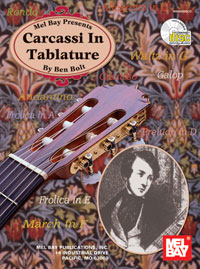
CARCASSI IN TABLATURE BEN BOLT LIBRO CD GUITAR TABLATURE ALLEGRO BRILLANTE ARPEGGIO ALLEGRETTO

CARCASSI IN TABLATURE, BEN BOLT.

LIBRO PER CHITARRA CON CD E TABLATURE

Product Description:
The book includes over 100 pages of the best of Carcassi's works. All music is digitally recorded by Ben Bolt in the order of publication. Carcassi has been proven to be a" best seller" among retailers. Now with the man who is credited with being the innovator of classic guitar in notation/tab/recording; this one is a no brainer. 128 PAGES

Song Title: Composer/Source:
Allegretto in A M. Carcassi, Arranged by Ben Bolt
Allegretto in C M. Carcassi, Arranged by Ben Bolt
Allegretto in D M. Carcassi, Arranged by Ben Bolt
Allegretto in E M. Carcassi, Arranged by Ben Bolt
Allegretto in F M. Carcassi, Arranged by Ben Bolt
Allegretto in G M. Carcassi, Arranged by Ben Bolt
Allegro Brillante M. Carcassi, Arranged by Ben Bolt
Allegro in D Major M. Carcassi, Arranged by Ben Bolt
Allegro in E Minor M. Carcassi, Arranged by Ben Bolt
Allegro in Triplets M. Carcassi, Arranged by Ben Bolt
Andante in G M. Carcassi, Arranged by Ben Bolt
Andantino M. Carcassi, Arranged by Ben Bolt
Andantino in E M. Carcassi, Arranged by Ben Bolt
Andantino in F M. Carcassi, Arranged by Ben Bolt
Andantino in G M. Carcassi, Arranged by Ben Bolt
Arpeggio in A M. Carcassi, Arranged by Ben Bolt
Arpeggio in A Minor M. Carcassi, Arranged by Ben Bolt
Arpeggio in D M. Carcassi, Arranged by Ben Bolt
Arpeggio in E M. Carcassi, Arranged by Ben Bolt
Arpeggio in E Minor M. Carcassi, Arranged by Ben Bolt
Arpeggio in F M. Carcassi, Arranged by Ben Bolt
Arpeggio in G M. Carcassi, Arranged by Ben Bolt
Dance in A M. Carcassi, Arranged by Ben Bolt
Danza in C M. Carcassi, Arranged by Ben Bolt
Frolica in A M. Carcassi, Arranged by Ben Bolt
Frolica in E M. Carcassi, Arranged by Ben Bolt
Galop M. Carcassi, Arranged by Ben Bolt
Grazioso M. Carcassi, Arranged by Ben Bolt
Grazioso in C M. Carcassi, Arranged by Ben Bolt
Intro in A M. Carcassi, Arranged by Ben Bolt
Jig in A M. Carcassi, Arranged by Ben Bolt
March in A M. Carcassi, Arranged by Ben Bolt
March in F M. Carcassi, Arranged by Ben Bolt
Melody in C Major M. Carcassi, Arranged by Ben Bolt
Melody in F Major M. Carcassi, Arranged by Ben Bolt
Moderato in G M. Carcassi, Arranged by Ben Bolt
Music Theory
Octave Study M. Carcassi, Arranged by Ben Bolt
Prelude in A M. Carcassi, Arranged by Ben Bolt
Prelude in A Minor M. Carcassi, Arranged by Ben Bolt
Prelude in B Minor M. Carcassi, Arranged by Ben Bolt
Prelude in C M. Carcassi, Arranged by Ben Bolt
Prelude in C# Minor M. Carcassi, Arranged by Ben Bolt
Prelude in D M. Carcassi, Arranged by Ben Bolt
Prelude in D Minor M. Carcassi, Arranged by Ben Bolt
Prelude in E M. Carcassi, Arranged by Ben Bolt
Prelude in E Minor M. Carcassi, Arranged by Ben Bolt
Prelude in F M. Carcassi, Arranged by Ben Bolt
Prelude in F# Minor M. Carcassi, Arranged by Ben Bolt
Prelude in G M. Carcassi, Arranged by Ben Bolt
Frolica in A Minor M. Carcassi, Arranged by Ben Bolt
Romance in E Minor M. Carcassi, Arranged by Ben Bolt
Rondino in D M. Carcassi, Arranged by Ben Bolt
Rondo M. Carcassi, Arranged by Ben Bolt
Study in A M. Carcassi, Arranged by Ben Bolt
Study in A Major M. Carcassi, Arranged by Ben Bolt
Study in E Major M. Carcassi, Arranged by Ben Bolt
The Left Hand
The Right Hand
Triste in E Minor M. Carcassi, Arranged by Ben Bolt
Waltz in A M. Carcassi, Arranged by Ben Bolt
Waltz in C M. Carcassi, Arranged by Ben Bolt
Waltz in D M. Carcassi, Arranged by Ben Bolt
Waltz in E M. Carcassi, Arranged by Ben Bolt
Waltz in F M. Carcassi, Arranged by Ben Bolt
Waltz in G M. Carcassi, Arranged by Ben Bolt

Prezzo: €25,99
€25,99

WYLDE ZAKK FAST SOUTHERN ROCK KEY Dm GUITAR QUICK LICKS Andy James DVD CHITARRA PENTATONICA

WYLDE ZAKK, FAST SOUTHERN ROCK KEY: Dm. GUITAR QUICK LICKS, AUTORE Andy James. DVD

VIDEO LEZIONE IN DVD DI MUSICA METAL,

PER CHITARRISTI HEAVY METAL,


Product Description:
Learn killer rock licks in the style of Zakk Wylde, one of the world's finest rock and metal guitarists! Also includes a guitar jam track. Lessons by Andy James.

Each Quick Licks DVD includes an arsenal of licks in the style of your chosen artist to add to your repertoire plus backing tracks to practice your new licks and techniques.


Prezzo: €36,98
€36,98

WELL-TEMPERED BLUES, 8 New Blues Tunes for Classical & Fingerstyle Guitar. William Beauvais. CD TABLATURE

WELL-TEMPERED BLUES, 8 new tunes for classical & fingerstyle guitar. William Beauvais. CD TABLATURE

Product Description:
The blues present an opportunity to be deeply expressive. Every note can be colored with pitch bends, slides, vibrato, and all manner of attacks. The style makes it easy to own the music, to close your eyes and play as if you wrote it. These pieces are designed to be fun and entertaining as they work through the sharp keys, which are most friendly to the guitar. By working through these keys however, they develop a player's awareness of the different tonalities and the way patterns may be altered to facilitate key changes. Written in notation and tablature.


Preface

Well Tempered Blues is a collection of twelve bar blues pieces. I have sometimes used the baroque style of notation: writing a single line to make the music and rhythms more obvious. In these cases, such as "Chicago Style Blues" and "Twisted Fingers," try leaving the bass notes down as long as possible, and let your ear tell you what sounds the best. Slides have not been indicated but have been left for the player to decide. Try sliding into various notes and choose what sounds the best. There is a great deal of room for flexibility in these pieces. Some people have also suggested that these pieces can be used for jamming, with an improviser adding a solo line over the guitar part.

Blues is a style that demands that the player be deeply expressive. Every note can be colored with pitch bends, slides, vibrato and all manner of attacks. In tastefully adding these nuances, a player begins to own the music, to make it their own, to play each piece as if they wrote it. These pieces are designed to be fun, and entertaining as they work through the keys that are most idiomatic to the guitar.

About the Author: William Beauvais has been commissioned to write for the Royal Conservatory Children's Choir, the Canadian Music Centre, Philip Candelaria, Jeffrey McFadden, the Evergreen Club, and the Echo Women's Choir. His music has been heard across Canada, the United States, Denmark, and most recently in Chile, Argentina and Uruguay. His guitar music is recorded on 2 compact discs: TRACES [1996] and bridges [1994]. An associate of the Canadian Music Centre and a member of the guitar faculty of The Royal Conservatory of Music, Beauvais is an accomplished classical guitarist. He won first prizes at the Canadian Music Competition, and at the Martinique world Centre for Guitar. He is presently developing curriculum for group based learning system at the Royal Conservatory in Toronto. His music is published by: Mel Bay, Frederick Harris, Editions d'Oz, and Tuscany Publications


Format: Book/CD Set
Song Title: Composer/Source:

Chicago Style Blues    William Beauvais
Cutback Blues        William Beauvais
Deep Down Blues     William Beauvais
Drinking Water Blues     William Beauvais
Gridlock Blues     William Beauvais
Rainy Weekend Blues    William Beauvais
Snaky Blue Line     William Beauvais
Twisted Fingers     William Beauvais

Prezzo: €15,99
€15,99

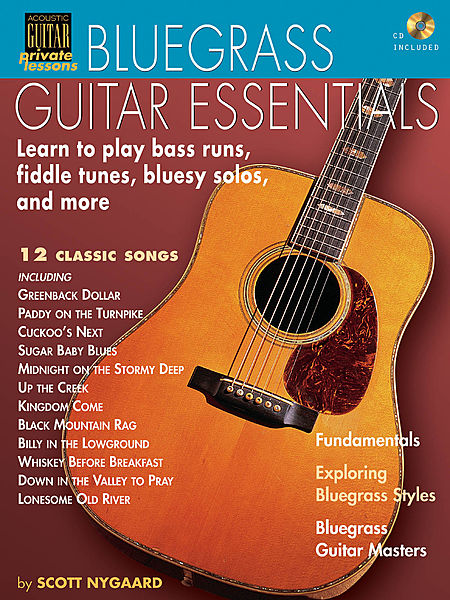
Acoustic Guitar Private Lessons BLUEGRASS GUITAR ESSENTIALS, LEARN TO PLAY BASS RUNS, FIDDLE TUNES, BLUESY SOLOS, AND MORE. CD TABLATURE

Acoustic Guitar Private Lessons BLUEGRASS GUITAR ESSENTIALS, LEARN TO PLAY BASS RUNS, FIDDLE TUNES, BLUESY SOLOS, AND MORE. CD TABLATURE

Series: String Letter Publishing
Publisher: String Letter Publishing
Softcover with CD - TAB
Author: Scott Nygaard

Learn the fundamentals of bluegrass by exploring its various styles and the masters who defined the genre: Doc Watson, Clarence White, and Norman Blake. The book includes background information, instruction and 12 classic songs, including: Greenback Dollar - Kingdom Come - Lonesome Old River - Midnight on the Stormy Deep - Up the Creek - Whiskey Before Breakfast, and more. The CD includes demos of the exercises and songs. 72 pages.

Billy In The Lowground
Black Mountain Rag
Cuckoo's Next
Down In The Valley To Pray
Greenback Dollar
Kingdom Come
Lonesome Old River
Midnight On The Stormy Deep
Paddy On The Turnpike
Sugar Baby Blues
Up The Creek
Whiskey Before Breakfast


Contents


Introduction

Tune-up

Music Notation Key 5


FUNDAMENTALS

Bass Runs

  Greenback Dollar

Fiddle Tunes

  Paddy on the Turnpike

  Cuckoo's Nest

Bluesy Bluegrass

  Sugar Baby Blues

Bluegrass Kickoffs


EXPLORING BLUEGRASS STYLES

Crosspicking

  Midnight on the Stormy Deep

Going Beyond I-IV-V

  Up the Creek

New Directions in Flatpicking

Solo Flatpicking

  Kingdom Come


BLUEGRASS GUITAR MASTERS


Doc Watson

  Black Mountain Rag

Clarence White

  Billy in the Lowground

Norman Blake

  Whiskey Before Breackfast


MORE SONGS TO PLAY

Down in the Valley to Pray

Lonesome Old River


About the Author

Acknowledgments 

Prezzo: €19,95
€19,95

Acoustic guitar MAGAZINE, FLATPICKING GUITAR ESSENTIALS. CD TABLATURE

Acoustic guitar magazine, FLATPICKING GUITAR ESSENTIALS. 12 lessons, 16 songs. CD TABLATURE

Series: Guitar Collection
Publisher: String Letter Publishing
Medium: Softcover with CD
Author: Various Authors

Learn bluegrass and folk with this book/CD pack featuring lessons by Acoustic Guitar assistant editor Scott Nygaard, award-winning guitarist Dix Bruce, legendary guitarist Happy Traum, and many others. Includes 16 complete songs to play, 96 pages.

Banish Misfortune
Bury Me Beneath The Willow
Carroll Country Blues
Foggy Mountain Special
Humphrey's Hornpipe
Jesse James
Kentucky Waltz
Mama Don't 'Low
Morrison's Jig
Pretty Peggy
Roll In My Sweet Baby's Arms
Sally Goodin
Sandy River Belle
Soldier's Joy
Star Of Munster (Irish)
Will The Circle Be Unbroken

While guitarists in such diverse genres of music as jazz, rock 'n' roll, blues, new age, pop, world, and folk have been known to wield a flatpick, the word flatpicking is most often used to describe a style of guitar playing that evolved from early country music and bluegrass. Musicians such as Riley Puckett, Mother Maybelle Carter, Doc Watson, George Shuffler, Jimmy Martin, Tony Rice, Clarence White, and hundreds more have contributed to a style that allows its practitioners to produce a driving or subtle rhythm and clear, fluid, virtuosic solos. Flatpicking is the ideal style for acoustic guitarists in bands that include instruments with more natural volume than the acoustic guitar. It's also a great technique for solo singers who want a powerful rhythmic accompaniment. In this book, we bring you 12 lessons that explore the roots and branches of flatpicking, taught by Acoustic Guitar magazine's master teachers. Each lesson introduces an essential technique and illustrates it with musical examples from folk, bluegrass, old-time, and Celtic music that you can use immediately. The book is divided into two sections, "Backup Styles" and "Playing Melodies and Leads," each of which begins with basic techniques before delving into flatpicking's more refined subtleties. If you're unfamiliar with any terms or techniques used, check the music notation key. Whether you're new to the flatpick or guitar and want to get started on the right track, or an old hand who's either in search of new ideas or a review of fundamentals, you're sure to find inspiration and fuel for perspiration here.
Scott Nygaard, Assistant Editor, Acoustic Guitar

Exercises, licks, and full songs to play

Standard notation, Tablature, and chord diagrams

CD with music played by the teachers slowly and up to tempo


contents

CD Track List

Introduction

Music Notation Key

About the Teachers


BACKUP STYLES

Strum and Bass Note Patterns LARRY SANDBERG

Jesse James

Will the Circle Be Unbroken


Bluegrass Rhythm Guitar SCOTT NYGAARD

The standard bluegrass strum
Chord Variations
Joining the band
Bluegrass Bass Runs
Playing a Range of Tunes
Rhythm is a group effort
 

The Lester Flatt G Run HAPPY TRAUM

Roll in My Sweet Baby's Arms

Mama Don't 'Low

G-RUN BOOGIE

Rhythm Essentials JOHN McGANN
using a metronome
driving rhythm guitar
cross-picking
Celtic accompaniment


Fiddle Contest Accompaniment JIM WOOD

Sally Goodin, Completo di accompagnamento 

Kentucky Waltz - 1942- Bill Monroe

Simple Irish Backup PAUL KOTAPISH

Strumming Reels, Alternate chords, accompanying Jigs

The Star of Munster

Morrison's Jig


PLAYING MELODIES AND LEADS

Flatpicking Fiddle Tunes SCOTT NYGAARD

Fiddle tune basics, Pull-offs and Slide, 

soldier's Joy

Sandy River Belle


Bluesy Bluegrass STEVE POTTIER

Adding the Blues Notes, The Flatted Seventh chord, usings slurs, seventh chord, using Blues Shuffle

Cross·Picking SCOTT NYGAARD

Bury Me beneath the Willow


Variations on a Theme SCOTT NYGAARD

Carroll County Blues


Transcribing Solos DIX BRUCE

Foggy Mountain Special

Banjo and bass solos, 

Celtic Flatpicking DYLAN SCHORER

The Reel, The Jig, The Air, The Strathspey, Ornaments

Pretty Peggy

Banish Misfortune

Humphrey's Hornpipe

Prezzo: €20,99
€20,99

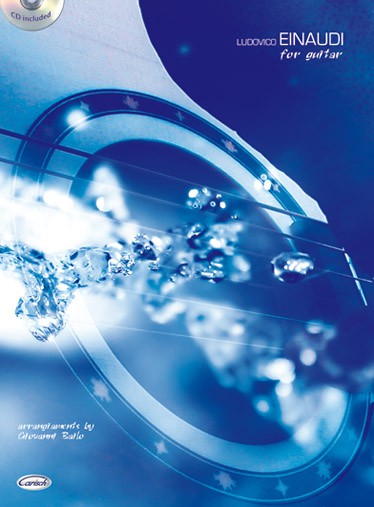
EINAUDI LUDOVICO FOR GUITAR Arrangiaments LIBRO CD TABLATURE Bella notte-Stella del mattino

EINAUDI LUDOVICO, FOR GUITAR. Arrangiaments by Giovanni Bailo. Bella notte - Giorni dispari - I due fiumi - Julia - Le onde - Nefeli - Password - Stella del mattino. CD TABLATURE

LIBRO IN ITALIANO PER CHITARRA CON CD E TABLATURE

Una scelta di otto fra i brani più belli e famosi di Ludovico Einaudi, arrangiati per chitarra da Giovanni Bailo, con trascrizioni in notazione standard e tablature. Questi i titoli: Bella Notte, Giorni Dispari, I Due Fiumi, Julia, Le Onde, Nefeli, Password, Stella del Mattino. In allegato al libro un CD contenente l'esecuzione (ad opera di Giovanni Bailo) degli otto brani, più un bonus track con l'esecuzione del brano “Le Onde” in versione chitarra a 12 corde.

Prezzo: €18,99
€18,99

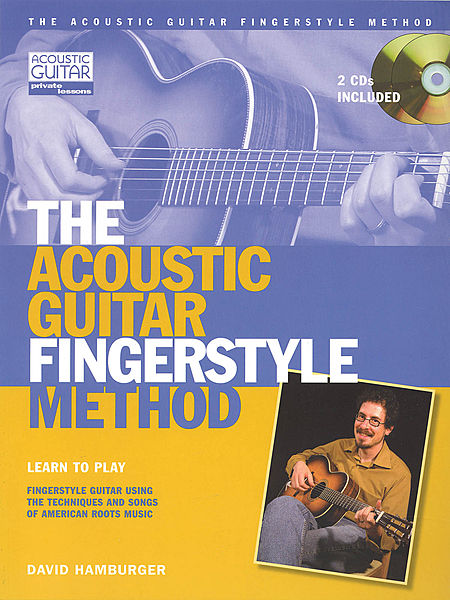
ACOUSTIC GUITAR FINGERSTYLE METHOD David Hamburger 2 CD LIBRO TABLATURE CHITARRA SPARTITI

THE ACOUSTIC GUITAR FINGERSTYLE METHOD. LIBRO CON 2 CD E TABLATURE

LIBRO METODO DI MUSICA,  CON 2 CD.

SPARTITI PER CHITARRA FINGERPICKING :

ACCORDI, PENTAGRAMMA E TABLATURE.

The Acoustic Guitar Fingerstyle Method introduces you to the two most essential fingerstyle approaches for playing American roots music: Travis picking and the steady-bass style. In each lesson, you’ll learn new techniques, concepts, and chord voicings and ways to practice and get them under your fingers. Then you’ll use what you’ve just learned to play a classic song or solo break from the blues, ragtime, folk, country, and ragtime traditions. 18 In-Depth Lessons: Travis Picking Basics - From Backup to Melody - Switching Chords - Eighth Notes and Syncopation - The Steady-Bass Blues - Steady Bass from Chord to Chord - Triplet Feel - Picking Pattern Fills - Descending Bass Lines and Chord Substitutions - Quicker Chord Changes - Double Stops - Seventh Chords up the Neck - Walking Bass Lines - Doin’ that Rag - Chord Anticipations and Early Jazz - Dropped-D Tuning - Swinging the Blues - Open-D Tuning 15 Songs to Play: - John Henry - Since I’ve Laid My Burden Down - Delia - St. James Infirmary - Nobody’s Fault but Mine - Houston Blues - Down in Navasota - Alberta - Hazleton - The Uptown Lowdown - Rag Mama - I Ain’t Got Nobody - St. Louis Blues - The Blunn Creek Slow Drag - Battle Hymn of the Republic

Spice up your fingerstyle blues with this melodic technique. With audio examples.
Full song lyrics
Essential listening suggestions for classic recordings of every songs
Arrangements
complete guitar parts

Whether you are studying with a techer or on your own, let the acoustic guitar method be your guide to joys and pleasures of playing guitar. This comprehensive approach with graded lessons and supplementary songs, is the one tool you need to get started. On the companion CDs you'll hear clear performances of all the music in the book. 

Welcome to the Acoustic Guitar Fingersty/e Method. This book focuses on the two most essential fingerstyle approaches for playing American roots music, Travis picking and the steady-bass style. In each lesson, you'll be introduced to new techniques, concepts, and chord voicings and shown ways to practice them and get them under your fingers. Then you'll use what you've just learned to play a new song or solo break. If you mostly play and sing, these lessons will give you the tools to spice up your guitar accompaniment as well as add instrumental breaks, intros, and outros. Ifyou'd sooner dance down the street in your underwear than sing, this book will give you lots of ways to make cool and complete-sounding music all by yourself without ever opening your mouth. Either way, by the end of this book, you'll have a whole new repertoire of tunes to play and a big handful of new chops to play them with. The Acoustic Guitar Fingersty/e Method picks up where the Acoustic Guitar Method left off, and assumes that you're familiar with picking patterns and with at least a dozen essential open-position chords. However, in case you're starting from scratch with this fingerpicking thing, or could just use a little brushing up, in the first lesson we'll review simple picking patterns and how to apply them to chords. (Speaking of which: for a detailed discussion of the theory, construction, and naming of chords, you might check out the Acoustic Guitar Chord Book, written by the very same quirkily handsome and surprisingly coherent gentleman who has the privilege of your attention at the present moment.) So if you think you've already got all these preliminaries in the bag, proceed directly to Lesson 2. Youmay pass Go, but alas, there is no $200 waiting for you. On the flip side, you won't have to sit on your hands for most of the book waiting for Mississippi John Hurt to hit your hotels on Boardwalk or Park Place ... 


Chapter 1 - Introduction.
CD Track: Tune Up

Chapter 2 - Travis Picking Basics.

Chapter 3 - From Backup to Melody.
CD Track: John Henry

Chapter 4 - Switching Chords.
CD Track: Since I've Laid My Burden Down

Chapter 5 - Eighth Notes and Syncopation.
CD Track: Delia

Chapter 6 - The Steady-Bass Blues.
CD Track: Nobody's Fault but Mine

Chapter 7 - Steady Bass From Chord to Chord.
CD Track: Houston Blues

Chapter 8 - Triplet Feel.
CD Track: Down in Navasota

Chapter 9 - Picking Pattern Fills.
CD Track: Since I've Laid My Burden Down

Chapter 10 - Descending Bass Lines and Chord Substitutions.
CD Track: Delia

Chapter 11 - Quicker Chord Changes.
CD Track: St. James Infirmary

Chapter 12 - Double Stops.
CD Track: Alberta

Chapter 13 - Seventh Chords Up the Neck.
CD Track: Hazleton

Chapter 14 - Walking Bass Lines.
CD Track: The Uptown Lowdown

Chapter 15 - Doin' That Rag.
CD Track: Rag Mama (Versions 1 and 2)

Chapter 16 - Chord Anticipations and Early Jazz.
CD Track: I Ain't Got Nobody

Chapter 17 - Dropped-D Tuning.
CD Track: St. Louis Blues

Chapter 18 - Swinging the Blues.
CD Track: The Blunn Creek Slow Drag

Chapter 19 - Open-D Tuning.
CD Track: Battle Hymn of the Republic

By David Hamburger.
Published by String Letter Publishing
Book/2 CDs

Prezzo: €31,99
€31,99
Condividi contenuti