CHITARRA - GUITAR

WINTER JOHNNY, Guitar Styles Techniques of a Blues Legend, Signature Licks CD TABLATURE Rock Me Baby

WINTER JOHNNY, Guitar Styles and Techniques of a Blues Legend, Signature Licks. CD TABLATURE

Johnny Winter 
A Step-By-Step Breakdown of the Guitar Styles and Techniques of a Blues Legend
Series: Signature Licks Guitar
Format: Softcover with CD - TAB
Author: Dave Rubin
Artist: Johnny Winter

Take an in-depth look at the fiery blues stylings of Johnny Winter with this instructional book/CD pack. You'll learn the main licks from 12 songs, including: Bad Luck Situation - Be Careful with a Fool - Bladie Mae - Highway 61 Revisited - It Was Raining - Leland Mississippi - Mean Town Blues - Rock and Roll Hoochie Koo - Rock Me Baby - Still Alive and Well - Sweet Love & Evil Women - TV Mama. 96 pages

Inventory #HL 00695951
ISBN: 9781423416418
UPC: 884088096311
Width: 9.0"
Length: 12.0"
96 pages

JOHNNY WINTER: WHITE LIGHT

As if to mock the very notion of whether or not a "white man can play the blues,"
Johnny Winter, with his nearly translucent albino skin and blindingly white hair, blasted
down the doors starting in the late 1960s for everyone who loved the music. He once said,
perhaps ironically, "In my own mind, I was the best white blues player around," but clearly
that qualification no longer applies. The legendary Lonnie Mack and the British contingent
of Eric Clapton, Peter Green, Mick Taylor, and Jimmy Page before him had shown
the possibilities of rocking the blues, but no one was adequately prepared for Winter.
Notes flew from his fingers like blazing blue diamonds, creating shock and awe for everyone
within sight and earshot. It was the perfect culmination to the blues revival with Winter
carrying the torch while throwing gasoline on the fire. He would go on to not only influence
fellow Texans like Billy Gibbons and Stevie Ray Vaughan, but also the stone
Chicago blues cat Bernard Allison. Most significantly, for more than forty years he has
played and contributed to the musical language of the blues in ways that were only
strengthened by his numerous forays into rock.
John Dawson Winter III was born in Leland, Mississippi on February 23, 1944 to John
and Edwina, but was raised in Beaumont, Texas. The senior Winter, a career Army officer
who sang, played saxophone and banjo, and was a fan of the big bands, encouraged
Johnny and his younger brother Edgar to pursue music. John's father had been a cotton
broker in Leland and after WWII attempted to take over the business, becoming the boss
at the storied Stovall Plantation, an important figure in early blues history.
Johnny was singing and playing the clarinet by five, but eventually quit clarinet when
an orthodontist advised against it due to his overbite. Three years later he added the
ukulele to his repertoire and then was given the baritone variety by his grandfather. By
1954 he and Edgar were appearing as a duo, singing barbershop quartet songs like "Ain't
She Sweet" and "Bye Bye Blackbird," and even auditioning for the nationally broadcasted
Ted Mack's Original Amateur Hour. It was about this time that Winter's father offered
the opinion that there were only two people, Ukulele Ike and Arthur Godfrey, who had ever
amounted to anything on the diminutive stringed instrument, and that the guitar might
prove to be a better choice. The advice was heeded, especially after Winter realized that
the emerging rock 'n' roll music at the time was played on the guitar. Within the year, he
was learning note-for-note guitar solos off the records he bought by mowing lawns, hauling
garbage, and saving his lunch money. T-Bone Walker, Howlin' Wolf, Muddy Waters,
Chuck Berry, and Carl Perkins were favorites with The Best of Muddy Waters being an
early purchase and the records of Robert Johnson inspiring him to play slide guitar. He
recalls shopping regularly at a record shop owned by Keith Ferguson's father years
before Ferguson became the bassist for the Fabulous Thunderbirds. Winter's first guitar
was his great-grandmother's "hundred-year old classical guitar." Later, his great-grandfather
bought him his first electric guitar, a Gibson ES-125, non-cutaway, with a single P-90 pickup.
There were not many white people in Beaumont in the 1950s as seriously into playing
and listening to the blues as Winter. One of the few was Joey Long (nee Longoria)
who was a little older, and the first white man Winter heard play the music. Like almost
all electric blues guitarists from Texas, he was profoundly influenced by T-Bone Walker.
Winter, on the other hand, while acknowledging his debt to the legendary electric blues
pioneer, also had a strong love for Chicago blues not always shared by his fellow musicians.
When Winter would hear blues guitar idols like Otis Rush push and vibrato their
strings, he would marvel at how it was done, not realizing at the time that it was as much
an expression of their inner soulfulness as the lighter gauge strings they were using. For
a while he accomplished the technique with a whammy bar. Ever open to whatever blues
caught his fancy, it was the expert string articulation of Clapton that would eventually
convince Winter around 1967 to become an acknowledged master of finger vibrato and bending.
In 1959, with Johnny on guitar and Edgar accompanying on piano, Johnny & The
Jammers promptly won a local talent contest sponsored by radio station KTRM. Their
prize consisted of a recording session, and they cut the single "School Day Blues" b/w
"You Know I Love You," ultimately released by Dart Records. It became a regional hit,
resulting in Winter being called to provide guitar on record dates supervised by local promoters
and producers. As was the custom in those days, the music he was playing was
what people wanted to hear-rock 'n' roll, R&B, and then soul music-not blues. All the
while he was compulsively woodshedding his chops and voraciously listening to all the
blues recordings he could find. A treasure trove resided at radio station KJET where DJ
and bluesman Clarence Garlow of the Bon Ton show befriended him, took his requests
on air, and let him hang at the station while also showing him guitar techniques. "I first
saw him at Jefferson Music Company where I worked as a guitar teacher," Winter
explains. "He walked in and I recognized his voice. His style was similar to T-Bone Walker.
On his show he also played a lot of his own records" laughs Winter. "I was about twelve
years old, and he was one of the first guitar players to use light gauge strings, and he
taught me how to use an unwound third. We jammed together a few times, too, including
once at my house that was great."
Winter cites Chet Atkins and Merle Travis as guitarists who really made him want to
play (and his impetus for using a thumbpick). He learned the rudiments of country fingerstyle
from Jefferson Music coworker Luther Naley and some jazz from Seymour Drugan,
the father of Dennis Drugan (the bass player for the Jammers). He briefly attended Lamar
University in Beaumont after high school, sneaking down to Louisiana on the weekends
to jam in the blues clubs. There and in Texas he was often the only white person in the
club, but felt welcome for the most part due to his obvious and sincere love for the music.
His perseverance and total immersion in the blues gained him access to the local
scene by 1963 where he got to jam with B.B. King in a momentous occasion. The following
year he took a pilgrimage to Chicago to join Dennis Drugan in the Gents where he
hoped to play blues, but instead ended up once again performing the popular music of
the day. While in the Windy City he met Michael Bloomfield at his club, the Fickle Pickle,
for what would become a solid friendship based on mutual admiration. Winter was back
in Texas a year later, however, and cut "Eternally" for the KRCO label, which leased it to
Atlantic Records, scoring a regional hit that allowed him to advance to the next leveltouring
and opening for rock acts like Jerry Lee Lewis and the Everly Brothers. In 1967
he made a fortuitous move to Houston, a hot bed for blues in the Lone Star State, and
convened a trio with bassist Tommy Shannon and drummer Uncle John "Red" Turner,
who in turn encouraged Winter to concentrate on performing the blues, knowing he was
mastering the style at a rapid pace. The band became a fixture at the Vulcan Gas
Company ballroom, later dubbed Armadillo World Headquarters, and Winter's reputation
soared on the wings of his impossibly fast, furious, and fluid solos. While in residency he
got to play with Freddie King and met Muddy Waters for the first time, with whom he would
form a lifelong friendship. In addition, responding to the creative rock experimentation
going on in the late 1960s, he also tried his hand at the psychedelic experience musically
and sartorially.

Take an in-depth look at the fiery blues stylings of Johnny Winter with this instructional book/CD pack. You'll learn the main licks from 12 songs, including:

TITLE - AUTHOR - ALBUM - YEAR

Bad Luck Situation - Johnny Winter - SAINTS & SINNERS - 1974
Be Careful With A Fool - Words & Music: B.B. King, Joe Bihari - 1957 - JOHNNY WINTER - 1969 
Bladie Mae - Johnny Winter - NOTHIN' BUT THE BLUES - 1977
Highway 61 Revisited - Words and Music: Bob Dylan - 1965 - SECOND WINTER - 1969
It Was Raining - Johnny Winter - NOTHIN' BUT THE BLUES - 1977
Leland Mississippi  - Johnny Winter - NOTHIN' BUT THE BLUES - 1977
Mean Town Blues - Words and Music: Johnny Winter - THE PROGRESSIVE BLUES EXPERIMENT - 1969
Rock And Roll Hoochie Koo - Words and Music: Rick Derringer - JOHNNY WINTER AND - 1970
Rock Me Baby - Words and Music: B.B. King, Joe Bihan - 1964 - STILL ALIVE AND WELL - 1973
Still Alive And Well - Words and Music: Rick Derringer - JOHNNY WINTER AND - 1970
Sweet Love & Evil Women - Johnny Winter - NOTHIN' BUT THE BLUES - 1977
TV Mama -  Johnny Winter - NOTHIN' BUT THE BLUES - 1977

Prezzo: €23,99
€23,99

WINTER JOHNNY Legendary Licks Slide Guitar DVD CHITARRA DELTA BLUES-AL ECK HAL LEONARD

WINTER JOHNNY, Legendary Licks Slide Guitar. DVD

DVD DI MUSICA, LEZIONE PER CHITARRA SLIDE.

Legendary Licks Slide Guitar
Series: Videos
Publisher: Cherry Lane Music
Medium: DVD
Artist: Johnny Winter

Watch and listen as Johnny Winter demonstrates his signature slide guitar style and techniques. Also includes Johnny playing National steel guitar. These guitar parts are then broken down and taught note-for-note by master blues teacher Al Eck. Johnny plays in the styles of Bob Dylan's Highway 61 Revisited, Elmore James, Delta Blues, Slow Blues, and Walking Blues. 121 minutes.

Prezzo: €38,99
€38,99

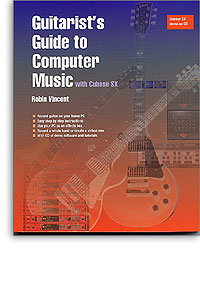
GUITARIST'S GUIDE TO COMPUTER MUSIC BOOK CD-ROM CUBASE SX LIBRO COME COLLEGARE CHITARRA

GUITARIST'S GUIDE TO COMPUTER MUSIC. BOOK AND CD-ROM con CUBASE SX

LIBRO CON CD-ROM DI PROGRAMMI. IN QUESTO VOLUME IMPARERETE I TRUCCI E SEGRETI SU COME COLLEGARE LA VOSTRA CHITARRA ELETTRICA O ACUSTICA CON IL COMPUTER E SUONARE CON I PROGRAMMI DEL CD. REGISTRARE LE TRACCE CON IL POTENTE SEQUENCER CUBASE, E SUONARE CON GLI EFFETTI,  MODELLING E SIMULATORI INCLUSI, SOLAMENTE CON LA CHITARRA E IL VOSTRO PC. TUTTO SENZA SPENDERE UN CENTESIMO !  

Description
Record guitar on your home PC
Easy step by step instructions
Use your PC as an effects box
Record a whole band or create a virtual one
With CD of demo software and tutorials
All this computer music nonsense is to do with electronic bleeps, silly noises and dance music, isn't it? You couldn't be more wrong. A computer is far more suited to recording live 'real' music than anything else. An ther's nothing technical or mysterious about it, it can be exactly the same as recording to tape but with the added advantage of having an endless supply of effects, drums, backing and mixing, and at the end of the session you can put your music straight onto CD.
But isn't it all robotic, rigid , automatic and well, computerised? No. It's as freeform and creative as you are and can offer more production possibilities than you've ever thought of.
But I like all my hardware gearThen you can keep it. A computer will add to your musical arsenal not take anything away, so you can use your existing gear together with your computer

This book takes you through the easy steps of recording and producing music on your computer, with example songs and detailed instructions.
Included in the book is a CD containing a fully working demo version of Steinberg's studio recording software Cubase SX, and other useful bits like software guitar effects and a turner.
About the author
Robin vincent is technical director of Carillon Audio Systems, where he designs and builds computer music studios. He also plays a bit of guitar.

Software on the CD:
Steingerb Cubase SX demo
IK Multimedia Amplitude demo
Audio Phonics Guitar Tuner
Native Instruments Battery demo
FXpansion DR-008 Demo
Dsound GT Player demo
MIDI-OX
Midi Yoke
Music Lab's Slicydrummer and Fill-indrummer
Sonic Foundry Acid XPress

Minimum system requirements
Windows 98, 200 or XP
Pentium III (500MHz) or AMD K7 processor
256MB Ram
Soundcard
Windows MME
Directsound or ASIO
239 PAGES

Prezzo: €27,50
€27,50

BEGINNING CHITARRA JAZZ JODY FISHER Livello LIBRO CD TABLATURE SETTIMA DOMINANTE-CROMATICA

BEGINNING CHITARRA JAZZ, JODY FISHER. CD TABLATURE

IN ITALIANO

METODO COMPLETO PER CHITARRA JAZZ

LIVELLO BASE, NUOVA EDIZIONE

LIBRO DI MUSICA, SPARTITI PER CHITARRA CON CD E TABLATURE. 


Edizione Aggiornata del testo ideale per muovere i primi passi nel mondo del jazz. I neofiti della chitarra troveranno tutte le informazioni necessarie per iniziare uno studio serio e approfondito del genere; i chitarristi provenienti da altre aree stilistiche (rock, blues ecc.) disporranno finalmente di un metodo chiaro e lineare, che con semplicità e immediatezza aprirà loro le porte del jazz. Gli argomenti trattati sono: teoria fondamentale, accordi (dalle triadi a quelli estesi), il pensiero tonale, i modi derivati dalle scale maggiori. Il tutto sia dal punto di vista armonico, sia da quello solista. In chiusura un capitolo dedicato al corretto metodo di studio.

Per iniziare a suonare la chitarra Jazz. Scale pentatoniche, cromatiche, maggiori, minori, gli accordi in diverse posizioni, il voicing, accordi di sesta, settima, nona, undicesima, tredicesima, diminiuti, aumentati, armonizzazzioni della scala maggiore, scale modali, pezzi completi e esercizi. 


INTRODUZIONE

Il libro che state guardando è il primo di una serie di quattro volumi che insegnano a suonare lo chitarra jazz. Negli anni, solo gli studenti più appassionati e più dedicati sono riusciti a padroneggiare questa forma d'arte musicale molto espressiva. Nonostante le montagne di libri didattici a disposizione, lo maggior parte degli studenti rimane all'oscuro su alcuni concetti basilari che riguardano il jazz e lo chitarra jazz. Credo che questo sia dovuto al fatto che pochi insegnanti o autori forniscono una panoramica adeguata di quello che una persona ha bisogno di imparare. Gli studenti imparano alcune scale, qualche lick, un arpeggio o due, qualche accordo, e finiscono per chiedersi come unire il tutto. Il mio approccio in questa serie è quello di cominciare con alcune informazioni basilari, e poi procedere logicamente, parlando dei concetti armonici, melodici e tecnici, per avere un quadro completo della situazione. Lo studio del jazz è un obbiettivo a lungo termine di tutta una vita, ma non ci vuole tutta lo vita per imparare i concetti fondamentali e iniziare a suonare! Questa serie di libri è per gli autodidatti, ma anche per coloro che studiano con un insegnante. Questi libri possono anche essere usati come fonte di consultazione. Seavete appena cominciato lo studio del jazz, dovreste certamente cominciare con questo libro, e procedere lezione dopo lezione e libro dopo libro. Se invece studiate da un po', potete sentirvi liberi di saltare qui e là, sebbene dovreste cercare di non perdere nessuna informazione importante lungo il tragitto. Questi libri sono diversi dagli altri per un'altra ragione. In passato, avevate bisogno di libri diversi per studiare l'improvvisazione, lo melodia degli accordi, e altri argomenti. Nonostante questa collana non pretende di enunciare tutto, essa combina comunque lo maggior parte degli argomenti importanti. Ciascun capitolo è diviso in lezioni, e ciascuna lezione è divisa in due sezioni separate. Le sezioni "A" si occupano di argomenti armonici e degli accordi, le sezioni "B" danno informazioni sull' improvvisazione. Ogni pagina e ogni argomento può – e dovrebbe - essere supportato da informazioni ulteriori, provenienti da altri libri, o da altri insegnanti.

Se siete prevalentemente interessati agli accordi e all'armonia, sentitevi liberi di procedere solo attraverso le sezioni A. Se l'improvvisazione è il vostro interesse principale, allora studiate le sezioni B. Dal momento che lo maggior parte delle sezioni corrispondono una all'altra, studiarle entrambe potrebbe essere il corso più completo. La sezione "Coda" alla fine del libro contiene delle informazioni che saranno utili nell'area della tecnica, dell' allenamento e altri concetti correlati al jazz. Dovreste consultare spesso questa sezione, perché troverete senza dubbio dei suggerimenti e dei consigli che riguardano le aree di studio su cui state lavorando. Comunque voi decidiate di usare questi libri, è mio desiderio più sincero che voi impariate e amiate il jazz e contribuiate alla sua vita.


INDICE

PROPOSITO DELL'AUTORE

INTRODUZIONE


Capitolo 1: Iniziamo

Accordi in Posizione Aperta,

Accordi Barre,

Leggere la Musica e la Tablatura,

Progressioni Blues e Pennate,

Diteggiature delle Scale Pentatoniche


Le Lezioni "A"

Accordi e Armonia


Capitolo 2

Lezione 1A: Teoria di Base

La Scala Cromatica,

La Scala Maggiore,

Armature di Chiave,

Intervalli,

II Circolo delle 4e (o 5e),

Leggere i Numeri Romani


Lezione 2A: Teoria delle Triadi & Diteggiature in posizione di Tonica

Triadi Minori,

Diminuite e Aumentate, e loro Rivolti,

I 4 Gruppi Principali di Corde,

Diteggiatura delle Triadi in posizione di Tonica,

Studio# 1: Triadi in Posizione di Tonica,


Lezione 3A: Triadi in 1° Rivolto su Quattro Corde

Studio #2: Triadi in 1° Rivolto


Lezione 4A: Triadi in 2° Rivolto su Qualtro Corde

Studio #3: Triadi in 2° Rivolto


Capitolo 3

Lezione 1A: Costruzione di Accordi piu Ampi

Come Funziona la Formula per Accordi piu Ampi

Estensioni,

Rivolti degli Accordi piu Ampi,

Voicings


Lezione 2A: Accordi di 6°

Accordi di 6° Maggiore-33,

Accordi di 6° Minore

Studio #6: Accordi di 6°


Lezione 3A: Accordi di 7°

Accordi di 7° Maggiore-37,

Accordi di 7° Minore

Accordi di 7a Dominante,

Studio #7: Accordi di 7°


Lezione 4A: Accordi di 9°

Estensionie Famiglie di Accordi,

Accordi di 9° Maggiore,

Accordi di 9° Minore,

Accordi di 9° Dominante,

Studio#8: Accordi di 90-43,

Studio #9: Ancora Accordi di 9a


Lezione 5A: Altri Accordi che Dovete Sapere

Accordi di 11a Minore-46,

Accordi di 11° Dominante

Accordi di 13° Maggiore-47,

Accordi di 13° Minore

Accordi di 13° Dominante-48,

Accordi Maggiore Add9

Accordi Minori Add9-48,

Accordi Min75 (Semidiminuiti)


Le Lezioni "B"

Improvvisazione

Lezione 1B: Diteggiature delle Scale Maggiori

Teoria delle Triadi Maggiori

Rivolti delle Triadi Maggiori


Lezione 2B: Ancora due Diteggiature della Scala Maggiore


Lezione 3B: Ancora due Diteggiature della Scala Maggiore


Lezione 4B: Studio sulla Scala Maggiore

Studio #4: La Scala Maggiore


Lezione 1B: Studio sulla Scala Maggiore

Studio #5: La Scala Maggiore


Lezione 2B: Collegare Ie Scale Maggiori


Lezione 3B: Scale di Tre Oltave


Lezione 4B: Ancora Scale di Tre Ottave


Le lezione “A”

ACCORDI E ARMONIA


Capitolo 3, continua

Accordi di 7a Diminuita,

Accordi Sospesi di 7° Dominante,

Accordi Minori (Maj7),

Accordi di 7° Dominante Aumentata,

Studio #10: Ancora Accordi


Capitolo 4

Lezione 1A: La Scala Maggiore Armonizzata


Lezione 2A: Scale di Accordi Maggiori


Lezione 3A: Ancoro Scale di Accordi Maggiori


Lezione 4A: Ancora Scale di Accordi Maggiori


Capitolo 5

Lezione 1A: I Numeri Romani e la Trasposizione

Lezione 2A Ancoro sui Numeri Romani e la Trasposizione

Lezione 3A Scale Verticali di Accordi

Lezione 4A: Ancora Scale Verticali di Accordi.

Lezione 5A: Ancora Scale Verticali di Accordi


LE LEZIONI “B”

Improvvisazione


Lezione 5B: Due Brani Usando la Scala Maggiore

Noah's Groove,

Blues for Maggie


Lezione 1B: Improvvisare con la Scala Maggiore

Di Che Cosa Si Tratta,

Pensiero Diatonico


Lezione 2B: Due Brani Costruiti sulla Scala Maggiore

Ruby, My Deerfly,

Fly Like a Beagle


Lezione 3B: Ancora Due Brani sulla Scala Maggiore

Noisy Nights,

The Creature


Lezione 4B: Ancora Due Brani Sulla Scala Maggiore

Julie in Wonderland,

Samba de Shauna


Lezione 1B: I Modi della Scala Maggiore - I Fondamenti ...

Lezione 2B: I Modi Della Scala Maggiore -

Diteggiature Parallele - di Approccio

Re Dorico,

Mi Frigio,

Fa Lidio

Sol Misolidio,

La Eolico,

Si Locrio,

Progressioni per Esercitarsi


Lezione 3B: 1Modi della Scala Maggiore -

Approccio Derivato

Lezione 4B: Due Brani Modali

Nosh 4 Josh,

Chocolate Tuna Enchiladas


Lezione 5B: Due Brani Modali/Diatonici

Modelicious,

Blue Tofu


CODA - Un Medley di Consigli e Conceitti Musicali ;

Come Funziona il Jazz


Tecnica

Tecnica di Base della Destra e della Sinistra,

Postura,

Tecnica di Pennata di Base,

Accordi Fingerstyle,

Tecnica Dita / Plettro


Allenamento

II Vantaggio di Esercitarsi Lentamente,

Imparare Accordi Difficili e come Cambiare gli Accordi,

Imparare Ie Scale Due Corde per Volta,

La Funzione delle Posizioni Bloccate,

Allenarsi sulle Scale

Maggiori,

Limitare le Opzioni Ritmiche,

Uso degli Schemi Melodici


Assoli

Forma: Usare un'Apertura,

un Corpo e una Conclusione,

Forma Basata su Tema e Variazione

Uso della Ripetizione negli Assoli


Epilogo

È disponibile un CD per ciascun libro in questa serie. Questi dischi possono rendere l'apprendimento più facile e più divertente. Questo simbolo apparirà vicino a ciascun esempio contenuto nel CD. Usatelo per capire che state catturando la sensazione degli esempi, interpretando i ritmi correttamente, e così via. I numeri di traccia sotto al simbolo corrispondono all'esempio che volete ascoltare. La traccia 1 vi aiuterà ad accordarvi col CD. Buon divertimento!


Prezzo: €21,99
€21,99

GREAT BOTTLENECK BLUES LESSONS Nine Powerful Excursions into Slide Guitar TABLATURE DVD KEB' MO'

GREAT BOTTLENECK BLUES LESSONS, Nine Powerful Excursions into Slide Guitar. GUITAR TABLATURE DVD

Great Bottleneck Blues Lessons
Nine Powerful Excursions into Slide Guitar
Series: Instructional/Guitar/DVD
Publisher: Homespun
Format: DVD - TAB
Artist: Various

Taught by Keb' Mo', Mike Dowling, Hans Theessink, Roy Book Binder, Bob Brozman, Catfish Keith, John Hammond, Rory Block and Steve James

Some of today's greatest proponents of traditional bottleneck/slide guitar playing teach the soulful sounds that started in the Mississippi Delta and forever changed the world's musical landscape. Songs: Sitting on Top of the World • Rollin' and Tumblin' • She Did You a Favor • Bye and Bye I'm Going to See the King • Henry • Ramblin' on My Mind • The Cuckoo • Drop Down Mama • Hot Time in the Old Town Tonight. LEVEL 3 • INCLUDES MUSIC + TAB • 115 MIN.

Inventory #HL 00642091
ISBN: 9781597732635
UPC: 884088362027
Publisher Code: DVDGSGSG21
Width: 5.25"
Length: 7.5"
Run Time: 1:55:00

Some of today's greatest proponents of traditional bottleneck/slide Guitar playing teach the soulful sounds that started in the Mississippi Delta and forever changed the world's musical landscape.
The powerful lessons on this DVD, compiled from the Homespun archives, represent Guitar instruction at its very best. Each segment, taught by a legendary master of blues/slide technique, has been chosen to give you a slightly different application of the use of the bottleneck to create distinct and memorable arrangements for your songs. These veteran performers communicate their unique style and musical vision to allow you to become a more confident and proficient guitarist.
Includes tuition material from:

Keb' Mo'
Mike Dowling
Hans Theessink
Roy Book Binder
Bob Brozman
Catfish Keith
John Hammond
Rory Block
Steve James

Prezzo: €31,99
€31,99

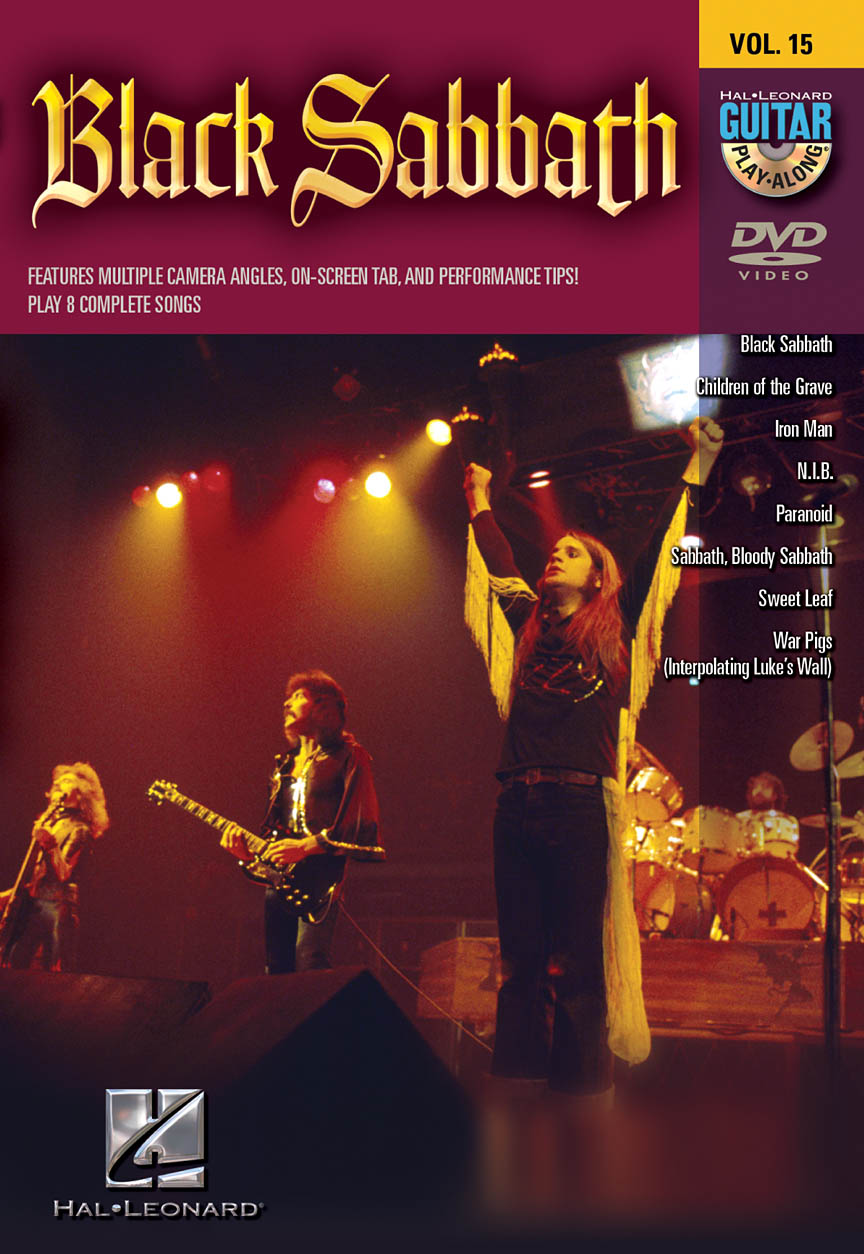
BLACK SABBATH Guitar Play-Along Volume 15 Hal Leonard TABLATURE DVD CHITARRA TABLATURE

BLACK SABBATH, Guitar Play-Along Volume 15. TABLATURE DVD

DVD LEZIONE DI MUSICA HARD ROCK / HEAVY METAL. 

BASI PER CHITARRA. 

SPARTITI CON TABLATURE

VOLUME 15. BLACK SABBATH
Series: Guitar Play-Along DVD
DVD - TAB
Artist: Black Sabbath

The Guitar Play-Along DVD series lets you hear and see how to play songs like never before. Just watch, listen and learn! Each song starts with a lesson from a professional guitar teacher. Then, the teacher performs the complete song along with professionally recorded backing tracks. You can choose to turn the guitar off if you want to play along, or leave the guitar in the mix to hear how it should sound. You can also choose from three viewing options: fret hand with tab, wide view with tab, pick & fret hands close-up. Each DVD includes great songs that all guitarists will want to know!

Volume 15 includes: Black Sabbath - Children of the Grave - Iron Man - N.I.B. - Paranoid - Sabbath, Bloody Sabbath - Sweet Leaf - War Pigs (Interpolating Luke's Wall).

Black Sabbath
Children Of The Grave
Iron Man
N.I.B.
Paranoid
Sabbath, Bloody Sabbath
Sweet Leaf
War Pigs (Interpolating Luke's Wall)

Prezzo: €23,99
€23,99

FORD ROBBEN THE ART OF BLUES SOLOS TABLATURE DVD SPARTITI CHITARRA LIBRO ACCORDI

FORD ROBBEN, THE ART OF BLUES SOLOS. TABLATURE DVD

DVD METODO DI MUSICA BLUES.

SPARTITI PER CHITARRA. 

ACCORDI, PENTAGRAMMA E TABLATURE.

The Robben Ford Clinic
Series: DVD
Artist: Robben Ford

Robben Ford is simply one of the most emlated modern blues players of our time. In this DVD, his impeccable soloing techniques and tasty phrasing are brought to the forefront. You'll learn dozens of Robben's favorite phrases as he plays several tunes loaded with classic Ford riffs. Robben also answers questions about theory, style, recording, technique, influences and using altered scales. The video features a live performance of Robben's "Cannonball Shuffle" where you can cop every lick as his burning solo is shown in real time and in slow motion. Includes a 50-page printable PDF file with solos and examples. All songs are transcribed in music and tab! Running time: 1 hour, 48 minutes.

Contents:

DEVELOPING YOUR STYLE
"PLAYIN’ A BIT" PAGE 3
BASIC THEORY PAGE 9
"CANNONBALL SHUFFLE" PAGE 11
TECHNIQUES: PICKING & SLIDING DVD
"IN THE BEGINNING" PAGE 18
ROBBEN’S EARLY JAZZ INFLUENCES DVD
"OASIS" PAGE 31
ALTERED SCALES PAGE 40
"ROGER’S BLUES" PAGE 44
RECORDING
ROBBEN’S EQUIPMENT

Prezzo: €36,99
€36,99

TOWNER RALPH SOLO GUITAR WORKS VOLUME 2 LIBRO SPARTITI CHITARRA ACCORDI OREGON

RALPH TOWNER, SOLO GUITAR WORKS VOLUME 2. SHEET MUSIC BOOK FOR SOLO GUITAR. 

LIBRO DI MUSICA.

SPARTITI PER CHITARRA.

ACCORDI, PENTAGRAMMA. 

About Ralph Towner - Guitar Works, Volume 2
By Ralph Towner. For Guitar. Folk Rock. Level: Intermediate-Advanced. Instrumental Album. 52 pages.
Known as the founding member of the group Oregon, and the composer of Icarus, he is also regarded for his solo guitar compositions. The second volume of Towner's guitar works contains nine songs including Always By Your Side, The Hollows, Toledo, and more.

2005 - If - Album: TIME LINE
2005 - Toledo - Album: A CLOSER VIEW
2005 - Toledo (improvising chord changes) - Album: A CLOSER VIEW
2005 - Anniversary Song - Album: TIME LINE
2005 - Always By Your Side - Album: TIME LINE
2005 - The Hollows - Album: TIME LINE
2005 - Turning Of The Leaves - Album: TIME LINE
2005 - The Pendant - Album: TIME LINE
2005 - The Lizards of Eraclea - Album: TIME LINE
2005 - Mingusiana - Album: A CLOSER VIEW
2005 - Mingusiana (improvising chord changes) - Album: A CLOSER VIEW


Ralph Towner was born in Washington state in 1940, moved to Oregon state at age of five and grew up there. He began to improvise at piano at age of 4, imitating recordings from the WW II era. His mother was a piano teacher and church organist, and each member of the family played one or several musical instruments well.

He studied classical composition at theUniversity of Oregon, graduated in 1963 and went toVienna, Austria to study classical guitar, an instrument he discovered in his fourth year of university. He studied one year under the renowned Professor Karl Scheit, returned to the University of Oregon for graduate studies in composition with Professor Homer Keller, then returned for a second year of study in Vienna with Professor Scheit. He then moved to New York City in 1968 to continue his career as guitarist-pianist-composer in earnest.

Since 1970 he has recorded over forty albums under his own name and has collaborated in'concert and/or recording with Oregon, Keith Jarrett, Weather Report (Joe Zawinul and Wayne Shorter), Egberto Gismonti, Gary Burton, John Abercrombie, Gary Peacock, Jack Dejohnette, Jan Hammer, Eddie Gomez, Elvin Jones, Freddie Hubbard, Michel Portal, Dave Holland, Paul Winter consort, and many others. He has won numerous awards, including: two German 'Grammies' (Deutsche Shallplatten Preis) for the best jazz recording of 1976 world-wide, (Solstice, with Jan Garbarek, Eberhard Weber and Jon Christenson), and again in 1988 for Ecotopia with his group Oregon (Paul McCandless, Glen Moore, Trilok Gurtu); the Downbeat magazine poll for acoustic guitar: The New York jazz Award as best New York City acoustic guitarist; and a Grammy nomination in 2000 as best composer for Oregon in Moscow: He has performed in concert world-wide in Asia, Africa, South America, Eastern and Western Europe, Australia and New Zealand, Japan, Korea, Mexico, and North America; in jazz clubs and major concert halls such as Carnegie Hall, Lincoln Center, Berlin Philharmonic Hall, and Vienna's Mozartsaal.

Towner has recorded over two-hundred of his instrumental compositions. His works for orchestra

have been performed by the Philadelphia Orchestra, the Stuttgart Opera Orchestra, the St. Paul
Chamber Orchestra, the Indianapolis Symphony, the Freiburg Festival Orchestra and the Stavanger
Chamber Orchestra of Norway. He has been commissioned to compose large orchestra works
by the Cabrillo Festival Orchestra, where he was composer-in-residence, and by the AT&T-Rockefeller foundation. He received a WYNC/Aaron Copland commission to compose the piano
sonata Simulacrum in 1999; His film scores include Un' Altra Vita by Carlo Mazzacurati as well as
numerous documentary films. He has composed music for L'lsola Incandescente, a play adapted
from the writings of Vincenzo Consolo, and incidental music for Shakespeare's Midsummer Night's
Dream. His compositions have been used by numerous dance choreographers, including Alvin
Ailey, Pilobolus, and Murray Louis. He was honored by Apollo astronauts, who carried his music on cassette to the moon and officially named two moon craters after two of his compositions.
Towner is one of the most diversely talented musicians of the past half-century, having made notable recordings of classical, jazz, folk and world music. Following a classical-conservatory education, studying classical composition and guitar, Towner then joined world music pioneer Paul Winter's Consort ensemble in the late 1960s. Along with band members Paul McCandless, Glen Moore, and Collin Walcott, Towner left the Winter Consort in 1970 to form the group Oregon, which over the course of the 1970s issued a number of highly influential records mixing folk music, Indian classical forms, and avant-garde jazz-influenced free improvisation.

As well as collaborating in concert and/or recording with many artists, Towner has recorded over two-hundred of his instrumental compositions, with works being commissioned and performed by some of the world’s leading orchestras. Available here is the second volume of solo works for guitar, including Always By Your SideThe HollowsToledo and more. 

PHOTOS: Paolo Soriani
Prezzo: €59,99
€59,99

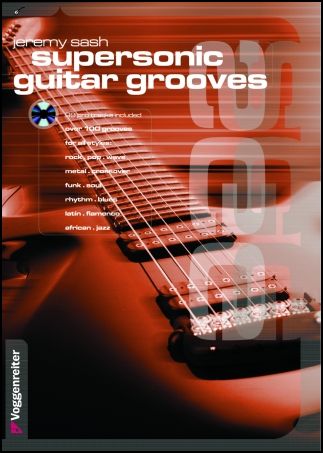
SUPERSONIC GUITAR GROOVES Jeremy Sash CD GUITAR TABLATURE METAL CROSSOVER AFRICAN RHYTHM JAZZ

SUPERSONIC GUITAR GROOVES, Jeremy Sash. CD TABLATURE

Product Description:
The goal of this book is to promote rhythmically and harmonically challenging phrases and licks in order to give you an authentic inside view on seven selected styles. Live or in a recording session, playing rhythm is the guitarist's main duty. This makes it even harder to understand why most guitarists' rhythm work (frankly) sounds rather unrehearsed and colorless.

Especially since working with drum machines and samplers has become a vital part of musical performance, a good sense of rhythm, and some cool licks may just be your "key to success."

Format: Book/CD Set
ISBN: 0786652594
UPC: 796279066914
ISBN13: 9780786652594
Voggenreiter
136 PAGES


99 PRO TRACKS INCLUDED
OVER 100 GROOVES FOR ALL STYLES:
ROCK - POP - WAVE
METAL - CROSSOVER
FUNK – SOUL
RHYTHM – BLUES
LATIN – FLAMENCO
AFRICAN - JAZZ

You could improve your rhythmical abilities with some simple methods:
- Please stop practicing rhythm-playing without a metronome!
This unstable ''do-it-yourself-groove" will get you nowhere. Use your
time more effectively: you haven't got enough of it anyway (or does
your girlfriend (boyfriend) have 17 favorite hobbies?).

- Set your metronome (please do not use manual ones) so that it clicks
on beats 2 and 4. You are emphasizing beats 1 and 3 yourself. Place a
piece of cardboard under your foot and tap the clicks of the metronome.
If you can't detect the metronome's click anymore, that's a sign
that you're playing "in time". Isn't it simple to produce a feeling of success?

It is extremely important to be totally Jltight". But there are also situations
in which a more Jllaid back" feeling is more appropriate. It is my guess
that most of you play more ahead of the beat" than ''laid back"!
Your adrenaline takes care of this and mostly you can't help it. That's why
you should also practice playing ''laid back":
Tap your foot a little ''behind" the beat.

- Dynamics! Do yourselves a favor and watch your dynamics while playing.
Imagine talking monotonously, without constantly raising or lowering
your voice. Would this sound very passionate? Well that's how you
will sound if you do not make dynamics a part of your playing.

- Most of the time, a bass or keyboard player will accompany you. For
this reason, it's better to avoid ''root" voicings whose highest and
lowest notes get in your fellow musicians' way. They will do everything
for you if you avoid clashing with them on every other voicing (remember:
you might need some extra hands next time you're moving).
It doesn't matter what you're playing. It's HOW you play it!
- Not 150 notes per second will do the trick, but the ''attitude" and feel
behind the notes.
- Being 120% convinced of what you're playing makes the difference
(often referred to as ''tone").


CONTENTS
"SUPERSONIC" THOUGHTS .

GROOVE .
NOTES .
SOUND .
WARMING UP .
NOTATION .
CD .

CHAPTER 1 - RHYTHM & BLUES .
CHAPTER 2 - JAZZ .
CHAPTER 3 - FUNK & SOUL .
CHAPTER 4 - ROCK & POP & WAVE .
CHAPTER 5 - METAL & CROSSOVER .
CHAPTER 6 - LATIN & FLAMENCO .
CHAPTER 7 - AFRiCAN .

THANKS .
LAST WORDS .

Prezzo: €21,99
€21,99

BARRUECO MANUEL THE MUSIC OF ERNESTO LECUONA FOR SOLO GUITAR TABLATURE SPARTITI LIBRO

BARRUECO MANUEL, THE MUSIC OF ERNESTO LECUONA FOR SOLO GUITAR. TABLATURE

LIBRO DI MUSICA PER CHITARRA
SPARTITI CON PENTAGRAMMA E TABLATURE.

By Ernesto Lecuona / transcr. Manuel Barrueco
CATEGORY: Classical Guitar Folio
FORMAT: Book

This folio contains the beautiful classical guitar arrangements of Manuel Barrueco from his CD Cuba. These songs were originally written for piano by the great Cuban composer Ernesto Lecuona, who gained international recognition for his songs and piano music. Titles in this folio are: La Comparsa * Danza Lucumi * A la Antigua.

Includes the Following Selections:
Title Composer
A LA ANTIGUA , ERNESTO LECUONA
DANZA LUCUMI , ERNESTO LECUONA
LA COMPARSA, ERNESTO LECUONA

Prezzo: €16,99
€16,99
Condividi contenuti