CHITARRA - GUITAR

LOUREIRO KIKO CREATIVE FUSION Beyond Pentatonics & Power Chords GUITAR TABLATURE 2 DVD Angra

LOUREIRO KIKO, CREATIVE FUSION. Beyond Pentatonics & Power Chords. GUITAR TABLATURE 2 DVD

Description

Move beyond power chords and pentatonics and open up your musical universe! Kiko Loureiro’s roots in Brazilian, Latin, Fusion, Jazz, Metal and Classical music influence his masterful compositions and style. In this program, Kiko shows you a method for using arpeggios to craft amazing leads and melodies. He starts with major and minor arpeggios and triad voicings and builds them into progressions. Then expands on this concept with major arpeggio extensions adding the 7th and 9th and shows how to complete the mission by delivering full dominant and diminished arpeggios in single and cross string technique. Kiko explains and demonstrates how these all relate as tools for creating your own unique musical style. Learn modal arpeggios and how to apply them over full band backing tracks so you can start creating your own masterpieces!

Each Rock House product includes free lifetime membership to Rock House's online lesson support system. Enhance your learning experience, links with instructors, download backing tracks, access message boards, and much more. You'll connect with a community of musicians around the world learning to play music using The Rock House Method.

Kiko Loureiro of Angra - Creative Fusion. (Beyond Penatatics & Power Chords). By Angra. Rock House. DVD.


FREE !

iPod-ready video

32 pages TAB E-BOOK

Lifetime membership for Online lesson support


Included FREE with this program:

Lifetime membership to Rock House Method lesson support system on the web.

Use the member number found inside the DVD case to register.


- Use the ear trainer

- Download tabbed sheet music

- Post original compositions

- Ask the teacher questions

- Take quizzes that track progress

- Use the student message boards

- Download backing tracks to play over

- Download FREE "tuner" and "metronome" software


And explore tons of other content to help make learning easy, fun and complete!

Prezzo: €199,99
€199,99

GETTING TO.... LATIN JAZZ GUITAR-JOHN ZARADIN-CD TABLATURE SPARTITI LIBRO CHITARRA

GETTING TO.... LATIN JAZZ GUITAR, JOHN ZARADIN. Metodo e 26 titoli. BOOK WITH CD & TABLATURE

LIBRO METODO DI MUSICA LATINA CON CD.

SPARTITI PER CHITARRA CON:

ACCORDI, PENTAGRAMMA, NOTE, TABLATURE. 

STUDIO, METODO, MANUALE, DIDATTICO. 


This book is a guide to some of the techniques needed for "getting into latin jazz guitar." There are 5 independent sections: References and definition of terms; exercises and/or pieces which demonstrate various guitar techniques; examples of common Rasgueado patterns; the "Riverboat Suite," studies for developing rhythmic ability and appreciation; and pieces in a variety of different Latin styles. The CD, used in conjunction with the written notation, tablature and chord symbols, gives a clear idea of what is required for players and teachers of all levels. It is assumed that the reader is familiar with guitar and music notation, but glossaries of terms are included for reference. There are a variety of patterns which are employed in the different styles of music; the examples show how to "get into" some basic forms. All the techniques described are playable on the fingerstyle guitar, and the pieces themselves are selected and arranged with performance in mind.

Getting Into Latin Guitar

This book is a guide to some of the techniques needed for "Getting Into Latin Guitar".

There are 5 independent sections:

• References and definition of terms.

• Exercises and/or pieces which demonstrate various guitar techniques.

• Examples of common Rasgueado patterns.

• "Riverboat Suite" - studies for developing rhythmic ability and appreciation.

• Pieces in a variety of different Latin styles.

The CD, used in conjunction with the written notation and tablature, gives a clear idea of what is required for players and teachers of all levels.

It is assumed that the reader is familiar with guitar and music notation, but glossaries of terms are included for reference.

Rasgueados are special strumming techniques which allow the guitar to be used, simultaneously, as a percussive rhythm and harmony instrument. There are a variety of patterns which are employed in the different styles of music; the examples show how to "get into" some basic forms.

The "Riverboat Suite" in the rhythm section deals with permutations of rhythmic attacks without regard to idiom, and each piece within the suite is contains a specific number of attacks per measure. The studies reflect flavors from a riverboat journey made in the Amazon and consequently are not out of context in the book.

The idea behind the studies is to create an awareness of rhythm in the way that we are aware of pitch notes and chords, and being able to read and play them will focus attention on and give an understanding of the rhythmic patterns that are such a feature of Latin music. The studies lay a groundwork for "Getting Into ... " Latin styles.

The final section consists of original and traditional Latin music for study and/or performance.

The music is presented with mainstream, traditional music notation, tablature and chord symbols.

The audio CD tracks are cross-referenced in the text with CD.

All the techniques described are playable on the fingerstyle guitar, and the pieces themselves are selected and arranged with performance in mind.

The guitar is such an individual instrument, rich in its resources, that all its techniques cannot be covered in one volume.

I hope that the reader finds the contents of this book a useful way of "Getting Into Latin Guitar."

My thanks to Bill Bay and Doug for inspiring the project.


John Zaradin's professional life began performing with the violinist, Jan Resek, in Germany and the UK, after which his London debut concert, in 1968, at the Purcell Room, Royal Festival Hall, launched him into the London musical world. Here, he was exposed to a wide variety of music and was called upon to perform in studios, in theatre and on the concert platform. He made, at this time, with the London Symphony Orchestra, the guitar recordings for the television series The Strauss Family.


His London theatre life began at the Royal Court Theatre with Shakespeare's Twelfth Night (director Jane Howells), evolved onto the West End stage at the Piccadilly Theatre with Man of La Mancha and continued into touring with the musicals Hair and Fiddler on the Roof and with the companies Ballet Rambert, London Contemporary Dance and Glyndeboume Opera.

In 1972 Belwin Mills became his (John Zaradin's) first publisher and he made his first solo recording Concierto de Aranjuez by J. Rodrigo (EMI/CFP) which became a Gold Disc. (see An Appreciation of Joaquin Rodrigo by Robert Antecki, saying "my personal favorite is on an LP, with John Zaradin and Guy Barbier conducting the Philomusica of London"). Following a meeting with Peter Brook, in the same year, he was invited to join the Royal Shakespeare Company for the world tour of his production: Midsummer Night's Dream, after which he began to travel in the Latin Americas where and found a focus for his personal musical ideas.

Returning to Europe he recorded Zaradin's Guitar for EMI (1976) and formed "Images of Brasil", which played original compositions and a kaleidoscope of music from Brazil, made television & radio performances and performed in venues ranging from Ronnie Scott's Jazz Club to the Queen Elizabeth Hall, London.

In 1984, he became interested in the computer as a medium for preparing and storing music and this has become an essential tool for him as a composer, arranger and performer.

In 1988 Alby James, director of the Temba Theatre Company, invited him to compose and perform original music for the company's production of Romeo & Juliet, the setting of the play being transposed to Havana from Verona. The music eventually evolved into the Mel Bay publication Caribbean Fantasy for Acoustic Guitar.

The CCGP is an addition to an extensive catalogue of works for Music Sales.

His Latin Suite for Guitar & Orchestra is also a Mel Bay Publication.


Contents:

SECTION 1 GENERAL NOTES AND REFERENCE
Description of "Getting Into Latin Jazz Guitar"
What Is Latin Guitar?
Holding the Guitar
Notation Systems for the Guitar
Glossary of Guitar Symbols
Chord Symbol Reference
The Pitch Range of Notes Found on the Guitar
The Pitch Range of Notes (cont.)
Right Hand Fingering
Left Hand Fingering
Tuning the Guitar

SECTION 2 TECHNICAL EXERCISES & STUDIES
Right Hand Daily Exercise
Left Hand Daily Exercise 1
Hammer Hav'n Fun
Left Hand Daily Exercise 2
Odagil Returns for Ligado
Left Hand Daily Exercise 3
Hammer & Snaps
Ornaments
An Ordinarily Mental Study
Glissando Skat Goes Pating
Étouffée A Dampened Proof Course Study
Ensnared Again!
Harmonics El Vito
Tremolo Canzona
Tambour Thumbling
Barrées No Holds Barred

SECTION 3 RASGUEADOS
The Rasgueado
Rasgueados Patterns
Examples of Useful Rasgueados

SECTION 4 THE RHYTHM SECTION
Notes on Rhythm and the "Riverboat Suite"
Rhythmic Division of the Beat
"Riverboat Suite"
Crepúsculo
Bossa Trinova
Quatoque
Remando
Entardecendo
Carta De Manaus
Chorinho Sem Choros
Amazonegro

SECTION 5 SELECTED PIECES
Bolero Blues 1
Bolero Blues (cont.)
Rumbabarumba
Orientale
Tango Del Camino
Gato
Chacarera
Zamba Argentina
Zamba Andea
Guaracha Chiquita
Puerto Vallarta Mexico
Bossa Nova Bar Tropical
Bossa Nova Mercutio
O Forró Santarém
Carnavalito
Mambo Bay Ride
Mambaixado
Sambaião

SECTION 6 AUTHOR BIOGRAPHY
John Zaradin Biography
Production Details

Method and 26 titles.

Prezzo: €28,99
€28,99

RENAISSANCE MUSIC FOR GUITAR VOL.2 Ancient Music Ireland Scotland Allan Alexander CD TABLATURE

RENAISSANCE MUSIC FOR GUITAR VOL.II, Including Ancient Music from Ireland and Scotland. Allan Alexander. SHEET MUSIC BOOK WITH CD & GUITAR TABLATURE.

LIBRO DI MUSICA RINASCIMENTALE CON CD. 

SPARTITI PER CHITARRA CON: 

PENTAGRAMMA E TABLATURE. 


Renaissance Music for Guitar Vol II
contains 32 pieces
Cantiga - Anon/Allan There are over 400 of these songs written in praise of Mary in a book put together by king Alphonso X of Castile. This is a perfect example of a tune that sounds more complex than it is. The open basses make it easier.

Almain - Richard Allison/Allan The music notes from this piece are straight from the tablature. I have not changed a thing. Even though the lute is tuned slightly differently, this piece translates very well. Of course the lute is tuned a minor third higher than the guitar, so if you really want to hear this piece, or any in the book, at the right pitch, simply put a capo on the third fret of the guitar.

Come With Me My Giselle - Adam de la Halle/Allan I love this little troubadour song so much that I wrote a variation for it. This piece was written back in the 13th century. It's really wonderful to bring music like this alive again. Just think, people seven hundred years ago heard this melody.

Douce Dame Jolie - Guillaume de Machaut/Allan The syncopation will be the first thing you will notice in this dance. It may take a little time to get the feel of it, but then it's a lot of fun to play. The variations that I wrote for it maintain the syncopation and make the piece a better length for performance.

Benjamin's Song - Allan I am amazed at this little tune; I keep expecting to get tired of it, but I keep having fun with it. It's not too hard to play, and it also gives a nice introduction into playing in higher positions if you are learning them now. If you are an intermediate player, this tune should be easy.

The Gypsy's Lilt - Anon/Allan Music from the Renaissance can be quite surprising. This tune is note for note from a Scottish lute book. The dissonance in the piece is slightly disturbing at first, but then, once it becomes familiar, it's very appealing. There is no doubt of the notes, as there are two versions in the book, and they both have the dissonance. It's a beautiful and melancholy piece.

Cast a Bell - Playford/Allan This piece is from "The Dancing Master" by John Playford - at least the first eight measures are. The rest of the measures are filled with variations that I wrote for the tune. It's an appealing melody. The Playford books were published slightly later than the Renaissance, but many of the pieces in them are melodies that date back to the 16th century and earlier.

Blind Mary - Turlough Carolan/Allan Turlough Carolan also lived in the Baroque period (when the Playford books were published), and perhaps he heard many of the dances in that book. Many of his tunes sound like they were written in the Renaissance, and I thought it would be fun to include this moving piece.

Indescribable Beauty - Anon/Allan This is a very beautiful piece from an Italian manuscript. The actual manuscript was lost, but Oscar Chilesotti transcribed the tablature into notation and put the pieces into a collection, which saved them. Other versions of this particular piece do exist for the lute.

Lady Cassille's Lilt - Skene/Allan The Skene Manuscript is a huge source of early music from Scotland. It contains music for both lute and mandora. This is a lovely, haunting piece. I wrote the variation for the second half. It should be accessible to beginners.

The English Hunts Up - Thomas Whitfield/Allan This lively little tune is a great addition to any repertoire. It has some nice syncopations. I don't remember hearing any other piece from the Renaissance that sounds quite like this one.

Ich Klag den Tag - Hans Neusidler/Allan This is a fairly easy, but powerful tune. It has a simplicity that can be found in many Renaissance tunes, and at the same time, it has some very nice surprises in the phrasing. This piece stands up very well in a concert or a recording.

Italiana - Anon/Allan This is another tune found in the Chilesotti book. It's easy in the sense that most of the basses are open, but it goes rather quickly, so it does take some time to learn. Because the basses repeat all through the piece, you want to make sure not to play them too loudly. If you do, they could become annoying to a listener.

Kalenda Maya - Raimbaut de Vaqueiras/Allan The "Calends of May" is the first of May, or May Day. In Medieval times it was a favorite holiday, filled with flowers, ribbons, and dancing. In Raimbaut's poem "Kalenda Maya" he tells us that none of the beauty of May Day can move him until the lady he loves looks on him also with love. - This description thanks to Jessica

The Maid's in Constrite - Anon/Allan It was a common practice to do variations on melodies in the Renaissance, but in many of the lute pieces, the variations no longer exist. In this case, someone wrote some of them down. The first eight measures are the piece, and the rest of them are the variations.

Out in the Meadowe - Anon/Allan I love this tune and have done a few different versions of it. I like this one the best; it's haunting, and the variation gives another dimension to it. It really has an aura all its own. This music has a very ancient feeling.

Guardame las Vacas - Luys de Naravaez/Allan I tend to look for material that has not been published to use for my books, but sometimes there are tunes that are just so good that I want to include them. I used a well-known Mudarra Fantasia with some reluctance in the first Renaissance book, and did get some feedback on it which really made me glad that I did. The person had heard it before, and may have had the music, but he was used to hearing it played quickly. He found the slower version that I play to be much more to his liking, and the tune then also became playable for him. Guardame las Vacas is just a great tune. There is nothing else quite like it in the Renaissance. The title means "Guard My Cows."

Medieval Dance - Thomas Arbeau/Allan This piece works well when coupled with the Medieval Dance in the first "Renaissance Music for Guitar" book available from ADG. It can stand on its own though, and the variations are fun and a good way to get used to playing some of the notes in higher positions.

Medieval Song No. 1 - Colin Muset/Allan This song has a very nice feel to it. The melody is so simple that it is easy to overlook how wonderful this piece is. To think that the melody is from the 13th century and has lasted this long makes me dizzy.

Villancico - Luys Milan/Allan Many people know the pavans or perhaps the fantasias that Milan wrote. This piece is less familiar, and I have not seen it in a book for guitar. It's short but has a sound all its own.

Tarleton's Resurrection - John Dowland/Allan Dowland was probably the most prolific composer for the lute in the Renaissance. In addition to all of his solos, he wrote many collections of songs for lute and voice. Much of his music was published in the Renaissance. He traveled extensively and was well known as both a composer and performer.

Medieval Song No. 2 - Edi beo Thu Hevene Quene - Anon/Allan The gentle rocking of this melody reminds me of night. The title means, "Blessed be You, Queen of Heaven," and the rest of the words are dreamy. My favorite line is, "My Lady, bring us to your bower". - This description thanks to Jessica

Allemande - Hermann Schein/Allan I love the music of Hermann Schein. The things I have seen have been for an ensemble of five melody instruments. I found this tune so attractive that I had to make arrangements of it for both guitar and lute. The second section is a variation that I wrote for it. When you have a chance, go to the early music section of a large record store and see if you can find some recordings with his music. You won't be disappointed.

Medieval Song No. 3 - Allan Often I will write something because there is a particular type of piece that I really like the sound of, and I can't find another. The other two Medieval Songs on this CD were very appealing to me, and that was the inspiration for writing this piece. I wrote it for my lovely wife. Again, I was looking for the Magic. Because I wrote this tune on the lute, it is much easier to play with the third string of the guitar tuned down to the F#. If it's difficult to read the notation, please just make the adjustment in tuning and read the tablature.

Untitled - Anon/Allan Only the first twelve measures in this tune are the original; the rest are filled with variations that I wrote. I hear this as a melancholy tune, and I find the entire piece and the variations very dreamy. Of course there are no tempo markings on any of the old lute pieces, and the way they are played is entirely up to the performer.

My Heart is Entrusted to You - Orlando de Lasso/Allan It is surprising to me that a tune with a sound like this is from the Renaissance, but then that is what I like about that period. It continually surprises me. This is a very sweet piece and not too difficult to play for an intermediate player.

Song of the Ass - Anon/Allan/Jessica This tune has changed a bit since Medieval times. It is now usually played in a 3/4 meter. I am playing the old version, in 4/4, but the notes are the same. You may know it as "The Friendly Beasts". I prefer it this way - This description thanks to Jessica

A Winter's Ronde - Allan Many of these pieces started out as lute solos, and this one is no different. I did write it, but it was written on the lute. It is special to me, because it's the first piece with this particular sound that I created. This was the piece that gave birth to other pieces, such as "The Ronde for Spring" and "The Child's Ronde."

Passo Mezzo di Diomedes - Diomedes/Allan This literally means Passo Mezzo by Diomedes. He wrote many pieces for the lute. Often, there will be several versions of a piece that have survived. This one was from a collection by Chilesotti.

Pavane - Allan The rhythm is the trickiest part of this because it's quite syncopated. But other than that, it should be playable by a beginner. It doesn't go too quickly, and I find it enjoyable to play.

Alman - Robert Johnson/Allan Robert Johnson was a well-known lutenist in the Renaissance. He was not nearly as prolific as John Dowland, but he did write some beautiful pieces. This is not too hard to play, and with it you can make sweet music.

The Wildflower - Allan This is the last piece that I wrote in 1999, and I wrote it for my musical partner and friend Jessica Walsh. She liked it right from the beginning and encouraged me to complete it. This is one of those magical pieces for me that I just can't stop playing. I don't know where it came from. I just know that I waited and waited, and then the piece mostly just wrote itself, nudging me where it wanted to go.

Presented in both Tablature and Music Notation
The music is presented in both music notation and guitar TAB (for people that do not read music). The music notation is clear and crisp. It contains complete clear fingerings for the guitar. These will help you to learn the tunes quickly whether you depend on the tablature or the music.

Comes With a Compact Disc of the Pieces Performed by Allan Alexander
The CD, played by Allan Alexander, gives the musician the advantage of being able to hear how these songs can be played and will make the learning process easier. This is a high quality Digital recording (DDD). In addition to helping the player become familiar with the music, it will also be a source of listening pleasure. The CD is almost 70 minutes in length.

A High Quality Collection of Music The Renaissance and Medieval Times including Ancient Music from Ireland and Scotland.
It took me a long time to figure it out... exactly what it was in music that attracted me. It appeared to have nothing to do with the complexity, the tempo, the period or the country of origin. There was an indefinable essence that made me want to come back and play it or hear it again. These were the tunes that I would play until my hand was sore, these were the tracks on an album that I would play over and over again and then go searching for the music so I could play it too. There were certain periods that attracted me more than others, and I found the music of some countries very appealing... but then something would come out of the blue and blow me away. The piece was simple and fit none of my accumulated criteria, but it was great. And that is when I figured it out. It was magic. That's what was in the music that I loved. I started to look for it. It didn't matter if the music was easy or difficult, complex or simple, as long as it had the magic. The Renaissance was a very good source. I remember seeing Julian Bream in concert and hearing his recordings. I was stunned to find how simple some of the beautiful lute pieces were.

In Renaissance music I found many dances, fantasias, and songs that had the magic. The majority of them were easier than most of the guitar pieces I was familiar with. Maybe that is because, in the Renaissance, the people who played the instruments wrote the tunes for them... or maybe it was because they were just looking for the magic too. In any event, it's interesting that you rarely find a lute piece that was not written by a lutenist.

Sometimes I would have periods when I couldn't find a tune... then I would try and write one. Every once in a while, I felt I nailed it. Then I suddenly would have another piece that I could play over and over again. It never occurred to me that others would like my pieces too, but I discovered that they did... and eventually I figured out a simple but telling "Magic Test" for a tune. If I have to ask myself if the magic is there... it's not.

The last tune in this book is a free bonus; it's not "Renaissance", but it's loaded with magic. It's one of mine, and I really love it. It's a little more difficult than most of the tunes in this book, but it lays well on the fingerboard.

There are 65 minutes of music on the CD and 32 pieces in the book. This book is perfect to take on gigs or just to play for yourself. The music is great. The CD will give you insights into the music, and it will be enjoyable to listen to on its own merit.

Prezzo: €40,95
€40,95

PROCTOR CHRIS GUITAR COLLECTION SHEET MUSIC BOOK CD TABLATURE CHITARRA SPARTITI

PROCTOR CHRIS, GUITAR COLLECTION. The bells of the harbour -the emperor's choice -henry's shuffle -hotspot -late again -morning thunder -mountaineer creek -over the pass -seven-oh-four, stormwatch -tap room -war games. SHEET MUSIC BOOK WITH CD & GUITAR TABLATURE. 

LIBRO DI MUSICA ACUSTICA CON CD. 
SPARTITI PER CHITARRA CON : 
ACCORDI, PENTAGRAMMA, TABLATURE. 


Acoustic Masters Series: Chris Proctor Guitar Collection

SERIES: Acoustic Masters Series
CATEGORY: Guitar Method or Supplement
VERSION: Guitar/TAB
FORMAT: Book & CD

Twelve of Chris Proctor's stunning solo guitar pieces, fully transcribed in tab and notation. Plus, Chris walks you through each arrangement on the included masterclass CD. Songs include: The Bells of the Harbor * The Emperor's Choice * Henry's Shuffle * Hotspot * Late Again * Morning Thunder * Mountaineer Creek * Over the Pass * Seven-Oh-Four * Stormwatch * Tap Room * War Games.

Includes the Following Selections:
Title Composer
BELLS OF THE HARBOR
CHRIS PROCTOR
HENRY'S SHUFFLE

HOTSPOT

LATE AGAIN

MORNING THUNDER
PROCTOR, CHRIS
MOUNTAINEER CREEK

OVER THE PASS

SEVEN-OH-FOUR

STORMWATCH
PROCTOR, CHRIS
TAP ROOM

THE EMPEROR'S CHOICE

WAR GAMES

Prezzo: €99,99
€99,99

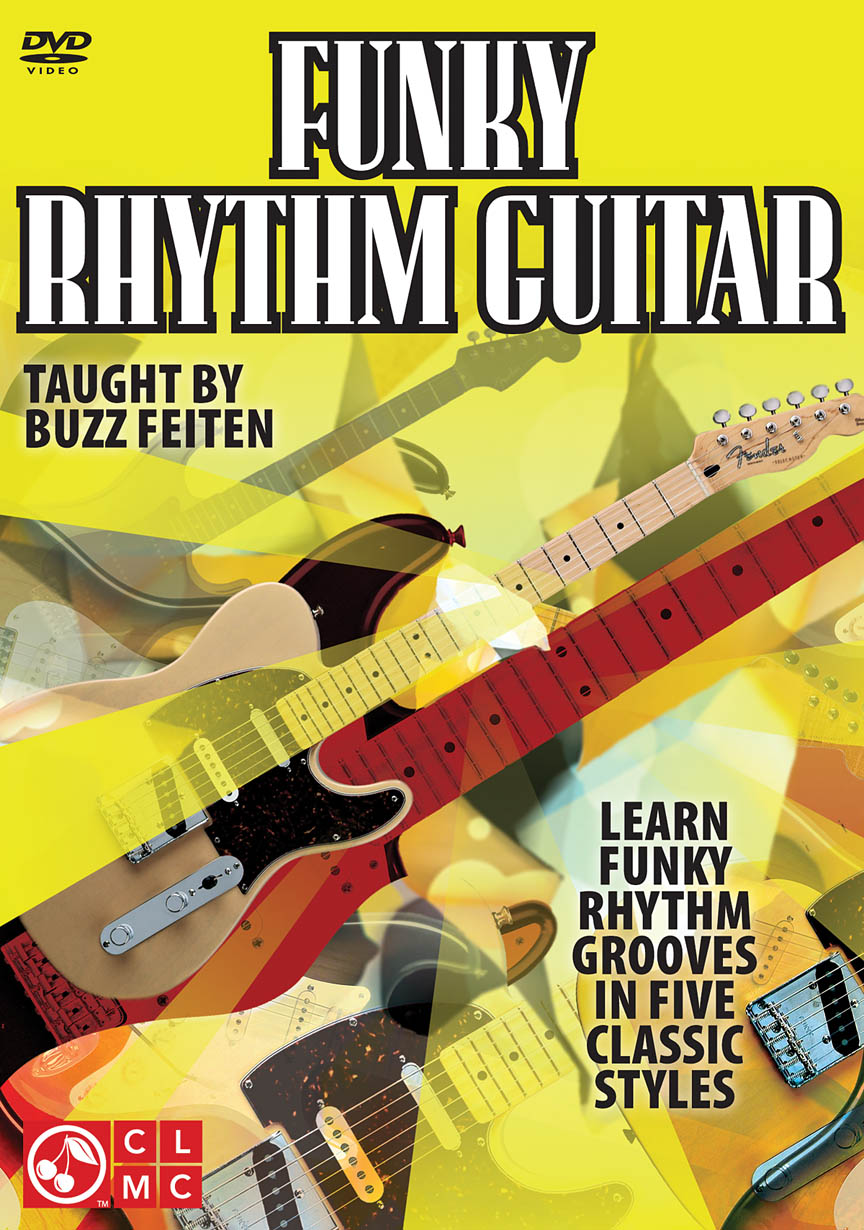
FUNKY RHYTHM GUITAR, Learn Funky Rhythm Grooves in Five Classic Styles. Buzz Feiten. TABLATURE DVD

FUNKY RHYTHM GUITAR, Learn Funky Rhythm Grooves in Five Classic Styles. Buzz Feiten. 1:37 minuti. TABLATURE DVD

Series: Instructional/Guitar/DVD
Publisher: Cherry Lane Music
Format: DVD
Author : Buzz Feiten
Cover Art: Levin Pfuefer

Watch, listen, and learn as Buzz Feiten breaks down funky rhythm guitar into three major components - the right-hand "engine," the melody, and the chord voicing - while he teaches grooves in five different styles: Hendrix / Mayfield double stop, chicken pickin'/New Orleans, James Brown, fusion samba, and Cornell Dupree. The DVD features a .pdf file with transcriptions of the musical examples for additional help.
Run Time: 1:37:00

Prezzo: €27,00
€27,00

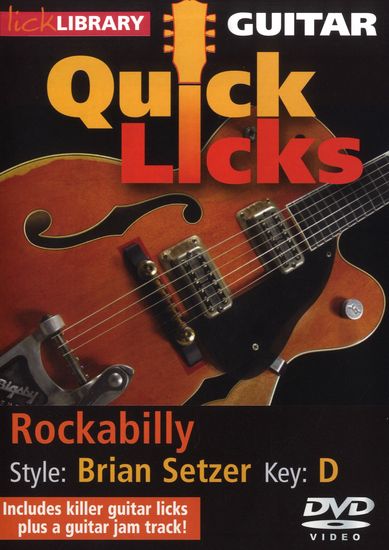
SETZER BRIAN-GUITAR QUICK LICKS ROCKABILLY STYLE-Key D-Steve Trovato DVD CHITARRA LEZIONE

SETZER BRIAN, GUITAR QUICK LICKS ROCKABILLY STYLE: Key D, by Steve Trovato. DVD

DVD VIDEO METODO PER CHITARRISTI DI MUSICA ROCKABILLY.

LEZIONE, VIDEO DIDATTICO, TECNICA. 

Product Description:
Learn rockabilly licks in the style of Brian Setzer, the Stray Cats frontman and an unrivalled king of rockabilly guitar! Also includes a guitar jam track. Lessons by Steve Trovato.

Each Quick Licks DVD includes an arsenal of licks in the style of your chosen artist to add to your repertoire, plus backing tracks to practice your new licks and techniques.

Prezzo: €29,99
€29,99

RIGHT HAND FINGER FRETTING ALAN WARNER VIDEO MULTI STRING TAPPING-ARPEGGIOS-SCALE-RIFFS-SOLOS

RIGHT HAND FINGER FRETTING. A. WARNER. VIDEO

Ace guitarist Alan Warner reveals the secrets of guitar technique in this new series of tuitional videos. Learn to play all the 'pro' techniques and effects to spice up your guitar playing. Duration: 46 minutes.

ONE STRING TAPPING

MULTI STRING TAPPING

GREAT SOLOS

SCALES

RIFFS

AUGMENTED CHORD RUNS

DIMINISHED CHORD RUNS

WALKING BASS

OCTAVE SLAMS

TAPPING ARPEGGIOS

RIGHT HAND CAPO TECHNIQUES

TRILLS, BENDS AND LOTS MORE.

Prezzo: €24,99
€24,99

TAPPING E SWEEPING ALLA CHITARRA TABLATURE DVD arpeggi settima scale tecnica velocità

TAPPING E SWEEPING ALLA CHITARRA, Michele Merico. In italiano. TABLATURE DVD

DVD IN ITALIANO, DI MUSICA PER CHITARRA CON LIBRETTO E TABLATURE.

TECNICA TAPPING

in francese; con sottotitoli in italiano

Questo DVD si sofferma per più di due ore sulle tecniche del tapping e dello sweeping alla chitarra, indissociabili dalle nozioni di velocità e di virtuosismo. Prima di tutto il tapping: tecniche di base, tapping su una corda e su più corde, scale ed arpeggi, cambi di posizione, movimenti trasversali, tecniche arricchite il tutto con l’aiuto di numerosi lick ed esercizi! In seguito lo sweeping: tecniche di base, nuove combinazioni di dita, lavoro degli arpeggi essenziali, lavoro della regolarità, diteggiature tipiche della scala maggiore ed altre scale utili, adattamento delle diteggiature, arpeggi di settima (triadi arricchite), sweeping realistico anche qui con numerosi lick ed esercizi. In breve di che arricchire notevolmente la vostra tecnica sulla chitarra. DVD + Booklet

Prezzo: €39,99
€39,99

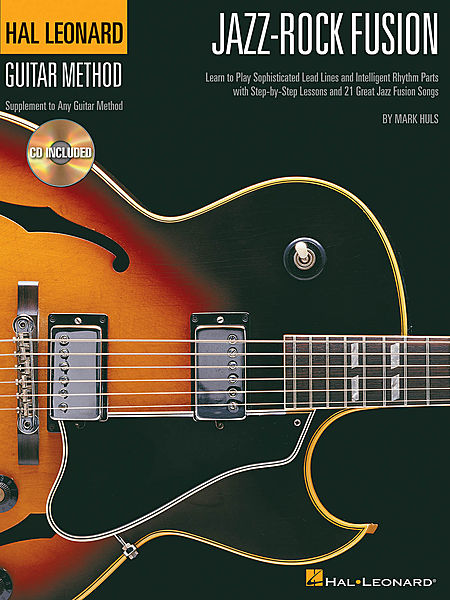
JAZZ-ROCK FUSION Hal Leonard Guitar method Mark Huls CD TABLATURE LIBRO SPARTITI METODO

JAZZ-ROCK FUSION, Hal Leonard Guitar method, Mark Huls. CD TABLATURE

LIBRO METODO DI MUSICA, CON CD.

SPARTITI PER CHITARRA.

ACCORDI, PENTAGRAMMA, TABLATURE. 

Series: Guitar Method
Format: Softcover with CD - TAB
Author : Mark Huls

Learn to play sophisticated lead lines and intelligent rhythm parts with step-by-step lessons and 21 great jazz fusion songs. Hal Leonard Jazz-Rock Fusion is your complete guide to mastering fusion guitar. You'll learn the many elements of this exciting music through real song examples by masters such as John McLaughlin, Mike Stern, Allan Holdsworth, Scott Henderson, John Scofield, Pat Metheny, and many more. Songs include: Birdland • Blue in Green • Freddie Freeloader • My Favorite Things • Nardis • Oye Como Va • She's a Woman • Spanish Key • and more.


INTRODUCTION: GETTING FUSED

When you listen to the pioneering sounds of Miles Davis's Bitches Brew (1969) and ask yourself, "What is fusion?", only one thing can come to mind: a total exploration of the sonic experience. This is true for most jazz-rock fusion efforts of the late sixties and early seventies, the era in which it emerged as a recognized independent form of music. The era produced many architects of the fusion sound, including Tony Williams, Herbie Hancock, Chick Corea, Joe Zawinul, and guitar greats such as John McLaughlin and Larry Coryell. This period also saw the influence of jazz in rock, with groups such as the Byrds, Hendrix, Cream, the Greatful Dead, Frank Zappa, Blood Sweat and Tears, and Chicago experimenting in free-form improvisations and jazz tonalities. Regarding fusion, rock's contributions can be heard in its straight-eighth or sixteenth-note repetitive patterns and grooves. This is in contrast to traditional jazz-swing rhythms. Rock attributes also include certain tonal characteristics, such as power chords, classic rock/blues/funk phrasing, and a greater use of "guitar" techniques such as bending. The fusion sound was also heavily influenced by the use of electronic instruments and effects in sixties rock, such as distortion, delay, wah, and phasing. With expansive, and at times haunting, plays of harmony borrowed from the wider harmonic field of jazz, the improvisational character of jazz, and the drive and emotion of rock, fusion captured the emotional expression and conscious expansion sought by its early creators. Their music traveled from dreamy soundscapes to bursts of explosive energy with the ability to find a solid foundation in the consistent drive of an underlying rock or funk groove. This formula of early fusion reflected the explorative spirit of the sixties and remains a part of fusion today. However, it has also expanded into many facets, with artists gravitating towards greater or lesser sides of jazz or rock and their counterparts of funk, fusion, blues, and pop. Modern fusion guitarists include such players as Scott Henderson, John Scofield, Pat Metheny, and Allan Holdsworth, all of which lean to the more "hard-core" end of the experimental and exploratory side of fusion. Meanwhile, players such as Larry Carlton, Earl Klugh, and Lee Ritenour have found success in the pop culture of fusion music-what is known as the "smooth-jazz" sound. The influence of jazz-rock fusion does not end solely with those artists considered to be "fusion" artists. Mainstream rock and pop guitarists and musicians of every facet have found inspiration from the jazz and jazz-rock fusion sound. Consider the works of Sting, Carlos Santana, Dave Matthews, Nora Jones, and Joni Mitchell, to name only a few. Many fusion artists, especially those of the early sixties and seventies, drew artistic and personal inspiration from a desire for music to serve as a channel to greater mental and or spiritual consciousness. This concept can also be found in Eastern philosophies in which certain sounds and or rhythms open "spiritual" centers. Such influences are evident in the group names and album titles of the early fusion era as well. These concepts, and the inherent artistic drive of the jazz-rock fusion artist to branch out into a greater musical experience, have also introduced world and ethnic music forms into the fusion sound, including Latin, African, and Eastern music influences. As a melting pot of style and artistic personality, a mere attempt to define jazz-rock fusion might sound like: a spirit of limitless harmonic and melodic potential alive with the heart of groove.  


THE TONE AND SOUND OF FUSION GUITAR

Technique

Voice Leading

scales

Arpeggios

Modes

Patterns

Superimposition

Re-harmonization

Amplification & Effects

Phrasing

Chords

Evolving the Vamp

Improvisation

Harmonization

Expanding the blues

Conclusion


Song List:
All The Things You Are
Birdfingers
Birdland
Blue In Green
Chromozone
500 Miles High
Follow Your Heart
Freddie Freeloader
Freedom Jazz Dance
Freeway Jam
Hymn Of The Seventh Galaxy
Kid Charlemagne
Low-Lee-Tah
My Favorite Things
Nardis
Oleo
Oye Como Va
The Red One
Samba Pa Ti
She's A Woman
Spanish Key

Inventory #HL 00697387
EAN: 9781423431978
UPC: 884088167004
Width: 9.0"
Length: 12.0"
112 pages

Prezzo: €26,99
€26,99

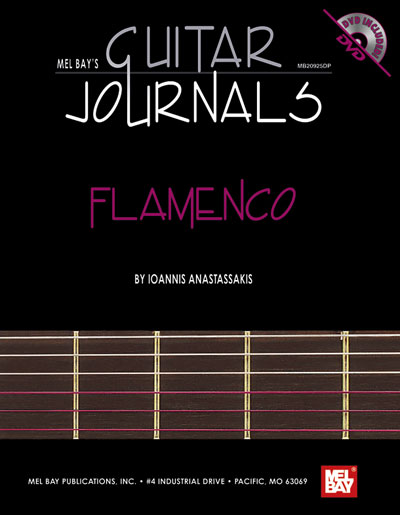
GUITAR JOURNALS FLAMENCO Ioannis Anastassakis DVD TABLATURE MEL BAY CHITARRA SPARTITI TABLATURE

GUITAR JOURNALS... FLAMENCO. SHEET MUSIC BOOK WITH DVD & GUITRAR TABLATURE. 

LIBRO DI MUSICA FLAMENCA CON DVD.

SPARTITI PER CHITARRA CON:

PENTAGRAMMA E TABLATURE.  

6 PEZZI COMPLETI.


Product Description:
This 176-page book/DVD package includes six full-length contemporary Flamenco guitar compositions by Ioannis Anastassakis, MA, best-selling Mel Bay author of the Art of Rasgueado and one of the few people to have obtained a Graduate Degree in Flamenco Guitar. Selections include Veridiana (Rumba Flamenca), Angelika (Granadinas), Maestro Serrano (Tangos), as well as 3 more solos based on the Flamenco forms of the Farucca, the Soleares and the Malaguena. Presented in standard notation and tablature, with extensive performance notes for each selection. DVD duration 64 min.

Format: Book+DVD
Series: Guitar Journals

It is no secret that interest in the flamenco guitar has grown very rapidly during the last 50 years. Flamenco guitar technique has evolved to extremely high standards, the compositions have matured beyond even the most optimistic expectations and the number of artists performing solo flamenco guitar music has risen to unprecedented heights; even the number of new flamenco guitar recordings has quadrupled in the last 5 years alone! There is, however, still one problem plaguing this continuous and multi-faceted progress: lack of performance repertoire. When compared to its classical guitar counterpart, flamenco guitar repertoire is found lacking indeed. Very few editions of performance pieces exist, most of them decades-old compositions that do not take into account the progress that has taken place in both the performance techniques and the compositional forms of flamenco guitar.

My intention with this collection of pieces is to tread the fme line between traditional flamenco guitar, firmly rooted in the inherited musical elements and the contemporary influences that have brought new levels of excitement to the music. All the compositions presented in this collection are based on traditional flamenco guitar forms. All of them, however, include additional elements from other musical cultures and styles. These compositions are meant to be performed live. I have performed most of them at least 200 times during the course of my flamenco guitar recitals and in just about every performance scenario from impromptu guitar gatherings to heavily publicized recitals, when teaching flamenco masterclasses or just playing for friends. The level of difficulty is usually upper intermediate with some parts drifting purposefully into advanced territory. Do not let that discourage you! I hope you have as much fun working with the compositions in this book as I had composing and recording them. Moreover, if you do enjoy them, do not hesitate and let me know. And while you are at it, check out. Finally, if you are interested in the subjects of flamenco and classical guitar, check out my Art of Rasgueado book, as well as my upcoming Art of Tremolo, Treasures of Flamenco Guitar and Flamenco Guitar Studies books, all published by Mel Bay Publications.


Companion CD Recording: All of the compositions in the book are recorded on the companion CD at performance speed. In addition, several of the key parts in each composition are recorded again at slow speed, in order to offer a more complete understanding of each phrase. Finally, I have included video files on the companion DVD that demonstrate the most difficult parts, as well as flamenco-specific techniques within these compositions. Fingering Notes: In order to simplify the visual complexity of the music, I have opted to avoid repeating obvious left-hand fingerings, especially in the case of basic major and minor chords played in open position and/or phrases repeated many times throughout the composition (eg. The basic rasgueado pattern in Soleares). This was done intentionally in an effort to give the music an uncluttered look, since there is a fair amount of rhythmic complexity as well as a large assortment of right hand techniques that need to be meticulously transcribed in the notation and tablature. As a personal fingering choice, I tend to use my left hand 4th finger (little finger) for a lot of phrases where most guitarists would use their 3rd (ring) fmger instead. I have found that with proper training, the little finger becomes even stronger than the ring finger, so I tend to use it a lot, sometimes to the point of favoring it. Still, this is a personal fingering choice. Feel free to substitute the 3rd finger in these instances. Keep in mind that a lot of flamenco falsetas (music phrases) are based on chord shapes that are held for either the complete duration or a significant segment of the phrase. This is especially prevalent in tremolo-based and arpeggio-based phrases. Try to identify these phrase segments and keep the maximum number of chord notes ringing while performing them. Depending on their specific context, trills are sometimes notated as appogiaturas and are sometimes given appropriate rhythmic value. The most basic, as well as the most usual, golpe is played with the ring finger hitting the golpeador of the flamenco guitar, right below the 1st string close to the bridge. However, there are two other special golpes used in the following compositions, which are explained in each piece's performance notes. The most distinctive techniques of the flamenco guitar are the various Rasgueados. These characteristic strumming techniques playa key part in creating the unique sound of the flamenco guitar. I have intentionally decided to use a very large variety of rasgueados, more than you would probably find in the actual playing of even an advanced flamenco guitar performer, in order to demonstrate a representative sample of the variety of flamenco rasgueado technique. If you are interested in learning more about the various rasgueado techniques used in flamenco, their history proper performance and context, I suggest you check out my instructional book The Art of Rasgueado, published by Mel Bay Publications.


Born on the Greek island of Crete, Ioannis Anastassakis studied at the Greek National
Conservatory and the Nakas Conservatory in Athens. He completed his bachelor's degree at the
American College of Greece, and subsequently studied at the distinguished Musicians Institute
in Las Angeles (GIT), where he was hired as an instructor after graduating in the top 1% of his
class. He continued his studies, specializing in solo flamenco guitar under the tutelage of Juan
Serrano at California State University, completing an MA in Guitar Performance and graduating
Magna cum Laude. Currently (2005), he is working towards a Doctorate in Education, with an
emphasis in Music in the UK.
Ioannis studied for several years with Juan Serrano. In addition, he has studied with Flamenco
guitar legends Manolo Sanlucar, Juan Martin, Paco Serrano, Jose Antonio Rodriguez and Manolo Franco.
Ioannis' list of teachers of electric guitar are no less impressive; the list reads like a "Who's
Who" of contemporary electric guitar legends including: Steve Vai (Whitesnake), Vinnie Moore (UFO), Marty Friedman (Megadeth), John Petrucci (Dream Theater), Frank Gambale (Chick Corea), Paul Gilbert (Mr. Big), Brett Garsed, Joey Tafolla, Scott Henderson, Mike Stern, Jean Marc Belkadi, Darren Householder, Tommy Tedesco, Ted Greene, Ron Echete, Sid Jacobs and Joe Diorio.
Ioannis has also performed and/or recorded in various settings with band members from
Whitesnake, Dio, Deep Purple, Ozzy Osbourne Band, Elton John Band, Santana, Celine Dion, Sara Vaughan, Tito Puente, Julio Iglesias, Tower of Power, Chick Corea Electric Band, Jeff Beck, Steve Vai Band, Badlands, Tribal Tech, Natalie Cole, Joe Cocker, Cher, Blood Sweat & Tears, Nina Hagen and others.
Ioannis has presented over 300 solo recitals in Europe and the United States and has been a
guest lecturer at several American colleges and universities including: The University of Southern
California, California State University Northridge, California State University Fresno, California
State University Fullerton, Musicians Institute, Fresno City College, and the American College of
Greece. In addition, he has won classical and flamenco guitar competitions and has been featured
a dozen times on American television programs.
In December 2000, he was the first guitarist ever to present a solo guitar recital at the Greek
National Opera House.
Ioannis' first solo flamenco guitar CD, Flamenco Live at Ioannina, was released by MP3.com
in August 2000 and immediately entered the company's flamenco category Top 10 chart, eventually
reaching the #1 spot worldwide in October 2002. The CD was re-mastered and re-released by
Wild Rose Angel Productions in 2003.
Ioannis' second and third solo flamenco guitar CDs, Traditional Flamenco Guitar Selections,
Vol.J & Vol.2 are scheduled for release by Wild Rose Angel Productions in 2006 and 2007
respectively.
Ioannis' instructional materials are published and distributed worldwide by Mel Bay
Publications. His first instructional book The Art of Rasgueado, achieved best-seller status within
months of its initial publication date. He is also a regular columnist in Mel Bay's Guitar
Sessions® magazine.

TABLE OF CONTENTS
Introduction
Acknowledgements
General Performance Notes
Notation Legend
A mi madre (Soleares) - About the Composition
A mi madre (Soleares) - Performance Notes
A mi madre (Soleares)
Recuerdos de Cordoba (Farruca) - About the Composition
Recuerdos de Cordoba (Farruca) - Performance Notes
Recuerdos de Cordoba (Farruca)
Angelika (Granadinas) - About the Composition
Angelika (Granadinas) - Performance Notes
Angelika (Granadinas)
Veridiana (Rumba) - About the Composition
Veridiana (Rumba) - Performance Notes
Veridian (Rumba)
Maestro Serrano (Tangos) - About the Composition
Maestro Serrano (Tangos) - Performance Notes
Maestro Serrano (Tangos)
Variations on Malaguefia (Malaguena) - About the Composition
Variations on Malaguefia (Malaguena) - Performance Notes
Variations on Malaguefia (Malaguena)
About the Author

DVD CONTENTS
This DVD contains specific sections from the songs chosen by the author to teach in greater detail. Each section is played at speed and then played again at a slower pace to offer greater instruction and insight into each piece. The audio tracks are located on the DVD. You can access them by selecting "Audio Only selections" from the main menu of the DVD. 

Song Title: Composer/Source:

Introduction
Acknowledgements
Performance notes
Notation legend

A Mi Madre - Ioannis Anastassakis
Angelika - Ioannis Anastassakis
Flamenco Variations on Malaguena - Ioannis Anastassakis
Maestro Serrano - Ioannis Anastassakis
Recuerdos De Cordoba - Ioannis Anastassakis
Veridiana - Ioannis Anastassakis

Prezzo: €32,99
€32,99
Condividi contenuti