CHITARRA - GUITAR

ACOUSTIC HITS VOLUME 3, Guitar Play-Along. DVD TABLATURE

ACOUSTIC HITS VOLUME 3, Guitar Play-Along. TABLATURE


-Every Rose Has Its Thorn (Poison)

-Fly to the Angels (Slaughter)

-Iris (Goo Goo Dolls)

-More Than Words (Extreme)

-Silent Lucidity (Queensryche)

-Tears in Heaven (Eric Clapton)

-3 AM (Matchbox 20)

-To Be with You (Mr. Big).


128 minutes. DVD

Publisher: Hal Leonard

The Guitar Play-Along DVD Series lets you hear and see how to play songs like never before. Just watch, listen and learn! Each song starts with a lesson from a professional guitar teacher. Then, the teacher performs the complete song along with professionally recorded backing tracks. You can choose to turn the guitar off if you want to play along or leave the guitar in the mix to hear how it should sound. You can also choose from three viewing options: fret hand with tab, wide view with tab, pick & fret hands close-up. Each DVD includes great songs that all guitarists will want to know! Volume 3 includes: Every Rose Has Its Thorn (Poison) - Fly to the Angels (Slaughter) - Iris (Goo Goo Dolls) - More Than Words (Extreme) - Silent Lucidity (Queensryche) - Tears in Heaven (Eric Clapton) - 3 AM (Matchbox 20) - To Be with You (Mr. Big). 100 minutes.

Prezzo: €16,00
€16,00

TANGO FOR GUITAR Jorge Polanuer Brian Chambouleyron Centerstream Publications Hal Leonard CD LIBRO

TANGO FOR GUITAR, Jorge Polanuer e Brian Chambouleyron. 13 titoli con base. CD

LIBRO E CD

Tango for Guitar
Series: Guitar
Publisher: Centerstream Publications
Format: Softcover with CD
Author: Brian Chambouleyron
Composer: Jorge Polanuer

At the beginning of the 20th Century, the tango was born in Buenos Aires, and it was a style that spread dramatically all over the world. Tango is a dance, a rhythm and a characteristic musical color. The 13 solos in this book were written especially for guitar by award-winning composers Jorge Polanuer and Brian Chambouleyron, and each tune is performed on the CD by Brian, one of the most popular guitarists in Buenos Aires. The solos are presented in different degrees of complexity – tune up with the tuning notes on the CD and play along with the tangos, milangos, waltzes and even a guitar duet. The songs are also repeated on the CD without the lead for you to play the solo part.

Inventory #HL 00000379
ISBN: 9781574241464
UPC: 073999329162
Width: 9.0"
Length: 12.0"
32 pages

The guitar is a charasteristic musical instrument in Argentine culture. Since the arrival of Spaniards to South America, it has had a key role in our folk music. Its sound has been the composers and interpreters' favorite. At present there is a broad and comprehensive catalog of songs and instrumental pieces, which encompasses early genres of the 19th century as well as the latest pop creations. At the beginning of the 20th century (around the time of the blues), the tango was born in Buenos Aires: a style arising from immigration and the melting pot which was going to spread dramatically all over the world. Tango is a dance, a rhythm and a charasteristic musical color. It is in tango where the guitar reaches a remarkable level of technical and expressive development. Today I propose an approach in the 'tanguero' style of playing the guitar, with some pieces specially composed by Jorge Polanuer, a composer and a friend, and myself. The tangos in this book are accompained by valses-tango and milonga-tango, similar and complementary genres also played in ballrooms. For each piece I suggest fingering based on the criterion of economy of movements. The numbers on the notes indicate the finger with which that note must be played, and the encircled number refers to the string. There can be other ways of fingering which might be more practical for you; that being the case, feel free to modify it accordingly. There's a way to play for every instrumentalist! The pieces present different degrees of complexity; therefore, they could also make an excellent complement in learning how to play the instrument. I hope you find this approach useful and you feel like filling yourselves with tango.

Brian Chambouleyron became a musician studying several disciplines (guitar, singing, composition, musical analysis, arrangements and orchestration). Always fascinated with popular music, he traveled to different Latin American countries to learn their traditions. He began his professional activity as a music teacher in 1990.Teaching led to the creation of children's shows. As a composer of popular songs, he participated in the Buenos Aires' Young Artists biennial exhibition. In 1993he went on his first professional tour to Europe, going all over France and Switzerland for two months and performing as both soloist and together with other musical bands. He also gave courses on Argentine popular music. From then on, his activities in European countries became regular. In 1996 he was in charge of the musical direction of the successful show Recuerdos son recuerdos (which received 5 ACE awards nominations). Brian Chambouleyron was nominated for 'male revelation'. (CD Recuerdos son recuerdos - La Trastienda Records). In 1998 he participated in the show Glorias Portenas (1998ACE award) together with Soledad Villamil, which was given an excellent reception by the critics and the public. The show toured continuously throughout Argentina, Latin America and Europe for two years, and participated in prestigious international festivals (CD Glorias Portenas vol. I and II - Epsa Music). Brian Chambouleyron was given the 1999Trinidad Guevara award for 'male revelation of the year' by the Department of Culture of Buenos Aires City. In 2000 he created the show Patio de Tango with Esteban Morgado, which also had a wonderful reception at a national level, and he started a long international tour (Paris, Rome, Madrid, Barcelona, etc). (CD Patio de Tango - BAM records, Department of Culture). With his last show, Tangos, valses and Milongas, he has performed in several cultural events and toured abroad, being highly acclaimed by audiences and critics. Brian has also composed the music for several theatre plays: "La firecilla domada" , 2004; "Pequena historia del tango", 2002; "Granadina", 2003; ect. In 2004 recorded the CD "Chambouleyron sings GardeI", a selection of the finest compositions by Gardel, arranged by B. Ch. (Random records, Buenos Aires). In 2005 recorded the CD "Voiceand Guitar", Twenty tradicional tango and argentinian popular music pieces, arranged by Chambouleyron. (Random records, Buenos Aires) on Ie canta a Gardel (Chambouleyron sings Gardel). This work is a selection of the finest compositions by Gardel-plus a few jewels from his songbook - recreated in an intimate and romantic atmosphere.

Blanca

Childhood Memories

Don't Kill Me Or I'll Die

If Mamma Says So

It's Raining

My Friend

Nobody Left In Town

Nothing To Lose

Pretty Buenos Aires

Rainy Day Waltz

Strolling

The Farewell Waltz

Without Realizing It

Prezzo: €26,99
€26,99

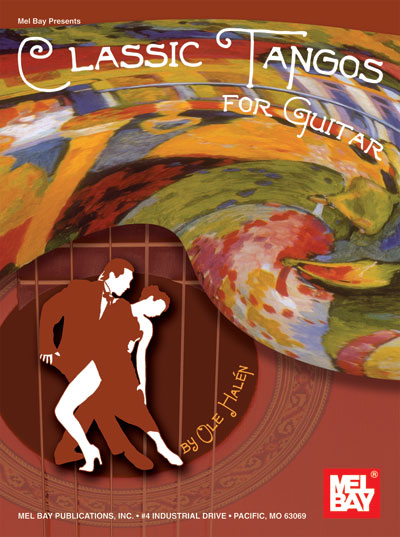
CLASSIC TANGOS FOR GUITAR Òle Halen Mel Bay TABLATURE SPARTITI CHITARRA 'O sole mio LIBRO

CLASSIC TANGOS FOR GUITAR. SHEET MUSIC BOOK WITH GUITAR TABLATURE . 

LIBRO DI MUSICA TANGO.

SPARTITI PER CHITARRA : PENTAGRAMMA E TABLATURE.  


Product Description:
Due to some deep-seated cultural irony known only to its native population, the Argentine tango has a profound grip on Finland where dance clubs and popular singers thrive on this particular style of music. In this collection, Finnish guitarist Òle Halen shares his enthusiasm for the genre by presenting tangos for solo guitar by some of the best Latin American and Spanish tango composer/guitarists, plus transcriptions and arrangements by such luminaries as Francisco Tárrega and Daniel Fortea of Spanish and Italian works originally composed for instruments other than the guitar. Written in standard notation and tablature. 128 Pages.

Product Number: 97066

Format: Book
ISBN: 0786646888
UPC: 796279061254
ISBN13: 9780786646883
Series: Non-Series
Publisher: Mel Bay Publications
Date Published: 6/20/2007


Contents:

Lagrima -- Francisco Tarrega
Danza Espanola No. 5 -- E. Granados
Don Perez Freire -- Agustin Barrios Mangore
Ayer se la IIevaron -- Daniel Fortea
Musa Argentina (Celebre Tango Argentino) -- Espiga - Fortea
Tango -- Francesco Tarrega
La Paloma -- S. Yradier and F. Tarrega
O sole mio -- Musica: Edoardo di Capua - Transcription by Francisco Tarrega - Lyrics: Giovanni Capurro - 1898
Del Ferrol a La Habana (Coll. of Tangos for Guitar) -- J. Parga
A ti solita...(Habanera) -- F. P. Spreafico
Clarita (Tango, Opus 3) -- Julian Ortiz
Anhelando -- Julian Ortiz
Junta al Farol (Tango Criollo) -- Vincente Caprino M.
Don Martin (Tango Criollo) -- Vincente Caprino M.
D. Juan Carlos (Tango Criollo) -- Vincente Caprino M.
Romero -- A. Galluzo
El Alero (Tango Pajuerano) -- Juan Maglio
Tango Espanol -- Isaac Alneniz
Tango No. 2 -- Agustin Barrios Mangore

 
Che bella cosa e' na jurnata 'e sole
n'aria serena doppo na tempesta!
Pe' ll'aria fresca pare già na festa
Che bella cosa e' na jurnata 'e sole
Ma n'atu sole,
cchiù bello, oje ne'
'O sole mio
sta 'nfronte a te!
'O sole, 'o sole mio
sta 'nfronte a te!
sta 'nfronte a te!
Quanno fa notte e 'o sole se ne scenne,
me vene quase 'na malincunia;
sotto 'a fenesta toia restarria
quanno fa notte e 'o sole se ne scenne.
Ma n'atu sole,
cchiù bello, oje ne'
'O sole mio
sta 'nfronte a te!
'O sole, 'o sole mio
sta 'nfronte a te!
sta 'nfronte a te!
Prezzo: €24,99
€24,99

BACH JOHANN SEBASTIAN TRANSCRIPTIONS CLASSIC GUITAR Javier Calderon CD LIBRO SPARTITI

BACH JOHANN SEBASTIAN, TRANSCRIPTIONS FOR CLASSIC GUITAR, transcribed arranged Javier Calderon. LIBRO E CD

LIBRO DI MUSICA CLASSICA, CON CD,

SPARTITI PER CHITARRA CON PENTAGRAMMA.

CONTIENE LA FAMOSA  ''Chaconne in D Minor BWV 1004'' DI BACH. TRASCRITTA PER LA PRIMA VOLTA PER CHITARRA DA SEGOVIA.  


Product Description:
Absolute, universal, and harmonious - Bach's music is as profoundly satisfying and uplifting today as it was in his era. One of the most eloquent and expressive guitarists of our time, Javier Calderon, presents these timeless pieces, expertly arranged and transcribed for the classic guitar. Selections include: Sonata BWV 1001 (Adagio, Fugue, Siciliano, and Presto); Chaconne in D Minor BWV 1004; Prelude in D Minor, Prelude, Fugue, and Allegro BWV 998; Suite for Lute BWV 996 (Prelude, Allemande, Courante, Sarabande, Bourree, and Gigue); Prelude for Lute BWV 999; and Jesu, Joy of Man's Desiring. Written in standard notation only with minimal, unobtrusive left-hand fingering. The attached performance CD presents the author's exquisite rendition of every selection in the book.


Javier Calderon

J.S.BACH Transcriptions for Guitar

It is difficult to imagine how a composer of the stature of Johann Sebastian Bach (1685-1750) could have lived for 65 years, having written some of the world's most universally accessible and beautifully original compositions in every manner and for practically every instrument of the late Baroque period, in relative obscurity. Trained initially by his father and later by his elder brother, Johann Sebastian is now considered the greatest in a long line of noteworthy musicians and composers of the Bach family. Neither tormented by the specter of financial ruin nor obscured by less competent musical pedagogues, Bach was nevertheless no more well known than a host of other reasonably successful musical functionaries of his time. He was often influenced in his composing career more by external circumstances than by any driving internal impulse to create. And yet, the element of genius is indisputable evident in his music, a fact which elevates his work above that of his equally dedicated contemporaries. His music is as profoundly satisfying and uplifting today as it was in his own time, yet he fit in to his world as comfortably and as unremarkably as the average citizen of any era, he was no brooding outcast seeking to shatter the foundations of his own creative medium, an image that so often accompanies the notions of genius and artistry Indeed, what makes Bach's greatness especially recognizable is the extent to which it celebrates and improves upon the very spirit of his age. Absolute, universal, and harmonious, Bach's music reflects back the sum total of its essential parts, devoid of their imperfections. It is as though he had refined or purified the very elements that made up his world and, by doing so, crystallized them into their immortal expression. It is no wonder that, upon listening to his music, one is transported back to an age largely unfamiliar to him and yet simultaneously immersed in an intangible musical realm whose existence is everlasting. Bach, in this way, was not the artistic antithesis of his age but rather its ultimate revelation. If his music still recalls the religiosity of his day, it is no less as the sanctification of itself as the structure of musical perfection.

The Music

The Sonata, (BWV 1001) originally intended for solo violin was composed in 1720 in Coethen . It is well known that this piece was influenced by Bach's experience in composing for the lute, an instrument which, by Bach's time, had already seen its prime. Wistful, even reminiscent of early music, the Adagio begins with a slowness that is, at the same time, resolute - not yet echoing the multi-voiced scenarios that in large part define and punctuate Bach's vast musical repertoire. The Adagio is much more self-contained, without the obvious symmetry so pervasive in other pieces, suggesting a simpler composition.

The Fugue which follows begins the standard cascade of evenly patterned voices, livelier and yet balanced even as it breaks into centrally placed, almost rhapsodic variations that come into blossom throughout the movement. In the Siciliano we are met with an almost folksy, song-like melody, simple without yet being simplistic, sitting in the work itself like an island away from the more serious themes that dominate the prior and proceeding movements. In the final Presto, we encounter once again the lively exuberance of the Fugue. Full of energy and continuing the merriment of the Siciliano with a wilder, less introverted pacing, it is nevertheless neither hurried nor lacking in the synchronization that brings full circle the three prior episodes.

The Chaconne (BWV 1004) from Bach's solo violin Partita in D minor written in Coethen around 1720 and arranged for Lute, is one of the most famous works in this series. According to Donald Grout in A History of Western Music, Bach here "demonstrated his ability to create the illusion of a harmonic and contrapuntal texture by means of multiple stops or single melodic lines which outline or suggest an interplay of independent voices, a technique going back to the Lute composers of the Renaissance and related to the style of the French Lutenists and Clavecinists ofthe middle and late Baroque". The stillness of the full chords which announce this composition suggest the discipline and control which only mastery over this technique could produce. The Chaconne is neither morose nor worldly. In places practically devoid of emotion, removed from either joy or sorrow, it nevertheless breaks again and again into a beauty, haunting in its appeal. While both dramatic and outspoken, the repetition of movement to overtake the ...


Format: Book/CD Set

Contents:

SONATA BWV 1001 - ADAGIO -- J. S. BACH
SONATA BWV 1001 - FUGUE -- J. S. BACH
SONATA BWV 1001 - SICILIANO -- J. S. BACH
SONATA BWV 1001 - PRESTO -- J. S. BACH
CHACONNE IN D MINOR BWV 1004 -- J. S. BACH
PRELUDE IN D MINOR -- J. S. BACH
PRELUDE - FUGUE & ALLEGRO BWV 998 - PRELUDE -- J. S. BACH
PRELUDE - FUGUE & ALLEGRO BWV 998 - FUGUE -- J. S. BACH
PRELUDE - FUGUE & ALLEGRO BWV 998 - ALLEGRO -- J. S. BACH
SUITE FOR LUTE BWV 996 - PRELUDE -- J. S. BACH
SUITE FOR LUTE BWV 996 - ALLEMANDE -- J. S. BACH
SUITE FOR LUTE BWV 996 - PRELUDE -- J. S. BACH
SUITE FOR LUTE BWV 996 - ALLEMANDE -- J. S. BACH
SUITE FOR LUTE BWV 996 - COURANTE -- J. S. BACH
SUITE FOR LUTE BWV 996 - SARABANDE -- J. S. BACH
SUITE FOR LUTE BWV 996 - BOURREE -- J. S. BACH
SUITE FOR LUTE BWV 996 - GIGUE -- J. S. BACH
PRELUDE FOR LUTE BWV 999 -- J. S. BACH
JESU, JOY OF MAN'S DESIRING -- J. S. BACH

Prezzo: €27,99
€27,99

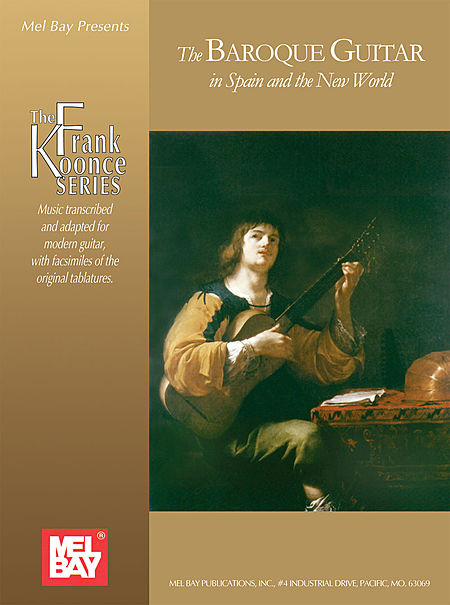
BAROQUE GUITAR IN SPAIN AND THE NEW WORLD BY FRANK KOONCE

THE BAROQUE GUITAR IN SPAIN AND THE NEW WORLD, BY FRANK KOONCE. 170 Pages.

LIBRO DI MUSICA BAROCCA .

SPARTITI PER CHITARRA : PENTAGRAMMA . 


Nel libro c'è anche una parte di storia sull'origine della chitarra ove troverete molte informazioni sulle accordature della vihuela e delle chitarre antiche a 5 corde doppie (non avevano il Mi basso), una guida per la lettura della Tablature italiana del 1500. La Tablature del 1732 di Santiago de Murcia, e quella di Giovanni Paolo Foscarini del 1629, avevano anche l'indicazione degli accordi per l'accompagnamento, lo strumming in giù e in sù, e gli accordi sono gli stessi che si usano nelle canzoni di oggi di Neil Young e Battioni, e poi i trilli e gli abbellimenti. Dopo 500 anni la Tablature italiana, quella che si usa nei libri di oggi, è ancora un sistema valido e immediato per la lettura della musica. Con 40 pagine di facsimile delle tablature originali.

Music transcribed and adapted for modern guitar, with facsimiles of the original tablatures.

Product Description:
A substantial amount of early music for the guitar remains unknown to modern performers and audiences. In recent years, however, musicologists, scholars and performers on period instruments have provided a wealth of accessible new source materials which players can now begin to interpret in convincing and effective ways. Nevertheless, many still feel intimidated by the prospect of sorting through and learning to use these resources for the first time. For the uninitiated, just knowing where to start can be difficult.

A substantial amount of early music for the guitar remains unknown to modem performers and audiences. In recent years, however, many fine musicologists, scholars, and performers of period instruments have provided a wealth of new materials - reprints of original manuscripts, translations of early treatises, scholarly transcriptions of tablatures, and other resources - with which players now can have access this music and begin to interpret it in convincing and effective ways. Nevertheless, many guitarists still may feel intimidated by the prospect of sorting through and learning to use these resources for the first time. For the uninitiated, just knowing where to start can be difficult. Scholarly transcriptions, for the most part, are not designed for easy use by guitarists. For example, many are in double-staff (keyboard) notation and, with regard to Renaissance vihuela and lute music, are not often transposed to guitar pitches. In other words, the open first string is usually written as G, not E. Guitarists who try to play from these editions essentially are faced with the task of transcribing the transcription! Furthermore, these editions sometimes do not offer realistic solutions - from a player's perspective - for voicing, note duration, and other considerations imposed by the technical limitations of an instrument. My idea to develop an anthology came about through my own need for easily accessible resource materials to teach repertoire or history/literature classes at the university level. I also wanted to help bridge the gap between scholarly editions and performance editions by providing a hands-on introduction to tablature transcription and to issues concerning historically informed performance on the modern guitar. I hope that my efforts may be of assistance to other teachers, as well as being simply an attractive collection of music for all to enjoy. The present collection contains representative selections from the publications and manuscripts of four important Spanish Baroque guitarists: Gaspar Sanz, Antonio de Santa Cruz, Francisco Guerau, and Santiago de Murcia. It must be emphasized, however, that this is only a sampling ofthe rich and varied repertoire from this era. The reader is strongly encouraged to seek out other sources, especially the many fine facsimile editions and other scholarly publications that are cited herein. Acknowledgements I am grateful to my friends, colleagues, and family who assisted in the preparation of this anthology: Michael Macmeeken, of Editions Chanterelle, shared images of original tablatures from Murcia's Resumen and Passacalles y obms; Brian Jeffery, of Tecla Editions, shared images from Guerau's Poema harmonico; Michael Lorimer shared images from his facsimile edition ofMurcia's Saldivar Codex No.4; and Richard Savino shared digital photographs of the unpublished Santa Cruz manuscript. James Tyler, Richard Long, Richard Savino, Kay Norton, Richard Troeger, Anthony Bez, Christopher Dorsey, Richard Brune, and Jan-OlofEriksson provided expertise on matters pertaining to the text and music. Babette Burns, Richard Burns, and Anne Loire assisted in translations and international communications. AlAbrams provided photographic services. Bernard Terlay, ofMusee Granet, provided the image for the cover portrait. Sylvain Lemay, of us Productions d'OZ, prepared the music engraving and text formatting, and patiently accommodated my many revisions. Leanne Koonce, my wife and partner, designed the cover, scanned and formatted all of the facsimile images, and provided her abiding love and support as always. Reading Baroque Guitar Tablature

Tablature and Transcription Anyone today who wishes to perform early music originally written for the guitar and other fretted instruments should learn to read tablature because it provides direct access to the original, unaltered, music. Performers also gain access to the vast majority of Renaissance and Baroque pieces that have not yet been transcribed. Those arguments notwithstanding, there are benefits to having tablature transcribed into modern notation: 1) Transcriptions facilitate the playing of music on instruments other than those for which it was written. 2) Modern notation enables performers to see functional aspects of the music such as pitch relationships, voicing, and harmonic structures. 3) Modern notation also provides an introduction to the performance of early music for those not yet accustomed to reading tablature. Nevertheless, the conversion of tablature into modern notation involves making many subjective choices on matters such as note sustain, voicing, and octave selection. Even the most conscientious transcriber cannot avoid imparting personal preferences into this process. The problem is compounded if a transcriber is also trying to take idiomatic differences between a period instrument and a modern instrument into account. Differences in tuning between a Baroque guitar and a modern guitar, for instance, make certain alterations unavoidable. I also must be understood that editors may have perspectives that fall anywhere between two diametric extremes. At one end, an editor may disregard information provided in the tablatures and try to "improve" the music by revising or even re-composing much of it. The result of such a process is a free arrangement, far removed from the original, not a true transcription. At the other end, an editor may try to represent an imagined ideal of performance that goes beyond the realistic technical capabilities of performance on the intended instrument. This often occurs in scholarly editions b musicologists who sometimes do not share the technical concerns of players. 16 In ummary, one must realize that any editorial solution may represent only one of many interpretative possibilities and may therefore may hinder the reader from exploring alternatives that are equally valid - or even more so. Given all of the ambiguities of tablature notation and the subjectivity associated with the transcription process, players should always consult the tablature for the most direct connection to the original music. 3.2. Punteado Notation Reading Italian Tablature, Baroque guitar music from Spain and Italy is written in "Italian" tablature. A five-line staff represents the five courses ofthe guitar, with the bottom line being the first course (the treble E). In this layout, the tablature projects a mirror image of the strings when the music is placed on a table for reading. Numbers placed on or between the lines indicate the frets that are to be stopped on a particular course. The number 0 represents the open course; 1 is for the first fret; 2 is for the second fret, and so on. The Roman numeral X represents the tenth fret instead of the Arabic 10 to avoid it being misread as two notes. Notes above this fret (although rare) (16 For an excellent article on the methods, philosophies, and evolution of transcription, see Matanya Ophee, "The History of Transcriptions of Lute Tablature - 1679 to the Present)

This anthology contains representative selections from the publications and manuscripts of four important Spanish Baroque guitarists: Gaspar Sanz, Antonio de Santa Cruz, Francisco Guerau, and Santiago de Murcia. In addition to being fun and entertaining music for all to enjoy, this collection is intended to help bridge the gap between scholarly editions and performance editions by providing a hands-on introduction to tablature transcription and to issues concerning historically informed performance on the modern guitar.

Contents:

Preface

Acknowledgements

Dedication

1. Evolution of the Five-Course Guitar

1.1. Transition from the Vihuela and Four-Course Guitar

1.2. Dominance of the Five-Course Guitar

2. Tuning of the Five-Course Guitar

2.1. Terms Pertaining to Stringing and Tuning

2.2. Different Tunings for the Baroque Guitar

2.3. Issues and Opinions on Tuning Practices in Spain

2.4. Relevance of Baroque Tuning Practices to Modern Performers

3. Reading Baroque Guitar Tablature

3.1. Tablature and Transcription

3.2. Punteado Notation

3.3. Rasgueado Notation

3.4. Mixed Tablatures

4. Interpretation and Performance

4.1. Octave Selection and Voice Leading

4.2. Punteado Ornaments

4.3. Campanelas

4.4. Meter and Tempo

4.5. Hemiola and Syncopation

4.6. Rasgueado Techniques

4.7. Rasgueado Ornaments

5. Editorial Procedures

5.1. Philosophy and Intent

5.2. The Voicing and Notation of Strummed Chords

5.3. Editorial Notation

6. Gaspar Sanz

6.1–9. La cavalleria de Napoles con dos clarines, Rujero, Paradetas, Folías, Las Hachas, Zarabanda, La Esfachata de Napoles,La Miñona de Cataluña, Canarios

6.10–14. Pavanas, Españoletas, Matachín, Villanos, Passacalles

7. Antonio de Santa Cruz

7.1–3. Jácaras, Villano, Canario

8. Francisco Guerau

8.1–4. Marionas, Villano, Canario, Passacalles in B minor

9. Santiago de Murcia

9.1. Resumen de acompañar

La Guastala, Menuet, Preludio in D minor

9.2. Códice Saldívar No. 4

Marionas, Fandango, Jácaras, Zangarilleja, Cumbées

9.3. Passacalles y obras

Passacalles in G minor, Suite in G Major, Suite in D minor

10. Facsimiles

Selected Bibliography


Music


Gaspar Sanz

La cavalleria de Napoles con dos clarines

Rujero

Paradetas

Folías

Las Hachas

Zarabanda

La Esfachata de Napoles

La Miñona de Cataluña

Canarios

Pavanas

Españoletas

Matachín

Villanos

Passacalles

Antonio de Santa Cruz

Jácaras

Villano

Canario

Francisco Guerau

Marionas

Villano

Canario

Passacalles in B minor

Santiago de Murcia

La Guastala

Menuet(s)

Preludio in D minor

Marionas

Fandango

Jácaras

Zangarilleja

Cumbées

Passacalles in G minor

Suite in G Major

Suite in D minor

Facsimile Reproductions

Gaspar Sanz

Instruccion de musica

Antonio de Santa Cruz

Libro donde se veran pazacalles

Francisco Guerau

Poema harmonico

Santiago de Murcia

Resumen de acompañar

Códice Saldívar No. 4

Passacalles y obras

Prezzo: €34,99
€34,99

LEARN TO PLAY LIKE THE GUITAR GREATS The Essential Guide to Chords Equipment Techniques TABLATURE 65 classic riffs from Stairway to Heaven to Smells like Teen Spirit 256 pages Charlotte Greig

LEARN TO PLAY LIKE THE GUITAR GREATS, The Essential Guide to Chords Equipment and Techniques, Charlotte Greig. 65 classic riffs from Stairway to Heaven to Smells like Teen Spirit, 256 pages. TABLATURE

LIBRO CON FOTOGRAFIE E BIOGRAFIE DI CHITARRISTI, CON BREVI FRASI IN TABLATURE

Ever wanted to play like a famous guitarist? Now's your chance! This entertaining and accessible guide to emulating the legends features: notation for more than 65 classic riffs from -Stairway to Heaven to -Smells like Teen Spirit clear, step-by-step annotated photographs showing how to play each riff - full-color features on more than 30 artists, their guitars, and equipment - hints and tips from expert musicians. Color photos throughout the 256 pages of this book!

Learn to Play Like the Guitar Greats
The Essential Guide to Chords, Equipment and Techniques
Series: Guitar Book TAB
Author: Charlotte Greig
Inventory #HL 00695906
ISBN: 9781423403005
UPC: 073999377149
Width: 8.75"
Length: 11.25"
256 pages

Prezzo: €20,99
€20,99

MASTERS OF ROCK GUITAR 2, VOL. 1 THE NEW GENERATION, BY PETER FISCHER. CD TABLATURE

MASTERS OF ROCK GUITAR 2, VOL. 1 THE NEW GENERATION, BY PETER FISCHER. CD TABLATURE

Product Description:
An analysis of well-known guitarists including: Aerosmith, Ace Frehley, Metallica, John Petrucci and others. Included are detailed information about the biography of every artist, his personal influences, his characteristic attributes and concepts, musical examples and equipment. The licks are integrated into short solo examples to increase the practical aspect of the selections. In addition, there are not only ideas for solos and licks, but also a lot of information concerning rhythm guitar concepts. You’ll find a lot of licks and riffs in this book that are very easy to play and excellent instructional material for beginners. There are also sufficient advanced ideas and licks for specialists who want to expand their musical repertoire. 116 Pages.

Contents:

01) Index of Licks --
02) Aerosmith --
03) Ace Frehley --
04) BritPop --
05) Metallica --
06) John Petrucci --
07) The Darkness --
08) Slipknot --
09) John 5 --
10) Zakk Wylde --
11) Shawn Lane --
12) Table of Special Symbols --
01) Index of Licks --
02) Aerosmith --
03) Ace Frehley --
04) BritPop --
05) Metallica --
06) John Petrucci --
07) The Darkness --
08) Slipknot --
09) John 5 --
10) Zakk Wylde --
11) Shawn Lane --
12) Table of Special Symbols

Prezzo: €29,00
€29,00

PLAYING IN THE GROOVE. COREY CHRISTIANSEN. TABLATURE DVD

PLAYING IN THE GROOVE. Corey C. DVD

Product Description:
One of the roles of a jazz guitarist is providing accompaniment. Economy of rhythm and harmony while comping and grooving with a band will get jazz guitarists further with their fellow bandmates than playing lots of bulky, cluttered rhythms and chords. "Playing in the Groove" will demonstrate to jazz guitar students how not to overplay in a small jazz group settings but rather play tasty lines and chords that will impress any soloist. In this DVD, emphasis is placed on locking in with a bass player and drummer and using chord voicings that won't clutter up the harmony. The accompanying chart provides abbreviated but clear and easy to understand musical material that is covered in the 48-minute DVD.

Contents:

DVD CONTENTS:
Opening / Welcome
Tuning
Exercise with Quarter Dotted 8th Rhythm
12 Bar Blues in B
Adding More Rhythmically
3rd and 7th Double Stops
Adding Chord Substitutions
3rd and 7th in the Circle of 4ths
3rd and 7th in E Blues
More Interesting Rhythms
Sticking With an Idea
Mix Chordal and Riffing Ideas
Closing

Total Time: 47:47

CHART CONTENTS
B Blues Scale
Rhythmic Examples 1
B Blues
Basic Riffs
3rds and 7ths
B Blues with Chords and Substitutions
Other Rhythms
E Blues with 3rds and 7ths
More Riffs


Prezzo: €13,00
€13,00

LA BELLA ELITE 820 FLAMENCO (RED TREBLES) GUITAR STRINGS RED NYLON CORDE CHITARRA

LA BELLA ELITE 820 FLAMENCO (RED TREBLES) GUITAR STRINGS.

Product Description:
The only nylon guitar strings especially designed for the flamenco player. Especially designed to reproduce with little finger pressure extreme brilliant and beautiful tones. The choice of top flamenco artists. 1st, 2nd, 3rd-plain red nylon. 4th, 5th, 6th-silver plated wound on nylon multifilaments.

Nothing sounds Better

RED NYLON - SILVER PLATED

FLAMENCO STRINGS BRILLANT

This set consists of red nylon trebles and silver-plated wound basses. Specifically designed for the flamenco player, this set produces extremely brillant tones with only the slightest finger pressure. This set has been the top choice of flamenco artists throughout the world.


NOTE

DESCRIPTION

DIAMETER INCHES

TENSION LBS

1st E

Red Nylon


2nd B

Red Nylon


3rd G

Red Nylon


4th D

Silver-Plated Wound


5th A

Silver-Plated Wound


6th E

Silver-Plated Wound


Elite Series


"The 820 Flamenco sets contain red nylon trebles and silver-plated wound basses. Especially designed for the flamenco player, this set produces extremely brilliant tones with only the slightes left hand finger pressure."


Product Reviews for La Bella Classical Guitar Flamenco (Red Trebles), 820

Prezzo: €16,95
€16,95

SATRIANI JOE CLASSIC SONGS Step-by-Step Guitar Styles Techniques Danny Gill DVD CHITARRA

SATRIANI JOE, CLASSIC SONGS A Step-by-Step Breakdown of Joe Satriani's Guitar Styles and Techniques, Danny Gill. Big Bad Moon -Cryin' -Flying In A Blue Dream -Friends -Rubina -Summer Song. DVD

VIDEO METODO DI MUSICA ROCK

PER CHITARRA . 

Publisher: Cherry Lane Music
Medium: DVD
Author: Danny Gill
Artist: Joe Satriani

Learn the trademark riffs and solos behind one of the most influential guitarists of all time! Each is played up to speed, then broken down note by note. Clocking in at nearly four hours, this two-DVD set is an in-depth analysis of six songs:

Big Bad Moon
Cryin'
Flying In A Blue Dream
Friends
Rubina
Summer Song

Prezzo: €39,99
€39,99
Condividi contenuti