CHITARRA - GUITAR

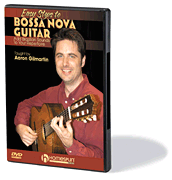
EASY STEPS TO BOSSA NOVA GUITAR Add Brazilian Sounds to Your Repertoire Aaron Gilmartin TABLATURE DVD

EASY STEPS TO BOSSA NOVA GUITAR, Add Brazilian Sounds to Your Repertoire, Aaron Gilmartin. TABLATURE  DVD

DVD DI MUSICA, LEZIONE PER CHITARRA CON SPARTITI E TABLATURE. 

Series: Homespun Tapes
Publisher: Homespun DVD - TAB

Artist: Aaron Gilmartin
This basic lesson is for guitarists who want to add the jazzy chords and samba rhythms of Bossa Nova to their guitar playing. These techniques can be used to add distinctive new colors and feels to any song, and will be a great start for anyone wanting to get into new musical genres. INCLUDES MUSIC + TAB - LEVEL 3 - 80 MIN.

Prezzo: €34,99
€34,99

PINK FLOYD THE DARK SIDE OF THE MOON Guitar Play-Along 16 DVD TABLATURE CHITARRA BASI VIDEO

PINK FLOYD, THE DARK SIDE OF THE MOON, Guitar Play-Along 16. JAM TRACK DVD. 

VIDEO DVD METODO DI MUSICA ROCK.

PER CHITARRA CON TABLATURE.

BASI PLAY ALONG PER CHITARRA 

TABLATURE 


Series: Guitar Play-Along DVD
Publisher: Hal Leonard Medium: DVD
Artist: Pink Floyd

The Guitar Play-Along DVD series lets you hear and see how to play songs like never before. Just watch, listen and learn! Each song starts with a lesson from a professional guitar teacher. Then, the teacher performs the complete song along with professionally recorded backing tracks. You can choose to turn the guitar off if you want to play along, or leave the guitar in the mix to hear how it should sound. You can also choose from three viewing options. Each DVD includes great songs that all guitarists will want to know!

includes:

Any Colour You Like
Brain Damage
Breathe
Eclipse
Money
Time
Us And Them

Prezzo: €24,99
€24,99

PINK FLOYD DARK SIDE OF THE MOON LEARN SONGS FROM Step-by-Step Guitar Styles Techniques DVD

PINK FLOYD, THE DARK SIDE OF THE MOON, LEARN THE SONGS FROM, A Step-by-Step Breakdown of Pink Floyd's Guitar Styles and Techniques. DVD

DVD DI LEZIONE PER CHITARRA

Series: DVD
Publisher: Cherry Lane Music
Medium: DVD
Author: Nate LaPointe
Artist: Pink Floyd

A must-have DVD for every Floyd fan, this DVD examines the licks from eight songs on their classic CD. Each guitar part is played up to speed, then broken down note by note. Analyzes: Any Colour You Like - Brain Damage - Breathe - Eclipse - The Great Gig in the Sky - Money - Time - Us and Them.

Any Colour You Like
Brain Damage
Breathe
Eclipse
The Great Gig In The Sky
Money
Time
Us And Them

Prezzo: €32,99
€32,99

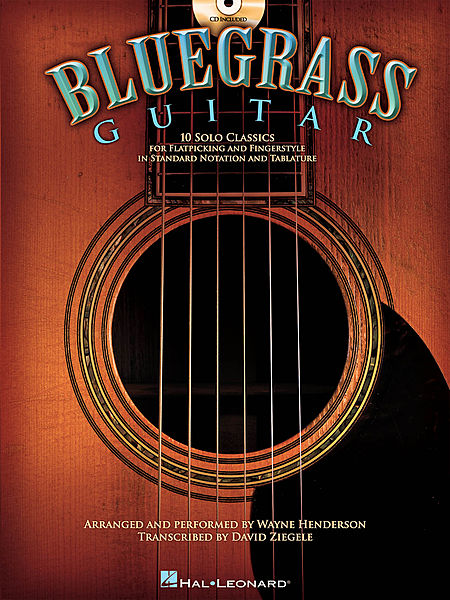
BLUEGRASS GUITAR Wayne Henderson 10 titoli LIBRO CD TABLATURE SPARTITI CHITARRA flatpicking

BLUEGRASS GUITAR, Wayne Henderson. 10 titoli. CD TABLATURE

Series: Guitar Solo
Softcover with CD - TAB
Composer: Various Composers
Arranger: Wayne Henderson

This book/CD pack contains

10 classic solos for flatpicking and fingerstyle in standard notation and tablature.

Each tune includes the main theme along with creative variations. The CD features renowned picker Wayne Henderson performing each tune note for note. Includes: Black Mountain Rag - Fisher's Hornpipe - John Hardy - Leather Britches - Lime Rock - Sally Ann - Snowflake Reel - Take Me Out to the Ball Game - Temperence Reel - Twinkle Little Star. 56 pages.


This book provides intermediate and advanced guitar players-both flatpickers and fingerpickers-with ten classic Bluegrass tunes that can be played either solo or with backing musicians. These aren't "hot licks" or canned solo breaks; they're complete tunes, with intros, themes, variations on the melody, and endings. They should help you both build your repertoire of songs and learn some new playing and arranging techniques. Compared to other traditional guitar styles, guitar as a lead or solo instrument in Bluegrass music has a relatively recent history. Don Reno and Doc Watson were early prominent players of lead guitar on fiddle tunes in the late Fifties and early Sixties, followed by notable players such as Clarence White, Dan Crary, Norman Blake, Tony Rice, Charles Sawtelle, Russ Barenberg, and many others. These players not only used the guitar to play the melody of the tune, but were known for the "hot breaks" they played when it came time for instrumental solos. They used the tune's melody as the basis for creative variations and, in some cases, departed entirely from the melody to improvise solos from scratch. This was more akin to jazz-style soloing than traditional Bluegrass playing. The growing importance of Bluegrass lead guitar was reflected in, and likely reinforced by, the rise of Bluegrass guitar contests in venues such as the Walnut Valley Festival in Winfield, Kansas and the Old Fiddler's Convention in Galax, Virginia. Anew generation of skilled players-including Wayne Henderson, Steve Kaufman, David Grier, Bryan Sutton, Steve Lewis, Robin Kessinger, Scott Fore, Allan Shadd, and many others-are both carrying on the tradition of lead Bluegrass guitar and continuing to push its boundaries. Relatively few notable Bluegrass guitarists have recorded as solo performers, a format that requires the player to subtly or radically vary the melody, register, or his or her picking techniques in order to maintain energy and interest over the course of the performance. Norman Blake recorded a few solo f1atpicked instrumental pieces on his seminal Whiskey Before Breakfast in 1976. More recently, David Grier released the highly acclaimed I've Got the House to Myself, an all-instrumental solo flatpicking recording (with the exception of some low-key second guitar on two tunes). In 2005, Wayne Henderson released a recording of solo Bluegrass/Old-time/Folk guitar performances called Made & Played. The tunes in this book and the accompanying CD were chosen from the Made & Played release and the session outtakes as the best examples of solo Bluegrass-style guitar. Wayne grew up listening to the fiddle playing of his father and the guitar playing of neighbors, who skillfully accompanied their own vocals and other instrumentalists. He was heavily influenced by the lead playing of Doc Watson, whom he still calls his musical hero, and his playing shares Doc's hard-driving energy and clean articulation, even at break-neck tempos. Also like Doc, Wayne uses variations on the melody as the foundation for many of his solos and enjoys playing "up the neck" to provide more energy, melodic variation, and interest for the listener. Unlike Doc Watson and most other Bluegrass lead guitarists, Wayne uses a thumbpick and metal fingerpicks instead of a flatpick. However, the arrangements we chose for this collection work equally well for flatpicking or fingerpicking. As shown in the following musical excerpt, his picking technique on these tunes follows the same down-up pattern that flatpickers use with their picks. Wayne picks the downstrokes with his thumbpick (p) and the upstrokes with his index finger (i). (continua)

Titoli:

Black Mountain Rag
Fisher's Hornpipe
John Hardy
Leather Britches
Lime Rock
Sally Ann
Snowflake Reel
Take Me Out To The Ball Game
Temperence Reel
Twinkle Little Star

Prezzo: €23,99
€23,99

QUEEN LICK LIBRARY LEARN TO PLAY-2 DVD BRIAN MAY-LEZIONE TECNICA-Bohemian Rhapsody

QUEEN, LICK LIBRARY LEARN TO PLAY. 2 DVD

DVD VIDEO METODO DI MUSICA ROCK. 

LEZIONE PER CHITARRA DI Michael Casswell.

TECNICA, STUDIO, MANUALE, DIDATTICO. 

Here's your chance to learn five of Queen's biggest and most spectacular rock anthems, songs that made them one of the greatest stadium rock bands of all time.

The delicate and majestic solos of Brian May have always been a benchmark in outstanding rock guitar writing, with a distinctive tone, unusual harmonies and a finely-tuned ear for melody. From his famous homemade guitar and old-sixpence plectrum to his unmistakable hair and clogs, May has remained one of the quintessentially British guitar eccentrics. In this exclusive double-DVD set, Michael Casswell provides a note-by-note examination of five of Brian's best, including the thundering rock of Hammer To Fall and the echo-soaked Now I'm Here, with every riff explained and demonstrated in close-up detail.

Format: Instrumental Tutor

Length: 3 HOURS OVER

Language: English

Catalogue #: RDR0074

ISBN: 5060088820759

2 DVD


Titles:

Bohemian Rhapsody
Crazy Little Thing Called Love
Hammer To Fall
Now I'm Here
Tie Your Mother Down


https://youtu.be/oNjnAGNV0jM


Prezzo: €46,99
€46,99

INTERMEDIATE CHITARRA BLUES Smith Matt italiano LIBRO CD TABLATURE METODO SPARTITI ACCORDI

INTERMEDIATE CHITARRA BLUES, Smith Matt. In italiano. CD TABLATURE

LIBRO METODO DI MUSICA BLUES CON CD. 

SPARTITI PER CHITARRA.

ACCORDI, PENTAGRAMMA E TABLATURE. 

IN ITALIANO,

LIVELLO INTERMEDIO

Il blues rappresenta il fondamento di tutta la musica jazz e rock. È una musica che costantemente si evolve in nuove forme con l'input di nuove generazioni di musicisti. Questa serie di libri è designata per essere compresa facilmente dal chitarrista autodidatta, ma anche dallo studente che frequenta un insegnante. Il metodo intermedio è indirizzato a musicisti con una base di esperienza, o per chitarristi più avanzati che desiderano ripassare le forme base. È disponibile un CD in questa serie: ci auguriamo che renda l'apprendimento più facile e divertente. Questo simbolo apparirà vicino a ciascun esempio suonato sul CD. Usatelo per assicurarvi di carpire la sensazione giusta di ciascun esempio, interpretando correttamente i ritmi eccetera.

Testo ideale come prosecuzione di Chitarra Blues - Livello Base di David Hamburger. Dopo un sintetico riepilogo della teoria e delle tecniche di base, l'autore si dedica alla ritmica: vengono affrontati il boogie, le estensioni degli accordi e le sostituzioni, l'interazione tra blues e funk, la costruzione di fill. Si passa quindi all'approfondimento della componente solista, con suggerimenti finalizzati ad ampliare e migliorare il proprio fraseggio (interazione tra pentatonica maggiore e minore, note di passaggio, note ideali su cui risolvere le frasi, double-stop). Chiude il libro una sezione dedicata ai lick dei grandi maestri, tra cui B.B. King, Eric Clapton e Stevie Ray Vaughan.

IN ITALIANO.


Siccome questo e un Iibro di livello intermedio, si suppone che suoniate da un po'. Prima di inoltrarci
nella sezione solistica di questo metodo, bisogna dire un paio di cose. La chitarra Blues non e solo
uno stile musicale, un modo di suonare, ma soprattutto uno stile di vita e una filosofia. C'e una
scuola di pensiero che afferma che non si puo imparare iI blues dai libri. Sebbene cio non sia del
tutto corretto, e anche vero che la parte emotiva dell'esecuzione proviene da dentro, piuttosto
che da un Iibro o un insegnante. Per imparare iI blues bisogna avere la capacita di entrare nella
propria anima e riuscire ad esprimerla attraverso 10 strumento. Non si puo ottenere quello che
viene definito "soul" da un Iibro o da nessun altro. Deve provenire da voi stessi. Questo implica
altre sensazioni, come una ricerca del proprio se e la voglia di mettersi in gioco guardando in
faccia i dolori e Ie insicurezze della nostra vita. Potete suonare solo cio che avete vissuto. Questo
non significa necessariamente che dobbiate soffrire, bere whisky, o essere figli di un mezzadro!
Significache dovete scavare nel profondo delle vostre emozioni piu intime. So che state pensando
"Che cos'e questa roba? Lo zen della chitarra blues?" Forse lo è! Quando siete veramente una
cosa sola con il vostro strumento, quando potete rendere reale qualsiasi melodia che vi viene in
mente, questa e la sensazione piu grande del mondo, e vi mantiene sani di mente.
Molti miei studenti vengono da me e dicono "Suono Ie stesse cose di B.B ma non hanno lo
stesso suono!" Per forza non hanno lo stesso suono, voi non siete B.B. Voi siete degli individui
unici con Ie vostre speranze e i vostri sogni. Dovreste provare e suonare come voi stessi.
Ecco ora un esercizio progettato per far emergere Ie emozioni. Prendete un pezzo di carta e una
penna, e un posto tranquillo dove nessuno vi possa disturbare. Scrivete tutto cio che pensate di
voi stessi, della vostra vita, della famiglia, della carriera e delle persone che amate. Non dovete
scrivere frasi complete: lasciate che tutto esca, tutte Ie cose che non avete mai detto a nessuno.
Siate completamente e totalmente onesti con voi stessi. Quando avete terminato, rileggete iltutto.
E molto difficile guardare in faccia i demoni personali, ma questa e la vostra vita. Ora suonate un
blues minore lento come non avete mai fatto prima d'ora. Lo sentite? Quando suonate il blues
veramente c'e una sensazione elettrica che attraversa iI corpo. Se non I'avete mai sperimentato,
non preoccupatevi. Quando lo proverete, ve ne renderete conto. Ecco perche i grandi chitarristi
attingono dalle proprie risorse interiori quando suonano.
Proseguendo nella sezione solistica di questo Iibro, tenete a mente che la musica è un'arte e
I'arte e una cosa altamente personale.Va benissimo essere diversi da chiunque altro. E' fantastico
sviluppare uno stile personale. Sforzatevi per la realizzazione di tale miracolo. Questa è la differenza
fondamentale tra uno che suona la chitarra e un artista.
Ne avete avuto abbastanza? Ora possiamo tornare al nostro programma di lavoro.


INDICE

I'Autore

Introduzione


CAPITOLO I - Iniziamo

L'Alfabeto Musicale

II Manico della Chitarra

L'Accordatura

Come Leggere la Musica

Notazione Ritmica

Guida alla Tablatura

I Numeri Romani

Leggere i Diagrammi degli Accordi e delle Scale


CAPITOLO 2 - Teoria

La Scala Maggiore

La Scala Maggiore e la Tonalità

Le Armature di Chiave

La Scala Minore Naturale

La Relativa Minore

Gli Intervalli

I Rivolti

GI i Accordi

Le Estensioni degli Accordi

Gli Accordi Dominanti

Quiz sugli Accordi

Le Scale Armonizzate - Armonia Diatonica

Quiz sulle Scale Armonizzate

II Blues di Dodici Misure


CAPITOLO 3 - La Chitarra Ritmico Blues

Le Crome Swingate

Boogie!

Le Estensioni degli Accordi e Ie Sostituzioni

Sostituzioni di Blues Dominanti

Sviluppo della Mano Destra

Accompagnamento Shuffle

Forme di Accordi Mobili

Fills Ritmici Funky Blues

Fills Rhythm & Blues

I SEGRETI DEL BLUES! - Filosofio Blues

CAPITOLO 4 - Un Veloce Ripasso sulla Tecnica
II Bending
IIVibrato (Tremolo)
IIVibrato Facendo Bending

CAPITOLO 5 - Gli Assoli
La Scala Minore Pentatonica
II Fraseggio
Note Non Appartenenti all' Accordo
Rompere gli Schemi Pentatonici
La Scala Maggiore Pentatonica
Miscelare Ie Pentatoniche Maggiori e Minori

CAPITOLO 6 - Parliamo Ancora degli Assoli
Risolvere su 3 e b7
3° con "Double-Stop"
Double-Stop Dominanti
Double-Stop di 6°
Double-Stop di 4°
Double-Stop con Blues Minori

CAPITOLO 7 – i Licks dei Maestri
B. B. King
Albert King
Freddie King
Jimi Hendrix
Eric Clapton
Stevie Ray Vaughan  

Prezzo: €21,99
€21,99

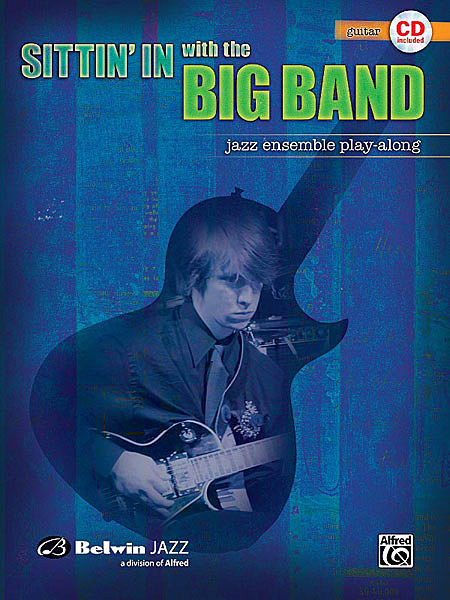
SITTIN' IN WITH THE BIG BAND [GUITAR] JAZZ ENSEMBLE PLAY-ALONG CD LIBRO BASI SPARTITI CHITARRA

SITTIN' IN WITH THE BIG BAND [GUITAR], JAZZ ENSEMBLE PLAY-ALONG. CD

LIBRO DI MUSICA JAZZ, CON CD DI BASI. 

SPARTITI PER CHITARRA.

ACCORDI E PENTAGRAMMA. 

Sittin' In with the Big Band, Volume I 
Jazz Ensemble Play-Along
Item: 00-27545
UPC: 038081293158
ISBN 10: 0739045199
ISBN 13: 9780739045190
Category: Instrumental Series
Format: Book & CD
Instrument: Guitar
Instrumentation: Guitar
Level: 2 (Easy to Medium Easy)

Performance Notes
How to Use This Book

Each arrangement has two CD tracks:

1) Demonstration track. The guitar part is in the mix. Listen to how your part is played by professional musicians to copy the comping style, rhythm, attack, phrasing, articulation, feel, style, and rhythm section blend.

2) Play-Along track. Your part has been taken out of the mix. You playalong with the big band.

3) See page 24 for Performance Notes.

4) There is a two-measure count-off click at the beginning of each playalong track.

Alfred Publishing Co. Inc. thanks the students of Mary Ward Catholic Secondary School Jazz Ensemble, Toronto, Canada, John Volpe, director, Vince Gassi, assistant director, and photographers Jackie Fong and Jermaine Ong.

Alfred Publishing Co., Inc. 16320 Roscoe Blvd., Suite 100 

Sittin’ In with the Big Band, Vol. I is written at the easy to intermediate-easy level. It provides an opportunity to play along with a professional jazz ensemble to improve your playing, whenever you want. As you play with and listen to the outstanding players in the band, you’ll learn about blend, style, phrasing, tone, dynamics, technique, articulation, and playing in time, as well as a variety of Latin, swing, ballad and rock styles. Performance tips and suggestions are included in each book. Books are available for alto saxophone, tenor saxophone, trumpet, trombone, piano, bass, guitar, and drums. Features include 11 big-band charts arranged by a variety of top writers, solo improvisation opportunities, and a play-along CD with demo tracks.

Titles: Vehicle * Sax to the Max * Nutcracker Rock * Fiesta Latina * Now What * Goodbye My Heart * Two and a Half Men * Burritos to Go * Drummin’ Man * Swingin’ Shanty * and Play That Funky Music.

TITLE COMPOSER
Burritos to Go - Victor Lopez (composer)
Drummin' Man - Gene Krupa (composer); Tiny Parham (composer)
Fiesta Latina - Victor Lopez (composer)
Goodbye My Heart - Mike Smukal (composer)
Now What - Mike Kamuf (composer)
Nutcracker Rock - Peter Illyich Tchaikovsky (composer); Mike Smukal (arranger)
Play That Funky Music - Robert Parissi (composer) arranged: Victor Lopez
Sax to the Max - Mike Lewis (composer)
Swingin' Shanty - Ralph Ford (arranger)
Two and a Half Men (Main Theme) - Grant Geissman (composer); Lee Aronsohn (composer); Chuck Lorre 
Vehicle - James Peterik (composer)


SERIES: Sittin' In with the Big Band
CATEGORY: Instrumental Series
FORMAT: Book & CD
INSTRUMENT: Guitar
LEVEL: 2 (Easy to Medium Easy)

Sittin’ In with the Big Band: Jazz Ensemble Play-Along is written at the easy to medium-easy level. It provides an opportunity to play along with a professional jazz ensemble to improve your playing 24/7. As you play along and listen to the outstanding players in the band, you’ll learn about blend, style, phrasing, tone, dynamics, technique, articulation, and playing in time, as well as a variety of Latin, swing, ballad and rock styles. Performance tips and suggestions are included in each book. Books are available for alto saxophone, tenor saxophone, trumpet, trombone, piano, bass, guitar and drums.
 

SITTIN' IN with the BIG BAND jazz ensemble play-along

features:
• Eleven big-band charts arranged by a variety of top writers
• Play-along CD with demo track
• Solo improvisation opportunities
• Performance tips/suggestions

Sittin 'In with the Big Band:
Jazz Ensemble Play-Along is written at the easy to mediumeasy level. It provides an opportunity to play along with a professional jazz ensemble to improve your playing 24/7. As you play along and listen to the outstanding players in the band, you'llieam about blend, style, phrasing, tone, dynamics, technique, articulation and playing in time, as well as a variety of Latin, swing, ballad and rock styles. Performance tips and suggestions are included in each book. Books are available for alto saxophone, tenor saxophone, trumpet, trombone, piano, bass, guitar and drums.

available books: 

Alto Saxophone (27527)
Tenor Saxophone (27530)
Trumpet (27533)
Trombone (27536)
Piano (27539)
Bass (27542)
Guitar (27545)
Drums (27548)

27545 Book & CD
ISBN-10: 0-739 519-9
ISBN-13: 978-0-739G-45 9-0 

Features:
Eleven big-band charts arranged by a variety of top writers
Play-along CD with demo track
Solo improvisation opportunities
Performance tips/suggestions

PERFORMANCE NOTES FOR GUITAR
Playing guitar in a big band is challenging but very rewarding. Here are a few specific tips for playing
guitar in a big band:
• Within the typical rhythm section, the guitar and piano must work especially close. Share the
camping duties. Always be sensitive to blend with the rhythm section and the ensemble.
• "Comping" means to accompany or compliment. Always keep it simple, tasteful and supportive.
Lessis more.
• Various responsibilities for the guitarist are: com ping, supporting the ensemble harmony and
rhythms, playing individual lines with wind players, soloing, and supporting various soloists.
• Slash marks indicate to camp using three or four note chords usually in a quarter note rhythm
pattern. Typically, the third and seventh are the most important notes in a seventh chord.
• Become skilled at reading both chord changes, written notes and creating chord voicings.
• Always be sensitive to your volume and sound. Begin by setting the tone controls on the
amplifier to the mid-point and then adjust as needed. For a rock tune, the goal is to approximate
an electric guitar sound, but for a jazz swing tune, strive for a hollow body jazz guitar
sound with dark overtones. Listen to examples of these different types of instruments for reference.
• The guitar part is a guide and suggestion of what to play. Depending on your ability and
experience, you can play the part as written or embellish but with good taste and musicality. Always listen!
• Generally, in a big band chart, when there is a written out part with no chord symbols, the arranger
wishes the part played as written. When there are only chord changes and/or slashes,
then comp in the style of the chart.
• For a sound that blends, consider using medium thickness picks which will give the sound a
bright, acoustic quality and hold the pick loosely between the thumb and index finger.
• For a swing style comp of quarter notes, strum straight quarter notes trying to cut off (mute)
the sound of the chord right after striking the strings. Strum from the elbow; giving a bright,
swinging sound that propels the rhythm section forward.
• The guitarist's quarter note comping style should perfectly mesh so that the guitar and bass merge into one big sound.
• If the chord has extensions you don't recognize, play the third and seventh (sixth) of the chord.
There is a two-measure count-off click at the beginning of each play-along track

Vehicle:
1) A rock style chart, dig in and play more aggressivelythan usual and strive for a brighter sound, but
don't overdo the volume.
2) The written camping rhythms are also played by the piano, so listen, blend and lock in the feel.
3) Measure 65 isa rubato trombone solo. In 66, the drumset playsa fill in-tempo to bring you in for the last two measures.

Sax to the Max:
1) In the introduction, play the written notes with the saxesand brass.Listenand blend.
2) This chart callsfor basiccamping in the jazz swing style. Playquarter notes with a muted sound.
3) If the chord hasextensionsyou don't recognize, focus on the third and seventh of the chord.

Nutcracker Rock:
1) Playmeasures 5-8 with a bell-like sound-play it clear and let it ring.
2) Although this isa rock style chart, avoid a radical rock tone-blend.
3) At measure 37, listen and match the articulation and phrasing with the horn players ...

Prezzo: €21,99
€21,99

HARRIS BARRY-HARMONIC METHOD FOR GUITAR-LIBRO METODO ARMONIA JAZZ SPARTITI CHITARRA

HARRIS BARRY, HARMONIC METHOD FOR GUITAR.

LIBRO METODO DI MUSICA JAZZ, ARMONIA. 

SPARTITI PER CHITARRA CON:

ACCORDI, PENTAGRAMMA  

Studying the concepts put forth in this book will not teach you a set of hip sounding voicings. You won't come out sounding like everyone else - and that's the good news!

What you will find herein are the structural components, as mapped out and developed by jazz giant Barry Harris, that will guide and aid you on your own personal road to discovery. Imagine, a system for learning jazz harmony that actually embraces the concept of improvisation.

As I see it, there are two paths for a chord player to go down. Either one becomes a "hitter" or, one becomes a "mover". The "hitter" sits up and works out a couple of beautiful sounding voicings for each kind of chord (or worse, learns someone else's from a method book) - and from that point on, plays them exactly the same way. These vertical groups of notes are "hit" or "struck" on the instrument - with no thought to creating movement. The "mover" on the other hand, understands that chords come from scales and thereby learns to approach chording in a more fluid fashion. As well, one realizes that the interesting spots in music, whether you are comping, harmonizing a melody or writing an arrangement, are the places in between the chord symbols. In fact, I prefer to think - movement-to-movement - as opposed to chord to chord. When was the last time you listened to the symphony, for instance, and said oh yeah, Am7b5 - D7. It's not that the classical folks don't play chords, they just know something about getting from one to the next in an unobvious manner. Suddenly the musical ceiling gets raised and points us back to the purpose behind this book.

Having had the pleasure of seeing Alan grow musically over the past 20 years, I am delighted that his insightfulness and hard work have found their way into a form that others can benefit from. I am confident that guitarists everywhere who are fortunate enough to pick up this book will thank him again, and again. Howard Rees

Introduction

CD Tracks

Acknowledgments

Disclaimer

Dr. Barry Harris

The Guitar in Jazz

Chapter 1 Drop Voicings & Scales

1.1 Voicings

1.2 The Scales

1.3 The Voicings Charted

Chapter 2 Movement

2.1 The Organic Diminished Chord

2.2 The Diminished Scale

2.3 Sisters and Brothers

2.4 Using the Scales

2.5 The Sixth on the Fifth

2.6 Movement

2.7 Major to Minor to Minor with Sixth in the Bass

2.8 Playing with your 'Sisters and Brothers'

2.9 Monk Moves

Chapter 3 Borrowing

3.1 Borrowing Through Sixth Diminished Scales

3.2 Surrounding

3.3 Borrowing on the Diminished Scale

Chapter 4 Practicing the Scales

4.1 Single Notes

4.2 Thirds

4.3 Sixths

4.4 Tenths

4.5 Four Note Chords in Tenths

4.6 Expand and Contract

4.7 Long - Short

Chapter 5 Like Someone In Love

Appendix

Seventh Diminished Drop 2

Seventh Flat Five Diminished Drop 2

Seventh Diminished Drop 3

Seventh Flat Five Diminished Drop 3

Major Sixth Diminished Drop 2&4

Minor Sixth Diminished Drop 2&4

Seventh Diminished Drop 2&4

Seventh Flat Five Diminished Drop 2&4

Major Sixth Diminished Drop 2&3

Minor Sixth Diminished Drop 2&3

Seventh Diminished Drop 2&3

Seventh Flat Five Diminished Drop 2&3

Partial Chords

Double Note Chords

After Word
121 pages.

Prezzo: €74,99
€74,99

STOWELL JOHN-JAZZ GUITAR MASTERY-BOOK DVD LIBRO SPARTITI CHITARRA LEZIONE SOSTITUZIONI

STOWELL JOHN, JAZZ GUITAR MASTERY. BOOK WITH TABLATURE & DVD

LIBRO METODO DI MUSICA JAZZ, CON DVD.

SPARTITI PER CHITARRA CON :

ACCORDI, PENTAGRAMMA, TABLATURE.  

STUDIO, ARMONIA, VIDEO DIDATTICO, LEZIONE, ARPEGGI, SOSTITUZIONI,  

 
The purpose of Jazz Mastery is to give the serious student an entry into the creative process as quickly as possible. Presented here is the necessary information, stated clearly and simply as possible, in the hope that motivation and inspiration will soon follow on the heels of comprehension. The responsibility of a teacher lies in getting students excited, as well as presenting the theory to them in an easily assimilated form. Jazz Mastery will certainly serve up equal portions of the requisite information and inspiration. Companion DVD included, 2 hour 47 minutes; all in standard notation.

Foreword
John Stowell - Jazz Mastery Volume I
Pentatonics and Arpeggios
Substitution Using Triads
Picking
Pick and Fingers Technique
John Stowell - Jazz Mastery Voume II
C7 + C# Melodic Minor
One Whole Tone Below C7
C7 - F Melodic Minor a 4th Above > b6 added
C7 - G Melodic Minor a 5th Above > 9 #11 added
John Stowell - Jazz Mastery Volume III
Using Major Triads to Extend Dominant 7th Chord
Dominant 7th Chords
Major 7th Chords
John Stowell

Prezzo: €27,99
€27,99

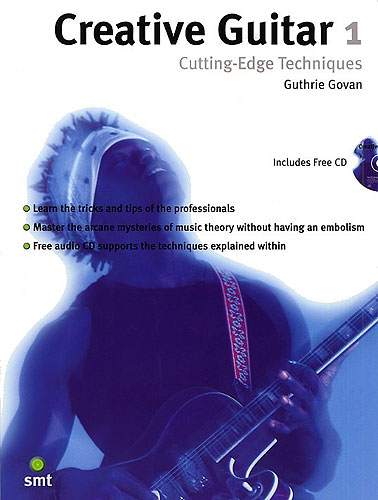
CREATIVE GUITAR 1 CUTTING-EDGE TECHNIQUES-GUTHRIE GOVAN CD TABLATURE SPARTITI METODO SCALE

CREATIVE GUITAR 1, CUTTING-EDGE TECHNIQUES, GUTHRIE GOVAN. BOOK WITH CD & TABLATURE

LIBRO METODO DI MUSICA CON CD.

SPARTITI PER CHITARRA CON:

ACCORDI, PENTAGRAMMA, TABLATURE. 

MANUALE DIDATTICO, STUDIO, ARMONIA, 

Book/CD set. The aim is to help rock guitarists who feel stuck in a rut. Focuses on refining playing techniques, explaining the nuts and bolts of theory, how to practice efficiently, and includes lots of licks. Promotes a self-sufficient approach to learning. The CD has detailed examples of pentatonic patterns, minor arpeggios and backing tracks. Note/tab. 117 pp.

By Guthrie Govan. For Guitar. Creative Guitar Series. Rock. Level: Intermediate. Sheet Music and Audio CD. 104 pages. This Creative Guitar Series aims to provide frustrated rock guitarists with new directions to explore their art. Armed with the accompanying CD, featuring detailed examples of pentatonic patterns, minor arpeggios and backing tracks, you will be able to do much more than simply learn solos and licks note for note. This book also contains a thorough explanation of music theory.
 

The Creative Guitar series aims to provide the frustrated rock guitarist with new directions in which to explore his art. This book focuses on how you can expand your potential by refining your playing techniques, allowing you to tackle more complex riffs and solos. Creative Guitar 1: Cutting-Edge Techniques also addresses the much-feared topic of music theory, explaining the basic principles and demonstrating how they can actually be applied in real musical situations. Armed with the accompanying CD featuring detailed examples of pentatonic patterns, minor arpeggios and backing tracks, you can do much more than simply learn solos and licks note for note; the expert step-by-step instructions featured here can be applied to your own individual style of playing to make you a better, more creative musician. Guthrie Govan has been playing guitar for all but three years of his life, and during that time he has played everything from jazz and blues to all-out metal. A member of noted prog-rock outfit Asia, he also plays with The Fellowship and instrumental trio Erotic Cakes. He also writes for Guitar Techniques magazine and teaches at the Brighton Institute of Modern Music.


INTRODUCTION

As a guitar teacher, I meet a lot of guitarists who have reached the same roadblock in their playing: they've had some playing experience, they know a bit of the traditional rock/blues vocabulary, they have a grasp of the basic techniques ...but they're frustrated. Some might express this frustration as 'I'm sure there's other stuff I could be practising; I wish I'd learned properly!' or, indeed, 'People say I play pretty well on a good night, but I feel like an impostor, because I don't really know what I'm doing.' If you've ever felt that all you ever practise is the same old stuff, playing it faster and cleaner but ultimately not coming up with anything new or anything you can get really excited about, then you might just like this book. It attempts to show you some new avenues to explore, by explaining some important aspects of theory or technique and looking at how you can incorporate such knowledge into your own playing style. I've tried to arrange this information so that it can be of value to as many players as possible. Theory-wise, I've explained things from first principles, so even if you have no grounding in theory, you'll be able to grasp the necessary concepts without undue suffering (although some concentration might be required from time to time!). In general, whenever you think a chapter has taken you out of your depth, it's probably best to put the book down for a while and spend some time assimilating what you've learned so far. This stuff is all meant to be used, so I would recommend incorporating each idea into your playing at your own pace. Conversely, those of you who already have some grounding in music theory could quite happily dip into these pages at random. Bear in mind, however, that some chapters might well be worth reading even if they appear to be covering stuff you've already learned. It never hurts to have more than one way of looking at things, and you never know, certain concepts might turn out to be more useful and far-reaching than you thought they were. The book is divided into five chapters, each with a different angle:

• In Chapter 1, 'General Stuff, I've tried to answer all of the FAQs (Frequently Asked Questions) that keep cropping up when I teach people. Some of it might seem a little too philosophical and weird to be of immediate use to you, but trust me, it's worth wading through, if only because it will raise some interesting questions about how and why you play certain things. There are times when simply thinking about your playing can improve it just as much as any amount of hours spent with a metronome.

• Chapter 2, 'Technique', takes an in-depth look at technique, focusing on developing efficiency of movement and making your playing feel as natural and effortless as possible.

• Chapter 3, 'Theory Without Tears', tries to simplify music theory, explaining some of the essential jargon, showing you how scales and chords fit together and touching on the much-feared topic of sight-reading. I can't lie to you - this won't be a fully comprehensive sight-reading course, but it will explain the basic principles and enable you to understand all of the written music in the book. (The rest, of course, is down to practice!)

• Chapter 4, 'Scales And Chords', translates music theory onto your fretboard, explaining a lot of the essential jargon and showing you how scales and chords fit together.

• Chapter 5, 'On The CD', lets you put all of the previous ideas into practice, with the help of various backing tracks. For each track, I've explained the chord progression, suggested a few appropriate note 

(continua)


GENERAL STUFF

TECHNIQUE
THEORY WITHOUT TEARS
SCALES AND CHORDS

CD CONTENTS:

A MINOR PENTATONIC SCALES SHAPES
A MAJOR PENTATONIC SCALES SHAPES
MINOR PENTATONIC BENDS
SLIDING IDEAS
CONNECTING PENTATONIC SHAPES
CONNECTING PENTATONIC IN GROUP OF THREE
PENTATONIC PATTERNS 25 
PENTATONIC PATTERNS 26
PENTATONIC PATTERNS 27
PENTATONIC PATTERNS 28
PENTATONIC PATTERNS 29
PENTATONIC PATTERNS 30
PENTATONIC PATTERNS 31
PENTATONIC PATTERNS 32 
PENTATONIC PATTERNS 33
PENTATONIC PATTERNS 34
PENTATONIC PATTERNS 35
PENTATONIC PATTERNS 36

G MAJOR ARPEGGIOS
G MINOR ARPEGGIOS
G MAJOR 7 ARPEGGIOS
G MINOR 7 ARPEGGIOS
G DOMINANT 7 ARPEGGIOS
G MINOR 7 FLAT 5 ARPEGGIOS
G DORIAN SHAPES
G AEOLIAN SHAPES
G PHRYGIAN SHAPES
G LYDIAN SHAPES
G IONIAN
G MIXOLYDIAN SHAPES
G LOCRIAN SHAPES
HENDRIX STYLE CHORDAL EMBELLISHMENTS
STRING BEND SOLO
BACKING TRACK 1
AFRICAN STYLE TRIADS
APRICAN STYLE SOLO
BACKING TRACK 2
COMBINING PENTATONICS
BACKING TRACK 3
AEOLIAN BLUES
BACKING TRACK 4
TOWER OF POWER STYLE FUNK RHYTHM
BACKING TRACK 5
DOMINANT ARPEGGIO BLUES
BACKING TRACK 6
LYDIAN IMPROVISATION
BACKING TRACK 7
PENTATONIC KEY CHANGES
BACKING TRACK 8
METAL RHYTHM
BACKING TRACK 9

Prezzo: €32,99
€32,99
Condividi contenuti