LIBRO CON CD

TOTAL LATIN GUITARIST A Fun and Comprehensive of Latin Guitar Playing Doug Munro CD TABLATURE

The Total Latin Guitarist, A Fun and Comprehensive Overview of Latin Guitar Playing. BOOK WITH CD & GUITAR TABLATURE
By Doug Munro

LIBRO METODO DI MUSICA LATINA, CON CD. 

SPARTITI PER CHITARRA E BASSO CON : 

ACCORDI, PENTAGRAMMA, TABLATURE DELLA CHITARRA. 

BASSO SOLO IN PENTAGRAMMA.

Serie: The Total Guitarist
Categoria: Guitar Method or Supplement
Formato: Libro & CD
Instrumento: Chitarra

It’s time to infuse your playing with a little hot-blooded romance! The Total Latin Guitarist is an exciting journey into the world of Latin guitar playing. The book begins by teaching you soloing and accompaniment techniques used in all genres of Latin music, as well as the rhythmic backbone of many Latin styles, the clave. You'll learn to play in the Afro-Cuban styles of salsa, rumba, guaguancó, cha-cha-cha, mambo, and songo. You'll get a solid introduction to the Brazilian styles of choro, samba, batucada, partido alto, bossa nova, baião, and frevo. Other Latin styles featured are meringue (Dominican Republic); calypso, soca, and bachata (Trinidad); tango (Argentina); and ranchera, mariachi, norteño/conjunto, and tejano (Mexico). Aside from all of the important techniques involved with playing these styles, you will also learn all of the relevant theory. This book is for guitar players who are already familiar with the basics, but are looking to expand their vocabulary and repertoire in new and exciting ways. The CD features a full band demonstrating the examples in the book. 

This book is intended for the intermediate to advanced guitarist who hasan interest in exploring Latin guitar styles. To get the most out of this book, you should have a firm grasp on playing technique and theory, including scale theory, chord theory, and diatonic harmony. You should also be able to read standard music notation or tablature (TAB). For a refresher on some of these topics, refer to the Appendix on page 126.

The Total Latin Guitarist is a sampler of 23 different Latin music styles from six different countries. For every famous person mentioned in this book, there are many more that are not mentioned. In doing the research for this book, I found many contrasting explanations and points of view on musical and historical information. This book only includes material that musicians and historians are in general agreement about. Many of the common questions asked by musIcians studying Latin music are addressed in these pages. Concepts like the clave and specific rhythmic patterns are explained and demonstrated. All of the examples are hands-on, practical solutions for creating the distinctive sounds of each style. The Total Latin Guitarist, while not a history book, provides some background on each style of music played. Gaining a historical perspective on the music helps in interpreting and understanding the particular harmonic and rhythmic patterns intrinsic to each style. Every recording listed in this book is still available (at least at the time of this publishing). It is vital that you listen to the music that you study in this book. There are subtleties that can only be learned through immersing yourself in the music. Be sure to memorize the musical examples and play along with the recorded tracks on the CD. As you master the information in this book, it is vital that you go out and play it. Get together with like-minded musicians and play in these styles. There is a whole other education you get from playing and sharing this music with others. Most of all, it is so much fun to feel the groove and be a part of making this unique and exciting music. A compact disc is available with this book. Using the disc will help make learning more enjoyable and the information more meaningful. Listening to the CD will help you correctly interpret the rhythms and feel of each example. The symbol to the left appears next to each song or example that is performed on the CD. Example numbers are above the symbol. The track number below each symbol corresponds directly to the song or example you want to hear. Track I will help you tune your guitar to this CD.

Doug Munro is a critically acclaimed New York jazz guitarist. Since 1987, he has released I I albums as a bandleader and has appeared on over 50 recordings as a sideman, producer, and arranger, working with a diverse array of artists including Dr. John, Michael Brecker, and Dr. Lonnie Smith. Doug has over 75 published compositions and over 300 recorded arrangements by the finest players on the scene today. Doug has received two Grammy nominations and two NAIRD awards. Amazon.com picked Boogaloo to Beck, which Doug performed on, arranged, and co-produced, as one of its Top Ten Jazz CDs of 2003. Doug also did orchestration work on the Oscar-winning 1997 documentary When We Were Kings. Doug continues to actively perform with around 100 live dates per year.

As an educator, Doug created and was Director of the Jazz Studies Program at The Conservatory of Music at Purchase College from 1993-2002. He continues to teach there as Director Emeritus. This esteemed jazz program boasts a faculty that includes John Abercrombie, Todd Coolman, Jon Faddis, Eric Alexander, John Riley, and many other top jazz performers. Doug has written three books on jazz improvisation for Alfred Music Publishing: • Swing to Bebop (Alfred 00-0388B) (Winner of The Music and Sound Retailers' Instructional Book of the Year Award in 2000)

• Bebop and Beyond (Alfred 00-0609B)

• Organ Trio Blues (Alfred 00-0758B)

Acknowledgements

There are many people who helped make this book possible. I would first like to thank Aaron Stang, my longtime editor and friend, from back in the Warner Brothers days. After Alfred Music Publishing merged with Warner, it was Aaron who put me in touch with the people at Workshop Arts, who co-publish many instructional music books with Alfred. Thanks to Jason Shadrick for introducing me to everyone at Workshop Arts; he has always been very generous with his time and contacts, and his help and friendship has been invaluable to completing this project. Next up is Burgess Speed, my new editor; working with Burgess has been great, he has a solid view of the "big picture" but never loses sight of the small details involved in writing a meaningful book. I look forward to, hopefully, doing many more projects together. Thanks also to Gil Parris, a longtime friend and guitarist. His generosity in helping me with this, and pretty much every project I've ever done, is greatly appreciated. Lastly, I would like to thank the good Lord for his love and guidance and my wife, Kathleen, and my sons, Eugene and John, for their love and support.


About the Author

Introduction

Chapter I: Latin Accompaniment Techniques

Accompaniment Styles Without a Bass Instrument

Accompaniment Styles with a Bass Instrument


Chapter 2: Latin Soloing Techniques

Soloing Based on a Scale or Mode

Soloing Based on an Arpeggio

Voice Leading


Chapter 3: Clave

Son Clave

Rumba Clave

BossaClave


Chapter 4: Montuno/Guajeo


Chapter 5: Afro-Cuban 

Son 

Salsa 

Salsa solo

Rumba

Rumba Solo

Guaguancó

Guaguancó Solo

Cha-Cha

Cha-Cha solo

Mambo

Mambo Solo 

Songo

Songo Solo

Mozambique

Mozambique


Chapter 6: Brazil

Choro 

Choro Solo 

Samba 

Samba

Batucada 

Batucada Solo 

Partido Alto 

Partido A/to

Bossa Nova 

Bossa Nova Solo 

Baião .

Baião Solo .

Frevo .

Frevo Solo


Chapter 7: The Dominican Republic

Merengue

Merengue Solo

Bachata

Bachata Solo


Chapter 8: Trinidad

Calypso

Calypso Solo

Soca

Soca Solo


Chapter 9: Argentina

Tango

Tango Solo


Chapter 10: Mexico

Ranchera

Ranchera Solo

Mariachi.

Mariachi Solo

Norteño / Conjunto

Norteño Solo

Tejano

Tejano Solo

Conclusion


Appendix

Reading Tablature (TAB)

Scale Diagrams

Major Scale Theory

Intervals

Diatonic Harmony

Circle of 4ths/5ths

Extended Chords

Prezzo: €29,99
€29,99

GROOVY GUITAR 15 CLASSIC '60 SONGS Bill Piburn CD TABLATURE LIBRO (Sittin' On) The Dock Of The Bay

GROOVY GUITAR, 15 CLASSIC '60 SONGS ARRANGED FOR SOLO GUITAR. Bill Piburn. BOOK WITH CD & TABLATURE

LIBRO DI MUSICA POP ROCK, CON CD.

SPARTITI PER CHITARRA FINGERSTYLE, CHITARRA SOLA, FINGERPICKING, CON: 

PENTAGRAMMA E TABLATURE. 


Series: Guitar Solo

Format: Softcover with CD - TAB

Arranger: Bill Piburn

Artist: Various

Recording Engineer: Jack Pearson


From the editor of Fingerstyle Guitar magazine comes 15 custom arrangements of popular music classics, including: Daydream • Happy Together • A Hard Day's Night • Last Train to Clarksville • Scarborough Fair • (Sittin' On) The Dock of the Bay • Spooky • Walk On By • What Becomes of the Broken Hearted • and more. Songs are arranged for solo guitar in notes and tab.


Bill Piburn has lived in Nashville since 1987. Growing up in Kansas City, Missouri, he began his guitar studies with his father Russell at the age of ten. He went on to study with Douglas Niedt at sixteen and Christopher Parkening at age nineteen. He also studied harmony with jazz pianist John Elliot. His playing has won him high praise from legendary players such as Martin Taylor, Chet Atkins, Johnny Smith, Tommy Emmanuel, and Earl Klugh.

"Bill Piburn's arrangements are creative and very musical. He draws on a wide range of musical styles and influences to keep the player and listener surprised and engaged. The music is personal, whimsical, and colorful with lots of interesting counterpoint and unique harmonies. It is immediately apparent when you meet him that the guitar is his passion. We've had great conversations about the guitar and life, and I am proud to have him as a friend." - Earl Klugh


Song List:

Daydream  -  John Sebastian

Downtown  -  Tony Hatch

Happy Together  -  Garry Bonner and Alan Gordon

A Hard Day's Night  -  John Lennon and Paul McCartney

I'll Never Fall In Love Again  -  Burt Bacharach

Last Train To Clarksville  -  Bobby Hart and Tommy Boyce

Mellow Yellow  -  Donovan Leitch

Scarborough Fair  -  Simon & Garfunkel

(Sittin' On) The Dock Of The Bay  -  Steve Cropper and Otis Redding

Spooky  -  Cobb, Buddy Buie, Middlebrooks, Mike Shapiro

Sunny  -  Bobby Hebb

Up On The Roof  -  Gerry Goffin and Carole King

Walk On By  -  Burt Bacharach

What Becomes Of The Broken Hearted  -  J. Dean, Paul Riser, William Henry Weatherspoon

What The World Needs Now Is Love  -  Lyric: Hal David, Music: Burt Bacharach


56 pages

Prezzo: €26,99
€26,99

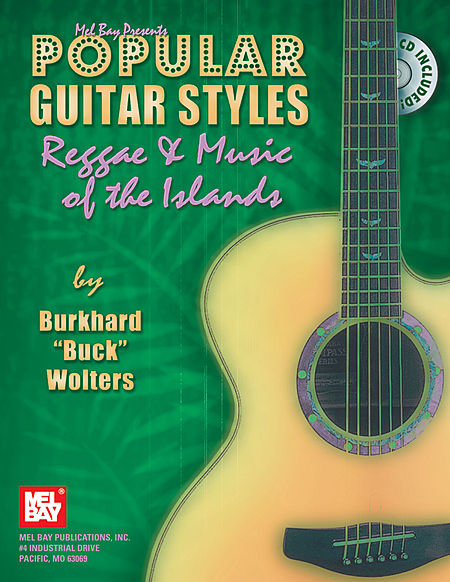
POPULAR GUITAR STYLES REGGAE & MUSIC OF THE ISLANDS Burkhard Buck Wolters CD TABLATURE

POPULAR GUITAR STYLES, REGGAE & MUSIC OF THE ISLANDS. Burkhard Buck Wolters. SHEET MUSIC BOOK WITH CD AND GUITAR TABLATURE .

LIBRO DI MUSICA REGGAE , LATINA, CON CD. 

SPARTITI PER SOLA CHITARRA CON : 

PENTAGRAMMA E TABLATURE. 

Popular Guitar Styles: Reggae and Music of the Islands reflects recent popular styles and transfers them to classical or fingerstyle technique. Guitar players who want to add reggae or Island music to their solo-repertoire will find an original and unique collection of compositions which will give joy to both players and listeners. The playing-level is intermediate to advance. Left-hand difficulties like barres and stretches are minimized as much as possible to make it easy to make the music groove. Written in notation and TABLATURE.

Series: Popular Guitar Styles

Buck Wolters belongs to the very small company of guitar players and composers who are familar with nearly every style. His authentic mix of jazz, world and latin music, combined with a mastery of classical guitar technique is very unique and outstanding. Born in 1961 in Dortmund, Germany, he began to play the guitar as an autodidact at the age of five. After hearing a recording of Big Bill Broonzy he took his first guitar lessons at the age of thirteen, digging into the blues for several years. At the age of sixteen he went to the conservatory in his hometown where he studied classical guitar. The music of Agustin Barrios, Heitor Villa-Lobos and David Qualey were his main influences. After leading the life of a busker in his twenties, he went to the School of Arts in Amsterdam to study jazz guitar and composition and spent most of his time then copying jazz solos from musicians like John Coltrane, Keith Jarrett, Pat Metheny and Wes Montgomery. He completed his studies as a bachelor with distinction. Today Buck Wolters is very busy performing, composing, recording and teaching throughout Europe. His greatest success belongs to his composition "Dshamilja" ordered in commission by the Opera of Frankfurt.

In the following I will give some brief explanations on the pieces that appear in this book and the popular Caribbean styles that they represent. Moreover some techinical and musical insight on how to produce special sounds on the guitar are given. Keep up the sunny Caribbean mood and have fun with it! Buck Wolters


Kingston Feet (Reggae)

The word "Reggae" was coined around 1960 in Jamaica to identify a "ragged" style of dance music, that melted New Orleans rhythm'n'blues and Caribbean music together. Later African elements were also included. The legendary Bob Marley (1944 -1981) made Reggae popular all over the world, and he is still one of the most active influences in recent popular music. Kingston Feet is to be played in even eights (straight, no shuffle). On the recording you will hear some percussion elements, which have been left out of the score for reading matters. Anyway, you should learn the piece first without percussion. If you want to add them later, here is an explanation: There are two sounds: a "bass drum" on count three, and a "rimshot" on count one (imitating the drumset). The "bassdrum" is produced by dropping the right-hand palm on the bridge. (It takes a little practice to drop the palm and hit strings at the same time.) The rimshot is produced by tapping a finger (preferably the little one) on the top. The "muffle" or "etouffe" is produced by holding the notes with the left-hand fingers without pressing them down to the fret.


Pan-Man-Limbo (Limbo)

The Limbo is also known as the "Under Stick Dance," a dance competition which was very popular at beach parties in Trinidad and Tobago, and is still alive today in Caribbean stage shows. The dancer moves under a stick, trying not to touch it, while being accompanied with Caribbean music, often played on the steeldrum ("Pan"). The harmonics in the beginning of the piece imitate the sound of the "Pan" and they are written as notes that would sound if you fingered them regularly.


Friendly Fritz (Reggae)

This Shuffle-Reggae is dedicated to Frit: Rossel, a very good friend of mine and a genius of a special kind. He is an excelent guitar builder, photographer, writer, salesman and last but not least an extraordinary musician. He plays keyboards, bass and guitar like no one I know. The highlight is when he starts to sing: he can imitate any singer from Harry Bellafonte to Mick Jagger, from Stevie Wonder to Bob Marley, that it makes you laugh until you cry. Again you will hear some percussion elements on the recording, which are produced in the same way on the guitar as in Kingston Feet.


Mentomania (Mento)

Mento is a style from Jamaican heritage, which had its beginnings in the 19th century and can be seen as the "grandfather" of Reggae. Mento had its golden age in the 1950s. Some of the famous mento musicians of that time were: Harold Richardson, Hubert Potter, and Monty Reynolds. Although Mentomania is notated in even eighths, it has a slight feeling of swing or shuffle. As in many Caribbean rhythms the 3/2 clave is featured. (see Popular Guitar Styles Vol. 1 - Latin & Salsa). To give the piece a light, typical Caribbean mood, I suggest you play it with the capo on the 3rd fret. Near the end of the piece (measures 103 through 124) you will hear the ...


Song Title: Composer/Source:

Children of St. Vincent - Buck Wolters
Friendly Fritz - Buck Wolters
Kingston Feet - Buck Wolters
Les Jardins d'Andre - Buck Wolters
Mentomania - Buck Wolters
Pan-Man-Limbo - Buck Wolters

Prezzo: €29,99
€29,99

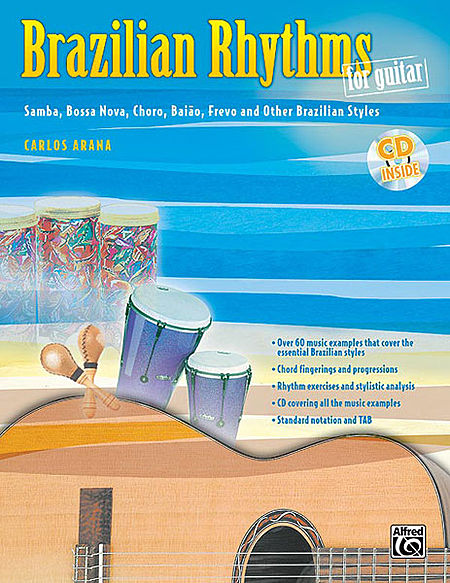
BRAZILIAN RHYTHMS FOR GUITAR, Samba, Bossa Nova, Choro, Baião, Frevo, Other Styles. Arana. CD TABLATURE


Brazilian Rhythms for Guitar, Samba, Bossa Nova, Choro, Baião, Frevo, and Other Brazilian Styles
By Carlos Arana
Series: Guitar Masters Series
Category: Guitar Method or Supplement
Format: Book & CD
Instrument: Guitar

Here we will look at a few additional characteristics of each of the styles, a bit of their history, and their typical formations. SAMBA is the style generally considered most characteristic and representative of Brazilian music. Since the end of the 1870s, samba parties were frequent events in the houses of the "Bahian Aunts," women that had moved from Bahia in the north to Rio de Janeiro, which at that time was the national capital.The actual samba style originated in 1917 at the house of "Tia Ciata" ("Aunt Ciata"), a candy vendor who was one of the famous "Bah fan Aunts." The first samba recorded was "Pelo Telefone" ("By Phone"), by Donga e Mauro de Almeida, also in 1917. Samba had several influences including lundu, la habanera, the max;xe, and even tango, bits of which remain in its unique sound. The first major proponents of the style, Donga and Ismael Silva from the group Estacio (which is also the first samba school in Rio de Janeiro), were largely responsible for defining its sound. By the 1930s, the middle class had caught on to the new music, and it transformed from music played by the poor people for Carnaval into a more popular style. The major figures in this second era were Enrique Forreis (0 Almirante), Joao de Barro, and Noel Rosa the last of whom was responsible for the development of the new style called urban samba. The duo of Ismael Silva oel Rosa defined the format that samba still uses today. Others who followed these original masters include Ataulfo Alves, Wilson Batista, and Geraldo Pereira. Each gave his own particular vision of what the style was to sound like and left a body of work that has been played countless times. During the 1930s, samba. influenced by the growth of radio as a medium of communication, enjoyed a surge of growth in terms of both popularity and variety of interpretation, many of which came to have distinctive characteristics and actually evolved into new styles in their own right such as samba cancao and samba de breque. In the 1950s, samba came into contact with the new style of music called bossa nova developed by Antonio Carlos Jobim and Joao Gilberto, two young men from middle-class upbringings who lived in the southern section of Rio De Janeiro. In order to survive, samba evolved once again, this time at the hand of Cartola, an excellent composer who had written a few songs for Noel Rosa. Beginning from the time that Cartola arrived on the scene, musicians such as Paulinho da Viola and Martinho da Vila began careers that continue on to this very day.These musicians began incorporating harmonies and sounds that were closer to bossa nova (it is interesting to note the cross pollination that occurred between these styles) in their use of alterations and chord extensions in composing, which was markedly different from that which was used in the classic compositions. From that moment on, many new artists began to appear, some banding together and forming different styles, while others worked to maintain the more traditional sound. From that point on, the progression was practically non-stop with new groups of artists appearing all the time. Some artists returned to the original format while others moved on to the urban sound of Noel Rosa and his followers (passing through the style of Antonio Carlos Jobim and Chico Buarque). Some of the more notable names include Beth Carvalho, Alcione, Zeca Pagodinho, Claudio Jorge, and Aragao.

Educator and performer Carlos Arana captures Brazil's rich musical heritage with impeccable stylistic, historic, and technical analyses. The first section of this book covers the fundamental rhythmic and harmonic characteristics of samba, bossa nova, and choro styles followed by practical applications on the guitar. The practical applications break each of the styles down to their historic and regional roots combined with examples that capture the essence of each style. The next section takes you to the northeast of Brazil with the rhythm figures of baião, toada, xote, afoxé, frevo, Marcha, and Marcha Rancho. Over 60 examples, written in standard notation and tablature, are demonstrated on the included CD. TABLATURE


I would like to begin this book by explaining a few basic facts that played a major role in shaping Brazilian music. Brazilian society is extremely easygoing and carefree, and musicians tend to place a great deal of emphasis upon artistic expression rather than on technical expertise and precision. The same holds true for other art forms, thus it is not surprising that Brazil is the home of the world's biggest party: Carnival in Rio! It is there, during Carnival, where you can experience some of the best examples of spontaneous artistic expression such as samba. The main influences on Brazilian music are the traditional Portuguese music brought by the Conquistadors, the exotic rhythms of the African slaves, and the native music of the indigenous inhabitants. Other influences such as American jazz also played a role in the way the music evolved. This can be seen, for example, in composer Antonio Carlos Jobim's use of harmonic structure. He often borrowed certain aspects of Claude Debussy's vertical harmony dating back to the late 19th century. Jobim's characteristic use of alterations and extensions created a kind of tonal complexity which, when combined with certain rhythmic patterns, defined the style of music that has come to be known as bossa nova. It is this fusion of styles which created the definitive sound of Brazilian music, and consequently left its mark on a variety of other musical genres which developed later. For a musician attempting to understand and assimilate the sound of Brazilian music, it is important to understand how all of these complex forces, so deeply rooted in Brazil's popular culture, worked together to form the music. This book uses a thoroughly tested method for providing the reader with a practical understanding of how to play Brazilian rhythms, so that over time the execution can become second nature and playful in terms of the general feel. The first portion of this book provides an in-depth look at the most common rhythmic patterns and syncopations used in samba and the other styles we will study. Following this, we will begin to look at the harmonic structure, including the typical chords and the characteristic chord progressions used by Brazilian guitarists that are unique to this kind of music. In Chapter 3, we will begin to look at practical applications of the chords and rhythms, in most cases using progressions from well-known songs which form the basis of the classic samba and its derivative repertoire. In Chapters 4 and 5, we will study baiao, frevo and other styles originating from the northeast of Brazil.l have recorded all of these examples on the CD so that you will be able to hear first-hand how the music should sound. As always, when learning to playa new style of music, it is highly recommended that you listen to as many different examples as possible in order to really begin to get a feel for the sound. Words and music notation are not always sufficient for describing music and there are many aspects that can only be understood by hearing them played. My goal in writing this book was to help guitarists understand and playa wonderful style of music that has not received the widespread popularity that it deserves. I sincerely hope it proves to be useful for you.


Contents

INTRODUCTION . 

Chord Symbol Notation 


SECTION 1: SAMBA, BOSSA NOVA AND CHORO 


CHAPTER 1: RHYTHM 

Example 1   

Example 2   

Rhythmic Independence Exercises   

Example 3   

Part I: Examples 4–5 .

Part 2: Examples 6–7

Part 3: Examples 8–9

Part 4: All Combinations 

Playing the Groove Components on the Guitar

Examples 10–11

Syncopating the Chord Changes   

Examples 12–13

Rhythmic Independence Exercises -Application 

Examples 14–15

Syncopating the Bass Line

Example 16 


CHAPTER 2:HARMONY 

Characteristic Chord Progressions of Samba, Bossa Nova, and Choro

Inverted Chords

Four-Voice Chords with Extensions andAlterations 

Open Chords

Characteristic Chord Progressions  

Major and MinorVamps with Line Clichés

IV – ivTurnaround to I 


CHAPTER 3: PRACTICALAPPLICATION OF RHYTHMIC PATTERNS

Examples 17–28: Samba Patterns 1–12 

Variations of the Samba Style 

Example 29: Samba Canção

Examples 30–31: Partido Alto Patterns 1–2

Examples 32–33: Samba-Rock/Funk Patterns 1–2

Example 34: Samba-Reggae   

Example 35: Samba Exercise 1 

Example 36: Samba Exercise 2

Page    CD Track

Bossa Nova  .

Examples 37–44: Bossa Nova Patterns 1–8 

Examples 45–46: Bossa Nova Exercises 1–2   

Chord Melody

Example 47: Chord Melody/“Gentle Rain”

Choro 

Basic Choro Pattern  

Choro Variations 1–5   

Examples 48–52: Choro Patterns 1–5

Example 53: Choro Exercise 

Final Considerations for Section I   


SECTION 2: RHYTHMS FROMTHE NORTHEAST OF BRAZIL   


CHAPTER 4: BAIÃO   

Basic Rhythm Patterns

Exercises 1–10                            

Application on the Guitar  

Example 54: Baião Pattern

BaiãoVariations:Toada,Xote andAfoxé   

Example 55: Baião Pattern 1 

Example 56: Baião Pattern 2 

Example 57: Xote Pattern 2

Example 58: Afoxé Pattern 


CHAPTER 5: FREVO

Basic Rhythmic Patterns

Exercises 1–7

Application on the Guitar

Example 59: Frevo Exercise  

    Example 60: Frevo Pattern 

    Example 61: Marcha Rancho Pattern 1

Example 62: Marcha Rancho Pattern 2


APPENDIX:Additional Style Considerations

Samba   

Bossa Nova 

Choro 

Baião

Frevo

Discography   

Bibliography

Prezzo: €22,99
€22,99

PENTATONIC SOLOING STRATEGIES FOR GUITAR, Modern Ideas for All Styles. Erik Halbig. CD TABLATURE


PENTATONIC SOLOING STRATEGIES FOR GUITAR, Modern Ideas for All Styles. Erik Halbig. CD TABLATURE

Pentatonic Soloing Strategies per la chitarra prende i più comuni strumenti di improvvisazione, le scale pentatoniche, e vi  fa vedere le sue praticamente illimitate possibilità.  Inizia con scale pentatoniche standard magiori e minori nelle 5 posizioni base e continua con la sfida delle variazioni pentatoniche per string skipping e sweep picking. Il libro culmina con le serie delle scale ?, compreso la 9-a tonica, diminuita, e la scala pentatonica a tono pieno aumentata. CD con la dimostrazione di tutti gli esempi inclusi nel libro.

Pentatonic Soloing Strategies for Guitar Modern Ideas for All Styles
By Erik Halbig
Item: 00-35302
UPC: 038081396064
ISBN 10: 0739070967
ISBN 13: 9780739070963

Series: The Improv Series
Category: Guitar Method or Supplement
Format: Book & CD
Instrument: Guitar

Pentatonic Soloing Strategies for Guitar takes the most common improvisational tool, the pentatonic scale, and shows you its almost limitless possibilities. It begins with standard major and minor pentatonic scales in the five basic positions and quickly moves into challenging pentatonic variations for string skipping and sweep picking. The book culminates with a series of substitution scales, including the rootless 9th, the half-diminished, and the whole-tone augmented pentatonic scales. A CD demonstrating all the examples in the book is included:

FEATURES

THEORY, FORMS AND VARIATIONS FOR MAJOR AND MINOR PENTATONIC SCALES.

PENTATONIC SCALE PATTERNS THAT INCORPORATE SWEEP PICKING AND STRING SKIPPING.

EXTENDED INTERVAL FINGERINGS

12 SUBSTITUION SCALES TO EXPAND YOUR TONAL VOCABULARY AND ADD COLOR TO YOUR PLAYING.

EXAMPLES IN TAB AND STANDARD MUSIC NOTATION.


INTRODUCTION
The pentatonic scale is a scale consisting of five notes. It can be found in almost every style of music, from early African-American spirituals such as "Swing Low, Sweet Chariot" to the classical compositions of Claude Debussy and Maurice Ravel to the bluesy rock guitar sounds of Jimi Hendrix, Jimmy Page, and Eric Clapton.
Players sometimes fall into the rut of playing the "same old pentatonic licks." This book-which will change how you think about the pentatonic scale-is the remedy for this situation.
This is not a beginner's book. To use it effectively, you should already have a working knowledge of music, music theory, and the minor and major pentatonic scales. However, a quick review of the basics is included on page 5. A review of the minor and major pentatonic scales follows (starting on page 11), after which you will learn many new and exciting ways to manipulate and rework these basic scales. Most importantly, practical applications are provided.
There are lots of new ideas in this book to stimulate your own creativity. You can write
down ideas that come to you on the blank page (page 95) at the end of this book. Good luck!

A compact disc is included with this book. Use the CD to help ensure you're capturing the
feel of the examples and interpreting the rhythms correctly. The symbol shown at the left
appears next to every example that is on the CD. Example numbers are above the symbol,
while the track number below the symbol corresponds directly to the example you want to
hear. If there's a decimal (1.1,1.2, etc.), it means that there's more than one example on the
track. Track I provides tuning notes for your guitar.

ABOUT THE AUTHOR
Erik Halbig holds a degree in studio/jazz guitar performance from the University of
Southern California School of Music. He has presented numerous clinics and special
seminars at the California and Nashville campuses of the National Guitar Workshop.
He is also the author of two other Alfred/National Guitar Workshop titles: Mastering
Rock Guitar (#14096) and Stand Alone Tracks: Country (#17805). Currently living
in Nashville, Tennessee, Erik is busy doing session work and touring. He has toured
and recorded with Sugarland, Sara Evans, Blackhawk, Tanya Tucker, Wynonna,
and many others.

Acknowledgements
Thanks to Bruce Bolen, Jr. at Fender Guitars, Myles Rose at Groove Tubes, Ryan
and Chris at Gadow Guitars, Derek Brooks at Ernie Ball, Danica Levy at Levy's
Leathers, James Heidrich at Bad Cat Amplifiers, Steve Blucher at DiMarzio,
Michael Tuttle, Don Grosh, and Ampeg Amplifiers.


CONTENTS
About the Author .
Introduction .
Getting Started .
Whole Steps, Half Steps, and Scales .
Standard Music Notation .
Tablature (TAB) .
Sliding .
The Guitar Fretboard .
Pentatonic Theory , .
The Major Scale .
The Minor Pentatonic Scale .
The Major Pentatonic Scale ; .
The Minor Pentatonic Scale .
Five Minor Pentatonic Scale Forms in A .
The Major Pentatonic Scale .
Five Major Pentatonic Scale Forms in A .
Variations .
Variation I-Sliding Combinations .
Variation 2- Weaving Combinations .
Variation 3-Extended Weaving Combinations .
Variation 4-Extended Weaving and Sliding Combinations .
Variation 5-Skipping and Weaving .
Variation 6-Sequenee Weaving .
Variation 7-Weaving and Sliding .
Extended Interval Fingerings .
Extended 4th Intervals .
Extended 5th Intervals ,. .
Extended 7th Intervals .
Penta-Scales .
Pentatonic Motives .
Four-Note Motives .
Five-Note Motives .
String-Skipping Pentatonics .
One-Note-Per-String Pentatonics-Sweep Picking .
One-Note-Per-String Pentatonic Combinations .
Substitutions .
Rootless 9th Pentatonic Scale .
Dominant 7th/9th Pentatonic Scale .
Minor 6th Pentatonic Scale .
Minor 6th Blues Pentatonic Scale .
Lydian Dominant Pentatonic Scale .
Half-Diminished Pentatonic Scale .
Lydian Pentatonic Scale .
Dominant Pentatonic Scale .
Altered Dominant Pentatonic Scale .
Whole Tone Augmented Pentatonic Scale .
Dominant 7b9 Pentatonic Scale .
Diminished Pentatonic Scale .
Conclusion .
 

Prezzo: €21,99
€21,99

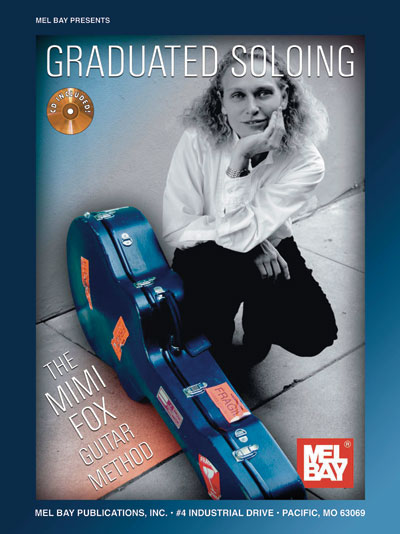
Fox MIMI Guitar Method Graduated Soloing LIBRO CD TABLATURE SOLO SCALE ARPEGGI PATTERN JAZZ

Mimi Fox Guitar Method The, Graduated Soloing. CD TABLATURE

LIBRO DI MUSICA, METODO, SPARTITI PER CHITARRA CON CD E TABLATURE. 

This method book by renowned jazz artist Mimi Fox utilizes a unique approach to helping guitarists develop strong solos. Scales, arpeggios, patterns, and syncopated rhythms are introduced in a logical clear fashion. All of this is then applied to the "graduated" studies that follow.

Starting with simple melodies, and then progressively adding more complex figures based on arpeggios, scales, passing tones, and syncopated rhythms the "graduated" solos will teach students how to develop their own great solos by using the techniques contained herein. "Graduated Soloing" is stuffed full of great ideas/patterns/licks drawn from Mimi's many years of playing with the top musicians in Jazz/Pop music.

The book concludes with an explosive solo of Mimi's over a 12 bar blues and includes tab as well as musical notation with a detailed analysis by the author. CD contains all examples and solos.

Format: Book/CD Set
ISBN: 0786681381
UPC: 796279110525
ISBN13: 9780786681389
Series: Non-Series


Introduction
Acknowledgements
Preface
Arpeggio Studies through a Piece of Music
Chords and Arpeggios
Jazz Night
Scales
Scale Syllabus
G Major Scale in Five Shapes
G Melodic Minor in Five Shapes
G Harmonic Minor in Five Shapes
G Minor Pentatonic in Five Shapes
Scale Patterns
Whole Tone and Diminished Scales
Whole Tone and Diminished Patterns
Rhythm/Comping
Rhythmic Studies
Rhythmic Comping Ideas
More Comping Rhythms
Graduated Solo Studies
Duke’s Train 1
Duke’s Train 2
Bossa Blues 1
Bossa Blues 2
12 Bar Blues 1
12 Bar Blues 2
Standard in C 1
Standard in C 2
Buddy’s Blues
Mimi Fox

Prezzo: €24,99
€24,99

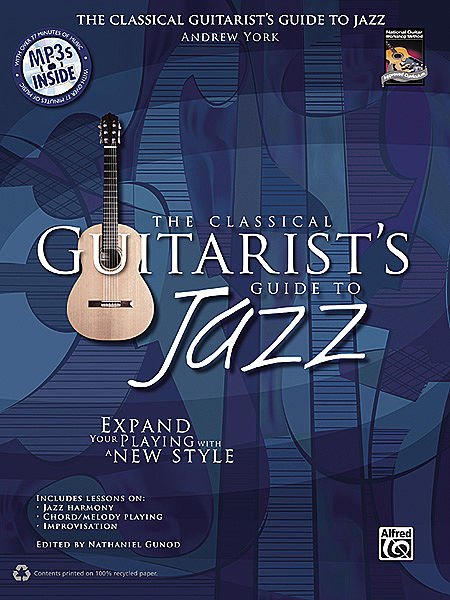
YORK ANDREW THE CLASSICAL GUITARIST'S GUIDE TO JAZZ Expand Your Playing with a New Style CD

YORK ANDREW, THE CLASSICAL GUITARIST'S GUIDE TO JAZZ, Expand Your Playing with a New Style. CD 

LIBRO METODO DI MUSICA, SPARTITI PER CHITARRA CON CD E MP3. 

ACCORDI, PENTAGRAMMA, GRAFICO DELLA TASTIERA. 

The Classical Guitarist's Guide to Jazz

Expand Your Playing with a New Style

By Andrew York / ed. Nathaniel Gunod

Categoria: Guitar Method or Supplement

Formato: Libro & CD

Istrumento: Chitarra


Chitarrista e compositore Andrew York presenta la sua ultima guida jazz per la chitarra classica. Le prime due sezioni delle tre del libro riguardano l'armonia e gli accordi/melodie jazz, focalizzandosi sul comping, chord voicing, voice leading e arrangiamenti per la chitarra solo. La terza parte è dedicata all'improvisazione che potrebbe essere l'aspetto più emozionante del jazz per chitarristi classici. York dimostra che l'improvvisazione è un'abilità che può essere imparata e praticata come altre. Eseguendo gli esercizi del libro per l'allenamento dell'orecchio e gli esercizi  di visualisazzione imparerai come trasformare la musica che senti nel tuo "orecchio mentale” nei più fantasiosi e buoni jazz solo. Il CD contiene gli esercizi e esempi eseguite dall'autore.

Guitarist and composer Andrew York presents the ultimate guide to jazz for classical guitarists. The first two sections of this three-part book cover jazz harmony and chord/melody, focusing on comping, chord voicings, voice leading, and arranging for solo guitar. Part three looks at improvisation, which may be the most exciting—yet foreign—aspect of jazz for classical guitarists. York shows you that improvisation is a skill that can be learned and practiced just like any other. By practicing the ear training and visualization exercises in this book, you will learn how to turn the music you hear in your "mind's ear" into imaginative, great-sounding jazz solos. The CD contains the exercises and examples performed by the author.

Prezzo: €36,99
€36,99

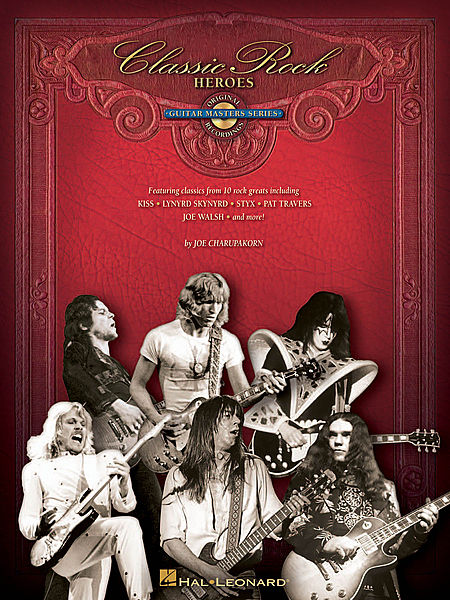
CLASSIC ROCK HEROES GUITAR MASTERS SERIES Joe Charupakorn CD TABLATURE All Right Now-Born To Be Wild

CLASSIC ROCK HEROES, GUITAR MASTERS SERIES Joe Charupakorn . SHEET MUSIC BOOK with CD & GUITAR  TABLATURE .

LIBRO DI MUSICA ROCK con CD.

SPARTITI PER CHITARRA CON : 

ACCORDI, PENTAGRAMMA, TABLATURE .

ORIGINAL RECORDINGS !

Classic Rock Heroes
Guitar Masters Series
Series: Guitar Masters Series
Format: Softcover with CD - TAB
Author: Joe Charupakorn

Inventory #HL 00699915
ISBN: 9781423423614
UPC: 884088129606
Width: 9.0"
Length: 12.0"
104 pages

Classic Rock Heroes not only contains accurate guitar transcriptions of 10 classic rock anthems and biographical information on each artist, it also includes a CD with the ORIGINAL RECORDINGS OF EVERY SONG! Hear every note as played, every lyric as sung, and every bend as you remember – this is the real deal! Songs include: All Right Now - Born to Be Wild - Cold Gin - Renegade - Rocky Mountain Way - Snortin' Whiskey - Stuck in the Middle with You - Takin' Care of Business - Thirty Days in the Hole • What's Your Name. Also features great photos, detailed gear listings, and album info. 104 pages

Song List:

All Right Now - FREE - 1970
Born To Be Wild - STEPPENWOLF - 1968
Cold Gin - KISS - 1974
Renegade - STYX - 1978
Rocky Mountain Way - JOE WALSH - 1973
Snortin' Whiskey - PAT TRAVERS - 1980
Stuck In The Middle With You - STEALERS WHEEL - 1973
Takin' Care Of Business - BACHMAN -TURNER OVERDRIVE - 1973
Thirty Days In The Hole - HUMBLE PIE - 1972
What's Your Name - LYNYRD SKYNYRD - 1977


Billboard Hot 100. The band was now a major act,
breaking attendance records worldwide on its tours.
Skynyrd opened for the Rolling Stones in front of
a crowd estimated at up to 500,000 people at the
Knebworth Fair in Hertfordshire, England. After the
show, members of the band hobnobbed backstage
with society's elite-even smoking a joint with actor
Jack Nicholson!
The band's next album, Nuthin' Fancy (1975), was
recorded with new drummer Artimus Pyle, who
replaced Bob Burns (Burns left the band citing
fatigue and health issues). Other big lineup changes
soon occurred-AI Kooper bowed out of being
Skynyrd's producer and midway through the tour
for Nuthin' Fancy (named the "Torture Tour") Ed
King, exhausted by both life on the road and Van
Zant's abusive behavior when drunk, left the band;
this would later prove to be a life-saving move. In
December 1975, female background vocalists, The
Honkettes (Leslie Hawkins, JoJo Billingsley, and
Cassie Gaines) were added. Mega-producer Tom
Dowd was brought on to produce the band's next
album Gimme Back My Bullets. Dowd agreed to
produce the album only on the conditions that the
band follow his zero tolerance policy for drunkenness
and that they rehearse consistently at a set time. At
the recommendation of Honkette Cassie Gaines, her
brother, guitarist Steve Gaines was added to Lynyrd
Skynyrd. Gaines brought back the three-guitar fury
to the Skynyrd sound and very shortly after joining,
took part in the live album, One More for the Road.
Gaines appeared on the band's next studio album,
Street Survivors (1977). Initially, it seemed like this
album would be a disaster. Producer Tom Dowd
left midway through the recording to finish a Rod
Stewart album, and initial impressions of the album
were lackluster at best. The finished product turned
out to be a miracle and is considered by many to be
Skynyrd's best album. It went platinum and reached
#5 in the US. Unfortunately the album will always
be associated with the tragic events that happened
three days after its release. On October 20, 1977,
while en route to a gig at Louisiana University,
Skynyrd's chartered tour plane ran out of fuel and
crashed into a swamp in Gillsburg, Mississippi. This
crash killed Ronnie Van Zant, Steve Gaines, Cassie
Gaines, and Dean Kilpatrick (road manager). As an
eerie coincidence, the cover of the original edition of
Street Survivors depicted the band in flames. After
the tragedy, that cover was replaced with a different
shot, sans flames.
MCA released a compilation album, Gold and
Platinum in 1979. That same year, the surviving
members performed "Freebird" at Charlie Daniel's
5th annual Volunteer Jam, at the Nashville Municipal
Auditorium. This performance was the impetus
behind the Rossington-Collins band, formed in
1980. Female singer Dale Krantz was added along
with former Skynyrd bassist Leon Wilkeson and
keyboardist Billy Powell. This short-lived band
released two albums between 1980 and 1982. Other
offshoot bands included the Artimus Pyle Band (Pyle
wouldn't join the Rossington-Collins band because
he didn't approve of Krantz fronting the band)
formed in 1981, the Allen Collins Band, formed in
1983, and Rossington, formed in 1986.
To commemorate the tenth anniversary of the crash,
Lynyrd Skynyrd reunited in 1987 with surviving
members Rossington, Powell, Wilkeson, Pyle, and
King. Allen Collins, paralyzed from a 1986 drunk
driving accident, singed on as musical director, and
new members, vocalist Johnny Van Zant (Ronnie's
younger brother) and guitarist Randall Hall (from
the Allen Collins Band) were added. Allen Collins
died on January 23, 1990 from complications caused
by pneumonia. The following year, Lynyrd Skynyrd
recorded its first studio album since the airplane
tragedy, Lynyrd Skynyrd 1991, which was produced
by Tom Dowd, and in 1996, a documentary entitled
Freebird ... The Movie was released. The band's place
in history was cemented on March 13, 2006, when it
was inducted into the Rock and Roll Hall of Fame.
Lynyrd Skynyrd is an icon that has forever impacted
the American cultural landscape and now, more than
three decades later, is still going strong.
Performance Notes
Lynyrd Skynyrd's sixth offering, Street Survivors
(1977), was among the band's most successful
albums, reaching platinum status and peaking at #5
in the US. Sadly, it was the last album recorded with
the original lineup. Among the highlights of Street
Survivors was "What's Your arne:' a ignature song...


...now-apprehensive band had to do the gig, if only to
get gas money for the trip back to Ohio. To everyone's
surprise, the band kicked ass as a power trio and would
consequently retain this format. A lucky break came
in the form of a last-minute slot opening up for The
Who in Pittsburgh, PA. Pete Townsend took a liking
to Walsh, referred to him as "America's answer to all
the English flash guitarists," and brought the James
Gang out for its European tour. After the tour, the
James Gang released The James Gang Rides Again,
which featured one of its all-time classics, "Funk #49."
The band's next album, Thirds, was Walsh's last studio
album with the band. In addition to tour burnout,
Walsh started to feel restricted by the confines of the
trio format. This precipitated his departure from the
James Gang after the live release from Carnegie Hall,
James Gang Live in Concert, which was recorded live
with no studio overdubs or fixes.
After leaving the band, Walsh moved to Boulder,
Colorado and took six months off from guitar,
spending time on his radio hobby. In 1972, he
released his first solo album, Barnstorm, which had
a more fleshed out sound with keyboards, synthesizers,
and vocal harmonies. Walsh's next album,
The Smoker You Drink, the Player You Get, was his
breakthrough album, peaking at #6 on the charts.
The album featured one of his most recognizable
songs, the classic "Rocky Mountain Way." Tragedy
struck in 1973 when Walsh's baby daughter was
involved in a car accident and died shortly thereafter.
This incident forever changed Walsh's life and
propelled his self-abusive personality. Residue of
the tragic event is evident in the title of his next two
releases, So What in 1976, and the live album, You
Can't Argue With a Sick Mind. After the loss of his
daughter, Walsh did not have the strength to continue
a solo career and joined the Eagles in 1976, replacing
Bernie Leadon.
With Walsh on board, the Eagles recorded the
landmark Hotel California, one of the best selling
albums of all time. The album was #1 for eight nonconsecutive
weeks on the album charts and featured
two #1 singles-"Hotel California" and "New Kid in
Town." In 1978, Walsh recorded another solo effort,
But Seriously Folks, which featured the signature
Wal h classic "Life's Been Good" It took the Eagles
two-and-a-half year to rele oll '-up album,
The Long Run, but it was worth the wait. The album
reached #1, earned the Eagles a GRAMMY®, and
spawned three Top 10 singles-"Heartache Tonight,"
"I Can't Tell You Why," and "The Long Run." After
The Long Run, the Eagles took a "fourteen-year
vacation," disbanding until 1994's reunion album,
Hell Freezes Over, a mixed live/studio set that hit
#1 immediately upon release. Now older and wiser,
the Eagles reunited on the condition that everyone
stay clean and sober, prompting Walsh to check into
rehab. In 1998, the Eagles were inducted into the
Rock and Roll Hall of Fame and to this day, continue
to forge ahead, bucking the ever-changing musical
climate. In 2007, the Eagles released The Long Road
to Eden, the band's first studio album since 1979.
In the period since the Eagles' comeback, Walsh
recorded a slew of solo albums including There Goes
the Neighborhood, You Bought It: You Name It, The
Confessor, Got Any Gum?, and MTV Unplugged,
among others. He also regrouped with the James
Gang in 1996 at an election rally for President
Bill Clinton. With Walsh back in the band, the
James Gang has made several television appearances
including The Drew Carey Show, and has since
performed and toured sporadically.

Performance Notes
Despite his reckless image and his ballsy style, Joe
Walsh is a studied musician with a firm grasp on
music theory. He minored in music at Kent State
University and later received an honorary doctorate
in music from Kent. Growing up, Walsh started on a
diet of Beatles and Rolling Stones, learning George
Harrison's lines note-far-note. He later moved on to
the solos of Eric Clapton and Jeff Beck, meticulously
copying every nuance. This determination, combined
with his relentless gigging schedule, nurtured a
refined, yet powerful guitar stylist.
"Rocky Mountain Way" is one of Walsh's personal
favorite solos. The song is basically an extended
blues, enhanced with slide guitar and talk box. Walsh
nailed the slide parts in one take. After the first take,
Walsh wanted to do another, like most musicians
would, just to make sure. Everyone in the studio
unanimously agreed that it was a perfect run and told
Walsh "you're done." The rest is history.
 

... experience, having previously played with the moderately
successful MS Funk (a band that had opened for
Kiss). Initially, Shaw didn't know much about Styx
and actually looked down on them. He wasn't interested,
but went to the audition anyway and wound up
getting the gig without even touching his guitar. He
sang "Lady" with DeYoung and because he could hit
the high notes, DeYoung said "we want you in the
band."
Shaw made his debut, playing guitar, singing, and
writing/co-writing several songs on the band's next
album, Crystal Ball. The album did moderately
well, but it was the band's next album, The Grand
Illusion, that would take Styx into the big time.
The album went multi-platinum and "Come Sail
Away," a fantasy-themed single from that album
hit #8 in the US. Styx's next effort, Pieces of Eight,
also went multi-platinum. By this point, Shaw had
been making his mark on the band's sound. Pieces
of Eight featured three singles penned by Shaw,
"Renegade," "Blue Collar Man (Long Nights)," and
"Sing for the Day." The album Cornerstone followed
in 1979 and contained the bands biggest hit "Babe,"
which hit #1 on the charts. Cornerstone veered away
from the prog-rock sounds of previous efforts and
into a more pop/rock vein. As a result, its more mainstream-
friendly sound went multi-platinum, peaking
at #2 on the album charts. The bands momentum
continued with Paradise Theater, which also went
multi-platinum and was the only Styx album to
reach #1. "Snowblind," one of the songs from the
album caused controversy when activist Tipper Gore,
among others, accused the track of containing backwards,
satanic messages.
Although the band was on top of the world, not all
was well in Styx land. Around the time Shaw joined
the band, DeYoung suffered a nervous breakdown
and went for a stay at a psychiatric center. After
his recovery, he brought his wife and daughter on
the road. The DeYoungs were devout Catholics,
which created a major lifestyle conflict with the
band and brought about increasing intrapersonal
tension. Artistic tensions also came to a boil among
the band's songwriters-DeYoung's vision saw the
band going into a more theatrical direction while
Shaw and Young were pushing for a harder, more
rockin' sound. DeYoung got his way with the band's
next platinum album, Kilroy Was Here. The album
was a concept album that spawned the legendary
mega-hit "Mr. Roboto." DeYoung was also hellbent
on making a film version of Kilroy Was Here,
much to the chagrin of the other band members.
The movie was ultimately abbreviated to a fifteenminute
short film (costing Styx $1.5 million) to be
played on the Kilroy tour, which was already an
over-the-top, theatrical affair that had band members
wearing costumes and reciting dialogue. The tour's
ultra-elaborate production proved to be a nightmare
for the crew. Gargantuan sets had to be transported
daily from arena to arena, and numerous technical
snafus plagued the production. DeYoung didn't make
the situation easier. Whenever the film projectors
failed and the Kilroy film couldn't be shown,
DeYoung would refuse to sing and the show would
be over-not a good move considering ticket sales
were already drastically declining. It got so bad that
the last round of the tour was suddenly cancelled.
Tension in the band was at an all-time high and a
breakup was all but inevitable. During this period of
uncertainty, A&M released a live album, Caught in
the Act, which featured material from the Kilroy Was
Here and Paradsie Theater tours. The band went on
hiatus and Shaw and DeYoung pursued solo careers,
each releasing several solo albums. In 1990, after
extensive negotiations, the members of Styx decided
to record another album. DeYoung called Shaw to
start pre-production but got a shocker on the phone.
Shaw, with the aid of A&R legend John Kalodner,
had formed a new band, the Damn Yankess, which
featured Ted Nugent and Jack Blades, and was in the
process of recording an album. Glen Burtnick, who
had a deal as a solo artist with A&M Records, was
brought in as a replacement for Shaw and joined Styx
while they were still recording Edge of the Century.
During the negotiations for this album, DeYoung
used his clout to revamp the financial terms of the
band in his favor. He made himself the sole producer
of the album, thus getting points from the album,
excluding the others in the band.
Also, rather than split the publishing equally as
had been done previously, each songwriter now
solely owned his publishing, and at this point, only
DeYoung and James Young were writing songs for
the album. DeYoung also somehow managed to get...
 

Prezzo: €25,99
€25,99

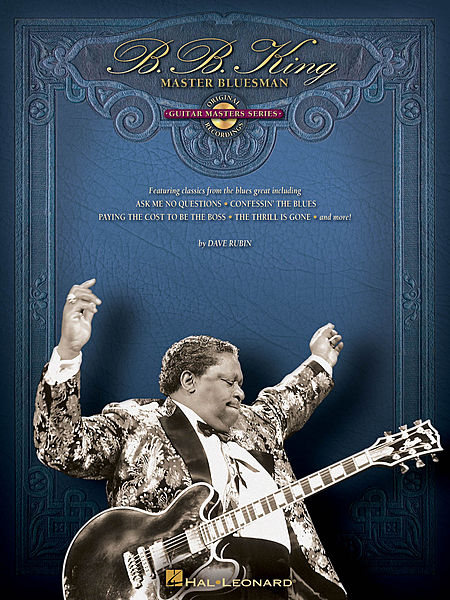
B.B. KING MASTER BLUESMAN: DELUXE EDITION DAVE RUBIN LIBRO CD TABLATURE CHITARRA

B.B. KING, MASTER BLUESMAN: DELUXE EDITION. DAVE RUBIN. SHEET MUSIC BOOK WITH CD & GUITAR  TABLATURE

LIBRO DI MUSICA BLUES CON CD .

SPARTITI PER VOCE E CHITARRA CON : ORIGINAL RECORDINGS OF EVERY SONG !  

ACCORDI, PENTAGRAMMA, TABLATURE.

TECNICA,  

B.B. King - Master Bluesman: Deluxe Edition
Guitar Masters Series
Series: Guitar Masters Series
Format: Softcover with CD - TAB
Artist: B.B. King
Author: Dave Rubin

Product Details

Inventory: #HL 00699923

ISBN: 9781423425748

UPC: 884088140571

Width: 9.0"

Length: 12.0"

Page Count: 80 Pages

Learning B.B. King's music has never been more fun! B.B. King – Master Bluesman not only contains accurate transcriptions and in-depth analysis of 10 blues classics and biographical information on B.B. himself, it also includes a CD with the ORIGINAL RECORDINGS OF EVERY SONG! This unique pack analyzes the following songs: Ask Me No Questions • Chains and Things • Confessin' the Blues • Get off My Back Woman • I Want You So Bad • I'mGonna Do What They Do to Me • No Good • Paying the Cost to Be the Boss • So Excited • The Thrill Is Gone.

80 pages


TITOLI:

Ask Me No Questions

Chains And Things
Confessin' The Blues
Get Off My Back Woman
I Want You So Bad
I'm Gonna Do What They Do To Me
No Good
Paying The Cost To Be The Boss
So Excited
The Thrill Is Gone

Prezzo: €34,99
€34,99

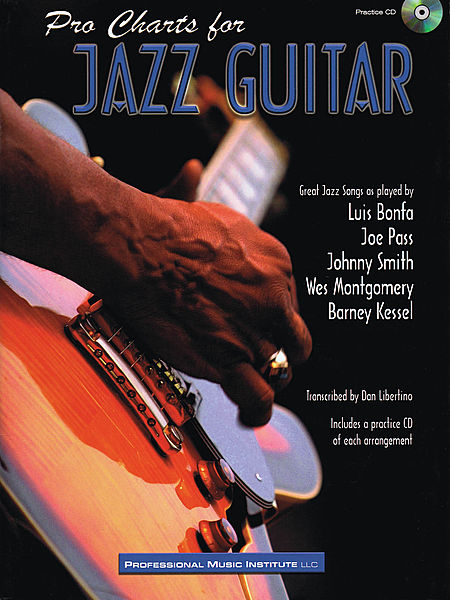
PRO CHARTS FOR JAZZ GUITAR. Luis Bonfa - Joe Pass - Barney Kessel - Dan Libertino. CD TABLATURE

PRO CHARTS FOR JAZZ GUITAR. Dan Libertino. CD TABLATURE

Pro Charts for Jazz Guitar

Serie: Guitar Solo
Publisher: Professional Music Institute
Formato: Softcover with CD - TAB
Editore: Dan Libertino
Otto brani classici del jazz trascritti come erano eseguiti dai legendari Wes Montgomery, Joe Pass, Luis Bonfa, Barney Kessel e Johnny Smith. Libro include anche un CD con due tracce per ogni canzone: una alla velocità per esercitazioni e una con la velocita originale dell'esecuzione del brano. 

Eight jazz classics transcribed as they were played by legends Wes Montgomery, Joe Pass, Luis Bonfa, Barney Kessel, and Johnny Smith. This book also includes a CD with two tracks for each song: one at a practice tempo and one at performance speed. Songs include: Body and Soul • A Day in the Life of a Fool (Manha De Carnaval) • Do Nothin' Till You Hear from Me • Don't Get Around Much Anymore • Midnight Sun • Moonlight in Vermont • There Will Never Be Another You • Whisper Not.

This book of solo guitar arrangements/transcriptions is based on recordings of some the great jazz players of our time such as Joe Pass,Wes Montgomery, Luis Bonfa, Johnny Smith, and Barney Kessel. In all these scores, the melody, chords and solos were transcribed as closely to the recordings as possible. Notes were added to the performances, mostly in the bass line, when the need was there to make the chart playable as a solo guitar performance. The forms of the tunes were limited to 4 pages. The playing level of the charts should be challenging for the beginning and intermediate player but playable and even creative enough for the most advanced players. It is encouraged that you listen to the original recordings, but a midi file practice CD is provided with two versions of each chart on the CD, one slow and one at 'full speed', to help the student interpret the charts.
 

Manha de Carnival ( A day in the life of a fool) as recorded by Luis Bonfa on Smithsonian Folkways Recordings SOLO IN RIO 1959. This chart is an exact transcription of the nylon string guitar recording of this classic tune.

Do Nothin' Till You Here From Me as recorded by Joe Pass on Pablo Records, 1975
PORTRAITS OF DUKE ELLINGTON
The melody and chords are taken adapted from this recording along with one verse of solo and an ending that Joe plays in his own particular way. Joe plays solo lines and melody mostly but the chart written here adds chord voicings to make the solo fuller for a solo guitar interpretation.
 

Don't Get Around Much Anymore as recorded by Joe Pass on Pablo Records, 1975

PORTRAITS OF DUKE ELLINGTON
This chart was written with the same approach that was used to write the previous chart adapted from Joe Pass.

Moonlight In Vermont as recorded by Johnny Smith on Roulette Jazz, 1952

Moonlight in Vermont A beautiful ballad played by Johnny Smith, this chart is the full form of the song with adaptations from the guitar solo including all the harmonies and nuances of his ballad style. This is great chart that really elevates this tune beyond the real book versions.
 

Body and Soul as recorded by Wes Montgomery on JazzBank, 1964 Navy Swing

The piano harmonies are combined with the melody interpretation by Wes to create this chart for solo guitar. A solo is added, filled out to make a solo guitar performance. The outro that Wes plays is also written in the chart.


There Will Never Be Another You as recorded by Wes Montgomery on JazzBank, 1964 Navy Swing

This chart was written with the same approach that was used to write the previous chart adapted from Wes.


Whisper Not as recorded by Wes Montgomery on Riverside, 1959 The Wes MontgomeryTrio

This cool swing tune is charted here by combining the melody with the harmonies of the organ. One solo verse taken from Wes's solo is added to the chart to provide creative options on how to play over these changes.


Midnight Sun as recorded by Barney Kessel on Contemporary, 155 "to swing or not to swing"

This ballad chart is an adaption of the melody played as a single line and the harmony of the piano part along with one verse of solo adapted in a similar fashion.

The Transcriber DAN LIBERTINO
Guitarist, arranger, engraver and transcriber Dan Libertino, has been writing books for the guitar since the mid-1990's. He has a Masters in Music having studied classical guitar exclusively with the world re-known family of the spanish guitar, the Romero's. His study of the jazz guitar includes includes time with Link Chamberlain, Peter Sprague, Joe Diorio and ted Greene. Dan's musc business includes performing solo guitar, private teaching and at local colleges in the southern California area as well as transcribing, arranging and engraving music books. Some of his text's include the self published Beginning Music Theory Through the Guitar, several Harp publications and guitar transcriptions. 


1964 - Body And Soul - Parole di Edward Heyman, Robert Sour e Frank Eyton. Musica di John Green
come registrata da Wes Montgomery nel 1964

1959 - A Day In The Life Of A Fool (Manha De Carnaval) - Parole originali di DeMoraes. Musica di Luiz Bonfa
come registrata da Luis Bonfa nel 1959

1975 - Do Nothin' Till You Hear From Me - Parore di Bob Russell. Musica di Duke Ellington
come registrata da Joe Pass nel 1975

1942 - Don't Get Around Much Anymore - Parole di Bob Russell. Musica di Duke Ellington
come registrata da Joe Pass nel 1975

1947 - Midnight Sun - Lirica e Musica di Lionel Hampton, Sonny Burke e Johny Mercer
come registrata da Barney Kessel nel 1955

1945 - Moonlight In Vermont -  Parole di John Blackburn. Musica di Karl Suessdorf
come registrata da Johnny Smith nel 1952

1942 - There Will Never Be Another You - Parole di Mack Gordon. Musica di Harry Warren
come registrata da Wes Montgomery nel 1964

1956 - Whisper Not - Parole di Leonard Feather. Musica di Benny Golson
come registrata da Wes Montgomery nel 1959

Larghezza: 9.0"

Lunghezza: 12.0"
32 pagine

Prezzo: €20,99
€20,99
Condividi contenuti