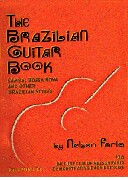
THE BRAZILIAN GUITAR BOOK, Nelson Faria. Contiene 84 esempi di Samba, Choro, Bossa, frevo, Baião. Con fotografie, discografie, ritmi, ecc. ecc. .
LIBRO METODO DI MUSICA BRASILIANA CON CD.
SPARTITI PER CHITARRA CON:
PENTAGRAMMA E GRIGLIA DEGLI ACCORDI.
IN ITALIANO
IL LIBRO DI CHITARRA BRASILIANA
Un libro che rappresenta un chiaro ed efficace compendio dei principali stili brasiliani, scritto da un musicista di chiara fama, così definito da Toninho Horta: «Nelson Faria era la persona giusta per scrivere questo libro, che contiene esempi e trascrizioni dei più grandi chitarristi brasiliani. Questo musicista di talento e appassionato insegnante di musica ha una profonda conoscenza della musica brasiliana e delle sue sottigliezze ritmiche, melodiche ed armoniche.» «Con l'allegato CD di Faria che esegue accuratamente ciascun esempio e chiare spiegazioni dei vari ritmi sincopati che rendono la musica brasiliana così eccitante, il libro di Faria è una rivelazione, per non dire un affarone» così il Guitar Player Magazine.
ELENCO DEGLI ESEMPI REGISTRATI
[Track 01] Note di riferimento per l’accordatura (Mi, Si, Sol, Re, La , Mi) Pagina
[Track 02] Samba pattern base esempio musicale..........................................................................................25
[Track 03] Samba variazione 1 esempio musicale...........................................................................................27
[Track 04] Samba variazione 2 esempio musicale...........................................................................................28
[Track 05] Samba variazione 3 esempio musicale 1.......................................................................................29
[Track 06] Samba variazione 3 esempio musicale 2.......................................................................................29
[Track 07] Samba variazione 3 esempio musicale 3 - Trascrizione parziale della parte di chitarra suonata da
Toninho Horta sulla canzone “Aquelas Coisas Todas” di Toninho Horta....................................................30
[Track 08] Samba variazione 4 esempio musicale 1 - Trascrizione parziale della parte di chitarra suonata da
Ivan Lins sulla canzone “Desesperar Jamais” di Ivan Lins / Victor Martins..................................................31
[Track 09] Samba variazione 4 esempio musicale 2.......................................................................................32
[Track 10] Samba variazione 5 esempio musicale...........................................................................................32
[Track 11] Samba variazione 6 esempio musicale...........................................................................................33
[Track 12] Samba variazione 7 esempio musicale 1.......................................................................................34
[Track 13] Samba variazione 7 esempio musicale 2.......................................................................................34
[Track 14] Samba variazione 7 esempio musicale 3 - Trascrizione parziale della parte di chitarra suonata da
João Bosco sulla canzone ”Incompatibilidade de Genius” di João Bosco / Aldir Blanc...................................34
[Track 15] Samba variazione 7 esempio musicale 4 - Trascrizione parziale della parte di chitarra suonata da
João Bosco sulla canzone ”Coisa Feita” di João Bosco / Aldir Blanc / Paulo Emilio....................................35
[Track 16] Samba variazione 8 esempio musicale 1 - Trascrizione parziale della parte di chitarra suonata da
Joyce sulla canzone ”Feminina” di Joyce.........................................................................................................37
[Track 17] Samba variazione 8 esempio musicale 2.......................................................................................38
[Track 18] Samba variazione 9 esempio musicale - Trascrizione parziale della parte di chitarra suonata da
Luiz Bonfá sulla canzone ”Batukada” di Luiz Bonfá.......................................................................................39
[Track 19] Samba variazione 10 esempio musicale........................................................................................40
[Track 20] Samba variazione 11 esempio musicale.........................................................................................41
[Track 21] Samba variazione 12 esempio musicale - Trascrizione parziale della parte di chitarra suonata da
Milton Nascimento sulla canzone “Cravo e Canela” di Milton Nascimento................................................42
[Track 22] Samba variazione 13 esempio musicale.........................................................................................43
[Track 23] Samba variazione 14 esempio musicale.........................................................................................44
[Track 24] Samba variazione 15 esempio musicale.........................................................................................45
[Track 25] Samba variazione 16 esempio musicale - Trascrizione parziale della parte di chitarra suonata da
Toninho Horta sulla canzone ”From The Lonely Afternoon” di Milton Nascimento / Fernando Brant..........46
[Track 26] Samba variazione 17 esempio musicale.........................................................................................47
[Track 27] Esempio di canzone: “Só te Esperando” di Nelson Faria...............................................................48
[Track 28] Esempio di accompagnamento: “Só te Esperando” di Nelson Faria..............................................50
[Track 29] Esempio di chord melody: “Tristeza” di Haroldo Lobo................................................................54
[Track 30] Bossa nova pattern base esempio musicale - Trascrizione parziale della parte di chitarra suonata
da João Gilberto sulla canzone ”Insensatez” di Tom Jobim......................................................................63
[Track 31] Bossa nova variazione 1 esempio musicale...................................................................................64
[Track 32] Bossa nova variazione 2 esempio musicale 1................................................................................64
[Track 33] Bossa nova variazione 2 esempio musicale 2................................................................................65
[Track 34] Bossa nova variazione 3 esempio musicale 1................................................................................66
[Track 35] Bossa nova variazione 3 esempio musicale 2................................................................................66
[Track 36] Bossa nova variazione 3 esempio musicale 3 - Trascrizione parziale della parte di chitarra suonata
da Oscar Castro Neves sulla canzone “Brigas nunca Mais” di Tom Jobim.......................................... . . . ......67
[Track 37] Bossa nova variazione 4 esempio musicale 1................................................................................69
[Track 38] Bossa nova variazione 4 esempio musicale 2................................................................................69
[Track 39] Bossa nova variazione 4 esempio musicale 3................................................................................70
[Track 40] Bossa nova variazione 4 esempio musicale 4 - Trascrizione parziale della parte di chitarra suonata
da João Gilberto sulla canzone “Esse seu olhar” di Tom Jobim.....................................................................71
[Track 41] Bossa nova variazione 5 esempio musicale - Trascrizione parziale della parte di chitarra suonata da
Helio Delmiro sulla canzone “È com esse que eu vou” di Pedro Caetano......................................................72
[Track 42] Bossa nova variazione 6 esempio musicale - Trascrizione parziale della parte di chitarra suonata
da Roberto Menescal sulla canzone “Aquarela do Brasil” di Ary Barroso......................................................72
[Track 43] Esempio di canzone: “Antes Tarde” di Nelson Faria....................................................................74
[Track 44] Esempio di accompagnamento: “Antes Tarde” di Nelson Faria...................................................76
[Track 45] Esempio di chord melody: “Triste” di Tom Jobim.......................................................................80
[Track 46] Choro pattern base esempio musicale...........................................................................................88
[Track 47] Choro variazione 1 esempio musicale...........................................................................................88
[Track 48] Choro variazione 2 esempio musicale – Choros n°1 di Heitor Villa Lobos...............................90
[Track 49] Choro variazione 3 esempio musicale...........................................................................................91
[Track 50] Choro variazione 4 esempio musicale...........................................................................................92
[Track 51] Choro variazione 5 esempio musicale...........................................................................................93
[Track 52] Esempio di canzone: “Influenciado” di Nelson Faria (testo di Zélia Christina)...........................94
[Track 53] Esempio di accompagnamento: “Influenciado” di Nelson Faria...................................................96
[Track 54] Esempio di chord melody: “Marceneiro Paulo” di Helio Delmiro................................................98
[Track 55] Frevo pattern base esempio musicale..........................................................................................104
[Track 56] Frevo variazione 1 esempio musicale..........................................................................................105
[Track 57] Frevo variazione 2 esempio musicale..........................................................................................106
[Track 58] Frevo variazione 3 esempio musicale..........................................................................................107
[Track 59] Frevo variazione 4 esempio musicale..........................................................................................108
[Track 60] Frevo variazione 4 esempio musicale 2.......................................................................................109
[Track 61] Frevo variazione 5 esempio musicale..........................................................................................1109
[Track 62] Esempio di canzone: “Ioiô” di Nelson Faria................................................................................112
[Track 63] Esempio di accompagnamento: “Ioiô” di Nelson Faria..............................................................114
[Track 64] Baião pattern base esempio musicale..........................................................................................121
[Track 65] Baião variazione 1 esempio musicale 1.......................................................................................122
[Track 66] Baião variazione 1 esempio musicale 2 “Vera Cruz” di Milton Nascimento............................121
[Track 67] Baião variazione 2 esempio musicale..........................................................................................124
[Track 68] Baião variazione 3 esempio musicale..........................................................................................124
[Track 69] Baião variazione 4 esempio musicale..........................................................................................125
[Track 70] Baião variazione 5 esempio musicale..........................................................................................126
[Track 71] Baião variazione 6 esempio musicale..........................................................................................127
[Track 72] Baião variazione 7 esempio musicale..........................................................................................128
[Track 73] Esempio di canzone: “Baião por acaso” di N.Faria/H.Stamato/R.Cardoso.................................130
[Track 74] Esempio di accompagnamento: “Baião por acaso” di N.Faria/H.Stamato/R.Cardoso................132
[Track 75] Tamborim che suona un pattern samba
[Track 76] Pandeiro che suona un pattern samba
[Track 77] Ganzá che suona un pattern bossa nova
[Track 78] Clave che suona un pattern bossa nova
[Track 79] Pandeiro che suona un pattern choro
[Track 80] Pandeiro che suona un pattern frevo
[Track 81] Surdo che suona un pattern frevo
[Track 82] Triangolo che suona un pattern baião
[Track 83] Campanaccio che suona un pattern baião
[Track 84] Zabumba che suona un pattern baião
DESCRIZIONE GENERALE:
Principalmente uno stile ballabile, la samba emerse all'inizio del secolo scorso a Rio de Janeiro, San Paolo e Bahia. I suo precursori furono Francisco Alves, Henrique Volenger, Araci Cortes e Donga (autore di "Pelo telefone", il primo samba registrato - 1917).
Per 10 pili in metro binario, le melodie e l'accompagnamento samba sono molto sincopati. Il "feel" samba deriva dal contrappunto tra una pulsazione precisa sul battere contro molte parti poliritmiche sincopate. Alcuni strumenti sono molto importanti: - il "surdo" (un tamburo basso suonato con grosse bacchette) che suona in battere (con l'accento sul secondo movimento), e "tamborim", "pandeiro", "cuica" ed "agogo" che suonano le sincopi.
FORME
Samba enredo: Samba con testi descrittivi, creati da compositori associati alle scuole di samba, che vengono suonate alla parata di carnevale. Samba cancao: Samba lenta, con testi sentimentali. Samba de breque: Tipo di samba dove il gruppo ferma l'accompagnamento, lasciando che il cantante improvvisi un parlato per un certo numero di battute. Partido alto: Un tipo di samba urbana, generalmente suonata con l'accompagnamento di chitarra, "cavaquinho", ed una piccola sezione ritmica ("pandeiros" e battito di mani). Batucada: Coltivata dalla gente delle "favelas" (le baraccopoli in collina) a Rio de Janeiro, eessenzialmente un gruppo di persone che suona la samba per strada, principalmente con strumenti percussivi. Samba-funk: La fusione tra samba e funk, di solito suonata da gruppi indirizzati al pop.
CARATTERISTICHE MUSICALI
Di solito il samba ha melodie e armonie semplici, con largo uso di sincopi. Il suo ritmo e2/4 rna a volte10 troviamo scritto in 2/2 anche 4/4. Ci sono anche variazioni nello stile contemporaneo, come ¾ o 7/8. L'accento cade sul secondo quarto (2/4) e generalmente usa una sezione ritmica estesa e potente.
INDICE
Nota biografica .
Ringraziamenti speciali. .
Nota dell'autore .
Elenco degli esempio registrati.. .
Spiegazione del sistema di notazione degli accordi .
Leggere gli esempi. .
Indice .
Crediti. .
PARTE I - Samba
Descriziane generale .
Generi. .
Caratteristiche musicali. .
Pattern base e variaziani per la chitarra ritmica .
Pattern base .
Esempio musicale .
Variaziani .
Variazione 1 .
Esempio musicale .
Variazione 2 .
Esempio musicale .
Variazione 3 .
Esempio musicale 1.. .
Esempio musicale 2 .
Esempio musicale 3 .
Variazione 4 .
Esempio musicale 1.
Esempio musicale 2 .
Variazione 5 .
Esempio musicale .
Variazione 6 .
Esempio musicale .
Variazione 7 .
Esempio musicale 1 .
Esempio musicale 2 .
Esempio musicale 3 .
Esempio musicale 4 .
Variazione 8 .
Esempio musicale 1 .
Esempio musicale 2 .
Variazione 9 .
Esempio musicale .
Variazione 10 .
Esempio musicale .
Variazione 11 .
Esempio musicale .
Variazione 12 .
Esempio musicale .
Variazione 13 .
Esempio musicale .
Variazione 14 .
Esempio musicale .
Variazione 15 .
Esempio musicale .
Variazione 16 .
Esempio musicale .
Variazione 17 .
Esempio musicale .
Esempio di canzone "So' te esperando" .
Esempio di accompagnamento "So' te esperando" .
Esempio di chord melody "Tristeza" .
PARTE II- Bossa Nova
Descrizione generale .
Generi. .
Caratteristiche musicali.. .
Pattern base e variazioni per La chitarra ritmica .
Pattern base .
Esempio musicale .
Variazioni .
Variazione 1 .
Esempio musicale .
Variazione 2 .
Esempio musicale 1.. .
Esempio musicale 2 .
Variazione 3 .
Esempio musicale 1.. .
Esempio musicale 2 .
Esempio musicale 3 .
Variazione 4 .
Esempio musicale 1.. .
Esempio musicale 2 .
Esempio musicale 3 .
Esempio musicale 4 .
Variazione 5 .
Esempio musicale .
Variazione 6 .
Esempio musicale .
Esempio di canzone "Antes Tarde" .
Esempio di accompagnamento "Antes Tarde" .
Esempio di chord melody "Triste" .
PARTE III - Choro
Descrizione generale .
Caratteristiche musicali. ,
Esempi musicali .
Pattern base e variazioni per fa chitarra ritmica .
Pattern base .
Esempio musicale ,
Variazioni. .
Variazione 1 .
Esempio musicale , .
Variazione 2 .
Esempio musicale .
Variazione 3 .
Esempio musicale 1 .
Variazione 4 .
Esempio musicale 1 .
Variazione 5 .
Esempio musicale .
Esempio di canzone "Inflenciado"
Esempio di accompagnamento "Inflenciado" .
Esempio di chord melody "Marceneiro Paulo" .
PARTE IV - Frevo
Descrizione generale , .
Generi. .
Caratteristiche musicali.. .
Esempi musicali. .
Pattern base e variazioni per fa chitarra ritmica .
Pattern base ,
Esempio musicale , .
Variazioni .
Variazione 1 .
Esempio musicale .
Variazione 2 .
Esempio musicale .
Variazione 3 .
Esempio musicale .
Variazione 4 .
Esempio musicale 1.. .
Esempio musicale 2 .
Variazione 5 .
Esempio musicale .
Esempio di canzone "laio" .
Esempio di accompagnamento "laio" .
PARTE V - Baiao
Descrizione generale .
Caratteristiche musicali. .
Esempi musicali.. .
Pattern base e variazioni per la chitarra ritmica .
Pattern base .
Esempio musicale .
Variazioni .
Variazione 1 .
Esempio musicale 1.. .
Esempio musicale 2 .
Variazione 2 .
Esempio musicale .
Variazione 3 .
Esempio musicale .
Variazione 4 .
Esempio musicale .
Variazione 5 .
Esempio musicale .
Variazione 6 .
Esempio musicale .
Variazione 7 .
Esempio musicale .
Esempio di canzone "Baiao por acaso" .
Esempio di accompagnamento "Baiao por acaso" .
Discografia selezionata .
Clossario .
Bibliografia selezionata .
This is the only book on the market designed to show guitarists how to play authentic accompaniments in all the main Brazilian styles. On the accompanying CD, Nelson plays each exercise so the student can clearly hear and see what his role in this beautiful music is. There are also fingerboard diagrams for people who are not great readers. Nelson has been singer/songwriter Joao Bosco's accompanist for many years, one of the most prestigious gigs in Brazil. Endorsed by Tonino Horta and Joe Diorio, among others. 139 Pages.
By one of Brazil's best new guitarists. A complete guide to playing guitar accompaniment and chord melodies in various Brazilian styles (Samba, Bossa Nova, Frevo, etc. ) Comes with a CD of Nelson demonstrating each exercise, plus a tune in each style. Many variations of basic comping patterns written out, each with complete chord voicings. Also includes short transcriptions of guitar parts as recorded by Toninho Horta, Joao Bosco, Joao Gilberto, etc. Leny Andrade - "When I think about Brasil, I think about "Violao" (that's what we call the nylon string guitar in our country). The art of playing "Violao" looks simple, but it isn't and this book shows how to assimilate and how to understand this art. This makes me feel happy. With talent and clear information, Nelson will help guitar players all around the world to enjoy all the pleasures of this wonderful instrument. Make good use of this excellent musical book!" Toninho Horta - "Nelson Faria was the right person to write this book, which contains examples and transcriptions of Brazil's greatest guitarists. This talented musician and dedicated music professor has a deep knowledge of Brazilian music and its rhythmic, melodic and harmonic subtleties." Joe Diorio - "Nelson Faria's book is a welcome addition to the guitar literature. I'm sure those who work with this volume will benefit greatly."
Contents:
So te esperando (Song & accompaniment example) 17 samba variations.
Tristez (chord melody example) 17 samba variations.
Antes Tarde (song & accompaniment example) 6 bossa nova variations.
Triste (chord melody example) 6 bossa nova variations.
Influenciado (song & accompaniment example) 5 Choro variations.
Marceneiro Paulo (chord melody example) 5 Choro variations.
Ioio (song & accompaniment example) 5 Frevo variations.
Baiao por acaso (song & accompaniment example) 7 Baiao.
Guitarist, arranger and composer, Nelson Faria was born in Belo Horizonte, MG (1963), and when he was a child he moved to Brasilia, OF, where he began his guitar lessons. In 1983, he moved to L.A. to attend G.I.T (Guitar Institute of Technology), where he studied with Joe Diorio, Joe Pass, Ron Eschete, Howard Roberts, Scott Henderson, Frank Gambale, and many others. While in L.A., he also attended private lessons with the chord melody master Ted Greene. Back in Brazil, Nelson Faria became one of the most important names on call lists for guitar workshops, clinics and seminars all over the country. He released a book on improvisation -"A arte da improvisacao" (Lumiar Editora), an instructional guitar video "Toques de Mestre" (Giannini S/A), and a solo CD - "Ioio" (Perfil musical). He also performed on the instructional video "Secrets of Brazilian Music" and on the book "Brazilian Music Workshop" by Antonio Adolfo. Presently Nelson teaches guitar and improvisation at the ESTACIO DE SA UNIVERSITY, in Rio de Janeiro, Brazil, and has been performing and recording with many fine Brazilian artists, such as: - Milton Nascimento, Edu Lobo, Toninho Horta, Antonio Adolfo, Joao Bosco, Wagner Tiso, Nivaldo Ornelas, Nico Assumpcao, Baby Consuela, Cassia Eller, Luiz Melodia, Carlos Lyra, Emilio Santiago, Tim Maia, among others. Nelson Faria also leads his own group. Nelson's CD "Ioio" (containing complete versions of his original compositions found in this book) is available from Sher Music Co., P.O. Box 445, Petaluma, CA 94953.
TABLE OF CONTENTS:
About the author .
My special thanks to .
Note from the author .
List of recorded examples .
Understanding the chord symbol system .
Reading the examples .
Table of contents .
Credits .
PART I Samba
General outline .
Subdivisions .
Musical characteristics .
Basic pattern and variations for rhythm guitar .
Basic Pattern .
Musical example .
Variations .
Variation #1 .
Musical example .
Variation #2 .
Musical example .
Variation #3 .
Musical example 1 .
Musical example 2 .
Musical example 3 .
Variation #4 .
Musical example 1 .
Musical example 2 .
Variation #5 .
Musical example .
Variation #6 .
Musical example .
Variation #7 .
Musical example 1 .
Musical example 2 .
Musical example 3 .
Musical example 4 .
Variation #8 .
Musical example 1 .
Musical example 2 .
Variation #9 .
Musical example .
Variation #10 .
Musical example .
Variation # 11 .
Musical example .
Variation #12 .
Musical example .
Variation #13 .
Musical example .
Variation #14 .
Musical example .
Variation #15 .
Musical example .
Variation # 16 .
Musical example .
Variation #17 .
Musical example .
Song example "So te esperanda" .
Accompaniment example "So te esperanda" .
Chord melody example "Tristeza" .
PART II Bossa Nova
General outline .
Musical characteristics .
Bossa Nova clave .
Basic pattern and variations for rhythm guitar .
Basic pattern - .
Musical example .
Variations .
Variation #1 .
Musical example .
Variation #2 .
Musical example 1 .
Musical example 2 .
Variation #3 .
Musical example 1 .
Musical example 2 .
Musical example 3 .
Variation #4 .
Musical example 1 .
Musical example 2 .
Musical example 3 .
Musical example 4 .
Variation #5 .
Musical example .
Variation #6 .
Musical example .
Song example "Antes Tarde" .
Accompaniment example "Antes Tarde" .
Chord melody example "Triste"
PART III - Choro
Musical characteristics ,
Musical examples .
Basic pattern and variations for rhythm guitar ,
Basic pattern ,
Musical example .
Variations .
Variation # 1 .
Musical example .
Variation #2 .
Musical example .
Variation #3 .
Musical example .
Variation #4
Musical example .
Variation #5
Musical example .
Song example "1nfluenciado" .
Accompaniment example "1nfluenciado" .
Chord melody example "Marceneiro Paulo" ,
PART IV - Frevo
General outline .
Subdivisions .
Musical characteristics .
Musical examples .
Basic pattern and variations for rhythm guitar .
Basic pattern , .
Musical example .
Variations .
Variation # 1 .
Musical example .
Variation #2 .
Musical example .
Variation #3 .
Musical example .
Variation #4 .
Musical example 1 .
Musical example 2 .
Variation #5 .
Musical example .
Song example "loio" .
Accompaniment example "loio" .
PART V Baiao
General outline .
Musical characteristics .
Musical examples .
Basic pattern and variations for rhythm guitar .
Basic pattern .
Musical example .
Variations .
Variation # 1 .
Musical example 1 .
Musical example 2 .
Variation:2 .
Musical example .
Variation #3 .
Musical example .
Variation #4 .
Musical example .
Variation #5 .
Musical example .
Variation #6 .
Musical example .
Variation #7 .
Musical example : .
Song example "Baiao por acaso" .
Accompaniment example "Baiao por acaso" .
Selected discography
Bibliography
Glossary
LIST OF RECORDED EXAMPLES
[track 01] Tuning notes (E, B, G, D, A, E) page
[track 02] Samba basic pattern musical example
[track 03] Samba variation #1 musical example
[track 04] Samba variation #2 musical example
[track 05] Samba variation #3 musical example 1
[track 06] Samba variation #3 musical example 2
[track 07] Samba variation #3 musical example 3 - partial transcription of
the guitar part played by Toninho Horta on the song
"Aquelas Coisas Todas" by Toninho Horta
[track 08] Samba variation #4 musical example 1 - partial transcription of
the guitar part played by Ivan Lins on the song
"Desesperar Jamais" by Ivan Lins / Victor Martins 31
[track 09] Samba variation #4 musical example 2
[track 10] Samba variation #5 musical example
[track 11] Samba variation #6 musical example
[track 12] Samba variation #7 musical example 1
[track 13] Samba variation #7 musical example 2
[track 14] Samba variation #7 musical example 3 - partial transcription of
the guitar part played by Joao Bosco on the song
"Incompatibilidade de Genius" by Joao Bosco / Aldir Blanc
[track 15] Samba variation #7 musical example 4 - partial transcription of the
guitar part played by Joao Bosco on the song "Coisa Feita"
by Joao Bosco / Aldir Blanc / Paulo Emilio
[track 16] Samba variation #8 musical example 1 - partial transcription of the
guitar part played by Joyce on the song "Feminina" by Joyce
[track 17] Samba variation #8 musical example 2
[track 18] Samba variation #9 musical example - partial transcription of the
guitar part played by Luiz Bonfa on the song "Batukada" by Luiz Bonfa
[track 19] Samba variation #10 musical example
[track 20] Samba variation #11 musical example 4
[track 21] Samba variation #12 musical example - partial transcription
of the guitar part played by Milton Nascimento on the
song "Cravo e Canela" by Milton Nascimento 4
[track 22] Samba variation #13 musical example 4
[track 23] Samba variation #14 musical example 4-
[track 24] Samba variation #15 musical example 4
[track 25] Samba variation #16 musical example - partial transcription of the
guitar part played by Toninho Horta on the song "From the Lonely
Afternoon" by Milton Nascimento / Fernando Brant
[track 26] Samba variation #17 musical example
[track 27] Song example: "S6 te esperando" by Nelson Faria
[track 28] Accompaniment example: "So te esperando" by Nelson Faria
[track 29] Chord melody example: "Tristeza" by Haroldo Lobo
[track 30] Bossa Nova basic pattern musical example - partial transcription
of the guitar part played by Joao Gilberto on the song
"Insensatez" by Tom Jobim
[track 31] Bossa Nova variation #1 musical example
[track 32] Bossa Nova variation #2 musical example 1
[track 33] Bossa Nova variation #2 musical example 2
[track 34] Bossa Nova variation #3 musical example 1
[track 35] Bossa Nova variation #3 musical example 2
[track 36] Bossa Nova variation #3 musical example 3 - partial transcription
of the guitar part played by Oscar Castro Neves on the
song "Brigas nunca mais" by Tom Jobim
[track 37] Bossa Nova variation #4 musical example 1
[track 38] Bossa Nova variation #4 musical example 2
[track 39] Bossa Nova variation #4 musical example 3
[track 40] Bossa Nova variation #4 musical example 4 - partial transcription
of the guitar part played by Joao Gilberto on the song
"Esse seu olhar" by Tom Jobim
[track 41] Bossa Nova variation #5 musical example - partial transcription of
the guitar part played by Helio Delmiro on the song
"é com esse que eu vou" by Pedro Caetano
[track 42] Bossa Nova variation #6 musical example - partial transcription
of the guitar part played by Roberto Menescal on the song
"Aquarela do Brasil" by Ary Barroso
[track 43] Song example: "Antes Tarde" by Nelson Faria
[track 44] Accompaniment example: "Antes Tarde" by Nelson Faria
[track 45] Chord melody example: "Triste" by Tom Jobim
[track 46] Choro basic pattern musical example
[track 47] Chorovariation#l musicalexampl.
[track 48] Choro variation #2 musical example - Choros n 1
by Heitor Villa Lobos
[track 49] Choro variation #3 musical example
[track 50] Choro variation #4 musical example
[track 51] Choro variation #5 musical example
[track 52] Song example: "Influenciado" by Nelson Faria
(Lyrics by Zelia Christina)
[track 53] Accompaniment example: "Influenciado" by Nelson Faria
[track 54] Chord melody example: "Marceneiro Paulo" by Helio Delmiro
[track 55] Frevo basic pattern musical example
[track 56] Frevo variation #1 musical example
[track 57] Frevo variation #2 musical example
[track 58] Frevo variation #3 musical example
[track 59] Frevo variation #4 musical example 1
[track 60] Frevo variation #4 musical example 2
[track 61] Frevo variation #5 musical example
[track 62] Song example: "loio" by Nelson Faria .
[track 63] Accompaniment example: "loio" by Nelson Faria .
[track 64] Baiao basic pattern musical example .
[track 65] Baiao variation #1 musical example 1 .
[track 66] Baiao variation # 1 musical example 2
"Vera Cruz" by Milton Nascimento .
[track 67] Baiao variation #2 musical example .
[track 68] Baiao variation #3 musical example .
[track 69] Baiao variation #4 musical example .
[track 70] Baiao variation #5 musical example .
[track 71] Baiao variation #6 musical example .
[track 72] Baiao variation #7 musical example .
[track 73] Song example: "Baiao par acaso"
by N. Faria / H. Stamato / R. Cardoso .
[track 74] Accompaniment example: "Baiao par acaso"
by N. Faria / H. Stamato / R. Cardoso .
[track 75] Tamborim playing a samba pattern
[track 76] Pandeiro playing a samba pattern
[track 77] Ganza playing a bossa nova pattern
[track 78] Clave playing a bossa nova pattern
[track 79] Pandeiro playing a choro pattern
[track 80] Pandeiro playing a frevo pattern
[track8!] Surdo playing a frevo pattern
[track 82] Triangle playing a baiao pattern
[track 83] Cowbell playing a baiao pattern
[track 84] Zabumba playing a baiao pattern

 Italiano
 English